

Strengthening mental health systems in low-and middle-income countries: the Emerald programme
Open accessThe DOI matches its Crossref record; 24 of the 25 references it cites were found in a registry or an index.
Abstract
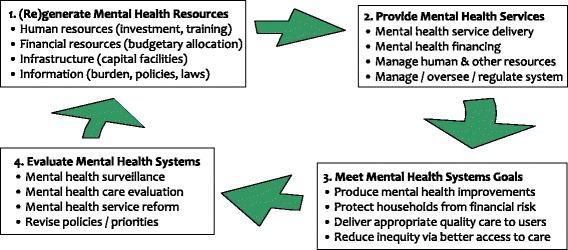
There is a large treatment gap for mental health care in low- and middle-income countries (LMICs), with the majority of people with mental, neurological, and substance use (MNS) disorders receiving no or inadequate care. Health system factors are known to play a crucial role in determining the coverage and effectiveness of health service interventions, but the study of mental health systems in LMICs has been neglected. The 'Emerging mental health systems in LMICs' (Emerald) programme aims to improve outcomes of people with MNS disorders in six LMICs (Ethiopia, India, Nepal, Nigeria, South Africa, and Uganda) by generating evidence and capacity to enhance health system performance in delivering mental health care. A mixed-methods approach is being applied to generate evidence on: adequate, fair, and sustainable resourcing for mental health (health system inputs); integrated provision of mental health services (health system processes); and improved coverage and goal attainment in mental health (health system outputs). Emerald has a strong focus on capacity-building of researchers, policymakers, and planners, and on increasing service user and caregiver involvement to support mental health systems strengthening. Emerald also addresses stigma and discrimination as one of the key barriers for access to and successful delivery of mental health services.
Overview
The claims and statistics of this paper haven’t been checked yet.
Free: it reads the open-access text and checks the first 5 claims that cite a source we can check. Create a free account to check every claim.
Integrity signals
Registry
Cites
Statistics
Figures
Verification
Claims the paper makes
The claims and statistics of this paper haven’t been checked yet.
Free: it reads the open-access text and checks the first 5 claims that cite a source we can check. Create a free account to check every claim.
Claims other papers make about this one
Each is checked against this paper’s own text: does it say what the citing paper says it does?
The source backs part of the claim, not all of it — or backs it for a different population, condition or comparison.
In the citing paper
“and EMERALD (Emerging Mental Health Systems in LMICs) [20], which strengthened health system responses through implementation research in six LMICs.”
From Co-creating systems change for mental health: a theory of change approach from the MeHPriC initiative in Lagos, Nigeria (2025) · cites this paper as [20]
Experimental — accuracy not yet measuredThe source backs part of the claim, not all of it — or backs it for a different population, condition or comparison.
In the citing paper
“Large multicountry initiatives, including the Programme for Improving Mental Health Care (PRIME) and the Emerging Mental Health Systems in LMICs (EMERALD) programme, have demonstrated the clinical feasibility and acceptability of integrating mental health into routine primary care platforms (Lund et al. 2012, Semrau et al. 2015).”
From Government-led scale-up of task-shifted mental health services in Lagos State, Nigeria: a mixed-methods descriptive-explanatory case study (2026) · cites this paper as Semrau et al. 2015
Experimental — accuracy not yet measuredThe source backs part of the claim, not all of it — or backs it for a different population, condition or comparison.
In the citing paper
“Large multicountry initiatives such as PRIME and EMERALD illustrated that task-shifted models can achieve clinical feasibility, provider acceptability, and early service utilization gains when embedded within primary care platforms (Lund et al. 2012, Semrau et al. 2015).”
From Government-led scale-up of task-shifted mental health services in Lagos State, Nigeria: a mixed-methods descriptive-explanatory case study (2026) · cites this paper as Semrau et al. 2015
Experimental — accuracy not yet measuredThe source backs part of the claim, not all of it — or backs it for a different population, condition or comparison.
In the citing paper
“Mental health disorders are likely to be under-ascertained, particularly in low- and middle-income settings where substantial treatment gaps for mental health exist. 42”
From Socioeconomic status and multimorbidity: a systematic review and meta‐analysis (2018) · cites this paper as [42]
Experimental — accuracy not yet measuredThe cited source says what the claim attributes to it.
In the citing paper
“Emerging mental health systems in low and middle-income countries (Emerald), which aims to improve mental health outcomes in LMICs by identifying barriers within health systems and generating solutions [12].”
From Sustainable financing mechanisms for strengthening mental health systems in Nigeria (2019) · cites this paper as [12]
Self-check
Percentages, sums and reported differences re-computed from the paper’s own numbers.
The self-check needs the paper’s full text.
Citations
Cites
Murray, C. J. L., Vos, T., Lozano, R., Naghavi, M., Flaxman, A. D., Michaud, C., Ezzati, M., Shibuya, K., Salomon, J. A., Abdalla, S., et al. (2012) · The Lancet · doi:10.1016/s0140-6736(12)61689-4 · Cited by 8,888
(2004) · JAMA · doi:10.1001/jama.291.21.2581 · Cited by 3,448 · cited 2×
“A large multi-country survey showed that, on average, 76% to 85% of people with severe mental disorders in low-income countries had not received any treatment in the previous 12 months [7].”
BackgroundConvention on the Rights of Persons with Disabilities
(2014) · Encyclopedia of Human Services and Diversity · doi:10.4135/9781483346663.n124 · Cited by 2,158
Grand challenges in global mental health
Collins, P. Y., Patel, V., Joestl, S. S., March, D., Insel, T. R., Daar, A. S., Bordin, I. A., Costello, E. J., Durkin, M., Fairburn, C., et al. (2011) · Nature · doi:10.1038/475027a · Cited by 2,043
Mental Health: New Understanding, New Hope
(2001) · JAMA · doi:10.1001/jama.286.19.2391 · Cited by 1,598
Thornicroft, G., Brohan, E., Rose, D., Sartorius, N., & Leese, M. (2009) · The Lancet · doi:10.1016/s0140-6736(08)61817-6 · Cited by 1,189
Self-citationComprehensive mental health action plan 2013–2020
Saxena, S., Funk, M. K., & Chisholm, D. (2015) · Eastern Mediterranean Health Journal · doi:10.26719/2015.21.7.461 · Cited by 834
Self-citationLund, C., Tomlinson, M., De Silva, M., Fekadu, A., Shidhaye, R., Jordans, M., Petersen, I., Bhana, A., Kigozi, F., Prince, M., et al. (2012) · PLoS Medicine · doi:10.1371/journal.pmed.1001359 · Cited by 584
Self-citationMental health systems in countries: where are we now?
Jacob, K., Sharan, P., Mirza, I., Garrido-Cumbrera, M., Seedat, S., Mari, J., Sreenivas, V, & Saxena, S. (2007) · The Lancet · doi:10.1016/s0140-6736(07)61241-0 · Cited by 574
Lasalvia, A., Zoppei, S., Van Bortel, T., Bonetto, C., Cristofalo, D., Wahlbeck, K., Bacle, S. V., Van Audenhove, C., van Weeghel, J., Reneses, B., et al. (2013) · The Lancet · doi:10.1016/s0140-6736(12)61379-8 · Cited by 445 · cited 1×
“As part of this, stigma and discrimination are addressed as one of the key barriers for access to and successful delivery of mental health services in LMICs [33-35].”
BackgroundSelf-citation
Research works printed but not linked: 4
- World Health Organization mhGAP intervention guide for mental, neurological and substance use disorders in non-specialized health settings: Mental Health Gap Action Programme (mhGAP) 2010 Geneva WHO 23741783
- Emerald: Emerging mental health systems in low- and middle-income countries. www.emerald-project.eu.
- World Health Organization Mental Health Atlas 2011 Geneva WHO
- World Health Organization and Ministry of Health WHO-AIMS report on mental health system in Nepal 2006 Kathmandu WHO
Cited by
The Lancet Commission on global mental health and sustainable development
Patel, V., Saxena, S., Lund, C., Thornicroft, G., Baingana, F., Bolton, P., Chisholm, D., Collins, P. Y., Cooper, J. L., Eaton, J., et al. (2018) · The Lancet · doi:10.1016/s0140-6736(18)31612-x · Cited by 3,692
Self-citationSocioeconomic status and multimorbidity: a systematic review and meta‐analysis
Pathirana, T. I., & Jackson, C. A. (2018) · Australian and New Zealand Journal of Public Health · doi:10.1111/1753-6405.12762 · Cited by 475
Violence against women and mental health
Oram, S., Khalifeh, H., & Howard, L. M. (2017) · The Lancet Psychiatry · doi:10.1016/s2215-0366(16)30261-9 · Cited by 474
Community mental health care worldwide: current status and further developments
Thornicroft, G., Deb, T., & Henderson, C. (2016) · World Psychiatry · doi:10.1002/wps.20349 · Cited by 374
Self-citationReducing the stigma of mental illness
Stuart, H. (2016) · Global Mental Health · doi:10.1017/gmh.2016.11 · Cited by 300
“Emphasis is on service user and carer involvement, stigma reduction, and dissemination of research findings (Semrau et al. 2015).”
Raviola, G., Naslund, J. A., Smith, S. L., & Patel, V. (2019) · Current Psychiatry Reports · doi:10.1007/s11920-019-1028-x · Cited by 258
Petersen, I., Marais, D., Abdulmalik, J., Ahuja, S., Alem, A., Chisholm, D., Egbe, C., Gureje, O., Hanlon, C., Lund, C., et al. (2017) · Health Policy and Planning · doi:10.1093/heapol/czx014 · Cited by 256
“…systems in low- and middle-income countries (Emerald) program is an international research consortium in six LMICs (Ethiopia, India, Nepal, Nigeria, South Africa and Uganda) that aims to investigate these health system requirements for effective mental health care integration (Semrau et al. 2015).”
BackgroundSelf-citationSemrau, M., Lempp, H., Keynejad, R., Evans-Lacko, S., Mugisha, J., Raja, S., Lamichhane, J., Alem, A., Thornicroft, G., & Hanlon, C. (2016) · BMC Health Services Research · doi:10.1186/s12913-016-1323-8 · Cited by 236
Self-citationPublic mental health: required actions to address implementation failure in the context of COVID-19
Campion, J., Javed, A., Lund, C., Sartorius, N., Saxena, S., Marmot, M., Allan, J., & Udomratn, P. (2022) · The Lancet Psychiatry · doi:10.1016/s2215-0366(21)00199-1 · Cited by 177
Self-citationCarbonell, Á., Navarro‐Pérez, J., & Mestre, M. (2020) · Health & Social Care in the Community · doi:10.1111/hsc.12968 · Cited by 174
Interventions and approaches to integrating HIV and mental health services: a systematic review
Chuah, F. L. H., Haldane, V. E., Cervero-Liceras, F., Ong, S. E., Sigfrid, L. A., Murphy, G., Watt, N., Balabanova, D., Hogarth, S., Maimaris, W., et al. (2017) · Health Policy and Planning · doi:10.1093/heapol/czw169 · Cited by 158
“…health systems are commonly overstretched due to poor human and financial resource, and oriented to treating acute conditions, resulting in fragmented care and poor sustainability of healthcare services for long-term disorders like HIV and mental illness (Semrau et al. 2015, Jacob et al. 2007).”
BackgroundThornicroft, G., Ahuja, S., Barber, S., Chisholm, D., Collins, P. Y., Docrat, S., Fairall, L., Lempp, H., Niaz, U., Ngo, V., et al. (2019) · The Lancet Psychiatry · doi:10.1016/s2215-0366(18)30298-0 · Cited by 138
Self-citationLempp, H., Abayneh, S., Gurung, D., Kola, L., Abdulmalik, J., Evans-Lacko, S., Semrau, M., Alem, A., Thornicroft, G., & Hanlon, C. (2018) · Epidemiology and Psychiatric Sciences · doi:10.1017/s2045796017000634 · Cited by 135
“2004) and the health systems often fail to meet the needs of people with MNS (Semrau et al. 2015).”
BackgroundMethodInfluentialSelf-citationMarais, D. L., & Petersen, I. (2015) · International Journal of Mental Health Systems · doi:10.1186/s13033-015-0004-z · Cited by 132
Self-citationAbayneh, S., Lempp, H., Alem, A., Alemayehu, D., Eshetu, T., Lund, C., Semrau, M., Thornicroft, G., & Hanlon, C. (2017) · BMC Psychiatry · doi:10.1186/s12888-017-1352-9 · Cited by 124
“countries’ (Emerald) project, which investigates the health system requirements for successful scale-up of integrated mental health care in six LMICs (Ethiopia, India, Nepal, Nigeria, South Africa and Uganda) [22, 23].”
BackgroundInfluentialSelf-citationMugisha, J., Abdulmalik, J., Hanlon, C., Petersen, I., Lund, C., Upadhaya, N., Ahuja, S., Shidhaye, R., Mntambo, N., Alem, A., et al. (2017) · International Journal of Mental Health Systems · doi:10.1186/s13033-016-0114-2 · Cited by 103
Self-citationHailemariam, M., Fekadu, A., Prince, M. J., & Hanlon, C. (2017) · International Journal for Equity in Health · doi:10.1186/s12939-017-0657-0 · Cited by 94
“Work is ongoing in the study site to develop and evaluate models of enhancing service user involvement [49].”
BackgroundSelf-citationShields-Zeeman, L., Pathare, S., Walters, B. H., Kapadia-Kundu, N., & Joag, K. (2017) · International Journal of Mental Health Systems · doi:10.1186/s13033-016-0113-3 · Cited by 85
Chisholm, D., Docrat, S., Abdulmalik, J., Alem, A., Gureje, O., Gurung, D., Hanlon, C., Jordans, M. J. D., Kangere, S., Kigozi, F., et al. (2019) · BJPsych Open · doi:10.1192/bjo.2019.24 · Cited by 84
Self-citationSarikhani, Y., Bastani, P., Rafiee, M., Kavosi, Z., & Ravangard, R. (2020) · Community Mental Health Journal · doi:10.1007/s10597-020-00619-2 · Cited by 103
Telemental Health in Low- and Middle-Income Countries: A Systematic Review
Acharibasam, J. W., & Wynn, R. (2018) · International Journal of Telemedicine and Applications · doi:10.1155/2018/9602821 · Cited by 94
Semrau, M., Alem, A., Abdulmalik, J., Docrat, S., Evans-Lacko, S., Gureje, O., Kigozi, F., Lempp, H., Lund, C., Petersen, I., et al. (2018) · Epidemiology and Psychiatric Sciences · doi:10.1017/s2045796017000452 · Cited by 74
Self-citationHailemichael, Y., Hanlon, C., Tirfessa, K., Docrat, S., Alem, A., Medhin, G., Lund, C., Chisholm, D., Fekadu, A., & Mariam, D. H. (2019) · BMC Public Health · doi:10.1186/s12889-019-7239-6 · Cited by 89
Self-citationSystematic review of interventions to reduce mental health stigma in India
Kaur, A., Kallakuri, S., Kohrt, B. A., Heim, E., Gronholm, P. C., Thornicroft, G., & Maulik, P. K. (2021) · Asian Journal of Psychiatry · doi:10.1016/j.ajp.2020.102466 · Cited by 68
“(Semrau et al., 2015; Thornicroft et al., 2017), estimated to be about 95% within India”
BackgroundSelf-citationAbayneh, S., Lempp, H., Alem, A., Kohrt, B. A., Fekadu, A., & Hanlon, C. (2020) · International Journal of Mental Health Systems · doi:10.1186/s13033-020-00383-6 · Cited by 67
“of integrated mental health care in six LMICs(Ethiopia, India, Nepal, Nigeria, South Africa and Uganda) [42, 43].”
BackgroundSelf-citationKoschorke, M., Oexle, N., Ouali, U., Cherian, A. V., Deepika, V., Mendon, G. B., Gurung, D., Kondrátová, L., Müller, M., Lanfredi, M., et al. (2021) · PLoS ONE · doi:10.1371/journal.pone.0258729 · Cited by 93
“Ultimately, a better understanding of stigma in primary care settings has the potential to address sustainability of attitudinal change, translation of attitudes into clinical competence, and the redesigning of health infrastructures to maintain positive attitudes [4, 11, 12].”
BackgroundSelf-citationHealth system governance to support scale up of mental health care in Ethiopia: a qualitative study
Hanlon, C., Eshetu, T., Alemayehu, D., Fekadu, A., Semrau, M., Thornicroft, G., Kigozi, F., Marais, D. L., Petersen, I., & Alem, A. (2017) · International Journal of Mental Health Systems · doi:10.1186/s13033-017-0144-4 · Cited by 66
“Research-led programmes to implement and evaluate integrated mental health care are also underway in Ethiopia, including the Programme for Improving Mental health carE (PRIME) [28, 29], the Africa Focus on Intervention Research for Mental Health (AFFIRM) [30] and the ‘Emerging mental health systems in LMICs’ (Emerald)…”
BackgroundSelf-citationChisholm, D., Heslin, M., Docrat, S., Nanda, S., Shidhaye, R., Upadhaya, N., Jordans, M., Abdulmalik, J., Olayiwola, S., Gureje, O., et al. (2017) · Epidemiology and Psychiatric Sciences · doi:10.1017/s2045796016000408 · Cited by 65
Self-citationSustainable financing mechanisms for strengthening mental health systems in Nigeria
Abdulmalik, J., Olayiwola, S., Docrat, S., Lund, C., Chisholm, D., & Gureje, O. (2019) · International Journal of Mental Health Systems · doi:10.1186/s13033-019-0293-8 · Cited by 63
Self-citationAccessing Mental Health Services in Africa: Current state, efforts, challenges and recommendation
Nicholas, A., Joshua, O., & Elizabeth, O. (2022) · Annals of Medicine & Surgery · doi:10.1016/j.amsu.2022.104421 · Cited by 63
Trani, J., Ballard, E., Bakhshi, P., & Hovmand, P. S. (2016) · Conflict and Health · doi:10.1186/s13031-016-0089-2 · Cited by 81
“…Research for Mental health (AFFIRM) and Emerging Mental health systems in low and middle-income countries (EMERALD) have been generated evidence on the implementation, capacity development and scaling up of mental health packages aiming at narrowing the treatment gap for mental disorders [8 – 10].”
Lion, K., Szcześniak, D. M., Bulińska, K., Evans, S., Evans, S. C., Saibene, F. L., d’Arma, A., Farina, E., Brooker, D., Chattat, R., et al. (2019) · Aging & Mental Health · doi:10.1080/13607863.2019.1577799 · Cited by 76
Moving towards universal health coverage for mental disorders in Ethiopia
Hanlon, C., Alem, A., Lund, C., Mariam, D. H., Assefa, E., Giorgis, T. W., & Chisholm, D. (2019) · International Journal of Mental Health Systems · doi:10.1186/s13033-019-0268-9 · Cited by 71
Self-citationAbayneh, S., Lempp, H. K., & Hanlon, C. (2020) · Research Involvement and Engagement · doi:10.1186/s40900-019-0175-x · Cited by 63
Self-citationGurung, D., Upadhyaya, N., Magar, J., Giri, N. P., Hanlon, C., & Jordans, M. J. D. (2017) · International Journal of Mental Health Systems · doi:10.1186/s13033-017-0139-1 · Cited by 61
“One of the thematic areas of the project is to empower, equip and facilitate the involvement of service users and their caregivers to support mental health system strengthening [38].”
BackgroundSelf-citationUpadhaya, N., Jordans, M. J. D., Pokhrel, R., Gurung, D., Adhikari, R. P., Petersen, I., & Komproe, I. H. (2017) · International Journal of Mental Health Systems · doi:10.1186/s13033-017-0145-3 · Cited by 70
“Since 2013 mental health systems related studies are conducted as part of the Emerging Mental Health Systems in Low- and Middle-Income Countries (EMERALD) research program which aims to support mental health systems strengthening in six countries (Ethiopia, India, Nepal, Nigeria, South Africa and Uganda) [15].”
BackgroundSelf-citationMyers, B., Lund, C., Lombard, C., Joska, J., Levitt, N., Butler, C., Cleary, S., Naledi, T., Milligan, P., Stein, D. J., et al. (2018) · Trials · doi:10.1186/s13063-018-2568-9 · Cited by 59
“Discussion In recent years, there have been several global mental health initiatives to identify and strengthen the core elements of health systems required for integrating mental health counselling into PHC services [21, 25] and on implementing task-shifted mental health interventions into primary care services [33].”
BackgroundSelf-citationGronholm, P. C., Bakolis, I., Cherian, A. V., Davies, K., Evans-Lacko, S. E., Girma, E., Gurung, D., Hanlon, C., Hanna, F., Henderson, C., et al. (2023) · International Journal of Mental Health Systems · doi:10.1186/s13033-022-00564-5 · Cited by 66
“For transparency and fairness regarding decision-making regarding publications arising from 438 the Indigo Partnership research programme, a detailed publication agreement has been 439 developed, adapted from previous work [46].”
MethodSelf-citationHanlon, C. (2017) · Epidemiology and Psychiatric Sciences · doi:10.1017/s2045796016001013 · Cited by 57
“What might the ICCCF for SMI care look like in a low-income country? At the community level, there would be increased involvement of service users and caregivers in mental health service development and monitoring, models of which are being developed and evaluated (Semrau et al. 2015).”
BackgroundInfluentialSelf-citationHanlon, C., Semrau, M., Alem, A., Abayneh, S., Abdulmalik, J., Docrat, S., Evans-Lacko, S., Gureje, O., Jordans, M., Lempp, H., et al. (2018) · Epidemiology and Psychiatric Sciences · doi:10.1017/s2045796017000440 · Cited by 58
“…we describe a range of activities that are being implemented by the Emerald programme (Emerging mental health systems in LMICs: http:// www.emerald-project.eu) ( Semrau et al. 2015) to build capacity among these three key target groups to support system strengthening for scale-up of mental health.”
BackgroundSelf-citationSemrau, M., Alem, A., Ayuso‐Mateos, J. L., Chisholm, D., Gureje, O., Hanlon, C., Jordans, M. J. D., Kigozi, F. N., Lund, C., Petersen, I., et al. (2019) · BJPsych Open · doi:10.1192/bjo.2018.90 · Cited by 67
Self-citationMental health system governance in Nigeria: challenges, opportunities and strategies for improvement
Abdulmalik, J. O., Kola, L., & Gureje, O. (2016) · Cambridge Prisms Global Mental Health · doi:10.1017/gmh.2016.2 · Cited by 78
“It is also incontrovertible that sustainable health system strengthening cannot occur in the absence of regular capacity building initiatives to assure skills transfer (Lund et al. 2012; Marais & Petersen, 2015; Semrau et al. 2015).”
BackgroundSelf-citationUpadhaya, N., Regmi, U., Gurung, D., Luitel, N. P., Petersen, I., Jordans, M. J. D., & Komproe, I. H. (2020) · BMC Psychiatry · doi:10.1186/s12888-020-2476-x · Cited by 74
Self-citationTirfessa, K., Lund, C., Medhin, G., Hailemichael, Y., Fekadu, A., & Hanlon, C. (2017) · Epidemiology and Psychiatric Sciences · doi:10.1017/s2045796017000701 · Cited by 65
Self-citationThornicroft, G., & Semrau, M. (2019) · BJPsych Open · doi:10.1192/bjo.2019.9 · Cited by 53
Self-citationthe CobALT research team, Fairall, L., Petersen, I., Zani, B., Folb, N., Georgeu-Pepper, D., Selohilwe, O., Petrus, R., Mntambo, N., Bhana, A., et al. (2018) · Trials · doi:10.1186/s13063-018-2517-7 · Cited by 53
“In addition, systems strengthening innovations to support these efforts have been introduced through the Emerald (emerging mental health systems in LMICs) programme [44], including clinical communication skills for nurse-led chronic care and a strengthened employee assistance programme for primary healthcare providers…”
Mental health capacity building in low and middle income countries: the Emerald Programme
Thornicroft, G., & Semrau, M. (2018) · Epidemiology and Psychiatric Sciences · doi:10.1017/s2045796017000592 · Cited by 51
“…middle-income countries) programme, which is investigating mental health system strengthening in these six countries (see www.emerald-project.eu) (Semrau et al. 2015) alongside financial equity (Chisholm et al. 2017), integrated care (Petersen et al. 2017) and establishing mental health system…”
BackgroundSelf-citationMental health care and delivery system at Temeke hospital in Dar es Salaam, Tanzania
Ambikile, J. S., & Iseselo, M. K. (2017) · BMC Psychiatry · doi:10.1186/s12888-017-1271-9 · Cited by 66
“Mental health systems strengthening in low and middle income countries is strongly being advocated for, with focus on capacity-building of researchers, policy makers, and planners [23].”
BackgroundUpadhaya, N., Jordans, M. J. D., Abdulmalik, J. O., Ahuja, S., Alem, A., Hanlon, C., Kigozi, F. N., Kizza, D., Lund, C., Semrau, M., et al. (2016) · International Journal of Mental Health Systems · doi:10.1186/s13033-016-0094-2 · Cited by 50
“The ‘Emerging mental health systems in low and middle income countries’ (Emerald) research programme aims to support mental health systems strengthening in the six countries of Ethiopia, India, Nepal, Nigeria, South Africa and Uganda [15] a key area of focus of the Emerald program is to strengthen the mental health co…”
Self-citationBarzallo, D. P., Gross-Hemmi, M. H., Bickenbach, J., Juocevičius, A., Popa, D., Wahyuni, L. K., & Strøm, V. (2020) · Archives of Physical Medicine and Rehabilitation · doi:10.1016/j.apmr.2020.04.030 · Cited by 50
Hailemichael, Y., Hanlon, C., Tirfessa, K., Docrat, S., Alem, A., Medhin, G., Fekadu, A., Lund, C., Chisholm, D., & Mariam, D. H. (2019) · International Journal for Equity in Health · doi:10.1186/s12939-019-1020-4 · Cited by 61
Self-citationJordans, M. J. D., Chisholm, D., Semrau, M., Upadhaya, N., Abdulmalik, J. O., Ahuja, S., Alem, A., Hanlon, C., Kigozi, F. N., Mugisha, J., et al. (2016) · Health Policy and Planning · doi:10.1093/heapol/czw040 · Cited by 50
Self-citationKamimura, A., Trinh, H. N., Johansen, P. M., Hurley, J., Pye, M., Sin, K., & Nguyen, H. T. V. (2018) · Asian Journal of Psychiatry · doi:10.1016/j.ajp.2018.07.012 · Cited by 55
Furst, M. A., Gandré, C., Romero López-Alberca, C., & Salvador-Carulla, L. (2019) · BMC Health Services Research · doi:10.1186/s12913-019-4005-5 · Cited by 45
Lund, C., Docrat, S., Abdulmalik, J., Alem, A., Fekadu, A., Gureje, O., Gurung, D., Hailemariam, D., Hailemichael, Y., Hanlon, C., et al. (2019) · BJPsych Open · doi:10.1192/bjo.2019.20 · Cited by 44
Self-citationService user involvement for mental health system strengthening in India: a qualitative study
Samudre, S., Shidhaye, R. R., Ahuja, S., Nanda, S., Khan, A., Evans-Lacko, S. E., & Hanlon, C. (2016) · BMC Psychiatry · doi:10.1186/s12888-016-0981-8 · Cited by 50
Self-citationPartnerships in a Global Mental Health Research Programme—the Example of PRIME
Breuer, E., Hanlon, C., Bhana, A., Chisholm, D., Silva, M. J. D., Fekadu, A., Honikman, S., Jordans, M. J. D., Kathree, T., Kigozi, F. N., et al. (2018) · Global Social Welfare · doi:10.1007/s40609-018-0128-6 · Cited by 47
Self-citationSuasnabar, J. M. H., & Walters, B. H. (2020) · International Journal of Mental Health Systems · doi:10.1186/s13033-020-00405-3 · Cited by 60
“These findings may indicate that training non-professionals to deliver community-based SUD interventions in LMICs may be a strategy to address local resource and/or sociocultural barriers.”
BackgroundInfluentialHailemichael, Y., Hailemariam, D., Tirfessa, K., Docrat, S., Alem, A., Medhin, G., Lund, C., Chisholm, D., Fekadu, A., & Hanlon, C. (2019) · International Journal of Mental Health Systems · doi:10.1186/s13033-019-0294-7 · Cited by 43
“The study reported in this paper is part of the crosscountry Emerald programme (emerging mental health systems in low- and middle-income countries) which sought to provide rigorous, population-based evidence about the adequacy and fairness of mental healthcare financing [30].”
BackgroundSelf-citationChisholm, D., Docrat, S., Abdulmalik, J. O., Alem, A., Gureje, O., Gurung, D., Hanlon, C., Jordans, M. J. D., Kangere, S., Kigozi, F. N., et al. (2021) · BJPsych Open · doi:10.1192/bjo.2021.948 · Cited by 44
Self-citationWakida, E. K., Okello, E. S., Rukundo, G. Z., Akena, D. H., Alele, P. E., Talib, Z. M., & Obua, C. (2019) · International Journal of Mental Health Systems · doi:10.1186/s13033-019-0272-0 · Cited by 47
Tirfessa, K., Lund, C., Medhin, G., Selamu, M., Birhane, R., Hailemichael, Y., Fekadu, A., & Hanlon, C. (2020) · Tropical Medicine & International Health · doi:10.1111/tmi.13370 · Cited by 41
“We are also grateful to the research teams of the PRIME and Emerald projects.”
MethodInfluentialSelf-citationKane, J. C., Adaku, A., Nakku, J., Odokonyero, R., Okello, J., Musisi, S., Augustinavicius, J., Greene, M. C., Alderman, S., & Tol, W. A. (2015) · Implementation Science · doi:10.1186/s13012-016-0400-z · Cited by 41
“Several research consortia are evaluating the application of the mhGAP guidelines in multiple LMIC, including in Uganda [19–21].”
MethodRyan, G. K., Nwefoh, E. C., Aguocha, C., Ode, P., Okpoju, S. O., Ocheche, P., Woyengikuro, A., Abdulmalik, J. O., & Eaton, J. (2020) · International Journal of Mental Health Systems · doi:10.1186/s13033-020-00344-z · Cited by 50
Mental health in Zimbabwe: a health systems analysis
Kidia, K. K., Machando, D., Mangezi, W. O., Hendler, R. A., Crooks, M., Abas, M., Chibanda, D., Thornicroft, G., Semrau, M., & Jack, H. E. (2017) · The Lancet Psychiatry · doi:10.1016/s2215-0366(17)30128-1 · Cited by 49
Self-citationDocrat, S., Lund, C., & Chisholm, D. (2019) · International Journal of Mental Health Systems · doi:10.1186/s13033-019-0260-4 · Cited by 37
Self-citationEvans-Lacko, S., Hanlon, C., Alem, A., Ayuso-Mateos, J. L., Chisholm, D., Gureje, O., Jordans, M., Kigozi, F., Lempp, H., Lund, C., et al. (2019) · BJPsych Open · doi:10.1192/bjo.2019.14 · Cited by 35
Self-citationDaniel, M., Maulik, P. K., Kallakuri, S., Kaur, A., Devarapalli, S., Mukherjee, A., Bhattacharya, A., Billot, L., Thornicroft, G., Praveen, D., et al. (2021) · Trials · doi:10.1186/s13063-021-05136-5 · Cited by 40
Self-citationAlvi, M. H., Ashraf, T., Kiran, T., Iqbal, N., Gumber, A., Patel, A. K., & Husain, N. (2023) · BJPsych International · doi:10.1192/bji.2023.4 · Cited by 35
Koly, K. N., Saba, J., Muzaffar, R., Modasser, R. B., Tasdik Hasan, M., Colón-Cabrera, D., & Warren, N. (2022) · Internet Interventions · doi:10.1016/j.invent.2022.100544 · Cited by 50
“Evidence demonstrates that some LMICs have successfully adopted digital technology to raise awareness, screen, diagnose and manage common mental health disorders for a wider populations (Maulik et al., 2017; Amos et al., 2020).”
BackgroundInfluentialYap, S. Y., Ng, F. L., Subramaniam, M., Lim, Y. M., & Foo, C. N. (2022) · Behavioral Sciences · doi:10.3390/bs12110423 · Cited by 42
“Depression is treatable; however, many depressed individuals fail to receive adequate treatment, especially those in low- and middle-income countries [20].”
BackgroundKeynejad, R. C., Semrau, M., Toynbee, M., Evans-Lacko, S. E., Lund, C., Gureje, O., Ndyanabangi, S., Courtin, É., Abdulmalik, J. O., Alem, A., et al. (2016) · BMC Health Services Research · doi:10.1186/s12913-016-1853-0 · Cited by 35
“This systematic review formed part of the ‘Emerging mental health systems in LMICs’ (Emerald) program, which focuses on the health system inputs, processes and outputs required for mental health service scale-up in LMICs [17].”
Self-citationEaton, J., Gureje, O., De Silva, M., Sheikh, T. L., Ekpe, E. E., Abdulaziz, M., Muhammad, A., Akande, Y., Onukogu, U., Onyuku, T., et al. (2018) · International Journal of Mental Health Systems · doi:10.1186/s13033-018-0188-0 · Cited by 34
“Semrau M, Evans-Lacko S, Alem A, Ayuso-Mateos JL, Chisholm D, Gureje O, et al. Strengthening mental health systems in low- and middle-income countries: the Emerald programme.”
BackgroundSelf-citationCarandang, R. R., Shibanuma, A., Kiriya, J., Vardeleon, K. R., Asis, E., Murayama, H., & Jimba, M. (2020) · PLoS ONE · doi:10.1371/journal.pone.0230770 · Cited by 38
“In these countries, there is a large treatment gap for mental health care, with the majority of people with mental disorders receiving no or inadequate care [3].”
BackgroundPetersen, I., Bhana, A., Folb, N., Thornicroft, G., Zani, B., Selohilwe, O., Petrus, R., Mntambo, N., Georgeu-Pepper, D., Kathree, T., et al. (2018) · Trials · doi:10.1186/s13063-018-2518-6 · Cited by 36
“In addition, systems strengthening innovations to support these efforts have been introduced through the EMERALD (Emerging Mental Health Systems in Low- and Middle-income Countries (LIMCs)) programme [43], including clinical communication skills for nurse-led chronic care and a strengthened employee assistance program…”
Self-citationDadi, A. F., Miller, E. R., Azale, T., & Mwanri, L. (2021) · International Journal of Mental Health Systems · doi:10.1186/s13033-021-00466-y · Cited by 41
“Two programs have been running in Ethiopia to scale up maternal mental health services: (i) A Program for Improving Mental Health care (PRIME), which aims to generate evidence on the implementation and scale-up of mental health service integration (30); and (ii) The Emerging mental health system in low-and middle-inco…”
BackgroundCommunity Involvement in the Care of Persons Affected by Podoconiosis—A Lesson for Other Skin NTDs
Tora, A., Mengiste, A., Davey, G., & Semrau, M. (2018) · Tropical Medicine and Infectious Disease · doi:10.3390/tropicalmed3030087 · Cited by 34
“Both programs aimed to improve mental health care in these countries; whilst PRIME did so by collecting evidence on the integration and scale-up of mental health services into primary health care [47], Emerald did so by building capacity and generating evidence to enhance health-system strengthening [46].”
BackgroundSelf-citation‘Global mental health’: systematic review of the term and its implicit priorities
Misra, S., Stevenson, A., Haroz, E. E., de Menil, V., & Koenen, K. C. (2019) · BJPsych Open · doi:10.1192/bjo.2019.39 · Cited by 32
Juma, K. O., Wekesah, F. M., Kabiru, C. W., & Izugbara, C. O. (2019) · Springer eBooks · doi:10.1007/978-3-030-21092-2_11 · Cited by 36
Global mental health in 2015: 95% implementation
Silva, M. J. D., & Ryan, G. K. (2016) · The Lancet Psychiatry · doi:10.1016/s2215-0366(15)00567-2 · Cited by 30
van Rensburg, A. J., Petersen, I., Wouters, E., Engelbrecht, M., Kigozi, G., Fourie, P., van Rensburg, D. H., & Bracke, P. (2018) · Health Policy and Planning · doi:10.1093/heapol/czy017 · Cited by 31
“Importantly, evidence of health service requirements for mental health integration scale-up (Semrau et al. 2015) and the organization, planning, infrastructure and intersectoral linkages of referral systems (Rathod et al. 2017) are left wanting.”
BackgroundSelf-citationGage, A. D., & Bauhoff, S. (2021) · Health Policy and Planning · doi:10.1093/heapol/czaa191 · Cited by 37
“, 2015), and improved adherence to evidence-based checklists during delivery can fail to generate better maternal or newborn health outcomes (Semrau et al., 2015).”
BackgroundLanghaug, L. F., Jack, H. E., Hanlon, C., Holzer, S., Sorsdahl, K. R., Mutedzi, B., Mangezi, W. O., Merritt, C. J., Alem, A., Stewart, R. C., et al. (2020) · International Journal of Mental Health Systems · doi:10.1186/s13033-020-00388-1 · Cited by 29
Self-citationAssociations between caregiver mental health and young children’s behaviour in a rural Kenyan sample
Laurenzi, C. A., Hunt, X., Skeen, S., Sundin, P., Weiss, R. E., Kosi, V., Rotheram‐Borus, M. J., & Tomlinson, M. (2021) · Global Health Action · doi:10.1080/16549716.2020.1861909 · Cited by 35
“and middle-income countries (LMICs) [2].”
“We Are Not Really Marketing Mental Health”: Mental Health Advocacy in Zimbabwe
Hendler, R. A., Kidia, K. K., Machando, D., Crooks, M., Mangezi, W. O., Abas, M., Katz, C. L., Thornicroft, G., Semrau, M., & Jack, H. E. (2016) · PLoS ONE · doi:10.1371/journal.pone.0161860 · Cited by 32
“We adapted an interview guide, with permission, from the Emerald programme [40], a multicountry mental health systems strengthening initiative.”
MethodSelf-citationSearle, K., Blashki, G. A., Kakuma, R., Yang, H. M., Zhao, Y., & Minas, H. (2019) · International Journal of Mental Health Systems · doi:10.1186/s13033-019-0300-0 · Cited by 29
Catalao, R., Eshetu, T., Tsigebrhan, R., Medhin, G., Fekadu, A., & Hanlon, C. (2018) · BMC Health Services Research · doi:10.1186/s12913-018-3190-y · Cited by 25
“The qualitative study also incorporated research questions for a sister project, Emerald (Emerging mental health systems in low- and middle-income countries), which focused on exploration of the health system requirements for integrating MNS care into primary care [21].”
MethodSelf-citationAhuja, S., Hanlon, C., Chisholm, D., Semrau, M., Gurung, D., Abdulmalik, J. O., Mugisha, J., Mntambo, N., Kigozi, F. N., Petersen, I., et al. (2019) · BJPsych Open · doi:10.1192/bjo.2019.29 · Cited by 25
“9 Previous evaluations of routine health information systems also do not provide insights on implementation outcomes 22,23 and do not cover the specific domain of mental health indicators.”
Self-citationAbayneh, S., Lempp, H. K., Manthorpe, J., & Hanlon, C. (2018) · International Journal of Mental Health Systems · doi:10.1186/s13033-018-0220-4 · Cited by 27
“In LMICs, SU/CG contributions to the mental health system have received minimal attention and the health systems often fail to meet the needs of people with mental health problems [19–21].”
BackgroundSelf-citationKumar, M. (2019) · Frontiers in Psychiatry · doi:10.3389/fpsyt.2019.00099 · Cited by 23
“A number of studies have pointed to the epistemic (21) and practical ways (22) in which mental health capacity building can take place.”
BackgroundSchez-Sobrino, S., Vallejo, D., Monekosso, D., Glez-Morcillo, C., & Remagnino, P. (2020) · IEEE Access · doi:10.1109/access.2020.2995119 · Cited by 29
“The incidence of stroke is increasing worldwide, particularly in low-and middle-income countries [3].”
BackgroundDeveloping mental health research in sub-Saharan Africa: capacity building in the AFFIRM project
Schneider, M., Sorsdahl, K. R., Mayston, R., Ahrens, J., Chibanda, D., Fekadu, A., Hanlon, C., Holzer, S., Musisi, S., Ofori-Atta, A. L., et al. (2016) · Cambridge Prisms Global Mental Health · doi:10.1017/gmh.2016.28 · Cited by 26
“…LMICs in project consortia, such as the Mental Health and Poverty Project (MHaPP) (Cooper et al. 2012), the PRIME project (Program for Improving Mental Health Care) (Lund et al. 2012) and the Emerald program (Emerging Mental Health Systems in Low- and Middle-Income Countries) (Semrau et al. 2015).”
BackgroundSelf-citationGovernance and mental health: contributions for public policy approach
Diaz‐Castro, L., Arredondo, A., Pelcastre‐Villafuerte, B. E., & Hufty, M. (2017) · Revista de Saúde Pública · doi:10.1590/s1518-8787.2017051006991 · Cited by 39
Rai, S., Gurung, D., & Kohrt, B. A. (2023) · Cambridge Prisms Global Mental Health · doi:10.1017/gmh.2023.73 · Cited by 29
Macgregor, A., Brown, M. J., & Stavert, J. (2019) · Health & Social Care in the Community · doi:10.1111/hsc.12749 · Cited by 26
“This includes women, young people, people with intellectual disabilities, individuals from lower socioeconomic groups, and those who are unemployed, homeless, and have problem substance use (Semrau et al, 2015; Howlett et al, 2015; Whiteford et al, 2015; Winkler et al, 2017).”
BackgroundAnalyzing Indian mental health systems: Reflecting, learning, and working towards a better future
Mahajan, P., Rajendran, P., Sunderamurthy, B., Keshavan, S., & Bazroy, J. (2019) · Journal of Current Research in Scientific Medicine · doi:10.4103/jcrsm.jcrsm_21_19- · Cited by 25
Essien, E. A., Mahmood, M. Y., Adiukwu, F., Kareem, Y. A., Hayatudeen, N., Ojeahere, M. I., Salihu, M. O., Sanni, K. A., Omotoso, A. B., & Pinto da Costa, M. (2024) · Cambridge Prisms: Global Mental Health · doi:10.1017/gmh.2024.25 · Cited by 20
Potential strategies for sustainably financing mental health care in Uganda
Ssebunnya, J., Kangere, S., Mugisha, J., Docrat, S., Chisholm, D., Lund, C., & Kigozi, F. N. (2018) · International Journal of Mental Health Systems · doi:10.1186/s13033-018-0252-9 · Cited by 26
Self-citationJordans, M. J. D., Chisholm, D., Semrau, M., Gurung, D., Abdulmalik, J. O., Ahuja, S., Mugisha, J., Mntambo, N., Kigozi, F. N., Petersen, I., et al. (2019) · BJPsych Open · doi:10.1192/bjo.2019.22 · Cited by 24
Self-citationAyuso‐Mateos, J. L., Miret, M., López-García, P., Alem, A., Chisholm, D., Gureje, O., Hanlon, C., Jordans, M. J. D., Kigozi, F. N., Lund, C., et al. (2019) · BJPsych Open · doi:10.1192/bjo.2019.50 · Cited by 22
Self-citation
Metadata
- Authors
- Semrau, M., Evans-Lacko, S., Alem, A., Ayuso-Mateos, J. L., Chisholm, D., Gureje, O., Hanlon, C., Jordans, M., Kigozi, F., Lempp, H., Lund, C., Petersen, I., Shidhaye, R., & Thornicroft, G.
- Affiliations
- King's College London (GB)
- Tikur Anbessa Hospital (ET)
- World Health Organization (CH)
- University of Ibadan (NG)
- Butabika Hospital (UG)
- University of Cape Town (ZA)
- University of KwaZulu-Natal (ZA)
- Public Health Foundation of India (IN)
- Corresponding author
- Semrau, Maya
- ORCID
- Venue
- BMC Medicine
- Published
- 2015-04-10
- Volume
- 13
- Issue
- 1
- Pages
- 79-79
- ISSN
- 1741-7015 (ISSN-L)
- PMC
- PMC4393637
- OpenAlex
- W2123257184
- Cited by
- 288
- References
- 25
- Citations by year
- 2026: 19 · 2025: 19 · 2024: 10 · 2023: 36 · 2022: 15 · 2021: 59 · 2020: 32 · 2019: 36 · 2018: 23 · 2017: 21 · 2016: 16 · 2015: 2
- FWCI
- 33.82
- Type
- journal article
- Language
- en
- Open access
- gold
- doi.org
- Locations
- BMC Medicine (publishedVersion, cc-by)
- Europe PMC (PubMed Central) (publishedVersion, cc-by)
- PubMed Central (publishedVersion, cc-by)
- PubMed (publishedVersion)
- LA Referencia (Red Federada de Repositorios Institucionales de Publicaciones Científicas) (publishedVersion)
- Tesis Doctorals en Xarxa (Consorci de Serveis Universitaris de Catalunya) (publishedVersion)
- Edinburgh Research Explorer (University of Edinburgh) (submittedVersion, cc-by)
- Biblos-e Archivo (Universidad Autónoma de Madrid) (submittedVersion, public-domain)
- LA Referencia (Red Federada de Repositorios Institucionales de Publicaciones Científicas) (submittedVersion, other-oa)
- Hispana (submittedVersion)
- Research Portal (King's College London) (submittedVersion, other-oa)
- Open University of Cape Town (University of Cape Town) (submittedVersion, cc-by)
- Greater South Information System
- Funders
- World Health Organization
- National Institute for Health and Care Research (RP-PG-0606-1053, FP7/2007–2013)
- King's College London
- European Commission (2007–2013, FP7 2007-2013, 305968, FP7/2007)
- Public Health Foundation of India
- Inyuvesi Yakwazulu-Natali
- University of Cape Town
- Addis Ababa University
- Topics
- Health Sciences › Medicine › Psychiatry and Mental health › Mental Health Treatment and Access
- Social Sciences › Psychology › Clinical Psychology › Psychiatric care and mental health services
- Health Sciences › Medicine › Public Health, Environmental and Occupational Health › Global Health and Surgery
- Keywords
- low- and middle-income countries, mental, neurological and substance use disorders, treatment gap, integrated mental health services, mental health funding, capacity building, stigma and discrimination
- MeSH terms
- Delivery of Health Care, Developing Countries, Ethiopia, Humans, Income, India, Mental Health, Mental Health Services, Nepal, Nigeria, Poverty, South Africa, Uganda
About these checks
Registry, retraction, Cites and statistics results are computed, not judged, with one exception: a printed reference that no index lists is read once by a model before it counts as a citation error. Claims are extracted by a model and kept only when their quote appears verbatim in the text; each cited source is then checked, with a model’s help, for whether it says what the claim relies on. Those verdicts can be wrong — read the claim’s quote and the cited source before relying on one.
Statistics and arithmetic are recomputed, not judged.
Confidence bands are shown only for fields calibrated on our annotated test set. None is calibrated yet, so no band is shown.
What counts as a claim ›How we measure confidence ›How we check this ›
Are you an author, or do you see a problem with this page? Request a review
Data sources
Bibliographic data: Semantic Scholar, OpenAlex, Crossref.
Contains information from the Semantic Scholar Academic Graph Datasets, made available under the ODC Attribution License (ODC-BY 1.0).
Semantic Scholar’s data is described in: Kinney, R., et al. (2023). The Semantic Scholar Open Data Platform. arXiv:2301.10140.
