

Association of shift work with incident dementia: a community-based cohort study
Open accessThe DOI matches its Crossref record; 53 of the 53 references it cites were found in a registry or an index.
Abstract
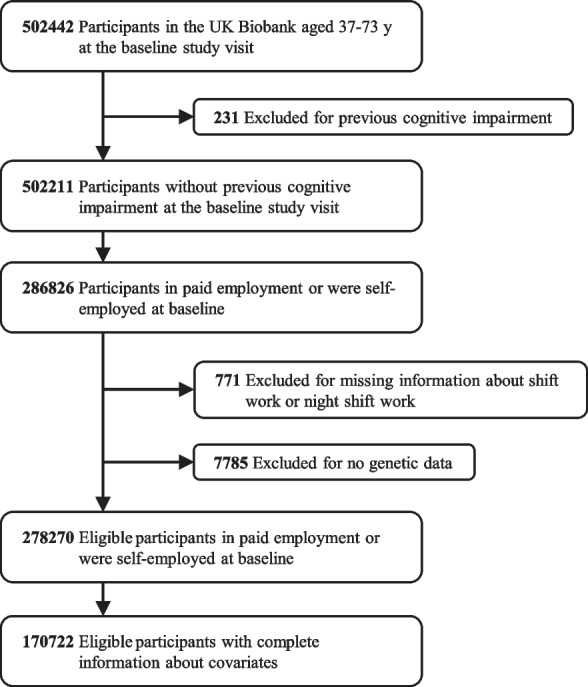
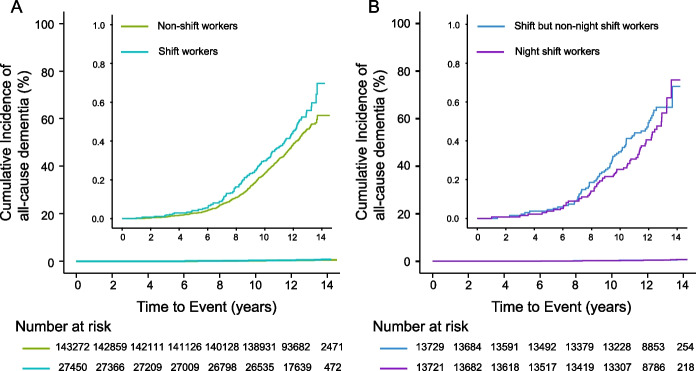
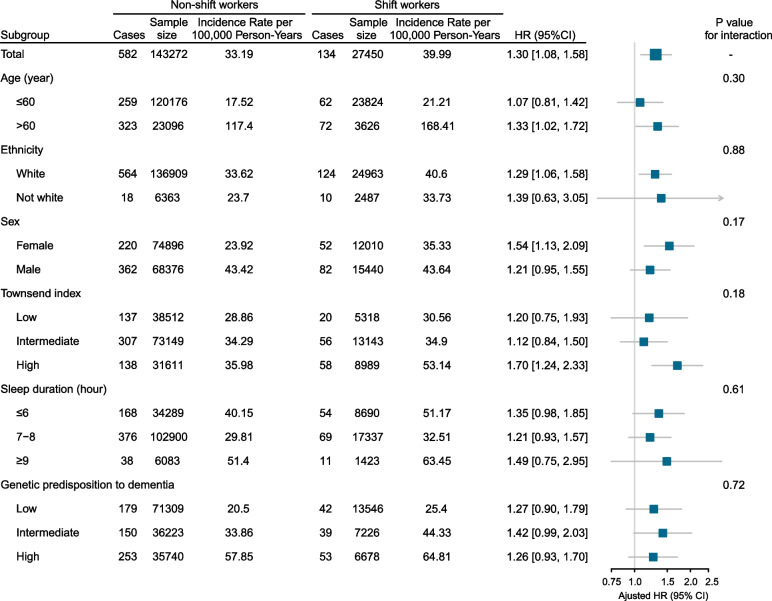
Background: Some observational studies had found that shift work would increase risks of metabolic disorders, cancers, and cardiovascular diseases, but there was no homogeneous evidence of such an association between shift work and incident dementia. This study aimed to investigate whether shift work would increase the risk of dementia in a general population. Methods: One hundred seventy thousand seven hundred twenty-two employed participants without cognitive impairment or dementia at baseline recruited between 2006 and 2010 were selected from the UK Biobank cohort study. Follow-up occurred through June 2021. Shift work status at baseline was self-reported by participants and they were categorized as non-shift workers or shift workers. Among shift workers, participants were further categorized as night shift workers or shift but non-night shift workers. The primary outcome was all-cause dementia in a time-to-event analysis, and the secondary outcomes were subtypes of dementia, including Alzheimer’s disease, vascular dementia, and other types of dementia. Results: In total, 716 dementia cases were observed among 170,722 participants over a median follow-up period of 12.4 years. Shift workers had an increased risk of all-cause dementia as compared with non-shift workers after multivariable adjustment (hazard ratio [HR], 1.30, 95% confidence interval [CI], 1.08–1.58); however, among shift workers, night shift work was not associated with the risk of dementia (HR, 1.04, 95% CI, 0.73–1.47). We found no significant interaction between shift work and genetic predisposition to dementia on the primary outcome ( P for interaction = 0.77). Conclusions: Shift work at baseline was associated with an increased risk of all-cause dementia. Among shift workers, there was no significant association between night shift work and the risk of dementia. The increased incidence of dementia in shift workers did not differ between participants in different genetic risk strata for dementia.
Overview
The claims and statistics of this paper haven’t been checked yet.
Free: it reads the open-access text and checks the first 5 claims that cite a source we can check. Create a free account to check every claim.
Integrity signals
Registry
Cites
Statistics
Figures
Verification
Claims the paper makes
The claims and statistics of this paper haven’t been checked yet.
Free: it reads the open-access text and checks the first 5 claims that cite a source we can check. Create a free account to check every claim.
Claims other papers make about this one
Each is checked against this paper’s own text: does it say what the citing paper says it does?
The source backs part of the claim, not all of it — or backs it for a different population, condition or comparison.
In the citing paper
“but this was not increased further in night shift compared to day shift workers, although the power to detect differences was low. (305)”
From Dementia prevention, intervention, and care: 2024 report of the Lancet standing Commission (2024) · cites this paper as [305]
Experimental — accuracy not yet measuredThe cited source says what the claim attributes to it.
In the citing paper
“A subsequent UKB study examined whether shift work might be related to dementia and followed 170,722 people, aged in their early 50s at baseline, for a median of 12.4 years, of whom 27,450 (16.1%) did shift work. It was associated with an increased risk of dementia (HR 1.30, 1.08 -1.58)”
From Dementia prevention, intervention, and care: 2024 report of the Lancet standing Commission (2024) · cites this paper as [305]
Self-check
Percentages, sums and reported differences re-computed from the paper’s own numbers.
The self-check needs the paper’s full text.
Citations
Cites
Sudlow, C., Gallacher, J., Allen, N., Beral, V., Burton, P., Danesh, J., Downey, P., Elliott, P., Green, J., Landray, M., et al. (2015) · PLOS Medicine · doi:10.1371/journal.pmed.1001779 · Cited by 12,728 · cited 1×
“The UK Biobank is a prospective cohort study with over 500,000 community-dwelling participants across the UK aged 37–73 years when recruited between 2006 and 2010 [26].”
BackgroundFry, A., Littlejohns, T. J., Sudlow, C., Doherty, N., Adamska, L., Sprosen, T., Collins, R., & Allen, N. E. (2017) · American Journal of Epidemiology · doi:10.1093/aje/kwx246 · Cited by 3,979 · cited 1×
“However, given that the UK Biobank has a tremendous sample size and a median follow-up time of over 10 years, it still has the capacity to detect and identify risk factors [50], and our findings also remain of important public health implications in terms of the need for effective public measures to reduce the risk of…”
BackgroundApolipoprotein E and Alzheimer disease: risk, mechanisms and therapy
Liu, C.-C., Kanekiyo, T., Xu, H., & Bu, G. (2013) · Nature Reviews Neurology · doi:10.1038/nrneurol.2012.263 · Cited by 3,459 · cited 1×
“Various genetic and environmental risk factors have been found that would contribute to the development of dementia, such as apolipoprotein E ε4-carriers [6], obesity [7], diabetes [8], and unhealthy lifestyles (e.”
BackgroundAlzheimer Disease Genetics Consortium (ADGC), Kunkle, B. W., The European Alzheimer’s Disease Initiative (EADI), Cohorts for Heart and Aging Research in Genomic Epidemiology Consortium (CHARGE), Genetic and Environmental Risk in AD/Defining Genetic, P. A. E. R. F. A. D. C. (., Grenier-Boley, B., Sims, R., Bis, J. C., Damotte, V., Naj, A. C., et al. (2019) · Nature Genetics · doi:10.1038/s41588-019-0358-2 · Cited by 2,946
Mozaffarian, D. (2016) · Circulation · doi:10.1161/circulationaha.115.018585 · Cited by 2,216
Tutorial: a guide to performing polygenic risk score analyses
Choi, S. W., Mak, T. S.-H., & O’Reilly, P. F. (2020) · Nature Protocols · doi:10.1038/s41596-020-0353-1 · Cited by 1,946 · cited 2×
“The PRS was formulated as the sum of the number of risk alleles at each locus multiplied by the respective regression coefficient, divided by the number of SNPs, using PRSice-2 [29, 30].”
MethodBaumgart, M., Snyder, H. M., Carrillo, M. C., Fazio, S., Kim, H., & Johns, H. (2015) · Alzheimer's & Dementia · doi:10.1016/j.jalz.2015.05.016 · Cited by 1,660
PRSice-2: Polygenic Risk Score software for biobank-scale data
Choi, S. W., & O'Reilly, P. F. (2019) · GigaScience · doi:10.1093/gigascience/giz082 · Cited by 1,532
Cognitive decline and dementia in diabetes mellitus: mechanisms and clinical implications
Biessels, G. J., & Despa, F. (2018) · Nature Reviews Endocrinology · doi:10.1038/s41574-018-0048-7 · Cited by 1,454 · cited 1×
“Various genetic and environmental risk factors have been found that would contribute to the development of dementia, such as apolipoprotein E ε4-carriers [6], obesity [7], diabetes [8], and unhealthy lifestyles (e.”
BackgroundA meta-analysis of the impact of short-term sleep deprivation on cognitive variables
Lim, J., & Dinges, D. F. (2010) · Psychological Bulletin · doi:10.1037/a0018883 · Cited by 1,389 · cited 1×
“And cognitive performance deteriorates with sleep disturbance [38, 39].”
BackgroundHealth consequences of shift work and insufficient sleep
Kecklund, G., & Axelsson, J. (2016) · BMJ · doi:10.1136/bmj.i5210 · Cited by 1,195 · cited 2×
“We inferred that sleep disturbance and disrupted circadian might be the main causes of cognitive impairment among shift workers [33].”
BackgroundMeerlo, P., Sgoifo, A., & Suchecki, D. (2008) · Sleep Medicine Reviews · doi:10.1016/j.smrv.2007.07.007 · Cited by 948 · cited 1×
“, cortisol and melatonin, and disturbed sleep is often related to a mild temporary increase in the major neuroendocrine stress systems [40].”
Backgroundβ-Amyloid accumulation in the human brain after one night of sleep deprivation
Shokri-Kojori, E., Wang, G.-J., Wiers, C. E., Demiral, S. B., Guo, M., Kim, S. W., Lindgren, E., Ramirez, V., Zehra, A., Freeman, C., et al. (2018) · Proceedings of the National Academy of Sciences · doi:10.1073/pnas.1721694115 · Cited by 893
Shift work and vascular events: systematic review and meta-analysis
Vyas, M. V., Garg, A. X., Iansavichus, A. V., Costella, J., Donner, A., Laugsand, L. E., Janszky, I., Mrkobrada, M., Parraga, G., & Hackam, D. G. (2012) · BMJ · doi:10.1136/bmj.e4800 · Cited by 840 · cited 1×
“Prior studies have found that shift work was associated with a 23% increased risk of myocardial infarction [15], a ~ 20% increased risk of breast cancer [16, 17], a 9–40% increased risk of type 2 diabetes [18, 19], and a 5% increased risk of ischemic stroke [15], some of which could contribute to the development of de…”
BackgroundGale, S. A., Acar, D., & Daffner, K. R. (2018) · The American Journal of Medicine · doi:10.1016/j.amjmed.2018.01.022 · Cited by 680
Anothaisintawee, T., Reutrakul, S., Van Cauter, E., & Thakkinstian, A. (2016) · Sleep Medicine Reviews · doi:10.1016/j.smrv.2015.10.002 · Cited by 640 · cited 1×
“Prior studies have found that shift work was associated with a 23% increased risk of myocardial infarction [15], a ~ 20% increased risk of breast cancer [16, 17], a 9–40% increased risk of type 2 diabetes [18, 19], and a 5% increased risk of ischemic stroke [15], some of which could contribute to the development of de…”
BackgroundAssociation of sleep duration in middle and old age with incidence of dementia
Sabia, S., Fayosse, A., Dumurgier, J., van Hees, V. T., Paquet, C., Sommerlad, A., Kivimäki, M., Dugravot, A., & Singh-Manoux, A. (2021) · Nature Communications · doi:10.1038/s41467-021-22354-2 · Cited by 628 · cited 1×
“In fact, in our study, the proportion of participants with a sleep duration less than 6 h was higher in night shift workers compared with nonnight shift workers and our results (Additional file 1: Table S9) showed that sleep duration less than 6 h was associated with an increased risk of dementia, in line with previou…”
ResultThe Effects of Tobacco Smoke and Nicotine on Cognition and the Brain
Swan, G. E., & Lessov-Schlaggar, C. N. (2007) · Neuropsychology Review · doi:10.1007/s11065-007-9035-9 · Cited by 580
Shift work and diabetes mellitus: a meta-analysis of observational studies
Gan, Y., Yang, C., Tong, X., Sun, H., Cong, Y., Yin, X., Li, L., Cao, S., Dong, X., Gong, Y., et al. (2015) · Occupational and Environmental Medicine · doi:10.1136/oemed-2014-102150 · Cited by 526 · cited 1×
“Prior studies have found that shift work was associated with a 23% increased risk of myocardial infarction [15], a ~ 20% increased risk of breast cancer [16, 17], a 9–40% increased risk of type 2 diabetes [18, 19], and a 5% increased risk of ischemic stroke [15], some of which could contribute to the development of de…”
BackgroundMetabolic Consequences of Sleep and Circadian Disorders
Depner, C. M., Stothard, E. R., & Wright, K. P. (2014) · Current Diabetes Reports · doi:10.1007/s11892-014-0507-z · Cited by 479 · cited 1×
“Experimental studies showed that disturbed sleep, altered light exposure typical for shift workers, could lead to an acute circadian disruption and so influence the normal secretion of these regulatory hormones [41].”
BackgroundThe neuropathology and cerebrovascular mechanisms of dementia
Raz, L., Knoefel, J., & Bhaskar, K. (2016) · Journal of Cerebral Blood Flow & Metabolism · doi:10.1038/jcbfm.2015.164 · Cited by 470 · cited 1×
“Background Dementia is a cognitive disorder that significantly interferes with independent daily activities, usually caused by neurodegenerative or cerebrovascular pathologies, and common dementia subtypes include Alzheimer’s disease (AD), dementia with Lewy bodies, vascular dementia (VD), and others [1, 2].”
BackgroundThe relationship between obesity and cognitive health and decline
Dye, L., Boyle, N. B., Champ, C., & Lawton, C. (2017) · Proceedings of the Nutrition Society · doi:10.1017/s0029665117002014 · Cited by 469 · cited 1×
“Various genetic and environmental risk factors have been found that would contribute to the development of dementia, such as apolipoprotein E ε4-carriers [6], obesity [7], diabetes [8], and unhealthy lifestyles (e.”
BackgroundBiobank, O. B. O. D. P. U. A. U., Wilkinson, T., Schnier, C., Bush, K., Rannikmäe, K., Henshall, D. E., Lerpiniere, C., Allen, N. E., Flaig, R., Russ, T. C., et al. (2019) · European Journal of Epidemiology · doi:10.1007/s10654-019-00499-1 · Cited by 452 · cited 1×
“[27], suggesting that the EHRs were effective to assess the association between risk factors and dementia.”
BackgroundLo, J. C., Groeger, J. A., Cheng, G. H., Dijk, D.-J., & Chee, M. W. L. (2016) · Sleep Medicine · doi:10.1016/j.sleep.2015.08.021 · Cited by 438 · cited 1×
“And cognitive performance deteriorates with sleep disturbance [38, 39].”
BackgroundShift work and the assessment and management of shift work disorder (SWD)
Wright, K. P., Bogan, R. K., & Wyatt, J. K. (2013) · Sleep Medicine Reviews · doi:10.1016/j.smrv.2012.02.002 · Cited by 437
Schwarzinger, M., Pollock, B. G., Hasan, O. S. M., Dufouil, C., Rehm, J., Baillot, S., Guibert, Q., Planchet, F., & Luchini, S. (2018) · The Lancet Public Health · doi:10.1016/s2468-2667(18)30022-7 · Cited by 356
The effect of the work environment on future sleep disturbances: A systematic review
Linton, S. J., Kecklund, G., Franklin, K. A., Leissner, L. C., Sivertsen, B., Lindberg, E., Svensson, A. C., Hansson, S. O., Sundin, Ö., Hetta, J., et al. (2015) · Sleep Medicine Reviews · doi:10.1016/j.smrv.2014.10.010 · Cited by 302 · cited 1×
“Systematic reviews had shown an increased risk for shift workers to develop chronic sleep disturbance [34, 35], and the prevalence of shift work sleep disorder has been estimated to be 10–23% in shift workers [36].”
BackgroundMishima, K., Tozawa, T., Satoh, K., Matsumoto, Y., Hishikawa, Y., & Okawa, M. (1999) · Biological Psychiatry · doi:10.1016/s0006-3223(97)00510-6 · Cited by 269 · cited 1×
“of melatonin secretion rhythm disorders [42, 43].”
Alterman, T., Luckhaupt, S. E., Dahlhamer, J. M., Ward, B. W., & Calvert, G. M. (2013) · American Journal of Industrial Medicine · doi:10.1002/ajim.22108 · Cited by 264 · cited 1×
“Shift work, where an individual’s normal hours of work are, in part, outside the period of the normal day working and disrupting the circadian rhythm, has become increasingly common with socioeconomic development [12].”
BackgroundPrevention of dementia in an ageing world: Evidence and biological rationale
Grande, G., Qiu, C., & Fratiglioni, L. (2020) · Ageing Research Reviews · doi:10.1016/j.arr.2020.101045 · Cited by 229 · cited 1×
“In the absence of effective therapeutic agents, the risk factors controlling is crucial for the primary and secondary preventions of dementia [5].”
BackgroundCedernaes, J., Osorio, R. S., Varga, A. W., Kam, K., Schiöth, H. B., & Benedict, C. (2017) · Sleep Medicine Reviews · doi:10.1016/j.smrv.2016.02.002 · Cited by 202 · cited 1×
“Extracellular levels of metabolites, including amyloid β, increase in the brain during wakefulness and are reduced during sleep, and sleep disturbances could therefore result in a reduced clearance of these metabolites [37], which contributes to the pathogenesis of AD.”
BackgroundA meta-analysis on dose–response relationship between night shift work and the risk of breast cancer
Wang, F., Yeung, K. L., Chan, W. C., Kwok, C. C. H., Leung, S. L., Wu, C., Chan, E. Y. Y., Yu, I. T. S., Yang, X. R., & Tse, L. A. (2013) · Annals of Oncology · doi:10.1093/annonc/mdt283 · Cited by 199
Jia, Y., Lu, Y., Wu, K., Lin, Q., Shen, W., Zhu, M., Huang, S., & Chen, J. (2013) · Cancer Epidemiology · doi:10.1016/j.canep.2013.01.005 · Cited by 174 · cited 1×
“Prior studies have found that shift work was associated with a 23% increased risk of myocardial infarction [15], a ~ 20% increased risk of breast cancer [16, 17], a 9–40% increased risk of type 2 diabetes [18, 19], and a 5% increased risk of ischemic stroke [15], some of which could contribute to the development of de…”
BackgroundA Comprehensive Update on Treatment of Dementia
Tisher, A., & Salardini, A. (2019) · Seminars in Neurology · doi:10.1055/s-0039-1683408 · Cited by 168 · cited 1×
“unfortunately, trials aiming to treat dementia have mostly ended with failure [4].”
BackgroundOhashi, Y., Okamoto, N., Uchida, K., Iyo, M., Mori, N., & Morita, Y. (1999) · Biological Psychiatry · doi:10.1016/s0006-3223(98)00255-8 · Cited by 133 · cited 1×
“of melatonin secretion rhythm disorders [42, 43].”
Work environment of Danish shift and day workers
Bøggild, H., Burr, H., Tüchsen, F., & Jeppesen, H. J. (2001) · Scandinavian Journal of Work, Environment & Health · doi:10.5271/sjweh.595 · Cited by 103
Effects of acute sleep loss on diurnal plasma dynamics of CNS health biomarkers in young men
Benedict, C., Blennow, K., Zetterberg, H., & Cedernaes, J. (2020) · Neurology · doi:10.1212/wnl.0000000000008866 · Cited by 100
The World of Dementia Beyond 2020
Brodaty, H., Breteler, M. M. B., DeKosky, S. T., Dorenlot, P., Fratiglioni, L., Hock, C., Kenigsberg, P., Scheltens, P., & De Strooper, B. (2011) · Journal of the American Geriatrics Society · doi:10.1111/j.1532-5415.2011.03365.x · Cited by 98 · cited 1×
“It was estimated that the number of all-cause dementia would reach 65 million by 2030 and 113 million by 2050 worldwide [3].”
BackgroundYang, L., Luo, Y., He, L., Yin, J., Li, T., Liu, S., Li, D., Cheng, X., & Bai, Y. (2022) · Journal of the American Heart Association · doi:10.1161/jaha.122.025936 · Cited by 82 · cited 1×
“Participants’ work status might change over time during the follow-up while people tend to stop doing shift or night shift work at an older age, which might bias our results toward the null hypothesis, resulting in an underestimation of the effect size [53].”
BackgroundShift work and risk of incident dementia: a study of two population-based cohorts
Bokenberger, K., Sjölander, A., Dahl Aslan, A. K., Karlsson, I. K., Åkerstedt, T., & Pedersen, N. L. (2018) · European Journal of Epidemiology · doi:10.1007/s10654-018-0430-8 · Cited by 69
Shift work and incidence of dementia: A Danish Nurse Cohort study
Jørgensen, J. T., Hansen, J., Westendorp, R. G. J., Nabe‐Nielsen, K., Stayner, L. T., Simonsen, M. K., & Andersen, Z. J. (2020) · Alzheimer s & Dementia · doi:10.1002/alz.12126 · Cited by 58
Cognitive Activity and Onset Age of Incident Alzheimer Disease Dementia
Wilson, R. S., Wang, T., Yu, L., Grodstein, F., Bennett, D. A., & Boyle, P. A. (2021) · Neurology · doi:10.1212/wnl.0000000000012388 · Cited by 56
Effects of Shift and Night Work in the Offshore Petroleum Industry: A Systematic Review
FOSSUM, I. N., BJORVATN, B., WAAGE, S., & PALLESEN, S. (2013) · Industrial Health · doi:10.2486/indhealth.2013-0054 · Cited by 53 · cited 1×
“Systematic reviews had shown an increased risk for shift workers to develop chronic sleep disturbance [34, 35], and the prevalence of shift work sleep disorder has been estimated to be 10–23% in shift workers [36].”
BackgroundHealth promotion and work: prevention of shift work disorders in companies
Richter, K., Acker, J. G., Scholz, F., & Niklewski, G. (2010) · The EPMA Journal · doi:10.1007/s13167-010-0057-7 · Cited by 50 · cited 1×
“Shift work is usually accompanied by long-hour nature, low income, a bad working environment, and increased subjective strains [13, 14], and may result in a series of health problems.”
BackgroundKunkle, B., Grenier-Boley, B., Sims, R., Bis, J., Naj, A., Boland, A., Vronskaya, M., van der Lee, S., Amlie-Wolf, A., Bellenguez, C., et al. (2018) · doi:10.1101/294629 · Cited by 35
Park, H., & Kim, J. (2022) · Journal of Pineal Research · doi:10.1111/jpi.12787 · Cited by 33 · cited 1×
“Activation of the type 1 melatonin receptor modulated anti-amyloidogenic and anti-inflammatory roles in AD mice brain and improved the cognitive deficits [45].”
BackgroundEffects of shift work on sleep and cognitive function among male miners
Zhao, X., Han, K., Gao, Y., Li, N., Wang, L., Yu, L., Song, M., & Wang, X. (2021) · Psychiatry Research · doi:10.1016/j.psychres.2021.113716 · Cited by 29
Nabe‐Nielsen, K., Garde, A. H., Ishtiak‐Ahmed, K., Gyntelberg, F., Mortensen, E. L., Phung, T. K. T., Rod, N. H., Waldemar, G., Westendorp, R. G., & Hansen, Å. M. (2017) · Scandinavian Journal of Work Environment & Health · doi:10.5271/sjweh.3660 · Cited by 26 · cited 1×
“, involving 4766 male employees in Denmark from 1970 to 2014, found no significant association between shift work or long working hours and the risk of dementia [24].”
BackgroundShift or night shift work and dementia risk: a systematic review.
(2021) · PubMed · doi:10.26355/eurrev_202101_24388 · Cited by 25 · cited 2×
“However, there was no homogeneous evidence about the association between shift work and incident dementia [22].”
BackgroundLong-Term Occupational Sleep Loss and Post-Retirement Cognitive Decline or Dementia
Thomas, J., Overeem, S., & Claassen, J. A. H. R. (2019) · Dementia and Geriatric Cognitive Disorders · doi:10.1159/000504020 · Cited by 24
Young, K. D., Menegazzi, J. J., & Lewis, R. (1999) · Academic Emergency Medicine · doi:10.1111/j.1553-2712.1999.tb00165.x · Cited by 19
Kim, S., Lee, H., Lee, H., Jeon, J. E., Kim, S., Lee, M. H., Lee, J., Jeon, S., Oh, S.-M., Kim, S. J., et al. (2022) · SLEEP · doi:10.1093/sleep/zsac219 · Cited by 11
Effects of melatonin on expressions of β-amyloid protein and S100β in rats with senile dementia.
Fang, J., Yh, L., Xh, L., Ww, C., He, J., & Mz, X. (2018) · PubMed · doi:10.26355/eurrev_201811_16294 · Cited by 8
Cited by
Dementia prevention, intervention, and care: 2024 report of the Lancet standing Commission
Livingston, G., Huntley, J., Liu, K. Y., Costafreda, S. G., Selbæk, G., Alladi, S., Ames, D., Banerjee, S., Burns, A., Brayne, C., et al. (2024) · The Lancet · doi:10.1016/s0140-6736(24)01296-0 · Cited by 3,860
Lifestyle Factors in the Association of Shift Work and Depression and Anxiety
Xu, M., Yin, X., & Gong, Y. (2023) · JAMA Network Open · doi:10.1001/jamanetworkopen.2023.28798 · Cited by 115
Social determinants of dementia: A scoping review
Walsh, S., Klee, M., Hui, E. K., Saeed, U., Waters, S., Kuhn, I. L., Siette, J., Orgeta, V., Stafford, J., Smith, L., et al. (2025) · Alzheimer s & Dementia · doi:10.1002/alz.70524 · Cited by 37
Li, J., Yang, L., Yao, Y., Gu, P., Xie, Y., Yin, H., Xue, M., Jiang, Y., Dai, J., & Ma, J. (2024) · BMC Medicine · doi:10.1186/s12916-023-03240-8 · Cited by 30
“With the progress of socioeconomic development in industrialized countries, shift work encompassing evening, night, and rotating shifts has become more prevalent worldwide [8, 9].”
BackgroundŁagowska, K., Kuleta, A., Michalak, M., & Bajerska, J. (2024) · American Journal of Human Biology · doi:10.1002/ajhb.24041 · Cited by 22
Metadata
- Authors
- Liao, H., Pan, D., Deng, Z., Jiang, J., Cai, J., Liu, Y., He, B., Lei, M., Li, H., Li, Y., Xu, Y., & Tang, Y.
- Affiliations
- Sun Yat-sen University (CN)
- Corresponding author
- Tang, Yamei
- Venue
- BMC Medicine
- Published
- 2022-12-15
- Volume
- 20
- Issue
- 1
- Pages
- 484-484
- ISSN
- 1741-7015 (ISSN-L)
- PMC
- PMC9753386
- OpenAlex
- W4311802670
- Cited by
- 24
- References
- 52
- Citations by year
- 2026: 5 · 2025: 7 · 2024: 10 · 2023: 2
- FWCI
- 4.37
- Type
- journal article
- Language
- en
- Open access
- gold
- doi.org
- Licence
- cc-by
- creativecommons.org/licenses/by/4.0 (tdm)
- creativecommons.org/licenses/by/4.0 (vor)
- Locations
- BMC Medicine (publishedVersion, cc-by)
- PubMed Central (publishedVersion, cc-by)
- PubMed (publishedVersion)
- DOAJ (DOAJ: Directory of Open Access Journals) (submittedVersion, cc-by-sa)
- Funders
- the National Natural Science Foundation of China (81925031, 81820108026, 81872549, 82003389, 81801229)
- the Science and Technology Program of Guangzhou (202007030001)
- the Key-Area Research and Development Program of Guangdong Province (2018B030340001)
- Topics
- Social Sciences › Psychology › Experimental and Cognitive Psychology › Sleep and Work-Related Fatigue
- Health Sciences › Medicine › Psychiatry and Mental health › Dementia and Cognitive Impairment Research
- Life Sciences › Neuroscience › Endocrine and Autonomic Systems › Circadian rhythm and melatonin
- Keywords
- shift work, night shift work, dementia, Alzheimer's disease, vascular dementia, occupational risk factors, UK Biobank
- MeSH terms
- Shift Work Schedule, Alzheimer Disease, Humans, Risk Factors, Cohort Studies, Incidence
About these checks
Registry, retraction, Cites and statistics results are computed, not judged, with one exception: a printed reference that no index lists is read once by a model before it counts as a citation error. Claims are extracted by a model and kept only when their quote appears verbatim in the text; each cited source is then checked, with a model’s help, for whether it says what the claim relies on. Those verdicts can be wrong — read the claim’s quote and the cited source before relying on one.
Statistics and arithmetic are recomputed, not judged.
Confidence bands are shown only for fields calibrated on our annotated test set. None is calibrated yet, so no band is shown.
What counts as a claim ›How we measure confidence ›How we check this ›
Are you an author, or do you see a problem with this page? Request a review
Data sources
Bibliographic data: Semantic Scholar, OpenAlex, Crossref.
Contains information from the Semantic Scholar Academic Graph Datasets, made available under the ODC Attribution License (ODC-BY 1.0).
Semantic Scholar’s data is described in: Kinney, R., et al. (2023). The Semantic Scholar Open Data Platform. arXiv:2301.10140.
