

Glycemic control with empagliflozin, a novel selective SGLT2 inhibitor, ameliorates cardiovascular injury and cognitive dysfunction in obese and type 2 diabetic mice
Open accessThe DOI matches its Crossref record; 45 of the 45 references it cites were found in a registry or an index.
Abstract
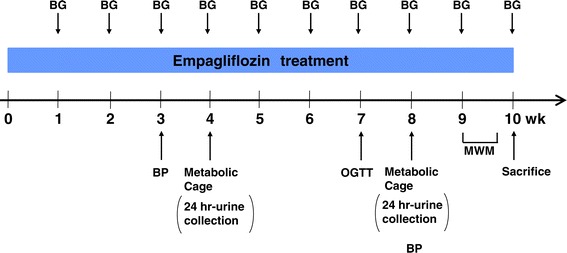
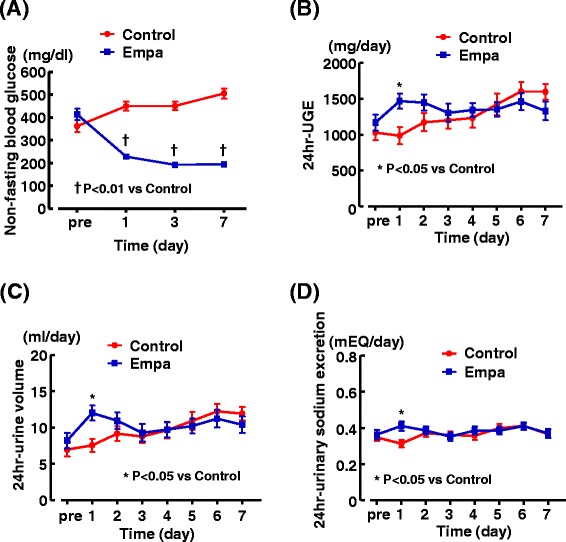
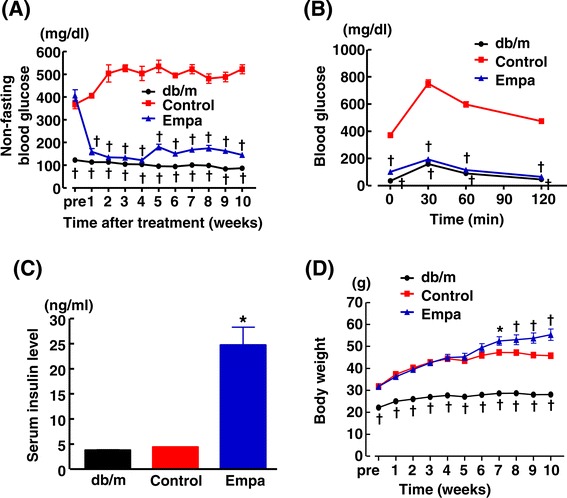
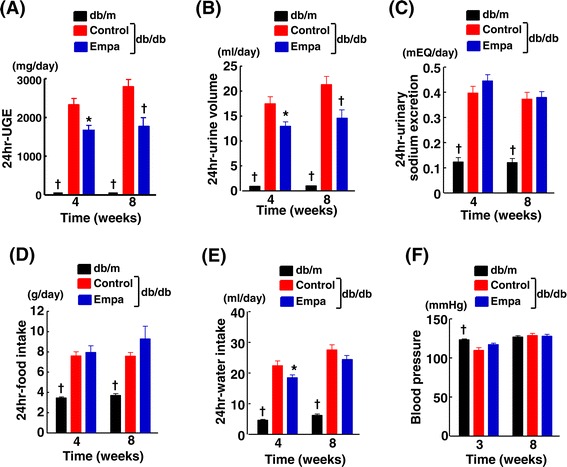
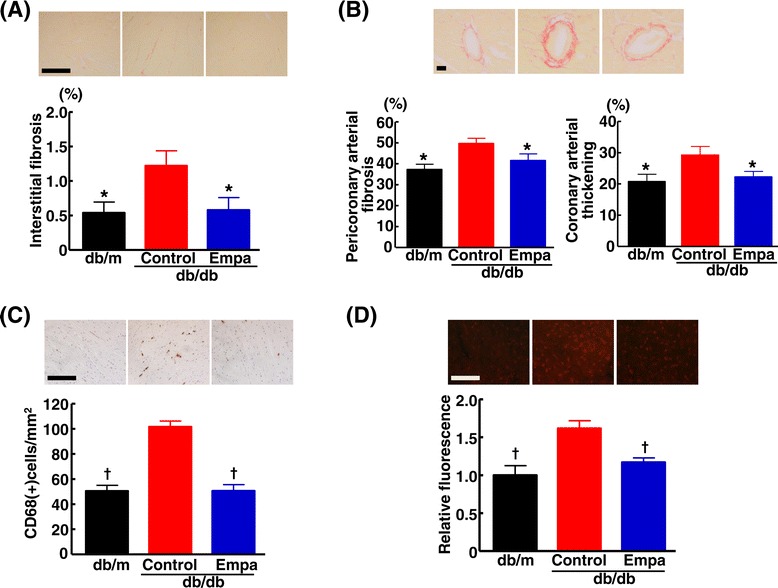
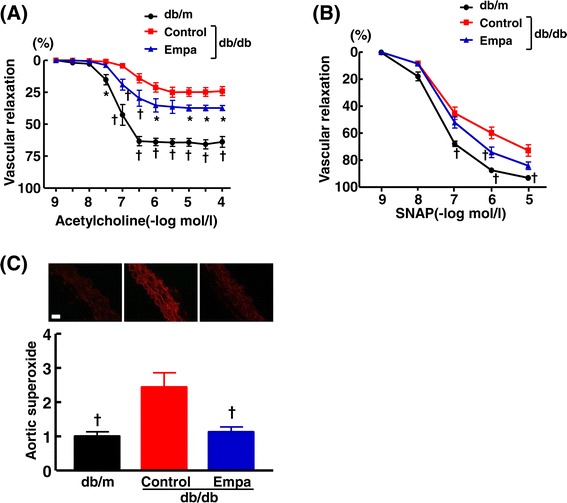
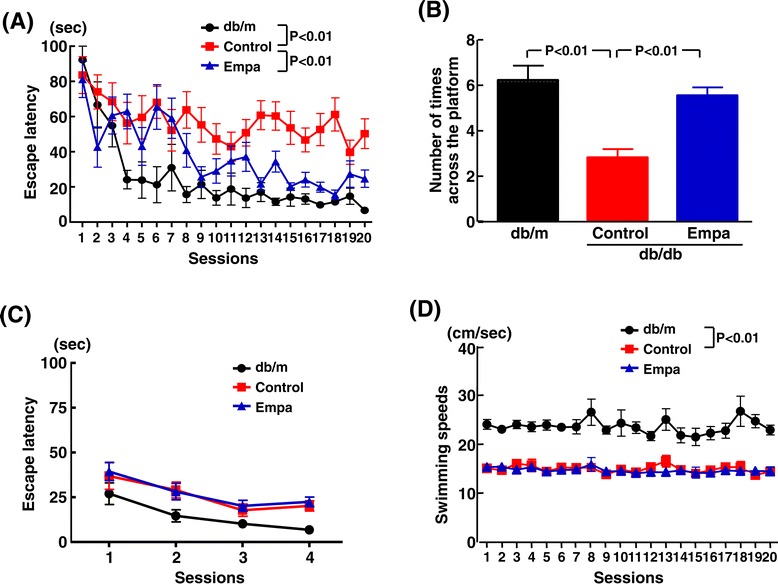
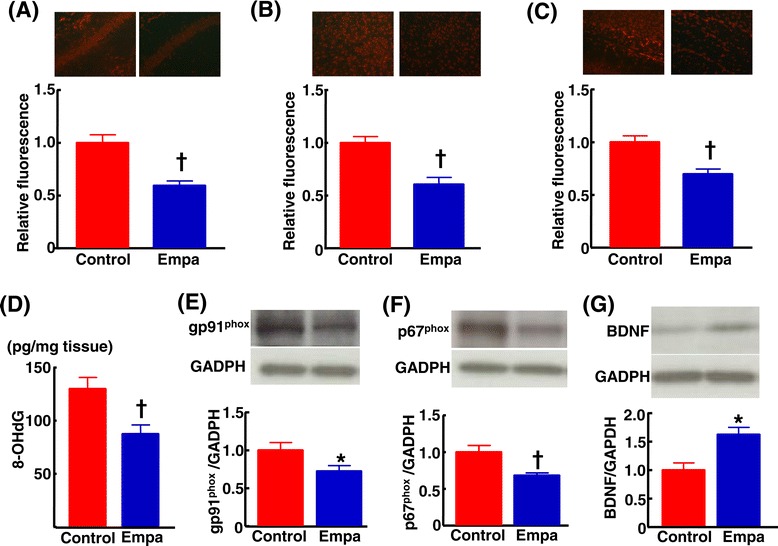
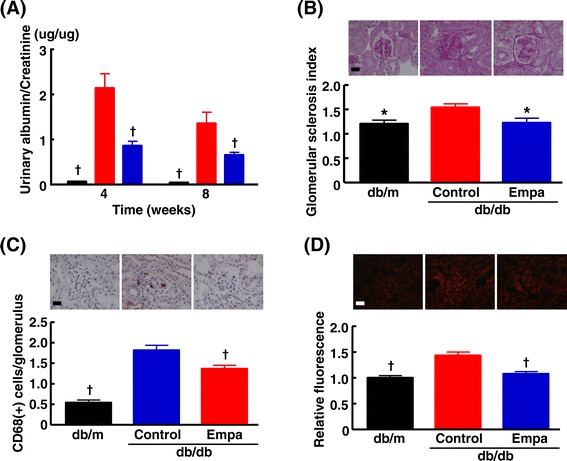
BACKGROUND: There has been uncertainty regarding the benefit of glycemic control with antidiabetic agents in prevention of diabetic macrovascular disease. Further development of novel antidiabetic agents is essential for overcoming the burden of diabetic macrovascular disease. The renal sodium glucose co-transporter 2 (SGLT2) inhibitor is a novel antihyperglycemic agent for treatment of type 2 diabetes. This work was performed to determine whether empagliflozin, a novel SGLT2 inhibitor, can ameliorate cardiovascular injury and cognitive decline in db/db mouse, a model of obesity and type 2 diabetes. METHODS: (1) Short-term experiment: The first experiment was performed to examine the effect of 7 days of empagliflozin treatment on urinary glucose excretion and urinary electrolyte excretion in db/db mice. (2) Long-term experiment: The second experiment was undertaken to examine the effect of 10 weeks of empagliflozin treatment on cardiovascular injury, vascular dysfunction, cognitive decline, and renal injury in db/db mice. RESULTS: (1) Short-term experiment: Empagliflozin administration significantly increased urinary glucose excretion, urine volume, and urinary sodium excretion in db/db mice on day 1, but did not increase these parameters from day 2. However, blood glucose levels in db/db mice were continuously decreased by empagliflozin throughout 7 days of the treatment. (2) Long-term experiment: Empagliflozin treatment caused sustained decrease in blood glucose in db/db mice throughout 10 weeks of the treatment and significantly slowed the progression of type 2 diabetes. Empagliflozin significantly ameliorated cardiac interstitial fibrosis, pericoronary arterial fibrosis, coronary arterial thickening, cardiac macrophage infiltration, and the impairment of vascular dilating function in db/db mice, and these beneficial effects of empagliflozin were associated with attenuation of oxidative stress in cardiovascular tissue of db/db mice. Furthermore, empagliflozin significantly prevented the impairment of cognitive function in db/db mice, which was associated with the attenuation of cerebral oxidative stress and the increase in cerebral brain-derived neurotrophic factor. Empagliflozin ameliorated albuminuria, and glomerular injury in db/db mice. CONCLUSIONS: Glycemic control with empagliflozin significantly ameliorated cardiovascular injury and remodeling, vascular dysfunction, and cognitive decline in obese and type 2 diabetic mice. Thus, empagliflozin seems to be potentially a promising therapeutic agent for diabetic macrovascular disease and cognitive decline.
Overview
The claims and statistics of this paper haven’t been checked yet.
Free: it reads the open-access text and checks the first 5 claims that cite a source we can check. Create a free account to check every claim.
Integrity signals
Registry
Cites
Statistics
Figures
Verification
Claims the paper makes
The claims and statistics of this paper haven’t been checked yet.
Free: it reads the open-access text and checks the first 5 claims that cite a source we can check. Create a free account to check every claim.
Claims other papers make about this one
Each is checked against this paper’s own text: does it say what the citing paper says it does?
In the citing paper
“Another promising effect SGLT2i exert on the central nervous system was described by Lin B. et al., for empagliflozin, which significantly increased cerebral BDNF (Brain-derived neurotrophic factor) levels in db/db mice (Table 1). Moreover, this effect was accompanied by improvement in cognitive functions [31].”
From Neuroprotective effect of SGLT2 inhibitors. (2021) · cites this paper as [31]
Self-check
Percentages, sums and reported differences re-computed from the paper’s own numbers.
The self-check needs the paper’s full text.
Citations
Cites
Stratton, I. M. (2000) · BMJ · doi:10.1136/bmj.321.7258.405 · Cited by 9,059 · cited 3×
“Previous large clinical trials have established that strict glycemic control significantly reduces diabetic microvascular complications such as nephropathy or retinopathy [3-5].”
Effects of Intensive Glucose Lowering in Type 2 Diabetes
(2008) · New England Journal of Medicine · doi:10.1056/nejmoa0802743 · Cited by 7,888
10-year follow-up of intensive glucose control in type 2 diabetes
Holman, R. R., Paul, S. K., Bethel, M. A., Matthews, D. R., & Neil, H. A. W. (2008) · New England Journal of Medicine · doi:10.1056/nejmoa0806470 · Cited by 7,751 · cited 3×
“Previous large clinical trials have established that strict glycemic control significantly reduces diabetic microvascular complications such as nephropathy or retinopathy [3-5].”
The Emerging Risk Factors Collaboration (2010) · The Lancet · doi:10.1016/s0140-6736(10)60484-9 · Cited by 5,125 · cited 2×
“Macrovascular disease is the leading cause of mortality in diabetic patients and the burden of cardiovascular disease due to diabetes mellitus has gone on increasing [1,2].”
Saxagliptin and cardiovascular outcomes in patients with type 2 diabetes mellitus
Scirica, B. M., Bhatt, D. L., Braunwald, E., Steg, P. G., Davidson, J., Hirshberg, B., Ohman, P., Frederich, R., Wiviott, S. D., Hoffman, E. B., et al. (2013) · New England Journal of Medicine · doi:10.1056/nejmoa1307684 · Cited by 3,470
Alogliptin after acute coronary syndrome in patients with type 2 diabetes
White, W. B., Cannon, C. P., Heller, S. R., Nissen, S. E., Bergenstal, R. M., Bakris, G. L., Perez, A. T., Fleck, P. R., Mehta, C. R., Kupfer, S., et al. (2013) · New England Journal of Medicine · doi:10.1056/nejmoa1305889 · Cited by 2,502 · cited 2×
“Furthermore, dipeptidyl-peptidase IV inhibitors, a novel class of antidiabetic agent, have been recently reported to fail to improve cardiovascular outcomes in large clinical trials [6,8,12-14].”
Role of Oxidative Stress in Cardiac Hypertrophy and Remodeling
Takimoto, E., & Kass, D. A. (2007) · Hypertension · doi:10.1161/01.hyp.0000254415.31362.a7 · Cited by 770 · cited 1×
“Accumulating evidence [35-37] establish that hyperglycemia enhances tissue oxidative stress which plays a key role in the pathophysiology of diabetes mellitus and its complications.”
Kaneto, H., Kajimoto, Y., Miyagawa, J., Matsuoka, T., Fujitani, Y., Umayahara, Y., Hanafusa, T., Matsuzawa, Y., Yamasaki, Y., & Hori, M. (1999) · Diabetes · doi:10.2337/diabetes.48.12.2398 · Cited by 712 · cited 1×
“Accumulating evidence [35-37] establish that hyperglycemia enhances tissue oxidative stress which plays a key role in the pathophysiology of diabetes mellitus and its complications.”
Increasing Cardiovascular Disease Burden Due to Diabetes Mellitus: The Framingham Heart Study
Fox, C. S., Coady, S., Sorlie, P. D., D’Agostino, R. B., Pencina, M. J., Vasan, R. S., Meigs, J. B., Levy, D., & Savage, P. J. (2007) · Circulation · doi:10.1161/circulationaha.106.658948 · Cited by 656 · cited 2×
“Macrovascular disease is the leading cause of mortality in diabetic patients and the burden of cardiovascular disease due to diabetes mellitus has gone on increasing [1,2].”
Stranahan, A. M., Arumugam, T. V., Cutler, R. G., Lee, K., Egan, J. M., & Mattson, M. P. (2008) · Nature Neuroscience · doi:10.1038/nn2055 · Cited by 611
Cited by
Items 201–300 of 432
Therapeutic Strategies for Alzheimer’s Disease in the View of Diabetes Mellitus
Ohyagi, Y., Miyoshi, K., & Nakamura, N. (2019) · Advances in experimental medicine and biology · doi:10.1007/978-981-13-3540-2_11 · Cited by 23
Han, T., Fan, Y., Gao, J., Fatima, M., Zhang, Y., Ding, Y., Bai, L., & Wang, C. (2021) · Adipocyte · doi:10.1080/21623945.2021.1979277 · Cited by 24
Abdelsalam, R. M., Hamam, H. W., Eissa, N. M., El-Sahar, A. E., & Essam, R. M. (2024) · Molecular Neurobiology · doi:10.1007/s12035-024-04499-5 · Cited by 22
“Significant values were set at ns, non-significant; * P < 0.05; ** P < 0.01; *** P < 0.001; and **** P < 0.0001 diminution of cerebral oxidative stress and increased brain BDNF levels [43].”
InfluentialUse of SGLT-2 inhibitors in the treatment of type 2 diabetes mellitus
Santos, L. L., de Lima, F. J. C., de Sousa‐Rodrigues, C. F., & Barbosa, F. T. (2017) · Revista da Associação Médica Brasileira · doi:10.1590/1806-9282.63.07.636 · Cited by 26
SGLT-2 Inhibitors and Peripheral Artery Disease: A Statistical Hoax or Reality?
Chatterjee, S., Bandyopadhyay, D., Ghosh, R. K., Majumdar, U., Aneja, A., Lavie, C. J., & DEEDWANIA, P. C. (2018) · Current Problems in Cardiology · doi:10.1016/j.cpcardiol.2018.06.004 · Cited by 23
Camilli, M., Viscovo, M., Maggio, L., Bonanni, A., Torre, I., Pellegrino, C., Lamendola, P., Tinti, L., Teofili, L., Hohaus, S., et al. (2024) · Basic Research in Cardiology · doi:10.1007/s00395-024-01059-9 · Cited by 22
“At the same time, empagliflozin limited cardiac fibrosis by inhibiting the NADPH-oxidase activity following ischemic injury [79].”
Hayden, M. R. (2019) · Brain Sciences · doi:10.3390/brainsci9040083 · Cited by 21
“The f mal DBC [1–4] and its m le cou erpart [5,6] are well-known, extensively studied and accepted models of T2DM, obesity, and insulin resistance [1–6].”
InfluentialThe Impact of SGLT2 Inhibitors in the Heart and Kidneys Regardless of Diabetes Status
Matthews, J. R., Herat, L. Y., Schlaich, M. P., & Matthews, V. B. (2023) · International Journal of Molecular Sciences · doi:10.3390/ijms241814243 · Cited by 28
“When EMPA was administered to db/db mice over a 10-week period, it was shown to significantly ameliorate cardiac interstitial fibrosis, pericoronary arterial thickening, cardiac macrophage infiltration and the impairment of vascular dilation [50].”
InfluentialStanciu, G. D., Ababei, D. C., Solcan, C., Bild, V., Ciobîcă, A., Chiriac, S. I. B., Ciobanu, L., & Tamba, B.-I. (2023) · Pharmaceuticals · doi:10.3390/ph16111620 · Cited by 21
Obesity and Heart Failure with Preserved Ejection Fraction
Koutroumpakis, E., Kaur, R., Taegtmeyer, H., & Deswal, A. M. (2021) · Heart Failure Clinics · doi:10.1016/j.hfc.2021.02.003 · Cited by 25
Cozza, A., Chinigò, C., Filicetti, E., Greco, G. I., Lappano, R., Marinaro, C., Muglia, L., Soraci, L., Corsonello, A., Lattanzio, F., et al. (2025) · Ageing Research Reviews · doi:10.1016/j.arr.2025.102834 · Cited by 20
Ayoub, B. M., Michel, H. E., Mowaka, S., Hendy, M. S., & Tadros, M. M. (2021) · Molecules · doi:10.3390/molecules26040889 · Cited by 22
“Interestingly, empagliflozin treatment significantly increased cerebral BDNF levels [61].”
Ibrahim, N. E., & Januzzi, J. L. (2020) · Clinical Chemistry · doi:10.1093/clinchem/hvaa277 · Cited by 19
Hojná, S., Rauchová, H., Malínská, H., Marková, I., Hüttl, M., Papoušek, F., Behuliak, M., Miklánková, D., Vaňourková, Z., Neckář, J., et al. (2021) · Biomedicine & Pharmacotherapy · doi:10.1016/j.biopha.2021.112246 · Cited by 19
Dapagliflozin for the treatment of chronic kidney disease
Kurata, Y., & Nangaku, M. (2022) · Expert Review of Endocrinology & Metabolism · doi:10.1080/17446651.2022.2099373 · Cited by 21
Pan, G., Deshpande, M., Pang, H., & Palaniyandi, S. S. (2018) · European Journal of Pharmacology · doi:10.1016/j.ejphar.2018.09.021 · Cited by 20
“There are few diabetic animal studies where the beneficial cardiovascular effects of EMP were shown (Gupte et al., 2017; Habibi et al., 2017; Lin et al., 2014).”
Pleiotropic effects of SGLT2 inhibitors: A focus on macrophage-mediated action
Shu, B., Chen, X., Liu, Z., Tang, H., Yang, B., & Fu, C. (2025) · Pharmacological Research · doi:10.1016/j.phrs.2025.108046 · Cited by 21
Expert Consensus on Cognitive Dysfunction in Diabetes
Yang, Y., Zhao, J., & Yu, X. (2022) · Current Medical Science · doi:10.1007/s11596-022-2549-9 · Cited by 18
Diabetes mellitus associated neurovascular lesions in the retina and brain: A review
Sinclair, S. H., Miller, E. S., Talekar, K. S., & Schwartz, S. S. (2022) · Frontiers in Ophthalmology · doi:10.3389/fopht.2022.1012804 · Cited by 22
Empagliflozin reduces brain pathology in Alzheimer’s disease and type 2 diabetes
Hierro‐Bujalance, C., & García-Alloza, M. (2023) · Neural Regeneration Research · doi:10.4103/1673-5374.385865 · Cited by 18
“…probably because of decreased reactive oxygen species production, mitochondrial swelling, and mitochondrial membrane depolarization, supporting altogether that SGLT2i might be an option in the search of therapeutic alternatives to reduce or slow down brain complications AD (Lin et al., 2014).”
Chen, Y., Chang, H., Lin, Y., Chien, K., Hsieh, Y., Chung, F., Lin, C., Lip, G. Y. H., & Chen, S. (2024) · Diabetes/Metabolism Research and Reviews · doi:10.1002/dmrr.3775 · Cited by 20
Abdelgadir, E., Rashid, F., Bashier, A. M., & Ali, R. (2018) · Journal of Clinical Medicine Research · doi:10.14740/jocmr3467w · Cited by 24
“Minor contribution in the reduction of albuminuria could be attributed to the reduction on weight and BP [48-49].”
SGLT2 Inhibitors and Cardiovascular Outcomes: Current Perspectives and Future Potentials
Jia, X., Mehta, P. B., Ye, Y., Alam, M., Birnbaum, Y., & Bajaj, M. (2018) · Current Diabetes Reports · doi:10.1007/s11892-018-1038-9 · Cited by 20
The Na/K-ATPase Signaling and SGLT2 Inhibitor-Mediated Cardiorenal Protection: A Crossed Road?
Liu, J., Tian, J., Sodhi, K., & Shapiro, J. I. (2021) · The Journal of Membrane Biology · doi:10.1007/s00232-021-00192-z · Cited by 19
The Intersection of SGLT2 Inhibitors, Cognitive Impairment, and CKD
Noel, J. A., Hougen, I., & Sood, M. M. (2022) · Frontiers in Neurology · doi:10.3389/fneur.2022.823569 · Cited by 19
“Mice given empagliflozin had improved performance after treatment with SGLT2i, suggesting a role for empagliflozin in preservation and/or improvement in cognitive function (44).”
Biasiotto, G., Zanella, I., Predolini, F., Archetti, I., Cadei, M., Monti, E., Luzzani, M., Pacchetti, B., Mozzoni, P., Andreoli, R., et al. (2018) · British Journal Of Nutrition · doi:10.1017/s0007114518001824 · Cited by 18
“For immunoblot analysis, cell lysates were obtained as previously described((23)).”
Julián, M. T., Alonso, N., Lupón, J., Gavidia‐Bovadilla, G., Ferrer, E., de Antonio, M., López‐Ayerbe, J., Domingo, M., Santiago‐Vacas, E., Zamora, E., et al. (2020) · Cardiovascular Diabetology · doi:10.1186/s12933-020-01011-w · Cited by 20
The role of the intestinal microbiome in cognitive decline in patients with kidney disease
Wagner, C. A., Frey-Wagner, I. M., Ortíz, A., Unwin, R. J., Liabeuf, S., Suzumoto, Y., Iervolino, A., Stasi, A., Marzo, V. D., Gesualdo, L., et al. (2025) · Nephrology Dialysis Transplantation · doi:10.1093/ndt/gfae253 · Cited by 20
Circulating small extracellular vesicles mediate vascular hyperpermeability in diabetes
Gustafson, D., DiStefano, P. V., Wang, X. F., Wu, R., Ghaffari, S., Ching, C., Rathnakumar, K., Alibhai, F. J., Syonov, M., Fitzpatrick, J., et al. (2024) · Diabetologia · doi:10.1007/s00125-024-06120-9 · Cited by 19
Empagliflozin as a new management strategy on outcomes in patients with type 2 diabetes mellitus
Салухов, В. В., & Demidova, T. Y. (2016) · Diabetes Mellitus · doi:10.14341/dm8216 · Cited by 24
“mediating effects on the heart indirectly but is likely to have direct impacts as well [36].”
Williams, J. M., Murphy, S., Wu, W., Border, J. J., Fan, F., & Roman, R. J. (2022) · GeroScience · doi:10.1007/s11357-022-00610-7 · Cited by 17
Sodium-Glucose Cotransporter 2 (SGLT2) Inhibitors: Harms or Unexpected Benefits?
Andreea, M. M., Surabhi, S., Popescu, R.-I., Ciobotaru, L. M., Nicolae, C., Emil, T., & Tiberiu, N. I. (2023) · Medicina · doi:10.3390/medicina59040742 · Cited by 19
“In addition, this effect was accompanied with enhanced cognitive functions [39].”
Katakami, N., Mita, T., Maeda, N., Sato, Y., Watada, H., Shimomura, I., & The UTOPIA Study Investigators (2022) · Cardiovascular Diabetology · doi:10.1186/s12933-022-01451-6 · Cited by 16
Huang, Q., Liu, L., Tan, X., Wang, S., Wang, S., Luo, J., Chen, J., Yang, N., Jiang, J., Liu, Y., et al. (2024) · Journal of Affective Disorders · doi:10.1016/j.jad.2024.05.150 · Cited by 16
Sodium-Glucose Cotransporter-2 Inhibitors in Vascular Biology: Cellular and Molecular Mechanisms
Xiao, L., Nie, X., Cheng, Y., & Wang, N. (2021) · Cardiovascular Drugs and Therapy · doi:10.1007/s10557-021-07216-9 · Cited by 16
“observed that empagliflozin improved coronary arterial thickening and pericoronary fibrosis [47].”
Duran, M., Zıyrek, M., & Alsancak, Y. (2020) · PubMed · doi:10.6515/acs.202011_36(6).20200511a · Cited by 16
Ageev, F. T., & Ovchinnikov, A. G. (2022) · Kardiologiia · doi:10.18087/cardio.2022.7.n2058 · Cited by 16
Pancholia, A. K. (2018) · Indian Heart Journal · doi:10.1016/j.ihj.2018.08.022 · Cited by 18
Lee, H., Chan, Y., Chuang, C., Li, P., Yeh, Y., Hsiao, F., Peng, J., & See, L. (2023) · European Heart Journal - Cardiovascular Pharmacotherapy · doi:10.1093/ehjcvp/pvad004 · Cited by 15
Huang, J., Huang, N., Cui, D., Shi, J., & Qiu, Y. (2023) · Frontiers in Aging Neuroscience · doi:10.3389/fnagi.2023.1122300 · Cited by 16
“A growing numbers evidence indicates that SGLT2i such as empagliflozin (EMP), canagliflozin, dapagliflozin, ertugliflozin, and sotagliflozin have neuroprotective potential in a murine mixed model of T2DM and AD (Lin et al., 2014; Rizvi et al., 2014; Shaikh et al., 2016; HierroBujalance et al., 2020).”
Gholami, M., Coleman‐Fuller, N., Salehirad, M., Darbeheshti, S., & Motaghinejad, M. (2024) · International Journal of Preventive Medicine · doi:10.4103/ijpvm.ijpvm_5_23 · Cited by 16
“[183] investigated the effect of empagliflozin on cerebral oxidative stress and brain‑derived nuclear factor (BDNF) in a mouse model of obesity and T2DM.”
Yen, F., Hung, Y., Huang, J., Hsu, C., Cheng, W., Hwu, C., & Wei, J. C. (2025) · Journal of Internal Medicine · doi:10.1111/joim.20077 · Cited by 15
Rocha‐Pereira, C., Silva, V., Costa, V. M., Silva, R. V. D. S., Garcia, J., Gonçalves‐Monteiro, S., Duarte‐Araújo, M., Santos‐Silva, A., Coimbra, S., Dinis‐Oliveira, R. J., et al. (2019) · EXCLI journal · doi:10.17179/excli2019-1675 · Cited by 21
“…empagliflozin 0.03 %), an inhibitor of the renal sodium/glucose co-transporter 2 (SGLT2) located at the apical membrane of the renal tubular epithelial cells, was able to significantly increase renal sodium excretion in the db/db mice diabetic model, on day 1 of treatment (Lin et al., 2014).”
InfluentialSGLT2 Inhibitors in Type 2 Diabetes Mellitus
Ferrannini, G., Savarese, G., & Cosentino, F. (2022) · Heart Failure Clinics · doi:10.1016/j.hfc.2022.03.009 · Cited by 13
Effect of high-fat diet and empagliflozin on cardiac proteins in mice
Pan, X., Chen, S., Chen, X., Ren, Q., Yue, L., Niu, S., Li, Z., Zhu, R., Chen, X., Jia, Z., et al. (2022) · Nutrition & Metabolism · doi:10.1186/s12986-022-00705-0 · Cited by 16
“By suppressing inflammation and decreasing insulin resistance, SGLT2i has been demonstrated to protect against obesity-induced heart damage [8, 9].”
Mosleh, W., Sharma, A., Sidhu, M. S., Page, B. J., Sharma, U. C., & Farkouh, M. E. (2017) · Cardiovascular Drugs and Therapy · doi:10.1007/s10557-017-6729-y · Cited by 16
Corraliza-Gómez, M., Vargas-Soria, M., & García-Alloza, M. (2025) · Molecular Neurodegeneration · doi:10.1186/s13024-025-00894-1 · Cited by 16
Kashiwagi, A., Yoshida, S., Kawamuki, K., Nakamura, I., Kazuta, K., Ueyama, E., Takahashi, H., Akiyama, N., Kondo, Y., & Ogihara, T. (2016) · Diabetology International · doi:10.1007/s13340-016-0283-x · Cited by 14
“It has also been hypothesized that SGLT2 inhibitors promote renal remodeling [33] and reduce arterial stiffness [34].”
Effects of Thiazolidinedione and New Antidiabetic Agents on Stroke
Ahn, C. H., & Lim, S. K. (2019) · Journal of Stroke · doi:10.5853/jos.2019.00038 · Cited by 14
“Another study showed that empagliflozin treatment mitigated coronary artery thickening and remodeling and vascular dysfunction in db/db mice.(68) Interestingly, SGLT2 inhibitors induce hyperketonemia, which may provide a “thrifty substrate” and lead to cardioprotective effects.”
Ferrannini, G., Savarese, G., & Rydén, L. (2021) · Diabetes Research and Clinical Practice · doi:10.1016/j.diabres.2021.108796 · Cited by 14
Liu, S. M., Wang, L., Wu, X., Wu, J., Liu, D., & Yu, H. (2021) · Microvascular Research · doi:10.1016/j.mvr.2021.104249 · Cited by 14
Anti-apoptotic effects of BDNF-TrkB signaling in the treatment of hemorrhagic stroke
Hasegawa, Y., Cheng, C., Hayashi, K., Takemoto, Y., & Kim‐Mitsuyama, S. (2020) · Brain Hemorrhages · doi:10.1016/j.hest.2020.04.003 · Cited by 15
Self-citationSodium-Glucose Cotransporter-2 Inhibitors in Depression
Liebers, D. T., Ebina, W., & Iosifescu, D. V. (2023) · Harvard Review of Psychiatry · doi:10.1097/hrp.0000000000000374 · Cited by 13
Mascolo, A., Rafaniello, C., di Mauro, G., Ruggiero, D., Campitiello, M. R., Donniacuo, M., Berrino, P. M., Rossi, F., Paolisso, G., & Capuano, A. (2023) · Frontiers in Pharmacology · doi:10.3389/fphar.2023.1245642 · Cited by 14
Riemma, M. A., Mele, E., Donniacuo, M., Telesca, M., Bellocchio, G., Castaldo, G., Rossi, F., Angelis, A. D., Cappetta, D., Urbanek, K., et al. (2024) · Frontiers in Pharmacology · doi:10.3389/fphar.2024.1422740 · Cited by 15
Davri, A. S., Katsenos, A. P., Tulyaganova, G. K., Tzavellas, N. P., Simos, Y. V., Kanellos, F. S., Konitsiotis, S., Dounousi, E. C., Niaka, K., Bellou, S., et al. (2024) · Metabolic Brain Disease · doi:10.1007/s11011-024-01478-6 · Cited by 14
“…agents, such as sodium-glucose co-transporter 2 inhibitors (SGLT2i) have demonstrated their potential neuroprotective role in several studies (Lin et al. 2014; Millar et al. 2017; Hayden et al. 2019; Hierro-Bujalance et al. 2020; Abdel-latif et al. 2020; Katsenos et al. 2022; Michailidis et…”
InfluentialHuelgas, R. G., Peralta, F. G., Fernández, L. C., Galve, E., Casanueva, F. F., Puig‐Domingo, M., Bravo, J. J. M., Orozco‐Beltrán, D., Muñoz, J. E., Torre, E. L. M., et al. (2015) · Revista Clínica Española · doi:10.1016/j.rce.2015.07.003 · Cited by 21
Zıyrek, M., & Duran, M. (2021) · PubMed · doi:10.6515/acs.202105_37(3).20210308b · Cited by 13
Barraclough, J., Patel, S., Yu, J., Neal, B. C., & Arnott, C. G. (2021) · Cells · doi:10.3390/cells10102699 · Cited by 14
“Additionally, reduced superoxide production in the thoracic aorta and improved vasorelaxation in db/db mice with impaired endothelial function due to acetylcholine has also been demonstrated with SGLT2 inhibitor treatment [66].”
He, S., Yao, Y., Yang, N., Wang, Y., Liu, D., Cao, Z. X., Chen, H., Fu, Y., Yang, M., Wang, S., et al. (2022) · Frontiers in Pharmacology · doi:10.3389/fphar.2022.925276 · Cited by 13
“SGLT2 inhibitors in nondiabetic mice improve vascular endothelial function, ameliorate myocardial fibrosis, decrease oxidative stress, and enhance cardiac systolic function (Lin et al., 2014; Joubert et al., 2017; Lee et al., 2018).”
SGLT2 Inhibitors: New Hope for the Treatment of Acute Myocardial Infarction?
Wu, Y., Wang, S., & Wang, L. (2022) · American Journal of Cardiovascular Drugs · doi:10.1007/s40256-022-00545-6 · Cited by 14
“In the field of basic research, a small number of studies have also shown that empagliflozin improves coronary artery thickening and coronary artery fibrosis and reduces systemic and renal artery stiffness [43, 44].”
Translational research on cognitive impairment in chronic kidney disease
Wagner, C. A., Massy, Z. A., Capasso, G., Mattace-Raso, F., Pépin, M., Bobot, M., Zoccali, C., Ferreira, A. C., Hoorn, E. J., Silva, P. H. I., et al. (2024) · Nephrology Dialysis Transplantation · doi:10.1093/ndt/gfae229 · Cited by 16
Hershenson, R., Agmon, I. N., Leshem‐Lev, D., Kornowski, R., & Eisen, A. (2024) · Cardiovascular Diabetology · doi:10.1186/s12933-024-02466-x · Cited by 13
“…a proprotein convertase subtilisin/kexin type 9 (PCSK9) inhibitor on top of empagliflozin, further improved FMD [83]. studies have shown that SGLT2i reduced macrophage activity, another inflammatory factor in the atherosclerotic plaque [84–86], and were able to reduce tissue inflammation [87–93].”
Ali, M. A., Michel, H. E., Menze, E. T., Tadros, M., & Wahdan, S. A. (2025) · European Journal of Pharmacology · doi:10.1016/j.ejphar.2025.177525 · Cited by 12
Yen, F., Hsu, C., Yeh, Y., Cheng, W.-Y., Liao, P., Hwu, C., & Wei, J. C. (2025) · American Journal of Transplantation · doi:10.1016/j.ajt.2025.03.019 · Cited by 12
Abdel-Lah, E. S., Sherkawy, H. S., Mohamed, W. H., Fawy, M. A., Hasan, A. A., Muhammed, A. A., Taha, A. F., Tony, A. A., Hamad, N., & Gamea, M. G. (2025) · Inflammopharmacology · doi:10.1007/s10787-025-01755-5 · Cited by 13
“Also, our outcomes are consistent with the observations of other studies in animal models of dementia and T2DM (Lin et al. 2014; Sa-nguanmoo et al. 2017; Hierro-Bujalance et al. 2020; Mousa et al. 2023).”
Lee, I., Chen, C., Wang, J., Fu, C., Lee, W., Liang, K., Lin, S., & Sheu, W. H. (2017) · Clinica Chimica Acta · doi:10.1016/j.cca.2017.10.023 · Cited by 12
Herat, L. Y., Matthews, J. R., Rakoczy, E. P., Schlaich, M. P., & Matthews, V. B. (2023) · Frontiers in Bioscience-Landmark · doi:10.31083/j.fbl2804083 · Cited by 13
Fioretto, P., & Avogaro, A. (2017) · Expert Opinion on Pharmacotherapy · doi:10.1080/14656566.2017.1300253 · Cited by 13
“Looking at the preclinical data, empagliflozin was shown to significantly ameliorate CV injury, coronary artery remodeling and vascular dysfunction in obese type 2 diabetic mice [111].”
Prevention of cardiac allograft vasculopathy – A new possible indication for SGLT-2 inhibitors?
Rotkvić, P. G., Berković, M. C., Rotkvić, L., & Bulj, N. (2020) · Medical Hypotheses · doi:10.1016/j.mehy.2020.109594 · Cited by 12
Ajudani, R., Zavareh, M. S. R., Karimi‐Sari, H., Safiabadi, M., Dolatimehr, F., Okhovatian, M., Ramezani‐Binabaj, M., & Pishgoo, B. (2017) · Acta cardiologica. Supplementum · doi:10.1080/00015385.2017.1306309 · Cited by 12
“at risk for coronary heart diseases (CHDs) [3,4].”
SGLT2 inhibitors: how do they affect the cardiac cells
Erdoğan, B. R., & Arioglu‐Inan, E. (2024) · Molecular and Cellular Biochemistry · doi:10.1007/s11010-024-05084-z · Cited by 11
“Chronic treatment with empagliflozin improved cardiac interstitial fibrosis and pericoronary arterial fibrosis in db/db mice which was attributed to reduced myocardial oxidative stress [21].”
Liu, T., Lin, Y., Yu, T., Wu, J., & Lai, C. (2025) · Diabetes Research and Clinical Practice · doi:10.1016/j.diabres.2025.112197 · Cited by 11
Hazar‐Yavuz, A. N., Yildiz, S., KELEŞ, R., Çam, M. E., & Kabasakal, L. (2022) · Journal of Research in Pharmacy · doi:10.29228/jrp.128 · Cited by 15
“Studies with dapagliflozin [28], empagliflozin [29], and canagliflozin [30], SGLT2 inhibitors, have shown that these drugs improve cognitive function.”
Chen, X., Huang, L., Cui, L., Xiao, Z., Xiong, X., & Chen, C. (2022) · The Journal of Physiology · doi:10.1113/jp283259 · Cited by 14
“…colleagues report that empagliflozin treatment increases brain-derived neurotrophic factor, the decline of which is associated with cognitive dysfunction (Franzmeier et al., 2021), and decreases cerebral oxidative stress, which is association with cognitive impairment as well (Lin et al., 2014).”
Ekici, M., Güngör, H., Karayığıt, M. Ö., Turgut, N. H., Koҫkaya, M., Karataş, Ö., & Üner, A. G. (2022) · Biology Bulletin · doi:10.1134/s1062359022130039 · Cited by 11
Dapagliflozin Ameliorates Neural Damage in the Heart and Kidney of Diabetic Mice
Donoiu, I., Târtea, G. C., Sfredel, V., Raicea, V. C., Țucă, A.-M., Preda, A. N., Cozma, D. C., & Vatasescu, R. G. (2023) · Biomedicines · doi:10.3390/biomedicines11123324 · Cited by 12
“This mechanism offers a high safety profile for patients, being independent of the mechanism of action of insulin and, also, of the function of pancreatic beta cells, with a significant reduction in the risk of hypoglycemia [11].”
Hong, B., Lee, H., Choi, A., Kim, W. J., Cho, Y. M., Yon, D. K., & Shin, J. (2024) · Diabetes & Metabolism · doi:10.1016/j.diabet.2024.101581 · Cited by 11
Yamagishi, S., & Matsui, T. (2016) · Rejuvenation Research · doi:10.1089/rej.2015.1738 · Cited by 11
Pan, G., Roy, B., Giri, S., Lanfear, D. E., Thandavarayan, R. A., Guha, A., Ortiz, P. A., & Palaniyandi, S. S. (2022) · International Journal of Molecular Sciences · doi:10.3390/ijms231810439 · Cited by 13
“There are few diabetic animal studies where the beneficial cardiovascular effects of EMP were shown [26,35,36], including our previous study in which EMP was shown to improve cardiac function and exercise tolerance in the same animal model by diminishing hyperglycemia-mediated 4HNE adducts [15].”
Niikawa, T., Ozeki, T., Kato, M., & Ikoma, Y. (2008) · Horticultural Research (Japan) · doi:10.2503/hrj.7.123 · Cited by 11
Empagliflozin Protects against Haloperidol Experimentally-Induced Ovarian Toxicity
Abdelzaher, W. Y., WAARD, M. M. D., Abdelmonaem, A. A., Ali, D., El‐Tahawy, N. F. G., Rifaai, R. A., Mohamed, H. A., Shaheen, K., El-Din, M. A. Z., Welson, N. N., et al. (2023) · Pharmaceuticals · doi:10.3390/ph16020168 · Cited by 11
“Attenuation of oxidative stress, inflammation, and apoptosis are considered some of the postulated mechanisms of EMPA effects in tissue protection [26,27].”
Chen, Z., Wu, X., Yang, Q., Zhao, H., Ying, H., Liu, H., Wang, C., Zheng, R., Lin, H., Wang, S., et al. (2024) · The Journal of Clinical Endocrinology & Metabolism · doi:10.1210/clinem/dgae635 · Cited by 12
Xiong, S., Huang, L., Liu, H., Zhang, X., Li, M., Cui, Y.-B., Shao, C., & Hu, X. (2025) · World Journal of Diabetes · doi:10.4239/wjd.v16.i2.97287 · Cited by 11
Gliflozins in hypertension: basic mechanisms and clinical insights
Rieg, T., Liu, R., & Staruschenko, A. (2025) · American Journal of Physiology-Renal Physiology · doi:10.1152/ajprenal.00119.2025 · Cited by 10
Kamel, A. S. E. D., Farrag, S. M., Mansour, H. M., Nassar, N. N., & Saad, M. A. (2023) · Expert Opinion on Therapeutic Targets · doi:10.1080/14728222.2023.2206955 · Cited by 12
Nabrdalik-Leśniak, D., Nabrdalik, K., Irlik, K., Janota, O., Kwiendacz, H., Szromek‐Białek, P., Maziarz, M., Stompór, T. P., Gumprecht, J., & Lip, G. Y. H. (2023) · Endokrynologia Polska · doi:10.5603/ep.a2023.0039 · Cited by 13
SGLT2 Inhibitors in Aging-Related Cardiovascular Disease: A Review of Potential Mechanisms
Zhang, Y., He, Y., Liu, S., Deng, L., Zuo, Y., Huang, K., Liao, B., Li, G., & Feng, J. (2023) · American Journal of Cardiovascular Drugs · doi:10.1007/s40256-023-00602-8 · Cited by 10
Borikar, S. P., Sonawane, D. S., Tapre, D. N., & Jain, S. P. (2024) · International Journal of Neuroscience · doi:10.1080/00207454.2024.2342973 · Cited by 12
“Moreover, in earlier research empagliflozin was significantly prevented the impairment of cognitive function in animals, which was associated with the attenuation of cerebral oxidative stress and the increase in cerebral brain-derived neurotrophic factor [22].”
Cardiovascular safety of therapies for type 2 diabetes
Gupta, P. K., & White, W. B. (2016) · Expert Opinion on Drug Safety · doi:10.1080/14740338.2017.1239707 · Cited by 11
“Similarly, another study in diabetic mice showed significant reduction in cardiac interstitial fibrosis, coronary arterial thickening, coronary arterial remodeling, vascular dysfunction, cardiac interstitial macrophage infiltration and cardiac superoxide levels after 10 weeks of empagliflozin treatment [37].”
Lee, H., Chan, Y., Hsu, T., Chuang, C., Li, P., Yeh, Y., Su, H., Hsiao, F., & See, L. (2024) · Clinical Pharmacology & Therapeutics · doi:10.1002/cpt.3304 · Cited by 9
“33,34 However, further studies are needed to elucidate the precise mechanisms underlying the cardioprotective effects of SGLT2i in patients with T2D after AMI.”
Александровна, П. В., Сысоев, Ю. И., Poveryaeva, M. A., Bunyat, A. V., Karev, V. E., Ивкин, Д. Ю., Суханов, Д. С., Шустов, Е. Б., & Оковитый, С. В. (2020) · Bulletin of Russian State Medical University · doi:10.24075/vrgmu.2020.034 · Cited by 9
Jürgens, M., Schou, M., Hasbak, P., Kjær, A., Wolsk, E., Zerahn, B., Wiberg, M., Brandt, N., Gæde, P., Rossing, P. R., et al. (2019) · BMJ Open · doi:10.1136/bmjopen-2019-029098 · Cited by 9
“16 17 Thus, part of the underlying effect of empagliflozin in EMPA-REG OUTCOME could be driven by improvement in myocardial microcirculation.”
Wang, S., Wu, T., Zuo, Z., Jin, P., Luo, X., & Deng, M. (2021) · European Journal of Preventive Cardiology · doi:10.1093/eurjpc/zwab099 · Cited by 9
Effect of empagliflozin on cytoskeletal repair in the hippocampus of obese mice
Chen, X., Ma, L., Zhao, J., Pan, X., & Chen, S. (2022) · Frontiers in Neuroscience · doi:10.3389/fnins.2022.1000839 · Cited by 9
Beneficial cardiovascular and remodeling effects of SGLT 2 inhibitors
Chrysant, S. G., & Chrysant, G. S. (2022) · Expert Review of Cardiovascular Therapy · doi:10.1080/14779072.2022.2057949 · Cited by 8
“Improvement in vascular function Early studies with phlorizin, a non-selective SGLT receptor inhibitor have shown that inhibition of glucose entry into the vascular smooth muscle cells modulated intracellular calcium levels and serotonin-induced contraction [69].”
Zhang, S., Wang, F., Xie, L., Xu, J., Song, X., Tao, J., Chen, J., Ma, D., Yu, X., Shi, X., et al. (2024) · Journal of Diabetes Investigation · doi:10.1111/jdi.14306 · Cited by 8
“Recent studies using a mouse model of type 2 diabetes reported that glycemic control with empagli fl ozin signi fi cantly ameliorates cognitive decline 14 .”
Borikar, S. P., Chitode, G. V., Tapre, D. N., Lokwani, D. K., & Jain, S. P. (2024) · International Journal of Neuroscience · doi:10.1080/00207454.2024.2414270 · Cited by 10
“…drug-drug interactions, in addition to being highly selective for sGlt2 in comparison to other sGlt2i includes dapagliflozin and canagliflozin etc. [21]. therefore, it is necessity to screen safe and less interacting antidepressant medications in a model of depression that has good face validity…”
Interactions between antidiabetes medications and heart–brain axis
Ong, L. T., & Sia, C. (2024) · Current Opinion in Endocrinology Diabetes and Obesity · doi:10.1097/med.0000000000000896 · Cited by 8
Cognitive Benefits of Sodium-Glucose Co-Transporters-2 Inhibitors in the Diabetic Milieu
Yaribeygi, H., Maleki, M., Sathyapalan, T., Rizzo, M., & Sahebkar, A. (2023) · Current Medicinal Chemistry · doi:10.2174/0929867330666230202163513 · Cited by 10
Metadata
- Authors
- Lin, B., Koibuchi, N., Hasegawa, Y., Sueta, D., Toyama, K., Uekawa, K., Ma, M., Nakagawa, T., Kusaka, H., & Kim-Mitsuyama, S.
- Affiliations
- Kumamoto University (JP)
- Venue
- Cardiovascular Diabetology
- Published
- 2014-10-26
- Volume
- 13
- Issue
- 1
- Pages
- 148-148
- ISSN
- 1475-2840 (ISSN-L)
- PMC
- PMC4219031
- OpenAlex
- W2124658554
- Cited by
- 423
- References
- 45
- Citations by year
- 2026: 19 · 2025: 37 · 2024: 40 · 2023: 41 · 2022: 54 · 2021: 58 · 2020: 39 · 2019: 40 · 2018: 33 · 2017: 25 · 2016: 20 · 2015: 15
- FWCI
- 16.10
- Type
- journal article
- Language
- en
- Open access
- gold
- doi.org
- Locations
- Cardiovascular Diabetology (publishedVersion, cc-by)
- PubMed Central (publishedVersion, cc-by)
- PubMed (publishedVersion)
- Topics
- Health Sciences › Medicine › Endocrinology, Diabetes and Metabolism › Diabetes Treatment and Management
- Health Sciences › Medicine › Endocrinology, Diabetes and Metabolism › Diabetes Management and Research
- Health Sciences › Medicine › Nephrology › Chronic Kidney Disease and Diabetes
- Keywords
- empagliflozin, SGLT2 inhibitors, type 2 diabetes, obesity, db/db mice, glycemic control, cardiovascular damage, diabetic macrovascular disease, myocardial fibrosis, vascular dysfunction, cognitive decline, oxidative stress, brain-derived neurotrophic factor, albuminuria, kidney injury, urinary glucose excretion, urinary electrolyte excretion, diabetic nephropathy
- MeSH terms
- Sodium-Glucose Transporter 2 Inhibitors, Animals, Benzhydryl Compounds, Blood Glucose, Cardiovascular Diseases, Cognition Disorders, Diabetes Mellitus, Experimental, Diabetes Mellitus, Type 2, Glucosides, Hypoglycemic Agents, Male, Mice, Inbred C57BL, Obesity, Sodium-Glucose Transporter 2
About these checks
Registry, retraction, Cites and statistics results are computed, not judged, with one exception: a printed reference that no index lists is read once by a model before it counts as a citation error. Claims are extracted by a model and kept only when their quote appears verbatim in the text; each cited source is then checked, with a model’s help, for whether it says what the claim relies on. Those verdicts can be wrong — read the claim’s quote and the cited source before relying on one.
Statistics and arithmetic are recomputed, not judged.
Confidence bands are shown only for fields calibrated on our annotated test set. None is calibrated yet, so no band is shown.
What counts as a claim ›How we measure confidence ›How we check this ›
Are you an author, or do you see a problem with this page? Request a review
Data sources
Bibliographic data: Semantic Scholar, OpenAlex, Crossref.
Contains information from the Semantic Scholar Academic Graph Datasets, made available under the ODC Attribution License (ODC-BY 1.0).
Semantic Scholar’s data is described in: Kinney, R., et al. (2023). The Semantic Scholar Open Data Platform. arXiv:2301.10140.
