

Glycemic control with empagliflozin, a novel selective SGLT2 inhibitor, ameliorates cardiovascular injury and cognitive dysfunction in obese and type 2 diabetic mice
Open accessThe DOI matches its Crossref record; 45 of the 45 references it cites were found in a registry or an index.
Abstract
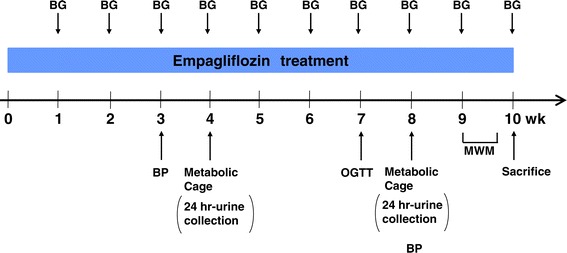
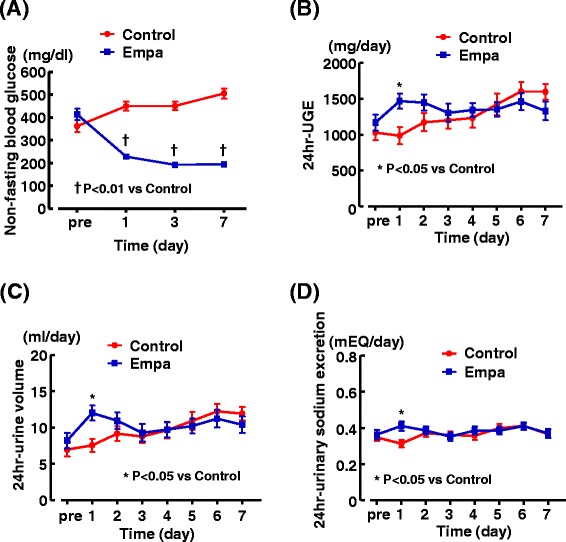
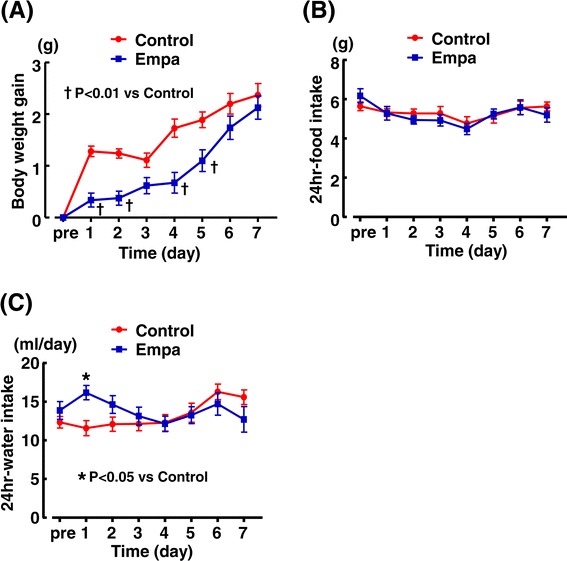
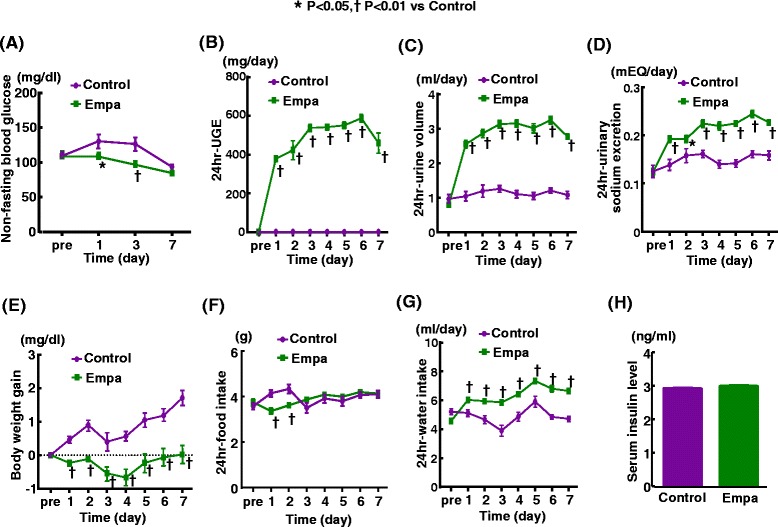
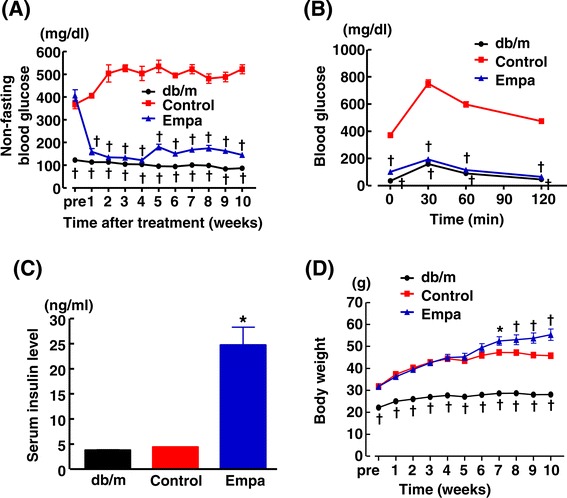
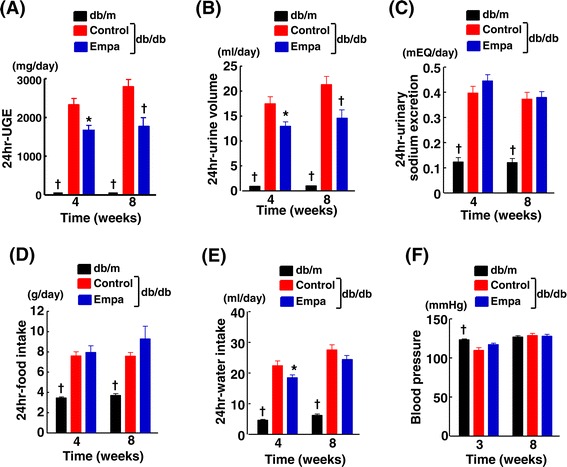
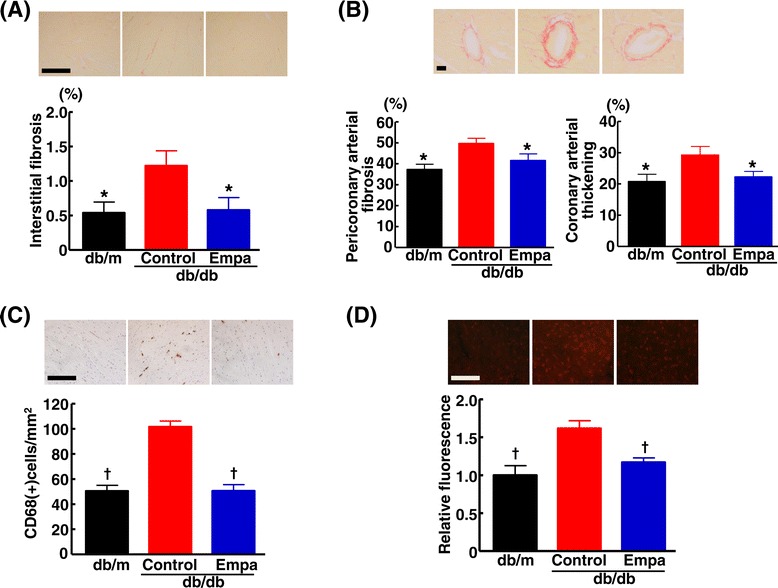
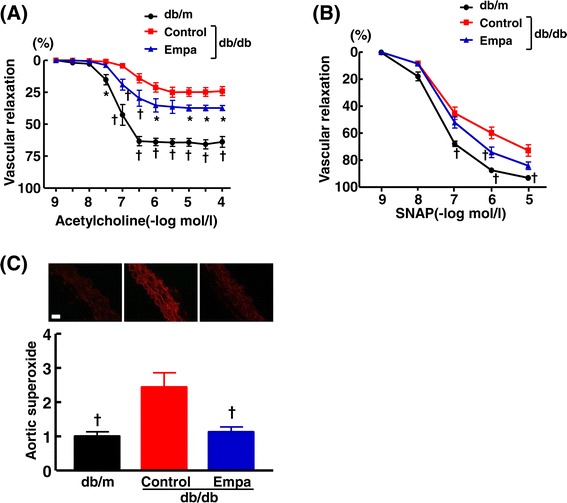
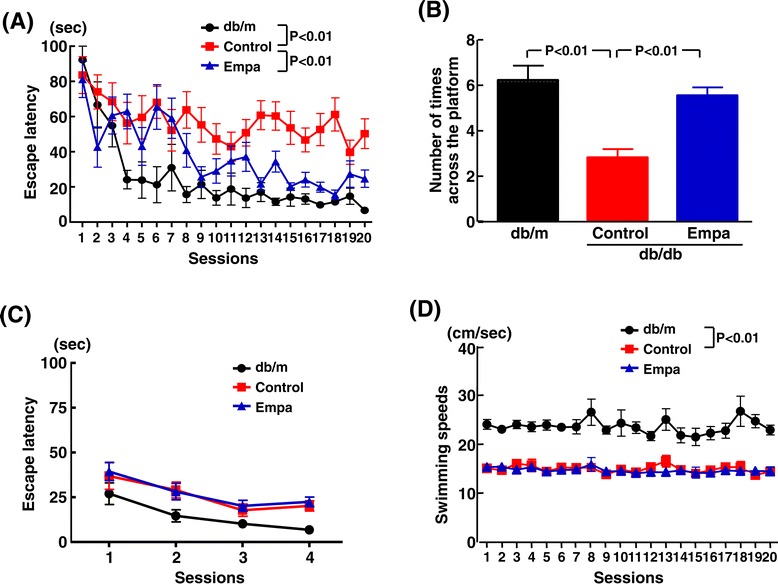
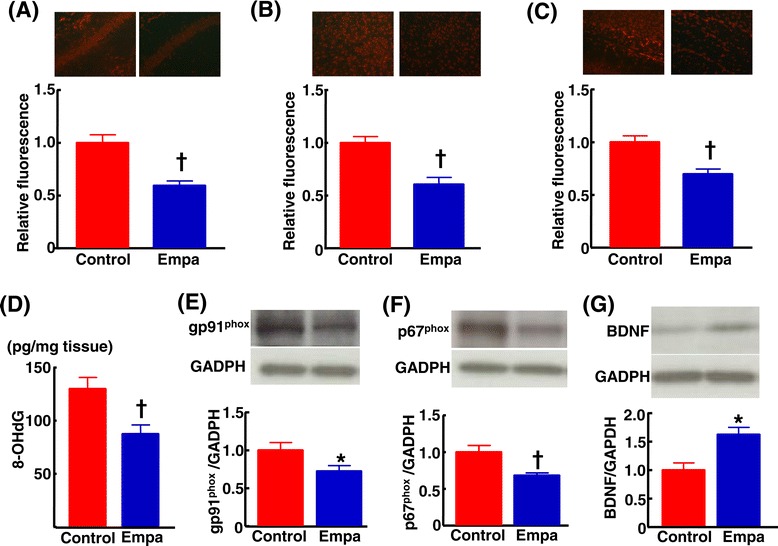
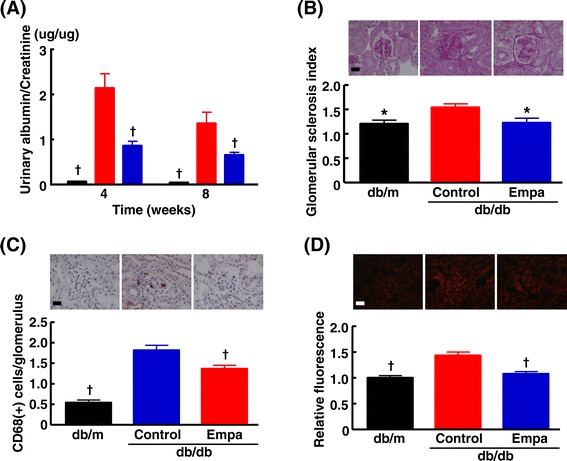
BACKGROUND: There has been uncertainty regarding the benefit of glycemic control with antidiabetic agents in prevention of diabetic macrovascular disease. Further development of novel antidiabetic agents is essential for overcoming the burden of diabetic macrovascular disease. The renal sodium glucose co-transporter 2 (SGLT2) inhibitor is a novel antihyperglycemic agent for treatment of type 2 diabetes. This work was performed to determine whether empagliflozin, a novel SGLT2 inhibitor, can ameliorate cardiovascular injury and cognitive decline in db/db mouse, a model of obesity and type 2 diabetes. METHODS: (1) Short-term experiment: The first experiment was performed to examine the effect of 7 days of empagliflozin treatment on urinary glucose excretion and urinary electrolyte excretion in db/db mice. (2) Long-term experiment: The second experiment was undertaken to examine the effect of 10 weeks of empagliflozin treatment on cardiovascular injury, vascular dysfunction, cognitive decline, and renal injury in db/db mice. RESULTS: (1) Short-term experiment: Empagliflozin administration significantly increased urinary glucose excretion, urine volume, and urinary sodium excretion in db/db mice on day 1, but did not increase these parameters from day 2. However, blood glucose levels in db/db mice were continuously decreased by empagliflozin throughout 7 days of the treatment. (2) Long-term experiment: Empagliflozin treatment caused sustained decrease in blood glucose in db/db mice throughout 10 weeks of the treatment and significantly slowed the progression of type 2 diabetes. Empagliflozin significantly ameliorated cardiac interstitial fibrosis, pericoronary arterial fibrosis, coronary arterial thickening, cardiac macrophage infiltration, and the impairment of vascular dilating function in db/db mice, and these beneficial effects of empagliflozin were associated with attenuation of oxidative stress in cardiovascular tissue of db/db mice. Furthermore, empagliflozin significantly prevented the impairment of cognitive function in db/db mice, which was associated with the attenuation of cerebral oxidative stress and the increase in cerebral brain-derived neurotrophic factor. Empagliflozin ameliorated albuminuria, and glomerular injury in db/db mice. CONCLUSIONS: Glycemic control with empagliflozin significantly ameliorated cardiovascular injury and remodeling, vascular dysfunction, and cognitive decline in obese and type 2 diabetic mice. Thus, empagliflozin seems to be potentially a promising therapeutic agent for diabetic macrovascular disease and cognitive decline.
Overview
The claims and statistics of this paper haven’t been checked yet.
Free: it reads the open-access text and checks the first 5 claims that cite a source we can check. Create a free account to check every claim.
Integrity signals
Registry
Cites
Statistics
Figures
Verification
Claims the paper makes
The claims and statistics of this paper haven’t been checked yet.
Free: it reads the open-access text and checks the first 5 claims that cite a source we can check. Create a free account to check every claim.
Claims other papers make about this one
Each is checked against this paper’s own text: does it say what the citing paper says it does?
In the citing paper
“Another promising effect SGLT2i exert on the central nervous system was described by Lin B. et al., for empagliflozin, which significantly increased cerebral BDNF (Brain-derived neurotrophic factor) levels in db/db mice (Table 1). Moreover, this effect was accompanied by improvement in cognitive functions [31].”
From Neuroprotective effect of SGLT2 inhibitors. (2021) · cites this paper as [31]
Self-check
Percentages, sums and reported differences re-computed from the paper’s own numbers.
The self-check needs the paper’s full text.
Citations
Cites
Stratton, I. M. (2000) · BMJ · doi:10.1136/bmj.321.7258.405 · Cited by 9,059 · cited 3×
“Previous large clinical trials have established that strict glycemic control significantly reduces diabetic microvascular complications such as nephropathy or retinopathy [3-5].”
Effects of Intensive Glucose Lowering in Type 2 Diabetes
(2008) · New England Journal of Medicine · doi:10.1056/nejmoa0802743 · Cited by 7,888
10-year follow-up of intensive glucose control in type 2 diabetes
Holman, R. R., Paul, S. K., Bethel, M. A., Matthews, D. R., & Neil, H. A. W. (2008) · New England Journal of Medicine · doi:10.1056/nejmoa0806470 · Cited by 7,751 · cited 3×
“Previous large clinical trials have established that strict glycemic control significantly reduces diabetic microvascular complications such as nephropathy or retinopathy [3-5].”
The Emerging Risk Factors Collaboration (2010) · The Lancet · doi:10.1016/s0140-6736(10)60484-9 · Cited by 5,125 · cited 2×
“Macrovascular disease is the leading cause of mortality in diabetic patients and the burden of cardiovascular disease due to diabetes mellitus has gone on increasing [1,2].”
Saxagliptin and cardiovascular outcomes in patients with type 2 diabetes mellitus
Scirica, B. M., Bhatt, D. L., Braunwald, E., Steg, P. G., Davidson, J., Hirshberg, B., Ohman, P., Frederich, R., Wiviott, S. D., Hoffman, E. B., et al. (2013) · New England Journal of Medicine · doi:10.1056/nejmoa1307684 · Cited by 3,470
Alogliptin after acute coronary syndrome in patients with type 2 diabetes
White, W. B., Cannon, C. P., Heller, S. R., Nissen, S. E., Bergenstal, R. M., Bakris, G. L., Perez, A. T., Fleck, P. R., Mehta, C. R., Kupfer, S., et al. (2013) · New England Journal of Medicine · doi:10.1056/nejmoa1305889 · Cited by 2,502 · cited 2×
“Furthermore, dipeptidyl-peptidase IV inhibitors, a novel class of antidiabetic agent, have been recently reported to fail to improve cardiovascular outcomes in large clinical trials [6,8,12-14].”
Role of Oxidative Stress in Cardiac Hypertrophy and Remodeling
Takimoto, E., & Kass, D. A. (2007) · Hypertension · doi:10.1161/01.hyp.0000254415.31362.a7 · Cited by 770 · cited 1×
“Accumulating evidence [35-37] establish that hyperglycemia enhances tissue oxidative stress which plays a key role in the pathophysiology of diabetes mellitus and its complications.”
Kaneto, H., Kajimoto, Y., Miyagawa, J., Matsuoka, T., Fujitani, Y., Umayahara, Y., Hanafusa, T., Matsuzawa, Y., Yamasaki, Y., & Hori, M. (1999) · Diabetes · doi:10.2337/diabetes.48.12.2398 · Cited by 712 · cited 1×
“Accumulating evidence [35-37] establish that hyperglycemia enhances tissue oxidative stress which plays a key role in the pathophysiology of diabetes mellitus and its complications.”
Increasing Cardiovascular Disease Burden Due to Diabetes Mellitus: The Framingham Heart Study
Fox, C. S., Coady, S., Sorlie, P. D., D’Agostino, R. B., Pencina, M. J., Vasan, R. S., Meigs, J. B., Levy, D., & Savage, P. J. (2007) · Circulation · doi:10.1161/circulationaha.106.658948 · Cited by 656 · cited 2×
“Macrovascular disease is the leading cause of mortality in diabetic patients and the burden of cardiovascular disease due to diabetes mellitus has gone on increasing [1,2].”
Stranahan, A. M., Arumugam, T. V., Cutler, R. G., Lee, K., Egan, J. M., & Mattson, M. P. (2008) · Nature Neuroscience · doi:10.1038/nn2055 · Cited by 611
Cited by
Items 301–400 of 432
Hypothalamic sex-specific metabolic shift by canagliflozin during aging
Jayarathne, H. S. M., Sullivan, R. P., Stilgenbauer, L., Debarba, L. K., Kuchumov, A., Koshko, L., Scofield, S., Liu, W., Ginsburg, B. C., Miller, R. A., et al. (2024) · GeroScience · doi:10.1007/s11357-024-01214-z · Cited by 9
SGLT2 Inhibitors: Glucotoxicity and Tumorigenesis Downstream the Renal Proximal Tubule?
Bertinat, R., Nualart, F., & Yáñez, A. J. (2015) · Journal of Cellular Physiology · doi:10.1002/jcp.25286 · Cited by 8
“Although this correction in glomerular hyperfiltration has shown to have (Tahara et al., 2012; Lin et al., 2014;Vallonet al., 2014)or havenot (Cherney et al., 2014; Gangadharan Komala et al., 2014;Ojima et al., 2015) an impacton the amountof albuminpresent in theultrafiltrate, the fact JOURNAL OF…”
Jankowska, A., Wesołowska, A., Pawłowski, M., & Chłoń‐Rzepa, G. (2019) · Current Medicinal Chemistry · doi:10.2174/0929867326666191011144818 · Cited by 8
Mechanisms of Sodium-glucose Cotransporter 2 Inhibitors in Heart Failure
Wei, J., & Du, J. (2023) · Cardiovascular Innovations and Applications · doi:10.15212/cvia.2023.0028 · Cited by 10
“By decreasing myocardial macrophage infiltration and inflammatory factors, and enhancing anti-inflammatory factors, animal studies have demonstrated that SGLT2i decrease cardiac inflammation in models of diabetic cardiomyopathy, myocardial ischemia, and HF [59, 60].”
SGLT2 inhibitors and the changing landscape for treatment of diabetes
Liu, S., Lam, A. P., Wazir, A., & Cheema, A. N. (2019) · Therapeutics and Clinical Risk Management · doi:10.2147/tcrm.s207515 · Cited by 8
Khayari, A. E., Hakam, S. M., Malka, G., Rochette, L., & Fatimy, R. E. (2023) · Genes & Diseases · doi:10.1016/j.gendis.2023.101174 · Cited by 8
Cardiovascular and Renal Outcomes of Newer Anti-Diabetic Medications in High-Risk Patients
Lawrence, L., Menon, V., & Kashyap, S. R. (2018) · Current Cardiology Reports · doi:10.1007/s11886-018-1005-8 · Cited by 7
Lim, S. K. (2019) · Diabetes Obesity and Metabolism · doi:10.1111/dom.13696 · Cited by 9
“inhibitors mitigate the thickening and remodelling of coronary arteries and improve vascular function in db/db mice.(17) In a randomized controlled trial, dapagliflozin treatment reduced total body weight by reducing fat mass,(18) which supports the hypothesis that caloric loss from glycosuria, and not fluid loss, is…”
Lee, I., Sheu, W. H., Lee, W., & Chen, D. (2018) · Scientific Reports · doi:10.1038/s41598-018-23791-8 · Cited by 8
Yamazaki, D., Konishi, Y., Morikawa, T., Kobara, H., Masaki, T., Hitomi, H., Osafune, K., Nakano, D., Kittikulsuth, W., & Nishiyama, A. (2020) · Journal of Diabetes Investigation · doi:10.1111/jdi.13205 · Cited by 11
Rotkvić, P. G., Ćelap, I., Lang, V. B., Jug, J., Snagic, A., Šipoš, I. H., & Berković, M. C. (2023) · Journal of Diabetes and its Complications · doi:10.1016/j.jdiacomp.2023.108541 · Cited by 8
Cheng, L., Zhang, L., Liu, J., Li, W., Bai, X., Li, R., Li, B., Wang, L., Zhou, J., Wu, Y., et al. (2020) · Disease Markers · doi:10.1155/2020/7054596 · Cited by 7
“risk for cardiovascular disease and adverse outcomes [33, 34].”
Empagliflozin Protects Against Oxidative Stress in the Diabetic Brain by Inducing H2S Formation
Özbek, E. N., Yeşilyurt, Z. E., Makal, M., Arioglu‐Inan, E., & Yetik-Anacak, G. (2025) · Pharmaceuticals · doi:10.3390/ph18091259 · Cited by 6
“Another shared neuroprotective mechanism involves the elevation of brain-derived neurotrophic factor (BDNF) levels [29,30] and inhibition of NLRP3 (NOD-, LRR-, and pyrin-domain-containing protein 3) inflammasome activation [17,31].”
Симаненкова, А. В., Станиславовна, Ф. О., Тимкина, Н. В., Суфиева, Д. А., Kirik, O. V., Korzhevsky, D. E., Vlasov, T. D., & Каронова, Т. Л. (2024) · Problems of Endocrinology · doi:10.14341/probl13336 · Cited by 6
“Данное положитель-ное влияние препарата, по мнению авторов, наиболее вероятно, связано с уменьшением выраженности оксида-тивного стресса и сопровождается усилением экспрессии мозгового нейротрофического фактора, BDNF [23].”
Reducing Alzheimer’s disease risk with SGLT2 inhibitors: From glycemic control to neuroprotection
Alami, M., Morvaridzadeh, M., Khayari, A. E., Boumezough, K., Fatimy, R. E., Khalil, A., Fülöp, T., & Berrougui, H. (2025) · Ageing Research Reviews · doi:10.1016/j.arr.2025.102751 · Cited by 6
Selimkhanov, J., Thompson, W. C., Guo, J., Hall, K. D., & Musante, C. J. (2017) · International Journal of Obesity · doi:10.1038/ijo.2017.93 · Cited by 7
Lambadiari, V., Dimitriadis, G., & Kadoglou, N. P. E. (2018) · Heart Failure Reviews · doi:10.1007/s10741-018-9690-3 · Cited by 6
“In addition to the potential favorable effects of SGLT2i on arterial vasculature, a mouse study has shown that empagliflozin administration reduced cardiac interstitial fibrosis, cardiac remodeling and macrophage infiltration, vascular dysfunction, and myocardial superoxide levels, while improving endothelial function…”
Hayden, M. R. (2019) · Adipobiology · doi:10.14748/adipo.v10.6539 · Cited by 8
“Previously, mean glucose ranges have been shown to be in the range of 100 mg/dL in the heterozygous lean non-diabetic (CKC) models; 500 mg/dL for the homozygous obese, insulin resistant and diabetic db/db (DBC) male and female models and in the 200 mg/dL range in the EMPA treated models of the db/ db mice (16, 31).”
InfluentialGuiraud, V., Sauce, D., Bittar, R., Fernández, J., Thévenet, H., Teyssou, E., Alkouri, R., Bonnefont‐Rousselot, D., Marcelin, A., Cálvez, V., et al. (2025) · Infectious Diseases Now · doi:10.1016/j.idnow.2025.105040 · Cited by 8
Hendy, M. S., Mowaka, S., Elkady, E. F., El‐Zaher, A. A., & Ayoub, B. M. (2023) · Journal of Separation Science · doi:10.1002/jssc.202200921 · Cited by 5
Когнітивні порушення при цукровому діабеті типу 2: роль гіпоглікемізуючої терапії
Pashkovska, N. V. (2021) · INTERNATIONAL JOURNAL OF ENDOCRINOLOGY (Ukraine) · doi:10.22141/2224-0721.14.1.2018.127097 · Cited by 10
Dong, X., Ren, L., Liu, Y., Yin, X., Cui, S., Gao, W., & Yu, L. (2021) · Medicine · doi:10.1097/md.0000000000026420 · Cited by 6
Kawade, S., Ogiso, K., Shayo, S. C., Obo, T., Arimura, A., Hashiguchi, H., Deguchi, T., & Nishio, Y. (2023) · Journal of Diabetes Investigation · doi:10.1111/jdi.13981 · Cited by 6
Lee, M. J., Bae, J. H., Khang, A. R., Kang, Y. H., Kim, J. Y., Kim, S. H., Lee, S. Y., Woo, S. H., Park, M., Park, S., et al. (2025) · Diabetes Metabolic Syndrome and Obesity · doi:10.2147/dmso.s515384 · Cited by 4
Werida, R. H., Khedr, N. F., Khairat, I., & Khedr, L. A. (2025) · European Journal of Pharmacology · doi:10.1016/j.ejphar.2025.178244 · Cited by 4
Milori, P. H., Armelin, L. M., Mutarelli², A. M., & Caramelli, P. (2025) · Journal of Alzheimer s Disease · doi:10.1177/13872877251395086 · Cited by 5
Anagnostakis, F., Kokkorakis, M., Nagarajan, S., Anastasiou, G., & Mantzoros, C. S. (2025) · Diabetes Obesity and Metabolism · doi:10.1111/dom.70336 · Cited by 7
Uno, H., Itokazu, T., & Yamashita, T. (2025) · Communications Biology · doi:10.1038/s42003-025-07696-7 · Cited by 5
Sun, M., Wang, X., Lu, Z., Yang, Y., Lv, S., Miao, M., Chen, W., Wu, S., & Zhang, J. (2025) · Diabetes Obesity and Metabolism · doi:10.1111/dom.16403 · Cited by 5
Position statement of the SEMI, SED, redGDPS, SEC, SEEDO, SEEN, SEMERGEN y SEMFYC
Huelgas, R. G., Peralta, F. G., Fernández, L. C., Galve, E., Casanueva, F. F., Puig‐Domingo, M., Bravo, J. J. M., Beltrán, D. O., Muñoz, J. E., Torre, E. L. M., et al. (2015) · Revista Clínica Española (English Edition) · doi:10.1016/j.rceng.2015.09.004 · Cited by 5
Kagota, S., Maruyama‐Fumoto, K., McGuire, J. J., & Shinozuka, K. (2021) · Journal of Cardiovascular Pharmacology and Therapeutics · doi:10.1177/10742484211001853 · Cited by 4
SGLT2 inhibitors for the treatment of diabetes: a patent review (2019–23)
Baghel, R., Chhikara, N., Kumar, P., & Tamrakar, A. K. (2024) · Expert Opinion on Therapeutic Patents · doi:10.1080/13543776.2024.2379929 · Cited by 6
Jin, H. Y., Kim, K. W., Lee, K. A., Park, T. S., Kim, M. J., & Kim, J. S. (2025) · Endocrine · doi:10.1007/s12020-025-04227-6 · Cited by 3
Gurgoglione, F. L., Covani, M., Triglia, L. T., Benatti, G., Donelli, D., Bianconcini, M., Solinas, E., Tadonio, I., Denegri, A., Gregorio, M. D., et al. (2025) · Life · doi:10.3390/life15111784 · Cited by 3
“Collectively, these multifaceted effects may lead to a reduction in the atherosclerotic burden after SGLT2i therapy, as evidenced by a decrease in the number and extent of atherosclerotic lesions in both diabetic and normoglycemic models of atherosclerosis [30,35,37].”
Aoki, Y. (2015) · Tropical Medicine & Surgery · doi:10.4172/2329-9088.1000199 · Cited by 3
“I agree with this idea, and expect that SGLT2 inhibitors can be used as a new oral osmotic diuretic to excrete water with a little sodium into urine [11-13] for non-diabetic patients with heart failure as well.”
Hariyanto, T. I., Vatvani, A. D., & Yanto, T. A. (2025) · Journal of Lipid and Atherosclerosis · doi:10.12997/jla.2025.14.3.326 · Cited by 3
“24 For instance, an experimental study in mice demonstrated reductions in cardiac oxidative stress, interstitial fibrosis, and macrophage infiltration with empagliflozin.”
Thirunavukarasu, S., Brown, L., Chowdhary, A., Jex, N., Swoboda, P., Greenwood, J. P., Plein, S., & Levelt, E. (2021) · Diabetes and Vascular Disease Research · doi:10.1177/14791641211021585 · Cited by 3
Yu, J., & Gao, B. (2021) · Diabetology & Metabolic Syndrome · doi:10.1186/s13098-021-00747-z · Cited by 3
Neuroprotective potential of gliflozins
Kokin, A. S., & Суплотова, Л. А. (2023) · Diabetes Mellitus · doi:10.14341/dm13085 · Cited by 3
Singh, M. P., Agrawal, N. K., Agrawal, A., Kushwah, S. S., Krishna, E., & Singh, J. M. (2024) · Cureus · doi:10.7759/cureus.60919 · Cited by 6
“RAAS activation is thought to contribute to tubular magnesium uptake, possibly via solvent drag [18].”
Metabolic Syndrome and Metabolic Dysfunction‐Associated Fatty Liver Disease
Koo, B. K., & Lim, S. K. (2022) · Wiley eBooks · doi:10.1002/9781119695257.ch13 · Cited by 3
Abdel-Lah, E. S., Hamad, N., Taha, A. F., Mohamed, W. H., Fawy, M. A., Attaai, A., Abbas, F. Y. A., Sherkawy, H. S., Abdelwarith, A. M., & Gamea, M. G. (2025) · Drug Development Research · doi:10.1002/ddr.70180 · Cited by 3
“The findings indicate a correlation with decreased levels of OS markers within the brain (Lin et al. 2014).”
Roslan, A. A., Shah, T. M. H. T. M., Saffian, S. M., John, L. J., Ramli, M. D. C., Nassir, C. M. N. C. M., Mahadi, M. K., & Hein, Z. M. (2026) · Pharmaceuticals · doi:10.3390/ph19010166 · Cited by 2
“Two studies did not report any temperature control as part of the husbandry conditions, a factor that may confound the assessment of animal behaviour [20,29].”
InfluentialOsman, S. T., Elzahhar, P. A., Hakim, M. A., Sanni, A., Hamdy, N. A., Purba, W. T., Bhuiyan, M. M. A. A., Onigbinde, S. B., Sandilya, V., Hassan, N. W., et al. (2026) · British Journal of Pharmacology · doi:10.1111/bph.70331 · Cited by 2
“Similarly, research has shown the potential for SGLT2i to reduce brain oxidative stress and oxidative damage, particularly in db/db mice (Lin et al., 2014).”
Singh, B., & Baweja, R. K. (2026) · Journal of Affective Disorders · doi:10.1016/j.jad.2026.121702 · Cited by 3
Sezen, S., Burul, F., Okkay, U., Karadayı, M., Özkaraca, M., Bayram, C., Gülşahin, Y., Okkay, I. F., & Güllüce, M. (2026) · Inflammopharmacology · doi:10.1007/s10787-026-02241-2 · Cited by 2
“…addition to improving glycemic control, to restore mitochondrial function, and to exert neuroprotective effects by suppressing signaling pathways involved in neuroinflam - matory responses (Lin et al. 2014 ; Yaribeygi et al. 2019 ; Hsieh and Sung 2022 ; Mohammed et al. 2024 ; Sezen and Burul 2026).”
Malik, A., Cheung, D. Y. C., Ledingham, D. A., Desautels, D. N., Herrmann, J., Singal, P. K., & Jassal, D. S. (2026) · Journal of Cellular and Molecular Medicine · doi:10.1111/jcmm.71161 · Cited by 2
“The effects of EMPA on reducing cardiac fibrosis has been previously reported in other disease models as well including hypertension [14], diabetes [38] and postmyocar-dial infarction [39].”
Korbut, A. I., Ananishnikova, E. A., Орлов, Н. Б., Bgatova, N. P., Muraleva, N. A., Zavyalov, E. L., Konenkov, V. I., & Klimontov, V. V. (2026) · International Journal of Molecular Sciences · doi:10.3390/ijms27146483 · Cited by 2
“Moreover, an increase in body weight was reported in db/db mice treated with empagliflozin [40,54–56].”
Ziegler, D., Kempler, P., Bala, C. G., Mankovsky, B., Schnell, O., Spallone, V., Stirban, A. O., & Tesfaye, S. H. (2026) · Diabetology & Metabolic Syndrome · doi:10.1186/s13098-026-02241-w · Cited by 3
“In obese mice with T2D, empa-gliflozin increased cerebral levels of brain-derived neurotrophic factor (BDNF) by alleviating neuronal oxidative stress [38].”
(2024) · Frontiers research topics · doi:10.3389/978-2-8325-4643-7 · Cited by 3
BDNF Levels and Cognitive Function in Patients with Type 2 Diabetes Treated with SGLT2 Inhibitors
Şekerci, B. S., Demirhan, Ş., ÇALIŞICI, E., & Şekerci, A. (2025) · Bezmialem Science · doi:10.14235/bas.galenos.2024.38268 · Cited by 2
Pagel, P. S., Hang, D., Freed, J. K., & Crystal, G. J. (2025) · Journal of Cardiothoracic and Vascular Anesthesia · doi:10.1053/j.jvca.2025.06.015 · Cited by 5
El-Mezayen, N. S., Noah, A. A., & El-Ganainy, S. O. (2025) · European Journal of Pharmaceutical Sciences · doi:10.1016/j.ejps.2025.107251 · Cited by 3
Aoki, Y. (2015) · Diabetes Research - Open Journal · doi:10.17140/droj-1-111 · Cited by 2
Цукровий діабет і хвороба Альцгеймера
Pashkovska, N. V., Pankiv, V. І., Гринько, Н. В., & Pashkovska, O. (2021) · INTERNATIONAL JOURNAL OF ENDOCRINOLOGY (Ukraine) · doi:10.22141/2224-0721.15.3.2019.172103 · Cited by 2
Role of Sodium-Glucose Co-transporters on Cardiac Function in Metabolic Syndrome Mammalians
Turan, B. (2020) · Springer eBooks · doi:10.1007/978-3-030-47336-5_7 · Cited by 2
use of SGLT2 inhibitors in the treatment of cognitive disorders
Lato, M., Iberszer, K., Litwiniuk, M., Zaniuk, M., HURKAŁA, K., ANTONIK, D., Denys, B., Góra, K., Zimnicki, P., & Zdziennicki, W. (2023) · Journal of Education Health and Sport · doi:10.12775/jehs.2023.25.01.003 · Cited by 2
SGLT2 inhibitors and their possible use in prevention and treatment of neurological diseases
Sobczyk, M., Żuraw, D., Oleksa, P., Jasiński, K., Porzak, M., & Dacka, M. (2024) · Prospects in Pharmaceutical Sciences · doi:10.56782/pps.176 · Cited by 2
Potential Role of SGLT2 Inhibitors in the Treatment and Prevention of Diabetic Cardiomyopathy
Nandave, M. (2024) · Springer eBooks · doi:10.1007/978-981-97-7568-2_5 · Cited by 2
Schernthaner-Reiter, M. H., & Schernthaner, G. (2016) · Expert Review of Endocrinology & Metabolism · doi:10.1586/17446651.2016.1151783 · Cited by 1
“rated albuminuria and glomerular injury [169,170].”
Mechanism for the association between diabetes or anti‐diabetic medications and incident dementia
Araki, A. (2025) · Geriatrics and gerontology international/Geriatrics & gerontology international · doi:10.1111/ggi.70066 · Cited by 1
Zhang, L., Cai, L., Lin, H., Wu, W., Zhu, L., Cai, J., Hu, C., Lin, X., Sun, H., & Wei, X. (2025) · European Journal of Neuroscience · doi:10.1111/ejn.70221 · Cited by 1
“In a study by Lin et al. (2014), empagliflozin was able to prevent cognitive dysfunction in mice by decreasing oxidative stress in the brain and increasing brain-derived neurotrophic factor, which promotes neuronal differentiation, maturation, and survival (Medina and Avila 2014), and was able to…”
Li, S., Wang, Y., & Gong, Q. (2025) · Frontiers in Endocrinology · doi:10.3389/fendo.2025.1641699 · Cited by 5
Agrawal, N. K., & Phirke, Y. H. (2025) · Elsevier eBooks · doi:10.1016/b978-0-443-33355-2.00037-2 · Cited by 1
Abdel‐Aal, R. A., Meligy, F. Y., Kamel, G., & Ashry, I. E.-S. M. (2026) · European Journal of Pharmacology · doi:10.1016/j.ejphar.2026.178581 · Cited by 1
Chorazy, N., Wojnar‐Lason, K., Gdula, A. M., Fels, B., Stojak, M., Karaś, A., Motrapu, M., Anders, H., Kusche‐Vihrog, K., & Pacia, M. Z. (2026) · Biochemical Pharmacology · doi:10.1016/j.bcp.2026.117890 · Cited by 1
Grasso, M., Maggio, V., Caraci, F., & Rizzo, M. (2026) · Advances in Therapy · doi:10.1007/s12325-026-03760-8 · Cited by 1
To overcome two diseases with one pill
Mogi, M., & Horiuchi, M. (2016) · Hypertension Research · doi:10.1038/hr.2016.3 · Cited by 1
Aoki, Y. (2016) · Diabetes Research - Open Journal · doi:10.17140/droj-2-128 · Cited by 1
Gan, H., Tang, H. Y., Huang, Y., Wang, D., Pu, P., & Zuo, Z. (2021) · Reviews in Cardiovascular Medicine · doi:10.31083/j.rcm2203069 · Cited by 1
Ovchinnikov, A. G., Borisov, A. A., Zherebchikova, K., Рябцева, О. Ю., Gvozdeva, A. D., Masenko, V. P., & Ageev, F. T. (2021) · Russian Cardiology Bulletin · doi:10.17116/cardiobulletin20211603160 · Cited by 1
Jang, H. Y., Kim, I., & Oh, J. M. (2023) · Pharmaceutics · doi:10.3390/pharmaceutics15102394 · Cited by 1
庞, 樱. (2024) · Advances in Clinical Medicine · doi:10.12677/acm.2024.1472081 · Cited by 1
A translational viewpoint explaining its potential salutary effects
de Leeuw, A. E., & de Boer, R. A. (2016) · European Heart Journal - Cardiovascular Pharmacotherapy · doi:10.1093/ehjcvp/pvw015 · Cited by 1
Cho, Y., & Kang, E. S. (2018) · Journal of Lipid and Atherosclerosis · doi:10.12997/jla.2018.7.1.21
Baker, H. E. (2020) · Purdue University Indianapolis (Indiana University) · doi:10.7912/c2/2031
The Effects and the Mechanisms of Sodium Glucose Cotransporter-2 Inhibition in Heart Failure
Gong, H. (2020) · Interventions in Obesity & Diabetes · doi:10.31031/iod.2020.03.000571
“Myocardial fibrosis that was observed in obese and type 2 diabetic mice was alleviated after empagliflozin treatment through reducing cardiac macrophage infiltration [18].”
Utilising the therapeutic potential of xenin and related molecules for diabetes and obesity
Craig, S. L. (2020) · Ulster University Research Portal (Ulster University)
Direct cardial effects and mechanisms of cardiovascular action of gliflosins
Zverev, Y. F., & Rykunova, A. Y. (2021) · Reviews on Clinical Pharmacology and Drug Therapy · doi:10.17816/rcf192131-143
Afzal, M., Al-Abbasi, F. A., Nadeem, M. S., Alshehri, S., Ghoneim, M. M., Imam, S. S., Almalki, W. H., & Kazmi, I. A. (2021) · Metabolites · doi:10.3390/metabo11110794 · Cited by 1
Sewage sludge treatment by membrane anaerobic system (MAS)
Musliha, M. (2010) · UMP Institutional Repository (Universiti Malaysia Pahang)
Wang, L., & Guo, X. (2022) · Medicine · doi:10.1097/md.0000000000028636
Колесников, О. Л., Колесникова, А. А., & Тарабрина, Ю. О. (2021) · Естественные и Технические Науки · doi:10.37882/2223-2966.2021.11.10
“Приведенные факты свидетельствуют о коррекции нарушения когнитивных способностей у животных с СД2 [33].”
Influential(2020) · Вестник Российского государственного медицинского университета · doi:10.24075/brsmu.2020-03
Цивунін, В. В., Штриголь, С. Ю., Настека, М. В., & Нехороша, Є. O. (2022) · Pharmacology and Drug Toxicology · doi:10.33250/16.03.147
El-Naas, R., Barenbaum, S. R., Shukla, A. P., & Aronne, L. J. (2023) · Contemporary Endocrinology · doi:10.1007/978-3-031-39721-9_10
Low, S. K. M. (2022) · DR-NTU (Nanyang Technological University) · doi:10.32657/10356/171362
Bruckert, C. (2021) · theses.fr (ABES) · doi:10.70675/0a1360f5zce53z4d18z81c5z60d8560bda79 · Cited by 2
Cardiovascular and Renal Benefits of Sodium-Glucose Cotransporter 2 Inhibitors
赵, 晨. (2024) · Advances in Clinical Medicine · doi:10.12677/acm.2024.14102644
Nandave, M. (2024) · Springer eBooks · doi:10.1007/978-981-97-7568-2_3
Pleiotropic Effects of Renal Disease Management: Role of SGLT2 Inhibitors
Calderón-Lojero, I. O., Valdez-Ortiz, R., & Sanchez-Pozos, K. A. (2025) · BENTHAM SCIENCE PUBLISHERS eBooks · doi:10.2174/9789815305692125010018
Malakapogu, P., Shyma, Z., Shetty, S., Bagchi, D., & Miraj, S. S. (2025) · Elsevier eBooks · doi:10.1016/b978-0-443-33355-2.00032-3
Lee, H.-F., Chen, S.-W., Liu, J.-R., Li, P.-R., Wu, L.-S., Chang, S., Yeh, Y., Kuo, C.-T., Chan, Y., & See, L.-C. (2020) · Figshare · doi:10.6084/m9.figshare.13031320
Katakami, N., Mita, T., Yoshii, H., Shiraiwa, T., Yasuda, T., Okada, Y., Torimoto, K., Umayahara, Y., Kaneto, H., Osonoi, T., et al. (2021) · Figshare · doi:10.6084/m9.figshare.13521225
Metadata
- Authors
- Lin, B., Koibuchi, N., Hasegawa, Y., Sueta, D., Toyama, K., Uekawa, K., Ma, M., Nakagawa, T., Kusaka, H., & Kim-Mitsuyama, S.
- Affiliations
- Kumamoto University (JP)
- Venue
- Cardiovascular Diabetology
- Published
- 2014-10-26
- Volume
- 13
- Issue
- 1
- Pages
- 148-148
- ISSN
- 1475-2840 (ISSN-L)
- PMC
- PMC4219031
- OpenAlex
- W2124658554
- Cited by
- 423
- References
- 45
- Citations by year
- 2026: 19 · 2025: 37 · 2024: 40 · 2023: 41 · 2022: 54 · 2021: 58 · 2020: 39 · 2019: 40 · 2018: 33 · 2017: 25 · 2016: 20 · 2015: 15
- FWCI
- 16.10
- Type
- journal article
- Language
- en
- Open access
- gold
- doi.org
- Locations
- Cardiovascular Diabetology (publishedVersion, cc-by)
- PubMed Central (publishedVersion, cc-by)
- PubMed (publishedVersion)
- Topics
- Health Sciences › Medicine › Endocrinology, Diabetes and Metabolism › Diabetes Treatment and Management
- Health Sciences › Medicine › Endocrinology, Diabetes and Metabolism › Diabetes Management and Research
- Health Sciences › Medicine › Nephrology › Chronic Kidney Disease and Diabetes
- Keywords
- empagliflozin, SGLT2 inhibitors, type 2 diabetes, obesity, db/db mice, glycemic control, cardiovascular damage, diabetic macrovascular disease, myocardial fibrosis, vascular dysfunction, cognitive decline, oxidative stress, brain-derived neurotrophic factor, albuminuria, kidney injury, urinary glucose excretion, urinary electrolyte excretion, diabetic nephropathy
- MeSH terms
- Sodium-Glucose Transporter 2 Inhibitors, Animals, Benzhydryl Compounds, Blood Glucose, Cardiovascular Diseases, Cognition Disorders, Diabetes Mellitus, Experimental, Diabetes Mellitus, Type 2, Glucosides, Hypoglycemic Agents, Male, Mice, Inbred C57BL, Obesity, Sodium-Glucose Transporter 2
About these checks
Registry, retraction, Cites and statistics results are computed, not judged, with one exception: a printed reference that no index lists is read once by a model before it counts as a citation error. Claims are extracted by a model and kept only when their quote appears verbatim in the text; each cited source is then checked, with a model’s help, for whether it says what the claim relies on. Those verdicts can be wrong — read the claim’s quote and the cited source before relying on one.
Statistics and arithmetic are recomputed, not judged.
Confidence bands are shown only for fields calibrated on our annotated test set. None is calibrated yet, so no band is shown.
What counts as a claim ›How we measure confidence ›How we check this ›
Are you an author, or do you see a problem with this page? Request a review
Data sources
Bibliographic data: Semantic Scholar, OpenAlex, Crossref.
Contains information from the Semantic Scholar Academic Graph Datasets, made available under the ODC Attribution License (ODC-BY 1.0).
Semantic Scholar’s data is described in: Kinney, R., et al. (2023). The Semantic Scholar Open Data Platform. arXiv:2301.10140.
