

Glycemic control with empagliflozin, a novel selective SGLT2 inhibitor, ameliorates cardiovascular injury and cognitive dysfunction in obese and type 2 diabetic mice
Open accessThe DOI matches its Crossref record; 45 of the 45 references it cites were found in a registry or an index.
Abstract
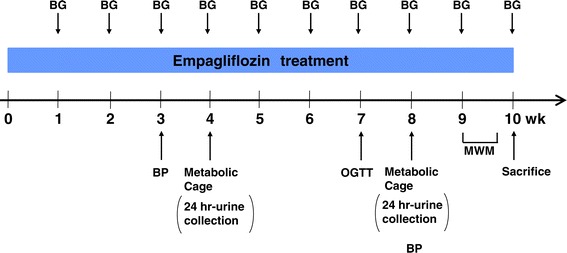
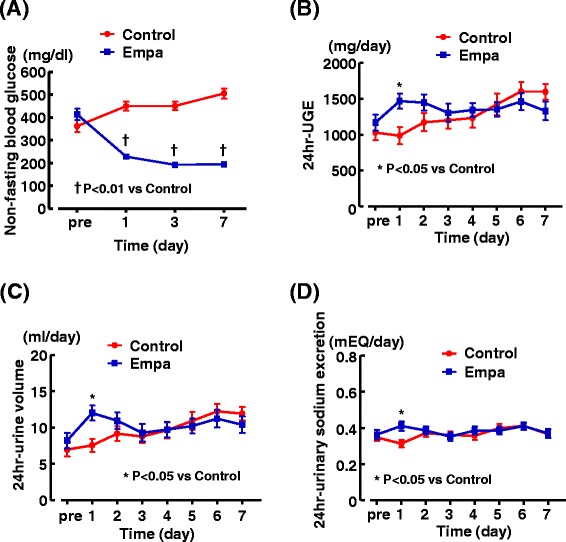
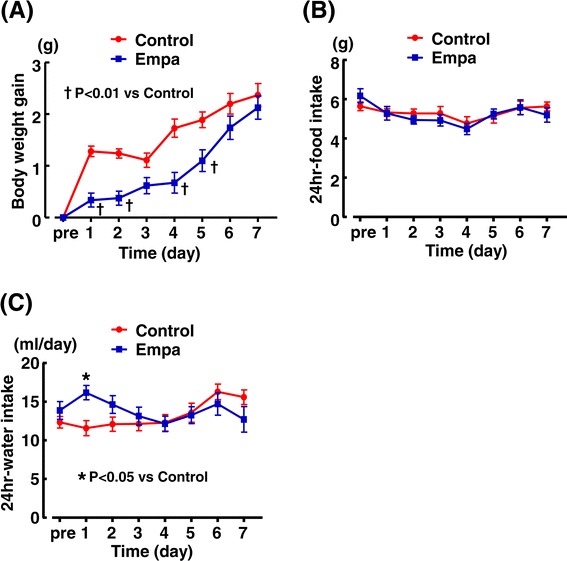
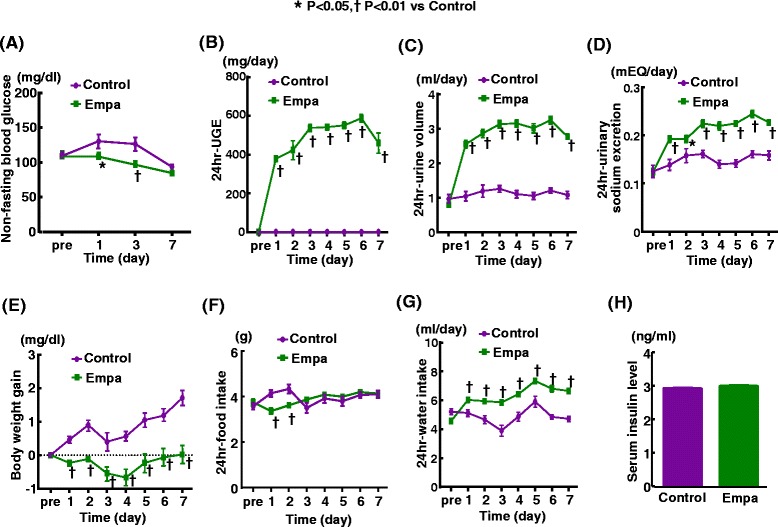
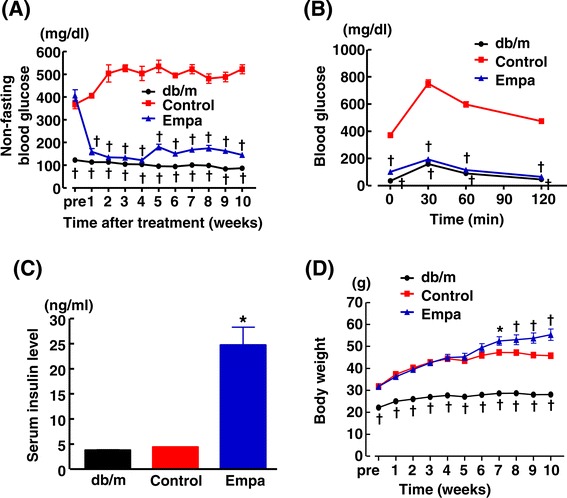
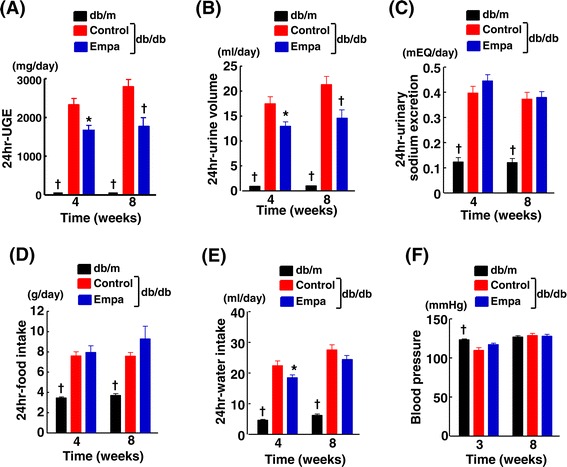
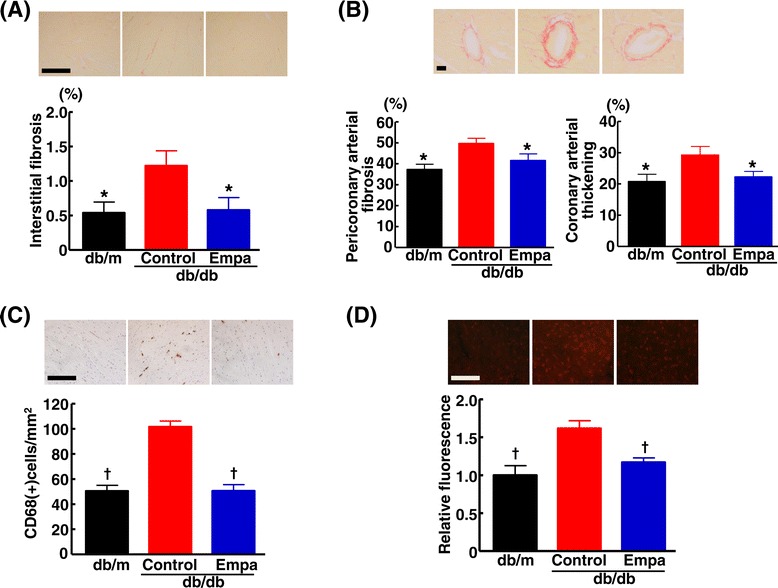
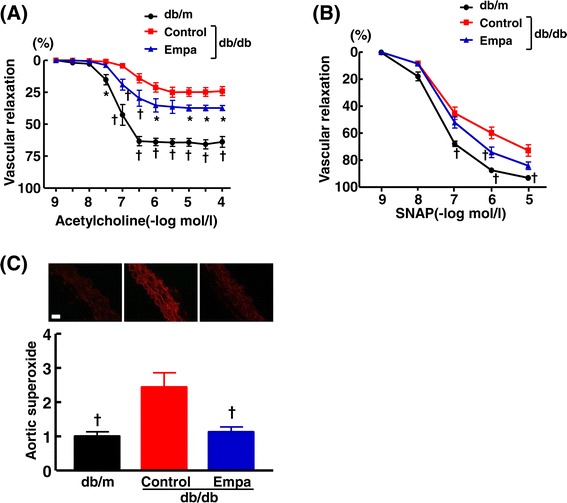
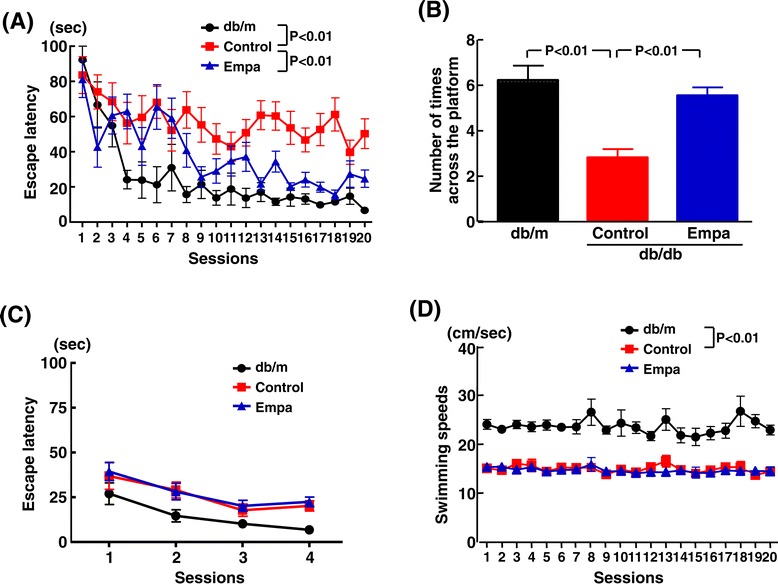
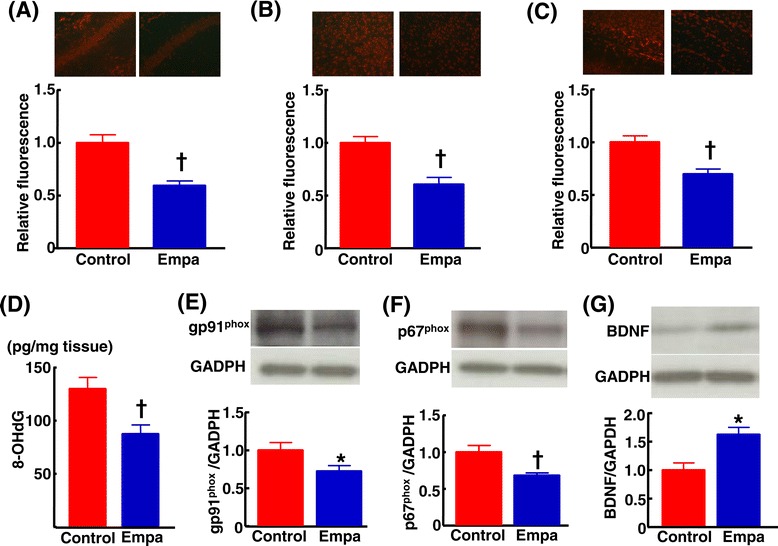
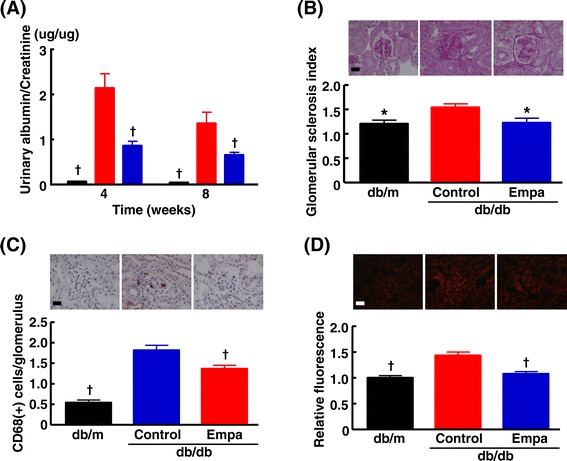
BACKGROUND: There has been uncertainty regarding the benefit of glycemic control with antidiabetic agents in prevention of diabetic macrovascular disease. Further development of novel antidiabetic agents is essential for overcoming the burden of diabetic macrovascular disease. The renal sodium glucose co-transporter 2 (SGLT2) inhibitor is a novel antihyperglycemic agent for treatment of type 2 diabetes. This work was performed to determine whether empagliflozin, a novel SGLT2 inhibitor, can ameliorate cardiovascular injury and cognitive decline in db/db mouse, a model of obesity and type 2 diabetes. METHODS: (1) Short-term experiment: The first experiment was performed to examine the effect of 7 days of empagliflozin treatment on urinary glucose excretion and urinary electrolyte excretion in db/db mice. (2) Long-term experiment: The second experiment was undertaken to examine the effect of 10 weeks of empagliflozin treatment on cardiovascular injury, vascular dysfunction, cognitive decline, and renal injury in db/db mice. RESULTS: (1) Short-term experiment: Empagliflozin administration significantly increased urinary glucose excretion, urine volume, and urinary sodium excretion in db/db mice on day 1, but did not increase these parameters from day 2. However, blood glucose levels in db/db mice were continuously decreased by empagliflozin throughout 7 days of the treatment. (2) Long-term experiment: Empagliflozin treatment caused sustained decrease in blood glucose in db/db mice throughout 10 weeks of the treatment and significantly slowed the progression of type 2 diabetes. Empagliflozin significantly ameliorated cardiac interstitial fibrosis, pericoronary arterial fibrosis, coronary arterial thickening, cardiac macrophage infiltration, and the impairment of vascular dilating function in db/db mice, and these beneficial effects of empagliflozin were associated with attenuation of oxidative stress in cardiovascular tissue of db/db mice. Furthermore, empagliflozin significantly prevented the impairment of cognitive function in db/db mice, which was associated with the attenuation of cerebral oxidative stress and the increase in cerebral brain-derived neurotrophic factor. Empagliflozin ameliorated albuminuria, and glomerular injury in db/db mice. CONCLUSIONS: Glycemic control with empagliflozin significantly ameliorated cardiovascular injury and remodeling, vascular dysfunction, and cognitive decline in obese and type 2 diabetic mice. Thus, empagliflozin seems to be potentially a promising therapeutic agent for diabetic macrovascular disease and cognitive decline.
Overview
The claims and statistics of this paper haven’t been checked yet.
Free: it reads the open-access text and checks the first 5 claims that cite a source we can check. Create a free account to check every claim.
Integrity signals
Registry
Cites
Statistics
Figures
Verification
Claims the paper makes
The claims and statistics of this paper haven’t been checked yet.
Free: it reads the open-access text and checks the first 5 claims that cite a source we can check. Create a free account to check every claim.
Claims other papers make about this one
Each is checked against this paper’s own text: does it say what the citing paper says it does?
In the citing paper
“Another promising effect SGLT2i exert on the central nervous system was described by Lin B. et al., for empagliflozin, which significantly increased cerebral BDNF (Brain-derived neurotrophic factor) levels in db/db mice (Table 1). Moreover, this effect was accompanied by improvement in cognitive functions [31].”
From Neuroprotective effect of SGLT2 inhibitors. (2021) · cites this paper as [31]
Self-check
Percentages, sums and reported differences re-computed from the paper’s own numbers.
The self-check needs the paper’s full text.
Citations
Cites
Stratton, I. M. (2000) · BMJ · doi:10.1136/bmj.321.7258.405 · Cited by 9,059 · cited 3×
“Previous large clinical trials have established that strict glycemic control significantly reduces diabetic microvascular complications such as nephropathy or retinopathy [3-5].”
Effects of Intensive Glucose Lowering in Type 2 Diabetes
(2008) · New England Journal of Medicine · doi:10.1056/nejmoa0802743 · Cited by 7,888
10-year follow-up of intensive glucose control in type 2 diabetes
Holman, R. R., Paul, S. K., Bethel, M. A., Matthews, D. R., & Neil, H. A. W. (2008) · New England Journal of Medicine · doi:10.1056/nejmoa0806470 · Cited by 7,751 · cited 3×
“Previous large clinical trials have established that strict glycemic control significantly reduces diabetic microvascular complications such as nephropathy or retinopathy [3-5].”
The Emerging Risk Factors Collaboration (2010) · The Lancet · doi:10.1016/s0140-6736(10)60484-9 · Cited by 5,125 · cited 2×
“Macrovascular disease is the leading cause of mortality in diabetic patients and the burden of cardiovascular disease due to diabetes mellitus has gone on increasing [1,2].”
Saxagliptin and cardiovascular outcomes in patients with type 2 diabetes mellitus
Scirica, B. M., Bhatt, D. L., Braunwald, E., Steg, P. G., Davidson, J., Hirshberg, B., Ohman, P., Frederich, R., Wiviott, S. D., Hoffman, E. B., et al. (2013) · New England Journal of Medicine · doi:10.1056/nejmoa1307684 · Cited by 3,470
Alogliptin after acute coronary syndrome in patients with type 2 diabetes
White, W. B., Cannon, C. P., Heller, S. R., Nissen, S. E., Bergenstal, R. M., Bakris, G. L., Perez, A. T., Fleck, P. R., Mehta, C. R., Kupfer, S., et al. (2013) · New England Journal of Medicine · doi:10.1056/nejmoa1305889 · Cited by 2,502 · cited 2×
“Furthermore, dipeptidyl-peptidase IV inhibitors, a novel class of antidiabetic agent, have been recently reported to fail to improve cardiovascular outcomes in large clinical trials [6,8,12-14].”
Role of Oxidative Stress in Cardiac Hypertrophy and Remodeling
Takimoto, E., & Kass, D. A. (2007) · Hypertension · doi:10.1161/01.hyp.0000254415.31362.a7 · Cited by 770 · cited 1×
“Accumulating evidence [35-37] establish that hyperglycemia enhances tissue oxidative stress which plays a key role in the pathophysiology of diabetes mellitus and its complications.”
Kaneto, H., Kajimoto, Y., Miyagawa, J., Matsuoka, T., Fujitani, Y., Umayahara, Y., Hanafusa, T., Matsuzawa, Y., Yamasaki, Y., & Hori, M. (1999) · Diabetes · doi:10.2337/diabetes.48.12.2398 · Cited by 712 · cited 1×
“Accumulating evidence [35-37] establish that hyperglycemia enhances tissue oxidative stress which plays a key role in the pathophysiology of diabetes mellitus and its complications.”
Increasing Cardiovascular Disease Burden Due to Diabetes Mellitus: The Framingham Heart Study
Fox, C. S., Coady, S., Sorlie, P. D., D’Agostino, R. B., Pencina, M. J., Vasan, R. S., Meigs, J. B., Levy, D., & Savage, P. J. (2007) · Circulation · doi:10.1161/circulationaha.106.658948 · Cited by 656 · cited 2×
“Macrovascular disease is the leading cause of mortality in diabetic patients and the burden of cardiovascular disease due to diabetes mellitus has gone on increasing [1,2].”
Stranahan, A. M., Arumugam, T. V., Cutler, R. G., Lee, K., Egan, J. M., & Mattson, M. P. (2008) · Nature Neuroscience · doi:10.1038/nn2055 · Cited by 611
Cited by
Items 401–432 of 432
Katakami, N., Mita, T., Yoshii, H., Shiraiwa, T., Yasuda, T., Okada, Y., Torimoto, K., Umayahara, Y., Kaneto, H., Osonoi, T., et al. (2021) · Figshare · doi:10.6084/m9.figshare.13521222
Additional file 1 of Effect of high-fat diet and empagliflozin on cardiac proteins in mice
Pan, X., Chen, S., Chen, X., Ren, Q., Yue, L., Niu, S., Li, Z., Zhu, R., Chen, X., Jia, Z., et al. (2022) · Figshare · doi:10.6084/m9.figshare.21341089
Katakami, N., Mita, T., Yoshii, H., Shiraiwa, T., Yasuda, T., Okada, Y., Torimoto, K., Umayahara, Y., Kaneto, H., Osonoi, T., et al. (2021) · Figshare · doi:10.6084/m9.figshare.13521210
Hierro‐Bujalance, C., Infante‐Garcia, C., del Marco, À., Herrera, M., Carranza-Naval, M. J., Suarez, J., Alves-Martínez, P., Lubian-Lopez, S., & García-Alloza, M. (2020) · Figshare · doi:10.6084/m9.figshare.12096507
Katakami, N., Mita, T., Maeda, N., Sato, Y., Watada, H., & Shimomura, I. (2022) · Figshare · doi:10.6084/m9.figshare.19128727
Additional file 2 of Effect of high-fat diet and empagliflozin on cardiac proteins in mice
Pan, X., Chen, S., Chen, X., Ren, Q., Yue, L., Niu, S., Li, Z., Zhu, R., Chen, X., Jia, Z., et al. (2022) · Figshare · doi:10.6084/m9.figshare.21341092
Katakami, N., Mita, T., Yoshii, H., Shiraiwa, T., Yasuda, T., Okada, Y., Torimoto, K., Umayahara, Y., Kaneto, H., Osonoi, T., et al. (2021) · Figshare · doi:10.6084/m9.figshare.13521207
Katakami, N., Mita, T., Yoshii, H., Shiraiwa, T., Yasuda, T., Okada, Y., Torimoto, K., Umayahara, Y., Kaneto, H., Osonoi, T., et al. (2021) · Figshare · doi:10.6084/m9.figshare.13521219
Katakami, N., Mita, T., Yoshii, H., Shiraiwa, T., Yasuda, T., Okada, Y., Torimoto, K., Umayahara, Y., Kaneto, H., Osonoi, T., et al. (2021) · Figshare · doi:10.6084/m9.figshare.13521213
Katakami, N., Mita, T., Yoshii, H., Shiraiwa, T., Yasuda, T., Okada, Y., Torimoto, K., Umayahara, Y., Kaneto, H., Osonoi, T., et al. (2021) · Figshare · doi:10.6084/m9.figshare.13521216
Julián, M. T., Alonso, N., Lupón, J., Gavidia‐Bovadilla, G., Ferrer, E., de Antonio, M., López-Ayerbe, J., Domingo, M., Santiago‐Vacas, E., Zamora, E., et al. (2020) · Figshare · doi:10.6084/m9.figshare.12023784
Candeias, E. M. (2021) · Portuguese National Funding Agency for Science, Research and Technology (RCAAP Project by FCT)
Doxorubicin-induced cardiomyopathy: role of endoplasmic reticulum stress
Malik, A. (2024) · Mspace (University of Manitoba) · Cited by 2
КОГНИТИВНЫЕ НАРУШЕНИЯ ПРИ САХАРНОМ ДИАБЕТЕ ТИПА 2: РОЛЬ ГИПОГЛИКЕМИЧЕСКОЙ ТЕРАПИИ
Н.В., П. (2018) · INTERNATIONAL JOURNAL OF ENDOCRINOLOGY (Ukraine)
POTENTIAL EFFECTS OF SGLT-2 INHIBITORS ON PARKINSON DISEASE
Baskın, V. (2026) · TOGÜ Sağlık Bilimleri Dergisi · doi:10.52369/togusagbilderg.1652318
Hazar‐Yavuz, A. N., Ertaş, B., KELEŞ, R., Topal, F., & Kabasakal, L. (2026) · Journal of Research in Pharmacy · doi:10.12991/jrespharm.1873927
Guo, X., Yang, T., Fang, Y., & Chen, J. (2026) · Neuropsychiatric Disease and Treatment · doi:10.2147/ndt.s599108 · Cited by 1
Rôle des péricytes et des cellules endothéliales dans l'insuffisance cardiaque
Cornuault, L. (2022) · theses.fr (ABES) · doi:10.70675/902151b1zd809z4b09z9562zd16a859cc3f2
Protective effect of SGLT2 inhibitors on cardiovascular remodeling
Matsushita, K. (2022) · theses.fr (ABES) · doi:10.70675/a461e811zf66fz4443za0efz481618885013
Hazar‐Yavuz, A. N., Ertaş, B., KELEŞ, R., Topal, F., Kabatas, G. S., Altuntaş, C., Kabasakal, L., Yazır, Y., & Çam, M. E. (2026) · European Journal of Neuroscience · doi:10.1111/ejn.70495
“…studies have demonstrated that chronic EMPA treatment attenuates cognitive deficits in diabetic animal models, accompanied by reductions in oxidative stress, improvements in insulin signalling and increased expression of neurotrophic and synaptic markers (Lin et al. 2014; Millar et al. 2017).”
Uedono, H., Mori, K., Inoue, T., Machiba, Y., Morioka, F., Nakatani, S., Tsuda, A., Okada, H., & Emoto, M. (2026) · Frontiers in Clinical Diabetes and Healthcare · doi:10.3389/fcdhc.2026.1733806
Li, J., Dai, W., Alavi, R., Carreño, J. E., Arakaki, X., Pahlevan, N. M., & Kloner, R. A. (2026) · Journal of the American Heart Association · doi:10.1161/jaha.125.047087
Kwaah, P. A., Mensah, S. A., Ntoung, C. N. T., Carboo, A. K., Hu, J., Tong, G., Velazquez, E. J., & Altin, S. E. (2026) · The American Journal of Cardiology · doi:10.1016/j.amjcard.2026.06.002
Irisin upregulation as a contributory mechanism for the therapeutic benefits of SGLT-2 inhibitors
Noto, N. M., Martin, K., Fidelia, S., Parmar, M. S., Cubeddu, L. X., Gurusamy, N., & Speth, R. C. (2026) · Pharmacology & Therapeutics · doi:10.1016/j.pharmthera.2026.109090
Kustos-Toth, E., Beck, J., Seeger, L., Monnerat, S., Bathelt, C., Refardt, J., & Christ‐Crain, M. (2026) · Journal of Neuroendocrinology · doi:10.1111/jne.70238
Bitiktas, S., Yiğit, S., Yeşilyurt, İ., Gül, H. F., Erkan, O., Gulakar, B., Aydın, Z. C., & Kahraman, A. A. (2026) · Journal of Biochemical and Molecular Toxicology · doi:10.1002/jbt.71059
Empagliflozin inhibits cardiac hypertrophy via a mechanism involving integrin signalling
Qiao, G., Lin, R., Lu, Y., Wu, J., Ren, C., Liu, M., & Zhang, C. (2026) · British Journal of Pharmacology · doi:10.1111/bph.70637
Jucha, J., Zając, D., Darasz, D., Łukawski, A., Slobozheniuk, L., Bieniak-Pentchev, M., Kaczorek, M., Machnik, K., Dziewięcka, O., & Ziębka, W. (2026) · International Journal of Innovative Technologies in Social Science · doi:10.31435/ijitss.3(51).2026.6010
The Crosstalk Between Diabetes and Alzheimer's Disease: A Molecular Perspective
Çataklı, D., Özen, Ö., Tuncgovde, E. B., & Ozsarlak‐Sozer, G. (2026) · Basic & Clinical Pharmacology & Toxicology · doi:10.1111/bcpt.70294
“These anti-inflammatory and neuro-protective properties may partially underlie the observed benefits of SGLT-2 inhibitors on cognitive function and the reduced risk of neurodegenerative disorders in patients with T2DM [155–157].”
Hsu, T., Chu, T.-H., Lee, M. T., Peng, W.-H., Wu, C., Lee, Y., Teng, Y.-N., & Ho, Y. (2026) · Pharmacology Biochemistry and Behavior · doi:10.1016/j.pbb.2026.174273
Petrov, L., & Andreeva-Gateva, P. A. (2026) · Journal of Biomedical and Clinical Research · doi:10.3897/jbcr.e210787
“Two studies in diabetic rats showed that prolonged SGLT-2 inhibitor use improves vascular dysfunction by enhancing NO function while reducing oxidative stress (Lin et al. 2014).”
Khaled, M. A. Q. R. (2025) · Marmara University Open Access System
Metadata
- Authors
- Lin, B., Koibuchi, N., Hasegawa, Y., Sueta, D., Toyama, K., Uekawa, K., Ma, M., Nakagawa, T., Kusaka, H., & Kim-Mitsuyama, S.
- Affiliations
- Kumamoto University (JP)
- Venue
- Cardiovascular Diabetology
- Published
- 2014-10-26
- Volume
- 13
- Issue
- 1
- Pages
- 148-148
- ISSN
- 1475-2840 (ISSN-L)
- PMC
- PMC4219031
- OpenAlex
- W2124658554
- Cited by
- 423
- References
- 45
- Citations by year
- 2026: 19 · 2025: 37 · 2024: 40 · 2023: 41 · 2022: 54 · 2021: 58 · 2020: 39 · 2019: 40 · 2018: 33 · 2017: 25 · 2016: 20 · 2015: 15
- FWCI
- 16.10
- Type
- journal article
- Language
- en
- Open access
- gold
- doi.org
- Locations
- Cardiovascular Diabetology (publishedVersion, cc-by)
- PubMed Central (publishedVersion, cc-by)
- PubMed (publishedVersion)
- Topics
- Health Sciences › Medicine › Endocrinology, Diabetes and Metabolism › Diabetes Treatment and Management
- Health Sciences › Medicine › Endocrinology, Diabetes and Metabolism › Diabetes Management and Research
- Health Sciences › Medicine › Nephrology › Chronic Kidney Disease and Diabetes
- Keywords
- empagliflozin, SGLT2 inhibitors, type 2 diabetes, obesity, db/db mice, glycemic control, cardiovascular damage, diabetic macrovascular disease, myocardial fibrosis, vascular dysfunction, cognitive decline, oxidative stress, brain-derived neurotrophic factor, albuminuria, kidney injury, urinary glucose excretion, urinary electrolyte excretion, diabetic nephropathy
- MeSH terms
- Sodium-Glucose Transporter 2 Inhibitors, Animals, Benzhydryl Compounds, Blood Glucose, Cardiovascular Diseases, Cognition Disorders, Diabetes Mellitus, Experimental, Diabetes Mellitus, Type 2, Glucosides, Hypoglycemic Agents, Male, Mice, Inbred C57BL, Obesity, Sodium-Glucose Transporter 2
About these checks
Registry, retraction, Cites and statistics results are computed, not judged, with one exception: a printed reference that no index lists is read once by a model before it counts as a citation error. Claims are extracted by a model and kept only when their quote appears verbatim in the text; each cited source is then checked, with a model’s help, for whether it says what the claim relies on. Those verdicts can be wrong — read the claim’s quote and the cited source before relying on one.
Statistics and arithmetic are recomputed, not judged.
Confidence bands are shown only for fields calibrated on our annotated test set. None is calibrated yet, so no band is shown.
What counts as a claim ›How we measure confidence ›How we check this ›
Are you an author, or do you see a problem with this page? Request a review
Data sources
Bibliographic data: Semantic Scholar, OpenAlex, Crossref.
Contains information from the Semantic Scholar Academic Graph Datasets, made available under the ODC Attribution License (ODC-BY 1.0).
Semantic Scholar’s data is described in: Kinney, R., et al. (2023). The Semantic Scholar Open Data Platform. arXiv:2301.10140.
