

Malaria ecology along the Thailand-Myanmar border.
Open accessThe DOI matches its Crossref record; 111 of the 114 references it cites were found in a registry or an index.
Abstract
BACKGROUND: Malaria in Southeast Asia frequently clusters along international borders. For example, while most of Thailand is malaria free, the border region shared with Myanmar continues to have endemic malaria. This spatial pattern is the result of complex interactions between landscape, humans, mosquito vectors, and malaria parasites. An understanding of these complex ecological and socio-cultural interactions is important for designing and implementing malaria elimination efforts in the region. This article offers an ecological perspective on the malaria situation along the Thailand-Myanmar border. DISCUSSION: This border region is long (2000 km), mountainous, and the environment ranges from thick forests to growing urban settlements and wet-rice fields. It is also a biologically diverse region. All five species of malaria known to naturally infect humans are present. At least three mosquito vector species complexes, with widely varying behavioural characteristics, exist in the area. The region is also a hub for ethnic diversity, being home to over ten different ethnolinguistic groups, several of which have been engaged in conflict with the Myanmar government now for over half a century. Given the biological and ethnic diversity, as well as the complex socio-political context, malaria control and elimination in the region is challenging. CONCLUSION: Despite these complexities, multipronged approaches including collaborations with multiple local organizations, quick access to diagnosis and treatment, prevention of mosquito bites, radical cure of parasites, and mass drug administration appear to be drastically decreasing Plasmodium falciparum infections. Such approaches remain crucial as the region moves toward elimination of P. falciparum and potentially Plasmodium vivax.
Overview
The claims and statistics of this paper haven’t been checked yet.
Free: it reads the open-access text and checks the first 5 claims that cite a source we can check. Create a free account to check every claim.
Integrity signals
Registry
Cites
Statistics
Figures
Verification
Claims the paper makes
The claims and statistics of this paper haven’t been checked yet.
Free: it reads the open-access text and checks the first 5 claims that cite a source we can check. Create a free account to check every claim.
Claims other papers make about this one
Each is checked against this paper’s own text: does it say what the citing paper says it does?
The source backs part of the claim, not all of it — or backs it for a different population, condition or comparison.
In the citing paper
“Information about management and outcomes of multiple pregnancy in marginalized populations such as this is a significant gap in the evidence-base for recommendations in multiple pregnancy [22].”
From Comparison of perinatal outcome and mode of birth of twin and singleton pregnancies in migrant and refugee populations on the Thai Myanmar border: A population cohort (2024) · cites this paper as [22]
Experimental — accuracy not yet measuredThe source backs part of the claim, not all of it — or backs it for a different population, condition or comparison.
In the citing paper
“High levels of drug resistance to sulphadoxine-pyrimethamine precluded its use and insecticide treated bednets were not found to be significantly protective against P. falciparum parasitaemia in pregnancy. 16”
From Cohort Profile: the SMRU Refugee and Migrant Pregnancy Study in Western Thailand and Eastern Myanmar (2026) · cites this paper as [16]
Experimental — accuracy not yet measuredIn the citing paper
“malaria transmission networks do not always conform to national spatial boundaries.”
From Lineage-informative microhaplotypes for recurrence classification and spatio-temporal surveillance of Plasmodium vivax malaria parasites (2024) · cites this paper as [44]
In the citing paper
“This approach is more accurate than purely country-based classifications since malaria transmission networks do not always conform to national spatial boundaries.”
From Lineage-informative microhaplotypes for recurrence classification and spatio-temporal surveillance of Plasmodium vivax malaria parasites (2024) · cites this paper as [44]
Self-check
Percentages, sums and reported differences re-computed from the paper’s own numbers.
The self-check needs the paper’s full text.
Citations
Cites
The art of not being governed: an anarchist history of upland Southeast Asia
(2010) · Choice Reviews Online · doi:10.5860/choice.47-6429 · Cited by 3,940
Weltgesundheitsorganisation (2005) · Cited by 3,799
Artemisinin Resistance in Plasmodium falciparum Malaria
Dondorp, A. M., Nosten, F., Yi, P., Das, D., Phyo, A. P., Tarning, J., Lwin, K. M., Ariey, F., Hanpithakpong, W., Lee, S. J., et al. (2009) · New England Journal of Medicine · doi:10.1056/nejmoa0808859 · Cited by 3,424 · cited 1×
“These efforts are, however, threatened by the existence of strains of increasingly drug-resistant falciparum malaria [119].”
BackgroundSelf-citationPoverty and Access to Health Care in Developing Countries
Peters, D. H., Garg, A., Bloom, G., Walker, D. G., Brieger, W. R., & Hafizur Rahman, M. (2008) · Annals of the New York Academy of Sciences · doi:10.1196/annals.1425.011 · Cited by 1,522 · cited 1×
“Since many live in conditions of extreme poverty they may not have adequate housing or protective mosquito nets to cover all family members, may not have the knowledge necessary to help prevent malaria infections, and may be more prone to participating in subsistence behaviours that put them at higher risk of malaria…”
BackgroundDoolan, D. L., Dobaño, C., & Baird, J. K. (2009) · Clinical Microbiology Reviews · doi:10.1128/cmr.00025-08 · Cited by 1,301
A new world malaria map: Plasmodium falciparum endemicity in 2010
Gething, P. W., Patil, A. P., Smith, D. L., Guerra, C. A., Elyazar, I. R., Johnston, G. L., Tatem, A. J., & Hay, S. I. (2011) · Malaria Journal · doi:10.1186/1475-2875-10-378 · Cited by 1,146
Emergence of artemisinin-resistant malaria on the western border of Thailand: a longitudinal study
Phyo, A. P., Nkhoma, S., Stepniewska, K., Ashley, E. A., Nair, S., McGready, R., ler Moo, C., Al-Saai, S., Dondorp, A. M., Lwin, K. M., et al. (2012) · The Lancet · doi:10.1016/s0140-6736(12)60484-x · Cited by 924
Self-citationEpidemiology of drug-resistant malaria
Wongsrichanalai, C., Pickard, A. L., Wernsdorfer, W. H., & Meshnick, S. R. (2002) · The Lancet Infectious Diseases · doi:10.1016/s1473-3099(02)00239-6 · Cited by 817
The role of human movement in the transmission of vector-borne pathogens
Stoddard, S. T., Morrison, A. C., Vazquez-Prokopec, G. M., Paz Soldan, V., Kochel, T. J., Kitron, U., Elder, J. P., & Scott, T. W. (2009) · PLoS Neglected Tropical Diseases · doi:10.1371/journal.pntd.0000481 · Cited by 573 · cited 1×
“Human population movement Human population movement has frequently been cited as a major factor in the persistence of malaria along this international border [3, 4, 16, 98–102] and there are several ways that migration can influence malaria epidemiology [6, 103, 104].”
Howes, R. E., Piel, F. B., Patil, A. P., Nyangiri, O. A., Gething, P. W., Dewi, M., Hogg, M. M., Battle, K. E., Padilla, C. D., Baird, J. K., et al. (2012) · PLoS Medicine · doi:10.1371/journal.pmed.1001339 · Cited by 562 · cited 1×
“vivax is complicated by hypnozoites because hypnozoitocidals can also have adverse effects in humans with glucose-6-phosphate dehydrogenase deficiency (G6PDd), a human enzyme disorder that is widespread in Southeast Asian populations [14, 15].”
BackgroundSinka, M. E., Bangs, M. J., Manguin, S., Chareonviriyaphap, T., Patil, A. P., Temperley, W. H., Gething, P. W., Elyazar, I. R., Kabaria, C. W., Harbach, R. E., et al. (2011) · Parasites & Vectors · doi:10.1186/1756-3305-4-89 · Cited by 550 · cited 4×
“Anopheles minimus s.s. and An. harrisoni are both present in Southeast Asia (An. yaeyamaensis is confined to the Ryukyu archipelago in Japan) [52].”
BackgroundInfluentialMalaria on the Move: Human Population Movement and Malaria Transmission
Martens, P., & Hall, L. (2000) · Emerging Infectious Diseases · doi:10.3201/eid0602.000202 · Cited by 515 · cited 1×
“Human population movement Human population movement has frequently been cited as a major factor in the persistence of malaria along this international border [3, 4, 16, 98–102] and there are several ways that migration can influence malaria epidemiology [6, 103, 104].”
BackgroundThe Population History of England 1541-1871.
Armstrong, W. A., Wrigley, E. A., & Schofield, R. S. (1982) · The Economic Journal · doi:10.2307/2232476 · Cited by 463
Anopheles mosquitoes - New insights into malaria vectors
(2013) · InTech eBooks · doi:10.5772/3392 · Cited by 421
The population history of England, 1541-1871
Wrigley, T. (1969) · Cited by 412
Spread of chloroquine resistance in Plasmodium falciparum
Payne, D. (1987) · Parasitology Today · doi:10.1016/0169-4758(87)90147-5 · Cited by 382 · cited 1×
“Asian strain spread to Africa within a few decades [18].”
BackgroundIllustrated keys to the mosquitoes of Thailand. IV. Anopheles.
Rattanarithikul, R., Harrison, B. A., Harbach, R. E., Panthusiri, P., Coleman, R. E., & Panthusiri, P. (2006) · PubMed · Cited by 349
Chloroquine Resistance in Plasmodium vivax
Baird, J. K. (2004) · Antimicrobial Agents and Chemotherapy · doi:10.1128/aac.48.11.4075-4083.2004 · Cited by 335
The epidemiology of severe malaria in an area of low transmission in Thailand.
Luxemburger, C., Ricci, F., Nosten, F., Raimond, D., Bathet, S., & White, N. J. (1997) · Transactions of the Royal Society of Tropical Medicine and Hygiene · doi:10.1016/s0035-9203(97)90066-3 · Cited by 299 · cited 1×
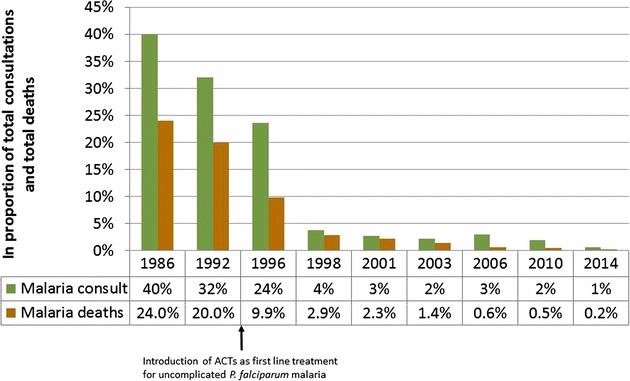
“Whereas malaria was one of the largest contributors to overall morbidity and mortality 30 years ago [78, 94], today it is one of the smaller contributors (Fig.”
BackgroundSelf-citationMalaria in the Greater Mekong Subregion: heterogeneity and complexity.
Cui, L., Yan, G., Sattabongkot, J., Cao, Y., Chen, B., Chen, X., Fan, Q., Fang, Q., Jongwutiwes, S., Parker, D., et al. (2012) · Acta Tropica · doi:10.1016/j.actatropica.2011.02.016 · Cited by 277 · cited 1×
“vivax dominating; at least three major mosquito vector complexes occur in the same area; and well over ten different ethnic groups call the region home [2, 7].”
BackgroundSelf-citationNaturally Acquired Plasmodium knowlesi Malaria in Human, Thailand
Jongwutiwes, S., Putaporntip, C., Iwasaki, T., Sata, T., & Kanbara, H. (2004) · Emerging Infectious Diseases · doi:10.3201/eid1012.040293 · Cited by 264 · cited 1×
“Plasmodium ovale, Plasmodium malariae and Plasmodium knowlesi infections are all found along the border, but are rare [9, 10].”
BackgroundVariations in frequencies of drug resistance in Plasmodium falciparum
Rathod, P. K., McErlean, T., & Lee, P.-C. (1997) · Proceedings of the National Academy of Sciences · doi:10.1073/pnas.94.17.9389 · Cited by 250 · cited 1×
“falciparum parasites from Southeast Asia develop resistance mutations faster than West African counterparts [34].”
BackgroundPlasmodium knowlesi in humans, macaques and mosquitoes in peninsular Malaysia
Vythilingam, I., NoorAzian, Y. M., Huat, T., Jiram, A., Yusri, Y. M., Azahari, A. H., NorParina, I., NoorRain, A., & LokmanHakim, S. (2008) · Parasites & Vectors · doi:10.1186/1756-3305-1-26 · Cited by 243
The epidemiology of malaria in a Karen population on the western border of Thailand.
Luxemburger, C., Thwai, K. L., White, N. J., Webster, H. K., Kyle, D. E., Maelankirri, L., Chongsuphajaisiddhi, T., & Nosten, F. (1996) · Transactions of the Royal Society of Tropical Medicine and Hygiene · doi:10.1016/s0035-9203(96)90102-9 · Cited by 233 · cited 2×
“Whereas malaria was one of the largest contributors to overall morbidity and mortality 30 years ago [78, 94], today it is one of the smaller contributors (Fig.”
BackgroundSelf-citationThe evolution of drug–resistant malaria: the role of drug elimination half–life
Hastings, I. M., Watkins, W. M., & White, N. J. (2002) · Philosophical Transactions of the Royal Society of London. Series B: Biological Sciences · doi:10.1098/rstb.2001.1036 · Cited by 202 · cited 1×
“One has to do with exposure of parasites to sub-therapeutic levels of anti-malarials, through the misuse of medications, the circulation of sub-standard anti-malarials [22] or through mass administration of sub-therapeutic anti-malarials (e.”
BackgroundThe Anopheles dirus complex: spatial distribution and environmental drivers
Obsomer, V., Defourny, P., & Coosemans, M. (2007) · Malaria Journal · doi:10.1186/1475-2875-6-26 · Cited by 200 · cited 4×
“While they are typically considered exophilic, biting can occur as frequently indoors as it does outdoors in open houses in forests [43, 47, 50, 51].”
BackgroundInfluentialThandar, M. M., Kyaw, M. P., Jimba, M., & Yasuoka, J. (2015) · Malaria Journal · doi:10.1186/1475-2875-14-1 · Cited by 197
Trung, H. D., Bortel, W. V., Sochantha, T., Keokenchanh, K., Briet, O. J. T., & Coosemans, M. (2005) · Tropical Medicine and International Health · doi:10.1111/j.1365-3156.2004.01378.x · Cited by 196
Primaquine radical cure of Plasmodium vivax: a critical review of the literature
John, G. K., Douglas, N. M., von Seidlein, L., Nosten, F., Baird, J. K., White, N. J., & Price, R. N. (2012) · Malaria Journal · doi:10.1186/1475-2875-11-280 · Cited by 192 · cited 4×
“Testing for G6PDd has until recently been possible only in laboratory settings.”
BackgroundInfluentialSelf-citationCarrara, V. I., Lwin, K. M., Phyo, A. P., Ashley, E., Wiladphaingern, J., Sriprawat, K., Rijken, M., Boel, M., McGready, R., Proux, S., et al. (2013) · PLoS Medicine · doi:10.1371/journal.pmed.1001398 · Cited by 185 · cited 3×
“2) [76, 77], and health care providers tend to cluster in urban centres.”
BackgroundSelf-citationPutaporntip, C., Hongsrimuang, T., Seethamchai, S., Kobasa, T., Limkittikul, K., Cui, L., & Jongwutiwes, S. (2009) · The Journal of Infectious Diseases · doi:10.1086/597414 · Cited by 181 · cited 1×
“vivax dominating; at least three major mosquito vector complexes occur in the same area; and well over ten different ethnic groups call the region home [2, 7].”
BackgroundA global assessment of closed forests, deforestation and malaria risk
Guerra, C. A., Snow, R. W., & Hay, S. I. (2006) · Annals of Tropical Medicine and Parasitology · doi:10.1179/136485906x91512 · Cited by 177 · cited 1×
“Deforestation can reduce preferential habitats for some mosquito vectors while simultaneously increasing it for others [8].”
BackgroundTravel risk, malaria importation and malaria transmission in Zanzibar
Le Menach, A., Tatem, A. J., Cohen, J. M., Hay, S. I., Randell, H., Patil, A. P., & Smith, D. L. (2011) · Scientific Reports · doi:10.1038/srep00093 · Cited by 176
Epidemiology of forest malaria in central Vietnam: a large scale cross-sectional survey
Erhart, A., Thang, N. D., Van Ky, P., Tinh, T. T., Van Overmeir, C., Speybroeck, N., Obsomer, V., Hung, L. X., Thuan, L. K., Coosemans, M., et al. (2005) · Malaria Journal · doi:10.1186/1475-2875-4-58 · Cited by 175
International population movements and regional Plasmodium falciparum malaria elimination strategies
Tatem, A. J., & Smith, D. L. (2010) · Proceedings of the National Academy of Sciences · doi:10.1073/pnas.1002971107 · Cited by 168 · cited 2×
“Large amounts of human migration across and along the border region likely contributes to the complex malaria situation, with migrants potentially transporting malaria parasites or exposing themselves to epidemiological landscapes with which they are unaccustomed [5, 6].”
BackgroundBed nets for the prevention of malaria and anaemia in pregnancy
Dolan, G., ter Kuile, F. O., Jacoutot, V., White, N. J., Luxemburger, C., Malankirii, L., Chongsuphajaisiddhi, T., & Nosten, F. (1993) · Transactions of the Royal Society of Tropical Medicine and Hygiene · doi:10.1016/0035-9203(93)90262-o · Cited by 157 · cited 1×
“Another study took place in three different refugee camps and looked at potentially protective effects of different bed net types (non-treated single person (NIB), permethrin-impregnated single person (PIB), and family size non-impregnated (FNIB)) in pregnant women [67].”
BackgroundSelf-citationAntimalarial drug resistance: a review of the biology and strategies to delay emergence and spread
Klein, E. Y. (2013) · International Journal of Antimicrobial Agents · doi:10.1016/j.ijantimicag.2012.12.007 · Cited by 155 · cited 2×
“A similar scenario can explain the spread of drug-resistant strains [16, 27, 106, 107].”
BackgroundCarrara, V. I., Sirilak, S., Thonglairuam, J., Rojanawatsirivet, C., Proux, S., Gilbos, V., Brockman, A., Ashley, E. A., McGready, R., Krudsood, S., et al. (2006) · PLoS Medicine · doi:10.1371/journal.pmed.0030183 · Cited by 146
Self-citationDouglas, N. M., Nosten, F., Ashley, E. A., Phaiphun, L., van Vugt, M., Singhasivanon, P., White, N. J., & Price, R. N. (2011) · Clinical Infectious Diseases · doi:10.1093/cid/ciq249 · Cited by 145
Self-citationDevelopment of resistance to chloroquine by Plasmodium vivax in Myanmar
Marlar-Than, Myat-Phone-Kyaw, Aye-Yu-Soe, Khaing-Khaing-Gyi, Ma-Sabai, & Myint-Oo (1995) · Transactions of the Royal Society of Tropical Medicine and Hygiene · doi:10.1016/0035-9203(95)90556-1 · Cited by 141
Highly efficient dry season transmission of malaria in Thailand
Rhosenberg, R., Andre, R. G., & Somchit, L. (1990) · Transactions of the Royal Society of Tropical Medicine and Hygiene · doi:10.1016/0035-9203(90)90367-n · Cited by 126
Malaria trends and challenges in the Greater Mekong Subregion.
Delacollette, C., D'Souza, C., Christophel, E. M., Thimasarn, K., Abdur, R., Bell, D., Dai, T. C., Gopinath, D., Lu, S., Mendoza, R., et al. (2009) · PubMed · Cited by 123
Emergence of chloroquine-resistant Plasmodium vivax in Myanmar (Burma)
Myat-Phone-Kyaw, Myint-Oo, Myint-Lwin, Thaw-Zin, Kyin-Hla-Aye, & Nwe-Nwe-Yin (1993) · Transactions of the Royal Society of Tropical Medicine and Hygiene · doi:10.1016/0035-9203(93)90294-z · Cited by 115
Bhumiratana, A., Intarapuk, A., Sorosjinda-Nunthawarasilp, P., Maneekan, P., & Koyadun, S. (2013) · BioMed Research International · doi:10.1155/2013/363417 · Cited by 104
The 'Karen Consensus', Ethnic Politics and Resource-Use Legitimacy in Northern Thailand
Walker, A. (2001) · Asian Ethnicity · doi:10.1080/14631360120058839 · Cited by 101
Baum, E., Sattabongkot, J., Sirichaisinthop, J., Kiattibutr, K., Davies, D. H., Jain, A., Lo, E. Y. Y., Lee, M., Randall, A. Z., Molina, D. M., et al. (2015) · Malaria Journal · doi:10.1186/s12936-015-0611-9 · Cited by 101
Drug resistant malaria on the Thai-Myanmar and Thai-Cambodian borders.
Wongsrichanalai, C., Sirichaisinthop, J., Karwacki, J. J., Congpuong, K., Miller, R. S., Pang, L. W., & Thimasarn, K. (2001) · PubMed · Cited by 100
Characterization of G6PD Genotypes and Phenotypes on the Northwestern Thailand-Myanmar Border
Bancone, G., Chu, C. S., Somsakchaicharoen, R., Chowwiwat, N., Parker, D. M., Charunwatthana, P., White, N. J., & Nosten, F. H. (2014) · PLoS ONE · doi:10.1371/journal.pone.0116063 · Cited by 99 · cited 1×
“vivax is complicated by hypnozoites because hypnozoitocidals can also have adverse effects in humans with glucose-6-phosphate dehydrogenase deficiency (G6PDd), a human enzyme disorder that is widespread in Southeast Asian populations [14, 15].”
BackgroundSelf-citationCosts analysis of the treatment of imported malaria
Svihrova, V., Szilagyiova, M., Novakova, E., Svihra, J., & Hudeckova, H. (2012) · Malaria Journal · doi:10.1186/1475-2875-11-1 · Cited by 96
TAYLOR, B. (1975) · Transactions of the Royal Entomological Society of London · doi:10.1111/j.1365-2311.1975.tb00576.x · Cited by 92 · cited 1×
“Also of concern with vector focused efforts are behavioural plasticity (some mosquito vectors alter their targeted blood feeding habits) and behavioural evolution (selecting against some feeding times and preferences may lead to shifts in the feeding times and preferences within a single species) [42, 47, 69].”
BackgroundWilson, A. L., Chen-Hussey, V., Logan, J. G., & Lindsay, S. W. (2014) · Malaria Journal · doi:10.1186/1475-2875-13-446 · Cited by 91 · cited 1×
“Personal use repellants have shown effectiveness at reducing exposure to mosquito bites [40, 70], but have not generally shown a reduction in the risk of malaria infection [71, 72].”
BackgroundThe First Plasmodium vivax Relapses of Life Are Usually Genetically Homologous
Imwong, M., Boel, M. E., Pagornrat, W., Pimanpanarak, M., McGready, R., Day, N. P. J., Nosten, F., & White, N. J. (2012) · The Journal of Infectious Diseases · doi:10.1093/infdis/jir806 · Cited by 90
Self-citationSomboon, P., Aramrattana, A., Lines, J., & Webber, R. H. (1998) · PubMed · Cited by 86
An evaluation of five regimens for the outpatient therapy of falciparum malaria in Thailand 1980-81.
Pinichpongse, S., Doberstyn, E. B., Cullen, J. R., Yisunsri, L., Thongsombun, Y., & Thimasarn, K. (1982) · Europe PMC (PubMed Central) · Cited by 84
Verdrager, J. (1986) · PubMed · Cited by 83
Morgan, K., O’Loughlin, S. M., Chen, B., Linton, Y., Thongwat, D., Somboon, P., Fong, M. Y., Butlin, R. K., Verity, R., Prakash, A., et al. (2011) · Molecular Ecology · doi:10.1111/j.1365-294x.2011.05268.x · Cited by 80 · cited 1×
“The result is a confusing and complex convergence zone for both mosquito vector biological diversity and human cultural diversity along the Thailand-Myanmar border [117, 118].”
BackgroundGarros, C., Van Bortel, W., Trung, H. D., Coosemans, M., & Manguin, S. (2006) · Tropical Medicine & International Health · doi:10.1111/j.1365-3156.2005.01536.x · Cited by 79
Mortality rates in conflict zones in Karen, Karenni, and Mon states in eastern Burma.
Lee, T. J., Mullany, L. C., Richards, A. K., Kuiper, H. K., Maung, C., & Beyrer, C. (2006) · Tropical Medicine & International Health · doi:10.1111/j.1365-3156.2006.01651.x · Cited by 77 · cited 3×
“This long-standing warfare has had enormous implications for non-military members of the population [89, 92].”
BackgroundTananchai, C., Tisgratog, R., Juntarajumnong, W., Grieco, J. P., Manguin, S., Prabaripai, A., & Chareonviriyaphap, T. (2012) · Parasites & Vectors · doi:10.1186/1756-3305-5-211 · Cited by 77 · cited 1×
“are relatively long-lived and tend to be highly anthropophilic (though see [49]), making them a highly effective vector.”
BackgroundestMOI: estimating multiplicity of infection using parasite deep sequencing data
Assefa, S. A., Preston, M. D., Campino, S., Ocholla, H., Sutherland, C. J., & Clark, T. G. (2014) · Bioinformatics · doi:10.1093/bioinformatics/btu005 · Cited by 76 · cited 2×
“Since infected persons in high transmission areas are more likely to have been bitten by multiple infectious mosquitoes, the multiplicity of infection should also be higher in high transmission areas [25, 26].”
BackgroundPhyo, A. P., Lwin, K. M., Price, R. N., Ashley, E. A., Russell, B., Sriprawat, K., Lindegardh, N., Singhasivanon, P., White, N. J., & Nosten, F. (2011) · Clinical Infectious Diseases · doi:10.1093/cid/cir631 · Cited by 72 · cited 1×
“CRV appears to be widespread throughout vivax endemic regions [39].”
BackgroundSelf-citationMullany, L. C., Richards, A. K., Lee, C. I., Suwanvanichkij, V., Maung, C., Mahn, M., Beyrer, C., & Lee, T. J. (2007) · Journal of Epidemiology and Community Health · doi:10.1136/jech.2006.055087 · Cited by 71 · cited 1×
“This long-standing warfare has had enormous implications for non-military members of the population [89, 92].”
BackgroundGuyant, P., Corbel, V., Guérin, P. J., Lautissier, A., Nosten, F., Boyer, S., Coosemans, M., Dondorp, A. M., Sinou, V., Yeung, S., et al. (2015) · Malaria Journal · doi:10.1186/s12936-015-0802-4 · Cited by 70 · cited 1×
“) Insecticide spraying is also unlikely to have far reaching effects since it will be confined to specific places and times and because of the growth and spread of insecticide resistance, which is known to exist in Southeast Asia, but has not been well studied along the ThailandMyanmar border [68].”
BackgroundSelf-citationSevere and Complicated Falciparum Malaria in Melanesian Adults in Papua New Guinea
Lalloo, D. G., Trevett, A. J., Paul, M., Korinhona, A., Laurenson, I. F., Mapao, J., Nwokolo, N., Danga-Christian, B., Black, J., Saweri, A., et al. (1996) · The American Journal of Tropical Medicine and Hygiene · doi:10.4269/ajtmh.1996.55.119 · Cited by 70 · cited 1×
“If they come from a non-malarious region, they may not have acquired immunity, meaning that morbidity and even mortality can be increased [108, 109].”
BackgroundGingrich, J. B., Weatherhead, A., Sattabongkot, J., Pilakasiri, C., & Wirtz, R. A. (1990) · Journal of Medical Entomology · doi:10.1093/jmedent/27.6.1016 · Cited by 65
Luxemburger, C., Perea, W. A., Delmas, G., Pruja, C., Pecoul, B., & Moren, A. (1994) · Transactions of the Royal Society of Tropical Medicine and Hygiene · doi:10.1016/0035-9203(94)90273-9 · Cited by 65
Anopheles minimus: its bionomics and role in the transmission of malaria in Assam, India.
Dev, V. (1996) · Europe PMC (PubMed Central) · Cited by 65
High prevalence of sub-microscopic infections in Colombia
Vallejo, A. F., Chaparro, P., Benavides, Y., Álvarez, Á., Quintero, J. P., Padilla, J. C., Arévalo‐Herrera, M., & Herrera, S. V. (2015) · Malaria Journal · doi:10.1186/s12936-015-0711-6 · Cited by 64
Chloroquine resistant vivax malaria in a pregnant woman on the western border of Thailand
Rijken, M. J., Boel, M. E., Russell, B., Imwong, M., Leimanis, M. L., Phyo, A. P., Muehlenbachs, A., Lindegardh, N., McGready, R., Rénia, L., et al. (2011) · Malaria Journal · doi:10.1186/1475-2875-10-113 · Cited by 62 · cited 1×
“Chloroquine resistant vivax (CRV) has been reported in Southeast Asia now for several decades, in Myanmar since the early 1990s [36] and more recently in Thailand [38].”
BackgroundSelf-citationIsmail, I. A., Notananda, V., & Schepens, J. (1975) · PubMed · Cited by 61
Parker, D. M., Matthews, S. A., Yan, G., Zhou, G., Lee, M., Sirichaisinthop, J., Kiattibutr, K., Fan, Q., Li, P., Sattabongkot, J., et al. (2015) · Malaria Journal · doi:10.1186/s12936-015-0712-5 · Cited by 60
Self-citationWhole-Genome Scans Provide Evidence of Adaptive Evolution in Malawian Plasmodium falciparum Isolates
Ocholla, H., Preston, M. D., Mipando, M., Jensen, A. T. R., Campino, S. G., MacInnis, B. L., Alcock, D., Terlouw, D. J., Zongo, I., Oudraogo, J.-B., et al. (2014) · The Journal of Infectious Diseases · doi:10.1093/infdis/jiu349 · Cited by 60 · cited 2×
“Since infected persons in high transmission areas are more likely to have been bitten by multiple infectious mosquitoes, the multiplicity of infection should also be higher in high transmission areas [25, 26].”
BackgroundSelf-citationRattanarithikul, R., & Green, C. (1986) · Cited by 58
Chareonviriyaphap, T., Prabaripai, A., Bangs, M. J., & Aum-Aung, B. (2003) · Journal of Medical Entomology · doi:10.1603/0022-2585-40.6.876 · Cited by 58
Malaria and mobility in Thailand
Singhanetra‐Renard, A. (1993) · Social Science & Medicine · doi:10.1016/0277-9536(93)90254-2 · Cited by 53
Forest Malaria in Bangladesh: III. Breeding Habits of Anopheles Dirus
Rosenberg, R. (1982) · The American Journal of Tropical Medicine and Hygiene · doi:10.4269/ajtmh.1982.31.192 · Cited by 49 · cited 1×
“is almost always associated with deep forests, foothills and primary larval habitats are typically in temporary standing or slow moving water under shade [43, 44].”
BackgroundCanavati, S., Plugge, E., Suwanjatuporn, S., Sombatrungjaroen, S., & Nosten, F. (2011) · Bulletin of the World Health Organization · doi:10.2471/blt.10.084244 · Cited by 48
Self-citationThongsahuan, S., Baimai, V., Junkum, A., Saeung, A., Min, G., Joshi, D., Park, M., Somboon, P., Suwonkerd, W., Tippawangkosol, P., et al. (2011) · Memórias do Instituto Oswaldo Cruz · doi:10.1590/s0074-02762011000100017 · Cited by 47 · cited 1×
“Further work (both in the field and laboratory) may reveal other important vector species in the region [40, 41].”
BackgroundSungvornyothin, S., Muenvorn, V., Garros, C., Manguin, S., Prabaripai, A., Bangs, M. J., & Chareonviriyaphap, T. (2006) · Journal of Vector Ecology · doi:10.3376/1081-1710(2006)31[252:tbabao]2.0.co;2 · Cited by 47
Kengluecha, A., Singhasivanon, P., Tiensuwan, M., Jones, J. W., & Sithiprasasna, R. (2005) · PubMed · Cited by 44
Elimination of Plasmodium falciparum in an area of multi-drug resistance
Lwin, K. M., Imwong, M., Suangkanarat, P., Jeeyapant, A., Vihokhern, B., Wongsaen, K., Snounou, G., Keereecharoen, L., White, N. J., & Nosten, F. (2015) · Malaria Journal · doi:10.1186/s12936-015-0838-5 · Cited by 43 · cited 2×
“Such efforts for falciparum malaria are already under way [120].”
BackgroundSelf-citationJitthai, N. (2013) · PubMed · Cited by 42
LINDSAY, EWALD, SAMUNG, APIWATHNASORN, & NOSTEN (1998) · Medical and Veterinary Entomology · doi:10.1046/j.1365-2915.1998.00115.x · Cited by 41 · cited 2×
“Personal use repellants have shown effectiveness at reducing exposure to mosquito bites [40, 70], but have not generally shown a reduction in the risk of malaria infection [71, 72].”
BackgroundSelf-citationChen-Hussey, V., Carneiro, I., Keomanila, H., Gray, R., Bannavong, S., Phanalasy, S., & Lindsay, S. W. (2013) · PLoS ONE · doi:10.1371/journal.pone.0070664 · Cited by 40 · cited 1×
“Personal use repellants have shown effectiveness at reducing exposure to mosquito bites [40, 70], but have not generally shown a reduction in the risk of malaria infection [71, 72].”
BackgroundA stable, oligosymptomatic malaria focus in Thailand
Rosenberg, R., Andre, R. G., Ngampatom, S., Hatz, C., & Burge, R. (1990) · Transactions of the Royal Society of Tropical Medicine and Hygiene · doi:10.1016/0035-9203(90)90366-m · Cited by 40
Remaining Karen : A Study of Cultural Reproduction and the Maintenance of Identity
Rajah, A. (2008) · ANU Press eBooks · doi:10.26530/oapen_459492 · Cited by 40
Ariey, F., Duchemin, J., & Robert, V. (2003) · Infection Genetics and Evolution · doi:10.1016/s1567-1348(02)00099-0 · Cited by 40 · cited 1×
“A similar scenario can explain the spread of drug-resistant strains [16, 27, 106, 107].”
BackgroundReview of the anopheline mosquitoes of Myanmar.
Oo, T. T., STORCH, V. N., & Becker, N. (2004) · PubMed · Cited by 39
Richards, A., Banek, K., Mullany, L. C., Lee, C. I., Smith, L. S., Oo, E. K. S., & Lee, T. J. (2009) · Tropical Medicine & International Health · doi:10.1111/j.1365-3156.2009.02258.x · Cited by 37
Seasonality of births for West Malaysia's two main racial groups.
Jt, J., Ann, T. B., & Palan, V. T. (1975) · PubMed · Cited by 34
Adult Javanese migrants to Indonesian Papua at high risk of severe disease caused by malaria
Baird, J. K., Basri, H., Weina, P. J., Maguire, J. D., Barcus, M. J., PICAREMA, H., Elyazar, I., Ayomi, E., & Sekartuti (2003) · Epidemiology and Infection · doi:10.1017/s0950268803008422 · Cited by 33 · cited 1×
“If they come from a non-malarious region, they may not have acquired immunity, meaning that morbidity and even mortality can be increased [108, 109].”
BackgroundCounter Perspective: Artemisinin Resistance: Facts, Fears, and Fables
White, N. J. (2012) · American Journal of Tropical Medicine and Hygiene · doi:10.4269/ajtmh.2012.12-0573 · Cited by 31
Bortel, W. V., Trung, H. D., Sochantha, T., Keokenchan, K., Roelants, P., Backeljau, T., & Coosemans, M. (2004) · Journal of Medical Entomology · doi:10.1603/0022-2585-41.3.366 · Cited by 30
Asymptomatic malaria infections among foreign migrant workers in Thailand
Kritsiriwuthinan, K., & Ngrenngarmlert, W. (2011) · Asian Pacific Journal of Tropical Medicine · doi:10.1016/s1995-7645(11)60146-6 · Cited by 29 · cited 2×
“Most of the international migration into Thailand comes from Myanmar and several researchers have claimed that this cross-border movement is a major factor in malaria morbidity and mortality in Thailand [3, 113, 114].”
BackgroundGeographical Differences and Time Trends in the Seasonality of Birth in Japan
Matsuda, S., & KAHYO, H. (1994) · International Journal of Epidemiology · doi:10.1093/ije/23.1.107 · Cited by 27
Effectiveness of repellent formulations containing deet against mosquitoes in northeastern Thailand.
Frances, S. P., Eamsila, C., Pilakasiri, C., & Linthicum, K. J. (1996) · PubMed · Cited by 24
Fighting the good fight: the role of militaries in malaria elimination in Southeast Asia
Manning, J. E., Prom, S., Gaywee, J. K., Lopez, M. N., Lon, C., & Saunders, D. (2014) · Trends in Parasitology · doi:10.1016/j.pt.2014.10.002 · Cited by 22 · cited 1×
“Soldiers traverse through and sleep in heavily forested areas, frequently travel long distances, and may not have adequate materials (tents and mosquito nets) for preventing mosquito bites [91].”
BackgroundEliminating malaria and preventing its reintroduction: the Mauritius case study
Aboobakar, S., Tatarskv, A., Cohen, J. M., Bheecarry, A., Boolaky, P., Gopee, N., Moonasar, D., Phillips, A. A., Kahn, J. G., Moonen, B., et al. (2012) · Malaria Journal · doi:10.1186/1475-2875-11-s1-o12 · Cited by 21
Molecular screening of Plasmodium infections among migrant workers in Thailand.
Kritsiriwuthinan, K., & Ngrenngarmlert, W. (2011) · PubMed · Cited by 19
Rongnoparut, P., Ugsang, D. M., Baimai, V., Honda, K., & Sithiprasasna, R. (2005) · PubMed · Cited by 19
Brown, T. S., Jacob, C. G., da Silva, J. C. F., Takala‐Harrison, S., DJIMDÉ, A. A., Dondorp, A. M., Fukuda, M. M., Noedl, H., Nyunt, M. M., Kyaw, M. P., et al. (2014) · Infection Genetics and Evolution · doi:10.1016/j.meegid.2014.12.010 · Cited by 18 · cited 1×
“took field strains with associated clearance phenotype data and looked for differences in substitution rates across parasites populations from Southeast Asia (Bangladesh, Cambodia, Laos, Myanmar, Thailand, Vietnam) and West Africa (Mali), and found no evidence of increased mutation rates in Southeast Asian parasite po…”
BackgroundCoppa, A., di Donato, L., Vecchi, F., & Danubio, M. E. (2001) · PubMed · Cited by 18
Kitvatanachai, S., & Rhongbutsri, P. (2012) · Asian Pacific Journal of Tropical Disease · doi:10.1016/s2222-1808(12)60184-4 · Cited by 15
Pneumococcal Adaptive Responses to Changing Host Environments
Håkansson, A. (2014) · The Journal of Infectious Diseases · doi:10.1093/infdis/jiu084 · Cited by 15
A seasonal analysis of Chinese births
Abeysinghe, T. (1991) · Journal of Applied Statistics · doi:10.1080/02664769100000021 · Cited by 14
Radical Cure: The Case for Anti-Relapse Therapy Against All Malarias
Baird, J. K. (2011) · Clinical Infectious Diseases · doi:10.1093/cid/ciq258 · Cited by 12 · cited 4×
“Testing for G6PDd has until recently been possible only in laboratory settings.”
BackgroundInfluentialKunstadter, P. (1983) · Mountain Research and Development · doi:10.2307/3673036 · Cited by 12
Oo, T. T. (2003) · heiDOK (Heidelberg University) · doi:10.11588/heidok.00003305 · Cited by 11
Kim, T.-S., Kang, Y., Kim, J., Lee, S. E., Lee, W., Sohn, Y., & Lee, H.-W. (2015) · Malaria Journal · doi:10.1186/s12936-015-1034-3 · Cited by 11
中野, 和. (1980) · Japanese Journal of Southeast Asian Studies · Cited by 9
Research works printed but not linked: 13
- WHO Malaria in the Greater Mekong Subregion: regional and country profiles 2010 New Delhi World Health Organization
- WHO Malaria in the Greater Mekong Subregion: regional and country profiles 2008 Geneva World Health Organization
- Peyton EL Harrison BA Anopheles (Cellia) dirus, a new species of the Leucosphyrus group from Thailand Mosq Syst 1979 11 40 52
- Kengluecha A Singhasivanon P Tiensuwan M Jones JW Sithiprasasna R Water quality and breeding habitats of Anopheline mosquito in northwestern Thailand Southeast Asian J Trop Med Public Health 2005 36 46 53 15906641
- Harrison BA Medical entomology studies XII. The Mysomyia series of Anopheles (Cellia) in Thailand, with emphasis on intra-specific variations (Diptera: Culicidae) Contrib Am Entomol Inst (Ann Arbor) 1980 17 1 195
- WHO Second meeting of the vector control advisory group 2014 Geneva World Health Organization
- South A Burma’s longest war: anatomy of the Karen Conflict 2011 Amsterdam Transnational Institute
- Markwardt R Sorosjinda-nunthawarasilp P Saisang V Human activities contributing to a malaria outbreak in Thong Pha Phum District, Kanchanaburi, Thailand Southeast Asian J Trop Med Public Health 2008 39 suppl 1 10 18
- IOM Huguet JW Chamratrithirong Thailand migration report 2011 Migration for development in Thailand: overview and tools for policymakers 2011 Thailand International Organization for Migration 172
- Bardon J, Im-Em W. Border Area HIV/AIDS Project. External Review Document. Bangkok, Thailand; 2000.
- Lowe D Fancis C Protecting people on the move: applying lessons learned in Asia to improve HIV/AIDS interventions for mobile people 2006 Thailand Bangkok
- Dondorp A Nosten F Yi P Das D Phyo AP Tarning J Artemisinin resistance in Plasmodium falciparum malaria New Engl J Med 2009 361 455 467 10.1056/NEJMoa0808859 19641202 PMC3495232 · DOI · Paper page
- Carrara VI Sirilak S Thonglairuam J Rojanawatsirivet C Proux S Gilbos V Deployment of early diagnosis and mefloquine-artesunate treatment of falciparum malaria in Thailand: the Tak Malaria Initiative PLoS Med 2006 3 e183 10.1371/journal.pmed.0030183 16719547 PMC1470664 · DOI · Paper page
Cited by
Malaria incidence in Myanmar 2005–2014: steady but fragile progress towards elimination
Mu, T. T., Sein, A. A., Kyi, T. T., Min, M., Aung, N. M., Anstey, N. M., Kyaw, M. P., Soe, C., Kyi, M. M., & Hanson, J. (2016) · Malaria Journal · doi:10.1186/s12936-016-1567-0 · Cited by 333
“Myanmar has the greatest malaria incidence in the Greater Mekong Region [1, 8] and its new government and poorly resourced public health system will have to overcome a variety of political, economic and logistic challenges if malaria is to be eliminated [9].”
BackgroundCommunity engagement and ethical global health research
Adhikari, B., Pell, C., & Cheah, P. Y. (2020) · Global Bioethics · doi:10.1080/11287462.2019.1703504 · Cited by 192
Landier, J., Parker, D. M., Thu, A. M., Lwin, K. M., Delmas, G., Nosten, F. H., Andolina, C., Aguas, R., Ang, S. M., Aung, E. P., et al. (2018) · The Lancet · doi:10.1016/s0140-6736(18)30792-x · Cited by 184
Self-citationThe role of early detection and treatment in malaria elimination
Landier, J., Parker, D. M., Thu, A. M., Carrara, V. I., Lwin, K. M., Bonnington, C. A., Pukrittayakamee, S., Delmas, G., & Nosten, F. H. (2016) · Malaria Journal · doi:10.1186/s12936-016-1399-y · Cited by 170
Self-citationChloroquine and Sulfadoxine–Pyrimethamine Resistance in Sub-Saharan Africa—A Review
Roux, A. T., Maharaj, L., Oyegoke, O. O., Akoniyon, O. P., Adeleke, M. A., Maharaj, R., & Okpeku, M. (2021) · Frontiers in Genetics · doi:10.3389/fgene.2021.668574 · Cited by 113
“falciparum in the region tending to develop resistance (Parker et al., 2015).”
Background
Metadata
- Authors
- Parker, D. M., Carrara, V. I., Pukrittayakamee, S., McGready, R., & Nosten, F. H.
- Affiliations
- Mahidol University (TH)
- Corresponding author
- Parker, Daniel M.
- Venue
- Malaria Journal
- Published
- 2015-10-05
- Volume
- 14
- Issue
- 1
- Pages
- 388-388
- ISSN
- 1475-2875 (ISSN-L)
- PMC
- PMC4594738
- OpenAlex
- W1824454329
- Semantic Scholar
- 987bac194211efc8a3eabfd36923f9dd462cec82
- Cited by
- 142
- References
- 114
- Citations by year
- 2026: 6 · 2025: 9 · 2024: 21 · 2023: 13 · 2022: 13 · 2021: 19 · 2020: 14 · 2019: 17 · 2018: 14 · 2017: 7 · 2016: 9
- FWCI
- 10.70
- Type
- journal article
- Language
- en
- Open access
- gold
- doi.org
- Licence
- cc-by
- Locations
- Malaria Journal (publishedVersion, cc-by)
- Europe PMC (PubMed Central) (publishedVersion, cc-by)
- PubMed Central (publishedVersion, cc-by)
- PubMed (publishedVersion)
- eScholarship (California Digital Library) (submittedVersion, cc-by)
- Greater South Information System
- Funders
- Wellcome Trust
- Topics
- Health Sciences › Medicine › Public Health, Environmental and Occupational Health › Malaria Research and Control
- Health Sciences › Medicine › Public Health, Environmental and Occupational Health › Mosquito-borne diseases and control
- Life Sciences › Immunology and Microbiology › Parasitology › Bird parasitology and diseases
- Keywords
- Thai-Myanmar border, Plasmodium falciparum, Plasmodium vivax, malaria elimination, ethnic diversity, armed conflict, malaria control, mass drug administration, radical cure, mosquito bite prevention
- MeSH terms
- Animals, Myanmar, Ethnicity, Geography, Humans, Culicidae, Oryza, Socioeconomic Factors, Thailand, Malaria, Falciparum, Malaria, Vivax, Ecosystem
About these checks
Registry, retraction, Cites and statistics results are computed, not judged, with one exception: a printed reference that no index lists is read once by a model before it counts as a citation error. Claims are extracted by a model and kept only when their quote appears verbatim in the text; each cited source is then checked, with a model’s help, for whether it says what the claim relies on. Those verdicts can be wrong — read the claim’s quote and the cited source before relying on one.
Statistics and arithmetic are recomputed, not judged.
Confidence bands are shown only for fields calibrated on our annotated test set. None is calibrated yet, so no band is shown.
What counts as a claim ›How we measure confidence ›How we check this ›
Are you an author, or do you see a problem with this page? Request a review
Data sources
Bibliographic data: Semantic Scholar, OpenAlex, Crossref.
Contains information from the Semantic Scholar Academic Graph Datasets, made available under the ODC Attribution License (ODC-BY 1.0).
Semantic Scholar’s data is described in: Kinney, R., et al. (2023). The Semantic Scholar Open Data Platform. arXiv:2301.10140.
