

STING: a master regulator in the cancer-immunity cycle
Open accessThe DOI matches its Crossref record; 129 of the 129 references it cites were found in a registry or an index.
Abstract
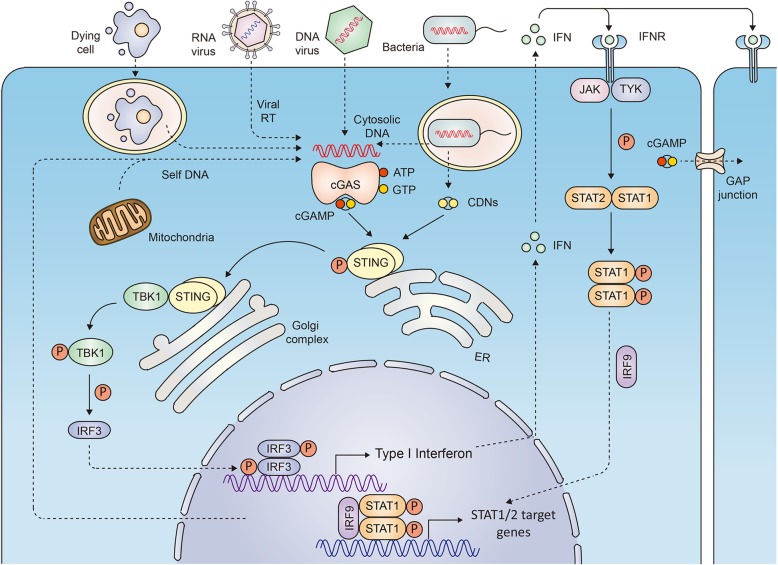
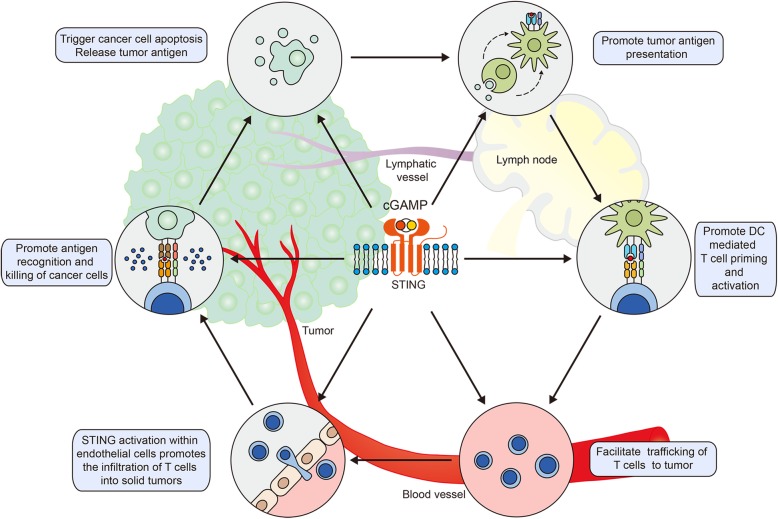
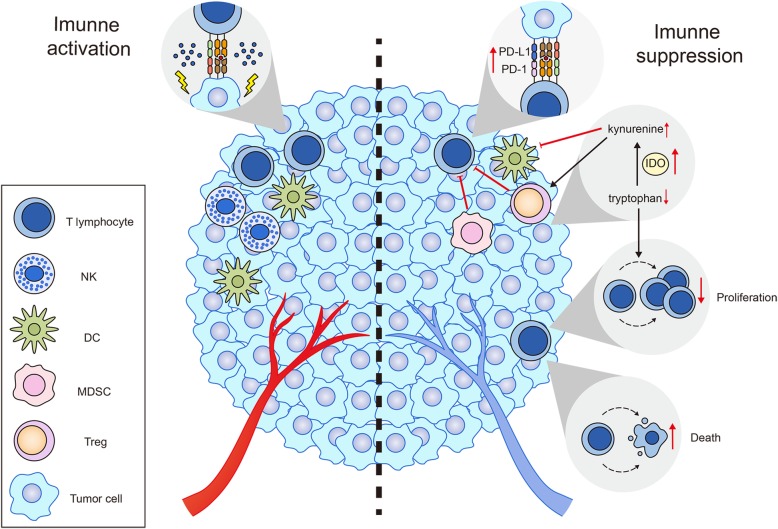
The aberrant appearance of DNA in the cytoplasm triggers the activation of cGAS-cGAMP-STING signaling and induces the production of type I interferons, which play critical roles in activating both innate and adaptive immune responses. Recently, numerous studies have shown that the activation of STING and the stimulation of type I IFN production are critical for the anticancer immune response. However, emerging evidence suggests that STING also regulates anticancer immunity in a type I IFN-independent manner. For instance, STING has been shown to induce cell death and facilitate the release of cancer cell antigens. Moreover, STING activation has been demonstrated to enhance cancer antigen presentation, contribute to the priming and activation of T cells, facilitate the trafficking and infiltration of T cells into tumors and promote the recognition and killing of cancer cells by T cells. In this review, we focus on STING and the cancer immune response, with particular attention to the roles of STING activation in the cancer-immunity cycle. Additionally, the negative effects of STING activation on the cancer immune response and non-immune roles of STING in cancer have also been discussed.
Overview
The claims and statistics of this paper haven’t been checked yet.
Free: it reads the open-access text and checks the first 5 claims that cite a source we can check. Create a free account to check every claim.
Integrity signals
Registry
Cites
Statistics
Figures
Verification
Claims the paper makes
The claims and statistics of this paper haven’t been checked yet.
Free: it reads the open-access text and checks the first 5 claims that cite a source we can check. Create a free account to check every claim.
Claims other papers make about this one
Each is checked against this paper’s own text: does it say what the citing paper says it does?
The source backs part of the claim, not all of it — or backs it for a different population, condition or comparison.
In the citing paper
“Intact TBK1 signaling is required for response to STING agonists, innate immune stimulatory molecules that mimic response to cytosolic DNA, which have been shown to limit tumour growth alone or in combination with cancer immunotherapy 46-48 .”
From Targeting TBK1 to overcome resistance to cancer immunotherapy (2023) · cites this paper as [46]
Experimental — accuracy not yet measured
Self-check
Percentages, sums and reported differences re-computed from the paper’s own numbers.
The self-check needs the paper’s full text.
Citations
Cites
Pattern Recognition Receptors and Inflammation
Takeuchi, O., & Akira, S. (2010) · Cell · doi:10.1016/j.cell.2010.01.022 · Cited by 8,895
Oncology meets immunology: the cancer-immunity cycle.
Chen, D. S., & Mellman, I. (2013) · Immunity · doi:10.1016/j.immuni.2013.07.012 · Cited by 6,929
Cyclic GMP-AMP Synthase Is a Cytosolic DNA Sensor That Activates the Type I Interferon Pathway
Sun, L., Wu, J., Du, F., Chen, X., & Chen, Z. J. (2013) · Science · doi:10.1126/science.1232458 · Cited by 4,996
STING is an endoplasmic reticulum adaptor that facilitates innate immune signalling
Ishikawa, H., & Barber, G. N. (2008) · Nature · doi:10.1038/nature07317 · Cited by 3,576
STING regulates intracellular DNA-mediated, type I interferon-dependent innate immunity
Ishikawa, H., Ma, Z., & Barber, G. N. (2009) · Nature · doi:10.1038/nature08476 · Cited by 2,759
Prevention of Allogeneic Fetal Rejection by Tryptophan Catabolism
Munn, D. H., Zhou, M., Attwood, J. T., Bondarev, I., Conway, S. J., Marshall, B., Brown, C., & Mellor, A. L. (1998) · Science · doi:10.1126/science.281.5380.1191 · Cited by 2,585
Cyclic GMP-AMP Is an Endogenous Second Messenger in Innate Immune Signaling by Cytosolic DNA
Wu, J., Sun, L., Chen, X., Du, F., Shi, H., Chen, C., & Chen, Z. J. (2013) · Science · doi:10.1126/science.1229963 · Cited by 2,541
The PD‐1 pathway in tolerance and autoimmunity
Francisco, L. M., Sage, P. T., & Sharpe, A. H. (2010) · Immunological Reviews · doi:10.1111/j.1600-065x.2010.00923.x · Cited by 2,300
Murphy, K., & Weaver, C. (2016) · W.W. Norton eBooks · doi:10.1201/9781315533247 · Cited by 2,258
CTLA-4 can function as a negative regulator of T cell activation
Walunas, T. L., Lenschow, D. J., Bakker, C. Y., Linsley, P. S., Freeman, G. J., Green, J. M., Thompson, C. B., & Bluestone, J. A. (1994) · Immunity · doi:10.1016/1074-7613(94)90071-x · Cited by 2,222
Cited by
Items 101–200 of 458
Pu, C., Cui, H. F., Yu, H., Cheng, X., Zhang, M., Qin, L., Ning, Z., Zhang, W., Chen, S., Qian, Y., et al. (2025) · Nature Communications · doi:10.1038/s41467-025-59874-0 · Cited by 49
Li, K., Ye, Y., Liu, L., Sha, Q., Wang, X., Jiao, T., Zhang, L., & Wang, J. (2020) · Biomaterials Science · doi:10.1039/d0bm00870b · Cited by 47
Yin, J., Gu, T., Chaudhry, N. Y., Davidson, N. E., & Huang, Y. (2024) · Frontiers in Immunology · doi:10.3389/fimmu.2023.1325615 · Cited by 46
STING agonist diABZI enhances the cytotoxicity of T cell towards cancer cells
Wang, L., Liang, Z., Guo, Y., Habimana, J. D. D., Ren, Y., Amissah, O. B., Mukama, O., Peng, S., Ding, X., Lv, L., et al. (2024) · Cell Death and Disease · doi:10.1038/s41419-024-06638-1 · Cited by 46
“It has been reported that STING activation enhances cancer antigen presentation, contributing to the promotion of the recognition and killing of cancer cells by T cells [41].”
BackgroundTaffoni, C., Marines, J., Chamma, H., Guha, S., Saccas, M., Bouzid, A., Valadão, A. L. C., Maghe, C., Jardine, J., Park, M. K., et al. (2022) · The EMBO Journal · doi:10.15252/embj.2022111961 · Cited by 45
“The cGAS-STING signaling cascade has been shown to be essential to the orchestration of antitumor responses (Corrales et al , 2016, Zhu et al , 2019).”
BackgroundLi, T., Xu, H., Xu, Y., Yu, T., Tang, J., Li, K., Wang, C., Peng, X., Li, Q., Sang, X., et al. (2021) · Molecular Pharmaceutics · doi:10.1021/acs.molpharmaceut.1c00510 · Cited by 45
Medicinal chemistry perspective on cGAS-STING signaling pathway with small molecule inhibitors
Tian, X., Xu, F., Zhu, Q., Feng, Z., Dai, W., Zhou, Y.-L., You, Q., & Xu, X. (2022) · European Journal of Medicinal Chemistry · doi:10.1016/j.ejmech.2022.114791 · Cited by 44
Garrido-Castro, A. C., Kim, S. E., Li, T., Desrosiers, J., Nanda, R., Abdou, Y., Clark, A. S., Sacks, R. L., O'Connor, T. P., Sinclair, N. F., et al. (2024) · Annals of Oncology · doi:10.1016/j.annonc.2026.06.012 · Cited by 44
The activation of cGAS-STING pathway offers novel therapeutic opportunities in cancers
Wang, Y., Zhu, Y., Cao, Y., Li, Y., Zhang, Z., Fleishman, J. S., Cheng, S., Chen, J., & Ding, M. (2025) · Frontiers in Immunology · doi:10.3389/fimmu.2025.1579832 · Cited by 46
“STING activity enhances normalization of tumor blood vessels, allowing for easier T cell in fi ltration and upregulates MHC Class I expression, enhancing T cell-tumor recognition (reviewed in ref (43, 64)).”
Self-citationTargeting DNA Damage Response and Immune Checkpoint for Anticancer Therapy
Huang, J.-L., Chang, Y.-T., Hong, Z.-Y., & Lin, C.-S. (2022) · International Journal of Molecular Sciences · doi:10.3390/ijms23063238 · Cited by 42
Xie, J., Sheng, M., Rong, S., Zhou, D., Wang, C., Wu, W., Huang, J., Sun, Y., Wang, Y., Chen, P., et al. (2023) · Leukemia · doi:10.1038/s41375-023-02055-z · Cited by 42
If small molecules immunotherapy comes, can the prime be far behind?
Zhang, J., Zhang, Y., Qu, B., Yang, H., Hu, S., & Dong, X. (2021) · European Journal of Medicinal Chemistry · doi:10.1016/j.ejmech.2021.113356 · Cited by 40
Wang, Z., Lu, C., Zhang, K., Lin, C., Wu, F., Tang, X., Wu, D., Dou, Y., Han, R., Wang, Y., et al. (2022) · Frontiers in Molecular Biosciences · doi:10.3389/fmolb.2022.780200 · Cited by 40
When STING Meets Viruses: Sensing, Trafficking and Response
Li, Z., Cai, S., Sun, Y., Li, L., Ding, S., & Wang, X. (2020) · Frontiers in Immunology · doi:10.3389/fimmu.2020.02064 · Cited by 38
“Collectively, these studies reveal the positive effect of phosphorylation on STING activation (173).”
BackgroundRaman, V., Deshpande, C. P., Khanduja, S., Howell, L. M., Dessel, N. V., & Forbes, N. S. (2023) · Cell Host & Microbe · doi:10.1016/j.chom.2023.09.006 · Cited by 39
Pei, Z., Li, L., Yang, N., Sun, S., Jiang, N., & Cheng, L. (2024) · Coordination Chemistry Reviews · doi:10.1016/j.ccr.2024.215969 · Cited by 37
Esteves, A. M., Papaevangelou, E., Prokar Dasgupta, A., & Galustian, C. (2021) · Frontiers in Oncology · doi:10.3389/fonc.2021.621550 · Cited by 37
“For instance, STING agonists cause apoptosis of immune cells, including B cells and T cells, in vitro and in vivo (45) and so the reduction in NK cell numbers may be also be due to this in addition to, or alternatively to an overactivation of the NK cells.”
BackgroundNanodelivery of STING agonists against cancer and infectious diseases
Zhou, J., Ventura, C. J., Fang, R. H., & Zhang, L. (2021) · Molecular Aspects of Medicine · doi:10.1016/j.mam.2021.101007 · Cited by 37
Strategies for Heating Up Cold Tumors to Boost Immunotherapies
Zabransky, D. J., Yarchoan, M. M., & Jaffee, E. M. (2023) · Annual Review of Cancer Biology · doi:10.1146/annurev-cancerbio-061421-040258 · Cited by 38
Strategies involving STING pathway activation for cancer immunotherapy: Mechanism and agonists
Pan, X., Zhang, W., Guo, H., Wang, L., Wu, H., Ding, L., & Yang, B. (2023) · Biochemical Pharmacology · doi:10.1016/j.bcp.2023.115596 · Cited by 37
A nanoplatform to boost multi-phases of cancer-immunity-cycle for enhancing immunotherapy
Zheng, C., Song, Q., Zhao, H., Kong, Y., Sun, L., Liu, X., Feng, Q., & Wang, L. (2021) · Journal of Controlled Release · doi:10.1016/j.jconrel.2021.10.011 · Cited by 36
Li, X., Zhu, Y., Zhang, X., An, X., Weng, M., Shi, J., Wang, S., Liu, C., Luo, S., & Zheng, T. (2022) · Journal of Clinical Investigation · doi:10.1172/jci144339 · Cited by 36
“The cytosolic DNA–triggered activation of cGAS/STING/IFN signaling not only plays critical roles in the host defense against microbial infection, but is also critical for the antitumor immune response, and numerous studies have suggested that the activation of STING is a promising strategy to treat cancer (1).”
Self-citationMechanisms of cellular and humoral immunity through the lens of VLP-based vaccines
McFall-Boegeman, H., & Huang, X. (2022) · Expert Review of Vaccines · doi:10.1080/14760584.2022.2029415 · Cited by 36
Teo, Z. L., O’Connor, M. J., Versaci, S., Clarke, K. A., Brown, E., Percy, L. W., Kuykhoven, K. S., Mintoff, C., Savas, P. S., Virassamy, B., et al. (2023) · npj Breast Cancer · doi:10.1038/s41523-023-00568-5 · Cited by 35
Bioinformatics Analysis Finds Immune Gene Markers Related to the Prognosis of Bladder Cancer
Chen, X., Jin, Y., Gong, L., He, D., Cheng, Y., Xiao, M., Zhu, Y., Wang, Z., & Cao, K. (2020) · Frontiers in Genetics · doi:10.3389/fgene.2020.00607 · Cited by 36
Self-citationHemispherical Pediatric High-Grade Glioma: Molecular Basis and Therapeutic Opportunities
Haase, S., Núñez, F. M., Gauss, J. C., Thompson, S., Brumley, E. K., Lowenstein, P. R., & Castro, M. G. (2020) · International Journal of Molecular Sciences · doi:10.3390/ijms21249654 · Cited by 35
The Role of the Innate Immune System in Cancer Dormancy and Relapse
Chernosky, N. M., & Tamagno, I. (2021) · Cancers · doi:10.3390/cancers13225621 · Cited by 35
Shen, M., Chen, C., Guo, Q., Wang, Q., Liao, J., Wang, L., Yu, J. Y., Xue, M., Duan, Y., & Zhang, J. (2022) · Advanced Science · doi:10.1002/advs.202203523 · Cited by 35
Bustos, M. A., Yokoe, T., Shoji, Y., Kobayashi, Y., Mizuno, S., Murakami, T., Zhang, X., Sekhar, S. C., Kim, S., Ryu, S., et al. (2023) · Cell & Bioscience · doi:10.1186/s13578-023-01151-y · Cited by 35
“Activation of STING signaling induces the production of type I IFN, which plays critical roles in activating both innate and adaptive immune responses [34].”
BackgroundSelf-citationSTING activation counters glioblastoma by vascular alteration and immune surveillance
Joseph, J. V., Blaavand, M. S., Cai, H., Vernejoul, F., Knopper, R. W., Lindhardt, T. B., Skipper, K. A., Axelgaard, E., Reinert, L. S., Mikkelsen, J. G., et al. (2023) · Cancer Letters · doi:10.1016/j.canlet.2023.216480 · Cited by 35
Schrank, B. R., Wang, Y., Wu, A., Tran, N., Lee, D., Edwards, J., Huntoon, K. M., Dong, S., Ha, J., Ma, Y., et al. (2025) · Nature Cancer · doi:10.1038/s43018-025-00919-0 · Cited by 34
Pedersen, J. G., Madsen, A. T., Gammelgaard, K. R., Pedersen, N. A., Sørensen, B. S., Øllegaard, T. H., & Jakobsen, M. R. (2020) · Cancers · doi:10.3390/cancers12061414 · Cited by 34
“Specifically, DAMP-induced innate immune activation results in the production of inflammatory cytokines that support activation of the adaptive immune system and increase the influx of immune cells into the tumor microenvironment [19,20].”
Wang, Y., Liu, Y., Zhang, J., Peng, Q., Wang, X., Xiao, X., & Shi, K. (2024) · Acta Biomaterialia · doi:10.1016/j.actbio.2024.01.008 · Cited by 35
Targeting DNA Repair, Cell Cycle, and Tumor Microenvironment in B Cell Lymphoma
Bröckelmann, P. J., de Jong, M. R. W., & Jachimowicz, R. D. (2020) · Cells · doi:10.3390/cells9102287 · Cited by 34
“…such as MCL. Stimulator of interferon genes (STING) signaling is triggered by cytosolic DNA and is crucial for antitumor immunity e.g., by inducing type 1 interferon production, inducing cell death, and releasing tumor antigens or increased priming and activation of e ff ector T cells [81].”
BackgroundZhang, Y., Zhai, Q., Feng, X., Chen, D., Lu, Y., Hu, J., Xie, H., Zhou, L., Wu, J., & Zheng, S. (2021) · Clinical & Translational Oncology · doi:10.1007/s12094-020-02519-z · Cited by 34
“The activation of STING signaling pathway induces the release of type I IFNs and cytokines as well as chemokines, resulting in the subsequent induction of both innate and adaptive immunity [7, 8].”
BackgroundInfluentialLu, Z.-D., Chen, Y., Shen, S., Xu, C., & Wang, J. (2021) · ACS Applied Materials & Interfaces · doi:10.1021/acsami.1c08329 · Cited by 33
Kaulen, L. D., Denisova, E., Hinz, F. E., Hai, L., Friedel, D., Henegariu, O., Hoffmann, D. C., Ito, J., Kourtesakis, A., Lehnert, P., et al. (2023) · Acta Neuropathologica · doi:10.1007/s00401-023-02613-w · Cited by 33
Rasmussen, M., Alvik, K., Kannen, V., Olafsen, N. E., Erlingsson, L. A. M., Grimaldi, G., Takaoka, A., Grant, D. M., & Matthews, J. B. (2023) · Cancers · doi:10.3390/cancers15143689 · Cited by 31
Development of Potent Immune Modulators Targeting Stimulator of Interferon Genes Receptor
Jeon, M. J., Lee, H., Lee, J., Baek, S. Y., Lee, D.-H., Jo, S., Lee, J., Kang, M., Jung, H. R., Han, S. B., et al. (2022) · Journal of Medicinal Chemistry · doi:10.1021/acs.jmedchem.1c01795 · Cited by 30
Xu, M., Chang, Y., Zhu, G., Zhu, X., Song, X., & Li, J. (2023) · ACS Applied Materials & Interfaces · doi:10.1021/acsami.2c21005 · Cited by 30
Qu, X., Li, J., Chan, J. Y. K., & Meehan, K. L. (2020) · International Journal of Molecular Sciences · doi:10.3390/ijms21218260 · Cited by 30
Cho, Y., Kang, M., Ji, S. H., Jeong, H. J., Jung, J. E., Oh, D. H., Park, S., Park, Y., Choi, J., Kim, S., et al. (2023) · Journal of Medicinal Chemistry · doi:10.1021/acs.jmedchem.3c01061 · Cited by 29
The opportunities and challenges of using PD-1/PD-L1 inhibitors for leukemia treatment
Xu, M., & Li, S. (2024) · Cancer Letters · doi:10.1016/j.canlet.2024.216969 · Cited by 27
Nanotechnologies for enhancing cancer immunotherapy
Yang, J., Wang, C., Shi, S., & Dong, C. (2020) · Nano Research · doi:10.1007/s12274-020-2904-8 · Cited by 27
STING activation promotes inflammatory response and delays skin wound healing in diabetic mice
Feng, Z., Zang, C., Zhang, L., Yin, S., Zhuang, Q., & Wang, X. (2022) · Biochemical and Biophysical Research Communications · doi:10.1016/j.bbrc.2022.04.085 · Cited by 28
Avila, J. P., Carvalho, B. M., & Coimbra, E. C. (2023) · Cancers · doi:10.3390/cancers15041333 · Cited by 27
Chen, Y., Tang, G., Qian, H., Chen, J., Cheng, B., Zhou, C., & Shen, Y. (2021) · Aging · doi:10.18632/aging.203042 · Cited by 26
“The study of the relationship between cell cycle regulation and tumorigenesis is also an important focus of tumor research in recent years [18].”
BackgroundLee, S., Jang, G.-Y., Lee, J., Park, S. H., Han, H. D., Park, Y., & Kang, T. H. (2022) · Cancer Immunology Immunotherapy · doi:10.1007/s00262-022-03220-6 · Cited by 26
“Moreover, STING activation enhances cancer antigen presentation to contribute to the priming and activation of T cells and promotes trafficking and infiltration of T cells into tumors [19, 21, 24].”
BackgroundCircASPH Enhances Exosomal STING to Facilitate M2 Macrophage Polarization in Colorectal Cancer
Zhang, Y., Guo, J., Zhang, L., Li, Y., Sheng, K., Zhang, Y., Liu, L., Gong, W., & Guo, K. (2023) · Inflammatory Bowel Diseases · doi:10.1093/ibd/izad113 · Cited by 27
Intratumoral Nanofluidic System for Enhancing Tumor Biodistribution of Agonist CD40 Antibody
Chua, C. Y. X., Ho, J., Šušnjar, A., Lolli, G., Trani, N. D., Pesaresi, F., Zhang, M., Nance, E. A., & Grattoni, A. (2020) · Advanced Therapeutics · doi:10.1002/adtp.202000055 · Cited by 26
Jia, Y., Wang, L., Du, J., Wang, M., Shen, H., Liu, Z., Qin, Y., Liu, J., Hu, G.-S., Xiao, R.-Q., et al. (2023) · Developmental Cell · doi:10.1016/j.devcel.2023.03.015 · Cited by 25
Go, E., Yang, H., Park, W., Lee, S. J., Han, J., Kong, S. J., Lee, W. S., Han, D. K., Chon, H. J., & Kim, C. (2023) · Small · doi:10.1002/smll.202300544 · Cited by 26
Harnessing DNA for Immunotherapy: Cancer, Infectious Diseases, and Beyond
Wang, Y., Chen‐Mayfield, T., Li, Z., Younis, M. H., Cai, W., & Hu, Q. (2022) · Advanced Functional Materials · doi:10.1002/adfm.202112273 · Cited by 26
Primary and Acquired Resistance against Immune Check Inhibitors in Non-Small Cell Lung Cancer
Sun, Q., Wei, X., Wang, Z., Zhu, Y. Y., Zhao, W., & Dong, Y. (2022) · Cancers · doi:10.3390/cancers14143294 · Cited by 24
Self-citationRecent advances in the development of STING inhibitors: an updated patent review
Shen, A., Chen, M., Chen, Q., Liu, Z., & Zhang, A. (2022) · Expert Opinion on Therapeutic Patents · doi:10.1080/13543776.2022.2144220 · Cited by 24
Harnessing bioactive nanomaterials in modulating tumor glycolysis-associated metabolism
Gu, Z., & Yu, C. (2022) · Journal of Nanobiotechnology · doi:10.1186/s12951-022-01740-y · Cited by 24
“STING signaling serves as a central role in anti-tumor immune signaling cascade, which can be stimulated by aberrant cytosolic double-strand DNA (dsDNA) [78].”
BackgroundRanathunga, L., Dodantenna, N., Cha, J.-W., Chathuranga, K., Chathuranga, W. A. G., Weerawardhana, A., Subasinghe, A., Haluwana, D. K., Gamage, N., & Lee, J. (2023) · Journal of Virology · doi:10.1128/jvi.00795-23 · Cited by 24
RetractedSTING-driven activation of T cells: relevance for the adoptive cell therapy of cancer
Richter, F., Paget, C., & Apétoh, L. (2023) · Cell Stress · doi:10.15698/cst2023.11.291 · Cited by 24
“This enhances the activation of T cells, their infiltration into the tumor, thereby resulting in cancer cell elimination [24].”
BackgroundKanoda, R., Nakajima, S., Okayama, H., Kaneta, A., Chida, S., Matsumoto, T., Saito, K., Kikuchi, T., Maruyama, Y., Suzuki, H., et al. (2025) · Scientific Reports · doi:10.1038/s41598-025-03924-6 · Cited by 24
Shang, Q., Jiang, C., Guo, M., Tang, M., Yang, J., Xie, J., An, X., Zhang, Q., & Wang, F. (2026) · Science Advances · doi:10.1126/sciadv.adx9671 · Cited by 22
Self-citationAdvances in Polymer‐Based Self‐Adjuvanted Nanovaccines
Ling, X., Dong, Z., He, J., Chen, D., He, D. N., Guo, R. H., He, Q., & Li, M. (2025) · Small · doi:10.1002/smll.202409021 · Cited by 22
Vasiyani, H., Shinde, A., Roy, M., Mane, M., Singh, K., Singh, J., Gohel, D., Currim, F., Vaidya, K., Chhabria, M. T., et al. (2021) · APOPTOSIS · doi:10.1007/s10495-021-01669-x · Cited by 22
RetractedAlam, M., Ansari, M. M., Noor, S., Mohammad, T., Hasan, G. M., Kazim, S. N., & Hassan, M. I. (2022) · International Journal of Biological Macromolecules · doi:10.1016/j.ijbiomac.2022.03.157 · Cited by 22
Targeting and Monitoring Acute Myeloid Leukaemia with Nucleophosmin-1 (NPM1) Mutation
Chin, L., Wong, C. Y. G., & Gill, H. (2023) · International Journal of Molecular Sciences · doi:10.3390/ijms24043161 · Cited by 21
Nanomedicine for combination of chemodynamic therapy and immunotherapy of cancers
Ahmad, W., Sajjad, W., Zhou, Q., & Ge, Z. (2024) · Biomaterials Science · doi:10.1039/d3bm02133e · Cited by 21
Smart micro/nanorobots for drug delivery in the brain
Shi, D., Wang, X., Deng, Y., Zhou, H., Wang, Y., Chu, P. K.-H., & Li, J. (2025) · Progress in Materials Science · doi:10.1016/j.pmatsci.2025.101533 · Cited by 21
Gao, P., Li, X., Duan, Z., Wang, Y., Li, Y., Wang, J., Luo, K., & Chen, J. (2025) · MedComm · doi:10.1002/mco2.70274 · Cited by 21
“Studies have revealed that type I interferons (IFNs) can interfere with the progression of malignant cells through the cell cycle, particularly by impeding the G0-G1 phase transition [106, 107] triggered by these treatment modalities, thereby amplifying their antineoplastic effects [114, 115].”
Self-citationLeon, G. D., Zhang, L., Siddiqui, N. A., Naguib, N., Chen, F., Padmanabhan, R., Zhang, T., Monette, S., Socciarelli, F., Lee, R., et al. (2025) · Nature Nanotechnology · doi:10.1038/s41565-025-02083-z · Cited by 21
“The absence of tumour control likely reflects elevated IL-6, which can regulate PD-L1 expression 66 , myeloid differentiation/ suppression 67 and antitumour immunity 68 .”
An, M., Yan, J., Liu, B., & Liu, Q. (2026) · 癌症:英文版 · doi:10.34133/cancomm.0023 · Cited by 20
“…radiation induces tumor cell DNA damage and activates the cGAS-STING/ type I IFN axis, thereby increasing CXCL9/CXCL10 expression and amplifying danger-associated molecular pattern (DAMP) signals—stress cues released by damaged tumor cells that recruit and activate immune cells [ 182 – 184 ].”
STING Targeting in Lung Diseases
Rodrigues, D. D. M., Lacerda‐Queiroz, N., Couillin, I., & Riteau, N. (2022) · Cells · doi:10.3390/cells11213483 · Cited by 20
Kaposi’s sarcoma-associated herpesvirus (KSHV) LANA prevents KSHV episomes from degradation
Nakajima, K.-I., Inagaki, T., Espera, J. M., & Izumiya, Y. (2024) · Journal of Virology · doi:10.1128/jvi.01268-23 · Cited by 20
Chen, J., Zhao, B. L., Dong, H., Li, T., Cheng, X., Gong, W., Wang, J., Zhang, J., Xin, G., Yu, Y., et al. (2024) · eLife · doi:10.7554/elife.94849.3 · Cited by 20
Selim, N. M., El‐Hawary, S. S., El-Zalabani, S. M. H., Shamma, R. N., Mahdy, N. E., Sherif, N. H., Fahmy, H. A., Mekkawy, M. H., Yasri, A., & Sobeh, M. (2020) · Pharmaceuticals · doi:10.3390/ph13100320 · Cited by 20
“Cytosolic DNA stimulates the cGAS-cGAMP-STING signaling [3].”
Engineered bacteria for cancer therapy: Advancements, challenges, and future directions
Wang, M.-G., Liu, M., Wang, D., Yang, D., Zeng, Y., Lan, Y., & Wang, Q. (2025) · Chinese Medical Journal · doi:10.1097/cm9.0000000000003807 · Cited by 19
“[226] An engineered EcN strain expressing diadenylate cyclase (DacA) to synthesize the STING agonist cyclic di-AMP effectively triggered innate and adaptive immune responses, leading to tumor regression in murine models.”
STAT2 hinders STING intracellular trafficking and reshapes its activation in response to DNA damage
Wang, C., Jing, N., Holvey-Bates, E. G., Chen, X., Wightman, S. M., Latif, M.-B., Zhao, J., Li, X., Sen, G. C., Stark, G. R., et al. (2023) · Proceedings of the National Academy of Sciences · doi:10.1073/pnas.2216953120 · Cited by 20
Self-citationDing, Y., Xu, F. L., Wang, Y., Han, L.-L., Huang, S.-Q., Zhao, S., Ma, L., Zhang, T., Zhao, W., & Chen, X. (2023) · Journal of Chinese Integrative Medicine · doi:10.1016/j.joim.2023.07.001 · Cited by 19
Roles of cGAS-STING Pathway in Radiotherapy Combined with Immunotherapy for Hepatocellular Carcinoma
Ma, J., Xin, Y., Wang, Q., & Ding, L. (2023) · Molecular Cancer Therapeutics · doi:10.1158/1535-7163.mct-23-0373 · Cited by 19
Dying to survive: harnessing inflammatory cell death for better immunotherapy
Cheng, L., Wang, Y., & Zhang, Y. (2025) · Trends in cancer · doi:10.1016/j.trecan.2025.01.012 · Cited by 19
Sun, Q., Fu, Y. S., Chen, X., Li, L., Wu, H., Liu, Y., Xu, H., Zhou, G., Fan, X., & Xia, H. (2022) · Gut and Liver · doi:10.5009/gnl210359 · Cited by 19
“STING has been shown as a master regulator of cancer-immunity and activating cyclic GMPAMP synthase-STING pathway may have optimal effects of immunotherapy.(21,22) However, the role of STING in GC and its correlation with PD-L1 remain largely unclear.”
BackgroundHarrington, K. J., Kitano, S., Gambardella, V., Parkes, E. E., Moreno, I., Alonso, G., Doi, T., Berz, D., Gutierrez, M. E., Fernandez, N., et al. (2025) · Future Oncology · doi:10.1080/14796694.2024.2441107 · Cited by 18
Papaevangelou, E., Esteves, A. M., Dasgupta, P., & Galustian, C. (2023) · Frontiers in Immunology · doi:10.3389/fimmu.2023.1196829 · Cited by 18
“Several previous studies have demonstrated that STING activation using agonists promotes priming and activation of T cells, tumor infiltration and cancer killing by T cells (44).”
BackgroundArabinose- and xylose-modified analogs of 2′,3′-cGAMP act as STING agonists
Xie, W., Lama, L., Yang, X., Kuryavyi, V., Bhattacharya, S., Nudelman, I., Yang, G., Ouerfelli, O., Glickman, J. F., Jones, R. A., et al. (2023) · Cell chemical biology · doi:10.1016/j.chembiol.2023.07.002 · Cited by 18
Zheng, S., Guerrero, E. N., & Foijer, F. (2023) · Cells · doi:10.3390/cells12232712 · Cited by 18
“Further work is required to determine when STING should be inhibited to block its tumour-promoting effects, such as driving CIN + cancer cell survival and metastasis [130], or activated to stimulate its tumour-suppressive effects, including immune clearance of cancer cells [131].”
BackgroundEngineering bacterial theranostics: from logic gates to in vivo applications
Armstrong, A., & Isalan, M. (2024) · Frontiers in Bioengineering and Biotechnology · doi:10.3389/fbioe.2024.1437301 · Cited by 18
Chen, T., Tongpeng, S., Lu, Z., Topatana, W., Juengpanich, S., Li, S., Hu, J., Cao, J., Lee, C., Tian, Y., et al. (2022) · Aging and Cancer · doi:10.1002/aac2.12047 · Cited by 19
HER2Δ16 Engages ENPP1 to Promote an Immune-Cold Microenvironment in Breast Cancer
Attalla, S. S., Boucher, J. G., Proud, H., Taifour, T., Zuo, D., Sanguin‐Gendreau, V., Ling, C., Johnson, G., Li, V., Luo, R. B., et al. (2023) · Cancer Immunology Research · doi:10.1158/2326-6066.cir-22-0140 · Cited by 18
Bile acid modulation of host immunity
Anh, N. B., Yang, X., & Hang, H. C. (2025) · Annals of the New York Academy of Sciences · doi:10.1111/nyas.70014 · Cited by 17
“162 Upon recognition of cytosolic dsDNA by cyclic GMP-AMP synthase (cGAS), cGAS is converted into cyclic adenosine monophosphate (cAMP), which can be recognized by STING to induce a cascade of NF-κ B-dependent inflammatory response and lead to the productionofproinflammatorycytokinessuchasIL-1 β…”
Recent advancements in cGAS-STING activation, tumor immune evasion, and therapeutic implications
Islam, M. S., Islam, M. S., Akhand, M. R. N., Park, B., & Akanda, M. R. (2024) · Medical Oncology · doi:10.1007/s12032-024-02539-7 · Cited by 17
“STING activates the IFN1 pathway, thereby initiating the innate immune response [54].”
Prabagar, M. G., McQueney, M. S., Bommireddy, V., Siegel, R., Schieven, G. L., Lu, K., Husanov, R., Deepak, R., Diller, D., Huang, C., et al. (2024) · Cancer Research · doi:10.1158/0008-5472.can-24-1022 · Cited by 18
“Studies in mouse syngeneic tumor models confirmed the role of STING signaling in eliciting strong and durable antitumor immune responses (10, 15, 17, 19).”
Torres-Mejia, E., Weng, S., Whittaker, C. A., Nguyen, K. B., Duong, E., Yim, L., & Spranger, S. (2025) · Cancer Immunology Research · doi:10.1158/2326-6066.cir-24-0184 · Cited by 17
cGAS–STING signaling pathway as a therapeutic target in human diseases
Xiao, Y., Ma, Y., Zhao, J., Zhang, X., Gan, C., Gao, J., & Huang, Z. (2025) · Chinese Medical Journal · doi:10.1097/cm9.0000000000003904 · Cited by 16
“The STING signaling pathway promotes resistance by modulating the can-cer-immunity cycle [222] [Figure 3].”
Self-citationLewicky, J. D., Martel, A. L., Gupta, M. R., Roy, R., Rodriguez, G. M., Vanderhyden, B. C., & Le, H. (2023) · Cancers · doi:10.3390/cancers15164127 · Cited by 17
TBK1 is paradoxical in tumor development: a focus on the pathway mediating IFN-I expression
Wang, B., Zhang, F., Wu, X., & Ji, M. Q. (2024) · Frontiers in Immunology · doi:10.3389/fimmu.2024.1433321 · Cited by 16
“The role of STING agonists in tumor suppression is well-recognized, and their combination with immunotherapy holds signi fi cant potential (25).”
BackgroundChen, R., Gong, J., Yu, Z., Wu, X., Li, C., Ruan, Y., Wang, S., & Sun, X. (2024) · Acta Biomaterialia · doi:10.1016/j.actbio.2024.12.030 · Cited by 16
Appleman, V. A., Matsuda, A., Ganno, M. L., Zhang, D. M., Rosentrater, E., Lopez, A. E. M., Porciuncula, A., Hatten, T., Christensen, C. L., Merrigan, S. A., et al. (2025) · Cancer Immunology Research · doi:10.1158/2326-6066.cir-24-0103 · Cited by 16
“STING binds 2 0 ,3 0 -cGAMP produced by cyclic GMP–AMP synthase in response to cytosolic DNA and induces type-I IFNs and other proinflammatory cytokines via IFN regulatory factor-3, tank binding kinase-1, and NF-κ B signaling (9–11).”
Li, M., Jin, S., Ma, H., Yang, X., & Zhang, Z. (2025) · Oncogene · doi:10.1038/s41388-025-03368-2 · Cited by 16
Vieira, R. D. S., Nascimento, M. S., Noronha, I. H., Vasconcelos, J. R., Benvenuti, L. A., Barber, G. N., Câmara, N. O. S., Kalil, J. E., Cunha‐Neto, E., & Almeida, R. R. (2022) · Frontiers in Immunology · doi:10.3389/fimmu.2021.775346 · Cited by 16
Tailoring therapies to counter the divergent immune landscapes of breast cancer
Attalla, S. S., Taifour, T., & Muller, W. J. (2023) · Frontiers in Cell and Developmental Biology · doi:10.3389/fcell.2023.1111796 · Cited by 16
Cao, Y., Li, Y., Ren, C., Yang, C., Hao, R., & Mu, T. (2024) · Journal of Materials Chemistry B · doi:10.1039/d3tb02844e · Cited by 15
Riluzole Enhancing Anti-PD-1 Efficacy by Activating cGAS/STING Signaling in Colorectal Cancer
Liang, B., Khan, M., Storts, H., Zhang, E. H., Zheng, X., Xing, X., Claybon, H., Wilson, J. L., Li, C., Jin, N. Y., et al. (2024) · Molecular Cancer Therapeutics · doi:10.1158/1535-7163.mct-24-0289 · Cited by 15
Metadata
- Authors
- Zhu, Y., An, X., Zhang, X., Qiao, Y., Zheng, T., & Li, X.
- Affiliations
- Harbin Medical University (CN)
- Corresponding author
- Zheng, Tongsen
- Li, Xiaobo
- Venue
- Molecular Cancer
- Published
- 2019-11-04
- Volume
- 18
- Issue
- 1
- Pages
- 152-152
- ISSN
- 1476-4598 (ISSN-L)
- PMC
- PMC6827255
- OpenAlex
- W2988506530
- Cited by
- 431
- References
- 129
- Citations by year
- 2026: 47 · 2025: 82 · 2024: 70 · 2023: 78 · 2022: 67 · 2021: 56 · 2020: 31
- FWCI
- 3.32
- Type
- journal article
- Language
- en
- Open access
- gold
- doi.org
- Licence
- cc-by
- creativecommons.org/licenses/by/4.0/ (tdm)
- creativecommons.org/licenses/by/4.0/ (vor)
- Locations
- Molecular Cancer (publishedVersion, cc-by)
- PubMed Central (publishedVersion, cc-by)
- PubMed (publishedVersion)
- DOAJ (DOAJ: Directory of Open Access Journals) (submittedVersion, cc-by-sa)
- Funders
- National Natural Scientific Foundation of China (NO. 81872435, NO. 81672930, No. 81871976)
- Fok Ying Tung Education Foundation (No. 151037)
- National Youth Talent Support Program (W03070060)
- Academician Yu Weihan Outstanding youth foundation of Harbin Medical University
- Topics
- Life Sciences › Immunology and Microbiology › Immunology › interferon and immune responses
- Health Sciences › Medicine › Oncology › Cancer Immunotherapy and Biomarkers
- Life Sciences › Immunology and Microbiology › Immunology › Immunotherapy and Immune Responses
- Keywords
- STING, cancer-immunity cycle, type I interferon, cytosolic DNA sensing, cancer immunotherapy, cancer cell death, tumor immunosuppression
- MeSH terms
- STING Protein, Animals, Antigens, Neoplasm, Disease Susceptibility, Humans, Immunity, Innate, Immunotherapy, Interferon Type I, Membrane Proteins, Neoplasms, Signal Transduction, Gene Expression Regulation, Neoplastic, Immunomodulation
About these checks
Registry, retraction, Cites and statistics results are computed, not judged, with one exception: a printed reference that no index lists is read once by a model before it counts as a citation error. Claims are extracted by a model and kept only when their quote appears verbatim in the text; each cited source is then checked, with a model’s help, for whether it says what the claim relies on. Those verdicts can be wrong — read the claim’s quote and the cited source before relying on one.
Statistics and arithmetic are recomputed, not judged.
Confidence bands are shown only for fields calibrated on our annotated test set. None is calibrated yet, so no band is shown.
What counts as a claim ›How we measure confidence ›How we check this ›
Are you an author, or do you see a problem with this page? Request a review
Data sources
Bibliographic data: Semantic Scholar, OpenAlex, Crossref.
Contains information from the Semantic Scholar Academic Graph Datasets, made available under the ODC Attribution License (ODC-BY 1.0).
Semantic Scholar’s data is described in: Kinney, R., et al. (2023). The Semantic Scholar Open Data Platform. arXiv:2301.10140.
