

STING: a master regulator in the cancer-immunity cycle
Open accessThe DOI matches its Crossref record; 129 of the 129 references it cites were found in a registry or an index.
Abstract
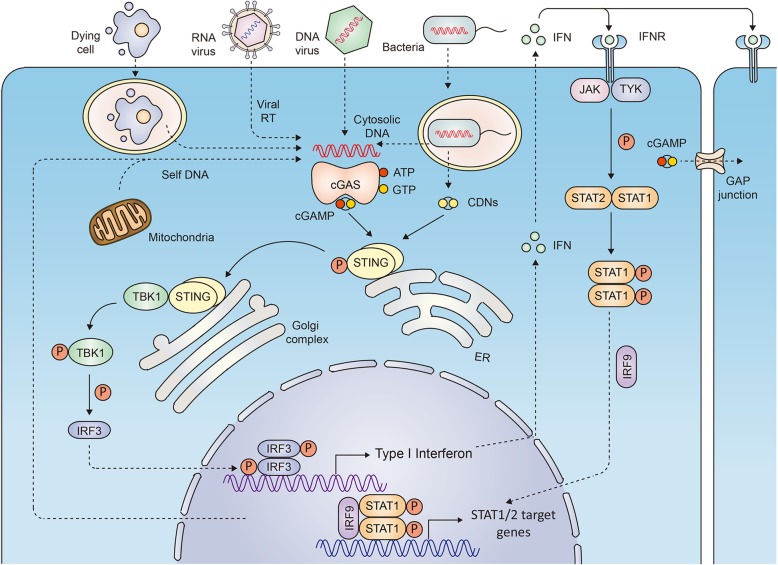
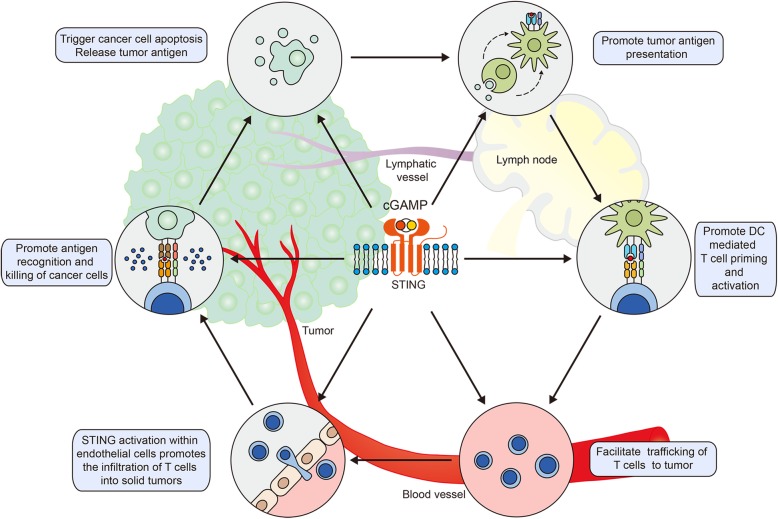
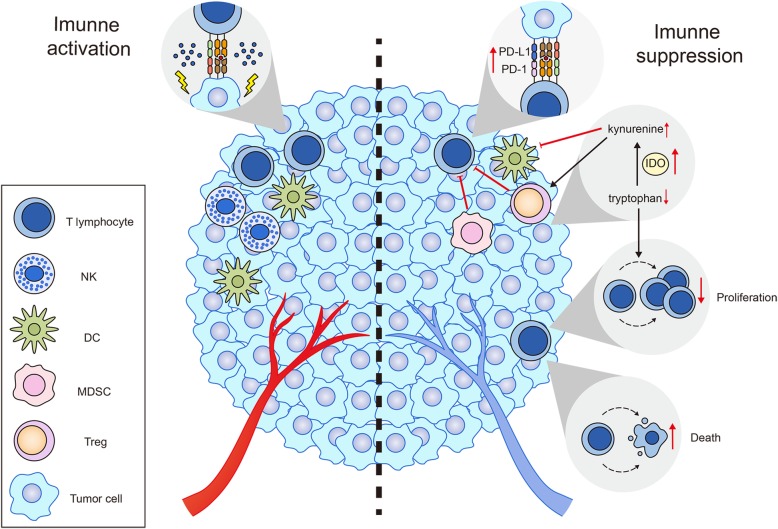
The aberrant appearance of DNA in the cytoplasm triggers the activation of cGAS-cGAMP-STING signaling and induces the production of type I interferons, which play critical roles in activating both innate and adaptive immune responses. Recently, numerous studies have shown that the activation of STING and the stimulation of type I IFN production are critical for the anticancer immune response. However, emerging evidence suggests that STING also regulates anticancer immunity in a type I IFN-independent manner. For instance, STING has been shown to induce cell death and facilitate the release of cancer cell antigens. Moreover, STING activation has been demonstrated to enhance cancer antigen presentation, contribute to the priming and activation of T cells, facilitate the trafficking and infiltration of T cells into tumors and promote the recognition and killing of cancer cells by T cells. In this review, we focus on STING and the cancer immune response, with particular attention to the roles of STING activation in the cancer-immunity cycle. Additionally, the negative effects of STING activation on the cancer immune response and non-immune roles of STING in cancer have also been discussed.
Overview
The claims and statistics of this paper haven’t been checked yet.
Free: it reads the open-access text and checks the first 5 claims that cite a source we can check. Create a free account to check every claim.
Integrity signals
Registry
Cites
Statistics
Figures
Verification
Claims the paper makes
The claims and statistics of this paper haven’t been checked yet.
Free: it reads the open-access text and checks the first 5 claims that cite a source we can check. Create a free account to check every claim.
Claims other papers make about this one
Each is checked against this paper’s own text: does it say what the citing paper says it does?
The source backs part of the claim, not all of it — or backs it for a different population, condition or comparison.
In the citing paper
“Intact TBK1 signaling is required for response to STING agonists, innate immune stimulatory molecules that mimic response to cytosolic DNA, which have been shown to limit tumour growth alone or in combination with cancer immunotherapy 46-48 .”
From Targeting TBK1 to overcome resistance to cancer immunotherapy (2023) · cites this paper as [46]
Experimental — accuracy not yet measured
Self-check
Percentages, sums and reported differences re-computed from the paper’s own numbers.
The self-check needs the paper’s full text.
Citations
Cites
Pattern Recognition Receptors and Inflammation
Takeuchi, O., & Akira, S. (2010) · Cell · doi:10.1016/j.cell.2010.01.022 · Cited by 8,895
Oncology meets immunology: the cancer-immunity cycle.
Chen, D. S., & Mellman, I. (2013) · Immunity · doi:10.1016/j.immuni.2013.07.012 · Cited by 6,929
Cyclic GMP-AMP Synthase Is a Cytosolic DNA Sensor That Activates the Type I Interferon Pathway
Sun, L., Wu, J., Du, F., Chen, X., & Chen, Z. J. (2013) · Science · doi:10.1126/science.1232458 · Cited by 4,996
STING is an endoplasmic reticulum adaptor that facilitates innate immune signalling
Ishikawa, H., & Barber, G. N. (2008) · Nature · doi:10.1038/nature07317 · Cited by 3,576
STING regulates intracellular DNA-mediated, type I interferon-dependent innate immunity
Ishikawa, H., Ma, Z., & Barber, G. N. (2009) · Nature · doi:10.1038/nature08476 · Cited by 2,759
Prevention of Allogeneic Fetal Rejection by Tryptophan Catabolism
Munn, D. H., Zhou, M., Attwood, J. T., Bondarev, I., Conway, S. J., Marshall, B., Brown, C., & Mellor, A. L. (1998) · Science · doi:10.1126/science.281.5380.1191 · Cited by 2,585
Cyclic GMP-AMP Is an Endogenous Second Messenger in Innate Immune Signaling by Cytosolic DNA
Wu, J., Sun, L., Chen, X., Du, F., Shi, H., Chen, C., & Chen, Z. J. (2013) · Science · doi:10.1126/science.1229963 · Cited by 2,541
The PD‐1 pathway in tolerance and autoimmunity
Francisco, L. M., Sage, P. T., & Sharpe, A. H. (2010) · Immunological Reviews · doi:10.1111/j.1600-065x.2010.00923.x · Cited by 2,300
Murphy, K., & Weaver, C. (2016) · W.W. Norton eBooks · doi:10.1201/9781315533247 · Cited by 2,258
CTLA-4 can function as a negative regulator of T cell activation
Walunas, T. L., Lenschow, D. J., Bakker, C. Y., Linsley, P. S., Freeman, G. J., Green, J. M., Thompson, C. B., & Bluestone, J. A. (1994) · Immunity · doi:10.1016/1074-7613(94)90071-x · Cited by 2,222
Deng, L., Liang, H., Xu, M., Yang, X., Burnette, B., Arina, A., Li, X.-D., Mauceri, H., Beckett, M., Darga, T., et al. (2014) · Immunity · doi:10.1016/j.immuni.2014.10.019 · Cited by 2,182
Self-citationInterferon Receptor Signaling Pathways Regulating PD-L1 and PD-L2 Expression
Garcia-Diaz, A., Shin, D. S., Moreno, B. H., Saco, J., Escuin-Ordinas, H., Rodriguez, G. A., Zaretsky, J. M., Sun, L., Hugo, W., Wang, X., et al. (2017) · Cell Reports · doi:10.1016/j.celrep.2017.04.031 · Cited by 1,942
STING-Dependent Cytosolic DNA Sensing Mediates Innate Immune Recognition of Immunogenic Tumors
Woo, S.-R., Fuertes, M. B., Corrales, L., Spranger, S., Furdyna, M. J., Leung, M. Y. K., Duggan, R., Wang, Y., Barber, G. N., Fitzgerald, K. A., et al. (2014) · Immunity · doi:10.1016/j.immuni.2014.10.017 · Cited by 1,917
Medzhitov, R., & Janeway, C. (2000) · New England Journal of Medicine · doi:10.1056/nejm200008033430506 · Cited by 1,825
How dying cells alert the immune system to danger
Kono, H., & Rock, K. L. (2008) · Nature Reviews Immunology · doi:10.1038/nri2215 · Cited by 1,737
Chromosomal instability drives metastasis through a cytosolic DNA response
Bakhoum, S. F., Ngo, B., Laughney, A. M., Cavallo, J.-A., Murphy, C. J., Ly, P., Shah, P., Sriram, R. K., Watkins, T. B. K., Taunk, N. K., et al. (2018) · Nature · doi:10.1038/nature25432 · Cited by 1,593
Corrales, L., Glickman, L. H., McWhirter, S. M., Kanne, D. B., Sivick, K. E., Katibah, G. E., Woo, S.-R., Lemmens, E., Banda, T., Leong, J. J., et al. (2015) · Cell Reports · doi:10.1016/j.celrep.2015.04.031 · Cited by 1,560
The Adaptor Protein MITA Links Virus-Sensing Receptors to IRF3 Transcription Factor Activation
Zhong, B., Yang, Y., Li, S., Wang, Y.-Y., Li, Y., Diao, F., Lei, C., He, X., Zhang, L., Tien, P., et al. (2008) · Immunity · doi:10.1016/j.immuni.2008.09.003 · Cited by 1,519
Innate Immune Pattern Recognition: A Cell Biological Perspective
Brubaker, S. W., Bonham, K. S., Zanoni, I., & Kagan, J. C. (2015) · Annual Review of Immunology · doi:10.1146/annurev-immunol-032414-112240 · Cited by 1,475
Autophagy-Dependent Anticancer Immune Responses Induced by Chemotherapeutic Agents in Mice
Michaud, M., Martins, I., Sukkurwala, A. Q., Adjemian, S., Ma, Y., Pellegatti, P., Shen, S., Kepp, O., Scoazec, M., Mignot, G., et al. (2011) · Science · doi:10.1126/science.1208347 · Cited by 1,377
STING: infection, inflammation and cancer.
Barber, G. N. (2015) · Nature Reviews Immunology · doi:10.1038/nri3921 · Cited by 1,313
Coping with stress: eIF2 kinases and translational control
Wek, R. C., Jiang, H.-Y., & Anthony, T. G. (2006) · Biochemical Society Transactions · doi:10.1042/bst0340007 · Cited by 1,289
Munn, D. H., Sharma, M. D., Baban, B., Harding, H. P., Zhang, Y., Ron, D., & Mellor, A. L. (2005) · Immunity · doi:10.1016/j.immuni.2005.03.013 · Cited by 1,272
Autophagy induction via STING trafficking is a primordial function of the cGAS pathway
Gui, X., Yang, H., Li, T., Tan, X., Shi, P., Li, M., Du, F., & Chen, Z. J. (2019) · Nature · doi:10.1038/s41586-019-1006-9 · Cited by 1,269
The Chemokine Superfamily Revisited
Zlotnik, A., & Yoshie, O. (2012) · Immunity · doi:10.1016/j.immuni.2012.05.008 · Cited by 1,235
Fuertes, M. B., Kacha, A. K., Kline, J., Woo, S.-R., Kranz, D. M., Murphy, K. M., & Gajewski, T. F. (2011) · Journal of Experimental Medicine · doi:10.1084/jem.20101159 · Cited by 1,192
Chemokine expression in melanoma metastases associated with CD8+ T-cell recruitment
Harlin, H., Meng, Y., Peterson, A. C., Zha, Y., Tretiakova, M., Slingluff, C., McKee, M., & Gajewski, T. F. (2009) · Cancer Research · doi:10.1158/0008-5472.can-08-2281 · Cited by 1,121
Type I interferon is selectively required by dendritic cells for immune rejection of tumors
Diamond, M. S., Kinder, M., Matsushita, H., Mashayekhi, M., Dunn, G. P., Archambault, J. M., Lee, H., Arthur, C. D., White, J. M., Kalinke, U., et al. (2011) · Journal of Experimental Medicine · doi:10.1084/jem.20101158 · Cited by 1,081
IDO in the Tumor Microenvironment: Inflammation, Counter-Regulation, and Tolerance
Munn, D. H., & Mellor, A. L. (2016) · Trends in Immunology · doi:10.1016/j.it.2016.01.002 · Cited by 1,041
Carcinoma–astrocyte gap junctions promote brain metastasis by cGAMP transfer
Chen, Q., Boire, A., Jin, X., Valiente, M., Er, E. E., Lopez-Soto, A., S. Jacob, L., Patwa, R., Shah, H., Xu, K., et al. (2016) · Nature · doi:10.1038/nature18268 · Cited by 969
Design of amidobenzimidazole STING receptor agonists with systemic activity
Ramanjulu, J. M., Pesiridis, G. S., Yang, J., Concha, N., Singhaus, R., Zhang, S.-Y., Tran, J.-L., Moore, P., Lehmann, S., Eberl, H. C., et al. (2018) · Nature · doi:10.1038/s41586-018-0705-y · Cited by 912
Sen, T., Rodriguez, B. L., Chen, L., Corte, C. M. D., Morikawa, N., Fujimoto, J., Cristea, S., Nguyen, T., Diao, L., Li, L., et al. (2019) · Cancer Discovery · doi:10.1158/2159-8290.cd-18-1020 · Cited by 902
Sun, W., Li, Y., Chen, L., Chen, H., You, F., Zhou, X., Zhou, Y., Zhai, Z., Chen, D., & Jiang, Z. (2009) · Proceedings of the National Academy of Sciences · doi:10.1073/pnas.0900850106 · Cited by 866
The toxins of William B. Coley and the treatment of bone and soft-tissue sarcomas.
McCarthy, E. F. (2006) · Europe PMC (PubMed Central) · Cited by 747
Pantelidou, C., Sonzogni, O., De Oliveria Taveira, M., Mehta, A. K., Kothari, A., Wang, D., Visal, T., Li, M. K., Pinto, J., Castrillon, J. A., et al. (2019) · Cancer Discovery · doi:10.1158/2159-8290.cd-18-1218 · Cited by 743
STING agonist formulated cancer vaccines can cure established tumors resistant to PD-1 blockade
Fu, J., Kanne, D. B., Leong, M., Glickman, L. H., McWhirter, S. M., Lemmens, E., Mechette, K., Leong, J. J., Lauer, P., Liu, W., et al. (2015) · Science Translational Medicine · doi:10.1126/scitranslmed.aaa4306 · Cited by 720
Nguyen, N. T., Kimura, A., Nakahama, T., Chinen, I., Masuda, K., Nohara, K., Fujii-Kuriyama, Y., & Kishimoto, T. (2010) · Proceedings of the National Academy of Sciences · doi:10.1073/pnas.1014465107 · Cited by 685
Antiangiogenic therapy: impact on invasion, disease progression, and metastasis
Ebos, J. M. L., & Kerbel, R. S. (2011) · Nature Reviews Clinical Oncology · doi:10.1038/nrclinonc.2011.21 · Cited by 685
Cell intrinsic immunity spreads to bystander cells via the intercellular transfer of cGAMP
Ablasser, A., Schmid-Burgk, J. L., Hemmerling, I., Horvath, G. L., Schmidt, T., Latz, E., & Hornung, V. (2013) · Nature · doi:10.1038/nature12640 · Cited by 651
Weichselbaum, R. R., Ishwaran, H., Yoon, T., Nuyten, D. S. A., Baker, S. W., Khodarev, N., Su, A. W., Shaikh, A. Y., Roach, P., Kreike, B., et al. (2008) · Proceedings of the National Academy of Sciences · doi:10.1073/pnas.0809242105 · Cited by 615
Type I IFNs Enhance the Terminal Differentiation of Dendritic Cells
Luft, T., Pang, K. C., Thomas, E., Hertzog, P., Hart, D. N. J., Trapani, J., & Cebon, J. (1998) · The Journal of Immunology · doi:10.4049/jimmunol.161.4.1947 · Cited by 611 · cited 15×
“Recently, L Corrales et al. reported that elevated expression of CXCL9 and CXCL10 in DCs is associated with the activation of the STING pathway and contributes to trafficking and infiltration of CD8+ T cells in a xenograft animal model [97].”
BackgroundInfluentialMarcus, A., Mao, A. J., Lensink-Vasan, M., Wang, L., Vance, R. E., & Raulet, D. H. (2018) · Immunity · doi:10.1016/j.immuni.2018.09.016 · Cited by 611
A critical function for type I interferons in cancer immunoediting
Dunn, G. P., Bruce, A. T., Sheehan, K. C. F., Shankaran, V., Uppaluri, R., Bui, J. D., Diamond, M. S., Koebel, C. M., Arthur, C., White, J. M., et al. (2005) · Nature Immunology · doi:10.1038/ni1213 · Cited by 605
Deciphering and Reversing Tumor Immune Suppression
Motz, G. T., & Coukos, G. (2013) · Immunity · doi:10.1016/j.immuni.2013.07.005 · Cited by 598
STING activation of tumor endothelial cells initiates spontaneous and therapeutic antitumor immunity
Demaria, O., De Gassart, A., Coso, S., Gestermann, N., Di Domizio, J., Flatz, L., Gaide, O., Michielin, O., Hwu, P., Petrova, T. V., et al. (2015) · Proceedings of the National Academy of Sciences · doi:10.1073/pnas.1512832112 · Cited by 578
cGAS is essential for the antitumor effect of immune checkpoint blockade
Wang, H., Hu, S., Chen, X., Shi, H., Chen, C., Sun, L., & Chen, Z. J. (2017) · Proceedings of the National Academy of Sciences · doi:10.1073/pnas.1621363114 · Cited by 563
Decoding Cell Death Signals in Inflammation and Immunity
Zitvogel, L., Kepp, O., & Kroemer, G. (2010) · Cell · doi:10.1016/j.cell.2010.02.015 · Cited by 558
Host STING-dependent MDSC mobilization drives extrinsic radiation resistance
Liang, H., Deng, L., Hou, Y., Meng, X., Huang, X., Rao, E., Zheng, W., Mauceri, H., Mack, M., Xu, M., et al. (2017) · Nature Communications · doi:10.1038/s41467-017-01566-5 · Cited by 488
Petrasek, J., Iracheta-Vellve, A., Csak, T., Satishchandran, A., Kodys, K., Kurt-Jones, E. A., Fitzgerald, K. A., & Szabo, G. (2013) · Proceedings of the National Academy of Sciences · doi:10.1073/pnas.1308331110 · Cited by 452
Jin, L., Waterman, P. M., Jonscher, K. R., Short, C. M., Reisdorph, N. A., & Cambier, J. C. (2008) · Molecular and Cellular Biology · doi:10.1128/mcb.00640-08 · Cited by 450
Conlon, J., Burdette, D. L., Sharma, S., Bhat, N., Thompson, M., Jiang, Z., Rathinam, V. A. K., Monks, B., Jin, T., Xiao, T. S., et al. (2013) · The Journal of Immunology · doi:10.4049/jimmunol.1300097 · Cited by 434
STING directly activates autophagy to tune the innate immune response
Liu, D., Wu, H., Wang, C., Li, Y., Tian, H., Siraj, S., Sehgal, S. A., Wang, X., Wang, J., Shang, Y., et al. (2019) · Cell Death & Differentiation · doi:10.1038/s41418-018-0251-z · Cited by 423
Halofuginone Inhibits T H 17 Cell Differentiation by Activating the Amino Acid Starvation Response
Sundrud, M. S., Koralov, S. B., Feuerer, M., Calado, D. P., Kozhaya, A. E., Rhule-Smith, A., Lefebvre, R. E., Unutmaz, D., Mazitschek, R., Waldner, H., et al. (2009) · Science · doi:10.1126/science.1172638 · Cited by 421
Innate immune signaling and regulation in cancer immunotherapy
Corrales, L., Matson, V., Flood, B., Spranger, S., & Gajewski, T. F. (2017) · Cell Research · doi:10.1038/cr.2016.149 · Cited by 408
Cutting Edge: Activation of STING in T Cells Induces Type I IFN Responses and Cell Death
Larkin, B., Ilyukha, V., Sorokin, M., Buzdin, A., Vannier, E., & Poltorak, A. (2017) · The Journal of Immunology · doi:10.4049/jimmunol.1601999 · Cited by 361
NOD-Like Receptors: Versatile Cytosolic Sentinels
Motta, V., Soares, F., Sun, T., & Philpott, D. J. (2015) · Physiological Reviews · doi:10.1152/physrev.00009.2014 · Cited by 353
Moretti, J., Roy, S., Bozec, D., Martinez, J., Chapman, J. R., Ueberheide, B., Lamming, D. W., Chen, Z. J., Horng, T., Yeretssian, G., et al. (2017) · Cell · doi:10.1016/j.cell.2017.09.034 · Cited by 334
PARP inhibition enhances tumor cell-intrinsic immunity in ERCC1-deficient non-small cell lung cancer
Chabanon, R. M., Muirhead, G., Krastev, D. B., Adam, J., Morel, D., Garrido, M., Lamb, A., Hénon, C., Dorvault, N., Rouanne, M., et al. (2019) · Journal of Clinical Investigation · doi:10.1172/jci123319 · Cited by 332
STING Promotes the Growth of Tumors Characterized by Low Antigenicity via IDO Activation
Lemos, H., Mohamed, E., Huang, L., Ou, R., Pacholczyk, G., Arbab, A. S., Munn, D., & Mellor, A. L. (2016) · Cancer Research · doi:10.1158/0008-5472.can-15-1456 · Cited by 325
Lara, P. N., Douillard, J.-Y., Nakagawa, K., von Pawel, J., McKeage, M. J., Albert, I., Losonczy, G., Reck, M., Heo, D.-S., Fan, X., et al. (2011) · Journal of Clinical Oncology · doi:10.1200/jco.2011.35.0660 · Cited by 323
Transmission of innate immune signaling by packaging of cGAMP in viral particles
Gentili, M., Kowal, J., Tkach, M., Satoh, T., Lahaye, X., Conrad, C., Boyron, M., Lombard, B., Durand, S., Kroemer, G., et al. (2015) · Science · doi:10.1126/science.aab3628 · Cited by 320
Agonist-Mediated Activation of STING Induces Apoptosis in Malignant B Cells
Tang, C.-H. A., Zundell, J. A., Ranatunga, S., Lin, C., Nefedova, Y., Del Valle, J. R., & Hu, C.-C. A. (2016) · Cancer Research · doi:10.1158/0008-5472.can-15-1885 · Cited by 319
Kitai, Y., Kawasaki, T., Sueyoshi, T., Kobiyama, K., Ishii, K. J., Zou, J., Akira, S., Matsuda, T., & Kawai, T. (2017) · The Journal of Immunology · doi:10.4049/jimmunol.1601694 · Cited by 318
STING activation reprograms tumor vasculatures and synergizes with VEGFR2 blockade
Yang, H., Lee, W. S., Kong, S. J., Kim, C. G., Kim, J. H., Chang, S. K., Kim, S., Kim, G., Chon, H. J., & Kim, C. (2019) · Journal of Clinical Investigation · doi:10.1172/jci125413 · Cited by 313
Cancer immunosurveillance, immunoediting and inflammation: independent or interdependent processes?
Bui, J. D., & Schreiber, R. D. (2007) · Current Opinion in Immunology · doi:10.1016/j.coi.2007.02.001 · Cited by 303
Intrinsic antiproliferative activity of the innate sensor STING in T lymphocytes
Cerboni, S., Jeremiah, N., Gentili, M., Gehrmann, U., Conrad, C., Stolzenberg, M.-C., Picard, C., Neven, B., Fischer, A., Amigorena, S., et al. (2017) · Journal of Experimental Medicine · doi:10.1084/jem.20161674 · Cited by 299
Ebos, J. M. L., Lee, C. R., & Kerbel, R. S. (2009) · Clinical Cancer Research · doi:10.1158/1078-0432.ccr-09-0095 · Cited by 291
The STING pathway and the T cell-inflamed tumor microenvironment
Woo, S.-R., Corrales, L., & Gajewski, T. F. (2015) · Trends in Immunology · doi:10.1016/j.it.2015.02.003 · Cited by 271
Paquette, R. L., Hsu, N. C., Kiertscher, S. M., Park, A. N., Tran, L., Roth, M. D., & Glaspy, J. A. (1998) · Journal of Leukocyte Biology · doi:10.1002/jlb.64.3.358 · Cited by 262
Liposomal Delivery Enhances Immune Activation by STING Agonists for Cancer Immunotherapy
Koshy, S. T., Cheung, A. S., Gu, L., Graveline, A. R., & Mooney, D. J. (2017) · Advanced Biosystems · doi:10.1002/adbi.201600013 · Cited by 256
Ohkuri, T., Ghosh, A., Kosaka, A., Zhu, J., Ikeura, M., David, M., Watkins, S. C., Sarkar, S. N., & Okada, H. (2014) · Cancer Immunology Research · doi:10.1158/2326-6066.cir-14-0099 · Cited by 252
Viruses transfer the antiviral second messenger cGAMP between cells
Bridgeman, A., Maelfait, J., Davenne, T., Partridge, T., Peng, Y., Mayer, A., Dong, T., Kaever, V., Borrow, P., & Rehwinkel, J. (2015) · Science · doi:10.1126/science.aab3632 · Cited by 249
Liu, Y., Gordesky-Gold, B., Leney-Greene, M., Weinbren, N. L., Tudor, M., & Cherry, S. (2018) · Cell Host & Microbe · doi:10.1016/j.chom.2018.05.022 · Cited by 243
STING Ligand c-di-GMP Improves Cancer Vaccination against Metastatic Breast Cancer
Chandra, D., Quispe-Tintaya, W., Jahangir, A., Asafu-Adjei, D., Ramos, I., Sintim, H. O., Zhou, J., Hayakawa, Y., Karaolis, D. K. R., & Gravekamp, C. (2014) · Cancer Immunology Research · doi:10.1158/2326-6066.cir-13-0123 · Cited by 231
Piehler, J., Thomas, C., Garcia, K. C., & Schreiber, G. (2012) · Immunological Reviews · doi:10.1111/imr.12001 · Cited by 230
Erdal, E., Haider, S., Rehwinkel, J., Harris, A. L., & McHugh, P. J. (2017) · Genes & Development · doi:10.1101/gad.289769.116 · Cited by 227
Padovan, E., Spagnoli, G. C., Ferrantini, M., & Heberer, M. (2002) · Journal of Leukocyte Biology · doi:10.1189/jlb.71.4.669 · Cited by 225
Jing, W., McAllister, D., Vonderhaar, E. P., Palen, K., Riese, M. J., Gershan, J., Johnson, B. D., & Dwinell, M. B. (2019) · Journal for ImmunoTherapy of Cancer · doi:10.1186/s40425-019-0573-5 · Cited by 217
Prantner, D., Perkins, D. J., Lai, W., Williams, M. S., Sharma, S., Fitzgerald, K. A., & Vogel, S. N. (2012) · Journal of Biological Chemistry · doi:10.1074/jbc.m112.382986 · Cited by 216
Padovan, E., Spagnoli, G. C., Ferrantini, M., & Heberer, M. (2002) · PubMed · Cited by 216
Ho, S. S. W., Zhang, W. Y. L., Tan, N. Y. J., Khatoo, M., Suter, M. A., Tripathi, S., Cheung, F. S. G., Lim, W. K., Tan, P. H., Ngeow, J., et al. (2016) · Immunity · doi:10.1016/j.immuni.2016.04.010 · Cited by 207
Manning, E. A., Ullman, J. G. M., Leatherman, J. M., Asquith, J. M., Hansen, T. R., Armstrong, T. D., Hicklin, D. J., Jaffee, E. M., & Emens, L. A. (2007) · Clinical Cancer Research · doi:10.1158/1078-0432.ccr-07-0374 · Cited by 205
Ohkuri, T., Kosaka, A., Ishibashi, K., Kumai, T., Hirata, Y., Ohara, K., Nagato, T., Oikawa, K., Aoki, N., Harabuchi, Y., et al. (2017) · Cancer Immunology, Immunotherapy · doi:10.1007/s00262-017-1975-1 · Cited by 201
Downey, C. M., Aghaei, M., Schwendener, R. A., & Jirik, F. R. (2014) · PLoS ONE · doi:10.1371/journal.pone.0099988 · Cited by 193
An, X., Zhu, Y., Zheng, T., Wang, G., Zhang, M., Li, J., Ji, H., Li, S., Yang, S., Xu, D., et al. (2019) · Molecular Therapy Nucleic Acids · doi:10.1016/j.omtn.2018.11.003 · Cited by 188
Self-citationGhaffari, A., Peterson, N., Khalaj, K., Vitkin, N., Robinson, A., Francis, J.-A., & Koti, M. (2018) · British Journal of Cancer · doi:10.1038/s41416-018-0188-5 · Cited by 187
Sze, A., Belgnaoui, S. M., Olagnier, D., Lin, R., Hiscott, J., & van Grevenynghe, J. (2013) · Cell Host & Microbe · doi:10.1016/j.chom.2013.09.009 · Cited by 182
Ager, C. R., Reilley, M. J., Nicholas, C., Bartkowiak, T., Jaiswal, A. R., & Curran, M. A. (2017) · Cancer Immunology Research · doi:10.1158/2326-6066.cir-17-0049 · Cited by 180
Antitumor Effects of Interferon Preparations In Mice
Gresser, I., & Bourali, C. (1970) · JNCI Journal of the National Cancer Institute · doi:10.1093/jnci/45.2.365 · Cited by 179 · cited 1×
“Consistent with these studies, many previous studies also revealed that type I IFNs contribute to the control of tumors both in vivo and in vitro [27, 28].”
ResultSTING Pathway Activation Stimulates Potent Immunity against Acute Myeloid Leukemia
Curran, E., Chen, X., Corrales, L., Kline, D. E., Dubensky, T. W., Duttagupta, P., Kortylewski, M., & Kline, J. (2016) · Cell Reports · doi:10.1016/j.celrep.2016.05.023 · Cited by 170
Moore, E., Clavijo, P. E., Davis, R., Cash, H., Van Waes, C., Kim, Y., & Allen, C. (2016) · Cancer Immunology Research · doi:10.1158/2326-6066.cir-16-0104 · Cited by 157
Immune suppression and reversal of the suppressive tumor microenvironment
Shimizu, K., Iyoda, T., Okada, M., Yamasaki, S., & Fujii, S.-I. (2018) · International Immunology · doi:10.1093/intimm/dxy042 · Cited by 157
Liang, D., Xiao-Feng, H., Guan-Jun, D., Er-Ling, H., Sheng, C., Ting-Ting, W., Qin-Gang, H., Yan-Hong, N., & Ya-Yi, H. (2015) · Biochimica et Biophysica Acta (BBA) - Molecular Basis of Disease · doi:10.1016/j.bbadis.2015.08.011 · Cited by 155 · cited 7×
“A study in HPV+ tongue squamous cell carcinoma (TSCC) indicated that activated STING has no impact on cancer cell viability but promotes the induction of immunosuppressive cytokines, such as IL10, which facilitated the infiltration of Tregs [67], whereas enriched Tregs can express IL-10 to inhibit the proliferation an…”
BackgroundInfluentialSnapShot: CGAS-STING Signaling
Galluzzi, L., Vanpouille‐Box, C., Bakhoum, S. F. W., & Demaria, S. (2018) · Cell · doi:10.1016/j.cell.2018.03.015 · Cited by 152
Nagy, Z. A., Hubner, B., Löhning, C., Rauchenberger, R., Reiffert, S. U., Thomassen-Wolf, E., Zahn, S., Leyer, S., Schier, E. M., Zahradnik, A., et al. (2002) · Nature Medicine · doi:10.1038/nm736 · Cited by 149
Jassar, A. S., Suzuki, E., Kapoor, V., Sun, J., Silverberg, M. B., Cheung, L., Burdick, M. D., Strieter, R. M., Ching, L.-M., Kaiser, L. R., et al. (2005) · Cancer Research · doi:10.1158/0008-5472.can-05-1658 · Cited by 144
Zhang, C.-X., Ye, S., Ni, J., Cai, T., Liu, Y.-N., Huang, D.-J., Mai, H., Chen, Q.-Y., He, J., Zhang, X.-S., et al. (2019) · Cell Death and Differentiation · doi:10.1038/s41418-019-0302-0 · Cited by 138
Self-citationPalm, C. A., Smukler, S. M., Sullivan, C. C., Mutuo, P. K., Nyadzi, G. I., & Walsh, M. G. (2010) · Proceedings of the National Academy of Sciences · doi:10.1073/pnas.0912248107 · Cited by 136
The pros and cons of chemokines in tumor immunology
Viola, A., Sarukhan, A., Bronte, V., & Molon, B. (2012) · Trends in Immunology · doi:10.1016/j.it.2012.05.007 · Cited by 135
Interferon and Cell Division. IX. Interferon-Resistant L1210 Cells: Characteristics and Origin2
Gresser, I., Bandu, M., & Brouty‐Boyé, D. (1974) · JNCI Journal of the National Cancer Institute · doi:10.1093/jnci/52.2.553 · Cited by 133
cGAS‐cGAMP‐STING: The three musketeers of cytosolic DNA sensing and signaling
Tao, J., Zhou, X., & Jiang, Z. (2016) · IUBMB Life · doi:10.1002/iub.1566 · Cited by 133
Huang, L., Li, L., Lemos, H., Chandler, P. R., Pacholczyk, G., Baban, B., Barber, G. N., Hayakawa, Y., McGaha, T. L., Ravishankar, B., et al. (2013) · The Journal of Immunology · doi:10.4049/jimmunol.1301419 · Cited by 126
An overview on Vadimezan (DMXAA): The vascular disrupting agent
Daei Farshchi Adli, A., Jahanban‐Esfahlan, R., Seidi, K., Samandari‐Rad, S., & Zarghami, N. (2018) · Chemical Biology & Drug Design · doi:10.1111/cbdd.13166 · Cited by 125
Targeting Toll-like receptors with small molecule agents
Wang, X., Smith, C., & Yin, H. H. (2013) · Chemical Society Reviews · doi:10.1039/c3cs60039d · Cited by 124
Ching, L.-M., Cao, Z., Kieda, C., Zwain, S., Jameson, M. B., & Baguley, B. C. (2002) · British Journal of Cancer · doi:10.1038/sj.bjc.6600368 · Cited by 123
MHC class II expression in lung cancer
He, Y., Rozeboom, L. M., Rivard, C. J., Ellison, K. E., Dziadziuszko, R., Yu, H., Zhou, C., & Hirsch, F. R. (2017) · Lung Cancer · doi:10.1016/j.lungcan.2017.07.030 · Cited by 119
Park, I. A., Hwang, S.-H., Song, I. H., Heo, S.-H., Kim, Y.-A., Bang, W. S., Park, H. S., Lee, M., Gong, G., & Lee, H. J. (2017) · PLOS ONE · doi:10.1371/journal.pone.0182786 · Cited by 119
Radvanyi, Banerjee, Weir, & Messner (1999) · Scandinavian Journal of Immunology · doi:10.1046/j.1365-3083.1999.00625.x · Cited by 118
Low-dose IFN-gamma induces tumor MHC expression in metastatic malignant melanoma.
PROPPER, D. J., Chao, D., Braybrooke, J. P., Bahl, P., Thavasu, P., Balkwill, F. R., Turley, H., Dobbs, N. A., Gatter, K. C., Talbot, D. C., et al. (2003) · PubMed · Cited by 115
STING Promotes Homeostasis via Regulation of Cell Proliferation and Chromosomal Stability
Ranoa, D. R. E., Widau, R. C., Mallon, S., Parekh, A. D., Nicolae, C. M., Huang, X., Bolt, M. J., Arina, A., Parry, R., Kron, S. J., et al. (2019) · Cancer Research · doi:10.1158/0008-5472.can-18-1972 · Cited by 100
Nucleic acid driven sterile inflammation
Ablasser, A., Hertrich, C., Wassermann, R., & Hornung, V. (2013) · Clinical Immunology · doi:10.1016/j.clim.2013.01.003 · Cited by 84
Fever in Cancer Treatment: Coley's Therapy and Epidemiologic Observations
Kienle, G. S. (2012) · Global Advances in Health and Medicine · doi:10.7453/gahmj.2012.1.1.016 · Cited by 81
Intracellular STING inactivation sensitizes breast cancer cells to genotoxic agents
Gaston, J., Cheradame, L., Yvonnet, V., Déas, O., Poupon, M., Judde, J., Cairo, S., & Goffin, V. (2016) · Oncotarget · doi:10.18632/oncotarget.12858 · Cited by 79
Morimoto, Y., Kishida, T., Kotani, S., Takayama, K., & Mazda, O. (2018) · Biochemical and Biophysical Research Communications · doi:10.1016/j.bbrc.2018.11.035 · Cited by 79
Baird, J. R., Bell, R. B., Troesch, V., Friedman, D. J., Bambina, S., Kramer, G. F., Blair, T. C., Medler, T. R., Wu, Y., Sun, Z., et al. (2018) · Cancer Research · doi:10.1158/0008-5472.can-18-1652 · Cited by 75
Engineering DNA Nanoparticles as Immunomodulatory Reagents that Activate Regulatory T Cells
Huang, L., Lemos, H. D. P., Li, L., Li, M., Chandler, P., Baban, B., McGaha, T. L., Ravishankar, B., Lee, J. R., Munn, D. H., et al. (2012) · The Journal of Immunology · doi:10.4049/jimmunol.1103668 · Cited by 71
Cyclic GMP-AMP Displays Mucosal Adjuvant Activity in Mice
Škrnjug, I., Guzmán, C. A., & Ruecker, C. (2014) · PLoS ONE · doi:10.1371/journal.pone.0110150 · Cited by 65
Lu, S., Concha‐Benavente, F., Shayan, G., Srivastava, R. M., Gibson, S. P., Wang, L., Gooding, W. E., & Ferris, R. L. (2018) · Oral Oncology · doi:10.1016/j.oraloncology.2018.01.019 · Cited by 65
Peptide-Based Nanoparticles to Rapidly and Efficiently “Wrap ’n Roll” siRNA into Cells
Konate, K., Dussot, M., Aldrian, G., Vaissière, A., Viguier, V., Ferreiro, I., Couillaud, F., Vivès, É., Boisguérin, P., & Deshayes, S. (2018) · Bioconjugate Chemistry · doi:10.1021/acs.bioconjchem.8b00776 · Cited by 63
Gadkaree, S. K., Fu, J. L., Sen, R., Korrer, M. J., Allen, C. T., & Kim, Y. J. (2017) · Head & Neck · doi:10.1002/hed.24704 · Cited by 52
Type I IFN blockade uncouples immunotherapy-induced antitumor immunity and autoimmune toxicity
Walsh, S. R., Bastin, D., Chen, L., Nguyen, A., Storbeck, C. J., Lefebvre, C., Stojdl, D., Bramson, J. L., Bell, J. C., & Wan, Y. (2018) · Journal of Clinical Investigation · doi:10.1172/jci121004 · Cited by 37
Roberts, Z. J., Ching, L., & Vogel, S. N. (2008) · Journal of Interferon & Cytokine Research · doi:10.1089/jir.2007.0992 · Cited by 36
DNA Makes RNA Makes Innate Immunity
O'Neill, L. A. J. (2009) · Journal of End-to-End-testing · doi:10.1016/j.cell.2009.07.021 · Cited by 35
Tsioulias, G. J., Triadafilopoulos, G., Goldin, E., Papavassiliou, E. D., Rizos, S., Basioukas, P., & Rigas, B. (1993) · PubMed · Cited by 34
Chen, J., Markelc, B., Kaeppler, J., Ogundipe, V. M. L., Cao, Y., McKenna, W. G., & Muschel, R. J. (2018) · International Journal of Radiation Oncology*Biology*Physics · doi:10.1016/j.ijrobp.2018.01.091 · Cited by 27
Lirussi, D., Ebensen, T., Schulze, K., Trittel, S., Durán, V., Liebich, I., Kalinke, U., & Guzmán, C. A. (2017) · EBioMedicine · doi:10.1016/j.ebiom.2017.07.016 · Cited by 25
Pisapia, L., Barba, P., CORTESE, A., Cicatiello, V., MORELI, F., & Pozzo, G. D. (2015) · International Journal of Oncology · doi:10.3892/ijo.2015.3051 · Cited by 17
Cognate MHC–TCR interaction leads to apoptosis of antigen-presenting cells
Setterblad, N., Blancheteau, V., Delaguillaumie, A., Michel, F., Bécart, S., Lombardi, G., Acuto, O., Charron, D. J., & Mooney, N. (2004) · Journal of Leukocyte Biology · doi:10.1189/jlb.0703356 · Cited by 17
Novel non-Nucleotidic STING Agonists for Cancer Immunotherapy
Berger, G., & Lawler, S. E. (2018) · Future Medicinal Chemistry · doi:10.4155/fmc-2018-0367 · Cited by 12
Cited by
Exploring the next generation of antibody–drug conjugates
Tsuchikama, K., Anami, Y., Ha, S. Y. Y., & Yamazaki, C. M. (2024) · Nature Reviews Clinical Oncology · doi:10.1038/s41571-023-00850-2 · Cited by 659
“The cGAS–cGAMP–STING axis is activated by exposure to foreign DNA derived from microbial pathogens and/or dying tumour cells, leading to the production of type I interferons and activation of innate immunity 205 .”
Chemical and Biomolecular Strategies for STING Pathway Activation in Cancer Immunotherapy
Garland, K. M., Sheehy, T. L., & Wilson, J. T. (2022) · Chemical Reviews · doi:10.1021/acs.chemrev.1c00750 · Cited by 357
Cytokinocytes: the diverse contribution of keratinocytes to immune responses in skin
Jiang, Y., Tsoi, L. C., Billi, A. C., Ward, N. L., Harms, P. W., Zeng, C., Maverakis, E., Kahlenberg, J. M., & Gudjonsson, J. E. (2020) · JCI Insight · doi:10.1172/jci.insight.142067 · Cited by 348
“Keratinocyte apoptosis is considered to play a role in CLE pathogenesis (83, 156), and increased type I IFNs are considered an important pathway in its pathogenesis (83).”
BackgroundInfluentialEpigenetic modulation of antitumor immunity for improved cancer immunotherapy
Dai, E., Zhu, Z., Wahed, S., Qu, Z., Storkus, W. J., & Guo, Z. S. (2021) · Molecular Cancer · doi:10.1186/s12943-021-01464-x · Cited by 328
“STING STING is a master regulator of cancer immunity [193, 194].”
BackgroundComprehensive elaboration of the cGAS-STING signaling axis in cancer development and immunotherapy
Zheng, J., Mo, J., Zhu, T., Zhuo, W., Yi, Y., Hu, S., Yin, J., Zhang, W., Zhou, H., & Liu, Z. (2020) · Molecular Cancer · doi:10.1186/s12943-020-01250-1 · Cited by 326
Metadata
- Authors
- Zhu, Y., An, X., Zhang, X., Qiao, Y., Zheng, T., & Li, X.
- Affiliations
- Harbin Medical University (CN)
- Corresponding author
- Zheng, Tongsen
- Li, Xiaobo
- Venue
- Molecular Cancer
- Published
- 2019-11-04
- Volume
- 18
- Issue
- 1
- Pages
- 152-152
- ISSN
- 1476-4598 (ISSN-L)
- PMC
- PMC6827255
- OpenAlex
- W2988506530
- Cited by
- 431
- References
- 129
- Citations by year
- 2026: 47 · 2025: 82 · 2024: 70 · 2023: 78 · 2022: 67 · 2021: 56 · 2020: 31
- FWCI
- 3.32
- Type
- journal article
- Language
- en
- Open access
- gold
- doi.org
- Licence
- cc-by
- creativecommons.org/licenses/by/4.0/ (tdm)
- creativecommons.org/licenses/by/4.0/ (vor)
- Locations
- Molecular Cancer (publishedVersion, cc-by)
- PubMed Central (publishedVersion, cc-by)
- PubMed (publishedVersion)
- DOAJ (DOAJ: Directory of Open Access Journals) (submittedVersion, cc-by-sa)
- Funders
- National Natural Scientific Foundation of China (NO. 81872435, NO. 81672930, No. 81871976)
- Fok Ying Tung Education Foundation (No. 151037)
- National Youth Talent Support Program (W03070060)
- Academician Yu Weihan Outstanding youth foundation of Harbin Medical University
- Topics
- Life Sciences › Immunology and Microbiology › Immunology › interferon and immune responses
- Health Sciences › Medicine › Oncology › Cancer Immunotherapy and Biomarkers
- Life Sciences › Immunology and Microbiology › Immunology › Immunotherapy and Immune Responses
- Keywords
- STING, cancer-immunity cycle, type I interferon, cytosolic DNA sensing, cancer immunotherapy, cancer cell death, tumor immunosuppression
- MeSH terms
- STING Protein, Animals, Antigens, Neoplasm, Disease Susceptibility, Humans, Immunity, Innate, Immunotherapy, Interferon Type I, Membrane Proteins, Neoplasms, Signal Transduction, Gene Expression Regulation, Neoplastic, Immunomodulation
About these checks
Registry, retraction, Cites and statistics results are computed, not judged, with one exception: a printed reference that no index lists is read once by a model before it counts as a citation error. Claims are extracted by a model and kept only when their quote appears verbatim in the text; each cited source is then checked, with a model’s help, for whether it says what the claim relies on. Those verdicts can be wrong — read the claim’s quote and the cited source before relying on one.
Statistics and arithmetic are recomputed, not judged.
Confidence bands are shown only for fields calibrated on our annotated test set. None is calibrated yet, so no band is shown.
What counts as a claim ›How we measure confidence ›How we check this ›
Are you an author, or do you see a problem with this page? Request a review
Data sources
Bibliographic data: Semantic Scholar, OpenAlex, Crossref.
Contains information from the Semantic Scholar Academic Graph Datasets, made available under the ODC Attribution License (ODC-BY 1.0).
Semantic Scholar’s data is described in: Kinney, R., et al. (2023). The Semantic Scholar Open Data Platform. arXiv:2301.10140.
