

STING: a master regulator in the cancer-immunity cycle
Open accessThe DOI matches its Crossref record; 129 of the 129 references it cites were found in a registry or an index.
Abstract
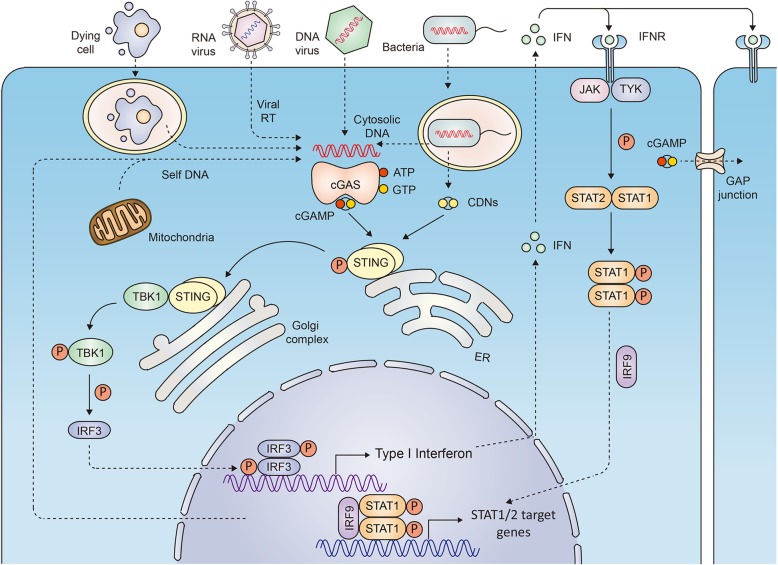
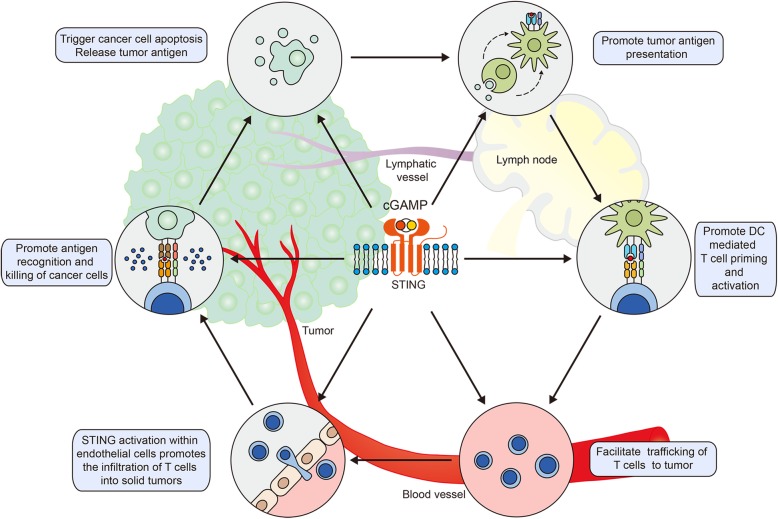
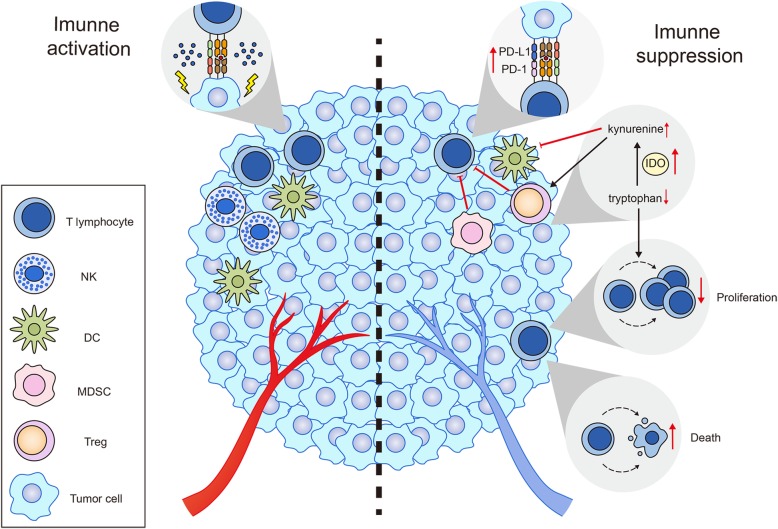
The aberrant appearance of DNA in the cytoplasm triggers the activation of cGAS-cGAMP-STING signaling and induces the production of type I interferons, which play critical roles in activating both innate and adaptive immune responses. Recently, numerous studies have shown that the activation of STING and the stimulation of type I IFN production are critical for the anticancer immune response. However, emerging evidence suggests that STING also regulates anticancer immunity in a type I IFN-independent manner. For instance, STING has been shown to induce cell death and facilitate the release of cancer cell antigens. Moreover, STING activation has been demonstrated to enhance cancer antigen presentation, contribute to the priming and activation of T cells, facilitate the trafficking and infiltration of T cells into tumors and promote the recognition and killing of cancer cells by T cells. In this review, we focus on STING and the cancer immune response, with particular attention to the roles of STING activation in the cancer-immunity cycle. Additionally, the negative effects of STING activation on the cancer immune response and non-immune roles of STING in cancer have also been discussed.
Overview
The claims and statistics of this paper haven’t been checked yet.
Free: it reads the open-access text and checks the first 5 claims that cite a source we can check. Create a free account to check every claim.
Integrity signals
Registry
Cites
Statistics
Figures
Verification
Claims the paper makes
The claims and statistics of this paper haven’t been checked yet.
Free: it reads the open-access text and checks the first 5 claims that cite a source we can check. Create a free account to check every claim.
Claims other papers make about this one
Each is checked against this paper’s own text: does it say what the citing paper says it does?
The source backs part of the claim, not all of it — or backs it for a different population, condition or comparison.
In the citing paper
“Intact TBK1 signaling is required for response to STING agonists, innate immune stimulatory molecules that mimic response to cytosolic DNA, which have been shown to limit tumour growth alone or in combination with cancer immunotherapy 46-48 .”
From Targeting TBK1 to overcome resistance to cancer immunotherapy (2023) · cites this paper as [46]
Experimental — accuracy not yet measured
Self-check
Percentages, sums and reported differences re-computed from the paper’s own numbers.
The self-check needs the paper’s full text.
Citations
Cites
Pattern Recognition Receptors and Inflammation
Takeuchi, O., & Akira, S. (2010) · Cell · doi:10.1016/j.cell.2010.01.022 · Cited by 8,895
Oncology meets immunology: the cancer-immunity cycle.
Chen, D. S., & Mellman, I. (2013) · Immunity · doi:10.1016/j.immuni.2013.07.012 · Cited by 6,929
Cyclic GMP-AMP Synthase Is a Cytosolic DNA Sensor That Activates the Type I Interferon Pathway
Sun, L., Wu, J., Du, F., Chen, X., & Chen, Z. J. (2013) · Science · doi:10.1126/science.1232458 · Cited by 4,996
STING is an endoplasmic reticulum adaptor that facilitates innate immune signalling
Ishikawa, H., & Barber, G. N. (2008) · Nature · doi:10.1038/nature07317 · Cited by 3,576
STING regulates intracellular DNA-mediated, type I interferon-dependent innate immunity
Ishikawa, H., Ma, Z., & Barber, G. N. (2009) · Nature · doi:10.1038/nature08476 · Cited by 2,759
Prevention of Allogeneic Fetal Rejection by Tryptophan Catabolism
Munn, D. H., Zhou, M., Attwood, J. T., Bondarev, I., Conway, S. J., Marshall, B., Brown, C., & Mellor, A. L. (1998) · Science · doi:10.1126/science.281.5380.1191 · Cited by 2,585
Cyclic GMP-AMP Is an Endogenous Second Messenger in Innate Immune Signaling by Cytosolic DNA
Wu, J., Sun, L., Chen, X., Du, F., Shi, H., Chen, C., & Chen, Z. J. (2013) · Science · doi:10.1126/science.1229963 · Cited by 2,541
The PD‐1 pathway in tolerance and autoimmunity
Francisco, L. M., Sage, P. T., & Sharpe, A. H. (2010) · Immunological Reviews · doi:10.1111/j.1600-065x.2010.00923.x · Cited by 2,300
Murphy, K., & Weaver, C. (2016) · W.W. Norton eBooks · doi:10.1201/9781315533247 · Cited by 2,258
CTLA-4 can function as a negative regulator of T cell activation
Walunas, T. L., Lenschow, D. J., Bakker, C. Y., Linsley, P. S., Freeman, G. J., Green, J. M., Thompson, C. B., & Bluestone, J. A. (1994) · Immunity · doi:10.1016/1074-7613(94)90071-x · Cited by 2,222
Cited by
Items 301–400 of 458
Ghara, A., Matada, G. S. P., Pramanick, P., Sharma, U. R., & Dhiwar, P. S. (2025) · Drug Discovery Today · doi:10.1016/j.drudis.2025.104412 · Cited by 5
Sheban, D., & Merbl, Y. (2023) · Cell Death and Differentiation · doi:10.1038/s41418-023-01150-z · Cited by 5
“In summary, the work described by Marzio and colleagues uncovered the molecular mechanism by which KEAP1 mutations promote immune evasion, namely by suppression of the type I interferon response in the TME.”
MethodInfluentialRole of stimulator of interferon genes ( STING ) in the enteric nervous system in health and disease
Balasubramaniam, A., & Srinivasan, S. (2023) · Neurogastroenterology & Motility · doi:10.1111/nmo.14603 · Cited by 5
Lee, G. D., CHUNG, B., Song, J. S., Jang, S. J., & Kim, H. R. (2021) · Anticancer Research · doi:10.21873/anticanres.15106 · Cited by 5
Imana, Z. N., Tseng, J., Yang, J., Liu, Y., Lin, P.-Y., Huang, M., Chen, L., Luo, Y., Wang, C., Yu, G., et al. (2024) · Biomedicine & Pharmacotherapy · doi:10.1016/j.biopha.2024.117692 · Cited by 4
Cron, K. R., Fang, P., Pham, O., Janes, J. R., Brandenburg, J., Lu, W., Zhu, J., Peterson, B., Tribble, S., Kehoe, H., et al. (2025) · Oncotarget · doi:10.18632/oncotarget.28769 · Cited by 4
Rani, D., Khandibharad, S., & Singh, S. (2025) · Frontiers in Oncology · doi:10.3389/fonc.2025.1689137 · Cited by 4
“…and publicly available datasets enabled the development of a comprehensive network describing FOXO – STING – autophagy signaling dynamics in NSCLC (31) and drawing the connectivity among various pathways surrounding cGAS – STING-driven autophagy, bridging existing gaps in understanding how these…”
Youngblood, M. W., Tripathi, S., Najem, H., Congivaram, H. T. S., Gomez, M., Sears, T. K., Hurley, L., Billingham, L. K., Silvers, C., Wang, W., et al. (2026) · Nature Communications · doi:10.1038/s41467-026-69296-1 · Cited by 4
“Notably, these genes have been previously associated with the STING pathway 37 – 43 , suggesting a possible immune therapeutic target for meningiomas.”
Hu, H., Fan, X., Wei, J., Wang, G., Sun, B., Lu, C., Bao, Y., & Jiang, L. (2026) · Neurobiology of Disease · doi:10.1016/j.nbd.2026.107330 · Cited by 4
Jiang, Z., Zhang, P., Cui, G., Liu, Y., Wang, X., Zhou, Z., Fei, J., Wang, K., Li, Y., Zhang, X., et al. (2026) · Biomaterials · doi:10.1016/j.biomaterials.2026.124183 · Cited by 5
Self-citationLi, C. I., Ke, F., Zhao, H., Mao, S., Djibo, M., Huang, L., He, M., Wang, M., Wen, H., Liu, Z., et al. (2026) · Nature Cancer · doi:10.1038/s43018-026-01158-7 · Cited by 4
“In addition, as STING activation enhances antitumor CD8 + T cell response 28,29 , we also evaluated how CD8 + T cells affected the anticancer efficacy of Nano-273 in a subcutaneous syngeneic pancreatic cancer model with KPC 6422 cells after depletion of CD8 + T cells (Fig.”
Bitler, B. G., Lang, J., Núñez-Avellaneda, D., Behbakht, K., Davidson, N. R., Woodruff, E. R., & Villagómez, F. R. (2025) · Scientific Reports · doi:10.1038/s41598-025-23137-1 · Cited by 4
Novel human STING activation by hydrated-prenylated xanthones from Garcinia cowa
Tran, T. T. T., Le, P. M., Nguyen, T. K. A., Hoang, T. M. N., An, T. Q., Martel, A. L., Lewicky, J. D., Klem, A., & Le, H. (2023) · Journal of Pharmacy and Pharmacology · doi:10.1093/jpp/rgad038 · Cited by 4
Comprehensive screening for drugs that modify radiation-induced immune responses
Okumura, M., Du, J., Kageyama, S., Yamashita, R., Hakozaki, Y., Motegi, A., Hojo, H., Nakamura, M., Hirano, Y., Okuma, Y., et al. (2022) · British Journal of Cancer · doi:10.1038/s41416-021-01688-0 · Cited by 4
“trafficking and infiltration of T cells into tumours, and promotes the recognition and killing of cancer cells by T cells [13, 14].”
BackgroundImmunomodulatory Gene-Splicing Dysregulation in Tumorigenesis: Unmasking the Complexity
Maebele, L. T., Mulaudzi, T. V., Madhavan, Y., Dlamini, Z., & Damane, B. P. (2023) · Molecules · doi:10.3390/molecules28165984 · Cited by 4
A novel STING agonist with systemic and durable anti‐tumour activity
Wang, X., Shen, A., Zhang, Y., Chen, X., Ding, J., Zhang, A., Geng, M., Ding, C., & Xie, Z. (2023) · Clinical and Translational Discovery · doi:10.1002/ctd2.231 · Cited by 4
Huang, J., Zhao, G., Qiu, P., Yi, X., Ji, L., Li, J., Li, P., Guan, Y., Ge, J., Chen, L., et al. (2023) · Molecular Oncology · doi:10.1002/1878-0261.13381 · Cited by 4
Barbeiro, C. D. O., Fernandes, D., Palaçon, M. P., CASTILHO, R. M., Almeida, L. Y., & Bufalino, A. (2023) · Journal of Personalized Medicine · doi:10.3390/jpm13040662 · Cited by 4
Pilati, D., Agyei, E. K., Elkhashab, M., Fuchs, E., Nielsen, I. H., Bjerg, T. W., Anthi, A. K., Jiménez-Reinoso, A., Iversen, M. B., Pohl, L., et al. (2025) · Journal of Biological Chemistry · doi:10.1016/j.jbc.2025.108508 · Cited by 3
“3 C ) cells, demonstrate that rHA-CpG speci fi cally stimulated TLRs, and no other DNA-sensing cytosolic PRRs such as STING (24, 41).”
Gu, Y.-M., Meng, X., Liang, J., Xia, Y., Huang, J.-W., Wang, K., & Ju, Z. (2025) · Molecular Pain · doi:10.1177/17448069251342240 · Cited by 3
“19 An increasing body of evidence substantiates the pivotal role of the STING/IFN-I pathway in various physiological and pathological processes, 20–22 including cancer, 23,24 and cancer-induced bone pain.”
Griffin, S., Mallia, J. D. O., Psakis, G., Attard, J., Caruana, M., & Gatt, R. (2025) · Cellular Signalling · doi:10.1016/j.cellsig.2025.111861 · Cited by 3
Yáñez, A. J., Beltrán, J. F., Barrientos, C. A., Soto-Rauch, G., Aguilar, M. N., Isla, A., Flores-Martin, S. N., Yañez, F. T., Yuivar, Y., Ojeda, A., et al. (2025) · Frontiers in Immunology · doi:10.3389/fimmu.2025.1570871 · Cited by 3
“The presence of IRF3 – BAX – AIFM1 interactions and PERK – CHOP activation, even in the absence of IFN signaling, demonstrates STING ’ s utility when classical cytokine responses are insuf fi cient or bypassed (112 – 114).”
Song, J., Ye, L., Ding, W.-Q., Qiao, H., Dai, J., Bai, H., & Zhang, S. (2025) · Acta Pharmaceutica Sinica B · doi:10.1016/j.apsb.2025.09.019 · Cited by 3
“Concomitantly, the histone demethylase KDM5 has been shown to suppress immune responses through STING pathway inhibition in CD8 + T cells 547 .”
Kothadiya, S., Cutshaw, G., Mathew, A. P., Zielinski, C., & Bardhan, R. (2026) · Nanoscale Horizons · doi:10.1039/d5nh00687b · Cited by 3
Liu, L., Xu, F., Zheng, Z., Yang, X., Yang, F., Liu, P., Chen, Y., Yang, Y., Zhao, J., Yang, P., et al. (2026) · Advanced Science · doi:10.1002/advs.202518490 · Cited by 3
“STING activation can not only enhance innate immune responses and reshape the TME, but also further boost anti-tumor immune responses [ 35–37 ].”
Vu, A. T. T., Shrestha, P., Thi, T.-H. L., Giri, A., Pham, K., Nguyen, T. T. K., Cho, J., Kweon, S., Lee, N. K., Hong, I., et al. (2026) · Journal of Controlled Release · doi:10.1016/j.jconrel.2026.114733 · Cited by 3
Targeting the cGAS-STING-TBK1 pathway in cancer therapy
Jiang, L., Zhong, Y., Zhang, Z., Yang, Q., Sun, S., Sun, H., & Liu, Z. (2026) · Future Medicinal Chemistry · doi:10.1080/17568919.2026.2628553 · Cited by 3
The ZNF737-CXCL10 axis drives immune exclusion and resistance to anti-PD-1 therapy in bladder cancer
Gao, X., Liu, J., Deng, D., Xiao, J., Liu, Y., Yan, L., Yang, W., Dai, Z., Wen, X., Zu, X., et al. (2026) · International Immunopharmacology · doi:10.1016/j.intimp.2026.116443 · Cited by 3
Wang, B., Yan, Z., Shen, Y., Fan, S., Wang, S., Wang, W., Zhang, Q., Yang, W., He, B., & Wu, H. (2026) · ACS Nano · doi:10.1021/acsnano.5c10858 · Cited by 3
Huo, L., Wu, C., Li, X., Ma, C., Huang, J., Chen, Z., HE, W. P., Tao, T., & Zhang, W. (2026) · Advanced Science · doi:10.1002/advs.202522826 · Cited by 3
“This intrinsic increase in immunogenicity is coupled with the activation of the cGAS-STING pathway, which further enhances antigen presentation via MHC-I upregulation [ 41–43 ].”
Self-citationSampath, S. G., Tang, A. J., Chen, A. X., Viswanathan, A., Izima, C., Manriquez, A. H., Dadario, N. B., Winans, N. J., Sakka Amini, M., Rolfe, N. W., et al. (2026) · Journal of Neuro-Oncology · doi:10.1007/s11060-026-05601-8 · Cited by 3
“Non-CDN agonists are also actively being tested in combination therapies for various non-GBM tumor types, with preliminary work suggesting similar effectiveness achieved via intratumoral administration [ 15 ].”
InfluentialRezapour, A., Rydbeck, D., Byvald, F., Tasselius, V., Danielsson, G., Angenete, E., & Yrlid, U. (2023) · OncoImmunology · doi:10.1080/2162402x.2023.2209473 · Cited by 3
“Granzyme B (GrzB) from cytotoxic T cells (CTLs) enters targeted cells through perforin-induced permeabilization and, via caspases, triggers apoptosis in tumor cells 13 .”
BackgroundInfluentialAdvances in structure-guided mechanisms impacting on the cGAS–STING innate immune pathway
Chen, K., Liao, J., Patel, D. J., & Xie, W. (2023) · Advances in immunology · doi:10.1016/bs.ai.2023.08.001 · Cited by 3
Xia, T., Chen, M., Zhou, M., Wan, W., Shan, Y., Xie, W., Wu, N., Li, C., Yuan, Z., Cai, T., et al. (2025) · Molecular Cancer Research · doi:10.1158/1541-7786.mcr-24-0499 · Cited by 3
Genomics guiding personalized first-line immunotherapy response in lung and bladder tumors
Iglesias, J. B., Gallardo‐Gómez, M., Oitabén, A., Lázaro-Quintela, M., León‐Mateos, L., Alves, J. M., Pino-González, M., Juaneda‐Magdalena, L., García-Benito, C., Abdulkader, I., et al. (2025) · Journal of Translational Medicine · doi:10.1186/s12967-025-06323-7 · Cited by 3
“Concordantly, previous studies have shown that these impairments can cause genomic instability [85, 86], PD-L1 expression and TMB upregulation, and immunotoxicity through cGAS-STING stimulation, which favor interferon expression and lymphocytes infiltration [86–89].”
Sosnowska, D., Cheung, T. S., Sarkar, J., Opzoomer, J. W., Feehan, K. T., Anstee, J. E., Woodman, C. A., Keddar, M. R., Clayton, K., Ali, S., et al. (2025) · JCI Insight · doi:10.1172/jci.insight.191017 · Cited by 3
Cornillon, P., Bouleftour, W., Reynaud, T., Pigne, G., Maillet, D., Hamizi, S., & Béguinot, M. (2024) · Tumori Journal · doi:10.1177/03008916241249366 · Cited by 3
“54 The interaction of IFN-γ with its receptor on DCs promotes cell maturation, increases the expression of co-stimulatory molecules on DCs, and enhances the migration ability of DCs to tumor-draining lymph nodes, ultimately promoting anti-tumor immunity mediated by CD8 + T cells.”
Simple and Smart Metal–Phenolic Micelles for Optimizing Immunotherapy by Disrupting Tumor Stemness
Wang, Y., Wang, X., He, Y., Li, X., She, W., & Hou, L. (2025) · Nano Letters · doi:10.1021/acs.nanolett.4c05468 · Cited by 3
Self-citationA Novel Approach to Cervical Cancer Therapy: A Short Review
Nejad, A. S. M., Kamarehei, F., Khodavirdipour, A., Mehrbod, P., & Alikhani, M. Y. (2023) · The Open Public Health Journal · doi:10.2174/18749445-v16-e230405-2022-209 · Cited by 3
Chakraborty, B., Agarwal, S., Kori, S. K., Das, R., Kashaw, V., Iyer, A. K., & Kashaw, S. K. (2023) · Current Medicinal Chemistry · doi:10.2174/0929867330666230505165031 · Cited by 3
Umemura, K., Kawamoto, Y., Takahashi, Y., & Takakura, Y. (2024) · Molecular Pharmaceutics · doi:10.1021/acs.molpharmaceut.3c00840 · Cited by 3
Zhao, J., Zhang, K., Sui, D., Wang, S., Li, Y., Tang, X., Liu, X., Song, Y., & Deng, Y. (2024) · Nanoscale · doi:10.1039/d4nr01740d · Cited by 3
Park, J. H., Shin, S., Kim, H. J., Oh, S., & Cho, Y. M. (2024) · Journal of Pathology and Translational Medicine · doi:10.4132/jptm.2024.07.31 · Cited by 3
“The STING pathway is important for innate immunity, and recently, activation of the pathway has been thought to be associated with adaptive anti-cancer immune responses and angiogenesis [ 16,34 ] .”
Sharma, S., Kunc, M., Pęksa, R., Ciarka, A., Łyzińska, W., Qu, L., Radziszewski, P., & Zapała, Ł. (2025) · Biomedicines · doi:10.3390/biomedicines13112674 · Cited by 2
“It was found that activation of STING may reinforce the expression of checkpoint ligands, as well [34].”
Jha, S. K., Kumar, S., Jain, D., Pandey, N., Chakraborty, R., Rana, K., Mehta, D., Nath, D., Ralhan, J., Saini, M., et al. (2025) · Chemistry of Materials · doi:10.1021/acs.chemmater.5c01071 · Cited by 2
Olafsen, N. E., Åhrling, S. S., Rasmussen, M., Erlingsson, L. A. M., Granly, E. N., Takaoka, A., & Matthews, J. (2025) · Cellular Oncology · doi:10.1007/s13402-025-01150-w · Cited by 2
Svanberg, C., Mukku, R. P., Besler, S. O., Hopkins, F. R., Sjöwall, C., Nyström, S. N., Shankar, E. M., & Larsson, M. (2026) · PLoS Pathogens · doi:10.1371/journal.ppat.1013868 · Cited by 2
“Activation of STING by DNA oligonucleotides is an indirect event involving the activation of DNA sensors e.g. cGAS, and/ or IFI16, followed by downstream STING activation [30].”
Harnessing engineered bacteria for revolutionizing cancer immunotherapy
Zhou, K., Cao, L., Luo, H.-Y., Wang, K.-N., Song, Z., & Bu, L. (2026) · Advanced Composites and Hybrid Materials · doi:10.1007/s42114-026-01664-3 · Cited by 2
Amato, L., Tavoletta, I., Rosa, C. D., Seggio, M., Arcadio, F., Capaldo, S., Haq, F. U., Tuccillo, C., Esposito, C., Guida, G. D., et al. (2026) · Translational Oncology · doi:10.1016/j.tranon.2026.102756 · Cited by 2
“While STING has been more extensively studied in cancer immunity [5 – 7], the role of MAVS as a surrogate biomarker for immune response in SCLC remains underexplored.”
Schuller, A. J., Bibb, A. M., Hager, M. R., Yanouri, O. A., Smith, E. J., Briggs, A. M., Montrose, L. B., & Tjalkens, R. B. (2026) · NeuroToxicology · doi:10.1016/j.neuro.2026.103473 · Cited by 2
Lu, Z., Chen, G., Qiu, J., Huo, X., & Xu, X. (2026) · Frontiers in Immunology · doi:10.3389/fimmu.2026.1862118 · Cited by 2
Modulation of Skin Cancer by the Stimulator of Interferon Genes
Oscherwitz, M. E., Jiminez, V. S., Terhaar, H., & Yusuf, N. (2023) · Genes · doi:10.3390/genes14091794 · Cited by 2
CD86 is linked to apoptosis in canine histiocytic sarcoma
Diehl, B., Kirchhoff, A., & Hansmann, F. (2025) · Frontiers in Veterinary Science · doi:10.3389/fvets.2025.1546047 · Cited by 2
“However, studies also show an immunosuppressive effect when the IFN-I response is constantly induced (24, 25).”
Iyer, K. A., Tenchov, R., Ivanov, J. M., & Zhou, Q. A. (2025) · ACS Omega · doi:10.1021/acsomega.5c00693 · Cited by 2
Characterization of a transmembrane-activating STING agonist using genetically humanized mice
Mizuno, N., Abraham, J., Jimenez-Perez, K., Rose, I., Springgay, L., Boehm, D. T., Ando, T., Streblow, D. N., Ward, J. M., Miller, S. M., et al. (2026) · Cell Reports · doi:10.1016/j.celrep.2026.117475 · Cited by 2
“32 These findings facilitated demonstration that activation of STING using CDNs or small molecules is capable of remarkable tumor clearance and even abscopal responses.”
Shu, C., Jin, R., Niu, Q., Cicka, D., Doyle, S. P., Wahafu, A., Fan, D., Zheng, X., Du, Y., Ivanov, A. A., et al. (2021) · bioRxiv (Cold Spring Harbor Laboratory) · doi:10.1101/2021.09.17.460294 · Cited by 2
“3B), a known STING-downstream target pathway (Chen et al., 2016; Zhu et al., 2019), which is suppressed in LKB1-mut LUAD (Fig.”
BackgroundChen, J., Zhao, B. L., Dong, H., Li, T., Cheng, X., Gong, W., Wang, J., Zhang, J., Xin, G., Yu, Y., et al. (2024) · eLife · doi:10.7554/elife.94849.2 · Cited by 2
Sampaio, L. R., Dias, R. D. B., Goes, J. V. C., de Melo, R. P. M., Borges, D. D. P., Melo, M. M. D. L., de Oliveira, R. T. G., Ribeiro, H. L., Magalhães, S. M. M., & Pinheiro, R. F. (2024) · Medical Oncology · doi:10.1007/s12032-024-02376-8 · Cited by 1
Transcriptomic landscapes of STING-mediated DNA-sensing reveal cellular response heterogeneity
Kong, L.-Z., Jang, I.-H., Wang, C., Lee, S. Y., Kim, S., Oh, S., Lee, S., Jo, S., Kim, J., Kim, K. K., et al. (2024) · International Journal of Biological Macromolecules · doi:10.1016/j.ijbiomac.2024.138752 · Cited by 1
In silico and in vitro analysis of the genotoxic and mutagenic potential of STING modulators
Vishwakarma, S., Dinavahi, S. S., Nikam, K. R., Ranjan, B., Rangaiah, R., Karunyaa, M., Anupreetha, V., Ramakrishnan, A., & Dhakshinamoorthy, S. (2025) · Toxicology Letters · doi:10.1016/j.toxlet.2025.04.012 · Cited by 1
STING Signaling Pathway as a Target for Neuroprotective Therapy in Parkinson’s Disease
Usenko, T. S. (2025) · Journal of Evolutionary Biochemistry and Physiology · doi:10.1134/s0022093025030019 · Cited by 1
“Additionally, STING can be activated by exog(cid:2) enous CDNs, such as c-di-AMP, c-di-GMP, or 3',3'-cGAMP of bacterial/viral origin [36, 54].”
Loading of STING Agonist into Lipid Nanoparticles Boosts Dendritic Cell Activation
Ribeiro, A. R. S., Eguskiza, A., Dang, H.-H., Neuper, T., Unger, M. S., Comas, L. R., Steiner, M., Sieberer, H., Zaborsky, N., Greil, R., et al. (2025) · ACS Omega · doi:10.1021/acsomega.5c06105 · Cited by 1
“16 In addition to cancer cells, STING activation also induces type I IFN production by endothelial cells, facilitating the entrance of T cells into the bloodstream and their infiltration into the TME.”
Lv, Z., Wang, T., Fan, R., Ming, Q., Liu, J., Jia, Y., Zhang, Y., Chen, M., Chen, W., Jiang, Z., et al. (2026) · Cancer Biology and Medicine · doi:10.20892/j.issn.2095-3941.2025.0326 · Cited by 1
Ge, Y., Xiang, B., Chen, J., Guan, Z., Gong, J., Su, Y., & Wang, K. (2026) · Materials Today Advances · doi:10.1016/j.mtadv.2026.100729 · Cited by 1
Murray, C. E., Ontiveros, C. O., Wentworth, J., Blinkiewicz, P., Leung, B., Bai, H., Spicer, N., Holtz, A. N., Tanner, C., Balasubramanian, A., et al. (2026) · Journal for ImmunoTherapy of Cancer · doi:10.1136/jitc-2025-012426 · Cited by 1
Exploring ASFV tolerance in Indian pigs: A genetic and relative expression study of the STING1 gene
Arutkumaran, S., Deb, R., Shanmathi, S., Das, P. J., Sengar, G. S., Pegu, S. R., Singh, I., Kumar, S., Meera, K., Rajkhowa, S., et al. (2026) · Archives of Virology · doi:10.1007/s00705-026-06536-1 · Cited by 1
Liu, Z., Li, R., Fan, C., Liu, Y., Liu, J., Yin, M., 商泥, Wang, X., Qi, Z., Shen, Y., et al. (2026) · Cell Death and Disease · doi:10.1038/s41419-026-08659-4 · Cited by 1
“Animal experiments were performed in accordance with the guidelines approved by the Ethics Committee of Tianjin Medical University (TMUaMEC2023044).”
Liu, G., & Li, R. (2026) · Journal of Nanobiotechnology · doi:10.1186/s12951-026-04346-w · Cited by 1
“As a pivotal bridge between innate and adaptive immunity, the STING signaling pathway has recently garnered significant attention for the development of innovative cancer immunotherapy strategies [37, 38].”
Novel therapeutic strategies leveraging TH9 cell anticancer functions
Xu, J., Abdoul‐Azize, S., & Apétoh, L. (2026) · Seminars in Immunology · doi:10.1016/j.smim.2026.102026 · Cited by 1
Ciliated Cells Drive Critical STING-Mediated Tumor Suppression in the Fallopian Tube Epithelium
Colina, J. A., Recouvreux, M. S., Sobeck, A. M., Johnson, B. K., Lin, Y., Sekhar, S. C., Avelar, R. A., Rivera-Gonzalez, G., Zhai, Y., Ram, H., et al. (2026) · Cancer Research · doi:10.1158/0008-5472.can-25-1527 · Cited by 1
Deng, K., Zheng, Y., Han, Y., Xie, Y., Luo, Z., Li, Y., Jiang, J., Qin, Z., Shi, X., Yang, H., et al. (2026) · Small · doi:10.1002/smll.73513 · Cited by 1
Discovery of a non-nucleotide STING agonist with antitumor activity
Wang, S., Chen, N., Bian, W., Liu, T., Xu, X., Xiao, Y., You, Q., Feng, Z., & Liu, X. (2026) · Results in Chemistry · doi:10.1016/j.rechem.2026.103456 · Cited by 1
Mitochondrial dynamics and T cells immunity in cancer
Li, X., Zhang, M., Wang, Y., Li, M., Wang, T., & Liu, X. (2026) · Biochemistry and Biophysics Reports · doi:10.1016/j.bbrep.2026.102659 · Cited by 1
Self-citationC92, a proton channel-blocking allosteric STING agonist generates robust antitumor activity
Banerjee, M., Middya, S., Shrivastava, R., Middya, A., Pryde, D. C., Chakraborty, D., Soram, T., Mane, N., Rawat, N., Gautam, A., et al. (2026) · Journal for ImmunoTherapy of Cancer · doi:10.1136/jitc-2026-015242 · Cited by 1
Cell Selective STING‐Activating Polysaccharide Immunomodulators for Cancer Therapy
Zhu, Q., Miao, J., Ds, X., Mc, Z., Chen, S. H., Wang, J., Chen, W., Guo, J., Xu, L., Ma, S., et al. (2026) · Advanced Materials · doi:10.1002/adma.74178 · Cited by 1
“…STING located in the (ER) triggers a cascade immune reaction of downstream pathways of the kinase TANK-binding kinase 1 (TBK1) and interferon regulatory factor 3 (IRF3), which further induces the secretion of the transcription of type I interferons (IFNs),inflammatorycytokines,andchemokines[12,43].”
Yang, J., Li, Q., Zhao, P., Luo, Z., Wang, Z., Yang, R., Zhou, M., Zhou, J., Chen, D., & Chen, Y. (2026) · Theranostics · doi:10.7150/thno.134131 · Cited by 1
Involvement of STING signaling pathway in non-alcoholic fatty liver disease
Wu, J., He, B.-W., Cao, J., Yan, J., & Chen, Z. (2021) · World Chinese Journal of Digestology · doi:10.11569/wcjd.v29.i24.1396 · Cited by 1
Wang, Y., Huang, L., Li, M., & Qi, Y. (2021) · Research Square · doi:10.21203/rs.3.rs-919313/v1 · Cited by 1
Ejes inflamatorios y alarminas en el intestino delgado en enfermedad celíaca
Pérez, F. (2021) · El Servicio de Difusión de la Creación Intelectual (National University of La Plata) · doi:10.35537/10915/129881 · Cited by 1
STING Upregulation Strategies to Potentiate STING Immunotherapy
Cho, W., Lee, J. H., & Park, S. B. (2023) · Future Medicinal Chemistry · doi:10.4155/fmc-2023-0227 · Cited by 1
Chen, J., Zhao, B. L., Li, T., Dong, H., Cheng, X., Gong, W., Wang, J., Zhang, J., Xin, G., Yu, Y., et al. (2024) · eLife · doi:10.7554/elife.94849.1 · Cited by 1
Characterization of the Immune Response Induced by Rhabdovirus-Infected Leukemia Cell Vaccines
Scut, E. (2020) · uO Research (University of Ottawa) · doi:10.20381/ruor-25170
BIOPREPARATION FOR IN SITU ANTITUMOR VACCINATION
Зинченко, А. И., Birichevskaya, L. L., Shchokolova, A. S., Красочко, П. А., & Barashkov, A. N. (2021) · ASJ · doi:10.31618/asj.2707-9864.2021.2.45.74
Disección mecanística del fracaso loco-regional en cáncer de mama
de Córdoba, B. R. (2022) · Depósito Académico Digital Universidad de Navarra (University of Navarra) · doi:10.15581/10171/63818
Cancer vaccine’s multiverse and the future ahead
Chavarria, V., Figueroa, R., Salazar, A., de la Cruz, V. P., & Pineda, B. (2022) · Elsevier eBooks · doi:10.1016/b978-0-323-85941-7.00010-3
Data from STINGing Viral Tumors: What We Know from Head and Neck Cancers
Saulters, E. L., Woolley, J. F., Varadarajan, S., Jones, T. M., & Dahal, L. N. (2023) · doi:10.1158/0008-5472.c.6513438.v1
Bioorthogonal Imaging Probe for Sting Protein in Live Cell and Fixed TissuePreprint
Kim, E., Lee, H. L., Park, J., Yoon, J., Park, W., Park, G. K., Koh, M., Sohn, C. H., & Lee, S. (2023) · SSRN Electronic Journal · doi:10.2139/ssrn.4604924
Bioorthogonal Imaging Probe for Sting Protein in Live Cell and Fixed TissuePreprint
Kim, E., Lee, H., Park, J., Yoon, J., Park, W., Park, G. K., Koh, M., Sohn, C. H., & Lee, S. (2023) · SSRN Electronic Journal · doi:10.2139/ssrn.4650665
The role of USP22 in nucleic acid sensing pathways and interferon-induced necroptotic cell death
Karlowitz, R. (2024) · Publication Server of Goethe University Frankfurt am Main (Goethe University Frankfurt) · doi:10.21248/gups.81916
Bioorthogonal imaging probe for STING protein in live cell and fixed tissue
Lee, H., Park, J., Yoon, J., Park, W., Kang, M., Lee, J., Park, G. K., Koh, M., Kim, H., Sohn, C. H., et al. (2024) · Sensors and Actuators B Chemical · doi:10.1016/j.snb.2024.135773
Mechanizmy naprawy uszkodzeń DNA a aktywacja odporności przeciwnowotworowej
Ampuła, K., & Suchorska, W. M. (2023) · Letters in Oncology Science · doi:10.21641/los.2023.20.1.237
Tillman, L., Jiang, X., Wang, C., Xiong, Y., & Lin, W. (2025) · Advanced NanoBiomed Research · doi:10.1002/anbr.202500088
Neoliensinine promotes lysosomal cell death in T cell malignancies via a novel STING-TUBA1B pathway
Hu, P., Huang, Y., Yu, Z., Zhang, X., Yang, G., & Yang, P. (2025) · Genes & Diseases · doi:10.1016/j.gendis.2025.101809
Self-citationANTIBODY-DRUG CONJUGATES IN ONCOLOGY: RECENT ACHIEVEMENTS AND CURRENT CHALLENGES
Lowinger, T. B., & Toader, D. (2025) · Medicinal chemistry reviews · doi:10.1021/mc-2025-vol60.ch11
Gao, L., Jiang, J., Zhu, L., Xie, Z., Chen, Y., Lv, Z., Chen, Y., Zhou, W., Chen, J., Zhong, Y., et al. (2025) · BMC Medicine · doi:10.1186/s12916-025-04561-6
Self-citationBustos, M. A., Yokoe, T., Shoji, Y., Kobayashi, Y., Mizuno, S., Murakami, T., Zhang, X., Sekhar, S. C., Kim, S., Ryu, S., et al. (2024) · Figshare · doi:10.6084/m9.figshare.24516082
Self-citationPu, Z., Liu, J., Liu, Z., Peng, F., Zhu, Y., Wang, X., He, J., Yi, P., Hu, X., Fan, X., et al. (2022) · Figshare · doi:10.6084/m9.figshare.21321611
Self-citationPu, Z., Liu, J., Liu, Z., Peng, F., Zhu, Y., Wang, X., He, J., Yi, P., Hu, X., Fan, X., et al. (2022) · Figshare · doi:10.6084/m9.figshare.21321632
Self-citation
Metadata
- Authors
- Zhu, Y., An, X., Zhang, X., Qiao, Y., Zheng, T., & Li, X.
- Affiliations
- Harbin Medical University (CN)
- Corresponding author
- Zheng, Tongsen
- Li, Xiaobo
- Venue
- Molecular Cancer
- Published
- 2019-11-04
- Volume
- 18
- Issue
- 1
- Pages
- 152-152
- ISSN
- 1476-4598 (ISSN-L)
- PMC
- PMC6827255
- OpenAlex
- W2988506530
- Cited by
- 431
- References
- 129
- Citations by year
- 2026: 47 · 2025: 82 · 2024: 70 · 2023: 78 · 2022: 67 · 2021: 56 · 2020: 31
- FWCI
- 3.32
- Type
- journal article
- Language
- en
- Open access
- gold
- doi.org
- Licence
- cc-by
- creativecommons.org/licenses/by/4.0/ (tdm)
- creativecommons.org/licenses/by/4.0/ (vor)
- Locations
- Molecular Cancer (publishedVersion, cc-by)
- PubMed Central (publishedVersion, cc-by)
- PubMed (publishedVersion)
- DOAJ (DOAJ: Directory of Open Access Journals) (submittedVersion, cc-by-sa)
- Funders
- National Natural Scientific Foundation of China (NO. 81872435, NO. 81672930, No. 81871976)
- Fok Ying Tung Education Foundation (No. 151037)
- National Youth Talent Support Program (W03070060)
- Academician Yu Weihan Outstanding youth foundation of Harbin Medical University
- Topics
- Life Sciences › Immunology and Microbiology › Immunology › interferon and immune responses
- Health Sciences › Medicine › Oncology › Cancer Immunotherapy and Biomarkers
- Life Sciences › Immunology and Microbiology › Immunology › Immunotherapy and Immune Responses
- Keywords
- STING, cancer-immunity cycle, type I interferon, cytosolic DNA sensing, cancer immunotherapy, cancer cell death, tumor immunosuppression
- MeSH terms
- STING Protein, Animals, Antigens, Neoplasm, Disease Susceptibility, Humans, Immunity, Innate, Immunotherapy, Interferon Type I, Membrane Proteins, Neoplasms, Signal Transduction, Gene Expression Regulation, Neoplastic, Immunomodulation
About these checks
Registry, retraction, Cites and statistics results are computed, not judged, with one exception: a printed reference that no index lists is read once by a model before it counts as a citation error. Claims are extracted by a model and kept only when their quote appears verbatim in the text; each cited source is then checked, with a model’s help, for whether it says what the claim relies on. Those verdicts can be wrong — read the claim’s quote and the cited source before relying on one.
Statistics and arithmetic are recomputed, not judged.
Confidence bands are shown only for fields calibrated on our annotated test set. None is calibrated yet, so no band is shown.
What counts as a claim ›How we measure confidence ›How we check this ›
Are you an author, or do you see a problem with this page? Request a review
Data sources
Bibliographic data: Semantic Scholar, OpenAlex, Crossref.
Contains information from the Semantic Scholar Academic Graph Datasets, made available under the ODC Attribution License (ODC-BY 1.0).
Semantic Scholar’s data is described in: Kinney, R., et al. (2023). The Semantic Scholar Open Data Platform. arXiv:2301.10140.
