

STING: a master regulator in the cancer-immunity cycle
Open accessThe DOI matches its Crossref record; 129 of the 129 references it cites were found in a registry or an index.
Abstract
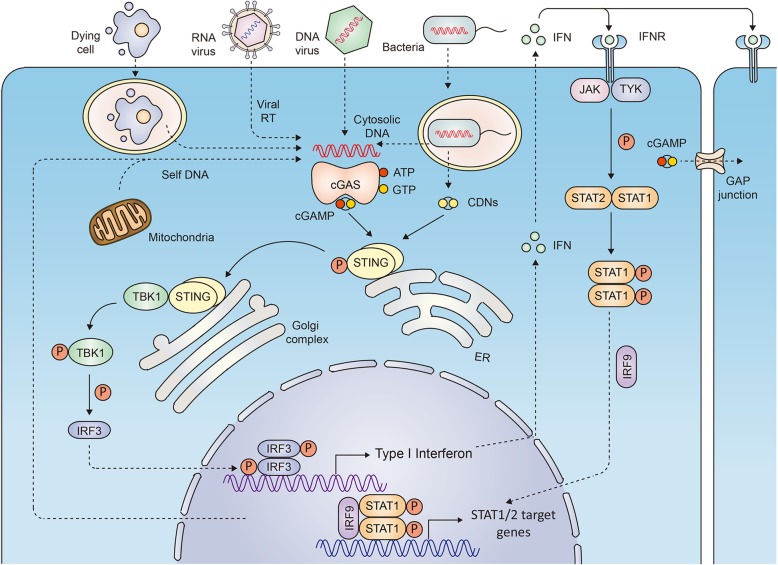
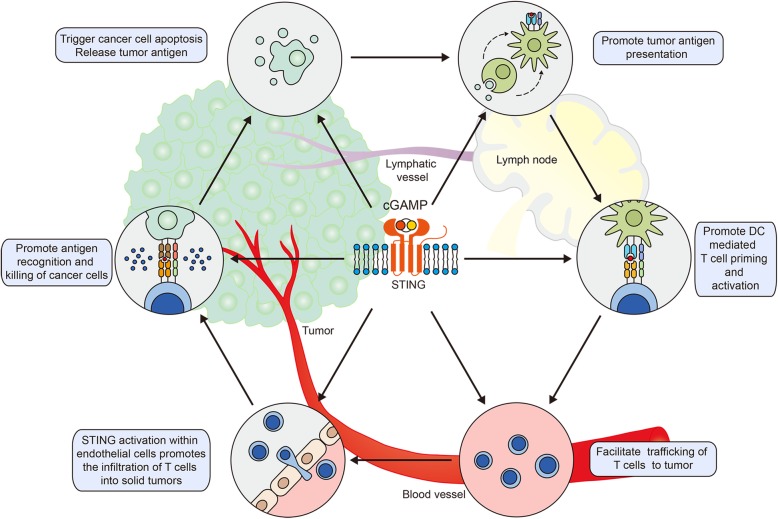
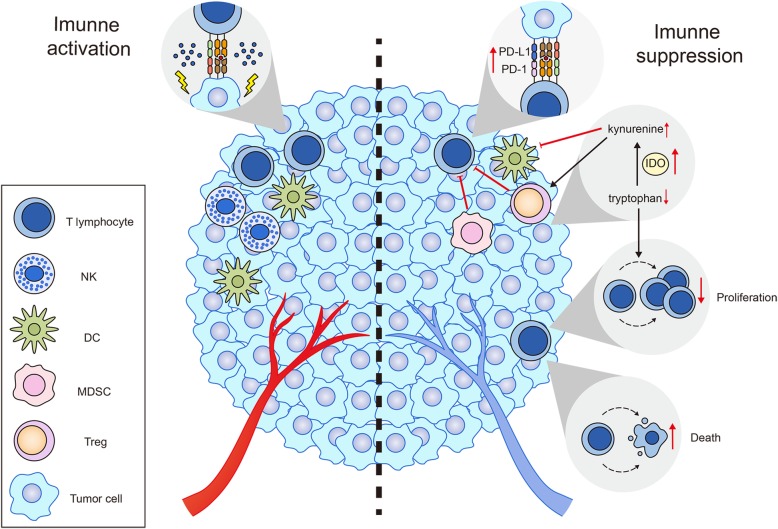
The aberrant appearance of DNA in the cytoplasm triggers the activation of cGAS-cGAMP-STING signaling and induces the production of type I interferons, which play critical roles in activating both innate and adaptive immune responses. Recently, numerous studies have shown that the activation of STING and the stimulation of type I IFN production are critical for the anticancer immune response. However, emerging evidence suggests that STING also regulates anticancer immunity in a type I IFN-independent manner. For instance, STING has been shown to induce cell death and facilitate the release of cancer cell antigens. Moreover, STING activation has been demonstrated to enhance cancer antigen presentation, contribute to the priming and activation of T cells, facilitate the trafficking and infiltration of T cells into tumors and promote the recognition and killing of cancer cells by T cells. In this review, we focus on STING and the cancer immune response, with particular attention to the roles of STING activation in the cancer-immunity cycle. Additionally, the negative effects of STING activation on the cancer immune response and non-immune roles of STING in cancer have also been discussed.
Overview
The claims and statistics of this paper haven’t been checked yet.
Free: it reads the open-access text and checks the first 5 claims that cite a source we can check. Create a free account to check every claim.
Integrity signals
Registry
Cites
Statistics
Figures
Verification
Claims the paper makes
The claims and statistics of this paper haven’t been checked yet.
Free: it reads the open-access text and checks the first 5 claims that cite a source we can check. Create a free account to check every claim.
Claims other papers make about this one
Each is checked against this paper’s own text: does it say what the citing paper says it does?
The source backs part of the claim, not all of it — or backs it for a different population, condition or comparison.
In the citing paper
“Intact TBK1 signaling is required for response to STING agonists, innate immune stimulatory molecules that mimic response to cytosolic DNA, which have been shown to limit tumour growth alone or in combination with cancer immunotherapy 46-48 .”
From Targeting TBK1 to overcome resistance to cancer immunotherapy (2023) · cites this paper as [46]
Experimental — accuracy not yet measured
Self-check
Percentages, sums and reported differences re-computed from the paper’s own numbers.
The self-check needs the paper’s full text.
Citations
Cites
Pattern Recognition Receptors and Inflammation
Takeuchi, O., & Akira, S. (2010) · Cell · doi:10.1016/j.cell.2010.01.022 · Cited by 8,895
Oncology meets immunology: the cancer-immunity cycle.
Chen, D. S., & Mellman, I. (2013) · Immunity · doi:10.1016/j.immuni.2013.07.012 · Cited by 6,929
Cyclic GMP-AMP Synthase Is a Cytosolic DNA Sensor That Activates the Type I Interferon Pathway
Sun, L., Wu, J., Du, F., Chen, X., & Chen, Z. J. (2013) · Science · doi:10.1126/science.1232458 · Cited by 4,996
STING is an endoplasmic reticulum adaptor that facilitates innate immune signalling
Ishikawa, H., & Barber, G. N. (2008) · Nature · doi:10.1038/nature07317 · Cited by 3,576
STING regulates intracellular DNA-mediated, type I interferon-dependent innate immunity
Ishikawa, H., Ma, Z., & Barber, G. N. (2009) · Nature · doi:10.1038/nature08476 · Cited by 2,759
Prevention of Allogeneic Fetal Rejection by Tryptophan Catabolism
Munn, D. H., Zhou, M., Attwood, J. T., Bondarev, I., Conway, S. J., Marshall, B., Brown, C., & Mellor, A. L. (1998) · Science · doi:10.1126/science.281.5380.1191 · Cited by 2,585
Cyclic GMP-AMP Is an Endogenous Second Messenger in Innate Immune Signaling by Cytosolic DNA
Wu, J., Sun, L., Chen, X., Du, F., Shi, H., Chen, C., & Chen, Z. J. (2013) · Science · doi:10.1126/science.1229963 · Cited by 2,541
The PD‐1 pathway in tolerance and autoimmunity
Francisco, L. M., Sage, P. T., & Sharpe, A. H. (2010) · Immunological Reviews · doi:10.1111/j.1600-065x.2010.00923.x · Cited by 2,300
Murphy, K., & Weaver, C. (2016) · W.W. Norton eBooks · doi:10.1201/9781315533247 · Cited by 2,258
CTLA-4 can function as a negative regulator of T cell activation
Walunas, T. L., Lenschow, D. J., Bakker, C. Y., Linsley, P. S., Freeman, G. J., Green, J. M., Thompson, C. B., & Bluestone, J. A. (1994) · Immunity · doi:10.1016/1074-7613(94)90071-x · Cited by 2,222
Cited by
Items 401–458 of 458
Pu, Z., Liu, J., Liu, Z., Peng, F., Zhu, Y., Wang, X., He, J., Yi, P., Hu, X., Fan, X., et al. (2022) · Figshare · doi:10.6084/m9.figshare.21321602
Self-citationPu, Z., Liu, J., Liu, Z., Peng, F., Zhu, Y., Wang, X., He, J., Yi, P., Hu, X., Fan, X., et al. (2022) · Figshare · doi:10.6084/m9.figshare.21321629
Self-citationPu, Z., Liu, J., Liu, Z., Peng, F., Zhu, Y., Wang, X., He, J., Yi, P., Hu, X., Fan, X., et al. (2022) · Figshare · doi:10.6084/m9.figshare.21321593
Self-citationPu, Z., Liu, J., Liu, Z., Peng, F., Zhu, Y., Wang, X., He, J., Yi, P., Hu, X., Fan, X., et al. (2022) · Figshare · doi:10.6084/m9.figshare.21321587
Self-citationChemische Synthese und Evaluierung von 2'3'-cGAMP-Analoga
Dialer, C. R. (2020) · Elektronische Hochschulschriften der LMU München (Ludwig-Maximilians-Universität München) · doi:10.5282/edoc.26274
Bustos, M. A., Yokoe, T., Shoji, Y., Kobayashi, Y., Mizuno, S., Murakami, T., Zhang, X., Sekhar, S. C., Kim, S., Ryu, S., et al. (2023) · Figshare · doi:10.6084/m9.figshare.24515914
Self-citationPu, Z., Liu, J., Liu, Z., Peng, F., Zhu, Y., Wang, X., He, J., Yi, P., Hu, X., Fan, X., et al. (2022) · Figshare · doi:10.6084/m9.figshare.21321596
Self-citationKotani, H., Yamano, T., Boucher, J. C., Sato, S., Sakaguchi, H., Fukuda, K., Nishiyama, A., Yamashita, K., Ohtsubo, K., Takeuchi, S., et al. (2024) · Figshare · doi:10.6084/m9.figshare.27124060
Pu, Z., Liu, J., Liu, Z., Peng, F., Zhu, Y., Wang, X., He, J., Yi, P., Hu, X., Fan, X., et al. (2022) · Figshare · doi:10.6084/m9.figshare.21321605
Self-citationPu, Z., Liu, J., Liu, Z., Peng, F., Zhu, Y., Wang, X., He, J., Yi, P., Hu, X., Fan, X., et al. (2022) · Figshare · doi:10.6084/m9.figshare.21321614
Self-citationPu, Z., Liu, J., Liu, Z., Peng, F., Zhu, Y., Wang, X., He, J., Yi, P., Hu, X., Fan, X., et al. (2022) · Figshare · doi:10.6084/m9.figshare.21321626
Self-citationPu, Z., Liu, J., Liu, Z., Peng, F., Zhu, Y., Wang, X., He, J., Yi, P., Hu, X., Fan, X., et al. (2022) · Figshare · doi:10.6084/m9.figshare.21321599
Self-citationPu, Z., Liu, J., Liu, Z., Peng, F., Zhu, Y., Wang, X., He, J., Yi, P., Hu, X., Fan, X., et al. (2022) · Figshare · doi:10.6084/m9.figshare.21321608
Self-citationPu, Z., Liu, J., Liu, Z., Peng, F., Zhu, Y., Wang, X., He, J., Yi, P., Hu, X., Fan, X., et al. (2022) · Figshare · doi:10.6084/m9.figshare.21321617
Self-citationPu, Z., Liu, J., Liu, Z., Peng, F., Zhu, Y., Wang, X., He, J., Yi, P., Hu, X., Fan, X., et al. (2022) · Figshare · doi:10.6084/m9.figshare.21321620
Self-citationPu, Z., Liu, J., Liu, Z., Peng, F., Zhu, Y., Wang, X., He, J., Yi, P., Hu, X., Fan, X., et al. (2022) · Figshare · doi:10.6084/m9.figshare.21321584
Self-citationde Graaff, J. (2025) · Electronic Theses of LMU Munich (Ludwig-Maximilians-Universität München) · doi:10.5282/edoc.35589
Xu, J., Li, J., Zhang, J., & Yu, Y. (2025) · European journal of medical research · doi:10.1186/s40001-025-03520-4
“This signaling pathway participates in immune surveillance and defense [41].”
CASM potentiates STING-driven NFκB signaling in immune cellsPreprint
Benoit-Lizon, I., Pignol, C., Hooper, K. M., Truntzer, C., Radoua, A., Zuffo, L. D., Lucas, J., Frenger, Q., Ponsardin, E., Cornebise, C., et al. (2026) · bioRxiv (Cold Spring Harbor Laboratory) · doi:10.64898/2026.01.21.700774
“Initially related to antiviral immune response, the cGAS (Cyclic GMP-AMP synthase)-STING pathway has been extensively studied in the context of inflammation and cancer (Decout et al., 2021; Zhu et al., 2019).”
Gui, Z., Zhao, L., Liu, S., & Zhang, L. (2026) · Journal of Translational Medicine · doi:10.1186/s12967-026-07716-y
“The synergistic enrichment of the “TNF signaling pathway” reveals a crucial signal amplification mechanism, where cGAS-STING and TNF-NF-κB pathways form a positive regulatory loop, collectively maintaining a sustained immune activation state [33].”
Wang, J., Mrozek, A., Hu, K., You, H., Traverse, S. E., Lee, H., Zeng, S. X., Pang, X., Park, H., & Lu, H. (2026) · Signal Transduction and Targeted Therapy · doi:10.1038/s41392-025-02553-9
“11,15 However, its expression is often suppressed or reduced in many cancers, particularly in more advanced stages.”
Drzyzga, A., Czapla, J., Cichoń, T., Matuszczak, S., Pilny, E., Jarosz–Biej, M., Ciepła, J., & Smolarczyk, R. (2026) · ImmunoTargets and Therapy · doi:10.2147/itt.s576457
“3 Importantly, STING activation is known to upregulate PD-L1 expression.”
ENPP3 drives ccRCC progression by cGAMP hydrolysis and STING–IFN suppression
Ma, J., Wu, Y., Lin, G., Sun, X., Geng, H., Zhang, T., & Yu, D. (2026) · Cancer Biology & Therapy · doi:10.1080/15384047.2026.2632995
“5,6 However, tumors often develop mechanisms to evade this pathway, particularly through the hydrolysis of extracellular 2 ′ 3 ′ -cyclic GMP–AMP (cGAMP), 7 a key immunotransmitter that activates STING in neighboring immune cells.”
Qu, N., Zhang, M., Ji, Y., Liu, M., Liu, M., & Chen, L. J. (2026) · Immunological Investigations · doi:10.1080/08820139.2025.2590048
“In the realm of PCa, it has been demonstrated that the stimulation of the STING pathway facilitates immunogenic cell death (ICD), a mechanism that can increase the recognition of cancer cells by the immune system (Zhu et al., 2019; Zhuo et al., 2022).”
Benoit-Lizon, I. (2021) · theses.fr (ABES) · doi:10.70675/2b159c6dz31eez488ez8948z2fc5261a35dc
Non-canonical STING activation by calcium influx paired to endoplasmic reticulum stress
Rius‐Rocabert, S., Tur-Planells, V., Arranz-Herrero, J., Inchausti-Moya, I., Miorin, L., Luis, E. V.-D., Dopazo, A., Solera, R. A., Concepcion, A. R., Gastaminza, P., et al. (2026) · Cell Communication and Signaling · doi:10.1186/s12964-026-02819-x
“Activation of STING has been shown to produce an antitumor effect by triggering a type I IFN response, which leads to cell death, enhances tumor antigen presentation, and boosts T-cell activation and infiltration into tumors [42].”
Yin, G., He, F., Guo, Q., Jiang, Q., Fan, S., Liu, Y., Fan, X., Liang, Y., Luo, D., 靳凯宇, et al. (2026) · International Immunopharmacology · doi:10.1016/j.intimp.2026.116763
Yang, Y., Wang, J., Yu, H., Quan, Z., Zhang, Z., Guo, J., Wu, H., Liu, S., Li, X., Hu, X., et al. (2026) · Molecular Therapy · doi:10.1016/j.ymthe.2026.05.011
Self-citationAn Overview of STING as an Anticancer Target: Structure, Function, and Inhibitors
Chang, Y., Dan, E., Zhang, H., & Cao, S. (2026) · Journal of Biosciences and Medicines · doi:10.4236/jbm.2026.146010
Der antineoplastische Effekt von Dimethylfumarat auf das Virus-negative Merkelzellkarzinom
Brüggestrat, L. G. (2026) · Dokumentenrepositorium der RUB (Ruhr University Bochum) · doi:10.13154/294-14538
Garrido-Castro, A. C. (2026) · Annals of Oncology · doi:10.1016/j.annonc.2026.06.015
Zhang, Y., Wei, R., Su, P., Xu, Y., Yu, T., Hou, B., Yu, J., Liu, F., & Huang, Y. (2026) · Cellular and Molecular Life Sciences · doi:10.1007/s00018-026-06314-x
“STING signaling in immune cells drives type I IFN-dependent spontaneous T-cell priming, which enhances tumor immunogenicity and improves cancer immunotherapy [20, 21].”
Cibler le cancer du sein métastatique triple négatif avec un vaccin autologue à cellules cancéreuses
Niavarani, S.-R. (2022) · Knowledge UdeS (Institutional Deposit of the University of Sherbrooke)
Prostate cancer: evading immunity, inspiring therapy
Calì, B., Brina, D., Moscarda, V., Kohl, A., Cetti, F., Bressan, S., & Alimonti, A. (2026) · Trends in cancer · doi:10.1016/j.trecan.2026.07.006
Li, Z., Tawawalla, A., Foidart, P., Seehawer, M., Nishida, J., Jimenez, E. R., Bui, T. M., Huang, X.-Y., Rees, M. G., Ronan, M. M., et al. (2026) · Nature Communications · doi:10.1038/s41467-026-76773-0
In Situ Red Blood Cell Hitchhiking Nanoparticles for Lung‐Selective Immune Reprogramming
Udofa, E., Zhang, E., Naderi, M. M., He, S., Gunasekara, H., Feng, B., Chao, C.-J., Zhang, L., Lee, J., Čechová, P., et al. (2026) · Advanced Functional Materials · doi:10.1002/adfm.77933
“…neutrophils, and T-cells compared to saline and other control treatments (Figure 5i ). by promoting their maturation as well as upregulating the expression of antigen-presenting molecules (MHCI and MHCII), co-stimulatory molecules (e.g., CD80 and CD86), and migratory chemokine receptor CCR7 [ 49 ].”
He, Z., Zhang, Y., Zhan, S., Cao, T., Bai, W., Zhou, B., Yu, J., Zeng, H., Zhou, J., Tian, F., et al. (2026) · European Journal of Medicinal Chemistry · doi:10.1016/j.ejmech.2026.119274
STING搭載脂質ナノ粒子とCpG-ODNの併用によるメモリー様NK細胞の誘導とメラノーマ肺転移予防への展開
Khalifa, A. M. (2024) · Institutional Repositories DataBase (IRDB) · doi:10.14943/doctoral.k16108
Functionalized Spiky Microcarriers Orchestrate STING Activation and Durable Antitumor Immunity
Shang, L., Peng, L., Huang, Z., Deng, C., Jiang, J., Xie, X., Chen, H., Wang, Y., Wang, J., & Wang, X. (2026) · Molecular Pharmaceutics · doi:10.1021/acs.molpharmaceut.5c01695
Shi, M., Zeng, Y., Chen, C., & Zuo, X. (2026) · Frontiers in Immunology · doi:10.3389/fimmu.2026.1951036
“At the host pathway level, the expression and functional status of negative regulatory factors and the RIG-I/MDA5 axis should be evaluated (172, 183).”
You, W., Gao, F., Wang, H.-L., Shen, A., Zhang, Z., Nie, X., Huang, W.-Q., Wang, L., & You, Y. (2026) · Bioactive Materials · doi:10.1016/j.bioactmat.2026.08.026
“Although it was initially identified as a critical host defense mechanism against pathogen invasion, recent studies have established its indispensable role as a sensor of tumor-derived cytosolic DNA, thereby linking innate sensing to adaptive antitumor immunity [11 – 16].”
Zhao, Z., Yan, J., Gao, Y., Ke, L., & Liu, J. (2026) · Chemical Engineering Journal · doi:10.1016/j.cej.2026.182834
BindingDB (2025) · UC San Diego · doi:10.7270/q20g3qwx
BindingDB Entry 50018630: If small molecules immunotherapy comes, can the prime be far behind?
BindingDB (2024) · UC San Diego · doi:10.7270/q26h4np0
BindingDB (2023) · UC San Diego · doi:10.7270/q2h1363k
Chauhan, M. K., Kumar, S., Yi, J., & Chen, Y. (2026) · ACS Nano Medicine · doi:10.1021/acsnanomed.6c00203
Investigation of the pluripotency-specific response to LINE1 transposons in early development
Garcia-Llagostera, F. (2023) · Spiral (Imperial College London) · doi:10.25560/148730
Dual-stimuli-responsive nanomedicines for cancer immunotherapy
Zhang, J., Wang, S., Liu, J., Wang, X., Yin, A., He, Z., Zhu, S., Xu, P., & Zhang, J. (2026) · Chinese Chemical Letters · doi:10.1016/j.cclet.2026.113660
TBK1 as a key regulator in breast cancer: opportunities for targeted therapy
Hetta, H. F., Alanazi, F. E., Bukhari, S. Q., Alatawi, Z., Abdullah, M. L., Alfardan, A. S., Al‐Hamamah, M. A., Alshahrani, F. A., Alatawi, F. O., AlRamadneh, T. N., et al. (2026) · Breast Cancer · doi:10.1007/s12282-026-01928-2
Wang, B., Wang, Z., Li, Y., Shang, Z., Liu, Z., Fan, H., Zhan, R., & Xin, T. (2024) · doi:10.3389/fimmu.2024.1327898.s001
Vieira, R. D. S., Nascimento, M. S., Noronha, I. H., Vasconcelos, J. R. C., Benvenuti, L. A., Barber, G. N., Câmara, N. O. S., Kalil, J., Cunha-Neto, E., & Almeida, R. R. (2022) · doi:10.3389/fimmu.2021.775346.s002
Papaevangelou, E., Esteves, A. M., Dasgupta, P., & Galustian, C. (2023) · doi:10.3389/fimmu.2023.1196829.s002
You, Z., Lv, M., He, X., Pan, Y., Ge, J., Hu, X., Zheng, Y., Huang, M., Zhou, C., & You, C. (2022) · doi:10.3389/fimmu.2022.871756.s003
Metadata
- Authors
- Zhu, Y., An, X., Zhang, X., Qiao, Y., Zheng, T., & Li, X.
- Affiliations
- Harbin Medical University (CN)
- Corresponding author
- Zheng, Tongsen
- Li, Xiaobo
- Venue
- Molecular Cancer
- Published
- 2019-11-04
- Volume
- 18
- Issue
- 1
- Pages
- 152-152
- ISSN
- 1476-4598 (ISSN-L)
- PMC
- PMC6827255
- OpenAlex
- W2988506530
- Cited by
- 431
- References
- 129
- Citations by year
- 2026: 47 · 2025: 82 · 2024: 70 · 2023: 78 · 2022: 67 · 2021: 56 · 2020: 31
- FWCI
- 3.32
- Type
- journal article
- Language
- en
- Open access
- gold
- doi.org
- Licence
- cc-by
- creativecommons.org/licenses/by/4.0/ (tdm)
- creativecommons.org/licenses/by/4.0/ (vor)
- Locations
- Molecular Cancer (publishedVersion, cc-by)
- PubMed Central (publishedVersion, cc-by)
- PubMed (publishedVersion)
- DOAJ (DOAJ: Directory of Open Access Journals) (submittedVersion, cc-by-sa)
- Funders
- National Natural Scientific Foundation of China (NO. 81872435, NO. 81672930, No. 81871976)
- Fok Ying Tung Education Foundation (No. 151037)
- National Youth Talent Support Program (W03070060)
- Academician Yu Weihan Outstanding youth foundation of Harbin Medical University
- Topics
- Life Sciences › Immunology and Microbiology › Immunology › interferon and immune responses
- Health Sciences › Medicine › Oncology › Cancer Immunotherapy and Biomarkers
- Life Sciences › Immunology and Microbiology › Immunology › Immunotherapy and Immune Responses
- Keywords
- STING, cancer-immunity cycle, type I interferon, cytosolic DNA sensing, cancer immunotherapy, cancer cell death, tumor immunosuppression
- MeSH terms
- STING Protein, Animals, Antigens, Neoplasm, Disease Susceptibility, Humans, Immunity, Innate, Immunotherapy, Interferon Type I, Membrane Proteins, Neoplasms, Signal Transduction, Gene Expression Regulation, Neoplastic, Immunomodulation
About these checks
Registry, retraction, Cites and statistics results are computed, not judged, with one exception: a printed reference that no index lists is read once by a model before it counts as a citation error. Claims are extracted by a model and kept only when their quote appears verbatim in the text; each cited source is then checked, with a model’s help, for whether it says what the claim relies on. Those verdicts can be wrong — read the claim’s quote and the cited source before relying on one.
Statistics and arithmetic are recomputed, not judged.
Confidence bands are shown only for fields calibrated on our annotated test set. None is calibrated yet, so no band is shown.
What counts as a claim ›How we measure confidence ›How we check this ›
Are you an author, or do you see a problem with this page? Request a review
Data sources
Bibliographic data: Semantic Scholar, OpenAlex, Crossref.
Contains information from the Semantic Scholar Academic Graph Datasets, made available under the ODC Attribution License (ODC-BY 1.0).
Semantic Scholar’s data is described in: Kinney, R., et al. (2023). The Semantic Scholar Open Data Platform. arXiv:2301.10140.
