

The DOI matches its Crossref record; 119 of the 120 references it cites were found in a registry or an index, and 1 are not checked yet.
An in vitro alveolar macrophage assay for predicting the short-term inhalation toxicity of nanomaterials
Open accessAbstract
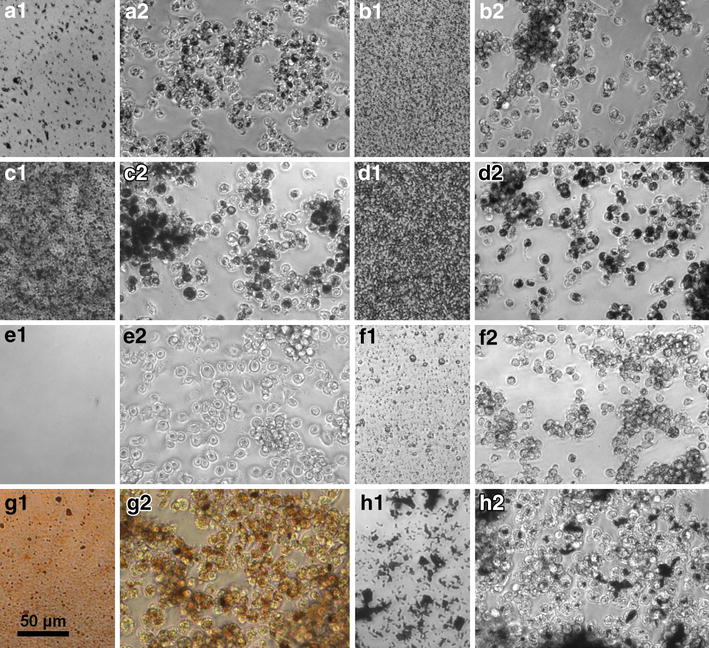
BACKGROUND: Most in vitro studies investigating nanomaterial pulmonary toxicity poorly correlate to in vivo inhalation studies. Alveolar macrophages (AMs) play an outstanding role during inhalation exposure since they effectively clear the alveoli from particles. This study addresses the applicability of an in vitro alveolar macrophage assay to distinguish biologically active from passive nanomaterials. METHODS: Rat NR8383 alveolar macrophages were exposed to 18 inorganic nanomaterials, covering AlOOH, BaSO4, CeO2, Fe2O3, TiO2, ZrO2, and ZnO NMs, amorphous SiO2 and graphite nanoplatelets, and two nanosized organic pigments. ZrO2 and amorphous SiO2 were tested without and with surface functionalization. Non-nanosized quartz DQ12 and corundum were used as positive and negative controls, respectively. The test materials were incubated with the cells in protein-free culture medium. Lactate dehydrogenase, glucuronidase, and tumour necrosis factor alpha were assessed after 16 h. In parallel, H2O2 was assessed after 1.5 h. Using the no-observed-adverse-effect concentrations (NOAECs) from available rat short-term inhalation studies (STIS), the test materials were categorized as active (NOAEC < 10 mg/m(3)) or passive. RESULTS: In vitro data reflected the STIS categorization if a particle surface area-based threshold of <6000 mm(2)/mL was used to determine the biological relevance of the lowest observed significant in vitro effects. Significant effects that were recorded above this threshold were assessed as resulting from test material-unspecific cellular 'overload'. Test materials were assessed as active if ≥2 of the 4 in vitro parameters undercut this threshold. They were assessed as passive if 0 or 1 parameter was altered. An overall assay accuracy of 95 % was achieved. CONCLUSIONS: The in vitro NR8383 alveolar macrophage assay allows distinguishing active from passive nanomaterials. Thereby, it allows determining whether in vivo short-term inhalation testing is necessary for hazard assessment. Results may also be used to group nanomaterials by biological activity. Further work should aim at validating the assay.
Overview
The claims and statistics of this paper haven’t been checked yet.
Run the check — free, no account needed. It reads the open-access text and checks the sources it cites.
Integrity signals
Registry
Cites
Statistics
Figures
Verification
Claims the paper makes
The claims and statistics of this paper haven’t been checked yet.
Run the check — free, no account needed. It reads the open-access text and checks the sources it cites.
Claims other papers make about this one
Each is checked against this paper’s own text: does it say what the citing paper says it does?
The source backs part of the claim, not all of it — or backs it for a different population, condition or comparison.
In the citing paper
“At this stage, the internalized portion of the fibre measured ca. 26 μm, which is roughly twice the size of a typical NR8383 macrophage in its detached and rounded state (12.5 –12.8 μm) [28].”
From Macrophages bend long fibres with flexural rigidity lower than 3 mN·nm2 to avoid frustrated phagocytosis (2026) · cites this paper as [28]
Experimental — accuracy not yet measuredThe check wasn’t confident either way, so it gives no verdict — never disputed.
In the citing paper
“On average, human alveolar macrophages are larger than rat alveolar macrophages, with mean diameters of approximately 21.2 ± 0.3 μm and 13.1 ± 2.5 μm, respectively [28, 45].”
From Macrophages bend long fibres with flexural rigidity lower than 3 mN·nm2 to avoid frustrated phagocytosis (2026) · cites this paper as [28]
Experimental — accuracy not yet measuredIn the citing paper
“The biological responses of NR8383 cells to nanomaterials are well documented and have been shown to correlate with in vivo outcomes [28]. This supports their use as a predictive model and contributes to the reduction and refinement of animal experiments.”
From Macrophages bend long fibres with flexural rigidity lower than 3 mN·nm2 to avoid frustrated phagocytosis (2026) · cites this paper as [28]
Self-check
Percentages, sums and reported differences re-computed from the paper’s own numbers.
The self-check needs the paper’s full text.
Citations
Cites
Nanotoxicology: An Emerging Discipline Evolving from Studies of Ultrafine Particles
Oberdörster, G., Oberdörster, E., & Oberdörster, J. (2005) · Environmental Health Perspectives · doi:10.1289/ehp.7339 · Cited by 7,891
Understanding biophysicochemical interactions at the nano–bio interface
Nel, A. E., Mädler, L., Velegol, D., Xia, T., Hoek, E. M. V., Somasundaran, P., Klaessig, F., Castranova, V., & Thompson, M. (2009) · Nature Materials · doi:10.1038/nmat2442 · Cited by 7,083
The Principles of Humane Experimental Technique
(1960) · The Medical Journal of Australia · doi:10.5694/j.1326-5377.1960.tb73127.x · Cited by 5,045
Ankley, G. T., Bennett, R. S., Erickson, R. J., Hoff, D. J., Hornung, M. W., Johnson, R. D., Mount, D. R., Nichols, J. W., Russom, C. L., Schmieder, P. K., et al. (2009) · Environmental Toxicology and Chemistry · doi:10.1002/etc.34 · Cited by 2,734
Human Respiratory Tract Model for Radiological Protection
Icrp (1994) · Medical Entomology and Zoology · Cited by 1,770
Pulskamp, K., Diabaté, S., & Krug, H. F. (2006) · Toxicology Letters · doi:10.1016/j.toxlet.2006.11.001 · Cited by 1,014
Human Health Risk Assessment for Aluminium, Aluminium Oxide, and Aluminium Hydroxide
Krewski, D., Yokel, R. A., Nieboer, E., Borchelt, D., Cohen, J., Harry, J., Kacew, S., Lindsay, J., Mahfouz, A. M., & Rondeau, V. (2007) · Journal of Toxicology and Environmental Health, Part B · doi:10.1080/10937400701597766 · Cited by 998
Safety assessment for nanotechnology and nanomedicine: concepts of nanotoxicology
Oberdörster, G. (2009) · Journal of Internal Medicine · doi:10.1111/j.1365-2796.2009.02187.x · Cited by 943
Rare earth nanoparticles prevent retinal degeneration induced by intracellular peroxides
Chen, J., Patil, S. D., Seal, S., & McGinnis, J. F. (2006) · Nature Nanotechnology · doi:10.1038/nnano.2006.91 · Cited by 880
Dave, K. A., & White, S. W. (2002) · World Highways/Routes du Monde · Cited by 767
Nel, A. E., Xia, T., Meng, H., Wang, X., Lin, S., Ji, Z., & Zhang, H. (2012) · Accounts of Chemical Research · doi:10.1021/ar300022h · Cited by 581
Possible mechanisms to explain dust overloading of the lungs
MORROW, P. (1988) · Fundamental and Applied Toxicology · doi:10.1016/0272-0590(88)90284-9 · Cited by 500
Correlation between particle size, in vivo particle persistence, and lung injury
Oberdörster, G., Ferin, J., & Lehnert, B. (1994) · Environmental Health Perspectives · doi:10.1289/ehp.94102s5173 · Cited by 481
Monteiller, C., Tran, L., MacNee, W., Faux, S., Jones, A., Miller, B., & Donaldson, K. (2007) · Occupational and Environmental Medicine · doi:10.1136/oem.2005.024802 · Cited by 473
Development ofin vitrosystems for nanotoxicology: methodological considerations
Stone, V., Johnston, H. J., & Schins, R. P. F. (2009) · Critical Reviews in Toxicology · doi:10.1080/10408440903120975 · Cited by 450
C. L. Tran, D. B. (2000) · Inhalation Toxicology · doi:10.1080/08958370050166796 · Cited by 436
Duffin, R., Tran, L., Brown, D., Stone, V., & Donaldson, K. (2007) · Inhalation Toxicology · doi:10.1080/08958370701479323 · Cited by 405
Kreyling, W. G., Semmler‐Behnke, M., Seitz, J., Scymczak, W., Wenk, A., Mayer, P., Takenaka, S., & Oberdörster, G. (2009) · Inhalation Toxicology · doi:10.1080/08958370902942517 · Cited by 385
Physicochemical characteristics of nanomaterials that affect pulmonary inflammation
Braakhuis, H., Park, M. V. D. Z., Gosens, I., de Jong, W. H., & Cassee, F. R. (2014) · Particle and Fibre Toxicology · doi:10.1186/1743-8977-11-18 · Cited by 377
Describing the validity of carcinogen screening tests
Cooper, J., Saracci, R., & Cole, P. T. (1979) · British Journal of Cancer · doi:10.1038/bjc.1979.10 · Cited by 351
Rothen‐Rutishauser, B., Kiama, S. G., & Gehr, P. (2005) · American Journal of Respiratory Cell and Molecular Biology · doi:10.1165/rcmb.2004-0187oc · Cited by 347
Acute Lung Injury: How Macrophages Orchestrate Resolution of Inflammation and Tissue Repair
Herold, S., Mayer, K., & Lohmeyer, J. (2011) · Frontiers in Immunology · doi:10.3389/fimmu.2011.00065 · Cited by 344
Basic pathogenetic mechanisms in silicosis: current understanding
Rimal, B., Greenberg, A. K., & Rom, W. N. (2005) · Current Opinion in Pulmonary Medicine · doi:10.1097/01.mcp.0000152998.11335.24 · Cited by 326
Bhattacharjee, S., de Haan, L. H. J., Evers, N. M., Jiang, X., Marcelis, A. T. M., Zuilhof, H. T., Rietjens, I. M. C. M., & Alink, G. M. (2010) · Particle and Fibre Toxicology · doi:10.1186/1743-8977-7-25 · Cited by 279
Semmler-Behnke, M., Takenaka, S., Fertsch, S., Wenk, A., Seitz, J., Mayer, P., Oberdörster, G., & Kreyling, W. G. (2007) · Environmental Health Perspectives · doi:10.1289/ehp.9685 · Cited by 262
Impact of agglomeration state of nano- and submicron sized gold particles on pulmonary inflammation
Gosens, I., Post, J. A., de la Fonteyne, L. J. J., Jansen, E. H. J. M., Geus, J. W., Cassee, F. R., & de Jong, W. H. (2010) · Particle and Fibre Toxicology · doi:10.1186/1743-8977-7-37 · Cited by 261
A decision-making framework for the grouping and testing of nanomaterials (DF4nanoGrouping)
Arts, J. H. E., Hadi, M., Irfan, M., Keene, A. M., Kreiling, R., Lyon, D. Y., Maier, M., Michel, K., Petry, T. W., Sauer, U. G., et al. (2015) · Regulatory Toxicology and Pharmacology · doi:10.1016/j.yrtph.2015.03.007 · Cited by 258
Self-citationDriscoll, K. E., Lindenschmidt, R. C., Maurer, J. K., Higgins, J. M., & Ridder, G. M. (1990) · American Journal of Respiratory Cell and Molecular Biology · doi:10.1165/ajrcmb/2.4.381 · Cited by 249
Secretion of lysosomal hydrolases by stimulated and nonstimulated macrophages.
Schnyder, J., & Baggiolini, M. (1978) · The Journal of Experimental Medicine · doi:10.1084/jem.148.2.435 · Cited by 240
Kröll, A., Dierker, C., Rommel, C. E., Hahn, D., Wohlleben, W., Isfort, C. S., Göbbert, C., Voetz, M., Hardinghaus, F., & Schnekenburger, J. (2011) · Particle and Fibre Toxicology · doi:10.1186/1743-8977-8-9 · Cited by 238
Joseph, M., Tonnel, A., Torpier, G., Capron, A., ARNOUX, B., & Benveniste, J. (1983) · Journal of Clinical Investigation · doi:10.1172/jci110762 · Cited by 237
Sager, T. M., & Castranova, V. (2009) · Particle and Fibre Toxicology · doi:10.1186/1743-8977-6-15 · Cited by 230
Driscoll, K. E., Carter, J. M., Howard, B. W., Hassenbein, D. G., Pepelko, W. E., Baggs, R. B., & Oberdörster, G. (1996) · Toxicology and Applied Pharmacology · doi:10.1006/taap.1996.0045 · Cited by 225
Hackenberg, S., Scherzed, A., Technau, A., Kessler, M. T., Froelich, K., Ginzkey, C., Koehler, C. J., Burghartz, M., Hagen, R., & Kleinsasser, N. H. (2011) · Toxicology in Vitro · doi:10.1016/j.tiv.2011.01.003 · Cited by 209
Ma‐Hock, L., Strauss, V., Treumann, S., Küttler, K., Wohlleben, W., Hofmann, T., Gröters, S., Wiench, K., van Ravenzwaay, B., & Landsiedel, R. (2013) · Particle and Fibre Toxicology · doi:10.1186/1743-8977-10-23 · Cited by 202
Self-citationDust overloading of the lungs: Update and appraisal
Morrow, P. E. (1992) · Toxicology and Applied Pharmacology · doi:10.1016/0041-008x(92)90002-a · Cited by 198
Nominal and Effective Dosimetry of Silica Nanoparticles in Cytotoxicity Assays
Lison, D., Thomassen, L. C. J., Rabolli, V., Gonzalez, L., Napierska, D., Seo, J. W., Kirsch‐Volders, M., Hoet, P., Kirschhock, C. E. A., & Martens, J. A. (2008) · Toxicological Sciences · doi:10.1093/toxsci/kfn072 · Cited by 198
Ma‐Hock, L., Burkhardt, S., Strauss, V., Gamer, A. O., Wiench, K., van Ravenzwaay, B., & Landsiedel, R. (2008) · Inhalation Toxicology · doi:10.1080/08958370802361057 · Cited by 197
Self-citationBhattacharjee, S., Rietjens, I. M. C. M., Singh, M. P., Atkins, T. M., Purkait, T. K., Xu, Z., Regli, S., Shukaliak, A. M., Clark, R. J., Mitchell, B. S., et al. (2013) · Nanoscale · doi:10.1039/c3nr34266b · Cited by 190
Differences in the Biokinetics of Inhaled Nano- versus Micrometer-Sized Particles
Kreyling, W. G., Semmler-Behnke, M., Takenaka, S., & Möller, W. (2013) · Accounts of Chemical Research · doi:10.1021/ar300043r · Cited by 184
Sun, B., Wang, X., Ji, Z., Wang, M., Liao, Y., Chang, C. H., Li, R., Zhang, H., Nel, A. E., & Xia, T. (2015) · Small · doi:10.1002/smll.201402859 · Cited by 176
Application of short-term inhalation studies to assess the inhalation toxicity of nanomaterials
Landsiedel, R., Ma-Hock, L., Hofmann, T., Wiemann, M., Strauss, V., Treumann, S., Wohlleben, W., Gröters, S., Wiench, K., & van Ravenzwaay, B. (2014) · Particle and Fibre Toxicology · doi:10.1186/1743-8977-11-16 · Cited by 169
Self-citationThe Biologically Effective Dose in Inhalation Nanotoxicology
Donaldson, K., Schinwald, A., Murphy, F. A., Cho, W., Duffin, R., Tran, L., & Poland, C. A. (2012) · Accounts of Chemical Research · doi:10.1021/ar300092y · Cited by 163
The heterogeneity of lung macrophages in the susceptibility to disease
Morales-Nebreda, L., Misharin, A. V., Perlman, H., & Budinger, G. R. S. (2015) · European Respiratory Review · doi:10.1183/16000617.0031-2015 · Cited by 162
Arts, J. H. E., Muijser, H., Duistermaat, E., Junker, K., & Kuper, C. F. (2007) · Food and Chemical Toxicology · doi:10.1016/j.fct.2007.04.001 · Cited by 159
van Ravenzwaay, B., Landsiedel, R., Fabian, E. J., Burkhardt, S., Strauss, V., & Ma‐Hock, L. (2008) · Toxicology Letters · doi:10.1016/j.toxlet.2008.11.020 · Cited by 157
Self-citationCellular Interaction of Different Forms of Aluminum Nanoparticles in Rat Alveolar Macrophages
Wagner, A. J., Bleckmann, C. A., Murdock, R. C., Schrand, A. M., Schlager, J. J., & Hussain, S. M. (2007) · The Journal of Physical Chemistry B · doi:10.1021/jp068938n · Cited by 154
Donaldson, K., Borm, P. J. A., Oberdörster, G., Pinkerton, K. E., Stone, V., & Tran, C. L. (2008) · Inhalation Toxicology · doi:10.1080/08958370701758742 · Cited by 142
A critical appraisal of existing concepts for the grouping of nanomaterials
Arts, J. H. E., Hadi, M., Keene, A. M., Kreiling, R., Lyon, D. Y., Maier, M., Michel, K., Petry, T. W., Sauer, U. G., Warheit, D. B., et al. (2014) · Regulatory Toxicology and Pharmacology · doi:10.1016/j.yrtph.2014.07.025 · Cited by 140
Self-citationHenderson, R. D. (1995) · Fundamental and Applied Toxicology · doi:10.1006/faat.1995.1022 · Cited by 139
Assessment of the Lung Toxicity of Copper Oxide Nanoparticles: Current Status
Ahamed, M., Akhtar, M. J., Alhadlaq, H. A., & Alrokayan, S. (2015) · Nanomedicine · doi:10.2217/nnm.15.72 · Cited by 130
Arts, J. H. E., Irfan, M., Keene, A. M., Kreiling, R., Lyon, D. Y., Maier, M., Michel, K., Neubauer, N., Petry, T. W., Sauer, U. G., et al. (2015) · Regulatory Toxicology and Pharmacology · doi:10.1016/j.yrtph.2015.11.020 · Cited by 128
Self-citationLandsiedel, R., Sauer, U. G., Ma‐Hock, L., Schnekenburger, J., & Wiemann, M. (2014) · Nanomedicine · doi:10.2217/nnm.14.149 · Cited by 127
Self-citationThe comparison of a fibrogenic and two nonfibrogenic dusts by bronchoalveolar lavage
Lindenschmidt, R. C., Driscoll, K. E., Perkins, M. A., Higgins, J. M., Maurer, J. K., & Belfiore, K. A. (1990) · Toxicology and Applied Pharmacology · doi:10.1016/0041-008x(90)90026-q · Cited by 123
Bhargava, Arya, A., Sethy, N. K., Singh, S. K., & Das, M. (2013) · International Journal of Nanomedicine · doi:10.2147/ijn.s53032 · Cited by 123
Cho, W., Duffin, R., Bradley, M., Megson, I. L., MacNee, W., Lee, J. K., Jeong, J., & Donaldson, K. (2013) · Particle and Fibre Toxicology · doi:10.1186/1743-8977-10-55 · Cited by 123
Bakand, S., Winder, C., Khalil, C., & Hayes, A. (2005) · Inhalation Toxicology · doi:10.1080/08958370500225240 · Cited by 118
Panas, A., Marquardt, C., Nalcaci, O. O., Bockhorn, H., Baumann, W., Paur, H. ‐., Mülhopt, S., Diabaté, S., & Weiss, C. (2012) · Nanotoxicology · doi:10.3109/17435390.2011.652206 · Cited by 117
Scherbart, A. M., Langer, J., Bushmelev, A., van Berlo, D., Haberzettl, P., van Schooten, F., Schmidt, A. M., Rose, C. R., Schins, R. P. F., & Albrecht, C. (2011) · Particle and Fibre Toxicology · doi:10.1186/1743-8977-8-31 · Cited by 116
Time course of lung retention and toxicity of inhaled particles: short-term exposure to nano-Ceria
Keller, J., Wohlleben, W., Ma-Hock, L., Strauss, V., Gröters, S., Küttler, K., Wiench, K., Herden, C., Oberdörster, G., van Ravenzwaay, B., et al. (2014) · Archives of Toxicology · doi:10.1007/s00204-014-1349-9 · Cited by 115
Self-citationHelmke, R. J., Boyd, R. L., German, V. F., & MANGOS, J. A. (1987) · In Vitro Cellular & Developmental Biology - Plant · doi:10.1007/bf02620974 · Cited by 115
Becker, S., Devlin, R. B., & Haskill, J. S. (1989) · Journal of Leukocyte Biology · doi:10.1002/jlb.45.4.353 · Cited by 111
Sintered indium-tin-oxide (ITO) particles: a new pneumotoxic entity
Lison, D., Laloy, J., Corazzari, I., Muller, J., Rabolli, V., Panin, N., Huaux, F., Fenoglio, I., & Fubini, B. (2009) · Toxicological Sciences · doi:10.1093/toxsci/kfp014 · Cited by 109
Nel, A. E., Nasser, E., Godwin, H., Avery, D., Bahadori, T., Bergeson, L., Beryt, E., Bonner, J. C., Boverhof, D., Carter, J., et al. (2013) · ACS Nano · doi:10.1021/nn4037927 · Cited by 108
Self-citationDevelopment of risk-based nanomaterial groups for occupational exposure control
Kuempel, E. D., Castranova, V., Geraci, C. L., & Schulte, P. A. (2012) · Journal of Nanoparticle Research · doi:10.1007/s11051-012-1029-8 · Cited by 108
Pauluhn, J. (2009) · Toxicological Sciences · doi:10.1093/toxsci/kfp046 · Cited by 103
Subchronic inhalation toxicity of amorphous silicas and quartz dust in rats
Reuzel, P. G. J., Bruijntjes, J. P., Feron, V. J., & Woutersen, R. A. (1991) · Food and Chemical Toxicology · doi:10.1016/0278-6915(91)90205-l · Cited by 100
Warheit, D. B., Carakostas, M. C., Hartsky, M. A., & Hansen, J. F. (1991) · Toxicology and Applied Pharmacology · doi:10.1016/0041-008x(91)90215-z · Cited by 98
Ho, M. F., Wu, K., Chein, H., Chen, L., & Cheng, T. (2011) · Inhalation Toxicology · doi:10.3109/08958378.2011.629235 · Cited by 96
Drug delivery by polymeric nanoparticles induces autophagy in macrophages
Eidi, H., Joubert, O., Némos, C., Grandemange, S., Mograbi, B., Foliguet, B., Tournebize, J., Maincent, P., Faou, A. L., Aboukhamis, I., et al. (2011) · International Journal of Pharmaceutics · doi:10.1016/j.ijpharm.2011.11.020 · Cited by 96
Morgan, A. E., Moores, S. R., Holmes, A., Evans, J. C., Evans, N., & BLACK, A. E. (1980) · Environmental Research · doi:10.1016/0013-9351(80)90113-9 · Cited by 95
Gasser, M., Wick, P., Clift, M. J. D., Blank, F., Diener, L., Yan, B., Gehr, P., Krug, H. F., & Rothen‐Rutishauser, B. (2012) · Particle and Fibre Toxicology · doi:10.1186/1743-8977-9-17 · Cited by 92
Liu, R., Zhang, X., Pu, Y., Yin, L., Li, Y., Zhang, X., Liang, G., Li, X., & Zhang, J. (2010) · Journal of Nanoscience and Nanotechnology · doi:10.1166/jnn.2010.2420 · Cited by 91
Braakhuis, H., Cassee, F. R., Fokkens, P. H. B., de la Fonteyne, L. J. J., Oomen, A. G., Krystek, P., de Jong, W. H., Loveren, H. V., & Park, M. V. D. Z. (2015) · Nanotoxicology · doi:10.3109/17435390.2015.1012184 · Cited by 89
Bhattacharjee, S., Ershov, D., Fytianos, K., van der Gucht, J., Alink, G. M., Rietjens, I. M. C. M., Marcelis, A. T. M., & Zuilhof, H. T. (2012) · Particle and Fibre Toxicology · doi:10.1186/1743-8977-9-11 · Cited by 89
Validation of an in vitro exposure system for toxicity assessment of air-delivered nanomaterials
Kim, J. S., Peters, T. M., O’Shaughnessy, P. T., Adamcakova‐Dodd, A., & Thorne, P. S. (2012) · Toxicology in Vitro · doi:10.1016/j.tiv.2012.08.030 · Cited by 88
Correlation between particle size, in vivo particle persistence, and lung injury.
Oberdörster, G., Ferin, J., & Lehnert, B. E. (1994) · Environmental Health Perspectives · doi:10.1289/ehp.102-1567252 · Cited by 87
Mechanisms of Neutrophil Recruitment to the Lung by Grain Dust Exposure
Essen, S. G. V., Robbins, R., Thompson, A., Ertl, R. F., Linder, J., & Rennard, S. I. (1988) · American Review of Respiratory Disease · doi:10.1164/ajrccm/138.4.921 · Cited by 81
A continuous alveolar macrophage cell line: Comparisons with freshly derived alveolar macrophages
Helmke, R. J., German, V. F., & MANGOS, J. A. (1989) · In Vitro Cellular & Developmental Biology - Plant · doi:10.1007/bf02624409 · Cited by 81
Hazard identification of inhaled nanomaterials: making use of short-term inhalation studies
Klein, C. L., Wiench, K., Wiemann, M., Ma‐Hock, L., van Ravenzwaay, B., & Landsiedel, R. (2012) · Archives of Toxicology · doi:10.1007/s00204-012-0834-2 · Cited by 74
Self-citationCytotoxicity assessment of heparin nanoparticles in NR8383 macrophages
Eidi, H., Joubert, O., Attik, G., Duval, R. E., Bottin, M. C., Hamouia, A., Maincent, P., & Rihn, B. H. (2010) · International Journal of Pharmaceutics · doi:10.1016/j.ijpharm.2010.06.006 · Cited by 73
Alessandrini, Aguilar‐Pimentel, J. A., Landsiedel, R., Wohlleben, W., Mempel, M., Marzaioli, V., Weichenmeier, I., Luxenhofer, G., Wiemann, M., Eiden, S., et al. (2014) · International Journal of Nanomedicine · doi:10.2147/ijn.s57396 · Cited by 72
Self-citationNanomaterial Cell Interactions: Are Current In Vitro Tests Reliable?
Hirsch, C., Roesslein, M., Krug, H. F., & Wick, P. (2011) · Nanomedicine · doi:10.2217/nnm.11.88 · Cited by 71
Effects of amorphous silica coating on cerium oxide nanoparticles induced pulmonary responses
Ma, J., Mercer, R. R., Barger, M. W., Schwegler‐Berry, D., Cohen, J. M., Demokritou, P., & Castranova, V. (2015) · Toxicology and Applied Pharmacology · doi:10.1016/j.taap.2015.07.012 · Cited by 71
Variation of biological responses to different respirable quartz flours determined by a vector model
Bruch, J., Rehn, S., Rehn, B., Borm, P. J. A., & Fubini, B. (2004) · International Journal of Hygiene and Environmental Health · doi:10.1078/1438-4639-00278 · Cited by 65
(1994) · Annals of the ICRP · doi:10.1177/014664539402401-303 · Cited by 65
Simkó, M., Noßke, D., & Kreyling, W. G. (2014) · International Journal of Environmental Research and Public Health · doi:10.3390/ijerph110404026 · Cited by 63
Pauluhn, J. (2014) · Particle and Fibre Toxicology · doi:10.1186/s12989-014-0072-2 · Cited by 62
Drießen, M. D., Mues, S., Vennemann, A., Hellack, B., Bannuscher, A., Vimalakanthan, V., Riebeling, C., Ossig, R., Wiemann, M., Schnekenburger, J., et al. (2015) · Particle and Fibre Toxicology · doi:10.1186/s12989-015-0108-2 · Cited by 61
Self-citationCharanjeet, S., Friedrichs, S., Michael, L., Rene, B., Astrup, J. K., Pojana, G., Wendel, W., Schulte, S., Wiench, K., Turney, T. W., et al. (2011) · Publikationsdatenbank der Fraunhofer-Gesellschaft (Fraunhofer-Gesellschaft) · doi:10.2787/55008 · Cited by 59
Self-citationDriscoll, K. E., Higgins, J. M., Leytart, M. J., & Crosby, L. (1990) · Toxicology in Vitro · doi:10.1016/0887-2333(90)90065-2 · Cited by 58
Mathematical Modeling to Predict the Responses to Poorly Soluble Particles in Rat Lungs
Tran, C. L., Buchanan, D., Miller, B. G., Jones, A. D., & Donaldson, K. (2000) · Inhalation Toxicology · doi:10.1080/08958378.2000.11463252 · Cited by 52
Farcal, L. R., Uboldi, C., Méhn, D., Giudetti, G., Nativo, P., Ponti, J., Gilliland, D. D., Rossi, F., & Bal‐Price, A. (2012) · Nanotoxicology · doi:10.3109/17435390.2012.710658 · Cited by 48
Determination of Effective Surface Area for the Chemical Reaction of Fine Particulate Materials
Senna, M. (1989) · Particle & Particle Systems Characterization · doi:10.1002/ppsc.19890060127 · Cited by 44
Albrecht, C., Höhr, D., Haberzettl, P., Becker, A. J., Borm, P. J. A., & Schins, R. P. F. (2007) · Inhalation Toxicology · doi:10.1080/08958370701492979 · Cited by 43
Tissue changes in rats' lungs caused by hydroxides, oxides and phosphates of aluminium and iron
Stacy, B. D., King, E. J., Harrison, C. L., Nagelschmidt, G., & Nelson, S. (1959) · The Journal of Pathology and Bacteriology · doi:10.1002/path.1700770212 · Cited by 42
Cerium Dioxide, NM-211, NM-212, NM-213. Characterisation and test item preparation
Singh, C., Friedrichs, S., Ceccone, G., Gibson, P. N., Astrup, J. K., Levin, M., Infante, H. G., David, C., & Rasmussen, K. (2014) · Joint Research Centre (European Commission) · doi:10.2788/80330 · Cited by 41
Roursgaard, M., Poulsen, S. S., Poulsen, L. K., Hammer, M., Jensen, K. A., Utsunomiya, S., Ewing, R. C., Balić-Žunić, T., Nielsen, G. D., & Larsen, S. T. (2010) · Human & Experimental Toxicology · doi:10.1177/0960327110363329 · Cited by 41
Recovery of Rat Alveolar Macrophages by Bronchoalveolar Lavage under Normal and Activated Conditions
Rehn, B., Bruch, J., Zou, T., & Hobusch, G. (1992) · Environmental Health Perspectives · doi:10.1289/ehp.929711 · Cited by 41
Seiler, F., Rehn, B., Rehn, S., Hermann, M., & Bruch, J. (2001) · American Journal of Respiratory Cell and Molecular Biology · doi:10.1165/ajrcmb.24.4.4181 · Cited by 41
Rozman, K. K., & Doull, J. (2001) · Journal of Pharmacology and Experimental Therapeutics · doi:10.1016/s0022-3565(24)38800-7 · Cited by 36
Reduced alveolar macrophage migration induced by acute ambient particle (PM10) exposure
Barlow, P. G., Brown, D. M., Donaldson, K., MacCallum, J., & Stone, V. (2007) · Cell Biology and Toxicology · doi:10.1007/s10565-007-9033-y · Cited by 35
Toxicological investigations on silicon carbide. 1. Inhalation studies.
Bruch, J., Rehn, B., Song, H., Gono, E., & Malkusch, W. (1993) · Occupational and Environmental Medicine · doi:10.1136/oem.50.9.797 · Cited by 32
Granular biodurable nanomaterials: No convincing evidence for systemic toxicity
Moreno‐Horn, M., & Gebel, T. (2014) · Critical Reviews in Toxicology · doi:10.3109/10408444.2014.938802 · Cited by 30
Expression of phospholipases A2 in primary human lung macrophages
Giannattasio, G., Lai, Y., Granata, F., Mounier, C. M., Nallan, L., Oslund, R., Leslie, C. C., Marone, G., Lambeau, G. J., Gelb, M. H., et al. (2008) · Biochimica et Biophysica Acta (BBA) - Molecular and Cell Biology of Lipids · doi:10.1016/j.bbalip.2008.12.002 · Cited by 29
Viability and gene expression responses to polymeric nanoparticles in human and rat cells
Ronzani, C., Safar, R., Diab, R., Chevrier, J., Paoli, J., Abdel-Wahhab, M. A., Faou, A. L., Rihn, B. H., & Joubert, O. (2014) · Cell Biology and Toxicology · doi:10.1007/s10565-014-9275-4 · Cited by 29
Mechanism of neutrophil activation and toxicity elicited by engineered nanomaterials
Johnston, H. J., Brown, D. M., Kanase, N., Euston, M., Gaiser, B. K., Robb, C. T., Dyrynda, E. A., Rossi, A. G., Brown, E. R., & Stone, V. (2015) · Toxicology in Vitro · doi:10.1016/j.tiv.2015.04.021 · Cited by 27
Bruch, J., Rehn, B., Song, W., Gono, E., & Malkusch, W. (1993) · Occupational and Environmental Medicine · doi:10.1136/oem.50.9.807 · Cited by 27
Morfeld, P., Treumann, S., Ma‐Hock, L., Bruch, J., & Landsiedel, R. (2012) · Inhalation Toxicology · doi:10.3109/08958378.2012.738256 · Cited by 25
Self-citationTumor necrosis factor-alpha exhibits greater proinflammatory activity than lymphotoxin in vitro
Desch, C. E., Dobrina, A., Aggarwal, B. B., & Harlan, J. (1990) · Blood · doi:10.1182/blood.v75.10.2030.2030 · Cited by 22
Koslowski, R., Seidel, D., Kuhlisch, E., & Knoch, K.-P. (2003) · Experimental and Toxicologic Pathology · doi:10.1078/0940-2993-00323 · Cited by 22
Copper modulation of macrophage cyclooxygenase metabolite synthesis
Elliott, G. R., van Batenburg, M. J., & Bonta, I. L. (1987) · Prostaglandins · doi:10.1016/0090-6980(87)90290-5 · Cited by 16
Evidence of a no-effect level in silica-induced rat lung mutagenicity but not in fibrogenicity
Seiler, F., Rehn, B., Rehn, S., & Bruch, J. (2001) · Archives of Toxicology · doi:10.1007/s002040000191 · Cited by 13
Shehata, N., Meehan, K., & Leber, D. E. (2013) · Journal of Fluorescence · doi:10.1007/s10895-013-1186-x · Cited by 13
Dissolution of stainless steel welding fumes in the rat lung: an x ray microanalytical study.
Anttila, S. L. (1986) · Occupational and Environmental Medicine · doi:10.1136/oem.43.9.592 · Cited by 11
Bruch, J., Rehn, B., Duval-Arnould, G., Efskind, J., Röderer, G., & Sébastian, P. (2014) · Inhalation Toxicology · doi:10.3109/08958378.2014.885099 · Cited by 11
As-Produced: Intrinsic Physico-Chemical Properties and Appropriate Characterization Tools
Izak‐Nau, E., & Voetz, M. (2014) · CRC Press eBooks · doi:10.1201/b17774-3 · Cited by 10
Chen, W., Stempelmann, K., Rehn, S., Diederichs, H., Rehn, B., & Bruch, J. (2004) · Journal of Environmental Monitoring · doi:10.1039/b407606k · Cited by 7
Institut für Energie- und Umwelttechnik, B. L. &. N. N. (2013) · TIB Hannover · doi:10.2314/gbv:82774322x · Cited by 2
Research works printed but not linked: 6
- Regulation (EC) No 1907/2006 of the European Parliament and of the Council of 18 December 2006 concerning the Registration, Evaluation, Authorisation and Restriction of Chemicals (REACH), establishing a European Chemicals Agency, amending Directive 1999/45/EC and repealing Council Regulation (EEC) No 793/93 and Commission Regulation (EC) No 1488/94 as well as Council Directive 76/769/EEC and Commission Directives 91/155/EEC, 93/67/EEC, 93/105/EC and 2000/21/EC. OJ L. 2006;396:1.
- EU Commission recommendation on the definition of nanomaterial. OJ L 2011;275:38.
- Directive 2010/63/EU of the European Parliament and of the Council of 22 September 2010 on the protection of animals used for scientific purposes. OJ L. 2010;276:33.
- Rehn B, Rehn S, Bruch J. Ein neues in vitro-Prüfkonzept (Vektorenmodell) zum biologischen Screening und Monitoring der Lungentoxizität von Stäuben. Gefahrstoffe—Reinhaltung der Luft. 1999;59:181–188.
- Kuhlbusch TAJ, Krug HF, Nau K, editors. NanoCare—Health related effects of nanoparticles. Frankfurt: Final scientific report Dechema eV; 2009.
- Schippritt D, Lipinski HG, Wiemann M. Measurement of nanoparticle uptake by alveolar macrophages: A new approach based on quantitative image analysis. In: Wohlleben W, Kuhlbusch T, Schnekenburger J, Lehr C-M, editors. Nanomaterials Throughout their Lifecycles: Safety. Boca Raton: Human Hazard and Exposure. Taylor & Francis; 2014.
Cited by
Sorted by citations
Toxicity of graphene-family nanoparticles: a general review of the origins and mechanisms
Ou, L., Song, B., Liang, H., Liu, J., Feng, X., Deng, B., Sun, T., & Shao, L. (2016) · Particle and Fibre Toxicology · doi:10.1186/s12989-016-0168-y · Cited by 835
Safety Assessment of Graphene-Based Materials: Focus on Human Health and the Environment
Fadeel, B., Bussy, C., Merino, S., Vázquez, E., Emmanuel Flahaut, B., Mouchet, F., Evariste, L., Gauthier, L., Koivisto, A. J., Vogel, U. B., et al. (2018) · ACS Nano · doi:10.1021/acsnano.8b04758 · Cited by 693
In vitro approaches to assess the hazard of nanomaterials
Drašler, B., Sayre, P. G., Steinhäuser, K. G., Petri‐Fink, A., & Rothen‐Rutishauser, B. (2017) · NanoImpact · doi:10.1016/j.impact.2017.08.002 · Cited by 257
Recursive feature elimination in random forest classification supports nanomaterial grouping
Bahl, A., Hellack, B., Balaș, M., Dinischiotu, A., Wiemann, M., Brinkmann, J. F. F., Luch, A., Renard, B. Y., & Haase, A. (2019) · NanoImpact · doi:10.1016/j.impact.2019.100179 · Cited by 140
Self-citationIn vivo effects: Methodologies and biokinetics of inhaled nanomaterials
Oberdörster, G., & Kuhlbusch, T. A. J. (2018) · NanoImpact · doi:10.1016/j.impact.2017.10.007 · Cited by 88
Metadata
- Authors
- Wiemann, M., Vennemann, A., Sauer, U. G., Wiench, K., Ma-Hock, L., & Landsiedel, R.
- Affiliations
- BASF (Germany) (DE)
- Corresponding author
- Wiemann, Martin
- Venue
- Journal of Nanobiotechnology
- Published
- 2016-03-05
- Volume
- 14
- Issue
- 1
- Pages
- 16-16
- ISSN
- 1477-3155 (ISSN-L)
- PMC
- PMC4779246
- OpenAlex
- W2290248210
- Cited by
- 152
- References
- 120
- Citations by year
- 2026: 6 · 2025: 13 · 2024: 12 · 2023: 12 · 2022: 18 · 2021: 14 · 2020: 18 · 2019: 18 · 2018: 17 · 2017: 18 · 2016: 6
- FWCI
- 8.76
- Type
- journal article
- Language
- en
- Open access
- gold
- doi.org
- Licence
- cc-by
- Locations
- Journal of Nanobiotechnology (publishedVersion, cc-by)
- PubMed Central (publishedVersion, cc-by)
- PubMed (publishedVersion)
- Funders
- Bundesministerium für Bildung und Forschung (03X0105, 0315483A)
- Topics
- Physical Sciences › Materials Science › Materials Chemistry › Nanoparticles: synthesis and applications
- Health Sciences › Medicine › Pulmonary and Respiratory Medicine › Occupational and environmental lung diseases
- Life Sciences › Immunology and Microbiology › Immunology › Immunotoxicology and immune responses
- Keywords
- alveolar macrophages, NR8383 cells, in vitro-in vivo correlation, zirconia nanoparticles, amorphous silica nanoparticles, surface functionalization, hazard assessment, cytotoxicity, oxidative stress
- MeSH terms
- Animals, Cell Line, Ferric Compounds, Graphite, Hydrogen Peroxide, Lung, Particle Size, Silicon Dioxide, Titanium, Macrophages, Alveolar, Inhalation Exposure, Nanostructures, Rats
About these checks
Registry, retraction, Cites and statistics results are computed, not judged, with one exception: a printed reference that no index lists is read once by a model before it counts as a citation error. Claims are extracted by a model and kept only when their quote appears verbatim in the text; each cited source is then checked, with a model’s help, for whether it says what the claim relies on. Those verdicts can be wrong — read the claim’s quote and the cited source before relying on one.
Statistics and arithmetic are recomputed, not judged.
Confidence bands are shown only for fields calibrated on our annotated test set. None is calibrated yet, so no band is shown.
What counts as a claim ›How we measure confidence ›How we check this ›
Are you an author, or do you see a problem with this page? Request a review
