

Dissolvable silk microneedles delivering minocycline-loaded ZIF-8 nanoparticles for targeted modulation of sebocyte metabolism and improved acne therapy
Open accessThe DOI matches its Crossref record; 64 of the 64 references it cites were found in a registry or an index; 1 of the 44 sources its claims cite were checked for support.
Abstract
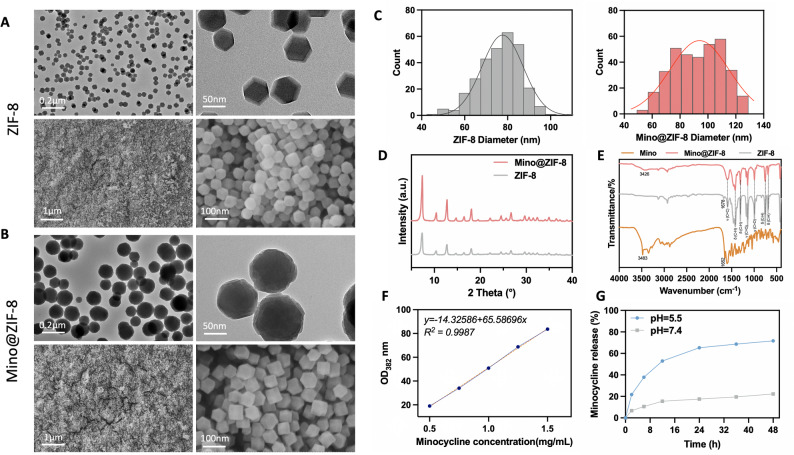
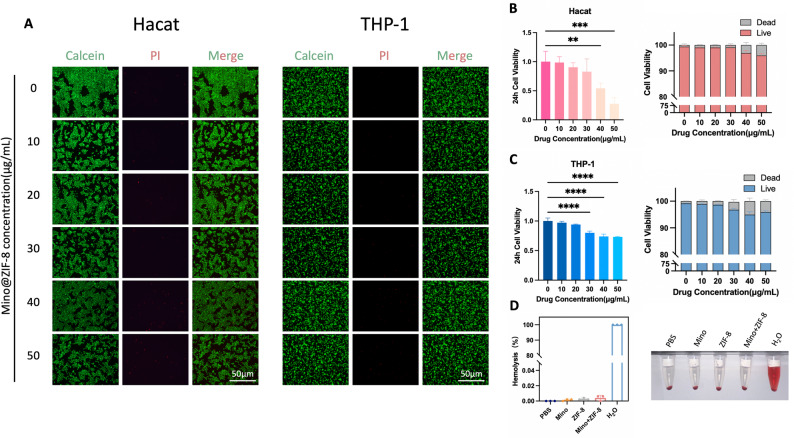
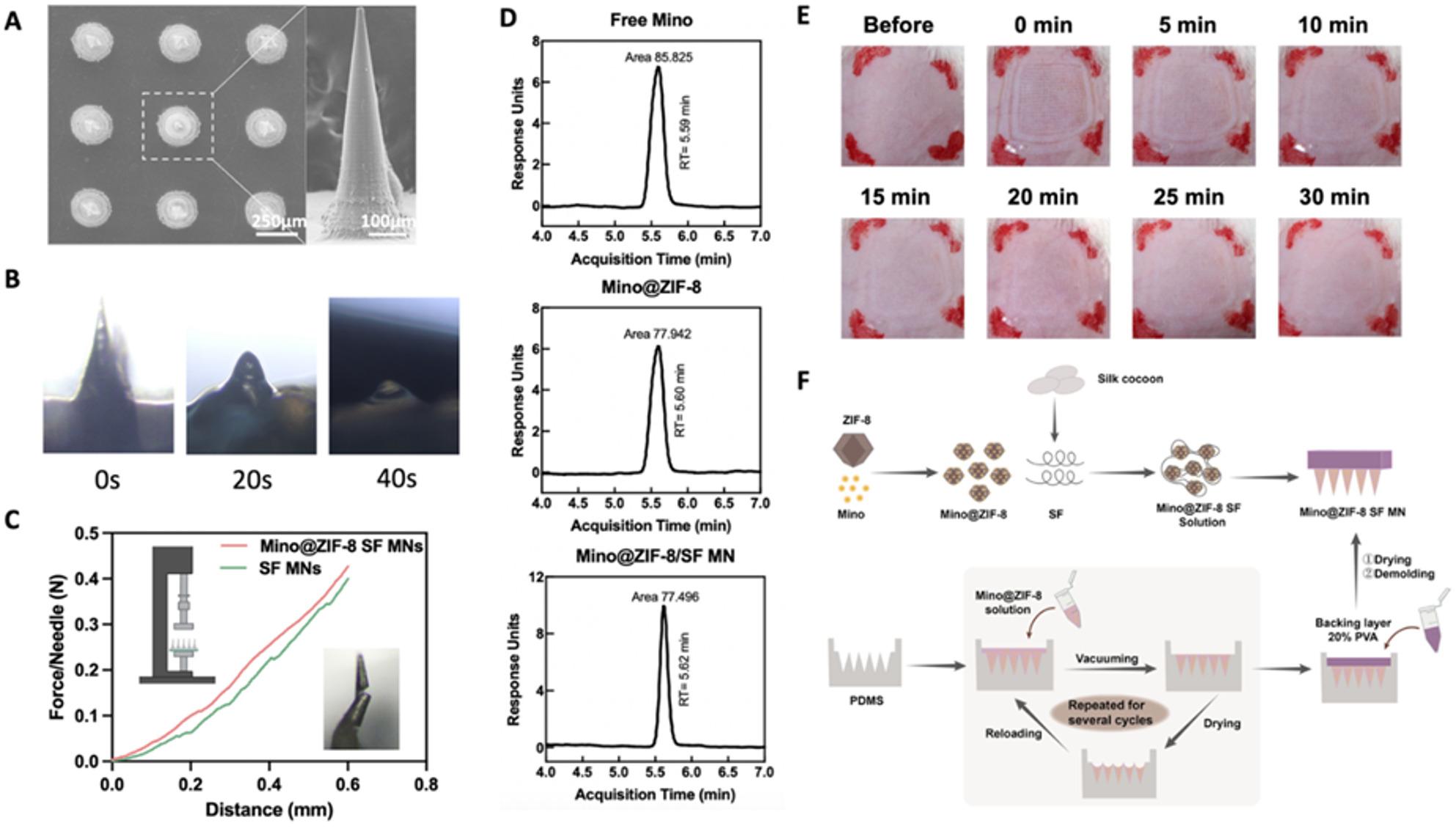
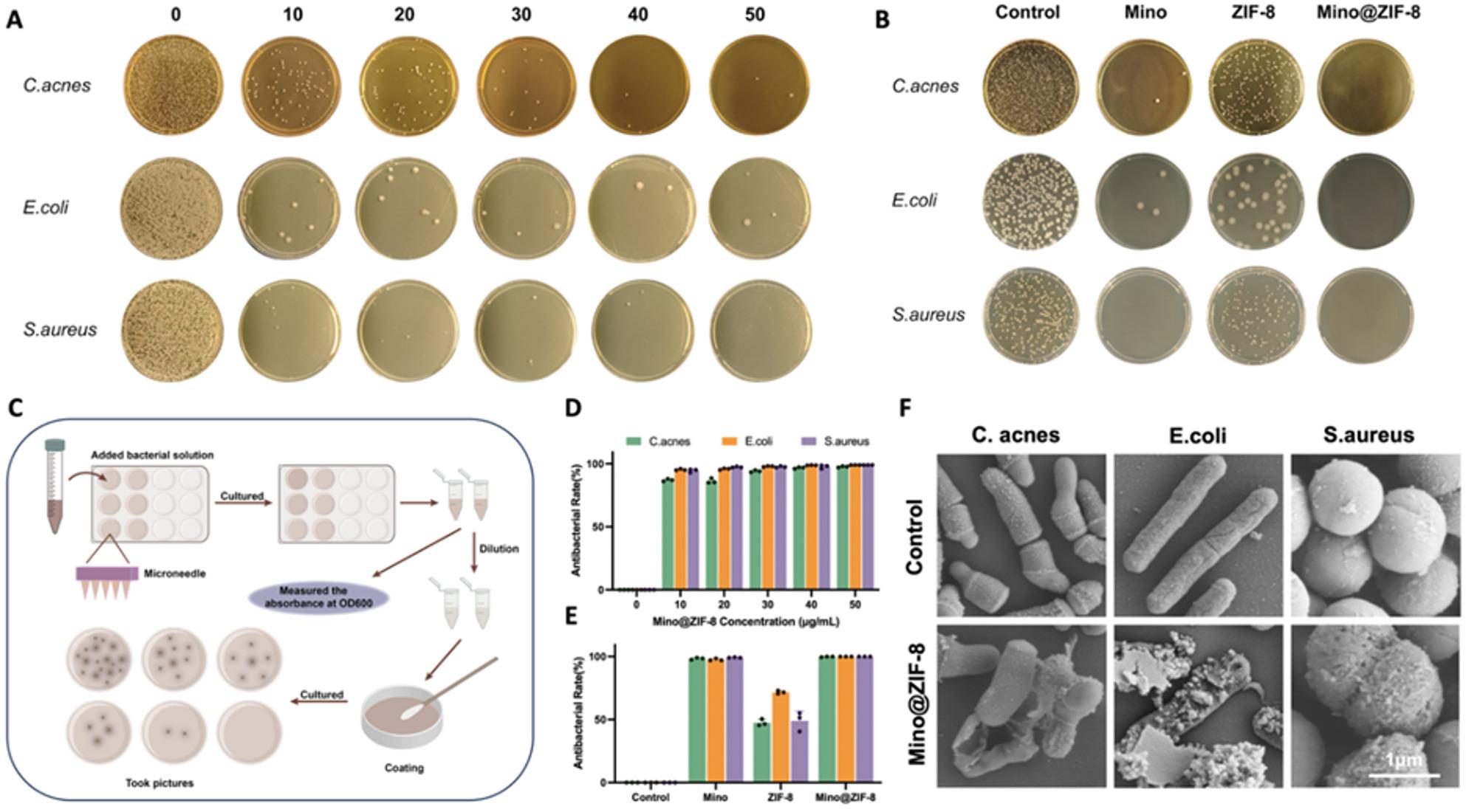
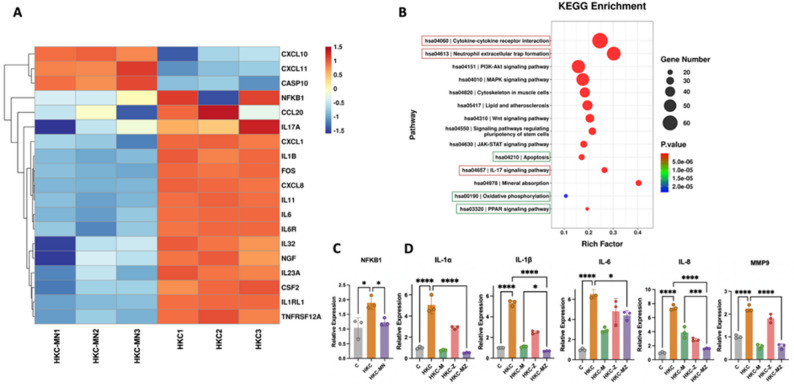
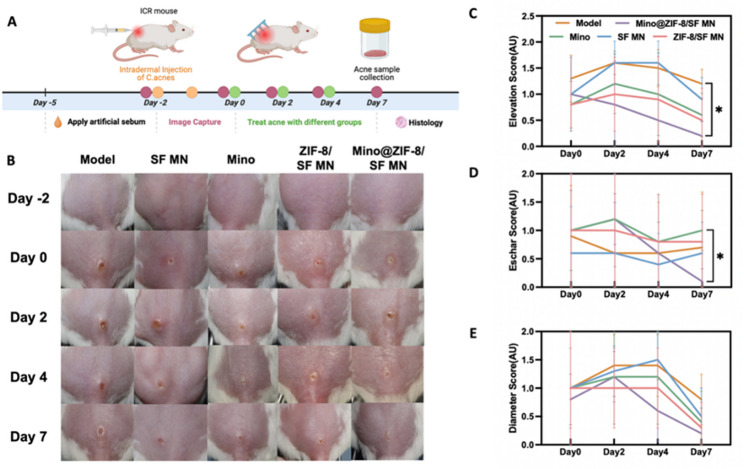
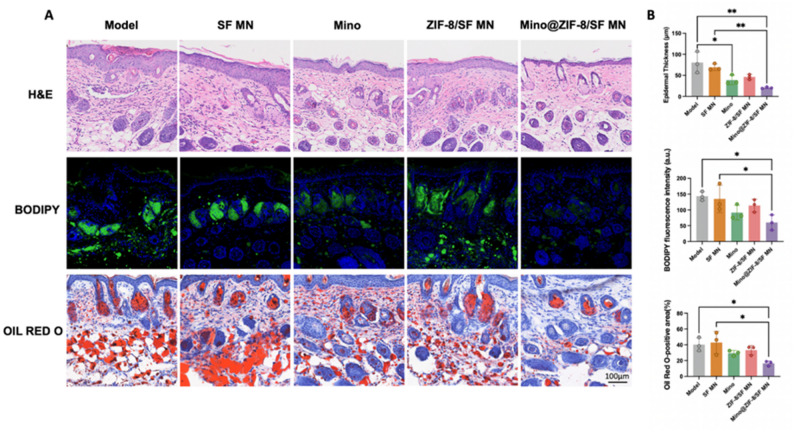
BACKGROUND: Acne Vulgaris (AV) lesions exhibit an acidic, sebum-rich, and inflammation-prone microenvironment in which conventional minocycline therapy is constrained by the stratum-corneum barrier and systemic exposure. Here, we present the fabrication and application of dissolvable silk fibroin microneedles encapsulating minocycline-loaded zeolitic imidazolate frameworks (Mino@ZIF-8/SF MNs) to achieve sebaceous gland-targeted, pH-responsive delivery and multimodal therapy. RESULTS: The Mino@ZIF-8/SF MNs display uniform conical morphology, excellent mechanical robustness (peak failure force ≈ 0.4 N per needle), rapid dissolution (< 1 min), high drug loading (≈ 40.11%) and encapsulation efficiency (≈ 70.2%), and negligible hemolytic activity. Under mildly acidic conditions (pH 5.5), minocycline release was markedly accelerated compared to physiological pH 7.4, reflecting the acidified acne microenvironment. Functionally, Mino@ZIF-8/SF MNs achieved > 95% inhibition of Cutibacterium acnes at 30 µg/patch and substantially attenuated sebocyte inflammatory responses. In heat-killed C. acnes-stimulated SZ95 sebocytes, the Mino@ZIF-8/SF MNs downregulated NFKB1, IL-1α, IL-1β, IL-6, IL-8 and MMP9 expression, along with suppression of cytokine-cytokine receptor interaction, IL-17 and NET-associated signaling pathways. RNA-sequencing also suggested that sebocyte metabolism may undergo reprogramming involving enhanced apoptosis, maintenance of mitochondrial oxidative activity, and modulation of PPARγ-related lipid metabolism, which could collectively contribute to reduced lipid droplet accumulation. In a C. acnes-induced acne-like mouse model, Mino@ZIF-8/SF MNs markedly accelerated lesion resolution, reduced lesion elevation, eschar formation, and diameter scores, normalized epidermal thickness, and decreased sebaceous lipid accumulation, while exhibiting no detectable systemic toxicity as confirmed by histology, hematology, and serum biochemistry. CONCLUSION: Collectively, this study establishes a nanobiotechnology platform that integrates metal-organic frameworks(MOF)-based pH-responsive delivery with antibacterial, anti-inflammatory, and metabolic reprogramming activities, offering a precise and minimally invasive multimodal strategy for sebaceous gland-targeted acne therapy.
Overview
CoChat Summary
TL;DR
Mino@ZIF-8/SF microneedles combine pH-responsive ZIF-8 nanoparticles with dissolvable silk fibroin to deliver minocycline into acne lesions, showing antibacterial, anti-inflammatory, and sebocyte metabolic effects. In a *C. acnes*-induced mouse model, the platform accelerated lesion resolution and reduced sebaceous lipid accumulation without detectable systemic toxicity.
Key findings
- Mino@ZIF-8/SF MNs showed uniform conical needles (~600 μm height, 250 μm base diameter), peak failure force ≈0.4 N per needle, dissolution <1 min, drug loading ≈40.11%, encapsulation efficiency ≈70.2%, and hemolysis <1%.
- Release was pH-responsive: >50% minocycline released at pH 5.5 within 12 h versus <20% at pH 7.4; antibacterial inhibition exceeded 95% for *C. acnes* at 30 µg/patch and was broad-spectrum against *E. coli* and *S. aureus*.
- In heat-killed *C. acnes*-stimulated SZ95 sebocytes, treatment downregulated NFKB1, IL-1α, IL-1β, IL-6, IL-8, and MMP9, and suppressed cytokine-cytokine receptor interaction, IL-17, and NET-associated signaling; RNA-seq suggested apoptosis, oxidative phosphorylation, and PPARγ-related lipid metabolism changes.
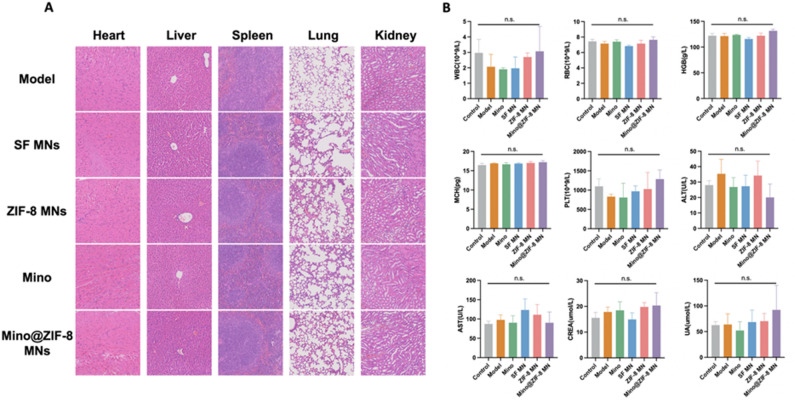
- In the mouse acne-like model, Mino@ZIF-8/SF MNs reduced elevation, eschar, and diameter scores, normalized epidermal thickness, decreased BODIPY and Oil Red O lipid signals, and showed no systemic toxicity by histology, hematology, or serum biochemistry.
Methods
- ZIF-8 and Mino@ZIF-8 nanoparticles were synthesized by co-precipitation and characterized by TEM/SEM, XRD, FTIR, and UV-Vis; release was tested at pH 5.5 and 7.4. MNs were fabricated from 12% silk fibroin with Mino@ZIF-8 and a PVA backing via vacuum-assisted PDMS molding, then assessed for morphology, mechanical strength, dissolution, HPLC stability, cytocompatibility, and hemolysis.
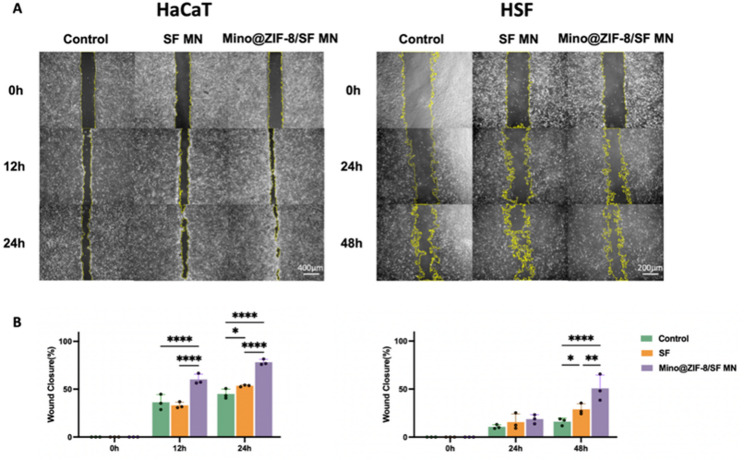
- In vitro antibacterial assays used *C. acnes*, *E. coli*, and *S. aureus* with colony counting and SEM. SZ95 sebocytes stimulated with heat-killed *C. acnes* were used for RNA-seq, KEGG analysis, and qPCR of inflammatory genes; scratch assays used HaCaT and HSF cells.
- In vivo, female ICR mice received artificial sebum and intradermal *C. acnes*; five groups (n=6/group) received Model, SF MN, ZIF-8 MN, topical minocycline, or Mino@ZIF-8/SF MN on days 0, 2, and 4. Lesions were scored by Leeds revised acne grading; skin was analyzed by H&E, BODIPY, and Oil Red O, with systemic toxicity assessed by organ histology and blood/serum parameters.
Limitations
- The paper states that mechanistic validation is required and that future work should directly compare the platform with clinically approved minocycline gels or foams; the present study focused on mechanistic evaluation rather than benchmarking commercial formulations.
- The text makes evident that efficacy was tested only in a short-term (7-day) mouse model using artificial sebum plus intradermal *C. acnes*, with small group sizes (n=6/group; some analyses n=3–5), so long-term outcomes, resistance development, and human clinical translation remain unestablished.
- The paper notes that in the plate-based antibacterial assay, microneedle performance may appear slightly weaker than free nanoparticles due to diffusion/exposure geometry rather than intrinsic activity.
Model-written summary. Check it against the paper before relying on it.
Integrity signals
Registry
Cites
Statistics
Figures
Verification
Claims the paper makes
1 Valid · 0 Not valid · 33 Not checked · 145 Own results and interpretations
The cited sources support only part of this claim — read each source’s verdict below.
In the paper
“Its pronounced lipophilicity enables preferential accumulation within the sebum‑rich environment of the pilosebaceous unit, thereby supporting its sebaceous gland-targeted therapeutic profile [10].”
§ Dissolvable silk microneedles delivering minocycline-loaded ZIF-8 nanoparticles for targeted modulation of sebocyte metabolism and improved acne therapy > Background
What the sources say
- Partly supportedcites [10] Grada A, Del Rosso JQ, Moore AY, Stein Gold L, Harper J, Damiani G, et al. Reduced blood-brain barrier penetration of acne vulgaris antibiotic sarecycline compared to minocycline corresponds with lower lipophilicity. Front Med (Lausanne). 2022;9:1033980. 36569144 PMC9773825 sourceExperimental — accuracy not yet measured
The Discussion (p. Discussion, passage on lipophilicity in skin) states the general principle that 'high drug lipophilicity in the skin is a desired attribute as it helps in penetrating and accumulating in the lipid-rich pilosebaceous unit' where Cutibacterium acnes resides, and the Introduction reports minocycline's higher lipophilicity than doxycycline — so the lipophilicity/pilosebaceous-accumulation link is in our copy. However, our copy never attributes preferential sebum accumulation specifically to minocycline, and it says nothing about a 'sebaceous gland-targeted therapeutic profile'; the paper's discussion of minocycline's lipophilicity concerns blood-brain barrier penetration and vestibular adverse events, and its own logD data show minocycline only marginally more lipophilic than doxycycline (0.09 vs 0.00 at pH 5.5; 0.12 vs -0.08 at pH 7.4). Searches for 'sebum', 'sebaceous gland targeting' and minocycline accumulation returned no supporting passage. (LLM, conf=0.72)
plainstates a cause- Asserted: passes — The authors put it forward as true.
- Checkable: passes — It can be checked against evidence.
- Load-bearing: passes — The paper’s conclusions depend on it.
- Based: passes — The paper gives a reason why it holds.
- Partly supported
A result the paper reports from its own data — it cites no other source for it, so there is none to check. The quote shows it is in the paper.
In the paper
“The Mino@ZIF-8/SF MNs display uniform conical morphology, excellent mechanical robustness (peak failure force ≈ 0.4 N per needle), rapid dissolution (< 1 min), high drug loading (≈ 40.11%) and encapsulation efficiency (≈ 70.2%), and negligible hemolytic activity.”
§ Dissolvable silk microneedles delivering minocycline-loaded ZIF-8 nanoparticles for targeted modulation of sebocyte metabolism and improved acne therapy > Abstract > Results
plain- Asserted: passes — The authors put it forward as true.
- Checkable: passes — It can be checked against evidence.
- Load-bearing: passes — The paper’s conclusions depend on it.
- Based: passes — The paper gives a reason why it holds.
A result the paper reports from its own data — it cites no other source for it, so there is none to check. The quote shows it is in the paper.
In the paper
“The Mino@ZIF-8/SF MNs display uniform conical morphology, excellent mechanical robustness (peak failure force ≈ 0.4 N per needle), rapid dissolution (< 1 min), high drug loading (≈ 40.11%) and encapsulation efficiency (≈ 70.2%), and negligible hemolytic activity.”
§ Dissolvable silk microneedles delivering minocycline-loaded ZIF-8 nanoparticles for targeted modulation of sebocyte metabolism and improved acne therapy > Abstract > Results
plain- Asserted: passes — The authors put it forward as true.
- Checkable: passes — It can be checked against evidence.
- Load-bearing: unclear — It is unclear whether the paper’s conclusions depend on it.
- Based: passes — The paper gives a reason why it holds.
A result the paper reports from its own data — it cites no other source for it, so there is none to check. The quote shows it is in the paper.
In the paper
“The Mino@ZIF-8/SF MNs display uniform conical morphology, excellent mechanical robustness (peak failure force ≈ 0.4 N per needle), rapid dissolution (< 1 min), high drug loading (≈ 40.11%) and encapsulation efficiency (≈ 70.2%), and negligible hemolytic activity.”
§ Dissolvable silk microneedles delivering minocycline-loaded ZIF-8 nanoparticles for targeted modulation of sebocyte metabolism and improved acne therapy > Abstract > Results
plain- Asserted: passes — The authors put it forward as true.
- Checkable: passes — It can be checked against evidence.
- Load-bearing: passes — The paper’s conclusions depend on it.
- Based: passes — The paper gives a reason why it holds.
A result the paper reports from its own data — it cites no other source for it, so there is none to check. The quote shows it is in the paper.
In the paper
“The Mino@ZIF-8/SF MNs display uniform conical morphology, excellent mechanical robustness (peak failure force ≈ 0.4 N per needle), rapid dissolution (< 1 min), high drug loading (≈ 40.11%) and encapsulation efficiency (≈ 70.2%), and negligible hemolytic activity.”
§ Dissolvable silk microneedles delivering minocycline-loaded ZIF-8 nanoparticles for targeted modulation of sebocyte metabolism and improved acne therapy > Abstract > Results
plain- Asserted: passes — The authors put it forward as true.
- Checkable: passes — It can be checked against evidence.
- Load-bearing: passes — The paper’s conclusions depend on it.
- Based: passes — The paper gives a reason why it holds.
97 more claims
Create a free account to see all 179 claims and to verify the 43 references still open.
- Probably not a substantial claim. 13
- It may state two separate claims as one. 64
- The quote only partly states this claim. 1
Self-check
Percentages, sums and reported differences re-computed from the paper’s own numbers.
Each contradiction between two passages listed here was confirmed by an independent check.
Rated minor: it would not touch a result — a value no result rests on, a p-value that stays on the same side of the significance level, or a conflict that is clerical, resolved elsewhere in the paper, or outside its own findings.
In the paper
§ Dissolvable silk microneedles delivering minocycline-loaded ZIF-8 nanoparticles for targeted modulation of sebocyte metabolism and improved acne therapy > Antibacterial effect of Mino@ZIF-8/SF MNs > In vitro scratch wound healing assay
“Wound closure was monitored and imaged at 0 h, 12 h, and 24 h using an inverted microscope (×100 magnification).”
§ Dissolvable silk microneedles delivering minocycline-loaded ZIF-8 nanoparticles for targeted modulation of sebocyte metabolism and improved acne therapy > Results and discussion > In vitro wound healing and cell migration assessment of Mino@ZIF-8/SF MNs
“In HSFs, differences were modest at 24 h but became evident by 48 h, when the Mino@ZIF-8/SF group resulted in substantially narrower wound regions.”
Rated minor: it would not touch a result — a value no result rests on, a p-value that stays on the same side of the significance level, or a conflict that is clerical, resolved elsewhere in the paper, or outside its own findings.
In the paper
§ Dissolvable silk microneedles delivering minocycline-loaded ZIF-8 nanoparticles for targeted modulation of sebocyte metabolism and improved acne therapy > Antibacterial effect of Mino@ZIF-8/SF MNs > In vivo anti-acne evaluation of MNs
“For the Mino group, 12 µg of minocycline solution was topically applied to the lesion site in a 30 µL volume once daily to match the drug dose delivered by the MNs.”
§ Dissolvable silk microneedles delivering minocycline-loaded ZIF-8 nanoparticles for targeted modulation of sebocyte metabolism and improved acne therapy > Antibacterial effect of Mino@ZIF-8/SF MNs > In vivo anti-acne evaluation of MNs
“Treatments were administered on days 0, 2, and 4.”
Citations
Cites
Epithelialization in Wound Healing: A Comprehensive Review
Pastar, I., Stojadinovic, O., Yin, N. C., Ramirez, H., Nusbaum, A. G., Sawaya, A., Patel, S. B., Khalid, L., Isseroff, R. R., & Tomic-Canic, M. (2014) · Advances in Wound Care · doi:10.1089/wound.2013.0473 · Cited by 1,531
Silk fibroin biomaterials for tissue regenerations
Kundu, B., Rajkhowa, R., Kundu, S. C., & Wang, X. (2013) · Advanced Drug Delivery Reviews · doi:10.1016/j.addr.2012.09.043 · Cited by 1,391 · cited 1×
“Among bio-polymer matrices, silk fibroin (SF) is particularly advantageous owing to its excellent cytocompatibility, tunable biodegradability, and favorable mechanical strength, which ensures sufficient penetration into the dermis to reach the sebaceous glands [13].”
Zeolitic imidazolate framework-8 as efficient pH-sensitive drug delivery vehicle
Sun, C.-Y., Qin, C., Wang, X.-L., Yang, G.-S., Shao, K.-Z., Lan, Y.-Q., Su, Z.-M., Huang, P., Wang, C.-G., & Wang, E.-B. (2012) · Dalton Transactions · doi:10.1039/c2dt30357d · Cited by 710
Zinc in Wound Healing Modulation
Lin, P.-H., Sermersheim, M., Li, H., Lee, P. H. U., Steinberg, S. M., & Ma, J. (2017) · Nutrients · doi:10.3390/nu10010016 · Cited by 643 · cited 1×
“Consistent with these principles, each component of our formulation, including silk fibroin [56], minocycline [57], and zinc [58], has been independently reported to promote wound repair.”
Dissolving microneedles: Applications and growing therapeutic potential
Sartawi, Z., Blackshields, C., & Faisal, W. (2022) · Journal of Controlled Release · doi:10.1016/j.jconrel.2022.05.045 · Cited by 503
Makvandi, P., Kirkby, M., Hutton, A. R. J., Shabani, M., Yiu, C. K. Y., Baghbantaraghdari, Z., Jamaledin, R., Carlotti, M., Mazzolai, B., Mattoli, V., et al. (2021) · Nano-Micro Letters · doi:10.1007/s40820-021-00611-9 · Cited by 455
Acne Scars: Pathogenesis, Classification and Treatment
Fabbrocini, G., Annunziata, M. C., D′Arco, V., De Vita, V., Lodi, G., Mauriello, M. C., Pastore, F., & Monfrecola, G. (2010) · Dermatology Research and Practice · doi:10.1155/2010/893080 · Cited by 440
Establishment and Characterization of an Immortalized Human Sebaceous Gland Cell Line (SZ95)1
Zouboulis, C. C., Seltmann, H., Orfanos, C. E., & Neitzel, H. (1999) · Journal of Investigative Dermatology · doi:10.1046/j.1523-1747.1999.00771.x · Cited by 363
Self-citationLinking diet to acne metabolomics, inflammation, and comedogenesis: an update
Melnik, B. (2015) · Clinical, Cosmetic and Investigational Dermatology · doi:10.2147/ccid.s69135 · Cited by 259
The Leeds revised acne grading system
O'brien, S., Lewis, J., & Cunliffe, W. (1998) · Journal of Dermatological Treatment · doi:10.3109/09546639809160698 · Cited by 226
Qiu, B., & Simon, M. (2016) · BIO-PROTOCOL · doi:10.21769/bioprotoc.1912 · Cited by 223
IL-17/Th17 Pathway Is Activated in Acne Lesions
Kelhälä, H.-L., Palatsi, R., Fyhrquist, N., Lehtimäki, S., Väyrynen, J. P., Kallioinen, M., Kubin, M. E., Greco, D., Tasanen, K., Alenius, H., et al. (2014) · PLoS ONE · doi:10.1371/journal.pone.0105238 · Cited by 216
Microneedle Patches with Antimicrobial and Immunomodulating Properties for Infected Wound Healing
Li, S., Wang, X., Yan, Z., Wang, T., Chen, Z., Song, H., & Zheng, Y. (2023) · Advanced Science · doi:10.1002/advs.202300576 · Cited by 200
Self-citationXiang, Y., Lu, J., Mao, C., Zhu, Y., Wang, C., Wu, J., Liu, X., Wu, S., Kwan, K. Y. H., Cheung, K. M. C., et al. (2023) · Science Advances · doi:10.1126/sciadv.adf0854 · Cited by 192
Reviewing the global burden of acne: how could we improve care to reduce the burden?*
Layton, A. M., Thiboutot, D., & Tan, J. (2021) · British Journal of Dermatology · doi:10.1111/bjd.19477 · Cited by 172
Dawson, A. L., & Dellavalle, R. P. (2013) · BMJ · doi:10.1136/bmj.f2634 · Cited by 167
Permana, A. D., Mir, M., Utomo, E., & Donnelly, R. F. (2020) · International Journal of Pharmaceutics X · doi:10.1016/j.ijpx.2020.100047 · Cited by 148
Zhang, T., Sun, B., Guo, J., Wang, M., Cui, H., Mao, H., Wang, B., & Yan, F. (2020) · Acta Biomaterialia · doi:10.1016/j.actbio.2020.08.023 · Cited by 141
Zouboulis, C. C., Coenye, T., He, L., Kabashima, K., Kobayashi, T., Niemann, C., Nomura, T., Oláh, A., Picardo, M., Quist, S. R., et al. (2022) · Frontiers in Immunology · doi:10.3389/fimmu.2022.1029818 · Cited by 133
Self-citationCombined Silk Fibroin Microneedles for Insulin Delivery
Zhu, M., Liu, Y., Jiang, F., Cao, J., Kundu, S. C., & Lu, S. (2020) · ACS Biomaterials Science & Engineering · doi:10.1021/acsbiomaterials.0c00273 · Cited by 118
Xia, X., Li, Z., Liu, K., Wu, Y., Jiang, D., & Lai, Y. (2016) · Journal of Investigative Dermatology · doi:10.1016/j.jid.2015.12.024 · Cited by 108
Heil, T. L., Volkmann, K., Wataha, J. C., & Lockwood, P. E. (2002) · Journal of Oral Rehabilitation · doi:10.1046/j.1365-2842.2002.00893.x · Cited by 103
Nakamura, K., O’Neill, A. M., Williams, M. R., Cau, L., Nakatsuji, T., Horswill, A. R., & Gallo, R. L. (2020) · Scientific Reports · doi:10.1038/s41598-020-77790-9 · Cited by 101
Topical phage therapy in a mouse model of Cutibacterium acnes-induced acne-like lesions
Rimon, A., Rakov, C., Lerer, V., Sheffer‐Levi, S., Alkalay‐Oren, S., Shlomov, T., Shasha, L., Lubin, R., Zubeidat, K., Jaber, N. S., et al. (2022) · Nature Communications · doi:10.1038/s41467-023-36694-8 · Cited by 94
Wen, T., Lin, Z., Zhao, Y., Zhou, Y., Niu, B., Shi, C., Lu, C., Wen, X., Zhang, M., Quan, G., et al. (2021) · ACS Applied Materials & Interfaces · doi:10.1021/acsami.1c15673 · Cited by 92
p53: key conductor of all anti-acne therapies
Melnik, B. C. (2017) · Journal of Translational Medicine · doi:10.1186/s12967-017-1297-2 · Cited by 78 · cited 1×
“Controlled apoptosis or growth arrest can reduce sebaceous gland size and limit sebum output, a process well exemplified by isotretinoin through p53-and TRAIL-dependent pathways [49].”
An optimized method for Oil Red O staining with the salicylic acid ethanol solution
Du, J., Zhao, L., Kang, Q., He, Y., & Bi, Y. (2023) · Adipocyte · doi:10.1080/21623945.2023.2179334 · Cited by 71
Ahle, C. M., Stødkilde, K., Poehlein, A., Bömeke, M., Streit, W. R., Wenck, H., Reuter, J. H., Hüpeden, J., & Brüggemann, H. (2022) · Communications Biology · doi:10.1038/s42003-022-03897-6 · Cited by 70
Human synthetic sebum formulation and stability under conditions of use and storage
Wertz, P. W. (2009) · International Journal of Cosmetic Science · doi:10.1111/j.1468-2494.2008.00468.x · Cited by 69
Lv, H., Gao, N., Zhou, Q., Wang, Y., Ling, G., & Zhang, P. (2023) · Advanced Healthcare Materials · doi:10.1002/adhm.202203295 · Cited by 69
Endocrinology and immunology of acne: Two sides of the same coin
Zouboulis, C. C. (2020) · Experimental Dermatology · doi:10.1111/exd.14172 · Cited by 66
Self-citationWang, Q., Gan, Z., Wang, X., Li, X., Zhao, L., Li, D., Xu, Z., Mu, C., Ge, L., & Li, D. (2024) · ACS Applied Materials & Interfaces · doi:10.1021/acsami.4c01790 · Cited by 61
Propionibacterium acnes–induced immunopathology correlates with health and disease association
Kolar, S. L., Tsai, C.-M., Torres, J., Fan, X., Li, H., & Liu, G. Y. (2019) · JCI Insight · doi:10.1172/jci.insight.124687 · Cited by 59
Rapidly dissolving fibroin microneedles for transdermal drug delivery
You, X., Chang, J.-H., Ju, B.-K., & Pak, J. J. (2011) · Materials Science and Engineering: C · doi:10.1016/j.msec.2011.06.010 · Cited by 58
New Insights into the Role of PPARγ in Skin Physiopathology
Briganti, S., Mosca, S., Di Nardo, A., Flori, E., & Ottaviani, M. (2024) · Biomolecules · doi:10.3390/biom14060728 · Cited by 56
ZIF-8-based Nanoparticles for Inflammation Treatment and Oxidative Stress Reduction in Periodontitis
Li, Y., Xu, C., Mao, J., Mao, L., Li, W., Liu, Z., Shin, A., Wu, J., Hou, L., Li, D., et al. (2024) · ACS Applied Materials & Interfaces · doi:10.1021/acsami.4c05722 · Cited by 54
Evidence for the Important Role of Oxidative Stress in the Pathogenesis of Acne
Kardeh, B., Kardeh, S., Moein, S. A., & Namazi, M. R. (2019) · Galen Medical Journal · doi:10.31661/gmj.v8i.1291 · Cited by 51
Pharmacological PPARγ modulation regulates sebogenesis and inflammation in SZ95 human sebocytes
Mastrofrancesco, A., Ottaviani, M., Cardinali, G., Flori, E., Briganti, S., Ludovici, M., Zouboulis, C. C., Lora, V., Camera, E., & Picardo, M. (2017) · Biochemical Pharmacology · doi:10.1016/j.bcp.2017.04.030 · Cited by 50
Self-citationToll-like receptors in acne vulgaris
Heymann, W. R. (2006) · Journal of the American Academy of Dermatology · doi:10.1016/j.jaad.2006.05.049 · Cited by 44
Zhang, J., Guo, P., Qiu, M., Zhong, G., Yang, Q., Lei, P., Gou, K., Zeng, R., Zhang, C., & Qu, Y. (2024) · Materials & Design · doi:10.1016/j.matdes.2024.112639 · Cited by 44
Baba, A., Matsushita, S., Kitayama, K., Asakura, T., Sezutsu, H., Tanimoto, A., & Kanekura, T. (2019) · Journal of Biomedical Materials Research Part B: Applied Biomaterials · doi:10.1002/jbm.b.34098 · Cited by 35
Song, Y. W., Nam, J., Kim, J., Lee, Y., Choi, J., Min, H. S., Yang, H., Cho, Y., Hwang, S., Son, J., et al. (2025) · Carbohydrate Polymers · doi:10.1016/j.carbpol.2024.122976 · Cited by 33
Topical Minocycline Effectively Decontaminates and Reduces Inflammation in Infected Porcine Wounds
Daly, L. T., Tsai, D. M., Singh, M., Nuutila, K., Minasian, R. A., Lee, C. C. Y., Kiwanuka, E., Hackl, F., Onderdonk, A. B., Junker, J. P. E., et al. (2016) · Plastic & Reconstructive Surgery · doi:10.1097/prs.0000000000002633 · Cited by 32
Neutrophil extracellular traps and neutrophilic dermatosis: an update review
Li, S., Ying, S., Wang, Y., Lv, Y., Qiao, J., & Fang, H. (2024) · Cell Death Discovery · doi:10.1038/s41420-023-01787-2 · Cited by 32
Self-citationMorphological characteristics and notes of the skin in preclinical toxicity assessment
Moroki, T. (2023) · Journal of Toxicologic Pathology · doi:10.1293/tox.2022-0103 · Cited by 29
Identification of Genes and Pathways Associated with Acne Using Integrated Bioinformatics Methods
Li, X., Jia, Y., Wang, S., Meng, T., & Zhu, M. (2019) · Dermatology · doi:10.1159/000502203 · Cited by 26
Evidence for the Important ¬Role of Oxidative Stress in the Pathogenesis of Acne
Kardeh, S., Moein, S. A., Namazi, M. R., & Kardeh, B. (2019) · Galen Medical Journal · doi:10.31661/gmj.v8i0.1291 · Cited by 24
Tang, R., Ren, Y., Zhang, Y., Yin, M., Ren, X., Zhu, Q., Gao, C., Zhang, W., Liu, G., & Liu, B. (2023) · Materials Today Bio · doi:10.1016/j.mtbio.2023.100678 · Cited by 21
Tian, K., Wu, P., Gao, S., Xu, C., Xu, W., Jia, Z., Wang, Y., Sheng, L., Zhou, X., Wu, S., et al. (2025) · ACS Applied Materials & Interfaces · doi:10.1021/acsami.4c21589 · Cited by 19
Zhang, G., Zha, J., Liu, J., & Di, J. (2019) · Archives of Medical Science · doi:10.5114/aoms.2018.73520 · Cited by 16
Al-Rawi, N. N., & Rawas-Qalaji, M. (2022) · European Journal of Pharmaceutical Sciences · doi:10.1016/j.ejps.2022.106202 · Cited by 16
Grada, A., Del Rosso, J. Q., Moore, A. Y., Stein Gold, L., Harper, J., Damiani, G., Shaw, K., Obagi, S., Salem, R. J., Tanaka, S. K., et al. (2022) · Frontiers in Medicine · doi:10.3389/fmed.2022.1033980 · Cited by 14
Yu, H., Zhang, B., Zhan, Y., Yi, Y., Jiang, Q., Zhang, Q., Wu, Y., & Wu, M. (2024) · Scientific Reports · doi:10.1038/s41598-024-51931-w · Cited by 14
Balliana, E., Marchand, M., Di Matteo, V., Ballarin, B., Cassani, M. C., Panzavolta, S., & Zendri, E. (2025) · Polymers · doi:10.3390/polym17101369 · Cited by 13
Fan, H., Liao, R., Yang, Y., Xing, Y., Zhang, C., Luo, X., Pu, C., Wu, L., Li, X., Zhao, J., et al. (2025) · Frontiers in Pharmacology · doi:10.3389/fphar.2025.1575635 · Cited by 13
Hong, J. Y., Choi, Y. H., Roh, Y. J., Lee, M., Zouboulis, C. C., & Park, K. Y. (2025) · Frontiers in Medicine · doi:10.3389/fmed.2025.1518382 · Cited by 9
Self-citationTRPV3 promotes sebocyte inflammation via transcriptional modulating TLR2 in acne
Wei, Z., Gao, M., Liu, Y., Zeng, R., Liu, J., Sun, S., Li, S., Hu, L., Xiang, R., Mo, R., et al. (2024) · Biochimica et Biophysica Acta (BBA) - Molecular Basis of Disease · doi:10.1016/j.bbadis.2024.167195 · Cited by 8
Self-citationMinocycline Nanocrystals: A New Approach for Treating Acne with Reduced Systemic Side Effects
Abudoleh, S. M., Abu Ershaid, J. M., Lafi, D., Dahshan, N. A., Talhouni, A., & Abuirmeileh, A. (2025) · Pharmaceutics · doi:10.3390/pharmaceutics17060727 · Cited by 8
Bodokh, I., Jacomet, Y., Lacour, J., & Ortonne, J. (1997) · Acta Dermato-Venereologica · doi:10.2340/0001555577255259 · Cited by 7
Shin, H. S., Zouboulis, C. C., Kim, M. K., Lee, D. H., & Chung, J. H. (2022) · Journal of the European Academy of Dermatology and Venereology · doi:10.1111/jdv.18079 · Cited by 7
Self-citationManurung, T. H. P., Sitohang, I. B. S., & Agustin, T. (2024) · Archives of Dermatological Research · doi:10.1007/s00403-024-03581-1 · Cited by 7
Metal Organic Frameworks for Selective Degradation of Amoxicillin in Biomedical Wastes
Paula, M., Barros, A., Wanderley, K., de Sá, G., Eberlin, M., Soares, T., & Alves Jr., S. (2018) · Journal of the Brazilian Chemical Society · doi:10.21577/0103-5053.20180087 · Cited by 6
Application of the ZIF‐8‐Based Composites in Bone Scaffolds
Tahamtan, M. S., Rafiee, Z., Oryan, A., & Vaez, A. (2025) · Advanced Engineering Materials · doi:10.1002/adem.202402749 · Cited by 6
The Pro-Differentiation Effect of Doxycycline on Human SZ95 Sebocytes
Zouboulis, C. C., Ní Raghallaigh, S., Schmitz, G., & Powell, F. C. (2021) · Dermatology · doi:10.1159/000510885 · Cited by 5
Self-citation
Cited by
Mingqing, Z., Tang, Y., Chen, H., Liu, T., Zhou, Y., Tan, J., Xiang, N., Ruan, B., Yang, B., Zhang, J., et al. (2026) · ACS Applied Materials & Interfaces · doi:10.1021/acsami.6c05877
Li, X., Li, M., Li, Z., Gu, J., Mo, L., Zhu, Y., Chen, Y., Zeng, L., Pan, Y., Zhang, C., et al. (2026) · Advanced Materials · doi:10.1002/adma.75185
Localized microenvironment-modulating AgQ@GSC hydrogel microneedles for transdermal acne therapy
Luo, K., Ren, J., Yao, H., Zhao, K., Li, Y., You, X., & Xu, L. (2026) · Colloids and Surfaces B Biointerfaces · doi:10.1016/j.colsurfb.2026.116204
Kuravi, S., Ealla, K. K. R., Sahu, V., Durga, C. S., Kumari, N., & Bokara, K. K. (2026) · Journal of Biomaterials Science Polymer Edition · doi:10.1080/09205063.2026.2750336
Metadata
- Authors
- Yang, X., Ruan, D., Ye, F., Qiu, X., Li, S., Huang, L., Zouboulis, C. C., Mo, X., Jiang, X., & Ju, Q.
- Affiliations
- Shanghai Jiao Tong University (CN)
- Second Military Medical University (CN)
- Medizinische Hochschule Brandenburg Theodor Fontane (DE)
- Peking University (CN)
- Corresponding author
- Mo, Xiaohui
- Jiang, Xiping
- Ju, Qiang
- Venue
- Journal of Nanobiotechnology
- Published
- 2026-03-11
- Volume
- 24
- Issue
- 1
- ISSN
- 1477-3155 (ISSN-L)
- PMC
- PMC13088723
- OpenAlex
- W7134971378
- Semantic Scholar
- 29bda12fd7fd0e4e276bd5440c5e0461dcc2ad85
- Cited by
- 4
- References
- 63
- Citations by year
- 2026: 4
- FWCI
- 11.40
- Type
- journal article
- Language
- en
- Open access
- gold
- doi.org
- Licence
- cc-by-nc-nd
- creativecommons.org/licenses/by-nc-nd/4.0 (tdm)
- creativecommons.org/licenses/by-nc-nd/4.0 (vor, 37 d)
- Locations
- Journal of Nanobiotechnology (publishedVersion, cc-by-nc-nd)
- PubMed Central (publishedVersion, cc-by-nc-nd)
- PubMed (publishedVersion)
- DOAJ (DOAJ: Directory of Open Access Journals) (submittedVersion, cc-by-sa)
- Funders
- National Key Research and Development Program of China
- Topics
- Life Sciences › Pharmacology, Toxicology and Pharmaceutics › Pharmaceutical Science › Advancements in Transdermal Drug Delivery
- Health Sciences › Medicine › Dermatology › Acne and Rosacea Treatments and Effects
- Physical Sciences › Materials Science › Biomaterials › Silk-based biomaterials and applications
- Keywords
- acne, minocycline, ZIF-8, metal-organic frameworks, pH-responsive drug delivery, sebocytes, Propionibacterium acnes, antibiotic therapy, anti-inflammatory activity, PPARγ, lipid droplet accumulation, transdermal drug delivery, dissolving microneedles
- MeSH terms
- Metal-Organic Frameworks, Microneedle Drug Delivery, Acne Vulgaris, Animals, Anti-Bacterial Agents, Fibroins, Humans, Hydrogen-Ion Concentration, Imidazoles, Minocycline, Propionibacterium acnes, Sebaceous Glands, Zeolites, Silk, Mice, Nanoparticles
About these checks
Registry, retraction, Cites and statistics results are computed, not judged, with one exception: a printed reference that no index lists is read once by a model before it counts as a citation error. Claims are extracted by a model and kept only when their quote appears verbatim in the text; each cited source is then checked, with a model’s help, for whether it says what the claim relies on. Those verdicts can be wrong — read the claim’s quote and the cited source before relying on one.
The claim verdicts this report counts are experimental: their accuracy is not yet measured.
A language model drew the claims from the paper on 2026-11-15, under version 3 of the claim definition (model deepseek-v4.1-flash, prompt extract-v3).
A second model labelled each claim on 2026-11-15 (model jev-1.13-20260917, definition revision gold-guideline-v0.2).
Cited sources are checked with a language model’s help (qwen3.8-omni-flash).
Statistics and arithmetic are recomputed, not judged.
Confidence bands are shown only for fields calibrated on our annotated test set. None is calibrated yet, so no band is shown.
What counts as a claim ›How we measure confidence ›How we check this ›
Are you an author, or do you see a problem with this page? Request a review
Data sources
Bibliographic data: Semantic Scholar, OpenAlex, Crossref.
Contains information from the Semantic Scholar Academic Graph Datasets, made available under the ODC Attribution License (ODC-BY 1.0).
Semantic Scholar’s data is described in: Kinney, R., et al. (2023). The Semantic Scholar Open Data Platform. arXiv:2301.10140.
