

The DOI matches its Crossref record; 146 of the 146 references it cites were found in a registry or an index.
Regulation of efferocytosis as a novel cancer therapy
Open accessAbstract
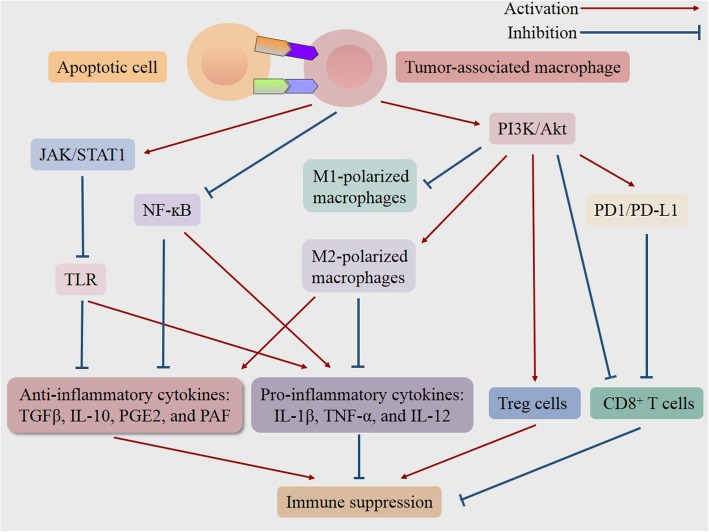
Efferocytosis is a physiologic phagocytic clearance of apoptotic cells, which modulates inflammatory responses and the immune environment and subsequently facilitates immune escape of cancer cells, thus promoting tumor development and progression. Efferocytosis is an equilibrium formed by perfect coordination among “find-me”, “eat-me” and “don’t-eat-me” signals. These signaling pathways not only affect the proliferation, invasion, metastasis, and angiogenesis of tumor cells but also regulate adaptive responses and drug resistance to antitumor therapies. Therefore, efferocytosis-related molecules and pathways are potential targets for antitumor therapy. Besides, supplementing conventional chemotherapy, radiotherapy and other immunotherapies with efferocytosis-targeted therapy could enhance the therapeutic efficacy, reduce off-target toxicity, and promote patient outcome.
Overview
The claims and statistics of this paper haven’t been checked yet.
Run the check — free, no account needed. It reads the open-access text and checks the sources it cites.
Integrity signals
Registry
Cites
Statistics
Figures
Verification
Claims the paper makes
The claims and statistics of this paper haven’t been checked yet.
Run the check — free, no account needed. It reads the open-access text and checks the sources it cites.
Claims other papers make about this one
Each is checked against this paper’s own text: does it say what the citing paper says it does?
The source backs part of the claim, not all of it — or backs it for a different population, condition or comparison.
In the citing paper
“It is seen as a major hurdle to using antigen presenting cells in cell-based therapies (61–64).”
From Cholesterol efflux protein, ABCA1, supports anticancer functions of myeloid immune cells (2026) · cites this paper as [63]
Experimental — accuracy not yet measured
Self-check
Percentages, sums and reported differences re-computed from the paper’s own numbers.
The self-check needs the paper’s full text.
Citations
Cites
1 retracted
Tan, X., Zhang, Z., Yao, H., & Shen, L. (2018) · Cancer Letters · doi:10.1016/j.canlet.2018.08.012 · Cited by 76
RetractedTumour-educated macrophages promote tumour progression and metastasis
Pollard, J. W. (2004) · Nature reviews. Cancer · doi:10.1038/nrc1256 · Cited by 3,413
Fadok, V. A., Voelker, D. R., Campbell, P. A., Cohen, J., Bratton, D. L., & Henson, P. M. (1992) · The Journal of Immunology · doi:10.4049/jimmunol.148.7.2207 · Cited by 3,321
Calreticulin exposure dictates the immunogenicity of cancer cell death
Obeid, M., Tesniere, A., Ghiringhelli, F., Fimia, G. M., Apetoh, L., Perfettini, J.-L., Castedo, M., Mignot, G., Panaretakis, T., Casares, N., et al. (2007) · Nature Medicine · doi:10.1038/nm1523 · Cited by 3,216
Fadok, V. A., Bratton, D. L., Konowal, A., Freed, P. W., Westcott, J. Y., & Henson, P. M. (1998) · Journal of Clinical Investigation · doi:10.1172/jci1112 · Cited by 3,166
Martin, S. J., Reutelingsperger, C. P., McGahon, A. J., Rader, J. A., van Schie, R. C., LaFace, D. M., & Green, D. R. (1995) · The Journal of experimental medicine · doi:10.1084/jem.182.5.1545 · Cited by 2,824
Inhibitory Fc receptors modulate in vivo cytoxicity against tumor targets
Clynes, R. A., Towers, T. L., Presta, L. G., & Ravetch, J. V. (2000) · Nature Medicine · doi:10.1038/74704 · Cited by 2,768
Distinct role of macrophages in different tumor microenvironments
Lewis, C. E., & Pollard, J. W. (2006) · Cancer Research · doi:10.1158/0008-5472.can-05-4005 · Cited by 2,225
Bingle, L., Brown, N. J., & Lewis, C. E. (2002) · The Journal of Pathology · doi:10.1002/path.1027 · Cited by 2,022
Immunosuppressive effects of apoptotic cells
Voll, R. E., Herrmann, M., Roth, E. A., Stach, C., Kalden, J. R., & Girkontaite, I. (1997) · Nature · doi:10.1038/37022 · Cited by 1,787
Cited by
Sorted by citations
Macrophage‐Mediated Tumor Cell Phagocytosis: Opportunity for Nanomedicine Intervention
Zhou, X., Liu, X., & Huang, L. (2020) · Advanced Functional Materials · doi:10.1002/adfm.202006220 · Cited by 147
Zhuang, W., Wang, Y., Nie, W., Yao, L., Liang, C., He, J., Zuo, L., Huang, L.-L., & Xie, H. (2023) · Nature Communications · doi:10.1038/s41467-023-37369-0 · Cited by 114
Wang, H., Liu, Z., Shao, J., Lin, L., Jiang, M., Wang, L., Lu, X.-C., Zhang, H. S., Chen, Y., & Zhang, R. (2020) · Journal of Immunology Research · doi:10.1155/2020/4904217 · Cited by 114
The ABCA1-efferocytosis axis: A new strategy to protect against atherosclerosis
Chen, W., Li, L., Wang, J., Zhang, R., Zhang, T., Wu, Y., Wang, S., & Xing, D. (2021) · Clinica Chimica Acta · doi:10.1016/j.cca.2021.02.025 · Cited by 84
Efferocytosis: An accomplice of cancer immune escape
Qiu, H., Shao, Z., Wen, X., Liu, Z., Chen, Z., Qu, D., Ding, X., & Zhang, L. (2023) · Biomedicine & Pharmacotherapy · doi:10.1016/j.biopha.2023.115540 · Cited by 55
Asare, P. F., Roscioli, E., Hurtado, P. R., Tran, H. B., Mah, C. Y., & Hodge, S. (2020) · Frontiers in Oncology · doi:10.3389/fonc.2020.01298 · Cited by 50
Sheng, Y., Hu, W., Shen, H., Wei, C., Liu, Y., Ma, X.-Q., Li, M., & Zhu, X. (2022) · Cellular and Molecular Life Sciences · doi:10.1007/s00018-022-04197-2 · Cited by 47
Mann, V., Sundaresan, A., & Shishodia, S. (2024) · Biology · doi:10.3390/biology13040241 · Cited by 46
Wu, Y., Wang, C., Yan, Y., Hao, Y., Liu, B., Dong, Z., Chen, M., Zhu, Y., Liu, N., Feng, L., et al. (2023) · ACS Nano · doi:10.1021/acsnano.3c04884 · Cited by 38
Pulica, R., Aquib, A., Varsanyi, C., Gadiyar, V., Wang, Z., Frederick, T., Calianese, D. C., Patel, B., de Dios, K. V., Poalasin, V., et al. (2025) · Cell Communication and Signaling · doi:10.1186/s12964-025-02090-6 · Cited by 41
Zhou, X., Li, D., Xia, S., Ma, X., Li, R., Mu, Y., Liu, Z., Zhang, L., Zhou, Q., Zhuo, W., et al. (2023) · Journal of Controlled Release · doi:10.1016/j.jconrel.2023.12.018 · Cited by 35
Endothelial Senescence and Chronic Fatigue Syndrome, a COVID-19 Based Hypothesis
Sfera, A., Osorio, C. P., del Campo, C. M. Z.-M., Pereida, S., Maurer, S., Maldonado, J. C., & Kozlakidis, Z. (2021) · Frontiers in Cellular Neuroscience · doi:10.3389/fncel.2021.673217 · Cited by 34
Extracellular vesicles containing MFGE8 from colorectal cancer facilitate macrophage efferocytosis
Ma, Z., Sun, Y. L., Yu, Y., Xiao, W., Xiao, Z., Zhong, T., Xiang, X., & Li, Z. (2024) · Cell Communication and Signaling · doi:10.1186/s12964-024-01669-9 · Cited by 33
Zhao, S., Wang, Q., Liu, Y., Zhang, P., Ji, W., Xie, J., & Cheng, C. (2023) · BMC Medical Genomics · doi:10.1186/s12920-023-01688-4 · Cited by 30
Molecular Mechanisms of Tumor Immunomodulation in the Microenvironment of Colorectal Cancer
Plundrich, D., Chikhladze, S., Fichtner‐Feigl, S., Feuerstein, R., & Briquez, P. S. (2022) · International Journal of Molecular Sciences · doi:10.3390/ijms23052782 · Cited by 31
Sun, Y. L., Xiao, W., Yu, Y., Jiang, Y., Xiao, Z., Huang, D., Zhong, T., Li, J., Xiang, X., He, Y., et al. (2023) · Experimental Cell Research · doi:10.1016/j.yexcr.2023.113565 · Cited by 25
Immunological role of TAM receptors in the cancer microenvironment
Gadiyar, V., Patel, G., & Davra, V. (2020) · International review of cytology · doi:10.1016/bs.ircmb.2020.09.011 · Cited by 27
Lang, C., Roy, S., Wang, Y., Graves, D. K., Xu, Y., Serezani, C. H., Korrer, M. J., & Kim, Y. J. (2022) · Frontiers in Immunology · doi:10.3389/fimmu.2022.993771 · Cited by 24
TAM kinases as regulators of cell death
Post, S. M., Andreeff, M., Dinardo, C. D., Khoury, J. D., & Ruvolo, P. P. (2021) · Biochimica et Biophysica Acta (BBA) - Molecular Cell Research · doi:10.1016/j.bbamcr.2021.118992 · Cited by 22
The DNA damage response pathway regulates the expression of the immune checkpoint CD47
Ghantous, L., Volman, Y., Hefez, R., Wald, O., Stern, E., Friehmann, T., Chajut, A., Bremer, E., Elhalel, M. D., & Rachmilewitz, J. (2023) · Communications Biology · doi:10.1038/s42003-023-04615-6 · Cited by 23
Efferocytosis: the art of cellular clearance and novel perspectives in disease therapy
Li, G., Xu, J., Tian, X., Xiao, J., Long, J., Chen, Y., Shen, W., & Zhao, S. (2025) · Molecular Cancer · doi:10.1186/s12943-025-02484-7 · Cited by 26
Apoptotic cell-derived metabolites in efferocytosis-mediated resolution of inflammation
Mao, Y. (2021) · Cytokine & Growth Factor Reviews · doi:10.1016/j.cytogfr.2021.10.002 · Cited by 21
Zhang, J., Chen, F., Li, Y., Duan, Q.-J., Wu, C., Zheng, S.-J., Leong, K. W., Shao, D., & Du, J. (2023) · Nano Today · doi:10.1016/j.nantod.2023.102039 · Cited by 21
Cheng, L., Weng, B., Jia, C., Zhang, L., Hu, B., Deng, L., Mou, N., Sun, F., & Hu, J. Y. (2022) · Frontiers in Pharmacology · doi:10.3389/fphar.2022.977025 · Cited by 20
Yuan, J., Liao, Y.-S., Zhang, T.-C., Tang, Y.-Q., Yu, P., Liu, Y., Cai, D., Yu, S., & Zhao, L. (2024) · Translational Stroke Research · doi:10.1007/s12975-024-01255-8 · Cited by 20
Physiological Roles of Apoptotic Cell Clearance: Beyond Immune Functions
Han, M., Ryu, G., Shin, S.-A., An, J., Kim, H., Park, D., Lee, D.-H., & Lee, C. S. (2021) · Life · doi:10.3390/life11111141 · Cited by 18
Differential Macrophage Responses to Gold Nanostars and Their Implication for Cancer Immunotherapy
Kenry, K., Eschle, B. K., Andreiuk, B., Gokhale, P. C., & Mitragotri, S. (2022) · Advanced Therapeutics · doi:10.1002/adtp.202100198 · Cited by 17
Banerjee, H. N., Bartlett, V., Krauss, C., Aurelius, C., Johnston, K., Hedley, J., & Verma, M. (2021) · Advances in experimental medicine and biology · doi:10.1007/978-3-030-73119-9_8 · Cited by 17
Immuno-oncology: are TAM receptors in glioblastoma friends or foes?
Zhou, Y., Wang, Y., Chen, H., Xu, Y., Luo, Y., Deng, Y., Zhang, J., & Shao, A. (2021) · Cell Communication and Signaling · doi:10.1186/s12964-020-00694-8 · Cited by 18
Self-citationWang, L., Choi, H. S., Su, Y., Lee, B., Song, J., Jang, Y., & Seo, J. (2021) · Antioxidants · doi:10.3390/antiox10091459 · Cited by 15
Gao, P., Wang, J., Tang, H., Pang, H., Liu, J., Wang, C., Xia, F., Chen, H., Xu, L., Zhang, J., et al. (2024) · Cell Communication and Signaling · doi:10.1186/s12964-023-01409-5 · Cited by 14
Xie, Y., Chen, H., Zhang, X., Zhang, J., Zhang, K., Wang, X., Min, S., Wang, X., & Lian, C. (2024) · Cancer Cell International · doi:10.1186/s12935-024-03571-3 · Cited by 14
Ji, X., Qian, X., Luo, G., Yang, W., Huang, W., Lei, Z., Zhou, J., Zhong, G., Zhou, J., Liu, N., et al. (2025) · Bioactive Materials · doi:10.1016/j.bioactmat.2025.01.012 · Cited by 17
Zhang, Y., Nie, R., Feng, Z.-Y., Fan, M., Shen, Z., Zhang, X., Zhang, Q., Zou, C., Zhang, J., Huang, K., et al. (2025) · Bioactive Materials · doi:10.1016/j.bioactmat.2025.05.026 · Cited by 13
Zhu, S., Cheng, Q., Zou, M., Li, C., Tang, Y., Xia, L., Jiang, Y., Gong, Z., Tang, Z., Tang, Y., et al. (2024) · Journal of Cellular and Molecular Medicine · doi:10.1111/jcmm.18266 · Cited by 13
Zhu, Q., Yuan, C., Wang, D., Tu, B., Chen, W., Dong, X., Wu, K., Tao, L., Ding, Y., Xiao, W., et al. (2024) · Molecular Therapy · doi:10.1016/j.ymthe.2024.06.005 · Cited by 14
Efferocytosis in Health and Disease
Li, C., Yang, Y., Zhou, F., Jiang, Q., Jiang, Y., Huang, X., Zhang, Y., Ye, Z., Xu, G. X., Kao, G., et al. (2025) · MedComm · doi:10.1002/mco2.70546 · Cited by 15
Gao, M., Huang, J., Yang, B., Liu, Q., Luo, M., Yang, B., Li, X., & Liu, X. (2023) · Frontiers in Cell and Developmental Biology · doi:10.3389/fcell.2023.1295891 · Cited by 12
Efferocytosis: a double-edged sword in microbial immunity
Mohammad‐Rafiei, F., Moadab, F., Mahmoudi, A. A., Navashenaq, J. G., & Hayat, S. M. G. (2023) · Archives of Microbiology · doi:10.1007/s00203-023-03704-8 · Cited by 10
Crosstalk between efferocytic myeloid cells and T-cells and its relevance to atherosclerosis
Ngai, D., Sukka, S. R., & Tabas, I. A. (2024) · Frontiers in Immunology · doi:10.3389/fimmu.2024.1403150 · Cited by 10
Firouzjaei, A. A., & Mohammadi‐Yeganeh, S. (2024) · Frontiers in Oncology · doi:10.3389/fonc.2024.1424218 · Cited by 10
Yoshida, S., Hamada, Y., Narita, M., Sato, D., Tanaka, K., Mori, T., Tezuka, H., Suda, Y., Tamura, H., Aoki, K., et al. (2023) · Molecular Brain · doi:10.1186/s13041-023-01006-0 · Cited by 13
Li, W., Li, S., Wang, J., Yu, M., Yang, H., He, Z., Tang, Y., Liu, J., Guo, N., Xie, D., et al. (2023) · Molecular Microbiology · doi:10.1111/mmi.15164 · Cited by 9
Cholesterol efflux protein, ABCA1, supports anticancer functions of myeloid immune cells
Bendre, S. V., Wang, Y., Hajyousif, B., K C, R., Bhogale, S. G., Pradeep, D., Krawczynska, N., Schane, C. P., Weisser, E., Singh, A., et al. (2026) · Science Advances · doi:10.1126/sciadv.adx5490 · Cited by 8
Xu, K., Liu, Y. S., Luo, H., & Wang, T. (2023) · Frontiers in Pharmacology · doi:10.3389/fphar.2023.1218244 · Cited by 8
Akın, D. F., & Özkan, D. (2023) · Taiwanese Journal of Obstetrics and Gynecology · doi:10.1016/j.tjog.2022.09.010 · Cited by 7
Saffari, P. M., Asili, P., Eshraghi, S., Muhammadnejad, A., Dehpour, A. R., Goudarzi, R., & Partoazar, A. (2024) · Clinical and Experimental Pharmacology and Physiology · doi:10.1111/1440-1681.13849 · Cited by 7
Hu, Y. Y., Revenko, A. S., Barsoumian, H. B., Bertolet, G., Fowlkes, N. W., Maazi, H., Green, M. M., He, K., Sezen, D., Voss, T. A., et al. (2024) · Journal of Experimental & Clinical Cancer Research · doi:10.1186/s13046-024-02992-2 · Cited by 7
Plant‐Derived Phytochemicals and Their Nanoformulations for Inducing Programed Cell Death in Cancer
Wang, H., Wang, X., Wang, L., Wang, H., & Zhang, Y. (2024) · Advanced Therapeutics · doi:10.1002/adtp.202400197 · Cited by 5
Zhong, F., Yao, F., Qin, B., Liu, J. L., Li, X., Huang, B., & Wang, X. (2024) · Inflammation Research · doi:10.1007/s00011-024-01938-w · Cited by 5
Li, L., Li, G., & Zhai, W. (2025) · Digestive and Liver Disease · doi:10.1016/j.dld.2025.01.196 · Cited by 5
Ray, S. K., & Mukherjee, S. (2022) · Current Drug Targets · doi:10.2174/1389450123666220111114649 · Cited by 6
Macrophage polarization in tumors: The impact of efferocytosis
Zhang, Y., Zang, H., & Wen, Q. (2025) · International Immunopharmacology · doi:10.1016/j.intimp.2025.115807 · Cited by 6
Sun, Q., Yang, W., Li, Y., Song, Z., Shen, W. H., Yang, Y., & Yin, D. (2024) · ACS Applied Nano Materials · doi:10.1021/acsanm.4c00985 · Cited by 4
Rifaat, R. M., Kamel, M., Sharaky, M. M., Attia, Y. M., & Shouman, S. A. (2025) · Cancer Treatment and Research Communications · doi:10.1016/j.ctarc.2025.100953 · Cited by 3
Chen, J., Zheng, C., Zhang, F., Sun, S., Liu, G., & Huang, G. C. (2025) · Discover Oncology · doi:10.1007/s12672-025-02961-x · Cited by 3
Li, M., Dong, W., Cui, Y., Li, J., Yang, C., Zhang, D., & Fu, X. (2025) · Materials Today Bio · doi:10.1016/j.mtbio.2025.102233 · Cited by 4
Death as rebirth: how efferocytosis drives tissue repair and disease treatment
Duan, X., Han, S., Bian, Y., Yuan, Y., Shen, J., Dai, Y., Mi, J., & Wang, Z. (2026) · Frontiers in Immunology · doi:10.3389/fimmu.2025.1712547 · Cited by 3
Clinical significance of lipid pathway-targeted therapy in breast cancer
Li, D., Jin, P., Cai, Y., Wu, S., Guo, X., Zhang, Z., Liu, K., Li, P., Hu, Y., & Zhou, Y. (2025) · Frontiers in Pharmacology · doi:10.3389/fphar.2024.1514811 · Cited by 4
Self-citationXiao, H., Cheng, X., Zhang, Z., Chen, L., Xie, C., & Tang, M. (2025) · Frontiers in Pharmacology · doi:10.3389/fphar.2025.1533571 · Cited by 3
Tang, J. Y., Lü, B., Bin, T., Xu, X., Lin, C., Wang, Y., & Xie, W. (2024) · Annals of Medicine · doi:10.1080/07853890.2024.2425065 · Cited by 3
Zhong, J., Liu, J., Huang, Z., Zheng, Y., Chen, J. C., Ji, J., Chen, T., & Ke, Y. (2022) · Frontiers in Genetics · doi:10.3389/fgene.2022.1026192 · Cited by 2
Chen, P., Li, Z., & Li, N. (2024) · Heliyon · doi:10.1016/j.heliyon.2024.e30337 · Cited by 2
Mapping the evolving trend of research on efferocytosis: a comprehensive data-mining-based study
Jian, Y., Dong, S., Liu, W., Li, G., Lian, X., & Wang, Y. (2025) · BioData Mining · doi:10.1186/s13040-025-00475-4 · Cited by 2
Lv, H., Hua, Q., Wang, Y., Gao, Z., Liu, P., Qin, D., & Xu, Y. (2023) · PubMed Central · Cited by 2
β-glucan reprograms macrophages to attenuate efferocytosis of cancer cellsPreprint
Chatzis, A., Lukaszonek, J., Lagos, D., Boucher, D., & Kourtzelis, I. (2024) · bioRxiv (Cold Spring Harbor Laboratory) · doi:10.1101/2024.11.11.622862 · Cited by 2
Wang, X., Wang, W., Yang, C., Wang, P., Liu, Y., Yu, L., Zhang, S., Yan, X., & Wang, J. (2025) · Frontiers in Immunology · doi:10.3389/fimmu.2025.1708441 · Cited by 1
Ju, K., Liu, X., Wang, Q., Liu, X., Li, D., & Tan, B. (2025) · Journal of Gastroenterology and Hepatology · doi:10.1111/jgh.16985 · Cited by 1
Drivers of EMT and Immune Evasion
Brekken, R. A., & Wnuk-Lipińska, K. (2022) · Springer eBooks · doi:10.1007/978-3-030-98950-7_11 · Cited by 1
β-glucan reprograms macrophages to attenuate efferocytosis of cancer cellsPreprint
Chatzis, A., Lukaszonek, J., Lagos, D., Boucher, D., & Kourtzelis, I. (2025) · eLife · doi:10.7554/elife.105206.2 · Cited by 1
Tavassoli, M., Kadivar, M., Akhavan, A. A., Abdigoudarzi, M., Chaibakhsh, S., Beik-Mohammadi, M., & Sedaghat, M. M. (2022) · Research Square · doi:10.21203/rs.3.rs-1970199/v1
Trained innate immunity attenuates macrophage efferocytosis of cancer cellsPreprint
Chatzis, A., Lukaszonek, J., Lagos, D., Boucher, D., & Kourtzelis, I. (2025) · eLife · doi:10.7554/elife.105206.1
β-glucan reprograms macrophages to attenuate efferocytosis of cancer cellsPreprint
Chatzis, A., Lukaszonek, J., Lagos, D., Boucher, D., & Kourtzelis, I. (2025) · eLife · doi:10.7554/elife.105206
Park, J. Y., McCaw, T. R., Dao, H., Donahue, T. R., Crompton, J., Vlashi, E., & Girgis, M. D. (2025) · bioRxiv (Cold Spring Harbor Laboratory) · doi:10.1101/2025.08.12.669943
Dai, Z., Jin, S., Huang, S., Liu, B., Shen, X., & Jin, Y. (2025) · PeerJ · doi:10.7717/peerj.19892
Giri, S., Selvadurai, B.-R., Nieves, A. S., Gupta, N., Lindzen, M., Chatterjee, R., Genna, A., Daele, M. V., Ramesh-Kumar, D., Zerbib, M., et al. (2025) · bioRxiv (Cold Spring Harbor Laboratory) · doi:10.1101/2025.10.16.681972
Zhao, J., Liu, X., Sun, Q., He, Y., Wang, J., Liu, J., Li, C., Yan, F., Jin, H., Xue, Z., et al. (2025) · PLoS ONE · doi:10.1371/journal.pone.0334163
Yuan, X., Hu, J., Li, N., He, P., Wang, D., Liu, Y., & Yajuan, L. (2025) · Medicine · doi:10.1097/md.0000000000045324
Hu, Y., Revenko, A. S., Barsoumian, H. B., Bertolet, G., Fowlkes, N. W., Maazi, H., Green, M. M., He, K., Sezen, D., Voss, T. A., et al. (2024) · Figshare · doi:10.6084/m9.figshare.26689511
Hu, Y., Revenko, A. S., Barsoumian, H. B., Bertolet, G., Fowlkes, N. W., Maazi, H., Green, M. M., He, K., Sezen, D., Voss, T. A., et al. (2024) · Figshare · doi:10.6084/m9.figshare.26689508
Ma, Z., Sun, Y., Yu, Y., Xiao, W., Xiao, Z., Zhong, T., Xiang, X., & Li, Z. (2024) · Figshare · doi:10.6084/m9.figshare.25909927
Hu, Y., Revenko, A. S., Barsoumian, H. B., Bertolet, G., Fowlkes, N. W., Maazi, H., Green, M. M., He, K., Sezen, D., Voss, T. A., et al. (2024) · Figshare · doi:10.6084/m9.figshare.26689505
Ma, Z., Sun, Y., Yu, Y., Xiao, W., Xiao, Z., Zhong, T., Xiang, X., & Li, Z. (2024) · Figshare · doi:10.6084/m9.figshare.26726273
Hu, Y., Revenko, A. S., Barsoumian, H. B., Bertolet, G., Fowlkes, N. W., Maazi, H., Green, M. M., He, K., Sezen, D., Voss, T. A., et al. (2024) · Figshare · doi:10.6084/m9.figshare.26689514
Ma, Z., Sun, Y., Yu, Y., Xiao, W., Xiao, Z., Zhong, T., Xiang, X., & Li, Z. (2024) · Figshare · doi:10.6084/m9.figshare.26726270
Hu, Y., Revenko, A. S., Barsoumian, H. B., Bertolet, G., Fowlkes, N. W., Maazi, H., Green, M. M., He, K., Sezen, D., Voss, T. A., et al. (2024) · Figshare · doi:10.6084/m9.figshare.25347080
Hu, Y., Revenko, A. S., Barsoumian, H. B., Bertolet, G., Fowlkes, N. W., Maazi, H., Green, M. M., He, K., Sezen, D., Voss, T. A., et al. (2024) · Figshare · doi:10.6084/m9.figshare.25347292
Hu, Y., Revenko, A. S., Barsoumian, H. B., Bertolet, G., Fowlkes, N. W., Maazi, H., Green, M. M., He, K., Sezen, D., Voss, T. A., et al. (2024) · Figshare · doi:10.6084/m9.figshare.26689502
Zhao, S., Wang, Q., Liu, Y., Zhang, P., Ji, W., Xie, J., & Cheng, C. (2024) · Figshare · doi:10.6084/m9.figshare.26628304
Ma, Z., Sun, Y., Yu, Y., Xiao, W., Xiao, Z., Zhong, T., Xiang, X., & Li, Z. (2024) · Figshare · doi:10.6084/m9.figshare.25910168
Yoshida, S., Hamada, Y., Narita, M., Sato, D., Tanaka, K., Mori, T., Tezuka, H., Suda, Y., Tamura, H., Aoki, K., et al. (2023) · Figshare · doi:10.6084/m9.figshare.22600334
Yoshida, S., Hamada, Y., Narita, M., Sato, D., Tanaka, K., Mori, T., Tezuka, H., Suda, Y., Tamura, H., Aoki, K., et al. (2023) · Figshare · doi:10.6084/m9.figshare.22600331
Hu, Y., Revenko, A. S., Barsoumian, H. B., Bertolet, G., Fowlkes, N. W., Maazi, H., Green, M. M., He, K., Sezen, D., Voss, T. A., et al. (2024) · Figshare · doi:10.6084/m9.figshare.26689499
Hu, Y., Revenko, A. S., Barsoumian, H. B., Bertolet, G., Fowlkes, N. W., Maazi, H., Green, M. M., He, K., Sezen, D., Voss, T. A., et al. (2024) · Figshare · doi:10.6084/m9.figshare.26689517
Wang, Z., Song, E., Wang, Y., & Lu, Y. (2026) · Frontiers in Immunology · doi:10.3389/fimmu.2026.1792688
Huang, S., Gu, D., & Xiong, W. (2026) · Biochemical and Biophysical Research Communications · doi:10.1016/j.bbrc.2026.153751
Microparticle uptake reduces efferocytic capacity of macrophages
Mishra, S., Aggarwal, B., Anant, P. S., Bajaj, A., & Jhunjhunwala, S. (2026) · Biomaterials Science · doi:10.1039/d5bm01447f
Li, J., Du, Z., Liu, X., Pan, T., Zheng, Y., & He, Y. (2026) · Discover Oncology · doi:10.1007/s12672-026-05088-9
Nanomedicine-enabled reprogramming of macrophage trained immunity to modulate cancer stem cells fate
Li, Y., Ge, Z., Sun, Y., Miao, L., Wang, P., Zhao, Y., Chai, S., Fan, B., Li, Y., Huang, W., et al. (2026) · Chinese Chemical Letters · doi:10.1016/j.cclet.2026.113105
Metadata
- Authors
- Zhou, Y., Yao, Y., Deng, Y., & Shao, A.
- Affiliations
- Second Affiliated Hospital of Zhejiang University (CN)
- Corresponding author
- Deng, Yongchuan
- Shao, Anwen
- Venue
- Cell Communication and Signaling
- Published
- 2020-05-05
- Volume
- 18
- Issue
- 1
- Pages
- 71-71
- ISSN
- 1478-811X (ISSN-L)
- PMC
- PMC7199874
- OpenAlex
- W3023079876
- Cited by
- 100
- References
- 146
- Citations by year
- 2026: 8 · 2025: 23 · 2024: 29 · 2023: 17 · 2022: 11 · 2021: 8 · 2020: 4
- FWCI
- 0.98
- Type
- journal article
- Language
- en
- Open access
- gold
- doi.org
- Locations
- Cell Communication and Signaling (publishedVersion, cc-by)
- PubMed Central (publishedVersion, cc-by)
- PubMed (publishedVersion)
- DOAJ (DOAJ: Directory of Open Access Journals) (submittedVersion, cc-by-sa)
- Funders
- Postdoctoral Research Foundation of China (2017M612010)
- National Natural Science Foundation of China (81701144)
- Topics
- Life Sciences › Immunology and Microbiology › Immunology › Phagocytosis and Immune Regulation
- Life Sciences › Biochemistry, Genetics and Molecular Biology › Molecular Biology › Cell death mechanisms and regulation
- Life Sciences › Biochemistry, Genetics and Molecular Biology › Cell Biology › Autophagy in Disease and Therapy
- Keywords
- efferocytosis, cancer immunotherapy, tumor immune evasion, find-me signals, eat-me signals, don't eat me signal, tumor microenvironment, drug resistance, combination therapy, cancer therapy targets
- MeSH terms
- Regulated Cell Death, Animals, Humans, Immunosuppression Therapy, Inflammation, Neoplasms, Phagocytosis, Apoptosis, Disease Progression, Tumor Escape
About these checks
Registry, retraction, Cites and statistics results are computed, not judged, with one exception: a printed reference that no index lists is read once by a model before it counts as a citation error. Claims are extracted by a model and kept only when their quote appears verbatim in the text; each cited source is then checked, with a model’s help, for whether it says what the claim relies on. Those verdicts can be wrong — read the claim’s quote and the cited source before relying on one.
Statistics and arithmetic are recomputed, not judged.
Confidence bands are shown only for fields calibrated on our annotated test set. None is calibrated yet, so no band is shown.
What counts as a claim ›How we measure confidence ›How we check this ›
Are you an author, or do you see a problem with this page? Request a review
