

Behaviour change techniques targeting both diet and physical activity in type 2 diabetes: A systematic review and meta-analysis
Open accessThe DOI matches its Crossref record; 94 of the 96 references it cites were found in a registry or an index.
Abstract
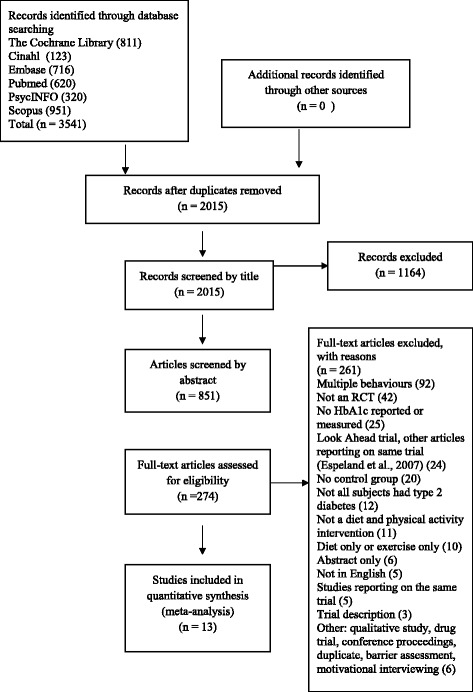
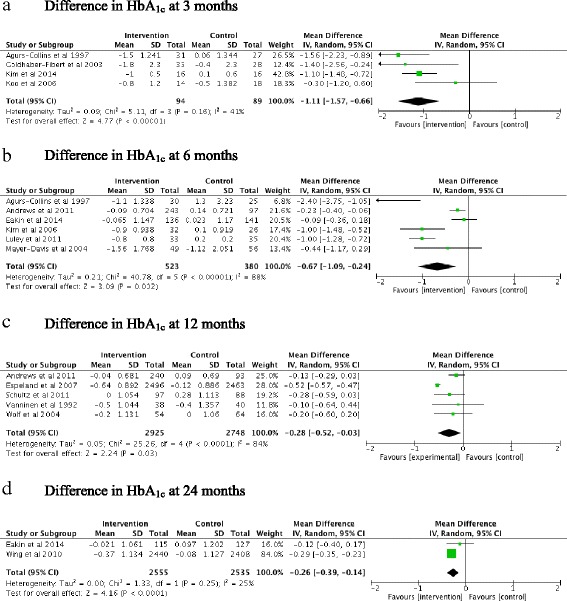
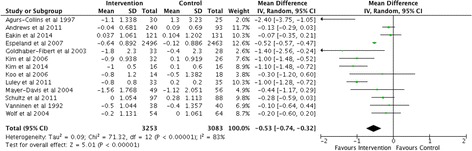
Changing diet and physical activity behaviour is one of the cornerstones of type 2 diabetes treatment, but changing behaviour is challenging . The objective of this study was to identify behaviour change techniques (BCTs) and intervention features of dietary and physical activity interventions for patients with type 2 diabetes that are associated with changes in HbA 1c and body weight. We performed a systematic review of papers published between 1975–2015 describing randomised controlled trials (RCTs) that focused exclusively on both diet and physical activity. The constituent BCTs, intervention features and methodological rigour of these interventions were evaluated. Changes in HbA 1c and body weight were meta-analysed and examined in relation to use of BCTs. Thirteen RCTs were identified. Meta-analyses revealed reductions in HbA 1c at 3, 6, 12 and 24 months of -1.11 % (12 mmol/mol), -0.67 % (7 mmol/mol), -0.28 % (3 mmol/mol) and -0.26 % (2 mmol/mol) with an overall reduction of -0.53 % (6 mmol/mol [95 % CI -0.74 to -0.32, P < 0.00001]) in intervention groups compared to control groups. Meta-analyses also showed a reduction in body weight of -2.7 kg, -3.64 kg, -3.77 kg and -3.18 kg at 3, 6, 12 and 24 months, overall reduction was -3.73 kg (95 % CI -6.09 to -1.37 kg, P = 0.002). Four of 46 BCTs identified were associated with >0.3 % reduction in HbA 1c : ‘instruction on how to perform a behaviour’, ‘behavioural practice/rehearsal’, ‘demonstration of the behaviour’ and ‘action planning’, as were intervention features ‘supervised physical activity’, ‘group sessions’, ‘contact with an exercise physiologist’, ‘contact with an exercise physiologist and a dietitian’, ‘baseline HbA 1c >8 %’ and interventions of greater frequency and intensity. Diet and physical activity interventions achieved clinically significant reductions in HbA 1c at three and six months, but not at 12 and 24 months. Specific BCTs and intervention features identified may inform more effective structured lifestyle intervention treatment strategies for type 2 diabetes.
Overview
The claims and statistics of this paper haven’t been checked yet.
Free: it reads the open-access text and checks the first 5 claims that cite a source we can check. Create a free account to check every claim.
Integrity signals
Registry
Cites
Statistics
Figures
Verification
Claims the paper makes
The claims and statistics of this paper haven’t been checked yet.
Free: it reads the open-access text and checks the first 5 claims that cite a source we can check. Create a free account to check every claim.
Claims other papers make about this one
Each is checked against this paper’s own text: does it say what the citing paper says it does?
The source backs part of the claim, not all of it — or backs it for a different population, condition or comparison.
In the citing paper
“Interventions shown to increase PA level or reduce sedentary behaviour include behaviour theory-based interventions, such as goal-setting, re-evaluation of goals, self-monitoring, and feedback.112,113”
From 2023 ESC guidelines for the management of cardiovascular disease in patients with diabetes. (2023) · cites this paper as [112]
Experimental — accuracy not yet measuredThe source backs part of the claim, not all of it — or backs it for a different population, condition or comparison.
In the citing paper
“Interventions utilizing these methods have shown to be effective at increasing physical activity participation in the short term [12,14]”
From Consumer-based wearable activity trackers increase physical activity participation: systematic review and meta-analysis (2019) · cites this paper as [12]
Experimental — accuracy not yet measuredThe source backs part of the claim, not all of it — or backs it for a different population, condition or comparison.
In the citing paper
“The use of structured lifestyle interventions is reported to be effective in increasing physical activity participation and reducing the progression of chronic diseases [10-12].”
From Consumer-based wearable activity trackers increase physical activity participation: systematic review and meta-analysis (2019) · cites this paper as [12]
Experimental — accuracy not yet measured
Self-check
Percentages, sums and reported differences re-computed from the paper’s own numbers.
The self-check needs the paper’s full text.
Citations
Cites
Preferred Reporting Items for Systematic Reviews and Meta-Analyses: the PRISMA statement
Moher, D., Liberati, A., Tetzlaff, J., Altman, D. G., & for the PRISMA Group (2009) · BMJ · doi:10.1136/bmj.b2535 · Cited by 83,823
Preferred Reporting Items for Systematic Reviews and Meta-Analyses: The PRISMA Statement
Moher, D., Liberati, A., Tetzlaff, J., Altman, D. G., & The PRISMA Group (2009) · PLoS Medicine · doi:10.1371/journal.pmed.1000097 · Cited by 64,042 · cited 1×
“A PRISMA (Preferred Reporting Items for Systematic Reviews and Meta-Analyses) checklist was created and PRISMA review guidelines were followed [22] (Additional file 1: 1.”
MethodPreferred reporting items for systematic reviews and meta-analyses: the PRISMA Statement.
(2009) · PubMed Central · Cited by 44,859
Self-efficacy: Toward a unifying theory of behavioral change
Bandura, A. (1977) · Psychological Review · doi:10.1037/0033-295x.84.2.191 · Cited by 43,925 · cited 1×
“Success of these three BCTs might be explained by their strong theoretical foundations [60, 61].”
BackgroundThe Cochrane Collaboration's tool for assessing risk of bias in randomised trials
Higgins, J. P. T., Altman, D. G., Gotzsche, P. C., Juni, P., Moher, D., Oxman, A. D., Savovic, J., Schulz, K. F., Weeks, L., Sterne, J. A. C., et al. (2011) · BMJ · doi:10.1136/bmj.d5928 · Cited by 33,817
Dermyshi, E., Wang, Y., Yan, C., Hong, W., Qiu, G., Gong, X., & Zhang, T. (2017) · Neonatology · doi:10.1159/000454668 · Cited by 24,451
(1985) · Medical Entomology and Zoology · Cited by 19,180
Wang, G., Ma, R., Qiao, G., Wada, K., Aizawa, Y., & Satoh, T. (2015) · Integrative Medicine International · doi:10.1159/000368408 · Cited by 18,657
Wild, S., Roglic, G., Green, A., Sicree, R., & King, H. (2004) · Diabetes Care · doi:10.2337/diacare.27.5.1047 · Cited by 15,297 · cited 1×
“In 2015, there were 415 million people with diabetes worldwide (91 % of which were type 2 diabetes) with figures expected to rise to 642 million by the year 2040, [1] which easily surpasses earlier predictions of 366 million by 2030 [2].”
BackgroundLozano, R., Naghavi, M., Foreman, K., Lim, S., Shibuya, K., Aboyans, V., Abraham, J., Adair, T., Aggarwal, R., Ahn, S. Y., et al. (2012) · The Lancet · doi:10.1016/s0140-6736(12)61728-0 · Cited by 14,070
Research works printed but not linked: 1
- Higgins J.P.T. DJJ: Cochrane Handbook for Systematic Reviews of Interventions Version 5.1.0 (updated March 2011). Chapter 7: Selecting studies and collecting data. The Cochrane Collaboration, 2011. Available from http://handbook.cochrane.org/. 2011, Chapter 7: Selecting studies and collecting data.
Cited by
Items 101–200 of 342
Morrison, J., Akter, K., Jennings, H. M., Kuddus, A., Nahar, T., King, C., Shaha, S. K., Ahmed, N., Haghparast-Bidgoli, H., Costello, A., et al. (2019) · Global Health Research and Policy · doi:10.1186/s41256-019-0110-6 · Cited by 19
Recomendaciones preventivas cardiovasculares. Actualización PAPPS 2020
Orozco‐Beltrán, D., Cuixart, C. B., Sánchez, J. J. A., Banegas, J. R., Cuenca, A. M. C., Gil-Guillén, V. F., Rioboó, E. M., & Pérez, J. N. (2020) · Atención Primaria · doi:10.1016/j.aprim.2020.08.002 · Cited by 31
Yu, M., Wu, Y., Gordon, S. P., Cheng, J., Chen, P., Wang, Y., & Yu, H. (2020) · Environmental Research · doi:10.1016/j.envres.2020.110492 · Cited by 19
Lion, R., Arulogun, O., Titiloye, M., Shaver, D., Jain, A., Godwin, B., Sidibe, M., Adejumo, M., Rosseel, Y., & Schmidt, P. (2018) · International Journal of Behavioral Nutrition and Physical Activity · doi:10.1186/s12966-018-0710-4 · Cited by 23
van Etten, S., Crielaard, L., Muilwijk, M., van Valkengoed, I. G. M., Snijder, M. B., Stronks, K., & Nicolaou, M. (2020) · Preventive Medicine · doi:10.1016/j.ypmed.2020.106141 · Cited by 22
Wright, C., Barnett, A., Campbell, K. L., Kelly, J. T., & Hamilton, K. (2022) · Nutrition & Dietetics · doi:10.1111/1747-0080.12728 · Cited by 18
The Impact of Physical Activity in Patients With Type 2 Diabetes
Bassin, S. R., & Srinath, R. (2025) · American Journal of Lifestyle Medicine · doi:10.1177/15598276231180541 · Cited by 17
Evans, T. S., Dhir, P., Radley, D., Duarte, C., Keyworth, C., Homer, C. V., Hill, A. J., Hawkes, R. E., Matu, J., McKenna, J., et al. (2022) · Diabetic Medicine · doi:10.1111/dme.15022 · Cited by 19
Changing health behaviour with rehabilitation in thoracic cancer: A systematic review and synthesis
Bayly, J., Wakefield, D., Hepgul, N., Wilcock, A., Higginson, I. J., & Maddocks, M. M. (2018) · Psycho-Oncology · doi:10.1002/pon.4684 · Cited by 20
“(60, 61) Varying combinations of BCTs (action planning, instructions, demonstration, behavioural practice, self-monitoring, feedback, risk communication, social support and graded tasks) were associated with positive outcomes in reviews of physical activity and dietary interventions across heterogeneous populations.(5…”
BackgroundInfluentialDunne, D. M., Lefevre, C. E., Cunniffe, B., Tod, D., Close, G. L., Morton, J. P., & Murphy, R. (2019) · Journal of Sports Sciences · doi:10.1080/02640414.2019.1642052 · Cited by 25
“Theory and evidence based tools developed in behavioural science already play an important role in informing the design and evaluation of effective digital health interventions (Cheung et al., 2015; Cradock et al., 2017; Jackson, Eliasson, Barber, & Weinman, 2014; Nour et al., 2016).”
Backgroundvan den Helder, J., Verlaan, S., Tieland, M., Scholten, J., Mehra, S., Visser, B., Kröse, B., Engelbert, R., & Weijs, P. J. M. (2021) · Nutrients · doi:10.3390/nu13020502 · Cited by 19
“The benefits of using social support, direct experience, feedback, coping, and learning from peers along the group setting, in combination with the self-regulatory techniques in the individual setting, have been combined [37,42,43].”
Przybylko, G., Morton, D. P., & Renfrew, M. E. (2021) · Frontiers in Psychology · doi:10.3389/fpsyg.2021.644337 · Cited by 21
Weissman, S. E., Perinpanayagam, R., Wright, F. V., & Arbour‐Nicitopoulos, K. P. (2021) · International Journal of Sports Science & Coaching · doi:10.1177/17479541211016580 · Cited by 22
Jaedicke, K. M., Bissett, S. M., Finch, T. L., Thornton, J. K., & Preshaw, P. M. (2018) · International Journal of Dental Hygiene · doi:10.1111/idh.12365 · Cited by 22
Wilkie, S., & Davinson, N. (2021) · Journal of the British Academy · doi:10.5871/jba/009s7.033 · Cited by 19
Jäger, M., Zangger, G., Bricca, A., Dideriksen, M., Smith, S. M., Midtgaard, J., Taylor, R. S., & Skou, S. T. (2023) · Health Psychology Review · doi:10.1080/17437199.2023.2182813 · Cited by 23
“…and physical activity interventions for patients with type 2 diabetes revealed that four BCTs were associated with a > 0.3% reduction in HbA1c: Instruction on how to perform a behaviour , Behavioural practice/rehearsal , Demonstration of the behaviour and Action planning (Cradock et al., 2017).”
BackgroundResultInfluentialDule, S., Barchetta, I., Cimini, F. A., Passarella, G., Dellanno, A., Filardi, T., Venditti, V., Bleve, E., Bailetti, D., Romagnoli, E., et al. (2023) · International Journal of Molecular Sciences · doi:10.3390/ijms24076474 · Cited by 17
“Diet and physical activity can ameliorate glycaemic control and favour weight loss [48].”
BackgroundEffectiveness of a Nutrition Education Program for Patients with Type 2 Diabetes Mellitus
Gortzi, O., Dimopoulou, M., Androutsos, O., Vraka, A., Gousia, H., & Bargiota, Α. (2024) · Applied Sciences · doi:10.3390/app14052114 · Cited by 34
Geerling, R. H., Browne, J. L., Holmes‐Truscott, E., Furler, J., Speight, J., & Mosely, K. (2019) · BMJ Open Diabetes Research & Care · doi:10.1136/bmjdrc-2019-000701 · Cited by 17
“As GP consultations typically focus on clinical outcomes rather than behaviors, 9 Prompting specific goal setting and self-monitoring of behavior has been shown previously to be associated with increased physical activity.”
BackgroundPinto, J. W., Bradbury, K. J., Newell, D., & Bishop, F. L. (2020) · The Journal of Alternative and Complementary Medicine · doi:10.1089/acm.2020.0365 · Cited by 16
O'CONNOR, H. M., Meloncelli, N. J. L., Wilkinson, S. A., Scott, A. M., Vincze, L. J., Rushton, A., Dawson, S. L., Hollis, J., Whiteoak, B., Gauci, S., et al. (2025) · BMC Pregnancy and Childbirth · doi:10.1186/s12884-025-07185-z · Cited by 27
Chicharro‐Luna, E., Nova, A. M., Ortega‐Ávila, A. B., Requena-Martínez, A., & Gijón-Noguerón, G. (2020) · Journal of Tissue Viability · doi:10.1016/j.jtv.2020.04.002 · Cited by 16
Kato, S., Ando, M., Honda, H., Yoshida, Y., Imaizumi, T., Yamamoto, N., & Maruyama, S. (2019) · Internal Medicine · doi:10.2169/internalmedicine.3150-19 · Cited by 20
“Although each patient and medical staff member may recognize the importance of diet and exercise therapy for good control of T2DM, the majority of diet and physical activity interventions fail to foster consistently healthy lifestyles (9).”
BackgroundHickson, M., Papoutsakis, C., Madden, A. M., Smith, M. A., & Whelan, K. (2024) · British Journal Of Nutrition · doi:10.1017/s0007114524000291 · Cited by 25
“These factors must then be adapted to the socio-economic and environmental situation, and cultural preferences of the individual, to communicate this effectively and to facilitate the required behaviour change (114) .”
Novák, J., Jurková, K., Lojkaskova, A., Jaklova, A., Kühnová, J., Pfeiferová, M., Král, N., Janek, M., Omcirk, D., Malisova, K., et al. (2024) · BMC Public Health · doi:10.1186/s12889-024-18384-2 · Cited by 16
“This technique aims to enhance motivation and drive behavioural change, especially in patients with chronic conditions [54, 55], including (pre)diabetes [52].”
BackgroundGagnon, J.-C., Fortier, M., McFadden, T., & Plante, Y. (2018) · Psychology of sport and exercise · doi:10.1016/j.psychsport.2018.02.002 · Cited by 17
“While research efforts have been made to characterize and assess the effectiveness of behaviour change interventions based on the presence of BCTs (Cradock et al., 2017; Samdal et al., 2017), the relational style of delivery remains overlooked.”
BackgroundResultDietary Interventions for Type 2 Diabetes in South Asian Populations—A Systematic Review
Subhan, F. B., Fernando, D. N., Thorlakson, J. J. D., & Chan, C. B. (2022) · Current Nutrition Reports · doi:10.1007/s13668-022-00446-9 · Cited by 19
“A meta-analysis of combined dietary and physical activity interventions for type 2 diabetes reports that efficacy is generally not sustained beyond 6 months [40].”
BackgroundZhao, X., Forbes, A., Ghazaleh, H. A., He, Q., Huang, J., Asaad, M., Cheng, L., & Duaso, M. (2024) · International Journal of Nursing Studies · doi:10.1016/j.ijnurstu.2024.104884 · Cited by 15
Willett, M., Greig, C. A., Rogers, D., Fenton, S. A. M., Duda, J. L., & Rushton, A. (2019) · BMJ Open · doi:10.1136/bmjopen-2019-029199 · Cited by 16
Online physical activity and sedentary behaviour information for cancer survivors
Goodwin, B. C., Crawford-Williams, F. M., Castro, Ó., Rowe, A., & Cocker, K. A. D. (2020) · Journal of Cancer Survivorship · doi:10.1007/s11764-020-00881-z · Cited by 15
Martín‐Payo, R., Cano, C. P., Fernández-Raigada, R. I., Santos-Granda, M. I., Cuesta, M., & González-Méndez, X. (2020) · Diabetes Research and Clinical Practice · doi:10.1016/j.diabres.2020.108579 · Cited by 13
Potential Methods to Improve Self-management in Those with Type 2 Diabetes: A Narrative Review
Sukartini, T., Nursalam, N., Pradipta, R. O., & Ubudiyah, M. (2023) · Intern J Endocrinol Metab · doi:10.5812/ijem-119698 · Cited by 26
“to-face delivery reporting educational and/or psychological interventions (13, 14), physical activity dietary programs (15-17), and religiosity or spirituality (18).”
BackgroundHawkes, R. E., Miles, L. M., & French, D. (2023) · Preventive Medicine Reports · doi:10.1016/j.pmedr.2023.102112 · Cited by 13
Wilson, D., Driller, M. W., Johnston, B., & Gill, N. (2023) · Journal of Lifestyle Medicine · doi:10.15280/jlm.2023.13.1.1 · Cited by 25
“Numerous reviews suggest combined diet and PA interventions produce superior results than diet or PA alone [126], with a growing emergence of interventions additionally involving a sleep component [50].”
BackgroundAl-walah, M. A., Donnelly, M., Cunningham, C., & Heron, N. (2023) · BMC Public Health · doi:10.1186/s12889-023-16885-0 · Cited by 19
“Researchers have analysed BCTs across various contexts, such as nutrition, postpartum smoking, and PA levels, to better understand interventions for improved health outcomes [40–42].”
BackgroundPeels, D. A., Verboon, P., van Stralen, M. M., Bolman, C. A. W., Golsteijn, R. H. J., Mudde, A. N., de Vries, H., & Lechner, L. (2020) · Psychology and Health · doi:10.1080/08870446.2020.1734202 · Cited by 15
Gomez-Garcia, C., Maher, C. A., Sañudo, B., & Jurado‐Castro, J. M. (2025) · Journal of Functional Morphology and Kinesiology · doi:10.3390/jfmk10030292 · Cited by 17
“While effective in the short term, these strategies are resource-intensive and often fail to achieve sustained behavioral change [21,22].”
Bourne, J. E., Page, A. S., Leary, S. D., Andrews, R. C., England, C. Y., & Cooper, A. R. (2019) · Pilot and Feasibility Studies · doi:10.1186/s40814-019-0508-4 · Cited by 17
Blicher-Hansen, J., Chilcot, J., & Gardner, B. (2022) · Psychology and Health · doi:10.1080/08870446.2022.2063863 · Cited by 26
“Maintaining PA requires an ongoing effort and an intervention duration of more than one year to scaffold patients on their journey to stable maintenance would be optimal (Cradock et al., 2017; Dunton, 2018; Penn et al., 2013).”
Backgroundvan den Burg, E. L., Schoonakker, M. P., Korpershoek, B., Sommeling, L. E., Sturm, C. A., Lamb, H. J., Pijl, H., Numans, M. E., Adriaanse, M. A., & van Peet, P. G. (2024) · BMC Family Practice · doi:10.1186/s12875-024-02405-5 · Cited by 17
“…professionals in other studies involving lifestyle changes: family support ( social influences ), difficulty in changing well-established habits ( behavioural regulation ), physical health and fitness ( physical ), and weather and work-related issues ( environmental context and resources ) [51–53].”
BackgroundPimenta, N. M., Félix, I. B., Monteiro, D., Marques, M. M., & Guerreiro, M. P. (2022) · Frontiers in Psychology · doi:10.3389/fpsyg.2022.883354 · Cited by 13
Dietary habits after a physical activity mHealth intervention: a randomized controlled trial
Sjöblom, L., Bonn, S. E., Alexandrou, C., Dahlgren, A., Eke, H., & Lagerros, Y. T. (2023) · BMC Nutrition · doi:10.1186/s40795-023-00682-4 · Cited by 18
“Combined interventions targeting both physical activity and dietary habits have been shown to improve blood lipid profiles and reduce glycated hemoglobin (HbA1c) in patients with type 2 diabetes, with clinically significant levels up to half a year [5, 6].”
BackgroundNicklett, E. J., Chen, J., Xiang, X., Abrams, L., Sonnega, A. J., Johnson, K. E., Cheng, J., & Assari, S. (2020) · Innovation in Aging · doi:10.1093/geroni/igz048 · Cited by 15
“Interventions promoting PA have been found to initially benefit diabetes management and diabetes outcomes, with intervention-related benefits then leveling off over time (Cradock et al., 2017).”
BackgroundPhysical activity behaviour in people with diabetes residing in India: A cross-sectional analysis
Sánchez, G. F. L., Smith, L., Raman, R., Jaisankar, D., Singh, S., Sapkota, R. M., Suárez, A. D., & Pardhan, S. (2018) · Science & Sports · doi:10.1016/j.scispo.2018.08.005 · Cited by 13
AlFaris, N. A., & Bajaber, A. S. (2020) · Food Science & Nutrition · doi:10.1002/fsn3.1642 · Cited by 11
“Therefore, relevant cultural and environmental strategies are needed to encourage and aid diabetic individuals to reach healthy body weight and dietary patterns (Cradock et al., 2017).”
BackgroundChen, H.-J., Huang, W.-H., Chan, H.-L., & Hwang, L. (2021) · Diabetes Metabolic Syndrome and Obesity · doi:10.2147/dmso.s303446 · Cited by 13
“Studies revealed that behavioral modification improved glycemic control in patients with type 2 diabetes.(27,28) Motivational interviewing is especially favorable for weight management in type 2 diabetes.”
BackgroundBerry, M. P., Chwyl, C., Metzler, A. L., Sun, J. H., Dart, H., & Forman, E. M. (2022) · Health Psychology Review · doi:10.1080/17437199.2022.2125038 · Cited by 13
“Another recent review of face-to-face lifestyle modi fi cation interventions for type 2 diabetes indicated that more than one-third of the included trials used more than 14 individual BCTs (Cradock et al., 2017).”
BackgroundAlsayed, A. O., Ismail, N. A., Hasan, L., Syed, A. H., Embarak, F. M., & Da’u, A. (2023) · Alexandria Engineering Journal · doi:10.1016/j.aej.2023.08.026 · Cited by 22
Active transportation, physical activity, and health
Woodward, A. J., & Wild, K. (2020) · Elsevier eBooks · doi:10.1016/b978-0-12-819136-1.00005-x · Cited by 16
Bodilsen, S. S., Aadahl, M., Wienecke, T., & Thomsen, T. H. (2023) · Frontiers in Rehabilitation Sciences · doi:10.3389/fresc.2023.1114537 · Cited by 10
“Thus, it is important to explore which components should be included in multicomponent and tailored interventions (24, 39).”
BackgroundMacPherson, M., Cranston, K. D., Johnston, C., Locke, S., & Jung, M. E. (2021) · JMIR Formative Research · doi:10.2196/28163 · Cited by 12
“This study aims to outline the evaluation and refinement of a bank of SMS text messages designed for individuals at risk for T2D who have taken part in the Small Steps for Big Changes (SSBC) diabetes prevention program [37,38].”
MethodInfluentialKempf, K., Dubois, C., Arnold, M., Amelung, V. E., Leppert, N., Altin, S. V., Vomhof, M., Icks, A., & Martin, S. (2023) · Nutrients · doi:10.3390/nu15183954 · Cited by 13
“Nevertheless, weight and HbA1c values often re-increase after the end of intervention [41,42].”
BackgroundPractical strategies to manage obesity in type 2 diabetes
Rodbard, H. W., Barnard-Kelly, K. D., Pfeiffer, A. F. H., Mauersberger, C., Schnell, O., & Giorgino, F. (2024) · Diabetes Obesity and Metabolism · doi:10.1111/dom.15556 · Cited by 10
“131 In the DiRECT trial, ongoing support by research dietitians was rated as a key element of the study's success.”
BackgroundHesketh, K., Low, J., Andrews, R., Blitz, S., Buckley, B., Falkenhain, K., Job, J., Jones, C. A., Jones, H., Jung, M. E., et al. (2025) · BMJ Open · doi:10.1136/bmjopen-2024-092260 · Cited by 13
Forte, J. C., Gannamani, R., Folkertsma, P., Kumaraswamy, S., Mount, S. W., van Dam, S., & Hoogsteen, J. (2022) · JMIR Cardio · doi:10.2196/34946 · Cited by 12
“Few previous studies have demonstrated this, with a handful of studies summarized in reviews showing that interventions applying theoretical frameworks or models for behavioral change, some of which were technology based, were more effective at increasing adherence to healthy lifestyle habits than standard advice [38,…”
BackgroundMaxwell‐Smith, C., Breare, H., Garcia, A. D., Sim, T. F., Blackford, K., & Mullan, B. A. (2025) · Research in Social and Administrative Pharmacy · doi:10.1016/j.sapharm.2025.07.004 · Cited by 11
Zhang, X., Fu, H.-J., Yang, G.-R., Wan, G., Li, D., Zhu, L., Xie, R.-R., Lv, Y., Zhang, J., Li, Y.-L., et al. (2018) · Diabetes Research and Clinical Practice · doi:10.1016/j.diabres.2018.09.007 · Cited by 9
Parsons, J., Forde, R., Brackenridge, A., Hunt, K. F., Ismail, K., Murrells, T., Reid, A., Rogers, H., Rogers, R. L., & Forbes, A. (2022) · PLoS ONE · doi:10.1371/journal.pone.0273992 · Cited by 14
Zhong, Q., Chen, Y., Luo, M., Lin, Q., Tan, J., Xiao, S., Willey, J. A., Chen, J., Whittemore, R., & Guo, J. (2023) · Globalization and Health · doi:10.1186/s12992-023-00910-3 · Cited by 11
“frameworks of behavior change maintenance, which could provide guidance on the development and evaluation of interventions promoting sustained change in health behaviors [43, 44].”
BackgroundClustering of chronic disease risks among people accessing community mental health services
Regan, C., Fehily, C. M. C., Campbell, E. M., Bowman, J., Faulkner, J., Oldmeadow, C. J., & Bartlem, K. M. (2022) · Preventive Medicine Reports · doi:10.1016/j.pmedr.2022.101870 · Cited by 11
Applying the Reasoned Action Approach and Planning to Understand Diabetes Self-Management Behaviors
Quinton, T. S. (2022) · Behavioral Sciences · doi:10.3390/bs12100375 · Cited by 8
“[68] found that ‘instruction on how to perform a behavior’, ‘behavioral practice/rehearsal’, and ‘demonstration of the behavior’ demonstrated the most effectiveness in interventions targeting physical activity and diet in diabetes patients.”
BackgroundSlebe, R., Wenker, E., Schoonmade, L. J., Bouman, E. J., Blondin, D. P., Campbell, D. J. T., Carpentier, A. C., Hoeks, J., Raina, P. S., Schrauwen, P., et al. (2024) · Diabetes Research and Clinical Practice · doi:10.1016/j.diabres.2024.111638 · Cited by 14
Alghafri, T. S., Al-Harthi, S., Al-Farsi, Y. M., Craigie, A. M., Bannerman, E., & Anderson, A. S. (2021) · Sultan Qaboos University medical journal · doi:10.18295/squmj.2021.21.01.006 · Cited by 11
Cho, J. Y., & Kizilcec, R. F. (2021) · ACM Conference on Learning @ Scale (L@S) · doi:10.1145/3430895.3460138 · Cited by 11
“Various review papers ranging from metaanalyses to scoping reviews have used the BCT taxonomy for different target health behaviors, including promoting physical activity [16, 3], healthy diets [9], smoking cessation [4], alcohol reduction [18], and medication adherence [40].”
BackgroundMethodInfluentialMaula, A., Kendrick, D., Kai, J., & Griffiths, F. E. (2020) · Diabetic Medicine · doi:10.1111/dme.14394 · Cited by 11
“There were fewer identified trials (15) in majority BME populations compared to majority white populations (34), with eight (53%) and 21 (62%) successful trials, respectively.”
Chater, A., Smith, L. R., Ferrandino, L., Wyld, K., & Bailey, D. P. (2020) · Practical Diabetes · doi:10.1002/pdi.2311 · Cited by 10
Subramaniam, S., Dhillon, J. S., & Ahmad, W. F. W. (2021) · International Journal of Environmental Research and Public Health · doi:10.3390/ijerph18179160 · Cited by 13
“Behavior change techniques (BCTs) can aid in the enhancement of behavior change interventions [17,18].”
BackgroundMethodCan behavior change techniques be delivered via short text messages?
Doğru, O. C., Webb, T. L., & Norman, P. E. (2022) · Translational Behavioral Medicine · doi:10.1093/tbm/ibac058 · Cited by 8
Siette, J., Dodds, L., Dawes, P., Richards, D., Savage, G. R., Strutt, P. A., Ijaz, K., Johnco, C. J., Wuthrich, V. M., Heger, I., et al. (2022) · PLoS ONE · doi:10.1371/journal.pone.0272517 · Cited by 10
A Comprehensive Review of Modern Methods to Improve Diabetes Self-Care Management Systems
Alsayed, A. O., Ismail, N. A., Hasan, L., & Embarak, F. M. (2023) · International Journal of Advanced Computer Science and Applications · doi:10.14569/ijacsa.2023.0140920 · Cited by 11
“Numerous studies have found compelling proof that employing apps motivates individuals to stick to management medical care, enhances glycemic control, and delays or avoids the onset of diabetic complications while also improving their standard of life [10], [121].”
BackgroundMethodNutrition Interventions for Type 2 Diabetes in Chinese Populations: A Scoping Review
Deng, F., Zhang, A., & Chan, C. B. (2018) · Journal of Immigrant and Minority Health · doi:10.1007/s10903-018-0845-z · Cited by 9
Kato, S., Ando, M., Kondo, T., Yoshida, Y., Honda, H., & Maruyama, S. (2018) · PubMed Central · doi:10.18999/nagjms.80.2.175 · Cited by 8
Vetrovsky, T., Vetrovska, K., & Bunc, V. (2019) · Acta Gymnica · doi:10.5507/ag.2019.005 · Cited by 7
“Results in the context of other literature The field of BCTs is very well researched (Michie et al., 2011, 2013) and BCTs are widely used to develop, implement, and report health behavior interventions, including PA interventions (Bird et al., 2013; Cradock et al., 2017; Olander et al., 2013).”
Backgroundde Lira, C. A. B., Viana, R. B., Luz, N. F., Santana, M. G., Campos, M. H., Vancini, R. L., & Andrade, M. S. (2019) · AJP Advances in Physiology Education · doi:10.1152/advan.00043.2019 · Cited by 10
“As physical exercise is an important tool for prevention of diabetes mellitus (4, 11, 29) and arterial hypertension (18, 29, 31, 39), accurate knowledge of the different types, volume, intensity, and physiological effects of exercise is fundamental to ensure the effectiveness of exercise programs (28).”
Silva, C. C., Presseau, J., van Allen, Z., Dinsmore, J. G., Schenk, P. M., Moreto, M., & Marques, M. M. (2024) · Health Psychology Review · doi:10.1080/17437199.2024.2413871 · Cited by 14
Velasco, E. R., Pedersen, H. S., & Skinner, T. C. (2022) · JMIR Formative Research · doi:10.2196/40058 · Cited by 13
“Research has demonstrated that with appropriate individual and group support, individuals can achieve significant weight loss and sustainable changes in lifestyle [5,6].”
BackgroundKONES, R. J., & Rumana, U. (2018) · Postgraduate Medicine · doi:10.1080/00325481.2018.1421395 · Cited by 8
Conen, R., Mueller, S., & Tibubos, A. N. (2025) · Interactive Journal of Medical Research · doi:10.2196/59611 · Cited by 9
Dodds, L., Deckers, K., Harris, C. B., & Siette, J. (2025) · The Journal of Prevention of Alzheimer s Disease · doi:10.1016/j.tjpad.2025.100093 · Cited by 12
Siette, J., Chong, V., Samtani, S., Harris, C. B., Steiner-Lim, G. Z., & MacMillan, F. (2025) · BMC Public Health · doi:10.1186/s12889-025-22229-x · Cited by 9
Fu, E. S., Neubert, S. W., Chang, A., Smith, J. D., & Graham, A. K. (2021) · Eating Behaviors · doi:10.1016/j.eatbeh.2021.101591 · Cited by 6
Almulhim, A. N., Goyder, E., & Caton, S. J. (2022) · International Journal of Environmental Research and Public Health · doi:10.3390/ijerph192215089 · Cited by 10
Ayre, E., Lee, J. J., Frie, K., Aveyard, P. N., & Albury, C. (2023) · Health Psychology and Behavioral Medicine · doi:10.1080/21642850.2023.2213751 · Cited by 7
“Both taxonomies have been used previously in weight loss literature (Bourhill et al., 2021; Cradock et al., 2017; French et al., 2014; Hartmann-Boyce et al., 2014).”
MethodBrooks, J. M., Ruane, H., McDiarmid, S., Vyas, A., Issa, B. G., & Harvie, M. (2024) · Journal of Human Nutrition and Dietetics · doi:10.1111/jhn.13313 · Cited by 8
Suzuki, K., Kimura, T., Uchida, S., Katamura, H., & Tanaka, H. (2019) · The Journal of Alternative and Complementary Medicine · doi:10.1089/acm.2018.0291 · Cited by 6
Ghorbanian, B., Saberi, Y., & Rasouli, M. (2019) · The Neuroscience Journal of Shefaye Khatam · doi:10.29252/shefa.8.1.63 · Cited by 7
Josefsson, C., Liljeroos, T., Hellgren, M. I., Pöder, U., Hedström, M., & Olsson, E. M. G. (2024) · JMIR Formative Research · doi:10.2196/46222 · Cited by 7
“These components are in line with the 2 behavior change techniques of “feedback on behavior” and “self-monitoring of behavior” that are associated with better glycemic control [13].”
Vallis, M. (2022) · Canadian Journal of Diabetes · doi:10.1016/j.jcjd.2022.08.008 · Cited by 7
Components in downstream health promotions to reduce sugar intake among adults: a systematic review
Hilmy, S. H. A., Nordin, N., Yusof, M. Y. P. M., Soh, T. Y. T., & Yusof, N. (2024) · Nutrition Journal · doi:10.1186/s12937-023-00884-3 · Cited by 6
“In addition, there is sound evidence that engagement from the group, social and peer support [161] can increase the effectiveness of dietary interventions, where, as part of the goal-setting activity the NEST programme encourages participants to reflect on whom they could share the information with…”
BackgroundLocke, S., Dix, G. U., Hiwi, B. T., Oelke, N. D., Rush, K. L., Berg, S., Dinwoodie, M., Jung, M. E., & Ginis, K. A. M. (2020) · Canadian Journal of Diabetes · doi:10.1016/j.jcjd.2020.04.003 · Cited by 7
Self-citationBrauer, P. M., Royall, D., Li, A., Rodrigues, A., Green, J., Macklin, S., Craig, A., Chan, M., Pasanen, J., Brunelle, L., et al. (2022) · BMC Nutrition · doi:10.1186/s40795-022-00540-9 · Cited by 6
“reviewed diet and physical activity interventions in diabetes for changes in HbA1c and weight [92].”
BackgroundLytle, L. A., Wasser, H., Godino, J., Lin, P., & Tate, D. F. (2022) · Obesity Science & Practice · doi:10.1002/osp4.633 · Cited by 6
Preventing type 2 diabetes: A research agenda for behavioural science
French, D., Ahern, A. L., Greaves, C. J., Hawkes, R. E., Higgs, S., Pechey, R., & Sniehotta, F. F. (2023) · Diabetic Medicine · doi:10.1111/dme.15147 · Cited by 5
Contribution of an Intelligent Virtual Assistant to Healthy Ageing in Adults With Type 2 Diabetes
Guerreiro, M. P., Félix, I. B., Balsa, J., Carmo, M. B., Henriques, M. A., Cavaco, A. M. D. N., & Cláudio, A. P. (2020) · Advances in medical technologies and clinical practice book series · doi:10.4018/978-1-7998-1937-0.ch012 · Cited by 5
A service evaluation of psychoeducation groups for patients with functional seizures
Hillyer, F. A., Chapman, T., & Rodrigues, A. (2025) · Epilepsy & Behavior · doi:10.1016/j.yebeh.2025.110462 · Cited by 4
“BCTs were associated with better health outcomes in patients with a diagnosis of Type 2 Diabetes [15] and improved patients with persistent musculoskeletal pain, adherence to the intervention [16].”
Vear, N. K., Goodman, W., Rose, G. L., & McCarthy, A. L. (2023) · Maturitas · doi:10.1016/j.maturitas.2023.05.007 · Cited by 6
El-Deyarbi, M., Ahmed, L. A., King, J., Nuaimi, H. A., Juboori, A. A., Mansour, N. A., Jarab, A. S., Abdel‐Qader, D. H., & Aburuz, S. (2024) · Diabetes Research and Clinical Practice · doi:10.1016/j.diabres.2024.111754 · Cited by 8
An Evaluation of Health Behavior Change Training for Health and Care Professionals in St. Helena
Maltinsky, W., Swanson, V., Tanyan, K., & Hotham, S. (2025) · Healthcare · doi:10.3390/healthcare13040435 · Cited by 6
“It uses 10 BCTs from the HBCCF framework that have been selected based on their relevance and strong evidence base for the most commonly addressed health behaviors [8,31].”
Behavior change techniques in mobile apps targeting self-harm in young people: a systematic review
Panagiotopoulou, E., Peiris, C., & Hayes, D. (2021) · Translational Behavioral Medicine · doi:10.1093/tbm/ibaa131 · Cited by 6
A 5-year assessment of the epidemiology and natural history of possible diabetes in remission
Gillani, S. M. R., Raghavan, R., & Singh, B. M. (2021) · Primary care diabetes · doi:10.1016/j.pcd.2021.04.007 · Cited by 7
Metadata
- Authors
- Cradock, K. A., ÓLaighin, G., Finucane, F. M., Gainforth, H. L., Quinlan, L. R., & Ginis, K. A. M.
- Affiliations
- Ollscoil na Gaillimhe – University of Galway (IE)
- University of British Columbia (CA)
- Corresponding author
- Quinlan, Leo R.
- ORCID
- Venue
- International Journal of Behavioral Nutrition and Physical Activity
- Published
- 2017-02-08
- Volume
- 14
- Issue
- 1
- Pages
- 18-18
- ISSN
- 1479-5868 (ISSN-L)
- PMC
- PMC5299734
- OpenAlex
- W2587248746
- Semantic Scholar
- 56a78b05da238ed510df8e467dd716f2352c9f50
- Cited by
- 343
- References
- 96
- Citations by year
- 2026: 12 · 2025: 31 · 2024: 46 · 2023: 38 · 2022: 52 · 2021: 59 · 2020: 38 · 2019: 29 · 2018: 29 · 2017: 8
- FWCI
- 3.32
- Type
- journal article
- Language
- en
- Open access
- gold
- doi.org
- Licence
- cc-by
- Locations
- International Journal of Behavioral Nutrition and Physical Activity (publishedVersion, cc-by)
- PubMed Central (publishedVersion, cc-by)
- PubMed (publishedVersion)
- ARAN (University of Galway Research Repository) (Ollscoil na Gaillimhe – University of Galway) (acceptedVersion, cc-by-nc-nd)
- Arrow@dit (Dublin Institute of Technology) (acceptedVersion)
- Arrow@dit (Dublin Institute of Technology) (submittedVersion, cc-by-nc-nd)
- ARAN (University of Galway Research Repository) (Ollscoil na Gaillimhe – University of Galway) (submittedVersion, cc-by-nc-nd)
- cIRcle (University of British Columbia) (submittedVersion, cc-by)
- University of Galway Research Repository (submittedVersion, cc-by)
- Lenus, The Irish Health Repository (Dr Steevens Hospital Library) (submittedVersion)
- Funders
- Irish Research Council for Science, Engineering and Technology (IE) (GOIPG/2013/873)
- Topics
- Social Sciences › Psychology › Applied Psychology › Behavioral Health and Interventions
- Health Sciences › Medicine › Endocrinology, Diabetes and Metabolism › Diabetes Management and Education
- Health Sciences › Medicine › Public Health, Environmental and Occupational Health › Physical Activity and Health
- Keywords
- type 2 diabetes, behaviour change techniques, dietary intervention, physical activity interventions, HbA1c, weight loss, action planning, supervised exercise, exercise physiologists, dietitians, intervention features, methodological quality, diabetes self-management education, lifestyle intervention
- MeSH terms
- Adult, Behavior Therapy, Diabetes Mellitus, Type 2, Diet, Feeding Behavior, Female, Glycated Hemoglobin, Humans, Life Style, Male, Exercise
About these checks
Registry, retraction, Cites and statistics results are computed, not judged, with one exception: a printed reference that no index lists is read once by a model before it counts as a citation error. Claims are extracted by a model and kept only when their quote appears verbatim in the text; each cited source is then checked, with a model’s help, for whether it says what the claim relies on. Those verdicts can be wrong — read the claim’s quote and the cited source before relying on one.
Statistics and arithmetic are recomputed, not judged.
Confidence bands are shown only for fields calibrated on our annotated test set. None is calibrated yet, so no band is shown.
What counts as a claim ›How we measure confidence ›How we check this ›
Are you an author, or do you see a problem with this page? Request a review
Data sources
Bibliographic data: Semantic Scholar, OpenAlex, Crossref.
Contains information from the Semantic Scholar Academic Graph Datasets, made available under the ODC Attribution License (ODC-BY 1.0).
Semantic Scholar’s data is described in: Kinney, R., et al. (2023). The Semantic Scholar Open Data Platform. arXiv:2301.10140.
