

Behaviour change techniques targeting both diet and physical activity in type 2 diabetes: A systematic review and meta-analysis
Open accessThe DOI matches its Crossref record; 94 of the 96 references it cites were found in a registry or an index.
Abstract
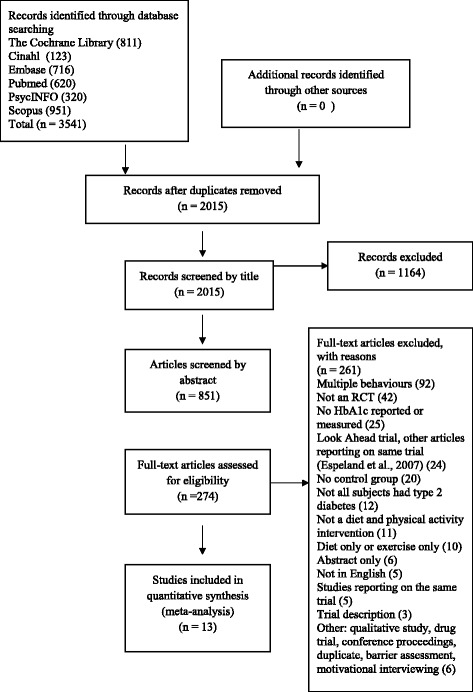
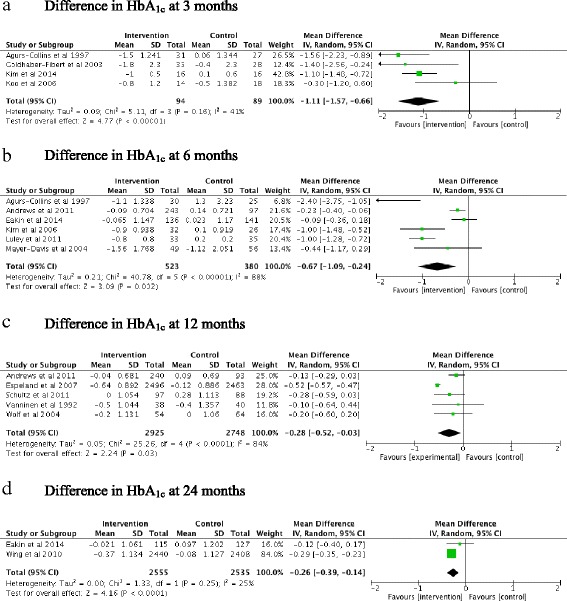
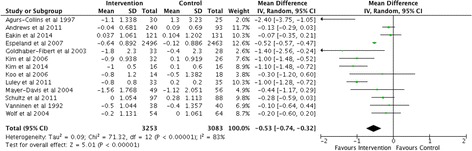
Changing diet and physical activity behaviour is one of the cornerstones of type 2 diabetes treatment, but changing behaviour is challenging . The objective of this study was to identify behaviour change techniques (BCTs) and intervention features of dietary and physical activity interventions for patients with type 2 diabetes that are associated with changes in HbA 1c and body weight. We performed a systematic review of papers published between 1975–2015 describing randomised controlled trials (RCTs) that focused exclusively on both diet and physical activity. The constituent BCTs, intervention features and methodological rigour of these interventions were evaluated. Changes in HbA 1c and body weight were meta-analysed and examined in relation to use of BCTs. Thirteen RCTs were identified. Meta-analyses revealed reductions in HbA 1c at 3, 6, 12 and 24 months of -1.11 % (12 mmol/mol), -0.67 % (7 mmol/mol), -0.28 % (3 mmol/mol) and -0.26 % (2 mmol/mol) with an overall reduction of -0.53 % (6 mmol/mol [95 % CI -0.74 to -0.32, P < 0.00001]) in intervention groups compared to control groups. Meta-analyses also showed a reduction in body weight of -2.7 kg, -3.64 kg, -3.77 kg and -3.18 kg at 3, 6, 12 and 24 months, overall reduction was -3.73 kg (95 % CI -6.09 to -1.37 kg, P = 0.002). Four of 46 BCTs identified were associated with >0.3 % reduction in HbA 1c : ‘instruction on how to perform a behaviour’, ‘behavioural practice/rehearsal’, ‘demonstration of the behaviour’ and ‘action planning’, as were intervention features ‘supervised physical activity’, ‘group sessions’, ‘contact with an exercise physiologist’, ‘contact with an exercise physiologist and a dietitian’, ‘baseline HbA 1c >8 %’ and interventions of greater frequency and intensity. Diet and physical activity interventions achieved clinically significant reductions in HbA 1c at three and six months, but not at 12 and 24 months. Specific BCTs and intervention features identified may inform more effective structured lifestyle intervention treatment strategies for type 2 diabetes.
Overview
The claims and statistics of this paper haven’t been checked yet.
Free: it reads the open-access text and checks the first 5 claims that cite a source we can check. Create a free account to check every claim.
Integrity signals
Registry
Cites
Statistics
Figures
Verification
Claims the paper makes
The claims and statistics of this paper haven’t been checked yet.
Free: it reads the open-access text and checks the first 5 claims that cite a source we can check. Create a free account to check every claim.
Claims other papers make about this one
Each is checked against this paper’s own text: does it say what the citing paper says it does?
The source backs part of the claim, not all of it — or backs it for a different population, condition or comparison.
In the citing paper
“Interventions shown to increase PA level or reduce sedentary behaviour include behaviour theory-based interventions, such as goal-setting, re-evaluation of goals, self-monitoring, and feedback.112,113”
From 2023 ESC guidelines for the management of cardiovascular disease in patients with diabetes. (2023) · cites this paper as [112]
Experimental — accuracy not yet measuredThe source backs part of the claim, not all of it — or backs it for a different population, condition or comparison.
In the citing paper
“Interventions utilizing these methods have shown to be effective at increasing physical activity participation in the short term [12,14]”
From Consumer-based wearable activity trackers increase physical activity participation: systematic review and meta-analysis (2019) · cites this paper as [12]
Experimental — accuracy not yet measuredThe source backs part of the claim, not all of it — or backs it for a different population, condition or comparison.
In the citing paper
“The use of structured lifestyle interventions is reported to be effective in increasing physical activity participation and reducing the progression of chronic diseases [10-12].”
From Consumer-based wearable activity trackers increase physical activity participation: systematic review and meta-analysis (2019) · cites this paper as [12]
Experimental — accuracy not yet measured
Self-check
Percentages, sums and reported differences re-computed from the paper’s own numbers.
The self-check needs the paper’s full text.
Citations
Cites
Preferred Reporting Items for Systematic Reviews and Meta-Analyses: the PRISMA statement
Moher, D., Liberati, A., Tetzlaff, J., Altman, D. G., & for the PRISMA Group (2009) · BMJ · doi:10.1136/bmj.b2535 · Cited by 83,823
Preferred Reporting Items for Systematic Reviews and Meta-Analyses: The PRISMA Statement
Moher, D., Liberati, A., Tetzlaff, J., Altman, D. G., & The PRISMA Group (2009) · PLoS Medicine · doi:10.1371/journal.pmed.1000097 · Cited by 64,042 · cited 1×
“A PRISMA (Preferred Reporting Items for Systematic Reviews and Meta-Analyses) checklist was created and PRISMA review guidelines were followed [22] (Additional file 1: 1.”
MethodPreferred reporting items for systematic reviews and meta-analyses: the PRISMA Statement.
(2009) · PubMed Central · Cited by 44,859
Self-efficacy: Toward a unifying theory of behavioral change
Bandura, A. (1977) · Psychological Review · doi:10.1037/0033-295x.84.2.191 · Cited by 43,925 · cited 1×
“Success of these three BCTs might be explained by their strong theoretical foundations [60, 61].”
BackgroundThe Cochrane Collaboration's tool for assessing risk of bias in randomised trials
Higgins, J. P. T., Altman, D. G., Gotzsche, P. C., Juni, P., Moher, D., Oxman, A. D., Savovic, J., Schulz, K. F., Weeks, L., Sterne, J. A. C., et al. (2011) · BMJ · doi:10.1136/bmj.d5928 · Cited by 33,817
Dermyshi, E., Wang, Y., Yan, C., Hong, W., Qiu, G., Gong, X., & Zhang, T. (2017) · Neonatology · doi:10.1159/000454668 · Cited by 24,451
(1985) · Medical Entomology and Zoology · Cited by 19,180
Wang, G., Ma, R., Qiao, G., Wada, K., Aizawa, Y., & Satoh, T. (2015) · Integrative Medicine International · doi:10.1159/000368408 · Cited by 18,657
Wild, S., Roglic, G., Green, A., Sicree, R., & King, H. (2004) · Diabetes Care · doi:10.2337/diacare.27.5.1047 · Cited by 15,297 · cited 1×
“In 2015, there were 415 million people with diabetes worldwide (91 % of which were type 2 diabetes) with figures expected to rise to 642 million by the year 2040, [1] which easily surpasses earlier predictions of 366 million by 2030 [2].”
BackgroundLozano, R., Naghavi, M., Foreman, K., Lim, S., Shibuya, K., Aboyans, V., Abraham, J., Adair, T., Aggarwal, R., Ahn, S. Y., et al. (2012) · The Lancet · doi:10.1016/s0140-6736(12)61728-0 · Cited by 14,070
Developing and evaluating complex interventions: the new Medical Research Council guidance
Craig, P., Dieppe, P., Macintyre, S., Michie, S., Nazareth, I., & Petticrew, M. (2008) · BMJ · doi:10.1136/bmj.a1655 · Cited by 10,995
Self-efficacy: Toward a unifying theory of behavioral change
Bandura, A. (1978) · Advances in Behaviour Research and Therapy · doi:10.1016/0146-6402(78)90002-4 · Cited by 10,586
Hoffmann, T. C., Glasziou, P. P., Boutron, I., Milne, R., Perera, R., Moher, D., Altman, D. G., Barbour, V., Macdonald, H., Johnston, M., et al. (2014) · BMJ · doi:10.1136/bmj.g1687 · Cited by 10,548
Estimating the mean and variance from the median, range, and the size of a sample
Hozo, S. P., Djulbegovic, B., & Hozo, I. (2005) · BMC Medical Research Methodology · doi:10.1186/1471-2288-5-13 · Cited by 9,062
Standards of Medical Care in Diabetes
Power, D. (2006) · Diabetes Care · doi:10.2337/diacare.29.02.06.dc05-1593 · Cited by 8,673
Michie, S., Richardson, M., Johnston, M., Abraham, C., Francis, J., Hardeman, W., Eccles, M. P., Cane, J., & Wood, C. E. (2013) · Annals of Behavioral Medicine · doi:10.1007/s12160-013-9486-6 · Cited by 7,629 · cited 2×
“Some of the best established BCTs [25, 26] for behaviour change were conspicuous in their absence from any of the RCTs in this review.”
BackgroundMethodSocial Learning Theory and the Health Belief Model
Rosenstock, I. M., Strecher, V. J., & Becker, M. H. (1988) · Health Education Quarterly · doi:10.1177/109019818801500203 · Cited by 5,564
Actual Causes of Death in the United States, 2000
Mokdad, A. H. (2004) · JAMA · doi:10.1001/jama.291.10.1238 · Cited by 5,211
Standards of medical care in diabetes—2014
American Diabetes Association (2014) · Diabetes Care · doi:10.2337/dc14-s014 · Cited by 4,572
Correlates of physical activity: why are some people physically active and others not?
Bauman, A. E., Reis, R. S., Sallis, J. F., Wells, J. C., Loos, R. J., & Martin, B. W. (2012) · The Lancet · doi:10.1016/s0140-6736(12)60735-1 · Cited by 4,151 · cited 1×
“A gradual increase in intensity and frequency of contact could well assist in achieving maintenance of behaviour change of diet and physical activity as simple tasks in the initial stages of interventions, gradually progressing in intensity, could help improve participants’ self-efficacy [76, 77].”
BackgroundHandbook of self-regulation: research, theory, and applications
(2005) · Choice Reviews Online · doi:10.5860/choice.42-3719 · Cited by 3,645
Carver, C. S., & Scheier, M. F. (1982) · Psychological Bulletin · doi:10.1037//0033-2909.92.1.111 · Cited by 2,650 · cited 1×
“However, according to the Control Theory [66] the self-regulation process of how we set and prioritize our goals is based on a hierarchical structure.”
MethodBellg, A. J., Treatment Fidelity Workgroup of the NIH Behavior Change Consortium, Borrelli, B., Resnick, B., Hecht, J., Minicucci, D. S., Ory, M., Ogedegbe, G., Orwig, D., Ernst, D., et al. (2004) · Health Psychology · doi:10.1037/0278-6133.23.5.443 · Cited by 2,620 · cited 1×
“’s [24] criteria, which identify treatment fidelity strategies for improving and monitoring, provider training, delivery of treatment, receipt of treatment, and enactment of treatment skills.”
BackgroundA taxonomy of behavior change techniques used in interventions
Abraham, C., & Michie, S. (2008) · Health Psychology · doi:10.1037/0278-6133.27.3.379 · Cited by 2,525
Glanz, K., & Bishop, D. B. (2010) · Annual Review of Public Health · doi:10.1146/annurev.publhealth.012809.103604 · Cited by 2,336 · cited 1×
“Interventions guided by theory or theoretical constructs may be more effective in changing a variety of health behaviours than studies not using theory [81].”
BackgroundEffective techniques in healthy eating and physical activity interventions: A meta-regression.
Michie, S., Abraham, C., Whittington, C., McAteer, J., & Gupta, S. (2009) · Health Psychology · doi:10.1037/a0016136 · Cited by 2,229
Hu, F. B. (2011) · Diabetes Care · doi:10.2337/dc11-0442 · Cited by 1,954 · cited 1×
“However, changing diet and lifestyle behaviour requires change at an individual, environmental, social, and policy level [10].”
BackgroundMichie, S., Ashford, S., Sniehotta, F. F., Dombrowski, S. U., Bishop, A., & French, D. P. (2011) · Psychology & Health · doi:10.1080/08870446.2010.540664 · Cited by 1,756
Reduction in Weight and Cardiovascular Disease Risk Factors in Individuals With Type 2 Diabetes
The Look AHEAD Research Group (2007) · Diabetes Care · doi:10.2337/dc07-0048 · Cited by 1,522 · cited 7×
“Three out of four interventions reporting multiple time points reported that initial reductions in HbA1c were not maintained [38, 43, 46].”
BackgroundInfluentialKwasnicka, D., Dombrowski, S. U., White, M., & Sniehotta, F. (2016) · Health Psychology Review · doi:10.1080/17437199.2016.1151372 · Cited by 1,476 · cited 2×
“The BCT ‘graded tasks’ can play a key role in developing habits which is among the five theoretical themes suggested for behavioral change maintenance [65] and may inform better maintenance of behaviour change in diet and physical activity interventions.”
BackgroundVariance imputation for overviews of clinical trials with continuous response
Follmann, D., Elliott, P., Suh, I., & Cutler, J. (1992) · Journal of Clinical Epidemiology · doi:10.1016/0895-4356(92)90054-q · Cited by 1,385 · cited 1×
“A strategy documented by previous researchers, which requires a correlation between baseline and end of intervention measurements, was used for the remaining missing data [32, 33].”
MethodUmpierre, D. (2011) · JAMA · doi:10.1001/jama.2011.576 · Cited by 1,358 · cited 2×
“58 %) [48] compared to physical activity only, [7] dietary treatment only, [49] computer based interventions [50] and psychological interventions [51].”
BackgroundThe IMAGE Study Group, Greaves, C. J., Sheppard, K. E., Abraham, C., Hardeman, W., Roden, M., Evans, P. H., & Schwarz, P. (2011) · BMC Public Health · doi:10.1186/1471-2458-11-119 · Cited by 1,163 · cited 2×
“0 kg [13] and 3 to 5 kg [52] in those at risk of type 2 diabetes but greater than reviews of diet only: low-carbohydrate (0.”
Background(2010) · Archives of Internal Medicine · doi:10.1001/archinternmed.2010.334 · Cited by 1,162 · cited 2×
“For instance, regarding the Look Ahead Trial [38, 83], when the RCT results paper was coded, 11 BCTs were identified; when the methodology paper was coded, 16 BCTs were identified [84]; however, when all 88 supporting documents (https://www.lookaheadtrial.org/) were coded, 42 BCTs were identified.”
The assessment, monitoring, and enhancement of treatment fidelity in public health clinical trials
Borrelli, B. (2011) · Journal of Public Health Dentistry · doi:10.1111/j.1752-7325.2011.00233.x · Cited by 970 · cited 1×
“Greater treatment fidelity and quality reporting of interventions will enhance confidence, robustness and study power of reported results [59].”
BackgroundMoher, D. (2009) · Journal of Chinese Integrative Medicine · doi:10.3736/jcim20090918 · Cited by 909
The Look AHEAD Study: A Description of the Lifestyle Intervention and the Evidence Supporting It
The Look AHEAD Research Group (2006) · Obesity · doi:10.1038/oby.2006.84 · Cited by 873
Are interventions theory-based? Development of a theory coding scheme.
Michie, S., & Prestwich, A. (2010) · Health Psychology · doi:10.1037/a0016939 · Cited by 855 · cited 2×
“Rationale for features included was derived from intervention features identified previously [27], previous reviews Cradock et al. International Journal of Behavioral Nutrition and Physical Activity (2017) 14:18 Page 3 of 17 [7, 17] and the ‘Theory Coding Scheme’ [28] which guided theory coding of intervention content.”
BackgroundAjala, O., English, P., & Pinkney, J. (2013) · The American Journal of Clinical Nutrition · doi:10.3945/ajcn.112.042457 · Cited by 821
Dombrowski, S. U., Knittle, K., Avenell, A., Araujo-Soares, V., & Sniehotta, F. F. (2014) · BMJ · doi:10.1136/bmj.g2646 · Cited by 816 · cited 1×
“The overall effects of diet and physical activity behavioural interventions in maintaining weight loss are moderate and future research on increasing effectiveness of interventions is required [21].”
BackgroundResistance exercise for muscular strength in older adults: a meta-analysis
Peterson, M. D., Rhea, M. R., Sen, A., & Gordon, P. M. (2010) · Ageing Research Reviews · doi:10.1016/j.arr.2010.03.004 · Cited by 808 · cited 1×
“95 was used to calculate the missing SDs for weight loss data, following a further sensitivity analysis and previous studies [33, 35].”
MethodFranz, M. J., Boucher, J. L., Rutten-Ramos, S., & VanWormer, J. J. (2015) · Journal of the Academy of Nutrition and Dietetics · doi:10.1016/j.jand.2015.02.031 · Cited by 672
Carter, M. C., Burley, V. J., Nykjaer, C., & Cade, J. E. (2013) · Journal of Medical Internet Research · doi:10.2196/jmir.2283 · Cited by 666 · cited 1×
“While app delivered interventions hold promise, [75] our findings suggest that frequent personal contact and supervised physical activity may enhance effectiveness.”
BackgroundTricco, A. C., Ivers, N. M., Grimshaw, J. M., Moher, D., Turner, L., Galipeau, J., Halperin, I., Vachon, B., Ramsay, T., Manns, B., et al. (2012) · The Lancet · doi:10.1016/s0140-6736(12)60480-2 · Cited by 652
Epigenetics: a molecular link between environmental factors and type 2 diabetes
Ling, C., & Groop, L. (2009) · Diabetes · doi:10.2337/db09-1003 · Cited by 617
Does theory influence the effectiveness of health behavior interventions? Meta-analysis
Prestwich, A., Sniehotta, F. F., Whittington, C., Dombrowski, S. U., Rogers, L., & Michie, S. (2014) · Health Psychology · doi:10.1037/a0032853 · Cited by 562 · cited 1×
“However, a study of the extent and use of theory in physical activity and healthy eating interventions suggested that theories were not used extensively in the development of interventions and when theory was used the relationship between effectiveness and extent and use of theory was weak [82] which is corroborated b…”
ResultFrench, D. P., Olander, E. K., Chisholm, A., & Mc Sharry, J. (2014) · Annals of Behavioral Medicine · doi:10.1007/s12160-014-9593-z · Cited by 532 · cited 2×
“These have all been reported previously as having a positive impact on diet and physical activity behaviour [13, 14, 17].”
BackgroundIsmail, K., Winkley, K., & Rabe-Hesketh, S. (2004) · The Lancet · doi:10.1016/s0140-6736(04)16202-8 · Cited by 531 · cited 1×
“58 %) [48] compared to physical activity only, [7] dietary treatment only, [49] computer based interventions [50] and psychological interventions [51].”
BackgroundTheories and techniques of behaviour change: Developing a cumulative science of behaviour change
Michie, S., & Johnston, M. (2012) · Health Psychology Review · doi:10.1080/17437199.2012.654964 · Cited by 522 · cited 2×
“Behaviour change has contributed to the morbidity and mortality associated with type 2 diabetes [19] but might also contribute to the solution [20].”
BackgroundDombrowski, S. U., Sniehotta, F. F., Avenell, A., Johnston, M., MacLennan, G., & Araújo-Soares, V. (2012) · Health Psychology Review · doi:10.1080/17437199.2010.513298 · Cited by 504 · cited 5×
“Improvements in HbA1c were also associated with the use of a greater number of BCTs in this review also observed in other studies using HbA1c [7] and weight loss as outcomes [12, 13].”
BackgroundResultInfluentialRoizen, M. F. (2011) · Yearbook of Anesthesiology and Pain Management · doi:10.1016/j.yane.2011.01.029 · Cited by 487
Michie, S., Hyder, N., Walia, A., & West, R. (2011) · Addictive Behaviors · doi:10.1016/j.addbeh.2010.11.016 · Cited by 459
Wing, R. R., Goldstein, M. G., Acton, K. J., Birch, L. L., Jakicic, J. M., Sallis, J. F., Smith-West, D., Jeffery, R. W., & Surwit, R. S. (2001) · Diabetes Care · doi:10.2337/diacare.24.1.117 · Cited by 446 · cited 1×
“Previous authors have identified as key research recommendations the need to investigate the effects of multiple behaviour changes in people who have been diagnosed with type 2 diabetes [11] and multiple BCT use associated with clinically significant changes in HbA1c [7].”
BackgroundHow to Overcome Health-Compromising Behaviors: The Health Action Process Approach
Schwarzer, R., & Luszczynska, A. (2008) · European Psychologist · doi:10.1027/1016-9040.13.2.141 · Cited by 424 · cited 1×
“Constructs from this BCT highlight the importance of self-regulatory processes in behaviour change [62] and can be seen in several behaviour change theories [63, 64].”
BackgroundA Meta-Analysis of Pedometer-Based Walking Interventions and Weight Loss
Richardson, C. R., Newton, T. L., Abraham, J. J., Sen, A., Jimbo, M., & Swartz, A. M. (2008) · The Annals of Family Medicine · doi:10.1370/afm.761 · Cited by 421 · cited 2×
“A strategy documented by previous researchers, which requires a correlation between baseline and end of intervention measurements, was used for the remaining missing data [32, 33].”
MethodSpahn, J. M., Reeves, R. S., Keim, K. S., Laquatra, I., Kellogg, M., Jortberg, B., & Clark, N. A. (2010) · Journal of the American Dietetic Association · doi:10.1016/j.jada.2010.03.021 · Cited by 418 · cited 2×
“Several authors have highlighted the benefits of using the BCTs ‘goal setting’ [7, 12, 18] ‘goal review’, ‘social support’ [12], ‘prompt practice’ [13], ‘use of follow up prompts’ [15, 18] and ‘prompting generalisation of a target behaviour’ [7] to positively affect behaviour change of diet and/or physical activity.”
BackgroundEvidence-based behavioral medicine: What is it and how do we achieve it?
Davidson, K. W., Goldstein, M., Kaplan, R. M., Kaufmann, P. G., Knatterud, G. L., Orleans, C. T., Spring, B., Trudeau, K. J., & Whitlock, E. P. (2003) · Annals of Behavioral Medicine · doi:10.1207/s15324796abm2603_01 · Cited by 408 · cited 1×
“Rationale for features included was derived from intervention features identified previously [27], previous reviews Cradock et al.”
MethodRiddle, M. C., Ambrosius, W. T., Brillon, D. J., Buse, J. B., Byington, R. P., Cohen, R. M., Goff, D. C., Malozowski, S., Margolis, K. L., Probstfield, J. L., et al. (2010) · Diabetes Care · doi:10.2337/dc09-1278 · Cited by 406 · cited 2×
“9 % [29] therefore HbA1c levels >8 % represent poorly controlled type 2 diabetes.”
BackgroundSocial action theory for a public health psychology.
Ewart, C. K. (1991) · American Psychologist · doi:10.1037//0003-066x.46.9.931 · Cited by 382 · cited 1×
“One study [43] reported that the behavioural component ‘was based on’ the Social Action theory [79], a second study [39] reported that they used ‘concepts’ from this theory, while another [46] reported that methods used were ‘grounded’ in the Social Cognitive Theory [61].”
MethodAgurs-Collins, T. D., Kumanyika, S. K., Have, T. R. T., & Adams-Campbell, L. L. (1997) · Diabetes Care · doi:10.2337/diacare.20.10.1503 · Cited by 347 · cited 6×
“Three out of four interventions reporting multiple time points reported that initial reductions in HbA1c were not maintained [38, 43, 46].”
BackgroundMethodResultInfluentialvan Stralen, M. M., De Vries, H., Mudde, A. N., Bolman, C., & Lechner, L. (2009) · Health Psychology Review · doi:10.1080/17437190903229462 · Cited by 344 · cited 1×
“A gradual increase in intensity and frequency of contact could well assist in achieving maintenance of behaviour change of diet and physical activity as simple tasks in the initial stages of interventions, gradually progressing in intensity, could help improve participants’ self-efficacy [76, 77].”
BackgroundComputer-based diabetes self-management interventions for adults with type 2 diabetes mellitus
Pal, K., Eastwood, S. V., Michie, S., Farmer, A. J., Barnard, M. L., Peacock, R., Wood, B., Inniss, J. D., & Murray, E. (2013) · Cochrane Database of Systematic Reviews · doi:10.1002/14651858.cd008776.pub2 · Cited by 344 · cited 1×
“58 %) [48] compared to physical activity only, [7] dietary treatment only, [49] computer based interventions [50] and psychological interventions [51].”
BackgroundChanging Physical Activity Behavior in Type 2 Diabetes
Avery, L., Flynn, D., van Wersch, A., Sniehotta, F. F., & Trenell, M. I. (2012) · Diabetes Care · doi:10.2337/dc11-2452 · Cited by 340 · cited 8×
“Improvements in HbA1c were also associated with the use of a greater number of BCTs in this review also observed in other studies using HbA1c [7] and weight loss as outcomes [12, 13].”
BackgroundMethodResultInfluentialAndrews, R., Cooper, A., Montgomery, A., Norcross, A., Peters, T., Sharp, D., Jackson, N., Fitzsimons, K., Bright, J., Coulman, K., et al. (2011) · The Lancet · doi:10.1016/s0140-6736(11)60442-x · Cited by 302 · cited 2×
“(1) [43], (2) [45], (3) [46], (4) [38], (5) [37], (6) [41], (7) [72], (8) [44], (9) [40], (10) ([39], (11) [42], (12) [36], (13) [47] C raock et al.”
ResultPsychological family intervention for poorly controlled type 2 diabetes.
Keogh, K. M., Smith, S. M., White, P., McGilloway, S., Kelly, A., Gibney, J., & O’Dowd, T. (2011) · PubMed · Cited by 287
Hynynen, S.-T., van Stralen, M. M., Sniehotta, F. F., Araújo-Soares, V., Hardeman, W., Chinapaw, M. J. M., Vasankari, T., & Hankonen, N. (2016) · International Review of Sport and Exercise Psychology · doi:10.1080/1750984x.2015.1081706 · Cited by 253
Norris, S. L., Zhang, X., Avenell, A., Gregg, E., Bowman, B., Serdula, M., Brown, T. J., Schmid, C. H., & Lau, J. (2004) · The American Journal of Medicine · doi:10.1016/j.amjmed.2004.05.024 · Cited by 253 · cited 2×
“95, and a previous review and meta-analysis [34].”
BackgroundTranslating Lifestyle Intervention to Practice in Obese Patients With Type 2 Diabetes
Wolf, A. M., Conaway, M. R., Crowther, J. Q., Hazen, K. Y., L.Nadler, J., Oneida, B., & Bovbjerg, V. E. (2004) · Diabetes Care · doi:10.2337/diacare.27.7.1570 · Cited by 246 · cited 2×
“(1) [43], (2) [45], (3) [46], (4) [38], (5) [37], (6) [41], (7) [72], (8) [44], (9) [40], (10) ([39], (11) [42], (12) [36], (13) [47] C raock et al.”
BackgroundPresseau, J., Ivers, N. M., Newham, J. J., Knittle, K., Danko, K. J., & Grimshaw, J. M. (2015) · Implementation Science · doi:10.1186/s13012-015-0248-7 · Cited by 222 · cited 1×
“Most interventions in type 2 diabetes focus on multiple rather than single behaviour change [54], however changing multiple behaviours simultaneously is difficult [55].”
BackgroundHartmann‐Boyce, J., Johns, D. J., Jebb, S. A., Aveyard, P., & Behavioural Weight Management Review Group (2014) · Obesity Reviews · doi:10.1111/obr.12165 · Cited by 221 · cited 2×
“These have all been reported previously as having a positive impact on diet and physical activity behaviour [13, 14, 17].”
BackgroundMayer-Davis, E. J., D'Antonio, A. M., Smith, S. M., Kirkner, G., Levin Martin, S., Parra-Medina, D., & Schultz, R. (2004) · American Journal of Public Health · doi:10.2105/ajph.94.10.1736 · Cited by 202 · cited 5×
“One study [43] reported that the behavioural component ‘was based on’ the Social Action theory [79], a second study [39] reported that they used ‘concepts’ from this theory, while another [46] reported that methods used were ‘grounded’ in the Social Cognitive Theory [61].”
BackgroundMethodResultInfluentialLippke, S., Nigg, C. R., & Maddock, J. E. (2012) · International Journal of Behavioral Medicine · doi:10.1007/s12529-010-9135-4 · Cited by 189 · cited 1×
“It has been suggested that successful behaviour change in one behaviour can facilitate change in other behaviours and it may be more appropriate to target behavioural patterns [56].”
BackgroundSimultaneous vs Sequential Counseling for Multiple Behavior Change
Hyman, D. J., Pavlik, V. N., Taylor, W. C., Goodrick, G. K., & Moye, L. (2007) · Archives of Internal Medicine · doi:10.1001/archinte.167.11.1152 · Cited by 188 · cited 2×
“Most interventions in type 2 diabetes focus on multiple rather than single behaviour change [54], however changing multiple behaviours simultaneously is difficult [55].”
BackgroundVanninen, E. J., Uusitupa, M. I. J., Siitonen, O., Laitinen, J. H., & L�nsimies, E. (1992) · Diabetologia · doi:10.1007/bf00401201 · Cited by 177 · cited 2×
“One study [36] reported data for males and females separately so these data are presented as a mean of both groups.”
BackgroundA Systematic Review of the Effectiveness of Group versus Individual Treatments for Adult Obesity
Paul-Ebhohimhen, V., & Avenell, A. (2009) · Obesity Facts · doi:10.1159/000186144 · Cited by 174 · cited 1×
“Evidence suggests that females may benefit more from group sessions [73] while males may benefit more from individual sessions [74].”
BackgroundWest, R., Walia, A., Hyder, N., Shahab, L., & Michie, S. (2010) · Nicotine & Tobacco Research · doi:10.1093/ntr/ntq074 · Cited by 165 · cited 1×
“Lesser-used categories ‘Reward and threat’ and ‘Identity’ could also represent opportunities for behaviour change [14, 68] as identity represents one of the strongest drivers for behaviour change, and has been associated with positive changes in health outcomes, [68, 69] as did BCTs using automatic process such as ‘ha…”
Goldhaber-Fiebert, J. D., Goldhaber-Fiebert, S. N., Tristán, M. L., & Nathan, D. M. (2003) · Diabetes Care · doi:10.2337/diacare.26.1.24 · Cited by 163
Gray, C. M., Hunt, K., Mutrie, N., Anderson, A. S., Leishman, J., Dalgarno, L., & Wyke, S. (2013) · BMC Public Health · doi:10.1186/1471-2458-13-232 · Cited by 154 · cited 1×
“Lesser-used categories ‘Reward and threat’ and ‘Identity’ could also represent opportunities for behaviour change [14, 68] as identity represents one of the strongest drivers for behaviour change, and has been associated with positive changes in health outcomes, [68, 69] as did BCTs using automatic process such as ‘ha…”
Hankonen, N., Sutton, S., Prevost, A. T., Simmons, R. K., Griffin, S. J., Kinmonth, A. L., & Hardeman, W. (2015) · Annals of Behavioral Medicine · doi:10.1007/s12160-014-9624-9 · Cited by 143 · cited 3×
“Behaviour change technqiues (BCTs) have been identified in previous similar studies of diet and/or physical activity in type 2 diabetes [7, 12] and other subjects [13–16].”
BackgroundResultKim, S. H., Lee, S. J., Kang, E. S., Kang, S., Hur, K. Y., Lee, H. J., Ahn, C. W., Cha, B. S., Yoo, J. S., & Lee, H. C. (2006) · Metabolism · doi:10.1016/j.metabol.2006.03.017 · Cited by 138
Lara, J., Hobbs, N., Moynihan, P. J., Meyer, T. D., Adamson, A. J., Errington, L., Rochester, L., Sniehotta, F. F., White, M., & Mathers, J. C. (2014) · BMC Medicine · doi:10.1186/1741-7015-12-60 · Cited by 96 · cited 1×
“Several authors have highlighted the benefits of using the BCTs ‘goal setting’ [7, 12, 18] ‘goal review’, ‘social support’ [12], ‘prompt practice’ [13], ‘use of follow up prompts’ [15, 18] and ‘prompting generalisation of a target behaviour’ [7] to positively affect behaviour change of diet and/or physical activity.”
BackgroundA randomized trial comparing two approaches to weight loss: Differences in weight loss maintenance
Carels, R. A., Burmeister, J. M., Koball, A. M., Oehlhof, M. W., Hinman, N., LeRoy, M., Bannon, E., Ashrafioun, L., Storfer-Isser, A., Darby, L. A., et al. (2014) · Journal of Health Psychology · doi:10.1177/1359105312470156 · Cited by 90 · cited 1×
“Lesser-used categories ‘Reward and threat’ and ‘Identity’ could also represent opportunities for behaviour change [14, 68] as identity represents one of the strongest drivers for behaviour change, and has been associated with positive changes in health outcomes, [68, 69] as did BCTs using automatic process such as ‘ha…”
Eakin, E. G., Winkler, E. A., Dunstan, D. W., Healy, G. N., Owen, N., Marshall, A. M., Graves, N., & Reeves, M. M. (2014) · Diabetes Care · doi:10.2337/dc13-2427 · Cited by 83 · cited 5×
“Three out of four interventions reporting multiple time points reported that initial reductions in HbA1c were not maintained [38, 43, 46].”
BackgroundMethodInfluentialKim, S. H., Lee, S. H., Ahn, K. Y., Lee, D. H., Suh, Y. J., Cho, S. G., Choi, Y. J., Lee, D. H., Lee, S. Y., Hong, S. B., et al. (2014) · Clinical Endocrinology · doi:10.1111/cen.12249 · Cited by 81 · cited 2×
“Interventions where the physical activity component was supervised (n = 5) showed one of the strongest moderating effects with both aerobic [37, 41, 43] and strength based activities [42, 72].”
BackgroundPatients with type 2 diabetes experiences of making multiple lifestyle changes: a qualitative study
Malpass, A., Andrews, R., & Turner, K. M. (2009) · Patient Education and Counseling · doi:10.1016/j.pec.2008.08.018 · Cited by 79 · cited 1×
“encouraged to change [57], however, a study comparing sequential versus simultaneous delivery concluded that simultaneous delivery of diet and physical activity programmes may yield the most effective outcomes [58].”
BackgroundKing, A. C., Castro, C. M., Buman, M. P., Hekler, E. B., Urizar, G. G., & Ahn, D. K. (2013) · Annals of Behavioral Medicine · doi:10.1007/s12160-013-9501-y · Cited by 77 · cited 1×
“encouraged to change [57], however, a study comparing sequential versus simultaneous delivery concluded that simultaneous delivery of diet and physical activity programmes may yield the most effective outcomes [58].”
BackgroundHakala, P., Karvetti, R.-L., & Rönnemaa, T. (1993) · PubMed · Cited by 72
Luley, C. H., Blaik, A., Reschke, K., Klose, S., & Westphal, S. (2010) · Diabetes Research and Clinical Practice · doi:10.1016/j.diabres.2010.11.020 · Cited by 72 · cited 3×
“(1) [43], (2) [45], (3) [46], (4) [38], (5) [37], (6) [41], (7) [72], (8) [44], (9) [40], (10) ([39], (11) [42], (12) [36], (13) [47] C raock et al.”
BackgroundResultHow well is intervention content described in published reports of smoking cessation interventions?
Lorencatto, F., West, R., Stavri, Z., & Michie, S. (2013) · Nicotine & Tobacco Research · doi:10.1093/ntr/nts266 · Cited by 65 · cited 1×
“A study of smoking interventions showed similar results [85].”
ResultCue-Induced Smoking Urges Deplete Cigarette Smokers’ Self-Control Resources
Hagger, M. S., Leaver, E., Esser, K., Leung, C.-M., Te Pas, N., Keatley, D. A., Chan, D. K.-C., & Chatzisarantis, N. L. D. (2013) · Annals of Behavioral Medicine · doi:10.1007/s12160-013-9520-8 · Cited by 42 · cited 1×
“It’s also thought that the self-regulatory process or willpower to sustain behavioural change draws on a mental resource requiring energy and one which can be depleted, making subsequent tasks more difficult [67].”
BackgroundKoo, B. K., Han, K. A., Ahn, H. J., Jung, J. Y., Kim, H. C., & Min, K. W. (2010) · Diabetic Medicine · doi:10.1111/j.1464-5491.2010.03045.x · Cited by 37 · cited 2×
“(1) [43], (2) [45], (3) [46], (4) [38], (5) [37], (6) [41], (7) [72], (8) [44], (9) [40], (10) ([39], (11) [42], (12) [36], (13) [47] C raock et al.”
ResultLooking back at Look AHEAD—giving lifestyle a chance
Després, J., & Poirier, P. (2013) · Nature Reviews Cardiology · doi:10.1038/nrcardio.2013.16 · Cited by 35 · cited 1×
“Type 2 diabetes is a mulifactorial lifestyle disease, linked to dietary habits and sedentary behaviour [9].”
BackgroundDasgupta, K., Hajna, S., Joseph, L., Da Costa, D., Christopoulos, S., & Gougeon, R. (2012) · International Journal of Behavioral Nutrition and Physical Activity · doi:10.1186/1479-5868-9-125 · Cited by 32 · cited 1×
“3 % were deemed clinically significant, which follows the precedent set by other authors [6, 7].”
ResultLifestyle Change Diminishes a Hypertensive Response to Exercise in Type 2 Diabetes
SCHULTZ, M. G., HORDERN, M. D., LEANO, R., COOMBES, J. S., MARWICK, T. H., & SHARMAN, J. E. (2011) · Medicine & Science in Sports & Exercise · doi:10.1249/mss.0b013e3181fcf034 · Cited by 28 · cited 4×
“Interventions where the physical activity component was supervised (n = 5) showed one of the strongest moderating effects with both aerobic [37, 41, 43] and strength based activities [42, 72].”
BackgroundInfluential
Research works printed but not linked: 1
- Higgins J.P.T. DJJ: Cochrane Handbook for Systematic Reviews of Interventions Version 5.1.0 (updated March 2011). Chapter 7: Selecting studies and collecting data. The Cochrane Collaboration, 2011. Available from http://handbook.cochrane.org/. 2011, Chapter 7: Selecting studies and collecting data.
Cited by
2021 ESC Guidelines on cardiovascular disease prevention in clinical practice
Visseren, F. L. J., Mach, F., Smulders, Y. M., Carballo, D., Koskinas, K. C., Bäck, M., Benetos, A., Biffi, A., Boavida, J.-M., Capodanno, D., et al. (2021) · European Heart Journal · doi:10.1093/eurheartj/ehab484 · Cited by 6,485
2023 ESC guidelines for the management of cardiovascular disease in patients with diabetes.
Marx, N., Federici, M., Schütt, K., Müller-Wieland, D., Ajjan, R. A., Antunes, M. J., Christodorescu, R. M., Crawford, C., Di Angelantonio, E., Eliasson, B., et al. (2023) · European Heart Journal · doi:10.1093/eurheartj/ehad192 · Cited by 1,642
Brickwood, K.-J., Watson, G., O'Brien, J., & Williams, A. D. (2019) · JMIR mHealth and uHealth · doi:10.2196/11819 · Cited by 689
“The use of structured lifestyle interventions is reported to be effective in increasing physical activity participation and reducing the progression of chronic diseases [10-12].”
2021 ESC Guidelines on cardiovascular disease prevention in clinical practice
Visseren, F. L. J., Mach, F., Smulders, Y. M., Carballo, D., Koskinas, K. C., Bäck, M., Benetos, A., Biffi, A., Boavida, J.-M., Capodanno, D., et al. (2022) · European Journal of Preventive Cardiology · doi:10.1093/eurjpc/zwab154 · Cited by 542
Japanese clinical practice guideline for diabetes 2019
Araki, E., Goto, A., Kondo, T., Noda, M., Noto, H., Origasa, H., Osawa, H., Taguchi, A., Tanizawa, Y., Tobe, K., et al. (2020) · Diabetology International · doi:10.1007/s13340-020-00439-5 · Cited by 545
Metadata
- Authors
- Cradock, K. A., ÓLaighin, G., Finucane, F. M., Gainforth, H. L., Quinlan, L. R., & Ginis, K. A. M.
- Affiliations
- Ollscoil na Gaillimhe – University of Galway (IE)
- University of British Columbia (CA)
- Corresponding author
- Quinlan, Leo R.
- ORCID
- Venue
- International Journal of Behavioral Nutrition and Physical Activity
- Published
- 2017-02-08
- Volume
- 14
- Issue
- 1
- Pages
- 18-18
- ISSN
- 1479-5868 (ISSN-L)
- PMC
- PMC5299734
- OpenAlex
- W2587248746
- Semantic Scholar
- 56a78b05da238ed510df8e467dd716f2352c9f50
- Cited by
- 343
- References
- 96
- Citations by year
- 2026: 12 · 2025: 31 · 2024: 46 · 2023: 38 · 2022: 52 · 2021: 59 · 2020: 38 · 2019: 29 · 2018: 29 · 2017: 8
- FWCI
- 3.32
- Type
- journal article
- Language
- en
- Open access
- gold
- doi.org
- Licence
- cc-by
- Locations
- International Journal of Behavioral Nutrition and Physical Activity (publishedVersion, cc-by)
- PubMed Central (publishedVersion, cc-by)
- PubMed (publishedVersion)
- ARAN (University of Galway Research Repository) (Ollscoil na Gaillimhe – University of Galway) (acceptedVersion, cc-by-nc-nd)
- Arrow@dit (Dublin Institute of Technology) (acceptedVersion)
- Arrow@dit (Dublin Institute of Technology) (submittedVersion, cc-by-nc-nd)
- ARAN (University of Galway Research Repository) (Ollscoil na Gaillimhe – University of Galway) (submittedVersion, cc-by-nc-nd)
- cIRcle (University of British Columbia) (submittedVersion, cc-by)
- University of Galway Research Repository (submittedVersion, cc-by)
- Lenus, The Irish Health Repository (Dr Steevens Hospital Library) (submittedVersion)
- Funders
- Irish Research Council for Science, Engineering and Technology (IE) (GOIPG/2013/873)
- Topics
- Social Sciences › Psychology › Applied Psychology › Behavioral Health and Interventions
- Health Sciences › Medicine › Endocrinology, Diabetes and Metabolism › Diabetes Management and Education
- Health Sciences › Medicine › Public Health, Environmental and Occupational Health › Physical Activity and Health
- Keywords
- type 2 diabetes, behaviour change techniques, dietary intervention, physical activity interventions, HbA1c, weight loss, action planning, supervised exercise, exercise physiologists, dietitians, intervention features, methodological quality, diabetes self-management education, lifestyle intervention
- MeSH terms
- Adult, Behavior Therapy, Diabetes Mellitus, Type 2, Diet, Feeding Behavior, Female, Glycated Hemoglobin, Humans, Life Style, Male, Exercise
About these checks
Registry, retraction, Cites and statistics results are computed, not judged, with one exception: a printed reference that no index lists is read once by a model before it counts as a citation error. Claims are extracted by a model and kept only when their quote appears verbatim in the text; each cited source is then checked, with a model’s help, for whether it says what the claim relies on. Those verdicts can be wrong — read the claim’s quote and the cited source before relying on one.
Statistics and arithmetic are recomputed, not judged.
Confidence bands are shown only for fields calibrated on our annotated test set. None is calibrated yet, so no band is shown.
What counts as a claim ›How we measure confidence ›How we check this ›
Are you an author, or do you see a problem with this page? Request a review
Data sources
Bibliographic data: Semantic Scholar, OpenAlex, Crossref.
Contains information from the Semantic Scholar Academic Graph Datasets, made available under the ODC Attribution License (ODC-BY 1.0).
Semantic Scholar’s data is described in: Kinney, R., et al. (2023). The Semantic Scholar Open Data Platform. arXiv:2301.10140.
