

Behaviour change techniques targeting both diet and physical activity in type 2 diabetes: A systematic review and meta-analysis
Open accessThe DOI matches its Crossref record; 94 of the 96 references it cites were found in a registry or an index.
Abstract
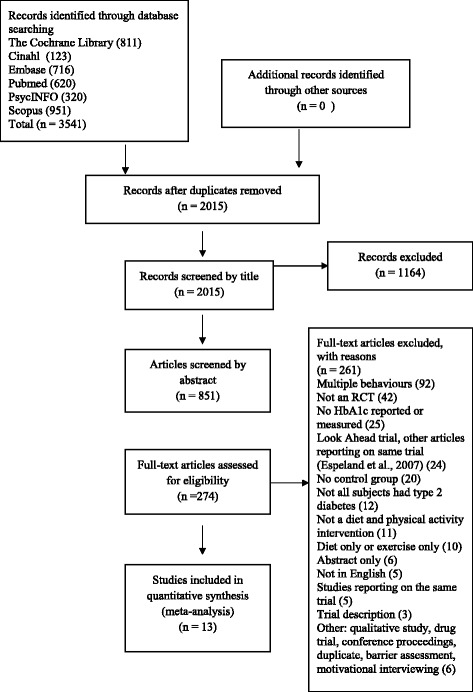
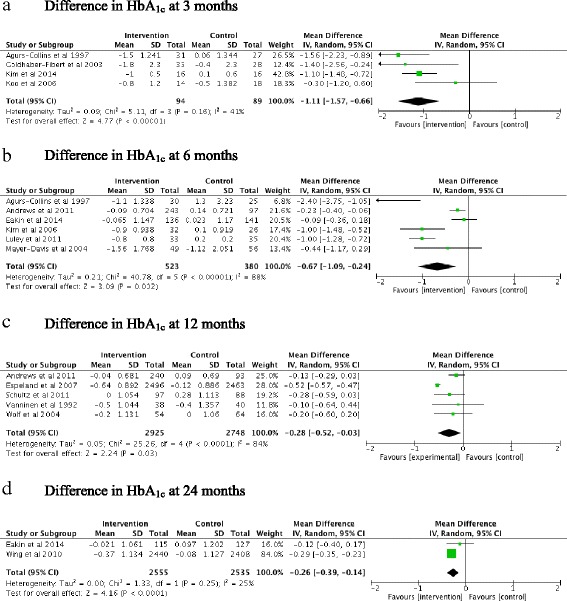
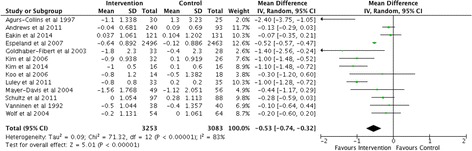
Changing diet and physical activity behaviour is one of the cornerstones of type 2 diabetes treatment, but changing behaviour is challenging . The objective of this study was to identify behaviour change techniques (BCTs) and intervention features of dietary and physical activity interventions for patients with type 2 diabetes that are associated with changes in HbA 1c and body weight. We performed a systematic review of papers published between 1975–2015 describing randomised controlled trials (RCTs) that focused exclusively on both diet and physical activity. The constituent BCTs, intervention features and methodological rigour of these interventions were evaluated. Changes in HbA 1c and body weight were meta-analysed and examined in relation to use of BCTs. Thirteen RCTs were identified. Meta-analyses revealed reductions in HbA 1c at 3, 6, 12 and 24 months of -1.11 % (12 mmol/mol), -0.67 % (7 mmol/mol), -0.28 % (3 mmol/mol) and -0.26 % (2 mmol/mol) with an overall reduction of -0.53 % (6 mmol/mol [95 % CI -0.74 to -0.32, P < 0.00001]) in intervention groups compared to control groups. Meta-analyses also showed a reduction in body weight of -2.7 kg, -3.64 kg, -3.77 kg and -3.18 kg at 3, 6, 12 and 24 months, overall reduction was -3.73 kg (95 % CI -6.09 to -1.37 kg, P = 0.002). Four of 46 BCTs identified were associated with >0.3 % reduction in HbA 1c : ‘instruction on how to perform a behaviour’, ‘behavioural practice/rehearsal’, ‘demonstration of the behaviour’ and ‘action planning’, as were intervention features ‘supervised physical activity’, ‘group sessions’, ‘contact with an exercise physiologist’, ‘contact with an exercise physiologist and a dietitian’, ‘baseline HbA 1c >8 %’ and interventions of greater frequency and intensity. Diet and physical activity interventions achieved clinically significant reductions in HbA 1c at three and six months, but not at 12 and 24 months. Specific BCTs and intervention features identified may inform more effective structured lifestyle intervention treatment strategies for type 2 diabetes.
Overview
The claims and statistics of this paper haven’t been checked yet.
Free: it reads the open-access text and checks the first 5 claims that cite a source we can check. Create a free account to check every claim.
Integrity signals
Registry
Cites
Statistics
Figures
Verification
Claims the paper makes
The claims and statistics of this paper haven’t been checked yet.
Free: it reads the open-access text and checks the first 5 claims that cite a source we can check. Create a free account to check every claim.
Claims other papers make about this one
Each is checked against this paper’s own text: does it say what the citing paper says it does?
The source backs part of the claim, not all of it — or backs it for a different population, condition or comparison.
In the citing paper
“Interventions shown to increase PA level or reduce sedentary behaviour include behaviour theory-based interventions, such as goal-setting, re-evaluation of goals, self-monitoring, and feedback.112,113”
From 2023 ESC guidelines for the management of cardiovascular disease in patients with diabetes. (2023) · cites this paper as [112]
Experimental — accuracy not yet measuredThe source backs part of the claim, not all of it — or backs it for a different population, condition or comparison.
In the citing paper
“Interventions utilizing these methods have shown to be effective at increasing physical activity participation in the short term [12,14]”
From Consumer-based wearable activity trackers increase physical activity participation: systematic review and meta-analysis (2019) · cites this paper as [12]
Experimental — accuracy not yet measuredThe source backs part of the claim, not all of it — or backs it for a different population, condition or comparison.
In the citing paper
“The use of structured lifestyle interventions is reported to be effective in increasing physical activity participation and reducing the progression of chronic diseases [10-12].”
From Consumer-based wearable activity trackers increase physical activity participation: systematic review and meta-analysis (2019) · cites this paper as [12]
Experimental — accuracy not yet measured
Self-check
Percentages, sums and reported differences re-computed from the paper’s own numbers.
The self-check needs the paper’s full text.
Citations
Cites
Preferred Reporting Items for Systematic Reviews and Meta-Analyses: the PRISMA statement
Moher, D., Liberati, A., Tetzlaff, J., Altman, D. G., & for the PRISMA Group (2009) · BMJ · doi:10.1136/bmj.b2535 · Cited by 83,823
Preferred Reporting Items for Systematic Reviews and Meta-Analyses: The PRISMA Statement
Moher, D., Liberati, A., Tetzlaff, J., Altman, D. G., & The PRISMA Group (2009) · PLoS Medicine · doi:10.1371/journal.pmed.1000097 · Cited by 64,042 · cited 1×
“A PRISMA (Preferred Reporting Items for Systematic Reviews and Meta-Analyses) checklist was created and PRISMA review guidelines were followed [22] (Additional file 1: 1.”
MethodPreferred reporting items for systematic reviews and meta-analyses: the PRISMA Statement.
(2009) · PubMed Central · Cited by 44,859
Self-efficacy: Toward a unifying theory of behavioral change
Bandura, A. (1977) · Psychological Review · doi:10.1037/0033-295x.84.2.191 · Cited by 43,925 · cited 1×
“Success of these three BCTs might be explained by their strong theoretical foundations [60, 61].”
BackgroundThe Cochrane Collaboration's tool for assessing risk of bias in randomised trials
Higgins, J. P. T., Altman, D. G., Gotzsche, P. C., Juni, P., Moher, D., Oxman, A. D., Savovic, J., Schulz, K. F., Weeks, L., Sterne, J. A. C., et al. (2011) · BMJ · doi:10.1136/bmj.d5928 · Cited by 33,817
Dermyshi, E., Wang, Y., Yan, C., Hong, W., Qiu, G., Gong, X., & Zhang, T. (2017) · Neonatology · doi:10.1159/000454668 · Cited by 24,451
(1985) · Medical Entomology and Zoology · Cited by 19,180
Wang, G., Ma, R., Qiao, G., Wada, K., Aizawa, Y., & Satoh, T. (2015) · Integrative Medicine International · doi:10.1159/000368408 · Cited by 18,657
Wild, S., Roglic, G., Green, A., Sicree, R., & King, H. (2004) · Diabetes Care · doi:10.2337/diacare.27.5.1047 · Cited by 15,297 · cited 1×
“In 2015, there were 415 million people with diabetes worldwide (91 % of which were type 2 diabetes) with figures expected to rise to 642 million by the year 2040, [1] which easily surpasses earlier predictions of 366 million by 2030 [2].”
BackgroundLozano, R., Naghavi, M., Foreman, K., Lim, S., Shibuya, K., Aboyans, V., Abraham, J., Adair, T., Aggarwal, R., Ahn, S. Y., et al. (2012) · The Lancet · doi:10.1016/s0140-6736(12)61728-0 · Cited by 14,070
Research works printed but not linked: 1
- Higgins J.P.T. DJJ: Cochrane Handbook for Systematic Reviews of Interventions Version 5.1.0 (updated March 2011). Chapter 7: Selecting studies and collecting data. The Cochrane Collaboration, 2011. Available from http://handbook.cochrane.org/. 2011, Chapter 7: Selecting studies and collecting data.
Cited by
Items 201–300 of 342
Dineen, T. E., Locke, S., Cranston, K. D., Beauchamp, M. R., & Jung, M. E. (2021) · Psychology of sport and exercise · doi:10.1016/j.psychsport.2021.102001 · Cited by 6
Rigby, R. R., MITCHELL, L. J., Hamilton, K., Ball, L., & Williams, L. T. (2022) · Journal of Nutrition Education and Behavior · doi:10.1016/j.jneb.2022.02.009 · Cited by 7
Shah, V., Geller, G., Xu, D., Taylor, L. C., Griffin, S. J., & Usher‐Smith, J. A. (2023) · Cancer Causes & Control · doi:10.1007/s10552-023-01773-0 · Cited by 6
Gentsch, A. T., Reed, M. K., Cunningham, A., Chang, A. M., Kahn, S., Kovalsky, D., Doty, A. M. B., Mills, G. D., Hollander, J. E., & Rising, K. L. (2024) · BMC Endocrine Disorders · doi:10.1186/s12902-023-01529-6 · Cited by 5
“…of randomized controlled trials conducted from 1975 to 2015 that looked at interventions used to change diet and physical behaviors of people with type 2 diabetes concluded clinically significant changes could be attained for up to 6 months, but they were not sustained at 12 and 24 months [9].”
BackgroundWu, Y., Datta, S., Little, B. B., & Kong, M. (2020) · Endocrinology Diabetes & Metabolism · doi:10.1002/edm2.203 · Cited by 3
İşleyen, E. K., Özdemir, İ. N., & Yoldemır, Ş. A. (2025) · Irish Journal of Medical Science (1971 -) · doi:10.1007/s11845-025-03916-5 · Cited by 4
“Behavioral interventions to improve self-management of diabetes have shown improvements in diabetes control by targeting eating habits, physical activity, and medication taking [10].”
Clark, J. E., Sirois, E., & Wiszniak, M. F. (2023) · Sport Sciences for Health · doi:10.1007/s11332-023-01042-2 · Cited by 3
The Iceberg Model of Change: A taxonomy differentiating approaches to change
Mahringer, C. A., Schmiedle, L., Albicker, L., & Mayer, S. (2025) · Heliyon · doi:10.1016/j.heliyon.2025.e41952 · Cited by 5
Andargeery, S. Y., & Elrafey, D. S. (2025) · Scientific Reports · doi:10.1038/s41598-024-80982-2 · Cited by 9
“Our results are consistent with earlier studies showing that technology-based treatments are more successful than conventional advice at encouraging adherence to healthy lifestyle choices 46,50 .”
Herrera, M. C. A., Subhan, F. B., Sakowsky, C., Watkins, K., & Chan, C. B. (2020) · Healthcare · doi:10.3390/healthcare8020153 · Cited by 4
“Furthermore, the qualitative analysis provided useful insight to participants’ barriers, which were consistent with previous frameworks [41], echoing the vast evidence supporting the complexity of chronic diseases [42].”
ResultSuardi, S., Razak, A., Amiruddin, R., Ishak, H., Salmah, U., & Maria, I. L. (2021) · Open Access Macedonian Journal of Medical Sciences · doi:10.3889/oamjms.2021.6033 · Cited by 11
“In 2015, there were 415 million people with diabetes worldwide (91% of whom were type 2 diabetes) with a figure expected to increase to 642 million by 2040 [5].”
BackgroundRodrigues, G. D. F., Vieira, D. D. R., Ruschel, P. P., Seelig, C., Coronel, C. C., & Barbiero, S. M. (2022) · International Journal of Cardiovascular Sciences · doi:10.36660/ijcs.20200295 · Cited by 7
Millstein, R. A., Golden, J., Healy, B. C., Amonoo, H. L., Harnedy, L. E., Carrillo, A., Celano, C. M., & Huffman, J. C. (2022) · Health Psychology and Behavioral Medicine · doi:10.1080/21642850.2022.2104724 · Cited by 3
“Also, successful T2D physical activity interventions tend to include multiple elements from the behavior change taxonomy, such as behavioral rehearsal, demonstrations of different activities, and instructions on how to do different activities (Cradock et al., 2017).”
BackgroundResultInfluentialRouyard, T., Endo, M., Nakamura, R., Moriyama, M., Stanyon, M., Kanke, S., Nakamura, K., Chen, C., Hara, Y., Ii, M., et al. (2023) · Trials · doi:10.1186/s13063-023-07345-6 · Cited by 3
“9 out of the 13 RCTs included in a recent systematic review [27]), there is a need to generate more evidence from non-Western populations and settings to identify which techniques work best in different contexts.”
BackgroundGannamani, R., Forte, J. C., Folkertsma, P., Hermans, S., Kumaraswamy, S., van Dam, S., Chavannes, N. H., van Os, H. J. A., Pijl, H., & Wolffenbuttel, B. H. R. (2024) · JMIR Formative Research · doi:10.2196/38891 · Cited by 3
“In fact, the Dutch National Institute for Public Health and the Environment (Rijksinstituut voor Volksgezondheid en Milieu [RIVM]) defines several important, evidence-based factors for the successful deployment of a (combined) lifestyle intervention program [59].”
BackgroundKlejc, K., Cruz‐Almeida, Y., & Sheffler, J. (2024) · Journal of Pain Research · doi:10.2147/jpr.s451236 · Cited by 5
Godevithana, J., Wijesinghe, C. J., & Wijesinghe, M. S. D. (2024) · BMC Digital Health · doi:10.1186/s44247-024-00109-5 · Cited by 3
Regeer, H., Huisman, S. D., van Empelen, P., Flim, J., & Bilo, H. J. G. (2020) · Lifestyle Medicine · doi:10.1002/lim2.10 · Cited by 5
Hale, L. A., Higgs, C., Keen, D., & Smith, C. (2021) · Frontiers in Rehabilitation Sciences · doi:10.3389/fresc.2021.692311 · Cited by 5
“Additionally, while the improvement of HbA1c using selfmanagement approaches, including exercise, was shown at 6 months post-intervention, by the 12- and 24-month follow-up, these improvements had reduced (4, 11).”
BackgroundMethodHoekstra, F., Ginis, K. A. M., Collins, D., Dinwoodie, M., Ma, J. K., Gaudet, S., Rakiecki, D., & Gainforth, H. L. (2022) · Psychology of sport and exercise · doi:10.1016/j.psychsport.2022.102350 · Cited by 6
Self-citationTrasporte ativo: que ideia é esta?
SILVA, I. O., & BILLERBECK, N. C. (2020) · Navegando Publicações eBooks · doi:10.29388/978-65-86678-46-8-0-f.15-30 · Cited by 3
Delfan, M., Gharedaghi, M., Zeynali, F., Hage, R. E., Hackney, A. C., Ceylan, H. İ., Saeidi, A., Laher, I., Bragazzi, N. L., & Zouhal, H. (2025) · Nutrients · doi:10.3390/nu17172735 · Cited by 2
“Combining aerobic and resistance exercises may have a synergistic effect on T2DM and obesity [22,23].”
EndoCompass project: research roadmap for diabetes, obesity, and metabolism
Mathieu, C., Meireles, M., Pagotto, U., Wabitsch, M., Banerjee, I., Bartolomé, A., Battelino, T., Beck, J., Chiarelli, F., León, D. D. D., et al. (2025) · European Journal of Endocrinology · doi:10.1093/ejendo/lvaf065 · Cited by 5
Siette, J., de Vera-Pinpin, M. J. R., Alsager, S. Y., Dodds, L., Naismith, S. L., & Armitage, C. J. (2025) · Scientific Reports · doi:10.1038/s41598-025-24009-4 · Cited by 5
Suardi, S. (2021) · International Journal of Nursing and Health Services (IJNHS) · doi:10.35654/ijnhs.v4i4.506 · Cited by 3
“During 2015, 415 million adults had type 2 diabetes mellitus (T2DM), which is predicted to increase to 642 million by 2040 (6).”
BackgroundVelasco, E. R., Demjén, Z., & Skinner, T. C. (2024) · Digital Health · doi:10.1177/20552076231225889 · Cited by 5
Nabuuma, D., Ekesa, B. N., Faber, M., & Mbhenyane, X. G. (2024) · Food and Nutrition Bulletin · doi:10.1177/03795721241240854 · Cited by 5
Motivational Interviewing With Pender’s Health Promotions Model: Diabetics Self-Management Behavior
Uludağ, E., & Kaşıkçı, M. (2024) · Nursing Science Quarterly · doi:10.1177/08943184241247011 · Cited by 4
“In addition, behavioral interventions, such as cognitive behavioral therapy and motivational interviewing, have been shown to instigate improvements in the diabetes control witnessed (Cradock et al., 2017).”
BackgroundEvans, T. S., Dhir, P., Matu, J., Radley, D., Hill, A. J., Jones, A., Newson, L., Freeman, C., Kolokotroni, K. Z., Fozard, T. E., et al. (2025) · Obesity Reviews · doi:10.1111/obr.13896 · Cited by 2
Yoon, S., Lau, R., Kwan, Y. H., Liu, H., Sahrin, R., Phang, J. K., Zhang, Y., Graves, N., & Low, L. L. (2025) · Digital Health · doi:10.1177/20552076251322654 · Cited by 8
“5,6 The mounting social and economic burden associated with poorly controlled T2DM underscores the urgent need for early intervention.”
Tsai, F., Lin, C., Lin, H., & Yi, L. I. U. (2017) · Journal of Nursing Research · doi:10.1097/jnr.0000000000000225 · Cited by 3
Evidence Gap and Knowledge Map of Physical Activity Research in Diabetes in Iran: A Scoping Review
Sanjari, M., Esmaeili, S., Yarmohammadi, H., Atlasi, R., Aalaa, M., Larijani, B. A., & Nasli‐Esfahani, E. (2021) · Intern J Endocrinol Metab · doi:10.5812/ijem.110636 · Cited by 2
Montilva-Monsalve, J., Dimantas, B., Perski, O., & Gutman, L. M. (2023) · JMIR Diabetes · doi:10.2196/49097 · Cited by 7
“The results of those trials suggest that the presence of these BCTs is associated with reductions in hemoglobin A 1c , although these results were not statistically significant [32].”
ResultInfluentialSilva, C. C., Presseau, J., Dinsmore, J. G., van Allen, Z., & Marques, M. M. (2022) · doi:10.31234/osf.io/7dwrv · Cited by 2
Silva, C. C., Presseau, J., van Allen, Z., Schenk, P. M., Moreto, M., Dinsmore, J. G., & Marques, M. M. (2023) · doi:10.31234/osf.io/ch2yx · Cited by 2
Silva, C. C., Presseau, J., van Allen, Z., Dinsmore, J. G., Schenk, P. M., Moreto, M., & Marques, M. M. (2023) · doi:10.31234/osf.io/yfmjx · Cited by 2
Horta, C., Quaresma, G., & Lucas, P. R. M. B. (2022) · New Trends in Qualitative Research · doi:10.36367/ntqr.13.2022.e678 · Cited by 2
Özkan, İ., Taylan, S., & ÇİÇEK, S. N. (2022) · Izmir Democracy University Health Sciences Journal · doi:10.52538/iduhes.1005967 · Cited by 2
Ramírez-Pérez, J. I., Lugo-González, I. V., Erazo, L. R., & Cabrera-Castañón, R. (2024) · Revista Mexicana de Trastornos Alimentarios/Mexican Journal of Eating Disorders · doi:10.22201/fesi.20071523e.2024.1.780 · Cited by 2
“…a excepción de las últimas dos sesiones, para que estas sean coordinadas a dos semanas de distancia y así evaluar la permanencia del cambio a un plazo mayor; no obstante, también sería ideal realizar seguimientos a seis o 12 meses, como se ha realizado en estudios previos (Cradock et al, 2017).”
Plotnikoff, R. C., Murphy, M., Wilczynska, M., Courneya, K. S., Brown, W. J., Sigal, R. J., & Lubans, D. R. (2024) · Journal of Physical Activity and Health · doi:10.1123/jpah.2024-0195 · Cited by 1
The development of a CBT-informed approach to supporting type 2 diabetes self-management
Visagie, E., Deacon, E., & Kok, R. (2025) · Frontiers in Clinical Diabetes and Healthcare · doi:10.3389/fcdhc.2025.1421678 · Cited by 1
Godevithana, J., Wijesinghe, C. J., & Wijesinghe, M. S. D. (2025) · JMIR Research Protocols · doi:10.2196/70293 · Cited by 1
“Among them, goal setting and self-monitoring have been identified as effective BCTs in different contexts of behavior change interventions [17,19,20].”
Wen, J., Zhou, L., Hu, H., Duan, D., Zou, W.-X., Zhou, Y., Lin, X., Wu, Y., Zhao, Q., Zhao, Q., et al. (2025) · Hypertension in Pregnancy · doi:10.1080/10641955.2025.2552693 · Cited by 4
“Cradock et al. have previously reviewed those four important factors, including “instruction on how to perform a behavior,” “action planning,” “goal setting,” and “feedback and monitoring,” which were fundamental for the success of behavior modification techniques (17).”
Alkayri, A. H. A., Alresheedi, A. K. S., Almutairi, D. H. M., Alrasheedi, N. Z. A., Alquayri, N. K. H., Alshammari Rabiah Ateeq, S., Alenazi, F. A. R., Al-Anazi, S., Alrowily, E. A., Alshammry, H. W., et al. (2024) · International Journal of Computational and Experimental Science and Engineering · doi:10.22399/ijcesen.4028 · Cited by 5
“…complex paperwork for programs like Social Security Disability Insurance (SSDI) or Medicaid, advocate on their behalf with insurance companies to appeal denials of coverage, and identify pharmaceutical manufacturer assistance programs that can provide costly medications at low or no cost [32].”
Heuchan, G. N., Buck, C., Conway, R. E., Dicken, S. J., Brown, A. C., Jassil, F. C., Makaronidis, J., van Tulleken, C., Wheeler‐Kingshott, C. A. M. G., Batterham, R. L., et al. (2025) · BMJ Open · doi:10.1136/bmjopen-2025-107435 · Cited by 4
Hong, Q., Zhang, X., Guo, M., Wen, Z., Tang, Q., Zhou, J., Song, P., Wei, X., & Zhang, N. (2025) · Health Psychology Review · doi:10.1080/17437199.2025.2595126 · Cited by 3
“…meta-analyses explored whether various study characteristics such as intervention duration (Cradock et al., 2017; Kebede et al., 2017), the theory used (El-Gayar et al., 2021; Webb et al., 2010), and messages provider type (Cradock et al., 2017), moderated the e ffi ciency in diabetes management.”
Okon, I. A., Aytar, E. C., Orie, N. N., Oka, V. O., Owu, D. U., Amadi, N. G., Bassey, E. K., Onuoha, O. G., Jacob, A. A., Ujong, G. O., et al. (2025) · European journal of medical research · doi:10.1186/s40001-025-03671-4 · Cited by 1
Avila, G. G., Guzmán, M. O., & Gálvez, A. L. B. (2024) · Psicología y Salud · doi:10.25009/pys.v35i1.2949 · Cited by 1
“Este hallazgo es similar a lo repor-tado en otros estudios, que indican que los pro-gramas basados en las técnicas de modificación conductual benefician las prácticas de autocuida-do (Cradock et al ., 2017; Pan et al ., 2020).”
Effects of community-based interventions on physical activity levels: systematic review
Guerra, P. H., Ribeiro, E. H. C., de Lima, T. R., Andrade, D. R., & Loch, M. R. (2020) · Revista Brasileira de Atividade Física & Saúde · doi:10.12820/rbafs.25e0130 · Cited by 1
Haigh, L., McPherson, S., Mathers, J. C., & Anstee, Q. M. (2021) · BMJ Open · doi:10.1136/bmjopen-2020-045922 · Cited by 1
Zakaria, N., Mohamed, N. F., Tajuddin, N. A. A., & Sari, N. A. M. (2021) · International Journal of Academic Research in Business and Social Sciences · doi:10.6007/ijarbss/v11-i7/10525 · Cited by 2
Physical Activity and Blood Sugar Levels in People with Diabetes Mellitus: Evidence from Indonesia
Zainaro, M. A., Ridwan, R., Tusianah, R., Sudjarwo, S., Isnainy, U. C. A. S., Maydiantoro, A., Kesuma, T. A. R. P., Hariri, H., & Aprina, A. (2022) · International Journal of Biology and Biomedical Engineering · doi:10.46300/91011.2022.16.19 · Cited by 1
Okur, H., Karaman, S. T., & Basat, O. (2022) · Ankara Medical Journal · doi:10.5505/amj.2022.41713 · Cited by 1
Masotti, S., Menegatti, E., Zerbini, V., Raisi, A., Piva, T., Morelli, M., Lordi, R., Grazzi, G., Mazzoni, G., & Mandini, S. (2022) · Journal of Aging and Physical Activity · doi:10.1123/japa.2021-0491 · Cited by 2
Goyal, S. (2017) · TSpace (University of Toronto) · Cited by 2
Yu, H., Wu, Y., Gordon, S. P., Cheng, J., Chen, P., Wang, Y., & Yu, M. (2019) · Research Square · doi:10.21203/rs.2.12847/v1 · Cited by 1
“4 diseases, diabetes, colon and breast cancer, hypertension, coronary heart disease, osteoarthritis[14-16].”
BackgroundVelasco, E. R., Pedersen, H. S., & Skinner, T. C. (2022) · doi:10.2196/preprints.40058 · Cited by 1
LIU, Y., Jiang, J., You, W., Gong, D., Ma, X., Wu, M., & Li, F. (2022) · Research Square · doi:10.21203/rs.3.rs-1867273/v1 · Cited by 1
Hoekstra, F., Ginis, K. A. M., Collins, D., Dinwoodie, M., Ma, J. K., Gaudet, S., Rakiecki, D., & Gainforth, H. L. (2022) · doi:10.31219/osf.io/jcenh · Cited by 1
Self-citation[François Lepage (1905--1978)].
Sureau, C. (1978) · PubMed
Mosa, R. (2017) · The University of Queensland · doi:10.14264/uql.2017.998 · Cited by 1
The Development of a Smart Personalized Evidence Based Medicine Diabetes Risk Factor Calculator
Wang, L., He, D., Ni, X., Zou, R., Yuan, X., Shang, Y., Hu, X., Geng, X., Jiang, K., Dong, J., et al. (2018) · Lecture notes in computer science · doi:10.1007/978-3-030-03649-2_29
Automonitorização, qualidade de vida e adesão ao tratamento em Diabetes Tipo 2
Ramos, L., Ferreira, E. A. P., & Gomes, D. L. (2019) · Pará Research Medical Journal · doi:10.4322/prmj.2019.021
Barr, M. L. (2018) · The Research Repository @ WVU (West Virginia University) · doi:10.33915/etd.5158
Community-based exercise rehabilitation in a diverse chronic disease population
Skelly, F. (2021) · Dublin City University Open Access Institutional Repository (Dublin City University) · Cited by 6
Leutelt, T., Mahabadi, B., Reiff, J., & Braus, D. F. (2021) · Der Diabetologe · doi:10.1007/s11428-021-00805-0
Prasad, S., Hng, T., MABERLY, G. F., Wong, G., & Meyerowitz‐Katz, G. (2020) · Research Square · doi:10.21203/rs.3.rs-43607/v1
“Stage 1 13,041 (64) 2,577 (13) 1,777 (9) 953 (5) 972 (5) 685 (3) 215 (1) 20,220 (100) Stage 2 6,810 (68) 767 (8) 923 (9) 602 (6) 392 (4) 326 (3) 144 (2) 9,964 (100) Stage 3A 1,752 (71) 137 (6) 204 (8) 161 (7) 73 (3) 104 (4) 36 (1) 2,467 (100) Stage 3 1,160 (71) 99 (6) 131 (8) 94 (6) 52 (3) 69 (4) 22 (2) 1,627 (100) St…”
BackgroundHerrera, M. C. A. (2021) · ERA: Education and Research Archive (University of Alberta) · doi:10.7939/r3-m8dy-7676
Brauer, P. M., Royall, D., Li, A., Rodrigues, A., Green, J., Macklin, S., Craig, A., Chan, M., Pasanen, J., Brunelle, L., et al. (2021) · Research Square · doi:10.21203/rs.3.rs-1051233/v1
Nana, M., Moore, S. L., Loganathan, R., Williams, V., Rahman, M., Jennings, E., Dixon, A., & Bondugulapati, L. N. R. (2021) · British Journal of Diabetes · doi:10.15277/bjd.2021.316 · Cited by 1
Dyadic Associations between Body Mass Index, Stress and Type 2 Diabetes Complications
Fardfini, K. (2021) · Carleton University's Institutional Repository (MacOdrum Library, Carleton University) · doi:10.22215/etd/2021-14797
Contribution of an Intelligent Virtual Assistant to Healthy Ageing in Adults With Type 2 Diabetes
Guerreiro, M. P., Félix, I. B., Balsa, J., Carmo, M. B., Henriques, M. A., Cavaco, A. M. D. N., & Cláudio, A. P. (2022) · IGI Global eBooks · doi:10.4018/978-1-6684-5295-0.ch038
Treatment Interventions of Type 2 Diabetes: A Systematic Review
Harwood, K., & Frye, J. (2022) · Open Journal of Preventive Medicine · doi:10.4236/ojpm.2022.126009
Kawamura, K., Maeshima, S., Osawa, A., & Arai, H. (2022) · IntechOpen eBooks · doi:10.5772/intechopen.106787
Franssen, W. M. A. (2022) · Research Publications (Maastricht University) · doi:10.26481/dis.20221121wf · Cited by 1
Lee, D., Lee, H., Lee, S. E., Lee, M., & Khang, A. R. (2023) · Journal of Korean Biological Nursing Science · doi:10.7586/jkbns.23.337
Psychologische Grundlagen und Erkenntnisse aus der Wirkungsforschung
Schäfer, A., Schaffner, D., Berge, K. V. D., Studer, N., van der Heiden, N., & Zimmermann, A. (2023) · Springer eBooks · doi:10.1007/978-3-662-65920-5_2
Droske, C. A., Pearson, T., Velkovich, S. J., Cohn, H., Kanoon, J. M., Baig, A. A., & Press, V. G. (2023) · Current Diabetes Reports · doi:10.1007/s11892-023-01514-2 · Cited by 1
Corsi, M. L. S., de Blasio, H. M., Nascimento, R. F. V., Baltazar, J., do Carmo, A. P. P., & Chehter, E. Z. (2024) · Seven Editora eBooks · doi:10.56238/medfocoexplconheci-028
Acosta-Cárdenas, J. M., Velez, K. C., Guillén-Guillén, M., Cortiñas, K. G., Játiva-Cando, K., Morales-Bazurto, M., Párraga-Sanclemente, J. C., & Saquicela-Novillo, D. (2023) · Alad · doi:10.24875/alad.22000031 · Cited by 1
เมฆปรีดาวงศ์, อ. (2017) · Chula Digiverse · doi:10.58837/chula.the.2017.1587
Velasco, E. R., Laursen, D., & Skinner, T. C. (2023) · Research Square · doi:10.21203/rs.3.rs-3648815/v1
Innovación docente en la Universidad de León
López Aguado, M., Fernández Álvarez, M., & Ponce Rodríguez, A. (2024) · doi:10.18002/inndocule · Cited by 1
La Salud en el Camino de Santiago. Aprendizaje-Servicio
Rodríguez, A. F. L., Prieto, M. V., García, M. M. R., ], L. Á. D. B. [., Alba-Pérez, E., Trevisson, B., Huerga, V. S., García, Á. F., Ramos, N. A., & Chicharro‐Luna, E. (2024) · doi:10.18002/inndocule.40
Yang, Y.-H., Lin, K., Chang‐Lee, S., & Wang, J. (2024) · Primary care diabetes · doi:10.1016/j.pcd.2024.03.003
Aittasalo, M., Tokola, K., Vähä‐Ypyä, H., Husu, P., Mänttäri, A., Vasankari, T. J., & Sievänen, H. T. (2024) · doi:10.2196/preprints.60251
The NHS Low‐Calorie Diet Digital Programme: Fidelity of behaviour change technique delivery
Radley, D., Evans, T. S., Marwood, J., Keyworth, C., Homer, C. V., & Ells, L. J. (2024) · Diabetic Medicine · doi:10.1111/dme.15350
“25 Some evidence also suggested that interventions containing a larger number of BCTs may be more effective.”
Legitimacy of Behavioral Public Policy and Trust in Public Institutions
Belardinelli, P. (2024) · Executive Politics and Governance · doi:10.1007/978-3-031-58531-9_5
The Role of Exercise in the CVD Prevention
Lewek, J., Bytyçi, I., & Banach, M. (2024) · Advances in biochemistry in health and disease · doi:10.1007/978-3-031-62806-1_18
A Proposed Cost-Benefit Analysis of Adult EFNEP Utilizing Biomarkers of Chronic Disease Risk
Leschewski, A., Pierce, S. J., Aragón, M. C., Baker, S., Udahogora, M., Pybus, K., Duffy, N. O., Roe, A. J., & Sankavaram, K. (2024) · Journal of Nutrition Education and Behavior · doi:10.1016/j.jneb.2024.07.008 · Cited by 1
Psychological Foundations and Insights from Research on Effectiveness
Schäfer, A., Schaffner, D., Berge, K. V. D., Studer, N., van der Heiden, N., & Zimmermann, A. (2024) · Springer eBooks · doi:10.1007/978-3-662-69460-2_2
Scoping Review of Community-Based Interventions to Improve Diabetes Control in Malaysian Adults
Rani, H., Aziz, A. F. A., Rasheed, Z. B. M., Mohamad, M., Gan, A., Pow, K. J., Khor, S. K., & Dom, T. N. M. (2025) · IIUM Medical Journal Malaysia · doi:10.31436/imjm.v24i01.2577 · Cited by 1
“31 Two behavioural aspects that many T2DM patients struggle with are the eating disorder and inactivity, which are related to worse glycaemic control and a higher risk for various complications.”
Wen, A., Wu, K., & Ji, M. (2025) · Journal of Clinical Nursing · doi:10.1111/jocn.17782 · Cited by 2
Steinmo, S., Falvey, L., Ashton, C., Chow, L., Patel, D., Kwan, J., McGowan, B. M., & Brown, A. C. (2025) · Eating Behaviors · doi:10.1016/j.eatbeh.2025.102007
Asher, K. E., Somerville, M., Ball, L., Hickson, M., Dombrowski, S. U., Luke, A., & Doucet, S. A. (2025) · BMJ Open · doi:10.1136/bmjopen-2024-090877
Zhao, Q., Cooke, A., & Dowding, D. (2025) · doi:10.2196/preprints.85199
Turner, L. V., Chen, C., Gao, P., Beck, S. E., Johnson, M. L., & Riddell, M. C. (2025) · Diabetes Technology and Obesity Medicine · doi:10.1177/29986702251393163
“26 Additionally, the observational design does not allow for comparisons across different activity timing strategies (e.g., pre-vs. postmeal exercise alone) or time-of-day effects and we could not randomize the order of visits, since all the subjects were CGM-and exercise-naïve which pre-cluded…”
moon, H., & Hwang, S.-K. (2025) · Korean Journal of Adult Nursing · doi:10.7475/kjan.2025.0530
“Although this review did not directly assess the relationship between specific BCTs and intervention effectiveness, prior evidence suggests that interventions employing a greater variety of BCTs tend to achieve stronger outcomes [29].”
EndoCompass Project: Research Roadmap for Diabetes, Obesity, and Metabolism
Mathieu, C., Meireles, M., Pagotto, U., Wabitsch, M., Banerjee, I., Bartolomé, A., Battelino, T., Beck, J., Chiarelli, F., León, D. D. D., et al. (2025) · Hormone Research in Paediatrics · doi:10.1159/000549194 · Cited by 1
“Pioneer lifestyle intervention trials have included the Look AHEAD study [91] and the Diabetes Prevention Program [92], among others [93, 94].”
Metadata
- Authors
- Cradock, K. A., ÓLaighin, G., Finucane, F. M., Gainforth, H. L., Quinlan, L. R., & Ginis, K. A. M.
- Affiliations
- Ollscoil na Gaillimhe – University of Galway (IE)
- University of British Columbia (CA)
- Corresponding author
- Quinlan, Leo R.
- ORCID
- Venue
- International Journal of Behavioral Nutrition and Physical Activity
- Published
- 2017-02-08
- Volume
- 14
- Issue
- 1
- Pages
- 18-18
- ISSN
- 1479-5868 (ISSN-L)
- PMC
- PMC5299734
- OpenAlex
- W2587248746
- Semantic Scholar
- 56a78b05da238ed510df8e467dd716f2352c9f50
- Cited by
- 343
- References
- 96
- Citations by year
- 2026: 12 · 2025: 31 · 2024: 46 · 2023: 38 · 2022: 52 · 2021: 59 · 2020: 38 · 2019: 29 · 2018: 29 · 2017: 8
- FWCI
- 3.32
- Type
- journal article
- Language
- en
- Open access
- gold
- doi.org
- Licence
- cc-by
- Locations
- International Journal of Behavioral Nutrition and Physical Activity (publishedVersion, cc-by)
- PubMed Central (publishedVersion, cc-by)
- PubMed (publishedVersion)
- ARAN (University of Galway Research Repository) (Ollscoil na Gaillimhe – University of Galway) (acceptedVersion, cc-by-nc-nd)
- Arrow@dit (Dublin Institute of Technology) (acceptedVersion)
- Arrow@dit (Dublin Institute of Technology) (submittedVersion, cc-by-nc-nd)
- ARAN (University of Galway Research Repository) (Ollscoil na Gaillimhe – University of Galway) (submittedVersion, cc-by-nc-nd)
- cIRcle (University of British Columbia) (submittedVersion, cc-by)
- University of Galway Research Repository (submittedVersion, cc-by)
- Lenus, The Irish Health Repository (Dr Steevens Hospital Library) (submittedVersion)
- Funders
- Irish Research Council for Science, Engineering and Technology (IE) (GOIPG/2013/873)
- Topics
- Social Sciences › Psychology › Applied Psychology › Behavioral Health and Interventions
- Health Sciences › Medicine › Endocrinology, Diabetes and Metabolism › Diabetes Management and Education
- Health Sciences › Medicine › Public Health, Environmental and Occupational Health › Physical Activity and Health
- Keywords
- type 2 diabetes, behaviour change techniques, dietary intervention, physical activity interventions, HbA1c, weight loss, action planning, supervised exercise, exercise physiologists, dietitians, intervention features, methodological quality, diabetes self-management education, lifestyle intervention
- MeSH terms
- Adult, Behavior Therapy, Diabetes Mellitus, Type 2, Diet, Feeding Behavior, Female, Glycated Hemoglobin, Humans, Life Style, Male, Exercise
About these checks
Registry, retraction, Cites and statistics results are computed, not judged, with one exception: a printed reference that no index lists is read once by a model before it counts as a citation error. Claims are extracted by a model and kept only when their quote appears verbatim in the text; each cited source is then checked, with a model’s help, for whether it says what the claim relies on. Those verdicts can be wrong — read the claim’s quote and the cited source before relying on one.
Statistics and arithmetic are recomputed, not judged.
Confidence bands are shown only for fields calibrated on our annotated test set. None is calibrated yet, so no band is shown.
What counts as a claim ›How we measure confidence ›How we check this ›
Are you an author, or do you see a problem with this page? Request a review
Data sources
Bibliographic data: Semantic Scholar, OpenAlex, Crossref.
Contains information from the Semantic Scholar Academic Graph Datasets, made available under the ODC Attribution License (ODC-BY 1.0).
Semantic Scholar’s data is described in: Kinney, R., et al. (2023). The Semantic Scholar Open Data Platform. arXiv:2301.10140.
