

Behaviour change techniques targeting both diet and physical activity in type 2 diabetes: A systematic review and meta-analysis
Open accessThe DOI matches its Crossref record; 94 of the 96 references it cites were found in a registry or an index.
Abstract
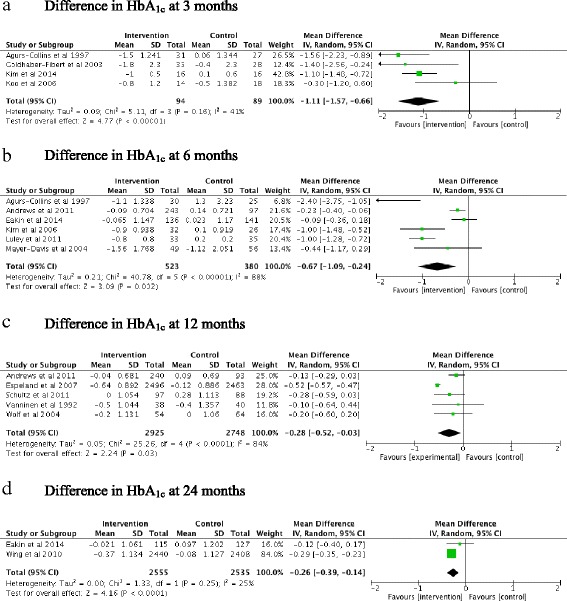
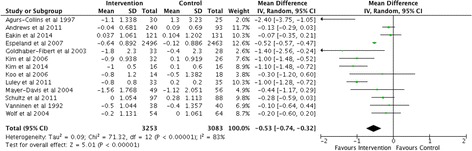
Changing diet and physical activity behaviour is one of the cornerstones of type 2 diabetes treatment, but changing behaviour is challenging . The objective of this study was to identify behaviour change techniques (BCTs) and intervention features of dietary and physical activity interventions for patients with type 2 diabetes that are associated with changes in HbA 1c and body weight. We performed a systematic review of papers published between 1975–2015 describing randomised controlled trials (RCTs) that focused exclusively on both diet and physical activity. The constituent BCTs, intervention features and methodological rigour of these interventions were evaluated. Changes in HbA 1c and body weight were meta-analysed and examined in relation to use of BCTs. Thirteen RCTs were identified. Meta-analyses revealed reductions in HbA 1c at 3, 6, 12 and 24 months of -1.11 % (12 mmol/mol), -0.67 % (7 mmol/mol), -0.28 % (3 mmol/mol) and -0.26 % (2 mmol/mol) with an overall reduction of -0.53 % (6 mmol/mol [95 % CI -0.74 to -0.32, P < 0.00001]) in intervention groups compared to control groups. Meta-analyses also showed a reduction in body weight of -2.7 kg, -3.64 kg, -3.77 kg and -3.18 kg at 3, 6, 12 and 24 months, overall reduction was -3.73 kg (95 % CI -6.09 to -1.37 kg, P = 0.002). Four of 46 BCTs identified were associated with >0.3 % reduction in HbA 1c : ‘instruction on how to perform a behaviour’, ‘behavioural practice/rehearsal’, ‘demonstration of the behaviour’ and ‘action planning’, as were intervention features ‘supervised physical activity’, ‘group sessions’, ‘contact with an exercise physiologist’, ‘contact with an exercise physiologist and a dietitian’, ‘baseline HbA 1c >8 %’ and interventions of greater frequency and intensity. Diet and physical activity interventions achieved clinically significant reductions in HbA 1c at three and six months, but not at 12 and 24 months. Specific BCTs and intervention features identified may inform more effective structured lifestyle intervention treatment strategies for type 2 diabetes.
Overview
The claims and statistics of this paper haven’t been checked yet.
Free: it reads the open-access text and checks the first 5 claims that cite a source we can check. Create a free account to check every claim.
Integrity signals
Registry
Cites
Statistics
Figures
Verification
Claims the paper makes
The claims and statistics of this paper haven’t been checked yet.
Free: it reads the open-access text and checks the first 5 claims that cite a source we can check. Create a free account to check every claim.
Claims other papers make about this one
Each is checked against this paper’s own text: does it say what the citing paper says it does?
The source backs part of the claim, not all of it — or backs it for a different population, condition or comparison.
In the citing paper
“Interventions shown to increase PA level or reduce sedentary behaviour include behaviour theory-based interventions, such as goal-setting, re-evaluation of goals, self-monitoring, and feedback.112,113”
From 2023 ESC guidelines for the management of cardiovascular disease in patients with diabetes. (2023) · cites this paper as [112]
Experimental — accuracy not yet measuredThe source backs part of the claim, not all of it — or backs it for a different population, condition or comparison.
In the citing paper
“Interventions utilizing these methods have shown to be effective at increasing physical activity participation in the short term [12,14]”
From Consumer-based wearable activity trackers increase physical activity participation: systematic review and meta-analysis (2019) · cites this paper as [12]
Experimental — accuracy not yet measuredThe source backs part of the claim, not all of it — or backs it for a different population, condition or comparison.
In the citing paper
“The use of structured lifestyle interventions is reported to be effective in increasing physical activity participation and reducing the progression of chronic diseases [10-12].”
From Consumer-based wearable activity trackers increase physical activity participation: systematic review and meta-analysis (2019) · cites this paper as [12]
Experimental — accuracy not yet measured
Self-check
Percentages, sums and reported differences re-computed from the paper’s own numbers.
The self-check needs the paper’s full text.
Citations
Cites
Preferred Reporting Items for Systematic Reviews and Meta-Analyses: the PRISMA statement
Moher, D., Liberati, A., Tetzlaff, J., Altman, D. G., & for the PRISMA Group (2009) · BMJ · doi:10.1136/bmj.b2535 · Cited by 83,823
Preferred Reporting Items for Systematic Reviews and Meta-Analyses: The PRISMA Statement
Moher, D., Liberati, A., Tetzlaff, J., Altman, D. G., & The PRISMA Group (2009) · PLoS Medicine · doi:10.1371/journal.pmed.1000097 · Cited by 64,042 · cited 1×
“A PRISMA (Preferred Reporting Items for Systematic Reviews and Meta-Analyses) checklist was created and PRISMA review guidelines were followed [22] (Additional file 1: 1.”
MethodPreferred reporting items for systematic reviews and meta-analyses: the PRISMA Statement.
(2009) · PubMed Central · Cited by 44,859
Self-efficacy: Toward a unifying theory of behavioral change
Bandura, A. (1977) · Psychological Review · doi:10.1037/0033-295x.84.2.191 · Cited by 43,925 · cited 1×
“Success of these three BCTs might be explained by their strong theoretical foundations [60, 61].”
BackgroundThe Cochrane Collaboration's tool for assessing risk of bias in randomised trials
Higgins, J. P. T., Altman, D. G., Gotzsche, P. C., Juni, P., Moher, D., Oxman, A. D., Savovic, J., Schulz, K. F., Weeks, L., Sterne, J. A. C., et al. (2011) · BMJ · doi:10.1136/bmj.d5928 · Cited by 33,817
Dermyshi, E., Wang, Y., Yan, C., Hong, W., Qiu, G., Gong, X., & Zhang, T. (2017) · Neonatology · doi:10.1159/000454668 · Cited by 24,451
(1985) · Medical Entomology and Zoology · Cited by 19,180
Wang, G., Ma, R., Qiao, G., Wada, K., Aizawa, Y., & Satoh, T. (2015) · Integrative Medicine International · doi:10.1159/000368408 · Cited by 18,657
Wild, S., Roglic, G., Green, A., Sicree, R., & King, H. (2004) · Diabetes Care · doi:10.2337/diacare.27.5.1047 · Cited by 15,297 · cited 1×
“In 2015, there were 415 million people with diabetes worldwide (91 % of which were type 2 diabetes) with figures expected to rise to 642 million by the year 2040, [1] which easily surpasses earlier predictions of 366 million by 2030 [2].”
BackgroundLozano, R., Naghavi, M., Foreman, K., Lim, S., Shibuya, K., Aboyans, V., Abraham, J., Adair, T., Aggarwal, R., Ahn, S. Y., et al. (2012) · The Lancet · doi:10.1016/s0140-6736(12)61728-0 · Cited by 14,070
Research works printed but not linked: 1
- Higgins J.P.T. DJJ: Cochrane Handbook for Systematic Reviews of Interventions Version 5.1.0 (updated March 2011). Chapter 7: Selecting studies and collecting data. The Cochrane Collaboration, 2011. Available from http://handbook.cochrane.org/. 2011, Chapter 7: Selecting studies and collecting data.
Cited by
2021 ESC Guidelines on cardiovascular disease prevention in clinical practice
Visseren, F. L. J., Mach, F., Smulders, Y. M., Carballo, D., Koskinas, K. C., Bäck, M., Benetos, A., Biffi, A., Boavida, J.-M., Capodanno, D., et al. (2021) · European Heart Journal · doi:10.1093/eurheartj/ehab484 · Cited by 6,485
2023 ESC guidelines for the management of cardiovascular disease in patients with diabetes.
Marx, N., Federici, M., Schütt, K., Müller-Wieland, D., Ajjan, R. A., Antunes, M. J., Christodorescu, R. M., Crawford, C., Di Angelantonio, E., Eliasson, B., et al. (2023) · European Heart Journal · doi:10.1093/eurheartj/ehad192 · Cited by 1,642
Brickwood, K.-J., Watson, G., O'Brien, J., & Williams, A. D. (2019) · JMIR mHealth and uHealth · doi:10.2196/11819 · Cited by 689
“The use of structured lifestyle interventions is reported to be effective in increasing physical activity participation and reducing the progression of chronic diseases [10-12].”
2021 ESC Guidelines on cardiovascular disease prevention in clinical practice
Visseren, F. L. J., Mach, F., Smulders, Y. M., Carballo, D., Koskinas, K. C., Bäck, M., Benetos, A., Biffi, A., Boavida, J.-M., Capodanno, D., et al. (2022) · European Journal of Preventive Cardiology · doi:10.1093/eurjpc/zwab154 · Cited by 542
Japanese clinical practice guideline for diabetes 2019
Araki, E., Goto, A., Kondo, T., Noda, M., Noto, H., Origasa, H., Osawa, H., Taguchi, A., Tanizawa, Y., Tobe, K., et al. (2020) · Diabetology International · doi:10.1007/s13340-020-00439-5 · Cited by 545
Japanese Clinical Practice Guideline for Diabetes 2019
Araki, E., Goto, A., Kondo, T., Noda, M., Noto, H., Origasa, H., Osawa, H., Taguchi, A., Tanizawa, Y., Tobe, K., et al. (2020) · Journal of Diabetes Investigation · doi:10.1111/jdi.13306 · Cited by 341
Kocher, T., König, J., Borgnakke, W. S., Pink, C., & Meisel, P. (2018) · Periodontology 2000 · doi:10.1111/prd.12235 · Cited by 293
Grimmett, C., Corbett, T., Brunet, J., Shepherd, J., Pinto, B. M., May, C. R., & Foster, C. (2019) · International Journal of Behavioral Nutrition and Physical Activity · doi:10.1186/s12966-019-0787-4 · Cited by 234
Franssen, W. M. A., Franssen, G. H. L. M., Spaas, J., Solmi, F., & Eijnde, B. O. (2020) · International Journal of Behavioral Nutrition and Physical Activity · doi:10.1186/s12966-020-00955-2 · Cited by 193
Van Rhoon, L., Byrne, M., Morrissey, E., Murphy, J., & McSharry, J. (2020) · DIGITAL HEALTH · doi:10.1177/2055207620914427 · Cited by 182
Examining the theory‐effectiveness hypothesis: A systematic review of systematic reviews
Dalgetty, R., Miller, C. B., & Dombrowski, S. U. (2019) · British Journal of Health Psychology · doi:10.1111/bjhp.12356 · Cited by 161
García-Molina, L., Lewis-Mikhael, A.-M., Riquelme-Gallego, B., Cano-Ibáñez, N., Oliveras-López, M.-J., & Bueno-Cavanillas, A. (2020) · European Journal of Nutrition · doi:10.1007/s00394-019-02147-6 · Cited by 155
Willett, M., Duda, J., Fenton, S., Gautrey, C., Greig, C., & Rushton, A. (2019) · PLOS ONE · doi:10.1371/journal.pone.0219482 · Cited by 143
Tang, M. S. S., Moore, K., McGavigan, A., Clark, R. A., & Ganesan, A. N. (2020) · JMIR mhealth and uhealth · doi:10.2196/15576 · Cited by 134
“In the past, structured lifestyle interventions have utilized education with behavior change techniques, provision of written information materials, and telephone counseling in a series of combination and permutation [4,5].”
BackgroundAshton, L. M., Sharkey, T., Whatnall, M. C., Williams, R. L., Bezzina, A., Aguiar, E. J., Collins, C. E., & Hutchesson, M. J. (2019) · Nutrients · doi:10.3390/nu11040825 · Cited by 134
“Precise specification of these active ingredients and intervention features of diet in interventions will help build cumulative evidence towards delivering effective replicable interventions [19].”
BackgroundKebede, M. M., Zeeb, H., Peters, M., Heise, T. L., & Pischke, C. R. (2018) · Diabetes Technology & Therapeutics · doi:10.1089/dia.2018.0216 · Cited by 127
“24,29,67 For studies reporting the results of RCTs with three or more arms, relevant arms were considered in the pooled analysis if they were deemed combinable.”
InfluentialText Message Interventions for Physical Activity: A Systematic Review and Meta-Analysis
Smith, D. M., Duque, L., Huffman, J. C., Healy, B. C., & Celano, C. M. (2020) · American Journal of Preventive Medicine · doi:10.1016/j.amepre.2019.08.014 · Cited by 129
Finne, E., Glausch, M., Exner, A.-K., Sauzet, O., Stölzel, F., & Seidel, N. (2018) · Cancer Management and Research · doi:10.2147/cmar.s170064 · Cited by 124
“100 Cradock et al 36 also developed extensive additional coding rules, which we included in our discussion process.”
Black, N., Johnston, M., Michie, S., Hartmann‐Boyce, J., West, R., Viechtbauer, W., Eisma, M. C., Scott, C., & de Bruin, M. (2020) · Addiction · doi:10.1111/add.15056 · Cited by 102
Effectiveness of brief nutrition interventions on dietary behaviours in adults: A systematic review
Whatnall, M. C., Patterson, A. J., Ashton, L., & Hutchesson, M. (2017) · Appetite · doi:10.1016/j.appet.2017.09.017 · Cited by 122
Diet Behavior Change Techniques in Type 2 Diabetes: A Systematic Review and Meta-analysis
Cradock, K. A., ÓLaighin, G., Finucane, F. M., McKay, R., Quinlan, L. R., Martin Ginis, K. A., & Gainforth, H. L. (2017) · Diabetes Care · doi:10.2337/dc17-0462 · Cited by 87
“(8), although this may arise from more intervention content being delivered.”
BackgroundMethodInfluentialSelf-citationGriffiths, S. E., Parsons, J., Naughton, F., Fulton, E. A., Tombor, I., & Brown, K. E. (2018) · Health Psychology Review · doi:10.1080/17437199.2018.1488602 · Cited by 87
Vilafranca Cartagena, M., Tort-Nasarre, G., & Rubinat Arnaldo, E. (2021) · International Journal of Environmental Research and Public Health · doi:10.3390/ijerph18105359 · Cited by 84
Sezgin, E., Militello, L. K., Huang, Y., & Lin, S. (2020) · Translational Behavioral Medicine · doi:10.1093/tbm/ibz141 · Cited by 83
Zhao, X., He, Q., Zeng, Y., & Cheng, L. (2021) · BMJ Open · doi:10.1136/bmjopen-2020-046252 · Cited by 81
Evangelidis, N., Craig, J. C., Bauman, A. E., Manera, K., Saglimbene, V. M., & Tong, A. (2019) · BMJ Open · doi:10.1136/bmjopen-2019-031625 · Cited by 109
Rigby, R. R., MITCHELL, L. J., Hamilton, K., & Williams, L. T. (2020) · Journal of the Academy of Nutrition and Dietetics · doi:10.1016/j.jand.2020.03.019 · Cited by 91
Guía ESC 2021 sobre la prevención de la enfermedad cardiovascular en la práctica clínica
Visseren, F. L. J., Mach, F., Smulders, Y. M., Carballo, D., Koskinas, K. C., Bäck, M., Bénétos, A., Biffi, A., Boavida, J. M., Capodanno, D., et al. (2022) · Revista Española de Cardiología · doi:10.1016/j.recesp.2021.10.016 · Cited by 125
Efficacy of telemedicine on glycaemic control in patients with type 2 diabetes: A meta-analysis
De Groot, J., Wu, D., Flynn, D., Robertson, D., Grant, G., & Sun, J. (2021) · World Journal of Diabetes · doi:10.4239/wjd.v12.i2.170 · Cited by 77
Lynch, T., Ryan, C., Hughes, C. M., Presseau, J., van Allen, Z. M., Bradley, C. P., & Cadogan, C. A. (2020) · Addiction · doi:10.1111/add.14981 · Cited by 76
Robinson, D. J., Hanson, K., Jain, A. B., Kichler, J. C., Mehta, G., Melamed, O. C., Vallis, M., Bajaj, H. S., Barnes, T., Gilbert, J., et al. (2023) · Canadian Journal of Diabetes · doi:10.1016/j.jcjd.2023.04.009 · Cited by 73
Haigh, L., Bremner, S., Houghton, D., Henderson, E., Avery, L., Hardy, T., Hallsworth, K., McPherson, S., & Anstee, Q. M. (2019) · Clinical Gastroenterology and Hepatology · doi:10.1016/j.cgh.2018.10.044 · Cited by 73
Bentley, M. R. N., Mitchell, N., & Backhouse, S. H. (2020) · Appetite · doi:10.1016/j.appet.2020.104645 · Cited by 71
Kebede, M. M., Liedtke, T. P., Möllers, T., & Pischke, C. R. (2017) · Journal of Medical Internet Research · doi:10.2196/jmir.7135 · Cited by 69
“The finding of our review is consistent with the claim that undertheorization of eHealth interventions and underutilization or an inadequate application of behavioral science and health education theories is still a major issue in the eHealth intervention literature [38,47,84,85,94].”
BackgroundResultPrevention and Management Strategies for Diabetic Neuropathy
Smith, S., Normahani, P., Lane, T. R. A., Hohenschurz‐Schmidt, D., Oliver, N. S., & Davies, A. H. (2022) · Life · doi:10.3390/life12081185 · Cited by 101
“◦ whole body vibration may improve mobility, balance, posture, blood glucose levels and lower limb strength ◦ physiotherapy/rehabilitation may improve mobility, balance and stability and may reduce fall risk - Supervised exercise programs can be personalized - Supervised exercise programs may reduce the risk of DFUs […”
BackgroundFlannery, C., Fredrix, M., Olander, E. K., McAuliffe, F. M., Byrne, M., & Kearney, P. M. (2019) · International Journal of Behavioral Nutrition and Physical Activity · doi:10.1186/s12966-019-0859-5 · Cited by 78
“Furthermore, a review examining intervention features of dietary and physical activity interventions for patients with type 2 diabetes revealed BCTs associated with clinically significant reductions in HbA1c [29].”
BackgroundAshton, L. M., Sharkey, T., Whatnall, M. C., Haslam, R. L., Bezzina, A., Aguiar, E. J., Collins, C. E., & Hutchesson, M. J. (2020) · Obesity Reviews · doi:10.1111/obr.13009 · Cited by 62
“”(20) Precise specification of these active ingredients within interventions to prevent weight gain and/or initiate weight loss will help build cumulative evidence towards delivering effective, cost-efficient, and replicable interventions.(21) Therefore, the aims of the current review were the following:”
BackgroundPsychosocial interventions for adults with newly diagnosed chronic disease: A systematic review
Akyirem, S., Forbes, A., Wad, J. L., & Due-Christensen, M. (2022) · Journal of Health Psychology · doi:10.1177/1359105321995916 · Cited by 60
“However, some studies have examined related areas (such as behavioural change interventions) to identify the active techniques of such interventions (Cradock et al., 2017).”
BackgroundGamification and Behavior Change Techniques in Diabetes Self-Management Apps
Priesterroth, L., Grammes, J., Holtz, K., Reinwarth, A., & Kubiak, T. (2019) · Journal of Diabetes Science and Technology · doi:10.1177/1932296818822998 · Cited by 57
Takele, W. W., Vesco, K. K., Josefson, J., Redman, L. M., Hannah, W., Bonham, M. P., Chen, M., Chivers, S. C., Fawcett, A. J., Grieger, J. A., et al. (2024) · Communications Medicine · doi:10.1038/s43856-024-00491-1 · Cited by 55
“This may be because those studies utilized multiple behavior change techniques concurrently, including behavioral practice/rehearsal, demonstration of the behaviors, and feedback on behavior 107 .”
Webel, A. R., Moore, S. M., Longenecker, C. T., Currie, J., Davey, C. H., Perazzo, J. D., Sattar, A., & Josephson, R. (2018) · JAIDS Journal of Acquired Immune Deficiency Syndromes · doi:10.1097/qai.0000000000001635 · Cited by 60
Virtanen, L., Kaihlanen, A., Laukka, E., Gluschkoff, K., & Heponiemi, T. (2021) · International Journal of Medical Informatics · doi:10.1016/j.ijmedinf.2021.104432 · Cited by 72
“The reliability of the identified BCTs is dependent on the reported details of interventions within the studies, which is a common limitation in reviews that code BCTs [84,85].”
BackgroundDöbler, A., Herbeck Belnap, B., Pollmann, H., Farin, E., Raspe, H., & Mittag, O. (2018) · Rehabilitation Psychology · doi:10.1037/rep0000224 · Cited by 55
Daryabeygi‐Khotbehsara, R., Islam, S. M. S., Dunstan, D. W., McVicar, J., Abdelrazek, M., & Maddison, R. (2021) · Journal of Medical Internet Research · doi:10.2196/26315 · Cited by 59
Cardol, C. K., Boslooper‐Meulenbelt, K., van Middendorp, H., Meuleman, Y., Evers, A. W. M., & van Dijk, S. (2022) · BMC Nephrology · doi:10.1186/s12882-022-02837-0 · Cited by 66
“Tailored interventions could target multiple barriers and facilitators and are personalized to individual needs [24, 25].”
BackgroundSilva, C. C., Presseau, J., van Allen, Z., Schenk, P. M., Moreto, M., Dinsmore, J. G., & Marques, M. M. (2024) · Annals of Behavioral Medicine · doi:10.1093/abm/kaae021 · Cited by 66
“…either the general population or specific populations (e.g., general population [14], primary prevention [11, 16], or specific chronic conditions [17, 18]), (ii) specific behavioral clusters (e.g., diet and physical activity [15, 17, 18], smoking cessation combined with two or more additional…”
BackgroundInfluentialTaylor, N. F., Harding, K. E., Dennett, A. M., Febrey, S., Warmoth, K., Hall, A., Prendergast, L. A., & Goodwin, V. A. (2021) · Age and Ageing · doi:10.1093/ageing/afab154 · Cited by 54
“The majority of evidence on behaviour change techniques in physical activity comes from community or outpatient settings, and particularly in the management of chronic diseases, such as diabetes mellitus, where promotion of physical activity is first-line management [22, 24, 25].”
Hawkes, R. E., Cameron, E., Bower, P., & French, D. (2020) · Diabetic Medicine · doi:10.1111/dme.14201 · Cited by 48
Tsipa, A., O’Connor, D. B., Branley-Bell, D., Day, F., Hall, L. H., Sykes-Muskett, B., Wilding, S., Taylor, N., & Conner, M. (2021) · Health Psychology Review · doi:10.1080/17437199.2020.1760726 · Cited by 46
“Relatedly, implementation intentions (simple if-then plans) have been shown to be effective across a range of behaviours (Avery et al., 2012; Cradock et al., 2017; Hankonen et al., 2015; Lara et al., 2014) but rarely applied to cancer screening (Browne & Chan, 2011; Sheeran & Orbell, 2000) with…”
Walsh, J. C., & Groarke, J. M. (2019) · European Psychologist · doi:10.1027/1016-9040/a000351 · Cited by 62
“In contrast, the most effective BCTs targeting diet and physical activity in type 2 diabetes were found to be “action-planning,” “behavioral practice,” “instruction of behavior,” and “demonstration of behavior” (Cradock et al., 2017).”
BackgroundMotivational and behaviour change approaches for improving diabetes management
Swanson, V., & Maltinsky, W. (2019) · Practical Diabetes · doi:10.1002/pdi.2229 · Cited by 63
Jabardo-Camprubí, G., Roca, R. D., Sitjà‐Rabert, M., Milà, R., & Bort‐Roig, J. (2019) · Physiology & Behavior · doi:10.1016/j.physbeh.2019.112786 · Cited by 49
Lin, H., Xu, D., Yang, M., Ma, X., Yan, N., Chen, H., He, S., & Deng, N. (2022) · BMJ Open · doi:10.1136/bmjopen-2021-058229 · Cited by 47
Almulhim, A. N., Hartley, H., Norman, P., Caton, S. J., Doğru, O. C., & Goyder, E. (2023) · BMC Public Health · doi:10.1186/s12889-022-14874-3 · Cited by 39
Gostoli, S., Raimondi, G., Popa, A. P., Giovannini, M., Benasi, G., & Rafanelli, C. (2024) · Current Obesity Reports · doi:10.1007/s13679-024-00552-5 · Cited by 37
How can adolescent aggression be reduced? A multi-level meta-analysis
Castillo-Eito, L., Armitage, C. J., Norman, P. E., Day, M. R., Doğru, O. C., & Rowe, R. (2020) · Clinical Psychology Review · doi:10.1016/j.cpr.2020.101853 · Cited by 66
The diabetogenic effects of pesticides: Evidence based on epidemiological and toxicological studies
Wei, Y., Wang, L., & Liu, J. (2023) · Environmental Pollution · doi:10.1016/j.envpol.2023.121927 · Cited by 53
Shawahna, R., Batta, A., Asa’ad, M., Jomaah, M., & Abdelhaq, I. (2021) · Diabetes & Metabolic Syndrome Clinical Research & Reviews · doi:10.1016/j.dsx.2021.01.008 · Cited by 46
Trewern, J., Chenoweth, J., & Christie, I. (2022) · Appetite · doi:10.1016/j.appet.2022.105933 · Cited by 45
Nadal, I. P., Angkurawaranon, C., Singh, A., Choksomngam, Y., Sadana, V., Kock, L. S., Wattanapisit, A., Wiwatkunupakarn, N., & Kinra, S. (2024) · BMC Public Health · doi:10.1186/s12889-024-20612-8 · Cited by 53
“Two review provided evidence that ‘ Comparison of behaviours’ is an effective BCT for interventions targeting physical activity and diet [40, 53] (Recommendation grade A).”
BackgroundWhatnall, M. C., Sharkey, T., Hutchesson, M., Haslam, R. L., Bezzina, A., Collins, C. E., & Ashton, L. (2021) · Journal of Sports Sciences · doi:10.1080/02640414.2021.1898107 · Cited by 53
“The identification of which BCTs are active ingredients within interventions is critical to the further development of effective interventions and their replication (Ashton et al., 2020; Cradock et al., 2017).”
BackgroundHigh-Intensity Interval or Continuous Moderate Exercise: A 24-Week Pilot Trial
Locke, S., Bourne, J. E., Beauchamp, M. R., Little, J. P., Barry, J., Singer, J., & Jung, M. E. (2018) · Medicine & Science in Sports & Exercise · doi:10.1249/mss.0000000000001668 · Cited by 45
Behavior change techniques in mobile applications for sedentary behavior
Dunn, E. E., Gainforth, H. L., & Robertson-Wilson, J. E. (2018) · DIGITAL HEALTH · doi:10.1177/2055207618785798 · Cited by 35
Self-citationMcDaniel, C. C., Kavookjian, J., & Whitley, H. P. (2022) · Patient Education and Counseling · doi:10.1016/j.pec.2021.07.036 · Cited by 35
“To improve diabetes self-management, behavioral interventions have demonstrated improvements in diabetes control by targeting eating habits [11], physical activity [11], and medication taking [12], among others.”
BackgroundSelf-regulation resources and physical activity participation among adults with type 2 diabetes
Castonguay, A., Miquelon, P., & Boudreau, F. (2018) · Health Psychology Open · doi:10.1177/2055102917750331 · Cited by 44
“The limited resource model of self-control, as conceptualized by the SEM, could prove useful in explaining the low PA participation among T2D adults (Adriaanse et al., 2013; Cradock et al., 2017).”
BackgroundParsons, J., Newby, K. V., & French, D. (2018) · British Journal of Health Psychology · doi:10.1111/bjhp.12340 · Cited by 34
Saeidi, A., Soltani, M., Daraei, A., Nohbaradar, H., Haghighi, M. M., Khosravi, N., Johnson, K. E., Laher, I., Hackney, A. C., VanDusseldorp, T. A., et al. (2021) · Nutrients · doi:10.3390/nu13093144 · Cited by 37
“Combined exercise training aerobic + resistance (CARET) has recently been recommended for managing T2D; CARET may be more effective than either aerobic or resistance training alone in improving insulin resistance, inflammatory markers, glucose transporter type 4 (GLUT-4) expression (by increasing muscle mass), body we…”
BackgroundMethodBorek, A., Santillo, M., Wanat, M., Butler, C., & Tonkin-Crine, S. K. (2022) · JAC-Antimicrobial Resistance · doi:10.1093/jacamr/dlac007 · Cited by 48
Cradock, K. A., Quinlan, L. R., Finucane, F. M., Gainforth, H. L., Martin Ginis, K. A., Barros, A. C. D., Sanders, E. B. N., & ÓLaighin, G. (2021) · Journal of Personalized Medicine · doi:10.3390/jpm11020072 · Cited by 32
“A BCT is defined as “a observable, replicable, a d ir educible component of an intervention designed to alter or redirect causal processes that regulate behavi ur” [9] and recent systematic reviews have documented the BCTs associated with successful clinical outcomes in diet and/or physical activity interventions in T…”
BackgroundMethodInfluentialSelf-citationHawkes, R. E., Miles, L. M., & French, D. (2021) · International Journal of Behavioral Nutrition and Physical Activity · doi:10.1186/s12966-021-01134-7 · Cited by 38
“For example, systematic reviews of interventions for patients with Type 2 diabetes concluded that interventions lacked explicit theoretical frameworks informing their design [9, 10].”
BackgroundTimurtas, E., Inceer, M., Mayo, N., Karabacak, N., Sertbas, Y., & Polat, M. G. (2022) · Primary care diabetes · doi:10.1016/j.pcd.2021.12.005 · Cited by 30
Goodman, W., Allsop, M. J., Downing, A., Munro, J., Taylor, C., Hubbard, G., & Beeken, R. J. (2021) · Journal of Advanced Nursing · doi:10.1111/jan.15085 · Cited by 44
Guerreiro, M. P., Strawbridge, J., Cavaco, A. M. D. N., Félix, I. B., Marques, M. M., & Cadogan, C. A. (2021) · BMC Medical Education · doi:10.1186/s12909-021-02720-w · Cited by 34
“PubMed, targeting type 2 diabetes (n = 2) [33, 34],”
Lewis, L., Povey, R., Rose, S., Cowap, L., Semper, H., Carey, A., Bishop, J., & Clark-Carter, D. (2021) · Preventive Medicine Reports · doi:10.1016/j.pmedr.2021.101429 · Cited by 29
Physical activity and exercise in the management of type 2 diabetes: where to start?
Harrington, D., & Henson, J. (2021) · Practical Diabetes · doi:10.1002/pdi.2361 · Cited by 29
Stuber, J. M., Mackenbach, J. D., de Boer, F. E., de Bruijn, G., Gillebaart, M., Harbers, M. C., Hoenink, J. C., Klein, M. C. A., Middel, C. N. H., van der Schouw, Y. T., et al. (2020) · Nutrition Journal · doi:10.1186/s12937-020-00562-8 · Cited by 31
Watson, J., Cumming, O., MacDougall, A. M., Czerniewska, A., & Dreibelbis, R. (2021) · Social Science & Medicine · doi:10.1016/j.socscimed.2021.114090 · Cited by 41
Theoretical Approaches to Physical Activity Promotion
Ntoumanis, N., Thørgersen-Ntoumani, C., Quested, E., & Chatzisarantis, N. L. D. (2018) · Oxford University Press eBooks · doi:10.1093/acrefore/9780190236557.013.212 · Cited by 38
“…population characteristics is also imperative when selecting BCTs, as there is evidence that the same BCTs may not be as effective for older and younger people (French, Olander, Chisholm, & McSharry, 2014), or among those with chronic conditions (e.g., Cradock et al., 2017; Larkin et al., 2015).”
BackgroundKim, M. T., Kim, K. B., Nguyen, T. H., Ko, J., Zabora, J., Jacobs, E., & Levine, D. (2019) · Patient Education and Counseling · doi:10.1016/j.pec.2018.10.021 · Cited by 28
Recomendaciones preventivas cardiovasculares. Actualización PAPPS 2018
Cuixart, C. B., Sánchez, J. J. A., Banegas, J. R., León, C. F., Lobos-Bejarano, J. M., Rioboó, E. M., Pérez, J. N., Orozco‐Beltrán, D., & Álvarez, F. V. (2018) · Atención Primaria · doi:10.1016/s0212-6567(18)30360-3 · Cited by 51
The Role and Effectiveness of Telephone Peer Coaching for Adult Patients With Type 2 Diabetes
McGowan, P., Lynch, S., & Hensen, F. (2019) · Canadian Journal of Diabetes · doi:10.1016/j.jcjd.2019.03.006 · Cited by 32
“In a recent systematic review and meta-analysis by Cradock and colleagues (36), the researchers found that combined diet and physical activity interventions achieved clinically meaningful reductions in A1C levels at 3 and 6 months, but they were not sustained at 12 and 24 months, thus showing the difficulty in maintai…”
BackgroundMacPherson, M., Dineen, T. E., Cranston, K. D., & Jung, M. E. (2020) · Canadian Journal of Diabetes · doi:10.1016/j.jcjd.2020.09.011 · Cited by 32
Wright, C., Mutsekwa, R. N., Hamilton, K., Campbell, K. L., & Kelly, J. T. (2021) · Surgery for Obesity and Related Diseases · doi:10.1016/j.soard.2021.07.020 · Cited by 37
Tarricone, R., Petracca, F., Svae, L., Cucciniello, M., & Ciani, O. (2024) · eBioMedicine · doi:10.1016/j.ebiom.2024.105091 · Cited by 26
“113 These fi ndings reinforce the notion that individual BCTs and their groupings may have varying effectiveness depending on the mode of delivery: while training and demonstration might be effective in traditional face-to-face interventions, other techniques such as self-monitoring may be required…”
BackgroundResultWillett, M., Duda, J. L., Gautrey, C., Fenton, S. A. M., Greig, C. A., & Rushton, A. (2017) · BMJ Open · doi:10.1136/bmjopen-2017-015833 · Cited by 52
Liu, Y., Jiang, J., You, W., Gong, D., Ma, X., Wu, M., & Li, F. (2022) · BMC Endocrine Disorders · doi:10.1186/s12902-022-01214-0 · Cited by 42
“Given this situation, behavior change technologies were widely used in diabetes management, and the effects of blood glucose control has been proven [43, 51, 52].”
BackgroundBean, C. N., Dineen, T. E., & Jung, M. E. (2020) · Canadian Journal of Diabetes · doi:10.1016/j.jcjd.2020.09.001 · Cited by 28
Jazani, A. M., Karimi, A., & Azgomi, R. N. D. (2022) · Clinical Nutrition ESPEN · doi:10.1016/j.clnesp.2022.01.022 · Cited by 29
Militello, L. K., Kelly, S. A., Melnyk, B. M., Smith, L. H., & Petosa, R. L. (2018) · Journal of Adolescent Health · doi:10.1016/j.jadohealth.2018.07.013 · Cited by 24
Thomas, P. C., Curtis, K., POTTS, H. W. W., Bark, P., Perowne, R., Rookes, T., & Rowe, S. L. (2024) · JMIR Mental Health · doi:10.2196/57577 · Cited by 30
“This systematic approach has been applied in the development of effective digital health interventions in areas such as the treatment of addictive disorders, physical activity, and weight loss [21,22], as well as in more clinically oriented interventions, such as diabetes management [23-25].”
Muchiri, J. W., Gericke, G. J., & Rheeder, P. (2021) · Journal of Diabetes & Metabolic Disorders · doi:10.1007/s40200-021-00744-z · Cited by 27
“%) in an activity and nutrition intervention for obese T2DM patients [38].”
BackgroundInfluentialTeo, V., Weinman, J. A., & Yap, K. Z. (2024) · Annals of Behavioral Medicine · doi:10.1093/abm/kaae001 · Cited by 40
“Our review concurred with other reviews that planned fidelity procedures and their reporting were lacking [16, 54, 58].”
BackgroundMethodResultInfluentialKeogh, A., Matthews, J. J., & Hurley, D. A. (2018) · British Journal of Health Psychology · doi:10.1111/bjhp.12323 · Cited by 29
“…overweight, and younger adult populations; however, their effectiveness in older adults and those with chronic musculoskeletal pain is less clear (Cradock et al., 2017; French et al., 2014; Marley et al., 2017; Michie, Whittington,et al., 2009; O’Brien et al., 2015; Samdal, Eide, Barth,…”
BackgroundScott, C., de Barra, M., Johnston, M., de Bruin, M., SCOTT, N. W., Matheson, C., Bond, C. M., & Watson, M. C. (2020) · BMJ Open · doi:10.1136/bmjopen-2019-036500 · Cited by 29
Vega‐Salas, M. J., Caro, P., Johnson, L., Armstrong, M. E. G., & Papadaki, A. (2021) · International Journal of Environmental Research and Public Health · doi:10.3390/ijerph18189722 · Cited by 27
“Specific types of PA, such as exercise [23] and active transport [24], have been related to lower levels of adiposity and body weight.”
BackgroundPeeters, G. M. E. E., Black, I. L., Gomersall, S. R., Fritschi, J., Sweeney, A., de Oliveira, Y. G., Panizzutti, R., McEvoy, C. T., & Lampit, A. (2022) · Neuropsychology Review · doi:10.1007/s11065-022-09537-4 · Cited by 23
“Previous reviews of BCTs used in lifestyle interventions identified ‘goal setting (outcome)’ or ‘action planning’ as important (Cradock et al., 2017; Lara et al., 2014; Olander et al., 2013).”
BackgroundmHealth Apps Targeting Obesity and Overweight in Young People: App Review and Analysis
Vlahu‐Gjorgievska, E., Burazor, A., Win, K. T., & Trajkovik, V. (2023) · JMIR mhealth and uhealth · doi:10.2196/37716 · Cited by 24
“These BCTs have been consistently coupled with positive changes in physical activity [25], and interventions have been found to be more effective when individuals utilize these techniques [26-28].”
Bourne, J. E., Little, J. P., Beauchamp, M. R., Barry, J., Singer, J., & Jung, M. E. (2019) · JMIR Research Protocols · doi:10.2196/11226 · Cited by 26
“In the context of T2D, Cradock et al [29] highlighted 4 BCTs associated with reductions in glycated hemoglobin.”
Upsher, R. J., Onabajo, D., Stahl, D. R., Ismail, K., & Winkley, K. (2021) · Frontiers in Clinical Diabetes and Healthcare · doi:10.3389/fcdhc.2021.699038 · Cited by 25
“BCTs in dietary focused interventions that are associatedwith improvedglycemic levels include: ‘instructiononhow to perform a behavior’, ‘behavioral practice/rehearsal’, ‘demonstration of the behavior’, and ‘action planning’ (17).”
BackgroundKomkova, A., Brandt, C. J., Pedersen, D. H., Emneus, M., & Sortsø, C. (2019) · JMIR Diabetes · doi:10.2196/12140 · Cited by 29
“73 kg after 12 months among 13 studies, analyzing the effect of BCTs on diet and physical activity in type 2 diabetes [25].”
Background
Metadata
- Authors
- Cradock, K. A., ÓLaighin, G., Finucane, F. M., Gainforth, H. L., Quinlan, L. R., & Ginis, K. A. M.
- Affiliations
- Ollscoil na Gaillimhe – University of Galway (IE)
- University of British Columbia (CA)
- Corresponding author
- Quinlan, Leo R.
- ORCID
- Venue
- International Journal of Behavioral Nutrition and Physical Activity
- Published
- 2017-02-08
- Volume
- 14
- Issue
- 1
- Pages
- 18-18
- ISSN
- 1479-5868 (ISSN-L)
- PMC
- PMC5299734
- OpenAlex
- W2587248746
- Semantic Scholar
- 56a78b05da238ed510df8e467dd716f2352c9f50
- Cited by
- 343
- References
- 96
- Citations by year
- 2026: 12 · 2025: 31 · 2024: 46 · 2023: 38 · 2022: 52 · 2021: 59 · 2020: 38 · 2019: 29 · 2018: 29 · 2017: 8
- FWCI
- 3.32
- Type
- journal article
- Language
- en
- Open access
- gold
- doi.org
- Licence
- cc-by
- Locations
- International Journal of Behavioral Nutrition and Physical Activity (publishedVersion, cc-by)
- PubMed Central (publishedVersion, cc-by)
- PubMed (publishedVersion)
- ARAN (University of Galway Research Repository) (Ollscoil na Gaillimhe – University of Galway) (acceptedVersion, cc-by-nc-nd)
- Arrow@dit (Dublin Institute of Technology) (acceptedVersion)
- Arrow@dit (Dublin Institute of Technology) (submittedVersion, cc-by-nc-nd)
- ARAN (University of Galway Research Repository) (Ollscoil na Gaillimhe – University of Galway) (submittedVersion, cc-by-nc-nd)
- cIRcle (University of British Columbia) (submittedVersion, cc-by)
- University of Galway Research Repository (submittedVersion, cc-by)
- Lenus, The Irish Health Repository (Dr Steevens Hospital Library) (submittedVersion)
- Funders
- Irish Research Council for Science, Engineering and Technology (IE) (GOIPG/2013/873)
- Topics
- Social Sciences › Psychology › Applied Psychology › Behavioral Health and Interventions
- Health Sciences › Medicine › Endocrinology, Diabetes and Metabolism › Diabetes Management and Education
- Health Sciences › Medicine › Public Health, Environmental and Occupational Health › Physical Activity and Health
- Keywords
- type 2 diabetes, behaviour change techniques, dietary intervention, physical activity interventions, HbA1c, weight loss, action planning, supervised exercise, exercise physiologists, dietitians, intervention features, methodological quality, diabetes self-management education, lifestyle intervention
- MeSH terms
- Adult, Behavior Therapy, Diabetes Mellitus, Type 2, Diet, Feeding Behavior, Female, Glycated Hemoglobin, Humans, Life Style, Male, Exercise
About these checks
Registry, retraction, Cites and statistics results are computed, not judged, with one exception: a printed reference that no index lists is read once by a model before it counts as a citation error. Claims are extracted by a model and kept only when their quote appears verbatim in the text; each cited source is then checked, with a model’s help, for whether it says what the claim relies on. Those verdicts can be wrong — read the claim’s quote and the cited source before relying on one.
Statistics and arithmetic are recomputed, not judged.
Confidence bands are shown only for fields calibrated on our annotated test set. None is calibrated yet, so no band is shown.
What counts as a claim ›How we measure confidence ›How we check this ›
Are you an author, or do you see a problem with this page? Request a review
Data sources
Bibliographic data: Semantic Scholar, OpenAlex, Crossref.
Contains information from the Semantic Scholar Academic Graph Datasets, made available under the ODC Attribution License (ODC-BY 1.0).
Semantic Scholar’s data is described in: Kinney, R., et al. (2023). The Semantic Scholar Open Data Platform. arXiv:2301.10140.
