

Efficacy of interventions that use apps to improve diet, physical activity and sedentary behaviour: a systematic review
Open accessThe DOI matches its Crossref record; 77 of the 80 references it cites were found in a registry or an index.
Abstract
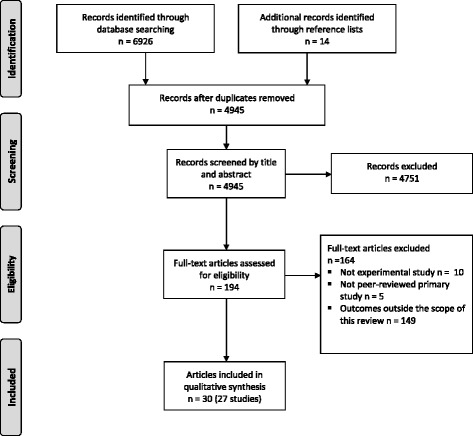
BACKGROUND: Health and fitness applications (apps) have gained popularity in interventions to improve diet, physical activity and sedentary behaviours but their efficacy is unclear. This systematic review examined the efficacy of interventions that use apps to improve diet, physical activity and sedentary behaviour in children and adults. METHODS: Systematic literature searches were conducted in five databases to identify papers published between 2006 and 2016. Studies were included if they used a smartphone app in an intervention to improve diet, physical activity and/or sedentary behaviour for prevention. Interventions could be stand-alone interventions using an app only, or multi-component interventions including an app as one of several intervention components. Outcomes measured were changes in the health behaviours and related health outcomes (i.e., fitness, body weight, blood pressure, glucose, cholesterol, quality of life). Study inclusion and methodological quality were independently assessed by two reviewers. RESULTS: Twenty-seven studies were included, most were randomised controlled trials (n = 19; 70%). Twenty-three studies targeted adults (17 showed significant health improvements) and four studies targeted children (two demonstrated significant health improvements). Twenty-one studies targeted physical activity (14 showed significant health improvements), 13 studies targeted diet (seven showed significant health improvements) and five studies targeted sedentary behaviour (two showed significant health improvements). More studies (n = 12; 63%) of those reporting significant effects detected between-group improvements in the health behaviour or related health outcomes, whilst fewer studies (n = 8; 42%) reported significant within-group improvements. A larger proportion of multi-component interventions (8 out of 13; 62%) showed significant between-group improvements compared to stand-alone app interventions (5 out of 14; 36%). Eleven studies reported app usage statistics, and three of them demonstrated that higher app usage was associated with improved health outcomes. CONCLUSIONS: This review provided modest evidence that app-based interventions to improve diet, physical activity and sedentary behaviours can be effective. Multi-component interventions appear to be more effective than stand-alone app interventions, however, this remains to be confirmed in controlled trials. Future research is needed on the optimal number and combination of app features, behaviour change techniques, and level of participant contact needed to maximise user engagement and intervention efficacy.
Overview
The claims and statistics of this paper haven’t been checked yet.
Free: it reads the open-access text and checks the first 5 claims that cite a source we can check. Create a free account to check every claim.
Integrity signals
Registry
Cites
Statistics
Figures
Verification
Claims the paper makes
The claims and statistics of this paper haven’t been checked yet.
Free: it reads the open-access text and checks the first 5 claims that cite a source we can check. Create a free account to check every claim.
Claims other papers make about this one
Each is checked against this paper’s own text: does it say what the citing paper says it does?
The source backs part of the claim, not all of it — or backs it for a different population, condition or comparison.
In the citing paper
“Digital health interventions that include some guidance tend to result in greater improvements than stand-alone interventions.161, 162”
From Digital health and telehealth in cancer care: A scoping review of reviews (2023) · cites this paper as [162]
Experimental — accuracy not yet measuredThe source backs part of the claim, not all of it — or backs it for a different population, condition or comparison.
In the citing paper
“A systematic review of the effectiveness of interventions that use applications to improve diet, physical activity and SB found evidence that interventions that combine personal advice were more successful than a mobile application alone [44].”
From Impact of a primary care-based mobile health intervention to ‘sit less and move more’ on HbA1c, blood pressure, and other clinical outcomes in office employees with type 2 diabetes: A randomized controlled trial (2025) · cites this paper as [44]
Experimental — accuracy not yet measuredThe cited source says what the claim attributes to it.
In the citing paper
“A review of 27 studies utilizing smartphone applications, which are more easily accessible on-the-go to offer motivational reinforcement, self-monitoring, and physical activity games, found significant improvements in health-related outcomes (blood pressure, cholesterol, overall fitness) and an average attrition rate of only 17%.110”
From The Impact of Physical Activity in Patients With Type 2 Diabetes (2025) · cites this paper as [110]
The cited source says what the claim attributes to it.
In the citing paper
“Some literature has suggested positive benefits for more holistic interventions that focus on multiple behaviors [87].”
From Barriers and facilitators to diet, physical activity and lifestyle behavior intervention adherence: a qualitative systematic review of the literature (2023) · cites this paper as [87]
1 more claim about this paper
Create a free account to see every claim other papers make about this one.
Self-check
Percentages, sums and reported differences re-computed from the paper’s own numbers.
The self-check needs the paper’s full text.
Citations
Cites
Preferred Reporting Items for Systematic Reviews and Meta-Analyses: the PRISMA statement
Moher, D., Liberati, A., Tetzlaff, J., Altman, D. G., & for the PRISMA Group (2009) · BMJ · doi:10.1136/bmj.b2535 · Cited by 83,823
Preferred Reporting Items for Systematic Reviews and Meta-Analyses: The PRISMA Statement
Moher, D., Liberati, A., Tetzlaff, J., Altman, D. G., & The PRISMA Group (2009) · PLoS Medicine · doi:10.1371/journal.pmed.1000097 · Cited by 64,042 · cited 3×
“viewers, as is standard practice for high quality systematic review [23].”
BackgroundInfluentialPreferred reporting items for systematic reviews and meta-analyses: the PRISMA Statement.
(2009) · PubMed Central · Cited by 44,859
Liberati, A., Altman, D. G., Tetzlaff, J., Mulrow, C., Gøtzsche, P. C., Ioannidis, J. P. A., Clarke, M., Devereaux, P. J., Kleijnen, J., & Moher, D. (2009) · PLoS Medicine · doi:10.1371/journal.pmed.1000100 · Cited by 28,164
Wang, G., Ma, R., Qiao, G., Wada, K., Aizawa, Y., & Satoh, T. (2015) · Integrative Medicine International · doi:10.1159/000368408 · Cited by 18,657
Liberati, A., Altman, D. G., Tetzlaff, J., Mulrow, C., Gotzsche, P. C., Ioannidis, J. P. A., Clarke, M., Devereaux, P. J., Kleijnen, J., & Moher, D. (2009) · BMJ · doi:10.1136/bmj.b2700 · Cited by 17,648
Moher, D., Hopewell, S., Schulz, K. F., Montori, V., Gotzsche, P. C., Devereaux, P. J., Elbourne, D., Egger, M., & Altman, D. G. (2010) · BMJ · doi:10.1136/bmj.c869 · Cited by 8,883 · cited 1×
“25-point criteria adapted from the CONSORT checklists for the reporting of randomised controlled trials [26].”
MethodWebb, T. L., Joseph, J., Yardley, L., & Michie, S. (2010) · Journal of Medical Internet Research · doi:10.2196/jmir.1376 · Cited by 2,517
Hilpert, M., Brockmeier, K., Dordel, S., Koch, B., Weiß, V., Ferrari, N., Tokarski, W., & Graf, C. (2017) · Obesity Facts · doi:10.1159/000464105 · Cited by 1,185
The IMAGE Study Group, Greaves, C. J., Sheppard, K. E., Abraham, C., Hardeman, W., Roden, M., Evans, P. H., & Schwarz, P. (2011) · BMC Public Health · doi:10.1186/1471-2458-11-119 · Cited by 1,163
Research works printed but not linked: 2
- Australian Communications and Media Authority Communications report 2014–15. Australian communications and media authority 2015
- Group Special Mobile Association The mobile economy. Group special mobile association 2015
Cited by
Items 301–400 of 1,002
Domin, A., Uslu, A. S., Schulz, A., Ouzzahra, Y., & Vögele, C. (2022) · JMIR Formative Research · doi:10.2196/35118 · Cited by 25
“Finally, yet importantly, there are several reviews on the topic published to date that can inform the reader on BCTs identified in efficacious interventions [11,69,70]; however, only 1 review (Sullivan et al [47]) provides specific recommendations on helpful strategies [47].”
BackgroundStuber, J. M., Mackenbach, J. D., de Bruijn, G., Gillebaart, M., Hoenink, J. C., Middel, C. N. H., de Ridder, D. T. D., van der Schouw, Y. T., Smit, E. G., Velema, E., et al. (2024) · BMC Medicine · doi:10.1186/s12916-024-03268-4 · Cited by 25
“In our study, the app design did not allow for monitoring whether participants read the messages, but it might be that insufficient exposure to coaching messages led to the lack of effect on step counts [82].”
BackgroundBerglind, D., Yacamán-Méndez, D., Lavebratt, C., & Forsell, Y. (2020) · JMIR mhealth and uhealth · doi:10.2196/14615 · Cited by 26
“However, there is an inconsistency in the literature on the effects from multicomponent versus app-based PA interventions on health outcomes [17].”
Evaluation of a Blended Physical Activity Intervention for Older Adults: Mixed Methods Study
Mehra, S., van den Helder, J., Visser, B., Engelbert, R., Weijs, P. J. M., & Kröse, B. (2020) · Journal of Medical Internet Research · doi:10.2196/16380 · Cited by 24
“The use of mobile technology (mobile health [mHealth]) can help overcome these issues by providing detailed instructions, offering tailored programs, and tracking progress [18-23] for individuals, including older adults [24,25].”
BackgroundImagery, Visualization, and Mental Simulation Interventions
Hagger, M. S., & Conroy, D. (2020) · Cambridge University Press eBooks · doi:10.1017/9781108677318.033 · Cited by 25
Schöeppe, S., Salmon, J., Williams, S. L., Power, D., Alley, S., Rebar, A. L., Hayman, M., Duncan, M. J., & Vandelanotte, C. (2020) · International Journal of Environmental Research and Public Health · doi:10.3390/ijerph17207655 · Cited by 24
Self-citationHietbrink, E. A. G., Lansink, C., Laverman, G. D., Vollenbroek-Hutten, M. M. R., Middelweerd, A., & Tabak, M. (2025) · npj Digital Medicine · doi:10.1038/s41746-025-02054-7 · Cited by 27
Holly, S., Jantzi, H. A., Seabrook, J. A., McEachern, L. W., Burke, S. M., Irwin, J. D., & Gilliland, J. (2023) · Nutrition Reviews · doi:10.1093/nutrit/nuad058 · Cited by 25
Ribaut, J., Dabbs, A. D., Dobbels, F., Teynor, A., Mess, E. V., Hoffmann, T., & Geest, S. D. (2024) · JMIR mhealth and uhealth · doi:10.2196/48625 · Cited by 25
Wilde, L., Ward, G., Sewell, L., Müller, A. M., & Wark, P. A. (2018) · Digital Health · doi:10.1177/2055207618776454 · Cited by 29
“22 (cid:2) 24, 26 (cid:2) 28 A qualitative systematic review explored the barriers and facilitators to participating in digital health interventions, which included mobile phone apps and pedometers.”
BackgroundChmurzyńska, A., Młodzik-Czyżewska, M. A., Malinowska, A. M., Czarnocińska, J., & Wiebe, D. J. (2018) · Nutrients · doi:10.3390/nu10111692 · Cited by 24
“Smartphone applications have mostly been used in intervention studies, to render the dietary interventions more effective [20].”
MethodE-tools for hospital management: An overview of smartphone applications for health professionals
Olivero, E., Bert, F., Thomas, R., Scarmozzino, A., Raciti, I. M., Gualano, M. R., & Siliquini, R. (2019) · International Journal of Medical Informatics · doi:10.1016/j.ijmedinf.2019.01.010 · Cited by 23
Active 10: Brisk Walking to Support Regular Physical Activity
Ciravegna, F., Gao, J., Ireson, N., Copeland, R. J., Walsh, J., & Lanfranchi, V. (2019) · International Conference on Pervasive Computing Technologies for Healthcare · doi:10.1145/3329189.3329208 · Cited by 25
Shi, B., Li, G., Wu, S., Ge, H., Zhang, X., Chen, S., Pan, Y., & He, Q. (2024) · Journal of Medical Internet Research · doi:10.2196/58174 · Cited by 26
“This may be because the MHBC intervention intervened on a larger number of target behaviors than the SHBC intervention, and the intervention effect was unstable [70,71].”
Villalobos-Zúñiga, G., Rodríguez, I., Fedosov, A., & Cherubini, M. (2021) · International Conference on Human-Computer Interaction with Mobile Devices and Services (MobileHCI) · doi:10.1145/3447526.3472039 · Cited by 27
“Recently, researchers started to question the usefulness and efficacy of some of these apps [11, 24, 35, 56], and call for further exploration in the area, for example, looking at the optimal number and combination of app features [55].”
BackgroundKondo, M., Okitsu, T., Waki, K., Yamauchi, T., Nangaku, M., & Ohe, K. (2022) · JMIR Formative Research · doi:10.2196/33852 · Cited by 22
“This is also seen in other studies, and there is a need to explore potential methods to increase engagement and retention to maximize the benefits and efficacy of mHealth as a replacement for in-person support [36].”
InfluentialAlKasasbeh, W. J., & Amawi, A. T. (2023) · International Journal of Interactive Mobile Technologies (iJIM) · doi:10.3991/ijim.v17i17.40959 · Cited by 19
Evaluation of a personalized coaching system for physical activity: user appreciation and adherence
Mollee, J. S., Middelweerd, A., Velde, S. J. T., & Klein, M. C. A. (2017) · International Conference on Pervasive Computing Technologies for Healthcare · doi:10.1145/3154862.3154933 · Cited by 22
“All three showed that higher app usage was associated with improved physical activity and healthy eating [8].”
BackgroundBell, K., Warnick, E., Nicholson, K. J., Ulcoq, S., Kim, S. J., Schroeder, G. D., & Vaccaro, A. R. (2018) · American Journal of Medical Quality · doi:10.1177/1062860618765083 · Cited by 25
“Mobile phone apps also are a promising avenue to engage with patients, as 70% of Americans regularly utilize a smartphone and/or a tablet.(7) There are currently between 165 000 and 260 000 mobile health apps available in the major app stores.”
BackgroundResultPuigdomènech, E., Martin, A., Lang, A. R., Adorni, F., Gómez, S. F., McKinstry, B., Prinelli, F., Condon, L. A., Rashid, R., Caon, M., et al. (2019) · BMC Medical Informatics and Decision Making · doi:10.1186/s12911-019-0958-x · Cited by 27
Dowd, A. J., Warbeck, C. B., Tang, K. T. Y., Fung, T. S., & Culos-Reed, S. N. (2020) · Digital Health · doi:10.1177/2055207620903627 · Cited by 26
“Results from a systematic review provide modest evidence (70% of analyzed studies showed improvements) that smartphone interventions can alter diet, physical activity, and sedentary behavior, although there is greater support for multicomponent interventions that also include another type of intervention strategy.(22)…”
ResultFranja, S., Wahl, D. R., Elliston, K. G., & Ferguson, S. G. (2021) · British Journal of Health Psychology · doi:10.1111/bjhp.12505 · Cited by 22
Caillaud, C., Ledger, S., Díaz, C., CLERC, G., Galy, O., & Yacef, K. (2022) · PLoS ONE · doi:10.1371/journal.pone.0274644 · Cited by 28
“In addition, mobile apps alone or activity trackers alone do not seem to achieve change of health-related behaviour [22, 33].”
BackgroundThorneloe, R. J., Epton, T., Fynn, W. I., Daly, M., Stanulewicz, N., Kassianos, A. P., Shorter, G. W., Moll, S.-J., Campbell, M., Sodergren, S. C., et al. (2020) · PsyArXiv (OSF Preprints) · doi:10.31234/osf.io/qe9b6 · Cited by 22
Changing Behavior Using Social Identity Processes
Reynolds, K. J., Branscombe, N. R., Subašić, E., & Willis, L. (2020) · Cambridge University Press eBooks · doi:10.1017/9781108677318.016 · Cited by 24
Pearson, E., Prapavessis, H., Higgins, C., Petrella, R. J., White, L., & Mitchell, M. (2020) · International Journal of Behavioral Nutrition and Physical Activity · doi:10.1186/s12966-020-01043-1 · Cited by 21
García-Pérez-de-Sevilla, G., Guido, O. B., la Cruz, M. D. L. P. D., Fernández, A. B., Alejo, L. B., Martínez, M. M., & Pérez, M. (2021) · International Journal of Environmental Research and Public Health · doi:10.3390/ijerph18147510 · Cited by 25
“According to a recent systematic review, many studies report an increase in the PA levels after a telematic intervention, but very few assess the adherence to these habits six months later, without achieving beneficial results [46].”
BackgroundGarcía-Pérez-de-Sevilla, G., Guido, O. B., la Cruz, M. D. L. P. D., Fernández, A. B., Alejo, L. B., Goercke, M. I. R., & Pérez, M. (2021) · International Journal of Environmental Research and Public Health · doi:10.3390/ijerph182212198 · Cited by 21
“The same occurs with virtual interventions that assess longterm adherence to PA levels [10] or sedentary behavior [11].”
BackgroundCastro, R., Alves, M. R., de Oliveira, C. C. M., Romero, C., Perazzo, H., Simjanoski, M., Kapciznki, F., Balanzá‐Martínez, V., & Boni, R. B. D. (2022) · Frontiers in Public Health · doi:10.3389/fpubh.2021.735624 · Cited by 23
Alòs, F., Colomer, M. À., Martín-Cantera, C., Muñoz, M. S., Bort‐Roig, J., Saigí, I., Chirveches-Pérez, E., Solà-Gonfaus, M., Molina-Aragonés, J. M., & Puig-Ribera, A. M. (2022) · BMC Public Health · doi:10.1186/s12889-022-13676-x · Cited by 23
“Furthermore, the use and efficacy of mHealth programmes mostly focus on healthy adults, without taking into account the impact they might have on specific population groups [53], such as workers with prevalent chronic diseases like obesity or DM2.”
BackgroundExploring the Landscape of eHealth in Promoting Physical Activity and Healthy Dietary Intake
Alawamleh, T., & AlKasasbeh, W. (2024) · Universal Journal of Public Health · doi:10.13189/ujph.2024.120113 · Cited by 16
Technology-Supported Behavior Change—Applying Design Thinking to mHealth Application Development
Schweitzer, R., Schlögl, S., & Schweitzer, M. (2024) · European Journal of Investigation in Health Psychology and Education · doi:10.3390/ejihpe14030039 · Cited by 27
“Especially after the first few weeks of an intervention, participant engagement declines [9,11], which is an important factor, since an app’s efficacy is significantly correlated with its usage [8].”
Technology Interventions to Manage Food Intake: Where Are We Now?
Allman-Farinelli, M. A., & Gemming, L. (2017) · Current Diabetes Reports · doi:10.1007/s11892-017-0937-5 · Cited by 23
Wang, Y., König, L. M., & Reiterer, H. (2021) · JMIR Formative Research · doi:10.2196/15369 · Cited by 21
“However, compared with the number of apps targeting physical activity, there are only a few apps specifically targeting sedentary behavior [15].”
Muntaner‐Mas, A., Sanchez-Azanza, V. A., Ortega, F. B., Conti, J. V., Borràs, P. A., Cantallops, J., & Palou, P. (2021) · Health Informatics Journal · doi:10.1177/1460458220987275 · Cited by 23
Han, M., & Rhee, S. Y. (2021) · JMIR mhealth and uhealth · doi:10.2196/13496 · Cited by 22
“According to previous studies, smartphone health apps have a positive impact on the improvement of health-related behaviors and outcomes, such as dietary intake, PA, and weight loss [9].”
Degroote, L., Paepe, A. L. D., Bourdeaudhuij, I. D., Dyck, D. V., & Crombez, G. (2021) · International Journal of Behavioral Nutrition and Physical Activity · doi:10.1186/s12966-021-01163-2 · Cited by 24
Patomella, A., Farías, L., Eriksson, C., Guidetti, S. G. E., & Asaba, E. (2021) · Healthcare · doi:10.3390/healthcare9080968 · Cited by 22
“App-based interventions combined with other strategies such as health education or peer support have been more effective in changing diet or physical activity behaviors as compared to stand-alone app-based interventions [28].”
BackgroundTurnin, M.-C., Gourdy, P., Martini, J., Buisson, J.-C., Chauchard, M.-C., Delaunay, J., Schirr-Bonnans, S., Taoui, S., Poncet, M.-F., Cosma, V., et al. (2021) · Diabetes Therapy · doi:10.1007/s13300-021-01095-x · Cited by 20
An umbrella review of efficacy of digital health interventions for workers
Iwakura, M., Ozeki, C., Jung, S., Yamazaki, T., Miki, T., Nohara, M., & Nomura, K. (2025) · npj Digital Medicine · doi:10.1038/s41746-025-01578-2 · Cited by 21
Engagement of Stakeholders in the Design, Evaluation, and Implementation of Complex Interventions
Hudson, J. L., Moon, Z., Hughes, L. D., & Moss-Morris, R. E. (2020) · Cambridge University Press eBooks · doi:10.1017/9781108677318.024 · Cited by 29
Using smartphone technology to support the adult audiologic rehabilitation journey
Timmer, B. H. B., Launer, S., & Hickson, L. M. H. (2020) · International Journal of Audiology · doi:10.1080/14992027.2020.1854483 · Cited by 21
Sun, M., & Jiang, L. C. (2022) · Information Processing & Management · doi:10.1016/j.ipm.2022.103096 · Cited by 22
Jeem, Y. A., Andriani, R. N., Nabila, R., Emelia, D. D., Lazuardi, L., & Josef, H. K. (2022) · International Journal of Environmental Research and Public Health · doi:10.3390/ijerph192013638 · Cited by 22
“Several studies [15,18,23] suggested that future research be conducted to determine the best number and combination of different technology features to maximize intervention efficacy, utilization patterns, and participant engagement.”
BackgroundPromoting mental health among young males in sporting contexts: A systematic review
Petersen, J. M., Drummond, M., Rasheed, K., Elliott, S., Drummond, C., Smith, J. A., Wadham, B., & Prichard, I. J. (2023) · Psychology of sport and exercise · doi:10.1016/j.psychsport.2023.102551 · Cited by 21
Development of a Smartphone App for Informal Carers of People With Cancer: Processes and Learnings
Heynsbergh, N., Heckel, L. D., Botti, M. A., Seung Chul, O., & Livingston, P. M. (2019) · JMIR Formative Research · doi:10.2196/10990 · Cited by 20
“Web-based interventions have been found to be appropriate for use among carers and are accessible to a larger number of people [15]; however, they are not always available through smart devices, and this can limit carers’ability to access support in times of need [16].”
Exploring the Design of mHealth Systems for Health Behavior Change using Mobile Biosensors
Noorbergen, T. J., Adam, M. T. P., Attia, J. R., Cornforth, D. J., & Minichiello, M. (2019) · Communications of the Association for Information Systems · doi:10.17705/1cais.04444 · Cited by 29
“Based on systematic reviews of academic literature on the effectiveness of mHealth systems, Free et al. (2013) and Schoeppe et al. (2016) concludes that, overall, we have 1) limited evidence for the effectiveness of mHealth systems (with the exception of SMS) and (2) a need to further explore how…”
BackgroundMiddelweerd, A., Mollee, J. S., Klein, M. C. A., Manzoor, A. F., Brug, J., & Velde, S. J. T. (2020) · JMIR Formative Research · doi:10.2196/12538 · Cited by 21
Gneezy, U., Kajackaite, A., & Meier, S. (2020) · Cambridge University Press eBooks · doi:10.1017/9781108677318.036 · Cited by 28
Ruiter, R. A. C., Crutzen, R., de Leeuw, E., & Kok, G. (2020) · Cambridge University Press eBooks · doi:10.1017/9781108677318.018 · Cited by 22
YORwalK: Desiging a Smartphone Exercise Application for People with Intermittent Claudication
Shalan, A., Abdulrahman, A., Habli, I., Tew, G. A., & Thompson, A. (2018) · Studies in health technology and informatics · doi:10.3233/978-1-61499-852-5-311 · Cited by 27
Summers, C., Tobin, S., & Unwin, D. (2021) · JMIR Diabetes · doi:10.2196/25751 · Cited by 19
“Although there is evidence to the contrary, of the 23 studies analyzed in the systematic review published by Schoeppe et al on the efficacy of apps in improving lifestyle, smartphones were only seen to have a favorable impact on food habits in five studies and resulted in increased physical activity in nine studies [1…”
ResultLi, S., Zhou, Y. J., Tang, Y., Ma, H., Zhang, Y., Wang, A., Tang, X., Pei, R., & Piao, M. (2025) · JMIR mhealth and uhealth · doi:10.2196/63313 · Cited by 20
“…difference may be that the two aforementioned reviews included interventions involving both mobile phone apps and nonmobile interventions, whereas our meta-analysis focused on studies using interventions delivered solely by mobile apps or applications combined with nonmobile interventions [55].”
Hull, R., Zaidell, L. N., Mileva, K. N., & de Oliveira, R. F. (2021) · Psychology of sport and exercise · doi:10.1016/j.psychsport.2021.102043 · Cited by 21
Ansari, F. S. A., Alfayez, A., Alsalman, D., Alanezi, F., Alhodaib, H. I., Al-Rayes, S., Aljabri, D., Alrawiai, S., Alakrawi, Z., Saadah, A. M., et al. (2022) · International Health · doi:10.1093/inthealth/ihac008 · Cited by 23
Effectiveness of eHealth Interventions Targeting Employee Health Behaviors: Systematic Review
Sevic, A., Hashemi, N. S. P., Thørrisen, M. M., Strømstad, K., Skarpaas, L. S., Storm, M., & Brønnick, K. (2023) · Journal of Medical Internet Research · doi:10.2196/38307 · Cited by 21
“…targeting SB in clinical [88] and general populations [89-91], whereas social support was the most used BCT when engaging older populations in PA. BCTs targeting goal setting, feedback, and self-monitoring are also common in eHealth interventions delivered via apps to improve diet, PA, and SB [92].”
A scoping review of digital workplace wellness interventions in low- and middle-income countries
Thai, Y. C., Sim, D., McCaffrey, T. A., Ramadas, A., Malini, H., & Watterson, J. (2023) · PLoS ONE · doi:10.1371/journal.pone.0282118 · Cited by 22
Adu, M. D., Malabu, U. H., Malau‐Aduli, A. E. O., Drovandi, A. D., & Malau‐Aduli, B. S. (2020) · International Journal of Environmental Research and Public Health · doi:10.3390/ijerph17072573 · Cited by 21
“In recent years, several mHealth applications have been developed in order to support self-management in people with diabetes, with these interventions being deemed feasible and acceptable, though evidence of improved self-management is either unclear or weak [57,58].”
BackgroundWu, Q., Huang, Y., van Velthoven, M. H., Wang, W., Chang, S., & Zhang, Y. (2021) · PLoS ONE · doi:10.1371/journal.pone.0246942 · Cited by 19
Stork, M., Bell, E. G., & Jung, M. E. (2021) · JMIR mhealth and uhealth · doi:10.2196/24076 · Cited by 21
Neufeld, E. V., Seltzer, R. A., Sazzad, T. M. S., & Dolezal, B. A. (2020) · Sensors · doi:10.3390/s20216165 · Cited by 20
Long-term usage of a commercial mHealth app: A “multiple-lives” perspective
Lau, E. Y., Mitchell, M., & Faulkner, G. (2022) · Frontiers in Public Health · doi:10.3389/fpubh.2022.914433 · Cited by 20
Empower Psychotherapy with mHealth Apps: The Design of “Safer”, an Emotion Regulation Application
Diano, F., Sica, L. S., & Ponticorvo, M. (2023) · Information · doi:10.3390/info14060308 · Cited by 21
Pearson, N., Finch, M., Sutherland, R., Kingsland, M., Wolfenden, L., Wedesweiler, T., Herrmann, V., & Yoong, S. L. (2022) · Journal of Medical Internet Research · doi:10.2196/27760 · Cited by 19
“The pattern of the continued drop-off in use observed in our study is similar to those reported in many mHealth and DHI interventions [39,56-59].”
Rossi, P. G., Ferrari, F., Amarri, S., Bassi, A., Bonvicini, L., Dall'Aglio, L., Giustina, C. D., Fabbri, A., Ferrari, A. M., Ferrari, E., et al. (2020) · JMIR mhealth and uhealth · doi:10.2196/16165 · Cited by 19
“Recently, several health promotion apps have been developed [7-11], which mostly target adults and adolescents [8,10,12]; very few have been produced by governmental institutions [7-11].”
BackgroundThe Impact of Physical Activity in Patients With Type 2 Diabetes
Bassin, S. R., & Srinath, R. (2025) · American Journal of Lifestyle Medicine · doi:10.1177/15598276231180541 · Cited by 17
Turon, H., Bezzina, A., Lamont, H., Barnes, C., Lum, M., Hodder, R. K., Leung, G. K. W., Peeters, A., Wolfenden, L., & Yoong, S. (2024) · Journal of Occupational Health · doi:10.1093/joccuh/uiae044 · Cited by 19
Wlasak, W., Zwanenburg, S. P., & Paton, C. (2023) · JMIR Formative Research · doi:10.2196/38500 · Cited by 19
“Schoeppe et al [55] investigated 27 studies that tested the efficacy of app interventions for dieting, physical activity, or sedentary behavior, which were mostly randomized controlled trials.”
BackgroundVisier‐Alfonso, M. E., Sánchez‐López, M., Rodríguez‐Martin, B., Hermosa, A. R., Gutiérrez, R. B., Sequí‐Domínguez, I., & Martínez‐Vizcaíno, V. (2023) · JMIR mhealth and uhealth · doi:10.2196/44753 · Cited by 21
“The potential role of apps in improving PA across children and adolescents has been suggested [10], but evidence of the efficacy of PA apps for this age group is still scarce [10,11].”
The Global Incident Gastrointestinal Cancers Attributable to Suboptimal Diets From 1990 to 2018
Li, Y., Jia, X., Li, C., Sun, H., Nie, S., Giovannucci, E. L., & Liu, L. (2024) · Gastroenterology · doi:10.1053/j.gastro.2024.07.009 · Cited by 18
Reynolds, R., Sutherland, R., Nathan, N., Janssen, L. M., Lecathelinais, C., Reilly, K., Walton, A., & Wolfenden, L. (2018) · Health Promotion Journal of Australia · doi:10.1002/hpja.57 · Cited by 23
Spelt, H., Tsiampalis, T., Karnaki, P., Kouvari, M., Zota, D., Linos, A., & Westerink, J. H. D. M. (2019) · International Journal of Environmental Research and Public Health · doi:10.3390/ijerph16224427 · Cited by 18
Jacobson, D., Jacobson, J., Leong, T. L., Lourenco, S. F., Mancl, L., & Chi, D. L. (2019) · PubMed · Cited by 17
Busch, L., Utesch, T., & Strauß, B. (2020) · International Journal of Sport and Exercise Psychology · doi:10.1080/1612197x.2020.1854820 · Cited by 20
“Based on reviewed research (Schoeppe et al., 2016), the dropout rate was estimated 10%.”
BackgroundMethodInfluentialO’Loughlin, E. K., Sabiston, C. M., deJonge, M. L., Lucibello, K. M., & O’Loughlin, J. L. (2021) · Journal of Health Psychology · doi:10.1177/13591053211008209 · Cited by 18
“However, some evidence suggests that PA motivation may underpin the association and that targeting motivation as part of PA behaviorchange interventions is more effective than not addressing motivation (Schoeppe et al., 2016).”
BackgroundEvidence-Based Digital Tools for Weight Loss Maintenance: The NoHoW Project
Stubbs, R. J., Duarte, C., Palmeira, A. L., Sniehotta, F. F., Horgan, G. W., Larsen, S. C., Marques, M. M., Evans, E. H., Ermes, M., Harjumaa, M., et al. (2021) · Obesity Facts · doi:10.1159/000515663 · Cited by 20
Evaluating 3D Human Motion Capture on Mobile Devices
Reimer, L. M., Kapsecker, M., Fukushima, T., & Jonas, S. (2022) · Applied Sciences · doi:10.3390/app12104806 · Cited by 19
Busch, L., Utesch, T., Bürkner, P., & Strauß, B. (2020) · Journal of Sport and Exercise Psychology · doi:10.1123/jsep.2019-0315 · Cited by 19
Zhang, D., Huang, J., Zhang, Y. H., Wei, Z., Long, T., Guo, X., & Li, M. (2025) · Diabetes Research and Clinical Practice · doi:10.1016/j.diabres.2025.112907 · Cited by 17
Hietbrink, E. A. G., Middelweerd, A., van Empelen, P., Preuhs, K., Konijnendijk, A., Nijeweme-d’Hollosy, W. O., Schrijver, L. K., Laverman, G. D., & Vollenbroek-Hutten, M. M. R. (2023) · JMIR Human Factors · doi:10.2196/40017 · Cited by 17
“So far, most of the eHealth interventions to promote health behaviors have shown positive short-term effects [40-46].”
BackgroundMertens, E. C. A., Siezenga, A. M., van der Schalk, J., & van Gelder, J. (2023) · Prevention Science · doi:10.1007/s11121-023-01609-y · Cited by 17
“For most people, their smartphone is integrated in daily routines enabling its use throughout the day wherever and whenever they want (Linardon et al., 2019; Schoeppe et al., 2016).”
BackgroundRole of telemedicine in the management of obesity: State‐of‐the‐art review
Shariq, K., Siddiqi, T. J., Spall, H. G. C. V., Greene, S. J., Fudim, M., DeVore, A. D., Pandey, A., Butler, J., & Khan, M. S. (2024) · Obesity Reviews · doi:10.1111/obr.13734 · Cited by 16
Regan, C., Rosen, P. V., Andermo, S., Hagströmer, M., Johansson, U., & Rossen, J. (2024) · Digital Health · doi:10.1177/20552076241247935 · Cited by 17
A human centered approach to design a diet app for patients with metabolic syndrome
Joshi, A., Amadi, C., Schumer, H., Galitzdorfer, L., & Gaba, A. (2019) · mHealth · doi:10.21037/mhealth.2019.08.13 · Cited by 19
McLean, A. (2020) · JMIR Nursing · doi:10.2196/19302 · Cited by 21
“Examples include sexual health [20], cardiovascular disease [21], diabetes [22-30], adolescents and young adults [31], ecological momentary assessments [32], health technology assessment [33], chronic disease management [34-36], sedentary behavior [37], diet and physical activity [38], and diabetic foot ulcers [39-41].”
BackgroundStehr, P., Karnowski, V., & Rossmann, C. (2020) · BMC Medical Informatics and Decision Making · doi:10.1186/s12911-020-01294-9 · Cited by 17
Said, Z. M., Musa, K. I., Ismail, T. A. T., Hamid, A. A., Sahathevan, R., Aziz, Z. A., & Feigin, V. L. (2021) · Neuroepidemiology · doi:10.1159/000518853 · Cited by 21
Parker, K. E., Gould, L., Nand, M., Rawstorn, J. C., Ayala, A. M. C., Maddison, R., & Toffoletti, K. (2022) · BMC Public Health · doi:10.1186/s12889-022-13869-4 · Cited by 16
“However, evidence has consistently demonstrated poor long-term engagement – and a lack of lasting behaviour change [24] – which has largely been attributed to a failure to design interventions that satisfy adolescent girls’ preferences and needs [25].”
BackgroundSchroé, H., der Mispel, C. V., Bourdeaudhuij, I. D., Verloigne, M., Poppe, L., & Crombez, G. (2019) · Trials · doi:10.1186/s13063-019-3456-7 · Cited by 17
Sedentary Work in Desk-Dominated Environments: A Data-Driven Intervention Using Intervention Mapping
Berninger, N. M., ten Hoor, G. A., Plasqui, G., Kok, G., Peters, G.-J., & Ruiter, R. A. C. (2020) · JMIR Formative Research · doi:10.2196/14951 · Cited by 19
“At the interpersonal level, support by colleagues and supervisors is important [30].”
BackgroundWebb, T. L., & de Bruin, M. (2020) · Cambridge University Press eBooks · doi:10.1017/9781108677318.037 · Cited by 17
Alòs, F., Colomer, M. À., Bort-Roig, J., Martin-Cantera, C., Minaya, A., Saigí, I., Sitjar-Suñer, M., & Puig-Ribera, A. (2025) · Primary Care Diabetes · doi:10.1016/j.pcd.2025.05.010 · Cited by 15
Pelletier, C., Gagnon, M.-P., Alméras, N., Després, J.-P., Poirier, P., Tremblay, A., Chabot, C., & Rhéaume, C. (2021) · mHealth · doi:10.21037/mhealth-20-154 · Cited by 15
An Evaluation of Interactive mHealth Applications for Adults Living with Cancer
Wasserman, S., Ould Brahim, L., Attiya, A., Belzile, E., & Lambert, S. D. (2023) · Current Oncology · doi:10.3390/curroncol30080518 · Cited by 15
“Though less common, apps with gamification to promote health behavior changes tend to be more effective than those without gamification [59,60].”
BackgroundMobile health apps to reduce sedentary behavior: a scoping review
Ueno, D. T., Guerra, P. H., Christofoletti, A. E. M., Bonolo, A., Nakamura, P. M., & Kokubun, E. (2021) · Health Promotion International · doi:10.1093/heapro/daab124 · Cited by 16
Mertens, E. C. A., van der Schalk, J., Siezenga, A. M., & van Gelder, J. (2022) · Internet Interventions · doi:10.1016/j.invent.2022.100509 · Cited by 17
Incorporating Consumers’ Needs in Nutrition Apps to Promote and Maintain Use: Mixed Methods Study
van der Haar, S., Raaijmakers, I., Verain, M. C. D., & Meijboom, S. (2023) · JMIR mhealth and uhealth · doi:10.2196/39515 · Cited by 21
Chen, D., Shao, J., Zhang, H., Wu, J., Xue, E., Guo, P., Tang, L., Cui, N., Wang, X., Chen, L., et al. (2023) · Annals of Medicine · doi:10.1080/07853890.2023.2267587 · Cited by 16
Reis, L. N., Reuter, C. P., Okely, A. D., Brand, C., Fochesatto, C. F., Martins, C., Mota, J. A. P. S., Gaya, A. C. A., & Gaya, A. R. (2023) · Jornal de Pediatria · doi:10.1016/j.jped.2023.10.007 · Cited by 15
“12,13 Therefore, this study aimed to examine if the sub-stitution of different screen time intervals with LPA, MVPA, and sleep was associated with cardiovascular indicators and in fl ammatory markers in children.”
BackgroundSmyth, A., de Bloom, J., Syrek, C. J., Domin, M., Janneck, M., Reins, J. A., & Lehr, D. (2020) · BMC Public Health · doi:10.1186/s12889-020-09354-5 · Cited by 16
“Moreover, participants user experience might determine participants engagement [71, 72], where in turn, participants engagement may determine interventions efficacy [73, 74].”
Background
Metadata
- Authors
- Schoeppe, S., Alley, S., Van Lippevelde, W., Bray, N. A., Williams, S. L., Duncan, M. J., & Vandelanotte, C.
- Affiliations
- Central Queensland University (AU)
- University of Newcastle Australia (AU)
- Venue
- International Journal of Behavioral Nutrition and Physical Activity
- Published
- 2016-12
- Volume
- 13
- Issue
- 1
- Pages
- 127-127
- ISSN
- 1479-5868 (ISSN-L)
- PMC
- PMC5142356
- OpenAlex
- W2560473567
- Semantic Scholar
- 058bafd1cf4b439b50d8b50097bb1d0fdf0dce3d
- Cited by
- 949
- References
- 80
- Citations by year
- 2026: 40 · 2025: 89 · 2024: 103 · 2023: 91 · 2022: 138 · 2021: 133 · 2020: 173 · 2019: 90 · 2018: 69 · 2017: 23
- FWCI
- 11.58
- Type
- journal article
- Language
- en
- Open access
- gold
- doi.org
- Licence
- cc-by
- Locations
- International Journal of Behavioral Nutrition and Physical Activity (publishedVersion, cc-by)
- Europe PMC (PubMed Central) (publishedVersion, cc-by)
- PubMed Central (publishedVersion, cc-by)
- PubMed (publishedVersion)
- Ghent University Academic Bibliography (Ghent University) (publishedVersion, other-oa)
- Ghent University Academic Bibliography (Ghent University) (submittedVersion, cc-by)
- Acquire (CQUniversity) (submittedVersion, cc-by)
- Figshare (submittedVersion, cc-by)
- NOVA (University of Newcastle Australia) (submittedVersion, cc-by)
- Funders
- National Heart Foundation of Australia (ID 100427, ID 100029)
- National Health and Medical Research Council (GNT1125586)
- Topics
- Health Sciences › Health Professions › General Health Professions › Mobile Health and mHealth Applications
- Health Sciences › Medicine › Public Health, Environmental and Occupational Health › Physical Activity and Health
- Social Sciences › Psychology › Applied Psychology › Digital Mental Health Interventions
- Keywords
- mobile application, mobile health intervention, diet, physical activity, sedentary behavior, multicomponent intervention, app usage, user engagement, behaviour change techniques, children, adults, health behavior change, body weight, blood pressure, cholesterol, glucose, quality of life
- MeSH terms
- Smartphone, Adult, Child, Diet, Health Promotion, Humans, Health Behavior, Exercise, Sedentary Behavior, Mobile Applications
About these checks
Registry, retraction, Cites and statistics results are computed, not judged, with one exception: a printed reference that no index lists is read once by a model before it counts as a citation error. Claims are extracted by a model and kept only when their quote appears verbatim in the text; each cited source is then checked, with a model’s help, for whether it says what the claim relies on. Those verdicts can be wrong — read the claim’s quote and the cited source before relying on one.
Statistics and arithmetic are recomputed, not judged.
Confidence bands are shown only for fields calibrated on our annotated test set. None is calibrated yet, so no band is shown.
What counts as a claim ›How we measure confidence ›How we check this ›
Are you an author, or do you see a problem with this page? Request a review
Data sources
Bibliographic data: Semantic Scholar, OpenAlex, Crossref.
Contains information from the Semantic Scholar Academic Graph Datasets, made available under the ODC Attribution License (ODC-BY 1.0).
Semantic Scholar’s data is described in: Kinney, R., et al. (2023). The Semantic Scholar Open Data Platform. arXiv:2301.10140.
