

Efficacy of interventions that use apps to improve diet, physical activity and sedentary behaviour: a systematic review
Open accessThe DOI matches its Crossref record; 77 of the 80 references it cites were found in a registry or an index.
Abstract
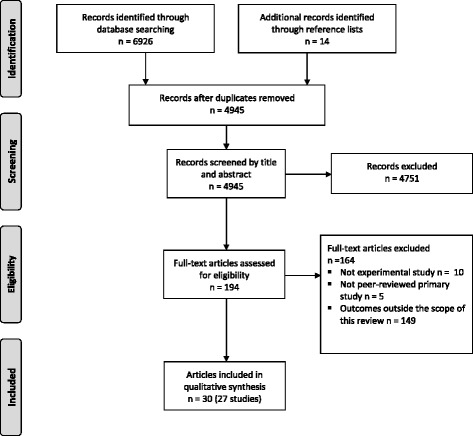
BACKGROUND: Health and fitness applications (apps) have gained popularity in interventions to improve diet, physical activity and sedentary behaviours but their efficacy is unclear. This systematic review examined the efficacy of interventions that use apps to improve diet, physical activity and sedentary behaviour in children and adults. METHODS: Systematic literature searches were conducted in five databases to identify papers published between 2006 and 2016. Studies were included if they used a smartphone app in an intervention to improve diet, physical activity and/or sedentary behaviour for prevention. Interventions could be stand-alone interventions using an app only, or multi-component interventions including an app as one of several intervention components. Outcomes measured were changes in the health behaviours and related health outcomes (i.e., fitness, body weight, blood pressure, glucose, cholesterol, quality of life). Study inclusion and methodological quality were independently assessed by two reviewers. RESULTS: Twenty-seven studies were included, most were randomised controlled trials (n = 19; 70%). Twenty-three studies targeted adults (17 showed significant health improvements) and four studies targeted children (two demonstrated significant health improvements). Twenty-one studies targeted physical activity (14 showed significant health improvements), 13 studies targeted diet (seven showed significant health improvements) and five studies targeted sedentary behaviour (two showed significant health improvements). More studies (n = 12; 63%) of those reporting significant effects detected between-group improvements in the health behaviour or related health outcomes, whilst fewer studies (n = 8; 42%) reported significant within-group improvements. A larger proportion of multi-component interventions (8 out of 13; 62%) showed significant between-group improvements compared to stand-alone app interventions (5 out of 14; 36%). Eleven studies reported app usage statistics, and three of them demonstrated that higher app usage was associated with improved health outcomes. CONCLUSIONS: This review provided modest evidence that app-based interventions to improve diet, physical activity and sedentary behaviours can be effective. Multi-component interventions appear to be more effective than stand-alone app interventions, however, this remains to be confirmed in controlled trials. Future research is needed on the optimal number and combination of app features, behaviour change techniques, and level of participant contact needed to maximise user engagement and intervention efficacy.
Overview
The claims and statistics of this paper haven’t been checked yet.
Free: it reads the open-access text and checks the first 5 claims that cite a source we can check. Create a free account to check every claim.
Integrity signals
Registry
Cites
Statistics
Figures
Verification
Claims the paper makes
The claims and statistics of this paper haven’t been checked yet.
Free: it reads the open-access text and checks the first 5 claims that cite a source we can check. Create a free account to check every claim.
Claims other papers make about this one
Each is checked against this paper’s own text: does it say what the citing paper says it does?
The source backs part of the claim, not all of it — or backs it for a different population, condition or comparison.
In the citing paper
“Digital health interventions that include some guidance tend to result in greater improvements than stand-alone interventions.161, 162”
From Digital health and telehealth in cancer care: A scoping review of reviews (2023) · cites this paper as [162]
Experimental — accuracy not yet measuredThe source backs part of the claim, not all of it — or backs it for a different population, condition or comparison.
In the citing paper
“A systematic review of the effectiveness of interventions that use applications to improve diet, physical activity and SB found evidence that interventions that combine personal advice were more successful than a mobile application alone [44].”
From Impact of a primary care-based mobile health intervention to ‘sit less and move more’ on HbA1c, blood pressure, and other clinical outcomes in office employees with type 2 diabetes: A randomized controlled trial (2025) · cites this paper as [44]
Experimental — accuracy not yet measuredThe cited source says what the claim attributes to it.
In the citing paper
“A review of 27 studies utilizing smartphone applications, which are more easily accessible on-the-go to offer motivational reinforcement, self-monitoring, and physical activity games, found significant improvements in health-related outcomes (blood pressure, cholesterol, overall fitness) and an average attrition rate of only 17%.110”
From The Impact of Physical Activity in Patients With Type 2 Diabetes (2025) · cites this paper as [110]
The cited source says what the claim attributes to it.
In the citing paper
“Some literature has suggested positive benefits for more holistic interventions that focus on multiple behaviors [87].”
From Barriers and facilitators to diet, physical activity and lifestyle behavior intervention adherence: a qualitative systematic review of the literature (2023) · cites this paper as [87]
1 more claim about this paper
Create a free account to see every claim other papers make about this one.
Self-check
Percentages, sums and reported differences re-computed from the paper’s own numbers.
The self-check needs the paper’s full text.
Citations
Cites
Preferred Reporting Items for Systematic Reviews and Meta-Analyses: the PRISMA statement
Moher, D., Liberati, A., Tetzlaff, J., Altman, D. G., & for the PRISMA Group (2009) · BMJ · doi:10.1136/bmj.b2535 · Cited by 83,823
Preferred Reporting Items for Systematic Reviews and Meta-Analyses: The PRISMA Statement
Moher, D., Liberati, A., Tetzlaff, J., Altman, D. G., & The PRISMA Group (2009) · PLoS Medicine · doi:10.1371/journal.pmed.1000097 · Cited by 64,042 · cited 3×
“viewers, as is standard practice for high quality systematic review [23].”
BackgroundInfluentialPreferred reporting items for systematic reviews and meta-analyses: the PRISMA Statement.
(2009) · PubMed Central · Cited by 44,859
Liberati, A., Altman, D. G., Tetzlaff, J., Mulrow, C., Gøtzsche, P. C., Ioannidis, J. P. A., Clarke, M., Devereaux, P. J., Kleijnen, J., & Moher, D. (2009) · PLoS Medicine · doi:10.1371/journal.pmed.1000100 · Cited by 28,164
Wang, G., Ma, R., Qiao, G., Wada, K., Aizawa, Y., & Satoh, T. (2015) · Integrative Medicine International · doi:10.1159/000368408 · Cited by 18,657
Liberati, A., Altman, D. G., Tetzlaff, J., Mulrow, C., Gotzsche, P. C., Ioannidis, J. P. A., Clarke, M., Devereaux, P. J., Kleijnen, J., & Moher, D. (2009) · BMJ · doi:10.1136/bmj.b2700 · Cited by 17,648
Moher, D., Hopewell, S., Schulz, K. F., Montori, V., Gotzsche, P. C., Devereaux, P. J., Elbourne, D., Egger, M., & Altman, D. G. (2010) · BMJ · doi:10.1136/bmj.c869 · Cited by 8,883 · cited 1×
“25-point criteria adapted from the CONSORT checklists for the reporting of randomised controlled trials [26].”
MethodWebb, T. L., Joseph, J., Yardley, L., & Michie, S. (2010) · Journal of Medical Internet Research · doi:10.2196/jmir.1376 · Cited by 2,517
Hilpert, M., Brockmeier, K., Dordel, S., Koch, B., Weiß, V., Ferrari, N., Tokarski, W., & Graf, C. (2017) · Obesity Facts · doi:10.1159/000464105 · Cited by 1,185
The IMAGE Study Group, Greaves, C. J., Sheppard, K. E., Abraham, C., Hardeman, W., Roden, M., Evans, P. H., & Schwarz, P. (2011) · BMC Public Health · doi:10.1186/1471-2458-11-119 · Cited by 1,163
Research works printed but not linked: 2
- Australian Communications and Media Authority Communications report 2014–15. Australian communications and media authority 2015
- Group Special Mobile Association The mobile economy. Group special mobile association 2015
Cited by
Items 401–500 of 1,002
Nibbeling, N., Simons, M., Sporrel, K., & Deutekom, M. D. L. F. (2021) · Frontiers in Public Health · doi:10.3389/fpubh.2021.528388 · Cited by 17
Cost-Effectiveness Analysis of a Commercial Physical Activity App
Rondina, R., Hong, M., Sarma, S., & Mitchell, M. (2020) · BMC Public Health · doi:10.1186/s12889-021-11988-y · Cited by 15
Jeng, M., Yeh, T., & Pai, F. (2022) · Healthcare · doi:10.3390/healthcare10040605 · Cited by 15
“[14] conducted a systematic review to examine the efficacy of interventions that use apps to improve diet, physical activity, and sedentary behavior and reported positive results.”
BackgroundMcAleese, D., Linardakis, M. K., & Papadaki, A. (2022) · Nutrients · doi:10.3390/nu14061290 · Cited by 17
“In particular, five BCTs (self-monitoring, intention formation, specific goal-setting, review of behavioural goals and feedback on performance) have been linked to effective dietary behaviour change interventions [31] and could be incorporated in dietary mHealth apps to maximise the potential for beneficial effects [2…”
BackgroundNegreiros, A., Maciel, R. R. B. T., de Barros, B. C., & Padula, R. S. (2022) · Digital Health · doi:10.1177/20552076221138305 · Cited by 18
“The effects on improving individuals’ health were evaluated through the physical results: weight, height, body mass index (BMI), abdominal circumference, and eating habits.(21) Changes in eating habits resulting in better health conditions were analyzed through daily, weekly, and monthly dietary intake that can be sel…”
MethodMateo‐Orcajada, A., Vaquero‐Cristóbal, R., & Abenza‐Cano, L. (2023) · Child Care Health and Development · doi:10.1111/cch.13146 · Cited by 17
Pond, N., Finch, M., Sutherland, R., Wolfenden, L., Nathan, N., Kingsland, M., Grady, A., Gillham, K. E., Herrmann, V., & Yoong, S. L. (2019) · BMJ Open · doi:10.1136/bmjopen-2018-026829 · Cited by 15
“27 Evidence demonstrates that mobile health (m-health) interventions can be effective in changing dietary behaviours in both adults(28) and children.(28) 29 The use of mobile phone applications (apps) has been identified as highly acceptable to parents as a preferred health engagement tool,(30) and has the potential t…”
Backgroundvan Beurden, S. B., Greaves, C. J., Abraham, C., Lawrence, N., & Smith, J. R. (2021) · Digital Health · doi:10.1177/20552076211057667 · Cited by 17
“For example, app-based interventions to improve diet, physical activity, and sedentary behaviour have shown modest evidence for the efficacy for non-communicable disease prevention and provide the opportunity to intervene or provide support in the context of real-life situations where real-time decision making occurs.…”
BackgroundMcKinney, P., Cox, A. M., & Sbaffi, L. (2019) · Journal of Medical Internet Research · doi:10.2196/13652 · Cited by 18
“The act of tracking has been shown to be beneficial in terms of increasing desired behaviors in the health arena [7,8], and research has focused on the value of apps and technologies to support health goals in a variety of contexts (eg, menstrual tracking [9], management of migraines [10], diet and…”
Digitalization and power shift in the food market
Gauthier, C., & Bally, F. (2024) · Journal of Business Research · doi:10.1016/j.jbusres.2024.115039 · Cited by 15
Offermann, J., Wilkowska, W., & Ziefle, M. (2020) · International Journal of Human-Computer Interaction · doi:10.1080/10447318.2020.1809247 · Cited by 14
Hammersley, M., Wyse, R. J., Jones, R., Okely, A., Wolfenden, L., Eckermann, S., Xu, J., Green, A., Stacey, F., Yoong, S., et al. (2021) · Journal of Medical Internet Research · doi:10.2196/35771 · Cited by 11
“Most participants who identified an alternate delivery means specifically identified a smartphone app; however, it should be noted that previous research has indicated that apps can also have high attrition rates [27].”
BackgroundKanai, M., Toda, T., Yamamoto, K., Akimoto, M., & Hagiwara, Y. (2022) · Circulation Reports · doi:10.1253/circrep.cr-22-0024 · Cited by 16
Angeli, M., Hassandra, M., Κrommidas, C., Kolovelonis, A., Bouglas, V., & Theodorakis, Y. (2022) · Sports · doi:10.3390/sports10120196 · Cited by 17
“Thus, exercise has been combined with other health-related behaviors successfully [64].”
BackgroundKang, Y., Wang, H., Li, X., Tao, Y., Yang, X., Deng, W., Yu, J., Zhou, Q., Li, T., & Guo, W. (2020) · Depression and Anxiety · doi:10.1002/da.23118 · Cited by 16
“Recently, evidence of the effectiveness of a mobile‐ application‐based delivery of health care in a manner that reduces human resources has been documented for both chronic physical diseases (Glynn et al., 2014; Schoeppe et al., 2016) and mental disorders (Sinha Deb et al., 2018).”
BackgroundPersonality Traits, Gamification and Features to Develop an App to Reduce Physical Inactivity
Meixner, C., Baumann, H., & Wollesen, B. (2020) · Information · doi:10.3390/info11070367 · Cited by 17
Szinay, D., Perski, O., Jones, A., Chadborn, T., Brown, J., & Naughton, F. (2021) · Qeios · doi:10.32388/ie9k0n · Cited by 14
“There is early evidence of effectiveness of apps for physical inactivity [5-8], weight loss [7,9,10], alcohol reduction in non-dependent drinkers [11] and mental health promotion [12].”
BackgroundLieffers, J. R. L., Quintanilha, M., Trottier, C. F., Johnson, S. T., Mota, J. F., & Prado, C. M. (2021) · Journal of the Academy of Nutrition and Dietetics · doi:10.1016/j.jand.2021.04.019 · Cited by 13
Mumin, N. A., Yusof, Z. Y. M., Marhazlinda, J., & Obaidellah, U. H. B. (2022) · Digital Health · doi:10.1177/20552076221114190 · Cited by 14
Berube, M., Verret, M., Bourque, L., Côté, C. L., Guénette, L., Richard‐Denis, A., Ouellet, S., Singer, L. N., Gauthier, L. R., Gagnon, M., et al. (2024) · Pain · doi:10.1097/j.pain.0000000000003288 · Cited by 13
van der Heijden, Z. S., Lucassen, D. A., Faessen, J. P. M., Camps, G., Lü, Y., Schipper, H. S., Nijhof, S. L., & Brouwer-Brolsma, E. M. (2024) · Health Psychology and Behavioral Medicine · doi:10.1080/21642850.2024.2430965 · Cited by 16
Kozan, E. H., & Esin, M. (2025) · International Nursing Review · doi:10.1111/inr.70019 · Cited by 15
“Literature suggests that mobile app-based lifestyle interventions alone may not be sufficient to increase daily step counts (Schoeppe et al., 2016; Stuckey et al., 2017).”
Liew, S. J., Gorny, A. W., Tan, C. S., & Müller‐Riemenschneider, F. (2020) · JMIR mhealth and uhealth · doi:10.2196/12665 · Cited by 14
“Moreover, improved design and enhanced digital connectivity have allowed more interactive and entertaining strategies for behavioral change to be developed [16,22-26].”
BackgroundModern technology against falls – A description of the MoTFall project
Möller, U., Fänge, A. M., Kristensson, J., Smedberg, D., Falkvall, F., & Hansson, E. E. (2021) · Health Informatics Journal · doi:10.1177/14604582211011514 · Cited by 13
Utesch, T., Piesch, L., Busch, L., Strauß, B., & Geukes, K. (2022) · German Journal of Exercise and Sport Research · doi:10.1007/s12662-022-00821-2 · Cited by 15
“In accordance to similar fitness appbased intervention studies (Schoeppe et al., 2016), we considered the duration of 42 days to be reasonably long (a) to ensure committed participation, (b) to responsibly manage participants’ burden, and (c) to prevent potential effects from being solely due to a…”
BackgroundMethodInfluentialHuang, X., Zeng, J., Zhao, N., Fan, L., Ruan, D.-J., Wang, J., Hong, X., & Yu, C. (2022) · Frontiers in Public Health · doi:10.3389/fpubh.2022.900899 · Cited by 14
A New Approach to Enhancing Engagement in eHealth Apps
Oakley-Girvan, I. A., & Docherty, J. P. (2022) · Interactive Journal of Medical Research · doi:10.2196/38886 · Cited by 13
“Engagement tends to be highly variable and inconsistent [2-6], leading to problems in retention, data quality, and clinical impact [7,8].”
BackgroundAdaptive Engagement of Older Adults' Fitness through Gamification
Kappen, D. L. (2015) · Annual Symposium on Computer-Human Interaction in Play · doi:10.1145/2793107.2810276 · Cited by 14
“Gamified app-based interventions to improve diet, physical activity and exercise indicated significant health improvements in comparison to stand-alone apps (Schoeppe et al., 2016).”
BackgroundMiddelweerd, A., Velde, S. J. T., Mollee, J. S., Klein, M. C. A., & Brug, J. (2018) · JMIR Research Protocols · doi:10.2196/resprot.7169 · Cited by 13
“The majority of papers on app-based interventions reported significant effects [39], and a study that combined machine learning techniques to send personalized messages that were contextualized to the user’s environment and previous behavior showed promising results with regard to the efficacy of the intervention [26].”
BackgroundInfluentialAutonomy-Supportive Interventions
Reeve, J., & Cheon, S. H. (2020) · Cambridge University Press eBooks · doi:10.1017/9781108677318.035 · Cited by 15
Critical and Qualitative Approaches to Behavior Change
Chamberlain, K., & Lyons, A. C. (2020) · Cambridge University Press eBooks · doi:10.1017/9781108677318.030 · Cited by 16
The Science of Behavior Change: The Road Ahead
Hagger, M. S., Cameron, L. D., Hamilton, K., Hankonen, N. E., & Lintunen, T. (2020) · Cambridge University Press eBooks · doi:10.1017/9781108677318.046 · Cited by 16
Yang, J., Casey, A., & Cale, L. (2023) · Quest · doi:10.1080/00336297.2023.2218038 · Cited by 15
“To date, several reviews have explored the influence or effects of HLT on young people’s PA participation and health learning with respect to PA and a healthy diet (Müller et al., 2016; Schoeppe et al., 2016; G. Williams et al., 2014).”
BackgroundStassen, G., Grieben, C., Froböse, I., & Schaller, A. (2020) · International Journal of Environmental Research and Public Health · doi:10.3390/ijerph17072180 · Cited by 13
“As stand-alone web-based interventions appear to be less effective than multi-component interventions [75], there may be increased potential when combined with more regular face-to-face contact.”
BackgroundEstimation of Physical Activity Intensity in Spinal Cord Injury Using a Wrist-Worn ActiGraph Monitor
Veerubhotla, A. L., Hong, E., Knezevic, S., Spungen, A. M., & Ding, D. (2020) · Archives of Physical Medicine and Rehabilitation · doi:10.1016/j.apmr.2020.05.014 · Cited by 16
Kappen, D. L., Mirza-Babaei, P., & Nacke, L. E. (2020) · Lecture notes in computer science · doi:10.1007/978-3-030-50249-2_22 · Cited by 17
López, I. J. P., Navarro-Mateos, C., & Mora-González, J. (2022) · Games for Health Journal · doi:10.1089/g4h.2022.0046 · Cited by 12
Thom, S. J. M., Sivakumar, B., Ayodele, T. A., Tan, M. C., Brown, J. M., & Arcand, J. (2023) · Journal of Nutrition Education and Behavior · doi:10.1016/j.jneb.2023.03.004 · Cited by 12
Silva, J. V. C., Hipólito, N., Machado, P., Flora, S., & Cruz, J. (2024) · Pulmonology · doi:10.1016/j.pulmoe.2023.06.005 · Cited by 13
Motivational Interviewing Interventions
Berman, A. H., Beckman, M., & Lindqvist, H. (2020) · Cambridge University Press eBooks · doi:10.1017/9781108677318.045 · Cited by 14
A Systematized Literature Review: Internet of Things (IoT) in the Remote Monitoring of Diabetes
Ndlovu, B. M., Chipangura, B., & Twinomurinzi, H. (2022) · Lecture notes in networks and systems · doi:10.1007/978-981-19-1610-6_57 · Cited by 12
Pawellek, S., Ziegeldorf, A., & Wulff, H. (2022) · Bundesgesundheitsblatt - Gesundheitsforschung - Gesundheitsschutz · doi:10.1007/s00103-022-03512-3 · Cited by 11
“Sie bestätigen einen Bewegungsanstieg durch die Nutzung digitaler Interventionen, womit Medien als Chance statt Risiko für die Gewichtsreduktion fungieren [9, 10].”
BackgroundReyes‐Molina, D., Nazar, G., Cigarroa, I., Carrasco‐Marín, F., Cárcamo-Regla, R., Rozas, K., Martorell, M., Ochoa‐Rosales, C., Ulloa, N., & Zapata‐Lamana, R. (2023) · Retos · doi:10.47197/retos.v49.97141 · Cited by 15
Hietbrink, E. A. G., Nijeweme-d’Hollosy, W. O., Middelweerd, A., Konijnendijk, A., Schrijver, L. K., ten Voorde, A. S., Fokkema, E. M. S., Laverman, G. D., & Vollenbroek-Hutten, M. M. R. (2023) · JMIR Formative Research · doi:10.2196/45294 · Cited by 14
“Moreover, extensive research showed that eHealth has the potential to improve physical activity levels [26-28] and compliance with dietary guidelines [29,30], resulting in improved health outcomes, such as perceived fitness, body weight, blood pressure, or glycemic control [29-32].”
BackgroundMateo‐Orcajada, A., Vaquero‐Cristóbal, R., Mota, J. A. P. S., & Abenza‐Cano, L. (2024) · JMIR mhealth and uhealth · doi:10.2196/51206 · Cited by 11
“In this regard, previous research has shown that the use of step tracker mobile apps, combined with nutritional programs or training sessions on healthy habits, has a significant effect on improving the health status of adolescents by facilitating their continued use [81,82].”
BackgroundSittig, S., Hauff, C., Graves, R., Williams, S. G., McDermott, R. C., Fruh, S., Hall, H. R., Campbell, M., Swanzy, D. M., Wright, T. F., et al. (2020) · CIN Computers Informatics Nursing · doi:10.1097/cin.0000000000000600 · Cited by 15
Self-citationBonn, S. E., Hult, M., Spetz, K., Löf, M., Andersson, E., Wirén, M., & Lagerros, Y. T. (2020) · JMIR Research Protocols · doi:10.2196/19624 · Cited by 11
“Technology-based interventions for weight management [16], as well as app-based strategies to target physical activity [17], have been successful, but to our knowledge no app specifically targeting physical activity after bariatric surgery has been evaluated.”
BackgroundMaximizing User Engagement with Behavior Change Interventions
Yardley, L., Morrison, L. G., Müller, I., & Bradbury, K. J. (2020) · Cambridge University Press eBooks · doi:10.1017/9781108677318.025 · Cited by 13
Changing Behavior Using Control Theory
Mansell, W. (2020) · Cambridge University Press eBooks · doi:10.1017/9781108677318.009 · Cited by 13
Brons, A., Braam, K. I., Broekema, A., Timmerman, A., Millenaar, K., Engelbert, R., Kröse, B., & Visser, B. (2022) · JMIR Formative Research · doi:10.2196/34121 · Cited by 11
“Various studies and reviews show that effectiveness of PA stimulating programs can be increased by technology-supported interventions [21-29].”
BackgroundBrown, H., Collins, C. E., Bucher, T., & Rollo, M. E. (2019) · Journal of Human Nutrition and Dietetics · doi:10.1111/jhn.12660 · Cited by 15
mHealth interventions targeting movement behaviors in Asia: A scoping review
Edney, S. M., Chua, X. H., Müller, A. M., Kui, K. Y., & Müller‐Riemenschneider, F. (2021) · Obesity Reviews · doi:10.1111/obr.13396 · Cited by 11
Fischer, T., Stumpf, P., Schwarz, P. E. H., & Timpel, P. (2022) · BMJ Open · doi:10.1136/bmjopen-2021-052818 · Cited by 12
John, J. C., Ho, J., Raber, M., Basen‐Engquist, K., Jacobson, L. T., & Strong, L. L. (2023) · Journal of Behavioral Medicine · doi:10.1007/s10865-023-00457-z · Cited by 11
“Previous peer-reviewed publications have emphasized the value of including technology-supported wearables to enhance goal setting, motivation, partner interactions, and overall behavior change (Schoeppe et al., 2016, Patel et al., 2015; Sullivan & Lachman, 2017).”
Payne, S., Piernas, C., Aveyard, P. N., Sheppard, J. P., Rayner, M., & Jebb, S. A. (2019) · Trials · doi:10.1186/s13063-019-3691-y · Cited by 11
Hooglugt, F., & Ludden, G. (2020) · JMIR mhealth and uhealth · doi:10.2196/16720 · Cited by 12
Wang, X., Hunter, D. J., Robbins, S. R., Capistrano, S., Duong, V., Melo, L., Harris, A., & Ferreira, M. L. (2021) · BMJ Open · doi:10.1136/bmjopen-2020-041328 · Cited by 11
Healy, D., Flynn, A., Conlan, O., McSharry, J., & Walsh, J. (2021) · International Journal of Qualitative Methods · doi:10.1177/16094069211009682 · Cited by 10
“In the current digital age, new opportunities arise to support healthy ageing in older adults (Direito et al., 2016; Schoeppe et al., 2016).”
BackgroundPark, N.-Y., & Jang, S. (2024) · Nutrients · doi:10.3390/nu16132099 · Cited by 10
“…management utilizing mHealth not only impacts healthy eating and physical activity but also leads to other alterations in health behaviors [8,16,20,21,26–29]. behavioral interventions exhibit higher service completion rates than control groups, with an average completion rate of 83.3% in one…”
BackgroundMethodInfluentialUse of mHealth Technologies to Increase Sleep Quality among Older Adults: A Scoping Review
Grotto, G., Martinello, M., & Buja, A. (2024) · Clocks & Sleep · doi:10.3390/clockssleep6030034 · Cited by 11
“…mode [44], such as face-to-face counseling, there is a growing trend towards using information and telecommunication technologies in healthcare; over the last ten years, mobile health (mHealth) has rapidly advanced and demonstrated significant potential in transforming people’s health habits [45].”
BackgroundConsumer engagement with preventive health technologies: A double‐edged sword for consumer wellbeing
Baiwir, L., Dessart, L., & Delcourt, C. (2024) · Journal of Consumer Affairs · doi:10.1111/joca.12603 · Cited by 10
Cho, M., Park, D., Choo, M., Han, D. H., & Kim, J. (2025) · Journal of Medical Internet Research · doi:10.2196/62962 · Cited by 14
“Addressing these behaviors is crucial, as they often co-occur and emerge during adolescence [8,47-49].”
Lagerros, Y. T., Dahlgren, A., Sjöblom, L., & Bonn, S. E. (2020) · JMIR Research Protocols · doi:10.2196/24422 · Cited by 11
“Further, results from two recent reviews summarizing smartphone apps targeting diet have also shown promising results with regard to dietary intake in particular, although none of the apps had been developed for, or evaluated in, patients with type 2 diabetes specifically [10,11].”
BackgroundModrzejewska, J., Modrzejewska, A., Czepczor‐Bernat, K., & Matusik, P. (2022) · PLoS ONE · doi:10.1371/journal.pone.0266016 · Cited by 11
“, higher intake of fruits and vegetables, lower intake of calories from fat; [48]).”
BackgroundSAlBi educa (Tailored Nutrition App for Improving Dietary Habits): Initial Evaluation of Usability
Gonzalez‐Ramirez, M., Cejudo-Lopez, A., Lozano-Navarrete, M., Sánchez-Gabriel, E. S., Torres-Bengoa, M. A., Segura-Balbuena, M., Sanchez-Cordero, M. J., Barroso-Vazquez, M., Perez-Barba, F. J., Troncoso, A. M., et al. (2022) · Frontiers in Nutrition · doi:10.3389/fnut.2022.782430 · Cited by 10
Internet of Things in the Monitoring of Diabetes: A Systematic Review
Ndlovu, B. M., Chipangura, B., & Twinomurinzi, H. (2022) · International Journal of Health Systems and Translational Medicine · doi:10.4018/ijhstm.300336 · Cited by 10
Determinants of health-conscious consumers’ intention to adopt fitness apps
Rahaman, M. A., Taru, R. D., Gupta, A. D., Prajapat, V., & Ahmed, E. (2023) · Innovative Marketing · doi:10.21511/im.19(3).2023.01 · Cited by 18
“A similar investigation by Schoeppe et al. (2016) showed that health wellness apps worked successfully in encouraging adults who were inactive to exercise frequently.”
BackgroundMatthews, J. J., Moran, A. P., & Hall, A. M. (2018) · AIMS Public Health · doi:10.3934/publichealth.2018.4.421 · Cited by 12
“The inclusion of e-learning programs or mobile applications to support the intervention may further enhance the acceptability and ultimately the efficacy of the program with this technology literate population group [54].”
BackgroundLeveraging technology to move more and sit less
Rubin, D. S., Severin, R. S., Arena, R. A., & Bond, S. (2020) · Progress in Cardiovascular Diseases · doi:10.1016/j.pcad.2020.10.007 · Cited by 10
Gym Usage Behavior & Desired Digital Interventions: An Empirical Study
Radhakrishnan, M., Misra, A., Balan, R. K., & Lee, Y. (2020) · International Conference on Pervasive Computing Technologies for Healthcare · doi:10.1145/3421937.3422023 · Cited by 10
“…Prior works in the behavioral and sports science literature have proposed several techniques such as providing entertainment at the gym [1, 2], giving incentives [37], interventions with information of peer’s gym attendance [6, 31] to sustain motivation of individuals to continue exercising.”
BackgroundMahdi, S., Michalik-Denny, E., & Buckland, N. J. (2022) · Frontiers in Public Health · doi:10.3389/fpubh.2022.803152 · Cited by 10
“There is also evidence to suggest that multicomponent interventions, whereby the use of a health app is part of a more complex intervention, are more effective than stand-alone app interventions (39).”
BackgroundNurse practitioner experiences providing nutrition counseling to adult patients in primary care
Eaton, M., Duffy, L., Pozzar, R. A., & Rhonda Board (2022) · Journal of the American Association of Nurse Practitioners · doi:10.1097/jxx.0000000000000712 · Cited by 12
Hohberg, V., Kreppke, J.-N., Kohl, J., Seelig, E., Zahner, L., Streckmann, F., Gerber, M., König, D., & Faude, O. (2022) · BMJ Open · doi:10.1136/bmjopen-2021-057948 · Cited by 11
Fillol, F., Paris, L., Pascal, S., Mulliez, A., Roques, C.-F., Rousset, S., & Duclos, M. (2022) · Journal of Medical Internet Research · doi:10.2196/29640 · Cited by 11
“However, another systematic review [15] suggested that multicomponent interventions, where the use of an app was one of several intervention components such as physical education, provision of PA equipment, parental education, face-to-face counselling, might be more effective than stand-alone app…”
Souza, S. C. S., da Silva, D. F., Nagpal, T. S., Semeniuk, K., Ferraro, Z. M., Redman, L. M., Shen, G. X., & Adamo, K. B. (2022) · Physiology & Behavior · doi:10.1016/j.physbeh.2022.113977 · Cited by 10
Grady, A., Wolfenden, L., Rissel, C. E., Green, S., Reilly, K., & Yoong, S. L. (2018) · Health Promotion Journal of Australia · doi:10.1002/hpja.220 · Cited by 10
Implementation Science and Translation in Behavior Change
Łuszczyńska, A., Łobczowska, K., & Horodyska, K. (2020) · Cambridge University Press eBooks · doi:10.1017/9781108677318.023 · Cited by 13
Zheng, X., & Li, W. (2024) · Digital Health · doi:10.1177/20552076241266367 · Cited by 9
Offermann, J., Wilkowska, W., Maidhof, C., & Ziefle, M. (2023) · Sensors · doi:10.3390/s23031143 · Cited by 10
“, recognition of social activity [18], improving health in terms of motivation for being physically active [19], recognition and analyses of single activities and movements for health monitoring [20], and identification of changes in movements or behaviors (e.”
BackgroundSchöeppe, S., Waters, K., Salmon, J., Williams, S. L., Power, D., Alley, S., Rebar, A. L., Hayman, M., Duncan, M. J., & Vandelanotte, C. (2023) · International Journal of Environmental Research and Public Health · doi:10.3390/ijerph20043327 · Cited by 11
Self-citationUsability evaluation of the international FitBack web portal for monitoring youth fitness
Carraro, A., Santi, G., Colangelo, A., Mäestu, J., Milošević, V. J., Morrison, S. A., Olvera‐Rojas, M., Podnar, H., & Jurak, G. (2023) · Sport Sciences for Health · doi:10.1007/s11332-023-01117-0 · Cited by 9
“Emerging technologies, such as multimedia interfaces and mobile applications, have already demonstrated their role in empowering people to change their behaviours and are widely used for promoting health, life-long engagement in PA, and the adoption of healthy lifestyles [19, 21].”
BackgroundJiang, G., & Macintyre, L. (2025) · Sustainability · doi:10.3390/su17094159 · Cited by 13
Fischer, T., Stumpf, P., Reinhardt, G., Schwarz, P. E. H., & Timpel, P. (2020) · BMJ Open · doi:10.1136/bmjopen-2019-034027 · Cited by 10
On computing critical factors based healthy behavior index for behavior assessment
Bilal, H. S. M., Amin, M. B., Hussain, J., Ali, S. I., Hussain, S., Sadiq, M., Razzaq, M. A., Abbas, A., Choi, C., & Lee, S. (2020) · International Journal of Medical Informatics · doi:10.1016/j.ijmedinf.2020.104181 · Cited by 10
Chater, A., Smith, L. R., Ferrandino, L., Wyld, K., & Bailey, D. P. (2020) · Practical Diabetes · doi:10.1002/pdi.2311 · Cited by 10
Tobin, M. M., Jones, T. L., Ho, Y. S. H., & Short, C. E. (2023) · International Journal of Behavioral Nutrition and Physical Activity · doi:10.1186/s12966-023-01447-9 · Cited by 10
“Systematic reviews and meta-analyses have shown that apps and mobile technologies can significantly impact physical activity behaviour [11, 12].”
BackgroundReliability of Self-Screening for Intrinsic Capacity Impairments Using the ICOPE Monitor App
González-Bautista, E., Barreto, P. D. S., Tavassoli, N., Ranarijhon, C., Pons, J. S., Rolland, Y., Andrieu, S., & Delrieu, J. (2023) · The Journal of Frailty & Aging · doi:10.14283/jfa.2023.34 · Cited by 12
“Although challenging (3), deploying digital tools has improved agency, self-health control, and health outcomes (4, 5).”
BackgroundBerglind, D., Nyberg, G., Willmer, M., Persson, M., Wells, M. B., & Forsell, Y. (2018) · Trials · doi:10.1186/s13063-018-2646-z · Cited by 9
“However, there is an inconsistency in the academic literature on the effects from multi-component versus eHealth app interventions on health outcomes [13].”
BackgroundL’observance thérapeutique à l’heure du numérique et des objets connectés
Benhamou, P. (2018) · Médecine des Maladies Métaboliques · doi:10.1016/s1957-2557(18)30134-2 · Cited by 13
“[18] Schoeppe S, Alley S, Van Lippevelde W, et al.”
Wichmann, F., Sill, J., Hassenstein, M. J., Zeeb, H., & Pischke, C. R. (2018) · Prävention und Gesundheitsförderung · doi:10.1007/s11553-018-0678-6 · Cited by 10
de Ridder, D. T. D., Gillebaart, M., & Friese, M. (2020) · Cambridge University Press eBooks · doi:10.1017/9781108677318.040 · Cited by 11
Daza, E. J. (2019) · arXiv (Cornell University) · doi:10.48550/arxiv.1901.03423 · Cited by 11
“This resembles the length of previous exposure or treatment periods for observing the effects of similar interventions, which range from six to 14 weeks [42, 43].”
BackgroundMethodHuang, Z., McCoy, D., Cooper, R., Crytzer, T. M., Chi, Y., & Ding, D. (2025) · JMIR Rehabilitation and Assistive Technologies · doi:10.2196/70063 · Cited by 10
“The WheelFit app adopted the multicomponent design (Figure 2), which has proven to be more effective than the single-component design, to address the three FBM key factors [24].”
McCabe, C., Connolly, L., Hughes, M., Doyle, C., Weir, A., McCann, M., & Brenner, M. (2026) · Digital Health · doi:10.1177/20552076251361593 · Cited by 8
Edney, S. M., Park, S. H., Tan, L. W. L., Chua, X. H., Dickens, B. S. L., Rebello, S. A., Petrunoff, N., Müller, A. M., Tan, C. S., Müller‐Riemenschneider, F., et al. (2022) · Digital Health · doi:10.1177/20552076221110534 · Cited by 9
Hoffmann, C., & Schaller, A. (2022) · Frontiers in Public Health · doi:10.3389/fpubh.2022.905451 · Cited by 8
Hummel, M., Bonn, S. E., & Lagerros, Y. T. (2022) · Diabetology & Metabolic Syndrome · doi:10.1186/s13098-022-00965-z · Cited by 12
“In addition, mHealth, defined by the World Health Organization (WHO) as a medical or public health practice that is supported by mobile devices [16], such as smartphone apps promoting physical activity in adults, have been studied and shown effective in improving different health outcomes [17].”
BackgroundArcan, C., Hou, W., Hoffman, K. M., Reichardt, A., Yang, X., Clouston, S., Bromet, E. J., & Luft, B. J. (2023) · Obesity Science & Practice · doi:10.1002/osp4.725 · Cited by 10
Sasayama, K., Nishimura, E., Yamaji, N., Ota, E., Tachimori, H., Igarashi, A., Arata, N., Yoneoka, D., & Saito, E. (2024) · JMIR Public Health and Surveillance · doi:10.2196/51537 · Cited by 8
Beyond Screen Time: Exploring Smartwatch Interventions for Digital Well-Being
Shahu, A., Pechstein, F., & Michahelles, F. (2024) · Mensch und Computer (MuC) · doi:10.1145/3670653.3670674 · Cited by 9
“Smartwatches also present promising avenues for influencing physical activity behaviors and enhancing health consciousness among users [10, 48].”
Metadata
- Authors
- Schoeppe, S., Alley, S., Van Lippevelde, W., Bray, N. A., Williams, S. L., Duncan, M. J., & Vandelanotte, C.
- Affiliations
- Central Queensland University (AU)
- University of Newcastle Australia (AU)
- Venue
- International Journal of Behavioral Nutrition and Physical Activity
- Published
- 2016-12
- Volume
- 13
- Issue
- 1
- Pages
- 127-127
- ISSN
- 1479-5868 (ISSN-L)
- PMC
- PMC5142356
- OpenAlex
- W2560473567
- Semantic Scholar
- 058bafd1cf4b439b50d8b50097bb1d0fdf0dce3d
- Cited by
- 949
- References
- 80
- Citations by year
- 2026: 40 · 2025: 89 · 2024: 103 · 2023: 91 · 2022: 138 · 2021: 133 · 2020: 173 · 2019: 90 · 2018: 69 · 2017: 23
- FWCI
- 11.58
- Type
- journal article
- Language
- en
- Open access
- gold
- doi.org
- Licence
- cc-by
- Locations
- International Journal of Behavioral Nutrition and Physical Activity (publishedVersion, cc-by)
- Europe PMC (PubMed Central) (publishedVersion, cc-by)
- PubMed Central (publishedVersion, cc-by)
- PubMed (publishedVersion)
- Ghent University Academic Bibliography (Ghent University) (publishedVersion, other-oa)
- Ghent University Academic Bibliography (Ghent University) (submittedVersion, cc-by)
- Acquire (CQUniversity) (submittedVersion, cc-by)
- Figshare (submittedVersion, cc-by)
- NOVA (University of Newcastle Australia) (submittedVersion, cc-by)
- Funders
- National Heart Foundation of Australia (ID 100427, ID 100029)
- National Health and Medical Research Council (GNT1125586)
- Topics
- Health Sciences › Health Professions › General Health Professions › Mobile Health and mHealth Applications
- Health Sciences › Medicine › Public Health, Environmental and Occupational Health › Physical Activity and Health
- Social Sciences › Psychology › Applied Psychology › Digital Mental Health Interventions
- Keywords
- mobile application, mobile health intervention, diet, physical activity, sedentary behavior, multicomponent intervention, app usage, user engagement, behaviour change techniques, children, adults, health behavior change, body weight, blood pressure, cholesterol, glucose, quality of life
- MeSH terms
- Smartphone, Adult, Child, Diet, Health Promotion, Humans, Health Behavior, Exercise, Sedentary Behavior, Mobile Applications
About these checks
Registry, retraction, Cites and statistics results are computed, not judged, with one exception: a printed reference that no index lists is read once by a model before it counts as a citation error. Claims are extracted by a model and kept only when their quote appears verbatim in the text; each cited source is then checked, with a model’s help, for whether it says what the claim relies on. Those verdicts can be wrong — read the claim’s quote and the cited source before relying on one.
Statistics and arithmetic are recomputed, not judged.
Confidence bands are shown only for fields calibrated on our annotated test set. None is calibrated yet, so no band is shown.
What counts as a claim ›How we measure confidence ›How we check this ›
Are you an author, or do you see a problem with this page? Request a review
Data sources
Bibliographic data: Semantic Scholar, OpenAlex, Crossref.
Contains information from the Semantic Scholar Academic Graph Datasets, made available under the ODC Attribution License (ODC-BY 1.0).
Semantic Scholar’s data is described in: Kinney, R., et al. (2023). The Semantic Scholar Open Data Platform. arXiv:2301.10140.
