

The association between social support and physical activity in older adults: a systematic review
Open accessThe DOI matches its Crossref record; 110 of the 112 references it cites were found in a registry or an index; 15 of the 97 sources its claims cite were checked for support.
Abstract
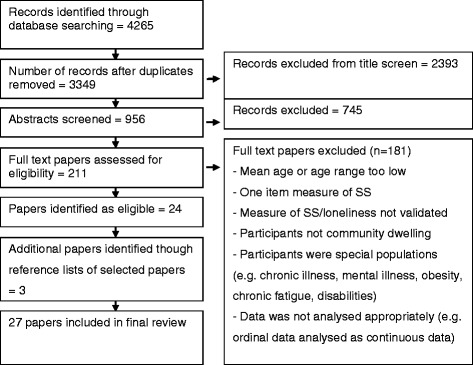
BACKGROUND: The promotion of active and healthy ageing is becoming increasingly important as the population ages. Physical activity (PA) significantly reduces all-cause mortality and contributes to the prevention of many chronic illnesses. However, the proportion of people globally who are active enough to gain these health benefits is low and decreases with age. Social support (SS) is a social determinant of health that may improve PA in older adults, but the association has not been systematically reviewed. This review had three aims: 1) Systematically review and summarise studies examining the association between SS, or loneliness, and PA in older adults; 2) clarify if specific types of SS are positively associated with PA; and 3) investigate whether the association between SS and PA differs between PA domains. METHODS: Quantitative studies examining a relationship between SS, or loneliness, and PA levels in healthy, older adults over 60 were identified using MEDLINE, PSYCInfo, SportDiscus, CINAHL and PubMed, and through reference lists of included studies. Quality of these studies was rated. RESULTS: This review included 27 papers, of which 22 were cross sectional studies, three were prospective/longitudinal and two were intervention studies. Overall, the study quality was moderate. Four articles examined the relation of PA with general SS, 17 with SS specific to PA (SSPA), and six with loneliness. The results suggest that there is a positive association between SSPA and…
Overview
CoChat Summary
## TL;DR
This systematic review of 27 papers found that social support specific to physical activity is generally positively associated with physical activity in older adults, especially support from family. In contrast, general social support showed no clear association, while loneliness was generally negatively associated with physical activity, though measurement variability limited firm conclusions.
## Key findings
- The review included 27 papers: 22 cross-sectional, 3 prospective/longitudinal, and 2 intervention studies; overall study quality was moderate.
- Of the 21 studies examining general or PA-specific social support, 13 found a significant positive association with physical activity and 1 found a significant negative association.
- For social support specific to physical activity (SSPA), 11 of 17 studies reported at least one significant positive association; the review concludes the association is especially positive when support comes from family members.
- Among the 6 loneliness studies, 4 of 6 found a significant negative association with physical activity; when the low-quality study was removed, the pattern was 67% significant and negative.
- For leisure-time physical activity (LTPA), the review reports a more consistent positive association with support: among studies assessing SSPA from friends and family, 67% of friend-support results and 83% of family-support results were positive for LTPA.
## Methods
- Design: Systematic review following PRISMA; studies were rated for quality using the Gyorkos risk assessment tool and synthesized by direction/significance of association.
- Data/sample: Quantitative, peer-reviewed studies in English, German, French, or Dutch on generally healthy community-dwelling older adults with mean age at least 60 years (minimum age no less than 50), identified from MEDLINE, PSYCInfo, SportDiscus, CINAHL, PubMed, plus reference lists.
- Main analysis: Studies were grouped into general social support, social support specific to physical activity, and loneliness; associations were coded as positive/negative/no association and summarized using the review’s overall rating scheme.
## Limitations
- The paper states that high variability in measurement methods for both social support and physical activity made studies difficult to compare.
- It states that the review excluded older adults with specific medical conditions, mental illness, or disabilities, and excluded qualitative studies; this likely omitted potentially relevant evidence.
- Evident from the text: the evidence base was mostly cross-sectional (22 of 27 studies), so the direction of association cannot be established well, and the paper notes this explicitly in discussing future research.
Model-written summary. Check it against the paper before relying on it.
Integrity signals
Registry
Cites
Statistics
Figures
Verification
Claims the paper makes
12 Valid · 6 Not valid · 45 Not checked · 73 Own results and interpretations
Every source the paper cites for this claim was checked and supports it.
In the paper
“One study found a negative association between SS from family and PA [75].”
§ The association between social support and physical activity in older adults: a systematic review > Results > Social support specific to PA
What the sources say
- Supportedcites [75] Park CH Elavsky S Koo KM Factors influencing physical activity in older adults J Exerc Rehabil 2014 10 1 45 52 10.12965/jer.140089 24678504 PMC3952835 source
The Results report a negative, statistically significant regression coefficient for family support for exercise as a predictor of physical activity (β=−0.220, P<0.01). This supports the claimed negative association, specifically in the study’s multiple-regression analysis. (LLM, conf=0.93)
plainstates an association- Asserted: passes — The authors put it forward as true.
- Checkable: passes — It can be checked against evidence.
- Load-bearing: unclear — It is unclear whether the paper’s conclusions depend on it.
- Based: passes — The paper gives a reason why it holds.
- Supported
The cited sources support only part of this claim — read each source’s verdict below.
In the paper
“Four of the six loneliness studies [58, 59, 61, 63] found a significant negative association.”
§ The association between social support and physical activity in older adults: a systematic review > Results > Relationship between SS, loneliness and PA
What the sources say
- Partly supportedcites [58] Luo Y Waite LJ Loneliness and mortality among older adults in China J Gerontol Series B Psychol Sci Soc Sci 2014 69 4 633 45 10.1093/geronb/gbu007 PMC4049147 24550354 sourceExperimental — accuracy not yet measured
The Results report significant negative associations between loneliness and physical exercise, self-rated health, and emotional health. The cited paper is one study, however, and does not establish the citing sentence’s count of four out of six studies; the sentence also does not specify which outcome the negative association concerns. No page number is available in our copy. (LLM, conf=0.70)
- Not checked — no full text of the sourcecites [59] Netz Y Goldsmith R Shimony T Arnon M Zeev A Loneliness is associated with an increased risk of sedentary life in older Israelis Aging Ment Health 2013 17 1 40 7 10.1080/13607863.2012.715140 22913477 source
- Not checked — no full text of the sourcecites [61] Shankar A McMunn A Banks J Steptoe A Loneliness, social isolation, and behavioral and biological health indicators in older adults Health Psychol 2011 30 4 377 85 10.1037/a0022826 21534675 source
- Not checked yetcites [63] Theeke LA Sociodemographic and health-related risks for loneliness and outcome differences by loneliness status in a sample of U.S. older adults Res Gerontol Nurs 2010 3 2 113 25 10.3928/19404921-20091103-99 20415360 source
Checked before — its earlier verdict is held back until a new check runs.
plainstates an association- Asserted: passes — The authors put it forward as true.
- Checkable: passes — It can be checked against evidence.
- Load-bearing: unclear — It is unclear whether the paper’s conclusions depend on it.
- Based: passes — The paper gives a reason why it holds.
- Partly supported
The cited sources support only part of this claim — read each source’s verdict below.
In the paper
“but only two of four in males [58, 63].”
§ The association between social support and physical activity in older adults: a systematic review > Results > Association between SS, loneliness and specific PA domains
What the sources say
- Partly supportedcites [58] Luo Y Waite LJ Loneliness and mortality among older adults in China J Gerontol Series B Psychol Sci Soc Sci 2014 69 4 633 45 10.1093/geronb/gbu007 PMC4049147 24550354 sourceExperimental — accuracy not yet measured
The Results (page unavailable) report negative, significant lagged effects in both directions between physical exercise and loneliness. They do not report that two of four associations were significant among males; the Methods (page unavailable) describe controlling for gender, not a male-specific result. (LLM, conf=0.87)
- Could not verifycites [63] Theeke LA Sociodemographic and health-related risks for loneliness and outcome differences by loneliness status in a sample of U.S. older adults Res Gerontol Nurs 2010 3 2 113 25 10.3928/19404921-20091103-99 20415360 sourceExperimental — accuracy not yet measured
Our copy of Theeke (2010) reports only whole-sample comparisons of loneliness groups (never/briefly/chronically lonely) on moderate activity/exercise — e.g., Results for Outcomes Reported with Loneliness ('The chronically lonely group reported less exercise...'; 49.8% vs 33.1% exercising more than once weekly) — and no sex-stratified set of activity-loneliness associations. Searched for 'leisure-time physical activity', 'gender/sex differences in exercise and loneliness', and 'negative correlation between physical activity and loneliness': the nearest passages are Gender and Loneliness and Unanticipated Findings, which state gender was not predictive of loneliness and that men and women may experience loneliness differently, but nothing about four associations of which two were negative and significant in males. The paper therefore neither supports nor contradicts the specific claim attributed to it. (LLM, conf=0.70)
plainstates an association- Asserted: passes — The authors put it forward as true.
- Checkable: passes — It can be checked against evidence.
- Load-bearing: unclear — It is unclear whether the paper’s conclusions depend on it.
- Based: passes — The paper gives a reason why it holds.
- Partly supported
The cited sources support only part of this claim — read each source’s verdict below.
In the paper
“with three of four associations [58, 59, 63] being negative and significant in females”
§ The association between social support and physical activity in older adults: a systematic review > Results > Association between SS, loneliness and specific PA domains
What the sources say
- Partly supportedcites [58] Luo Y Waite LJ Loneliness and mortality among older adults in China J Gerontol Series B Psychol Sci Soc Sci 2014 69 4 633 45 10.1093/geronb/gbu007 PMC4049147 24550354 sourceExperimental — accuracy not yet measured
The Results report that the three-year lagged associations between physical exercise and loneliness were negative and significant. They do not report those associations separately for females or establish the claimed count of three out of four associations. (LLM, conf=0.84)
- Not checked — no full text of the sourcecites [59] Netz Y Goldsmith R Shimony T Arnon M Zeev A Loneliness is associated with an increased risk of sedentary life in older Israelis Aging Ment Health 2013 17 1 40 7 10.1080/13607863.2012.715140 22913477 source
- Not checked yetcites [63] Theeke LA Sociodemographic and health-related risks for loneliness and outcome differences by loneliness status in a sample of U.S. older adults Res Gerontol Nurs 2010 3 2 113 25 10.3928/19404921-20091103-99 20415360 source
Checked before — its earlier verdict is held back until a new check runs.
plainstates an association- Asserted: passes — The authors put it forward as true.
- Checkable: passes — It can be checked against evidence.
- Load-bearing: unclear — It is unclear whether the paper’s conclusions depend on it.
- Based: passes — The paper gives a reason why it holds.
- Partly supported
The sources with a verdict support this claim; the rest weren’t checked yet, have no full text we could read, or their verdicts aren’t rated yet.
In the paper
“Four (57%) of these were significant and negative [58, 59, 61, 63]”
§ The association between social support and physical activity in older adults: a systematic review > Results > Loneliness and PA levels
What the sources say
- Supportedcites [58] Luo Y Waite LJ Loneliness and mortality among older adults in China J Gerontol Series B Psychol Sci Soc Sci 2014 69 4 633 45 10.1093/geronb/gbu007 PMC4049147 24550354 source
The Results report that the three-year lagged effect of loneliness on physical exercise was negative and significant. This supports citing the paper as one of the studies with a significant negative association; the four-of-seven tally is the citing paper’s synthesis, not a count attributed to this individual source. (LLM, conf=0.91)
- Not checked — no full text of the sourcecites [59] Netz Y Goldsmith R Shimony T Arnon M Zeev A Loneliness is associated with an increased risk of sedentary life in older Israelis Aging Ment Health 2013 17 1 40 7 10.1080/13607863.2012.715140 22913477 source
- Not checked — no full text of the sourcecites [61] Shankar A McMunn A Banks J Steptoe A Loneliness, social isolation, and behavioral and biological health indicators in older adults Health Psychol 2011 30 4 377 85 10.1037/a0022826 21534675 source
- Not checked yetcites [63] Theeke LA Sociodemographic and health-related risks for loneliness and outcome differences by loneliness status in a sample of U.S. older adults Res Gerontol Nurs 2010 3 2 113 25 10.3928/19404921-20091103-99 20415360 source
Checked before — its earlier verdict is held back until a new check runs.
plainstates an association- Asserted: passes — The authors put it forward as true.
- Checkable: passes — It can be checked against evidence.
- Load-bearing: passes — The paper’s conclusions depend on it.
- Based: passes — The paper gives a reason why it holds.
- Supported
65 more claims · 2 with their cited sources checked
Create a free account to see all 136 claims and to verify the 7 references still open.
- Probably not a substantial claim. 33
- It may state two separate claims as one. 42
- The quote only partly states this claim. 2
Claims other papers make about this one
Each is checked against this paper’s own text: does it say what the citing paper says it does?
The source backs part of the claim, not all of it — or backs it for a different population, condition or comparison.
In the citing paper
“Previous research has also indicated social support to be an important determinant of physical activity engagement [242–244].”
From Rates of compliance and adherence to high-intensity interval training: a systematic review and Meta-analyses (2023) · cites this paper as [244]
Experimental — accuracy not yet measured
Citations
Cites
The theory of planned behavior
Ajzen, I. (1991) · Organizational Behavior and Human Decision Processes · doi:10.1016/0749-5978(91)90020-t · Cited by 90,587
The CES-D Scale: A Self-Report Depression Scale for Research in the General Population
Radloff, L. S. (1977) · Applied Psychological Measurement · doi:10.1177/014662167700100306 · Cited by 53,267
Liberati, A., Altman, D. G., Tetzlaff, J., Mulrow, C., Gøtzsche, P. C., Ioannidis, J. P. A., Clarke, M., Devereaux, P. J., Kleijnen, J., & Moher, D. (2009) · PLoS Medicine · doi:10.1371/journal.pmed.1000100 · Cited by 28,164 · cited 1×
“Methods Protocol The Preferred Reporting Items for Systematic Reviews and Meta-Analyses (PRISMA) checklist has been followed to undertake this systematic review [52].”
MethodToward an experimental ecology of human development.
Bronfenbrenner, U. (1977) · American Psychologist · doi:10.1037/0003-066x.32.7.513 · Cited by 10,853 · cited 1×
“However, many behaviour change theories, including the Social Cognitive Theory [19], Social-Ecological Model [20, 21], Theory of Planned Behaviour [22] and the Health Belief Model [23], highlight the importance of social factors such as social support (SS) and social connectedness in maintaining and/or initiating beha…”
BackgroundLiberati, A., Altman, D. G., Tetzlaff, J., Mulrow, C., Gøtzsche, P. C., Ioannidis, J. P. A., Clarke, M., Devereaux, P. J., Kleijnen, J., & Moher, D. (2009) · Annals of Internal Medicine · doi:10.7326/0003-4819-151-4-200908180-00136 · Cited by 10,349
‘Small Changes' to Diet and Physical Activity Behaviors for Weight Management
Hills, A. P., Byrne, N. M., Lindstrom, R., & Hill, J. O. (2013) · Obesity Facts · doi:10.1159/000345030 · Cited by 9,493
An ecological perspective on health promotion programs
McLeroy, K. R., Bibeau, D., Steckler, A., & Glanz, K. (1988) · Health Education Quarterly · doi:10.1177/109019818801500401 · Cited by 8,502 · cited 1×
“However, many behaviour change theories, including the Social Cognitive Theory [19], Social-Ecological Model [20, 21], Theory of Planned Behaviour [22] and the Health Belief Model [23], highlight the importance of social factors such as social support (SS) and social connectedness in maintaining and/or initiating beha…”
BackgroundHuman agency in social cognitive theory.
Bandura, A. (1989) · American Psychologist · doi:10.1037/0003-066x.44.9.1175 · Cited by 8,263
What good are positive emotions?
Fredrickson, B. L. (1998) · Review of General Psychology · doi:10.1037/1089-2680.2.3.300 · Cited by 6,066
Social Learning Theory and the Health Belief Model
Rosenstock, I. M., Strecher, V. J., & Becker, M. H. (1988) · Health Education Quarterly · doi:10.1177/109019818801500203 · Cited by 5,564 · cited 1×
“However, many behaviour change theories, including the Social Cognitive Theory [19], Social-Ecological Model [20, 21], Theory of Planned Behaviour [22] and the Health Belief Model [23], highlight the importance of social factors such as social support (SS) and social connectedness in maintaining and/or initiating beha…”
BackgroundA Short Scale for Measuring Loneliness in Large Surveys: Results From Two Population-Based Studies
Hughes, M. E., Waite, L. J., Hawkley, L. C., & Cacioppo, J. T. (2004) · Research on Aging · doi:10.1177/0164027504268574 · Cited by 4,781
A simple method to assess exercise behavior in the community.
Godin, G., & Shephard, R. J. (1985) · PubMed · Cited by 4,760
A review of correlates of physical activity of children and adolescents
SALLIS, J. F., PROCHASKA, J. J., & TAYLOR, W. C. (2000) · Medicine & Science in Sports & Exercise · doi:10.1097/00005768-200005000-00014 · Cited by 4,421 · cited 21×
“The SSPA category of studies had the most consistency of scales, with 14 out of 17 utilising various versions of The Sallis SS for Leisure Scale [42].”
BackgroundMethodResultInfluential(1994) · Cited by 3,556
An ecological approach to creating active living communities
Sallis, J. F., Cervero, R. B., Ascher, W., Henderson, K. A., Kraft, M. K., & Kerr, J. (2006) · Annual Review of Public Health · doi:10.1146/annurev.publhealth.27.021405.102100 · Cited by 3,296 · cited 1×
“time PA, household activities and occupational activities [50].”
BackgroundThe physical activity scale for the elderly (PASE): Development and evaluation
Washburn, R. A., Smith, K. W., Jette, A. M., & Janney, C. A. (1993) · Journal of Clinical Epidemiology · doi:10.1016/0895-4356(93)90053-4 · Cited by 3,177
Assessing social support: The Social Support Questionnaire.
Sarason, I. G., Levine, H. M., Basham, R. B., & Sarason, B. R. (1983) · Journal of Personality and Social Psychology · doi:10.1037//0022-3514.44.1.127 · Cited by 3,067
Health Belief Model and Personal Health Behavior
Becker, M. H. (1976) · Medical Entomology and Zoology · Cited by 3,065
Social determinants of health: the solid facts
Wilkinson, R. G., & Marmot, M. G. (2003) · University Libraries (University of Maryland) · doi:10.13016/yroj-yfcz · Cited by 2,709
The effectiveness of interventions to increase physical activityA systematic review1 and 2
KAHN, E., RAMSEY, L., BROWNSON, R., HEATH, G., HOWZE, E., POWELL, K., STONE, E., RAJAB, M., & CORSO, P. (2002) · American Journal of Preventive Medicine · doi:10.1016/s0749-3797(02)00434-8 · Cited by 2,022
The development of scales to measure social support for diet and exercise behaviors
Sallis, J. F., Grossman, R. M., Pinski, R. B., Patterson, T. L., & Nader, P. R. (1987) · Preventive Medicine · doi:10.1016/0091-7435(87)90022-3 · Cited by 1,534 · cited 6×
“The SSPA category of studies had the most consistency of scales, with 14 out of 17 utilising various versions of The Sallis SS for Leisure Scale [42].”
BackgroundMethodInfluentialApplication of the Theory of Planned Behavior to Leisure Choice
Ajzen, I., & Driver, B. L. (1992) · Journal of Leisure Research · doi:10.1080/00222216.1992.11969889 · Cited by 1,458
Long-term health benefits of physical activity – a systematic review of longitudinal studies
Reiner, M., Niermann, C., Jekauc, D., & Woll, A. (2013) · BMC Public Health · doi:10.1186/1471-2458-13-813 · Cited by 1,447
A meta-analysis of physical activity in the prevention of coronary heart disease.
BERLIN, J. A., & COLDITZ, G. A. (1990) · American Journal of Epidemiology · doi:10.1093/oxfordjournals.aje.a115704 · Cited by 1,382
The Development of a Rasch-Type Loneliness Scale
de Jong-Gierveld, J., & Kamphuls, F. (1985) · Applied Psychological Measurement · doi:10.1177/014662168500900307 · Cited by 1,291
CHAMPS Physical Activity Questionnaire for Older Adults: outcomes for interventions
STEWART, A. L., MILLS, K. M., KING, A. C., HASKELL, W. L., GILLIS, D., & RITTER, P. L. (2001) · Medicine & Science in Sports & Exercise · doi:10.1097/00005768-200107000-00010 · Cited by 1,252
Allender, S., Cowburn, G., & Foster, C. (2006) · Health Education Research · doi:10.1093/her/cyl063 · Cited by 1,215 · cited 1×
“Social interaction and enjoyment have been described as two key reasons for participating in sport or (leisure) physical activity in both children and adults [85].”
BackgroundAssessing social networks among elderly populations
Lubben, J. E. (1988) · Family & Community Health · doi:10.1097/00003727-198811000-00008 · Cited by 1,188
The provisions of social relationships
Weiss, R. S. (1974) · Medical Entomology and Zoology · Cited by 1,141
Loneliness, social isolation, and behavioral and biological health indicators in older adults.
Shankar, A., McMunn, A., Banks, J., & Steptoe, A. (2011) · Health Psychology · doi:10.1037/a0022826 · Cited by 1,100 · cited 4×
“The loneliness studies had much more overlap in loneliness measures, with three studies using the CES-D one item scale, assessing how often people felt lonely in the past week, and two of the other studies used scales with similar wording [58, 61].”
BackgroundResultInfluentialThe Physical Activity Scale for the Elderly (PASE)
Washburn, R. A., McAuley, E., Katula, J., Mihalko, S. L., & Boileau, R. A. (1999) · Journal of Clinical Epidemiology · doi:10.1016/s0895-4356(99)00049-9 · Cited by 997
Paterson, D. H., & Warburton, D. E. (2010) · International Journal of Behavioral Nutrition and Physical Activity · doi:10.1186/1479-5868-7-38 · Cited by 953 · cited 1×
“Performing sufficient physical activity (PA) is a primary modifiable determinant of health especially pertinent to Active Ageing because it is known to have vast mental and physical health benefits for people of all ages [6, 7].”
BackgroundBooth, M. L., Owen, N., Bauman, A., Clavisi, O., & Leslie, E. (2000) · Preventive Medicine · doi:10.1006/pmed.2000.0661 · Cited by 774 · cited 10×
“Inactivity rates increase with age, with around two-thirds of those between 65-74 years and three-quarters of those over 75 years not meeting PA guidelines of at least 150 min/ week of moderate intensity activity in either the US [15] or Australia [17].”
BackgroundInfluentialA critical review of the literature on social and leisure activity and wellbeing in later life
ADAMS, K. B., LEIBBRANDT, S., & MOON, H. (2011) · Ageing and Society · doi:10.1017/s0144686x10001091 · Cited by 773 · cited 1×
“Additionally, there is a difference between leisure activities and other types of physical activity (such as house work, transport or employment) in that they are done for solely enjoyment rather than function [84].”
BackgroundBeing alone in later life: Loneliness, social isolation and living alone
Victor, C., Scambler, S., Bond, J., & Bowling, A. (2000) · Reviews in Clinical Gerontology · doi:10.1017/s0959259800104101 · Cited by 730 · cited 1×
“Older adults have the potential to experience greater levels of loneliness and decreased SS as they encounter significant life events such as retirement, loved ones becoming unwell or passing away, or moving into care [36].”
BackgroundTurvey, C. L., Wallace, R. B., & Herzog, R. (1999) · International Psychogeriatrics · doi:10.1017/s1041610299005694 · Cited by 714
Social Engagement and Depressive Symptoms in Late Life: Longitudinal Findings
Glass, T. A., De Leon, C. F. M., Bassuk, S. S., & Berkman, L. F. (2006) · Journal of Aging and Health · doi:10.1177/0898264306291017 · Cited by 561 · cited 2×
“In the eight studies where the association between PA levels and SS from friends or family were examined separately, four (50%) reported a positive association for SSPA from friends [68, 74, 76, 79] and five (63%) found a positive association for SSPA from family.”
BackgroundResultHealth Behaviors of Adults: United States, 2002-04: (609512007-001)
Adams, P. F., & Schoenborn, C. A. (2006) · PsycEXTRA Dataset · doi:10.1037/e609512007-001 · Cited by 524
Exercise comes of age: rationale and recommendations for a geriatric exercise prescription
Singh, M. A. F. (2002) · The Journals of Gerontology Series A: Biological Sciences and Medical Sciences · doi:10.1093/gerona/57.5.m262 · Cited by 485 · cited 1×
“muscle strength, balance, cardiovascular endurance) [2, 3].”
Predicting long-term maintenance of physical activity in older adults
McAuley, E., Jerome, G. J., Elavsky, S., Marquez, D. X., & Ramsey, S. N. (2003) · Preventive Medicine · doi:10.1016/s0091-7435(03)00089-6 · Cited by 483 · cited 2×
“More than 80% of the identified studies (22 studies) were cross-sectional, three were longitudinal [58, 60, 71] and two were experimental [66, 79] (see Table 2).”
BackgroundClarifying the social support theory‐research linkage
Hupcey, J. E. (1998) · Journal of Advanced Nursing · doi:10.1046/j.1365-2648.1998.01231.x · Cited by 449
Lee, D.-C., Sui, X., Ortega, F. B., Kim, Y.-S., Church, T. S., Winett, R. A., Ekelund, U., Katzmarzyk, P. T., & Blair, S. N. (2011) · British Journal of Sports Medicine · doi:10.1136/bjsm.2009.066209 · Cited by 435
Physical activity social support and middle- and older-aged minority women: results from a US survey
Eyler, A. A., Brownson, R. C., Donatelle, R. J., King, A. C., Brown, D., & Sallis, J. F. (1999) · Social Science & Medicine · doi:10.1016/s0277-9536(99)00137-9 · Cited by 434 · cited 1×
“[49] found that high SS from both friends and family was significantly associated with greater PA levels in women.”
BackgroundDeterminants of Exercise Behavior
SALLIS, J. F., & HOVELL, M. F. (1990) · Exercise and Sport Sciences Reviews · doi:10.1249/00003677-199001000-00014 · Cited by 428
A multivariate study of determinants of vigorous exercise in a community sample
Sallis, J. F., Hovell, ]. F., Richard Hofstetter, C., Faucher, P., Elder, J. P., Blanchard, J., Caspersen, C. J., Powell, K. E., & Christenson, G. M. (1989) · Preventive Medicine · doi:10.1016/0091-7435(89)90051-0 · Cited by 419
Carlson, J. A., Sallis, J. F., Conway, T. L., Saelens, B. E., Frank, L. D., Kerr, J., Cain, K. L., & King, A. C. (2012) · Preventive Medicine · doi:10.1016/j.ypmed.2011.10.004 · Cited by 393 · cited 2×
“LTPA was assessed in 15 studies and transport in one [31].”
BackgroundMethodvan Stralen, M. M., De Vries, H., Mudde, A. N., Bolman, C., & Lechner, L. (2009) · Health Psychology Review · doi:10.1080/17437190903229462 · Cited by 344
Loneliness, isolation and the health of older adults: do we need a new research agenda?
Valtorta, N., & Hanratty, B. (2012) · Journal of the Royal Society of Medicine · doi:10.1258/jrsm.2012.120128 · Cited by 343 · cited 30×
“The SSPA category of studies had the most consistency of scales, with 14 out of 17 utilising various versions of The Sallis SS for Leisure Scale [42].”
BackgroundInfluentialDeterminants of physical activity and exercise in healthy older adults: A systematic review
Koeneman, M. A., Verheijden, M. W., Chinapaw, M. J. M., & Hopman-Rock, M. (2011) · International Journal of Behavioral Nutrition and Physical Activity · doi:10.1186/1479-5868-8-142 · Cited by 339
Physical activity and social support in adolescents: a systematic review
Mendonca, G., Cheng, L. A., Melo, E. N., & de Farias Junior, J. C. (2014) · Health Education Research · doi:10.1093/her/cyu017 · Cited by 322 · cited 2×
“These findings are in line with those of a systematic review in adolescents, where more consistent positive associations were found between SS from all sources and LTPA levels than when PA domains were not separated [51].”
BackgroundResultWilliams, P., Barclay, L., & Schmied, V. (2004) · Qualitative Health Research · doi:10.1177/1049732304266997 · Cited by 321 · cited 2×
“emotional) and distraction from stressors or information [40].”
BackgroundExercise self-efficacy in older adults: Social, affective, and behavioral influences
McAuley, E., Jerome, G. J., Marquez, D. X., Elavsky, S., & Blissmer, B. (2003) · Annals of Behavioral Medicine · doi:10.1207/s15324796abm2501_01 · Cited by 316
Demographic and psychosocial correlates of physical activity in late life
Kaplan, M. S., Newsom, J. T., McFarland, B. H., & Lu, L. (2001) · American Journal of Preventive Medicine · doi:10.1016/s0749-3797(01)00364-6 · Cited by 280 · cited 25×
“= indeterminate association (34-59% of the findings supported the positive or negative association), + = positive association, - = negative association; (60%-100% of the findings supported the association) [57] consistently positively associated with LTPA, rather than just family, as was evident with all studies combi…”
BackgroundInfluentialThe effects of computers on older adult users
Karavidas, M., Lim, N. K., & Katsikas, S. L. (2005) · Computers in Human Behavior · doi:10.1016/j.chb.2004.03.012 · Cited by 279
Wilcox, S., Bopp, M., Oberrecht, L., Kammermann, S. K., & McElmurray, C. T. (2003) · The Journals of Gerontology Series B: Psychological Sciences and Social Sciences · doi:10.1093/geronb/58.6.p329 · Cited by 270 · cited 2×
“Most studies incorporated both males and females and four included females only [67,72,78,65].”
BackgroundMethodQualitative Attributes and Measurement Properties of Physical Activity Questionnaires: A Checklist
Terwee, C. B., Mokkink, L. B., van Poppel, M. N. M., Chinapaw, M. J. M., van Mechelen, W., & de Vet, H. C. W. (2010) · Sports Medicine · doi:10.2165/11531370-000000000-00000 · Cited by 269 · cited 3×
“If the mean age or age range of participants was not clear the paper was excluded; 2) A validated measure of SS with at least two items or a validated measure of loneliness; 3) PA was measured objectively or subjectively using measures with established validity as reported in the individual papers, or with clear face…”
BackgroundMethodInfluentialHaughton McNeill, L., Wyrwich, K. W., Brownson, R. C., Clark, E. M., & Kreuter, M. W. (2006) · Annals of Behavioral Medicine · doi:10.1207/s15324796abm3101_7 · Cited by 259 · cited 2×
“In adults, emotional support from others has been found to be positively associated with intrinsic motivation for PA (“behaviour engaged for pleasure and enjoyment”; p37 [47]) and in turn, participation in moderate to vigorous PA and walking.”
BackgroundLoneliness and Mortality Among Older Adults in China
Luo, Y., & Waite, L. J. (2014) · The Journals of Gerontology Series B: Psychological Sciences and Social Sciences · doi:10.1093/geronb/gbu007 · Cited by 252 · cited 24×
“Four of the six loneliness studies [58, 59, 61, 63] found a significant negative association.”
BackgroundResultInfluentialLife Events and Change in Leisure Time Physical Activity: A Systematic Review
Engberg, E., Alen, M., Kukkonen-Harjula, K., Peltonen, J. E., Tikkanen, H. O., & Pekkarinen, H. (2012) · Sports Medicine · doi:10.2165/11597610-000000000-00000 · Cited by 221
Caetano, S. C., Silva, C. M., & Vettore, M. V. (2013) · BMC Geriatrics · doi:10.1186/1471-2318-13-122 · Cited by 218 · cited 1×
“Social support has been positively associated with self-rated health in older women but not men in a number of studies [86, 87].”
BackgroundMowen, A., Orsega-Smith, E., Payne, L., Ainsworth, B., & Godbey, G. (2007) · Journal of Physical Activity and Health · doi:10.1123/jpah.4.2.167 · Cited by 214 · cited 1×
“Quality rating The quality of the four studies examining the association between general SS and PA levels was moderate for three studies [80, 81, 83] and weak for one study [82].”
BackgroundOrsega-Smith, E. M., Payne, L. L., Mowen, A. J., Ho, C.-H., & Godbey, G. C. (2007) · Journal of Leisure Research · doi:10.1080/00222216.2007.11950129 · Cited by 203 · cited 1×
“It is vital that social interactions are maintained with increasing age, as good social functioning is associated with improved self-efficacy [30–32], reduced risk of depression [33, 34] and a reduced risk of all-cause mortality [35].”
BackgroundCampbell, A. J., & Robertson, M. C. (2007) · Age and Ageing · doi:10.1093/ageing/afm122 · Cited by 202
Physical activity measurement- a primer for health promotion
Bauman, A., Phongsavan, P., Schoeppe, S., & Owen, N. (2006) · Promotion & Education · doi:10.1177/10253823060130020103 · Cited by 199 · cited 1×
“However, the sample sizes of these studies were all greater than 900, and in large studies these more generalised questions amongst large test batteries are more acceptable [89].”
BackgroundSocial support for exercise: Relationship to physical activity in young adults
Treiber, F. A., Baranowski, T., Braden, D. S., Strong, W. B., Levy, M., & Knox, W. (1991) · Preventive Medicine · doi:10.1016/0091-7435(91)90068-f · Cited by 195
Life Events and Changing Physical Activity Patterns in Women at Different Life Stages
Brown, W. J., Heesch, K. C., & Miller, Y. D. (2009) · Annals of Behavioral Medicine · doi:10.1007/s12160-009-9099-2 · Cited by 194 · cited 2×
“Retirement has indeed been positively associated with PA levels in middle aged women [88].”
BackgroundTheeke, L. A. (2010) · Research in Gerontological Nursing · doi:10.3928/19404921-20091103-99 · Cited by 186 · cited 23×
“Four of the six loneliness studies [58, 59, 61, 63] found a significant negative association.”
BackgroundResultInfluentialPreventive health behavior: A review of research and issues.
Kirscht, J. P. (1983) · Health Psychology · doi:10.1037/0278-6133.2.3.277 · Cited by 167
Ayotte, B. J., Margrett, J. A., & Hicks-Patrick, J. (2010) · Journal of Health Psychology · doi:10.1177/1359105309342283 · Cited by 162
Promoting physical activity among older adultsFrom ecology to the individual
Satariano, W. A., & McAuley, E. (2003) · American Journal of Preventive Medicine · doi:10.1016/s0749-3797(03)00183-1 · Cited by 152
Kouvonen, A., De Vogli, R., Stafford, M., Shipley, M. J., Marmot, M. G., Cox, T., Vahtera, J., Vaananen, A., Heponiemi, T., Singh-Manoux, A., et al. (2012) · The European Journal of Public Health · doi:10.1093/eurpub/ckr091 · Cited by 135 · cited 1×
“[30] reported that people with high emotional support from their closest significant other, who met PA guidelines, were more likely to still be undertaking adequate PA five years later.”
BackgroundKashiwagi, M., Tamiya, N., Sato, M., & Yano, E. (2013) · BMC Geriatrics · doi:10.1186/1471-2318-13-1 · Cited by 131
Physical activity intervention in older adults: does a participating partner make a difference?
Gellert, P. R., Ziegelmann, J. P., Warner, L. M., & Schwarzer, R. (2011) · European Journal of Ageing · doi:10.1007/s10433-011-0193-5 · Cited by 123 · cited 2×
“More than 80% of the identified studies (22 studies) were cross-sectional, three were longitudinal [58, 60, 71] and two were experimental [66, 79] (see Table 2).”
BackgroundNewall, N. E. G., Chipperfield, J. G., Bailis, D. S., & Stewart, T. L. (2013) · Health Psychology · doi:10.1037/a0029413 · Cited by 119
Schnittger, R. I. B., Wherton, J., Prendergast, D., & Lawlor, B. A. (2012) · Aging & Mental Health · doi:10.1080/13607863.2011.629092 · Cited by 119
(1995) · PubMed · Cited by 117
Social network type and health-related behaviors: Evidence from an American national survey
Shiovitz-Ezra, S., & Litwin, H. (2012) · Social Science & Medicine · doi:10.1016/j.socscimed.2012.04.031 · Cited by 115 · cited 20×
“= indeterminate association (34-59% of the findings supported the positive or negative association), + = positive association, - = negative association; (60%-100% of the findings supported the association) [57] consistently positively associated with LTPA, rather than just family, as was evident with all studies combi…”
InfluentialNunan, D., Mahtani, K. R., Roberts, N., & Heneghan, C. (2013) · Systematic Reviews · doi:10.1186/2046-4053-2-56 · Cited by 109
Martinson, B. C., Crain, A. L., Sherwood, N. E., Hayes, M., Pronk, N. P., & O'Connor, P. J. (2008) · Preventive Medicine · doi:10.1016/j.ypmed.2007.08.007 · Cited by 105 · cited 1×
“Risk of bias and quality assessment The Gyorkos risk assessment tool was used to rate the quality of included papers, as it includes items to assess the quality of multiple study designs [55, 56].”
MethodAge-related changes in balance performance
Balogun, J. A., Akindele, K. A., Nihinlola, J. O., et al. (1994) · Disability and Rehabilitation · doi:10.3109/09638289409166013 · Cited by 99 · cited 1×
“muscle strength, balance, cardiovascular endurance) [2, 3].”
Hall, K. S., & McAuley, E. (2010) · Health Education Research · doi:10.1093/her/cyq019 · Cited by 95 · cited 1×
“Most studies incorporated both males and females and four included females only [67,72,78,65].”
BackgroundSasidharan, V., Payne, L., Orsega-Smith, E., & Godbey, G. (2006) · Managing Leisure · doi:10.1080/13606710600715242 · Cited by 89 · cited 1×
“In the eight studies where the association between PA levels and SS from friends or family were examined separately, four (50%) reported a positive association for SSPA from friends [68, 74, 76, 79] and five (63%) found a positive association for SSPA from family.”
BackgroundFord, E. S., Ahluwalia, I. B., & Galuska, D. A. (2000) · Preventive Medicine · doi:10.1006/pmed.1999.0606 · Cited by 88
Kendig, H., Browning, C. J., Thomas, S. A., & Wells, Y. (2014) · Frontiers in Public Health · doi:10.3389/fpubh.2014.00070 · Cited by 83 · cited 1×
“Now more than ever it is vital to investigate ways to encourage aging well [4] or ‘Active Ageing’.”
BackgroundHuy, C., & Schneider, S. O. (2008) · Zeitschrift für Gerontologie und Geriatrie · doi:10.1007/s00391-007-0474-y · Cited by 78
Correlates of leisure-time physical activity in an elderly population in Singapore.
Lian, W. M., Gan, G. L., Pin, C. H., Wee, S., & Ye, H. C. (1999) · American Journal of Public Health · doi:10.2105/ajph.89.10.1578 · Cited by 77 · cited 30×
“The SSPA category of studies had the most consistency of scales, with 14 out of 17 utilising various versions of The Sallis SS for Leisure Scale [42].”
BackgroundResultInfluentialCorrelates of Strength Training in Older Rural African American and Caucasian Women
Bopp, M., Wilcox, S., Oberrecht, L., Kammermann, S., & McElmurray, C. T. (2004) · Women & Health · doi:10.1300/j013v40n01_01 · Cited by 74 · cited 3×
“In the four female only studies, one found a significant association for SSPA overall [72] and one found an association for SSPA from family only [65].”
BackgroundResultSocial support for exercise among elderly women in Canada
COUSINS, S. O. (1995) · Health Promotion International · doi:10.1093/heapro/10.4.273 · Cited by 72 · cited 2×
“In the four female only studies, one found a significant association for SSPA overall [72] and one found an association for SSPA from family only [65].”
Background(1994) · PubMed · Cited by 69
Factors influencing physical activity in older adults
Park, C.-H., Elavsky, S., & Koo, K.-M. (2014) · Journal of Exercise Rehabilitation · doi:10.12965/jer.140089 · Cited by 64 · cited 2×
“One study found a negative association between SS from family and PA [75].”
BackgroundBooth, M. L., Owen, N., Bauman, A., & Gore, C. J. (1996) · Research Quarterly for Exercise and Sport · doi:10.1080/02701367.1996.10607948 · Cited by 63
THOMAS, G. N., MACFARLANE, D. J., GUO, B., CHEUNG, B. M. Y., MCGHEE, S. M., CHOU, K.-L., DEEKS, J. J., LAM, T. H., & TOMLINSON, B. (2012) · Medicine & Science in Sports & Exercise · doi:10.1249/mss.0b013e318244314a · Cited by 62
Loneliness is associated with an increased risk of sedentary life in older Israelis
Netz, Y., Goldsmith, R., Shimony, T., Arnon, M., & Zeev, A. (2013) · Aging & Mental Health · doi:10.1080/13607863.2012.715140 · Cited by 58 · cited 27×
“Four of the six loneliness studies [58, 59, 61, 63] found a significant negative association.”
BackgroundResultInfluentialHansen, B. H., Ommundsen, Y., Holme, I., Kolle, E., & Anderssen, S. A. (2013) · International Journal of Public Health · doi:10.1007/s00038-013-0472-3 · Cited by 55
Active living—the perception of older people with chronic conditions
Fuller, B. G., Williams, J. S., & Byles, J. (2010) · Chronic Illness · doi:10.1177/1742395310377673 · Cited by 50
Chemaitelly, H., Kanaan, C., Beydoun, H., Chaaya, M., Kanaan, M., & Sibai, A. M. (2013) · Quality of Life Research · doi:10.1007/s11136-012-0273-9 · Cited by 45 · cited 1×
“Social support has been positively associated with self-rated health in older women but not men in a number of studies [86, 87].”
BackgroundPsychosocial and Environmental Correlates of Physical Activity Among Korean Older Adults
Kim, Y., & Kosma, M. (2013) · Research on Aging · doi:10.1177/0164027512462412 · Cited by 45 · cited 2×
“In the eight studies where the association between PA levels and SS from friends or family were examined separately, four (50%) reported a positive association for SSPA from friends [68, 74, 76, 79] and five (63%) found a positive association for SSPA from family.”
BackgroundResultSocial Support, Health-Promotive Beliefs, and Preventive Health Behaviors Among the Elderly
Potts, M. K., Hurwicz, M.-L., & Goldstein, M. S. (1992) · Journal of Applied Gerontology · doi:10.1177/073346489201100404 · Cited by 39 · cited 24×
“= indeterminate association (34-59% of the findings supported the positive or negative association), + = positive association, - = negative association; (60%-100% of the findings supported the association) [57] consistently positively associated with LTPA, rather than just family, as was evident with all studies combi…”
BackgroundMethodInfluentialUsing Social Cognitive Theory to Predict Intentional Exercise in Post-Retirement Adults
Schuster, C., Petosa, R. L., & Petosa, S. (1995) · Health Education · doi:10.1080/10556699.1995.10603072 · Cited by 37
Exercise and health in frail elderly people: a review of randomized controlled trials
Barreto, P. D. S. (2009) · European Review of Aging and Physical Activity · doi:10.1007/s11556-009-0050-0 · Cited by 34 · cited 1×
“Performing sufficient physical activity (PA) is a primary modifiable determinant of health especially pertinent to Active Ageing because it is known to have vast mental and physical health benefits for people of all ages [6, 7].”
BackgroundA Motivational Physical Activity Intervention for Improving Mobility in Older Korean Americans
Yeom, H.-A., & Fleury, J. (2014) · Western Journal of Nursing Research · doi:10.1177/0193945913511546 · Cited by 28 · cited 4×
“More than 80% of the identified studies (22 studies) were cross-sectional, three were longitudinal [58, 60, 71] and two were experimental [66, 79] (see Table 2).”
BackgroundResultInfluentialWellness Motivation Theory in Practice
Pérez, A., & Fleury, J. (2009) · Geriatric Nursing · doi:10.1016/j.gerinurse.2009.02.006 · Cited by 26
Beaudet, M. (1996) · PubMed · Cited by 24
Factors Predicting Physical Activity among Older Thais Living in Low Socioeconomic Urban Communities
Kraithaworn, P., Sirapo‐ngam, Y., Piaseu, N., Nityasuddhi, D., & Gretebeck, K. A. (2011) · Pacific Rim International Journal of Nursing Research · Cited by 19
Physical Activity Questionnaire Development and Testing among Elderly Community-Dwelling Thais
Visuthipanich, V., Sirapo‐ngam, Y., Malathum, P., Kijboonchoo, K., Vorapongsathorn, T., & Winters‐Stone, K. M. (2009) · Pacific Rim International Journal of Nursing Research · Cited by 16
Correlates of Individual Physical Activities in Older Adults
Vance, D. E., Ross, L. A., Ball, K. K., Wadley, V. G., & Rizzo, M. (2007) · Activities, Adaptation & Aging · doi:10.1300/j016v31n04_01 · Cited by 15 · cited 22×
“= indeterminate association (34-59% of the findings supported the positive or negative association), + = positive association, - = negative association; (60%-100% of the findings supported the association) [57] consistently positively associated with LTPA, rather than just family, as was evident with all studies combi…”
BackgroundMethodInfluentialOka, K., & Shibata, A. (2012) · Current Aging Science · doi:10.2174/1874609811205010058 · Cited by 14 · cited 1×
“Only four studies assessed sex differences relating to SS and PA levels [59, 70, 73, 80].”
Background(2012) · PubMed · Cited by 14
Relationship between Psychological and Social Variables to Explaining Exercise Behavior in Adults
keun, Y. J., Hoon, L. C., Kim, Y., & 현승권 (2006) · Korean Journal of Sport Science · Cited by 12
Health behaviors of adults: United States, 2008-2010.
Schoenborn, C. A., Adams, P. F., & Peregoy, J. A. (2013) · PubMed
Research works printed but not linked: 8
- World Health Organisation, US National Institute of Aging Global Health and Ageing 2011 Geneva World Health Organisation
- Aging NACo Seniors in Canada, 2006 Report Card 2006 Ottawa Government of Canada
- Organization WH. Global recommendations on physical activity for health. 2010 26180873
- Wood YR Social support and social networks: nature and measurement Adv Psychol Assess 1984 6 312 53
- Chinuntuya P A causal model of exercise behavior of the elderly in Bangkok Metropolis 2001 Mahidol University Faculty of Graduate Studies
- Washburn R Smith K Jette A Janney C Physical Activity Scale for the Elderly: administration and scoring instruction manual 1991 Watertown New England Research Institute
- Cutrona CE Russell DW The provisions of social relationships and adaptation to stress Adv Pers Relat 1987 1 1 37 67
- Itakura M Oka K Takeda N Watanabe Y Nakamura Y Exercise behavior and social support for exercise among adults Walking Res 2003 7 151 7
Cited by
Sepúlveda-Loyola, W., Rodríguez-Sánchez, I., Pérez-Rodríguez, P., Ganz, F., Torralba, R., Oliveira, D. V., & Rodríguez-Mañas, L. (2020) · The Journal of nutrition, health and aging · doi:10.1007/s12603-020-1500-7 · Cited by 1,081
The Impact of COVID-19 on Physical Activity Behavior and Well-Being of Canadians
Lesser, I. A., & Nienhuis, C. P. (2020) · International Journal of Environmental Research and Public Health · doi:10.3390/ijerph17113899 · Cited by 783
“This suggests that social support may be less important for those who are active [26].”
BackgroundThe Handbook of Behavior Change
(2020) · Cambridge University Press eBooks · doi:10.1017/9781108677318 · Cited by 407
Changing Behavior Using the Theory of Planned Behavior
Ajzen, I., & Schmidt, P. (2020) · The Handbook of Behavior Change · doi:10.1017/9781108677318.002 · Cited by 266
An Effective Model of Diabetes Care and Education: The ADCES7 Self-Care Behaviors™
Association of Diabetes Care and Education Specialists, & Kolb, L. (2021) · The Science of Diabetes Self-Management and Care · doi:10.1177/0145721720978154 · Cited by 246
Metadata
- Authors
- Lindsay Smith, G., Banting, L., Eime, R., O’Sullivan, G., & van Uffelen, J. G. Z.
- Affiliations
- Victoria University (AU)
- Federation University (AU)
- Venue
- International Journal of Behavioral Nutrition and Physical Activity
- Published
- 2017-04-27
- Volume
- 14
- Issue
- 1
- Pages
- 56-56
- ISSN
- 1479-5868 (ISSN-L)
- PMC
- PMC5408452
- OpenAlex
- W2608453219
- Semantic Scholar
- 9460aa6e600e66166f1c9299a6160f9cbae4576d
- Cited by
- 889
- References
- 112
- Citations by year
- 2026: 79 · 2025: 123 · 2024: 114 · 2023: 106 · 2022: 123 · 2021: 128 · 2020: 123 · 2019: 50 · 2018: 36 · 2017: 6
- FWCI
- 7.21
- Type
- journal article
- Language
- en
- Open access
- gold
- doi.org
- Licence
- cc-by
- Locations
- International Journal of Behavioral Nutrition and Physical Activity (publishedVersion, cc-by)
- Europe PMC (PubMed Central) (publishedVersion, cc-by)
- PubMed Central (publishedVersion, cc-by)
- PubMed (publishedVersion)
- Victoria University Research Repository (Victoria University) (submittedVersion, cc-by)
- FedUni ResearchOnline (Federation University Australia) (submittedVersion, cc-by)
- DOAJ (DOAJ: Directory of Open Access Journals) (submittedVersion, cc-by-sa)
- Deakin Research Online (Deakin University) (submittedVersion)
- Figshare (submittedVersion, cc-by)
- Funders
- Victoria University (Victoria University postgraduate research Scholarship)
- Topics
- Health Sciences › Medicine › Public Health, Environmental and Occupational Health › Physical Activity and Health
- Social Sciences › Health › Health disparities and outcomes
- Health Sciences › Medicine › Public Health, Environmental and Occupational Health › Aging, Health, and Disability
- Keywords
- social support, physical activity, older adults, loneliness, family support, leisure-time physical activity, active ageing, social determinants of health
- MeSH terms
- Aged, Family, Female, Humans, Loneliness, Male, Middle Aged, Social Support, Exercise, Friends
About these checks
Registry, retraction, Cites and statistics results are computed, not judged, with one exception: a printed reference that no index lists is read once by a model before it counts as a citation error. Claims are extracted by a model and kept only when their quote appears verbatim in the text; each cited source is then checked, with a model’s help, for whether it says what the claim relies on. Those verdicts can be wrong — read the claim’s quote and the cited source before relying on one.
The claim verdicts this report counts are experimental: their accuracy is not yet measured.
A language model drew the claims from the paper on 2026-10-10, under version 3 of the claim definition (model deepseek-v4.1-flash, prompt extract-v3).
A second model labelled each claim on 2026-10-10 (model jev-1.13-20260917, definition revision gold-guideline-v0.2).
Cited sources are checked with a language model’s help (gpt-6-sol and qwen3.8-omni-flash).
Statistics and arithmetic are recomputed, not judged.
Confidence bands are shown only for fields calibrated on our annotated test set. None is calibrated yet, so no band is shown.
What counts as a claim ›How we measure confidence ›How we check this ›
Are you an author, or do you see a problem with this page? Request a review
Data sources
Bibliographic data: Semantic Scholar, OpenAlex, Crossref.
Contains information from the Semantic Scholar Academic Graph Datasets, made available under the ODC Attribution License (ODC-BY 1.0).
Semantic Scholar’s data is described in: Kinney, R., et al. (2023). The Semantic Scholar Open Data Platform. arXiv:2301.10140.
