

Exercise training modalities in patients with type 2 diabetes mellitus: a systematic review and network meta-analysis
Open accessThe DOI matches its Crossref record; 86 of the 87 references it cites were found in a registry or an index.
Abstract
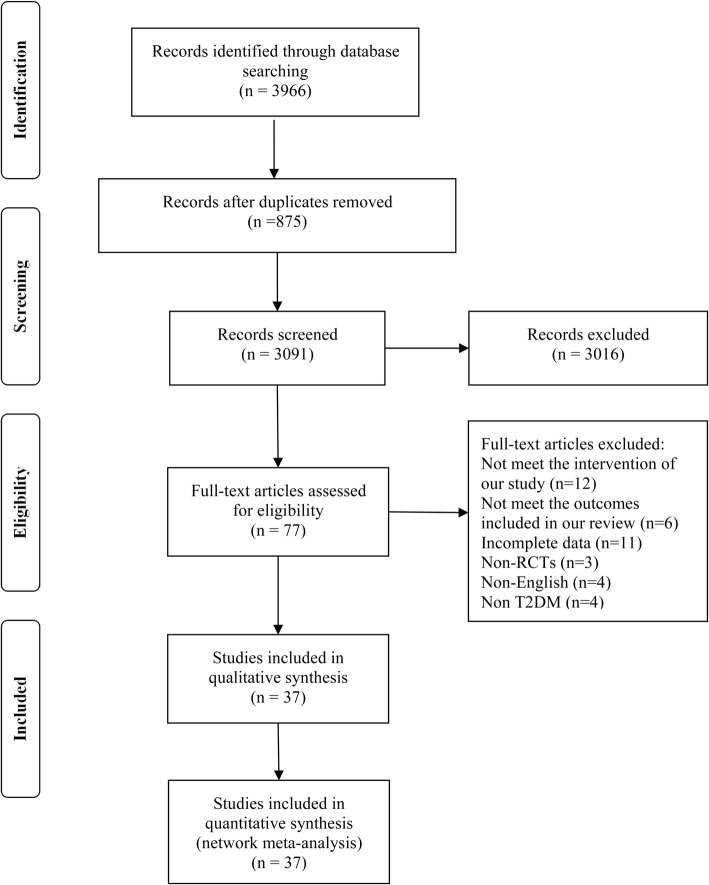
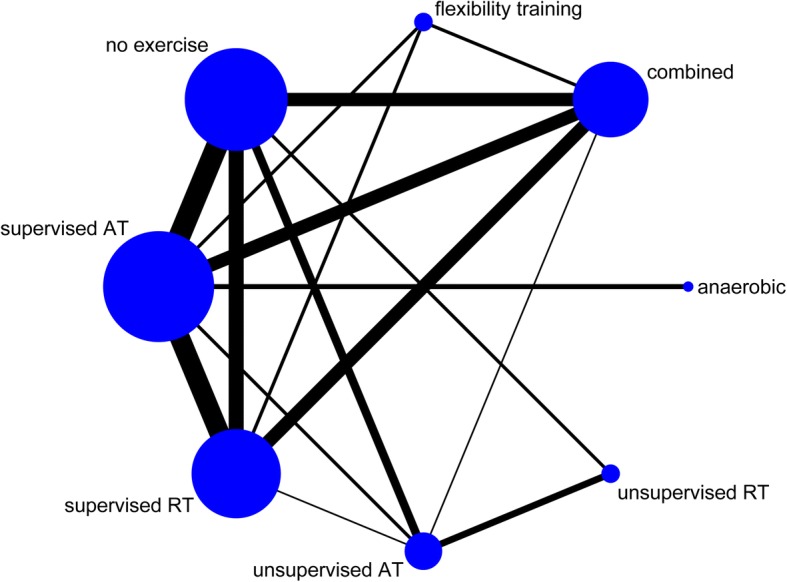
INTRODUCTION: Current international guidelines recommend aerobic, resistance, and combined exercises for the management of type 2 diabetes mellitus (T2DM). In our study, we conducted a network meta-analysis to assess the comparative impact of different exercise training modalities on glycemic control, cardiovascular risk factors, and weight loss in patients with T2DM. METHODS: We searched five electronic databases to identify randomized controlled trials (RCTs) that compared the differences between different exercise training modalities for patients with T2DM. The risk of bias in the included RCTs was evaluated according to the Cochrane tool. Network meta-analysis was performed to calculate mean difference the ratio of the mean and absolute risk differences. Data were analyzed using R-3.4.0. RESULTS: A total of 37 studies with 2208 patients with T2DM were included in our study. Both supervised aerobic and supervised resistance exercises showed a significant reduction in HbA1c compared to no exercise (0.30% lower, 0.30% lower, respectively), however, there was a less reduction when compared to combined exercise (0.17% higher, 0.23% higher). Supervised aerobic also presented more significant improvement than no exercise in fasting plasma glucose (9.38 mg/dl lower), total cholesterol (20.24 mg/dl lower), triacylglycerol (19.34 mg/dl lower), and low-density lipoprotein cholesterol (11.88 mg/dl lower). Supervised resistance showed more benefit than no exercise in improving systolic blood pressure (3.90 mmHg lower]) and total cholesterol (22.08 mg/dl lower]. In addition, supervised aerobic exercise was more powerful in improving HbA1c and weight loss than unsupervised aerobic (HbA1c: 0.60% lower; weight loss: 5.02 kg lower) and unsupervised resistance (HbA1c: 0.53% lower) exercises. CONCLUSION: Compared with either supervised aerobic or supervised resistance exercise alone, combined exercise showed more pronounced improvement in HbA1c levels; however, there was a less marked improvement in some cardiovascular risk factors. In terms of weight loss, there were no significant differences among the combined, supervised aerobic, and supervised resistance exercises. TRIAL REGISTRATION: Our study protocol was registered with the International Prospective Register of Systematic Reviews (PROSPERO); registration number: CRD42017067518 .
Overview
The claims and statistics of this paper haven’t been checked yet.
Free: it reads the open-access text and checks the first 5 claims that cite a source we can check. Create a free account to check every claim.
Integrity signals
Registry
Cites
Statistics
Figures
Verification
Claims the paper makes
The claims and statistics of this paper haven’t been checked yet.
Free: it reads the open-access text and checks the first 5 claims that cite a source we can check. Create a free account to check every claim.
Claims other papers make about this one
Each is checked against this paper’s own text: does it say what the citing paper says it does?
The source backs part of the claim, not all of it — or backs it for a different population, condition or comparison.
In the citing paper
“Resistance exercise (i.e., using your own body weight or working against a resistance) also improves blood glucose levels, fl exibility, and balance (101,110).”
From Management of Hyperglycemia in Type 2 Diabetes, 2022. A Consensus Report by the American Diabetes Association (ADA) and the European Association for the Study of Diabetes (EASD) (2022) · cites this paper as [110]
Experimental — accuracy not yet measuredThe source backs part of the claim, not all of it — or backs it for a different population, condition or comparison.
In the citing paper
“and induces clinically signi fi cant bene fi ts in cardiorespiratory fi tness (101,110,119).”
From Management of Hyperglycemia in Type 2 Diabetes, 2022. A Consensus Report by the American Diabetes Association (ADA) and the European Association for the Study of Diabetes (EASD) (2022) · cites this paper as [110]
Experimental — accuracy not yet measuredThe source backs part of the claim, not all of it — or backs it for a different population, condition or comparison.
In the citing paper
“Multiple studies have shown significant improvements in hemoglobin A1c (0.5-0.7%) of patients with T2DM through a combination of aerobic and resistance training.”
From The Impact of Physical Activity in Patients With Type 2 Diabetes (2025) · cites this paper as [37]
Experimental — accuracy not yet measuredIn the citing paper
“Another metaanalysis showed improvement in A1c of 0.53% with combined exercise and an improvement of only 0.3% with either aerobic or resistance exercise separately.”
From The Impact of Physical Activity in Patients With Type 2 Diabetes (2025) · cites this paper as [37]
Self-check
Percentages, sums and reported differences re-computed from the paper’s own numbers.
The self-check needs the paper’s full text.
Citations
Cites
International Diabetes Federation 2017
Carracher, A. M., Marathe, P. H., & Close, K. L. (2018) · Journal of Diabetes · doi:10.1111/1753-0407.12644 · Cited by 13,418
Role of Insulin Resistance in Human Disease
Reaven, G. M. (1988) · Diabetes · doi:10.2337/diab.37.12.1595 · Cited by 12,154
Garber, C. E., Blissmer, B., Deschenes, M. R., Franklin, B. A., Lamonte, M. J., Lee, I.-M., Nieman, D. C., & Swain, D. P. (2011) · Medicine & Science in Sports & Exercise · doi:10.1249/mss.0b013e318213fefb · Cited by 9,319 · cited 1×
“It has been shown that resistance exercise can benefit all adults and patients with T2DM by improving physical function, fat mass, lipid profiles, cardiovascular health, blood pressure, and insulin sensitivity [75, 76].”
BackgroundGlobal estimates of the prevalence of diabetes for 2010 and 2030
Shaw, J. E., Sicree, R. A., & Zimmet, P. Z. (2010) · Diabetes Research and Clinical Practice · doi:10.1016/j.diabres.2009.10.007 · Cited by 7,216 · cited 2×
“Type 2 diabetes mellitus (T2DM) accounts for 85–95% of all diabetes cases in the world [2].”
BackgroundEckel, R. H., Alberti, K., Grundy, S. M., & Zimmet, P. Z. (2010) · The Lancet · doi:10.1016/s0140-6736(09)61794-3 · Cited by 6,295
Stearne, M. R., Palmer, S. L., Hammersley, M. S., Franklin, S. L., Spivey, R. S., Lévy, J., Tidy, C. R., Bell, N. J., Steemson, J., Barrow, B. A., et al. (1998) · UCL Discovery (University College London) · Cited by 6,090
Eckel, R. H., Grundy, S. M., & Zimmet, P. Z. (2005) · The Lancet · doi:10.1016/s0140-6736(05)66378-7 · Cited by 5,550
Standards of Medical Care in Diabetes—2012
(2012) · Diabetes Care · doi:10.2337/dc12-s011 · Cited by 2,240
Turner, R. D., & Holman, R. R. (1998) · Cited by 1,974
Cited by
Items 301–400 of 523
Type 2 diabetes, prediabetes, and gestational diabetes mellitus
Colberg, S. R., Gillen, J. B., & François, M. E. (2022) · Elsevier eBooks · doi:10.1016/b978-0-323-89843-0.00016-7 · Cited by 2
Antonijević, A., Stojanović, E., Jevtić, A., Zivkovic, V. I., Bolevich, S., & Jakovljevic, V. L. (2022) · PubMed Central · doi:10.18999/nagjms.84.3.580 · Cited by 3
Serna, D. A., Osorio, A. N. V., Sagredo, A. V., Poblete-Valderrama, F., & Quintero, A. M. (2023) · Ciencias de la actividad física · doi:10.29035/rcaf.24.1.4 · Cited by 5
Galdámez, M. D. C. M. (2024) · Revista Ciencia Multidisciplinaria CUNORI · doi:10.36314/cunori.v8i1.247 · Cited by 2
The Role of Individualized Exercise Prescription in Type 2 Diabetes Mellitus Management
Doupis, J., Karras, K., & Avramidis, K. (2021) · touchREVIEWS in Endocrinology · doi:10.17925/ee.2021.1.1.2 · Cited by 6
Chen, Y. J., Zhao, Z., Wang, B. W., Jing, G. Z., Ma, H.-K., Han, X., Wang, J., & Zhao, Z. (2019) · Medicine · doi:10.1097/md.0000000000017669 · Cited by 2
“Network meta-analysis (NMA) has become increasingly popular to evaluate healthcare interventions, since it allows for estimation of the relative effectiveness among all interventions and rank ordering of the interventions even is head-to-head comparisons are lacking.([23,24,25]) We will conduct a comprehensive NMA aim…”
MethodSelf-citationKombinasi Gerakan Senam untuk Menurunkan Kadar Gula Darah Sewaktu pada Pasien Diabetes Melitus
Alfira, N., Hamdana, H., & Nurhidayah, I. (2023) · Media Karya Kesehatan · doi:10.24198/mkk.v6i1.42447 · Cited by 1
Hidayat, H., Handayani, L. T., & Dewi, S. R. (2023) · Health & Medical Sciences · doi:10.47134/phms.v1i1.27 · Cited by 2
“Pasieln lanjut usia celndelrung melngalami pelnurunan fisik dan kolgnitif, yang dapat melmpelngaruhi kelmampuan dan aktivitas melrelka untuk melngellolla selndiri diabeltels melrelka (Pan, 2018).”
BackgroundThe Effect of Various Types of Exercise on Gut Microbiota: A Systematic Review
Rabiee, M., & Mousavi, M. S. (2023) · International journal of Sport Studies for Health · doi:10.5812/intjssh-141680 · Cited by 1
Seok, J., & Lee, Y. (2024) · Nutrition Research and Practice · doi:10.4162/nrp.2024.18.2.239 · Cited by 1
“In a meta-analysis of exercise methods for patients with T2DM, exercise combining aerobic and strength training exhibited a more significant improvement in glycemic control than exercise alone [31].”
MethodVonLanthen, G., & Marques-Vidal, P. M. (2024) · BMJ Open · doi:10.1136/bmjopen-2023-078929 · Cited by 1
“24 35 Furthermore, the results between controlled and uncontrolled participants were identical irrespective of the analytical procedure applied.”
Huang, J., Zhou, S., Li, X., Zhao, Y., Feng, H., & Hu, M. (2024) · Journal of Applied Gerontology · doi:10.1177/07334648241297049 · Cited by 1
“Existing evidence suggested a moderate association between PA and favorable levels of endocrine biomarkers, such as proinsulin and insulin, which could decrease levels of HBA1C, total cholesterol, and other metabolites, and reduce BA (Alessa et al., 2017; Pan et al., 2018).”
Untargeted Metabolomics and Proteomics-Based Research of the Long-Term Exercise on Human Body
Zhuang, W., Wang, Y., Xu, X. Y., & Zhao, J. (2025) · Applied Biochemistry and Biotechnology · doi:10.1007/s12010-025-05195-3 · Cited by 1
“…can prevent type 2 diabetes and has been shown in several studies to reduce fasting blood glucose, total cholesterol, triacylglycerol, low-density lipoprotein cholesterol, and glycated hemoglobin (HbA1c) concentrations, as well as improve insulin sensitivity in people with type 2 diabetes [8, 9].”
OLAHRAGA DAN KONSUMSI BUAH SEBAGAI NUTRISI MEDIS PADA PENYAKIT TIDAK MENULAR (PTM)
Wijayanti, L., Haryati, S., Dirgahayu, P., Suparyanti, E. L., Negara, K. S. P., Riyadi, S., Supriyana, D. S., Ma’rufah, S., & Setyawan, S. (2025) · JAMAS Jurnal Abdi Masyarakat · doi:10.62085/jms.v3i1.174 · Cited by 1
Lehmann, S., Lange, U. G., Oberbach, A., Retschlag, U., Morgenroth, R., Busse, H., Prettin, C., Petroff, D., Seidemann, L., Blüher, M., et al. (2025) · Langenbeck s Archives of Surgery · doi:10.1007/s00423-025-03731-7 · Cited by 1
“This may be particularly relevant since meta-analyses suggest that diabetics benefit most from a structured and supervised exercise program [19].”
REVIEW ARTIKEL: REKOMENDASI EXERCISE PADA PASIEN DIABETES MELITUS TIPE 2
Fatria, I., Daba, M., Warasti, N. S., & Rahman, I. (2024) · Indonesian Journal of Health Research Innovation · doi:10.64094/x5mfsh67 · Cited by 1
Lee, S., Choi, Y., & Kim, Y. S. (2025) · Journal of Diabetes & Metabolic Disorders · doi:10.1007/s40200-025-01675-9 · Cited by 1
Abe, T., Miura, K., Saito, T., Kayanoma, N., Furukawa, Y., Yasunaga, Y., Yamazaki, M., & Kusunoki, M. (2025) · Cureus · doi:10.7759/cureus.90140 · Cited by 1
The Effects of Resistance Training on Multiple Health Conditions. A Comprehensive Review
Pośpiech, S., Schendzielorz, J., Prosowski, J., Piotrowski, M., Serwicki, P., Początek, J., Zabrzeński, B., & Paks, K. (2025) · Archiv Euromedica · doi:10.35630/2025/15/4.020 · Cited by 2
RODRIGUES, R. J., Cunha, P. M., Nunes, J. P., Mesas, A. E., Cardoso, C. G., Barbosa, D. S., Brum, P. C., Santarém, J. M., Fernandes, R. R., Sugihara, P., et al. (2026) · Medicine & Science in Sports & Exercise · doi:10.1249/mss.0000000000003940 · Cited by 1
Poshtdar, S., Ataei-Goujani, H., & Ahrabi, A. (2026) · Journal of Diabetes Research · doi:10.1155/jdr/5552311 · Cited by 1
“It was concluded by some studies that combined exercises may be more e ff ective in controlling HbA1c among diabetic patients [114].”
Fatehi, M., Nayebifar, S., Ghasemi, E., & Karimkoshteh, A. (2026) · Journal of Diabetes & Metabolic Disorders · doi:10.1007/s40200-026-01910-x · Cited by 1
Al-Mhanna, S. B., Kamaluddin, Z. N., Bădicu, G., Ghazali, W. S. W., Mohamed, M., Muhamad, A. S., Aldhahi, M. I., Rahman, S. A., Afolabi, H. A., Siti‐Azrin, A. H., et al. (2026) · AIMS Public Health · doi:10.3934/publichealth.2026018 · Cited by 2
“Interestingly, a systematic review of 37 trials involving 2208 adults with T2DM reported a substantially lowered HbA1c in a combined aerobic and resistance training group compared to the non-exercise group [74].”
Campaña-Torrejón, L., Dinamarca, B. L., Soto-Sánchez, J. P., Matsudo, S. M., & Celis-Morales, C. A. (2026) · Revista médica de Chile · doi:10.4067/s0034-98872026000100049 · Cited by 1
Rosa, J. L., Lino, M. H. D. S., Grecco, M. V., de Lima, A. M. S., dos Santos, J. R., da Silva, V. C., Greve, J. M. D., Chavane, F. S., Furtado, G. E., & Alonso, A. C. (2026) · Aging Clinical and Experimental Research · doi:10.1007/s40520-026-03374-8 · Cited by 1
“Longer supervised interventions have been associated with improvements in lipid parameters, highlighting the importance of intervention duration in high-risk populations [13].”
InfluentialFactors Associated With Examinations for Diabetic Complications During the COVID-19 Epidemic
Choi, S. A., Han, M. A., & Ryu, S. Y. (2026) · Asia Pacific Journal of Public Health · doi:10.1177/10105395261437316 · Cited by 1
“18 19-21 In this study, various health behaviors changed due to the COVID-19 pandemic, and, among them, those who responded that physical activity decreased compared with that before COVID-19 were the most common (39.5%).”
InfluentialAdipose Serpina3c is induced by exercise to alleviate diabetic nephropathy in mice
Li, R.-Y., Zhu, J., Yan, L.-J., Zhao, Z.-A., Li, S., Li, Y., Mu, W.-J., Yin, M.-T., Chen, H.-M., Li, X., et al. (2026) · Journal of Advanced Research · doi:10.1016/j.jare.2026.05.037 · Cited by 1
Trybulski, R., Żebrowska, A., Fostiak, K., Olaniszyn, G., & Wilk, M. (2026) · Metabolism · doi:10.1016/j.metabol.2026.156671 · Cited by 1
Liang, L.-B., Zhao, Z.-H., Li, W.-X., Wang, S., Shen, Q., Wu, C.-Q., & Li, K.-P. (2026) · Cardiovascular Diabetology · doi:10.1186/s12933-026-03236-7 · Cited by 1
“This observation aligns with evidence that combined modalities offer advantages over single-component training [10, 11] but extends prior syntheses by incorporating mind-body integration.”
Lin, C., Liu, J., Lin, C., & Jan, Y. (2026) · Brazilian Journal of Physical Therapy · doi:10.1016/j.bjpt.2026.101652 · Cited by 1
“Supporting this, network meta-analysis 39 in patients with type 2 diabetes mellitus demonstrated that SUP aerobic exercise was superior to both non-SUP aerobic and non-SUP resistance exercise in reducing glycated hemoglobin (HbA1c) and body weight.”
Davies, M. J., Aroda, V. R., Bajaj, M. S., ElSayed, N. A., Giorgino, F., Green, J., Kalyani, R. R., Maruthur, N. M., Mathieu, C., Rosas, S. E., et al. (2026) · Diabetologia · doi:10.1007/s00125-026-06855-7 · Cited by 1
Fatores de adesão e permanência de idosos com diabetes tipo 2 a um programa de exercício físico
Dantas, I. V., Lima, G. N., Falcão, A. P. S. T., Vancea, D. M. M., & Filho, D. C. S. (2019) · ConScientiae Saúde · doi:10.5585/conssaude.v18n1.8679 · Cited by 6
Kim, M., Kim, C., Kim, D. J., & Schlenk, E. A. (2021) · The Science of Diabetes Self-Management and Care · doi:10.1177/26350106211058645 · Cited by 1
Aragão, R. A. C., de Vasconcelos, A. R., do Nascimento, M. E. Q. H., Ribeiro, J. N. D. S., Costa, K. B., & Vancea, D. M. M. (2022) · Revista de Educação Física / Journal of Physical Education · doi:10.37310/ref.v90i4.2809 · Cited by 2
Factors correlated to physical activity among diabetes type 2 patients
Rofi’i, A. Y. A. B., & Su'udi, S. (2022) · International Journal of Public Health Science (IJPHS) · doi:10.11591/ijphs.v11i2.21154 · Cited by 2
Precision Exercise and Physical Activity for Diabetes
Boulé, N. G., & Yardley, J. E. (2022) · Springer eBooks · doi:10.1007/978-3-030-98927-9_13 · Cited by 1
Latihan Fisik Melalui Senam Low Impact terhadap Kadar HBA1C Penderita Diabetes Mellitus
Azwaldi, A., Agustin, I., Erman, I., Rahmawati, F., & Damayanti, E. (2022) · Jurnal Keperawatan Silampari · doi:10.31539/jks.v6i1.4568 · Cited by 1
Efek Gabungan Obesitas dan Aktivitas Fisik terhadap Kejadian Prediabetes
Kusuma, I. S., Syarif, S., & Choirunisa, S. (2023) · Jurnal Ilmu Kesehatan Masyarakat · doi:10.33221/jikm.v12i03.2159 · Cited by 5
“Usia ≥ 65 tahun 212 36,81 364 63,19 3,33 (2,63-4,21) 0,0005 55-64 tahun 323 37,69 534 62,31 3,45 (2,79-4,28) 0,0005 45-54 tahun 234 37,20 395 62,80 3,38 (2,69-4,26) 0,0005 35-44 tahun 280 29,54 668 70,46 2,39 (1,93-2,97) 0,0005 25-34 tahun 289 22,44 999 77,56 1,65 (1,34-2,04) 0,0005 <25 tahun 170 14,90 971 85,10 Reff…”
Bay leaf decoction water and low-impact aerobic exercise impact on blood cholesterol levels
Ismansyah, I., Hidayat, A., & Ernawati, R. (2023) · Healthcare in Low-resource Settings · doi:10.4081/hls.2023.11733 · Cited by 1
Abordagens em medicina: avanços científicos, tecnológicos e sociais
Gemelli, I. F. B., Farias, E. D. S., Teixeira, T. G., & Moreira, K. F. A. (2023) · Amplla Editora eBooks · doi:10.51859/amplla.ama3315-0 · Cited by 2
Lavryniuk, V. Y., Андрійчук, О. Я., Пикалюк, В., Hreida, N. B., & Андрійчук, Я. І. (2023) · Реабілітаційні та фізкультурно-рекреаційні аспекти розвитку людини (Rehabilitation & recreation) · doi:10.32782/2522-1795.2023.17.10 · Cited by 1
Yang, Z., Chen, H., Lai, F., Zhang, J., Wang, S., Wang, S., Chen, Y., Mai, Z., Luo, L., Kong, D., et al. (2024) · Frontiers in Public Health · doi:10.3389/fpubh.2024.1322244 · Cited by 1
“Recent meta-analyses underscore the beneficial effects of higher levels of exercise on various health markers, including fasting blood glucose, total cholesterol, and triglycerides, suggesting the potential role of PA in regulating blood lipid levels (12, 13, 21).”
BackgroundSelf-citationRemedial exercise training program (aerobic and brisk walk training) for type II diabetes (T2DM)
Kuamr, V., & Vinu, W. (2024) · SPORT TK-Revista EuroAmericana de Ciencias del Deporte · doi:10.6018/sportk.548491 · Cited by 3
“Weight loss happed to the aerobic group; weight loss: 5.02 kg lower (Pan et al., 2018).”
BackgroundInfluentialSánchez, J. C. F., Hermosilla-Palma, F. A., Olate-Pastén, Y., Reyes-Amigo, T., Alvarado, M. A. D., Luarte-Rocha, C., Gómez-Álvarez, N., & Molina-Márquez, I. (2025) · Retos · doi:10.47197/retos.v71.116213 · Cited by 2
Kimura, A., Onozawa, S., Ogiwara, T., & Ghoch, M. E. (2025) · JMIR Diabetes · doi:10.2196/83768 · Cited by 1
“Previous investigations have demonstrated that 8 to 12 weeks of regular physical activity significantly increases segmental reactance, with effect sizes comparable to those observed in our study [46,47,50,51].”
Hiemstra, M. S. (2021) · Scholarship@Western (Western University) · Cited by 1
Delirium Screening in the Emergency Department: A Systematic Review and Meta-analysisPreprint
Zhang, Q., Chen, M., Hou, L., Guo, Z., Zhang, Q., Di, B., & Ge, L. (2020) · doi:10.21203/rs.3.rs-97690/v1 · Cited by 1
“Page 3/10 compare the relevant effect of three or more interventions at the same time and effectively ranked the interventions to select the optimal treatment plan even in the absence of direct comparisons[19].”
BackgroundSelf-citationWong, S. K. W. (2022) · DR-NTU (Nanyang Technological University) · doi:10.32657/10356/163576 · Cited by 2
Exercise and Diabetes: A Moving Target?
Yardley, J. E. (2023) · Canadian Journal of Diabetes · doi:10.1016/j.jcjd.2023.01.005 · Cited by 1
Children and adolescents with diabetes mellitus and sports
Сергеевич, Ш. А., & Bukin, S. S. (2020) · Rossiyskiy Vestnik Perinatologii i Pediatrii (Russian Bulletin of Perinatology and Pediatrics) · doi:10.21508/1027-4065-2020-65-5-23-30
Wiley, A. T., & Cooperstein, N. (2021) · Evidence-Based Practice · doi:10.1097/ebp.0000000000001185
Udział hormonów w regulacji metabolizmu substratów energetycznych w czasie wysiłku
Górski, J., & Knapp, M. (2021) · Kosmos · doi:10.36921/kos.2020_2716
Su, X. (2020) · University of Minnesota Digital Conservancy (University of Minnesota)
Sun, X., Zhou, S., Dong, M., Xiao, W., He, X., Ma, Y., Gou, B., Xu, J., Cao, Z., Zeng, L., et al. (2020) · Research Square · doi:10.21203/rs.3.rs-137382/v1
The Multifaceted Benefits of Exercise in Prevention of COVID-19
Schlicht, J. A., & Edwards, K. M. (2021) · Journal of Clinical Exercise Physiology · doi:10.31189/2165-7629-10.1.35
Exercise Regimen Recommendations in Type II Diabetics and Their Effects on Glucose Control
Smith, E. (2020) · Scholarly Commons (University of the Pacific)
‘Guidelines to Practice’ series: Asthma in adults
Mandell, B. F. (2021) · Cleveland Clinic Journal of Medicine · doi:10.3949/ccjm.88b.07021 · Cited by 1
Filho, B. F. D. L., Bessa, N. P. O. S., Ribeiro, T. S., Vieira, E. R., Gazzola, J. M., & Cavalcanti, F. A. D. C. (2021) · Revista Kairós Gerontologia · doi:10.23925/2176-901x.2021v24i1p351-380
Bermúdez, H., & Carolina, I. (2021)
Fernandes, C. A. M., Oltramari, K., Nardo, N., & Westphal, G. (2021) · Revista Contexto & Saúde · doi:10.21527/2176-7114.2021.43.11623
Intercurrent situations that affect diabetes control
Bilous, F. R., Donnelly, R., & DM, F. I. I. (2021) · Wiley eBooks · doi:10.1002/9781118976074.ch28
Zhou, J., Lv, X., Zhou, R., Wang, B., & Wu, Q. H. (2022) · Research Square · doi:10.21203/rs.3.rs-1460082/v1
Review of Co-Morbid Mechanisms of Alzheimer’s Disease and Type 2 Diabetes
(2022) · Journal of Contemporary Medical Practice · doi:10.53469/jcmp.2022.04(03).38
Jung, S. (2022) · Exercise Science · doi:10.15857/ksep.2022.00059
“당뇨병의 진단기준은 T1DM과 T2DM이 동일하나 이들을 구 별하는 것은 치료계획 수립과 당뇨병 교육을 위한 접근 방법에 차이가 있기 때문이다[2].”
InfluentialZhou, J., Lv, X., Zhou, R., Wang, B., & Wu, Q. H. (2022) · Research Square · doi:10.21203/rs.3.rs-1460082/v2
Umbarila-Espinosa, L. M., Serna, J. C. C., Fernández, S. C., & Botero‐Rosas, D. A. (2022) · Salud Uninorte · doi:10.14482/sun.38.1.612.34 · Cited by 3
Kawakami, R., Wang, D., Sawada, S. S., Tanisawa, K., Tabata, H., Ito, T., Usui, C., Ishii, K., Torii, S., Higuchi, M., et al. (2022) · The Journal of Physical Fitness and Sports Medicine · doi:10.7600/jpfsm.11.189
Campbell, D. B., Olstad, D. L., Donald, T., & Campbell, D. J. (2022) · Diabetes and Vascular Disease Research · doi:10.1177/14791641221111252
“We found two of the most recent published systematic reviews of RCTs examining the effects of dietary and physical activity interventions (separately) on glycemia among adults with diabetes.(3,4) We located the full-text manuscripts for all included primary studies in each of these systematic reviews (n = 28 for dieta…”
BackgroundIMPORTÂNCIA DA ATIVIDADE FÍSICA PARA A SAÚDE EM TEMPOS DE PANDEMIA COVID-19: revisão de literatura
Piske, M., Bolzan, M., & Batista, C. (2022) · Revista Eletrônica Científica Ensino Interdisciplinar · doi:10.21920/recei72022826398410 · Cited by 1
Grzesznik, A., & Formanowicz, D. (2022) · Journal of Education Health and Sport · doi:10.12775/jehs.2022.12.07.094
The reporting quality of N‐of‐1 trials and protocols still needs improvement
Wei, Z., Chu, X., Han, J., Zhang, N., Li, Y., Yang, C., Wang, Q., Li, J., Belal, A. A., Yan, P., et al. (2022) · Journal of Evidence-Based Medicine · doi:10.1111/jebm.12484
Self-citationMechanisms of Metformin Improving vasodilation of coronary artery in Type 2 Diabetic Rats
Dai, H., Ming, S., Liu, J., & Hu, P. (2022) · Advances in Engineering Technology Research · doi:10.56028/aetr.2.1.362
III Congresso Baiano de Cardiologia do Exercício
Petto, J., de Oliveira, A. M., Souza, P. E. S., & do Sacramento, M. D. S. (2022) · Revista Brasileira de Fisiologia do Exercício · doi:10.33233/rbfex.v21i4.5322
APLICAÇÕES DO MODIFIED EARLY WARNING SCORE NA ASSISTÊNCIA À SEPSE
Maximiano, L. C. D. S., Fernandes, J. M. M., Dantas, L. A. L., & Araújo, M. E. D. S. (2022) · doi:10.22533/at.ed.5502208126
A IMPORTÂNCIA DO ATENDIMENTO DE EMERGÊNCIA NA GRAVIDEZ ECTÓPICA ROTA
Rosemberg, C. L., Cortez, A. O., de Oliveira, A. B. V., de Queiroz, A., Braga, E. C. D. O., Lavor, L. C. A., de Mendonça, R. S., & Silva, T. G. N. (2022) · doi:10.22533/at.ed.5502208122
Ferro, L. V. D. C., Bonatto, S., da Silva, C. L., da Rocha, M. D., & Reche, P. M. (2022) · doi:10.22533/at.ed.5502208129
de Lima, M. S., dos Santos, T. V. R., & Sleifer, P. (2022) · doi:10.22533/at.ed.5502208125
CONTEXTO DE CONSTRUÇÃO DE VÍNCULO ENTRE OS PAIS E O RECÉMNASCIDO INTERNADO EM UTI-NEONATAL
Szewczyk, M. D. S. C., Pereira, S. M. R., Gomes, G. C., Lourenço, C. C. S., Gomes, L. C., & de Figueiredo, T. R. (2022) · doi:10.22533/at.ed.55022081212
FARMACOTERAPIAS DISPONIVEIS PARA TRATAR DIFUNÇÃO SEXUAL FEMININA: AVANÇOS E PERSPECTIVAS
da Silva, E. E. P., & Vasconcelos, T. C. D. L. (2022) · doi:10.22533/at.ed.55022081215
ESTRATÉGIAS DE AUTOCUIDADO PARA PESSOAS DIAGNOSTICADAS COM DIABETES MELLITUS TIPO 2
dos Santos, S. M. S., Pimentel, A. R. S., Seabra, D. B. M. H., Mártires, G. D. S., Souza, C. D. S. M., & Freitas, R. F. (2022) · doi:10.22533/at.ed.55022081214
A INSERÇÃO DA PSICOLOGIA NAS RESIDÊNCIAS MULTIPROFISSIONAIS EM SAÚDE
Sobrinho, C. I. D. S., & Bernardes, J. D. S. (2022) · doi:10.22533/at.ed.5502208124
dos Santos, S. D., & Reinato, L. A. F. (2022) · doi:10.22533/at.ed.55022081210
COMPLICAÇÕES GASTROINTESTINAIS EM IDOSOS QUE FAZEM USO DE NUTRIÇÃO ENTERAL (NE)
da Silva, L. O., de Sousa, I. M. L., de Arruda, G. M., Vasconcelos, J. L. M., Cavalcante, K. P., Paim, R. T. T., Silva, A. W. B., & Linhares, J. J. (2022) · doi:10.22533/at.ed.55022081211
Farias, A. B. B., Cavalcanti, L. B., Ferreira, A. T., Cunha, D. C., dos Santos, Â. M. G., Procópio, M. R. M. D. S., Monteiro, A. I. D. S., França, F. A. R. D. S., Tillesse, J. D. S. O., Ferreira, V. A., et al. (2022) · doi:10.22533/at.ed.55022081217 · Cited by 1
AVALIAÇÃO DA QUALIDADE DE VIDA DE PACIENTES EM DIÁLISE PERITONEAL
de Andrade, M. I., Coelho, É. R., do Lago, P. N., Fernandes, A. D. S., dos Santos, C. R., Santos, A. L. L., Azeredo, D. D. S., Sousa, A. D. C., Amarantes, R. S., Nunes, T. S., et al. (2022) · doi:10.22533/at.ed.5502208128
ATRIBUIÇÕES DO ENFERMEIRO FRENTE À AUDITORIA EM SAÚDE
Lopes, G. F. V. (2022) · doi:10.22533/at.ed.5502208127
Liporoni, C. G. G. D. S., Botton, L. T. J., & Schröder, N. T. (2022) · doi:10.22533/at.ed.55022081218
Saúde: Impasses e desafios enfrentados no Brasil
Castro, L. H. A. (2022) · doi:10.22533/at.ed.550220812
Reyes, M. S. R., & Prieto, C. (2022) · Revista Ciencia y Salud Integrando conocimientos · doi:10.34192/cienciaysalud.v6i6.539
Zhou, J., Lv, X., Zhou, R., Wang, B., & Wu, Q. H. (2023) · Research Square · doi:10.21203/rs.3.rs-1460082/v3
Resistance training in the treatment of diabetes mellitus II: a narrative review
Saborosa, G. P., Freitas, R. D. O., & da Silva, S. F. (2022) · Multidisciplinary Reviews · doi:10.31893/multirev.2022016
Management of Diabetes Mellitus in Women 50 Years Old Through a Family Medicine Approach
Herdiani, S., & Sibuea, S. H. (2022) · Journal of Midwifery Science Basic and Applied Research · doi:10.31983/jomisbar.v4i1.8963
Jegatha, C., & Hemavathy, V. (2023) · Cardiometry · doi:10.18137/cardiometry.2023.26.653657
XXVII Congresso Brasileiro de Medicina Física e Reabilitação
Fisiátrica, A. (2021) · Acta Fisiátrica · doi:10.11606/issn.2317-0190.v28isupl.1a185148
PRINCÍPIOS DE TREINAMENTO FÍSICO PARA O PORTADOR DE DIABETES MELLITUS
MARTINS, J., MEDEIROS, M., & CASTRO, S. (2022) · Editora Científica Digital eBooks · doi:10.37885/230312337 · Cited by 1
Borges, F. D. S. S., Cavalcante, F. P., Brilhante, F. D. F., Portela, J. G., Costa, L. F. L. D., Fernandes, L. M. C., Fontenele, L. A., Diniz, M. A. N., Sousa, M. D. D. A., Fonseca, M. C. S. D., et al. (2022) · Editora Científica Digital eBooks · doi:10.37885/978-65-5360-320-2
Healthy Lifestyles for the Self-Management of Type 2 Diabetes
Galaviz, K. I., & Ali, M. K. (2023) · Springer eBooks · doi:10.1007/978-3-031-25519-9_31
da Costa, D. H. S., Morais, E. G. D. S., Maio, R., de Andrade, L. A. S. S., Calado, C. K. M., & Burgos, M. G. P. D. A. (2023) · Brazilian Journal of Implantology and Health Sciences · doi:10.36557/2674-8169.2023v5n3p256-275 · Cited by 2
Caerels, S., Mertens, A. C., Hulsmans, M., & Mathieu, C. (2023) · Tijdschrift voor Geneeskunde · doi:10.47671/tvg.78.22.181
Metadata
- Authors
- Pan, B., Ge, L., Xun, Y.-Q., Chen, Y.-J., Gao, C.-Y., Han, X., Zuo, L.-Q., Shan, H.-Q., Yang, K.-H., Ding, G.-W., & Tian, J.-H.
- Affiliations
- Lanzhou University (CN)
- Venue
- International Journal of Behavioral Nutrition and Physical Activity
- Published
- 2018-07-25
- Volume
- 15
- Issue
- 1
- Pages
- 72-72
- ISSN
- 1479-5868 (ISSN-L)
- PMC
- PMC6060544
- OpenAlex
- W2884571905
- Cited by
- 470
- References
- 87
- Citations by year
- 2026: 38 · 2025: 51 · 2024: 57 · 2023: 86 · 2022: 94 · 2021: 83 · 2020: 40 · 2019: 20 · 2018: 1
- FWCI
- 4.73
- Type
- journal article
- Language
- en
- Open access
- gold
- doi.org
- Licence
- cc-by
- creativecommons.org/licenses/by/4.0/ (tdm)
- Locations
- International Journal of Behavioral Nutrition and Physical Activity (publishedVersion, cc-by)
- Europe PMC (PubMed Central) (publishedVersion, other-oa)
- PubMed Central (publishedVersion, cc-by)
- PubMed (publishedVersion)
- Lanzhou University Institutional Repository (submittedVersion)
- DOAJ (DOAJ: Directory of Open Access Journals) (submittedVersion, cc-by-sa)
- Funders
- Lanzhou University
- Karlsruhe House of Young Scientists
- Topics
- Health Sciences › Medicine › Public Health, Environmental and Occupational Health › Physical Activity and Health
- Health Sciences › Medicine › Endocrinology, Diabetes and Metabolism › Diabetes, Cardiovascular Risks, and Lipoproteins
- Health Sciences › Medicine › Physiology (medical) › Cardiovascular and exercise physiology
- Keywords
- type 2 diabetes, exercise training, aerobic exercise, resistance training, concurrent training, glycemic control, HbA1c, fasting blood glucose, cardiovascular risk factors, weight loss, unsupervised exercise, supervised exercise, LDL cholesterol, systolic blood pressure, triglycerides, total cholesterol, lipid profile, blood pressure, diabetes management guidelines, exercise modality comparison
- MeSH terms
- Network Meta-Analysis, Aged, Blood Glucose, Blood Pressure, Diabetes Mellitus, Type 2, Exercise Therapy, Female, Glycated Hemoglobin, Humans, Lipids, Cholesterol, LDL, Male, Middle Aged, Weight Loss, Exercise, Resistance Training
About these checks
Registry, retraction, Cites and statistics results are computed, not judged, with one exception: a printed reference that no index lists is read once by a model before it counts as a citation error. Claims are extracted by a model and kept only when their quote appears verbatim in the text; each cited source is then checked, with a model’s help, for whether it says what the claim relies on. Those verdicts can be wrong — read the claim’s quote and the cited source before relying on one.
Statistics and arithmetic are recomputed, not judged.
Confidence bands are shown only for fields calibrated on our annotated test set. None is calibrated yet, so no band is shown.
What counts as a claim ›How we measure confidence ›How we check this ›
Are you an author, or do you see a problem with this page? Request a review
Data sources
Bibliographic data: Semantic Scholar, OpenAlex, Crossref.
Contains information from the Semantic Scholar Academic Graph Datasets, made available under the ODC Attribution License (ODC-BY 1.0).
Semantic Scholar’s data is described in: Kinney, R., et al. (2023). The Semantic Scholar Open Data Platform. arXiv:2301.10140.
