

Exercise training modalities in patients with type 2 diabetes mellitus: a systematic review and network meta-analysis
Open accessThe DOI matches its Crossref record; 86 of the 87 references it cites were found in a registry or an index.
Abstract
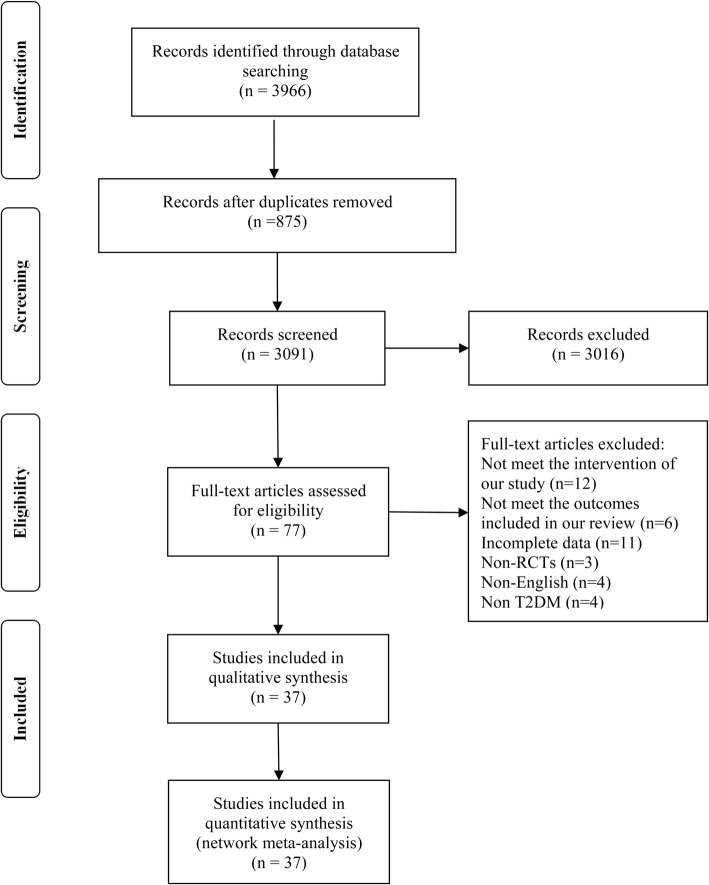
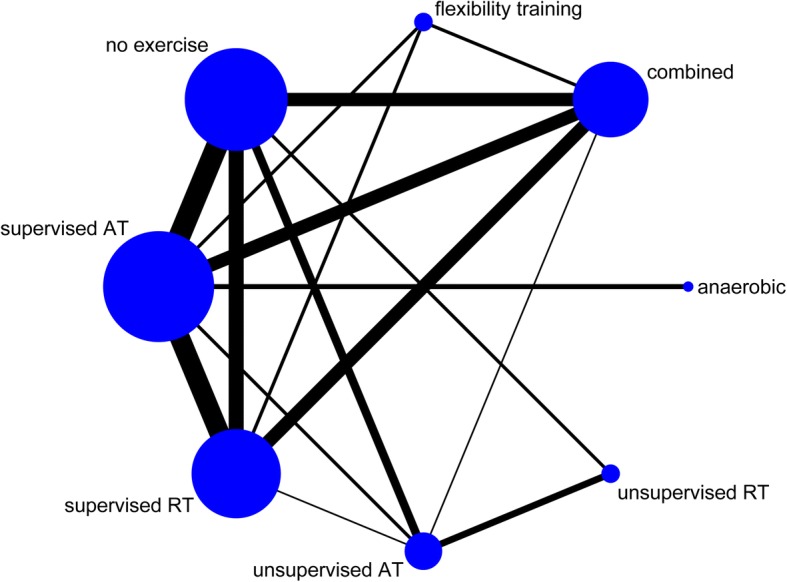
INTRODUCTION: Current international guidelines recommend aerobic, resistance, and combined exercises for the management of type 2 diabetes mellitus (T2DM). In our study, we conducted a network meta-analysis to assess the comparative impact of different exercise training modalities on glycemic control, cardiovascular risk factors, and weight loss in patients with T2DM. METHODS: We searched five electronic databases to identify randomized controlled trials (RCTs) that compared the differences between different exercise training modalities for patients with T2DM. The risk of bias in the included RCTs was evaluated according to the Cochrane tool. Network meta-analysis was performed to calculate mean difference the ratio of the mean and absolute risk differences. Data were analyzed using R-3.4.0. RESULTS: A total of 37 studies with 2208 patients with T2DM were included in our study. Both supervised aerobic and supervised resistance exercises showed a significant reduction in HbA1c compared to no exercise (0.30% lower, 0.30% lower, respectively), however, there was a less reduction when compared to combined exercise (0.17% higher, 0.23% higher). Supervised aerobic also presented more significant improvement than no exercise in fasting plasma glucose (9.38 mg/dl lower), total cholesterol (20.24 mg/dl lower), triacylglycerol (19.34 mg/dl lower), and low-density lipoprotein cholesterol (11.88 mg/dl lower). Supervised resistance showed more benefit than no exercise in improving systolic blood pressure (3.90 mmHg lower]) and total cholesterol (22.08 mg/dl lower]. In addition, supervised aerobic exercise was more powerful in improving HbA1c and weight loss than unsupervised aerobic (HbA1c: 0.60% lower; weight loss: 5.02 kg lower) and unsupervised resistance (HbA1c: 0.53% lower) exercises. CONCLUSION: Compared with either supervised aerobic or supervised resistance exercise alone, combined exercise showed more pronounced improvement in HbA1c levels; however, there was a less marked improvement in some cardiovascular risk factors. In terms of weight loss, there were no significant differences among the combined, supervised aerobic, and supervised resistance exercises. TRIAL REGISTRATION: Our study protocol was registered with the International Prospective Register of Systematic Reviews (PROSPERO); registration number: CRD42017067518 .
Overview
The claims and statistics of this paper haven’t been checked yet.
Free: it reads the open-access text and checks the first 5 claims that cite a source we can check. Create a free account to check every claim.
Integrity signals
Registry
Cites
Statistics
Figures
Verification
Claims the paper makes
The claims and statistics of this paper haven’t been checked yet.
Free: it reads the open-access text and checks the first 5 claims that cite a source we can check. Create a free account to check every claim.
Claims other papers make about this one
Each is checked against this paper’s own text: does it say what the citing paper says it does?
The source backs part of the claim, not all of it — or backs it for a different population, condition or comparison.
In the citing paper
“Resistance exercise (i.e., using your own body weight or working against a resistance) also improves blood glucose levels, fl exibility, and balance (101,110).”
From Management of Hyperglycemia in Type 2 Diabetes, 2022. A Consensus Report by the American Diabetes Association (ADA) and the European Association for the Study of Diabetes (EASD) (2022) · cites this paper as [110]
Experimental — accuracy not yet measuredThe source backs part of the claim, not all of it — or backs it for a different population, condition or comparison.
In the citing paper
“and induces clinically signi fi cant bene fi ts in cardiorespiratory fi tness (101,110,119).”
From Management of Hyperglycemia in Type 2 Diabetes, 2022. A Consensus Report by the American Diabetes Association (ADA) and the European Association for the Study of Diabetes (EASD) (2022) · cites this paper as [110]
Experimental — accuracy not yet measuredThe source backs part of the claim, not all of it — or backs it for a different population, condition or comparison.
In the citing paper
“Multiple studies have shown significant improvements in hemoglobin A1c (0.5-0.7%) of patients with T2DM through a combination of aerobic and resistance training.”
From The Impact of Physical Activity in Patients With Type 2 Diabetes (2025) · cites this paper as [37]
Experimental — accuracy not yet measuredIn the citing paper
“Another metaanalysis showed improvement in A1c of 0.53% with combined exercise and an improvement of only 0.3% with either aerobic or resistance exercise separately.”
From The Impact of Physical Activity in Patients With Type 2 Diabetes (2025) · cites this paper as [37]
Self-check
Percentages, sums and reported differences re-computed from the paper’s own numbers.
The self-check needs the paper’s full text.
Citations
Cites
International Diabetes Federation 2017
Carracher, A. M., Marathe, P. H., & Close, K. L. (2018) · Journal of Diabetes · doi:10.1111/1753-0407.12644 · Cited by 13,418
Role of Insulin Resistance in Human Disease
Reaven, G. M. (1988) · Diabetes · doi:10.2337/diab.37.12.1595 · Cited by 12,154
Garber, C. E., Blissmer, B., Deschenes, M. R., Franklin, B. A., Lamonte, M. J., Lee, I.-M., Nieman, D. C., & Swain, D. P. (2011) · Medicine & Science in Sports & Exercise · doi:10.1249/mss.0b013e318213fefb · Cited by 9,319 · cited 1×
“It has been shown that resistance exercise can benefit all adults and patients with T2DM by improving physical function, fat mass, lipid profiles, cardiovascular health, blood pressure, and insulin sensitivity [75, 76].”
BackgroundGlobal estimates of the prevalence of diabetes for 2010 and 2030
Shaw, J. E., Sicree, R. A., & Zimmet, P. Z. (2010) · Diabetes Research and Clinical Practice · doi:10.1016/j.diabres.2009.10.007 · Cited by 7,216 · cited 2×
“Type 2 diabetes mellitus (T2DM) accounts for 85–95% of all diabetes cases in the world [2].”
BackgroundEckel, R. H., Alberti, K., Grundy, S. M., & Zimmet, P. Z. (2010) · The Lancet · doi:10.1016/s0140-6736(09)61794-3 · Cited by 6,295
Stearne, M. R., Palmer, S. L., Hammersley, M. S., Franklin, S. L., Spivey, R. S., Lévy, J., Tidy, C. R., Bell, N. J., Steemson, J., Barrow, B. A., et al. (1998) · UCL Discovery (University College London) · Cited by 6,090
Eckel, R. H., Grundy, S. M., & Zimmet, P. Z. (2005) · The Lancet · doi:10.1016/s0140-6736(05)66378-7 · Cited by 5,550
Standards of Medical Care in Diabetes—2012
(2012) · Diabetes Care · doi:10.2337/dc12-s011 · Cited by 2,240
Turner, R. D., & Holman, R. R. (1998) · Cited by 1,974
Colberg, S. R., Sigal, R. J., Fernhall, B., Regensteiner, J. G., Blissmer, B. J., Rubin, R. R., Chasan-Taber, L., Albright, A. L., & Braun, B. (2010) · Diabetes Care · doi:10.2337/dc10-9990 · Cited by 1,955
(2013) · European Heart Journal · doi:10.1093/eurheartj/eht108 · Cited by 1,955
Ranking treatments in frequentist network meta-analysis works without resampling methods
Rücker, G., & Schwarzer, G. (2015) · BMC Medical Research Methodology · doi:10.1186/s12874-015-0060-8 · Cited by 1,732
2. Classification and Diagnosis of Diabetes
American Diabetes Association (2017) · Diabetes Care · doi:10.2337/dc17-s005 · Cited by 1,603
Kinaan, M., Ding, H., & Triggle, C. R. (2015) · Medical Principles and Practice · doi:10.1159/000381643 · Cited by 1,515
Grundy, S. M. (2011) · Atlas of Atherosclerosis and Metabolic Syndrome · doi:10.1007/978-1-4419-5839-6_1 · Cited by 1,223
Church, T. S., Blair, S. N., Cocreham, S., Johannsen, N., Johnson, W., Kramer, K., Mikus, C. R., Myers, V., Nauta, M., Rodarte, R. Q., et al. (2010) · JAMA · doi:10.1001/jama.2010.1710 · Cited by 944
Castaneda, C., Layne, J. E., Munoz-Orians, L., Gordon, P. L., Walsmith, J., Foldvari, M., Roubenoff, R., Tucker, K. L., & Nelson, M. E. (2002) · Diabetes Care · doi:10.2337/diacare.25.12.2335 · Cited by 844
Association between muscular strength and mortality in men: prospective cohort study
Ruiz, J. R., Sui, X., Lobelo, F., Morrow, J. R., Jackson, A. W., Sjostrom, M., & Blair, S. N. (2008) · BMJ · doi:10.1136/bmj.a439 · Cited by 815
Wei, M., Gibbons, L. W., Kampert, J. B., Nichaman, M. Z., & Blair, S. N. (2000) · Annals of Internal Medicine · doi:10.7326/0003-4819-132-8-200004180-00002 · Cited by 709
(2014) · Revista Española de Cardiología (English Edition) · doi:10.1016/j.rec.2013.10.013 · Cited by 609
Friedrich, J. O., Adhikari, N., Herridge, M. S., & Beyene, J. (2005) · Annals of Internal Medicine · doi:10.7326/0003-4819-142-7-200504050-00010 · Cited by 516
Wei, M., Gibbons, L. W., Mitchell, T. L., Kampert, J. B., Lee, C. D., & Blair, S. N. (1999) · Annals of Internal Medicine · doi:10.7326/0003-4819-130-2-199901190-00002 · Cited by 472
Exercise capacity and body composition as predictors of mortality among men with diabetes
Church, T. S., Cheng, Y. J., Earnest, C. P., Barlow, C. E., Gibbons, L. W., Priest, E. L., & Blair, S. N. (2004) · Diabetes Care · doi:10.2337/diacare.27.1.83 · Cited by 469
Sullivan, P. W., Morrato, E. H., Ghushchyan, V., Wyatt, H. R., & Hill, J. O. (2005) · Diabetes Care · doi:10.2337/diacare.28.7.1599 · Cited by 400
Cauza, E., Hanusch-Enserer, U., Strasser, B., Ludvik, B., Metz-Schimmerl, S., Pacini, G., Wagner, O., Georg, P., Prager, R., Kostner, K., et al. (2005) · Archives of Physical Medicine and Rehabilitation · doi:10.1016/j.apmr.2005.01.007 · Cited by 392 · cited 1×
“…full aerobic program plus the full resistance program supervised RE 60/21/30 53.9 ± 6.6 7 different exercises on weight machines each session supervised AE 64/24/40 54.7 ± 7.5 60–75% maximum heart rate; 3 times weekly Cauza 2005 Australia NA 4 unsupervised RE 22/11/11 56.4 ± 1.1 3 sets per muscle…”
MethodInfluentialMourier, A., Gautier, J.-F., Kerviler, E. D., Bigard, A. X., Villette, J.-M., Garnier, J.-P., Duvallet, A., Guezennec, C. Y., & Cathelineau, G. (1997) · Diabetes Care · doi:10.2337/diacare.20.3.385 · Cited by 361 · cited 1×
“Aerobic exercise can also increase cardiorespiratory fitness and improve the control of blood glucose and HbA1c levels in patients with T2DM [13, 14].”
BackgroundThe anti-inflammatory effects of exercise training in patients with type 2 diabetes mellitus
Kadoglou, N. P. E., Iliadis, F., Angelopoulou, N., Perrea, D., Ampatzidis, G., Liapis, C. D., & Alevizos, M. (2007) · European Journal of Cardiovascular Prevention & Rehabilitation · doi:10.1097/hjr.0b013e3282efaf50 · Cited by 337
Toledo, F. G. S., Menshikova, E. V., Ritov, V. B., Azuma, K., Radikova, Z., DeLany, J., & Kelley, D. E. (2007) · Diabetes · doi:10.2337/db07-0141 · Cited by 321
Resistance training improves metabolic health in type 2 diabetes: a systematic review
Gordon, B. A., Benson, A. C., Bird, S. R., & Fraser, S. F. (2009) · Diabetes Research and Clinical Practice · doi:10.1016/j.diabres.2008.11.024 · Cited by 293
Hordern, M. D., Dunstan, D. W., Prins, J. B., Baker, M. K., Singh, M. A. F., & Coombes, J. S. (2012) · Journal of Science and Medicine in Sport · doi:10.1016/j.jsams.2011.04.005 · Cited by 273
Wändell, P. E. (2005) · Scandinavian Journal of Primary Health Care · doi:10.1080/02813430510015296 · Cited by 270
Schwingshackl, L., Missbach, B., Dias, S., König, J., & Hoffmann, G. (2014) · Diabetologia · doi:10.1007/s00125-014-3303-z · Cited by 264 · cited 2×
“Schwingshackl [32] compared the effects of different training modalities on glycemic control and blood lipids in patients with T2DM.”
BackgroundPhysical Activity and Diabetes
Sigal, R. J., Armstrong, M. J., Colby, P., Kenny, G. P., Plotnikoff, R. C., Reichert, S. M., & Riddell, M. C. (2013) · Canadian Journal of Diabetes · doi:10.1016/j.jcjd.2013.01.018 · Cited by 254
Physical Activity and Diabetes
Sigal, R. J., Armstrong, M. J., Bacon, S. L., Boulé, N. G., Dasgupta, K., Kenny, G. P., & Riddell, M. C. (2018) · Canadian Journal of Diabetes · doi:10.1016/j.jcjd.2017.10.008 · Cited by 250
Umpierre, D., Ribeiro, P. A. B., Schaan, B. D., & Ribeiro, J. P. (2013) · Diabetologia · doi:10.1007/s00125-012-2774-z · Cited by 229
Reporting of results from network meta-analyses: methodological systematic review
Bafeta, A., Trinquart, L., Seror, R., & Ravaud, P. (2014) · BMJ · doi:10.1136/bmj.g1741 · Cited by 220
Metabolic Effects of Aerobic Training and Resistance Training in Type 2 Diabetic Subjects
Bacchi, E., Negri, C., Zanolin, M. E., Milanese, C., Faccioli, N., Trombetta, M., Zoppini, G., Cevese, A., Bonadonna, R. C., Schena, F., et al. (2012) · Diabetes Care · doi:10.2337/dc11-1655 · Cited by 217 · cited 1×
“Eleven studies showed unclear risk of bias in selective reporting [34, 35, 40, 41, 45, 47, 50, 53, 59, 60, 66], and 16 showed unclear risks of other biases [38, 42, 44, 45, 47, 48, 50, 55, 57, 59, 60, 62, 63, 65, 67, 69].”
BackgroundMadden, K. M., Lockhart, C., Cuff, D., Potter, T. F., & Meneilly, G. S. (2009) · Diabetes Care · doi:10.2337/dc09-0149 · Cited by 200
Brehm, B. J., Lattin, B. L., Summer, S. S., Boback, J. A., Gilchrist, G. M., Jandacek, R. J., & D’Alessio, D. A. (2009) · Diabetes Care · doi:10.2337/dc08-0687 · Cited by 196
Dunstan, D. W., Daly, R. M., Owen, N., Jolley, D., Vulikh, E., Shaw, J., & Zimmet, P. (2005) · Diabetes Care · doi:10.2337/diacare.28.1.3 · Cited by 194
Kelley, G. A., & Kelley, K. S. (2007) · Public Health · doi:10.1016/j.puhe.2007.02.014 · Cited by 184
Effects of aerobic physical exercise in the elderly with type 2 diabetes mellitus
Tessier, D., Ménard, J., Fülöp, T., Ardilouze, J., Roy, M.-A., Dubuc, N., Dubois, M., & Gauthier, P. (2000) · Archives of Gerontology and Geriatrics · doi:10.1016/s0167-4943(00)00076-5 · Cited by 178 · cited 1×
“…min no exercise 30/18/12 63.82 ± 7.03 NA ALAM 2004 UK NA 6 supervised AE 9/5/4 59.5 ± 2.5 60–85%, VO2 peak; supervised by trainer unsupervised AE 9/4/5 55.3 ± 23.2 NA Tessier 2000 Canada NA 3 supervised AE 19/7/12 69.3 ± 4.2 60–79% maximum heart rate no exercise 20/9/11 69.5 ± 5.1 NA Church 2011…”
InfluentialResistance Training Improves Glycaemic Control in Obese Type 2 Diabetic Men
(2003) · International Journal of Sports Medicine · doi:10.1055/s-2003-41173 · Cited by 174
Reid, R. D., Tulloch, H. E., Sigal, R. J., Kenny, G. P., Fortier, M., McDonnell, L., Wells, G. A., Boulé, N. G., Phillips, P., & Coyle, D. (2009) · Diabetologia · doi:10.1007/s00125-009-1631-1 · Cited by 157 · cited 1×
“…increase from 20 min to 50 min no exercise 10/10/0 53.4 ± 2.3 NA Dunstan 1998 Australia Sedentary 2 supervised RE 11/3/8 50.3 ± 2.0 50–55% 1RM; each session 60 min; no exercise 10/5/5 51.1 ± 2.2 NA Reid 2010 Canada NA 6 combined 57/19/38 53.3 ± 7.2 full aerobic program plus the full…”
InfluentialEffects of resistance training on metabolic profile of adults with type 2 diabetes.
Arora, E., Shenoy, S., & Sandhu, J. (2009) · PubMed · Cited by 138
Okada, S., Hiuge, A., Makino, H., Nagumo, A., Takaki, H., Konishi, H., Goto, Y., Yoshimasa, Y., & Miyamoto, Y. (2010) · Journal of Atherosclerosis and Thrombosis · doi:10.5551/jat.3798 · Cited by 134
Effect of exercise on the quality of life in type 2 diabetes mellitus: a systematic review
Cai, H., Li, G., Zhang, P., Xu, D., & Chen, L. (2016) · Quality of Life Research · doi:10.1007/s11136-016-1481-5 · Cited by 128
Mendes, R., Sousa, N., Almeida, A., Subtil, P., Guedes-Marques, F., Reis, V. M., & Themudo-Barata, J. L. (2016) · British Journal of Sports Medicine · doi:10.1136/bjsports-2015-094895 · Cited by 128
Lehmann, R., Vokac, A., Niedermann, K., Agosti, K., & Spinas, G. A. (1995) · Diabetologia · doi:10.1007/bf00401764 · Cited by 123
Sparks, L. M., Johannsen, N. M., Church, T. S., Earnest, C. P., Moonen-Kornips, E., Moro, C., Hesselink, M. K. C., Smith, S. R., & Schrauwen, P. (2013) · The Journal of Clinical Endocrinology & Metabolism · doi:10.1210/jc.2012-3874 · Cited by 123 · cited 1×
“…2012 Italy NA 4 supervised AE 20/6/14 57.2 ± 1.6 60–65% maximum heart rate supervised RE 20/6/14 55.6 ± 1.7 30–50%1 RM; three series of 10 repetitions Ng 2010 Singapore Sedentary 2 supervised AE 30/11/19 57 ± 7 NA supervised RE 30/8/22 59 ± 7 65% 1RM; Sparks 2013 Netherlands Sedentary 9…”
InfluentialKwon, H. R., Han, K. A., Ku, Y. H., Ahn, H. J., Koo, B.-K., Kim, H. C., & Min, K. W. (2010) · Korean Diabetes Journal · doi:10.4093/kdj.2010.34.2.101 · Cited by 108 · cited 1×
“…56.9 ± 8.7 3 times per week; each set consisted of 10 to 12 repetitions supervised AE 72/45/27 53.7 ± 9.1 50–80% maximum heart rate; 150 min per week Combined 76/49/27 55.4 ± 8.3 NA Kwon 2010b Korea NA 6 unsupervised AE 13/13/0 55.5 ± 7.5 5 times per week; no exercise 14/14/0 57.5 ± 8.6 NA Winnick…”
InfluentialOliveira, V. N. D., Bessa, A., Jorge, M. L. M. P., Oliveira, R. J. D. S., de Mello, M. T., De Agostini, G. G., Jorge, P. T., & Espindola, F. S. (2012) · Applied Physiology, Nutrition, and Metabolism · doi:10.1139/h2012-004 · Cited by 107
Choi, K. M., Han, K. A., Ahn, H. J., Hwang, S. Y., Hong, H. C., Choi, H. Y., Yang, S. J., Yoo, H. J., Baik, S. H., Choi, D. S., et al. (2012) · The Journal of Clinical Endocrinology & Metabolism · doi:10.1210/jc.2012-1951 · Cited by 104
Ku, Y., Han, K., Ahn, H., Kwon, H., Koo, B., Kim, H., & Min, K. (2010) · Journal of International Medical Research · doi:10.1177/147323001003800305 · Cited by 100 · cited 1×
“Eleven studies showed unclear risk of bias in selective reporting [34, 35, 40, 41, 45, 47, 50, 53, 59, 60, 66], and 16 showed unclear risks of other biases [38, 42, 44, 45, 47, 48, 50, 55, 57, 59, 60, 62, 63, 65, 67, 69].”
BackgroundAlam, S., Stolinski, M., Pentecost, C., Boroujerdi, M. A., Jones, R. H., Sonksen, P. H., & Umpleby, A. M. (2004) · The Journal of Clinical Endocrinology & Metabolism · doi:10.1210/jc.2003-031036 · Cited by 97 · cited 2×
“Eleven studies showed unclear risk of bias in selective reporting [34, 35, 40, 41, 45, 47, 50, 53, 59, 60, 66], and 16 showed unclear risks of other biases [38, 42, 44, 45, 47, 48, 50, 55, 57, 59, 60, 62, 63, 65, 67, 69].”
BackgroundResistance Training and Older Adults with Type 2 Diabetes Mellitus: Strength of the Evidence
Hovanec, N., Sawant, A., Overend, T. J., Petrella, R. J., & Vandervoort, A. A. (2012) · Journal of Aging Research · doi:10.1155/2012/284635 · Cited by 79
Associations between physical fitness and HbA1c in type 2 diabetes mellitus
on behalf of the Diabetes Aerobic and Resistance Exercise (DARE) trial investigators, Larose, J., Sigal, R. J., Khandwala, F., Prud’homme, D., Boulé, N. G., & Kenny, G. P. (2010) · Diabetologia · doi:10.1007/s00125-010-1941-3 · Cited by 78 · cited 1×
“…0.9 moderate to vigorous intensity; 3 times weekly; each session 60 min. anaerobic 20/−/− 70 ± 0.8 minimal aerobic component; nonstrenuous strength training Larose 2011 Canada Sedentary 6 combined 64/24/40 53.5 ± 7.3 NA supervised AE 60/21/39 53.9 ± 6.6 60% VO2peak; 75% heart rate; 3 times…”
InfluentialFritz, T., Caidahl, K., Osler, M. E., Östenson, C., Zierath, J. R., & Wändell, P. E. (2011) · Diabetic Medicine · doi:10.1111/j.1464-5491.2011.03348.x · Cited by 74
Fritz, T., Caidahl, K., Krook, A., Lundström, P., Mashili, F., Osler, M., Szekeres, F. L. M., Östenson, C. G., Wändell, P., & Zierath, J. R. (2013) · Diabetes/Metabolism Research and Reviews · doi:10.1002/dmrr.2321 · Cited by 73 · cited 2×
“Eleven studies showed unclear risk of bias in selective reporting [34, 35, 40, 41, 45, 47, 50, 53, 59, 60, 66], and 16 showed unclear risks of other biases [38, 42, 44, 45, 47, 48, 50, 55, 57, 59, 60, 62, 63, 65, 67, 69].”
BackgroundShenoy, S., Guglani, R., & Sandhu, J. S. (2009) · Primary care diabetes · doi:10.1016/j.pcd.2009.10.004 · Cited by 71 · cited 1×
“…33/19/14 54.0 ± 9.4 NA Yavari 2010 Iran NA 4 unsupervised AE 30/14/16 49.76 ± 6.56 60–85%VO2peak; 50% maximum heart rate;each session 4 min no exercise 30/18/12 49.86 ± 6.39 NA Shenoy 2010 India NA 2 unsupervised AE 20/5/15 53.15 ± 4.4 moderate intensity; 50–70% maximum heart rate; 150 min…”
InfluentialFigueira, F. R., Umpierre, D., Casali, K. R., Tetelbom, P. S., Henn, N. T., Ribeiro, J. P., & Schaan, B. D. (2013) · PLoS ONE · doi:10.1371/journal.pone.0057733 · Cited by 67 · cited 1×
“In terms of incomplete outcome data, four studies were judged as high risk [36, 54, 66, 69] and three were unclear risk [35, 43, 48, 67].”
BackgroundThe effect of combined resistance and home-based walking exercise in type 2 diabetes patients
Arzu, D., Sabri, S., Handan, T., Ridvan, A., & Aylin, K. (2009) · International Journal of Diabetes in Developing Countries · doi:10.4103/0973-3930.57347 · Cited by 61
Physical Activity and Diabetes
Salvatoni, A., Cardani, R., Biasoli, R., Salmaso, M., Paoli, A. D., & Nespoli, L. (2013) · Canadian Journal of Diabetes · doi:10.1016/j.jcjd.2013.02.009 · Cited by 60
South Pacific Islanders resist type 2 diabetes: comparison of aerobic and resistance training
Sukala, W. R., Page, R., ROWLANDS, D. S., Krebs, J. D., Lys, I., Leikis, M. J., Pearce, J., & Cheema, B. S. (2011) · European Journal of Applied Physiology · doi:10.1007/s00421-011-1978-0 · Cited by 57
Cheung, N. W., Cinnadaio, N., Russo, M., & Marek, S. (2009) · Diabetes Research and Clinical Practice · doi:10.1016/j.diabres.2008.12.009 · Cited by 57 · cited 1×
“…± 1.4 60% VO2max; 3 times weekly Franciele 2013 USA NA 7 days unsupervised AE 7/2/5 56 ± 2 70% peak heart rate; each session 40 min combined 7/2/5 20 min AT at 70% peak heart rate and 4 RT 3 sets of 12 repetitions at 65% 1RM Cheung 2009 Australia Sedentary 4 unsupervised RE 20/13/7 59 ± 8.7 5…”
MethodInfluentialBello, A. I., Adegoke, B. O. A., & Emannuel, B. O. (2011) · International Journal of General Medicine · doi:10.2147/ijgm.s16717 · Cited by 56
Sigal, R. J., Kenny, G. P., Boulé, N. G., Wells, G. A., Prud'homme, D., Fortier, M., Reid, R. D., Tulloch, H., Coyle, D., Phillips, P., et al. (2007) · Annals of Internal Medicine · doi:10.7326/0003-4819-147-6-200709180-00005 · Cited by 48 · cited 1×
“…RE 58/20/38 54.7 ± 7.6 8 different exercises on weight machines each session; 3 times weekly supervised AE 51/18/33 53.8 ± 6.4 60–75% maximum heart rate; 3 times weekly no exercise 52/19/33 55.2 ± 6.9 NA Sigal 2007 Canada NA 6 combined 64/24/40 53.5 ± 7.3 full aerobic program plus the full…”
MethodInfluentialHansen, D., Peeters, S., Zwaenepoel, B., Verleyen, D., Wittebrood, C., Timmerman, N., & Schotte, M. (2013) · Physical Therapy · doi:10.2522/ptj.20120400 · Cited by 48
Betteridge (1999) · European Journal of Clinical Investigation · doi:10.1046/j.1365-2362.1999.00002.x · Cited by 46 · cited 1×
“Regular aerobic exercise can increase insulin sensitivity, which improves the adverse lipid profile [73, 74].”
BackgroundNg, C. L. W., Goh, S.-Y., Malhotra, R., Østbye, T., & Shyong Tai, E. (2010) · Journal of Physiotherapy · doi:10.1016/s1836-9553(10)70021-7 · Cited by 42 · cited 1×
“…AE 30/15/15 52.5 ± 7.5 60–75% maximum heart rate no exercise 30/16/14 55.5 ± 8.4 NA BACCHI 2012 Italy NA 4 supervised AE 20/6/14 57.2 ± 1.6 60–65% maximum heart rate supervised RE 20/6/14 55.6 ± 1.7 30–50%1 RM; three series of 10 repetitions Ng 2010 Singapore Sedentary 2 supervised AE…”
InfluentialEffect of Aerobic Exercise Training on MDA and TNF-αLevels in Patients with Type 2 Diabetes Mellitus
Arslan, M., İpekçi, S. H., Kebapçılar, L., Dede, N. D., Kurban, S., Erbay, E., & Gönen, M. S. (2014) · International Scholarly Research Notices · doi:10.1155/2014/820387 · Cited by 41
Gavin, C., Sigal, R. J., Cousins, M., Menard, M. L., Atkinson, M., Khandwala, F., Kenny, G. P., Proctor, S. D., & Ooi, T. C. (2010) · Atherosclerosis · doi:10.1016/j.atherosclerosis.2010.08.071 · Cited by 38
Belli, T., Ribeiro, L. F. P., Ackermann, M. A., Baldissera, V., Gobatto, C. A., & Galdino da Silva, R. (2011) · Diabetes Research and Clinical Practice · doi:10.1016/j.diabres.2011.05.007 · Cited by 37 · cited 1×
“…2010 Korea NA 3 supervised RE 13/13/0 55.7 ± 6.2 40–45% maximum capacity; 5 times weekly; supervised AE 15/15/0 55.7 ± 6.2 Moderate intensity; 5 times weekly; no exercise 16/16/0 57.8 ± 8.1 NA Belli 2011 Brazil Sedentary 3 supervised AE 9/9/0 55.9 ± 2.2 Time of walking increase from 20 min to 50…”
BackgroundInfluentialThe Effect of Exercise Training on Resting Metabolic Rate in Type 2 Diabetes Mellitus
JENNINGS, A. E., ALBERGA, A., SIGAL, R. J., JAY, O., BOULÉ, N. G., & KENNY, G. P. (2009) · Medicine & Science in Sports & Exercise · doi:10.1249/mss.0b013e31819d6a6f · Cited by 33
Stolinski, M., Alam, S., Jackson, N. C., Shojaee‐Moradie, F., Pentecost, C., Jefferson, W., Christ, E., Jones, R. H., & Umpleby, A. M. (2008) · Metabolism · doi:10.1016/j.metabol.2008.06.018 · Cited by 32
Morton, R. D., West, D. J., Stephens, J. W., Bain, S. C., & Bracken, R. M. (2010) · Journal of Sports Sciences · doi:10.1080/02640410903365685 · Cited by 31
Ng, C. L. W., Tai, E. S., Goh, S., & Wee, H. L. (2011) · Health and Quality of Life Outcomes · doi:10.1186/1477-7525-9-59 · Cited by 31
Sudeck, G., & Höner, O. (2011) · Applied Psychology Health and Well-Being · doi:10.1111/j.1758-0854.2010.01047.x · Cited by 31
Winnick, J. J., Gaillard, T. R., & Schuster, D. P. (2008) · PubMed · Cited by 28
The Effect of an Aerobic Exercise Training Program on Quality of Life in Type 2 Diabetes
Holton, D. R., Colberg, S. R., Nunnold, T., Parson, H. K., & Vinik, A. I. (2003) · The Diabetes Educator · doi:10.1177/014572170302900513 · Cited by 27
Kwon, H. R., Min, K. W., Ahn, H. J., Seok, H. G., Koo, B. K., Kim, H. C., & Han, K. A. (2010) · Korean Diabetes Journal · doi:10.4093/kdj.2010.34.1.23 · Cited by 27 · cited 1×
“Eleven studies showed unclear risk of bias in selective reporting [34, 35, 40, 41, 45, 47, 50, 53, 59, 60, 66], and 16 showed unclear risks of other biases [38, 42, 44, 45, 47, 48, 50, 55, 57, 59, 60, 62, 63, 65, 67, 69].”
BackgroundThe effect of aerobic exercise on glycosylated hemoglobin values in type 2 diabetes patients.
Yavari, A., Hajiyev, A. M., & Naghizadeh, F. (2010) · PubMed · Cited by 22
Influence of Exercise on Leptin, Adiponectin and Quality of Life in Type 2 Diabetics
Doğan Dede, N., İpekci, S. H., Kebapcılar, L., Arslan, M., Kurban, S., Yıldız, M., & Gönen, M. S. (2015) · Endocrinology Research and Practice · doi:10.4274/tjem.2564 · Cited by 19 · cited 1×
“Fifteen articles showed unclear risk of bias [37–39, 41, 42, 47, 50, 55, 57, 58 63–65, 67, 68] and six showed high risk of bias [40, 51, 52, 61, 62, 66] in adequate allocation concealment.”
BackgroundAerobic exercise and resistance training for the management of type 2 diabetes mellitus
Dunstan, D. W. (2008) · Nature Clinical Practice Endocrinology & Metabolism · doi:10.1038/ncpendmet0790 · Cited by 9
Madden, K. M., Lockhart, C., Potter, T. F., Cuff, D., & Meneilly, G. S. (2011) · Journal of Cardiovascular Pharmacology · doi:10.1097/fjc.0b013e31821533cc · Cited by 8 · cited 1×
“Subgroup analysis (Additional file 1: Appendix 5) showed that supervised aerobic and supervised resistance Madden 2011 Canada Sedentary 3 supervised AE 21/15/25 71.9 ± 1.1 3 times weekly; each session 60 min An-AE 71.3 ± 0.9 3 times weekly; no aerobic component and consisted of nonaerobic core and…”
Influential
Cited by
Davies, M. J., Aroda, V. R., Collins, B. S., Gabbay, R. A., Green, J., Maruthur, N. M., Rosas, S. E., Del Prato, S., Mathieu, C., Mingrone, G., et al. (2022) · Diabetes Care · doi:10.2337/dci22-0034 · Cited by 2,104
“6%) in HbA1c (118), and induces clinically significant benefits in cardiorespiratory fitness (101,110,119).”
Background2020 ESC guidelines on sports cardiology and exercise in patients with cardiovascular disease
Pelliccia, A., Sharma, S., Gati, S., Bäck, M., Börjesson, M., Caselli, S., Collet, J.-P., Corrado, D., Drezner, J. A., Halle, M., et al. (2021) · European Heart Journal · doi:10.1093/eurheartj/ehaa605 · Cited by 1,958
Davies, M. J., Aroda, V. R., Collins, B. S., Gabbay, R. A., Green, J., Maruthur, N. M., Rosas, S. E., Del Prato, S., Mathieu, C., Mingrone, G., et al. (2022) · Diabetologia · doi:10.1007/s00125-022-05787-2 · Cited by 1,048
“using your own body weight or working against a resistance) also improves blood glucose levels, flexibility and balance [101, 110].”
Type 2 diabetes mellitus in older adults: clinical considerations and management
Bellary, S., Kyrou, I., Brown, J. E., & Bailey, C. J. (2021) · Nature Reviews Endocrinology · doi:10.1038/s41574-021-00512-2 · Cited by 639
Sarcopenia and type 2 diabetes mellitus: a bidirectional relationship
Mesinovic, J., Zengin, A., De Courten, B., Ebeling, P. R., & Scott, D. (2019) · Diabetes, Metabolic Syndrome and Obesity: Targets and Therapy · doi:10.2147/dmso.s186600 · Cited by 553
“However, the greatest reductions in HbA1c were experienced by individuals undertaking combined resistance and aerobic exercise.(127) Furthermore, a recent randomized control trial (RCT) in 137 pre-diabetic adults (mean age 59 years) reported that two-year supervised resistance training alone (HR:0.”
BackgroundInfluential
Metadata
- Authors
- Pan, B., Ge, L., Xun, Y.-Q., Chen, Y.-J., Gao, C.-Y., Han, X., Zuo, L.-Q., Shan, H.-Q., Yang, K.-H., Ding, G.-W., & Tian, J.-H.
- Affiliations
- Lanzhou University (CN)
- Venue
- International Journal of Behavioral Nutrition and Physical Activity
- Published
- 2018-07-25
- Volume
- 15
- Issue
- 1
- Pages
- 72-72
- ISSN
- 1479-5868 (ISSN-L)
- PMC
- PMC6060544
- OpenAlex
- W2884571905
- Cited by
- 470
- References
- 87
- Citations by year
- 2026: 38 · 2025: 51 · 2024: 57 · 2023: 86 · 2022: 94 · 2021: 83 · 2020: 40 · 2019: 20 · 2018: 1
- FWCI
- 4.73
- Type
- journal article
- Language
- en
- Open access
- gold
- doi.org
- Licence
- cc-by
- creativecommons.org/licenses/by/4.0/ (tdm)
- Locations
- International Journal of Behavioral Nutrition and Physical Activity (publishedVersion, cc-by)
- Europe PMC (PubMed Central) (publishedVersion, other-oa)
- PubMed Central (publishedVersion, cc-by)
- PubMed (publishedVersion)
- Lanzhou University Institutional Repository (submittedVersion)
- DOAJ (DOAJ: Directory of Open Access Journals) (submittedVersion, cc-by-sa)
- Funders
- Lanzhou University
- Karlsruhe House of Young Scientists
- Topics
- Health Sciences › Medicine › Public Health, Environmental and Occupational Health › Physical Activity and Health
- Health Sciences › Medicine › Endocrinology, Diabetes and Metabolism › Diabetes, Cardiovascular Risks, and Lipoproteins
- Health Sciences › Medicine › Physiology (medical) › Cardiovascular and exercise physiology
- Keywords
- type 2 diabetes, exercise training, aerobic exercise, resistance training, concurrent training, glycemic control, HbA1c, fasting blood glucose, cardiovascular risk factors, weight loss, unsupervised exercise, supervised exercise, LDL cholesterol, systolic blood pressure, triglycerides, total cholesterol, lipid profile, blood pressure, diabetes management guidelines, exercise modality comparison
- MeSH terms
- Network Meta-Analysis, Aged, Blood Glucose, Blood Pressure, Diabetes Mellitus, Type 2, Exercise Therapy, Female, Glycated Hemoglobin, Humans, Lipids, Cholesterol, LDL, Male, Middle Aged, Weight Loss, Exercise, Resistance Training
About these checks
Registry, retraction, Cites and statistics results are computed, not judged, with one exception: a printed reference that no index lists is read once by a model before it counts as a citation error. Claims are extracted by a model and kept only when their quote appears verbatim in the text; each cited source is then checked, with a model’s help, for whether it says what the claim relies on. Those verdicts can be wrong — read the claim’s quote and the cited source before relying on one.
Statistics and arithmetic are recomputed, not judged.
Confidence bands are shown only for fields calibrated on our annotated test set. None is calibrated yet, so no band is shown.
What counts as a claim ›How we measure confidence ›How we check this ›
Are you an author, or do you see a problem with this page? Request a review
Data sources
Bibliographic data: Semantic Scholar, OpenAlex, Crossref.
Contains information from the Semantic Scholar Academic Graph Datasets, made available under the ODC Attribution License (ODC-BY 1.0).
Semantic Scholar’s data is described in: Kinney, R., et al. (2023). The Semantic Scholar Open Data Platform. arXiv:2301.10140.
