

Exercise training modalities in patients with type 2 diabetes mellitus: a systematic review and network meta-analysis
Open accessThe DOI matches its Crossref record; 86 of the 87 references it cites were found in a registry or an index.
Abstract
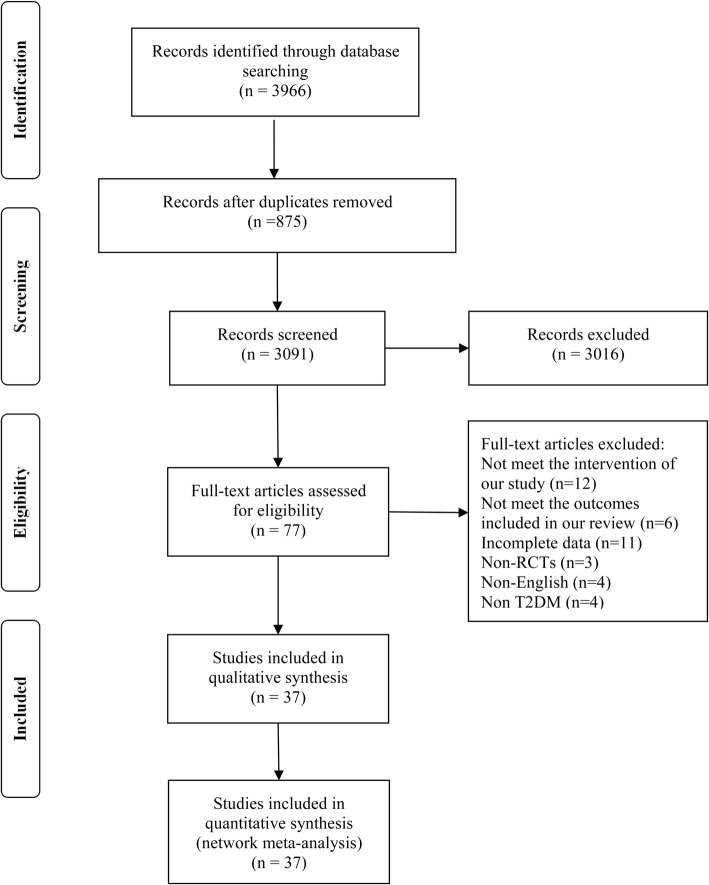
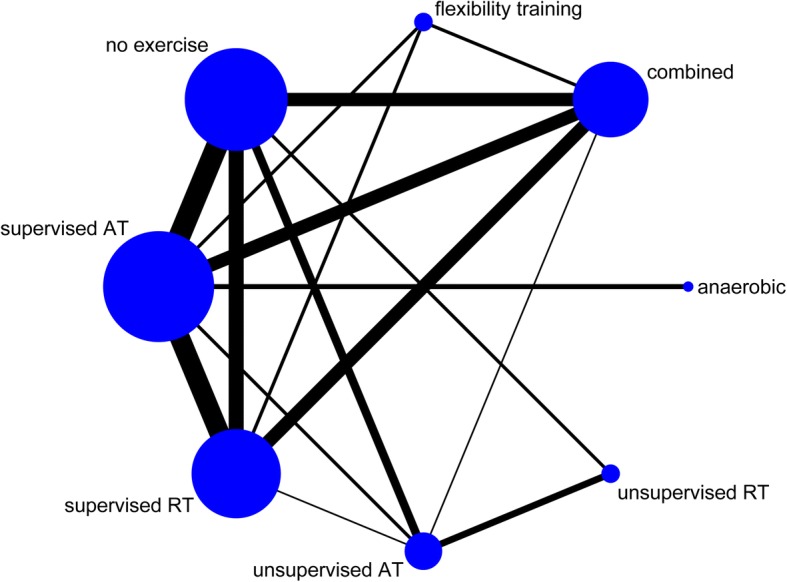
INTRODUCTION: Current international guidelines recommend aerobic, resistance, and combined exercises for the management of type 2 diabetes mellitus (T2DM). In our study, we conducted a network meta-analysis to assess the comparative impact of different exercise training modalities on glycemic control, cardiovascular risk factors, and weight loss in patients with T2DM. METHODS: We searched five electronic databases to identify randomized controlled trials (RCTs) that compared the differences between different exercise training modalities for patients with T2DM. The risk of bias in the included RCTs was evaluated according to the Cochrane tool. Network meta-analysis was performed to calculate mean difference the ratio of the mean and absolute risk differences. Data were analyzed using R-3.4.0. RESULTS: A total of 37 studies with 2208 patients with T2DM were included in our study. Both supervised aerobic and supervised resistance exercises showed a significant reduction in HbA1c compared to no exercise (0.30% lower, 0.30% lower, respectively), however, there was a less reduction when compared to combined exercise (0.17% higher, 0.23% higher). Supervised aerobic also presented more significant improvement than no exercise in fasting plasma glucose (9.38 mg/dl lower), total cholesterol (20.24 mg/dl lower), triacylglycerol (19.34 mg/dl lower), and low-density lipoprotein cholesterol (11.88 mg/dl lower). Supervised resistance showed more benefit than no exercise in improving systolic blood pressure (3.90 mmHg lower]) and total cholesterol (22.08 mg/dl lower]. In addition, supervised aerobic exercise was more powerful in improving HbA1c and weight loss than unsupervised aerobic (HbA1c: 0.60% lower; weight loss: 5.02 kg lower) and unsupervised resistance (HbA1c: 0.53% lower) exercises. CONCLUSION: Compared with either supervised aerobic or supervised resistance exercise alone, combined exercise showed more pronounced improvement in HbA1c levels; however, there was a less marked improvement in some cardiovascular risk factors. In terms of weight loss, there were no significant differences among the combined, supervised aerobic, and supervised resistance exercises. TRIAL REGISTRATION: Our study protocol was registered with the International Prospective Register of Systematic Reviews (PROSPERO); registration number: CRD42017067518 .
Overview
The claims and statistics of this paper haven’t been checked yet.
Free: it reads the open-access text and checks the first 5 claims that cite a source we can check. Create a free account to check every claim.
Integrity signals
Registry
Cites
Statistics
Figures
Verification
Claims the paper makes
The claims and statistics of this paper haven’t been checked yet.
Free: it reads the open-access text and checks the first 5 claims that cite a source we can check. Create a free account to check every claim.
Claims other papers make about this one
Each is checked against this paper’s own text: does it say what the citing paper says it does?
The source backs part of the claim, not all of it — or backs it for a different population, condition or comparison.
In the citing paper
“Resistance exercise (i.e., using your own body weight or working against a resistance) also improves blood glucose levels, fl exibility, and balance (101,110).”
From Management of Hyperglycemia in Type 2 Diabetes, 2022. A Consensus Report by the American Diabetes Association (ADA) and the European Association for the Study of Diabetes (EASD) (2022) · cites this paper as [110]
Experimental — accuracy not yet measuredThe source backs part of the claim, not all of it — or backs it for a different population, condition or comparison.
In the citing paper
“and induces clinically signi fi cant bene fi ts in cardiorespiratory fi tness (101,110,119).”
From Management of Hyperglycemia in Type 2 Diabetes, 2022. A Consensus Report by the American Diabetes Association (ADA) and the European Association for the Study of Diabetes (EASD) (2022) · cites this paper as [110]
Experimental — accuracy not yet measuredThe source backs part of the claim, not all of it — or backs it for a different population, condition or comparison.
In the citing paper
“Multiple studies have shown significant improvements in hemoglobin A1c (0.5-0.7%) of patients with T2DM through a combination of aerobic and resistance training.”
From The Impact of Physical Activity in Patients With Type 2 Diabetes (2025) · cites this paper as [37]
Experimental — accuracy not yet measuredIn the citing paper
“Another metaanalysis showed improvement in A1c of 0.53% with combined exercise and an improvement of only 0.3% with either aerobic or resistance exercise separately.”
From The Impact of Physical Activity in Patients With Type 2 Diabetes (2025) · cites this paper as [37]
Self-check
Percentages, sums and reported differences re-computed from the paper’s own numbers.
The self-check needs the paper’s full text.
Citations
Cites
International Diabetes Federation 2017
Carracher, A. M., Marathe, P. H., & Close, K. L. (2018) · Journal of Diabetes · doi:10.1111/1753-0407.12644 · Cited by 13,418
Role of Insulin Resistance in Human Disease
Reaven, G. M. (1988) · Diabetes · doi:10.2337/diab.37.12.1595 · Cited by 12,154
Garber, C. E., Blissmer, B., Deschenes, M. R., Franklin, B. A., Lamonte, M. J., Lee, I.-M., Nieman, D. C., & Swain, D. P. (2011) · Medicine & Science in Sports & Exercise · doi:10.1249/mss.0b013e318213fefb · Cited by 9,319 · cited 1×
“It has been shown that resistance exercise can benefit all adults and patients with T2DM by improving physical function, fat mass, lipid profiles, cardiovascular health, blood pressure, and insulin sensitivity [75, 76].”
BackgroundGlobal estimates of the prevalence of diabetes for 2010 and 2030
Shaw, J. E., Sicree, R. A., & Zimmet, P. Z. (2010) · Diabetes Research and Clinical Practice · doi:10.1016/j.diabres.2009.10.007 · Cited by 7,216 · cited 2×
“Type 2 diabetes mellitus (T2DM) accounts for 85–95% of all diabetes cases in the world [2].”
BackgroundEckel, R. H., Alberti, K., Grundy, S. M., & Zimmet, P. Z. (2010) · The Lancet · doi:10.1016/s0140-6736(09)61794-3 · Cited by 6,295
Stearne, M. R., Palmer, S. L., Hammersley, M. S., Franklin, S. L., Spivey, R. S., Lévy, J., Tidy, C. R., Bell, N. J., Steemson, J., Barrow, B. A., et al. (1998) · UCL Discovery (University College London) · Cited by 6,090
Eckel, R. H., Grundy, S. M., & Zimmet, P. Z. (2005) · The Lancet · doi:10.1016/s0140-6736(05)66378-7 · Cited by 5,550
Standards of Medical Care in Diabetes—2012
(2012) · Diabetes Care · doi:10.2337/dc12-s011 · Cited by 2,240
Turner, R. D., & Holman, R. R. (1998) · Cited by 1,974
Cited by
Items 101–200 of 523
Wu, S., Wang, L., He, Y., Shi, F., Zhuang, H., Mei, L., & Qian, Y.-L. (2023) · Complementary Therapies in Clinical Practice · doi:10.1016/j.ctcp.2023.101802 · Cited by 28
Główczyńska, R., Piotrowicz, E., Szalewska, D., Piotrowicz, R., Kowalik, I., Pencina, M. J., Zaręba, W., Banach, M., Orzechowski, P., Pluta, S., et al. (2021) · Cardiovascular Diabetology · doi:10.1186/s12933-021-01292-9 · Cited by 26
“As we know, rehabilitation programme combining aerobic and resistance training [43] has been shown to be superior in diabetic population, whereas the effects on the outcomes are unproven [44].”
BackgroundLuo, J., Zhang, K., Xu, Y., Tao, Y., & Zhang, Q. (2022) · Journal of Medical Systems · doi:10.1007/s10916-021-01797-6 · Cited by 22
Amerkamp, J., Benli, S., Isenmann, E., & Brinkmann, C. K. (2024) · Nutrition Metabolism and Cardiovascular Diseases · doi:10.1016/j.numecd.2024.09.016 · Cited by 29
Ryckeghem, L. V., Keytsman, C., Brandt, J. D., Verboven, K., Verbaanderd, E., Marinus, N., Franssen, W. M. A., Frederix, I., Bakelants, E., Petit, T., et al. (2022) · European Journal of Applied Physiology · doi:10.1007/s00421-022-04884-9 · Cited by 23
Al‐Ozairi, E., Alsaeed, D., Alroudhan, D., Jalali, M., Mashankar, A., Taliping, D., Abdulla, A., Gill, J. M. R., Sattar, N. A., Welsh, P. I., et al. (2023) · Diabetes/Metabolism Research and Reviews · doi:10.1002/dmrr.3677 · Cited by 30
“5 Supervision or the lack thereof may have affected the current study, however, as it can affect adherence, 9 but the observed inadequate effect may also be due to an insufficient stimulus from the employed simple home ‐ based exercises.”
BackgroundSun, X., Yan, T., Li, Z., Zhou, S., Peng, W. H., Cui, W., Xu, J., Cao, Z., Shi, L. S., & Wang, Y. (2023) · Nutrients · doi:10.3390/nu15133027 · Cited by 27
“However, regarding weight loss, another review stated that there was no difference among combined, endurance, and resistance exercises in participants with T2DM [32].”
BackgroundWorldwide burden of antidiabetic drug-induced sarcopenia: An international pharmacovigilance study
Kong, J., Park, S., Kim, T. H., Lee, J. E., Cho, H., Oh, J., Lee, S., Jo, H., Lee, H., Lee, K., et al. (2024) · Archives of Gerontology and Geriatrics · doi:10.1016/j.archger.2024.105656 · Cited by 22
The Impact of Exercise on Bone Health in Type 2 Diabetes Mellitus—a Systematic Review
Viggers, R., Al-Mashhadi, Z. K., Fuglsang-Nielsen, R., Gregersen, S., & Starup‐Linde, J. (2020) · Current Osteoporosis Reports · doi:10.1007/s11914-020-00597-0 · Cited by 24
Michielsen, M., Yagiz, J. I., Hanssens, M., Claes, J., Geuns, L., Gojevic, T., Hansen, D., Claessen, G., Craemer, M. D., & Cornelissen, V. (2025) · Cardiovascular Diabetology · doi:10.1186/s12933-025-03048-1 · Cited by 23
“These findings align with prior literature [8, 28, 29] and may be explained by the additive effects of enhanced mitochondrial oxidative capacity from CAT and improved skeletal muscle glucose storage from resistance training [30].”
Tao, D., Scully, R., Cole, A. M., Gao, Y., Ash, G. I., Gu, Y., Dutheil, F., Sun, Y., & Baker, J. S. (2023) · Frontiers in Public Health · doi:10.3389/fpubh.2023.1126244 · Cited by 22
Fernández‐Millán, E., & Guillén, C. (2022) · Biomolecules · doi:10.3390/biom12010104 · Cited by 30
“Physical activity and/or exercise are essential to the prevention and treatment of T2D [30,31].”
BackgroundTerauchi, Y., Takada, T., & Yoshida, S. (2021) · Diabetology International · doi:10.1007/s13340-021-00506-5 · Cited by 22
“Supervised exercise has also been shown to have a greater effect on HbA1c levels compared with unsupervised exercise [6].”
BackgroundMenek, M. Y., & Budak, M. (2022) · Nutrition Metabolism and Cardiovascular Diseases · doi:10.1016/j.numecd.2022.04.017 · Cited by 22
Leonel, L. D. S., de Brum, G., Alberton, C. L., & Delevatti, R. S. (2023) · Diabetes Research and Clinical Practice · doi:10.1016/j.diabres.2023.110575 · Cited by 22
Liu, C., Yang, J., Li, H., Deng, Y., He, P., Zhang, J., Chen, S., Chen, S., Wang, X., & Zhang, M. (2024) · Renal Failure · doi:10.1080/0886022x.2024.2373272 · Cited by 22
“However, Pan’s research suggested that cBt has a more significant effect on improving HbA1c levels [69]. the variations between the studies might be due to the NMA combining direct and indirect comparisons with a larger sample size, reducing the ci for the effect size. the number of studies…”
BackgroundChen, C., Hsu, K.-J., Chien, K., & Chen, J.-J. (2021) · Frontiers in Cardiovascular Medicine · doi:10.3389/fcvm.2021.705282 · Cited by 21
Ray, J., Srinath, R., & Mechanick, J. I. (2022) · American Journal of Lifestyle Medicine · doi:10.1177/15598276221084923 · Cited by 21
Cheng, Q.-H., Pengbiao, L., Lu, T., Guo, S., Di, W., Yang, K., & Qian, Y. (2021) · Journal of Orthopaedic Surgery and Research · doi:10.1186/s13018-021-02806-7 · Cited by 18
“Literature selection and data extraction Two reviewers (Cheng and Lu) screened all the literature according to the inclusion and exclusion criteria [19].”
MethodSelf-citationSilveira-Rodrigues, J. G., Campos, B. T., de Lima, A. T., Ogando, P. H. M., Gomes, C. B., Gomes, P. F., Aleixo, I. M. S., & Soares, D. D. (2023) · Experimental Brain Research · doi:10.1007/s00221-023-06588-8 · Cited by 21
“, blood pressure, fasting glucose, and glycated hemoglobin) (Pan et al. 2018) through distinct physiological mechanisms (Balducci et al.”
BackgroundLiu, D., Zhang, Y., Wu, Q., Han, R., Cheng, D., Wu, L., Guo, J., Yu, X., Ge, W., Ni, J., et al. (2024) · Journal of Diabetes · doi:10.1111/1753-0407.13549 · Cited by 19
“13,14 Previous studies commonly focused on the effect of exercise on overall glycemic control, focusing on HbA1c and fasting plasma glucose (FPG).”
BackgroundExtracellular vesicles: mechanisms and prospects in type 2 diabetes and its complications
Liu, Z., Yin, R., & Tian, J. (2025) · Frontiers in Endocrinology · doi:10.3389/fendo.2024.1521281 · Cited by 22
Self-citationPrehabilitation: metabolic considerations
Chabot, K., Gillis, C., & Carli, F. (2020) · Current Opinion in Clinical Nutrition & Metabolic Care · doi:10.1097/mco.0000000000000663 · Cited by 19
Miao, M., & Ma, L. (2021) · Journal of Dermatological Treatment · doi:10.1080/09546634.2021.1942422 · Cited by 20
“The test of publication bias would not be necessary to analyze if the included trials were less ten (33).”
BackgroundTaghizadeh, M., Kargarfard, M., Braune, S., Jung, F., & Naderi, M. (2021) · Clinical Hemorheology and Microcirculation · doi:10.3233/ch-211209 · Cited by 18
“Physical activity has been recommended as one of the most important strategies for the management of T2DM complications by some major international organizations [15, 16].”
The Impact of Physical Activity in Patients With Type 2 Diabetes
Bassin, S. R., & Srinath, R. (2025) · American Journal of Lifestyle Medicine · doi:10.1177/15598276231180541 · Cited by 17
Khan, A. R., Alnoud, M. A. H., Ali, H., Ali, I., Ahmad, S., Hassan, S. S. U., Shaikh, A. L., Hussain, T., Khan, M. U., Khan, S. U., et al. (2023) · Current Problems in Cardiology · doi:10.1016/j.cpcardiol.2023.102222 · Cited by 18
Zhang, C., & Yang, J. (2024) · Diabetes Care · doi:10.2337/dci23-0063 · Cited by 20
Cuccurullo, S. J., Fleming, T. K., Petrosyan, H. A., Hanley, D. F., & Raghavan, P. (2024) · Frontiers in Cardiovascular Medicine · doi:10.3389/fcvm.2024.1376616 · Cited by 20
Giggins, O. M., Doyle, J., Smith, S., Vavasour, G., Moran, O., Gavin, S., Sojan, N., & Boyle, G. (2023) · JMIR Cardio · doi:10.2196/40283 · Cited by 17
“The benefits of exercise have been widely established in the literature, playing a key role in the primary and secondary prevention of not only CHD but a wide range of other chronic diseases such as diabetes, cancer, and depression [3-5].”
BackgroundGuideline for the treatment of no light perception eyes induced by mechanical ocular trauma
Yan, H., Yang, K., Ma, Z., Kuhn, F., Zhang, W., Wang, Z., Hu, Y., Lu, H., Shigeo, Y., Sobacı, G., et al. (2022) · Journal of Evidence-Based Medicine · doi:10.1111/jebm.12496 · Cited by 16
Self-citationRatajczak, M., Krzywicka, M., Szulińska, M., Musiałowska, D., Kusy, K., & Karolkiewicz, J. (2024) · Diabetes Metabolic Syndrome and Obesity · doi:10.2147/dmso.s432954 · Cited by 17
Arumí-Prat, I., Cirera-Viñolas, E., Martori, J. C., Wasley, D., & Puig-Ribera, A. M. (2020) · European Journal of Pediatrics · doi:10.1007/s00431-020-03655-y · Cited by 16
Nutritional Recommendations for Type 2 Diabetes: An International Review of 15 Guidelines
Hou, L., Ge, L., Wang, Q., He, J., Qin, T., Cao, L., Cao, C., Liu, D., Liu, X., & Yang, K. (2022) · Canadian Journal of Diabetes · doi:10.1016/j.jcjd.2022.08.005 · Cited by 17
Self-citationIncreasing muscular strength to improve cardiometabolic risk factors
López-Jaramillo, P. A., López-López, J., TOLE, M. C., & Cohen, D. D. (2022) · Clínica e Investigación en Arteriosclerosis · doi:10.1016/j.arteri.2022.12.002 · Cited by 16
Pires, R. S., Braga, P. G. S., Santos, J. M. B., do Amaral, J. B., Amirato, G. R., Trettel, C. D. S., Santos, C. A. F., Vaisberg, M. W., Nali, L. H. D. S., Vieira, R. P., et al. (2021) · Experimental Gerontology · doi:10.1016/j.exger.2021.111584 · Cited by 15
Salama, I. I., Sami, S. M., Salama, S. I., Elshaarawy, G. A., Aboulghate, A., Raslan, H. M., Mohsen, A., Rasmy, H., Ibrahim, M. H., Ganem, M. M. F., et al. (2023) · Future Science OA · doi:10.2144/fsoa-2022-0060 · Cited by 19
Atherosclerosis, gut microbiome, and exercise in a meta-omics perspective: a literature review
Tang, H., Huang, Y., Yuan, D., & Liu, J. (2024) · PeerJ · doi:10.7717/peerj.17185 · Cited by 15
“Previous studies consistently demonstrate that lowering LDL-C levels effectively reduces the risk of AS development ( Cannon, 2020 ), and LDL-C levels are closely related to exercise training ( Pan et al., 2018 ).”
Han, Y., Quan, H., Ji, W., Tian, Q., Liu, X., & Liu, W. (2024) · Biochemical and Biophysical Research Communications · doi:10.1016/j.bbrc.2024.150831 · Cited by 15
Booth, J. E., Benham, J. L., Schinbein, L. E., McGinley, S. K., Rabi, D. M., & Sigal, R. J. (2020) · Canadian Journal of Diabetes · doi:10.1016/j.jcjd.2020.03.012 · Cited by 15
Guo, K., Li, J., Li, J., Chen, N., Li, Y., Yang, K., & Li, X. (2021) · International Journal of Clinical Practice · doi:10.1111/ijcp.14594 · Cited by 19
Self-citationLiu, J., Li, H., Zhang, J., Dong, X., Xue, J., Shi, X., & Yang, K. (2020) · Asian Journal of Surgery · doi:10.1016/j.asjsur.2019.11.012 · Cited by 15
Self-citationA step in the right direction: exploring the effects of aerobic exercise on HbA1c reduction
Singh, B. P., Koneru, Y. C., Zimmerman, H., Kanagala, S. G., Milne, I. G., Sethi, A., & Jain, R. (2023) · The Egyptian Journal of Internal Medicine · doi:10.1186/s43162-023-00247-8 · Cited by 15
“Reduced mortality rates have been linked to enhanced muscular and cardiorespiratory fitness [10].”
BackgroundMuñoz‐Pardeza, J., López‐Gil, J. F., Huerta‐Uribe, N., Hormazábal‐Aguayo, I., Izquierdo, M., & García‐Hermoso, A. (2024) · Cardiovascular Diabetology · doi:10.1186/s12933-024-02301-3 · Cited by 15
“These results are in line with some studies suggesting that prolonged interventions over time are more efficient in controlling metabolic parameters in individuals with diabetes [13, 59].”
ResultXie, Z., Li, Y., Li, X., & Zhang, J. (2025) · Journal of International Medical Research · doi:10.1177/03000605251355996 · Cited by 15
“A meta-analysis by 37 Pan et al. 40 included studies involving 2208 patients with T2DM.”
Amare, F., Kiflu, A., & Taddese, A. (2025) · Diabetology & Metabolic Syndrome · doi:10.1186/s13098-025-01838-x · Cited by 15
“Exercise has been widely recognized as a nonpharmacological intervention for improving metabolic health in T2DM patients, with aerobic and resistance training being the most commonly studied modalities [2].”
Physical activity recommendations for patients with type 2 diabetes: a cross-sectional survey
Hou, L., Ge, L., Li, Y., Chen, Y., Li, H., He, J., Cao, C., Li, R., Tian, J., Chen, Y., et al. (2020) · Acta Diabetologica · doi:10.1007/s00592-020-01480-1 · Cited by 15
Self-citationZhang, N., Yan, P., Feng, L., Chu, X., Li, J., Li, J., Guo, K., Guo, T., Liu, X., & Yang, K. (2021) · Asian Journal of Surgery · doi:10.1016/j.asjsur.2021.04.002 · Cited by 14
Self-citationMa, J. K., Walden, K., McBride, C. B., Levett, C. L. C., Colistro, R., Plashkes, T., Thorson, T., Shu, H., & Ginis, K. A. M. (2021) · Spinal Cord · doi:10.1038/s41393-021-00685-7 · Cited by 14
Reudink, M., Slooter, C. D., Janssen, L., Lieverse, A. G., Roumen, R. M. H., & Slooter, G. D. (2021) · Annals of Medicine and Surgery · doi:10.1016/j.amsu.2021.102997 · Cited by 15
Retracted systematic reviews continued to be frequently cited: a citation analysis
Wang, Z., Shi, Q., Zhou, Q., Zhao, S., Hou, R., Lu, S., Gao, X., & Chen, Y. (2022) · Journal of Clinical Epidemiology · doi:10.1016/j.jclinepi.2022.05.013 · Cited by 13
Self-citationRetractedBärg, M., Polotto, V. I.-B., Geiger, S., Held, S., & Brinkmann, C. K. (2025) · Diabetology & Metabolic Syndrome · doi:10.1186/s13098-025-01793-7 · Cited by 15
Xu, Q., Lu, T., Song, Z., Zhu, P., Yan-a, W., Zhang, L., Yang, K., & Zhang, Z. (2023) · The Clinical Respiratory Journal · doi:10.1111/crj.13629 · Cited by 13
“Data extraction was conducted by two independent researchers (QX and TTL).(13,14) It included the first author, publication year, baseline characteristics, intervention measures, treatment course, and outcomes.”
MethodSelf-citationDiabetes mellitus, metabolic syndrome, and physical activity among Ethiopians: A systematic review
Bekele, B. B., Manzar, M. D., Alqahtani, M. M., & Pandi-Perumal, S. R. (2020) · Diabetes & Metabolic Syndrome Clinical Research & Reviews · doi:10.1016/j.dsx.2020.12.031 · Cited by 15
Martiskainen, T., Lamidi, M., Venojärvi, M., Tikkanen, H. O., & Laatikainen, T. K. (2022) · BMJ Open · doi:10.1136/bmjopen-2021-058546 · Cited by 16
Correlates of Self-Care Behaviors in Adults With Type 2 Diabetes and Comorbid Heart Failure
Aga, F., Dunbar, S. B., Kebede, T., Higgins, M. K., & GARY, R. A. (2019) · The Science of Diabetes Self-Management and Care · doi:10.1177/0145721719855752 · Cited by 13
Low Awareness of Cardiovascular Risk Factor Among Patients Admitted in Cardiac Rehabilitation Unit
Conte, M., Rozza, F., Fucile, I., D’Avino, G., Sorvillo, G., LUCA, N. D., & Mancusi, C. (2021) · High Blood Pressure & Cardiovascular Prevention · doi:10.1007/s40292-021-00444-y · Cited by 14
Marcotte‐Chénard, A., & Little, J. P. (2024) · Translational Exercise Biomedicine · doi:10.1515/teb-2024-2007 · Cited by 15
“Unsurprisingly, Pan and colleagues have shown in their meta-analysis that unsupervised aerobic and unsupervised resistance training were less e ffi cacious in decreasing A1c compared to when the exercise sessions were supervised [104].”
InfluentialChen, X., Han, H., Jiang, T., & Cai, G. (2025) · Scientific Reports · doi:10.1038/s41598-025-93321-w · Cited by 12
Zhao, S., Zhong, G., Lv, A., Tao, Y., Liu, H., Lv, H., Zhai, Z., Yang, L., Yan, H., Kang, Y., et al. (2025) · American Journal of Nephrology · doi:10.1159/000548114 · Cited by 12
“This effect may be due to aerobic training’s capacity to increase the muscle’s ability to produce adenosine triphosphate within the mitochondria, which is essential for muscle contraction and improves muscle strength [76].”
Xing, X., Zhao, X., Wei, H., & Li, Y. (2021) · Medicine · doi:10.1097/md.0000000000023817 · Cited by 12
Zhu, X., Zhang, F., Chen, J., Zhao, Y., Ba, T., Lin, C., Lu, Y., Yu, T., Cai, X., Zhang, L., et al. (2022) · International Journal of Sport Nutrition and Exercise Metabolism · doi:10.1123/ijsnem.2021-0168 · Cited by 13
Zhang, J., Liu, M., Hu, B.-Y., & Wang, L. (2022) · Journal of Integrative and Complementary Medicine · doi:10.1089/jicm.2022.0580 · Cited by 14
“32 A 9-month aerobic combined resistance training intervention on 262 T2DM patients resulted in an absolute mean change in HbA1c in the combined training group of - 0.27% (95% confidence interval: - 0.46 to 0.08), 33 which is close to the difference in this study.”
InfluentialSarcopenia and diabetes mellitus: evidence for a bi-directional relationship
Mesinovic, J., & Scott, D. S. (2019) · European Geriatric Medicine · doi:10.1007/s41999-019-00230-z · Cited by 13
Mechanism underlying the effects of exercise against type 2 diabetes: A review on research progress
Peng, C.-J., Chen, S., Yan, S.-Y., Zhao, J.-N., Luo, Z., Qian, Y., & Zhao, G.-L. (2024) · World Journal of Diabetes · doi:10.4239/wjd.v15.i8.1704 · Cited by 15
Zhang, Y., Zhang, Z., Martínez‐Téllez, B., Di, X., Kindt, A. S. D., Köhler, I., Osuna‐Prieto, F. J., Clark, C., Drouin, N., Harms, A. C., et al. (2025) · EBioMedicine · doi:10.1016/j.ebiom.2025.105849 · Cited by 11
“8,9 Up to date, most studies investigating the effects of regular exercise on lipids have primarily focused on total lipoproteins and total cholesterol blood levels, 10–12 with limited exploration of its impact on the broader spectrum of lipid classes and subclasses.”
Caro, J., Villa‐Estrada, F., Gómez‐González, A. J., Lupiáñez‐Pérez, I., Herrera, J. C. M., Kaknani‐Uttumchandani, S., García‐Mayor, S., & Morales‐Asencio, J. M. (2020) · Journal of Advanced Nursing · doi:10.1111/jan.14580 · Cited by 12
White, L., Kirwan, M., Christie, V., Hurst, L., & Gwynne, K. G. (2024) · International Journal of Environmental Research and Public Health · doi:10.3390/ijerph21050601 · Cited by 13
“This resonates with findings from prior systematic reviews, which similarly concluded that exercise interventions delivered in community or clinical settings are efficacious for type 2 diabetes mellitus management [7,13].”
BackgroundResultThe Role of Individualized Exercise Prescription in Type 2 Diabetes Mellitus Management
Doupis, J., Karras, K., & Avramidis, K. (2021) · touchREVIEWS in Endocrinology · doi:10.17925/ee.2021.17.1.2 · Cited by 11
“The intensity of their physical activity should be monitored.(14) Finally, the mode of exercise should be individualized depending on the patient’s characteristics; for example, stationary cycling or swimming would be preferable to slow walking for obese individuals or patients with peripheral neuropathy or microvascu…”
BackgroundHale, L. A., Higgs, C., Keen, D., & Smith, C. (2022) · Frontiers in Rehabilitation Sciences · doi:10.3389/fresc.2022.829542 · Cited by 11
“In the rehabilitation context, a combination of aerobic and resistance exercise has been proven effective to improve glycaemic control in T2D, but only if undertaken at the dose (intensity and frequency) prescribed (41, 42).”
BackgroundInfluence of Maternal Exercise on Maternal and Offspring Metabolic Outcomes
Jevtovic, F., & May, L. E. (2023) · IntechOpen eBooks · doi:10.5772/intechopen.106566 · Cited by 13
Zhang, J., Bing, Z., Yan, P., Tian, J., Shi, X., Wang, Y., & Yang, K. (2019) · The Journal of Gene Medicine · doi:10.1002/jgm.3105 · Cited by 12
“(F) K–M curves showing overall survivals of high‐risk and high.(43,44) In addition, when the heterogeneity was low across different studies, a fixed model was applied; in other cases, a random model was used to pool the data.”
MethodSelf-citationde Almeida, J. A., Batalha, A. P. D. B., Santos, C. V. D. O., Fontoura, T. S., Laterza, M. C., & da Silva, L. P. (2024) · Brazilian Journal of Physical Therapy · doi:10.1016/j.bjpt.2024.101146 · Cited by 11
“42 In this review, studies were grouped for the conduct of meta-analyses based on the similarity between the characteristics of interventions and the timing of blood glucose assessment after a single exercise session or control session.”
Soltani, S., Yazdanpanah, Z., Razmpoosh, E., Vasmehjani, A. A., Rostampour, K., Lotfi, M., Kaviani, M., Forbes, S. C., Baker, J. S., & Salehi‐Abargouei, A. (2025) · Nutrition Reviews · doi:10.1093/nutrit/nuaf065 · Cited by 15
Młynarska, E., Leszto, K., Katańska, K., Prusak, A., Wieczorek, A., Jakubowska, P., Rysz, J., & Franczyk, B. (2025) · Nutrients · doi:10.3390/nu17172860 · Cited by 11
“The results show that combined training has the greatest potential in the reduction of HbA1c [63].”
Recomendaciones preventivas vasculares. Actualización PAPPS 2024
Orozco‐Beltrán, D., Brotons-Cuixart, C., Banegas, J. R., Gil-Guillén, V. F., Cuenca, A. M. C., Martín-Rioboó, E., Jordá-Baldó, A., Vicuña, J., & Navarro-Pérez, J. (2024) · Atención Primaria · doi:10.1016/j.aprim.2024.103123 · Cited by 13
Sanches, A., Guzzoni, V., Miranda, V. C. D. R., Peressim, L. B., Rocha, S., de Lima, P. O., Marcondes, F. K., Tanno, A. P., & Cunha, T. S. (2020) · Health Care For Women International · doi:10.1080/07399332.2020.1821689 · Cited by 11
“Systematic reviews of randomized controlled trials have extensively investigated the effects of conventional interventions, including aerobic and strength training programs, for diabetic patients (Grace et al., 2017; Pan et al., 2018) and show the potential to counterbalance T2DM-associated deleterious effects, includ…”
BackgroundFlores, E. B., Reichert, T. L., Farinha, J. B., Kruel, L. F. M., & Costa, R. R. (2021) · Journal of Physical Activity and Health · doi:10.1123/jpah.2020-0797 · Cited by 10
Yates, T., Henson, J., Sargeant, J., King, J. A., Ahmad, E., Zaccardi, F., & Davies, M. J. (2021) · Translational Medicine and Exercise Prescription · doi:10.53941/tmep.v1i1.33 · Cited by 10
Effects of exercise on sleep in patients with epilepsy: A systematic review
Mueller, C., Thomas, A. E., Amara, A. W., DeWolfe, J. L., & Thomas, S. J. (2024) · Epilepsy & Behavior Reports · doi:10.1016/j.ebr.2024.100675 · Cited by 11
Wang, C., Guan, D., Li, R., Bing, Z., Yang, Y., & Yang, K. (2021) · Journal of Reproductive Immunology · doi:10.1016/j.jri.2021.103429 · Cited by 16
Self-citationDennis, S. M., Kwok, W. S., Alison, J. A., Hassett, L. M., Nisbet, G., Refshauge, K. M., Sherrington, C., & Williams, A. (2024) · BMC Family Practice · doi:10.1186/s12875-024-02570-7 · Cited by 9
“Two network analyses comparing different types of exercise ranked the exercise modalities in terms of their effectiveness on glycaemic control [75, 78].”
BackgroundGao, H., Ma, X., Wang, Z., Zhu, D., Guo, Y., Zhao, L., & Xiao, W. (2025) · Cells · doi:10.3390/cells14131026 · Cited by 9
Liu, R., Shi, X., & Zhang, X. (2025) · Maturitas · doi:10.1016/j.maturitas.2025.108691 · Cited by 10
The Significant Role of Physical Activity and Exercise in Health and Metabolic Diseases
Dimitriadis, G., Chryssanthopοulos, C., Philippou, Α., & Koutsilieris, M. (2025) · Physiologia · doi:10.3390/physiologia5040057 · Cited by 12
“Among older adults, aerobic exercise has been especially effective at reducing fasting blood glucose, dyslipidemia, and systolic BP compared with other forms of exercise [109,110,112,130].”
InfluentialWang, P., Shi, J., Zhao, L., Li, M., Jiao, J., Li, L., Tian, J., Wang, S., & Zhang, S. (2020) · Medicine · doi:10.1097/md.0000000000022275 · Cited by 9
Self-citationLim, Y. S., Ho, B., & Goh, Y. S. (2022) · Worldviews on Evidence-Based Nursing · doi:10.1111/wvn.12615 · Cited by 9
Ersin, F., Tülüce, D., & Enzin, F. (2022) · African Health Sciences · doi:10.4314/ahs.v22i3.29 · Cited by 9
“24 (7-30) Completing a behavior subscale (CB) 17.”
BackgroundInfluentialLuo, J., Tao, Y., Xu, Y., Yang, L., Zhang, H., Chen, Y., Liu, X., Zhang, Y., Lan, R., Chen, Y., et al. (2023) · Journal of Diabetes and its Complications · doi:10.1016/j.jdiacomp.2023.108518 · Cited by 9
Self-citationPrat-Luri, A., López‐Valenciano, A., Cachadiña, E. S., Liguori, G. A., & Ayala, F. (2022) · International journal of exercise science · doi:10.70252/mloq6237 · Cited by 10
Domain-Specific Active and Sedentary Behaviors in Relation to Workers’ Presenteeism and Absenteeism
Koohsari, M. J., Yasunaga, A., McCormack, G. R., Shibata, A., Ishii, K., Nakaya, T., & Oka, K. (2021) · Journal of Occupational and Environmental Medicine · doi:10.1097/jom.0000000000002333 · Cited by 9
Hale, L. A., Higgs, C., Gray, A. R., Mann, J. I., Mani, R., Sullivan, T. A., Terry, J., Keen, D., & Stokes, T. (2022) · EClinicalMedicine · doi:10.1016/j.eclinm.2022.101361 · Cited by 9
du Plessis, R., Dembskey, N., & Bassett, S. H. (2022) · International Journal of Diabetes in Developing Countries · doi:10.1007/s13410-022-01068-1 · Cited by 10
Li, T., Han, X., Chen, S., Wang, B., Teng, Y., Cheng, W., Lu, Z., Li, Y., Wu, X., Jiang, Y., et al. (2022) · Journal of Cardiovascular Translational Research · doi:10.1007/s12265-022-10282-5 · Cited by 9
Self-citationImpact of the COVID-19 pandemic on the development of locomotive syndrome
Terai, H., Hori, Y., Takahashi, S., Tamai, K., Iwamae, M., Hoshino, M., Ohyama, S., Yabu, A., & Nakamura, H. (2021) · Journal of orthopaedic surgery · doi:10.1177/23094990211060967 · Cited by 9
Zhang, G., Wang, Y., Han, X., Lu, T., Fu, L., Jin, H., Yang, K., & Cai, H. (2022) · Frontiers in Oncology · doi:10.3389/fonc.2022.799265 · Cited by 10
Self-citationKujala, U. M. (2021) · medRxiv · doi:10.1101/2021.02.11.21251608 · Cited by 11
“Since long-term adherence is a general problem in exercise therapy, supervised exercise programs often lead to better results than non-supervised programs [24], although the cost-effectiveness of”
BackgroundShi, F., & Chen, J. (2025) · Aging and Disease · doi:10.14336/ad.2025.0670 · Cited by 8
“Studies have shown that various types of exercise, including resistance exercise, aerobic exercise, combined exercise, and HIIT, exhibit distinct physiological effects and clinical potentials in glycemic control and the improvement of muscle mass and function [69, 70].”
Yan, R., Chen, L., Lin, G., Shi, Y., Huang, W., Mai, Y., Sun, J., & Li, D. (2025) · Frontiers in Endocrinology · doi:10.3389/fendo.2025.1518871 · Cited by 8
“Previous meta-analyses have generally grouped exercise into three broad categories: aerobic (AT), resistance (RT), and combined training (AT+RT), without fully exploring the speci fi c roles and mechanisms of different exercise types in diabetes prevention (22 – 26).”
Zhang, N., Qu, X., & Kang, L. (2025) · Frontiers in Clinical Diabetes and Healthcare · doi:10.3389/fcdhc.2025.1606330 · Cited by 9
Metadata
- Authors
- Pan, B., Ge, L., Xun, Y.-Q., Chen, Y.-J., Gao, C.-Y., Han, X., Zuo, L.-Q., Shan, H.-Q., Yang, K.-H., Ding, G.-W., & Tian, J.-H.
- Affiliations
- Lanzhou University (CN)
- Venue
- International Journal of Behavioral Nutrition and Physical Activity
- Published
- 2018-07-25
- Volume
- 15
- Issue
- 1
- Pages
- 72-72
- ISSN
- 1479-5868 (ISSN-L)
- PMC
- PMC6060544
- OpenAlex
- W2884571905
- Cited by
- 470
- References
- 87
- Citations by year
- 2026: 38 · 2025: 51 · 2024: 57 · 2023: 86 · 2022: 94 · 2021: 83 · 2020: 40 · 2019: 20 · 2018: 1
- FWCI
- 4.73
- Type
- journal article
- Language
- en
- Open access
- gold
- doi.org
- Licence
- cc-by
- creativecommons.org/licenses/by/4.0/ (tdm)
- Locations
- International Journal of Behavioral Nutrition and Physical Activity (publishedVersion, cc-by)
- Europe PMC (PubMed Central) (publishedVersion, other-oa)
- PubMed Central (publishedVersion, cc-by)
- PubMed (publishedVersion)
- Lanzhou University Institutional Repository (submittedVersion)
- DOAJ (DOAJ: Directory of Open Access Journals) (submittedVersion, cc-by-sa)
- Funders
- Lanzhou University
- Karlsruhe House of Young Scientists
- Topics
- Health Sciences › Medicine › Public Health, Environmental and Occupational Health › Physical Activity and Health
- Health Sciences › Medicine › Endocrinology, Diabetes and Metabolism › Diabetes, Cardiovascular Risks, and Lipoproteins
- Health Sciences › Medicine › Physiology (medical) › Cardiovascular and exercise physiology
- Keywords
- type 2 diabetes, exercise training, aerobic exercise, resistance training, concurrent training, glycemic control, HbA1c, fasting blood glucose, cardiovascular risk factors, weight loss, unsupervised exercise, supervised exercise, LDL cholesterol, systolic blood pressure, triglycerides, total cholesterol, lipid profile, blood pressure, diabetes management guidelines, exercise modality comparison
- MeSH terms
- Network Meta-Analysis, Aged, Blood Glucose, Blood Pressure, Diabetes Mellitus, Type 2, Exercise Therapy, Female, Glycated Hemoglobin, Humans, Lipids, Cholesterol, LDL, Male, Middle Aged, Weight Loss, Exercise, Resistance Training
About these checks
Registry, retraction, Cites and statistics results are computed, not judged, with one exception: a printed reference that no index lists is read once by a model before it counts as a citation error. Claims are extracted by a model and kept only when their quote appears verbatim in the text; each cited source is then checked, with a model’s help, for whether it says what the claim relies on. Those verdicts can be wrong — read the claim’s quote and the cited source before relying on one.
Statistics and arithmetic are recomputed, not judged.
Confidence bands are shown only for fields calibrated on our annotated test set. None is calibrated yet, so no band is shown.
What counts as a claim ›How we measure confidence ›How we check this ›
Are you an author, or do you see a problem with this page? Request a review
Data sources
Bibliographic data: Semantic Scholar, OpenAlex, Crossref.
Contains information from the Semantic Scholar Academic Graph Datasets, made available under the ODC Attribution License (ODC-BY 1.0).
Semantic Scholar’s data is described in: Kinney, R., et al. (2023). The Semantic Scholar Open Data Platform. arXiv:2301.10140.
