

Energy availability discriminates clinical menstrual status in exercising women
Open accessThe DOI matches its Crossref record; 40 of the 40 references it cites were found in a registry or an index.
Abstract
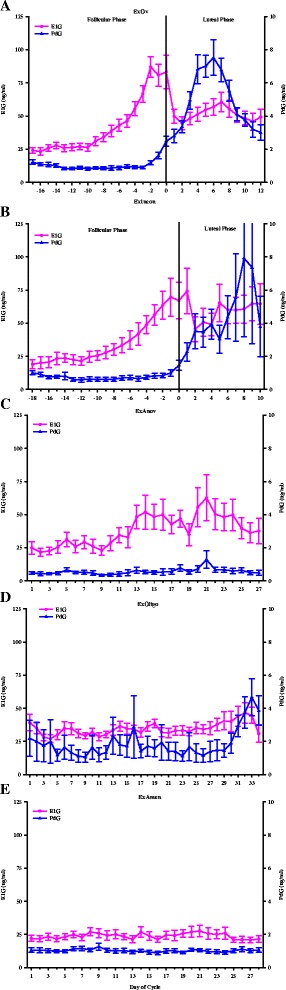
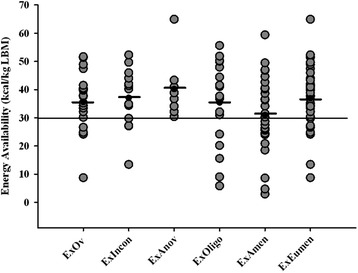
BACKGROUND: Conditions of low energy availability (EA) (<30 kcal/kgLBM) have been associated with suppressed metabolic hormones and reductions in LH pulsatility in previously sedentary women during short-term manipulations of energy intake (EI) and exercise energy expenditure (EEE) in a controlled laboratory setting. The purpose of this study was to examine if EA, defined as EA = (EI-EEE)/kgLBM, is associated with disruptions in ovarian function in exercising women. METHODS: Menstrual status was confirmed with daily measures of urinary reproductive metabolites across 1-3 menstrual cycles or 28-day monitoring periods. EA was calculated for exercise days using EI from 3-day diet logs, EEE from heart-rate monitors and/or exercise logs for a 7-day period, and body composition from DXA. Resting energy expenditure (REE) was measured by indirect calorimetry. Total triiodothyronine (TT3) was measured from a fasting blood sample. RESULTS: 91 exercising women (23.1 ± 0.5 years) were categorized clinically as either exercising amenorrheic (ExAmen, n = 30), exercising oligomenorrheic (ExOligo, n = 20) or exercising eumenorrheic (ExEumen, n = 41). The eumenorrheic group was further divided into more specific subclinical groups as either exercising ovulatory (ExOv, n = 20), exercising inconsistent (ExIncon, n = 13), or exercising anovulatory (ExAnov, n = 8). An EA threshold of 30 kcal/kgLBM did not distinguish subclinical menstrual status (χ (2) = 0.557, p = 0.46) nor did EA differ across subclinical disturbance groups (p > 0.05). EA was lower in the ExAmen vs. ExEumen (30.9 ± 2.4 vs. 36.9 ± 1.7 kcal/kgLBM, p = 0.04). The ratio of REE/predicted REE was lower in the ExAmen vs. ExEumen (0.85 ± 0.02 vs. 0.92 ± 0.01, p = 0.001) as was TT3 (79.6 ± 4.1 vs. 95.3 ± 2.9 ng/mL, p = 0.002). CONCLUSIONS: EA did not differ among subclinical forms of menstrual disturbances in a large sample of exercising women, but EA did discriminate clinical menstrual status, i.e., amenorrhea from eumenorrhea.
Overview
The claims and statistics of this paper haven’t been checked yet.
Free: it reads the open-access text and checks the first 5 claims that cite a source we can check. Create a free account to check every claim.
Integrity signals
Registry
Cites
Statistics
Figures
Verification
Claims the paper makes
The claims and statistics of this paper haven’t been checked yet.
Free: it reads the open-access text and checks the first 5 claims that cite a source we can check. Create a free account to check every claim.
Claims other papers make about this one
Each is checked against this paper’s own text: does it say what the citing paper says it does?
The source backs part of the claim, not all of it — or backs it for a different population, condition or comparison.
In the citing paper
“In clinical studies, it has been established that EA of 30 kcal kg−1 FFM·day−1 is the threshold at and below which suppressed metabolic hormones and reductions in luteinizing hormone pulsatility is observed after as little as 5 days in healthy females [64,65,129,140,141].”
From International society of sports nutrition position stand: nutritional concerns of the female athlete (2023) · cites this paper as [140]
Experimental — accuracy not yet measured
Self-check
Percentages, sums and reported differences re-computed from the paper’s own numbers.
The self-check needs the paper’s full text.
Citations
Cites
Compendium of physical activities: an update of activity codes and MET intensities
AINSWORTH, B. E., HASKELL, W. L., WHITT, M. C., IRWIN, M. L., SWARTZ, A. M., STRATH, S. J., O???BRIEN, W. L., BASSETT, D. R., SCHMITZ, K. H., EMPLAINCOURT, P. O., et al. (2000) · Medicine & Science in Sports & Exercise · doi:10.1097/00005768-200009001-00009 · Cited by 8,497 · cited 1×
“[28] compendiums of physical activities were used to determine the appropriate metabolic equivalent (MET) level for the exercise performed.”
Loucks, A. B., & Thuma, J. R. (2003) · The Journal of Clinical Endocrinology & Metabolism · doi:10.1210/jc.2002-020369 · Cited by 760 · cited 7×
“EA was operationally defined as EI minus EEE normalized to kilograms of LBM (EA = (EI–EEE)/LBM) [14] and calculated using the data described above for EI, EEE, and LBM.”
MethodInfluentialMetabolic fuels and reproduction in female mammals
Wade, G. N., & Schneider, J. E. (1992) · Neuroscience & Biobehavioral Reviews · doi:10.1016/s0149-7634(05)80183-6 · Cited by 686 · cited 1×
“locomotion, and growth [15].”
Dose-Response Relationships Between Energy Availability and Bone Turnover in Young Exercising Women
Ihle, R., & Loucks, A. B. (2004) · Journal of Bone and Mineral Research · doi:10.1359/jbmr.040410 · Cited by 523 · cited 2×
“Although these studies [14,16] define a critical EA threshold of 30 kcal/kg LBM for the initiation of reduced LH pulsatility, few investigators have examined whether an EA of 30 kcal/kg LBM discriminates normal ovarian function from either subtle (luteal phase defects or anovulation) or severe (oligomenorrhea or ameno…”
Induction of Menstrual Disorders by Strenuous Exercise in Untrained Women
Bullen, B. A., Skrinar, G. S., Beitins, I. Z., von Mering, G., Turnbull, B. A., & McArthur, J. W. (1985) · New England Journal of Medicine · doi:10.1056/nejm198505233122103 · Cited by 483 · cited 1×
“Prospective exercise training studies show that low energy availability (EA) is causally related to menstrual disturbances in exercising females [8-12], as increases in EA are associated with the reversal of menstrual disturbances when exercise training persists [13].”
Miller, R. C., Brindle, E., Holman, D. J., Shofer, J., Klein, N. A., Soules, M. R., & O’Connor, K. A. (2004) · Clinical Chemistry · doi:10.1373/clinchem.2004.032292 · Cited by 317 · cited 1×
“All urine samples were corrected for specific gravity using a hand refractometer (NSG Precision Cells) to account for hydration status [29] which has been reported to perform as well as creatinine correction for adjusting urinary hormone concentrations.”
De Souza, M. J., Miller, B. E., Loucks, A. B., Luciano, A. A., Pescatello, L. S., Campbell, C. G., & Lasley, B. L. (1998) · The Journal of Clinical Endocrinology & Metabolism · doi:10.1210/jcem.83.12.5334 · Cited by 315 · cited 10×
“Most studies have used self-reported diet logs for various lengths of time to estimate EI [2,21,24].”
InfluentialDe Souza, M. J., Toombs, R. J., Scheid, J. L., O'Donnell, E., West, S. L., & Williams, N. I. (2010) · Human Reproduction · doi:10.1093/humrep/dep411 · Cited by 305
Self-citationWilliams, N. I., Helmreich, D. L., Parfitt, D. B., Caston-Balderrama, A., & Cameron, J. L. (2001) · The Journal of Clinical Endocrinology & Metabolism · doi:10.1210/jcem.86.11.8024 · Cited by 275 · cited 1×
“Prospective exercise training studies show that low energy availability (EA) is causally related to menstrual disturbances in exercising females [8-12], as increases in EA are associated with the reversal of menstrual disturbances when exercise training persists [13].”
Self-citationDe Souza, M. J., West, S. L., Jamal, S. A., Hawker, G. A., Gundberg, C. M., & Williams, N. I. (2008) · Bone · doi:10.1016/j.bone.2008.03.013 · Cited by 236 · cited 1×
“In women with exercise associated menstrual disturbances (EAMD), a spectrum of clinical sequelae has been observed and includes low bone mineral density [3], stress fractures [4], disordered eating [5], altered vascular function [6],”
Self-citation
Cited by
IOC consensus statement on relative energy deficiency in sport (RED-S): 2018 update
Mountjoy, M., Sundgot-Borgen, J. K., Burke, L. M., Ackerman, K. E., Blauwet, C., Constantini, N., Lebrun, C., Lundy, B., Melin, A. K., Meyer, N. L., et al. (2018) · British Journal of Sports Medicine · doi:10.1136/bjsports-2018-099193 · Cited by 883
Mountjoy, M., Ackerman, K. E., Bailey, D. M., Burke, L. M., Constantini, N., Hackney, A. C., Heikura, I. A., Melin, A., Pensgaard, A. M., Stellingwerff, T., et al. (2023) · British Journal of Sports Medicine · doi:10.1136/bjsports-2023-106994 · Cited by 974
Functional Hypothalamic Amenorrhea: An Endocrine Society Clinical Practice Guideline
Gordon, C. M., Ackerman, K. E., Berga, S. L., Kaplan, J. R., Mastorakos, G., Misra, M., Murad, M. H., Santoro, N. F., & Warren, M. P. (2017) · The Journal of Clinical Endocrinology & Metabolism · doi:10.1210/jc.2017-00131 · Cited by 600
Mountjoy, M., Sundgot-Borgen, J., Burke, L., Ackerman, K. E., Blauwet, C., Constantini, N., Lebrun, C., Lundy, B., Melin, A., Meyer, N., et al. (2018) · International Journal of Sport Nutrition and Exercise Metabolism · doi:10.1123/ijsnem.2018-0136 · Cited by 447
“Each male experienced 4 separate 4-day conditions: LEA (15 kcal/kg FFM/day with and without exercise) and adequate EA (40 kcal/kg FFM/day with and without exercise).”
MethodResultInfluentialLogue, D. M., Madigan, S. M., Melin, A., Delahunt, E., Heinen, M., Donnell, S.-J. M., & Corish, C. A. (2020) · Nutrients · doi:10.3390/nu12030835 · Cited by 321
Endocrine Effects of Relative Energy Deficiency in Sport
Elliott-Sale, K. J., Tenforde, A. S., Parziale, A. L., Holtzman, B., & Ackerman, K. E. (2018) · International Journal of Sport Nutrition and Exercise Metabolism · doi:10.1123/ijsnem.2018-0127 · Cited by 229
Wasserfurth, P., Palmowski, J., Hahn, A., & Krüger, K. (2020) · Sports Medicine - Open · doi:10.1186/s40798-020-00275-6 · Cited by 190
“LEA below 30 kcal/kg/FFM indicates a clinical menstrual status and clearly differentiates amenorrhea, defined as no menses for 90 days, from eumenorrhea in exercising female athletes [87].”
BackgroundInternational society of sports nutrition position stand: nutritional concerns of the female athlete
Sims, S. T., Kerksick, C. M., Smith-Ryan, A. E., Janse de Jonge, X. A. K., Hirsch, K. R., Arent, S. M., Hewlings, S. J., Kleiner, S. M., Bustillo, E., Tartar, J. L., et al. (2023) · Journal of the International Society of Sports Nutrition · doi:10.1080/15502783.2023.2204066 · Cited by 129
“tility is observed after as little as 5 days in healthy females [64,65,129,140,141].”
BackgroundMenstrual disruption with exercise is not linked to an energy availability threshold
LIEBERMAN, J. L., DE SOUZA, M. J., WAGSTAFF, D. A., & WILLIAMS, N. I. (2018) · Medicine & Science in Sports & Exercise · doi:10.1249/mss.0000000000001451 · Cited by 127
Self-citationDe Souza, M. J., Koltun, K. J., & Williams, N. I. (2019) · Sports Medicine · doi:10.1007/s40279-019-01217-3 · Cited by 102
“In our cross-sectional study [24] in 91 exercising women, we categorized menstrual status as either amenorrheic, oligomenorrheic, or eumenorrheic, and further subdivided the eumenorrheic women into subclinical menstrual groups as either ovulatory, inconsistent, or anovulatory.”
BackgroundMethodInfluentialSelf-citationRecommendations and Nutritional Considerations for Female Athletes: Health and Performance
Holtzman, B., & Ackerman, K. E. (2021) · Sports Medicine · doi:10.1007/s40279-021-01508-8 · Cited by 111
Does relative energy deficiency in sport (REDs) syndrome exist?
Jeukendrup, A. E., Areta, J. L., Van Genechten, L., Langan-Evans, C., Pedlar, C. R., Rodas, G., Sale, C., & Walsh, N. P. (2024) · Sports Medicine · doi:10.1007/s40279-024-02108-y · Cited by 100
Direct and indirect impact of low energy availability on sports performance
Melin, A. K., Areta, J. L., Heikura, I. A., Stellingwerff, T., Torstveit, M. K., & Hackney, A. C. (2024) · Scandinavian Journal of Medicine & Science in Sports · doi:10.1111/sms.14327 · Cited by 72
Jagim, A. R., Fields, J., Magee, M. K., Kerksick, C. M., & Jones, M. T. (2022) · Nutrients · doi:10.3390/nu14050986 · Cited by 74
“[28] recently observed that energy availability was not associated with menstrual status across the entire spectrum of menstrual disturbances, only appearing to discriminate at clinical extremes—only to be later refuted by Loucks et al.”
BackgroundFemale Athlete Triad and Relative Energy Deficiency in Sport: A Focus on Scientific Rigor
Williams, N. I., Koltun, K. J., Strock, N. C. A., & De Souza, M. J. (2019) · Exercise and Sport Sciences Reviews · doi:10.1249/jes.0000000000000200 · Cited by 64
Self-citationEffects of a ketogenic diet on body composition and strength in trained women
Vargas-Molina, S., Petro, J. L., Romance, R., Kreider, R. B., Schoenfeld, B. J., Bonilla, D. A., & Benítez-Porres, J. (2020) · Journal of the International Society of Sports Nutrition · doi:10.1186/s12970-020-00348-7 · Cited by 61
“To avoid low energy availability and consequent changes in the menstrual cycle, the participants energy intake was set at ≈40–45 kcal∙kg-FFM (1)·d (1), which is higher than that reported in previous studies (30 kcal∙kg 1 lean body mass) [34, 35].”
MethodIndices of Resting Metabolic Rate Accurately Reflect Energy Deficiency in Exercising Women
Strock, N. C. A., Koltun, K. J., Southmayd, E. A., Williams, N. I., & De Souza, M. J. (2020) · International Journal of Sport Nutrition and Exercise Metabolism · doi:10.1123/ijsnem.2019-0199 · Cited by 62
“At present, the calculation of energy availability, defined as dietary intake minus exercise energy expenditure (Loucks & Heath, 1994), has been utilized to assess energetic status in exercising women (Lieberman et al., 2018; Loucks et al., 1998; Reed et al., 2015; Williams et al., 2015); however, concerns exist regar…”
MethodSelf-citationAmenorrhoea in adolescent female athletes
Ackerman, K. E., & Misra, M. (2018) · The Lancet Child & Adolescent Health · doi:10.1016/s2352-4642(18)30145-7 · Cited by 53
Burke, L. M., Ackerman, K. E., Heikura, I. A., Hackney, A. C., & Stellingwerff, T. (2023) · British Journal of Sports Medicine · doi:10.1136/bjsports-2023-107335 · Cited by 59
“35 Finally, we now know that LEA inhibits the reproductive system of males, as well.”
Oxfeldt, M., Phillips, S. M., Andersen, O. E., Johansen, F. T., Bangshaab, M., Risikesan, J., McKendry, J., Melin, A. K., & Hansen, M. (2023) · The Journal of Physiology · doi:10.1113/jp284967 · Cited by 55
The female athlete triad: review of current literature
Maya, J., & Misra, M. (2021) · Current Opinion in Endocrinology Diabetes and Obesity · doi:10.1097/med.0000000000000690 · Cited by 63
Jurov, I., Keay, N., & Rauter, S. (2022) · Journal of the International Society of Sports Nutrition · doi:10.1080/15502783.2022.2065111 · Cited by 40
Has Menstruation Disappeared? Functional Hypothalamic Amenorrhea—What Is This Story about?
Ryterská, K., Kordek, A., & Załęska, P. (2021) · Nutrients · doi:10.3390/nu13082827 · Cited by 51
“Regardless of the formula used, the calculation of energy consumption expenditures and daily activity alongside controlling food intake under standard conditions may be a mistake and cause a great deal of difficulties [5,36].”
MethodReproductive dysfunction and associated pathology in women undergoing military training
Gifford, R. M., Reynolds, R. M., Greeves, J. P., Anderson, R. A., & Woods, D. R. (2017) · Journal of the Royal Army Medical Corps · doi:10.1136/jramc-2016-000727 · Cited by 50
“[5,6] The energy availability hypothesis, while derived predominantly through small studies in civilian athletes, is putatively key to understanding the aetiology of reproductive dysfunction in female military trainees,[8,47,99] influenced by the HPA axis and gut peptides.”
Sport, doping and female fertility
Vignera, S. L., Condorelli, R. A., Cannarella, R., Duca, Y., & Calogero, A. E. (2018) · Reproductive Biology and Endocrinology · doi:10.1186/s12958-018-0437-8 · Cited by 46
Measurement, Determinants, and Implications of Energy Intake in Athletes
Holtzman, B., & Ackerman, K. E. (2019) · Nutrients · doi:10.3390/nu11030665 · Cited by 39
“Recent data, however, have indicated that menstrual function is disrupted in some women at energy availabilities >30 kcal·kg−1 FFM·day−1, suggesting that the previously defined threshold of 30 kcal·kg−1 FFM·day−1 is more fluid or susceptible to interindividual variability, or that such a threshold cannot be defined [1…”
BackgroundRethinking the concept of an energy availability threshold and its role in the Female Athlete Triad
De Souza, M. J., Koltun, K. J., Strock, N. C., & Williams, N. I. (2019) · Current Opinion in Physiology · doi:10.1016/j.cophys.2019.04.001 · Cited by 35
Self-citationJiang, Z., Wang, J., Guo, X., Feng, L., Yu, M., Zhou, J., Ye, Y., Mei, L., Ju, L., Yu, D., et al. (2019) · International Journal of Nursing Studies · doi:10.1016/j.ijnurstu.2019.04.010 · Cited by 42
Schofield, K. L., Thorpe, H., & Sims, S. T. (2020) · Performance Enhancement & Health · doi:10.1016/j.peh.2020.100172 · Cited by 34
Jurov, I., Keay, N., Hadžić, V., Spudić, D., & Rauter, S. (2021) · Journal of the International Society of Sports Nutrition · doi:10.1186/s12970-021-00419-3 · Cited by 32
Recovery of menses after functional hypothalamic amenorrhoea: if, when and why
Pape, J., Herbison, A. E., & Leeners, B. (2020) · Human Reproduction Update · doi:10.1093/humupd/dmaa032 · Cited by 37
Romance, R., Vargas-Molina, S., Espinar, S., Petro, J. L., Bonilla, D. A., Schoenfeld, B. J., Kreider, R. B., & Benítez‐Porres, J. (2019) · International Journal of Sports Medicine · doi:10.1055/a-0985-4373 · Cited by 36
“To avoid low energy availability and consequent changes in the menstrual cycle, the subjects’ dietary needs were set at 45 kcal∙kg − 1 fatfree mass (FFM), which is higher than that used in some previous studies (30 kcal∙kg − 1 FFM) [18, 19].”
MethodStrock, N. C. A., De Souza, M. J., & Williams, N. I. (2020) · Journal of Sports Sciences · doi:10.1080/02640414.2020.1786297 · Cited by 27
Self-citationSiedler, M. R., De Souza, M. J., Albracht-Schulte, K., Sekiguchi, Y., & Tinsley, G. M. (2023) · Sports Medicine · doi:10.1007/s40279-023-01856-7 · Cited by 22
“However, measured EA may not be sensitive enough to indicate subclinical menstrual disturbances crosssectionally [155] or prospectively in three-month intervention studies [152–154], further suggesting the potential utility of more readily assessed EA surrogates such as RMRratio.”
BackgroundKinoshita, N., Uchiyama, E., Ishikawa‐Takata, K., Yamada, Y., & Okuyama, K. (2021) · Journal of the International Society of Sports Nutrition · doi:10.1186/s12970-021-00466-w · Cited by 29
“as amenorrhea [5] and low bone mass [6] in female athletes and are considered as interrelated components of”
BackgroundKoltun, K. J., Williams, N. I., Scheid, J. L., & Souza, M. J. D. (2019) · Applied Physiology, Nutrition, and Metabolism · doi:10.1139/apnm-2019-0640 · Cited by 26
“Consistent with the associations between FAI and BMI, percent body fat, and fat mass in exercising women with oligo/amenorrhea, body composition may be a helpful cue during the screening and diagnostic process.”
BackgroundSelf-citationCarson, T. L., West, B. T., Sonneville, K., Zernicke, R. F., Clarke, P., Harlow, S., & Karvonen-Gutierrez, C. (2023) · British Journal of Sports Medicine · doi:10.1136/bjsports-2021-104083 · Cited by 23
Taguchi, M., Moto, K., Lee, S., Torii, S., & Hongu, N. (2020) · American Journal of Men's Health · doi:10.1177/1557988320905251 · Cited by 22
“It has been reported that LEA exerts physical effects, such as impaired reproductive function (Gibbs et al., 2013; Reed et al., 2015), metabolic rate (Gibbs et al., 2011; Melin et al., 2015), bone health (Nattiv, 2000; Papageorgiou et al., 2017), and eating disorders and/or disordered eating (Gibbs…”
BackgroundEndocrine and metabolic repercussions of relative energy deficiency in sport
McCall, L. M., & Ackerman, K. E. (2019) · Current Opinion in Endocrine and Metabolic Research · doi:10.1016/j.coemr.2019.07.005 · Cited by 21
Holtzman, B., Kelly, R. K., Saville, G. H., McCall, L. M., Adelzedah, K. A., Sarafin, S. R., Nikam, P., Meneguzzi, I., McIntyre, A., Kraus, E., et al. (2024) · British Journal of Sports Medicine · doi:10.1136/bjsports-2024-109165 · Cited by 28
“33 34 A threshold has not been determined in male athletes; initial data suggest that it may generally be lower (more severe deficiency required for REDs outcomes) than in female athletes.”
Energy Deficiency Suppresses Bone Turnover in Exercising Women With Menstrual Disturbances
Southmayd, E. A., Williams, N. I., Mallinson, R. J., & De Souza, M. J. (2019) · The Journal of Clinical Endocrinology & Metabolism · doi:10.1210/jc.2019-00089 · Cited by 22
Self-citationWhat is the evidence for a Triad-like syndrome in exercising men?
De Souza, M. J., Koltun, K. J., & Williams, N. I. (2019) · Current Opinion in Physiology · doi:10.1016/j.cophys.2019.04.002 · Cited by 20
Self-citationDietary and Lifestyle Management of Functional Hypothalamic Amenorrhea: A Comprehensive Review
Dobranowska, K., Plińska, S., & Dobosz, A. (2024) · Nutrients · doi:10.3390/nu16172967 · Cited by 26
“This highlights the necessity of personalized treatment approaches in managing FHA, as the optimal energy requirements may vary based on individual differences in metabolism, body composition, and exercise habits [10–15].”
BackgroundInfluentialVargas-Molina, S., Petro, J. L., Romance, R., Bonilla, D. A., Schoenfeld, B. J., Kreider, R. B., & Benítez‐Porres, J. (2022) · Science & Sports · doi:10.1016/j.scispo.2021.11.003 · Cited by 19
Miralles-Amorós, L., Asencio-Mas, N., Martínez-Olcina, M., Vicente-Martínez, M., Frutos, J. M. G.-D., Peñaranda-Moraga, M., Gonzálvez-Alvarado, L., Sepulveda, R. A. Y., Cortés-Roco, G., & Martínez‐Rodríguez, A. (2023) · Metabolites · doi:10.3390/metabo13020168 · Cited by 27
“[62], following a diet with a predominance of antioxidant foods can reduce the effects of oxidative stress caused by professional sport and improve the redox status of athletes, achieving long-term positive effects on their health.”
BackgroundEffects of a low-carbohydrate ketogenic diet on health parameters in resistance-trained women
Vargas-Molina, S., Carbone, L., Romance, R., Petro, J. L., Schoenfeld, B. J., Kreider, R. B., Bonilla, D. A., & Benítez‐Porres, J. (2021) · European Journal of Applied Physiology · doi:10.1007/s00421-021-04707-3 · Cited by 19
“* Salvador Vargas-Molina salvadorvargasmolina@gmail.com 1 Physical Education and Sports, Faculty of Medicine, University of Málaga, Málaga, Spain 2 EADE-University of Wales Trinity Saint David, Málaga, Spain 3 University of Salvador, Buenos Aires, Argentina 4 Body Composition and Biodynamic Laboratory, Faculty of Educ…”
BackgroundWithin-Day Energy Balance and Metabolic Suppression in Male Collegiate Soccer Players
Lee, S., Moto, K., Han, S., Oh, T., & Taguchi, M. (2021) · Nutrients · doi:10.3390/nu13082644 · Cited by 15
Characterizing the resting metabolic rate ratio in ovulatory exercising women over 12 months
Strock, N. C. A., Koltun, K. J., Mallinson, R. J., Williams, N. I., & Souza, M. J. D. (2020) · Scandinavian Journal of Medicine and Science in Sports · doi:10.1111/sms.13688 · Cited by 21
Self-citationMackay, K., Schofield, K., Sims, S. T., McQuillan, J. A., & Driller, M. W. (2019) · International journal of exercise science · doi:10.70252/atmf6543 · Cited by 20
Strock, N. C. A., Souza, M. J. D., Mallinson, R. J., Olmsted, M. P., Allaway, H. C. M., O’Donnell, E., Plessow, F., & Williams, N. I. (2023) · Psychoneuroendocrinology · doi:10.1016/j.psyneuen.2023.106079 · Cited by 17
Self-citationLow Energy Availability Risk Is Associated with Anxiety in Female Collegiate Athletes
Scheid, J. L., Basile, S., & West, S. L. (2024) · Sports · doi:10.3390/sports12100269 · Cited by 11
“While mechanisms linking low energy availability to both menstrual dysfunction and a low bone mineral density have been well researched [6–9], some of the framework within RED-S is not as well understood.”
BackgroundSelf-citationAssessment of Relative Energy Deficiency in Sport (REDs) Risk among Adolescent Acrobatic Gymnasts
Besor, O., Redlich, N., Constantini, N., Weiler‐Sagie, M., Ornan, E. M., Lieberman, S., Bentur, L., & Bar‐Yoseph, R. (2024) · Journal of Personalized Medicine · doi:10.3390/jpm14040363 · Cited by 16
“For example, in females, REDs may delay the age of menarche and cause menstrual dysfunction [12,13], thus increasing the risk of reduced bone density, which can be irreversible even if menstruation returns to normal [12,14].”
BackgroundRocks, T., Pelly, F. E., Slater, G., & Martin, L. A. (2016) · Appetite · doi:10.1016/j.appet.2016.08.105 · Cited by 19
Habitual Dietary Status and Stress Fracture Risk Among Japanese Female Collegiate Athletes
Ishizu, T., Torii, S., & Taguchi, M. (2021) · Journal of the American Nutrition Association · doi:10.1080/07315724.2021.1920068 · Cited by 12
Health Considerations in Female Runners
Kim, B. Y., & Nattiv, A. (2015) · Physical Medicine and Rehabilitation Clinics of North America · doi:10.1016/j.pmr.2015.08.011 · Cited by 13
“In a large sample of trained, exercising women, EA was also able to distinguish amenorrheic from eumenorrheic athletes.(123) Hence, experts have recommended that exercising women should maintain an EA of at least 45 kcal/kg FFM/d to avoid the aforementioned clinical sequelae.”
Exercise and the Hypothalamus: Ovulatory Adaptations
Liu, A. Y., Petit, M. A., & Prior, J. C. (2020) · Contemporary Endocrinology · doi:10.1007/978-3-030-33376-8_8 · Cited by 12
Uriegas, N. A., Emerson, D. M., Winkelmann, Z. K., Ortaglia, A., & Torres-McGehee, T. M. (2024) · Nutrients · doi:10.3390/nu16234160 · Cited by 9
“On average, participants self-reported consuming 1461.0 ± 451.2 kcals/day, which is below that previously reported in females in team sports [41,42,54,55,57].”
InfluentialDambacher, L., Pritchett, K. L., PRITCHETT, R. C., & Larson, A. M. (2023) · Journal of Athletic Training · doi:10.4085/1062-6050-0454.23 · Cited by 11
Mikkonen, R. S., Ihalainen, J. K., Bruinvels, G., Mkumbuzi, N. S., Smith‐Ryan, A. E., Kaikkonen, M., Kasongo, M., & Hackney, A. C. (2025) · Sports Medicine · doi:10.1007/s40279-025-02338-8 · Cited by 11
“The menstrual cycle is characterized by a series of regularly fluctuating concentrations of endogenous hormones, including E2, P4, LH, and FSH [7, 12].”
Sim, A., Tan, H. Q., Ali, Y., & Burns, S. F. (2024) · Applied Physiology, Nutrition, and Metabolism · doi:10.1139/apnm-2024-0037 · Cited by 10
Marathon Training: Gender and Age Aspects
Reed, J. L., & Gibbs, J. C. (2016) · Springer eBooks · doi:10.1007/978-3-319-29728-6_7 · Cited by 7
Self-citationCastellanos-Mendoza, M. C., Galloway, S. D. R., & Witard, O. C. (2023) · Frontiers in Sports and Active Living · doi:10.3389/fspor.2023.1279534 · Cited by 5
Female athlete triad epidemiology among adult athletes: A systematic review
Almousa, S., & van Loon, A. B. (2023) · Science & Sports · doi:10.1016/j.scispo.2023.04.004 · Cited by 15
Study on the correlation between energy availability and subclinical menstrual disorders
Bingzheng, Z., Zhuo, J., Qihao, W., & Bai, L. (2024) · Frontiers in Nutrition · doi:10.3389/fnut.2024.1479254 · Cited by 4
Rethinking Energy Availability from Conceptual Models to Applied Practice: A Narrative Review
Espinar, S., Sánchez-Fernández, M. A., Martín-Olmedo, J. J., Rueda-Córdoba, M., & Jurado‐Fasoli, L. (2026) · Nutrients · doi:10.3390/nu18030379 · Cited by 4
“These findings underscore substantial inter-individual variability in sensitivity to energetic stress, supporting the view that reproductive suppression is not restricted to a fixed EA cut-point but may emerge under a wider range of energetic conditions [74].”
Considerations of Fertility in Elite Sportswomen: A Narrative Review
L’Heveder, A., Roberts, R. E., Hassan, A. A., Kasaven, L. S., Saso, S., Bracewell‐Milnes, T., Nicopoullos, J. D. M., Thum, M., O’Neill, H. C., Pollock, N., et al. (2025) · BJOG An International Journal of Obstetrics & Gynaecology · doi:10.1111/1471-0528.18283 · Cited by 4
Smulligan, K. L., Armento, A. M., Brna, M. L., Meehan, W. P., III, Wilson, J. C., & Howell, D. R. (2025) · Orthopaedic Journal of Sports Medicine · doi:10.1177/23259671251380877 · Cited by 4
“1,10,29,42,44 Collectively, this evidence indicates that energy availability is a crucial component for optimal athletic performance and overall physical health.”
Carson, T. L., Hazzard, V. M., Finn, E. E., & Lipson, S. K. (2022) · Journal of American College Health · doi:10.1080/07448481.2020.1862852 · Cited by 3
Heikura, I. A., Tsai, M., Sesbreno, E., McCluskey, W. T. P., Johnson, L. J., Murray, H. J., & Stellingwerff, T. (2025) · International Journal of Sport Nutrition and Exercise Metabolism · doi:10.1123/ijsnem.2024-0254 · Cited by 4
Querevalú-Pancorbo, I., Cama, L. F. R., Soncco-Llulluy, F., Li, J., & Rosales‐Rimache, J. (2024) · BMJ Open Sport & Exercise Medicine · doi:10.1136/bmjsem-2023-001820 · Cited by 5
Menstrual cycle disorders among elite ballet dancers
Lehbil, S., Couillandre, A., Dreyfus, M., Ibargüen-Vargas, Y., Kern, L., Barreau, X., & Maître, C. (2025) · Science & Sports · doi:10.1016/j.scispo.2024.10.006 · Cited by 2
Park, S. H., Kim, T., Yoon, E., Cho, J., & Song, H. (2022) · Korean Journal of Sport Science · doi:10.24985/kjss.2022.33.2.141 · Cited by 2
Sex Hormone Disturbances in Athletes: Implications for Voice
Hamdan, A., Sataloff, R. T., & Hawkshaw, M. J. (2021) · Springer eBooks · doi:10.1007/978-3-030-69831-7_10 · Cited by 2
Strock, N. C. A., Koltun, K., & Ricker, E. A. (2021) · International Journal of Sport Nutrition & Exercise Metabolism · doi:10.1123/ijsnem.2021-0084 · Cited by 1
“, 2015) nor is it able to discriminate among a range of subclinical menstrual disturbances (Reed et al., 2015).”
BackgroundAlcohol and pregnancy (2). Fact sheet F
Plant, M. L. (1986) · UWE Research Repository (UWE Bristol)
PECULIARITIES OF HORMONAL HOMEOSTASIS IN WOMEN WITH DEFICIENT BODY WEIGHT
Sukharev, A. B., Копиця, Т. В., & Boyko, V. I. (2021) · Eastern Ukrainian Medical Journal · doi:10.21272/eumj.2021;9(4):410-415
Tsyhanenko, O. I., Pershehuba, Y. V., Богданович, Л., & Склярова, Н. А. (2022) · Reproductive Endocrinology · doi:10.18370/2309-4117.2022.65.122-127
Herkes İçin Spor ve Wellness Araştırmaları 3
Öztürk, M. A., Dündar, S. T., Beşler, H. K., Çetin, M., Ünlügüzel, B., & Tezel, B. (2024) · Akademisyen Kitabevi eBooks · doi:10.37609/akya.2988
Clark, L. R., Dellogono, M., & Wilson, T. A. (2025) · Sport Sciences for Health · doi:10.1007/s11332-025-01425-7
“A critical threshold for EA is 30 kcal·kg −1 ·FFM·d −1 , below which reproductive function is diminished [22, 26] via the hypothalamic–pituitary–gonadal axis [27] by decreased luteal hormone pulsatility and thus reduced ovarian steroid synthesis [1].”
Pope, L., Roche, D. M., Marshall, Z. A., Alwan, N., & Webb, R. J. (2025) · Women in Sport and Physical Activity Journal · doi:10.1123/wspaj.2024-0115 · Cited by 1
Rossi, L. (2025) · Research, Society and Development · doi:10.33448/rsd-v14i10.49758
Prevalence of the Attributes of the Female Athlete Triad in Competitive Nigerian Female Athletes
Akinyemi, J. S., & Otinwa, G. (2025) · American Journal of Sports Science · doi:10.11648/j.ajss.20251304.11
Self-citationJurov, I., Keay, N., Hadžić, V., Spudić, D., & Rauter, S. (2021) · Figshare · doi:10.6084/m9.figshare.14431913
Jurov, I., Keay, N., Hadžić, V., Spudić, D., & Rauter, S. (2021) · Figshare · doi:10.6084/m9.figshare.14431910
Jurov, I., Keay, N., Hadžić, V., Spudić, D., & Rauter, S. (2021) · Figshare · doi:10.6084/m9.figshare.14431916
Keating, M. L., Saville, G. H., McCall, L. M., Sainani, K. L., & Ackerman, K. E. (2026) · British Journal of Sports Medicine · doi:10.1136/bjsports-2025-110243 · Cited by 1
Metadata
- Authors
- Reed, J. L., De Souza, M. J., Mallinson, R. J., Scheid, J. L., & Williams, N. I.
- Affiliations
- Pennsylvania State University (US)
- Department of Kinesiology, Women’s Health and Exercise Laboratory, 108 Noll Laboratory
- Corresponding author
- Williams, Nancy I
- Venue
- Journal of the International Society of Sports Nutrition
- Publisher
- Informa UK Limited
- Published
- 2015-10-20
- Volume
- 12
- Issue
- 1
- Pages
- 11-11
- ISSN
- 1550-2783 (ISSN-L)
- PMC
- PMC4342163
- OpenAlex
- W2139494743
- Cited by
- 86
- References
- 40
- Citations by year
- 2026: 2 · 2025: 9 · 2024: 10 · 2023: 11 · 2022: 7 · 2021: 14 · 2020: 9 · 2019: 12 · 2018: 5 · 2017: 3 · 2016: 2 · 2015: 1
- FWCI
- 4.19
- Type
- journal article
- Language
- en
- Open access
- gold
- doi.org
- Licence
- Locations
- Journal of the International Society of Sports Nutrition (publishedVersion, cc-by)
- PubMed Central (publishedVersion, cc-by)
- PubMed (publishedVersion)
- uO Research (University of Ottawa) (submittedVersion, public-domain)
- Funders
- U.S. Department of Defense (PR054531)
- National Institutes of Health (UL1TR000077)
- National Center for Advancing Translational Sciences
- Medical Research and Materiel Command (PR054531)
- Topics
- Health Sciences › Medicine › Reproductive Medicine › Hypothalamic control of reproductive hormones
- Health Sciences › Medicine › Reproductive Medicine › Ovarian function and disorders
- Social Sciences › Psychology › Clinical Psychology › Eating Disorders and Behaviors
- Keywords
- energy availability, menstrual status, amenorrhea, oligomenorrhea, ovarian function, exercise energy expenditure, resting energy expenditure, triiodothyronine, thyroid function
About these checks
Registry, retraction, Cites and statistics results are computed, not judged, with one exception: a printed reference that no index lists is read once by a model before it counts as a citation error. Claims are extracted by a model and kept only when their quote appears verbatim in the text; each cited source is then checked, with a model’s help, for whether it says what the claim relies on. Those verdicts can be wrong — read the claim’s quote and the cited source before relying on one.
Statistics and arithmetic are recomputed, not judged.
Confidence bands are shown only for fields calibrated on our annotated test set. None is calibrated yet, so no band is shown.
What counts as a claim ›How we measure confidence ›How we check this ›
Are you an author, or do you see a problem with this page? Request a review
Data sources
Bibliographic data: Semantic Scholar, OpenAlex, Crossref.
Contains information from the Semantic Scholar Academic Graph Datasets, made available under the ODC Attribution License (ODC-BY 1.0).
Semantic Scholar’s data is described in: Kinney, R., et al. (2023). The Semantic Scholar Open Data Platform. arXiv:2301.10140.
