

The effect of acute pre-workout supplementation on power and strength performance
Open accessThe DOI matches its Crossref record; 39 of the 39 references it cites were found in a registry or an index.
Abstract
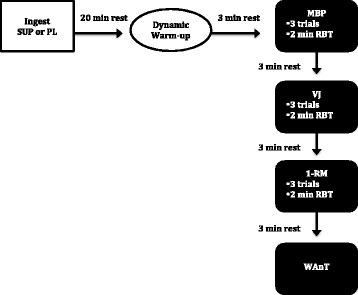
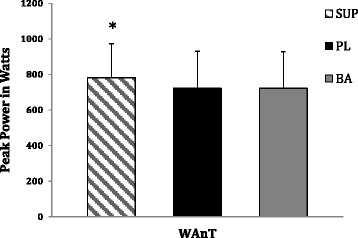
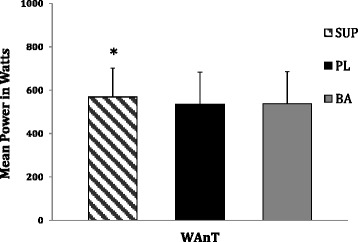
BACKGROUND: Consumption of pre-workout dietary supplements by both recreational and competitive athletes has increased dramatically in recent years. The purpose of this study was to determine the acute effects of a caffeine-containing pre-workout dietary supplement on various measures of performance including anaerobic power, upper and lower body power, and upper body strength in recreationally trained males. METHODS: Thirteen males (mean ± SD age = 24 ± 6 yrs; height = 180.3 ± 5 cm; body mass = 83.4 ± 9 kg) participated in this investigation in which they reported to the laboratory on four separate occasions, each separated by one week. Each subject underwent an initial familiarization session on week one followed by baseline (BA) performance testing on week two. Performance testing included a medicine ball put (MBP) to determine upper body explosive power, vertical jump test (VJ) to determine lower body explosive power, one-rep maximum bench press (1-RM) for determining upper body strength, and a Wingate Anaerobic Power Test (WAnT) to determine measures of anaerobic power. On week three, subjects were randomly assigned to ingest either a pre-workout supplement (SUP) or a placebo (PL) and again complete the performance testing protocol. Subjects were provided with the crossover treatment on the fourth and final week. Performance testing commenced 20-minute following ingestion of both treatments, which was similar to previous investigations. RESULTS: Significant differences in anaerobic peak power relative to the WAnT were observed following ingestion of the SUP (782 ± 191 W) in comparison to the PL (722 ± 208 W; p = 0.003; effect size = 0.30) and BA (723 ± 205 W; p = 0.011; effect size = 0.28). Significant differences were also observed for anaerobic mean power following ingestion of the SUP (569 ± 133 W) in comparison to the PL (535 ± 149 W; p = 0.006; effect size = 0.24) and BA (538 ± 148 W; p = 0.020; effect size = 0.22). No significant differences between trials were observed for upper body power, lower body power, or upper body strength. CONCLUSIONS: Ingestion of the pre-workout dietary supplement led to significant improvements in anaerobic peak and mean power values in comparison to the placebo and baseline treatments. No improvements were observed in upper and lower body power or upper body strength. Taken prior to exercise, a caffeine-containing pre-workout dietary supplement may improve anaerobic power performance.
Overview
The claims and statistics of this paper haven’t been checked yet.
Free: it reads the open-access text and checks the first 5 claims that cite a source we can check. Create a free account to check every claim.
Integrity signals
Registry
Cites
Statistics
Figures
Verification
Claims the paper makes
The claims and statistics of this paper haven’t been checked yet.
Free: it reads the open-access text and checks the first 5 claims that cite a source we can check. Create a free account to check every claim.
Claims other papers make about this one
Each is checked against this paper’s own text: does it say what the citing paper says it does?
The cited source says what the claim attributes to it.
In the citing paper
“On account of caffeine’s ergogenic properties (enhancing physical performance), caffeine has been progressively used as a supplement prior to physical training by athletes and physically active individuals in order to promote better performance [ 8 ].”
From Involvement of Cardiorespiratory Capacity on the Acute Effects of Caffeine on Autonomic Recovery (2019) · cites this paper as [8]
Self-check
Percentages, sums and reported differences re-computed from the paper’s own numbers.
The self-check needs the paper’s full text.
Citations
Cites
(2014) · Medical Entomology and Zoology · Cited by 9,400
International society of sports nutrition position stand: caffeine and performance
Goldstein, E. R., Ziegenfuss, T., Kalman, D., Kreider, R., Campbell, B., Wilborn, C., Taylor, L., Willoughby, D., Stout, J., Graves, B. S., et al. (2010) · Journal of the International Society of Sports Nutrition · doi:10.1186/1550-2783-7-5 · Cited by 686
Self-citationMetabolic, Catecholamine, and Exercise Performance Responses to Various Doses of Caffeine
Graham, T. E., & Spriet, L. L. (1995) · Journal of Applied Physiology · doi:10.1152/jappl.1995.78.3.867 · Cited by 488
Nutritional supplement use among college athletes and their sources of information
Froiland, K., Koszewski, W., Hingst, J., & Kopecky, L. (2004) · International Journal of Sport Nutrition and Exercise Metabolism · doi:10.1123/ijsnem.14.1.104 · Cited by 386 · cited 1×
“categories of nutritional supplements consumed is preworkout energy drinks [1, 2].”
BackgroundPerformance and metabolic responses to a high caffeine dose during prolonged exercise
Graham, T. E., & Spriet, L. L. (1991) · Journal of Applied Physiology · doi:10.1152/jappl.1991.71.6.2292 · Cited by 338 · cited 1×
“Caffeine, a mild nervous system stimulant and principal active ingredient in most pre-workout supplements, has been shown to enhance performance for endurance sports by increasing time to exhaustion, preserving muscle glycogen content, delaying perceptions of fatigue, and decreasing perceptions of pain and effort [4–9…”
BackgroundEffect of Caffeine on Sport-Specific Endurance Performance: A Systematic Review
Ganio, M. S., Klau, J. F., Casa, D. J., Armstrong, L. E., & Maresh, C. M. (2009) · Journal of Strength and Conditioning Research · doi:10.1519/jsc.0b013e31818b979a · Cited by 310 · cited 1×
“Caffeine, a mild nervous system stimulant and principal active ingredient in most pre-workout supplements, has been shown to enhance performance for endurance sports by increasing time to exhaustion, preserving muscle glycogen content, delaying perceptions of fatigue, and decreasing perceptions of pain and effort [4–9…”
BackgroundAstorino, T. A., & Roberson, D. W. (2010) · Journal of Strength and Conditioning Research · doi:10.1519/jsc.0b013e3181c1f88a · Cited by 308
Metabolic and exercise endurance effects of coffee and caffeine ingestion
Graham, T. E., Hibbert, E., & Sathasivam, P. (1998) · Journal of Applied Physiology · doi:10.1152/jappl.1998.85.3.883 · Cited by 305 · cited 1×
“Caffeine, a mild nervous system stimulant and principal active ingredient in most pre-workout supplements, has been shown to enhance performance for endurance sports by increasing time to exhaustion, preserving muscle glycogen content, delaying perceptions of fatigue, and decreasing perceptions of pain and effort [4–9…”
BackgroundEffects of β-alanine supplementation on exercise performance: a meta-analysis
Hobson, R. M., Saunders, B., Ball, G., Harris, R. C., & Sale, C. (2012) · Amino Acids · doi:10.1007/s00726-011-1200-z · Cited by 303
Effects of Caffeine Ingestion on Exercise Testing: A Meta-Analysis
Doherty, M., & Smith, P. M. (2004) · International Journal of Sport Nutrition and Exercise Metabolism · doi:10.1123/ijsnem.14.6.626 · Cited by 263 · cited 1×
“While caffeine functions through a variety of mechanisms, its ability to inhibit action at the adenosine receptor site is believed to be the primary factor responsible for decreasing the perception of pain and effort, and the resulting improvement in endurance performance [4, 10].”
Background
Cited by
Harty, P. S., Zabriskie, H. A., Erickson, J. L., Molling, P. E., Kerksick, C. M., & Jagim, A. R. (2018) · Journal of the International Society of Sports Nutrition · doi:10.1186/s12970-018-0247-6 · Cited by 140
Grgic, J., & Mikulic, P. (2017) · European Journal of Sport Science · doi:10.1080/17461391.2017.1330362 · Cited by 106
“This is in contrast to the findings of Martinez et al. (2016) who showed that consuming a pre-workout supplement containing caffeine does not enhance upper-body power performance; however, the participants in that study refrained from caffeine ingestion only 3 h prior to testing, while our…”
ResultSabol, F., Grgic, J., & Mikulic, P. (2019) · International Journal of Sports Physiology and Performance · doi:10.1123/ijspp.2018-0884 · Cited by 64
Jagim, A. R., Camic, C. L., & Harty, P. S. (2019) · Nutrients · doi:10.3390/nu11040855 · Cited by 35
Caffeine content of pre-workout supplements commonly used by Australian consumers
Desbrow, B., Hall, S., O'Connor, H., Slater, G., Barnes, K., & Grant, G. (2019) · Drug Testing and Analysis · doi:10.1002/dta.2501 · Cited by 28
Wu, W., Chen, Z., Zhou, H., Wang, L., Li, X., Lv, Y., Sun, T., & Yu, L. (2024) · Nutrients · doi:10.3390/nu16081146 · Cited by 41
“Acute caffeine ingestion led to a significant enhancement of muscle strength in professional strength trainers [8], amateur trainers [43], team sport athletes [44], individual competitive athletes [45], males [46], and females [47].”
BackgroundZhang, Y., Diao, P., Wang, J., Li, S., Fan, Q., Han, Y., Liang, Y., Wang, Z., & Coso, J. D. (2024) · Nutrients · doi:10.3390/nu16020235 · Cited by 30
Tinsley, G. M., Hamm, M. A., Hurtado, A. K., Cross, A. G., Pineda, J. G., Martin, A. Y., Uribe, V. A., & Palmer, T. B. (2017) · Journal of the International Society of Sports Nutrition · doi:10.1186/s12970-017-0203-x · Cited by 26
Isenmann, E., Veit, S., Flenker, U., Lesch, A., Lachenmeier, D. W., & Diel, P. R. (2024) · Journal of the International Society of Sports Nutrition · doi:10.1080/15502783.2024.2337252 · Cited by 21
“The bench press has also been scientifically proven to be reliable and valid [46] and is therefore used in many studies to determine the maximum strength of the upper extremities [44,47,48].”
MethodGowayed, M. A., Mahmoud, S. A., El‐Sayed, Y., Abu‐Samra, N., & Kamel, M. A. E.-N. (2019) · Experimental and Therapeutic Medicine · doi:10.3892/etm.2019.8173 · Cited by 24
“Creatine supplementation is considered to be the most effective nutritional supplement and ergogenic aid to enhance anaerobic exercise performance in a number of sports (22).”
BackgroundEffects of Pre-Workout Supplements on Power Maintenance in Lower Body and Upper Body Tasks
Lane, M., & Byrd, M. T. (2018) · Journal of Functional Morphology and Kinesiology · doi:10.3390/jfmk3010011 · Cited by 22
Giráldez‐Costas, V., Coso, J. D., Mañas, A., & Salinero, J. J. (2023) · Nutrients · doi:10.3390/nu15051178 · Cited by 23
Sports and Energy Drinks: Aspects to Consider
Raizel, R., Coqueiro, A. Y., Bonvini, A., & Tirapegui, J. (2019) · Elsevier eBooks · doi:10.1016/b978-0-12-815851-7.00001-2 · Cited by 29
Luque, M. Z., Aguiar, A. F., da Silva-Araújo, A. K., Zaninelli, T. H., Heintz, O. K., Saraiva‐Santos, T., Bertozzi, M. M., Souza, N. A., de Oliveira, E., Verri, W. A., Jr., et al. (2023) · European Journal of Applied Physiology · doi:10.1007/s00421-023-05207-2 · Cited by 15
Respiratory patterns and physical fitness in healthy adults: a cross-sectional study
Liang, W.-M., Ji, Y., Xiao, J., Truskauskaitė‐Kunevičienė, I., Hendrixson, A., Bai, Z., & Rukšėnas, O. (2024) · BMC Public Health · doi:10.1186/s12889-024-17687-8 · Cited by 15
“The countermovement jump was tested in the present study, which requires a lower limb explosive power [51, 52], as well as refined, muscular coordination as it requires the activation of stretch reflex (or myotatic reflex, muscle stretch-shortening cycle) on the legs and arms [53, 54].”
MethodSchwarz, N. A., & McKinley-Barnard, S. K. (2018) · Journal of Dietary Supplements · doi:10.1080/19390211.2018.1498963 · Cited by 15
“Several acute studies of MIPS ingestion on exercise performance have been previously performed with varying results (Bergstrom et al. 2018, Bloomer et al. 2010, Gonzalez et al. 2011, Jagim et al. 2016, Lane and Byrd 2018, Martinez et al. 2016, Spradley et al. 2012).”
MethodResultInfluentialHernández‐Belmonte, A., Buendía‐Romero, Á., Martínez-Cava, A., Courel‐Ibáñez, J., Mora‐Rodríguez, R., & Pallarés, J. G. (2020) · Applied Sciences · doi:10.3390/app10228002 · Cited by 13
Involvement of Cardiorespiratory Capacity on the Acute Effects of Caffeine on Autonomic Recovery
Gonzaga, L. A., Vanderlei, L. C. M., Gomes, R. L., Garner, D. M., & Valenti, V. E. (2019) · Medicina · doi:10.3390/medicina55050196 · Cited by 13
“On account of caffeine’s ergogenic properties (enhancing physical performance), caffeine has been progressively used as a supplement prior to physical training by athletes and physically active individuals in order to promote better performance [8].”
BackgroundCurrent perspectives of caffeinated energy drinks on exercise performance and safety assessment
Kreider, R. B. (2018) · Nutrition and Dietary Supplements · doi:10.2147/nds.s143147 · Cited by 12
“Similarly, Martinez et al 35 reported that ingestion of a PWS containing carbohydrate, β -alanine, creatine nitrate, l -tyro- sine, ribose, amino acids, and caffeine and other nutrients significantly improved anaerobic peak and mean power in comparison to ingesting a color-and flavor-matched…”
Lutsch, D. J., Camic, C. L., Jagim, A. R., Johnston, N. J., & Musgjerd, T. (2019) · International journal of exercise science · doi:10.70252/hcny2237 · Cited by 12
“In contrast, however, a number of other studies have shown no change in peak and mean power from the Wingate Anaerobic Test (17, 20), maximum push-ups or sit-ups completed in one minute (21), one repetition maximum bench press (6, 31), bench press throw (5), maximum voluntary contraction force during the squat (43) an…”
BackgroundResultFigueiredo, C., Lira, F. S., Rossi, F. E., Billaut, F., Loschi, R., & Padilha, C. S. (2020) · Journal of the International Society of Sports Nutrition · doi:10.1186/s12970-020-00357-6 · Cited by 16
Ahn, Y., Lee, H., Lee, S., Joa, K., Lim, C. Y., Ahn, Y. J., Suh, H. J., Park, S., & Hong, K. (2023) · Phytotherapy Research · doi:10.1002/ptr.7801 · Cited by 12
“Studies related to exercise plus nutritional supplements have shown that consumption of beverages containing glucose and fructose improves anaerobic power and that of a solution containing glucose and electrolyte decreases blood levels of lactate and ammonia and prolongs exercise duration (Demura et al., 2010; Hummer…”
BackgroundStratton, M. T., Siedler, M. R., Harty, P. S., Rodriguez, C., Boykin, J. R., Green, J. J., Keith, D. S., White, S. J., DeHaven, B., Williams, A. D., et al. (2022) · Journal of the International Society of Sports Nutrition · doi:10.1080/15502783.2022.2060048 · Cited by 12
Ergogenic Effects of Caffeine on Ballistic (Throwing) Performance: A Meta-Analytical Review
Grgić, J., & Varović, D. (2022) · Nutrients · doi:10.3390/nu14194155 · Cited by 13
Douligeris, A., Methenitis, S. K., Lazou, A., Panayiotou, G., Feidantsis, K. G., Voulgaridou, G., Μanios, Y., Jamurtas, A. Z., Giaginis, C., & Papadopoulou, S. Κ. (2023) · Nutrients · doi:10.3390/nu15102304 · Cited by 13
“PWS ingestion also improves anaerobic performance [19] and prolongs time to exhaustion during high-intensity intermittent exercise [20].”
BackgroundZhang, S., Yang, J., Tao, X., Du, L., Li, X., Lv, Y., Hou, X., & Yu, L. (2023) · Applied Sciences · doi:10.3390/app13127180 · Cited by 8
Blake, M. S., Johnson, N., Trautman, K. A., Grier, J. W., Stastny, S., & Hackney, K. J. (2020) · International journal of exercise science · doi:10.70252/phum1873 · Cited by 8
“In line with the results of others, several studies have found no improvement in upper-body resistance exercise performance with a multi-ingredient pre-workout supplement compared to placebo (10, 55, 56, 61, 65).”
ResultJoseph, A., Jose, S. P., Kalyan, B. T., Mammen, R. R., Krishnakumar, I. M., Fleenor, B. S., & Mohan, R. (2021) · NFS Journal · doi:10.1016/j.nfs.2021.03.002 · Cited by 8
“In another study using ‘AssaultTM’ (a dietary supplement containing caffeine, branched chain amino acids, creatine, betaalanine, arginine, vitamin B-6, and vitamin B-12) for four weeks lead to significant improvement in anaerobic peak power (8%) compared to placebo [36].”
BackgroundTao, B., Sun, H., Li, H., Xu, Z., Xu, Y., Chen, L., Ma, C., Zhang, X., Yu, L., Bao, S., et al. (2025) · Metabolites · doi:10.3390/metabo15040262 · Cited by 8
Beyer, K. S., Gadsden, M., Patterson-Zuber, P., & Gonzalez, A. M. (2024) · Frontiers in Nutrition · doi:10.3389/fnut.2024.1323408 · Cited by 8
“Conversely, other research has demonstrated no effect of MIPS on upper body power output (31, 32).”
ResultNegro, M., Segreto, V., Barbero, M., Cescon, C., Castelli, L., Calanni, L., & D’Antona, G. (2018) · Frontiers in Physiology · doi:10.3389/fphys.2018.01140 · Cited by 6
Ide, B. N., Silvatti, A. P., Staunton, C. A., Marocolo, M., Oranchuk, D. J., & da Mota, G. R. (2023) · International Journal of Strength and Conditioning · doi:10.47206/ijsc.v3i1.210 · Cited by 7
Gonzalez, A. M., Pinzone, A. G., Bram, J., Salisbury, J. L., Lee, S., & Mangine, G. T. (2020) · The Journal of Strength and Conditioning Research · doi:10.1519/jsc.0000000000003480 · Cited by 6
Liang, W.-M., Bai, Z., Aihemaiti, M., Yuan, L., Hong, Z., Xiao, J., Ren, F.-F., & Rukšėnas, O. (2022) · International Journal of Environmental Research and Public Health · doi:10.3390/ijerph191912007 · Cited by 5
“We suggest that CMJ (with arm swing) requires lower limb explosive power [54,55], as well as refined muscular coordination, as it requires the activation of stretch reflex (or myotatic reflex, muscle stretch-shortening cycle) on the legs and arms [56–59].”
BackgroundBeckner, M. E., Pihoker, A. A., Darnell, M. E., Beals, K., Lovalekar, M. T., Proessl, F., Flanagan, S. D., Arciero, P. J., Nindl, B. C., & Martin, B. J. (2020) · The Journal of Strength and Conditioning Research · doi:10.1519/jsc.0000000000003660 · Cited by 6
“Similar to previous studies, MIPS did not improve VJ height (21,28,30).”
BackgroundResultInfluentialAcute effects of pre-workout supplement on aerobic and anaerobic performance in basketball players
Çetin, O., Yaşar, M. N., Demirtaş, B., Beyleroğlu, M., Eker, S., & Gürkan, A. C. (2018) · Physical Education of Students · doi:10.15561/20755279.2019.0103 · Cited by 5
“[9] investigated the acute effects of caffeine-containing pre-workout nutritional supplement on anaerobic power for men who work out recreationally, and reported that these supplements lead to significant improvements in the values of anaerobic peak power and mean power.”
BackgroundDantas, E. K. C., Ferreira, C. L. S., Goldstein, A. D. C., Fernandes, A. D. S., Ferraz, E. R. A., Felzenszwalb, I., & Araújo-Lima, C. F. (2023) · Journal of Toxicology and Environmental Health · doi:10.1080/15287394.2023.2294925 · Cited by 3
“…used to describe nutrients whose intention is to contribute to energy needs for the consumer, leading to an increase and maintenance of muscle mass, reduction in body weight, and delay in sensation of physical and mental fatigue (Eliason et al. 1997; Santos and Santos 2002; Martinez et al. 2016).”
BackgroundThe Role of Supplementation in Enhancing Recovery and Endurance among Fitness Trainers
Orhan, B. E. (2024) · IgMin Research · doi:10.61927/igmin243 · Cited by 3
Panayi, S., & Galbraith, A. (2022) · International journal of exercise science · doi:10.70252/nvmj5392 · Cited by 6
Ergogenic Aids and the Female Athlete
Jordan, S. L., Naclerio, F., & Morales, J. B. (2023) · Springer eBooks · doi:10.1007/978-3-031-15485-0_23 · Cited by 2
Drwal, A., Pałka, T., Tota, Ł. M., Wiecha, S., Čech, P., Strzała, M., & Maciejczyk, M. (2024) · BMC Sports Science Medicine and Rehabilitation · doi:10.1186/s13102-024-00918-1 · Cited by 2
“Literature and qualitative studies examining the effectiveness of MIPS supplementation are only preliminary [6], and previously published papers reported contradictory data [33–36].”
BackgroundMethodResultInfluentialIbrahim, A. E., Alamir, S. G., Al-Omairi, M., Magdy, G., Batakoushy, H. A., & Al‐Harrasi, A. (2026) · Journal of Trace Elements in Medicine and Biology · doi:10.1016/j.jtemb.2026.127853 · Cited by 1
The Efficacy and Safety of Six-Weeks of Pre-Workout Supplementation in Resistance Trained Rats
Canakis, J. P. (2017) · W&M Publish (College of William & Mary) · Cited by 1
Social Media Trends, Dry Scooping, and Extensive Esophageal Ulcerations
Caratenuto, R. A., Karanfilian, B. V., Navlani, R., Dalal, I., Sharma, R., & Dave, P. (2023) · Journal of General Internal Medicine · doi:10.1007/s11606-023-08432-9 · Cited by 1
Robinson, A. T., Mazzuco, A., Sabbahi, A., Borghi‐Silva, A., & Phillips, S. A. (2018) · International Journal of Sport Nutrition and Exercise Metabolism · doi:10.1123/ijsnem.2018-0010 · Cited by 1
Cavalcante Silva, D., de Andrade Pereira, R., da Silva Félix, G., Ferreira de Souza, M., Cardoso, G. A., Souza Côrtes de Araújo, G. C., Pereira dos Santos, M. A., & Silva, A. S. (2025) · Sport Sciences for Health · doi:10.1007/s11332-025-01546-z
“A Polar RS800CX heart rate monitor (Polar Electro, Kem-pele, Finland), previously validated against electrocardiogram measurements [23, 24], was used to record heart rate data.”
Bobos, P., Nazari, G., Ziebart, C., MacDermid, J. C., & Kostopoulos, N. (2020) · Strength and conditioning journal · doi:10.1519/ssc.0000000000000537 · Cited by 2
“Table 1 (continued) Creatine monohydrate (1,500 mg) Creatine-HCl (500 mg) Creatine-AAB (500 mg) Ancient peat and apple fruit extract (150 mg) L-citrulline (1,000 mcg) L-norvaline (200 mg) Spectra (100 mg) Martinez et al (29) n 5 13 males recreationally trained.”
BackgroundInfluentialPrins, P., Ryan, E. J., Sprunk, N., Green, E. M., Jeffries, D. M., & Buxton, J. D. (2018) · Journal of Exercise and Nutrition
Tsuda, Y., Tagawa, R., Ueda, K., & Sanbongi, C. (2022) · The Journal of Physical Fitness and Sports Medicine · doi:10.7600/jpfsm.11.67
Martial arts training, competition and sports nutrition: A future beneficial alliance
Wolkodoff, N. E., Haase, G. M., & Delarosa, T. M. (2022) · World Journal of Advanced Research and Reviews · doi:10.30574/wjarr.2022.16.3.1421
Magee, M. K., Norford, M. R., Williams, S., Fox, J. E., Inaba, R., Comstock, B. A., Andreacci, J. L., & Beyer, K. S. (2023) · Journal of Exercise and Nutrition · doi:10.53520/jen2023.103155
“4 Furthermore, it has been observed a delay in fatigue following acute supplement ingestion.”
BackgroundA INGESTÃO DIETÉTICA DA POLPA DE AÇAÍ (Euterpe oleracea) COMO SUPLEMENTO ALIMENTAR PRÉ-TREINO
Ricciard, É. D. S. P., Rodrigues, A. L. D. S., de Moura, R. S., Souza, M. L. D. S., Júnior, S. L. P., da Silva, C. F., de Abreu, L. C., Barros, J. D. S. V., & Silva, R. P. M. (2024) · Stricto Sensu Editora eBooks · doi:10.35170/ss.ed.9786580261321.01
Recursos Ergogênicos Nutricionais: do Laboratório ao Bioma Brasileiro
Gonçalves, L. C. O., Neto, A. M. D. M., da Silva, C. F., & Silva, R. P. M. (2024) · Stricto Sensu Editora eBooks · doi:10.35170/ss.ed.9786580261321
POTENCIALIZANDO O EXERCÍCIO FÍSICO: O USO DE SUPLEMENTOS PARA HIPERTENSOS
Macedo, T. F., da Cruz, M. R. G., Martins, M. D. M., de Castro, K. O., Souza, R. F. D. O., Silva, R. P. M., & Silva, L. M. (2024) · Stricto Sensu Editora eBooks · doi:10.35170/ss.ed.9786580261321.04
SUPLEMENTO NUTRICIONAL E EXERCÍCIO FÍSICO NA DOENÇA RENAL
Simmer, L. M., Peterle, F. Z., Werneck, M. P., Barros, R. A. D. C., da Silva, C. F., de Abreu, L. C., & Silva, R. P. M. (2024) · Stricto Sensu Editora eBooks · doi:10.35170/ss.ed.9786580261321.07
EFEITOS DA TAURINA NA OBESIDADE E ATIVIDADE FÍSICA
Kubit, D. M., Peterle, F. Z., Soares, L. V. D. O., Santos, K. C. C., Leitão, F. N. C., Fidale, T. M., da Silva, C. F., de Abreu, L. C., & Silva, R. P. M. (2024) · Stricto Sensu Editora eBooks · doi:10.35170/ss.ed.9786580261321.08
CAFEÍNA ALÉM DO CAFÉ: EXPLORANDO O MUNDO DA SUPLEMENTAÇÃO ESPORTIVA
das Neves, C. E., Ferrari, C. E. R. D. A., Silva, C. D. O., Júnior, J. C. B., Fernandes, R. M., & Valentim‐Silva, J. R. (2024) · Stricto Sensu Editora eBooks · doi:10.35170/ss.ed.9786580261321.09
Alves, E. E., Gonçalves, L. C. O., de Melo, T. L., Lucchetti, B. F. C., & Neto, A. M. D. M. (2024) · Stricto Sensu Editora eBooks · doi:10.35170/ss.ed.9786580261321.02
EXTRATO DE JATOBÁ (Hymenaea courbaril l.) E SEUS COMPONETES BIOATIVOS
Silva, A. D. B., de Castro, A. C. M., Bezerra, J. A., Morais, M. J. D. D., Cavalcante, J. B., Valentim‐Silva, J. R., & Silva, R. P. M. (2024) · Stricto Sensu Editora eBooks · doi:10.35170/ss.ed.9786580261321.05
EFEITO DA SUPLEMENTAÇÃO E TREINAMENTO DE FORÇA EM PACIENTES SUBMETIDOS À CIRURGIA BARIÁTRICA
de Azevedo, L. B., da Silva, G. G., Moura, K. C. D. S., Santos, T. B., Ricciard, É. D. S. P., da Silva, C. F., de Abreu, L. C., & Silva, R. P. M. (2024) · Stricto Sensu Editora eBooks · doi:10.35170/ss.ed.9786580261321.06
O USO DE SUPLEMENTOS PARA POTENCIALIZAR O EXERCÍCIO FÍSICO EM PESSOAS COM DIABETES
Rodrigues, I. M. P., de Almeida, R. F., Machado, L. D. O., de Oliveira, N. F., Matos, S. Q. D. S., Silva, L. M., & Silva, R. P. M. (2024) · Stricto Sensu Editora eBooks · doi:10.35170/ss.ed.9786580261321.03
Connors, B. R., Camic, C. L., Jagim, A. R., Hill, C. M., Sebastião, É., Chomentowski, P. J., Kowal, R. A., & de Leon, M. F. (2025) · Sports · doi:10.3390/sports13110404
“…receptors resulting in reduced perception of effort and pain [11,35,36], and (2) greater muscular strength and power by increasing motor unit activation through firing rates and promoting greater release of calcium from the sarcoplasmic reticulum leading to more crossbridge formation [4,11,37].”
The specificity of cluster training effects in sports: a systematic review and meta-analysis
Zhao, X., Ya, X., Zhou, H., Liu, G., Liu, Z., Luo, J., Liu, Y., & Bu, Y. (2026) · Frontiers in Physiology · doi:10.3389/fphys.2025.1722401
Mangine, G. T., King, W. W., Henley, J. W., Hines, A., McGeehan, K. C., Fanno, J. D., Esmat, T. A., McLester, J. R., & Grazer, J. L. (2026) · Frontiers in Nutrition · doi:10.3389/fnut.2026.1741204
Beos, N., Kemps, E., & Prichard, I. J. (2026) · Body Image · doi:10.1016/j.bodyim.2026.102082 · Cited by 3
Elies, A., Rubin, D. A., Costa, P. B., & Coburn, J. W. (2026) · The Journal of Strength and Conditioning Research · doi:10.1519/jsc.0000000000005702
Metadata
- Authors
- Martinez, N., Campbell, B., Franek, M., Buchanan, L., & Colquhoun, R.
- Affiliations
- University of South Florida (US)
- Corresponding author
- Martinez, Nic
- Venue
- Journal of the International Society of Sports Nutrition
- Publisher
- Informa UK Limited
- Published
- 2016-01-05
- Volume
- 13
- Issue
- 1
- Pages
- 29-29
- ISSN
- 1550-2783 (ISSN-L)
- PMC
- PMC4947244
- OpenAlex
- W2464235668
- Cited by
- 67
- References
- 39
- Citations by year
- 2026: 5 · 2025: 3 · 2024: 17 · 2023: 11 · 2022: 6 · 2021: 1 · 2020: 6 · 2019: 6 · 2018: 9 · 2017: 3
- FWCI
- 7.31
- Type
- journal article
- Language
- en
- Open access
- gold
- doi.org
- Licence
- Locations
- Journal of the International Society of Sports Nutrition (publishedVersion, cc-by)
- Europe PMC (PubMed Central) (publishedVersion, cc-by)
- PubMed Central (publishedVersion, cc-by)
- PubMed (publishedVersion)
- Topics
- Health Sciences › Medicine › Orthopedics and Sports Medicine › Sports Performance and Training
- Health Sciences › Medicine › Pharmacology (medical) › Coffee research and impacts
- Health Sciences › Nursing › Nutrition and Dietetics › Muscle metabolism and nutrition
- Keywords
- caffeine, acute supplementation, anaerobic power, explosive power, vertical jump, medicine ball put, recreational athletes, male athletes, Wingate Anaerobic Power Test, strength performance, power performance, placebo comparison, crossover design, caffeine withdrawal symptoms, caffeine pharmacokinetics
- MeSH terms
- Double-Blind Method, Food, Formulated, Humans, Male, Physical Endurance, Anaerobic Threshold, Exercise, Muscle, Skeletal, Cross-Over Studies, Dietary Supplements, Muscle Strength, Resistance Training, Young Adult, Sports Nutritional Physiological Phenomena
About these checks
Registry, retraction, Cites and statistics results are computed, not judged, with one exception: a printed reference that no index lists is read once by a model before it counts as a citation error. Claims are extracted by a model and kept only when their quote appears verbatim in the text; each cited source is then checked, with a model’s help, for whether it says what the claim relies on. Those verdicts can be wrong — read the claim’s quote and the cited source before relying on one.
Statistics and arithmetic are recomputed, not judged.
Confidence bands are shown only for fields calibrated on our annotated test set. None is calibrated yet, so no band is shown.
What counts as a claim ›How we measure confidence ›How we check this ›
Are you an author, or do you see a problem with this page? Request a review
Data sources
Bibliographic data: Semantic Scholar, OpenAlex, Crossref.
Contains information from the Semantic Scholar Academic Graph Datasets, made available under the ODC Attribution License (ODC-BY 1.0).
Semantic Scholar’s data is described in: Kinney, R., et al. (2023). The Semantic Scholar Open Data Platform. arXiv:2301.10140.
