

The effect of acute pre-workout supplementation on power and strength performance
Open accessThe DOI matches its Crossref record; 39 of the 39 references it cites were found in a registry or an index.
Abstract
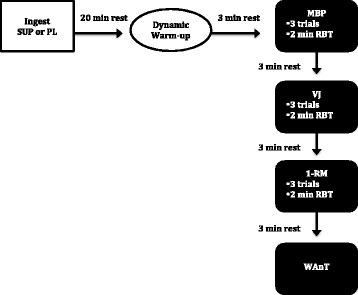
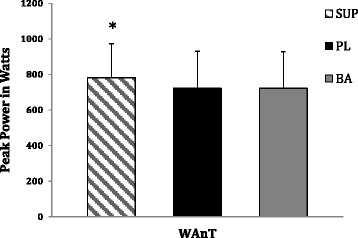
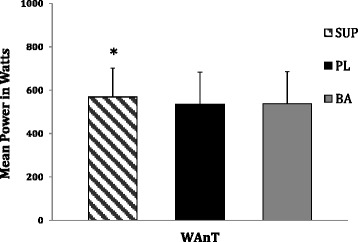
BACKGROUND: Consumption of pre-workout dietary supplements by both recreational and competitive athletes has increased dramatically in recent years. The purpose of this study was to determine the acute effects of a caffeine-containing pre-workout dietary supplement on various measures of performance including anaerobic power, upper and lower body power, and upper body strength in recreationally trained males. METHODS: Thirteen males (mean ± SD age = 24 ± 6 yrs; height = 180.3 ± 5 cm; body mass = 83.4 ± 9 kg) participated in this investigation in which they reported to the laboratory on four separate occasions, each separated by one week. Each subject underwent an initial familiarization session on week one followed by baseline (BA) performance testing on week two. Performance testing included a medicine ball put (MBP) to determine upper body explosive power, vertical jump test (VJ) to determine lower body explosive power, one-rep maximum bench press (1-RM) for determining upper body strength, and a Wingate Anaerobic Power Test (WAnT) to determine measures of anaerobic power. On week three, subjects were randomly assigned to ingest either a pre-workout supplement (SUP) or a placebo (PL) and again complete the performance testing protocol. Subjects were provided with the crossover treatment on the fourth and final week. Performance testing commenced 20-minute following ingestion of both treatments, which was similar to previous investigations. RESULTS: Significant differences in anaerobic peak power relative to the WAnT were observed following ingestion of the SUP (782 ± 191 W) in comparison to the PL (722 ± 208 W; p = 0.003; effect size = 0.30) and BA (723 ± 205 W; p = 0.011; effect size = 0.28). Significant differences were also observed for anaerobic mean power following ingestion of the SUP (569 ± 133 W) in comparison to the PL (535 ± 149 W; p = 0.006; effect size = 0.24) and BA (538 ± 148 W; p = 0.020; effect size = 0.22). No significant differences between trials were observed for upper body power, lower body power, or upper body strength. CONCLUSIONS: Ingestion of the pre-workout dietary supplement led to significant improvements in anaerobic peak and mean power values in comparison to the placebo and baseline treatments. No improvements were observed in upper and lower body power or upper body strength. Taken prior to exercise, a caffeine-containing pre-workout dietary supplement may improve anaerobic power performance.
Overview
The claims and statistics of this paper haven’t been checked yet.
Free: it reads the open-access text and checks the first 5 claims that cite a source we can check. Create a free account to check every claim.
Integrity signals
Registry
Cites
Statistics
Figures
Verification
Claims the paper makes
The claims and statistics of this paper haven’t been checked yet.
Free: it reads the open-access text and checks the first 5 claims that cite a source we can check. Create a free account to check every claim.
Claims other papers make about this one
Each is checked against this paper’s own text: does it say what the citing paper says it does?
The cited source says what the claim attributes to it.
In the citing paper
“On account of caffeine’s ergogenic properties (enhancing physical performance), caffeine has been progressively used as a supplement prior to physical training by athletes and physically active individuals in order to promote better performance [ 8 ].”
From Involvement of Cardiorespiratory Capacity on the Acute Effects of Caffeine on Autonomic Recovery (2019) · cites this paper as [8]
Self-check
Percentages, sums and reported differences re-computed from the paper’s own numbers.
The self-check needs the paper’s full text.
Citations
Cites
(2014) · Medical Entomology and Zoology · Cited by 9,400
International society of sports nutrition position stand: caffeine and performance
Goldstein, E. R., Ziegenfuss, T., Kalman, D., Kreider, R., Campbell, B., Wilborn, C., Taylor, L., Willoughby, D., Stout, J., Graves, B. S., et al. (2010) · Journal of the International Society of Sports Nutrition · doi:10.1186/1550-2783-7-5 · Cited by 686
Self-citationMetabolic, Catecholamine, and Exercise Performance Responses to Various Doses of Caffeine
Graham, T. E., & Spriet, L. L. (1995) · Journal of Applied Physiology · doi:10.1152/jappl.1995.78.3.867 · Cited by 488
Nutritional supplement use among college athletes and their sources of information
Froiland, K., Koszewski, W., Hingst, J., & Kopecky, L. (2004) · International Journal of Sport Nutrition and Exercise Metabolism · doi:10.1123/ijsnem.14.1.104 · Cited by 386 · cited 1×
“categories of nutritional supplements consumed is preworkout energy drinks [1, 2].”
BackgroundPerformance and metabolic responses to a high caffeine dose during prolonged exercise
Graham, T. E., & Spriet, L. L. (1991) · Journal of Applied Physiology · doi:10.1152/jappl.1991.71.6.2292 · Cited by 338 · cited 1×
“Caffeine, a mild nervous system stimulant and principal active ingredient in most pre-workout supplements, has been shown to enhance performance for endurance sports by increasing time to exhaustion, preserving muscle glycogen content, delaying perceptions of fatigue, and decreasing perceptions of pain and effort [4–9…”
BackgroundEffect of Caffeine on Sport-Specific Endurance Performance: A Systematic Review
Ganio, M. S., Klau, J. F., Casa, D. J., Armstrong, L. E., & Maresh, C. M. (2009) · Journal of Strength and Conditioning Research · doi:10.1519/jsc.0b013e31818b979a · Cited by 310 · cited 1×
“Caffeine, a mild nervous system stimulant and principal active ingredient in most pre-workout supplements, has been shown to enhance performance for endurance sports by increasing time to exhaustion, preserving muscle glycogen content, delaying perceptions of fatigue, and decreasing perceptions of pain and effort [4–9…”
BackgroundAstorino, T. A., & Roberson, D. W. (2010) · Journal of Strength and Conditioning Research · doi:10.1519/jsc.0b013e3181c1f88a · Cited by 308
Metabolic and exercise endurance effects of coffee and caffeine ingestion
Graham, T. E., Hibbert, E., & Sathasivam, P. (1998) · Journal of Applied Physiology · doi:10.1152/jappl.1998.85.3.883 · Cited by 305 · cited 1×
“Caffeine, a mild nervous system stimulant and principal active ingredient in most pre-workout supplements, has been shown to enhance performance for endurance sports by increasing time to exhaustion, preserving muscle glycogen content, delaying perceptions of fatigue, and decreasing perceptions of pain and effort [4–9…”
BackgroundEffects of β-alanine supplementation on exercise performance: a meta-analysis
Hobson, R. M., Saunders, B., Ball, G., Harris, R. C., & Sale, C. (2012) · Amino Acids · doi:10.1007/s00726-011-1200-z · Cited by 303
Effects of Caffeine Ingestion on Exercise Testing: A Meta-Analysis
Doherty, M., & Smith, P. M. (2004) · International Journal of Sport Nutrition and Exercise Metabolism · doi:10.1123/ijsnem.14.6.626 · Cited by 263 · cited 1×
“While caffeine functions through a variety of mechanisms, its ability to inhibit action at the adenosine receptor site is believed to be the primary factor responsible for decreasing the perception of pain and effort, and the resulting improvement in endurance performance [4, 10].”
BackgroundCaffeine, performance, and metabolism during repeated Wingate exercise tests
Greer, F., McLean, C., & Graham, T. E. (1998) · Journal of Applied Physiology · doi:10.1152/jappl.1998.85.4.1502 · Cited by 240 · cited 2×
“In contrast, other studies have reported no differences when examining the effects of caffeine on anaerobic power [15, 16, 37].”
BackgroundResultCaffeine Use in Sports: Considerations for the Athlete
Sökmen, B., Armstrong, L. E., Kraemer, W. J., Casa, D. J., Dias, J. C., Judelson, D. A., & Maresh, C. M. (2008) · Journal of Strength and Conditioning Research · doi:10.1519/jsc.0b013e3181660cec · Cited by 211 · cited 2×
“While caffeine functions through a variety of mechanisms, its ability to inhibit action at the adenosine receptor site is believed to be the primary factor responsible for decreasing the perception of pain and effort, and the resulting improvement in endurance performance [4, 10].”
BackgroundEffect of caffeine and ephedrine ingestion on anaerobic exercise performance
BELL, D. G., JACOBS, I., & ELLERINGTON, K. (2001) · Medicine and Science in Sports and Exercise · doi:10.1097/00005768-200108000-00024 · Cited by 189 · cited 1×
“In contrast, other studies have reported no differences when examining the effects of caffeine on anaerobic power [15, 16, 37].”
ResultOrtega (2013) · doi:10.1249/mss.0b013e31829a6672 · Cited by 180 · cited 1×
“side effects [23].”
Effects of Caffeine Ingestion on Performance and Anaerobic Metabolism during the Wingate Test
Collomp, K., Ahmaidi, S., Audran, M., Chanal, J.-L., & Préfaut, C. (1991) · International Journal of Sports Medicine · doi:10.1055/s-2007-1024710 · Cited by 167 · cited 2×
“In contrast, other studies have reported no differences when examining the effects of caffeine on anaerobic power [15, 16, 37].”
BackgroundResultThe Effect of Caffeine as an Ergogenic Aid in Anaerobic Exercise
Woolf, K., Bidwell, W. K., & Carlson, A. G. (2008) · International Journal of Sport Nutrition and Exercise Metabolism · doi:10.1123/ijsnem.18.4.412 · Cited by 167 · cited 15×
“Caffeine has also been shown to produce a favorable increase in anaerobic peak power measured during a WAnT [12].”
BackgroundResultInfluentialPharmacological Rationale for the Clinical Use of Caffeine
Sawynok, J. (1995) · Drugs · doi:10.2165/00003495-199549010-00004 · Cited by 161 · cited 1×
“Caffeine is a mild nervous system stimulant with effects similar to amphetamines, only much weaker [36].”
BackgroundSpriet, L. L. (1995) · International Journal of Sport Nutrition · doi:10.1123/ijsn.5.s1.s84 · Cited by 146 · cited 2×
“Fatigue during exercise appears to be delayed by caffeine’s ability to influence exercise metabolism through the improvement of fat oxidation, which in turn facilitates the preservation of muscle glycogen content [11].”
BackgroundForbes, S. C., Candow, D. G., Little, J. P., Magnus, C., & Chilibeck, P. D. (2007) · International Journal of Sport Nutrition and Exercise Metabolism · doi:10.1123/ijsnem.17.5.433 · Cited by 145 · cited 1×
“, [35] reported that a commercially available energy drink containing 15 mg of glucuronolactone did not have a significant impact on anaerobic power.”
BackgroundNutritional supplementation and anabolic steroid use in adolescents
HOFFMAN, J. R., FAIGENBAUM, A. D., RATAMESS, N. A., ROSS, R., KANG, J., & TENENBAUM, G. (2008) · Medicine & Science in Sports & Exercise · doi:10.1249/mss.0b013e31815a5181 · Cited by 140 · cited 2×
“While recent research has reported that pre-exercise tyrosine supplementation improves cognitive function during soccer specific exercise in a warm environment, there is little evidence for tyrosine improving anaerobic power or acting more globally as an ergogenic aid [1, 27].”
BackgroundThe Influence of Caffeine on Voluntary Muscle Activation
KALMAR, J. M. (2005) · Medicine & Science in Sports & Exercise · doi:10.1249/01.mss.0000178219.18086.9e · Cited by 133 · cited 1×
“It has been suggested that caffeine may augment strength and power performance through greater motor unit firing rates, increased calcium release from the sarcoplasmic reticulum, and surges in nitric oxide concentrations, collectively working to produce stronger muscle contractions [13, 14].”
BackgroundYarnell, A. M., & Deuster, P. (2016) · Journal of Special Operations Medicine · doi:10.55460/wknd-5j8w · Cited by 120
Zhao, Q., & Tang, X. C. (2002) · European Journal of Pharmacology · doi:10.1016/s0014-2999(02)02589-x · Cited by 120 · cited 1×
“Huperzine A is a chemical compound that has been shown to inhibit activity of acetylcholinesterase, an enzyme that breaks down acetylcholine [30].”
BackgroundExamination of a pre-exercise, high energy supplement on exercise performance
Hoffman, J. R., Kang, J., Ratamess, N. A., Hoffman, M. W., Tranchina, C. P., & Faigenbaum, A. D. (2009) · Journal of the International Society of Sports Nutrition · doi:10.1186/1550-2783-6-2 · Cited by 103 · cited 1×
“that of multivitamins [3].”
Spradley, B. D., Crowley, K. R., Tai, C.-Y., Kendall, K. L., Fukuda, D. H., Esposito, E. N., Moon, S. E., & Moon, J. R. (2012) · Nutrition & Metabolism · doi:10.1186/1743-7075-9-28 · Cited by 84 · cited 3×
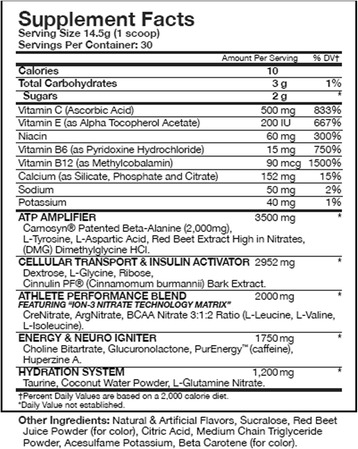
“Previous investigation of this pre-workout dietary supplement revealed multiple performance enhancing benefits including improved lower body strength, choice reaction time, focus and alertness [14].”
BackgroundMethodEFFECT OF NUTRITIONALLY ENRICHED COFFEE CONSUMPTION ON AEROBIC AND ANAEROBICEXERCISE PERFORMANCE
HOFFMAN, J. R., KANG, J., RATAMESS, N. A., JENNINGS, P. F., MANGINE, G. T., & FAIGENBAUM, A. D. (2007) · Journal of Strength and Conditioning Research · doi:10.1519/00124278-200705000-00029 · Cited by 68
On the assessment of lower-limb muscular power capability
Liebermann, D. G., & Katz, L. (2003) · Isokinetics and Exercise Science · doi:10.3233/ies-2003-0106 · Cited by 66 · cited 1×
“The vertical jump assessment is a lower body explosive power test that compares favorably to isokinetic testing as a measurement of knee extension power [21].”
BackgroundValidity and Reliability of a New Test of Upper Body Power
Clemons, J. M., Campbell, B., & Jeansonne, C. (2010) · The Journal of Strength and Conditioning Research · doi:10.1519/jsc.0b013e3181dad222 · Cited by 56
Self-citationEffect of choline supplementation on fatigue in trained cyclists
SPECTOR, S. A., JACKMAN, M. R., SABOUNJIAN, L. A., SAKKAS, C., LANDERS, D. M., & WILLIS, W. T. (1995) · Medicine & Science in Sports & Exercise · doi:10.1249/00005768-199505000-00008 · Cited by 48 · cited 1×
“, [31] and Warber et al.”
The Effects of Choline Supplementation on Physical Performance
Warber, J. P., Patton, J. F., Tharion, W. J., Zeisel, S. H., Mello, R. P., Kemnitz, C. P., & Lieberman, H. R. (2000) · International Journal of Sport Nutrition and Exercise Metabolism · doi:10.1123/ijsnem.10.2.170 · Cited by 47 · cited 1×
“, [32] concluded that choline levels do not drop during exercise and that choline supplementation is ineffective at delaying fatigue.”
BackgroundFukuda, D. H., Smith‐Ryan, A. E., Kendall, K. L., & Stout, J. R. (2010) · Nutrition Research · doi:10.1016/j.nutres.2010.09.004 · Cited by 44 · cited 1×
“, [29] demonstrated that a combination of caffeine, creatine, and BCAAs did have an acute effect on anaerobic performance, which supports previous findings relative to caffeine supplementation and anaerobic power performance [12].”
ResultCoull, N. A., Watkins, S. L., Aldous, J. W. F., Warren, L. K., Chrismas, B. C. R., Dascombe, B. J., Mauger, A. R., Abt, G., & Taylor, L. K. (2014) · European Journal of Applied Physiology · doi:10.1007/s00421-014-3022-7 · Cited by 42 · cited 1×
“While recent research has reported that pre-exercise tyrosine supplementation improves cognitive function during soccer specific exercise in a warm environment, there is little evidence for tyrosine improving anaerobic power or acting more globally as an ergogenic aid [1, 27].”
BackgroundTucker, M. A., Hargreaves, J. M., Clarke, J. C., Dale, D. L., & Blackwell, G. (2012) · The Journal of Strength and Conditioning Research · doi:10.1519/jsc.0b013e31825922aa · Cited by 31 · cited 1×
“Tucker and colleagues [22] found that ingesting 3 mg · kg of caffeine did not significantly improve the”
Background(2010) · PubMed · Cited by 27
Ratamess, N. A., Hoffman, J. R., Ross, R., Shanklin, M., Faigenbaum, A. D., & Kang, J. (2007) · International Journal of Sport Nutrition and Exercise Metabolism · doi:10.1123/ijsnem.17.6.608 · Cited by 25
TAMURA, S., Tsutsumi, S., Ito, H., Nakai, K., & MASUDA, M. (1968) · The Japanese Journal of Pharmacology · doi:10.1254/jjp.18.30 · Cited by 13 · cited 1×
“Glucuronolactone is a natural compound, which is believed to increase endurance capacity [33, 34].”
BackgroundMETABOLISM OF GLUCURONIC ACID IN FATIGUE DUE TO PHYSICAL EXERCISE
TAMURA, S., Tomizawa, S., Tsutsumi, S., Suguro, N., Kizu, K., Ito, H., Nakai, K., Shin-ichi, K. I. T. A., & MASUDA, M. (1966) · The Japanese Journal of Pharmacology · doi:10.1254/jjp.16.138 · Cited by 5 · cited 1×
“Glucuronolactone is a natural compound, which is believed to increase endurance capacity [33, 34].”
BackgroundThe effect of beetroot juice dosage on high intensity intermittent cycling performance
Byrne, G. D., Wardrop, B., & Storey, A. (2014) · Journal Of Science & Cycling · doi:10.28985/jsc.v3i2.134 · Cited by 3 · cited 1×
“While beet extract and dimethylglycine HCL are both theorized to improve mitochondrial efficiency, recent research demonstrated no significant differences between supplement and placebo groups when measuring the effect of beet extract [25] and dimethylglycine HCL on anaerobic power [26].”
BackgroundReza, A. H. S., Saghi, S. A., Azimkhani, A., Onvani, V., & Mohsen, J. (2013) · Cited by 2
Cited by
Harty, P. S., Zabriskie, H. A., Erickson, J. L., Molling, P. E., Kerksick, C. M., & Jagim, A. R. (2018) · Journal of the International Society of Sports Nutrition · doi:10.1186/s12970-018-0247-6 · Cited by 140
Grgic, J., & Mikulic, P. (2017) · European Journal of Sport Science · doi:10.1080/17461391.2017.1330362 · Cited by 106
“This is in contrast to the findings of Martinez et al. (2016) who showed that consuming a pre-workout supplement containing caffeine does not enhance upper-body power performance; however, the participants in that study refrained from caffeine ingestion only 3 h prior to testing, while our…”
ResultSabol, F., Grgic, J., & Mikulic, P. (2019) · International Journal of Sports Physiology and Performance · doi:10.1123/ijspp.2018-0884 · Cited by 64
Jagim, A. R., Camic, C. L., & Harty, P. S. (2019) · Nutrients · doi:10.3390/nu11040855 · Cited by 35
Caffeine content of pre-workout supplements commonly used by Australian consumers
Desbrow, B., Hall, S., O'Connor, H., Slater, G., Barnes, K., & Grant, G. (2019) · Drug Testing and Analysis · doi:10.1002/dta.2501 · Cited by 28
Metadata
- Authors
- Martinez, N., Campbell, B., Franek, M., Buchanan, L., & Colquhoun, R.
- Affiliations
- University of South Florida (US)
- Corresponding author
- Martinez, Nic
- Venue
- Journal of the International Society of Sports Nutrition
- Publisher
- Informa UK Limited
- Published
- 2016-01-05
- Volume
- 13
- Issue
- 1
- Pages
- 29-29
- ISSN
- 1550-2783 (ISSN-L)
- PMC
- PMC4947244
- OpenAlex
- W2464235668
- Cited by
- 67
- References
- 39
- Citations by year
- 2026: 5 · 2025: 3 · 2024: 17 · 2023: 11 · 2022: 6 · 2021: 1 · 2020: 6 · 2019: 6 · 2018: 9 · 2017: 3
- FWCI
- 7.31
- Type
- journal article
- Language
- en
- Open access
- gold
- doi.org
- Licence
- Locations
- Journal of the International Society of Sports Nutrition (publishedVersion, cc-by)
- Europe PMC (PubMed Central) (publishedVersion, cc-by)
- PubMed Central (publishedVersion, cc-by)
- PubMed (publishedVersion)
- Topics
- Health Sciences › Medicine › Orthopedics and Sports Medicine › Sports Performance and Training
- Health Sciences › Medicine › Pharmacology (medical) › Coffee research and impacts
- Health Sciences › Nursing › Nutrition and Dietetics › Muscle metabolism and nutrition
- Keywords
- caffeine, acute supplementation, anaerobic power, explosive power, vertical jump, medicine ball put, recreational athletes, male athletes, Wingate Anaerobic Power Test, strength performance, power performance, placebo comparison, crossover design, caffeine withdrawal symptoms, caffeine pharmacokinetics
- MeSH terms
- Double-Blind Method, Food, Formulated, Humans, Male, Physical Endurance, Anaerobic Threshold, Exercise, Muscle, Skeletal, Cross-Over Studies, Dietary Supplements, Muscle Strength, Resistance Training, Young Adult, Sports Nutritional Physiological Phenomena
About these checks
Registry, retraction, Cites and statistics results are computed, not judged, with one exception: a printed reference that no index lists is read once by a model before it counts as a citation error. Claims are extracted by a model and kept only when their quote appears verbatim in the text; each cited source is then checked, with a model’s help, for whether it says what the claim relies on. Those verdicts can be wrong — read the claim’s quote and the cited source before relying on one.
Statistics and arithmetic are recomputed, not judged.
Confidence bands are shown only for fields calibrated on our annotated test set. None is calibrated yet, so no band is shown.
What counts as a claim ›How we measure confidence ›How we check this ›
Are you an author, or do you see a problem with this page? Request a review
Data sources
Bibliographic data: Semantic Scholar, OpenAlex, Crossref.
Contains information from the Semantic Scholar Academic Graph Datasets, made available under the ODC Attribution License (ODC-BY 1.0).
Semantic Scholar’s data is described in: Kinney, R., et al. (2023). The Semantic Scholar Open Data Platform. arXiv:2301.10140.
