

Altered gut microbiota and inflammatory cytokine responses in patients with Parkinson's disease
Open accessThe DOI matches its Crossref record; 33 of the 33 references it cites were found in a registry or an index.
Abstract
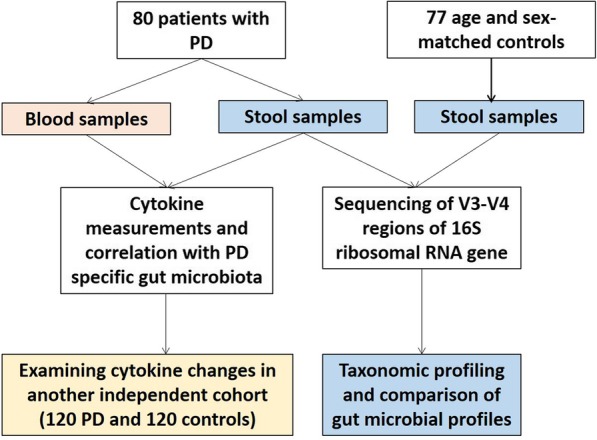
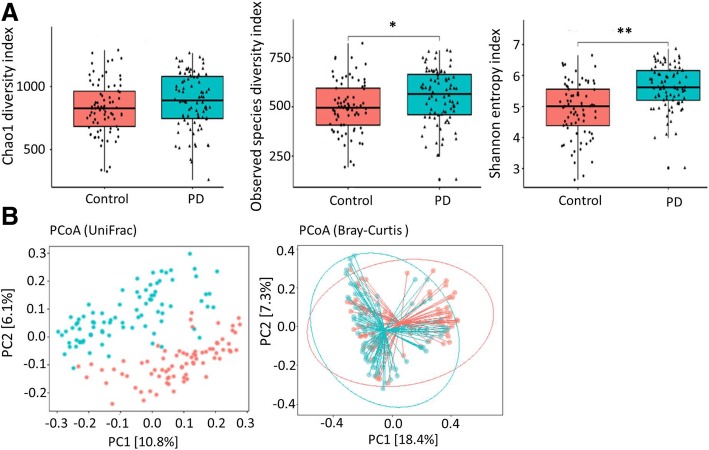
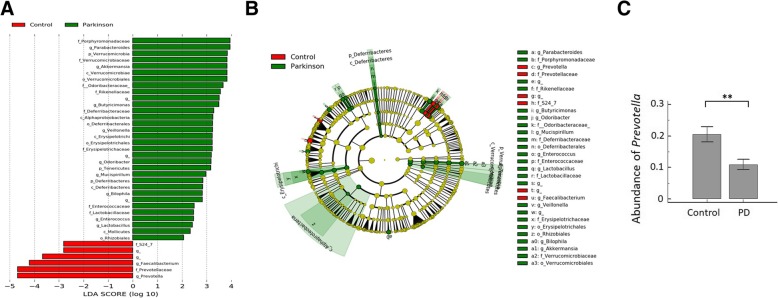
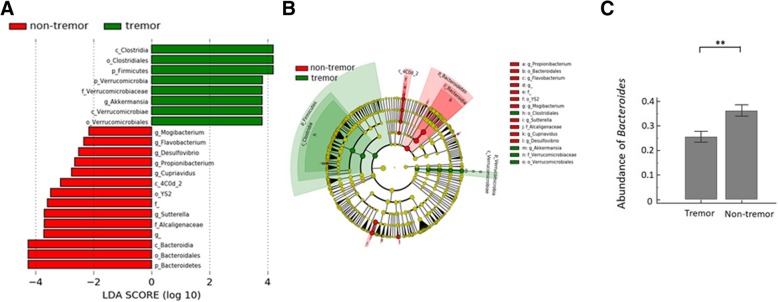
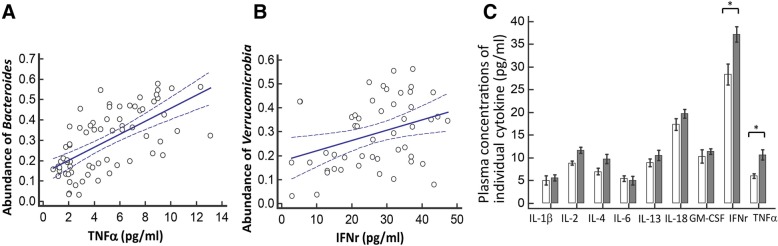
OBJECTIVE: Emerging evidence suggests that gut microbiome composition alterations affect neurodegeneration through neuroinflammation in the pathogenesis of Parkinson's disease (PD). Here, we evaluate gut microbiota alterations and host cytokine responses in a population of Taiwanese patients with PD. METHODS: Fecal microbiota communities from 80 patients with PD and 77 age and gender-matched controls were assessed by sequencing the V3-V4 region of the 16S ribosomal RNA gene. Diet and comorbidities were controlled in the analyses. Plasma concentrations of IL-1β, IL-2, IL-4, IL-6, IL-13, IL-18, GM-CSF, IFNγ, and TNFα were measured by a multiplex immunoassay and relationships between microbiota, clinical characteristics, and cytokine levels were analyzed in the PD group. We further examined the cytokine changes associated with the altered gut microbiota seen in patients with PD in another independent cohort of 120 PD patients and 120 controls. RESULTS: Microbiota from patients with PD was altered relative to controls and dominated by Verrucomicrobia, Mucispirillum, Porphyromonas, Lactobacillus, and Parabacteroides. In contrast, Prevotella was more abundant in controls. The abundances of Bacteroides were more increased in patients with non-tremor PD subtype than patients with tremor subtype. Bacteroides abundance was correlated with motor symptom severity defined by UPDRS part III motor scores (rho = 0.637 [95% confidence interval 0.474 to 0.758], P < 0.01). Altered microbiota was correlated with plasma concentrations of IFNγ and TNFα. There was a correlation between Bacteroides and plasma level of TNFα (rho = 0.638 [95% CI: 0.102-0.887], P = 0.02); and a correlation between Verrucomicrobia abundance and plasma concentrations of IFNγ (rho = 0.545 [95% CI - 0.043-0.852], P = 0.05). The elevated plasma cytokine responses were confirmed in an additional independent 120 patients with PD and 120 controls (TNFα: PD vs. control 8.51 ± 4.63 pg/ml vs. 4.82 ± 2.23 pg/ml, P < 0.01; and IFNγ: PD vs. control: 38.45 ± 7.12 pg/ml vs. 32.79 ± 8.03 pg/ml, P = 0.03). CONCLUSIONS: This study reveals altered gut microbiota in PD and its correlation with clinical phenotypes and severity in our population. The altered plasma cytokine profiles associated with gut microbiome composition alterations suggest aberrant immune responses may contribute to inflammatory processes in PD.
Overview
The claims and statistics of this paper haven’t been checked yet.
Free: it reads the open-access text and checks the first 5 claims that cite a source we can check. Create a free account to check every claim.
Integrity signals
Registry
Cites
Statistics
Figures
Verification
Claims the paper makes
The claims and statistics of this paper haven’t been checked yet.
Free: it reads the open-access text and checks the first 5 claims that cite a source we can check. Create a free account to check every claim.
Claims other papers make about this one
Each is checked against this paper’s own text: does it say what the citing paper says it does?
The source backs part of the claim, not all of it — or backs it for a different population, condition or comparison.
In the citing paper
“Investigators have shown that the gut microbiota is significantly related to the duration, 28,35 onset time, 35 and motor and non-motor symptoms 23,25,29,34,40 of Parkinson's disease.”
From The role of gut dysbiosis in Parkinson’s disease: mechanistic insights and therapeutic options (2021) · cites this paper as [40]
Experimental — accuracy not yet measuredThe source backs part of the claim, not all of it — or backs it for a different population, condition or comparison.
In the citing paper
“Another study in Asian population observed that Bacteroides was associated with plasma TNF levels, while Verrucomicrobiaceae abundance was correlated with plasma IFNc levels”
From The role of gut dysbiosis in Parkinson’s disease: mechanistic insights and therapeutic options (2021) · cites this paper as [40]
Experimental — accuracy not yet measuredThe cited source says what the claim attributes to it.
In the citing paper
“suggesting that alterations in the microbiota may be closely related to the systemic inflammatory response.40”
From The role of gut dysbiosis in Parkinson’s disease: mechanistic insights and therapeutic options (2021) · cites this paper as [40]
Self-check
Percentages, sums and reported differences re-computed from the paper’s own numbers.
The self-check needs the paper’s full text.
Citations
Cites
Staging of brain pathology related to sporadic Parkinson’s disease
Braak, H., Tredici, K. D., Rüb, U., de Vos, R. A. I., Jansen Steur, E. N. H., & Braak, E. (2003) · Neurobiology of Aging · doi:10.1016/s0197-4580(02)00065-9 · Cited by 10,777
Hughes, A. J., Daniel, S. E., Kilford, L., & Lees, A. J. (1992) · Journal of Neurology, Neurosurgery & Psychiatry · doi:10.1136/jnnp.55.3.181 · Cited by 10,378
Kalia, L. V., & Lang, A. E. (2015) · The Lancet · doi:10.1016/s0140-6736(14)61393-3 · Cited by 6,184
Longstreth, G. F., Thompson, W. G., Chey, W. D., Houghton, L. A., Mearin, F., & Spiller, R. C. (2006) · Gastroenterology · doi:10.1053/j.gastro.2005.11.061 · Cited by 4,856
Gut microbiota regulate motor deficits and neuroinflammation in a model of Parkinson's disease
Sampson, T. R., Debelius, J. W., Thron, T., Janssen, S., Shastri, G. G., Ilhan, Z. E., Challis, C., Schretter, C. E., Rocha, S., Gradinaru, V., et al. (2016) · Cell · doi:10.1016/j.cell.2016.11.018 · Cited by 3,622
Expansion of intestinal Prevotella copri correlates with enhanced susceptibility to arthritis
Scher, J. U., Sczesnak, A., Longman, R. S., Segata, N., Ubeda, C., Bielski, C., Rostron, T., Cerundolo, V., Pamer, E. G., Abramson, S. B., et al. (2013) · eLife · doi:10.7554/elife.01202 · Cited by 2,047 · cited 1×
“glycoproteins in the gut mucosal layer but may also interact with the immune system [25].”
BackgroundGut microbiota are related to Parkinson's disease and clinical phenotype
Scheperjans, F., Aho, V., Pereira, P. A. B., Koskinen, K., Paulin, L., Pekkonen, E., Haapaniemi, E., Kaakkola, S., Eerola‐Rautio, J., Pohja, M., et al. (2015) · Movement Disorders · doi:10.1002/mds.26069 · Cited by 1,968
Healy, D. G., Falchi, M., O'Sullivan, S. S., Bonifati, V., Durr, A., Bressman, S., Brice, A., Aasly, J., Zabetian, C. P., Goldwurm, S., et al. (2008) · The Lancet Neurology · doi:10.1016/s1474-4422(08)70117-0 · Cited by 1,425
Colonic bacterial composition in Parkinson's disease
Keshavarzian, A., Green, S. J., Engen, P. A., Voigt, R. M., Naqib, A., Forsyth, C. B., Mutlu, E., & Shannon, K. M. (2015) · Movement Disorders · doi:10.1002/mds.26307 · Cited by 1,281
Unger, M. M., Spiegel, J., Dillmann, K.-U., Grundmann, D., Philippeit, H., Bürmann, J., Faßbender, K., Schwiertz, A., & Schäfer, K.-H. (2016) · Parkinsonism & Related Disorders · doi:10.1016/j.parkreldis.2016.08.019 · Cited by 1,159
Frequency of Bowel Movements and the Future Risk of Parkinson’s Disease
Abbott, R. D., Petrovitch, H., White, L. R., Masaki, K. H., Tanner, C. M., Curb, J. D., Grandinetti, A., Blanchette, P. L., Popper, J. S., & Ross, G. W. (2001) · Neurology · doi:10.1212/wnl.57.3.456 · Cited by 839
Bedarf, J. R., Hildebrand, F., Coelho, L. P., Sunagawa, S., Bahram, M., Goeser, F., Bork, P., & Wüllner, U. (2017) · Genome Medicine · doi:10.1186/s13073-017-0428-y · Cited by 642
Oligotyping: differentiating between closely related microbial taxa using 16S rRNA gene data
Eren, A. M., Maignien, L., Sul, W. J., Murphy, L. G., Grim, S. L., Morrison, H. G., & Sogin, M. L. (2013) · Methods in Ecology and Evolution · doi:10.1111/2041-210x.12114 · Cited by 628
Pathogenesis of Parkinson disease—the gut–brain axis and environmental factors
Klingelhoefer, L., & Reichmann, H. (2015) · Nature Reviews Neurology · doi:10.1038/nrneurol.2015.197 · Cited by 598
The gut-brain axis: is intestinal inflammation a silent driver of Parkinson’s disease pathogenesis?
Houser, M. C., & Tansey, M. G. (2017) · npj Parkinson's Disease · doi:10.1038/s41531-016-0002-0 · Cited by 588
Heintz‐Buschart, A., Pandey, U., Wicke, T., Sixel‐Döring, F., Janzen, A., Sittig‐Wiegand, E., Trenkwalder, C., Oertel, W. H., Mollenhauer, B., & Wilmes, P. (2018) · Movement Disorders · doi:10.1002/mds.27105 · Cited by 554
Intestinal dysbiosis and lowered serum lipopolysaccharide-binding protein in Parkinson's disease
Hasegawa, S., Goto, S., Tsuji, H., Okuno, T., Asahara, T., Nomoto, K., Shibata, A., Fujisawa, Y., Minato, T., Okamoto, A., et al. (2015) · PLOS ONE · doi:10.1371/journal.pone.0142164 · Cited by 523
Analysis of Gut Microbiota in Patients with Parkinson’s Disease
Petrov, V. A., Saltykova, I. V., Zhukova, I. A., Alifirova, V. M., Zhukova, N. G., Dorofeeva, Y. B., Tyakht, A. V., Kovarsky, B. A., Alekseev, D. G., Kostryukova, E. S., et al. (2017) · Bulletin of Experimental Biology and Medicine · doi:10.1007/s10517-017-3700-7 · Cited by 487
Host and Environmental Factors Influencing Individual Human Cytokine Responses
ter Horst, R., Jaeger, M., Smeekens, S. P., Oosting, M., Swertz, M. A., Li, Y., Kumar, V., Diavatopoulos, D. A., Jansen, A. F. M., Lemmers, H., et al. (2016) · Cell · doi:10.1016/j.cell.2016.10.018 · Cited by 453
Lebouvier, T., Neunlist, M., Bruley des Varannes, S., Coron, E., Drouard, A., N'Guyen, J.-M., Chaumette, T., Tasselli, M., Paillusson, S., Flamand, M., et al. (2010) · PLoS ONE · doi:10.1371/journal.pone.0012728 · Cited by 427
Alteration of the fecal microbiota in Chinese patients with Parkinson’s disease
Qian, Y., Yang, X., Xu, S., Wu, C., Song, Y., Qin, N., Chen, S.-D., & Xiao, Q. (2018) · Brain, Behavior, and Immunity · doi:10.1016/j.bbi.2018.02.016 · Cited by 409
(2017) · eLife · doi:10.7554/elife · Cited by 361
Gut microbiota in Parkinson disease in a northern German cohort
Hopfner, F., Künstner, A., Müller, S. H., Künzel, S., Zeuner, K. E., Margraf, N. G., Deuschl, G., Baines, J. F., & Kuhlenbäumer, G. (2017) · Brain Research · doi:10.1016/j.brainres.2017.04.019 · Cited by 318
Stool Immune Profiles Evince Gastrointestinal Inflammation in Parkinson's Disease
Houser, M. C., Chang, J., Factor, S. A., Molho, E. S., Zabetian, C. P., Hill‐Burns, E. M., Payami, H., Hertzberg, V. S., & Tansey, M. G. (2018) · Movement Disorders · doi:10.1002/mds.27326 · Cited by 199
Systematic review of the prevalence and incidence of Parkinson's disease in Asia
Muangpaisan, W., Hori, H., & Brayne, C. (2009) · Journal of Epidemiology · doi:10.2188/jea.je20081034 · Cited by 185
Choi, V. M., Herrou, J., Hecht, A. L., Teoh, W. P., Turner, J. R., Crosson, S., & Wardenburg, J. B. (2016) · Nature Medicine · doi:10.1038/nm.4077 · Cited by 118
Interferon γ Derived from CD4+ T Cells Is Sufficient to Mediate T Helper Cell Type 1 Development
Wakil, A. E., Wang, Z., Ryan, J. C., Fowell, D. J., & Locksley, R. M. (1998) · The Journal of Experimental Medicine · doi:10.1084/jem.188.9.1651 · Cited by 109
The Potential Role of Gut-Derived Inflammation in Multiple System Atrophy
Engen, P. A., Dodiya, H. B., Naqib, A., Forsyth, C. B., Green, S. J., Voigt, R. M., Kordower, J. H., Mutlu, E. A., Shannon, K. M., & Keshavarzian, A. (2017) · Journal of Parkinson’s Disease · doi:10.3233/jpd-160991 · Cited by 86 · cited 3×
“We further identified a positive correlation between the abundance of Bacteroides genus from Bacteroidetes phylum and the plasma concentration of the pro-inflammatory cytokine TNFα in our PD patients.”
BackgroundInfluentialImmune recognition and response to the intestinal microbiome in type 1 diabetes
Paun, A., Yau, C., & Danska, J. S. (2016) · Journal of Autoimmunity · doi:10.1016/j.jaut.2016.02.004 · Cited by 76
Gut microbiota, 1013 new pieces in the Parkinson's disease puzzle
Scheperjans, F. (2016) · Current Opinion in Neurology · doi:10.1097/wco.0000000000000389 · Cited by 63
Altered gut microbiome and metabolome in patients with multiple system atrophy
Tan, A. H., Chong, C. W., Song, S. L., Teh, C. S. J., Yap, I. K. S., Loke, M. F., Tan, Y. Q., Yong, H. S., Mahadeva, S., Lang, A. E., et al. (2018) · Movement Disorders · doi:10.1002/mds.27203 · Cited by 52
Delahooke, D. M., Barclay, G. R., & Poxton, I. R. (1995) · Infection and Immunity · doi:10.1128/iai.63.3.840-846.1995 · Cited by 50
Chiu, T. H., Huang, H.-Y., Chen, K.-J., Wu, Y.-R., Chiu, J. P., Li, Y.-H., Chiu, B. C.-H., Lin, C.-L., & Lin, M.-N. (2014) · Public Health Nutrition · doi:10.1017/s1368980013001560 · Cited by 47
Self-citation
Cited by
Inflammation and immune dysfunction in Parkinson disease
Tansey, M. G., Wallings, R. L., Houser, M. C., Herrick, M. K., Keating, C. E., & Joers, V. (2022) · Nature Reviews Immunology · doi:10.1038/s41577-022-00684-6 · Cited by 1,382
Akkermansia muciniphila: paradigm for next-generation beneficial microorganisms
Cani, P. D., Depommier, C., Derrien, M., Everard, A., & de Vos, W. M. (2022) · Nature Reviews Gastroenterology & Hepatology · doi:10.1038/s41575-022-00631-9 · Cited by 1,192
Cytokines: From Clinical Significance to Quantification
Liu, C., Chu, D., Kalantar‐Zadeh, K., George, J., Young, H. A., & Liu, G. (2021) · Advanced Science · doi:10.1002/advs.202004433 · Cited by 940
Romano, S., Savva, G. M., Bedarf, J. R., Charles, I. G., Hildebrand, F., & Narbad, A. (2021) · npj Parkinson's Disease · doi:10.1038/s41531-021-00156-z · Cited by 707
Tryptophan metabolism and gut-brain homeostasis
Roth, W., Zadeh, K., Vekariya, R., Ge, Y., & Mohamadzadeh, M. (2021) · International Journal of Molecular Sciences · doi:10.3390/ijms22062973 · Cited by 519
Metadata
- Authors
- Lin, C.-H., Chen, C.-C., Chiang, H.-L., Liou, J.-M., Chang, C.-M., Lu, T.-P., Chuang, E. Y., Tai, Y.-C., Cheng, C., Lin, H.-Y., & Wu, M.-S.
- Affiliations
- National Taiwan University (TW)
- Taipei Veterans General Hospital (TW)
- E-Da Hospital (TW)
- Corresponding author
- Lin, Chin-Hsien
- ORCID
- Venue
- Journal of Neuroinflammation
- Published
- 2019-06-27
- Volume
- 16
- Issue
- 1
- Pages
- 129-129
- ISSN
- 1742-2094 (ISSN-L)
- PMC
- PMC6598278
- OpenAlex
- W2955669984
- Semantic Scholar
- fe1e7c9bffbb24110a7586cdc218454249dcb6de
- Cited by
- 469
- References
- 32
- Citations by year
- 2026: 41 · 2025: 62 · 2024: 76 · 2023: 88 · 2022: 88 · 2021: 76 · 2020: 34 · 2019: 3
- FWCI
- 16.54
- Type
- journal article
- Language
- en
- Open access
- gold
- doi.org
- Licence
- cc-by
- creativecommons.org/licenses/by/4.0/ (tdm)
- creativecommons.org/licenses/by/4.0/ (vor)
- Locations
- Journal of Neuroinflammation (publishedVersion, cc-by)
- PubMed Central (publishedVersion, cc-by)
- PubMed (publishedVersion)
- DOAJ (DOAJ: Directory of Open Access Journals) (submittedVersion, cc-by-sa)
- Funders
- Ministry of Science and Technology, Taiwan (MOST 106-2314-B-002-227-, MOST 107-2320-B-002-032-)
- National Taiwan University Hospital (106-EDN06, 107-EDN14)
- National Health Research Institutes (NHRI-EX107-10716NC)
- Topics
- Life Sciences › Biochemistry, Genetics and Molecular Biology › Molecular Biology › Gut microbiota and health
- Health Sciences › Medicine › Clinical Neurology › Parkinson's Disease Mechanisms and Treatments
- Health Sciences › Medicine › Gastroenterology › Gastrointestinal motility and disorders
- Keywords
- Parkinson's disease, gut microbiota, neuroinflammation, inflammatory cytokines, Bacteroides, Verrucomicrobia, TNF-α, interferon-gamma, motor impairment severity, Prevotella, Mucispirillum, Porphyromonas, Lactobacillus, Parabacteroides
- MeSH terms
- Gastrointestinal Microbiome, Aged, Female, Humans, Male, Middle Aged, Parkinson Disease, Taiwan, Cohort Studies, Biomarkers, Cytokines, Inflammation Mediators
About these checks
Registry, retraction, Cites and statistics results are computed, not judged, with one exception: a printed reference that no index lists is read once by a model before it counts as a citation error. Claims are extracted by a model and kept only when their quote appears verbatim in the text; each cited source is then checked, with a model’s help, for whether it says what the claim relies on. Those verdicts can be wrong — read the claim’s quote and the cited source before relying on one.
Statistics and arithmetic are recomputed, not judged.
Confidence bands are shown only for fields calibrated on our annotated test set. None is calibrated yet, so no band is shown.
What counts as a claim ›How we measure confidence ›How we check this ›
Are you an author, or do you see a problem with this page? Request a review
Data sources
Bibliographic data: Semantic Scholar, OpenAlex, Crossref.
Contains information from the Semantic Scholar Academic Graph Datasets, made available under the ODC Attribution License (ODC-BY 1.0).
Semantic Scholar’s data is described in: Kinney, R., et al. (2023). The Semantic Scholar Open Data Platform. arXiv:2301.10140.
