

Altered gut microbiota and inflammatory cytokine responses in patients with Parkinson's disease
Open accessThe DOI matches its Crossref record; 33 of the 33 references it cites were found in a registry or an index.
Abstract
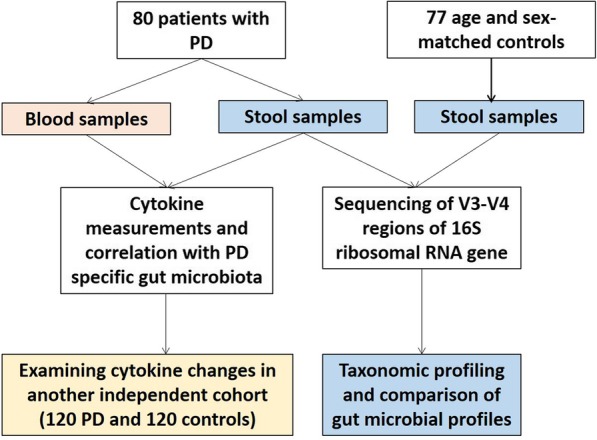
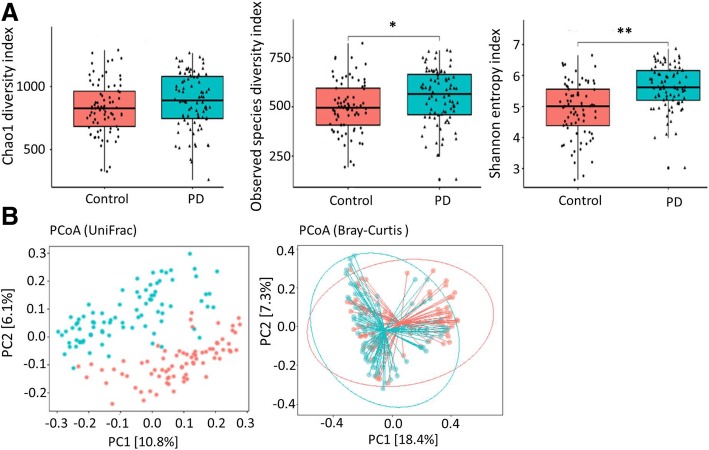
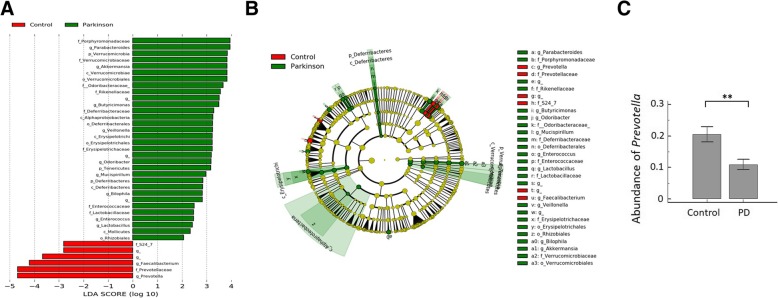
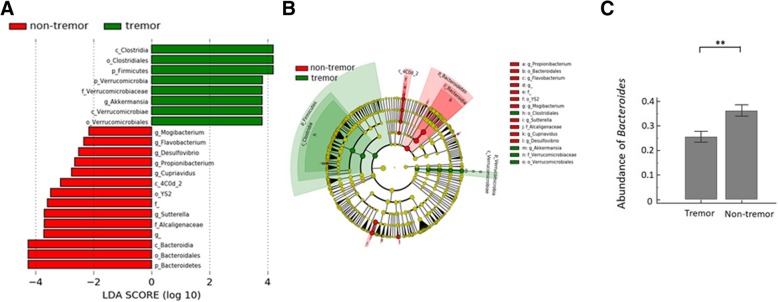
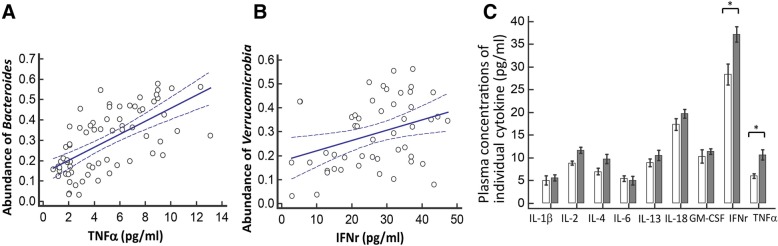
OBJECTIVE: Emerging evidence suggests that gut microbiome composition alterations affect neurodegeneration through neuroinflammation in the pathogenesis of Parkinson's disease (PD). Here, we evaluate gut microbiota alterations and host cytokine responses in a population of Taiwanese patients with PD. METHODS: Fecal microbiota communities from 80 patients with PD and 77 age and gender-matched controls were assessed by sequencing the V3-V4 region of the 16S ribosomal RNA gene. Diet and comorbidities were controlled in the analyses. Plasma concentrations of IL-1β, IL-2, IL-4, IL-6, IL-13, IL-18, GM-CSF, IFNγ, and TNFα were measured by a multiplex immunoassay and relationships between microbiota, clinical characteristics, and cytokine levels were analyzed in the PD group. We further examined the cytokine changes associated with the altered gut microbiota seen in patients with PD in another independent cohort of 120 PD patients and 120 controls. RESULTS: Microbiota from patients with PD was altered relative to controls and dominated by Verrucomicrobia, Mucispirillum, Porphyromonas, Lactobacillus, and Parabacteroides. In contrast, Prevotella was more abundant in controls. The abundances of Bacteroides were more increased in patients with non-tremor PD subtype than patients with tremor subtype. Bacteroides abundance was correlated with motor symptom severity defined by UPDRS part III motor scores (rho = 0.637 [95% confidence interval 0.474 to 0.758], P < 0.01). Altered microbiota was correlated with plasma concentrations of IFNγ and TNFα. There was a correlation between Bacteroides and plasma level of TNFα (rho = 0.638 [95% CI: 0.102-0.887], P = 0.02); and a correlation between Verrucomicrobia abundance and plasma concentrations of IFNγ (rho = 0.545 [95% CI - 0.043-0.852], P = 0.05). The elevated plasma cytokine responses were confirmed in an additional independent 120 patients with PD and 120 controls (TNFα: PD vs. control 8.51 ± 4.63 pg/ml vs. 4.82 ± 2.23 pg/ml, P < 0.01; and IFNγ: PD vs. control: 38.45 ± 7.12 pg/ml vs. 32.79 ± 8.03 pg/ml, P = 0.03). CONCLUSIONS: This study reveals altered gut microbiota in PD and its correlation with clinical phenotypes and severity in our population. The altered plasma cytokine profiles associated with gut microbiome composition alterations suggest aberrant immune responses may contribute to inflammatory processes in PD.
Overview
The claims and statistics of this paper haven’t been checked yet.
Free: it reads the open-access text and checks the first 5 claims that cite a source we can check. Create a free account to check every claim.
Integrity signals
Registry
Cites
Statistics
Figures
Verification
Claims the paper makes
The claims and statistics of this paper haven’t been checked yet.
Free: it reads the open-access text and checks the first 5 claims that cite a source we can check. Create a free account to check every claim.
Claims other papers make about this one
Each is checked against this paper’s own text: does it say what the citing paper says it does?
The source backs part of the claim, not all of it — or backs it for a different population, condition or comparison.
In the citing paper
“Investigators have shown that the gut microbiota is significantly related to the duration, 28,35 onset time, 35 and motor and non-motor symptoms 23,25,29,34,40 of Parkinson's disease.”
From The role of gut dysbiosis in Parkinson’s disease: mechanistic insights and therapeutic options (2021) · cites this paper as [40]
Experimental — accuracy not yet measuredThe source backs part of the claim, not all of it — or backs it for a different population, condition or comparison.
In the citing paper
“Another study in Asian population observed that Bacteroides was associated with plasma TNF levels, while Verrucomicrobiaceae abundance was correlated with plasma IFNc levels”
From The role of gut dysbiosis in Parkinson’s disease: mechanistic insights and therapeutic options (2021) · cites this paper as [40]
Experimental — accuracy not yet measuredThe cited source says what the claim attributes to it.
In the citing paper
“suggesting that alterations in the microbiota may be closely related to the systemic inflammatory response.40”
From The role of gut dysbiosis in Parkinson’s disease: mechanistic insights and therapeutic options (2021) · cites this paper as [40]
Self-check
Percentages, sums and reported differences re-computed from the paper’s own numbers.
The self-check needs the paper’s full text.
Citations
Cites
Staging of brain pathology related to sporadic Parkinson’s disease
Braak, H., Tredici, K. D., Rüb, U., de Vos, R. A. I., Jansen Steur, E. N. H., & Braak, E. (2003) · Neurobiology of Aging · doi:10.1016/s0197-4580(02)00065-9 · Cited by 10,777
Hughes, A. J., Daniel, S. E., Kilford, L., & Lees, A. J. (1992) · Journal of Neurology, Neurosurgery & Psychiatry · doi:10.1136/jnnp.55.3.181 · Cited by 10,378
Kalia, L. V., & Lang, A. E. (2015) · The Lancet · doi:10.1016/s0140-6736(14)61393-3 · Cited by 6,184
Longstreth, G. F., Thompson, W. G., Chey, W. D., Houghton, L. A., Mearin, F., & Spiller, R. C. (2006) · Gastroenterology · doi:10.1053/j.gastro.2005.11.061 · Cited by 4,856
Gut microbiota regulate motor deficits and neuroinflammation in a model of Parkinson's disease
Sampson, T. R., Debelius, J. W., Thron, T., Janssen, S., Shastri, G. G., Ilhan, Z. E., Challis, C., Schretter, C. E., Rocha, S., Gradinaru, V., et al. (2016) · Cell · doi:10.1016/j.cell.2016.11.018 · Cited by 3,622
Expansion of intestinal Prevotella copri correlates with enhanced susceptibility to arthritis
Scher, J. U., Sczesnak, A., Longman, R. S., Segata, N., Ubeda, C., Bielski, C., Rostron, T., Cerundolo, V., Pamer, E. G., Abramson, S. B., et al. (2013) · eLife · doi:10.7554/elife.01202 · Cited by 2,047 · cited 1×
“glycoproteins in the gut mucosal layer but may also interact with the immune system [25].”
BackgroundGut microbiota are related to Parkinson's disease and clinical phenotype
Scheperjans, F., Aho, V., Pereira, P. A. B., Koskinen, K., Paulin, L., Pekkonen, E., Haapaniemi, E., Kaakkola, S., Eerola‐Rautio, J., Pohja, M., et al. (2015) · Movement Disorders · doi:10.1002/mds.26069 · Cited by 1,968
Healy, D. G., Falchi, M., O'Sullivan, S. S., Bonifati, V., Durr, A., Bressman, S., Brice, A., Aasly, J., Zabetian, C. P., Goldwurm, S., et al. (2008) · The Lancet Neurology · doi:10.1016/s1474-4422(08)70117-0 · Cited by 1,425
Colonic bacterial composition in Parkinson's disease
Keshavarzian, A., Green, S. J., Engen, P. A., Voigt, R. M., Naqib, A., Forsyth, C. B., Mutlu, E., & Shannon, K. M. (2015) · Movement Disorders · doi:10.1002/mds.26307 · Cited by 1,281
Unger, M. M., Spiegel, J., Dillmann, K.-U., Grundmann, D., Philippeit, H., Bürmann, J., Faßbender, K., Schwiertz, A., & Schäfer, K.-H. (2016) · Parkinsonism & Related Disorders · doi:10.1016/j.parkreldis.2016.08.019 · Cited by 1,159
Cited by
Inflammation and immune dysfunction in Parkinson disease
Tansey, M. G., Wallings, R. L., Houser, M. C., Herrick, M. K., Keating, C. E., & Joers, V. (2022) · Nature Reviews Immunology · doi:10.1038/s41577-022-00684-6 · Cited by 1,382
Akkermansia muciniphila: paradigm for next-generation beneficial microorganisms
Cani, P. D., Depommier, C., Derrien, M., Everard, A., & de Vos, W. M. (2022) · Nature Reviews Gastroenterology & Hepatology · doi:10.1038/s41575-022-00631-9 · Cited by 1,192
Cytokines: From Clinical Significance to Quantification
Liu, C., Chu, D., Kalantar‐Zadeh, K., George, J., Young, H. A., & Liu, G. (2021) · Advanced Science · doi:10.1002/advs.202004433 · Cited by 940
Romano, S., Savva, G. M., Bedarf, J. R., Charles, I. G., Hildebrand, F., & Narbad, A. (2021) · npj Parkinson's Disease · doi:10.1038/s41531-021-00156-z · Cited by 707
Tryptophan metabolism and gut-brain homeostasis
Roth, W., Zadeh, K., Vekariya, R., Ge, Y., & Mohamadzadeh, M. (2021) · International Journal of Molecular Sciences · doi:10.3390/ijms22062973 · Cited by 519
Parkinson disease and the immune system - Associations, mechanisms and therapeutics
Tan, E.-K., Chao, Y.-X., West, A., Chan, L.-L., Poewe, W., & Jankovic, J. (2020) · Nature Reviews Neurology · doi:10.1038/s41582-020-0344-4 · Cited by 457
Aho, V. T. E., Houser, M. C., Pereira, P. A. B., Chang, J., Rudi, K., Paulin, L., Hertzberg, V., Auvinen, P., Tansey, M. G., & Scheperjans, F. (2021) · Molecular Neurodegeneration · doi:10.1186/s13024-021-00427-6 · Cited by 435
Intestinal flora and disease mutually shape the regional immune system in the intestinal tract
Zhou, B., Yuan, Y., Zhang, S., Guo, C., Li, X., Li, G., Xiong, W., & Zeng, Z. (2020) · Frontiers in Immunology · doi:10.3389/fimmu.2020.00575 · Cited by 396
“Further, multiple sclerosis has been shown to induce an initial increase, followed by a decrease in IL-17 and IFN-γ production, with simultaneous decrease, followed by gradual increase in Axl and suppressor of cytokine signaling 3 (SOCS3) expression.”
BackgroundInfluentialFacchin, S., Bertin, L., Bonazzi, E., Lorenzon, G., De Barba, C., Barberio, B., Zingone, F., Maniero, D., Scarpa, M., Ruffolo, C., et al. (2024) · Life · doi:10.3390/life14050559 · Cited by 380
Suganya, K., & Koo, B.-S. (2020) · International Journal of Molecular Sciences · doi:10.3390/ijms21207551 · Cited by 368
The gut microbiota-immune-brain axis: therapeutic implications
O’Riordan, K. J., Moloney, G. M., Keane, L., Clarke, G., & Cryan, J. F. (2025) · Cell Reports Medicine · doi:10.1016/j.xcrm.2025.101982 · Cited by 333
The role of gut dysbiosis in Parkinson’s disease: mechanistic insights and therapeutic options
Wang, Q., Luo, Y., Ray Chaudhuri, K., Reynolds, R., Tan, E.-K., & Pettersson, S. (2021) · Brain · doi:10.1093/brain/awab156 · Cited by 281
Chen, S.-J., Chen, C.-C., Liao, H.-Y., Lin, Y.-T., Wu, Y.-W., Liou, J.-M., Wu, M.-S., Kuo, C.-H., & Lin, C.-H. (2022) · Neurology · doi:10.1212/wnl.0000000000013225 · Cited by 269
“com/WNL/B718), which are consistent with previous studies.(19) The principal coordinates analysis revealed that patients with PD had different gut microbiota composition from healthy controls (β-diversity, analysis of similarities, p = 0.”
MethodResultSelf-citationBiomarker of Neuroinflammation in Parkinson’s Disease
Liu, T.-W., Chen, C.-M., & Chang, K.-H. (2022) · International Journal of Molecular Sciences · doi:10.3390/ijms23084148 · Cited by 259
“The gut microbiome composition may alter cytokine profiles and affect inflammatory processes in PD [67], whereas IL-2 can suppress chronic inflammation in the gastrointestinal tract [68–70].”
BackgroundSelf-citationWallen, Z. D., Appah, M., Dean, M. N., Sesler, C. L., Factor, S. A., Molho, E., Zabetian, C. P., Standaert, D. G., & Payami, H. (2020) · npj Parkinson s Disease · doi:10.1038/s41531-020-0112-6 · Cited by 252
Biodegradation and disintegration of expanded polystyrene by land snails Achatina fulica
Song, Y., Qiu, R., Hu, J., Li, X., Zhang, X., Chen, Y., Wu, W.-M., & He, D. (2020) · Science of The Total Environment · doi:10.1016/j.scitotenv.2020.141289 · Cited by 240
Gut bacterial profiles in Parkinson's disease: A systematic review
Li, Z., Liang, H., Hu, Y., Lu, L., Zheng, C., Fan, Y., Wu, B., Zou, T., Luo, X., Zhang, X., et al. (2023) · CNS Neuroscience & Therapeutics · doi:10.1111/cns.13990 · Cited by 206
“Bacteroidetes Bacteroidia Bacteroidales Bacteroidaceae Bacteroides [36] [35,43] Rikenellaceae Alistipes [17– 19,25,26] Prevotellaceae Prevotella [24,26,29,39,43] Paraprevotella [19] Tannerellaceae Parabacteroides [18,24,33] [35] Odoribacteraceae Butyricimonas [24] Odoribacter [24] [35] Chitinophagia Chitinophagales Ch…”
BackgroundInfluentialEffects of dietary intervention on human diseases: molecular mechanisms and therapeutic potential
Xiao, Y.-L., Gong, Y., Qi, Y.-J., Shao, Z.-M., & Jiang, Y.-Z. (2024) · Signal Transduction and Targeted Therapy · doi:10.1038/s41392-024-01771-x · Cited by 202
Parkinson’s disease and gut microbiota: from clinical to mechanistic and therapeutic studies
Zhang, X., Tang, B., & Guo, J. (2023) · Translational Neurodegeneration · doi:10.1186/s40035-023-00392-8 · Cited by 187
“This suggests that the gut flora is changed in a systemic sub-inflammatory condition in PD [109].”
BackgroundResultNeuroinflammation and Parkinson’s Disease—From Neurodegeneration to Therapeutic Opportunities
Araújo, B., Caridade-Silva, R., Soares-Guedes, C., Martins-Macedo, J., Gomes, E. D., Monteiro, S., & Teixeira, F. G. (2022) · Cells · doi:10.3390/cells11182908 · Cited by 187
“Overall, the gut-microbiome composition is altered in PD patients compared to healthy controls, and these findings have been replicated in multiple studies across various geographies [131,206].”
BackgroundHuang, B., Chau, S. W. H., Liu, Y., Chan, J. W. Y., Wang, J., Ma, S. L., Zhang, J., Chan, P. K. S., Yeoh, Y. K., Chen, Z., et al. (2023) · Nature Communications · doi:10.1038/s41467-023-38248-4 · Cited by 187
The Gut–Brain Axis and Its Relation to Parkinson’s Disease: A Review
Klann, E. M., Dissanayake, U., Gurrala, A., Farrer, M., Shukla, A. W., Ramirez-Zamora, A., Mai, V., & Vedam-Mai, V. (2022) · Frontiers in Aging Neuroscience · doi:10.3389/fnagi.2021.782082 · Cited by 182
The human symbiont Mucispirillum schaedleri: causality in health and disease
Herp, S., Durai Raj, A. C., Salvado Silva, M., Woelfel, S., & Stecher, B. (2021) · Medical Microbiology and Immunology · doi:10.1007/s00430-021-00702-9 · Cited by 180
“[40] Patients with Parkinson’s disease exhibit an increased relative abundance of Mucispirillum spp.”
BackgroundGut Microbiota: A Novel Therapeutic Target for Parkinson’s Disease
Zhu, M., Liu, X., Ye, Y., Yan, X., Cheng, Y., Zhao, L., Chen, F., & Ling, Z. (2022) · Frontiers in Immunology · doi:10.3389/fimmu.2022.937555 · Cited by 177
“Mounting evidence has documented increased levels of a variety of inflammatory molecules in the brain and cerebrospinal fluid as well as blood from PD patients such as IL-1b, IL-2, IL-6, IL-10, TNF-a, CCL5, and CRP (90, 91).”
BackgroundPellegrini, C., Antonioli, L., Calderone, V., Colucci, R., Fornai, M., & Blandizzi, C. (2020) · Progress in Neurobiology · doi:10.1016/j.pneurobio.2020.101806 · Cited by 174
Diet, nutrients and the microbiome
(2020) · Progress in Molecular Biology and Translational Science · doi:10.1016/bs.pmbts.2020.04.006 · Cited by 170
Kearns, R. (2024) · Cellular and Molecular Neurobiology · doi:10.1007/s10571-024-01496-z · Cited by 193
“Elevated levels of neurotoxic KP metabolites such as QUIN are observed in PD, contributing to neuronal damage and inflammation (Lin et al. 2019; Xiang et al. 2022).”
BackgroundImplications of the Gut Microbiome in Parkinson's Disease
Elfil, M., Kamel, S., Kandil, M., Koo, B. B., & Schaefer, S. M. (2020) · Movement Disorders · doi:10.1002/mds.28004 · Cited by 151
“More studies have reported GM alterations in PD patients in comparison with controls.(30,81-84)”
BackgroundResultSolch, R. J., Aigbogun, J. O., Voyiadjis, A. G., Talkington, G. M., Darensbourg, R. M., O'Connell, S., Pickett, K. M., Perez, S. R., & Maraganore, D. M. (2022) · Journal of the Neurological Sciences · doi:10.1016/j.jns.2022.120166 · Cited by 137
Gut Metagenomics-Derived Genes as Potential Biomarkers of Parkinson’s Disease
Qian, Y., Yang, X., Xu, S., Huang, P., Li, B., Du, J., He, Y., Su, B., Xu, L.-M., Wang, L., et al. (2020) · Brain · doi:10.1093/brain/awaa201 · Cited by 139
Gut microbiome in Parkinson's disease: New insights from meta-analysis
Toh, T. S., Chong, C. W., Lim, S.-Y., Bowman, J., Cirstea, M., Lin, C.-H., Chen, C.-C., Appel-Cresswell, S., Finlay, B. B., & Tan, A. H. (2022) · Parkinsonism & Related Disorders · doi:10.1016/j.parkreldis.2021.11.017 · Cited by 131
Self-citationThe Link between Gut Dysbiosis and Neuroinflammation in Parkinson’s Disease
Baizabal-Carvallo, J. F., & Alonso-Juarez, M. (2020) · Neuroscience · doi:10.1016/j.neuroscience.2020.02.030 · Cited by 130
Metta, V., Leta, V., Mrudula, K. R., Prashanth, L. K., Goyal, V., Borgohain, R., Chung-Faye, G., & Chaudhuri, K. R. (2022) · Journal of Neurology · doi:10.1007/s00415-021-10567-w · Cited by 130
Spichak, S., Bastiaanssen, T. F. S., Berding, K., Vlckova, K., Clarke, G., Dinan, T. G., & Cryan, J. F. (2021) · Neuroscience & Biobehavioral Reviews · doi:10.1016/j.neubiorev.2021.02.044 · Cited by 127
Olson, C. A., Iñiguez, A. J., Yang, G. E., Fang, P., Pronovost, G. N., Jameson, K. G., Rendon, T. K., Paramo, J., Barlow, J. T., Ismagilov, R. F., et al. (2021) · Cell Host & Microbe · doi:10.1016/j.chom.2021.07.004 · Cited by 129
“, 2020) and aging-associated neurodegenerative disorders (Baldini et al., 2020; Lin et al., 2019; Vogt et al., 2017).”
BackgroundBicknell, B. T., Liebert, A. D., Borody, T. J., Herkes, G., McLachlan, C. S., & Kiat, H. (2023) · International Journal of Molecular Sciences · doi:10.3390/ijms24119577 · Cited by 148
The gut-brain vascular axis in neuroinflammation
Carloni, S., & Rescigno, M. (2023) · Seminars in Immunology · doi:10.1016/j.smim.2023.101802 · Cited by 141
Innate and adaptive immune responses in Parkinson's disease
(2020) · Progress in Brain Research · doi:10.1016/bs.pbr.2019.10.006 · Cited by 116
“Therefore, it is not surprising that multiple studies have observed alterations in the microbiomes of diverse cohorts of people with PD across the world (Aho et al., 2019; Barichella et al., 2019; Hill-Burns et al., 2017; Li et al., 2017; Lin et al., 2019; Petrov et al., 2017; Pietrucci et al., 2019; Scheperjans et al…”
BackgroundStudy of gut microbiota alterations in Alzheimer's dementia patients from Kazakhstan
Kaiyrlykyzy, A., Kozhakhmetov, S., Babenko, D., Zholdasbekova, G., Alzhanova, D., Olzhayev, F., Baibulatova, A., Kushugulova, A. R., & Askarova, S. (2022) · Scientific Reports · doi:10.1038/s41598-022-19393-0 · Cited by 128
Hydrogen Sulfide Produced by Gut Bacteria May Induce Parkinson’s Disease
Murros, K. E. (2022) · Cells · doi:10.3390/cells11060978 · Cited by 109
Du, D., Tang, W., Zhou, C., Sun, X., Wei, Z., Zhong, J., & Huang, Z. (2021) · Oxidative Medicine and Cellular Longevity · doi:10.1155/2021/5816837 · Cited by 111
Potential roles of gut microbiota and microbial metabolites in Parkinson’s disease
Zheng, S.-Y., Li, H.-X., Xu, R.-C., Miao, W.-T., Dai, M.-Y., Ding, S.-T., & Liu, H.-D. (2021) · Ageing Research Reviews · doi:10.1016/j.arr.2021.101347 · Cited by 101
Extracellular Vesicles as Nanotherapeutics for Parkinson’s Disease
Leggio, L., Paternò, G., Vivarelli, S., L’Episcopo, F., Tirolo, C., Raciti, G., Pappalardo, F., Giachino, C., Caniglia, S., Serapide, M. F., et al. (2020) · Biomolecules · doi:10.3390/biom10091327 · Cited by 100
The gut microbiota–brain axis in neurological disorders
You, M., Chen, N., Yang, Y., Cheng, L., He, H., Cai, Y., Liu, Y., Liu, H., & Hong, G. (2024) · MedComm · doi:10.1002/mco2.656 · Cited by 136
“…severity in PD patients and with elevated plasma TNF α and IFN γ concentrations in PD patients, which are also associated with inflammation in PD. 155 In addition, a positive relationship has been found between the abundance of Enterobacteriaceae and the severity of postural instability and gait…”
BackgroundInfluentialHeravi, F. S., Naseri, K., & Hu, H. (2023) · Nutrients · doi:10.3390/nu15204365 · Cited by 126
Peng, W., Huang, J., Yang, J., Zhang, Z., Yu, R., Fayyaz, S., Zhang, S., & Qin, Y. (2020) · Frontiers in Microbiology · doi:10.3389/fmicb.2019.03141 · Cited by 107
“The family Verrucomicrobiaceae belongs to the phylum Verrucomicrobia, significantly increased and has been shown to be associated with elevated plasma concentrations of tumor necrosis factor α (TNF-α) and interferon γ in patients with Parkinson’s disease (Lin et al., 2019).”
BackgroundXu, R., Zhang, Y., Chen, S., Zeng, Y., Fu, X., Chen, T., Luo, S., & Zhang, X. (2022) · Critical Reviews in Microbiology · doi:10.1080/1040841x.2022.2044286 · Cited by 103
Is LRRK2 the missing link between inflammatory bowel disease and Parkinson’s disease?
Herrick, M. K., & Tansey, M. G. (2021) · npj Parkinson's Disease · doi:10.1038/s41531-021-00170-1 · Cited by 91
Oral Dysbiosis and Inflammation in Parkinson’s Disease
Fleury, V., Zekeridou, A., Lazarević, V., Gaïa, N., Giannopoulou, C., Genton, L., Cancela, J., Girard, M., Goldstein, R., Bally, J. F., et al. (2021) · Journal of Parkinson s Disease · doi:10.3233/jpd-202459 · Cited by 107
Mohammadi, S., Moosaie, F., & Aarabi, M. H. (2020) · Molecular Neurobiology · doi:10.1007/s12035-020-02094-y · Cited by 91
Varesi, A., Campagnoli, L. I. M., Fahmideh, F., Pierella, E., Romeo, M., Ricevuti, G., Nicoletta, M., Chirumbolo, S., & Pascale, A. (2022) · International Journal of Molecular Sciences · doi:10.3390/ijms232012289 · Cited by 88
Amorim Neto, D. P., Bosque, B. P., Pereira de Godoy, J. V., Rodrigues, P. V., Meneses, D. D., Tostes, K., Costa Tonoli, C. C., Faustino de Carvalho, H., González-Billault, C., & de Castro Fonseca, M. (2022) · iScience · doi:10.1016/j.isci.2022.103908 · Cited by 84
“muciniphila which is consistently high in PD stool samples (Baldini et al., 2020; Bedarf et al., 2017; Heintz-Buschart et al., 2018; Hill-Burns et al., 2017; Li et al., 2017; Lin et al., 2019; Mertsalmi et al., 2017; Nishiwaki et al., 2020; Unger et al., 2016; Vidal-Martinez et al., 2020).”
BackgroundGut-first Parkinson’s disease is encoded by gut dysbiome
Muñoz, M., Candeias, E., Melo-Marques, I., Esteves, A. R., Maranha, A., Magalhães, J. D., Carneiro, D. R., Sant’Anna, M., Pereira-Santos, A. R., Abreu, A. E., et al. (2024) · Molecular Neurodegeneration · doi:10.1186/s13024-024-00766-0 · Cited by 98
Kip, E., & Parr‐Brownlie, L. C. (2022) · Ageing Research Reviews · doi:10.1016/j.arr.2022.101618 · Cited by 98
“Moreover, gut microbiome alterations are correlated with aberrant immune responses and abnormal production of pro-inflammatory cytokines (Lin et al., 2019).”
Diet and the gut microbiome in patients with Parkinson’s disease
Kwon, D., Zhang, K., Paul, K. C., Folle, A. D., Del Rosario, I., Jacobs, J. P., Keener, A. M., Bronstein, J. M., & Ritz, B. (2024) · npj Parkinson's Disease · doi:10.1038/s41531-024-00681-7 · Cited by 86
Microbiome changes: an indicator of Parkinson’s disease?
Haikal, C., Chen, Q.-Q., & Li, J.-Y. (2019) · Translational Neurodegeneration · doi:10.1186/s40035-019-0175-7 · Cited by 83
Li, S., Guo, J., Liu, R., Zhang, F., Wen, S., Liu, Y., Ren, W., Zhang, X., Shang, Y., Gao, M., et al. (2022) · Microbiology Spectrum · doi:10.1128/spectrum.01926-22 · Cited by 101
“(22, 23), here we investigated whether plasma concentrations of proinflammatory cyto-”
BackgroundGut–Brain Axis as a Pathological and Therapeutic Target for Neurodegenerative Disorders
Toledo, A. R. L., Monroy, G. R., Salazar, F. E., Lee, J.-Y., Jain, S., Yadav, H., & Borlongan, C. V. (2022) · International Journal of Molecular Sciences · doi:10.3390/ijms23031184 · Cited by 93
“Downstream neurodegeneration-inducing mechanisms of an altered microbiota in PD models include aberrant activation of the NLRP3 inflammasome, impaired insulin resistance, and dysfunctional mitochondrial [84,87,88].”
BackgroundAğagündüz, D., Bingöl, F. G., Çelik, E., Cemali, Ö., Özenir, Ç., Özoğul, F., & Capasso, R. (2022) · Journal of Translational Medicine · doi:10.1186/s12967-022-03609-y · Cited by 82
“Increase in Bacteroides level was associated with TNF-α, increase in Verrucomicrobia strain was associated with IFN-γ [142].”
BackgroundInfluentialLiu, G., Jiang, C., Lin, X., & Yang, Y. (2021) · View · doi:10.1002/viw.20210003 · Cited by 90
Review: The Role of Intestinal Dysbiosis in Parkinson’s Disease
Huang, Y., Liao, J., Liu, X., Zhong, Y., Cai, X., & Long, L. (2021) · Frontiers in Cellular and Infection Microbiology · doi:10.3389/fcimb.2021.615075 · Cited by 75
“Verrucomicrobia Verrucomicrobiaceae Verrucomicrobia ↑ (Lin et al., 2019)”
ResultKoszewicz, M. A., Jaroch, J., Brzecka, A., Ejma, M., Budrewicz, S. P., Михалева, Л. М., Muresanu, C., Schield, P., Somasundaram, S. G., Kirkland, C. E., et al. (2020) · Pharmacological Research · doi:10.1016/j.phrs.2020.105277 · Cited by 88
Chen, S., & Lin, C. (2022) · Journal of Biomedical Science · doi:10.1186/s12929-022-00839-6 · Cited by 93
“Furthermore, enrichment in Bacteroides and Bifidobacterium has been linked to elevated expression of systemic and fecal inflammatory markers IFN-γ, TNF-α, and neutrophil gelatinase-associated lipocalin in patients with PD [87, 105].”
BackgroundSelf-citationInflammatory microbes and genes as potential biomarkers of Parkinson’s disease
Nie, S., Wang, J., Deng, Y., Ye, Z., & Ge, Y. (2022) · npj Biofilms and Microbiomes · doi:10.1038/s41522-022-00367-z · Cited by 72
Blood and Cerebrospinal Fluid Biomarkers of Inflammation in Parkinson’s Disease
Zimmermann, M., & Brockmann, K. (2022) · Journal of Parkinson s Disease · doi:10.3233/jpd-223277 · Cited by 87
The gut microbiota and aging: interactions, implications, and interventions
Gyriki, D., Nikolaidis, C. G., Bezirtzoglou, E., Voidarou, C. C., Stavropoulou, E., & Tsigalou, C. (2025) · Frontiers in Aging · doi:10.3389/fragi.2025.1452917 · Cited by 87
Microbiota‐microglia connections in age‐related cognition decline
Zhou, R., Qian, S., Cho, W. C. S., Zhou, J., Jin, C., Zhong, Y., Wang, J., Zhang, X., Xu, Z., Tian, M., et al. (2022) · Aging Cell · doi:10.1111/acel.13599 · Cited by 71
Lorente-Picón, M., & Laguna, A. (2021) · Biomolecules · doi:10.3390/biom11030433 · Cited by 69
Liu, X., Liu, Y., Liu, J., Zhang, H., Shan, C., Guo, Y., Gong, X., Cui, M., Li, X., & Tang, M. (2023) · Neural Regeneration Research · doi:10.4103/1673-5374.382223 · Cited by 84
Effects of β-Blockers on the Sympathetic and Cytokines Storms in Covid-19
Al-Kuraishy, H. M., Al-Gareeb, A. I., Mostafa‐Hedeab, G., Kasozi, K. I., Zirintunda, G., Aslam, A., Allahyani, M. A., Welburn, S. C., & Batiha, G. E. (2021) · Frontiers in Immunology · doi:10.3389/fimmu.2021.749291 · Cited by 76
Yan, Z., Yang, F., Sun, L., Yu, J., Sun, L., Si, Y., & Yao, L. (2022) · Brain Behavior and Immunity · doi:10.1016/j.bbi.2022.09.009 · Cited by 95
Li, Z., Lu, G., Li, Z., Wu, B., Luo, E., Qiu, X., Guo, J., Xia, Z., Zheng, C., Su, Q., et al. (2021) · Frontiers in Immunology · doi:10.3389/fimmu.2021.632482 · Cited by 66
“The remaining one bacterial biomarker, Lactobacillus, was increased in the PD group in our results, which is consistent with results from some previous studies (20, 22), while not with those from two studies using Chinese patients (23).”
ResultInteractions between gut microbes and NLRP3 inflammasome in the gut-brain axis
Ding, Y., Wang, Z., Chen, Y., Guo, Q., & Dong, Y. (2023) · Computational and Structural Biotechnology Journal · doi:10.1016/j.csbj.2023.03.017 · Cited by 73
Neuroinflammation in Parkinson’s Disease: Triggers, Mechanisms, and Immunotherapies
Wang, T., Shi, C., Luo, H., Zheng, H., Fan, L., Tang, M., Su, Y., Yang, J., Mao, C., & Xu, Y. (2021) · The Neuroscientist · doi:10.1177/1073858421991066 · Cited by 73
Layunta, E., Buey, B., Mesonero, J. E., & Latorre, E. (2021) · Frontiers in Endocrinology · doi:10.3389/fendo.2021.748254 · Cited by 73
Gut microbiome alpha-diversity is not a marker of Parkinson’s disease and multiple sclerosis
Plassais, J., Gbikpi-Benissan, G., Figarol, M., Scheperjans, F., Gorochov, G., Derkinderen, P., & Cervino, A. C. L. (2021) · Brain Communications · doi:10.1093/braincomms/fcab113 · Cited by 57
Mild Chronic Colitis Triggers Parkinsonism in LRRK2 Mutant Mice Through Activating TNF ‐α Pathway
Lin, C., Lin, H., Ho, E., Ke, Y., Cheng, M., Shiue, C., Wu, C., Liao, P., Hsu, A. Y., Chu, L., et al. (2021) · Movement Disorders · doi:10.1002/mds.28890 · Cited by 60
“The measurement of plasma TNF-α level was as previously described.(7)”
MethodSelf-citationMetagenomics of the Gut Microbiome in Parkinson's Disease: Prodromal Changes
Palacios, N., Wilkinson, J., Bjornevik, K., Schwarzschild, M. A., McIver, L., Ascherio, A., & Huttenhower, C. (2023) · Annals of Neurology · doi:10.1002/ana.26719 · Cited by 59
“We focused on species available in our dataset within genera previously associated with PD: Akkermansia, Bifidobacterium, Hungatella,(62) Lactobacillus,(15,23,32) Blautia,(10,15,26,30) Oscillibacter, Prevotella,(9,10,19,22,33) Eubacterium,(9) Roseburia,(10,18,26,30,32) Lachnospira,(18,63) and Faecalibacterium.(15,19,2…”
MethodThe Gut–Organ Axis within the Human Body: Gut Dysbiosis and the Role of Prebiotics
Saxami, G., Kerezoudi, E. N., Eliopoulos, C., Arapoglou, D., & Kyriacou, A. (2023) · Life · doi:10.3390/life13102023 · Cited by 75
Liang, Y., Cui, L., Gao, J., Zhu, M., Zhang, Y., & Zhang, H. (2021) · Molecular Neurobiology · doi:10.1007/s12035-021-02375-0 · Cited by 64
Ghyselinck, J., Verstrepen, L., Moens, F., den Abbeele, P. V., Bruggeman, A., Said, J., Smith, B., Barker, L. A., Jordan, C., Leta, V., et al. (2021) · International Journal of Pharmaceutics X · doi:10.1016/j.ijpx.2021.100087 · Cited by 73
Chen, S.-J., Chen, C.-C., Liao, H.-Y., Wu, Y.-W., Liou, J.-M., Wu, M.-S., Kuo, C.-H., & Lin, C.-H. (2022) · Journal of Parkinson's Disease · doi:10.3233/jpd-223179 · Cited by 55
Self-citationThe Gut Microbiome–Brain Crosstalk in Neurodegenerative Diseases
Ghezzi, L., Cantoni, C., Rotondo, E., & Galimberti, D. (2022) · Biomedicines · doi:10.3390/biomedicines10071486 · Cited by 57
“Case-control (75 PD, 45 HCs) 16S rRNA sequencing PD: ↓ Lachnospiraceae, increased Bifidobacteriaceae [33]”
BackgroundCytokine activity in Parkinson’s disease
Dzamko, N. L. (2023) · Neuronal Signaling · doi:10.1042/ns20220063 · Cited by 72
Kaur, G., Behl, T., BUNGAU, S. G., Kumar, A., Uddin, M. S., Mehta, V., Zengin, G., Mathew, B., Shah, M. A., & Arora, S. (2020) · Current Neuropharmacology · doi:10.2174/1570159x18666200606233050 · Cited by 64
“In six separate studies [50, 51, 79], Lactobacillaceae sp.”
Gan, Q., Peng, M., Wei, H., Chen, L., Chen, X.-Y., Li, Z.-H., An, G., & Ma, Y. (2024) · Food & Function · doi:10.1039/d3fo05169b · Cited by 61
Martins, B., Vieira, M., Delerue-Matos, C. M., Grosso, C., & Soares, C. M. D. (2022) · Marine Drugs · doi:10.3390/md20060362 · Cited by 66
Hong, C., Chan, L., Chen, K., Lee, H., Huang, L., Yang, Y. S. H., Liu, Y., & Hu, C. (2022) · Cells · doi:10.3390/cells11213468 · Cited by 60
Lee, Y. Z., Cheng, S.-H., Chang, M.-Y., Lin, Y., Wu, C.-C., & Tsai, Y.-C. (2023) · International Journal of Molecular Sciences · doi:10.3390/ijms24076794 · Cited by 64
“Interestingly, a recent study indicated that the abundance of Bacteroides was not only associated with the severity of motor symptoms as defined by UPDRS scores but was also positively associated with the level of TNF-α in patients with PD [65].”
BackgroundGut Dysbiosis and IL-21 Response in Patients with Severe COVID-19
Khan, M., Mathew, B. J., Gupta, P., Garg, G., Khadanga, S., Vyas, A. K., & Singh, A. K. (2021) · Microorganisms · doi:10.3390/microorganisms9061292 · Cited by 57
“to secrete a complex array of pro-inflammatory cytokines, interleukin-1, CXCL8, IFNγ, and TNFα for aberrant inflammatory reactions due to cytokine storm [28].”
BackgroundYan, Y., Ren, S., Duan, Y., Lu, C., Niu, Y., Wang, Z., Inglis, B., Ji, W., Zheng, Y., & Si, W. (2021) · npj Biofilms and Microbiomes · doi:10.1038/s41522-021-00242-3 · Cited by 51
Pan, S., Wei, H., Yuan, S., Kong, Y., Yang, H., Zhang, Y., Cui, X., Chen, W., Liu, J., & Zhang, Y. (2022) · Frontiers in Cellular and Infection Microbiology · doi:10.3389/fcimb.2022.1022879 · Cited by 51
“Frontiers in Cellular and Infection Microbiology 11 The composition and the structure of the gut microbiota in PD patients and animals were disturbed (Sun et al., 2018; Lin et al., 2019).”
BackgroundVoigt, R. M., Wang, Z., Brown, J. M., Engen, P. A., Naqib, A., Goetz, C. G., Hall, D. A., Metman, L. V., Shaikh, M., Forsyth, C. B., et al. (2022) · Neurobiology of Disease · doi:10.1016/j.nbd.2022.105780 · Cited by 51
“, shift in Firmicute / Bacteroidetes ratio) (Keshavarzian et al., 2015; Sun and Shen, 2018; Li et al., 2021; Unger et al., 2016; Nuzum et al., 2020; Bullich et al., 2019; Gerhardt and Mohajeri, 2018; Lin et al., 2019).”
Effects of gut microbiota on neurodegenerative diseases
Khatoon, S., Kalam, N., Rashid, S., & Bano, G. (2023) · Frontiers in Aging Neuroscience · doi:10.3389/fnagi.2023.1145241 · Cited by 51
“A greater incidence of α-syn presence is identified in patients compared with controls from various studies regarding the function of GI tract disease in PD (Chiang and Lin, 2019).”
BackgroundFakhri, S., Yarmohammadi, A., Yarmohammadi, M., Farzaei, M. H., & Echeverría, J. (2021) · Marine Drugs · doi:10.3390/md19030165 · Cited by 57
“Reduced expression of iNOS and COX-2 and secretion of inflammatory factors such as TNF-α, IL-6, PGE2, and nitric oxide (NO) take part in inhibition of Akt/NF-κB and MAPKs/stimulating protein-1 (AP-1) pathways, in LPS-activated BV-2 microglia was observed as the protectant activity of the fucoxanthin [135].”
BackgroundInfluentialEarly changes of fecal short‐chain fatty acid levels in patients with mild cognitive impairments
Gao, C., Li, B., He, Y., Huang, P., Du, J., He, G., Zhang, P., Tang, H., & Chen, S. (2023) · CNS Neuroscience & Therapeutics · doi:10.1111/cns.14252 · Cited by 50
Jiang, Z., Wang, X., Zhang, H., Yin, J., Zhao, P., Yin, Q., & Wang, Z. (2023) · MedComm · doi:10.1002/mco2.268 · Cited by 50
Gastrointestinal disorders in Parkinson’s disease and other Lewy body diseases
Hirayama, M., Nishiwaki, H., Hamaguchi, T., & Ohno, K. (2023) · npj Parkinson's Disease · doi:10.1038/s41531-023-00511-2 · Cited by 66
Gut Microbiota Approach—A New Strategy to Treat Parkinson’s Disease
Liu, J., Xu, F., Nie, Z., & Shao, L. (2020) · Frontiers in Cellular and Infection Microbiology · doi:10.3389/fcimb.2020.570658 · Cited by 55
“is also positively correlated with the severity of posture instability and gait difficulties of PD patients (Lin et al., 2019).”
BackgroundMicrobiota-mediated metabolic perturbations in the gut and brain of mice after microplastic exposure
Lee, S.-H., Lin, W., & Cheng, T. (2023) · Chemosphere · doi:10.1016/j.chemosphere.2023.141026 · Cited by 54
Metadata
- Authors
- Lin, C.-H., Chen, C.-C., Chiang, H.-L., Liou, J.-M., Chang, C.-M., Lu, T.-P., Chuang, E. Y., Tai, Y.-C., Cheng, C., Lin, H.-Y., & Wu, M.-S.
- Affiliations
- National Taiwan University (TW)
- Taipei Veterans General Hospital (TW)
- E-Da Hospital (TW)
- Corresponding author
- Lin, Chin-Hsien
- ORCID
- Venue
- Journal of Neuroinflammation
- Published
- 2019-06-27
- Volume
- 16
- Issue
- 1
- Pages
- 129-129
- ISSN
- 1742-2094 (ISSN-L)
- PMC
- PMC6598278
- OpenAlex
- W2955669984
- Semantic Scholar
- fe1e7c9bffbb24110a7586cdc218454249dcb6de
- Cited by
- 469
- References
- 32
- Citations by year
- 2026: 41 · 2025: 62 · 2024: 76 · 2023: 88 · 2022: 88 · 2021: 76 · 2020: 34 · 2019: 3
- FWCI
- 16.54
- Type
- journal article
- Language
- en
- Open access
- gold
- doi.org
- Licence
- cc-by
- creativecommons.org/licenses/by/4.0/ (tdm)
- creativecommons.org/licenses/by/4.0/ (vor)
- Locations
- Journal of Neuroinflammation (publishedVersion, cc-by)
- PubMed Central (publishedVersion, cc-by)
- PubMed (publishedVersion)
- DOAJ (DOAJ: Directory of Open Access Journals) (submittedVersion, cc-by-sa)
- Funders
- Ministry of Science and Technology, Taiwan (MOST 106-2314-B-002-227-, MOST 107-2320-B-002-032-)
- National Taiwan University Hospital (106-EDN06, 107-EDN14)
- National Health Research Institutes (NHRI-EX107-10716NC)
- Topics
- Life Sciences › Biochemistry, Genetics and Molecular Biology › Molecular Biology › Gut microbiota and health
- Health Sciences › Medicine › Clinical Neurology › Parkinson's Disease Mechanisms and Treatments
- Health Sciences › Medicine › Gastroenterology › Gastrointestinal motility and disorders
- Keywords
- Parkinson's disease, gut microbiota, neuroinflammation, inflammatory cytokines, Bacteroides, Verrucomicrobia, TNF-α, interferon-gamma, motor impairment severity, Prevotella, Mucispirillum, Porphyromonas, Lactobacillus, Parabacteroides
- MeSH terms
- Gastrointestinal Microbiome, Aged, Female, Humans, Male, Middle Aged, Parkinson Disease, Taiwan, Cohort Studies, Biomarkers, Cytokines, Inflammation Mediators
About these checks
Registry, retraction, Cites and statistics results are computed, not judged, with one exception: a printed reference that no index lists is read once by a model before it counts as a citation error. Claims are extracted by a model and kept only when their quote appears verbatim in the text; each cited source is then checked, with a model’s help, for whether it says what the claim relies on. Those verdicts can be wrong — read the claim’s quote and the cited source before relying on one.
Statistics and arithmetic are recomputed, not judged.
Confidence bands are shown only for fields calibrated on our annotated test set. None is calibrated yet, so no band is shown.
What counts as a claim ›How we measure confidence ›How we check this ›
Are you an author, or do you see a problem with this page? Request a review
Data sources
Bibliographic data: Semantic Scholar, OpenAlex, Crossref.
Contains information from the Semantic Scholar Academic Graph Datasets, made available under the ODC Attribution License (ODC-BY 1.0).
Semantic Scholar’s data is described in: Kinney, R., et al. (2023). The Semantic Scholar Open Data Platform. arXiv:2301.10140.
