

Biokinetics and effects of barium sulfate nanoparticles
Open accessThe DOI matches its Crossref record; 51 of the 52 references it cites were found in a registry or an index.
Abstract
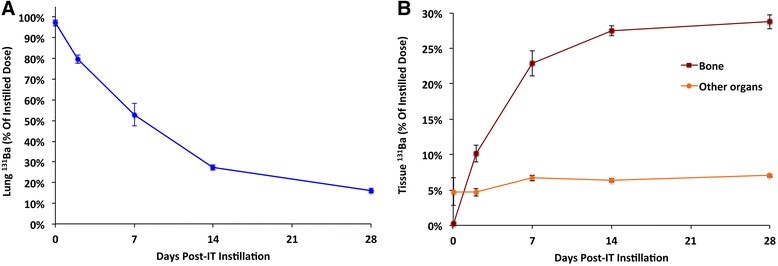
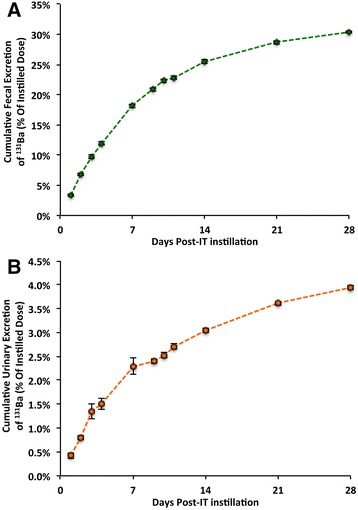
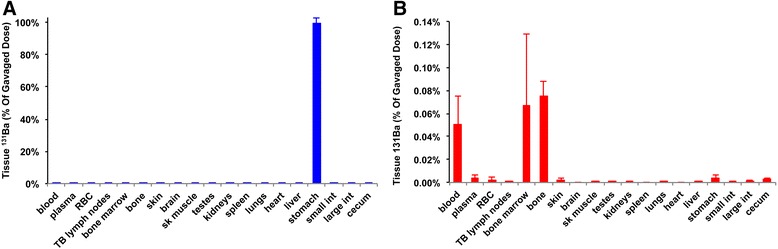
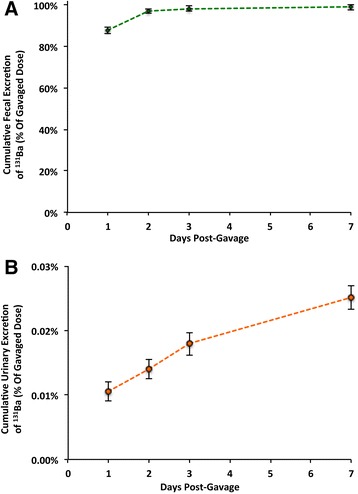
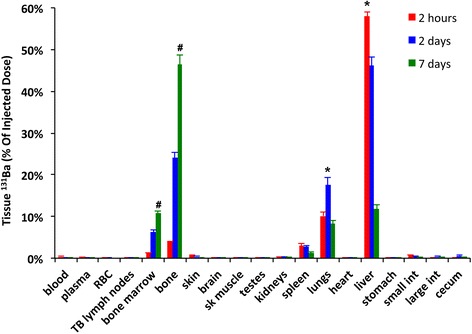
BACKGROUND: Nanoparticulate barium sulfate has potential novel applications and wide use in the polymer and paint industries. A short-term inhalation study on barium sulfate nanoparticles (BaSO₄ NPs) was previously published [Part Fibre Toxicol 11:16, 2014]. We performed comprehensive biokinetic studies of ¹³¹BaSO₄ NPs administered via different routes and of acute and subchronic pulmonary responses to instilled or inhaled BaSO₄ in rats. METHODS: We compared the tissue distribution of ¹³¹Ba over 28 days after intratracheal (IT) instillation, and over 7 days after gavage and intravenous (IV) injection of ¹³¹BaSO₄. Rats were exposed to 50 mg/m³ BaSO₄ aerosol for 4 or 13 weeks (6 h/day, 5 consecutive days/week), and then gross and histopathologic, blood and bronchoalveolar lavage (BAL) fluid analyses were performed. BAL fluid from instilled rats was also analyzed. RESULTS: Inhaled BaSO₄ NPs showed no toxicity after 4-week exposure, but a slight neutrophil increase in BAL after 13-week exposure was observed. Lung burden of inhaled BaSO₄ NPs after 4-week exposure (0.84 ± 0.18 mg/lung) decreased by 95% over 34 days. Instilled BaSO₄ NPs caused dose-dependent inflammatory responses in the lungs. Instilled BaSO₄ NPs (0.28 mg/lung) was cleared with a half-life of ≈ 9.6 days. Translocated ¹³¹Ba from the lungs was predominantly found in the bone (29%). Only 0.15% of gavaged dose was detected in all organs at 7 days. IV-injected ¹³¹BaSO₄ NPs were predominantly localized in the liver, spleen, lungs and bone at 2 hours, but redistributed from the liver to bone over time. Fecal excretion was the dominant elimination pathway for all three routes of exposure. CONCLUSIONS: Pulmonary exposure to instilled BaSO₄ NPs caused dose-dependent lung injury and inflammation. Four-week and 13-week inhalation exposures to a high concentration (50 mg/m³) of BaSO₄ NPs elicited minimal pulmonary response and no systemic effects. Instilled and inhaled BaSO₄ NPs were cleared quickly yet resulted in higher tissue retention than when ingested. Particle dissolution is a likely mechanism. Injected BaSO₄ NPs localized in the reticuloendothelial organs and redistributed to the bone over time. BaSO₄ NP exhibited lower toxicity and biopersistence in the lungs compared to other poorly soluble NPs such as CeO₂ and TiO₂.
Overview
The claims and statistics of this paper haven’t been checked yet.
Free: it reads the open-access text and checks the first 5 claims that cite a source we can check. Create a free account to check every claim.
Integrity signals
Registry
Cites
Statistics
Figures
Verification
Claims the paper makes
The claims and statistics of this paper haven’t been checked yet.
Free: it reads the open-access text and checks the first 5 claims that cite a source we can check. Create a free account to check every claim.
Claims other papers make about this one
Each is checked against this paper’s own text: does it say what the citing paper says it does?
The source backs part of the claim, not all of it — or backs it for a different population, condition or comparison.
In the citing paper
“Konduru et al. [20] consider structural changes and related switches in surface charge as reason for unexpected increases of dissolution rates and resulting rapid”
From Effects from a 90-day inhalation toxicity study with cerium oxide and barium sulfate nanoparticles in rats (2017) · cites this paper as [20]
Experimental — accuracy not yet measuredThe source backs part of the claim, not all of it — or backs it for a different population, condition or comparison.
In the citing paper
“Like it is known for comparable metals, a considerable part of inhaled BaSO4 translocates to bones [20].”
From Effects from a 90-day inhalation toxicity study with cerium oxide and barium sulfate nanoparticles in rats (2017) · cites this paper as [20]
Experimental — accuracy not yet measuredThe cited source says what the claim attributes to it.
In the citing paper
“Konduru et al. [20] attributed substance-specific characteristics and fast clearance to the differences in toxicity.”
From Effects from a 90-day inhalation toxicity study with cerium oxide and barium sulfate nanoparticles in rats (2017) · cites this paper as [20]
Self-check
Percentages, sums and reported differences re-computed from the paper’s own numbers.
The self-check needs the paper’s full text.
Citations
Cites
Nanomaterials and nanoparticles: Sources and toxicity
Buzea, C., Pacheco, I. I., & Robbie, K. (2007) · Biointerphases · doi:10.1116/1.2815690 · Cited by 3,789
Titanium dioxide nanoparticles: a review of current toxicological data
Shi, H., Magaye, R., Castranova, V., & Zhao, J. (2013) · Particle and Fibre Toxicology · doi:10.1186/1743-8977-10-15 · Cited by 1,498
Physiological Parameter Values for Physiologically Based Pharmacokinetic Models
Brown, R. P., Delp, M. D., Lindstedt, S. L., Rhomberg, L. R., & Beliles, R. P. (1997) · Toxicology and Industrial Health · doi:10.1177/074823379701300401 · Cited by 1,415
Rapid translocation of nanoparticles from the lung airspaces to the body
Choi, H. S., Ashitate, Y., Lee, J. H., Kim, S. H., Matsui, A., Insin, N., Bawendi, M. G., Semmler-Behnke, M., Frangioni, J. V., & Tsuda, A. (2010) · Nature Biotechnology · doi:10.1038/nbt.1696 · Cited by 648
Airborne Nanostructured Particles and Occupational Health
Maynard, A. D., & Kuempel, E. D. (2005) · Journal of Nanoparticle Research · doi:10.1007/s11051-005-6770-9 · Cited by 559
C. L. Tran, D. B. (2000) · Inhalation Toxicology · doi:10.1080/08958370050166796 · Cited by 436
Pulmonary distribution of particles given by intratracheal instillation or by aerosol inhalation
Brain, J. D., Knudson, D. E., Sorokin, S. P., & Davis, M. A. (1976) · Environmental Research · doi:10.1016/0013-9351(76)90107-9 · Cited by 416
Self-citationTesting Metal‐Oxide Nanomaterials for Human Safety
Landsiedel, R., Ma‐Hock, L., Kroll, A., Hahn, D., Schnekenburger, J., Wiench, K., & Wohlleben, W. (2010) · Advanced Materials · doi:10.1002/adma.200902658 · Cited by 387
Self-citationRevised guides for organ sampling and trimming in rats and mice – Part 2
Kittel, B., Ruehl-Fehlert, C., Morawietz, G., Klapwijk, J., Elwell, M. R., Lenz, B., O'Sullivan, M. G., Roth, D. R., & Wadsworth, P. F. (2004) · Experimental and Toxicologic Pathology · doi:10.1078/0940-2993-00349 · Cited by 332
Revised guides for organ sampling and trimming in rats and mice – Part 1
Ruehl-Fehlert, C., Kittel, B., Morawietz, G., Deslex, P., Keenan, C., Mahrt, C. R., Nolte, T., Robinson, M., Stuart, B. P., & Deschl, U. (2003) · Experimental and Toxicologic Pathology · doi:10.1078/0940-2993-00311 · Cited by 291
TOXICOKINETICS AND EFFECTS OF FIBROUS AND NONFIBROUS PARTICLES
Oberdörster, G. (2002) · Inhalation Toxicology · doi:10.1080/089583701753338622 · Cited by 221 · cited 1×
“Barium sulfate is considered a member of the poorly soluble particles (PSP) or poorly soluble low toxicity (PSLT) particle groups, as are cerium dioxide (CeO2) and titanium dioxide (TiO2) [10-12].”
BackgroundRevised guides for organ sampling and trimming in rats and mice – Part 3
Morawietz, G., Ruehl-Fehlert, C., Kittel, B., Bube, A., Keane, K., Halm, S., Heuser, A., & Hellmann, J. (2004) · Experimental and Toxicologic Pathology · doi:10.1078/0940-2993-00350 · Cited by 219
Song, G., Wang, Q., Wang, Y., Lv, G., Li, C., Zou, R., Chen, Z., Qin, Z., Huo, K., Hu, R., et al. (2013) · Advanced Functional Materials · doi:10.1002/adfm.201203317 · Cited by 212
Cohen, J., DeLoid, G., Pyrgiotakis, G., & Demokritou, P. (2013) · Nanotoxicology · doi:10.3109/17435390.2012.666576 · Cited by 204
Ma-Hock, L., Burkhardt, S., Strauss, V., Gamer, A. O., Wiench, K., van Ravenzwaay, B., & Landsiedel, R. (2009) · Inhalation Toxicology · doi:10.1080/08958370802361057 · Cited by 197
Self-citationApplication of short-term inhalation studies to assess the inhalation toxicity of nanomaterials
Landsiedel, R., Ma-Hock, L., Hofmann, T., Wiemann, M., Strauss, V., Treumann, S., Wohlleben, W., Gröters, S., Wiench, K., & van Ravenzwaay, B. (2014) · Particle and Fibre Toxicology · doi:10.1186/1743-8977-11-16 · Cited by 169 · cited 6×
“Furthermore, a short-term inhalation study on BaSO4 NPs has been reported recently [27,28].”
BackgroundMethodResultInfluentialSelf-citationThe release of TiO2 and SiO2 nanoparticles from nanocomposites
Reijnders, L. (2009) · Polymer Degradation and Stability · doi:10.1016/j.polymdegradstab.2009.02.005 · Cited by 165
Lung deposition and extrapulmonary translocation of nano-ceria after intratracheal instillation
He, X., Zhang, H., Ma, Y., Bai, W., Zhang, Z., Lu, K., Ding, Y., Zhao, Y., & Chai, Z. (2010) · Nanotechnology · doi:10.1088/0957-4484/21/28/285103 · Cited by 160
Geometric curvature controls the chemical patchiness and self-assembly of nanoparticles
Walker, D., Leitsch, E. K., Nap, R. J., Szleifer, I. G., & Grzybowski, B. A. (2013) · Nature Nanotechnology · doi:10.1038/nnano.2013.158 · Cited by 158
Intratracheal Inhalation vs Intratracheal Instillation: Differences in Particle Effects
Osier, M. (1997) · Fundamental and Applied Toxicology · doi:10.1006/faat.1997.2390 · Cited by 157
Nanomaterials: A challenge for toxicologists
Dhawan, A., Sharma, V., & Parmar, D. (2009) · Nanotoxicology · doi:10.1080/17435390802578595 · Cited by 154
Johnston, H., Pojana, G., Zuin, S., Jacobsen, N. R., Møller, P., Loft, S., Semmler-Behnke, M., McGuiness, C., Balharry, D., Marcomini, A., et al. (2013) · Critical Reviews in Toxicology · doi:10.3109/10408444.2012.738187 · Cited by 153
Baisch, B. L., Corson, N. M., Wade-Mercer, P., Gelein, R., Kennell, A. J., Oberdörster, G., & Elder, A. (2014) · Particle and Fibre Toxicology · doi:10.1186/1743-8977-11-5 · Cited by 151
Brain, J. D., Molina, R. M., DeCamp, M. M., & Warner, A. E. (1999) · American Journal of Physiology-Lung Cellular and Molecular Physiology · doi:10.1152/ajplung.1999.276.1.l146 · Cited by 150
Self-citationStefaniak, A. B., Guilmette, R. A., Day, G. A., Hoover, M. D., Breysse, P. N., & Scripsick, R. C. (2004) · Toxicology in Vitro · doi:10.1016/j.tiv.2004.08.001 · Cited by 119
Time course of lung retention and toxicity of inhaled particles: short-term exposure to nano-Ceria
Keller, J., Wohlleben, W., Ma-Hock, L., Strauss, V., Gröters, S., Küttler, K., Wiench, K., Herden, C., Oberdörster, G., van Ravenzwaay, B., et al. (2014) · Archives of Toxicology · doi:10.1007/s00204-014-1349-9 · Cited by 115
Self-citationVillalobos-Hernández, J. R., & Müller-Goymann, C. C. (2005) · European Journal of Pharmaceutics and Biopharmaceutics · doi:10.1016/j.ejpb.2004.11.002 · Cited by 106
Nanofunctionalized zirconia and barium sulfate particles as bone cement additives
Thomas Webster, T. J. (2009) · International Journal of Nanomedicine · doi:10.2147/ijn.s7603 · Cited by 103
Nanotoxicity: Dimensional and Morphological Concerns
Wani, M. Y., Hashim, M. A., Nabi, F., & Malik, M. A. (2011) · Advances in Physical Chemistry · doi:10.1155/2011/450912 · Cited by 102
Mohn, D., Zehnder, M., Imfeld, T. N., & Stark, W. J. (2010) · International Endodontic Journal · doi:10.1111/j.1365-2591.2009.01660.x · Cited by 101
ORGAN WEIGHTS AND FAT VOLUME IN RATS AS A FUNCTION OF STRAIN AND AGE
Schoeffner, D. J., Warren, D. A., Muralidara, S., Bruckner, J. V., & Simmons, J. E. (1999) · Journal of Toxicology and Environmental Health · doi:10.1080/009841099157917 · Cited by 93
Does Vitreous Silica Contradict the Toxicity of the Crystalline Silica Paradigm?
Ghiazza, M., Polimeni, M., Fenoglio, I., Gazzano, E., Ghigo, D., & Fubini, B. (2010) · Chemical Research in Toxicology · doi:10.1021/tx900369x · Cited by 92
Konduru, N. V., Murdaugh, K. M., Sotiriou, G. A., Donaghey, T. C., Demokritou, P., Brain, J. D., & Molina, R. M. (2014) · Particle and Fibre Toxicology · doi:10.1186/s12989-014-0044-6 · Cited by 88
Self-citationHazard identification of inhaled nanomaterials: making use of short-term inhalation studies
Klein, C. L., Wiench, K., Wiemann, M., Ma‐Hock, L., van Ravenzwaay, B., & Landsiedel, R. (2012) · Archives of Toxicology · doi:10.1007/s00204-012-0834-2 · Cited by 81
Self-citationR. T. Cullen, C. L. T. (2000) · Inhalation Toxicology · doi:10.1080/08958370050166787 · Cited by 81 · cited 2×
“A subchronic inhalation study in rats showed a neutrophil increase in bronchoalveolar lavage (BAL) with micron-scale TiO2 but not with BaSO4 at comparable overload lung burdens (~10 mg Ba) [12,17].”
BackgroundMolina, R. M., Konduru, N. V., Jimenez, R. J., Pyrgiotakis, G., Demokritou, P., Wohlleben, W., & Brain, J. D. (2014) · Environ. Sci.: Nano · doi:10.1039/c4en00034j · Cited by 77
Self-citationGeneration and Characterization of Test Atmospheres with Nanomaterials
Ma-Hock, L., Gamer, A. O., Landsiedel, R., Leibold, E., Frechen, T., Sens, B., Linsenbuehler, M., & van Ravenzwaay, B. (2007) · Inhalation Toxicology · doi:10.1080/08958370701479190 · Cited by 76
Self-citationBaritosis: a benign pneumoconiosis.
Doig, A. T. (1976) · Thorax · doi:10.1136/thx.31.1.30 · Cited by 62
Nanoparticulate fillers improve the mechanical strength of bone cement
Gomoll, A. H., Fitz, W., Scott, R. D., Thornhill, T. S., & Bellare, A. (2008) · Acta Orthopaedica · doi:10.1080/17453670710015349 · Cited by 59
Mathematical Modeling to Predict the Responses to Poorly Soluble Particles in Rat Lungs
Tran, C. L., Buchanan, D., Miller, B. G., Jones, A. D., & Donaldson, K. (2000) · Inhalation Toxicology · doi:10.1080/08958378.2000.11463252 · Cited by 52
Nano-BaSO4: a novel antimicrobial additive to pellethane
Webster, T. J., Stout, D., Aninwene, G. E., & Yang (2013) · International Journal of Nanomedicine · doi:10.2147/ijn.s40300 · Cited by 43
The Right Idea at The Right Time and Writing Renku with Us at Nanomedicine
Martin, C. R. (2010) · Nanomedicine · doi:10.2217/nnm.09.99 · Cited by 40
Park, E., Park, Y., & Park, K. (2009) · Toxicological Research · doi:10.5487/tr.2009.25.2.079 · Cited by 32
Pulmonary effects from radioactive barium sulfate dust.
Cember, H., Tf, H., WATSON, J. A., & Grucci, T. B. (1955) · PubMed · Cited by 18
Functional histology of glioma vasculature by FTIR imaging
Noreen, R., Pineau, R., Chien, C., Guidi, M. C., Hwu, Y., Marcelli, A., Moenner, M., & Petibois, C. (2011) · Analytical and Bioanalytical Chemistry · doi:10.1007/s00216-011-5069-1 · Cited by 17
The elimination of radioactive barium sulfate particles from the lung.
Cember, H., Hatch, T. F., Watson, J. A., Grucci, T. B., & BELL, P. (1956) · PubMed · Cited by 14
Comparative Metabolism of Barium-133 and Calcium-45 by Embryonic Bone Grown in Vitro
Moore, W. (1964) · Radiation Research · doi:10.2307/3571587 · Cited by 14
Baritosis of the mediastinal lymph nodes
Dosios, T., & Karydas, A. G. (2003) · The Annals of Thoracic Surgery · doi:10.1016/s0003-4975(02)04496-x · Cited by 9
The Influence of Radioactivity and Lung Burden on the Pulmonary Clearance Rate of Barium Sulfate
Cember, H., Watson, J. A., & Novak, M. E. (1961) · American Industrial Hygiene Association Journal · doi:10.1080/00028896109344129 · Cited by 8
Levi-Valensi, P., Drif, M., Dat, A., & Hadjadj, G. (1966) · PubMed · Cited by 7
TOXIC COMBUSTION PRODUCTS FROM FIRE RETARDED NANOCOMPOSITE POLYMERS
Stec, A. A., & Hull, T. R. (2015) · Cited by 5
Research works printed but not linked: 1
- Wohlleben W Ma-Hock L Boyko V Cox G Egenolf H Freiberger H Hinrichsen B Hirth S Landsiedel R Nanospecific guidance in REACH: a comparative physical-chemical characterization of 15 materials with methodical correlations J Ceram Sci Tech 2013 4 93 104
Cited by
The nanoparticle biomolecule corona: lessons learned – challenge accepted?
Docter, D., Westmeier, D., Markiewicz, M., Stolte, S., Knauer, S. K., & Stauber, R. H. (2015) · Chemical Society Reviews · doi:10.1039/c5cs00217f · Cited by 693
In vivo degeneration and the fate of inorganic nanoparticles
Feliu, N., Docter, D., Heine, M., del Pino, P., Ashraf, S., Kolosnjaj-Tabi, J., Macchiarini, P., Nielsen, P., Alloyeau, D., Gazeau, F., et al. (2016) · Chemical Society Reviews · doi:10.1039/c5cs00699f · Cited by 423
A decision-making framework for the grouping and testing of nanomaterials (DF4nanoGrouping)
Arts, J. H. E., Hadi, M., Irfan, M.-A., Keene, A. M., Kreiling, R., Lyon, D., Maier, M., Michel, K., Petry, T., Sauer, U. G., et al. (2015) · Regulatory Toxicology and Pharmacology · doi:10.1016/j.yrtph.2015.03.007 · Cited by 256
Self-citationAirborne Particulate Matter: Human Exposure and Health Effects
Thompson, J. E. (2018) · Journal of Occupational & Environmental Medicine · doi:10.1097/jom.0000000000001277 · Cited by 217
Environmental barium: potential exposure and health-hazards
Peana, M., Medici, S., Dadar, M., Zoroddu, M. A., Pelucelli, A., Chasapis, C. T., & Bjørklund, G. (2021) · Archives of Toxicology · doi:10.1007/s00204-021-03049-5 · Cited by 195
Metadata
- Authors
- Konduru, N., Keller, J., Ma-Hock, L., Gröters, S., Landsiedel, R., Donaghey, T. C., Brain, J. D., Wohlleben, W., & Molina, R. M.
- Affiliations
- Harvard University (US)
- BASF (Germany) (DE)
- Corresponding author
- Landsiedel, Robert
- Molina, Ramon M
- ORCID
- Venue
- Particle and Fibre Toxicology
- Published
- 2014-10-21
- Volume
- 11
- Issue
- 1
- Pages
- 55-55
- ISSN
- 1743-8977 (ISSN-L)
- PMC
- PMC4219084
- OpenAlex
- W2133453275
- Cited by
- 84
- References
- 52
- Citations by year
- 2026: 7 · 2025: 3 · 2024: 7 · 2023: 5 · 2022: 9 · 2021: 6 · 2020: 5 · 2019: 6 · 2018: 11 · 2017: 12 · 2016: 7 · 2015: 6
- FWCI
- 17.63
- Type
- journal article
- Language
- en
- Open access
- gold
- doi.org
- Locations
- Particle and Fibre Toxicology (publishedVersion, cc-by)
- PubMed Central (publishedVersion, cc-by)
- PubMed (publishedVersion)
- Digital Access to Scholarship at Harvard (DASH) (Harvard University) (submittedVersion, cc-by)
- Funders
- National Institute of Environmental Health Sciences (ES000002., P30ES000002)
- Topics
- Physical Sciences › Physics and Astronomy › Radiation › Radioactivity and Radon Measurements
- Physical Sciences › Materials Science › Materials Chemistry › Nanoparticles: synthesis and applications
- Health Sciences › Medicine › Pulmonary and Respiratory Medicine › Occupational and environmental lung diseases
- Keywords
- barium sulfate nanoparticles, tissue distribution, lung inflammation, bronchoalveolar lavage, intratracheal instillation, aerosol inhalation, gavage, intravenous injection, nanoparticle clearance, tissue retention, fecal excretion, lung injury, nanoparticle toxicity, rats
- MeSH terms
- Administration, Oral, Air Pollutants, Animals, Barium Radioisotopes, Barium Sulfate, Dose-Response Relationship, Drug, Female, Half-Life, Injections, Intravenous, Intestinal Absorption, Lung, Male, Pneumonia, Rats, Inbred WKY, Solubility, Tissue Distribution, Inhalation Exposure, Respiratory Mucosa, Toxicity Tests, Acute, Metal Nanoparticles, Toxicity Tests, Subchronic, Respiratory Tract Absorption, Toxicokinetics, Intestinal Elimination
About these checks
Registry, retraction, Cites and statistics results are computed, not judged, with one exception: a printed reference that no index lists is read once by a model before it counts as a citation error. Claims are extracted by a model and kept only when their quote appears verbatim in the text; each cited source is then checked, with a model’s help, for whether it says what the claim relies on. Those verdicts can be wrong — read the claim’s quote and the cited source before relying on one.
Statistics and arithmetic are recomputed, not judged.
Confidence bands are shown only for fields calibrated on our annotated test set. None is calibrated yet, so no band is shown.
What counts as a claim ›How we measure confidence ›How we check this ›
Are you an author, or do you see a problem with this page? Request a review
Data sources
Bibliographic data: Semantic Scholar, OpenAlex, Crossref.
Contains information from the Semantic Scholar Academic Graph Datasets, made available under the ODC Attribution License (ODC-BY 1.0).
Semantic Scholar’s data is described in: Kinney, R., et al. (2023). The Semantic Scholar Open Data Platform. arXiv:2301.10140.
