

A guide to using the Theoretical Domains Framework of behaviour change to investigate implementation problems
Open accessThe DOI matches its Crossref record; 90 of the 90 references it cites were found in a registry or an index; 40 of the 57 sources its claims cite were checked for support.
Abstract
BACKGROUND: Implementing new practices requires changes in the behaviour of relevant actors, and this is facilitated by understanding of the determinants of current and desired behaviours. The Theoretical Domains Framework (TDF) was developed by a collaboration of behavioural scientists and implementation researchers who identified theories relevant to implementation and grouped constructs from these theories into domains. The collaboration aimed to provide a comprehensive, theory-informed approach to identify determinants of behaviour. The first version was published in 2005, and a subsequent version following a validation exercise was published in 2012. This guide offers practical guidance for those who wish to apply the TDF to assess implementation problems and support intervention design. It presents a brief rationale for using a theoretical approach to investigate and address implementation problems, summarises the TDF and its development, and describes how to apply the TDF to achieve implementation objectives. Examples from the implementation research literature are presented to illustrate relevant methods and practical considerations. METHODS: Researchers from Canada, the UK and Australia attended a 3-day meeting in December 2012 to build an international collaboration among researchers and decision-makers interested in the advancing use of the TDF. The participants were experienced in using the TDF to assess implementation problems, design interventions, and/or understand change processes. This guide is an output of the meeting and also draws on the authors' collective experience. Examples from the implementation research literature judged by authors to be representative of specific applications of the TDF are included in this guide. RESULTS: We explain and illustrate methods, with a focus on qualitative approaches, for selecting and specifying target behaviours key to implementation, selecting the study design, deciding the sampling strategy, developing study materials, collecting and analysing data, and reporting findings of TDF-based studies. Areas for development include methods for triangulating data, e.g. from interviews, questionnaires and observation and methods for designing interventions based on TDF-based problem analysis. CONCLUSIONS: We offer this guide to the implementation community to assist in the application of the TDF to achieve implementation objectives. Benefits of using the TDF include the provision of a theoretical basis for implementation studies, good coverage of potential reasons for slow diffusion of evidence into practice and a method for progressing from theory-based investigation to intervention.
Overview
CoChat Summary
TL;DR
This guide explains how to apply the Theoretical Domains Framework (TDF) to investigate implementation problems, focusing mainly on qualitative interview and focus group methods. It outlines steps from specifying target behaviours to analysing and reporting TDF-based data, with illustrative examples and stated limitations.
Key findings
- The TDF is an integrated theoretical framework synthesised from 128 theoretical constructs from 33 theories; version 1 has 12 domains, and version 2 has 14 domains covering 84 theoretical constructs. It has been cited in over 800 peer-reviewed publications (Web of Knowledge accessed April 2017).
- The guide provides step-by-step methodological guidance for TDF-based implementation research, primarily qualitative interviews and focus groups: selecting and specifying target behaviours, selecting study design, deciding sampling strategy, developing interview schedules, collecting and analysing data, and reporting findings.
- Benefits of using the TDF include providing a theoretical basis for implementation studies, good coverage of potential reasons for slow diffusion of evidence into practice, and a method for progressing from theory-based investigation to intervention. Areas for development include methods for triangulating data (e.g., interviews, questionnaires, observation) and methods for designing interventions based on TDF-based problem analysis.
- Illustrative examples include a low back pain study with focus groups of 42 GPs and a cluster randomised trial randomising 47 practices (53 GPs) to control and 45 practices (59 GPs) to intervention; an SDD Delphi study that interviewed 141 participants; and a diabetes management qualitative systematic review that included 32 studies.
Methods
- Design: researchers from Canada, the UK and Australia attended a 3-day collaborative meeting in December 2012 to discuss the state of the science in using the TDF in implementation research and identify areas needing further development. Participants represented health psychology, sociology, implementation and health services research, statistics, and clinical disciplines including general practice, occupational therapy and chiropractic.
- Guide production: the group identified key steps in applying the TDF, pooled their experience and expertise to elaborate each step, and selected examples from the implementation research literature judged representative of specific TDF applications. The guide draws on the authors’ collective experience.
- Analysis: no datasets were generated or analysed for this article; the guide is a narrative, consensus-based resource focused mainly on qualitative approaches.
Limitations
- Stated in the paper: the scope is mostly limited to qualitative approaches, mainly interview and focus group data, with limited detail on using the TDF with other data collection methods such as survey or observation.
- Stated in the paper: illustrative applications were selected based on an informal rather than structured consensus process, leaving the possibility of selection bias in these examples; the aim was not to be representative but to provide examples across settings and implementation problems.
- Evident from the text: the guide is not a systematic review or an empirical validation of TDF application; its recommendations rest on the authors’ collective experience and selected illustrative examples.
Model-written summary. Check it against the paper before relying on it.
Integrity signals
Registry
Cites
Statistics
Figures
Verification
Claims the paper makes
25 Valid · 2 Not valid · 8 Not checked · 49 Own results and interpretations
Every source the paper cites for this claim was checked and supports it.
In the paper
“In an effort to make theories more accessible to those working in implementation, a team of behavioural scientists developed the TDF in collaboration with implementation researchers [15].”
§ A guide to using the Theoretical Domains Framework of behaviour change to investigate implementation problems > Development of the TDF
What the sources say
- Supportedcites [15] 15. Michie S, Johnston M, Abraham C, Lawton R, Parker D, Walker A, et al. Making psychological theory useful for implementing evidence based practice: a consensus approach. Qual Saf Health Care. 2005;14(1):26-33. source
The Discussion states that the project sought to simplify psychological theory and make it accessible to people involved in implementing evidence-based practice. The Health psychology theorists and Health services researchers sections describe the psychologists who developed the domains and the implementation researchers who evaluated them. Page numbers are not available in our copy. (LLM, conf=0.93)
plainstates a cause- Asserted: passes — The authors put it forward as true.
- Checkable: passes — It can be checked against evidence.
- Load-bearing: unclear — It is unclear whether the paper’s conclusions depend on it.
- Based: passes — The paper gives a reason why it holds.
- Supported
Every source the paper cites for this claim was checked and supports it.
In the paper
“The version of TDF, resulting from this validation, showed similar structure and content to the original with slight differences leading to 14 domains covering 84 theoretical constructs.”
§ A guide to using the Theoretical Domains Framework of behaviour change to investigate implementation problems > Development of the TDF
What the sources say
- Supportedcites [16] 16. Cane J, O'Connor D, Michie S. Validation of the theoretical domains framework for use in behaviour change and implementation research. Implement Sci. 2012;7:37. doi:10.1186/1748-5908-7-37. source
The Discussion reports good support for the TDF’s basic structure alongside refinements producing 14 domains. The Conclusions state that the refined framework contains 84 component constructs. (LLM, conf=0.93)
plainstates a cause- Asserted: passes — The authors put it forward as true.
- Checkable: passes — It can be checked against evidence.
- Load-bearing: unclear — It is unclear whether the paper’s conclusions depend on it.
- Based: passes — The paper gives a reason why it holds.
- Supported
The cited sources support only part of this claim — read each source’s verdict below.
In the paper
“The TDF is an integrated theoretical framework synthesised from 128 theoretical constructs from 33 theories judged most relevant to implementation questions.”
§ A guide to using the Theoretical Domains Framework of behaviour change to investigate implementation problems > Development of the TDF
What the sources say
- Partly supportedcites [15] 15. Michie S, Johnston M, Abraham C, Lawton R, Parker D, Walker A, et al. Making psychological theory useful for implementing evidence based practice: a consensus approach. Qual Saf Health Care. 2005;14(1):26-33. sourceExperimental — accuracy not yet measured
The Results report identifying 128 constructs drawn from 33 psychological theories, and the paper describes developing an integrative framework for implementation research. But the Simplifying into theoretical domains section says only a subset of those constructs was prioritised as particularly relevant; it does not say that all 128 were judged most relevant to implementation questions. Page numbers are unavailable in our copy. (LLM, conf=0.84)
plain- Asserted: passes — The authors put it forward as true.
- Checkable: passes — It can be checked against evidence.
- Load-bearing: unclear — It is unclear whether the paper’s conclusions depend on it.
- Based: passes — The paper gives a reason why it holds.
- Partly supported
Every source the paper cites for this claim was checked and supports it.
In the paper
“The Theoretical Domains Framework (TDF) was initially developed for implementation research to identify influences on health professional behaviour related to implementation of evidence-based recommendations and has been cited in over 800 peer-review publications (Web of Knowledge accessed April 2017).”
§ A guide to using the Theoretical Domains Framework of behaviour change to investigate implementation problems > Background
What the sources say
- Supportedcites [15] 15. Michie S, Johnston M, Abraham C, Lawton R, Parker D, Walker A, et al. Making psychological theory useful for implementing evidence based practice: a consensus approach. Qual Saf Health Care. 2005;14(1):26-33. source
The Abstract says the framework was developed for implementation research to study implementation of evidence-based practice and understand healthcare professionals’ behaviour. The Discussion says its theoretical domains were intended to explain failures to implement evidence-based practice. The separate publication-count statement is attributed to Web of Knowledge, not this source. (LLM, conf=0.93)
plain- Asserted: passes — The authors put it forward as true.
- Checkable: passes — It can be checked against evidence.
- Load-bearing: unclear — It is unclear whether the paper’s conclusions depend on it.
- Based: passes — The paper gives a reason why it holds.
- Supported
Every source the paper cites for this claim was checked and supports it.
In the paper
“The TDF underwent a validation exercise with an independent group of behavioural experts to investigate the optimal structure and content of the framework [16].”
§ A guide to using the Theoretical Domains Framework of behaviour change to investigate implementation problems > Development of the TDF
What the sources say
- Supportedcites [16] 16. Cane J, O'Connor D, Michie S. Validation of the theoretical domains framework for use in behaviour change and implementation research. Implement Sci. 2012;7:37. doi:10.1186/1748-5908-7-37. source
The Background states that the study aimed to validate the TDF’s optimal domain structure and content. The Materials > Procedure passage says participants had expertise in behaviour change theory and did not know the original framework, supporting the description of an independent group of experts. (LLM, conf=0.94)
plain- Asserted: passes — The authors put it forward as true.
- Checkable: passes — It can be checked against evidence.
- Load-bearing: unclear — It is unclear whether the paper’s conclusions depend on it.
- Based: passes — The paper gives a reason why it holds.
- Supported
16 more claims · 9 with their cited sources checked
Create a free account to see all 84 claims and every source verdict.
- Probably not a substantial claim. 59
- It may state two separate claims as one. 19
Claims other papers make about this one
Each is checked against this paper’s own text: does it say what the citing paper says it does?
The cited source says what the claim attributes to it.
In the citing paper
“The TDF organizes constructs across 14 domains, ranging from individual knowledge and skills to environmental context and social influences.”
The cited source says what the claim attributes to it.
In the citing paper
“The 14 domains of the TDF, described elsewhere [24], offer a concise coding framework that can be usefully conceptualized as possible targets for behavior change interventions.”
From Influences on the Uptake of and Engagement With Health and Well-Being Smartphone Apps: Systematic Review (2020) · cites this paper as [24]
Self-check
Percentages, sums and reported differences re-computed from the paper’s own numbers.
Each contradiction between two passages listed here was confirmed by an independent check.
Rated minor: it would not touch a result — a value no result rests on, a p-value that stays on the same side of the significance level, or a conflict that is clerical, resolved elsewhere in the paper, or outside its own findings.
In the paper
§ A guide to using the Theoretical Domains Framework of behaviour change to investigate implementation problems > 5. Collect the data
“In the example given above reported in Francis et al. [15], this step resulted in a list of belief statements supported by responses made in the interviews within each theoretical domain.”
§ A guide to using the Theoretical Domains Framework of behaviour change to investigate implementation problems > References
“15. Michie S, Johnston M, Abraham C, Lawton R, Parker D, Walker A, et al. Making psychological theory useful for implementing evidence based practice: a consensus approach.”
Rated minor: it would not touch a result — a value no result rests on, a p-value that stays on the same side of the significance level, or a conflict that is clerical, resolved elsewhere in the paper, or outside its own findings.
In the paper
§ A guide to using the Theoretical Domains Framework of behaviour change to investigate implementation problems > 3. Decide the sampling strategy
“## 3. Decide the sampling strategy”
§ A guide to using the Theoretical Domains Framework of behaviour change to investigate implementation problems > Conclusions
“| 3. Develop study materials | Although materials from previous studies may be | Requires in-depth understanding of the theoretical |”
Citations
Cites
Using thematic analysis in psychology
Braun, V., & Clarke, V. (2006) · Qualitative Research in Psychology · doi:10.1191/1478088706qp063oa · Cited by 194,414
The Measurement of Observer Agreement for Categorical Data
Landis, J. R., & Koch, G. G. (1977) · Biometrics · doi:10.2307/2529310 · Cited by 81,148 · cited 1×
“6 or percentage agreement > 60% is achieved [63].”
BackgroundThe Discovery of Grounded Theory: Strategies for Qualitative Research.
Wagner, H. R., Glaser, B. G., & Strauss, A. L. (1968) · Social Forces · doi:10.2307/2575405 · Cited by 46,361
Three Approaches to Qualitative Content Analysis
Hsieh, H.-F., & Shannon, S. E. (2005) · Qualitative Health Research · doi:10.1177/1049732305276687 · Cited by 44,601 · cited 1×
“theory and/or relevant research findings to interpret meaning from the content of qualitative data for initial codes [57].”
BackgroundThe Discovery of Grounded Theory; Strategies for Qualitative Research
Glaser, B. G., Strauss, A. L., & Strutzel, E. (1968) · Nursing Research · doi:10.1097/00006199-196807000-00014 · Cited by 39,449
(2006) · Cited by 18,730
Damschroder, L. J., Aron, D. C., Keith, R. E., Kirsh, S. R., Alexander, J. A., & Lowery, J. C. (2009) · Implementation Science · doi:10.1186/1748-5908-4-50 · Cited by 14,496 · cited 2×
“by Normalisation Process Theory [66], the Consolidated Framework For Implementation Research [67] and the Yorkshire Contributory Factors Framework [68].”
MethodHao (2015) · doi:10.1002/14651858 · Cited by 11,321
Developing and evaluating complex interventions: the new Medical Research Council guidance
Craig, P., Dieppe, P., Macintyre, S., Michie, S., Nazareth, I., & Petticrew, M. (2008) · BMJ · doi:10.1136/bmj.a1655 · Cited by 10,995
Self-citationQualitative research practice: a guide for social science students and researchers
(2003) · Choice Reviews Online · doi:10.5860/choice.41-1319 · Cited by 10,543
Cited by
Items 1,901–2,000 of 3,792
Gu, Y., McIsaac, D. I., Hladkowicz, E., Barnes, K., Boet, S., McCartney, C. J. L., & Ramlogan, R. R. (2025) · Canadian Journal of Anesthesia/Journal canadien d anesthésie · doi:10.1007/s12630-025-02912-8 · Cited by 4
Paraskevopoulos, A., Wettermark, B., & Tsiligianni, I. (2025) · Drugs & Aging · doi:10.1007/s40266-025-01188-3 · Cited by 4
“Moreover, the TDF provides a theoretical foundation for implementation research [20]; hence, by using it during data analysis, we present results that could be used to guide future interventions.”
Omonaiye, O., Holmes‐Truscott, E., Rasmussen, B. S., Hamblin, P. S., Namara, K. M., Tran, J. N. U., Steele, C. E., Lai, J., & Manias, E. (2025) · Clinical Therapeutics · doi:10.1016/j.clinthera.2025.01.012 · Cited by 4
Sanftenberg, L., Schnaidt, A.-L., Eck, S., Schneider, A., Bucher, E., Kurotschka, P. K., Gágyor, I., Klanke, M., Stark, S., Kühlein, T., et al. (2025) · BMC Family Practice · doi:10.1186/s12875-025-02744-x · Cited by 4
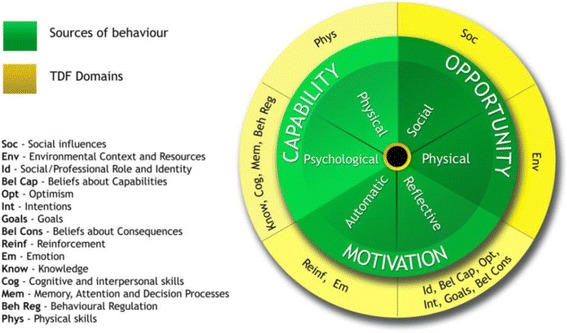
“This framework assumes that three key drivers (motivation, opportunity and capability) determine individual behavior (such as participation in research) [27].”
A Design Space of Behavior Change Interventions for Responsible Data Science
Zhang, D., Barrett, T., Patil, A., Shoda, Y., Battle, L., & Wall, E. (2025) · ACM International Conference on Intelligent User Interfaces (IUI) · doi:10.1145/3708359.3712140 · Cited by 6
“However, it is not clear how to operationalize behavior change theories [ 7, 22, 44, 46] and effective interventions from other fields (e.g., [10, 52, 54, 58]) into interventions for responsible data science.”
Hutchinson, K., Fisher, G., Schütz, A. K., Carr, S., Heard, S., Reynolds, M. A., Goodwin, N., & Hogden, A. (2025) · Healthcare · doi:10.3390/healthcare13070801 · Cited by 3
“First, we applied the TDF [47] and the COM-B [48] to the interview data (Table 1 and Figure 2). encourages the development of skills and abilities, independence, social opportunity The TDF was originally designed to be used with HCPs but was adapted in this analysis to be concurrently used with…”
Jaroenngarmsamer, T., Leerapan, B., McDonough, R. V., Bodani, V., Ahmed, S. U., Sehgal, A., Poppe, A. Y., Goyal, M., Krings, T., & Ayudhaya, S. S. N. (2025) · BMJ Open Quality · doi:10.1136/bmjoq-2024-003149 · Cited by 3
Prajapati, A. R., Scott, S., Dima, A. L., Clark, A., Taylor, J., Wilson, J., & Bhattacharya, D. (2025) · Journal of Affective Disorders · doi:10.1016/j.jad.2025.04.149 · Cited by 6
Klausen, M. D., Lindberg, L., Johansen, S. K., Rathleff, M. S., & Lyng, K. D. (2025) · Musculoskeletal Care · doi:10.1002/msc.70108 · Cited by 9
Professional identities and new technologies of hepatitis C point-of-care testing
Conway, A., Marshall, A. D., Grebely, J., Fontaine, G., & Treloar, C. (2025) · Social Science & Medicine · doi:10.1016/j.socscimed.2025.118140 · Cited by 5
Prest, K., Harden, A., Barnicot, K., & Heys, M. (2025) · Pilot and Feasibility Studies · doi:10.1186/s40814-025-01619-3 · Cited by 6
“Four theoretical frameworks will guide the methodology of the study, namely: the Medical Research Council (MRC) framework for developing and evaluating complex interventions [34], the ADAPT guidance [25], the Theoretical Domains Framework [35] and the Context Compass Framework [36].”
Leafe, N., Pagnamenta, E., Donnelly, M. P., Taggart, L., & Titterington, J. (2025) · International Journal of Language & Communication Disorders · doi:10.1111/1460-6984.70049 · Cited by 3
“Behaviour change theories offered a conceptual model, where the theoretical domains framework (TDF) (Atkins et al. 2017) provided a middle-range (over-arching) theoretical framework for analysis 1 .”
Desta, B. N., Tustin, J. L., Sanchez, J., Şekercioğlu, F., Jardine, R., Thaivalappil, A., & Young, I. (2025) · Journal of Environmental Management · doi:10.1016/j.jenvman.2025.125859 · Cited by 4
Att förändra och förbättra: Kontextuell passform för långsiktighet i pedagogiska förändringsarbeten
Fohlin, L., & Sedem, M. (2025) · doi:10.16993/bct.k · Cited by 5
Moreira, C. H. V., Azevedo, L., Ferreira, A. M., Oliveira, A. C., de Souza, A. B., Haikal, D. S., Oliveira, C. D. L., Cardoso, C. S., Spinelli, M. A., Bierrenbach, A. L., et al. (2025) · The Lancet Regional Health - Americas · doi:10.1016/j.lana.2025.101136 · Cited by 7
“14 This study employs the Theoretical Domains Framework (TDF) 15 and Capability, Opportunity, and Motivation-Behaviour (COM-B) model 16 to identify barriers in fl uencing healthcare professionals ’ decisions in ChD management.”
InfluentialEgerton‐Warburton, D., Kühn, L., Enticott, J., Yang, S. N. Y., Buntine, P., Callander, E. J., Cullen, L., Fatovich, D. M., Hullick, C., Heiss, L., et al. (2025) · BMJ Open · doi:10.1136/bmjopen-2024-096962 · Cited by 2
“34 35 Safe alternatives to intravenous therapy such as oral hydration and medication administration will be explored for use, depending on patients’ treatment needs, using evidence and codesign.”
Anderson, A., Choudhury, M. C., Savaski, S. M., & Krane, L. S. (2025) · The Journal of the American Board of Family Medicine · doi:10.3122/jabfm.2024.240228r1 · Cited by 3
Behavioral Foundations for CBPE: Using the BCW to Advance Individual Readiness to Change
Rhoney, D. H., Chen, A. M. H., Chung, E. P., Churchwell, M. D., Daugherty, K. K., Kleppinger, E. L., Nelson, N. R., Parker, D., Sibicky, S. L., Stowe, C. D., et al. (2025) · American Journal of Pharmaceutical Education · doi:10.1016/j.ajpe.2025.101470 · Cited by 8
Kiselev, N., Schaffner, R. M., Csepregi, Z., Wenger, A., Castro, R. P., & Haug, S. (2025) · JMIR mhealth and uhealth · doi:10.2196/64861 · Cited by 5
“Promising starting points for the identification of factors related to program engagement and behavior change are provided by the capability, opportunity, and motivation model of behavior change (COM-B) model [23,26] and the Theoretical Domains Framework (TDF) [27].”
Purvis, R., Taylor, N. J., Young, M., James, P. A., & Forrest, L. E. (2025) · Clinical and Translational Science · doi:10.1111/cts.70323 · Cited by 4
Shapoval, V., Evrard, P., Sibille, F., López‐Toribio, M., Dalleur, O., Aubert, C. E., Bolt, L., Tsoutsi, V., Ntafouli, M., Maldonado, L. F., et al. (2025) · Basic & Clinical Pharmacology & Toxicology · doi:10.1111/bcpt.70100 · Cited by 5
“As barriers vary by HCPs' category and country, tailored strategies may enhance deprescribing, improving patient safety. widely used to assess barriers and enablers [22].”
Self-citationKemp, C. G. (2025) · Current Opinion in HIV and AIDS · doi:10.1097/coh.0000000000000978 · Cited by 3
Aitken, L. M., Emerson, L. M., Kydonaki, K., Blackwood, B., Creagh-Brown, B. C., Lone, N., McKenzie, C., Parker, R. A., Reade, M. C., Weir, C. J., et al. (2025) · Health Technology Assessment · doi:10.3310/gjtw0620 · Cited by 5
Sommer, A., Rehbock, C., Krafft, T., & Ziemann, A. (2019) · Implementation Science · doi:10.1186/s13012-019-0911-5 · Cited by 3
Erwin, E., Denny, H. M., & Setyaningsih, Y. (2019) · JST (Jurnal Sains Terapan) · doi:10.32487/jst.v5i2.690 · Cited by 3
Implementation of Effective Services in Community Settings
Wolfenden, L., Kingsland, M., Sutherland, R., Finch, M., Nathan, N., Williams, C. M., Wiggers, J., & Yoong, S. (2020) · Springer eBooks · doi:10.1007/978-3-030-03874-8_7 · Cited by 3
Theoretical Domains Framework Applied to Cybersecurity Behaviour
Mashiane, T., & Kritzinger, E. (2020) · Advances in intelligent systems and computing · doi:10.1007/978-3-030-51971-1_34 · Cited by 3
Taj, U., Schmidtke, K. A., Vlaev, I., & Read, D. (2020) · Journal of Health Psychology · doi:10.1177/1359105320962267 · Cited by 3
“The TDF was developed by synthesizing 33 psychological theories of behavior change, thus helping interventionists take on a comprehensive and systematic theoretical approach, which promotes interventions’ effectiveness and sustainability (Atkins et al., 2017; Michie and Prestwich, 2010).”
Pharmacists’ experiences with the Bloom Program application process
Murphy, A. L., Jacobs, L. M., & Gardner, D. M. (2020) · Canadian Pharmacists Journal / Revue des Pharmaciens du Canada · doi:10.1177/1715163520968120 · Cited by 7
“The application components and process were developed based on 1) the tacit knowledge of the project leads of the Nova Scotia community pharmacy context6-10; 2) an intimate understanding of pharmacists’ scope of practice and professional training in mental health and addictions patient care; 3) the aims of the project…”
MethodVanSpronsen, A. D., Zychla, L., Villatoro, V., Yuan, Y., Turley, E., & Öhinmaa, A. (2021) · The Journal of Applied Laboratory Medicine · doi:10.1093/jalm/jfab103 · Cited by 4
Zhu, X., Lee, M. K., Weiser, E., Griffin, J. M., Limburg, P. J., & Rutten, L. J. F. (2021) · Implementation Science Communications · doi:10.1186/s43058-021-00221-x · Cited by 4
Schröder, K. (2021) · Linköping University medical dissertations · doi:10.3384/diss.diva-179586 · Cited by 4
Horppu, R., Väänänen, A., & Kausto, J. (2022) · BMC Musculoskeletal Disorders · doi:10.1186/s12891-022-05234-8 · Cited by 6
“Influences of key behaviours may be different depending on the behaviour in question [6, 33, 38].”
BackgroundMethodLeather, J. Z., Keyworth, C., Epton, T., Goldthorpe, J., Ulph, F., & Armitage, C. J. (2022) · British Journal of Health Psychology · doi:10.1111/bjhp.12591 · Cited by 6
“The TDF is part of the Behaviour Change Wheel for intervention development (Michie, Atkins, &West, 2014), meaning there is potential to use salient domains to select candidate intervention functions, behaviour change techniques, and policy categories to form behaviour change interventions (Cane, Richardson, Johnston,…”
MethodInfluentialEvidence Into Practice: Journal Clubs as an Implementation Strategy
Farrington, M. M., Brimeyer, D., Dolezal, D., Kucera, M., & Cullen, L. (2022) · Journal of PeriAnesthesia Nursing · doi:10.1016/j.jopan.2021.11.018 · Cited by 3
Heinemann, S., Klemperer, J., Hummers, E., Nau, R., & Himmel, W. (2022) · European Journal of Hospital Pharmacy · doi:10.1136/ejhpharm-2021-003097 · Cited by 4
Sansom‐Daly, U. M., Wiener, L. S., Darlington, A., Poort, H., Rosenberg, A. R., Weaver, M. S., Schulte, F., Anazodo, A. C., Phillips, C. R., Sue, L., et al. (2022) · PLoS ONE · doi:10.1371/journal.pone.0270797 · Cited by 4
Ji, F., Sun, Y., Xu, Y., Tang, J., & Hu, J. (2022) · Frontiers in Pediatrics · doi:10.3389/fped.2022.890719 · Cited by 4
“This finding is consistent with findings in the broader literature (36–38), and the theoretical frameworks that informed the rationale for identifying key socioeconomic factors for this study (21, 36).”
BackgroundMethodResultKinchen, G., Cox, S., Kale, D., & Shahab, L. (2022) · BMC Psychology · doi:10.1186/s40359-022-00874-w · Cited by 4
“In mapping the domains of the TDF to this framework intervention design can be guided [18, 20].”
BackgroundRendell, T., Barnett, J. C., Scott, S., & Wright, D. J. (2022) · International Journal of Clinical Pharmacy · doi:10.1007/s11096-022-01483-8 · Cited by 4
“The second phase mapped data from the pharmacist focus group onto six domains of the Theoretical Domains Framework (TDF) [9]: Knowledge, Skills, Social/ professional role and identity, Optimism, Beliefs about Consequences, and Environmental context and resources.”
BackgroundOverwijk, A., Krijnen, W. P., Hilgenkamp, T. I. M., et al. (2022) · Journal of Intellectual & Developmental Disability · doi:10.3109/13668250.2022.2106696 · Cited by 3
“The TDF is a widely used evidence based theoretical framework that provides insights into the domains that require attention to influence behaviour (Atkins et al., 2017; Cane et al., 2012; Michie et al., 2005; Phillips et al., 2015).”
Backgroundvan Bergen, I., Böger, S., Beaudart, C., Hiligsmann, M., & Cheung, K. L. (2022) · PLoS ONE · doi:10.1371/journal.pone.0277109 · Cited by 3
Barrett, S., Rodda, K., Howlett, O., Mumford, A., Borkowski, D., Naunton, J., Begg, S. J., Kunstler, B., Noronha, M. A. D., & Kingsley, M. (2023) · JSAMS Plus · doi:10.1016/j.jsampl.2023.100020 · Cited by 3
Williams, S. H., McFarlane, M. D., Giammarino, M., & Oleksa, J. (2023) · BMC Public Health · doi:10.1186/s12889-022-14890-3 · Cited by 3
“We acknowledge that there are other frameworks that could also be applied in this study—such as the capability–opportunity–motivation–behavior (COM-B) model [22] and the Theoretical Domains Framework (TDF), [23] among others.”
MethodNadler, M. B., Corrado, A. M., Wilson, B. E., Desnoyers, A., Amir, E., Ivers, N. M., & Desveaux, L. (2023) · BMC Women s Health · doi:10.1186/s12905-023-02190-w · Cited by 3
“A pragmatic, directed content analysis approach was taken whereby the data was deductively coded to corresponding TDF domains representing barriers and facilitators of the screening behaviours [17, 18].”
MethodSelf-citationBruneau, J., Parsons, K., Moralejo, D. G., & Donovan, C. (2023) · BMC Family Practice · doi:10.1186/s12875-023-02022-8 · Cited by 4
“Other studies have described the matching of the “domains” of the TDF with behaviour change techniques [13, 15].”
BackgroundMethodStrategies Addressing Barriers to the Implementation of a Pediatric Hand Fracture Care Pathway
Baykan, A., Lafrenière, A., Fraulin, F. O. G., Hartley, R. L., Harrop, A. R., Love, S., Ronksley, P. E., & Donald, M. (2023) · Plastic & Reconstructive Surgery Global Open · doi:10.1097/gox.0000000000004896 · Cited by 3
Weaver, A., Landry, C., Jacobson, M., Whitted, R., Zeaiter, H., Ross, D., Hall, S. V., Holzworth, J., Egbuogu, B., Smith, F. N., et al. (2023) · Social Work in Mental Health · doi:10.1080/15332985.2023.2214653 · Cited by 4
“The TDF is a consolidated theoretical framework that incorporates 128 constructs from 33 behavior change theories into 14 theoretical construct domains (Atkins et al., 2017; Cane, O’Connor, & Michie, 2012; Michie et al., 2005).”
Talrich, F., Damme, A. V., Bastiaens, H., et al. (2023) · Family Medicine and Community Health · doi:10.1136/fmch-2023-002167 · Cited by 3
Lee, J. W., Jeong, S., Han, H., Boyd, C. M., Perrin, N., Simmons, S. F., Green, A. R., Taylor, J. L. W., Boucher, H. R., & Szanton, S. L. (2023) · Geriatric Nursing · doi:10.1016/j.gerinurse.2023.07.018 · Cited by 3
Dietitian‐led micronutrient management in a public bariatric surgery outpatient clinic
Lewis, C., Hiatt, J. S., de Jersey, S., Osland, E., & Hickman, I. J. (2023) · Nutrition & Dietetics · doi:10.1111/1747-0080.12836 · Cited by 3
Murray, S., Subbiah, V., Sherman, S. I., Péloquin, S., Sireci, A. N., Grohé, C., Bubach, P., & Lazure, P. (2023) · Thyroid Research · doi:10.1186/s13044-023-00166-4 · Cited by 3
O’Connor, A., Tai, A., Brinn, M. P., Hoang, A., Cataldi, D., & Carson‐Chahhoud, K. (2023) · Pediatric Pulmonology · doi:10.1002/ppul.26630 · Cited by 3
“16,17 It has commonly been used in identifying the influences on implementation of evidence ‐ based recommendations in HCPs, and now extends to other areas which involve behavior change in patients at individual and general population levels.”
BackgroundHutchesson, M., Whatnall, M. C., Hunt, S., Ashton, L., Young, M. D., Patterson, A. J., Duncan, M. J., & Burrows, T. L. (2023) · Health Promotion Journal of Australia · doi:10.1002/hpja.808 · Cited by 4
Birt, L., Katangwe‐Chigamba, T., Scott, S., Wright, D. J., Wagner, A. P., Sims, E. J., Bion, V., Seeley, C., Alsaif, F., Clark, A., et al. (2023) · Trials · doi:10.1186/s13063-023-07613-5 · Cited by 3
“The TDF is a synthesis of behaviour change theories organised into 14 domains which are the determinants of an individual’s behaviour, including social influence, social/professional role and identity, beliefs about consequences, environmental context, and resources [10].”
BackgroundFreene, N., Talbot, R., Goh, C. H., Koh, W. H. J., Chong, S., Wong, Y. J., Patterson, K., & Zainuldin, R. (2023) · Patient Education and Counseling · doi:10.1016/j.pec.2023.107994 · Cited by 3
Barriers to Adoption of Tailored Drug–Drug Interaction Clinical Decision Support
Zhang, T., Gephart, S. M., Subbian, V., Boyce, R. D., Zapata, L. V., Tan, M. S., Horn, J. R., Gómez-Lumbreras, A., Romero, A. V., & Malone, D. C. (2023) · Applied Clinical Informatics · doi:10.1055/s-0043-1772686 · Cited by 7
Curtis, K. A., Fry, M., Shaban, R. Z., et al. (2023) · International Emergency Nursing · doi:10.1016/j.ienj.2023.101377 · Cited by 3
McNeil, K., Achenbach, J., Lawson, B. J., Delahunty‐Pike, A., Barber, B. V., & Diepstra, H. (2023) · Journal of Applied Research in Intellectual Disabilities · doi:10.1111/jar.13169 · Cited by 3
Mantzourani, E., James, D. H., Akthar, M. A., Brown, S. L., Yemm, R., Lehnbom, E. C., Hanrahan, J. R., & Seage, C. H. (2023) · Exploratory Research in Clinical and Social Pharmacy · doi:10.1016/j.rcsop.2023.100393 · Cited by 3
Crowe, J., Edbrooke, L., Khot, A. S., Denehy, L., & Francis, J. (2023) · Supportive Care in Cancer · doi:10.1007/s00520-023-08234-z · Cited by 7
“This was a semi-structured interview study based on the Theoretical Domains Framework (TDF) of behaviour change [16].”
InfluentialSelf-citationHyun, A., Condon, P., Kleidon, T. M., Xu, H. G., Edwards, R., Gibson, V., & Ullman, A. J. (2024) · European Journal of Oncology Nursing · doi:10.1016/j.ejon.2024.102520 · Cited by 4
Minian, N., Wong, M., Hafuth, S., Rodak, T., Rahimi, A., Gjomema, D., Rose, J., Zawertailo, L. A., Ratto, M., & Selby, P. L. (2024) · BMC Public Health · doi:10.1186/s12889-024-18139-z · Cited by 6
“…o n “ A n y t h i n g a i m e d a t m a n a g i n g o r c h a n g i n g o b j e c t i v e l y o b s e r v e d o r m e a s u r e d a c t i o n s ” [ 94 ] B a rr i e r B a rr i e r S e l f - m o n i t o r i n g : p a r t i c i p a n t s w h o p r e m a t u r e l y d i s c o n t i n u e d v a r e n…”
Influentialvan Paassen, J. G., Tan, J. P., Deneer, V. H. M., & Bouvy, M. L. (2024) · BMJ Open · doi:10.1136/bmjopen-2023-079018 · Cited by 3
Skolarus, T. A., Hawley, S. T., Forman, J. H., Sales, A. E., Sparks, J. B., Metreger, T., Burns, J., Caram, M. E. V., Radhakrishnan, A., Dossett, L. A., et al. (2024) · Implementation Science Communications · doi:10.1186/s43058-024-00576-x · Cited by 3
“Our second survey section evolved from our prior qualitative investigation [9] grounded in the Theoretical Domains Framework (TDF) [12] and the Behavior Change Wheel’s Capability, Opportunity, Motivation– Behavior (COM-B) Model [13] to better understand provider perspectives on ADT for localized…”
MethodWayop, I. Y. A., de Vet, E., Leerlooijer, J. N., Wagenaar, J. A., & Speksnijder, D. C. (2024) · PLoS ONE · doi:10.1371/journal.pone.0299905 · Cited by 3
Interventional pharmacoepdemiology: design and evaluation of interventions to improve prescribing
Alexander, G. C., Grant, A. M., Hughes, C. M., & Dreischulte, T. (2024) · American Journal of Epidemiology · doi:10.1093/aje/kwae109 · Cited by 3
Harris-Lane, L. M., King, A. C., Bérubé, S., Burke, K., Churchill, A., Cornish, P. A., Jaouich, A., Michaud, M., Losier, A., Shah, J. L., et al. (2024) · International Journal of Mental Health and Addiction · doi:10.1007/s11469-024-01339-4 · Cited by 4
“The provincial working group’s approach to educate provider groups on the respective roles in the operations and delivery of OAAT therapy aligns with interprofessional education—a best practice for collaboration (Atkins et al., 2017; Canadian Interprofessional Health Collaborative, 2010).”
Curran, J., Lane, J., McCulloch, H., Keeping‐Burke, L., Johnson, C., Wong, H., Cassidy, C. E., McIsaac, J. D., Lamptey, D., Clegg, J., et al. (2024) · PLoS ONE · doi:10.1371/journal.pone.0305543 · Cited by 2
“Interview questions will aim to examine participants’ perceptions of barriers and enablers to COVID-19 related policy and service development and implementation [26].”
BackgroundConsumer perspectives on antibiotic use in residential aged care: A mixed-methods systematic review
Gyawali, R., Gamboa, S., Rolfe, K., Westbrook, J. I., & Raban, M. Z. (2024) · American Journal of Infection Control · doi:10.1016/j.ajic.2024.07.008 · Cited by 4
Alkhaldi, O., McMillan, B., & Ainsworth, J. D. (2024) · BMC Health Services Research · doi:10.1186/s12913-024-11384-3 · Cited by 5
“The theoretical domain framework (TDF) is a comprehensive framework used in behaviour science and implementation research to determine the key areas that affect behaviour change [14].”
BackgroundOtto, B., Newnam, S., Weale, V. P., & Oakman, J. (2024) · Applied Ergonomics · doi:10.1016/j.apergo.2024.104398 · Cited by 4
Hollis, J., Deroover, K., Daly, J., Tully, B., Foster, M., Lecathelinais, C., Pennell, C. E., Wiggers, J., & Kingsland, M. (2024) · BMC Pregnancy and Childbirth · doi:10.1186/s12884-024-06860-x · Cited by 4
“…and prioritisation of practice-change implementation strategies need to be tailored to address the common and differential barriers faced by professional groups [43], including to provide culturally appropriate care and referral options with Australian Aboriginal pregnant women and their families.”
BackgroundWallis, A., Aggar, C., & Massey, D. L. (2024) · Contemporary Nurse · doi:10.1080/10376178.2024.2420088 · Cited by 6
“This design aligns with ethical principles and addresses the ethical dilemmas of RCT design where essential best practice treatments may be withheld from control participants (Atkins et al., 2017).”
A conceptual framework for assessing implementation strategy integrity
Molfenter, T. D., Ducharme, L. J., Stein, L. A. R., Belenko, S. R., Mitchell, S. G., Watson, D. P., Aalsma, M. C., Friedmann, P. D., Becan, J. E., Garner, B. R., et al. (2024) · Implementation Research and Practice · doi:10.1177/26334895241297278 · Cited by 6
“Multiple implementation science conceptual frameworks — including the Diffusion of Innovations theory (Rogers, 2010), the Consolidated Framework for Implementation Research (Damschroder et al., 2009, 2022), the Promoting Action on Research Implementation in Health Services (PARIHS) Framework (Rycroft-Malone, 2004), an…”
Leary, N. O., Lyons, C., & Frizelle, P. (2024) · International Journal of Language & Communication Disorders · doi:10.1111/1460-6984.13149 · Cited by 3
Hui, C. Y., Condon, K., Kolekar, S., Roberts, N., Sreter, K. B., Simons, S. O., Figueiredo, C. E. D. S., McKeough, Z. J., Salim, H. S., Gawlik‐Lipinski, A., et al. (2024) · PLoS ONE · doi:10.1371/journal.pone.0314914 · Cited by 4
Meade, O., Aehlig, L., O’Brien, M., Lawless, A., McSharry, J., Dragomir, A. I., Hart, J., Keyworth, C., Lavoie, K., & Byrne, M. (2025) · British Journal of Health Psychology · doi:10.1111/bjhp.12777 · Cited by 4
Awagu, I. V. (2025) · Springer eBooks · doi:10.1007/978-3-031-75221-6_15 · Cited by 4
Meyer, C., El‐Saifi, N., Rose, N. V., Bail, K. S., Browning, C. J., Cenin, D. R., Ahumada‐Canale, A., Campbell, M. E. J., England, T., Ferguson, M., et al. (2025) · Health Expectations · doi:10.1111/hex.70175 · Cited by 3
Why Aren't Antenatal Care Providers Adopting Oral Health Guidelines? A Qualitative Exploration
Wilson, A., Davies, C., Bettiol, S. S., Bridgman, H., Crocombe, L., & Hoang, H. (2025) · Community Dentistry And Oral Epidemiology · doi:10.1111/cdoe.13030 · Cited by 5
Braun, M., Carlier, S., Paepe, A. L. D., Backere, F. D., Turck, F. D., & Crombez, G. (2025) · International Journal of Behavioral Nutrition and Physical Activity · doi:10.1186/s12966-025-01744-5 · Cited by 5
“Health Action Process Approach [40] Base for structure: Plan Theoretical Domains Framework [41] Base for overall structure Ontology [36].”
McErlean, M., Kpokiri, E. E., Panesar, P., Cooper, E. E., Jato, J., Orman, E., Odoi, H., Hutton-Nyameaye, A., Somuah, S. O., Folitse, I., et al. (2025) · Antibiotics · doi:10.3390/antibiotics14070672 · Cited by 4
“Thematic analysis was undertaken using a combination of inductive and deductive approaches guided by the theoretical domains framework (TDF) [20].”
Brust, M., van Gestel, L. C., Vriens, P. W. H. E., Hamming, J. F., Adriaanse, M. A., & Lindeman, J. H. N. (2025) · European Journal of Vascular and Endovascular Surgery · doi:10.1016/j.ejvs.2025.07.018 · Cited by 4
French Health professionals’ attitudes about patient empowerment in the cancer care pathway
Vérot, E., Denois, V. R., Feld, D., Rivoirard, R., & Chauvin, F. (2019) · Clinical Nursing Studies · doi:10.5430/cns.v7n4p41 · Cited by 3
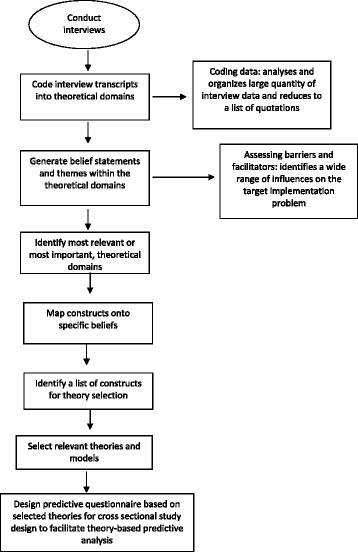
“Following the “Guide to using the Theoretical Domains Framework of behavior change to investigate implementation problems”, data can be analyzed deductively, using the TDF to generate the framework for a content analysis and, inductively, generating themes that can then be considered in relation to domains.[11, 16]”
MethodDevelopment of an Intervention for Improving Ingestion in Elders with Oropharyngeal Dysphagia
Hansen, T., Thomassen, J. D., Jensen, L. E., Irgens, M. R., & Kjærsgaard, A. (2020) · Physical & Occupational Therapy In Geriatrics · doi:10.1080/02703181.2020.1800159 · Cited by 4
Improving communication in pediatric oncology: An interdisciplinary path forward
Sisk, B. A. (2020) · Cancer · doi:10.1002/cncr.33361 · Cited by 3
“This framework developed from a collaboration between behavioral scientists and implementation researchers in which theories relevant to implementation were identified and from which constructs from these theories were grouped into domains.(18)”
BackgroundAssessing attitudes to ED-based HIV testing: Development of a short-structured survey instrument
Rao, A., Nagourney, E. M., Chen, V. H., Hill, S., Klein, E. Y., Whalen, M. M., Quinn, T. C., & Hansoti, B. (2021) · PLoS ONE · doi:10.1371/journal.pone.0252372 · Cited by 3
Adunchezor, O. R. (2021) · Texila international journal of management · doi:10.21522/tijmg.2015.07.02.art013 · Cited by 5
Shaari, M. S., Wahab, M. S. A., Alias, R., Zaki, I. A. H., Yassen, A. O., & Ismail, H. (2022) · Journal of Applied Pharmaceutical Science · doi:10.7324/japs.2022.120707 · Cited by 2
“(Atkins et al., 2017) was obtained for the coding of the two researchers.”
MethodDeveloping and implementing approaches to limit antimicrobial resistance
Chu, L., & Yeung, H. (2022) · Journal of the American Academy of Dermatology · doi:10.1016/j.jaad.2022.03.069 · Cited by 3
Yang, L., & Friedenreich, C. M. (2022) · Preventive Medicine · doi:10.1016/j.ypmed.2022.107342 · Cited by 3
Evans, R. E. C., Waller, J., Nicholson, B. D., Round, T., Gildea, C., Smith, D., & Scott, S. E. (2023) · Patient Education and Counseling · doi:10.1016/j.pec.2023.107757 · Cited by 3
Kanumilli, N., Butler, J., Makrilakis, K., Rydén, L., Vallis, M., Wanner, C., Zieroth, S. R., Alhussein, A., & CHENG, A. Y. Y. (2023) · Diabetes Therapy · doi:10.1007/s13300-023-01418-0 · Cited by 5
“Recent research suggests that a useful framework for behavioural change is to link behaviour to capability, opportunity and motivation [63, 66, 67].”
BackgroundLohiniva, A., Pensola, A., Hyökki, S., Sivelä, J., Härmä, V., & Tammi, T. (2023) · Frontiers in Public Health · doi:10.3389/fpubh.2023.1138800 · Cited by 5
“TDF was selected because of its ability to help identify the barriers and facilitators to behavior change while taking into account social and environmental factors that drive behaviors (22).”
BackgroundParhar, K. K. S., Soo, A., Knight, G., Fiest, K. M., Niven, D. J., Rubenfeld, G. D., Scales, D. C., Stelfox, H. T., Zuege, D. J., & Bagshaw, S. M. (2023) · Critical Care and Resuscitation · doi:10.1016/j.ccrj.2023.10.008 · Cited by 3
Health psychology interventions to improve adherence to maintenance therapies in asthma
Normansell, R., Chan, A. H. Y., Katzer, C. B., Kew, K. M., Mes, M. A., Newby, C., Chauhan, A., Taylor, S. J., Pinnock, H., Sheikh, A., et al. (2018) · Cochrane Database of Systematic Reviews · doi:10.1002/14651858.cd013147 · Cited by 3
“Atkins 2017 Atkins L, Francis J, Islam R, O’Connor D, Patey A, Ivers N, et al. A guide to using the Theoretical Domains Framework of behaviour change to investigate implementation problems.”
MethodResearching Ageing: Methodological Challenges and their Empirical Background
Łuszczyńska, M. (2020) · Routledge eBooks · doi:10.4324/9781003051169 · Cited by 7
Marsden, D. L., Boyle, K., Jordan, L.-A., Dunne, J., Shipp, J., Minett, F., Styles, A., Birnie, J., Ormond, S., Parrey, K., et al. (2021) · JMIR Research Protocols · doi:10.2196/22902 · Cited by 3
“The Theoretical Domains Framework is the determinant framework that will help us identify the constructs that may influence implementation (barriers and facilitators) [30,31].”
BackgroundDisseminating implementation science: Describing the impact of animations shared via social media
Sykes, M. J., Cerda, L., Cerda, J., & Finch, T. L. (2022) · PLoS ONE · doi:10.1371/journal.pone.0270605 · Cited by 4
Metadata
- Authors
- Atkins, L., Francis, J., Islam, R., O’Connor, D., Patey, A., Ivers, N., Foy, R., Duncan, E. M., Colquhoun, H., Grimshaw, J. M., Lawton, R., & Michie, S.
- Affiliations
- University College London (GB)
- University of London (GB)
- Ottawa Hospital Research Institute (CA)
- Monash University (AU)
- University of Toronto (CA)
- University of Leeds (GB)
- University of Aberdeen (GB)
- University of Ottawa (CA)
- Corresponding author
- Atkins, Lou
- ORCID
- Venue
- Implementation Science
- Published
- 2017-06-21
- Volume
- 12
- Issue
- 1
- Pages
- 77-77
- ISSN
- 1748-5908 (ISSN-L)
- PMC
- PMC5480145
- OpenAlex
- W2674995983
- Semantic Scholar
- 7ae5ea98c6f51755ffa2f67330dea33e0663f161
- Cited by
- 3,819
- References
- 87
- Citations by year
- 2026: 501 · 2025: 619 · 2024: 623 · 2023: 531 · 2022: 554 · 2021: 437 · 2020: 309 · 2019: 160 · 2018: 67 · 2017: 12
- FWCI
- 242.11
- Type
- journal article
- Language
- en
- Open access
- gold
- doi.org
- Licence
- cc-by
- Locations
- Implementation Science (publishedVersion, cc-by)
- Europe PMC (PubMed Central) (publishedVersion, other-oa)
- PubMed Central (publishedVersion, cc-by)
- PubMed (publishedVersion)
- UCL Discovery (University College London) (publishedVersion)
- White Rose Research Online (University of Leeds, The University of Sheffield, University of York) (acceptedVersion)
- TSpace (University of Toronto) (acceptedVersion, cc-by)
- City Research Online (City University London) (acceptedVersion)
- Monash University Research Portal (Monash University) (submittedVersion, other-oa)
- Aberdeen University Research Archive (Aberdeen University) (submittedVersion)
- DOAJ (DOAJ: Directory of Open Access Journals) (submittedVersion, cc-by-sa)
- Minerva Access (University of Melbourne) (submittedVersion, cc-by)
- Funders
- Canadian Institutes of Health Research
- Topics
- Health Sciences › Health Professions › General Health Professions › Health Policy Implementation Science
- Social Sciences › Psychology › Applied Psychology › Behavioral Health and Interventions
- Health Sciences › Health Professions › General Health Professions › Health Sciences Research and Education
- Keywords
- Theoretical Domains Framework, behavior change, implementation problems, implementation research, behavioral factors, intervention design, qualitative research
- MeSH terms
- Australia, Canada, Diffusion of Innovation, United Kingdom, Health Plan Implementation, Health Services Research, Humans, Health Behavior
About these checks
Registry, retraction, Cites and statistics results are computed, not judged, with one exception: a printed reference that no index lists is read once by a model before it counts as a citation error. Claims are extracted by a model and kept only when their quote appears verbatim in the text; each cited source is then checked, with a model’s help, for whether it says what the claim relies on. Those verdicts can be wrong — read the claim’s quote and the cited source before relying on one.
The claim verdicts this report counts are experimental: their accuracy is not yet measured.
A language model drew the claims from the paper on 2026-10-16, under version 3 of the claim definition (model deepseek-v4.1-flash, prompt extract-v3).
A second model labelled each claim on 2026-10-16 (model jev-1.13-20260917, definition revision gold-guideline-v0.2).
Cited sources are checked with a language model’s help (gpt-6-sol).
Statistics and arithmetic are recomputed, not judged.
Confidence bands are shown only for fields calibrated on our annotated test set. None is calibrated yet, so no band is shown.
What counts as a claim ›How we measure confidence ›How we check this ›
Are you an author, or do you see a problem with this page? Request a review
Data sources
Bibliographic data: Semantic Scholar, OpenAlex, Crossref.
Contains information from the Semantic Scholar Academic Graph Datasets, made available under the ODC Attribution License (ODC-BY 1.0).
Semantic Scholar’s data is described in: Kinney, R., et al. (2023). The Semantic Scholar Open Data Platform. arXiv:2301.10140.
