

A guide to using the Theoretical Domains Framework of behaviour change to investigate implementation problems
Open accessThe DOI matches its Crossref record; 90 of the 90 references it cites were found in a registry or an index; 40 of the 57 sources its claims cite were checked for support.
Abstract
BACKGROUND: Implementing new practices requires changes in the behaviour of relevant actors, and this is facilitated by understanding of the determinants of current and desired behaviours. The Theoretical Domains Framework (TDF) was developed by a collaboration of behavioural scientists and implementation researchers who identified theories relevant to implementation and grouped constructs from these theories into domains. The collaboration aimed to provide a comprehensive, theory-informed approach to identify determinants of behaviour. The first version was published in 2005, and a subsequent version following a validation exercise was published in 2012. This guide offers practical guidance for those who wish to apply the TDF to assess implementation problems and support intervention design. It presents a brief rationale for using a theoretical approach to investigate and address implementation problems, summarises the TDF and its development, and describes how to apply the TDF to achieve implementation objectives. Examples from the implementation research literature are presented to illustrate relevant methods and practical considerations. METHODS: Researchers from Canada, the UK and Australia attended a 3-day meeting in December 2012 to build an international collaboration among researchers and decision-makers interested in the advancing use of the TDF. The participants were experienced in using the TDF to assess implementation problems, design interventions, and/or understand change processes. This guide is an output of the meeting and also draws on the authors' collective experience. Examples from the implementation research literature judged by authors to be representative of specific applications of the TDF are included in this guide. RESULTS: We explain and illustrate methods, with a focus on qualitative approaches, for selecting and specifying target behaviours key to implementation, selecting the study design, deciding the sampling strategy, developing study materials, collecting and analysing data, and reporting findings of TDF-based studies. Areas for development include methods for triangulating data, e.g. from interviews, questionnaires and observation and methods for designing interventions based on TDF-based problem analysis. CONCLUSIONS: We offer this guide to the implementation community to assist in the application of the TDF to achieve implementation objectives. Benefits of using the TDF include the provision of a theoretical basis for implementation studies, good coverage of potential reasons for slow diffusion of evidence into practice and a method for progressing from theory-based investigation to intervention.
Overview
CoChat Summary
TL;DR
This guide explains how to apply the Theoretical Domains Framework (TDF) to investigate implementation problems, focusing mainly on qualitative interview and focus group methods. It outlines steps from specifying target behaviours to analysing and reporting TDF-based data, with illustrative examples and stated limitations.
Key findings
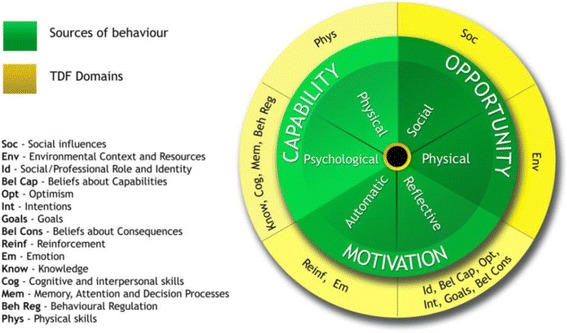
- The TDF is an integrated theoretical framework synthesised from 128 theoretical constructs from 33 theories; version 1 has 12 domains, and version 2 has 14 domains covering 84 theoretical constructs. It has been cited in over 800 peer-reviewed publications (Web of Knowledge accessed April 2017).
- The guide provides step-by-step methodological guidance for TDF-based implementation research, primarily qualitative interviews and focus groups: selecting and specifying target behaviours, selecting study design, deciding sampling strategy, developing interview schedules, collecting and analysing data, and reporting findings.
- Benefits of using the TDF include providing a theoretical basis for implementation studies, good coverage of potential reasons for slow diffusion of evidence into practice, and a method for progressing from theory-based investigation to intervention. Areas for development include methods for triangulating data (e.g., interviews, questionnaires, observation) and methods for designing interventions based on TDF-based problem analysis.
- Illustrative examples include a low back pain study with focus groups of 42 GPs and a cluster randomised trial randomising 47 practices (53 GPs) to control and 45 practices (59 GPs) to intervention; an SDD Delphi study that interviewed 141 participants; and a diabetes management qualitative systematic review that included 32 studies.
Methods
- Design: researchers from Canada, the UK and Australia attended a 3-day collaborative meeting in December 2012 to discuss the state of the science in using the TDF in implementation research and identify areas needing further development. Participants represented health psychology, sociology, implementation and health services research, statistics, and clinical disciplines including general practice, occupational therapy and chiropractic.
- Guide production: the group identified key steps in applying the TDF, pooled their experience and expertise to elaborate each step, and selected examples from the implementation research literature judged representative of specific TDF applications. The guide draws on the authors’ collective experience.
- Analysis: no datasets were generated or analysed for this article; the guide is a narrative, consensus-based resource focused mainly on qualitative approaches.
Limitations
- Stated in the paper: the scope is mostly limited to qualitative approaches, mainly interview and focus group data, with limited detail on using the TDF with other data collection methods such as survey or observation.
- Stated in the paper: illustrative applications were selected based on an informal rather than structured consensus process, leaving the possibility of selection bias in these examples; the aim was not to be representative but to provide examples across settings and implementation problems.
- Evident from the text: the guide is not a systematic review or an empirical validation of TDF application; its recommendations rest on the authors’ collective experience and selected illustrative examples.
Model-written summary. Check it against the paper before relying on it.
Integrity signals
Registry
Cites
Statistics
Figures
Verification
Claims the paper makes
25 Valid · 2 Not valid · 8 Not checked · 49 Own results and interpretations
Every source the paper cites for this claim was checked and supports it.
In the paper
“In an effort to make theories more accessible to those working in implementation, a team of behavioural scientists developed the TDF in collaboration with implementation researchers [15].”
§ A guide to using the Theoretical Domains Framework of behaviour change to investigate implementation problems > Development of the TDF
What the sources say
- Supportedcites [15] 15. Michie S, Johnston M, Abraham C, Lawton R, Parker D, Walker A, et al. Making psychological theory useful for implementing evidence based practice: a consensus approach. Qual Saf Health Care. 2005;14(1):26-33. source
The Discussion states that the project sought to simplify psychological theory and make it accessible to people involved in implementing evidence-based practice. The Health psychology theorists and Health services researchers sections describe the psychologists who developed the domains and the implementation researchers who evaluated them. Page numbers are not available in our copy. (LLM, conf=0.93)
plainstates a cause- Asserted: passes — The authors put it forward as true.
- Checkable: passes — It can be checked against evidence.
- Load-bearing: unclear — It is unclear whether the paper’s conclusions depend on it.
- Based: passes — The paper gives a reason why it holds.
- Supported
Every source the paper cites for this claim was checked and supports it.
In the paper
“The version of TDF, resulting from this validation, showed similar structure and content to the original with slight differences leading to 14 domains covering 84 theoretical constructs.”
§ A guide to using the Theoretical Domains Framework of behaviour change to investigate implementation problems > Development of the TDF
What the sources say
- Supportedcites [16] 16. Cane J, O'Connor D, Michie S. Validation of the theoretical domains framework for use in behaviour change and implementation research. Implement Sci. 2012;7:37. doi:10.1186/1748-5908-7-37. source
The Discussion reports good support for the TDF’s basic structure alongside refinements producing 14 domains. The Conclusions state that the refined framework contains 84 component constructs. (LLM, conf=0.93)
plainstates a cause- Asserted: passes — The authors put it forward as true.
- Checkable: passes — It can be checked against evidence.
- Load-bearing: unclear — It is unclear whether the paper’s conclusions depend on it.
- Based: passes — The paper gives a reason why it holds.
- Supported
The cited sources support only part of this claim — read each source’s verdict below.
In the paper
“The TDF is an integrated theoretical framework synthesised from 128 theoretical constructs from 33 theories judged most relevant to implementation questions.”
§ A guide to using the Theoretical Domains Framework of behaviour change to investigate implementation problems > Development of the TDF
What the sources say
- Partly supportedcites [15] 15. Michie S, Johnston M, Abraham C, Lawton R, Parker D, Walker A, et al. Making psychological theory useful for implementing evidence based practice: a consensus approach. Qual Saf Health Care. 2005;14(1):26-33. sourceExperimental — accuracy not yet measured
The Results report identifying 128 constructs drawn from 33 psychological theories, and the paper describes developing an integrative framework for implementation research. But the Simplifying into theoretical domains section says only a subset of those constructs was prioritised as particularly relevant; it does not say that all 128 were judged most relevant to implementation questions. Page numbers are unavailable in our copy. (LLM, conf=0.84)
plain- Asserted: passes — The authors put it forward as true.
- Checkable: passes — It can be checked against evidence.
- Load-bearing: unclear — It is unclear whether the paper’s conclusions depend on it.
- Based: passes — The paper gives a reason why it holds.
- Partly supported
Every source the paper cites for this claim was checked and supports it.
In the paper
“The Theoretical Domains Framework (TDF) was initially developed for implementation research to identify influences on health professional behaviour related to implementation of evidence-based recommendations and has been cited in over 800 peer-review publications (Web of Knowledge accessed April 2017).”
§ A guide to using the Theoretical Domains Framework of behaviour change to investigate implementation problems > Background
What the sources say
- Supportedcites [15] 15. Michie S, Johnston M, Abraham C, Lawton R, Parker D, Walker A, et al. Making psychological theory useful for implementing evidence based practice: a consensus approach. Qual Saf Health Care. 2005;14(1):26-33. source
The Abstract says the framework was developed for implementation research to study implementation of evidence-based practice and understand healthcare professionals’ behaviour. The Discussion says its theoretical domains were intended to explain failures to implement evidence-based practice. The separate publication-count statement is attributed to Web of Knowledge, not this source. (LLM, conf=0.93)
plain- Asserted: passes — The authors put it forward as true.
- Checkable: passes — It can be checked against evidence.
- Load-bearing: unclear — It is unclear whether the paper’s conclusions depend on it.
- Based: passes — The paper gives a reason why it holds.
- Supported
Every source the paper cites for this claim was checked and supports it.
In the paper
“The TDF underwent a validation exercise with an independent group of behavioural experts to investigate the optimal structure and content of the framework [16].”
§ A guide to using the Theoretical Domains Framework of behaviour change to investigate implementation problems > Development of the TDF
What the sources say
- Supportedcites [16] 16. Cane J, O'Connor D, Michie S. Validation of the theoretical domains framework for use in behaviour change and implementation research. Implement Sci. 2012;7:37. doi:10.1186/1748-5908-7-37. source
The Background states that the study aimed to validate the TDF’s optimal domain structure and content. The Materials > Procedure passage says participants had expertise in behaviour change theory and did not know the original framework, supporting the description of an independent group of experts. (LLM, conf=0.94)
plain- Asserted: passes — The authors put it forward as true.
- Checkable: passes — It can be checked against evidence.
- Load-bearing: unclear — It is unclear whether the paper’s conclusions depend on it.
- Based: passes — The paper gives a reason why it holds.
- Supported
16 more claims · 9 with their cited sources checked
Create a free account to see all 84 claims and every source verdict.
- Probably not a substantial claim. 59
- It may state two separate claims as one. 19
Claims other papers make about this one
Each is checked against this paper’s own text: does it say what the citing paper says it does?
The cited source says what the claim attributes to it.
In the citing paper
“The TDF organizes constructs across 14 domains, ranging from individual knowledge and skills to environmental context and social influences.”
The cited source says what the claim attributes to it.
In the citing paper
“The 14 domains of the TDF, described elsewhere [24], offer a concise coding framework that can be usefully conceptualized as possible targets for behavior change interventions.”
From Influences on the Uptake of and Engagement With Health and Well-Being Smartphone Apps: Systematic Review (2020) · cites this paper as [24]
Self-check
Percentages, sums and reported differences re-computed from the paper’s own numbers.
Each contradiction between two passages listed here was confirmed by an independent check.
Rated minor: it would not touch a result — a value no result rests on, a p-value that stays on the same side of the significance level, or a conflict that is clerical, resolved elsewhere in the paper, or outside its own findings.
In the paper
§ A guide to using the Theoretical Domains Framework of behaviour change to investigate implementation problems > 5. Collect the data
“In the example given above reported in Francis et al. [15], this step resulted in a list of belief statements supported by responses made in the interviews within each theoretical domain.”
§ A guide to using the Theoretical Domains Framework of behaviour change to investigate implementation problems > References
“15. Michie S, Johnston M, Abraham C, Lawton R, Parker D, Walker A, et al. Making psychological theory useful for implementing evidence based practice: a consensus approach.”
Rated minor: it would not touch a result — a value no result rests on, a p-value that stays on the same side of the significance level, or a conflict that is clerical, resolved elsewhere in the paper, or outside its own findings.
In the paper
§ A guide to using the Theoretical Domains Framework of behaviour change to investigate implementation problems > 3. Decide the sampling strategy
“## 3. Decide the sampling strategy”
§ A guide to using the Theoretical Domains Framework of behaviour change to investigate implementation problems > Conclusions
“| 3. Develop study materials | Although materials from previous studies may be | Requires in-depth understanding of the theoretical |”
Citations
Cites
Using thematic analysis in psychology
Braun, V., & Clarke, V. (2006) · Qualitative Research in Psychology · doi:10.1191/1478088706qp063oa · Cited by 194,414
The Measurement of Observer Agreement for Categorical Data
Landis, J. R., & Koch, G. G. (1977) · Biometrics · doi:10.2307/2529310 · Cited by 81,148 · cited 1×
“6 or percentage agreement > 60% is achieved [63].”
BackgroundThe Discovery of Grounded Theory: Strategies for Qualitative Research.
Wagner, H. R., Glaser, B. G., & Strauss, A. L. (1968) · Social Forces · doi:10.2307/2575405 · Cited by 46,361
Three Approaches to Qualitative Content Analysis
Hsieh, H.-F., & Shannon, S. E. (2005) · Qualitative Health Research · doi:10.1177/1049732305276687 · Cited by 44,601 · cited 1×
“theory and/or relevant research findings to interpret meaning from the content of qualitative data for initial codes [57].”
BackgroundThe Discovery of Grounded Theory; Strategies for Qualitative Research
Glaser, B. G., Strauss, A. L., & Strutzel, E. (1968) · Nursing Research · doi:10.1097/00006199-196807000-00014 · Cited by 39,449
(2006) · Cited by 18,730
Damschroder, L. J., Aron, D. C., Keith, R. E., Kirsh, S. R., Alexander, J. A., & Lowery, J. C. (2009) · Implementation Science · doi:10.1186/1748-5908-4-50 · Cited by 14,496 · cited 2×
“by Normalisation Process Theory [66], the Consolidated Framework For Implementation Research [67] and the Yorkshire Contributory Factors Framework [68].”
MethodHao (2015) · doi:10.1002/14651858 · Cited by 11,321
Developing and evaluating complex interventions: the new Medical Research Council guidance
Craig, P., Dieppe, P., Macintyre, S., Michie, S., Nazareth, I., & Petticrew, M. (2008) · BMJ · doi:10.1136/bmj.a1655 · Cited by 10,995
Self-citationQualitative research practice: a guide for social science students and researchers
(2003) · Choice Reviews Online · doi:10.5860/choice.41-1319 · Cited by 10,543
Cited by
Items 201–300 of 3,792
Early mobility after fragility hip fracture: a mixed methods embedded case study
Haslam‐Larmer, L., Donnelly, C. A., Auais, M. A., Woo, K. Y., & DePaul, V. G. (2021) · BMC Geriatrics · doi:10.1186/s12877-021-02083-3 · Cited by 55
“Page 7/26 aligns with the domains within the TDF framework [23].”
BackgroundMethodInfluentialSun, L., Booth, A., & Sworn, K. (2024) · Implementation Science · doi:10.1186/s13012-024-01375-7 · Cited by 42
“Some aggregate multiple frameworks [6, 29].”
Younas, A., Inayat, S., & Masih, S. (2022) · Journal of Clinical Nursing · doi:10.1111/jocn.16245 · Cited by 41
Ramakrishnan, C., Tan, N. C., Yoon, S., Hwang, S. J., Foo, M. W. Y., Muthulakshmi, P., Gun, S. Y., Lee, J. Y., Chang, Z. Y., & Jafar, T. H. (2022) · BMC Health Services Research · doi:10.1186/s12913-022-07949-9 · Cited by 56
“TDF is a single framework that synthesizes 128 constructs from 33 behavior and behavioral change theories clustered into 14 domains [13, 14].”
BackgroundKeller, H., Valaitis, R. F., Laur, C. V., McNicholl, T., Xu, Y., Dubin, J. A., Curtis, L., Obiorah, S., Ray, S., Bernier, P., et al. (2018) · Clinical Nutrition · doi:10.1016/j.clnu.2018.02.009 · Cited by 49
“In addition to feasible tools and processes, education and reinforcement of steps required to complete activities was required and consistent with frameworks for improvement [29,30].”
BackgroundMethodKingsland, M., Doherty, E. L., Anderson, A., Crooks, K., Tully, B., Tremain, D., Tsang, T. W., Attia, J. R., Wolfenden, L., Dunlop, A. J., et al. (2018) · Implementation Science · doi:10.1186/s13012-018-0806-x · Cited by 41
Murphy, J., McSharry, J., Hynes, L., Matthews, S., Rhoon, L. V., & Molloy, G. J. (2020) · Journal of Asthma · doi:10.1080/02770903.2020.1711916 · Cited by 50
“This problem has previously been reported when coding adherence interventions with the TDF (71), indicating that further clarification of distinct domains is needed to improve the discriminant validity of the framework.”
BackgroundMethodInfluentialAnekwe, D. E., Milner, S. C., Bussières, A., de Marchie, M., & Spahija, J. (2020) · Journal of physiotherapy · doi:10.1016/j.jphys.2020.03.001 · Cited by 60
Pirotta, S., Joham, A. J., Moran, L. J., Skouteris, H., & Lim, S. S. (2021) · Patient Education and Counseling · doi:10.1016/j.pec.2021.01.036 · Cited by 41
Gill, F. J., Leslie, G. D., & Marshall, A. P. (2018) · Health Expectations · doi:10.1111/hex.12806 · Cited by 40
Ries, N. M., Johnston, B., & Jansen, J. (2022) · BMC Medical Ethics · doi:10.1186/s12910-022-00755-2 · Cited by 50
“These factors were organised according to the Theoretical Domains Framework, which encapsulates theories of behaviour and behaviour change to provide “a theoretical lens through which to view the cognitive, affective, social and environmental influences on behaviour” [20].”
MethodSupporting medication adherence for adults with cystic fibrosis: a randomised feasibility study
Hind, D., Drabble, S. J., Arden, M. A., Mandefield, L., Waterhouse, S., Maguire, C., Cantrill, H., Robinson, L., Beever, D., Scott, A. J., et al. (2019) · BMC Pulmonary Medicine · doi:10.1186/s12890-019-0834-6 · Cited by 40
Gallant, A. J., Flowers, P., Deakin, K., Cogan, N. A., Rasmussen, S. A., Young, D., & Williams, L. (2021) · Psychology and Health · doi:10.1080/08870446.2021.1957104 · Cited by 45
“To address the second research question, inductive thematic analysis was applied within each TDF domain to determine the overarching themes and subthemes which influenced influenza vaccination behaviours (Atkins et al., 2017).”
BackgroundMethodLanyi, K., Green, R., Craig, D., & Marshall, C. (2022) · Frontiers in Digital Health · doi:10.3389/fdgth.2021.804855 · Cited by 47
Zhang, L. M., & Hale, J. (2022) · Sustainability · doi:10.3390/su141710821 · Cited by 66
“…that synthesises affective, cognitive, social, and environmental constructs used in theories of behaviour and behaviour analysis of the TDF domains influencing a target behaviour can be used to guide the selection of intervention types most likely to achieve behavioural change. change [45].”
Farquharson, B., Dixon, D. L., Williams, B., Torrens, C., Philpott, M., Laidlaw, H., & McDermott, S. (2023) · BMC Cardiovascular Disorders · doi:10.1186/s12872-022-02904-2 · Cited by 52
“Beliefs about consequences [29]) Study Country Participants Sample (n) CPR inc.”
BackgroundMethodInfluentialThe Acute Aphasia IMplementation Study (AAIMS): a pilot cluster randomized controlled trial
Shrubsole, K., Worrall, L. E., Power, E., & O’Connor, D. A. (2018) · International Journal of Language & Communication Disorders · doi:10.1111/1460-6984.12419 · Cited by 39
Self-citationBolan, N. E., Sthreshley, L., Ngoy, B., Ledy, F., Ntayingi, M., Makasy, D., Mbuyi, M.-C., Lowa, G., Nemeth, L. S., & Newman, S. D. (2018) · Global Health Science and Practice · doi:10.9745/ghsp-d-18-00275 · Cited by 46
Hadjiconstantinou, M., Schreder, S., Brough, C., Northern, A., Stribling, B., Khunti, K., & Davies, M. J. (2020) · Journal of Medical Internet Research · doi:10.2196/17316 · Cited by 44
“Atkins et al argued the importance of including behavioral determinants and BCTs in the development process of interventions, as these may influence and change health behavior [44,45].”
BackgroundFahim, C., Acai, A., McConnell, M., Wright, F. C., Sonnadara, R., & Simunovic, M. R. I. (2020) · BMC Health Services Research · doi:10.1186/s12913-020-05255-w · Cited by 48
Thompson, W., McEachan, R., Pavitt, S. H., Douglas, G. V. A., Bowman, M., Boards, J., & Sandoe, J. A. T. (2020) · Antibiotics · doi:10.3390/antibiotics9090575 · Cited by 44
“A published umbrella review of factors influencing decision making about antibiotic prescribing for adults with acute conditions across primary care and a systematic review in dentistry identified a list of 27 potentially-modifiable factors, each mapped to the TDF [20].”
BackgroundMethodChan, C. L., Taljaard, M., Lancaster, G., Brehaut, J., & Eldridge, S. M. (2021) · Journal of Clinical Epidemiology · doi:10.1016/j.jclinepi.2021.06.029 · Cited by 43
“A variety of study designs may be used to assess barriers and facilitators and should ideally be guided by framework-based approaches such as the theoretical domains framework [15].”
BackgroundCogan, N. A. (2024) · Public Health Open Access · doi:10.23880/phoa-16000265 · Cited by 40
Barry, H. E., Bedford, L. E., McGrattan, M., Ryan, C. A., Passmore, A. P., Robinson, A. L., Molloy, G. J., Darcy, C., Buchanan, H., & Hughes, C. M. (2020) · BMC Health Services Research · doi:10.1186/s12913-020-4971-7 · Cited by 44
Hosie, A., Phillips, J. L., Lam, L. T.-M., Kochovska, S., Noble, B., Brassil, M., Kurrle, S. E., Cumming, A., Caplan, G. A., Chye, R., et al. (2020) · Journal of Palliative Medicine · doi:10.1089/jpm.2019.0632 · Cited by 41
“We also embedded a qualitative sub-study to obtain patient, family caregiver, staff and volunteer perspectives about feasibility and acceptability of the intervention and study measures, analysed according to the Theoretical Domains Framework for health-related behaviours.(21) Methods and findings of the sub-study wil…”
The Building Blocks of Implementation Frameworks and Models in Primary Care: A Narrative Review
Huybrechts, I., Declercq, A., Verté, E., Raeymaeckers, P., & Anthierens, S. (2021) · Frontiers in Public Health · doi:10.3389/fpubh.2021.675171 · Cited by 53
“(51) Knowledge, skills, social/professional role and identity, beliefs about capabilities, optimism, beliefs about consequences, reinforcement, intentions, goals, memory, attention and decision processes, environmental context and resources, social influences, emotion, behavioral regulation”
BackgroundInfluentialAlageel, S., Gulliford, M. C., McDermott, L., & Wright, A. J. (2018) · BMC Family Practice · doi:10.1186/s12875-018-0860-0 · Cited by 50
Walsh, K. A., Sinnott, C., Fleming, A., Mc Sharry, J., Byrne, S., Browne, J., & Timmons, S. (2018) · Journal of the American Medical Directors Association · doi:10.1016/j.jamda.2018.07.004 · Cited by 37
Behavioural determinants of COVID-19 vaccination acceptance among healthcare workers: a rapid review
Crawshaw, J., Konnyu, K. J., Castillo, G., van Allen, Z., Grimshaw, J., & Presseau, J. (2022) · Public Health · doi:10.1016/j.puhe.2022.06.003 · Cited by 44
Self-citationSung, B., O’Driscoll, F., Gregory, A. M., Grailey, K., Franklin, H., Poon, S., Lawrence‐Jones, A., Shepherd, L. M., McCrudden, C., Klaber, B., et al. (2024) · BMC Health Services Research · doi:10.1186/s12913-024-10947-8 · Cited by 44
“It aims to provide a lens to explain the different influences on human behaviour, such as cognitive, social and environmental [29].”
BackgroundSiopis, G., Colagiuri, S., & Allman-Farinelli, M. (2021) · Journal of Nutrition Education and Behavior · doi:10.1016/j.jneb.2020.09.003 · Cited by 37
Maharaj, A. D., Evans, S., Zalcberg, J. R., Ioannou, L., Graco, M., Croagh, D. G., Pilgrim, C. H. C., Dodson, T., Goldstein, D., Philip, J. A. M., et al. (2020) · BMJ Quality & Safety · doi:10.1136/bmjqs-2020-011793 · Cited by 42
How gender shapes interprofessional teamwork in the operating room: a qualitative secondary analysis
Etherington, C., Kitto, S. C., Burns, J. K., Adams, T. L., Birze, A., Britton, M., Singh, S. S., & Boet, S. (2021) · BMC Health Services Research · doi:10.1186/s12913-021-07403-2 · Cited by 57
“The final sample size was then determined based on thematic saturation [33].”
BackgroundMethodInfluentialBriazu, R. A., Masood, F., Hunt, L., Pettinger, C., Wagstaff, C., & McCloy, R. (2024) · BMC Public Health · doi:10.1186/s12889-024-19259-2 · Cited by 52
“The framework has been thoroughly validated [23] and used to explain implementation problems, develop the-ory-informed behaviour change interventions, and assess which theoretical domains are relevant to particular interventions e.g. [24–26].”
Methodvan Leeuwen, L. M., Pronk, M., Merkus, P., Goverts, S. T., Anema, J. R., & Kramer, S. E. (2018) · PLoS ONE · doi:10.1371/journal.pone.0208797 · Cited by 39
Murphy, M., Curtis, K. A., & McCloughen, A. (2019) · Injury · doi:10.1016/j.injury.2019.01.026 · Cited by 37
Kropf, B., Schmid, E., Schönhart, M., & Mitter, H. (2020) · Journal of Environmental Management · doi:10.1016/j.jenvman.2020.110431 · Cited by 42
Lambe, K. A., Lydon, S., Madden, C., McSharry, J., Marshall, R., Boylan, R., Hehir, A., Byrne, M., Tujjar, O., & O'Connor, P. E. (2020) · BMC Health Services Research · doi:10.1186/s12913-020-05215-4 · Cited by 52
Feiring, E., & Westdahl, S. (2020) · BMC Health Services Research · doi:10.1186/s12913-020-05720-6 · Cited by 36
Hussein, R. N., Whaley, C., Lin, E. C. J., & Grindrod, K. (2020) · Research in Social and Administrative Pharmacy · doi:10.1016/j.sapharm.2020.10.003 · Cited by 40
Barriers and Enablers to Objective Testing for Asthma and COPD in Primary Care
Yamada, J., Cheung, J. L. S., Gagné, M. E., Spiegel-Feld, C., Aaron, S. D., FitzGerald, J. M., Gershon, A. S., & Gupta, S. (2021) · CHEST Journal · doi:10.1016/j.chest.2021.10.030 · Cited by 36
Hatton, K., Bhattacharya, D., Scott, S., & Wright, D. J. (2021) · Research in Social and Administrative Pharmacy · doi:10.1016/j.sapharm.2021.02.006 · Cited by 43
Pain management in people with severe mental illness: an agenda for progress
Onwumere, J., Stubbs, B., Stirling, M., Shiers, D., Gaughran, F., Rice, A. S. C., C de C Williams, A., & Scott, W. (2022) · Pain · doi:10.1097/j.pain.0000000000002633 · Cited by 35
“Implementation frameworks draw on behavioral and social science and identify individual-level (eg, clinician knowledge, motivation, and professional role/identity) and structural-level (eg, resources, organizational culture, andpolicy) factors that influence intervention uptake.(4,15,44,57,66) The number and complexit…”
BackgroundCo-design of a digital dietary intervention for adults at risk of type 2 diabetes
Tay, B. S. J., Edney, S. M., Brinkworth, G. D., Cox, D. N., Wiggins, B., Davis, A., Gwilt, I., Haveman‐Nies, A., & Ryan, J. C. (2021) · BMC Public Health · doi:10.1186/s12889-021-12102-y · Cited by 49
“In creating sub-themes (2nd-order themes), codes were attributed to relevant domains under the Theoretical Domains Framework (TDF), an integrated theoretical framework for identifying influences on behaviour [28].”
BackgroundEtheridge, J. C., Sinyard, R. D., & Brindle, M. E. (2023) · Elsevier eBooks · doi:10.1016/b978-0-323-90300-4.00043-4 · Cited by 62
Backhouse, S. H. (2023) · Sports Medicine · doi:10.1007/s40279-023-01933-x · Cited by 46
“Providing a synthesis of 33 theories of behaviour and behaviour change clustered into 14 (originally 12) domains [64], the TDF provides a theoretical lens through which to view the cognitive, affective, social and environmental influences on behaviour [65].”
BackgroundAlmukhtar, A., Batcup, C., Bowman, M., Beatty, J. W., Leff, D. R., Demirel, P., Porat, T., & Judah, G. (2023) · International Journal of Surgery · doi:10.1097/js9.0000000000000829 · Cited by 46
“We used the TDF to analyse the data collected through the systematic search of the literature [54] .”
MethodSystematic Techniques to Enhance rEtention in Randomised controlled trials: the STEER study protocol
Gillies, K., Bower, P., Elliott, J., MacLennan, G., Newlands, R. S. N., Ogden, M., Treweek, S. P., Wells, M., Witham, M. D., Young, B., et al. (2018) · Trials · doi:10.1186/s13063-018-2572-0 · Cited by 36
Self-citationFeiring, E., & Lie, A. E. (2018) · BMC Health Services Research · doi:10.1186/s12913-018-3719-0 · Cited by 46
“to contribute to change in the target behaviour and the subsequent design of interventions that address those factors [21, 25].”
BackgroundTurgeon, A. F., Dorrance, K., Archambault, P., Lauzier, F., Lamontagne, F., Zarychanski, R., Fowler, R., Moore, L., Lacroix, J., English, S., et al. (2019) · Canadian Medical Association Journal · doi:10.1503/cmaj.190154 · Cited by 35
Rodrigues, A., Haste, A., Penn, L., Bell, R., Summerbell, C., White, M., Adamson, A., & Sniehotta, F. F. (2020) · BMC Health Services Research · doi:10.1186/s12913-020-05160-2 · Cited by 35
Kennedy, M. A., Bayes, S. J., Newton, R. U., Zissiadis, Y., Spry, N. A., Taaffe, D. R., Hart, N. H., Davis, M., Eiszele, A., & Galvao, D. A. (2020) · International Journal of Behavioral Nutrition and Physical Activity · doi:10.1186/s12966-020-01032-4 · Cited by 39
“Craig LE, Taylor N, Grimley R, Cadilhac DA, McInnes E, Phillips R, Dale S, O’Connor D, Levi C, Fitzgerald M. Development of a theory-informed implementation intervention to improve the triage, treatment and transfer of stroke patients in emergency departments using the theoretical domains framework (TDF): the T 3 tria…”
BackgroundMethodInfluentialUsing Theories of Behavior Change to Develop Interventions for Healthy Aging
Klusmann, V., Gow, A. J., Robert, P. H., & Oettingen, G. (2021) · The Journals of Gerontology Series B · doi:10.1093/geronb/gbab111 · Cited by 42
Transparent, Open, and Reproducible Prevention Science
Grant, S., Wendt, K. E., Leadbeater, B. J. R., Supplee, L. H., Mayo‐Wilson, E., Gardner, F. E. M., & Bradshaw, C. P. (2022) · Prevention Science · doi:10.1007/s11121-022-01336-w · Cited by 47
“Once designed, theories from implementation science can be used to identify potential facilitators and obstacles to the delivery of open science efforts (Atkins et al., 2017).”
BackgroundArnold, H. S., Wallace, S. J., Ryan, B., Finch, E., & Shrubsole, K. (2019) · Aphasiology · doi:10.1080/02687038.2019.1678090 · Cited by 37
“The explicit use of a theory-based framework could provide a more thorough understanding of the factors influencing practice and how behaviour might be changed to improve clinical practice (Atkins et al., 2017).”
BackgroundImplementing Falls Prevention in Primary Care: Barriers and Facilitators
Meekes, W. M. A., Leemrijse, C. J., Korevaar, J. C., Stanmore, E., & van de Goor, L. (2022) · Clinical Interventions in Aging · doi:10.2147/cia.s354911 · Cited by 38
“Theoretical Framework The Theoretical Domains Framework (TDF) described by Atkins et al and Huijg et al informed the analysis of the experienced barriers and facilitators when implementing the falls risk assessment strategy.(57,58) The TDF helps to explain and understand what may influence the care provider’s behavior…”
BackgroundMethodHawkinson, L. E., Yates, L., Minnig, M. C., Register‐Mihalik, J. K., Golightly, Y. M., & Padua, D. A. (2022) · Journal of Athletic Training · doi:10.4085/1062-6050-0215.22 · Cited by 43
Guzman, K. J., Crowder, R., Leddy, A. M., Maraba, N., Jennings, L., Ahmed, S., Sultana, S., Onjare, B., Shilugu, L. L., Alacapa, J., et al. (2023) · PLOS Digital Health · doi:10.1371/journal.pdig.0000322 · Cited by 46
“People with TB and HCWs had an overall positive impression of DATs with pooled estimates between 4�0 to 4�8 out of 5 across COM-B categories.”
BackgroundInfluentialDickson, C., de Zoete, R. M. J., Berryman, C. F., Weinstein, P., Chen, K. K., & Rothmore, P. (2023) · Pain Medicine · doi:10.1093/pm/pnad134 · Cited by 51
“37–40”
MethodFontaine, G., Mooney, M., Porat‐Dahlerbruch, J., Cahir, K., Ellen, M., Spinewine, A., Taylor, N., Laritz, R., Bourbeau-Allard, È., & Grimshaw, J. (2025) · Implementation Science · doi:10.1186/s13012-025-01436-5 · Cited by 56
“…identified for this purpose, including the Consolidated Framework for Implementation Research (CFIR) [75], the Theoretical Domains Framework (TDF) [76], the Health Equity Implementation Framework (HEIF) [77], and the Integrated Practical, Robust Implementation and Sustainability Model and Social…”
Self-citationLuo, M., Xue, Y., Zhang, S., Dong, Y., Mo, D., Dong, W., Qian, K., Fang, Y., Liang, H., & Zhang, Z. (2018) · BMJ Open · doi:10.1136/bmjopen-2018-021741 · Cited by 34
“One possible approach is to apply the Theoretical Domains Framework (TDF) which includes 14 domains and 84 factors to explain behavioural change.(36) However, the complexity of such a large framework goes beyond the scope of this study.”
MethodMorrow, A., Hogden, E., Kang, Y., Steinberg, J., Canfell, K., Solomon, M. J., Kench, J. G., Gill, A. J., Shaw, T. J., Pachter, N., et al. (2019) · Trials · doi:10.1186/s13063-019-3457-6 · Cited by 36
Kim, M. E. (2020) · Violence Against Women · doi:10.1177/1077801219889176 · Cited by 42
“While a number of frameworks have arisen (Atkins et al., 2017; Fixsen et al., 2009; Scaccia et al., 2016; Wandersman et al., 2008), each emphasizing different aspects deemed critical to implementation, several essential findings have emerged.”
BackgroundFaija, C., Connell, J., Welsh, C., Ardern, K., Hopkin, E., Gellatly, J. L., Rushton, K., Fraser, C., Irvine, A. L., Armitage, C. J., et al. (2020) · BMC Psychiatry · doi:10.1186/s12888-020-02761-3 · Cited by 37
“The topic guide was informed by (but not restricted to) the Theoretical Domains Framework (TDF) [25].”
BackgroundMethodAppropriate and inappropriate polypharmacy—Choosing the right strategy
Hughes, C. M. (2020) · British Journal of Clinical Pharmacology · doi:10.1111/bcp.14589 · Cited by 38
“are two versions of theTDF: the original version contained 12 domains(9) and the most recent contains 14 domains.(10) By understanding how these domains may affect behaviour, it is possible to consider how best”
BackgroundRethorn, Z. D., Covington, J. K., Cook, C. E., & Bezner, J. R. (2020) · Journal of Geriatric Physical Therapy · doi:10.1519/jpt.0000000000000289 · Cited by 39
Taylor, C., Mulligan, K., & McGraw, C. (2021) · Health & Social Care in the Community · doi:10.1111/hsc.13322 · Cited by 35
Sarkies, M., Robinson, S., Ludwick, T., Braithwaite, J., Nilsén, P., Aarons, G. A., Weiner, B. J., & Moullin, J. C. (2021) · Journal of Health Organization and Management · doi:10.1108/jhom-02-2021-0056 · Cited by 43
Cross, A. J., Buchbinder, R., Mathieson, S., Bourne, A., Maher, C. G., Lin, C. C., & O’Connor, D. A. (2022) · BMJ Quality & Safety · doi:10.1136/bmjqs-2021-014186 · Cited by 39
Self-citationBorek, A., Santillo, M., Wanat, M., Butler, C., & Tonkin-Crine, S. K. (2022) · JAC-Antimicrobial Resistance · doi:10.1093/jacamr/dlac007 · Cited by 48
Akter, S., Forbes, G., Corona, M. V., Miller, S., Althabe, F., Coomarasamy, A., Gallos, I. D., Oladapo, O. T., Vogel, J. P., Lorencatto, F., et al. (2023) · Cochrane Database of Systematic Reviews · doi:10.1002/14651858.cd013795.pub2 · Cited by 65
The Intersection of Implementation Science and Pharmacy Practice Transformation
Smith, M., Blanchard, C., & Vuernick, E. L. (2019) · Annals of Pharmacotherapy · doi:10.1177/1060028019867253 · Cited by 35
van Agteren, J., Iasiello, M., Ali, K., Fassnacht, D. B., Furber, G., Woodyatt, L., Howard, A., & Kyrios, M. (2021) · Frontiers in Psychology · doi:10.3389/fpsyg.2021.648678 · Cited by 33
Home-Based Prehabilitation for Older Surgical Patients With Frailty: A Randomized Clinical Trial
McIsaac, D. I., Lee, S. M., Fergusson, D. A., Gillis, C., Khadaroo, R. G., Meliambro, A., Muscedere, J., Eskander, A., Moloo, H., Nelson, G. S., et al. (2025) · JAMA Surgery · doi:10.1001/jamasurg.2025.5288 · Cited by 50
Sisk, B. A., Schulz, G. L., Mack, J. W., Yaeger, L., & DuBois, J. M. (2019) · PLoS ONE · doi:10.1371/journal.pone.0221536 · Cited by 34
The value of implementation science in bridging the evidence gap in bereavement care
Breen, L. J., & Moullin, J. C. (2020) · Death Studies · doi:10.1080/07481187.2020.1747572 · Cited by 43
“In addition, they may be mapped using the related Theoretical Domains Framework (Atkins et al., 2017).”
Rai, T., Morton, K., Román, C., Doogue, R., Rice, C., Williams, M., Schwartz, C., Velardo, C., Tarassenko, L., Yardley, L., et al. (2020) · Health Expectations · doi:10.1111/hex.13173 · Cited by 37
Gaube, S., Fischer, P., & Lermer, E. (2021) · PLoS ONE · doi:10.1371/journal.pone.0245543 · Cited by 45
“Behavioral theories outline structural and psychological processes that can control human behavior and might be essential for changing behavior [37].”
BackgroundSzinay, D., Perski, O., Jones, A., Chadborn, T., Brown, J., & Naughton, F. (2021) · JMIR mhealth and uhealth · doi:10.2196/27173 · Cited by 37
“Uptake on health app portalsUptake in generalCOM-Ba component and TDFb construct and identified factor Physical capability Skills —cApp literacy • Technological competency Psychological capability Knowledge —Health awareness • General health consciousness or having family members diagnosed with a condition or disease…”
MethodInfluentialSekhon, M., Cartwright, M., Lawes-Wickwar, S., McBain, H. B., Ezra, D. G., Newman, S. P., & Francis, J. (2021) · Contemporary Clinical Trials Communications · doi:10.1016/j.conctc.2021.100698 · Cited by 47
Self-citationAdvancing the Field of Pediatric Exercise Oncology: Research and Innovation Needs
Wurz, A. J., McLaughlin, E., Chamorro-Viña, C., Grimshaw, S. L., Hamari, L., Götte, M., Kesting, S., Rossi, F., van der Torre, P., Guilcher, G. M. T., et al. (2021) · Current Oncology · doi:10.3390/curroncol28010061 · Cited by 40
“The Theoretical Domains Framework [30] and the Consolidated Framework for Implementation Research [31] provide theoretically and empirically informed approaches to investigating constructs that influence implementation e ff ectiveness at multiple levels.”
The Use of Mechanical Insufflation-Exsufflation in Invasively Ventilated Critically Ill Adults
Swingwood, E. L., Stilma, W., Tume, L. N., Cramp, F. L., Voss, S. E., Bewley, J., Ntoumenopoulos, G., Schultz, M. J., Reimer, W. J. M. S. O., Paulus, F., et al. (2022) · Respiratory Care · doi:10.4187/respcare.09704 · Cited by 36
“The Theoretical Domains Framework 18,19 was used to interpret qualitative data relating to barriers and facilitators of MI-E use in invasively ventilated critically ill adults.”
Behavioural approaches to recruitment and retention in clinical trials: a systematic mapping review
Coffey, T., Duncan, E., Morgan, H. M., Lawrie, L., & Gillies, K. (2022) · BMJ Open · doi:10.1136/bmjopen-2021-054854 · Cited by 41
Self-citationMetz, A. J. R., Kainz, K., & Boaz, A. (2023) · Frontiers in Health Services · doi:10.3389/frhs.2022.959386 · Cited by 45
“Implementation theories such as the Theoretical Domains Framework (75) have explored how cognitive, affective, social and environmental influences on behavior changes are associated with implementation efforts.”
BackgroundReid, H. A. B., Smith, R., Williamson, W., Baldock, J., Caterson, J., Kluzek, S., Jones, N., & Copeland, R. J. (2022) · BMC Public Health · doi:10.1186/s12889-022-14178-6 · Cited by 44
“We expanded our behavioural analysis with the Theoretical Domains Framework (TDF), which is a framework compromising 14 domains to help identify and describe the factors influencing a particular behaviour [54, 55].”
MethodPearson, L., Reeder, S. C., Gabbe, B. J., & Beck, B. (2023) · Transportation Research Part F Traffic Psychology and Behaviour · doi:10.1016/j.trf.2023.03.010 · Cited by 40
Racz, J. I., Bialocerkowski, A., Calteaux, I. G., & Farrell, L. J. (2024) · Clinical Child and Family Psychology Review · doi:10.1007/s10567-024-00478-3 · Cited by 45
“Indeed, implementation determinants identified using the TDF can inform targeted interventions (Atkins et al., 2017) using the BCW, through their shared foundation (Michie et al., 2014)—the underlying COM-B model of behaviour (Michie et al., 2011).”
MethodShankar, M., Hazfiarini, A., Zahroh, R. I., Vogel, J. P., McDougall, A. R. A., Condron, P., Goudar, S. S., Pujar, Y. V., Somannavar, M. S., Charantimath, U., et al. (2024) · PLoS Medicine · doi:10.1371/journal.pmed.1004405 · Cited by 43
Iasiello, M. P., van Agteren, J. E., Ali, K., Fassnacht, D. B., Kyrios, M., Kashdan, T. B., & Kolovos, E. (2024) · International Journal of Wellbeing · doi:10.5502/ijw.v14i2.3621 · Cited by 51
Lee, J. S.-J., Parashar, V., Miller, J. B., Bremmer, S. M., Vu, J. V.-T., Waljee, J. F., & Dossett, L. A. (2018) · Annals of Surgical Oncology · doi:10.1245/s10434-018-6466-x · Cited by 34
“Theoretical domains represent types of factors that can influence healthcare behavior, including cognitive, social, and environmental factors.(16) Relevant theoretical domains are then linked to behavior models to select targeted interventions likely to change behavior.”
Baay, S., Hemmelgarn, B. R., Tam‐Tham, H., Finlay, J. L., Elliott, M. J., Straus, S. E., Beanlands, H. J., Herrington, G., & Donald, M. (2019) · Canadian Journal of Kidney Health and Disease · doi:10.1177/2054358119848126 · Cited by 43
“Four themes emerged around self-management behavior based on the 14 TDF domains: What does this mean for me? Help me help myself, How does this make me feel? and Who am I? The TDF has been used in implementation studies within the health care setting.(11,12) Most of these studies applied the TDF to identify barriers a…”
MethodLessard, D., Ortiz-Paredes, D., Park, H., Varsaneux, O., Worthington, J. R., Basta, N. E., MacDonald, S. E., Lebouché, B., Cox, J., Ismail, S. J., et al. (2022) · Vaccine X · doi:10.1016/j.jvacx.2022.100150 · Cited by 32
“Rather, these constructs are primarily used in exploratory qualitative research to identify barriers and facilitators key to the implementation of interventions in diverse contexts for behavioural changes [27-29].”
Roche, C., Fisher, A., Fancourt, D. E., & Burton, A. (2022) · International Journal of Environmental Research and Public Health · doi:10.3390/ijerph19159169 · Cited by 41
“The theoretical domains framework was used to support decision making on these COM-B groupings; a group of 14 theoretical domains which are linked to the COM-B model (Atkins et al., 2017).”
MethodBarriers and enablers to telehealth use by physiotherapists during the COVID-19 pandemic
Haines, K. J., Sawyer, A., McKinnon, C., Donovan, A., Michael, C., Cimoli, C., Gregory, M., Berney, S. C., & Berlowitz, D. J. (2022) · Physiotherapy · doi:10.1016/j.physio.2022.09.003 · Cited by 43
“The questions were piloted in a small group of clinicians [16].”
BackgroundToft, B. S., Rodkjær, L. Ø., Andersen, A. B., de Thurah, A. L., Nielsen, B. K., Nielsen, C. P., Hørlück, J. T., Kallestrup, L., Schougaard, L. M. V., Ludvigsen, M. S., et al. (2022) · BMJ Open · doi:10.1136/bmjopen-2022-064067 · Cited by 40
Chan, C. K. Y., Burton, K., & Flower, R. L. (2024) · Health Psychology and Behavioral Medicine · doi:10.1080/21642850.2024.2398167 · Cited by 32
“This study assessed technology adoption in rural Australian older adults through the lens of individual capability, opportunities, and motivation, employing the Behaviour Change Wheel (BCW) and Theoretical Domains Framework (TDF).”
Ayre, J., Cvejic, E., McCaffery, K. J., Copp, T., Cornell, S., Dodd, R. H., Pickles, K. M., Batcup, C., Isautier, J., Nickel, B., et al. (2021) · PLoS ONE · doi:10.1371/journal.pone.0253930 · Cited by 34
Carter, J. L., Lee, D. J., Ranchordas, M. K., & Cole, M. (2023) · Science and Medicine in Football · doi:10.1080/24733938.2022.2123554 · Cited by 30
Chen, Y., Hou, L., Li, Y., Lou, Y., Li, W., Struble, L. M., & Yang, H. (2023) · International Journal of Nursing Studies · doi:10.1016/j.ijnurstu.2023.104493 · Cited by 40
The Importance of the Social Sciences in Reducing Tail Biting Prevalence in Pigs
Carroll, G., & Groarke, J. M. (2019) · Animals · doi:10.3390/ani9090591 · Cited by 36
“Fourteen theoretical domains that influence behaviour were identified, including knowledge, skills, social/professional role and identity, beliefs about capabilities, optimism, beliefs about consequences, reinforcement, intention, goals, memory, attention and decision processes, environmental context and resources, so…”
Background
Metadata
- Authors
- Atkins, L., Francis, J., Islam, R., O’Connor, D., Patey, A., Ivers, N., Foy, R., Duncan, E. M., Colquhoun, H., Grimshaw, J. M., Lawton, R., & Michie, S.
- Affiliations
- University College London (GB)
- University of London (GB)
- Ottawa Hospital Research Institute (CA)
- Monash University (AU)
- University of Toronto (CA)
- University of Leeds (GB)
- University of Aberdeen (GB)
- University of Ottawa (CA)
- Corresponding author
- Atkins, Lou
- ORCID
- Venue
- Implementation Science
- Published
- 2017-06-21
- Volume
- 12
- Issue
- 1
- Pages
- 77-77
- ISSN
- 1748-5908 (ISSN-L)
- PMC
- PMC5480145
- OpenAlex
- W2674995983
- Semantic Scholar
- 7ae5ea98c6f51755ffa2f67330dea33e0663f161
- Cited by
- 3,819
- References
- 87
- Citations by year
- 2026: 501 · 2025: 619 · 2024: 623 · 2023: 531 · 2022: 554 · 2021: 437 · 2020: 309 · 2019: 160 · 2018: 67 · 2017: 12
- FWCI
- 242.11
- Type
- journal article
- Language
- en
- Open access
- gold
- doi.org
- Licence
- cc-by
- Locations
- Implementation Science (publishedVersion, cc-by)
- Europe PMC (PubMed Central) (publishedVersion, other-oa)
- PubMed Central (publishedVersion, cc-by)
- PubMed (publishedVersion)
- UCL Discovery (University College London) (publishedVersion)
- White Rose Research Online (University of Leeds, The University of Sheffield, University of York) (acceptedVersion)
- TSpace (University of Toronto) (acceptedVersion, cc-by)
- City Research Online (City University London) (acceptedVersion)
- Monash University Research Portal (Monash University) (submittedVersion, other-oa)
- Aberdeen University Research Archive (Aberdeen University) (submittedVersion)
- DOAJ (DOAJ: Directory of Open Access Journals) (submittedVersion, cc-by-sa)
- Minerva Access (University of Melbourne) (submittedVersion, cc-by)
- Funders
- Canadian Institutes of Health Research
- Topics
- Health Sciences › Health Professions › General Health Professions › Health Policy Implementation Science
- Social Sciences › Psychology › Applied Psychology › Behavioral Health and Interventions
- Health Sciences › Health Professions › General Health Professions › Health Sciences Research and Education
- Keywords
- Theoretical Domains Framework, behavior change, implementation problems, implementation research, behavioral factors, intervention design, qualitative research
- MeSH terms
- Australia, Canada, Diffusion of Innovation, United Kingdom, Health Plan Implementation, Health Services Research, Humans, Health Behavior
About these checks
Registry, retraction, Cites and statistics results are computed, not judged, with one exception: a printed reference that no index lists is read once by a model before it counts as a citation error. Claims are extracted by a model and kept only when their quote appears verbatim in the text; each cited source is then checked, with a model’s help, for whether it says what the claim relies on. Those verdicts can be wrong — read the claim’s quote and the cited source before relying on one.
The claim verdicts this report counts are experimental: their accuracy is not yet measured.
A language model drew the claims from the paper on 2026-10-16, under version 3 of the claim definition (model deepseek-v4.1-flash, prompt extract-v3).
A second model labelled each claim on 2026-10-16 (model jev-1.13-20260917, definition revision gold-guideline-v0.2).
Cited sources are checked with a language model’s help (gpt-6-sol).
Statistics and arithmetic are recomputed, not judged.
Confidence bands are shown only for fields calibrated on our annotated test set. None is calibrated yet, so no band is shown.
What counts as a claim ›How we measure confidence ›How we check this ›
Are you an author, or do you see a problem with this page? Request a review
Data sources
Bibliographic data: Semantic Scholar, OpenAlex, Crossref.
Contains information from the Semantic Scholar Academic Graph Datasets, made available under the ODC Attribution License (ODC-BY 1.0).
Semantic Scholar’s data is described in: Kinney, R., et al. (2023). The Semantic Scholar Open Data Platform. arXiv:2301.10140.
