

A guide to using the Theoretical Domains Framework of behaviour change to investigate implementation problems
Open accessThe DOI matches its Crossref record; 90 of the 90 references it cites were found in a registry or an index; 40 of the 57 sources its claims cite were checked for support.
Abstract
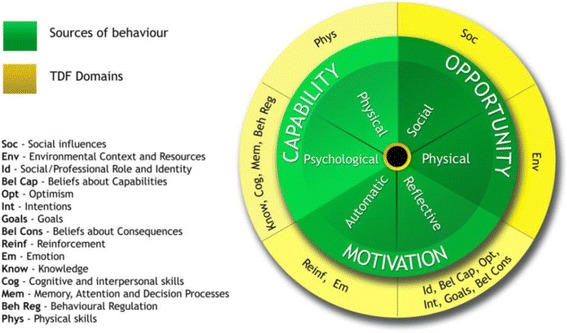
BACKGROUND: Implementing new practices requires changes in the behaviour of relevant actors, and this is facilitated by understanding of the determinants of current and desired behaviours. The Theoretical Domains Framework (TDF) was developed by a collaboration of behavioural scientists and implementation researchers who identified theories relevant to implementation and grouped constructs from these theories into domains. The collaboration aimed to provide a comprehensive, theory-informed approach to identify determinants of behaviour. The first version was published in 2005, and a subsequent version following a validation exercise was published in 2012. This guide offers practical guidance for those who wish to apply the TDF to assess implementation problems and support intervention design. It presents a brief rationale for using a theoretical approach to investigate and address implementation problems, summarises the TDF and its development, and describes how to apply the TDF to achieve implementation objectives. Examples from the implementation research literature are presented to illustrate relevant methods and practical considerations. METHODS: Researchers from Canada, the UK and Australia attended a 3-day meeting in December 2012 to build an international collaboration among researchers and decision-makers interested in the advancing use of the TDF. The participants were experienced in using the TDF to assess implementation problems, design interventions, and/or understand change processes. This guide is an output of the meeting and also draws on the authors' collective experience. Examples from the implementation research literature judged by authors to be representative of specific applications of the TDF are included in this guide. RESULTS: We explain and illustrate methods, with a focus on qualitative approaches, for selecting and specifying target behaviours key to implementation, selecting the study design, deciding the sampling strategy, developing study materials, collecting and analysing data, and reporting findings of TDF-based studies. Areas for development include methods for triangulating data, e.g. from interviews, questionnaires and observation and methods for designing interventions based on TDF-based problem analysis. CONCLUSIONS: We offer this guide to the implementation community to assist in the application of the TDF to achieve implementation objectives. Benefits of using the TDF include the provision of a theoretical basis for implementation studies, good coverage of potential reasons for slow diffusion of evidence into practice and a method for progressing from theory-based investigation to intervention.
Overview
CoChat Summary
TL;DR
This guide explains how to apply the Theoretical Domains Framework (TDF) to investigate implementation problems, focusing mainly on qualitative interview and focus group methods. It outlines steps from specifying target behaviours to analysing and reporting TDF-based data, with illustrative examples and stated limitations.
Key findings
- The TDF is an integrated theoretical framework synthesised from 128 theoretical constructs from 33 theories; version 1 has 12 domains, and version 2 has 14 domains covering 84 theoretical constructs. It has been cited in over 800 peer-reviewed publications (Web of Knowledge accessed April 2017).
- The guide provides step-by-step methodological guidance for TDF-based implementation research, primarily qualitative interviews and focus groups: selecting and specifying target behaviours, selecting study design, deciding sampling strategy, developing interview schedules, collecting and analysing data, and reporting findings.
- Benefits of using the TDF include providing a theoretical basis for implementation studies, good coverage of potential reasons for slow diffusion of evidence into practice, and a method for progressing from theory-based investigation to intervention. Areas for development include methods for triangulating data (e.g., interviews, questionnaires, observation) and methods for designing interventions based on TDF-based problem analysis.
- Illustrative examples include a low back pain study with focus groups of 42 GPs and a cluster randomised trial randomising 47 practices (53 GPs) to control and 45 practices (59 GPs) to intervention; an SDD Delphi study that interviewed 141 participants; and a diabetes management qualitative systematic review that included 32 studies.
Methods
- Design: researchers from Canada, the UK and Australia attended a 3-day collaborative meeting in December 2012 to discuss the state of the science in using the TDF in implementation research and identify areas needing further development. Participants represented health psychology, sociology, implementation and health services research, statistics, and clinical disciplines including general practice, occupational therapy and chiropractic.
- Guide production: the group identified key steps in applying the TDF, pooled their experience and expertise to elaborate each step, and selected examples from the implementation research literature judged representative of specific TDF applications. The guide draws on the authors’ collective experience.
- Analysis: no datasets were generated or analysed for this article; the guide is a narrative, consensus-based resource focused mainly on qualitative approaches.
Limitations
- Stated in the paper: the scope is mostly limited to qualitative approaches, mainly interview and focus group data, with limited detail on using the TDF with other data collection methods such as survey or observation.
- Stated in the paper: illustrative applications were selected based on an informal rather than structured consensus process, leaving the possibility of selection bias in these examples; the aim was not to be representative but to provide examples across settings and implementation problems.
- Evident from the text: the guide is not a systematic review or an empirical validation of TDF application; its recommendations rest on the authors’ collective experience and selected illustrative examples.
Model-written summary. Check it against the paper before relying on it.
Integrity signals
Registry
Cites
Statistics
Figures
Verification
Claims the paper makes
25 Valid · 2 Not valid · 8 Not checked · 49 Own results and interpretations
Every source the paper cites for this claim was checked and supports it.
In the paper
“In an effort to make theories more accessible to those working in implementation, a team of behavioural scientists developed the TDF in collaboration with implementation researchers [15].”
§ A guide to using the Theoretical Domains Framework of behaviour change to investigate implementation problems > Development of the TDF
What the sources say
- Supportedcites [15] 15. Michie S, Johnston M, Abraham C, Lawton R, Parker D, Walker A, et al. Making psychological theory useful for implementing evidence based practice: a consensus approach. Qual Saf Health Care. 2005;14(1):26-33. source
The Discussion states that the project sought to simplify psychological theory and make it accessible to people involved in implementing evidence-based practice. The Health psychology theorists and Health services researchers sections describe the psychologists who developed the domains and the implementation researchers who evaluated them. Page numbers are not available in our copy. (LLM, conf=0.93)
plainstates a cause- Asserted: passes — The authors put it forward as true.
- Checkable: passes — It can be checked against evidence.
- Load-bearing: unclear — It is unclear whether the paper’s conclusions depend on it.
- Based: passes — The paper gives a reason why it holds.
- Supported
Every source the paper cites for this claim was checked and supports it.
In the paper
“The version of TDF, resulting from this validation, showed similar structure and content to the original with slight differences leading to 14 domains covering 84 theoretical constructs.”
§ A guide to using the Theoretical Domains Framework of behaviour change to investigate implementation problems > Development of the TDF
What the sources say
- Supportedcites [16] 16. Cane J, O'Connor D, Michie S. Validation of the theoretical domains framework for use in behaviour change and implementation research. Implement Sci. 2012;7:37. doi:10.1186/1748-5908-7-37. source
The Discussion reports good support for the TDF’s basic structure alongside refinements producing 14 domains. The Conclusions state that the refined framework contains 84 component constructs. (LLM, conf=0.93)
plainstates a cause- Asserted: passes — The authors put it forward as true.
- Checkable: passes — It can be checked against evidence.
- Load-bearing: unclear — It is unclear whether the paper’s conclusions depend on it.
- Based: passes — The paper gives a reason why it holds.
- Supported
The cited sources support only part of this claim — read each source’s verdict below.
In the paper
“The TDF is an integrated theoretical framework synthesised from 128 theoretical constructs from 33 theories judged most relevant to implementation questions.”
§ A guide to using the Theoretical Domains Framework of behaviour change to investigate implementation problems > Development of the TDF
What the sources say
- Partly supportedcites [15] 15. Michie S, Johnston M, Abraham C, Lawton R, Parker D, Walker A, et al. Making psychological theory useful for implementing evidence based practice: a consensus approach. Qual Saf Health Care. 2005;14(1):26-33. sourceExperimental — accuracy not yet measured
The Results report identifying 128 constructs drawn from 33 psychological theories, and the paper describes developing an integrative framework for implementation research. But the Simplifying into theoretical domains section says only a subset of those constructs was prioritised as particularly relevant; it does not say that all 128 were judged most relevant to implementation questions. Page numbers are unavailable in our copy. (LLM, conf=0.84)
plain- Asserted: passes — The authors put it forward as true.
- Checkable: passes — It can be checked against evidence.
- Load-bearing: unclear — It is unclear whether the paper’s conclusions depend on it.
- Based: passes — The paper gives a reason why it holds.
- Partly supported
Every source the paper cites for this claim was checked and supports it.
In the paper
“The Theoretical Domains Framework (TDF) was initially developed for implementation research to identify influences on health professional behaviour related to implementation of evidence-based recommendations and has been cited in over 800 peer-review publications (Web of Knowledge accessed April 2017).”
§ A guide to using the Theoretical Domains Framework of behaviour change to investigate implementation problems > Background
What the sources say
- Supportedcites [15] 15. Michie S, Johnston M, Abraham C, Lawton R, Parker D, Walker A, et al. Making psychological theory useful for implementing evidence based practice: a consensus approach. Qual Saf Health Care. 2005;14(1):26-33. source
The Abstract says the framework was developed for implementation research to study implementation of evidence-based practice and understand healthcare professionals’ behaviour. The Discussion says its theoretical domains were intended to explain failures to implement evidence-based practice. The separate publication-count statement is attributed to Web of Knowledge, not this source. (LLM, conf=0.93)
plain- Asserted: passes — The authors put it forward as true.
- Checkable: passes — It can be checked against evidence.
- Load-bearing: unclear — It is unclear whether the paper’s conclusions depend on it.
- Based: passes — The paper gives a reason why it holds.
- Supported
Every source the paper cites for this claim was checked and supports it.
In the paper
“The TDF underwent a validation exercise with an independent group of behavioural experts to investigate the optimal structure and content of the framework [16].”
§ A guide to using the Theoretical Domains Framework of behaviour change to investigate implementation problems > Development of the TDF
What the sources say
- Supportedcites [16] 16. Cane J, O'Connor D, Michie S. Validation of the theoretical domains framework for use in behaviour change and implementation research. Implement Sci. 2012;7:37. doi:10.1186/1748-5908-7-37. source
The Background states that the study aimed to validate the TDF’s optimal domain structure and content. The Materials > Procedure passage says participants had expertise in behaviour change theory and did not know the original framework, supporting the description of an independent group of experts. (LLM, conf=0.94)
plain- Asserted: passes — The authors put it forward as true.
- Checkable: passes — It can be checked against evidence.
- Load-bearing: unclear — It is unclear whether the paper’s conclusions depend on it.
- Based: passes — The paper gives a reason why it holds.
- Supported
16 more claims · 9 with their cited sources checked
Create a free account to see all 84 claims and every source verdict.
- Probably not a substantial claim. 59
- It may state two separate claims as one. 19
Claims other papers make about this one
Each is checked against this paper’s own text: does it say what the citing paper says it does?
The cited source says what the claim attributes to it.
In the citing paper
“The TDF organizes constructs across 14 domains, ranging from individual knowledge and skills to environmental context and social influences.”
The cited source says what the claim attributes to it.
In the citing paper
“The 14 domains of the TDF, described elsewhere [24], offer a concise coding framework that can be usefully conceptualized as possible targets for behavior change interventions.”
From Influences on the Uptake of and Engagement With Health and Well-Being Smartphone Apps: Systematic Review (2020) · cites this paper as [24]
Self-check
Percentages, sums and reported differences re-computed from the paper’s own numbers.
Each contradiction between two passages listed here was confirmed by an independent check.
Rated minor: it would not touch a result — a value no result rests on, a p-value that stays on the same side of the significance level, or a conflict that is clerical, resolved elsewhere in the paper, or outside its own findings.
In the paper
§ A guide to using the Theoretical Domains Framework of behaviour change to investigate implementation problems > 5. Collect the data
“In the example given above reported in Francis et al. [15], this step resulted in a list of belief statements supported by responses made in the interviews within each theoretical domain.”
§ A guide to using the Theoretical Domains Framework of behaviour change to investigate implementation problems > References
“15. Michie S, Johnston M, Abraham C, Lawton R, Parker D, Walker A, et al. Making psychological theory useful for implementing evidence based practice: a consensus approach.”
Rated minor: it would not touch a result — a value no result rests on, a p-value that stays on the same side of the significance level, or a conflict that is clerical, resolved elsewhere in the paper, or outside its own findings.
In the paper
§ A guide to using the Theoretical Domains Framework of behaviour change to investigate implementation problems > 3. Decide the sampling strategy
“## 3. Decide the sampling strategy”
§ A guide to using the Theoretical Domains Framework of behaviour change to investigate implementation problems > Conclusions
“| 3. Develop study materials | Although materials from previous studies may be | Requires in-depth understanding of the theoretical |”
Citations
Cites
Using thematic analysis in psychology
Braun, V., & Clarke, V. (2006) · Qualitative Research in Psychology · doi:10.1191/1478088706qp063oa · Cited by 194,414
The Measurement of Observer Agreement for Categorical Data
Landis, J. R., & Koch, G. G. (1977) · Biometrics · doi:10.2307/2529310 · Cited by 81,148 · cited 1×
“6 or percentage agreement > 60% is achieved [63].”
BackgroundThe Discovery of Grounded Theory: Strategies for Qualitative Research.
Wagner, H. R., Glaser, B. G., & Strauss, A. L. (1968) · Social Forces · doi:10.2307/2575405 · Cited by 46,361
Three Approaches to Qualitative Content Analysis
Hsieh, H.-F., & Shannon, S. E. (2005) · Qualitative Health Research · doi:10.1177/1049732305276687 · Cited by 44,601 · cited 1×
“theory and/or relevant research findings to interpret meaning from the content of qualitative data for initial codes [57].”
BackgroundThe Discovery of Grounded Theory; Strategies for Qualitative Research
Glaser, B. G., Strauss, A. L., & Strutzel, E. (1968) · Nursing Research · doi:10.1097/00006199-196807000-00014 · Cited by 39,449
(2006) · Cited by 18,730
Damschroder, L. J., Aron, D. C., Keith, R. E., Kirsh, S. R., Alexander, J. A., & Lowery, J. C. (2009) · Implementation Science · doi:10.1186/1748-5908-4-50 · Cited by 14,496 · cited 2×
“by Normalisation Process Theory [66], the Consolidated Framework For Implementation Research [67] and the Yorkshire Contributory Factors Framework [68].”
MethodHao (2015) · doi:10.1002/14651858 · Cited by 11,321
Developing and evaluating complex interventions: the new Medical Research Council guidance
Craig, P., Dieppe, P., Macintyre, S., Michie, S., Nazareth, I., & Petticrew, M. (2008) · BMJ · doi:10.1136/bmj.a1655 · Cited by 10,995
Self-citationQualitative research practice: a guide for social science students and researchers
(2003) · Choice Reviews Online · doi:10.5860/choice.41-1319 · Cited by 10,543
Cited by
Items 601–700 of 3,792
Cassidy, C. E., Steenbeek, A., Langille, D. B., Martin‐Misener, R., & Curran, J. (2019) · BMC Public Health · doi:10.1186/s12889-019-8059-4 · Cited by 24
Kubi, B., Enumah, Z. O., Lee, K. T., Freund, K. M., Smith, T. J., Cooper, L. A., Owczarzak, J. T., & Johnston, F. M. (2020) · Journal of Pain and Symptom Management · doi:10.1016/j.jpainsymman.2020.02.009 · Cited by 22
Wallis, J. A., Barton, C. J., Brusco, N. K., Kemp, J. L., Sherwood, J., Young, K., Jennings, S., Trivett, A., & Ackerman, I. N. (2021) · Musculoskeletal Care · doi:10.1002/msc.1549 · Cited by 19
Abahuje, E. A. E., Bartuska, A., Koch, R., et al. (2021) · Journal of surgical education · doi:10.1016/j.jsurg.2021.01.011 · Cited by 18
Willett, M., Greig, C. A., Fenton, S. A. M., Rogers, D., Duda, J. L., & Rushton, A. (2021) · BMC Musculoskeletal Disorders · doi:10.1186/s12891-021-04036-8 · Cited by 19
Saarikko, J., Niela‐Vilén, H., Rahmani, A. M., & Axelin, A. (2021) · BMC Pregnancy and Childbirth · doi:10.1186/s12884-021-03689-6 · Cited by 30
“Although the BCW has been widely used in implementation studies in health care settings, most of the previous studies have applied the theory to change in behaviors at organizational or system levels [22].”
BackgroundMethodAlzahrani, A. S., Greenfield, S., & Paudyal, V. (2022) · Research in Social and Administrative Pharmacy · doi:10.1016/j.sapharm.2022.01.001 · Cited by 18
van Hout, D., Hutchinson, P., Wanat, M., Pilbeam, C., Goossens, H., Anthierens, S., Tonkin-Crine, S. K., & Gobat, N. (2022) · PLoS ONE · doi:10.1371/journal.pone.0245182 · Cited by 19
Jessel, C. D., Maruf, A. A., Oomen, A., et al. (2022) · PubMed · Cited by 18
Randall, C. L. (2023) · Community Dentistry and Oral Epidemiology · doi:10.1111/cdoe.12841 · Cited by 17
Moore, R., Al-Tamimi, A.-K., & Freeman, E. (2024) · JMIR Formative Research · doi:10.2196/51571 · Cited by 19
“Identified barriers were coded using the COM-B [39] model and TDF [40] to comprehend both the origins of adolescent behaviors and the factors influencing them.”
MethodSimpson, A., Beauchamp, M. R., Dimmock, J. A., Willis, C., & Jackson, B. (2025) · Psychology of sport and exercise · doi:10.1016/j.psychsport.2025.102918 · Cited by 26
Downey, J., Shearn, K., Brown, N., Wadey, R., & Breckon, J. D. (2021) · BMC Health Services Research · doi:10.1186/s12913-021-06349-9 · Cited by 21
“Motivation and capability are broad mechanisms which encompass 12 domains of theoretical constructs (see [24].”
BackgroundReidy, C., Foster, C. L., & Rogers, A. E. (2020) · Journal of Medical Internet Research · doi:10.2196/13980 · Cited by 17
“The TDF compounds 84 constructs from multiple psychological theories (motivational, action, and organizational theories) and comprises 14 domains of theoretical constructs [44-46].”
Bear, H. A., Dalzell, K., Edbrooke-Childs, J. H., & Wolpert, M. (2021) · British Journal of Clinical Psychology · doi:10.1111/bjc.12322 · Cited by 25
“Behavioural targets can be identified as a basis for interventions intended to change behaviour, for example, in implementing new practices or changes to current practice (Atkins et al., 2017).”
Tadas, S., Pretorius, C., Foster, E. J., Gorely, T., Leslie, S. J., & Coyle, D. (2021) · JMIR Cardio · doi:10.2196/30428 · Cited by 19
“The interview questions were based on TDF and inquired about patients’experiences after cardiac surgery, focusing on domains of TDF related to knowledge and skills, individual goals and intentions, social and environmental influences, and emotional influence [43].”
BackgroundMethodInfluentialNilsen, P., Potthoff, S., & Birken, S. A. (2022) · Frontiers in Health Services · doi:10.3389/frhs.2021.795144 · Cited by 25
“, surveys (64) or interviews (65)] since they are aware of what they are doing and why.”
BackgroundFintelmann, F. J., Martin, N. A., Tahir, I., Quinn, E. M., Allen, T. C., Joseph, L., Nikolic, B., & Lee, C. S. (2023) · Respiratory Research · doi:10.1186/s12931-023-02321-9 · Cited by 18
“The theoretical domains framework for the interview focused on knowledge, skills, intentions, context, resources, and consequences [25].”
BackgroundScott, S., Atkins, B., Kellar, I., Taylor, J., Keevil, V. L., Alldred, D. P., Murphy, K., Patel, M., Witham, M. D., Wright, D. J., et al. (2023) · Research in Social and Administrative Pharmacy · doi:10.1016/j.sapharm.2023.02.003 · Cited by 17
“Using evidence regarding the determinants of the behaviour that require addressing (25), coupled with behaviour change theory (31) to underpin the co-design process, is a key strength of this study.”
BackgroundCreaser, A. V., Bingham, D. D., Bennett, H. A. J., Costa, S., & Clemes, S. A. (2023) · Public Health · doi:10.1016/j.puhe.2023.01.018 · Cited by 22
Ogrodnik, M., Karsan, S., Malamis, B., KWAN, M. Y. W., Fenesi, B., & Heisz, J. J. (2023) · Journal of Developmental and Physical Disabilities · doi:10.1007/s10882-023-09908-6 · Cited by 30
“In fact, methods for behaviour change underscore that the first step is to identify barriers and facilitators, from the population’s perspective, that need to be overcome or leveraged (Atkins et al., 2017).”
InfluentialNg, W., Beales, D. J., Gucciardi, D. F., & Slater, H. (2023) · Frontiers in Pain Research · doi:10.3389/fpain.2023.1169178 · Cited by 24
“The Theoretical Domains Framework (TDF) expands on the COM-B components and provides a more detailed understanding of the cognitive, affective, social and environmental influences on behaviour (25).”
BackgroundDuran, A. T., Keener-DeNoia, A., Stavrolakes, K., Fraser, A., Blanco, L., Fleisch, E., Pieszchata, N., Cannone, D. E., McKay, C. K., Whittman, E., et al. (2023) · JMIR Formative Research · doi:10.2196/47264 · Cited by 31
“Table S1 in Multimedia Appendix 1 [35,38,41-50] provides descriptions and definitions of key UCD and IS methods, frameworks, and terms included throughout the design process (eg, CFIR, TDF, journey mapping, usability testing, and contextual inquiry).”
BackgroundMethodThompson, C. A., Mebrahtu, T. F., Skyrme, S., Bloor, K. E., Andre, D., Keenan, A., Ledward, A., Yang, H., & Randell, R. (2024) · Health and Social Care Delivery Research · doi:10.3310/grnm5147 · Cited by 28
Merle, J. L., Benbow, N., Li, D. H., Zapata, J. P., Queiroz, A. A. F. L. N., Zamantakis, A., McKay, V., Keiser, B., Villamar, J. A., Mustanski, B. S., et al. (2024) · AIDS and Behavior · doi:10.1007/s10461-024-04331-0 · Cited by 21
“Digital tools, like mobile apps and websites, can offer accurate and up-to-date information on PrEP, allowing users to make informed 33] and adjunctive interventions according to the TDF [40, 41] and the COM-B taxonomies [42 ].”
InfluentialTurabi, R. Y., Sheehan, K. J., Guerra, S., O’Connell, M. D. L., & Wyatt, D. (2024) · Age and Ageing · doi:10.1093/ageing/afae075 · Cited by 20
“TDF is a well-established framework designed to identify determinants of healthcare professionals’ behaviours in evidence-based recommendations [29].”
BackgroundLeveraging Implementation Science in Human-Centred Design for Digital Health
Waddell, A., Seguin, J. P., Wu, L., Stragalinos, P., Wherton, J. P., Watterson, J., Prawira, C. O., Olivier, P. L., Manning, V., Lubman, D. I., et al. (2024) · CHI Conference on Human Factors in Computing Systems · doi:10.1145/3613904.3642161 · Cited by 37
“For example, when exploring and designing for a specific behaviour, a behaviourally focused framework may be more applicable such as the Theoretical Domains Framework alongside the COM-B and related implementation processes [6, 63].”
Wu, J. P., Damschroder, L. J., Fetters, M. D., Zikmund‐Fisher, B. J., Crabtree, B. F., Hudson, S. V., Ruffin, M. T., Fucinari, J., Kang, M. M., Taichman, L. S., et al. (2018) · JMIR Research Protocols · doi:10.2196/resprot.9249 · Cited by 17
“Because the proposed intervention integrates clinical decision support for individual health providers, we also adapted constructs from the Theoretical Domains Framework to systematically identify determinants of clinical behavior change among PCPs [71].”
Method‘Weighty issues’ in GP-led antenatal care: a qualitative study
Walker, R., Choi, T. S. T., Alexander, K., Mazza, D., & Truby, H. (2019) · BMC Family Practice · doi:10.1186/s12875-019-1026-4 · Cited by 21
“The TDF integrates behaviour change theories into a single validated tool [32] widely used in implementation science to identify barriers and enablers to guideline implementation [33].”
MethodKouri, A., Yamada, J., Sale, J. E. M., Straus, S. E., & Gupta, S. (2020) · Journal of Medical Internet Research · doi:10.2196/19358 · Cited by 20
Urologist-led smoking cessation: a way forward through implementation science
Matulewicz, R. S., Makarov, D. V., Sherman, S. E., Birken, S. A., & Bjurlin, M. A. (2021) · Translational Andrology and Urology · doi:10.21037/tau-20-1204 · Cited by 20
“Fortunately, well designed and validated process models and conceptual frameworks, such as the VA Quality Enhancement Research Initiative (QUERI), Consolidated Framework for Implementation Research (CFIR), and Theoretical Domains Framework (TDF) are available to help bridge the gap between evidence and clinical practi…”
BackgroundYamada, J., Kouri, A., Simard, S.-N., Segovia, S. A., & Gupta, S. (2020) · Journal of Medical Internet Research · doi:10.2196/19474 · Cited by 23
“The interview guide was designed to explore which domains in the TDF were relevant for the targeted behavior (ie, completion of the eAMS questionnaire before the clinical visit) and how each of those domains influenced this behavior [20].”
BackgroundInfluentialLaur, C. V., Sribaskaran, T., Simeoni, M., Desveaux, L., Daneman, N., Mulhall, C. L., Lam, J. M. C., & Ivers, N. M. (2021) · BMJ Open Quality · doi:10.1136/bmjoq-2020-001088 · Cited by 18
Self-citationWenke, R., Coman, L., Walton, C., Madill, C., Theodoros, D., Bishop, C., Stabler, P., Lawrie, M., O’Neill, J., Gray, H., et al. (2021) · Journal of Voice · doi:10.1016/j.jvoice.2021.02.011 · Cited by 20
Barber, C. E. H., Spencer, N., Bansback, N. J., Zimmermann, G. L., LI, L. C., Richards, D. P., Proulx, L., Mosher, D. P., & Hazlewood, G. S. (2021) · ACR Open Rheumatology · doi:10.1002/acr2.11250 · Cited by 18
“This framework (COM- B), and its behavior change wheel (BCW), has been extensively used to assess implementation problems and inform successful implementation plans for health interventions (9).”
MethodInfluentialDamiaens, A., Fraeyman, J., Fakroune, S., Hutsebaut, C., Roussel, S., Dyck, L. V., Hal, G. F. V., den Broucke, S. V., & Foulon, V. (2021) · International Journal of Integrated Care · doi:10.5334/ijic.5612 · Cited by 24
Vasiliou, V. S., Dockray, S., Dick, S., Davoren, M. P., Heavin, C., Linehan, C., & Byrne, M. (2021) · Harm Reduction Journal · doi:10.1186/s12954-021-00491-7 · Cited by 24
Neurotrauma Registry Implementation in Colombia: A Qualitative Assessment
Johnson, E. D., Oak, S., Griswold, D. P., Olaya, S., Puyana, J. C., & Rubiano, A. M. (2021) · Journal of Neurosciences in Rural Practice · doi:10.1055/s-0041-1727577 · Cited by 17
Luke, M. J., Krupetsky, N., Liu, H., Korenvain, C., Crown, N., Toenjes, S., Sproule, B. A., Piquette‐Miller, M., Guirguis, L. M., & McCarthy, L. M. (2021) · Pharmacy · doi:10.3390/pharmacy9040201 · Cited by 22
Woodfield, M. J., Cargo, T., Merry, S., & Hetrick, S. E. (2021) · International Journal of Environmental Research and Public Health · doi:10.3390/ijerph182413116 · Cited by 20
“For example, clinicians may be biased toward describing external factors, rather than internal factors, such as motivation or effort [38].”
BackgroundBaumann, A. A., Vázquez, A. L., Macchione, A. C., Lima, A., Coelho, A. F., Juras, M. M., Ribeiro, M. R., Kohlsdorf, M., & Carothers, B. J. (2022) · Children and Youth Services Review · doi:10.1016/j.childyouth.2022.106421 · Cited by 19
Quinn, L. M., Shukla, D., Greenfield, S., Barrett, T. G., Garstang, J. J., Boardman, F., Litchfield, I. J., Dayan, C. M., Gardner, C., Connop, C., et al. (2022) · BMJ Open Diabetes Research & Care · doi:10.1136/bmjdrc-2021-002750 · Cited by 19
“The interview topic guide will be informed by the TDF, 39 a behavioral framework that can help to reduce prior assumptions.”
BackgroundWozney, L., de Souza, L. M. F., Kervin, E. K., Queluz, F. N. F. R., McGrath, P. J., & Keefe, J. M. (2018) · JMIR Aging · doi:10.2196/12274 · Cited by 20
“TDF was derived from a synthesis of 33 psychological theories and 128 key theoretical constructs relevant for behavioral change [26].”
MethodKutner, B. A., Wu, Y., Balán, I. C., & Meyers, K. A. (2019) · AIDS and Behavior · doi:10.1007/s10461-019-02758-4 · Cited by 17
Amirova, A., Lucas, R., Cowie, M. R., & Haddad, M. (2022) · PLOS ONE · doi:10.1371/journal.pone.0271743 · Cited by 17
“as described by TDF (18), the APA Psychology Dictionary (28) were adopted.”
BackgroundMethodInfluentialLau-Zhu, A., Anderson, C., & Lister, M. (2023) · Clinical Child Psychology and Psychiatry · doi:10.1177/13591045221098896 · Cited by 16
“This research is guided by the COM-B (and TDF) approach with emphasis on mapping determinants of behaviour.”
BackgroundInfluentialGrailey, K., Hussain, R., Wylleman, E., Ezzat, A., Huf, S. W., & Franklin, B. D. (2023) · BMC Nursing · doi:10.1186/s12912-023-01382-x · Cited by 21
“The theoretical domains framework (TDF) [19] is a comprehensive framework incorporating individual factors that may influence behaviour (such as knowledge, intentions and goals), additionally including social and environmental factors (e.g. social influences).”
BackgroundNurse-Delivered Telehealth in Home-Based Palliative Care: Integrative Systematic Review
Ma, C., Fang, Y., Zhang, H., Zheng, Y., Zhang, Y., Zhao, W., Yan, G., Zeng, Y., Zhang, Y., Ning, X.-H., et al. (2025) · Journal of Medical Internet Research · doi:10.2196/73024 · Cited by 30
Ince, C., Antons, S., Ashton, S., Borgogna, N. C., Brand, M., Briken, P., Castro‐Calvo, J., Chen, L., Coleman, E., Efrati, Y., et al. (2026) · Journal of Behavioral Addictions · doi:10.1556/2006.2025.00337 · Cited by 26
Influencing duration of antibiotic therapy: A behavior change analysis in long-term care
Langford, B. J., Quirk, J., Carey, S., Daneman, N., & Garber, G. E. (2019) · American Journal of Infection Control · doi:10.1016/j.ajic.2019.05.020 · Cited by 17
Sissons, A., Grant, A. M., Kirkland, A., & Currie, S. (2019) · Psychology Health & Medicine · doi:10.1080/13548506.2019.1679846 · Cited by 25
“Domains were considered relevant on the following criteria: the beliefs frequently occurred across interviews, presence of conflicting beliefs, and evidence of strong beliefs that could affect the target behaviour (Atkins et al., 2017).”
BackgroundSkolarus, T. A., Forman, J. H., Sparks, J. B., Metreger, T., Hawley, S. T., Caram, M. E. V., Dossett, L. A., Cruz, A. P., Makarov, D. V., Leppert, J. T., et al. (2021) · Implementation Science Communications · doi:10.1186/s43058-021-00224-8 · Cited by 17
Mugweni, E., Goodliffe, S., Jaswal, S., Walker, M., Emrys‐Jones, A., Adams, C., & Kendall, S. A. (2021) · Primary Health Care Research & Development · doi:10.1017/s1463423620000651 · Cited by 16
“Given that the findings from the study were to inform the development of a training intervention aimed at changing clinical practice, we drew on the Theoretical Domains Framework (TDF) version 2 in the analysis of the lived experiences (Cane et al., 2012; Atkins et al., 2017).”
BackgroundO’Connor, M., McSherry, L. A., Dombrowski, S. U., Francis, J., Martin, C. M., O’Leary, J. J., & Sharp, L. (2021) · HRB Open Research · doi:10.12688/hrbopenres.13246.1 · Cited by 23
Self-citationSafety of reducing antibiotic prescribing in primary care: a mixed-methods study
Gulliford, M. C., Charlton, J., Boiko, O. V., Winter, J. R., Rezel‐Potts, E., Sun, X., Burgess, C. C., McDermott, L., Bunce, C., Shearer, J., et al. (2021) · Health Services and Delivery Research · doi:10.3310/hsdr09090 · Cited by 16
Kullen, C. J., Mitchell, L., O'Connor, H. T., Gifford, J. A., & Beck, K. L. (2022) · Nutrition Reviews · doi:10.1093/nutrit/nuab087 · Cited by 23
Szewczyk, Z., Reeves, P., Kingsland, M., Doherty, E. L., Elliott, E. J., Wolfenden, L., Tsang, T. W., Dunlop, A. J., Searles, A., & Wiggers, J. (2022) · Implementation Science · doi:10.1186/s13012-021-01180-6 · Cited by 18
Leather, J. Z., Keyworth, C., Kapur, N., Campbell, S., & Armitage, C. J. (2022) · British Journal of Health Psychology · doi:10.1111/bjhp.12598 · Cited by 17
Perry, C., Atkinson, R. A., Griffiths, J., Wilson, P. M., Lavallée, J. F., Mullings, J., Cullum, N. A., & Dumville, J. C. (2022) · BMJ Open · doi:10.1136/bmjopen-2022-061834 · Cited by 22
Raimi, M. O., Sunday, O. A., Mcfubara, K. G., Adias, T. C., Raimi, G. A.-A., Daniel, A. A., Izah, S. C., Okoyen, E., Ogbointuwei, C., Clement, A., et al. (2022) · IntechOpen eBooks · doi:10.5772/intechopen.106513 · Cited by 35
Shelley, D., Alvarez, G. G., Nguyen, T., Nguyen, N. T., Goldsamt, L. A., Cleland, C. M., Tozan, Y., Shuter, J., & Armstrong-Hough, M. J. (2022) · Implementation Science Communications · doi:10.1186/s43058-022-00361-8 · Cited by 19
“, self-efficacy, motivation, belief about consequences, social influences) [34].”
BackgroundInfluentialEthical preparedness in health research and care: the role of behavioural approaches
Samuel, G. N., Ballard, L. M., Carley, H., & Lucassen, A. (2022) · BMC Medical Ethics · doi:10.1186/s12910-022-00853-1 · Cited by 16
Adams, E. L., Edgar, A., Mosher, P., Armstrong, B., Burkart, S. A., Weaver, R. G., Beets, M. W., Siceloff, E. R., & Prinz, R. J. (2023) · International Journal of Environmental Research and Public Health · doi:10.3390/ijerph20010862 · Cited by 17
“TDF was chosen as a guiding framework, given its extensive evidence base [26], and its ability to guide future intervention development by mapping behavior change strategies to associated barriers using the Behavior Change Wheel Framework [27].”
MethodAlHarthi, M. S., Wright, D. J., Scott, S., & Birt, L. (2023) · Research in Social and Administrative Pharmacy · doi:10.1016/j.sapharm.2023.01.013 · Cited by 16
Tropea, J., Peters, S., Francis, J., Bennett, N. J., Fetherstonhaugh, D., Buising, K. L., Lim, L., Marshall, C. L., Flynn, M., Murray, M. D., et al. (2023) · BMC Geriatrics · doi:10.1186/s12877-023-03766-9 · Cited by 19
Self-citationSpence, B. C., Bruxvoort, K. J., Munoz‐Plaza, C. E., Shaw, S., Navarro, M., Chen, H., Skarbinski, J., & Tartof, S. Y. (2023) · Journal of Public Health Management and Practice · doi:10.1097/phh.0000000000001711 · Cited by 21
Rönsch, H., Schiffers, F., Ofenloch, R. F., et al. (2023) · Journal of the European Academy of Dermatology and Venereology · doi:10.1111/jdv.19055 · Cited by 16
Chao, G. F., Lindquist, K. M., Vitous, C. A., Tolentino, D. A., Delaney, L. D., Alimi, Y., Jafri, S. M., & Telem, D. A. (2023) · Surgical Endoscopy · doi:10.1007/s00464-023-10030-z · Cited by 18
“By mapping these themes onto the Theoretical Domains Framework, we can begin to identify theory-based interventions.”
BackgroundInfluentialGibson, R., D'Annibale, M., Oliver, N. S., McGowan, B. M., Forbes, G., Crayton, E., Guess, N. D., & Lorencatto, F. (2023) · Diabetic Medicine · doi:10.1111/dme.15179 · Cited by 26
“32 This involved a combined deductive framework and inductive thematic analysis approach, that broadly followed five steps detailed in Table 1.”
MethodUmutesi, G., Oluoch, L. M., Weiner, B. J., Bukusi, E. A., Onono, M. A., Njoroge, B., Mecca, L., Ngure, K., Mugo, N., & Barnabas, R. V. (2023) · Frontiers in Health Services · doi:10.3389/frhs.2023.1233923 · Cited by 16
Truong, L. K., Mosewich, A. D., Miciak, M., Losciale, J. M., LI, L. C., & Whittaker, J. L. (2024) · Physiotherapy Theory and Practice · doi:10.1080/09593985.2024.2315520 · Cited by 19
“Social support has been consistently identified to facilitate exercise participation (Bauman et al., 2012; Carme et al., 2018; Sheridan, Coffee, and Lavallee, 2014) and as a behavior change technique (BCT) across various framework and theories (Atkins et al., 2017; Michie et al., 2013).”
Rapin, J., Pellet, J., Mabire, C., Gendron, S., & Dubois, C. (2019) · Systematic Reviews · doi:10.1186/s13643-019-1097-2 · Cited by 19
Chater, A., Family, H. E., Lim, R. H. M., & Courtenay, M. (2020) · Journal of Antimicrobial Chemotherapy · doi:10.1093/jac/dkaa335 · Cited by 16
Giroux, E. E., Casemore, S., Clarke, T., McBride, C. B., Wuerstl, K. R., & Gainforth, H. L. (2020) · Spinal Cord · doi:10.1038/s41393-020-00555-8 · Cited by 16
Vesnaver, E., Goldman, M., O’Brien, S. F., MacPherson, P. A., Butler‐Foster, T., Lapierre, D., Otis, J., Devine, D. V., Germain, M., Rosser, A., et al. (2020) · Health Research Policy and Systems · doi:10.1186/s12961-020-00643-4 · Cited by 15
“The topic guide for the second interview draws on existing literature [31] and previously developed guides [33] to assess if and how the identified barriers align with TDF domains.”
BackgroundMethodWhiteley, D., Speakman, E. M., Elliott, L., et al. (2020) · Journal of Viral Hepatitis · doi:10.1111/jvh.13443 · Cited by 16
“17”
Schexnayder, J. K., Longenecker, C. T., Muiruri, C., Bosworth, H. B., Gebhardt, D., Gonzales, S. E., Hanson, J. E., Hileman, C. O., Okeke, N. L., Sico, I. P., et al. (2021) · Implementation Science Communications · doi:10.1186/s43058-021-00114-z · Cited by 18
“Interview content often overlapped TDF domains and limited guidance is available for managing such overlap [50].”
BackgroundZafeiropoulos, S., Farmakis, I. T., Κάρτας, Α., Arvanitaki, A., Pagiantza, A., Boulmpou, A., Tampaki, A., Kosmidis, D., Nevras, V., Markidis, E., et al. (2021) · Atherosclerosis · doi:10.1016/j.atherosclerosis.2021.03.013 · Cited by 16
Implementation Science and Nutrition: From Research to Practice
Brown, M., Rosenthal, M. D., & Yeh, D. D. (2021) · Nutrition in Clinical Practice · doi:10.1002/ncp.10677 · Cited by 20
Wallace, S. J., Sullivan, B., Rose, T., Worrall, L. E., Dorze, G. L., & Shrubsole, K. (2021) · Journal of Speech Language and Hearing Research · doi:10.1044/2021_jslhr-20-00683 · Cited by 19
Implementation science: an introduction for primary care
Prathivadi, P., Buckingham, P., Chakraborty, S. P., Hawes, L. A., Saha, S. K., Barton, C., Mazza, D., Russell, G. M., & Sturgiss, E. A. (2021) · Family Practice · doi:10.1093/fampra/cmab125 · Cited by 20
Barnden, R., Cadilhac, D. A.-M., Lannin, N. A., Kneebone, I., Hersh, D., Godecke, E., Stolwyk, R. J., Purvis, T. L., Nicks, R. J., Farquhar, M., et al. (2021) · PEC Innovation · doi:10.1016/j.pecinn.2021.100008 · Cited by 16
“This framework provided a comprehensive guide to help identify design issues and perceived enablers and barriers that would assist with future implementation of the package in healthcare settings [44-46].”
BackgroundMcKean, C., Watson, R., Charlton, J., Roulstone, S., Holme, C., Gilroy, V., & Law, J. (2022) · Pilot and Feasibility Studies · doi:10.1186/s40814-022-00978-5 · Cited by 22
“Methods for intervention development, described by Michie and colleagues and often referred to as the Behaviour Change Wheel and Capability, Opportunity, Motivation, Behaviour (COM-B) models, were followed [41, 71].”
MethodFrench, S. D., O’Connor, D. A., Green, S., Page, M. J., Mortimer, D., Turner, S., Walker, B. F., Keating, J. L., Grimshaw, J., Michie, S., et al. (2022) · Trials · doi:10.1186/s13063-022-06053-x · Cited by 18
“can be used to identify theoretically and empirically informed explanations for implementation difficulties and to inform the design of implementation interventions [25, 27].”
BackgroundMethodSelf-citationNickbakht, M., Meyer, C., Saulsman, L. M., Pachana, N. A., Eikelboom, R. H., Bucks, R. S., & Bennett, R. J. (2022) · International Journal of Audiology · doi:10.1080/14992027.2022.2056090 · Cited by 21
Smith, J. A., Braithwaite, J., O'Brien, T. A., Smith, S., Tyrrell, V. J., Mould, E. V. A., Long, J. C., & Rapport, F. (2022) · International Journal of Qualitative Methods · doi:10.1177/16094069221103097 · Cited by 28
“Understanding enablers of and barriers to change is vital to tailoring implementation strategies and creating greater surety over long-term effectiveness (Atkins et al., 2017).”
BackgroundSaha, S. K., Thursky, K., Kong, D. C. M., & Mazza, D. (2022) · Antibiotics · doi:10.3390/antibiotics11091158 · Cited by 16
Agbadjé, T. T., Menear, M., Dugas, M., Gagnon, M., Rahimi, S. A., Robitaille, H., Giguere, A. M. C., Rousseau, F., Wilson, B. J., & Légaré, F. (2018) · BMC Health Services Research · doi:10.1186/s12913-018-3244-1 · Cited by 21
“We used the BCW to identify relevant “conditions” (COM-B) and “domains” (TDF) as targets for change (Stage 2); from functions associated with these, we generated a list of appropriate BCTs (Stage 3) [23, 32], to be validated later in the user-centred design phase.”
MethodBossink, L. W. M., van der Putten, A. A. J., & Vlaskamp, C. (2019) · Disability and Rehabilitation · doi:10.1080/09638288.2019.1602851 · Cited by 19
“understanding of the behavior and its context [10].”
Backgroundvan Leeuwen, L. M., Pronk, M., Merkus, P., Goverts, S. T., Anema, J. R., & Kramer, S. E. (2019) · International Journal of Audiology · doi:10.1080/14992027.2019.1691746 · Cited by 17
“The TDF specifies the C, O, and M components as theoretical domains of behaviour related to implementation (Atkins et al. 2017).”
BackgroundMacCallum, L., Mathers, A., Kellar, J., Rousse-Grossman, J., Moore, J. E., Lewis, G. F., & Dolovich, L. R. (2020) · Research in Social and Administrative Pharmacy · doi:10.1016/j.sapharm.2020.04.004 · Cited by 22
Wollny, A., Altiner, A., Brand, T., Garbe, K., Kamradt, M., Kaufmann-Kolle, P., Leyh, M., Poß-Doering, R., Szécsényi, J., Uhlmann, L., et al. (2019) · Trials · doi:10.1186/s13063-019-3209-7 · Cited by 18
“[26], will be used to identify determinants of practice which influence health care delivery to ARTI patients in general practices, with regard to the educational components of the intervention and with regard to converting habits of antibiotic use.”
MethodAdamu, A. A., Uthman, O. A., Gadanya, M. A., Cooper, S., & Wiysonge, C. S. (2019) · Expert Review of Vaccines · doi:10.1080/14760584.2019.1643720 · Cited by 22
Pharmacists detecting atrial fibrillation in general practice: a qualitative focus group study
Savickas, V., Veale, E. L., Bhamra, S. K., Stewart, A. J., Mathie, A. A., & Corlett, S. A. (2020) · BJGP Open · doi:10.3399/bjgpopen20x101042 · Cited by 17
“Qualitative data were analysed in NVivo (version 12) using the deductive TDF approach, as detailed in Figure 1.(32,33) TDF domains most likely to influence the service proposed were selected using the criteria adapted from Islam et al.”
MethodBest, S., Long, J. C., Gaff, C., Braithwaite, J., & Taylor, N. J. (2021) · Journal of Health Organization and Management · doi:10.1108/jhom-12-2020-0495 · Cited by 15
Bergeron, L., Décary, S., Djade, C. D., Daniel, S. J., Tremblay, M., Rivest, L., & Légaré, F. (2022) · JMIR Medical Education · doi:10.2196/34299 · Cited by 22
“This requires a better understanding of the theory-based mechanisms underlying the impact of web-based CPD courses on clinical practice [15].”
BackgroundHiggins, E., & Booker, R. (2022) · Health Education Journal · doi:10.1177/00178969221105319 · Cited by 21
“The TDF is one of the most commonly used frameworks in implementation science (Atkins et al., 2017).”
MethodBirt, L., Wright, D. J., Blacklock, J., Bond, C. M., Hughes, C. M., Alldred, D. P., Holland, R., & Scott, S. (2022) · Health & Social Care in the Community · doi:10.1111/hsc.14099 · Cited by 21
“…evidence that involving a pharmacist in care home resident medication review whether as the prescriber or in collaboration with a GP increases deprescribing of medicines and this has associated cost savings (Baqir et al., 2017; Kua et al., 2019; Riordan et al., 2016; Sadowski et al., 2020).”
BackgroundSommerfeldt, W., Gellert, P. R., Müller, A., Götze, N., & Göstemeyer, G. (2023) · Journal of Dentistry · doi:10.1016/j.jdent.2022.104408 · Cited by 17
Sustainability in orthodontics: Challenges and opportunities for improving our environmental impact
Ahmed, T., Brierley, C. A., & Barber, S. (2023) · Journal of Orthodontics · doi:10.1177/14653125231170882 · Cited by 15
“The theoretical domains framework (Atkins et al., 2017) may be useful for examining behaviour change in terms of capability, motivation and opportunity.”
Background
Metadata
- Authors
- Atkins, L., Francis, J., Islam, R., O’Connor, D., Patey, A., Ivers, N., Foy, R., Duncan, E. M., Colquhoun, H., Grimshaw, J. M., Lawton, R., & Michie, S.
- Affiliations
- University College London (GB)
- University of London (GB)
- Ottawa Hospital Research Institute (CA)
- Monash University (AU)
- University of Toronto (CA)
- University of Leeds (GB)
- University of Aberdeen (GB)
- University of Ottawa (CA)
- Corresponding author
- Atkins, Lou
- ORCID
- Venue
- Implementation Science
- Published
- 2017-06-21
- Volume
- 12
- Issue
- 1
- Pages
- 77-77
- ISSN
- 1748-5908 (ISSN-L)
- PMC
- PMC5480145
- OpenAlex
- W2674995983
- Semantic Scholar
- 7ae5ea98c6f51755ffa2f67330dea33e0663f161
- Cited by
- 3,819
- References
- 87
- Citations by year
- 2026: 501 · 2025: 619 · 2024: 623 · 2023: 531 · 2022: 554 · 2021: 437 · 2020: 309 · 2019: 160 · 2018: 67 · 2017: 12
- FWCI
- 242.11
- Type
- journal article
- Language
- en
- Open access
- gold
- doi.org
- Licence
- cc-by
- Locations
- Implementation Science (publishedVersion, cc-by)
- Europe PMC (PubMed Central) (publishedVersion, other-oa)
- PubMed Central (publishedVersion, cc-by)
- PubMed (publishedVersion)
- UCL Discovery (University College London) (publishedVersion)
- White Rose Research Online (University of Leeds, The University of Sheffield, University of York) (acceptedVersion)
- TSpace (University of Toronto) (acceptedVersion, cc-by)
- City Research Online (City University London) (acceptedVersion)
- Monash University Research Portal (Monash University) (submittedVersion, other-oa)
- Aberdeen University Research Archive (Aberdeen University) (submittedVersion)
- DOAJ (DOAJ: Directory of Open Access Journals) (submittedVersion, cc-by-sa)
- Minerva Access (University of Melbourne) (submittedVersion, cc-by)
- Funders
- Canadian Institutes of Health Research
- Topics
- Health Sciences › Health Professions › General Health Professions › Health Policy Implementation Science
- Social Sciences › Psychology › Applied Psychology › Behavioral Health and Interventions
- Health Sciences › Health Professions › General Health Professions › Health Sciences Research and Education
- Keywords
- Theoretical Domains Framework, behavior change, implementation problems, implementation research, behavioral factors, intervention design, qualitative research
- MeSH terms
- Australia, Canada, Diffusion of Innovation, United Kingdom, Health Plan Implementation, Health Services Research, Humans, Health Behavior
About these checks
Registry, retraction, Cites and statistics results are computed, not judged, with one exception: a printed reference that no index lists is read once by a model before it counts as a citation error. Claims are extracted by a model and kept only when their quote appears verbatim in the text; each cited source is then checked, with a model’s help, for whether it says what the claim relies on. Those verdicts can be wrong — read the claim’s quote and the cited source before relying on one.
The claim verdicts this report counts are experimental: their accuracy is not yet measured.
A language model drew the claims from the paper on 2026-10-16, under version 3 of the claim definition (model deepseek-v4.1-flash, prompt extract-v3).
A second model labelled each claim on 2026-10-16 (model jev-1.13-20260917, definition revision gold-guideline-v0.2).
Cited sources are checked with a language model’s help (gpt-6-sol).
Statistics and arithmetic are recomputed, not judged.
Confidence bands are shown only for fields calibrated on our annotated test set. None is calibrated yet, so no band is shown.
What counts as a claim ›How we measure confidence ›How we check this ›
Are you an author, or do you see a problem with this page? Request a review
Data sources
Bibliographic data: Semantic Scholar, OpenAlex, Crossref.
Contains information from the Semantic Scholar Academic Graph Datasets, made available under the ODC Attribution License (ODC-BY 1.0).
Semantic Scholar’s data is described in: Kinney, R., et al. (2023). The Semantic Scholar Open Data Platform. arXiv:2301.10140.
