

A guide to using the Theoretical Domains Framework of behaviour change to investigate implementation problems
Open accessThe DOI matches its Crossref record; 90 of the 90 references it cites were found in a registry or an index; 40 of the 57 sources its claims cite were checked for support.
Abstract
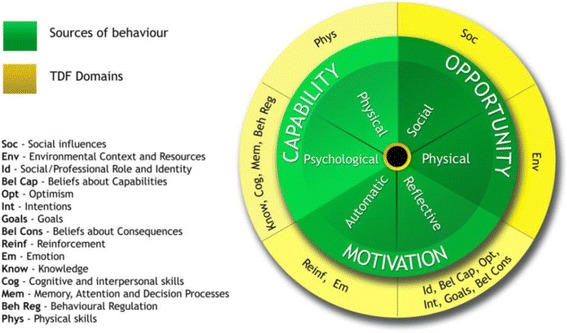
BACKGROUND: Implementing new practices requires changes in the behaviour of relevant actors, and this is facilitated by understanding of the determinants of current and desired behaviours. The Theoretical Domains Framework (TDF) was developed by a collaboration of behavioural scientists and implementation researchers who identified theories relevant to implementation and grouped constructs from these theories into domains. The collaboration aimed to provide a comprehensive, theory-informed approach to identify determinants of behaviour. The first version was published in 2005, and a subsequent version following a validation exercise was published in 2012. This guide offers practical guidance for those who wish to apply the TDF to assess implementation problems and support intervention design. It presents a brief rationale for using a theoretical approach to investigate and address implementation problems, summarises the TDF and its development, and describes how to apply the TDF to achieve implementation objectives. Examples from the implementation research literature are presented to illustrate relevant methods and practical considerations. METHODS: Researchers from Canada, the UK and Australia attended a 3-day meeting in December 2012 to build an international collaboration among researchers and decision-makers interested in the advancing use of the TDF. The participants were experienced in using the TDF to assess implementation problems, design interventions, and/or understand change processes. This guide is an output of the meeting and also draws on the authors' collective experience. Examples from the implementation research literature judged by authors to be representative of specific applications of the TDF are included in this guide. RESULTS: We explain and illustrate methods, with a focus on qualitative approaches, for selecting and specifying target behaviours key to implementation, selecting the study design, deciding the sampling strategy, developing study materials, collecting and analysing data, and reporting findings of TDF-based studies. Areas for development include methods for triangulating data, e.g. from interviews, questionnaires and observation and methods for designing interventions based on TDF-based problem analysis. CONCLUSIONS: We offer this guide to the implementation community to assist in the application of the TDF to achieve implementation objectives. Benefits of using the TDF include the provision of a theoretical basis for implementation studies, good coverage of potential reasons for slow diffusion of evidence into practice and a method for progressing from theory-based investigation to intervention.
Overview
CoChat Summary
TL;DR
This guide explains how to apply the Theoretical Domains Framework (TDF) to investigate implementation problems, focusing mainly on qualitative interview and focus group methods. It outlines steps from specifying target behaviours to analysing and reporting TDF-based data, with illustrative examples and stated limitations.
Key findings
- The TDF is an integrated theoretical framework synthesised from 128 theoretical constructs from 33 theories; version 1 has 12 domains, and version 2 has 14 domains covering 84 theoretical constructs. It has been cited in over 800 peer-reviewed publications (Web of Knowledge accessed April 2017).
- The guide provides step-by-step methodological guidance for TDF-based implementation research, primarily qualitative interviews and focus groups: selecting and specifying target behaviours, selecting study design, deciding sampling strategy, developing interview schedules, collecting and analysing data, and reporting findings.
- Benefits of using the TDF include providing a theoretical basis for implementation studies, good coverage of potential reasons for slow diffusion of evidence into practice, and a method for progressing from theory-based investigation to intervention. Areas for development include methods for triangulating data (e.g., interviews, questionnaires, observation) and methods for designing interventions based on TDF-based problem analysis.
- Illustrative examples include a low back pain study with focus groups of 42 GPs and a cluster randomised trial randomising 47 practices (53 GPs) to control and 45 practices (59 GPs) to intervention; an SDD Delphi study that interviewed 141 participants; and a diabetes management qualitative systematic review that included 32 studies.
Methods
- Design: researchers from Canada, the UK and Australia attended a 3-day collaborative meeting in December 2012 to discuss the state of the science in using the TDF in implementation research and identify areas needing further development. Participants represented health psychology, sociology, implementation and health services research, statistics, and clinical disciplines including general practice, occupational therapy and chiropractic.
- Guide production: the group identified key steps in applying the TDF, pooled their experience and expertise to elaborate each step, and selected examples from the implementation research literature judged representative of specific TDF applications. The guide draws on the authors’ collective experience.
- Analysis: no datasets were generated or analysed for this article; the guide is a narrative, consensus-based resource focused mainly on qualitative approaches.
Limitations
- Stated in the paper: the scope is mostly limited to qualitative approaches, mainly interview and focus group data, with limited detail on using the TDF with other data collection methods such as survey or observation.
- Stated in the paper: illustrative applications were selected based on an informal rather than structured consensus process, leaving the possibility of selection bias in these examples; the aim was not to be representative but to provide examples across settings and implementation problems.
- Evident from the text: the guide is not a systematic review or an empirical validation of TDF application; its recommendations rest on the authors’ collective experience and selected illustrative examples.
Model-written summary. Check it against the paper before relying on it.
Integrity signals
Registry
Cites
Statistics
Figures
Verification
Claims the paper makes
25 Valid · 2 Not valid · 8 Not checked · 49 Own results and interpretations
Every source the paper cites for this claim was checked and supports it.
In the paper
“In an effort to make theories more accessible to those working in implementation, a team of behavioural scientists developed the TDF in collaboration with implementation researchers [15].”
§ A guide to using the Theoretical Domains Framework of behaviour change to investigate implementation problems > Development of the TDF
What the sources say
- Supportedcites [15] 15. Michie S, Johnston M, Abraham C, Lawton R, Parker D, Walker A, et al. Making psychological theory useful for implementing evidence based practice: a consensus approach. Qual Saf Health Care. 2005;14(1):26-33. source
The Discussion states that the project sought to simplify psychological theory and make it accessible to people involved in implementing evidence-based practice. The Health psychology theorists and Health services researchers sections describe the psychologists who developed the domains and the implementation researchers who evaluated them. Page numbers are not available in our copy. (LLM, conf=0.93)
plainstates a cause- Asserted: passes — The authors put it forward as true.
- Checkable: passes — It can be checked against evidence.
- Load-bearing: unclear — It is unclear whether the paper’s conclusions depend on it.
- Based: passes — The paper gives a reason why it holds.
- Supported
Every source the paper cites for this claim was checked and supports it.
In the paper
“The version of TDF, resulting from this validation, showed similar structure and content to the original with slight differences leading to 14 domains covering 84 theoretical constructs.”
§ A guide to using the Theoretical Domains Framework of behaviour change to investigate implementation problems > Development of the TDF
What the sources say
- Supportedcites [16] 16. Cane J, O'Connor D, Michie S. Validation of the theoretical domains framework for use in behaviour change and implementation research. Implement Sci. 2012;7:37. doi:10.1186/1748-5908-7-37. source
The Discussion reports good support for the TDF’s basic structure alongside refinements producing 14 domains. The Conclusions state that the refined framework contains 84 component constructs. (LLM, conf=0.93)
plainstates a cause- Asserted: passes — The authors put it forward as true.
- Checkable: passes — It can be checked against evidence.
- Load-bearing: unclear — It is unclear whether the paper’s conclusions depend on it.
- Based: passes — The paper gives a reason why it holds.
- Supported
The cited sources support only part of this claim — read each source’s verdict below.
In the paper
“The TDF is an integrated theoretical framework synthesised from 128 theoretical constructs from 33 theories judged most relevant to implementation questions.”
§ A guide to using the Theoretical Domains Framework of behaviour change to investigate implementation problems > Development of the TDF
What the sources say
- Partly supportedcites [15] 15. Michie S, Johnston M, Abraham C, Lawton R, Parker D, Walker A, et al. Making psychological theory useful for implementing evidence based practice: a consensus approach. Qual Saf Health Care. 2005;14(1):26-33. sourceExperimental — accuracy not yet measured
The Results report identifying 128 constructs drawn from 33 psychological theories, and the paper describes developing an integrative framework for implementation research. But the Simplifying into theoretical domains section says only a subset of those constructs was prioritised as particularly relevant; it does not say that all 128 were judged most relevant to implementation questions. Page numbers are unavailable in our copy. (LLM, conf=0.84)
plain- Asserted: passes — The authors put it forward as true.
- Checkable: passes — It can be checked against evidence.
- Load-bearing: unclear — It is unclear whether the paper’s conclusions depend on it.
- Based: passes — The paper gives a reason why it holds.
- Partly supported
Every source the paper cites for this claim was checked and supports it.
In the paper
“The Theoretical Domains Framework (TDF) was initially developed for implementation research to identify influences on health professional behaviour related to implementation of evidence-based recommendations and has been cited in over 800 peer-review publications (Web of Knowledge accessed April 2017).”
§ A guide to using the Theoretical Domains Framework of behaviour change to investigate implementation problems > Background
What the sources say
- Supportedcites [15] 15. Michie S, Johnston M, Abraham C, Lawton R, Parker D, Walker A, et al. Making psychological theory useful for implementing evidence based practice: a consensus approach. Qual Saf Health Care. 2005;14(1):26-33. source
The Abstract says the framework was developed for implementation research to study implementation of evidence-based practice and understand healthcare professionals’ behaviour. The Discussion says its theoretical domains were intended to explain failures to implement evidence-based practice. The separate publication-count statement is attributed to Web of Knowledge, not this source. (LLM, conf=0.93)
plain- Asserted: passes — The authors put it forward as true.
- Checkable: passes — It can be checked against evidence.
- Load-bearing: unclear — It is unclear whether the paper’s conclusions depend on it.
- Based: passes — The paper gives a reason why it holds.
- Supported
Every source the paper cites for this claim was checked and supports it.
In the paper
“The TDF underwent a validation exercise with an independent group of behavioural experts to investigate the optimal structure and content of the framework [16].”
§ A guide to using the Theoretical Domains Framework of behaviour change to investigate implementation problems > Development of the TDF
What the sources say
- Supportedcites [16] 16. Cane J, O'Connor D, Michie S. Validation of the theoretical domains framework for use in behaviour change and implementation research. Implement Sci. 2012;7:37. doi:10.1186/1748-5908-7-37. source
The Background states that the study aimed to validate the TDF’s optimal domain structure and content. The Materials > Procedure passage says participants had expertise in behaviour change theory and did not know the original framework, supporting the description of an independent group of experts. (LLM, conf=0.94)
plain- Asserted: passes — The authors put it forward as true.
- Checkable: passes — It can be checked against evidence.
- Load-bearing: unclear — It is unclear whether the paper’s conclusions depend on it.
- Based: passes — The paper gives a reason why it holds.
- Supported
16 more claims · 9 with their cited sources checked
Create a free account to see all 84 claims and every source verdict.
- Probably not a substantial claim. 59
- It may state two separate claims as one. 19
Claims other papers make about this one
Each is checked against this paper’s own text: does it say what the citing paper says it does?
The cited source says what the claim attributes to it.
In the citing paper
“The TDF organizes constructs across 14 domains, ranging from individual knowledge and skills to environmental context and social influences.”
The cited source says what the claim attributes to it.
In the citing paper
“The 14 domains of the TDF, described elsewhere [24], offer a concise coding framework that can be usefully conceptualized as possible targets for behavior change interventions.”
From Influences on the Uptake of and Engagement With Health and Well-Being Smartphone Apps: Systematic Review (2020) · cites this paper as [24]
Self-check
Percentages, sums and reported differences re-computed from the paper’s own numbers.
Each contradiction between two passages listed here was confirmed by an independent check.
Rated minor: it would not touch a result — a value no result rests on, a p-value that stays on the same side of the significance level, or a conflict that is clerical, resolved elsewhere in the paper, or outside its own findings.
In the paper
§ A guide to using the Theoretical Domains Framework of behaviour change to investigate implementation problems > 5. Collect the data
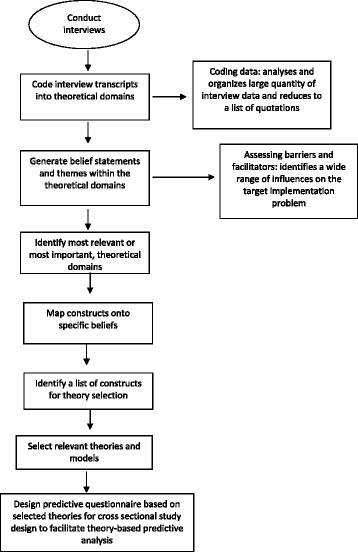
“In the example given above reported in Francis et al. [15], this step resulted in a list of belief statements supported by responses made in the interviews within each theoretical domain.”
§ A guide to using the Theoretical Domains Framework of behaviour change to investigate implementation problems > References
“15. Michie S, Johnston M, Abraham C, Lawton R, Parker D, Walker A, et al. Making psychological theory useful for implementing evidence based practice: a consensus approach.”
Rated minor: it would not touch a result — a value no result rests on, a p-value that stays on the same side of the significance level, or a conflict that is clerical, resolved elsewhere in the paper, or outside its own findings.
In the paper
§ A guide to using the Theoretical Domains Framework of behaviour change to investigate implementation problems > 3. Decide the sampling strategy
“## 3. Decide the sampling strategy”
§ A guide to using the Theoretical Domains Framework of behaviour change to investigate implementation problems > Conclusions
“| 3. Develop study materials | Although materials from previous studies may be | Requires in-depth understanding of the theoretical |”
Citations
Cites
Using thematic analysis in psychology
Braun, V., & Clarke, V. (2006) · Qualitative Research in Psychology · doi:10.1191/1478088706qp063oa · Cited by 194,414
The Measurement of Observer Agreement for Categorical Data
Landis, J. R., & Koch, G. G. (1977) · Biometrics · doi:10.2307/2529310 · Cited by 81,148 · cited 1×
“6 or percentage agreement > 60% is achieved [63].”
BackgroundThe Discovery of Grounded Theory: Strategies for Qualitative Research.
Wagner, H. R., Glaser, B. G., & Strauss, A. L. (1968) · Social Forces · doi:10.2307/2575405 · Cited by 46,361
Three Approaches to Qualitative Content Analysis
Hsieh, H.-F., & Shannon, S. E. (2005) · Qualitative Health Research · doi:10.1177/1049732305276687 · Cited by 44,601 · cited 1×
“theory and/or relevant research findings to interpret meaning from the content of qualitative data for initial codes [57].”
BackgroundThe Discovery of Grounded Theory; Strategies for Qualitative Research
Glaser, B. G., Strauss, A. L., & Strutzel, E. (1968) · Nursing Research · doi:10.1097/00006199-196807000-00014 · Cited by 39,449
(2006) · Cited by 18,730
Damschroder, L. J., Aron, D. C., Keith, R. E., Kirsh, S. R., Alexander, J. A., & Lowery, J. C. (2009) · Implementation Science · doi:10.1186/1748-5908-4-50 · Cited by 14,496 · cited 2×
“by Normalisation Process Theory [66], the Consolidated Framework For Implementation Research [67] and the Yorkshire Contributory Factors Framework [68].”
MethodHao (2015) · doi:10.1002/14651858 · Cited by 11,321
Developing and evaluating complex interventions: the new Medical Research Council guidance
Craig, P., Dieppe, P., Macintyre, S., Michie, S., Nazareth, I., & Petticrew, M. (2008) · BMJ · doi:10.1136/bmj.a1655 · Cited by 10,995
Self-citationQualitative research practice: a guide for social science students and researchers
(2003) · Choice Reviews Online · doi:10.5860/choice.41-1319 · Cited by 10,543
Cited by
Items 801–900 of 3,792
Em, S., Willis, S. C., Fenton, C., et al. (2023) · Research in Social and Administrative Pharmacy · doi:10.1016/j.sapharm.2023.04.123 · Cited by 13
Waters, A. R., Weir, C. R., Kramer, H., Berghuijs, K. M. V. T., Wu, Y. P., Kepka, D., & Kirchhoff, A. C. (2023) · Journal of Cancer Survivorship · doi:10.1007/s11764-023-01391-4 · Cited by 13
“This project was informed by Theoretical Domains Framework (TDF) and Capability, Opportunity, Motivation, and Behavior (COM-B) model to identify and categorize the implementation determinants of introducing HPV vaccination into the oncology setting [15, 16].”
InfluentialChater, A., Brook-Rowland, P., Tolani, F., Christopher, E., Hart, J., Byrne-Davis, L. M. T., Moffat, A., Shorter, G. W., Epton, T., Kamal, A., et al. (2023) · Frontiers in Public Health · doi:10.3389/fpubh.2023.1130875 · Cited by 20
“All TDF domains were identified as relevant, namely: (1) knowledge, (2) skills (physical and cognitive/ interpersonal), (3) social/professional role and identity, (4) belief about capabilities, (5) optimism, (6) belief about consequences, (7) reinforcement, (8) intentions, (9) goals, (10) memory, attention and decisio…”
BackgroundSelf-citationBlaine, R. E., Blaine, K. P., Cheng, K., Banuelos, C., & Leal, A. (2023) · Frontiers in Pediatrics · doi:10.3389/fped.2023.1198177 · Cited by 19
Using EMPOWER in daily life: a qualitative investigation of implementation experiences
Allan, S., Beedie, S. A., McLeod, H. J., Farhall, J., Gleeson, J., Bradstreet, S., Morton, E. E., Bell, I., Wilson-Kay, A., Whitehill, H., et al. (2023) · BMC Psychiatry · doi:10.1186/s12888-023-05096-x · Cited by 14
“Implementation behaviours describe what people do when exposed to a new intervention, and understanding implementation behaviours require consideration of context and influences on behaviour (including subjective experiences) [17].”
BackgroundCook, N., Collins, J., Porter, J. A., & Goodwin, D. M. (2023) · Frontiers in Nutrition · doi:10.3389/fnut.2023.1204980 · Cited by 14
“The application of the BCW, TDF, and COM-B to participant interview data highlighted the key behavioral drivers which support a food and food-related waste audit and helped interpret the interventions which can promote these behaviors.”
BackgroundMethodInfluentialBaker, J., Stringer, H., & McKean, C. (2023) · International Journal of Language & Communication Disorders · doi:10.1111/1460-6984.12955 · Cited by 28
“The TDF has 14 theoretical domains, each formed through the synthesis of 128 constructs found in 33 behaviour change theories.”
InfluentialTesta, V., Bennett, A., Jutai, J. W., Cantor, Z., Burke, P., McMahon, J., Carleton, R. N., Colman, I., Fikretoglu, D., Heber, A., et al. (2023) · Health Promotion and Chronic Disease Prevention in Canada · doi:10.24095/hpcdp.43.10/11.02 · Cited by 17
Yoon, S., Goh, H., Phang, J. K., Kwan, Y. H., & Low, L. L. (2023) · Scientific Reports · doi:10.1038/s41598-023-47168-8 · Cited by 20
“TDF was chosen because it provides sufficient breadth to analyze a wide range of cognitive, social, affective and environmental influences on behaviors (i.e., non-compliance).”
MethodInfluentialDimitropoulos, G., Bassi, E. M., Bright, K. S., Gondziola, J., Bradley, J., Fersovitch, M., Stamp, L., LaMonica, H. M., Iorfino, F., Gaskell, T., et al. (2024) · JMIR Mental Health · doi:10.2196/49099 · Cited by 20
“…skills; social or professional role and identity; beliefs about capabilities; optimism; beliefs about consequences; reinforcement; intentions; goals; memory, attention, and decision processes; environmental context and resources; social influences; emotions; and behavioral regulation [36].”
BackgroundMaltby, S., García-Esperón, C., Jackson, K., Butcher, K., Evans, J. W., O'Brien, W., Dixon, C., Russell, S., Wilson, N., Kluge, M. G., et al. (2023) · JMIR Serious Games · doi:10.2196/43416 · Cited by 13
“Mapping these factors onto the theoretical domains framework highlights relevant aspects within the domains of knowledge, skills, social or professional role and identity, beliefs about capabilities, reinforcement, environmental context and resources, and social influences [48].”
BackgroundChristie, L., Rendell, R., McCluskey, A., Fearn, N., Hunter, A., & Lovarini, M. (2023) · Disability and Rehabilitation · doi:10.1080/09638288.2023.2290686 · Cited by 14
“The TDF has been used extensively within implementation science and health services research to identify barriers and facilitators to implementing specific evidence-based behaviours [19].”
Tadesse, A. W., Mganga, A., Dube, T., Alacapa, J., van Kalmthout, K., Letta, T., Mleoh, L., Garfin, A. M. C., Maraba, N., Charalambous, S., et al. (2024) · Frontiers in Public Health · doi:10.3389/fpubh.2024.1327971 · Cited by 21
Suntornsut, P., Asadinia, K. S., Limato, R., Tamara, A., Rotty, L. W. A., Bramanti, R., Nusantara, D. U., Nelwan, E. J., Khusuwan, S., Suphamongkholchaikul, W., et al. (2024) · BMJ Open · doi:10.1136/bmjopen-2023-075526 · Cited by 14
“18 This intervention could reduce the barrier ‘(negative) influences from healthcare workers, patients and family of patients (TDF-social influence)’ and ‘perceived cost-effectiveness of BC (TDF-environmental context and resources)’ if the importance and benefit of BC sampling are clearly present…”
BackgroundSelf-citationKale, M., Morgan, O., Wisnivesky, J. P., Schnur, J. B., & Diefenbach, M. A. (2024) · The Annals of Family Medicine · doi:10.1370/afm.3080 · Cited by 14
Aljohani, D. M., Almalki, N. J., Dixon, D. L., Adam, R., & Forget, P. (2024) · European Journal of Anaesthesiology · doi:10.1097/eja.0000000000002002 · Cited by 16
Bell, E. C., Mosler, A., Barton, C. J., Jones, D., Heerey, J., Johnston, R. T. R., Coburn, S., & Kemp, J. L. (2024) · Brazilian Journal of Physical Therapy · doi:10.1016/j.bjpt.2024.101077 · Cited by 13
“We used a Theoretical Domain Framework approach and reported our fi ndings according to the COREQ-32 criteria.”
Wu, Q., Pei, H., Zhang, L., Deng, H., Chen, Y., Wang, L., He, W., He, J., & Song, C. (2024) · Geriatric Nursing · doi:10.1016/j.gerinurse.2024.06.005 · Cited by 25
Understanding barriers and facilitators to integrated HIV and hypertension care in South Africa
Johnson, L. C. M., Khan, S. H., Ali, M. K., Galaviz, K. I., Waseem, F., Ordóñez, C. E., Siedner, M. J., Nyatela, A., Marconi, V. C., & Lalla‐Edward, S. T. (2024) · Implementation Science Communications · doi:10.1186/s43058-024-00625-5 · Cited by 14
“The TDF was developed to assess implementation problems and has been widely used to improve understanding of health service delivery and guide quality improvement efforts [33, 34].”
MethodTheoretical Domains Framework: A Bibliometric and Visualization Analysis from 2005-2023
Zhou, Y., Huang, Y., Wang, Y., Xu, X., Yu, Z., & Gu, Y. (2024) · Journal of Multidisciplinary Healthcare · doi:10.2147/jmdh.s470223 · Cited by 17
Antonopoulou, V., Meyer, C., Chadwick, P., Gibson, B., Sniehotta, F. F., Vlaev, I., Vassova, A., Goffe, L., Lorencatto, F., McKinlay, A. R., et al. (2024) · Health Research Policy and Systems · doi:10.1186/s12961-024-01209-4 · Cited by 25
“A widely used behavioural framework to synthesize influences on behaviours in a number of systematic reviews (for example, [47–49]) is the Theoretical Domains Framework (TDF [50]).”
MethodQuinn, L. M., Dias, R. P., Greenfield, S., Richter, A. G., Garstang, J. J., Shukla, D., Acharjee, A., Gkoutos, G. V., Oram, R. A., Faustini, S. E., et al. (2024) · Diabetic Medicine · doi:10.1111/dme.15490 · Cited by 19
Bohren, M. A., Miller, S., Mammoliti, K., Galadanci, H. S., Fawcus, S., Moran, N. F., Hofmeyr, G. J., Qureshi, Z. P., Al‐beity, F. M. A., Forbes, G., et al. (2025) · The Lancet Global Health · doi:10.1016/s2214-109x(24)00454-6 · Cited by 27
Cervical Cancer Screening in Women With Physical Disabilities
Vinson, A. H., Norrid, C., Haro, E. K., Ernst, S., Khoury, C. E., Alves, M. L., Kieber-Emmons, A. M., Mulki, A. K., Butcher, E., Kalpakjian, C. Z., et al. (2025) · JAMA Network Open · doi:10.1001/jamanetworkopen.2024.57290 · Cited by 21
German senior citizens’ capabilities for physical activity: a qualitative study
Sauter, A., Curbach, J., Rueter, J., Lindacher, V., & Loss, J. (2018) · Health Promotion International · doi:10.1093/heapro/day077 · Cited by 24
Communicating Risks of Adjuvant Chemotherapy for Breast Cancer: Getting Beyond the Laundry List
Brauer, E. R., Long, E. F., Melnikow, J. A., Ravdin, P. M., & Ganz, P. A. (2018) · Journal of Oncology Practice · doi:10.1200/jop.18.00162 · Cited by 14
“Using a directed content analysis technique, we followed the steps of TDF-based research described by Atkins et al.(25) This process allowed us to review and attribute data to theoretical domains, populate domains with key thematic content, and create data tables.”
MethodInfluentialWillett, M., Greig, C. A., Rogers, D., Fenton, S. A. M., Duda, J. L., & Rushton, A. (2019) · BMJ Open · doi:10.1136/bmjopen-2019-029199 · Cited by 16
Carey, S., & Hogan, S. (2020) · Journal of Parenteral and Enteral Nutrition · doi:10.1002/jpen.1961 · Cited by 17
Rusch, A., DeCamp, L., Liebrecht, C., Choi, S. Y., Dalack, G. W., Kilbourne, A. M., & Smith, S. N. (2021) · Frontiers in Public Health · doi:10.3389/fpubh.2021.655999 · Cited by 15
Swingwood, E. L., Stilma, W., Tume, L. N., Cramp, F. L., Paulus, F., Schultz, M. J., Reimer, W. J. M. S. O., & Rose, L. (2020) · Systematic Reviews · doi:10.1186/s13643-020-01547-8 · Cited by 13
Williamson, T. M., Moran, C., McLennan, A., Seidel, S., Ma, P. P., Koerner, M.-L., & Campbell, T. S. (2020) · Progress in Cardiovascular Diseases · doi:10.1016/j.pcad.2020.12.007 · Cited by 20
Seward, N., Hanlon, C., Murdoch, J., Colbourn, T., Prince, M. J., Venkatapuram, S., & Sevdalis, N. (2020) · BMJ Global Health · doi:10.1136/bmjgh-2020-003456 · Cited by 15
“32 Social influences (those interpersonal processes that can cause individuals to change their thoughts, feelings or behaviours).”
Hayes, C. V., Eley, C. V., Wood, F., Demirjian, A., & McNulty, C. A. M. (2021) · JAC-Antimicrobial Resistance · doi:10.1093/jacamr/dlab039 · Cited by 14
The Portrayal of Characters with Dyslexia in Children’s Picture Books
Sotirovska, V., & Vaughn, M. (2021) · Early Childhood Education Journal · doi:10.1007/s10643-021-01196-z · Cited by 13
Alhusein, N., Scott, J., Neale, J., et al. (2021) · Exploratory Research in Clinical and Social Pharmacy · doi:10.1016/j.rcsop.2021.100071 · Cited by 13
“The TDF is a framework originally synthesised from 33 theories of behaviour and behaviour change which draws together cognitive, affective (emotion), environmental and social influences on behaviour.(19,20) The TDF was later mapped into the six elements of the COM-B model as to give a more detailed insight to the targ…”
BackgroundMethodPallin, N. D., Webb, J., Brown, L., Woznitza, N., Stewart-Lord, A., Charlesworth, L., Beeken, R. J., & Fisher, A. (2021) · Radiography · doi:10.1016/j.radi.2021.09.004 · Cited by 15
Gomez-Rossi, J., Schwartzkopff, J., Müller, A., Hertrampf, K., Abraham, J., Gaßmann, G., Schlattmann, P., Göstemeyer, G., & Schwendicke, F. (2022) · BMJ Open · doi:10.1136/bmjopen-2021-049306 · Cited by 21
Iliano, E., Beeckman, M., Latomme, J., & Cardon, G. (2022) · International Journal of Environmental Research and Public Health · doi:10.3390/ijerph19127150 · Cited by 16
“Example of TDFs are given in Figure 3 [47].”
BackgroundCastillo, G., Vesnaver, E., Gibson, E., Butler‐Foster, T., Goldman, M., Hill, N. E., Rosser, A., Lapierre, D., Rubini, K. A., MacDonagh, R., et al. (2022) · Transfusion · doi:10.1111/trf.17000 · Cited by 12
Improving facility-based care: eliciting tacit knowledge to advance intervention design
English, M., Nzinga, J., Oliwa, J. N., Maina, M., Oluoch, D., Barasa, E., Irimu, G., Muinga, N., Vincent, C. A., & McKnight, J. (2022) · BMJ Global Health · doi:10.1136/bmjgh-2022-009410 · Cited by 19
Hajj, M. S. E., Al-Ziftawi, N. H., Stewart, D. C., & Al-Khater, D. (2022) · British Journal of Clinical Pharmacology · doi:10.1111/bcp.15529 · Cited by 14
“It “provides a theoretical lens through which to view the cognitive, affective, social and environmental influences on behavior”.(31) TDF is 1 of the most commonly used frameworks in implementation science, especially in the field of health-related psychology and behaviours.”
BackgroundUmaefulam, V. O., Wilson, M. K., Boucher, M. C., Brent, M. H., Dogba, M. J., Drescher, O., Grimshaw, J., Ivers, N. M., Lawrenson, J. G., Lorencatto, F., et al. (2023) · BMC Health Services Research · doi:10.1186/s12913-023-09329-3 · Cited by 12
Self-citationCrow, J., Savage, M., Gardner, L., Hughes, C., Corbett, C., Wells, M., & Malhotra, P. (2023) · BMJ Open · doi:10.1136/bmjopen-2022-070323 · Cited by 14
Barry, L. A., Tighe, S. M., Griffin, A., Ryan, D., O’Connor, M., Fitzgerald, C., Egan, S. M., Galvin, R., & Meskell, P. (2023) · BMC Health Services Research · doi:10.1186/s12913-023-10027-3 · Cited by 16
Tharmaratnam, T., Iskandar, M. M. A., Doherty, S. A., D’Urzo, K., Kopalakrishnan, S., Tabobondung, T., Gopee‐Ramanan, P., Sivagurunathan, S., & Sivananthan, N. (2018) · Frontiers in Cardiovascular Medicine · doi:10.3389/fcvm.2018.00165 · Cited by 14
“Thus, the use of an evidence-based behavior change framework, such as the Theoretical Domains Framework (TDF) may be valuable in identifying the key barriers that pertain specifically to the individual patients at hand, and ultimately, in designing more suitable and specific interventions for them (111, 112).”
MethodMurphy, M. S. Q., Tinmouth, A. T., Goldman, M., Chassé, M., Colas, J. A., Saidenberg, E., Shehata, N., Fergusson, D. A., Forster, A. J., & Wilson, K. R. (2019) · Transfusion · doi:10.1111/trf.15271 · Cited by 13
“Constructs such as the theoretical domains framework, which includes domains such as knowledge, beliefs about consequences, motivation, and others, have been shown to be effective in evaluating implementation of changes in health care and other areas.(46) In a system where there are no institutional-level financial di…”
BackgroundSexuality in the context of physical rehabilitation as perceived by occupational therapists
Lepage, C., Auger, L.-P., & Rochette, A. (2020) · Disability and Rehabilitation · doi:10.1080/09638288.2020.1715494 · Cited by 22
“It was also based on the Theoretical Domains Framework (TDF) which was initially developed to identify the factors that influence the behaviour of health professionals [19].”
MethodCornford, P. A., Smith, E. J., MacLennan, S., Azevedo, N. P., Roobol, M. J., Lumen, N., Fullwood, L., Duncan, E., Dunsmore, J., Plass, K., et al. (2020) · European Urology · doi:10.1016/j.eururo.2020.10.011 · Cited by 13
Self-citationRepeated analyses of national clinical audit reports demonstrate improvements in feedback methods
Khan, T., Alderson, S. L., Francis, J., Lorencatto, F., Grant‐Casey, J., Stanworth, S. J., & Foy, R. (2020) · Implementation Science Communications · doi:10.1186/s43058-020-00089-3 · Cited by 14
Self-citationGrimani, A., Bonell, C. P., Michie, S., Antonopoulou, V., Kelly, M. P., & Vlaev, I. (2021) · BMJ Open · doi:10.1136/bmjopen-2020-044763 · Cited by 11
Self-citationDevelopment of a managed clinical network for children’s palliative care – a qualitative evaluation
Papworth, A., Fraser, L., & Taylor, J. (2021) · BMC Palliative Care · doi:10.1186/s12904-021-00712-7 · Cited by 14
“Drawing on approaches used in other implementation research [30], data were analysed thematically [31] using an initial inductive coding process informed by the study aims to identify themes (i.”
MethodRitchie, S., Lawrence, V. C., Jones, J., & Corbett, A. (2021) · International Journal of Geriatric Psychiatry · doi:10.1002/gps.5617 · Cited by 14
Flemons, K., Bosch, M., Coakeley, S., Muzammal, B., Kachra, R., & Ruzycki, S. M. (2022) · Perioperative Medicine · doi:10.1186/s13741-021-00236-x · Cited by 15
“, 2009) and the Theoretical Domains Framework (TDF) (Atkins et al., 2017). Combination of the CFIR and TDF can help understand multi-level implementation (Birken et al., 2017). CFIR is a conceptual framework used to understand factors that influence intervention implementation and effectiveness (Keith et al., 2017). C…”
BackgroundMethodInfluentialSzinay, D., Perski, O., Jones, A., Chadborn, T., Brown, J., & Naughton, F. (2021) · Qeios · doi:10.32388/ie9k0n · Cited by 14
“Through repeated discussions between the first and second authors, the deductive thematic framework based on the TDF was refined iteratively.”
BackgroundInfluentialNicol, B., van Donkelaar, P., Mason, K., & Gainforth, H. L. (2021) · Women s Health Reports · doi:10.1089/whr.2020.0097 · Cited by 17
“Interviews were *30 minutes long, using a semi-structured interview guide that was informed by Atkins et al.(23) The objectives of phase 2 were to understand (1) the local context of women’s shelters and (2) the factors that influence staff at women’s shelters with”
MethodMcCarthy, S. E., Keane, T., Walsh, A., Mellon, L., Williams, D. J., Jenkins, L., Hogan, C., Stuart, C., & Rafter, N. (2021) · PLoS ONE · doi:10.1371/journal.pone.0259887 · Cited by 14
“One researcher will undertake the full five stages of analysis, with another researcher involved in double coding 30% of transcripts and applying the data to the Theoretical Domains Framework.”
MethodInfluentialEnabling Healthy Aging to AVOID Frailty in Community Dwelling Older Canadians
Rasiah, J., Prorok, J. C., Adekpedjou, R., Barrie, C., Basualdo‐Hammond, C., Burns, R., Paul, V. D., Donnelly, C., Doyle, A., Frank, C., et al. (2022) · Canadian Geriatrics Journal · doi:10.5770/cgj.25.536 · Cited by 15
“(22-24) TDF domains further our understanding of enablers and barriers to behaviour change in patients, public, and health-care professionals.(22-24) The complementary BCTTv1 contains 16 categories based on international consensus,(25) and is a hierarchical taxonomy that includes a wide range of behaviours and steps t…”
BackgroundSelf-citationAlharbi, A. B., Berrou, I., Umaru, N., Hamid, A. A., & Shebl, N. A. (2022) · Research in Social and Administrative Pharmacy · doi:10.1016/j.sapharm.2022.07.003 · Cited by 16
McIsaac, D. I., Fergusson, D. A., Khadaroo, R. G., Meliambro, A., Muscedere, J., Gillis, C., Hladkowicz, E., & Taljaard, M. (2022) · BMJ Open · doi:10.1136/bmjopen-2022-064165 · Cited by 13
Tomas, V., Kingsnorth, S., Kirsh, B. H., Anagnostou, E. A., & Lindsay, S. (2022) · Journal of Autism and Developmental Disorders · doi:10.1007/s10803-022-05766-x · Cited by 17
“We followed additional recommendations to guide qualitative analyses using the TDF (Atkins et al., 2017).”
MethodExploring nurse‐sensitive patient outcomes in Dutch district nursing care: A survey study
Veldhuizen, J., Schuurmans, M. J., Mikkers, M. C., & Bleijenberg, N. (2022) · Health & Social Care in the Community · doi:10.1111/hsc.13988 · Cited by 14
“The statements focus on the following domains from the Theoretical Domain Framework (Atkins et al., 2017): knowledge, skills, attitude and role of the professional, beliefs about capabilities and consequences, intentions to use outcomes and environmental context and resources.”
BackgroundApplying the COM-B model to understand wearable activity tracker use in children and adolescents
Creaser, A. V., Clemes, S. A., Bingham, D. D., & Costa, S. (2022) · Journal of Public Health · doi:10.1007/s10389-022-01763-7 · Cited by 12
“Longitudinal studies are required to explore the causational relationship between components of the COM-B model and TDF and child and adolescent wearable use.”
BackgroundMethodInfluentialLalu, M. M., Presseau, J., Foster, M., Hunniford, V. T., Cobey, K. D., Brehaut, J., Ilkow, C. S., Montroy, J. R., Cardenas, A., Sharif, A., et al. (2023) · PLoS Biology · doi:10.1371/journal.pbio.3001932 · Cited by 15
Younas, A., Porr, C., Maddigan, J., Moore, J., Navarro, P., & Whitehead, D. (2023) · Journal of Nursing Scholarship · doi:10.1111/jnu.12869 · Cited by 19
Ba-Break, M. M., Bewick, B. M., Huss, R., Ensor, T., Abahussin, A. A., Alhakimi, H. A., & Elsey, H. (2023) · BMJ Open · doi:10.1136/bmjopen-2022-066613 · Cited by 21
Gallant, A. J., Harding, A., Johnson, C., Steenbeek, A., & Curran, J. (2023) · JBI Evidence Synthesis · doi:10.11124/jbies-22-00112 · Cited by 22
Brown, J. D., Ahmed, N., Biel, M. G., Patchen, L., Rethy, J. A., Thomas, A., & Arem, H. E. (2023) · PLoS ONE · doi:10.1371/journal.pone.0283815 · Cited by 13
Prenatal Care Utilization Challenges and Facilitators for a Growing Latino Community in the Midwest
Camargo, J. T., Barral, R., Kerling, E. H., Saavedra, L., Carlson, S. E., Gajewski, B. J., & Ramírez, M. (2023) · Maternal and Child Health Journal · doi:10.1007/s10995-023-03733-1 · Cited by 14
“It is clustered into 12 domains that provide a theoretical list of explanations of behaviors using cognitive, affective, social, and environmental influences (Atkins et al., 2017 ).”
BackgroundSanftenberg, L., Dreischulte, T., Haerdtlein, A., Kosub, H., Gágyor, I., Kurotschka, P. K., Kühlein, T., Burggraf, L., Eck, S., Roos, M., et al. (2023) · BMJ Open · doi:10.1136/bmjopen-2022-065947 · Cited by 14
Reducing low value care: opportunities and challenges for Choosing Wisely campaigns
Grimshaw, J., & Levinson, W. S. (2023) · BMJ Evidence-Based Medicine · doi:10.1136/bmjebm-2023-112271 · Cited by 14
Self-citationAcampora, M., Paleologo, M., Graffigna, G., & Barello, S. (2023) · Journal of Hospital Infection · doi:10.1016/j.jhin.2023.11.017 · Cited by 24
Food is Medicine and implementation science: A recipe for health equity
Figueroa, R., & Houghtaling, B. (2024) · Translational Behavioral Medicine · doi:10.1093/tbm/ibae005 · Cited by 12
Kim, B., Sullivan, J. L., Brown, M. B., Connolly, S. L., Spitzer, E. G., Bailey, H. M., Sippel, L. M., Weaver, K. R., & Miller, C. J. (2024) · Implementation Science · doi:10.1186/s13012-024-01342-2 · Cited by 16
“…and frameworks) that may differ from project to project – for instance, although our application of MMCS aligned to i-PARIHS, other projects applying MMCS [2, 5] use different conceptual guides (e.g., Consolidated Framework for Implementation Research [57], Theoretical Domains Framework [58]).”
MethodChan, O. S. K., Lam, W., Zhao, S., Tun, H. M., Liu, P., & Wu, P. (2024) · Social Science & Medicine · doi:10.1016/j.socscimed.2024.116600 · Cited by 13
Barrett, S., Barlow, J., Cann, H., Pease, A. S., Shiells, K. R., Woodman, J., & McGovern, R. (2024) · PLoS ONE · doi:10.1371/journal.pone.0298383 · Cited by 13
“We built upon this approach using codes derived from the TDF, which builds on the COM-B model and was developed as an integrative framework of behavioral change theories, providing a more granular breakdown of the COM-B components [12].”
MethodAdaptation in Dissemination and Implementation Science
Baumann, A. A., Stirman, S. W., & Cabassa, L. J. (2023) · Oxford University Press eBooks · doi:10.1093/oso/9780197660690.003.0008 · Cited by 14
Brust, M., Gebhardt, W. A., ter Hoeve, N., Numans, M. E., & Jong, J. C. K. (2024) · Patient Education and Counseling · doi:10.1016/j.pec.2024.108279 · Cited by 22
Bisset, C. N., Moug, S. J., Oliphant, R., Dames, N. B., Parson, S. H., & Cleland, J. (2024) · Colorectal Disease · doi:10.1111/codi.16943 · Cited by 15
“The topic guide was developed from relevant literature on qualitative interview studies in healthcare [23, 24] and findings from recent work on individual variation in practice [15].”
BackgroundNursing home residents’ perspectives on oral health: An in-depth interview study
Vandenbulcke, P. A. I., Mello, J. D. A., Cornette, V., Brabants, M., Schoebrechts, E., Lepeleire, J. D., Declercq, A., Declerck, D., & Duyck, J. A. J. (2024) · International Journal of Nursing Studies Advances · doi:10.1016/j.ijnsa.2024.100198 · Cited by 12
“Based on the BCW this can be improved through education, training and enablement (Atkins et al., 2017).”
BackgroundCaltabiano, P., Bailie, J., Laycock, A. F., Shea, B., Dykgraaf, S. H., Lennox, N. G., Ekanayake, K., & Bailie, R. S. (2024) · Implementation Science Communications · doi:10.1186/s43058-024-00579-8 · Cited by 11
“The Theoretical Domains Framework (TDF) was initially developed and validated by behavioural scientists to identify behavioural barriers and facilitators related to the implementation of evidence-based recommendations among health professionals [16, 17].”
Backgroundvan den Burg, E. L., Schoonakker, M. P., Korpershoek, B., Sommeling, L. E., Sturm, C. A., Lamb, H. J., Pijl, H., Numans, M. E., Adriaanse, M. A., & van Peet, P. G. (2024) · BMC Family Practice · doi:10.1186/s12875-024-02405-5 · Cited by 17
“While the TDF was originally developed to analyse the behaviour of healthcare professionals [38], it is currently also used to analyse changing patient behaviour, including lifestyle changes [40–42].”
MethodChauhan, A., Chitkara, U., Walsan, R., Sansom‐Daly, U. M., Manias, E., Seah, D. S. E., Dalli, A., Challam, S., El‐Kabbout, N., Tieu, N. T., et al. (2024) · BMC Palliative Care · doi:10.1186/s12904-024-01453-z · Cited by 14
“The TDF is selected to elicit responses from the participants to identify factors (barriers and facilitators) responsible for delivery of quality ACP with people from CALD backgrounds with cancer [42].”
BackgroundKanzawa-Lee, G. A., Krauss, J. C., & Knoerl, R. (2024) · Seminars in Oncology Nursing · doi:10.1016/j.soncn.2024.151685 · Cited by 18
Murphy, M., Coffey, A. A., Pallan, M. J., & Oyebode, O. O. (2024) · BMC Public Health · doi:10.1186/s12889-024-19513-7 · Cited by 18
“Incorporating existing frameworks, such as the Theoretical Domains Framework [51], to assess potential implementation problems and support intervention design, may be helpful.”
MethodGe, S., Ali, S. H., Haldane, V. E., Bekdache, C., Tang, G. H., & Sholzberg, M. (2025) · British Journal of Haematology · doi:10.1111/bjh.19984 · Cited by 21
“30 We conducted a thematic analysis and organization of the included studies based on study measures and reported outcomes.”
Nunes, A. R., Karaba, F., Geddes, O., Bickerton, A., Atherton, H., Dahlmann, F., Eccles, A., Gregg, M., Spencer, R. A., Twohig, H., et al. (2025) · BMJ Open · doi:10.1136/bmjopen-2024-091404 · Cited by 16
Considine, J., Kennedy, B., Murphy, M., Fry, M., Shaban, R. Z., & Curtis, K. A. (2025) · PLoS ONE · doi:10.1371/journal.pone.0323115 · Cited by 13
“The TDF is a synthesis of behaviour change theories [23,24] embedded in the Behaviour Change Wheel [21].”
Flowers, P., Riddell, J., Boydell, N., Teal, G., Coia, N., & McDaid, L. M. (2019) · British Journal of Health Psychology · doi:10.1111/bjhp.12377 · Cited by 13
“Approaches such as the theory coding scheme, TCS (Michie & Prestwich, 2010), the Theoretical Domains Framework, TDF (TDFv2) (Atkins et al., 2017), and the Behaviour Change Techniques Taxonomy version 1 (BCTTv1) (Michie et al., 2013; Presseau et al., 2015) all share epistemological assumptions concerning the goal and v…”
MethodFong, H., Tamene, M., Morley, D. S., Morris, A., Estela, M. G., Singerman, A., & Bair‐Merritt, M. H. (2019) · Clinical Pediatrics · doi:10.1177/0009922819867454 · Cited by 12
Evans, J., Horn, K., Cowan, D., & Brunero, S. (2020) · International Journal of Mental Health Nursing · doi:10.1111/inm.12722 · Cited by 14
Lilaonitkul, M., Mishra, S., Pritchard, N., Andhoga, J., Olang, P., Kibet, E., WALKER, I. A., Hart, J., & Byrne-Davis, L. M. T. (2020) · Anaesthesia · doi:10.1111/anae.15091 · Cited by 12
“Interviews could also be structured around influences on behaviour, using COM-B or more detailed frameworks, such as the theoretical domains framework [30].”
MethodDong, M., Flórez‐Salamanca, L., Medina, V., et al. (2020) · General Hospital Psychiatry · doi:10.1016/j.genhosppsych.2020.06.016 · Cited by 12
The influence of healthcare financing on cardiovascular disease prevention in people living with HIV
Webel, A. R., Schexnayder, J. K., Rentrope, C. R., Bosworth, H. B., Hileman, C. O., Okeke, N. L., Vedanthan, R., & Longenecker, C. T. (2020) · BMC Public Health · doi:10.1186/s12889-020-09896-8 · Cited by 12
Shuldiner, J., Shah, N., Corrado, A. M., Hodgson, D. C., Nathan, P. C., & Ivers, N. M. (2021) · Journal of Cancer Survivorship · doi:10.1007/s11764-021-01050-6 · Cited by 12
Self-citationLohiniva, A., Heweidy, I., Abdu, S., Abouelata, O., Ackley, C., Khairy, A., Hassan, E., Samir, S., & Talaat, M. (2021) · International Journal of Clinical Pharmacy · doi:10.1007/s11096-021-01338-8 · Cited by 15
Dalton, K., Fleming, A., O’Mahony, D., & Byrne, S. (2021) · British Journal of Clinical Pharmacology · doi:10.1111/bcp.14987 · Cited by 12
“examined to decide this: (i) the frequency of beliefs in each domain; (ii) the existence of contrasting beliefs; and (iii) the perceived strengths of the beliefs affecting implementation.(20,21) Finally, the”
BackgroundHicks, B., Karim, A., Jones, E., Burgin, M., Cutler, C., Tang, W. J., Thomas, S., & Nyman, S. R. (2022) · Dementia · doi:10.1177/14713012221085229 · Cited by 18
“The Theoretical Domains Framework builds on the systems identified in the Capability, Opportunity, Motivation and Behaviour model to provide 14 domains to categorise the potential behavioural and organisational factors that can influence implementation outcomes (Atkins et al., 2017).”
MethodClinton‐McHarg, T., Gibson, L., Bartlem, K. M., Murray, S. R., Ryall, J., Orr, M., Ford, J., & Bowman, J. (2022) · International Journal of Environmental Research and Public Health · doi:10.3390/ijerph19084458 · Cited by 17
Bravington, A., Chen, H., Dyson, J., Jones, L., Dalgliesh, C., Bryan, A., Patnick, J., & Macleod, U. (2022) · BMC Health Services Research · doi:10.1186/s12913-022-07926-2 · Cited by 15
“Studies which have used behavioural theories to develop their interventions have shown more success in increasing screening Conclusion: The application of the TDF to qualitative data can provide an auditable protocol for the translation of qualitative data into intervention content.”
BackgroundInfluentialWeller, C. D., Turnour, L., Connelly, E., Banaszak‐Holl, J., & Victoria Team (2022) · Frontiers in Public Health · doi:10.3389/fpubh.2022.893482 · Cited by 13
“To understand clinical coders’ behavior related to PI coding, we used the Theoretical Domains Framework or TDF (27) to frame a study into the challenges that hospital coders face as they seek to accurately and consistently reporting PIs and PI staging.”
BackgroundMethodInfluential
Metadata
- Authors
- Atkins, L., Francis, J., Islam, R., O’Connor, D., Patey, A., Ivers, N., Foy, R., Duncan, E. M., Colquhoun, H., Grimshaw, J. M., Lawton, R., & Michie, S.
- Affiliations
- University College London (GB)
- University of London (GB)
- Ottawa Hospital Research Institute (CA)
- Monash University (AU)
- University of Toronto (CA)
- University of Leeds (GB)
- University of Aberdeen (GB)
- University of Ottawa (CA)
- Corresponding author
- Atkins, Lou
- ORCID
- Venue
- Implementation Science
- Published
- 2017-06-21
- Volume
- 12
- Issue
- 1
- Pages
- 77-77
- ISSN
- 1748-5908 (ISSN-L)
- PMC
- PMC5480145
- OpenAlex
- W2674995983
- Semantic Scholar
- 7ae5ea98c6f51755ffa2f67330dea33e0663f161
- Cited by
- 3,819
- References
- 87
- Citations by year
- 2026: 501 · 2025: 619 · 2024: 623 · 2023: 531 · 2022: 554 · 2021: 437 · 2020: 309 · 2019: 160 · 2018: 67 · 2017: 12
- FWCI
- 242.11
- Type
- journal article
- Language
- en
- Open access
- gold
- doi.org
- Licence
- cc-by
- Locations
- Implementation Science (publishedVersion, cc-by)
- Europe PMC (PubMed Central) (publishedVersion, other-oa)
- PubMed Central (publishedVersion, cc-by)
- PubMed (publishedVersion)
- UCL Discovery (University College London) (publishedVersion)
- White Rose Research Online (University of Leeds, The University of Sheffield, University of York) (acceptedVersion)
- TSpace (University of Toronto) (acceptedVersion, cc-by)
- City Research Online (City University London) (acceptedVersion)
- Monash University Research Portal (Monash University) (submittedVersion, other-oa)
- Aberdeen University Research Archive (Aberdeen University) (submittedVersion)
- DOAJ (DOAJ: Directory of Open Access Journals) (submittedVersion, cc-by-sa)
- Minerva Access (University of Melbourne) (submittedVersion, cc-by)
- Funders
- Canadian Institutes of Health Research
- Topics
- Health Sciences › Health Professions › General Health Professions › Health Policy Implementation Science
- Social Sciences › Psychology › Applied Psychology › Behavioral Health and Interventions
- Health Sciences › Health Professions › General Health Professions › Health Sciences Research and Education
- Keywords
- Theoretical Domains Framework, behavior change, implementation problems, implementation research, behavioral factors, intervention design, qualitative research
- MeSH terms
- Australia, Canada, Diffusion of Innovation, United Kingdom, Health Plan Implementation, Health Services Research, Humans, Health Behavior
About these checks
Registry, retraction, Cites and statistics results are computed, not judged, with one exception: a printed reference that no index lists is read once by a model before it counts as a citation error. Claims are extracted by a model and kept only when their quote appears verbatim in the text; each cited source is then checked, with a model’s help, for whether it says what the claim relies on. Those verdicts can be wrong — read the claim’s quote and the cited source before relying on one.
The claim verdicts this report counts are experimental: their accuracy is not yet measured.
A language model drew the claims from the paper on 2026-10-16, under version 3 of the claim definition (model deepseek-v4.1-flash, prompt extract-v3).
A second model labelled each claim on 2026-10-16 (model jev-1.13-20260917, definition revision gold-guideline-v0.2).
Cited sources are checked with a language model’s help (gpt-6-sol).
Statistics and arithmetic are recomputed, not judged.
Confidence bands are shown only for fields calibrated on our annotated test set. None is calibrated yet, so no band is shown.
What counts as a claim ›How we measure confidence ›How we check this ›
Are you an author, or do you see a problem with this page? Request a review
Data sources
Bibliographic data: Semantic Scholar, OpenAlex, Crossref.
Contains information from the Semantic Scholar Academic Graph Datasets, made available under the ODC Attribution License (ODC-BY 1.0).
Semantic Scholar’s data is described in: Kinney, R., et al. (2023). The Semantic Scholar Open Data Platform. arXiv:2301.10140.
