

Comparison of rapid vs in-depth qualitative analytic methods from a process evaluation of academic detailing in the Veterans Health Administration
Open accessThe DOI matches its Crossref record; 21 of the 22 references it cites were found in a registry or an index.
Abstract
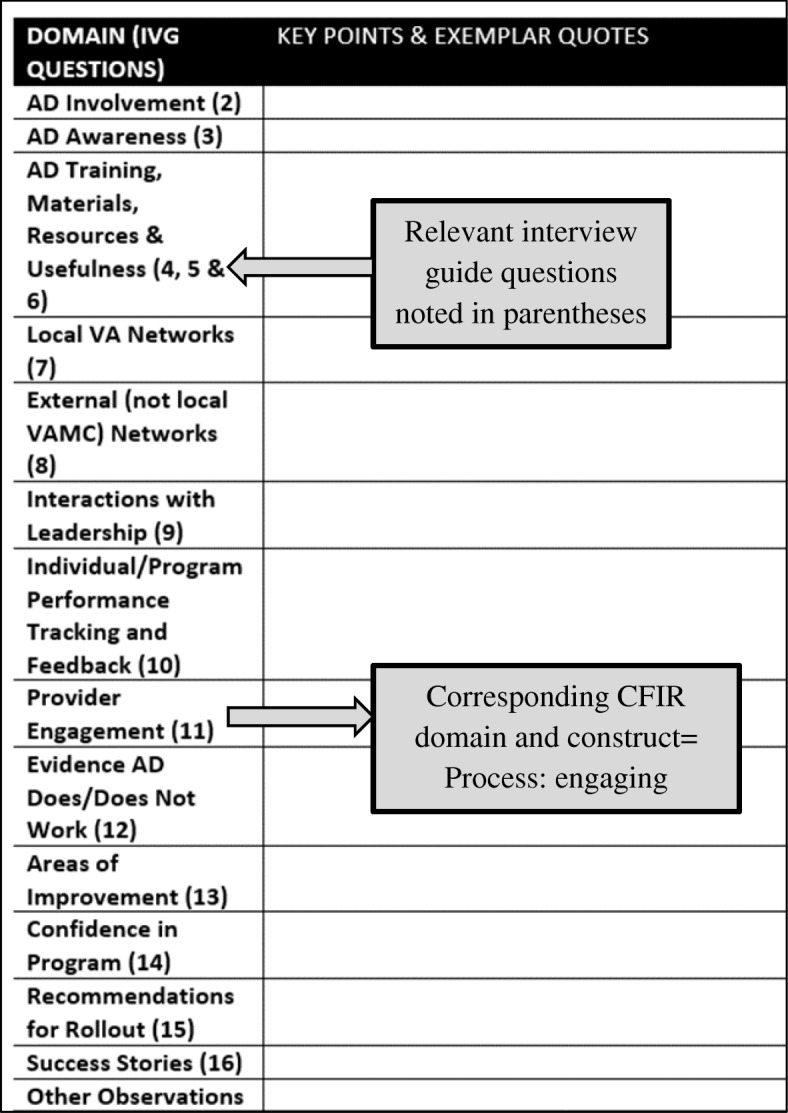
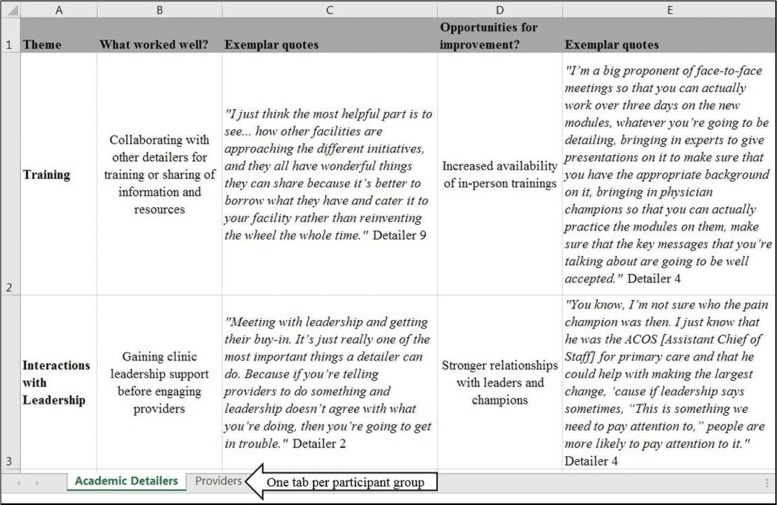
BACKGROUND: It is challenging to conduct and quickly disseminate findings from in-depth qualitative analyses, which can impede timely implementation of interventions because of its time-consuming methods. To better understand tradeoffs between the need for actionable results and scientific rigor, we present our method for conducting a framework-guided rapid analysis (RA) and a comparison of these findings to an in-depth analysis of interview transcripts. METHODS: Set within the context of an evaluation of a successful academic detailing (AD) program for opioid prescribing in the Veterans Health Administration, we developed interview guides informed by the Consolidated Framework for Implementation Research (CFIR) and interviewed 10 academic detailers (clinical pharmacists) and 20 primary care providers to elicit detail about successful features of the program. For the RA, verbatim transcripts were summarized using a structured template (based on CFIR); summaries were subsequently consolidated into matrices by participant type to identify aspects of the program that worked well and ways to facilitate implementation elsewhere. For comparison purposes, we later conducted an in-depth analysis of the transcripts. We described our RA approach and qualitatively compared the RA and deductive in-depth analysis with respect to consistency of themes and resource intensity. RESULTS: Integrating the CFIR throughout the RA and in-depth analysis was helpful for providing structure and consistency across both analyses. Findings from the two analyses were consistent. The most frequently coded constructs from the in-depth analysis aligned well with themes from the RA, and the latter methods were sufficient and appropriate for addressing the primary evaluation goals. Our approach to RA was less resource-intensive than the in-depth analysis, allowing for timely dissemination of findings to our operations partner that could be integrated into ongoing implementation. CONCLUSIONS: In-depth analyses can be resource-intensive. If consistent with project needs (e.g., to quickly produce information to inform ongoing implementation or to comply with a policy mandate), it is reasonable to consider using RA, especially when faced with resource constraints. Our RA provided valid findings in a short timeframe, enabling identification of actionable suggestions for our operations partner.
Overview
The claims and statistics of this paper haven’t been checked yet.
Free: it reads the open-access text and checks the first 5 claims that cite a source we can check. Create a free account to check every claim.
Integrity signals
Registry
Cites
Statistics
Figures
Verification
Claims the paper makes
The claims and statistics of this paper haven’t been checked yet.
Free: it reads the open-access text and checks the first 5 claims that cite a source we can check. Create a free account to check every claim.
Claims other papers make about this one
Each is checked against this paper’s own text: does it say what the citing paper says it does?
The source backs part of the claim, not all of it — or backs it for a different population, condition or comparison.
In the citing paper
“Rapid qualitative analyses has been compared directly with more traditional thematic analysis and found to produce closely aligned results, and is thus considered to have comparable rigor [40].”
From Addressing chronic pain with Focused Acceptance and Commitment Therapy in integrated primary care: findings from a mixed methods pilot randomized controlled trial (2022) · cites this paper as [40]
Experimental — accuracy not yet measuredIn the citing paper
“We analyzed qualitative interview data using rapid qualitative analysis [39, 40].”
Self-check
Percentages, sums and reported differences re-computed from the paper’s own numbers.
The self-check needs the paper’s full text.
Citations
Cites
Three Approaches to Qualitative Content Analysis
Hsieh, H.-F., & Shannon, S. E. (2005) · Qualitative Health Research · doi:10.1177/1049732305276687 · Cited by 44,601 · cited 1×
“The in-depth analysis is line with content analysis using a directed approach [17].”
MethodGraneheim, U. H., & Lundman, B. (2004) · Nurse Education Today · doi:10.1016/j.nedt.2003.10.001 · Cited by 20,772 · cited 1×
“To increase the likelihood of credibility, dependability, and trustworthiness of data, there are several decisions that should be considered when conducting qualitative evaluations, from design through execution [24].”
BackgroundQualitative Data Analysis: A Methods Sourcebook
Miles, M. B., Huberman, A. M., & Saldaña, J. (1988) · Cited by 20,701
Damschroder, L. J., Aron, D. C., Keith, R. E., Kirsh, S. R., Alexander, J. A., & Lowery, J. C. (2009) · Implementation Science · doi:10.1186/1748-5908-4-50 · Cited by 14,496 · cited 1×
“After completion of the RA, we conducted an in-depth, deductive analysis of the data using the CFIR to code transcripts [16].”
MethodSelf-citationCode Saturation Versus Meaning Saturation: How Many Interviews Are Enough?
Hennink, M. M., Kaiser, B. N., & Marconi, V. C. (2017) · Qualitative Health Research · doi:10.1177/1049732316665344 · Cited by 4,597 · cited 1×
“It is important to keep in mind that the combination of the strength and frequency of qualitative comments is what helps us understand their relative importance and contributions to our research [20], regardless of whether you are using a rapid or in-depth analytic approach.”
BackgroundWelcome to Implementation Science
Eccles, M. P., & Mittman, B. S. (2006) · Implementation Science · doi:10.1186/1748-5908-1-1 · Cited by 2,254 · cited 1×
“to promote the systematic uptake of research findings and other evidence-based practices into routine practice” [2].”
BackgroundA systematic review of the use of the Consolidated Framework for Implementation Research
Kirk, M. A., Kelley, C., Yankey, N., Birken, S. A., Abadie, B., & Damschroder, L. (2015) · Implementation Science · doi:10.1186/s13012-016-0437-z · Cited by 1,496 · cited 4×
“Damschroder LJ, Aron DC, Keith RE, Kirsh SR, Alexander JA, Lowery JC. Fostering implementation of health services research findings into practice: a consolidated framework for advancing implementation science.”
MethodInfluentialSelf-citationValidity, reliability, and generalizability in qualitative research
Leung, L. (2015) · Journal of Family Medicine and Primary Care · doi:10.4103/2249-4863.161306 · Cited by 1,404 · cited 2×
“With respect to consistency of our RA and in-depth analysis findings [14], themes from the RA were well-aligned with the CFIR domains and constructs from the in-depth analysis.”
ResultMatrix Analysis as a Complementary Analytic Strategy in Qualitative Inquiry
Averill, J. B. (2002) · Qualitative Health Research · doi:10.1177/10432302012006011 · Cited by 839
Damschroder, L. J., & Lowery, J. C. (2013) · Implementation Science · doi:10.1186/1748-5908-8-51 · Cited by 734
Self-citation
Research works printed but not linked: 1
- 15. Interim Under Secretary for Health. System-wide Implementation of Academic Detailing and Pain Program Champions. 2015.
Cited by
Items 101–200 of 912
Iellamo, A. D., Wong, C., Bilukha, O. O., Smith, J., Ververs, M., Gribble, K. D., Walczak, B., Wesolowska, A. M., Samman, S. A., O’Brien, M., et al. (2024) · Frontiers in Nutrition · doi:10.3389/fnut.2024.1225940 · Cited by 21
Mugo, A. M., Nyaga, M. N., Ndwiga, Z. N., & Atitwa, E. B. (2024) · Heliyon · doi:10.1016/j.heliyon.2024.e32632 · Cited by 21
Roseen, E. J., Natrakul, A., Kim, B., & Broder‐Fingert, S. (2024) · Implementation Science Communications · doi:10.1186/s43058-024-00642-4 · Cited by 22
“Thematic coding of failure modes within a matrix draws inspiration from rapid qualitative analysis approaches [71, 72].”
BackgroundLemmon, M. E., Barks, M. C., Bernstein, S. M., Davis, J. K., Jiao, M. G., Kaye, E. C., Glass, H. C., Brandon, D., & Ubel, P. A. (2022) · Annals of Neurology · doi:10.1002/ana.26457 · Cited by 23
“Rapid-cycle qualitative approaches have been demonstrated to yield comparable findings to in-depth qualitative analysis.(22,23) A structured summary was compiled for each case by two analysts working independently (M.”
MethodAgovi, A. M., Thompson, C. T., Craten, K. J., Fasanmi, E. O., Pan, M., Ojha, R. P., & Thompson, E. L. (2024) · Implementation Science Communications · doi:10.1186/s43058-024-00631-7 · Cited by 21
“We used a rapid deductive analysis approach [52–55] to generate a summary for each interview transcript and identify themes, using summary template which included pre-specified domains based on the RE-AIM and Proctor et al. constructs.”
MethodImplementation context for addressing social needs in a learning health system: a qualitative study
Theis, R. P., Blackburn, K., Lipori, G. P., Harle, C. A., Alvarado, M. M., Carek, P. J., Zemon, N., Howard, A., Salloum, R. G., Shenkman, E. A., et al. (2021) · Journal of Clinical and Translational Science · doi:10.1017/cts.2021.842 · Cited by 21
Singh, H., Tang, T., Thombs, R., Armas, A., Nie, J. X., Nelson, M. L. A., & Gray, C. S. (2022) · International Journal of Qualitative Methods · doi:10.1177/16094069221107144 · Cited by 22
“However, the concerns of rapid qualitative methods are that the compressed timelines could lack rigour and analytical depth (Burgess-Allen & Owen-Smith, 2010; Gale et al., 2019; McNall & Foster-Fishman, 2007; Silverio et al., 2020).”
BackgroundInfluentialKohn, M., Chadwick, K. A., & Steinman, L. E. (2023) · Prevention Science · doi:10.1007/s11121-023-01519-z · Cited by 23
“Interviews were analyzed using deductive thematic analysis and a rapid analysis approach (Gale et al., 2019; Nowell et al., 2017; Sandelowski et al., 2009).”
MethodBrunner, J., Cannedy, S., McCoy, M., Hamilton, A. B., & Shelton, J. B. (2023) · Journal of General Internal Medicine · doi:10.1007/s11606-023-08280-7 · Cited by 23
Hsu, C. W., Mogk, J. M., Hansell, L. D., Glass, J. E., & Allen, C. (2024) · International Journal of Qualitative Methods · doi:10.1177/16094069241256275 · Cited by 24
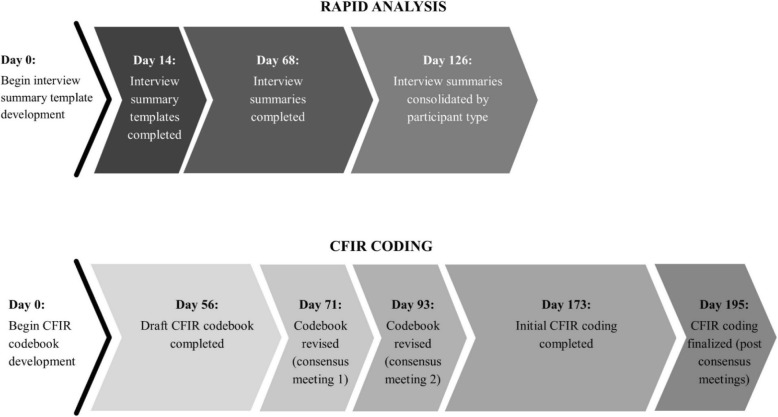
“Gale et al. (2019) reported that the rapid technique using interview summaries took 129 days versus 195 for traditional coding.”
InfluentialFerguson, E. F., Barnett, M. L., Goodwin, J. W., & Vernon, T. W. (2024) · Journal of Autism and Developmental Disorders · doi:10.1007/s10803-024-06451-x · Cited by 21
“This method has been found to yield comparable findings to other estab - lished qualitative approaches, such as thematic analysis (Gale et al., 2019; Nevedal et al., 2021; Taylor et al., 2018).”
Dryden, E. M., Bolton, R. E., Bokhour, B. G., Wu, J., Dvorin, K., Phillips, L., & Hyde, J. K. (2021) · Global Advances in Health and Medicine · doi:10.1177/21649561211021047 · Cited by 20
“First, we chose to use a rapid analysis approach which, while having been shown to generate timely and valid findings, also has tradeoffs including limiting our ability to produce complex and nuanced interpretations of the data.(42) Second, the observations were limited to one moment in time early in the pandemic and…”
MethodSelf-citationGips, A. H., Daubman, B., Petrillo, L. A., Bowman, J. K., Ouchi, K., Traeger, L. N., Jackson, V. A., Grudzen, C. R., Ritchie, C. S., & Aaronson, E. L. (2021) · Palliative & Supportive Care · doi:10.1017/s1478951521001012 · Cited by 25
“We performed a two-step rapid analysis (Gale et al., 2019) which included a non-facilitator member of the study team watching the interview and transposing the information into a structured template followed by the facilitator reviewing the summary and consolidating the information into a matrix.”
MethodResilient health care in global pediatric oncology during the COVID‐19 pandemic
Graetz, D. E., Sniderman, E., Villegas, C., Kaye, E. C., Ragab, I. A. M., Laptsevich, A., Maliti, B., Naidu, G., Huang, H., Gassant, P. Y., et al. (2021) · Cancer · doi:10.1002/cncr.34007 · Cited by 24
“Although there are limits to the depth of rapid analysis, we felt this methodology was appropriate given the urgency to share study results and previous work demonstrating consistency between rapid and indepth techniques.(24) Multilingual qualitative research is complex and risks loss of meaning during the translation…”
ResultUsing the WHO building blocks to examine cross-border public health surveillance in MENA
Buback, L., Martin, S., Pardo, E., Massoud, F., Formigo, J. P., Bonyani, A., Farag, N. H., Almayahi, Z. K., Ishii, K., Welty, S., et al. (2025) · International Journal for Equity in Health · doi:10.1186/s12939-025-02393-7 · Cited by 20
“This rapid qualitative method has been proven to be useful in resource-constrained contexts to promote timely uptake of findings by imple-menters [28, 29] and was most applicable to our time and resource-constrained settings.”
Luciani, M., Strachan, P. H., Conti, A., Schwartz, L. J., Kapiriri, L., Oliphant, A., & Nouvet, É. (2021) · International Journal of Qualitative Methods · doi:10.1177/16094069211040302 · Cited by 19
Steinman, L. E., Gasca, A., Hoeft, T. J., Raue, P. J., Henderson, S., Perez, R., Huerta, A., Fajardo, A., Vredevoogd, M. A., James, K. L., et al. (2023) · Frontiers in Public Health · doi:10.3389/fpubh.2023.1079319 · Cited by 22
“We used Gale and colleagues’ rapid framework method (68) to organize the data by code, data source, and stakeholder, and generate initial themes.”
MethodCannedy, S., Leung, L. B., Wyte‐Lake, T., Balut, M. D., Dobalian, A., Heyworth, L. K., Paige, N. M., & Der‐Martirosian, C. (2023) · Journal of Primary Care & Community Health · doi:10.1177/21501319231172897 · Cited by 20
Digital Health Needs and Preferences During Pregnancy and the Postpartum Period: Mixed Methods Study
Henrich, N. J., Brinson, A., Arnold, A., & Jahnke, H. R. (2024) · JMIR Formative Research · doi:10.2196/48960 · Cited by 20
“The interviews were analyzed thematically using a framework analysis [31-36].”
Gray, C. S., Ramachandran, M., Brinton, C. G., Forte, M., Loganathan, M., Walsh, R., Callaghan, J., Upshur, R. E. G., & Wiljer, D. (2024) · Social Science & Medicine · doi:10.1016/j.socscimed.2024.116962 · Cited by 20
Mohindra, N. A., Garcia, S. F., Kircher, S. M., Barnard, C., Perry, L. M., Lyleroehr, M., Coughlin, A., Morken, V., Chmiel, R., Hirschhorn, L. R., et al. (2024) · JAMIA Open · doi:10.1093/jamiaopen/ooae056 · Cited by 19
Husain, A. F., Cohen, E., Dubrowski, R., Jamieson, T., Kurahashi, A. M., Lokuge, B., Rapoport, A., Saunders, S., Stasiulis, E., Stinson, J., et al. (2021) · Journal of Medical Internet Research · doi:10.2196/25505 · Cited by 20
“CFIR interviews were analyzed using an adapted rapid analysis method [46].”
Allen, C. G., Judge, D. P., Levin, E., Sterba, K. R., Hunt, K. J., Ramos, P. S., Melvin, C. L., Wager, K. A., Catchpole, K., Clinton, C., et al. (2022) · Implementation Science Communications · doi:10.1186/s43058-022-00286-2 · Cited by 20
“Data from this step will be used to report to program leadership and optimize implementation and expansion [33].”
MethodExamining the Primary Care Experience of Patients With Opioid Use Disorder: A Qualitative Study
Incze, M. A., Chen, D., Galyean, P. O., Kimball, E. R., Stolebarger, L., Zickmund, S. L., & Gordon, A. J. (2023) · Journal of Addiction Medicine · doi:10.1097/adm.0000000000001140 · Cited by 19
Smith, J. D., Fu, E. S., Rado, J. T., Rosenthal, L. J., Carroll, A. J., Atlas, J. A., Carlo, A. D., Burnett‐Zeigler, I., Jordan, N., Brown, C. H., et al. (2021) · Contemporary Clinical Trials Communications · doi:10.1016/j.conctc.2021.100823 · Cited by 18
Willis, T. A., Wood, S., Brehaut, J., Colquhoun, H. L., Brown, B. C., Lorencatto, F., & Foy, R. (2022) · Implementation Science Communications · doi:10.1186/s43058-022-00275-5 · Cited by 22
“Our approach drew upon existing techniques [8, 9] and followed a two-stage process.”
MethodResultBalut, M. D., Gin, J. L., Alenkin, N. R., & Dobalian, A. (2022) · Journal of Community Health · doi:10.1007/s10900-022-01097-1 · Cited by 17
Shelley, D., Alvarez, G. G., Nguyen, T., Nguyen, N. T., Goldsamt, L. A., Cleland, C. M., Tozan, Y., Shuter, J., & Armstrong-Hough, M. J. (2022) · Implementation Science Communications · doi:10.1186/s43058-022-00361-8 · Cited by 19
“Patient interviews The research team employed a rapid qualitative analysis approach to balance rigor with a short timeline [43].”
MethodNorman, G., Mason, T., Dumville, J. C., Bower, P., Wilson, P. M., & Cullum, N. A. (2022) · BMJ Open · doi:10.1136/bmjopen-2022-064345 · Cited by 21
“Examples of this were use of online surveys, online recruitment or videoconferencing software for interviews or focus groups.”
MethodThe Complex Interplay of Communication and Trust in Healthcare Delivery
Simon, M. A., Danner, S., Saavedra, S., Flowers, F. M., Jackson, A., Ross, J., Abbas, H., Adetoro, E., Ekong, A., Osei, C., et al. (2021) · doi:10.54111/0001/mm5 · Cited by 17
Savoy, A., Khazvand, S., Mathew, A., Gilmore, A. M., Cottingham, E. M., Sangani, A., Weiner, M., & Damush, T. M. (2023) · International Journal of Medical Informatics · doi:10.1016/j.ijmedinf.2023.105265 · Cited by 17
Mathieson, A., Elvey, R., & Wilson, P. M. (2024) · BMJ Open · doi:10.1136/bmjopen-2023-076792 · Cited by 20
“Similarly, Gale et al 14 and Nevedal et al 32 both reported time savings, with Nevedal et al also reporting transcription cost savings.”
BackgroundMethodResultInfluentialKaye, E. C., Farner, H., Mehler, S., Bien, K., Mali, N. V., Brinkman, T. M., Baker, J. N., Hinds, P. S., & Mack, J. W. (2024) · JCO Oncology Practice · doi:10.1200/op.24.00249 · Cited by 20
Renfro, C. P., Wheeler, J. S., McDonough, S. L. K., Wang, J., & Hohmeier, K. C. (2019) · Research in Social and Administrative Pharmacy · doi:10.1016/j.sapharm.2019.12.003 · Cited by 17
Gutter, M. S., O’Neal, L. J., Riportella‐Muller, R., Sugarwala, L., Mathias, J., Vilaro, M. J., Paige, S. R., Szurek, S. M., Navarro, G., Baralt, C., et al. (2020) · Journal of Clinical and Translational Science · doi:10.1017/cts.2020.13 · Cited by 17
Edelman, E. J., Dziura, J., Esserman, D. A., Porter, E., Becker, W. C., Chan, P. A., Cornman, D. H., Rebick, G. W., Yager, J. E., Morford, K. L., et al. (2020) · Contemporary Clinical Trials · doi:10.1016/j.cct.2020.106156 · Cited by 17
Taylor, S. P., Short, R., Asher, A. M., Taylor, B., & Beidas, R. S. (2020) · Implementation Science Communications · doi:10.1186/s43058-020-00098-2 · Cited by 18
“science and have been shown to produce valid findings in a short time frame [21].”
BackgroundStunden, C., Zakani, S., Martin, A. G., Moodley, S., & Jacob, J. (2021) · JMIR Medical Education · doi:10.2196/30533 · Cited by 17
“The findings of open-ended feedback were coded using a rapid analysis framework [25].”
Possemato, K., Wu, J. C., Greene, C. J., MacQueen, R., Blonigen, D. M., Wade, M. J., Owen, J. E., Keane, T. M., Brief, D. J., Lindley, S. E., et al. (2021) · Journal of Medical Internet Research · doi:10.2196/29559 · Cited by 17
“Qualitative data were analyzed using a rapid analysis approach [33,34].”
Self-citationTyagi, V., Khan, A., Siddiqui, S., Abhilashi, M. K., Dhurve, P., Tugnawat, D. K., Bhan, A., & Naslund, J. A. (2023) · Psychiatric Quarterly · doi:10.1007/s11126-023-10019-w · Cited by 19
Study design and implementation of the PRecision Medicine In MEntal health Care (PRIME Care) Trial
Oslin, D. W., Chapman, S. R., DuVall, S. L., Gelernter, J. E., Ingram, E. P., Kranzler, H. R., Lehmann, L. S., Lynch, J. A., Lynch, K. G., Pyne, J. M., et al. (2020) · Contemporary Clinical Trials · doi:10.1016/j.cct.2020.106247 · Cited by 18
Ali, S. H., Mohsin, F. M., Banks, A., Lynn, P., & Lim, S. (2021) · Community Mental Health Journal · doi:10.1007/s10597-021-00893-8 · Cited by 17
Mace, R. A., Popok, P., Hopkins, S. W., Fishbein, N. S., & Vranceanu, A. (2022) · Aging & Mental Health · doi:10.1080/13607863.2022.2032600 · Cited by 16
Burke, H. M., Packer, C. A., Zingani, A., Moses, P., Bernholc, A. S., Ruderman, L. W., Martinez, A., & Chen, M. (2022) · PLoS ONE · doi:10.1371/journal.pone.0275986 · Cited by 16
“The data from each transcript were summarized in an Excel rapid analysis matrix [23, 24] based on the FGD guide and preliminary review of transcripts.”
MethodFrench, C. M., Dowrick, A., Fudge, N., Pinnock, H., & Taylor, S. J. (2022) · BMC Medical Research Methodology · doi:10.1186/s12874-022-01767-7 · Cited by 17
Schults, J. A., Marsh, N. M., Ullman, A. J., Kleidon, T. M., Ware, R. S., Byrnes, J., Young, E., Hall, L., Keijzers, G., Cullen, L., et al. (2023) · BMC Health Services Research · doi:10.1186/s12913-023-09499-0 · Cited by 18
“The CFIR framework will be used to identify factors that influence intervention implementation and effectiveness [36, 37].”
MethodEvaluation of a notes-based rapid qualitative analysis method to facilitate implementation
Brown, R., Kennedy, S. C., Chavez, E., Dumeng-Rodriguez, J., & Cullen, D. L. (2025) · Implementation Science Communications · doi:10.1186/s43058-025-00709-w · Cited by 20
“Despite the potential benefits of rapid methods, tension exists between the accelerated generation of results and scientific rigor [6, 9].”
InfluentialAcceptability and Feasibility of Perioperative Music Listening: A Rapid Qualitative Inquiry Approach
Polascik, B. A., Tan, D. J. A., Raghunathan, K., Kee, H. M., Lee, A., Sng, B. L., & Belden, C. M. (2020) · Journal of Music Therapy · doi:10.1093/jmt/thaa014 · Cited by 20
Rodriguez‐Hart, C., Mackson, G., Belanger, D., West, N., Brock, V., Phanor, J., Weigl, S., Ahmed, C., Soler, J., Rule, A., et al. (2021) · AIDS and Behavior · doi:10.1007/s10461-021-03498-0 · Cited by 17
COVID-19 Vaccine Hesitancy among U.S. Veterans Experiencing Homelessness in Transitional Housing
Gin, J. L., Balut, M. D., & Dobalian, A. (2022) · International Journal of Environmental Research and Public Health · doi:10.3390/ijerph192315863 · Cited by 16
“The study team utilized a rapid analysis approach (April to May 2021) to analyze the interview transcripts [39,40] using inductive grounded theory [41], identifying themes that were prominently expressed in Veterans’ perspectives about vaccination and within the deductive domains that were identified a priori [41,42].”
MethodImplementation Strategies to Support Built Environment Approaches in Community Settings
Balis, L. E., & Vincent, J. (2022) · Health Promotion Practice · doi:10.1177/15248399221081835 · Cited by 16
“This approach was selected to quickly disseminate findings to stakeholders and produce actionable results (Gale et al., 2019).”
MethodMace, R. A., Greenberg, J., Lemaster, N., Duarte, B., Penn, T., Kanaya, M., Doorley, J. D., Burris, J. L., Jacobs, C. A., & Vranceanu, A.-M. (2022) · JMIR Formative Research · doi:10.2196/34654 · Cited by 15
“Rather, it aims to refine study procedures (eg, screening, recruitment, and assessment), identify participants’ perceptions of the study or intervention (eg, acceptability, credibility, and barriers and facilitators to participation), and iteratively refine the program in preparation for a resource-intensive, fully po…”
MethodInfluentialStoltenberg, M., Kennedy, M., Rico, J. S., Russell, M. L., Petrillo, L. A., Engel, K. G., Kamdar, M. M., Ouchi, K., Wang, D. H., Bernacki, R., et al. (2022) · Journal of the American College of Emergency Physicians Open · doi:10.1002/emp2.12860 · Cited by 15
Implementation of Social Isolation Screening and an Integrated Community Resource Referral Platform
Gunn, R., Pisciotta, M., Volk, M., Bowen, M., Gold, R. B., & Mossman, N. (2023) · The Journal of the American Board of Family Medicine · doi:10.3122/jabfm.2023.230047r1 · Cited by 16
“19,20 First, speci fi c domains were identi fi ed that corresponded to pilot evaluation questions.”
BackgroundAyalasomayajula, S., Herrera, Y. M., Frank, H. E., Guzman, L. E., Fu, E. S., Martinez, R. G., Ramalho, B., Blau, S., & Tovar, A. (2025) · Journal of Nutrition · doi:10.1016/j.tjnut.2025.01.035 · Cited by 15
Hagaman, A. K., Rhodes, E., Aloe, C. F., Hennein, R., Peng, M. L., Deyling, M., Georgescu, M., Nyhan, K., Schwartz, A. E., Zhou, K., et al. (2025) · Implementation Research and Practice · doi:10.1177/26334895251367470 · Cited by 20
“Other reviews have discussed methodological techniques such as rapid analysis (Gale et al., 2019), the use of ethnographic approaches in implementation research (Gertner et al., 2021), or the application of speci fi c IS frameworks, such as Reach Effectiveness Adoption Implementation Maintenance…”
Steinman, L. E., Parrish, A. T., Kohn, M., Wu, S., Hara-Hubbard, K. K., Brown, L., Imam, S., Baquero, B. I., Hannon, P. A., & Snowden, M. B. (2023) · Frontiers in Public Health · doi:10.3389/fpubh.2022.1079082 · Cited by 17
“We used the rapid framework method (41) to thematically analyze (42) interview data.”
MethodBarwick, M. A., Brown, J., Petricca, K., Stevens, B., Powell, B. J., Jaouich, A., Shakespeare, J., & Seto, E. (2023) · Implementation Science Communications · doi:10.1186/s43058-023-00402-w · Cited by 16
“This rapid analysis method is effective [76] and does not require costly and timely transcription.”
BackgroundMethodInfluentialMorrow, A., Steinberg, J., Chan, P., Tiernan, G., Kennedy, E., Egoroff, N., Hilton, D. C. K., Sankey, L., Venchiarutti, R. L., Hayward, A., et al. (2023) · Translational Behavioral Medicine · doi:10.1093/tbm/ibad009 · Cited by 17
“However, inefficiencies have been encountered when attempting to apply these approaches in practice –often they require multiple stakeholder meetings and involve time-intensive analyses, which can be problematic in the context of busy and resource-limited clinical settings [13, 14].”
BackgroundMulawa, M. I., Mtukushe, B., Knippler, E. T., Matiwane, M., Al-Mujtaba, M., Muessig, K. E., Hoare, J., & Hightow‐Weidman, L. (2023) · JMIR Formative Research · doi:10.2196/47575 · Cited by 15
Implementation and Impact of Perinatal Food Is Medicine Programs: A Qualitative Research Study
Balis, L. E., Yaroch, A. L., Palmer, S., Shaw, E., Santos, P. L. D., & Shanks, C. B. (2024) · Journal of the Academy of Nutrition and Dietetics · doi:10.1016/j.jand.2024.02.007 · Cited by 16
Reid, H., Proeschold‐Bell, R. J., Makarushka, C., Vega, K. D. M., Huchko, M. J., Jerónimo, J., & Vasudevan, L. (2022) · JMIR Formative Research · doi:10.2196/32577 · Cited by 14
“The rapid analysis approach was necessary to facilitate progress toward system development and pilot evaluation within the time frame of the study funding [31].”
MethodLevinson, J., Hickey, E., Fuchu, P., Chu, A., Barnett, M. L., Stadnick, N. A., Feinberg, E., & Broder‐Fingert, S. (2023) · BMC Family Practice · doi:10.1186/s12875-023-02072-y · Cited by 16
Mlunde, L. B., Saalim, K., Mbwambo, J. K. K., Kiwia, P., Fitch, E. R., Manyama, W., Rugemalila, I., Clay, S., Lambdin, B. H., Stelmach, R. D., et al. (2024) · Harm Reduction Journal · doi:10.1186/s12954-024-00965-4 · Cited by 17
“RQA is an increasingly common analysis method used in health services research to rapidly aggregate findings to inform practice and policy [49–53].”
MethodFrank, H. E., Albanese, A. M., Sun, S., Saadeh, F. B., Johnson, B. T., Elwy, A. R., & Loucks, E. B. (2024) · Mindfulness · doi:10.1007/s12671-024-02366-x · Cited by 14
“Inter-views were analyzed using a rapid framework analysis approach in which we created a summary template to distill key points from each interview and transferred those summaries into a matrix (Gale et al., 2019; Hamilton, 2013).”
MethodFinley, E. P., Chrystal, J. G., Gable, A. R., Fletcher, E. H., Palma, A., Canelo, I. A., Oberman, R. S., Jackson, L., Lesser, R., Moin, T., et al. (2024) · Implementation Science Communications · doi:10.1186/s43058-024-00605-9 · Cited by 15
“This approach to analysis is distinct in two key ways from the data distillation process typically used in rapid qualitative analysis [8, 34–36].”
MethodA Photo-Narrative Intervention for Children With Severe Neurological Impairment in the PICU
Bogetz, J. F., Oslin, E., Meissner, E., Trowbridge, A. C., Anderson, J., Morris, L., Barton, K. S., Yi‐Frazier, J. P., Watson, R. S., & Rosenberg, A. R. (2024) · Journal of Pain and Symptom Management · doi:10.1016/j.jpainsymman.2024.11.021 · Cited by 14
Joyce, C. M., Saulsgiver, K. A., Mohanty, S., Bachireddy, C., Molfetta, C., Steffy, M., Yoder, A., & Buttenheim, A. M. (2021) · JMIR Formative Research · doi:10.2196/27801 · Cited by 17
“Interviews were qualitatively analyzed using a rapid analytic framework [22,23].”
MethodLin, E., Uhler, L. M., Finley, E. P., Jayakumar, P., Rathouz, P. J., Bozic, K. J., & Tsevat, J. (2022) · BMJ Open · doi:10.1136/bmjopen-2021-055933 · Cited by 14
Lemke, A. A., Choi, S. H., Dang, V., Dang, T. Q., & Yu, J. (2022) · Human Genetics and Genomics Advances · doi:10.1016/j.xhgg.2022.100134 · Cited by 15
Co-design of the Transgender Health Information Resource: Web-Based Participatory Design
Morse, B., Soares, A., Ytell, K., DeSanto, K., Allen, M., Holliman, B. D., Lee, R. S., Kwan, B. M., & Schilling, L. M. (2023) · Journal of Participatory Medicine · doi:10.2196/38078 · Cited by 15
“A research team member performed rapid analysis [79] of the transcriptions to quickly identify key points and comments that reflected participant engagement and major design decisions.”
MethodWeissman, J. S., Adler, R., Betancourt, J. R., Tan‐McGrory, A., Lewis, J. A., DesRoches, C. M., Pomer, A., Singh, E., Liebig, A., Ilkhani, S., et al. (2023) · Health Affairs · doi:10.1377/hlthaff.2023.00474 · Cited by 16
Michie, S., West, R., Pidgeon, N., Reicher, S. D., Amlôt, R., & Bear, L. (2021) · British Journal of Health Psychology · doi:10.1111/bjhp.12557 · Cited by 18
“Literature from three sources was reviewed using rapid review methods (Gale et al., 2019) and the findings categorized according to the COM-B model (West & Michie, 2020).”
MethodHaverhals, L. M., Magid, K. H., & Kononowech, J. (2022) · Frontiers in Health Services · doi:10.3389/frhs.2022.935341 · Cited by 13
“The rapid approach is beneficial because it allows PERSIVED team members to provide timely feedback and support to HBPC programs participating in the intervention, rather than using a traditional content analysis approach to analyzing interview data which is often more time consuming and laborious (26, 28).”
MethodAmonoo, H. L., Guo, M., Boardman, A. C., Acharya, N. B., Daskalakis, E. P., Deary, E. C., Waldman, L. P., Gudenkauf, L. M., Lee, S. J., Joffe, H., et al. (2024) · Transplantation and Cellular Therapy · doi:10.1016/j.jtct.2024.01.064 · Cited by 15
Steinman, L. E., Chadwick, K. A., Santos, É. C., Sravanam, S., Johnson, S. S., Rensema, E., Mayotte, C., Denison, P., & Lorig, K. R. (2024) · JMIR Aging · doi:10.2196/52069 · Cited by 13
“For qualitative data, we used thematic analysis [48,49] to understand similarities and differences across and within remote EBP acceptability and benefits or unintended consequences.”
MethodRay, J. M., Finn, E. B., Tyrrell, H., Aloe, C. F., Perrin, E. M., Wood, C. T., Miner, D. S., Grout, R. W., Michel, J. J., Damschroder, L. J., et al. (2024) · Journal of Medical Internet Research · doi:10.2196/51952 · Cited by 14
“Situation awareness theory expands our inquiry into human-system interactions by identifying the ways in which clinicians gather, process, and comprehend information in the clinical setting to predict future states and to inform their decision-making [11,15].”
BackgroundMethodSelf-citationAmonoo, H. L., Guo, M., Keane, E. P., Boardman, A. C., Song, M. T., Wolfe, E. D., Cutler, C. S., Jim, H., Lee, S. J., Huffman, J. C., et al. (2024) · Transplantation and Cellular Therapy · doi:10.1016/j.jtct.2024.09.022 · Cited by 14
Cultural adaptation of an internet-based self-help app for grieving Syrian refugees in Switzerland
Aeschlimann, A., Heim, E., Hoxha, A., Triantafyllidou, V., Killikelly, C., Haji, F., Stoeckli, R. T., Aebersold, M., & Maercker, A. (2024) · BMC Public Health · doi:10.1186/s12889-024-20507-8 · Cited by 14
“To efficiently meet the project timeline, we initially performed rapid qualitative analyses (RQA; [59, 60]) for KIIUE2 and KIIUE3 to prepare for the decision-making meetings.”
MethodImpact of inclusive marketing communication on brand love and brand attitude
Srivastava, J., Malik, N., Sethi, D., & Tripathi, S. N. (2025) · Corporate Communications An International Journal · doi:10.1108/ccij-02-2024-0021 · Cited by 18
Vilendrer, S. M., Amano, A., Brown‐Johnson, C. G., Favet, M., Safaeinili, N., Villasenor, J., Shaw, J. G., Hertelendy, A. J., Asch, S. M., & Mahoney, M. R. (2021) · Journal of Medical Internet Research · doi:10.2196/26573 · Cited by 14
“Excerpts were presented in a matrix format following rapid analytic procedure methodology [48].”
Ali, S. H., Gupta, S., Tariq, M., Penikalapati, R., Vasquez-Lopez, X., Auer, S., Hanif, C., Parekh, N., Merdjanoff, A. A., & DiClemente, R. J. (2022) · Ecology of Food and Nutrition · doi:10.1080/03670244.2022.2056166 · Cited by 13
Henna Budhwani, P., Maragh‐Bass, A. C., Tolley, E. E., Comello, M. L. G., Stoner, M. C. D., Larsen, M. A., Brambilla, D. J., Muessig, K. E., Pettifor, A. E., Bond, C. L., et al. (2023) · JMIR Research Protocols · doi:10.2196/41240 · Cited by 14
Adapting Community Health Worker Care Models to Advance Mental Health Services Among LGBTQ Youth
Barnett, M. L., Salem, H., Rosas, Y. G., Feinberg, E., Nunez-Pepen, R., Chu, A., Belmont-Ryu, H., Matsuno, E. G., & Broder‐Fingert, S. (2023) · Administration and Policy in Mental Health and Mental Health Services Research · doi:10.1007/s10488-023-01268-9 · Cited by 16
Steinman, L. E., Santos, É. C., Chadwick, K. A., Mayotte, C., Johnson, S. S., Kohn, M., Kelley, J., Denison, P., Montes, C., Spencer-Brown, L., et al. (2023) · Health Promotion Practice · doi:10.1177/15248399231175843 · Cited by 14
“A rapid analytic framework (Gale et al., 2019) was used to thematically analyze interview data.”
MethodReeve, B. B., Lucas, N. R., Chen, D., McFatrich, M., Jones, H. N., Gordon, K. L., Leiva, L. Z., Lin, L., Coenraads, M., von Hehn, J., et al. (2023) · European Journal of Paediatric Neurology · doi:10.1016/j.ejpn.2023.07.007 · Cited by 13
Ernecoff, N. C., Abdel-Kader, K. F. M., Cai, M., Yabes, J. G., Shah, N., Schell, J. O., & Jhamb, M. (2021) · Kidney360 · doi:10.34067/kid.0007062020 · Cited by 13
Ahluwalia, S. C., Vegetabile, B., Edelen, M. O., Setodji, C. M., Rodriguez, A., Scherling, A., Phillips, J. L. H., Farmer, C. M., Harrison, J. M., Bandini, J. I., et al. (2021) · Rand health quarterly · doi:10.7249/rhq-09-03-03 · Cited by 19
Multistakeholder Perspectives on Data Sharing to Address Patient Food Insecurity
Nederveld, A., Holtrop, J. S., Duarte, K. F., Skalecki, M., & Broaddus-Shea, E. T. (2022) · The Journal of the American Board of Family Medicine · doi:10.3122/jabfm.2022.01.210093 · Cited by 13
“Rapid qualitative analysis techniques have been shown to result in similar theme development when compared with traditional qualitative thematic analysis, offer earlier return of findings, and are often combined with other analytic methods.(28,29) These approaches work well for studies in which specific answers are so…”
ResultRoss, J., Betancourt, G., Andrade, E. A., Klein, A., Marrero, L., Morales, G. A., Rivera, S., Watnick, D. L., & Patel, V. V. (2023) · Journal of Community Health · doi:10.1007/s10900-023-01266-w · Cited by 12
“The project PI (JR), community investigator (GB) and a research coordinator (EA) used rapid qualitative methods to analyze the data and obtain actionable and targeted results in a short timeframe and maintain scientific rigor [30].”
Bonett, S., Mahajan, A., da Silva, D. T., Williams, J., Brady, K. A., Bauermeister, J. A., & Wood, S. M. (2024) · Implementation Science Communications · doi:10.1186/s43058-023-00543-y · Cited by 12
“Rapid qualitative analysis was conducted using transcript summaries and matrix analysis [23–25].”
MethodMoyano, A., Vergara, D., Mirti, A. F., Bonz, A. G., Monar, A., Astudillo, E., Vaca, S., Córdova, K., Armijos, A., Barroso, A., et al. (2024) · Conflict and Health · doi:10.1186/s13031-024-00629-x · Cited by 13
“We employed rapid qualitative analysis [46], a pragmatic approach to identify action-oriented results [47–49].”
MethodAnvari, M. S., Sacko, C., Atkinson, G. E., Triplett, N. S., Kihiuria, M. W., Sonn, M., Anane, J. S., Derenoncourt, M., Belcher, A. M., Weintraub, E., et al. (2025) · International Journal of Drug Policy · doi:10.1016/j.drugpo.2025.104924 · Cited by 12
“Rapid qualitative analysis was utilized, modeled after Gale et al. (2019) who observed consistent findings between traditional, in-depth, and rapid analysis.”
Women Veterans’ Experiences with Integrated, Biopsychosocial Pain Care: A Qualitative Study
Nicosia, F. M., Gibson, C. J., Purcell, N., Zamora, K. A., Tighe, J., & Seal, K. H. (2021) · Pain Medicine · doi:10.1093/pm/pnaa481 · Cited by 13
Naar, S., Pennar, A. L., Wang, B., Brogan-Hartlieb, K., & Fortenberry, J. D. (2021) · Health Psychology · doi:10.1037/hea0001071 · Cited by 13
Radcliffe, E., Khan, A., Wright, D. N. M., Berman, R. B., Demain, S. H., Foster, C. L., Restorick‐Banks, S., Richardson, A. M., Wagland, R., & Calman, L. A. (2021) · Palliative Medicine · doi:10.1177/02692163211049497 · Cited by 13
Owen‐Smith, A. A., Black, H., Emerson, D. J., Cotner, M. A., Smith, H., Jackson, D., Ford, J. D., DeBar, L., DiClemente, R. J., & Hayat, M. J. (2021) · International Journal of Yoga Therapy · doi:10.17761/2021-d-21-00032 · Cited by 14
Gromatsky, M. A., Patel, T. A., Wilson, S. M., Mann, A. J., Aho, N. A., Carpenter, V. L., Calhoun, P. S., Beckham, J. C., Goodman, M. S., & Kimbrel, N. A. (2022) · Psychiatry Research · doi:10.1016/j.psychres.2022.114437 · Cited by 14
At‐home end‐tidal carbon dioxide measurement in children with invasive home mechanical ventilation
Foster, C. C., Kwon, S., Shah, A. V., Hodgson, C. A., Hird‐McCorry, L. P., Janus, A., Jedraszko, A. M., Swanson, P., Davis, M. M., Goodman, D. M., et al. (2022) · Pediatric Pulmonology · doi:10.1002/ppul.26092 · Cited by 12
“To assess parents' perceptions of usability, research professionals' written notes and taped recordings were reviewed in a real‐time manner as feedback was gathered, and user feedback was summarized using rapid qualitative analytic methods.(25,26)”
MethodStefančić, A., Rogers, R. T., Styke, S., Xu, X., Buchsbaum, R., Nossel, I. R., Cabassa, L. J., Stroup, T. S., & Kimhy, D. (2022) · JMIR Mental Health · doi:10.2196/41482 · Cited by 14
“Matrix analysis is a rigorous but pragmatic method for rapidly extracting and reducing qualitative data, allowing researchers to systematically synthesize and catalog content into a template of key topics [51-53].”
Metadata
- Authors
- Gale, R. C., Wu, J., Erhardt, T., Bounthavong, M., Reardon, C. M., Damschroder, L. J., & Midboe, A. M.
- Affiliations
- VA Palo Alto Health Care System (US)
- Veterans Health Administration (US)
- VA Center for Clinical Management Research (US)
- Corresponding author
- Midboe, Amanda M.
- Venue
- Implementation Science
- Published
- 2019-02-01
- Volume
- 14
- Issue
- 1
- Pages
- 11-11
- ISSN
- 1748-5908 (ISSN-L)
- PMC
- PMC6359833
- OpenAlex
- W2938766056
- Semantic Scholar
- a626f0fe88503d634d82db688e6c0efe34af9c01
- Cited by
- 846
- References
- 22
- Citations by year
- 2026: 136 · 2025: 146 · 2024: 177 · 2023: 122 · 2022: 154 · 2021: 74 · 2020: 32 · 2019: 5
- FWCI
- 90.32
- Type
- journal article
- Language
- en
- Open access
- gold
- doi.org
- Licence
- cc-by
- creativecommons.org/licenses/by/4.0/ (tdm)
- Locations
- Implementation Science (publishedVersion, cc-by)
- Europe PMC (PubMed Central) (publishedVersion, other-oa)
- PubMed Central (publishedVersion, cc-by)
- PubMed (publishedVersion)
- DOAJ (DOAJ: Directory of Open Access Journals) (submittedVersion, cc-by-sa)
- eScholarship (California Digital Library) (submittedVersion, cc-by)
- Funders
- U.S. Department of Veterans Affairs
- Quality Enhancement Research Initiative
- Veterans Affairs San Diego Healthcare System
- Topics
- Health Sciences › Health Professions › General Health Professions › Health Policy Implementation Science
- Social Sciences › Education › Qualitative Research Methods and Applications
- Social Sciences › Public Administration › Evaluation and Performance Assessment
- Keywords
- rapid qualitative analysis, academic detailing, opioid prescribing, Consolidated Framework for Implementation Research, clinical pharmacists, primary care providers, implementation research, process evaluation, resource intensity, Veterans Health Administration
- MeSH terms
- Implementation Science, Analgesics, Opioid, Data Collection, Humans, Interviews as Topic, Practice Patterns, Physicians', Drug Prescriptions, United States, United States Department of Veterans Affairs, Program Evaluation, Process Assessment, Health Care, Information Dissemination, Qualitative Research, Veterans Health
About these checks
Registry, retraction, Cites and statistics results are computed, not judged, with one exception: a printed reference that no index lists is read once by a model before it counts as a citation error. Claims are extracted by a model and kept only when their quote appears verbatim in the text; each cited source is then checked, with a model’s help, for whether it says what the claim relies on. Those verdicts can be wrong — read the claim’s quote and the cited source before relying on one.
Statistics and arithmetic are recomputed, not judged.
Confidence bands are shown only for fields calibrated on our annotated test set. None is calibrated yet, so no band is shown.
What counts as a claim ›How we measure confidence ›How we check this ›
Are you an author, or do you see a problem with this page? Request a review
Data sources
Bibliographic data: Semantic Scholar, OpenAlex, Crossref.
Contains information from the Semantic Scholar Academic Graph Datasets, made available under the ODC Attribution License (ODC-BY 1.0).
Semantic Scholar’s data is described in: Kinney, R., et al. (2023). The Semantic Scholar Open Data Platform. arXiv:2301.10140.
