

Comparison of rapid vs in-depth qualitative analytic methods from a process evaluation of academic detailing in the Veterans Health Administration
Open accessThe DOI matches its Crossref record; 21 of the 22 references it cites were found in a registry or an index.
Abstract
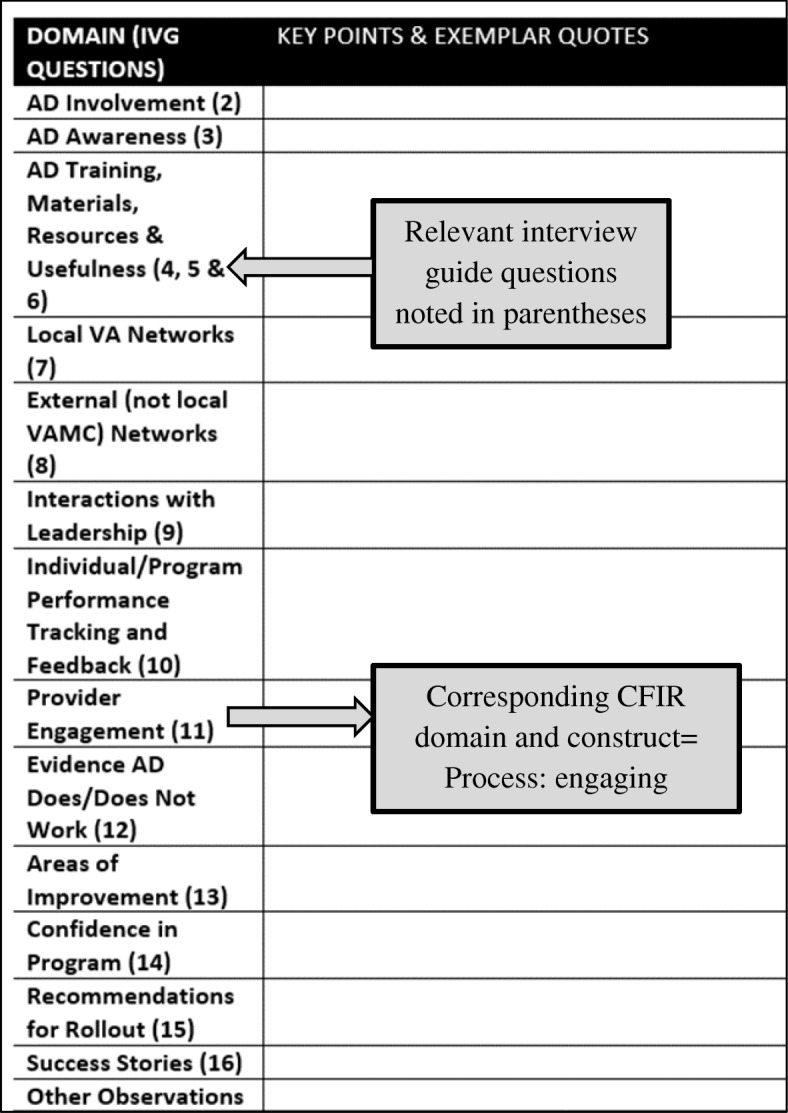
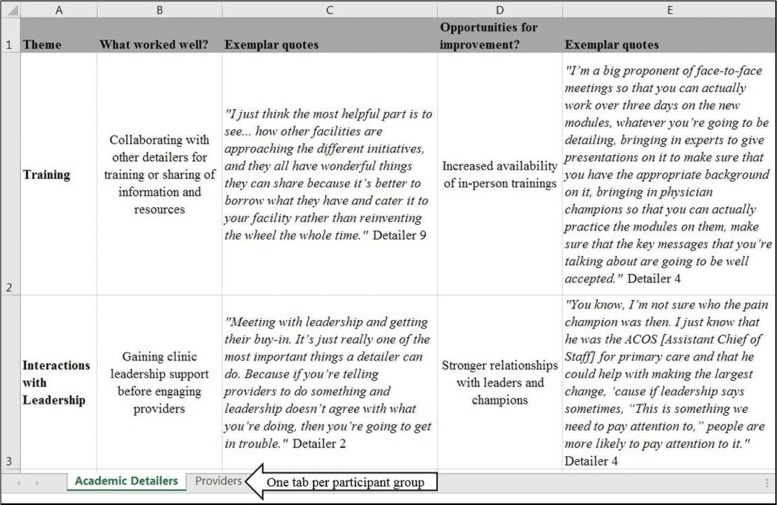
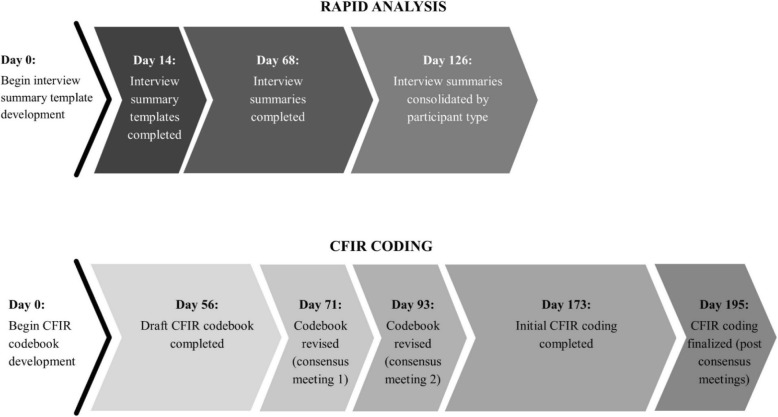
BACKGROUND: It is challenging to conduct and quickly disseminate findings from in-depth qualitative analyses, which can impede timely implementation of interventions because of its time-consuming methods. To better understand tradeoffs between the need for actionable results and scientific rigor, we present our method for conducting a framework-guided rapid analysis (RA) and a comparison of these findings to an in-depth analysis of interview transcripts. METHODS: Set within the context of an evaluation of a successful academic detailing (AD) program for opioid prescribing in the Veterans Health Administration, we developed interview guides informed by the Consolidated Framework for Implementation Research (CFIR) and interviewed 10 academic detailers (clinical pharmacists) and 20 primary care providers to elicit detail about successful features of the program. For the RA, verbatim transcripts were summarized using a structured template (based on CFIR); summaries were subsequently consolidated into matrices by participant type to identify aspects of the program that worked well and ways to facilitate implementation elsewhere. For comparison purposes, we later conducted an in-depth analysis of the transcripts. We described our RA approach and qualitatively compared the RA and deductive in-depth analysis with respect to consistency of themes and resource intensity. RESULTS: Integrating the CFIR throughout the RA and in-depth analysis was helpful for providing structure and consistency across both analyses. Findings from the two analyses were consistent. The most frequently coded constructs from the in-depth analysis aligned well with themes from the RA, and the latter methods were sufficient and appropriate for addressing the primary evaluation goals. Our approach to RA was less resource-intensive than the in-depth analysis, allowing for timely dissemination of findings to our operations partner that could be integrated into ongoing implementation. CONCLUSIONS: In-depth analyses can be resource-intensive. If consistent with project needs (e.g., to quickly produce information to inform ongoing implementation or to comply with a policy mandate), it is reasonable to consider using RA, especially when faced with resource constraints. Our RA provided valid findings in a short timeframe, enabling identification of actionable suggestions for our operations partner.
Overview
The claims and statistics of this paper haven’t been checked yet.
Free: it reads the open-access text and checks the first 5 claims that cite a source we can check. Create a free account to check every claim.
Integrity signals
Registry
Cites
Statistics
Figures
Verification
Claims the paper makes
The claims and statistics of this paper haven’t been checked yet.
Free: it reads the open-access text and checks the first 5 claims that cite a source we can check. Create a free account to check every claim.
Claims other papers make about this one
Each is checked against this paper’s own text: does it say what the citing paper says it does?
The source backs part of the claim, not all of it — or backs it for a different population, condition or comparison.
In the citing paper
“Rapid qualitative analyses has been compared directly with more traditional thematic analysis and found to produce closely aligned results, and is thus considered to have comparable rigor [40].”
From Addressing chronic pain with Focused Acceptance and Commitment Therapy in integrated primary care: findings from a mixed methods pilot randomized controlled trial (2022) · cites this paper as [40]
Experimental — accuracy not yet measuredIn the citing paper
“We analyzed qualitative interview data using rapid qualitative analysis [39, 40].”
Self-check
Percentages, sums and reported differences re-computed from the paper’s own numbers.
The self-check needs the paper’s full text.
Citations
Cites
Three Approaches to Qualitative Content Analysis
Hsieh, H.-F., & Shannon, S. E. (2005) · Qualitative Health Research · doi:10.1177/1049732305276687 · Cited by 44,601 · cited 1×
“The in-depth analysis is line with content analysis using a directed approach [17].”
MethodGraneheim, U. H., & Lundman, B. (2004) · Nurse Education Today · doi:10.1016/j.nedt.2003.10.001 · Cited by 20,772 · cited 1×
“To increase the likelihood of credibility, dependability, and trustworthiness of data, there are several decisions that should be considered when conducting qualitative evaluations, from design through execution [24].”
BackgroundQualitative Data Analysis: A Methods Sourcebook
Miles, M. B., Huberman, A. M., & Saldaña, J. (1988) · Cited by 20,701
Damschroder, L. J., Aron, D. C., Keith, R. E., Kirsh, S. R., Alexander, J. A., & Lowery, J. C. (2009) · Implementation Science · doi:10.1186/1748-5908-4-50 · Cited by 14,496 · cited 1×
“After completion of the RA, we conducted an in-depth, deductive analysis of the data using the CFIR to code transcripts [16].”
MethodSelf-citationCode Saturation Versus Meaning Saturation: How Many Interviews Are Enough?
Hennink, M. M., Kaiser, B. N., & Marconi, V. C. (2017) · Qualitative Health Research · doi:10.1177/1049732316665344 · Cited by 4,597 · cited 1×
“It is important to keep in mind that the combination of the strength and frequency of qualitative comments is what helps us understand their relative importance and contributions to our research [20], regardless of whether you are using a rapid or in-depth analytic approach.”
BackgroundWelcome to Implementation Science
Eccles, M. P., & Mittman, B. S. (2006) · Implementation Science · doi:10.1186/1748-5908-1-1 · Cited by 2,254 · cited 1×
“to promote the systematic uptake of research findings and other evidence-based practices into routine practice” [2].”
BackgroundA systematic review of the use of the Consolidated Framework for Implementation Research
Kirk, M. A., Kelley, C., Yankey, N., Birken, S. A., Abadie, B., & Damschroder, L. (2015) · Implementation Science · doi:10.1186/s13012-016-0437-z · Cited by 1,496 · cited 4×
“Damschroder LJ, Aron DC, Keith RE, Kirsh SR, Alexander JA, Lowery JC. Fostering implementation of health services research findings into practice: a consolidated framework for advancing implementation science.”
MethodInfluentialSelf-citationValidity, reliability, and generalizability in qualitative research
Leung, L. (2015) · Journal of Family Medicine and Primary Care · doi:10.4103/2249-4863.161306 · Cited by 1,404 · cited 2×
“With respect to consistency of our RA and in-depth analysis findings [14], themes from the RA were well-aligned with the CFIR domains and constructs from the in-depth analysis.”
ResultMatrix Analysis as a Complementary Analytic Strategy in Qualitative Inquiry
Averill, J. B. (2002) · Qualitative Health Research · doi:10.1177/10432302012006011 · Cited by 839
Damschroder, L. J., & Lowery, J. C. (2013) · Implementation Science · doi:10.1186/1748-5908-8-51 · Cited by 734
Self-citation
Research works printed but not linked: 1
- 15. Interim Under Secretary for Health. System-wide Implementation of Academic Detailing and Pain Program Champions. 2015.
Cited by
Items 401–500 of 912
Readying Community Pharmacies to Participate in COVID-19 Testing and Vaccination
Bacci, J. L., Shah, P. D., Arnold, J., Atkins, D. L., & Weiner, B. J. (2023) · Disaster Medicine and Public Health Preparedness · doi:10.1017/dmp.2023.84 · Cited by 6
“4 (1-27) Disaster Medicine and Public Health Preparedness 7”
BackgroundDecision-Making Framework for Medical Equipment Maintenance and Replacement in Private Hospitals
VAMED Engineering (M) Sdn Bhd, P. F., Salim, S. H., & Salim, S. A. (2023) · International Journal of Sustainable Construction Engineering Technology · doi:10.30880/ijscet.2023.14.03.028 · Cited by 7
Tejeda, C. J., Garabedian, P. M., Rice, H. E., Samal, L., Latham, N. K., & Dykes, P. C. (2023) · PubMed Central · Cited by 6
Bolívar-Rocha, M. C., Arrivillaga, M., Plazas, P. C., Torres-Isasiga, J. A., Hurtado-Quiñones, L., Gómez, S. A., Alvarado, B., Mueses-Marín, H. F., & Martínez-Cajas, J. (2024) · Sexual and Gender Diversity in Social Services · doi:10.1080/10538720.2023.2291088 · Cited by 6
Subramanian, L., Desai, M. P., Miller, K. A., Jurczak, A., & Henrich, N. J. (2022) · The Joint Commission Journal on Quality and Patient Safety · doi:10.1016/j.jcjq.2022.01.007 · Cited by 6
Stump, T. K., Ethier, K. L., Hirschhorn, L. R., Dakin, A., Bouacha, N., Freeman, A., Bannon, J., Gómez, W., Moskowitz, J. T., & Bouris, A. M. (2022) · JAIDS Journal of Acquired Immune Deficiency Syndromes · doi:10.1097/qai.0000000000002980 · Cited by 6
Ramos-Pibernus, A. G., Rodríguez‐Madera, S., Rosario-Hernández, E., Moreta-Ávila, F., Silva-Reteguis, J., & Rivera-Segarra, E. (2022) · BMC Public Health · doi:10.1186/s12889-022-14375-3 · Cited by 5
Li, C. N., Leya, G. A., Mort, E. A., Aaronson, E. L., & Gartland, R. M. (2023) · American Journal of Medical Quality · doi:10.1097/jmq.0000000000000106 · Cited by 5
Hausmann, L. R. M., Goodrich, D. E., Rodriguez, K. L., Beyer, N. M., Michaels, Z., Cantor, G., Armstrong, N. J., Eliacin, J., Gurewich, D. A., Cohen, A. J., et al. (2024) · Health Services Research · doi:10.1111/1475-6773.14286 · Cited by 4
Racial and ethnic differences in patient psychological safety: A qualitative patient narrative study
Rathert, C., Simmons, D. R., Mittler, J., Enard, K. R., & Brooks, J. V. (2024) · SSM - Qualitative Research in Health · doi:10.1016/j.ssmqr.2024.100491 · Cited by 4
Tollefson, D., Mounts, A. W., Rahman, N., Chen, M.-Y., Cock, K. M. D., Kamga, Y., Ngobua, S., Slutsker, L., Zhao, J., Lowrance, D. W., et al. (2025) · BMJ Global Health · doi:10.1136/bmjgh-2024-015868 · Cited by 6
Formative Evaluation to Inform Implementation of Sepsis Bundles in Emergency Departments
Frank, H. E., Sarani, N., Hayes, J. F., Martinez, R. G., Goldstein, J., Evans, L., Phillips, G. S., Dellinger, R. P., Portelli, D. C., Schorr, C., et al. (2025) · Annals of Emergency Medicine · doi:10.1016/j.annemergmed.2025.04.005 · Cited by 5
HIV Services Implementation Within US Syringe Services Programs: A Qualitative Exploration
Roth, A. M., Forman, E., Akiba, C. F., Eger, W. H., Laurano, R., Huffaker, S. L., Patel, S. V., Smith, J., Lambdin, B. H., & Bazzi, A. R. (2025) · AIDS Patient Care and STDs · doi:10.1177/10872914251376934 · Cited by 4
“19 Immediately after interviews, interviewers and observers independently completed debrie fi ng reports 18 designed to capture fi ndings aligned with key interview guide domains, which were based on CFIR constructs, and denoted any additional themes that naturally emerged during inter-views.”
Vest, B. M., Chambers, M. K., Thomas, M., Arena, S., Dickinson, M., Lynch, J. J., & Clemency, B. M. (2025) · Journal of Public Health Management and Practice · doi:10.1097/phh.0000000000002312 · Cited by 4
Jake‐Schoffman, D. E., Seoane, M. C., Cooper, K. B., Rajoria, M., & McVay, M. A. (2022) · Psychology and Health · doi:10.1080/08870446.2022.2087073 · Cited by 6
“Qualitative data from the semi-structured interviews were content analyzed using rapid analysis (gale et al., 2019; Voils et al., 2020).”
MethodRetaining public health volunteers beyond COVID-19
Retzer, A., Jones, J. E., Damery, S. L., Ullah, H., Omonijo, M., Varney, J., & Jolly, K. B. (2023) · PLoS ONE · doi:10.1371/journal.pone.0294157 · Cited by 6
Creasy, S. L., Sweet, S., Myers, J. J., Shumway, M., Tolou‐Shams, M., McCaffrey, N., & Dauria, E. (2024) · JMIR Research Protocols · doi:10.2196/54815 · Cited by 5
“Exit interview data will be analyzed using rapid qualitative analysis methods to reduce the time completing analysis to ensure timely results for use in aim 3; rapid analysis has been shown to have considerable overlapping findings with traditional qualitative analytic approaches [53,54].”
MethodKim, B., Petrakis, B. A., Griesemer, I., Sliwinski, S. K., Midboe, A. M., Raciborski, R. A., Byrne, T. H., Gingell, M. B., Blue‐Howells, J., Clark, S. C., et al. (2024) · PLoS ONE · doi:10.1371/journal.pone.0297424 · Cited by 4
Self-citationImplementation of virtual academic detailing in North America: A qualitative study
Nazari, J. L., Kulbokas, V., Smart, M. H., Hensle, T., Lee, T. A., & Pickard, A. S. (2024) · Journal of Evaluation in Clinical Practice · doi:10.1111/jep.13997 · Cited by 4
Growdon, M. E., Hunt, L. J., Miller, M. J., Halim, M., Karliner, L., Gonzales, R., Sudore, R. L., Steinman, M. A., & Harrison, K. L. (2024) · Journal of General Internal Medicine · doi:10.1007/s11606-024-08899-0 · Cited by 4
Mora, N., Mehall, M., Lennox, L. A., Pincus, H. A., Charron, D., & Morrato, E. H. (2024) · Journal of Clinical and Translational Science · doi:10.1017/cts.2024.609 · Cited by 4
Houghtaling, B., Pradhananga, N., Holston, D., Cater, M. W., & Balis, L. E. (2025) · Journal of Public Health Management and Practice · doi:10.1097/phh.0000000000002103 · Cited by 4
Harrison, K. L., Morgan, B. E., Friend, J., Garrett, S. B., Looi, D., Halim, M., James, J. E., Boyd, N. D., Gilissen, J., Geschwind, M. D., et al. (2025) · Journal of the American Geriatrics Society · doi:10.1111/jgs.19382 · Cited by 4
Perceived Adherence-Related Barriers for Youth Living With HIV in the Southern United States
Weaver, K. E., Miller, S. J., & Harrison, S. E. (2025) · Clinical Practice in Pediatric Psychology · doi:10.1177/21694826251322194 · Cited by 4
“The approach has been validated as yielding consistent results with thematic analysis and is valuable in rapidly identifying themes (Gale et al., 2019; Taylor et al., 2018).”
Lewis, M. A., Litt, D., Fairlie, A. M., Graupensperger, S. A., Cross, A. N., Stankus, R., Murphy, J., & Kilmer, J. R. (2025) · Journal of Studies on Alcohol and Drugs · doi:10.15288/jsad.24-00434 · Cited by 5
Supporting Parents of Infants With Chronic Critical Illness in the Transition From NICU to Home
Deming, R. S., Porter, A. S., Wojcik, M. H., Wolfe, J., & Snaman, J. M. (2025) · PEDIATRICS · doi:10.1542/peds.2024-070143 · Cited by 4
King, P. R., Beehler, G. P., Donnelly, K. T., Funderburk, J. S., Pengelly, C., Wade, M., Kretzmer, T. S., & Wray, L. O. (2023) · Rehabilitation Psychology · doi:10.1037/rep0000486 · Cited by 4
Ferguson, I., George, G. C., Narine, K., Turner, A., McGhee, Z., Bajwa, H., Hart, F. G., Carter, S. E., & Beard, C. (2024) · JMIR Mental Health · doi:10.2196/56758 · Cited by 5
“Within the context of the general inductive approach, we applied a rapid analysis procedure, which is preferred for intervention development, implementation, and time-sensitive analyses needed to inform future waves of data collection [20].”
MethodPortnoy, G. A., Relyea, M., Dichter, M. E., Iverson, K. M., Presseau, C., Brandt, C., Skanderson, M., Bruce, L. E., & Martino, S. (2024) · JMIR Research Protocols · doi:10.2196/59918 · Cited by 5
Rosenfeld, L. C., Tepper, M. C., Leff, H. S., Wang, D., Zhang, A., Tian, L., Huttlin, E. A., Fulwiler, C., Aldis, R., Wang, P., et al. (2024) · Learning Health Systems · doi:10.1002/lrh2.10472 · Cited by 4
Scaffolding Expertise: Evaluating Scaffolds for Block-Based Coding Among Experts and Novices
Zhang, Y., & Rutherford, T. A. (2024) · International Symposium on Artificial Intelligence for Education (ISAIE) · doi:10.1145/3700297.3700345 · Cited by 4
“Our designed prior training level serves as marking critical features and demonstrating solutions to a task in scaffolding strategy [9], as well as providing structured practice opportunities [29].”
Wilson, P. M., Elvey, R., Mathieson, A., Bower, P., Gibson, M., Vell, T., & Dixon, S. (2025) · BMJ Open · doi:10.1136/bmjopen-2023-083441 · Cited by 4
Parent and Caregiver Active Participation Toolkit (PACT): Adaptation for a Home Visitation Program
Haine‐Schlagel, R., Fettes, D. L., Finn, N. K., Hurlburt, M. S., & Aarons, G. A. (2019) · Journal of Child and Family Studies · doi:10.1007/s10826-019-01659-3 · Cited by 4
Holder, N. D., Kanady, J. C., Straus, L. D., Khan, A. J., Purcell, N., Huggins, J., Gloria, R., Neylan, T. C., Lujan, C., & Maguen, S. (2021) · Behavioral Sleep Medicine · doi:10.1080/15402002.2021.1878173 · Cited by 5
“RAP provides similar information to traditional thematic analysis while conserving resources and quickly producing results that can inform intervention design and implementation (Gale et al., 2019; B. Taylor et al., 2018).”
MethodGuihan, M., Roddick, K., Cervinka, T., Ray, C. E., Sutton, C., Carbone, L. D., & Weaver, F. M. (2021) · Journal of Spinal Cord Medicine · doi:10.1080/10790268.2021.1890680 · Cited by 5
Autistic College Students and COVID-19: Anxiety, Support Needs and Responses by Specialized Programs
Monahan, J. L., Ackles, L., Edwards, A. D., Freedman, B. H., Lubbers, P. W., Gardner, S. S., Fishbaugh, C. A., & Brown, J. T. (2021) · Developmental Disabilities Network Journal · doi:10.26077/a318-fd3a · Cited by 6
“Therefore, a thematic analysis was conducted for the three open-ended questions using Rapid Analysis (Gale et al., 2019).”
MethodSchwarz, U. V. T., Andersson, K., & Loeb, C. (2021) · Journal of Health Organization and Management · doi:10.1108/jhom-12-2020-0503 · Cited by 8
“Approaches range from pragmatic designs (e.g. pragmatic trials Riley et al., 2013), and rapid data collection and analysis (e.g. Gale et al., 2019), and use of pragmatic assessment strategies that include brief and actionable measures that produce feedback rapidly (Battaglia and Glasgow, 2018), to…”
BackgroundKathuria, H., Herbst, N. P., Seth, B., Clark, K. P., Helm, E. D., Zhang, M. H., O’Donnell, C., Fitzgerald, C. A., Itchapurapu, I. S., Waite, M., et al. (2021) · Implementation Research and Practice · doi:10.1177/26334895211041295 · Cited by 4
“Following intervention development, we conducted two rapid-cycle evaluations (Gale et al., 2019; Keith et al., 2017; Stetler et al., 2006) during early implementation, each lasting up to 3 months, to tailor key program elements to stakeholder needs.”
BackgroundMethodJohnson, A. L., Schlam, T. R., Baker, T. B., & Piper, M. E. (2022) · Psychology of Addictive Behaviors · doi:10.1037/adb0000856 · Cited by 4
Developing a national primary care research network: a qualitative study of stakeholder views
Pigden, A., Stokes, T., Crengle, S. M., Dowell, A. C., Hudson, B., Toop, L. J., McBain, L., Arroll, B., Gill, E., Betty, B., et al. (2022) · Journal of Primary Health Care · doi:10.1071/hc22081 · Cited by 4
Lederer, A. M., Foster, A. M., Schmidt, N., Gomes, G. R., Scott, G., Watson, S., & KISSINGER, P. J. (2022) · Evaluation and Program Planning · doi:10.1016/j.evalprogplan.2022.102216 · Cited by 4
Burke, H. M., Wamburi, A., Rademacher, K. H., Wong, C., Were, E., Hoppes, E., & Solomon, M. (2023) · Global Health Science and Practice · doi:10.9745/ghsp-d-22-00364 · Cited by 4
Evaluation of COVID-19 vaccine implementation in a large safety net health system
Chen, J. C., Gutierrez, G., Kamran, R., Terry, J., Telliyan, A., Zaks, C., Carson, S. L., Brown, A. F., & Kim, K. C. (2023) · Frontiers in Health Services · doi:10.3389/frhs.2023.1152523 · Cited by 4
Krah, N. S., Zietzsch, P., Salrach-Arnau, C., Toro, C. A., Ballester, M., Orrego, C., & Groene, O. (2023) · Healthcare · doi:10.3390/healthcare11172397 · Cited by 5
Wang, K. E., Vranceanu, A., & Lester, E. G. (2023) · PLoS ONE · doi:10.1371/journal.pone.0295546 · Cited by 4
van Moppes, N. M., Nasori, M., Bont, J., van Es, J. M., Visser, M. R. M., & van den Muijsenbergh, M. E. T. C. (2024) · BMC Medical Education · doi:10.1186/s12909-024-05521-z · Cited by 4
“We anticipated this method, aligned with the literature, to yield qualitative outcomes as consistent and rich as traditional in-depth transcription coding while facilitating the analysis of interconnected sessions [36, 41, 42].”
MethodGersch, V., Garofalo, L., Rigel, S., Johnson, K., Yeun, S. T., MacDougall, E., & van Draanen, J. (2024) · Preventive Medicine Reports · doi:10.1016/j.pmedr.2024.102675 · Cited by 3
“Dictated by the brevity of responses, open ended questions, were analyzed using a rapid content analysis approach in accordance with the methods described by Gale et al. (2019).”
MethodYap, S., Allen, R. R., Aquin, C., Bright, K. S., Brown, M. R. G., Burback, L., Winkler, O., Jones, C., Hayward, J., Wells, K., et al. (2024) · Healthcare · doi:10.3390/healthcare12191971 · Cited by 4
“Transcripts underwent rapid descriptive analysis following Gale et al. [34].”
MethodFerguson, E. F., Clarke, E. M., Schisterman, N., & Lord, C. (2024) · Research in Autism · doi:10.1016/j.rasd.2024.102522 · Cited by 4
Desrosiers, A., Carrol, B., Hayes, J. F., Momoh, F., Ritsema, H., Frank, H. E., & Jalloh, U. (2024) · BMC Public Health · doi:10.1186/s12889-024-20896-w · Cited by 3
Schmied, E. A., Hurtado, L. M., Robinson, W. K., Simon-Arndt, C. M., Moyer, R., III, Wilson, L., Reed, M. B., Blakey, S. M., & Kan, M. L. (2025) · JMIR Formative Research · doi:10.2196/67637 · Cited by 3
“The RADaR technique was selected to provide expedited feedback about necessary program adaptations to be implemented before making eCHECKUP TO GO more widely available to cadets [37].”
Barriers and Facilitators of Family Meetings in Primary Palliative Care: Insights From Slovenia
Mirjam, B. A. J. T., KLIPŠTETER, L. J., & Zelko, E. (2025) · Slovenian Journal of Public Health · doi:10.2478/sjph-2025-0014 · Cited by 3
Albert, S. L., Abrams, C. B., Cassidy, O. L., Dupuis, R., Hall, Z., Rego, S., Heng, L., Hafeez, E., Elbel, B. D., & Bragg, M. A. (2025) · BMJ Open · doi:10.1136/bmjopen-2025-105229 · Cited by 3
Parents’ Perspectives of Culturally Responsive Practices for Teachers and School Administrators
Aguayo, D., Santiago, R. T., Boddie, D., McCree, N., Gunasekaran, S. D., Venkat, S., Reinke, W. M., & Herman, K. C. (2025) · Journal of Child and Family Studies · doi:10.1007/s10826-025-03118-8 · Cited by 3
“The analysis process began as the lead analysist trained the team to use Gale et al. ’ s (2019) process.”
Mehta, A. K., Kojimoto, G., O’Riordan, D. L., Leavell, Y. L., Maiser, S., Grouls, A., Smith, A. K., Pantilat, S. Z., Kluger, B. M., & Bischoff, K. E. (2025) · Muscle & Nerve · doi:10.1002/mus.70006 · Cited by 4
Oanesa, R. D., Atluri, N., Boyd, A., Khoury, S. R., Legeza, V., Merritt, J. G., McNair, P., Mishra, S. R., Ramsis, M., Spaulding, E. M., et al. (2025) · Journal of the American Heart Association · doi:10.1161/jaha.124.040711 · Cited by 3
Characterizing Fidelity Monitoring Practices in Community Behavioral Health Care
Marriott, B. R., Meyer, A. E., Feagans, A. C., Batch, B. L., & Adams, Z. W. (2025) · The Journal of Behavioral Health Services & Research · doi:10.1007/s11414-025-09967-x · Cited by 6
“First, despite its efficiency, and evidence as an acceptable alternative to traditional qualitative analysis, 48,50 the use of rapid qualitative analysis may miss nuanced themes when compared with traditional analysis methods.”
Coronado, G. D., Gautom, P., Schneider, J. L., Edelmann, A. C., Coury, J., Doescher, M. P., Ferrari, R. M., Kobrin, S. C., Mishra, S. I., Nodora, J., et al. (2025) · Cancer · doi:10.1002/cncr.70121 · Cited by 3
Pediatric RISE: Development of a Poverty‐Targeted Cash Support Intervention for Pediatric Cancer
Kelly, C. A., Paul, M. A., Kellett, J., Kang, S., Revette, A. C., Aziz‐Bose, R., Duhaney, L., Umaretiya, P. J., Lin, A. J., Hanson, E. N., et al. (2025) · Pediatric Blood & Cancer · doi:10.1002/pbc.32103 · Cited by 3
Singer, A., Mahmud, A., Mun, S., Westbrook, E. O., Barnes, K. A., Coleman, K., Ewing, J. J., Haan, H. D., & Brown, M. C. (2025) · BMC Health Services Research · doi:10.1186/s12913-025-13558-z · Cited by 3
“We used a Rapid Assessment Procedure to analyze transcripts [6, 7].”
Ibragimov, U., Giordano, N. A., Amaresh, S., Getz, T., Matuszewski, T., Steck, A., Li, Y., Blum, E. H., Tuttle, J., Pipalia, H., et al. (2025) · Addiction Science & Clinical Practice · doi:10.1186/s13722-025-00624-4 · Cited by 3
“We analyzed data using rapid qualitative analysis meth-ods [19, 20].”
Adaptation and Recovery Challenges After Ostomy Surgery: Qualitative Study of Clinician Perspectives
Soelling, S. J., Rubio-Chavez, A., Baird, L., Brindle, M. E., Cooper, Z. R., Vranceanu, A., Ritchie, C. S., & Cauley, C. E. (2026) · Journal of Surgical Research · doi:10.1016/j.jss.2025.12.009 · Cited by 3
Schneider, J. L., Rivelli, J. S., Escaron, A. L., Crocker, R. M., Lara, R. T., Rodriguez, A., Garcia, J., & Coronado, G. D. (2026) · PLoS ONE · doi:10.1371/journal.pone.0340184 · Cited by 4
“The qualitative team (JLS, JSR) followed a rapid, iterative content-analysis approach using topical summarization techniques [23–25].”
Jagasia, K., O'Malley, P., Baker, D. A., Nguyen, N., Tibiriçá, L., Diaz, J. A., Zhao, J., Foo, J., Osae-Oppong, E., Delyea, M., et al. (2026) · Journal of the American Geriatrics Society · doi:10.1111/jgs.70284 · Cited by 3
“Qualitative data were coded using a rapid analysis data management approach [9].”
Expert recommendations for the conduct and appraisal of qualitative research in haematology
Ananth, P. J., Porter, J. S., Boggs, J., Collins, G. S., Williamson, F. A., Bakshi, N., Hankins, J. S., Johnson, L., Elk, R. A., Graetz, D. E., et al. (2026) · The Lancet Haematology · doi:10.1016/s2352-3026(25)00321-7 · Cited by 3
Redesigning a Serious Illness Conversation Guide: A Mixed-Methods Community-Engaged Revision Process
Paladino, J., Schofield, C., Angove, R., Murphy, A., Sanders, J. J., Hasan, M., Davila, C., Downey, N., Auger, B., Downey, S., et al. (2026) · Journal of Pain and Symptom Management · doi:10.1016/j.jpainsymman.2025.09.004 · Cited by 4
ENVIRONMENTAL IMPACTS ON INFORMAL SETTLEMENTS ASCRIBED TO IMPROPER WASTE MANAGEMENT IN KABUL
Hamid, Z. J. B. M. H., & Ibrahimy, R. (2022) · Journal of Architecture Planning and Construction Management · doi:10.31436/japcm.v12i1.652 · Cited by 3
“According to (Gale et al., 2019), thematic analysis in a qualitative study is a prominent means of analysis.”
BackgroundLovejoy, T. I., Midboe, A. M., Higgins, D. M., Ali, J., Kerns, R. D., Heapy, A. A., Nalule, E. K., & Pal, N. (2024) · Journal of Pain · doi:10.1016/j.jpain.2024.104727 · Cited by 3
Self-citationWeinlander, E., Sams, E., Khemani, S., Jamal, A., & Srinivasan, M. (2024) · BMC Medical Education · doi:10.1186/s12909-024-06301-5 · Cited by 3
Stone, S. M., Giraldo‐Santiago, N., Miller, A., O’Donnell, A. E., Travis, A., Ritchie, C. S., & Vranceanu, A. (2025) · The Gerontologist · doi:10.1093/geront/gnaf058 · Cited by 4
Lanzi, R. G., Varley, A. L., Ott, C., Wolfner, C., Balise, R. R., Betancourt, G., Bonner, C. P., Corneli, A. L., Elopre, L. E., Farinas, J., et al. (2025) · JAIDS Journal of Acquired Immune Deficiency Syndromes · doi:10.1097/qai.0000000000003637 · Cited by 3
“5,6 This method, frequently used in implementation research, typically involves organizing qualitative data into a priori de fi ned templates or matrices with the goal of ef fi ciently generating actionable results.”
Bello, I., Stefančić, A., Florence, A. C., Wall, M. M., Radigan, M., Malinovsky, I., Nossel, I. R., Mathai, C. M., Cabassa, L. J., Fidaleo, K., et al. (2025) · Schizophrenia Research · doi:10.1016/j.schres.2025.03.033 · Cited by 3
Ullrich, C., Wensing, M., Klafke, N., Fleischhauer, T., Brinkmöller, S., Poß-Doering, R., & Arnold, C. (2025) · Das Gesundheitswesen · doi:10.1055/a-2512-8004 · Cited by 6
Buback, L., Daniels, K., Etim-Inyang, T., Jongdeepaisal, M., Sirimatayanant, M., Khonputsa, P., Beyeler, N., & Maude, R. J. (2025) · PLOS Global Public Health · doi:10.1371/journal.pgph.0004528 · Cited by 4
“This rapid qualitative method has proven to be useful in resource-constrained contexts to promote timely uptake of findings by implementers [21,22] and was most applicable to our resource-constrained settings.”
Crawford, N. O., Steinman, L. E., Rollandi, I., Li, B., Rubio, E. V., Mosser, B., Rouvere, J., Blanchard, B. E., Gum, A. M., Sirey, J. A., et al. (2025) · The American Journal of Geriatric Psychiatry Open Science Education and Practice · doi:10.1016/j.osep.2025.05.001 · Cited by 3
“Qualitative data were analyzed via thematic analysis 35 using the rapid framework method 36 to understand key patterns in the data.”
Buccini, G., Palmeira, P. D. A., Poblacion, A. P., & Gubert, M. B. (2025) · PLoS ONE · doi:10.1371/journal.pone.0329310 · Cited by 4
Barwick, M. A., Durbin, J., Foussias, G., Panzarella, E., Saliba, M., Brooks, S., Stasiulis, E., Dubrowski, R., Kurdyak, P. A., Sockalingam, S., et al. (2025) · Schizophrenia Bulletin · doi:10.1093/schbul/sbaf119 · Cited by 3
Presciutti, A., Camera, D. L., Perman, S. M., Elmer, J., Donnino, M. W., Wu, O., Parker, R. A., & Vranceanu, A. (2025) · Resuscitation · doi:10.1016/j.resuscitation.2025.110855 · Cited by 3
Healthcare providers experiences with shared medical appointments for heart failure
Marshall, V. J., Jewett-Tennant, J., Shell-Boyd, J., Stevenson, L. D., Hearns, R., Gee, J., Schaub, K., LaForest, S., Taveira, T. H., Cohen, L. B., et al. (2022) · PLoS ONE · doi:10.1371/journal.pone.0263498 · Cited by 3
Liu, M., Simione, M., Perkins, M. E., Price, S. N., Luo, M., Lopez, W. D., Catalan, V. M., Chen, S.-Y. T., Torres, C. G., Kwete, G. M., et al. (2022) · Frontiers in Public Health · doi:10.3389/fpubh.2022.862388 · Cited by 3
“We used rapid qualitative analysis methods that have been successfully used in prior studies to inform implementation when results are needed in a timely manner (37, 38).”
MethodAbdi, N., Ebengho, S., Mohamed, N. D., Scallon, A. J., Mohamed, A., Ahmed, A., Abdi, A., Ahmed, R., Mohamed, F. B., Ibrahim, A., et al. (2022) · Journal of Racial and Ethnic Health Disparities · doi:10.1007/s40615-022-01470-9 · Cited by 3
“We deductively developed a structured coding template based on each IDI/FGD guide using the rapid analysis approach to qualitative analysis [23].”
MethodRoddy, M. K., Chen, P. A., Jeffery, A. D., Gutiérrez, J., Rubenstein, M. D., Campbell, C., Blake, E., & Ward, M. J. (2023) · Academic Emergency Medicine · doi:10.1111/acem.14682 · Cited by 3
White, M. J., Xie, R., Lane, H., Rodriguez, J., Gilchrist, L., Howard, J., Perrin, E. M., Skinner, A. C., & Silberberg, M. (2023) · Translational Behavioral Medicine · doi:10.1093/tbm/ibac108 · Cited by 3
Massé, J., Nielsen, S. S., Christensen, J. R., Skou, S. T., Côté, J., Saunders, S., Lagueux, É., Boulanger, A., Perez-Martinez, J., Lussier, M., et al. (2023) · Frontiers in Rehabilitation Sciences · doi:10.3389/fresc.2023.1281680 · Cited by 3
Gin, J. L., Balut, M. D., & Dobalian, A. (2024) · BMC Family Practice · doi:10.1186/s12875-023-02251-x · Cited by 3
“All interviews were audio recorded, transcribed, and analyzed using the rapid analysis approach [38, 39].”
MethodA toolkit for planning and implementing acute febrile illness (AFI) surveillance
Kazazian, L., Silver, R., Rao, C. Y., Park, M., Ciuba, C., Farron, M. R., & Henao, O. L. (2024) · PLOS Global Public Health · doi:10.1371/journal.pgph.0003115 · Cited by 4
Herbert, S. M. C., Falcione, B. A., Hutar, M., McGivney, M. S., & Carroll, J. C. (2024) · Journal of the American Pharmacists Association · doi:10.1016/j.japh.2024.102191 · Cited by 3
ter Bogt, M. J. J., Riele, Y. Z. T., Kooijman, P. G. C., Heszler, A. N., van der Meer, S., van Roon, R., Molleman, G. R. M., van den Muijsenbergh, M. E. T. C., Fransen, G. A. J., & Bevelander, K. E. (2024) · BMC Public Health · doi:10.1186/s12889-024-19595-3 · Cited by 3
“This process consisted of the following five steps [inspired by 32–34].”
Houtsma, C., MacWilliams, K., Pardue-Bourgeois, S., Marmion, J., Utria, V., & True, G. (2024) · Journal of General Internal Medicine · doi:10.1007/s11606-024-09158-y · Cited by 3
Etingen, B., Cohen-Bearak, A., Adjognon, O. L., Vogt, D. S., Hogan, T. P., Gaj, L., Orner, M. B., Barker, A. M., & Bokhour, B. G. (2024) · Medical Care · doi:10.1097/mlr.0000000000002054 · Cited by 6
Implementation mapping to plan for the Supraglottic Airway for Resuscitation (SUGAR) trial
Lawson, G. M., Foglia, E. E., Lee, S., Worsley, D., Martin, A., Szyld, E. G., DeShea, L., Brent, C. R., & Bonafide, C. P. (2024) · Implementation Science Communications · doi:10.1186/s43058-024-00668-8 · Cited by 4
“Consistent with previous work [12], our RA approach was guided by CFIR to organize the data.”
Brewer, J. R., McDermott, K. A., Greenberg, J., Presciutti, A., Camera, D. L., Ritchie, C. S., & Vranceanu, A. (2024) · Pain Management · doi:10.1080/17581869.2024.2432852 · Cited by 3
Rush, C. L., Lyons, C., Gittle, J., Seward, M., Scalia, J., Ho, D., Babu, S., Garret, M. A., Brizzi, K. T., Berry, J. D., et al. (2024) · Journal of Pain and Symptom Management · doi:10.1016/j.jpainsymman.2024.12.010 · Cited by 3
Kernan, L. M., Pearl, M. B., Harri, A., Lambourne, C. A., Schlegel, R., Evarts, C. M., Crummer, M. B., Persels, C., Mullen, N. A., & Pellegrini, V. D. (2025) · Journal of Comparative Effectiveness Research · doi:10.57264/cer-2024-0050 · Cited by 3
A Novel Decision Aid for Colectomy in Diverticulitis: Cluster Randomized Pilot and Feasibility Study
Hawkins, A. T., Younan, S. A., Bonnet, K. R., Schlundt, D. G., Gordon, E. J., Ye, F., Irlmeier, R. T., Cavanaugh, K. L., & Collaborative, O. B. O. T. D. S. (2025) · Diseases of the Colon & Rectum · doi:10.1097/dcr.0000000000003836 · Cited by 3
Narayanasamy, S., Gambanga, F., Boeke, C. E., Udayakumar, K., Brothers, L., Wolfe, C. R., Agwuocha, C., Asamoa-Amoakohene, M. N., Detleuxay, K., Griffith, B. C., et al. (2025) · BMJ Open · doi:10.1136/bmjopen-2024-088465 · Cited by 3
Mumba, M. N., Mugoya, G. C. T., Glenn, A. L., Allen, R. S., Butler, A., Rogers, B., Richman, J., & Davis, L. L. (2022) · Journal of Psychosocial Nursing and Mental Health Services · doi:10.3928/02793695-20220208-01 · Cited by 3
Supervised Classification of Healthcare Text Data Based on Context-Defined Categories
Bolívar, S., Nieto-Reyes, A., & Rogers, H. L. (2022) · Mathematics · doi:10.3390/math10122005 · Cited by 3
Harrison, M. I., & Borsky, A. E. (2023) · Healthcare · doi:10.1016/j.hjdsi.2023.100688 · Cited by 5
Researching warm hand-offs: Should we give a WHOot?
Beehler, G. P. (2021) · Families Systems & Health · doi:10.1037/fsh0000626 · Cited by 3
Metadata
- Authors
- Gale, R. C., Wu, J., Erhardt, T., Bounthavong, M., Reardon, C. M., Damschroder, L. J., & Midboe, A. M.
- Affiliations
- VA Palo Alto Health Care System (US)
- Veterans Health Administration (US)
- VA Center for Clinical Management Research (US)
- Corresponding author
- Midboe, Amanda M.
- Venue
- Implementation Science
- Published
- 2019-02-01
- Volume
- 14
- Issue
- 1
- Pages
- 11-11
- ISSN
- 1748-5908 (ISSN-L)
- PMC
- PMC6359833
- OpenAlex
- W2938766056
- Semantic Scholar
- a626f0fe88503d634d82db688e6c0efe34af9c01
- Cited by
- 846
- References
- 22
- Citations by year
- 2026: 136 · 2025: 146 · 2024: 177 · 2023: 122 · 2022: 154 · 2021: 74 · 2020: 32 · 2019: 5
- FWCI
- 90.32
- Type
- journal article
- Language
- en
- Open access
- gold
- doi.org
- Licence
- cc-by
- creativecommons.org/licenses/by/4.0/ (tdm)
- Locations
- Implementation Science (publishedVersion, cc-by)
- Europe PMC (PubMed Central) (publishedVersion, other-oa)
- PubMed Central (publishedVersion, cc-by)
- PubMed (publishedVersion)
- DOAJ (DOAJ: Directory of Open Access Journals) (submittedVersion, cc-by-sa)
- eScholarship (California Digital Library) (submittedVersion, cc-by)
- Funders
- U.S. Department of Veterans Affairs
- Quality Enhancement Research Initiative
- Veterans Affairs San Diego Healthcare System
- Topics
- Health Sciences › Health Professions › General Health Professions › Health Policy Implementation Science
- Social Sciences › Education › Qualitative Research Methods and Applications
- Social Sciences › Public Administration › Evaluation and Performance Assessment
- Keywords
- rapid qualitative analysis, academic detailing, opioid prescribing, Consolidated Framework for Implementation Research, clinical pharmacists, primary care providers, implementation research, process evaluation, resource intensity, Veterans Health Administration
- MeSH terms
- Implementation Science, Analgesics, Opioid, Data Collection, Humans, Interviews as Topic, Practice Patterns, Physicians', Drug Prescriptions, United States, United States Department of Veterans Affairs, Program Evaluation, Process Assessment, Health Care, Information Dissemination, Qualitative Research, Veterans Health
About these checks
Registry, retraction, Cites and statistics results are computed, not judged, with one exception: a printed reference that no index lists is read once by a model before it counts as a citation error. Claims are extracted by a model and kept only when their quote appears verbatim in the text; each cited source is then checked, with a model’s help, for whether it says what the claim relies on. Those verdicts can be wrong — read the claim’s quote and the cited source before relying on one.
Statistics and arithmetic are recomputed, not judged.
Confidence bands are shown only for fields calibrated on our annotated test set. None is calibrated yet, so no band is shown.
What counts as a claim ›How we measure confidence ›How we check this ›
Are you an author, or do you see a problem with this page? Request a review
Data sources
Bibliographic data: Semantic Scholar, OpenAlex, Crossref.
Contains information from the Semantic Scholar Academic Graph Datasets, made available under the ODC Attribution License (ODC-BY 1.0).
Semantic Scholar’s data is described in: Kinney, R., et al. (2023). The Semantic Scholar Open Data Platform. arXiv:2301.10140.
