

Comparison of rapid vs in-depth qualitative analytic methods from a process evaluation of academic detailing in the Veterans Health Administration
Open accessThe DOI matches its Crossref record; 21 of the 22 references it cites were found in a registry or an index.
Abstract
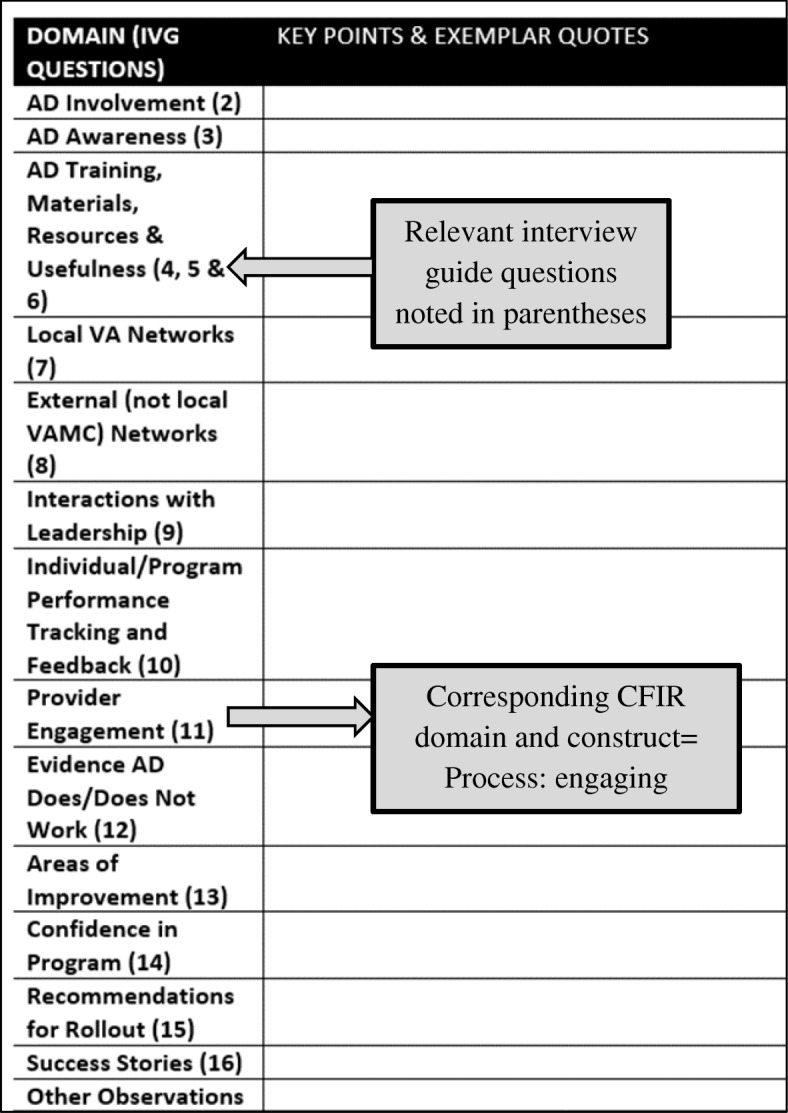
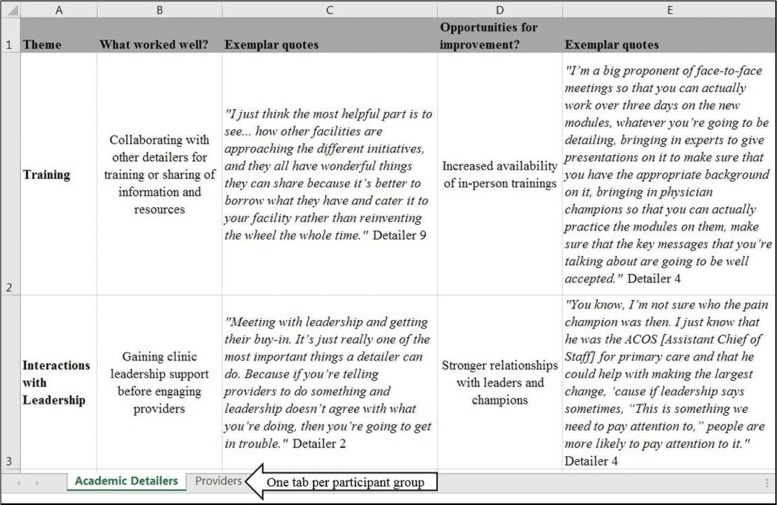
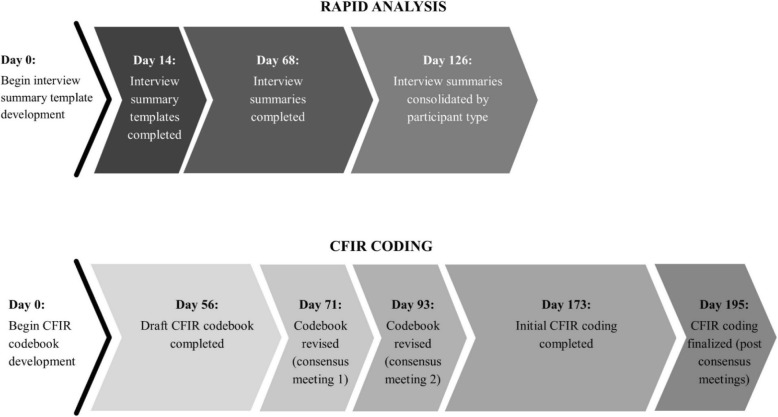
BACKGROUND: It is challenging to conduct and quickly disseminate findings from in-depth qualitative analyses, which can impede timely implementation of interventions because of its time-consuming methods. To better understand tradeoffs between the need for actionable results and scientific rigor, we present our method for conducting a framework-guided rapid analysis (RA) and a comparison of these findings to an in-depth analysis of interview transcripts. METHODS: Set within the context of an evaluation of a successful academic detailing (AD) program for opioid prescribing in the Veterans Health Administration, we developed interview guides informed by the Consolidated Framework for Implementation Research (CFIR) and interviewed 10 academic detailers (clinical pharmacists) and 20 primary care providers to elicit detail about successful features of the program. For the RA, verbatim transcripts were summarized using a structured template (based on CFIR); summaries were subsequently consolidated into matrices by participant type to identify aspects of the program that worked well and ways to facilitate implementation elsewhere. For comparison purposes, we later conducted an in-depth analysis of the transcripts. We described our RA approach and qualitatively compared the RA and deductive in-depth analysis with respect to consistency of themes and resource intensity. RESULTS: Integrating the CFIR throughout the RA and in-depth analysis was helpful for providing structure and consistency across both analyses. Findings from the two analyses were consistent. The most frequently coded constructs from the in-depth analysis aligned well with themes from the RA, and the latter methods were sufficient and appropriate for addressing the primary evaluation goals. Our approach to RA was less resource-intensive than the in-depth analysis, allowing for timely dissemination of findings to our operations partner that could be integrated into ongoing implementation. CONCLUSIONS: In-depth analyses can be resource-intensive. If consistent with project needs (e.g., to quickly produce information to inform ongoing implementation or to comply with a policy mandate), it is reasonable to consider using RA, especially when faced with resource constraints. Our RA provided valid findings in a short timeframe, enabling identification of actionable suggestions for our operations partner.
Overview
The claims and statistics of this paper haven’t been checked yet.
Free: it reads the open-access text and checks the first 5 claims that cite a source we can check. Create a free account to check every claim.
Integrity signals
Registry
Cites
Statistics
Figures
Verification
Claims the paper makes
The claims and statistics of this paper haven’t been checked yet.
Free: it reads the open-access text and checks the first 5 claims that cite a source we can check. Create a free account to check every claim.
Claims other papers make about this one
Each is checked against this paper’s own text: does it say what the citing paper says it does?
The source backs part of the claim, not all of it — or backs it for a different population, condition or comparison.
In the citing paper
“Rapid qualitative analyses has been compared directly with more traditional thematic analysis and found to produce closely aligned results, and is thus considered to have comparable rigor [40].”
From Addressing chronic pain with Focused Acceptance and Commitment Therapy in integrated primary care: findings from a mixed methods pilot randomized controlled trial (2022) · cites this paper as [40]
Experimental — accuracy not yet measuredIn the citing paper
“We analyzed qualitative interview data using rapid qualitative analysis [39, 40].”
Self-check
Percentages, sums and reported differences re-computed from the paper’s own numbers.
The self-check needs the paper’s full text.
Citations
Cites
Three Approaches to Qualitative Content Analysis
Hsieh, H.-F., & Shannon, S. E. (2005) · Qualitative Health Research · doi:10.1177/1049732305276687 · Cited by 44,601 · cited 1×
“The in-depth analysis is line with content analysis using a directed approach [17].”
MethodGraneheim, U. H., & Lundman, B. (2004) · Nurse Education Today · doi:10.1016/j.nedt.2003.10.001 · Cited by 20,772 · cited 1×
“To increase the likelihood of credibility, dependability, and trustworthiness of data, there are several decisions that should be considered when conducting qualitative evaluations, from design through execution [24].”
BackgroundQualitative Data Analysis: A Methods Sourcebook
Miles, M. B., Huberman, A. M., & Saldaña, J. (1988) · Cited by 20,701
Damschroder, L. J., Aron, D. C., Keith, R. E., Kirsh, S. R., Alexander, J. A., & Lowery, J. C. (2009) · Implementation Science · doi:10.1186/1748-5908-4-50 · Cited by 14,496 · cited 1×
“After completion of the RA, we conducted an in-depth, deductive analysis of the data using the CFIR to code transcripts [16].”
MethodSelf-citationCode Saturation Versus Meaning Saturation: How Many Interviews Are Enough?
Hennink, M. M., Kaiser, B. N., & Marconi, V. C. (2017) · Qualitative Health Research · doi:10.1177/1049732316665344 · Cited by 4,597 · cited 1×
“It is important to keep in mind that the combination of the strength and frequency of qualitative comments is what helps us understand their relative importance and contributions to our research [20], regardless of whether you are using a rapid or in-depth analytic approach.”
BackgroundWelcome to Implementation Science
Eccles, M. P., & Mittman, B. S. (2006) · Implementation Science · doi:10.1186/1748-5908-1-1 · Cited by 2,254 · cited 1×
“to promote the systematic uptake of research findings and other evidence-based practices into routine practice” [2].”
BackgroundA systematic review of the use of the Consolidated Framework for Implementation Research
Kirk, M. A., Kelley, C., Yankey, N., Birken, S. A., Abadie, B., & Damschroder, L. (2015) · Implementation Science · doi:10.1186/s13012-016-0437-z · Cited by 1,496 · cited 4×
“Damschroder LJ, Aron DC, Keith RE, Kirsh SR, Alexander JA, Lowery JC. Fostering implementation of health services research findings into practice: a consolidated framework for advancing implementation science.”
MethodInfluentialSelf-citationValidity, reliability, and generalizability in qualitative research
Leung, L. (2015) · Journal of Family Medicine and Primary Care · doi:10.4103/2249-4863.161306 · Cited by 1,404 · cited 2×
“With respect to consistency of our RA and in-depth analysis findings [14], themes from the RA were well-aligned with the CFIR domains and constructs from the in-depth analysis.”
ResultMatrix Analysis as a Complementary Analytic Strategy in Qualitative Inquiry
Averill, J. B. (2002) · Qualitative Health Research · doi:10.1177/10432302012006011 · Cited by 839
Damschroder, L. J., & Lowery, J. C. (2013) · Implementation Science · doi:10.1186/1748-5908-8-51 · Cited by 734
Self-citation
Research works printed but not linked: 1
- 15. Interim Under Secretary for Health. System-wide Implementation of Academic Detailing and Pain Program Champions. 2015.
Cited by
Items 501–600 of 912
Amonoo, H. L., Newcomb, R., Lorenz, K. A., Psenka, R., Holmbeck, K., Farnam, E. J., Tse, A., Desai, S., Vassev, N., Waldman, L. P., et al. (2024) · Contemporary Clinical Trials · doi:10.1016/j.cct.2024.107550 · Cited by 2
Katter, J., Rojas, N. M., Albert, S. L., Springer, B., Huang-Greco, N., & Kerker, B. D. (2024) · Journal of Early Childhood Teacher Education · doi:10.1080/10901027.2024.2362648 · Cited by 2
“The research team used a protocol-driven rapid coding process to analyze these data (Gale et al., 2019).”
Magel, J. S., Beneciuk, J. M., Siantz, E., Fritz, J. M., Garland, E. L., Hanley, A. W., Shen, J., Blosser, P., Matev, T., & Gordon, A. J. (2024) · BMJ Open · doi:10.1136/bmjopen-2023-082611 · Cited by 3
“Using the codebook, study staff will use a grounded theory approach 61 to code the inter-views.”
MethodTools to improve discharge equity: Protocol for the pilot TIDE trial
Austad, K., Thai, C., Zavatti, A., Nguyen, N. T. H., Bautista-Hurtado, D., Kenney, P. A., Lugo, N., Lee, J. H., Lanney, H., Xuan, Z., et al. (2024) · Contemporary Clinical Trials Communications · doi:10.1016/j.conctc.2024.101419 · Cited by 2
Thompson, H. S., Kinney, T.-N., Leach, C., Sass, A., Washington, A., Dailey, R., Towner, E., Beavers, A. W., Sneed, R. S., Edwards, K. S., et al. (2025) · Health Equity · doi:10.1089/heq.2024.0160 · Cited by 4
“32,33 Furthermore, it is dif fi cult to know how much time and effort RQA saved since it is impossible to know how long it would have taken to apply a more conventional approach to qualitative analysis and if the time saved was signi fi - cant.”
Chawla, N., McGowan, M. G., Skaperdas, E., Curtis, I., Mori, A. M., Stockdale, S. E., & Rose, D. E. (2025) · Journal of General Internal Medicine · doi:10.1007/s11606-025-09438-1 · Cited by 2
“We used a rapid analysis approach 30–32 that included creating and validating interview summaries, entering summary data into a data matrix for analysis, and iterative discussion among the research team to build consensus and interpret findings.”
Patient Perspectives on a Rapid Access, Walk-in, Medication for Addiction Treatment Clinic
Peng, L., Bormann, N. L., Arndt, S. V., Miskle, B., & Weber, A. N. (2025) · Substance Abuse and Rehabilitation · doi:10.2147/sar.s517660 · Cited by 2
O’Bryan, G., Huwa, J. M., Sande, O., Thawani, A., Berner-Rodoreda, A., Tweya, H. M., Kiruthu-Kamamia, C., Chiwaya, G. D., & Feldacker, C. (2025) · PLoS ONE · doi:10.1371/journal.pone.0324273 · Cited by 2
“…analysis is an implementation science (IS) method used increasingly to generate rigorous, qualitative results in a shorter time compared to traditional qualitative methods [31] and is suitable for studies designed to inform practice, policy, or program adaptations in real-world settings [32,33].”
Higashi, R. T., Repasky, E. C., Gupta, A., Lee, M., DesRoches, C. M., Israel, A. D., & Pruitt, S. L. (2025) · JMIR Formative Research · doi:10.2196/70146 · Cited by 2
“Interviewers conducted rapid data analysis [30,31] during interview data collection to allow for immediate exploration of emerging patterns and insights.”
Arthur, E. K., Fuller, J. A., Durusan, S., Gill, J., Niles, K., Gault, C., Oliveri, J. M., Paskett, E. D., & Oppong, B. A. (2025) · JNCI Monographs · doi:10.1093/jncimonographs/lgaf012 · Cited by 2
Stetten, N. E., Kelly, P. J. A., Shireman, T. I., Balkan, E., Babbs, G., Alpert, A. B., Wolfe, H. L., Meyers, D. J., & Hughto, J. M. W. (2025) · American Journal of Public Health · doi:10.2105/ajph.2025.308143 · Cited by 2
Ford‐Gilboe, M., Scott-Storey, K. A., Browne, A. J., Varcoe, C., Burd, C., Campbell, K., Garinger, C., Jack, S. M., Lynch, K., Malcolm, J., et al. (2025) · PLoS ONE · doi:10.1371/journal.pone.0330285 · Cited by 2
“In the early phases of analysis, we will employ Rapid Qualitative Team-based Analysis (RQA) [31–33] to describe key aspects of the implementation (e.g., delivery model, mentoring and support, funding and sustainability, staffing and recruitment, etc.), along with variation in fidelity according to…”
Presciutti, A., Rochon, E. A., Alvarez-Frank, N. A., Daily, J., Silverman, E., Motta, M., Vranceanu, A., & Hwang, D. Y. (2025) · Neurocritical Care · doi:10.1007/s12028-025-02387-x · Cited by 2
Donnelly, C. E., Rattray, N. A., Flanagan, M., Myers, J. L., Schwartzkopf, A. L., Madrigal, C. B., Schubert, C. C., Shaughnessy, M., Driver, J. A., Jindal, S. K., et al. (2025) · Journal of the American Geriatrics Society · doi:10.1111/jgs.70110 · Cited by 2
Cuidando Juntos: A Culturally Adapted Psychoeducation Program for Latino Dementia Caregivers
Quiñones-Cordero, M. M., Gallagher-Thompson, D. E., Ghosh, J., Velasquez, R., Bilbrey, A. C., & Montoro‐Rodríguez, J. (2025) · Clinical Gerontologist · doi:10.1080/07317115.2025.2576139 · Cited by 3
“Rapid qualitative analysis (RQA) was employed to analyze the focus group data (Gale et al., 2019; Hamilton, 2013).”
Marcucci, O., Park, A., Yoo, M. G., & Harris, K. M. (2025) · Education Policy Analysis Archives · doi:10.14507/epaa.33.9115 · Cited by 2
Toenjes, S., Rodriguez, M. C., Guilcher, S. J. T., Metge, C. J., Farrell, B. J., Jeffs, L. P., & McCarthy, L. M. (2025) · PLoS ONE · doi:10.1371/journal.pone.0333829 · Cited by 3
Vonderheide, C. C., Kilduff, C., McDermott, K. A., Greenberg, J., Camera, D. E. L., Giraldo‐Santiago, N., Kurkul, A., Alvarez-Frank, N. A., Kim, Y., Pasinski, R., et al. (2025) · Contemporary Clinical Trials · doi:10.1016/j.cct.2025.108116 · Cited by 2
Gazzola, M. G., Torsiglieri, A., Blaufarb, S., Velez, L., Hernandez, P. A., O’Grady, M. A., Shelley, D., Frank, D., Cleland, C. M., & Doran, K. M. (2025) · Addiction Science & Clinical Practice · doi:10.1186/s13722-025-00616-4 · Cited by 2
“Data was analyzed using rapid turnaround qualitative analysis methods [35, 36].”
Kreniske, P., Isenberg, H., Nalugoda, F., Hoffman, S., Ott, M. A., Kigozi, G., Lutalo, T., Nakyanjo, N., Ddaaki, W. G., Ssekubugu, R., et al. (2025) · BMC Medical Ethics · doi:10.1186/s12910-025-01342-x · Cited by 2
“Rapid analysis is a useful approach to meet the need for timely, valid, and actionable findings and has been shown to be adequate for providing actionable suggestions in a timely fashion [104].”
Scott, R. K., Hull, S. J., Kerrigan, D. L., Wang, Y., Pratt‐Chapman, M. L., Mathias-Prabhu, T., Unwala, N., Sadauskas, M., Hose, B., Smith, M., et al. (2025) · JMIR Formative Research · doi:10.2196/80653 · Cited by 2
“We applied rapid qualitative analysis (RQA) [38-40] to systematically translate the qualitative data from the interviews into actionable refinements.”
Li, H. W., Zivanov, C. N., Witty, C. E., & Wise, P. E. (2025) · Global Surgical Education - Journal of the Association for Surgical Education · doi:10.1007/s44186-025-00407-0 · Cited by 2
Keane, E. P., Adri, F. N., Larizza, I. S., Monahan, J. A., Song, M. T., Boardman, A. C., Schaefer, D. A., Wu, J. H., Conway, S., Brown, L., et al. (2026) · Transplantation and Cellular Therapy · doi:10.1016/j.jtct.2026.01.033 · Cited by 3
Self-citationA Pilot Study for Integrating Automatic Speech Recognition Into Nursing Documentation
Jeun, K. S., Kim, Y.-I., Lee, M.-J., Hong, E.-Y., Jun, H., & Kang, M.-J. (2026) · CIN Computers Informatics Nursing · doi:10.1097/cin.0000000000001490 · Cited by 2
Patient and Clinician Attitudes Toward Mobile Health Apps: Qualitative Study
James, C. A., Krein, S. L., Yon, S., Dorsch, M. P., Piette, J. D., & Nallamothu, B. K. (2026) · JMIR mhealth and uhealth · doi:10.2196/77519 · Cited by 2
“Rapid qualitative analysis involves three analytic steps: (1) summarization of individual transcripts, (2) consolidation of transcript summaries by participant type (eg, patient or clinician), and (3) in-depth analysis [62].”
Adelmann, M. R., Diop, M. S., Azar, S. S., Hendricks, D., Tingleaf, P. K., Osei, M. A., Kiser, S. B., Vranceanu, A., El-Jawahri, A. R., & Ritchie, C. S. (2026) · Journal of Clinical Psychology in Medical Settings · doi:10.1007/s10880-026-10136-1 · Cited by 2
“We used thematic rapid qualitative analysis (RQA) to generate timely insights into potential communication interventions (Gale et al., 2019; Hamilton & Finley, 2019), aiming to complete qualitative data generation and analysis within six months (March to August 2025).”
Pytell, J. D., Macht, A., Rinehart, D. J., Gilbert, A., Lockhart, S., King, L., Fraumeni, B. R., Duarte, K. G., Binswanger, I. A., Albright, K., et al. (2026) · Implementation Research and Practice · doi:10.1177/26334895261438505 · Cited by 2
“Finally, funding constraints required a pragmatic method that allowed for ef fi - cient and economical use of team resources (Gale et al., 2019).”
Canda, E., Marrufo, T. J., Ager, A., Muamine, E., Ribeiro, G. S., Dulá, J., Inlamea, O., Maholela, P., Kitron, U. D., Mugabe, V. A., et al. (2026) · BMJ Global Health · doi:10.1136/bmjgh-2025-019168 · Cited by 3
“Key stakeholders came from eight different governmental agencies and two non-governmental organisations (NGOs) (figure 1).”
Ramírez, O., Ardila, E. K. G., Bolívar-Moná, S., Montenegro, P., Ardila, J., Piedrahita, V., & Aristizabal, P. (2026) · Pediatric Blood & Cancer · doi:10.1002/1545-5017.70365 · Cited by 2
Sy, A. U., Marriott, J., Tannis, C., Demment, M. M., McIntosh, S. E., Hadley, J., Albert, P., Buenconsejo-Lum, L. E., & Dye, T. (2020) · PubMed · Cited by 2
Siegle, A., zu Sayn-Wittgenstein-Hohenstein, F., & Roes, M. (2020) · Implementation Science · doi:10.1186/s13012-020-01033-8 · Cited by 2
Haine‐Schlagel, R., Corsello, C. M., Caplan, B., Gould, H., & Brookman-Frazee, L. I. (2022) · Journal of Autism and Developmental Disorders · doi:10.1007/s10803-022-05601-3 · Cited by 2
“This method has yielded reliable results when compared to more in‑depth qualitative coding (Gale et al., 2019).”
Stamenova, V., Budhwani, S., Soobiah, C., Fujioka, J. K., Khan, R., Liu, R. H., Halperin, I. J., Bhatia, R. S., & Desveaux, L. (2022) · Journal of Integrated Care · doi:10.1108/jica-01-2022-0011 · Cited by 2
Rea, K. E., Armah, A. E., Eaton, C. K., Suveg, C. M., & Davis, M. (2023) · Clinical Practice in Pediatric Psychology · doi:10.1037/cpp0000464 · Cited by 2
“…qualitative procedures in implementation science, balancing scienti fi c rigor with the need for timely implementation of much needed health services (Gale et al., 2019), future research should use robust qualitative methods to further inform understanding of the experiences of healthy college…”
Rivera-Custodio, J. J., Soto, A. V., Alvarado-Cardona, E. O., Moreta-Ávila, F., Silva-Reteguis, J., Vélez-Pérez, E., Jiménez-Ricaurte, C., Rivera-Segarra, E., Rodríguez‐Madera, S., & Ramos-Pibernus, A. G. (2023) · International Journal of Environmental Research and Public Health · doi:10.3390/ijerph20021213 · Cited by 2
“The team implemented a rapid thematic analysis–an innovative technique to obtain targeted qualitative data in a shorter period of time [16].”
MethodRidgeway, J. L., Gerdes, E. O. W., Lampman, M. A., Smith, O. A., McCoy, J. J., & McCoy, R. G. (2023) · Journal of Clinical and Translational Science · doi:10.1017/cts.2023.18 · Cited by 2
“This estimate adds to a growing literature on the benefits and demands of rapid qualitative analysis, previous reports of which have compared hours or days to complete rapid analysis versus transcript coding [16] or that estimated analysis time relative to the length of an interview audio recording [17].”
MethodResultMcGuier, E. A., Aarons, G. A., Wright, J. D., Fortney, J. C., Powell, B. J., Rothenberger, S. D., Weingart, L. R., Miller, E. A., & Kolko, D. J. (2023) · Implementation Science Communications · doi:10.1186/s43058-023-00437-z · Cited by 2
Choi, S., O’Grady, M. A., Cleland, C. M., Knopf, E., Hong, S., D’Aunno, T. A., Bao, Y., Ramsey, K. S., & Neighbors, C. J. (2023) · PLoS ONE · doi:10.1371/journal.pone.0286859 · Cited by 3
Rapid research in action: Lessons from the field
Johnson, G. A., & Vindrola‐Padros, C. (2023) · Frontiers research topics · doi:10.3389/978-2-8325-2902-7 · Cited by 2
Bonett, S., Mahajan, A., Williams, J., Watson, D. L., Wood, S. M., Meanley, S., Brady, K. A., & Bauermeister, J. A. (2023) · AIDS Education and Prevention · doi:10.1521/aeap.2023.35.4.277 · Cited by 3
Blattner, K., Rogers‐Koroheke, M., & Clay, L. (2023) · Journal of Primary Health Care · doi:10.1071/hc23089 · Cited by 2
Mental Health Provider Reach and Engagement in a Countywide Training Initiative
Marriott, B. R., Andrews, J. H., Cho, E., Tugendrajch, S. K., & Hawley, K. M. (2024) · Administration and Policy in Mental Health and Mental Health Services Research · doi:10.1007/s10488-024-01345-7 · Cited by 3
“Rapid qualitative analysis was conducted to compare with and expand upon quantitative findings (Gale et al., 2019; Hamilton, 2013).”
Schlueter, D., Bermudez, Y., Debrot, K., Ross, L. W., Masud, M., Melillo, S. N., Hannon, P. A., & Miller, J. W. (2024) · Heliyon · doi:10.1016/j.heliyon.2024.e29223 · Cited by 2
“RQA is an effective, efficient method for identifying relevant themes using systematic approaches other than line-by-line coding of verbatim transcripts [18,19].”
MethodPharmacist-community-based organization collaboration to address health-related social needs
Doucette, W. R., Wolff, K., Trapskin, K., McDowell, H., Mott, D. A., & McDonough, R. P. (2024) · Journal of the American Pharmacists Association · doi:10.1016/j.japh.2024.102144 · Cited by 2
“Just Food doesn’t Do It”: Understanding Food Insecurity Among Rural Veterans in the United States
Bradley, S., Heuer, J. N., Hahm, B., Pettey, K. M., & Besterman‐Dahan, K. (2024) · Ecology of Food and Nutrition · doi:10.1080/03670244.2024.2387339 · Cited by 2
“Completed interview notes were summarized and added into a rapid analysis matrix for analysis (Averill 2002; Gale et al. 2019; Stockdale 2002) using Microsoft Excel.”
Bischoff, K. E., Liera, D., Tang, J., Madugala, N., Cohen, E. K., Galea, M., Lindenberger, E. C., Pantilat, S. Z., & Lomen, C. E. (2024) · Journal of Pain and Symptom Management · doi:10.1016/j.jpainsymman.2024.07.031 · Cited by 2
Bacci, J. L., Oster, N. V., Pollack, S. W., & Skillman, S. M. (2024) · American Journal of Health-System Pharmacy · doi:10.1093/ajhp/zxae226 · Cited by 2
Marotta, P. L., Carter, C. R., Hu, Y., Wang, V. C., Rucker, D., Jones, J., Gross, G., Brown, T., Spiegelman, D. L., & Humphries, D. L. (2023) · Journal of HIV/AIDS & Social Services · doi:10.1080/15381501.2024.2385988 · Cited by 2
“We followed a rapid qualitative analytical approach with thematic content analysis using both inductive and deductive lenses (Gale et al., 2019; Vindrola-Padros & Johnson, 2020).”
Monroe, K. S., Archer, K. R., Wegener, S. T., Dionicio, P., Arredondo, E. M., Ayala, G. X., Rodriguez, C., Dyke, J. V., Liu, J., & Gombatto, S. P. (2024) · Journal of Pain · doi:10.1016/j.jpain.2024.104685 · Cited by 3
Using Stay Interviews as a Quality Improvement Tool for Healthcare Workforce Retention
McCoy, M., Cannedy, S., Oishi, K., Canelo, I. A., Hamilton, A. B., & Olmos‐Ochoa, T. T. (2025) · Quality Management in Health Care · doi:10.1097/qmh.0000000000000465 · Cited by 2
Puttkammer, N. H., Dunbar, E. L., Germanovych, M., Rosol, M., Golden, M. R., Hubashova, A., Fedorchenko, V., Hetman, L. I., Legkostup, L., Flowers, J., et al. (2025) · JMIR Formative Research · doi:10.2196/66132 · Cited by 2
Browne, J., Mills, W. L., Lopez, C. T., Philip, N. S., Hall, K. S. M., Young, A. S., Guthrie, K. M., & Wu, W. (2025) · International Journal of Environmental Research and Public Health · doi:10.3390/ijerph22020191 · Cited by 2
“Overall, the analytic procedure involved independent summarization of transcripts, weekly meetings to review independently developed summaries and input final combined summaries into a matrix, and visualization and interpretation of the completed matrix [35].”
Fox, R. S., Brandon, K., Badger, T. A., Gaumond, J. S., Morales, A. A., Ong, J. C., Parthasarathy, S., Rini, C. K., Zee, P. C., Tanner, E. J., et al. (2025) · Translational Behavioral Medicine · doi:10.1093/tbm/ibaf001 · Cited by 2
Ecker, A. H., Kolp, H. M., Poe, L. M., Finley, E. P., Pigee, R., Kelly, M. M., Helmer, D. A., Cucciare, M. A., & Cully, J. A. (2025) · Journal of Studies on Alcohol and Drugs · doi:10.15288/jsad.24-00278 · Cited by 3
Ortiz, R., McMacken, M. M., Massar, R. E., & Albert, S. L. (2025) · American Journal of Lifestyle Medicine · doi:10.1177/15598276251331824 · Cited by 2
Spiritual Communication Between Pediatric Oncologists, Caregivers, and Patients With Brain Tumors
Superdock, A. K., Porter, A. S., Spears, W., Baker, J. N., Mack, J. W., & Kaye, E. C. (2025) · Pediatric Blood & Cancer · doi:10.1002/pbc.31721 · Cited by 2
Piotrowski, A., Schmidt, A., Seuken, N., GOLDBERG, L. I., Kufeld, N., Kersting, C., Bencheva, V., Thürmann, P., & Mortsiefer, A. (2025) · Journal of Pain Research · doi:10.2147/jpr.s522497 · Cited by 2
Martínez, D. N., & Peck, K. (2025) · Housing and Society · doi:10.1080/08882746.2025.2504746 · Cited by 2
“The analysis combined content analysis of planning documents and media reports (Krippendorff, 2018), with rapid qualitative analysis of the interview data (Gale et al., 2019; Hamilton & Finley, 2019).”
Sanders, J., Johnson, E., Mirabelli, J. F., & Jensen, K. (2025) · Studies in Engineering Education · doi:10.21061/see.160 · Cited by 2
“The first method of analysis in creating these narratives was thematic analysis (Braun & Clarke, 2006) using a rapid analysis approach (Hamilton, 2013, 2021; Gale et al., 2019; Hamilton et al., 2017; Nevedal et al., 2021).”
Silvert, C. J., Diaz, J. M., Serra, R., Cole, S. M., Warner, L. A. S., & Roberts, T. G. (2025) · Journal of International Agricultural and Extension Education · doi:10.4148/2831-5960.1513 · Cited by 2
“…analysis is an emergent research technique, often used in health sciences, as an alternative to in-depth qualitative analysis to provide targeted, relevant information and feedback, especially when pressed with short timelines and stakeholder needs (Gale et al., 2019; Lewinksi et al., 2021).”
Raffa, B. J., Higgins, I. C. A., Montiel, C., Stafford, A. M., & Cholera, R. (2025) · Journal of Immigrant and Minority Health · doi:10.1007/s10903-025-01714-w · Cited by 2
“Then all final summary statements from each interview were compiled into a matrix, so authors could see summaries across participants and authors discussed and came to a consensus on themes [42].”
Anvari, M. S., Magidson, J. F., Sulaiman, S., Killing, E., Dean, D., Dewbury, A., Zelenak, L., Nixon, E., Johnson, A., & Felton, J. W. (2025) · Administration and Policy in Mental Health and Mental Health Services Research · doi:10.1007/s10488-025-01464-9 · Cited by 2
Adams, Z. W., Marriott, B. R., Finn, P., Smoker, M. P., Feagans, A. C., Karra, S., McClure, D., & Hulvershorn, L. A. (2025) · Child Psychiatry & Human Development · doi:10.1007/s10578-025-01898-0 · Cited by 2
Broadening Diversity and Inclusivity in Human Factors and Ergonomics
Spiwak, M., Wooldridge, A. R., & Lusebrink, R. (2021) · Proceedings of the Human Factors and Ergonomics Society Annual Meeting · doi:10.1177/1071181321651184 · Cited by 2
“Rapid qualitative analysis methods, such as RITA, produce valid findings and may help address this challenge (Gale et al., 2019).”
MethodKlonteig, S., Li, J., & Halvorsrud, R. (2023) · Springer eBooks · doi:10.1007/978-3-031-20168-4_19 · Cited by 2
Mathew, A. R., Avery, E., Cox, C. M., Nwanah, P., Kalhan, R., Hitsman, B. L., & Powell, L. H. (2023) · Journal of Behavioral Medicine · doi:10.1007/s10865-023-00411-z · Cited by 2
“Qualitative responses were summarized using a rapid analysis approach (Gale et al., 2019).”
Mixed-Methods Evaluation in Dissemination and Implementation Science
Palinkas, L. A., Cooper, B. R., Leon, J. D., & Salinas, E. (2023) · Oxford University Press eBooks · doi:10.1093/oso/9780197660690.003.0018 · Cited by 2
Dahlem, C. H., Dwan, M., Dobbs, B., Rich, R., Jaffe, K., & Shuman, C. J. (2024) · Community Mental Health Journal · doi:10.1007/s10597-024-01319-x · Cited by 2
“Studies have shown that rapid qualitative analyses provide an efficient method of deductive analyses, while eliminating transcription costs, and establishing rigor (Gale et al., 2019; Nevedal et al., 2021; Schexnayder et al., 2023).”
Home-Based Cardiac Rehabilitation During COVID-19: A Qualitative StudyPreprint
Ganeshan, S., Tse, C., & Beatty, A. L. (2021) · Research Square · doi:10.21203/rs.3.rs-500145/v1 · Cited by 3
Baldridge, A. S., Omitiran, K., Orji, I. A., Shedul, G. L., Ojo, T. M.-F., Eze, H., Shedul, G. J., Ugwuneji, E. N., Egenti, N. B., Okoli, R., et al. (2022) · Research Square · doi:10.21203/rs.3.rs-1693591/v1 · Cited by 2
Pain Care at Home to Amplify Function: Protocol Article
Black, A. C., Edmond, S. N., Frank, J. W., Abelleira, A., Snow, J. L., Wesolowicz, D. M., & Becker, W. C. (2024) · Substance Use & Addiction Journal · doi:10.1177/29767342241236032 · Cited by 2
Brown, V. M., Ogutu, E. A., Kauffman, A. E., Kennedy, S. S., Tenner, R. A., Wurcel, A. G., Zawitz, C. J., Spaulding, A. C., & Akiyama, M. J. (2024) · Research Square · doi:10.21203/rs.3.rs-4214768/v1 · Cited by 2
Opportunities to Improve Tobacco Control for State Agency Employees
Kava, C. M., Strait, M., Treend, K., Vu, T. T., Hannon, P. A., & Harris, J. R. (2023) · Journal of Occupational and Environmental Medicine · doi:10.1097/jom.0000000000002955 · Cited by 1
The development of an advanced diploma program for palliative care leaders in Chile
Stoltenberg, M., Leiva-Vásquez, O., Perez‐Cruz, P. E., & Daubman, B. (2023) · Palliative Care and Social Practice · doi:10.1177/26323524231209057 · Cited by 1
Patient-centered development of a bladder cancer survivorship care plan
Caloudas, A. B., Haltom, T. M., Goltz, H. H., Badr, H., & Taylor, J. M. (2024) · Supportive Care in Cancer · doi:10.1007/s00520-024-08588-y · Cited by 1
“Following interviews, we asked participants if they were interested in participating in an FG to review the adapted SCP. Analysis AC and HHG analyzed transcripts using rapid analysis (RA), a qualitative method for obtaining and applying results for quick turnaround [21, 22].”
Giguere, R., Fernandez, M. I., Bauermeister, J. A., Balán, I. C., Aryal, S., Cheshure, A., Green, S. K. S., Lin, W., Morgan, J., & Naar, S. (2024) · JMIR Research Protocols · doi:10.2196/63191 · Cited by 2
“Next, we will adapt the innovation profile approach [58] originally developed for classroom research.”
Hauschildt, K. E., Miller, J. B., Wright, N., Schutz, A., Wilhelmsen, L., Seagly, K., Golden, S. E., Hope, A. A., Vranas, K. C., Hough, C. L., et al. (2024) · CHEST Critical Care · doi:10.1016/j.chstcc.2024.100101 · Cited by 1
McLean, C. L., Faytol, A. L., Chu, G. M., Henneken, A. N., Rabin, B. A., Pittman, J. O. E., Lindamer, L. A., & Lang, A. J. (2025) · Psychological Trauma Theory Research Practice and Policy · doi:10.1037/tra0001811 · Cited by 1
O’Grady, M. A., Lincourt, P., Hong, S., Hussain, S., & Neighbors, C. J. (2024) · Journal of Substance Use and Addiction Treatment · doi:10.1016/j.josat.2024.209605 · Cited by 1
Glynn, T. R., DIAS, R. D., Verly, R. J., O’Cleirigh, C. M., & Chai, P. R. (2025) · Hawaii International Conference on System Sciences (HICSS) · doi:10.24251/hicss.2025.393 · Cited by 1
Vanderkruik, R. C., Freeman, M. P., Gaw, M. L., Reuman, A. R. L., Verghese, M., Louis, C. C., Jellinek, M. S., Bartels, S. J., & Cohen, L. S. (2025) · PLoS ONE · doi:10.1371/journal.pone.0319181 · Cited by 2
“Advantages of rapid qualitative analysis include its ability to generate findings in a brief time frame relative to other qualitative approaches, thereby facilitating and informing targeted downstream data collection in longitudinal studies with multiple data collection and analysis phases [51–53].”
Feasibility of an Intervention to Support Shared Decision-Making for Critically Ill Infants
Lemmon, M. E., Bansal, S., Nanduri, N., Davalos, A., Glass, H. C., Lord, B. T., Moline, K., Pilon, B., Sharpe, R., Brandon, D., et al. (2025) · The Journal of Pediatrics · doi:10.1016/j.jpeds.2025.114632 · Cited by 1
Zhang, Y., Law, M. C. Y., Wee, S. K., Lee, B. S. T., Chew, B. L. A., Teo, W., & Lee, E. W. J. (2025) · JMIR Formative Research · doi:10.2196/56905 · Cited by 1
“…RStudio and presented using descriptive statistics, while qualitative data from open-ended user feedback and on-site observations were analyzed using rapid thematic analysis [43], given that the number of qualitative feedback responses was manageable and could be effectively analyzed manually.”
Owens, H. N., Arévalo, M., Whitmer, A., Fuzzell, L. N., Geiss, C., Turner, K. L., Chung‐Bridges, K., Endemano, E., Parras, D., Christy, S. M., et al. (2025) · Journal of Cancer Education · doi:10.1007/s13187-025-02658-3 · Cited by 1
The Effect of an EHR Order Set on Cancer Screening Order Rates in Community-Based Health Centers
Gold, R. B., Owens-Jasey, C., O'Malley, J. P., Gunn, R., Lee, A. M., Jones, M. W. H., Latkovic‐Taber, M., Barker, G., & Huguet, N. (2025) · Applied Clinical Informatics · doi:10.1055/a-2524-5076 · Cited by 1
Gill, E., Hall, Z., Thorpe, L. E., Williams, N. J., Anastasiou, E., Bendik, S., Punter, M. A., Reiss, J., Shelley, D., & Bragg, M. A. (2025) · Frontiers in Public Health · doi:10.3389/fpubh.2025.1484473 · Cited by 1
Enhancing Community Engagement in Research: A Premortem Analysis for Community-Engaged Research
Haynes, T. F., Hart, C., Wells, T., Coopwood, J., Hart, D., Rice, D., Vincent, R., Hill, C., & Benton, A. (2025) · American Journal of Public Health · doi:10.2105/ajph.2025.308038 · Cited by 1
Holmes, S. R., Santiago, R. T., Liu, C. L., Shaoli, S. S., Welland, J. B., Mitchell, A., & Owens, S. (2025) · School Mental Health · doi:10.1007/s12310-025-09792-9 · Cited by 1
“Results have been shown to be comparable to traditional qualitative analyses (Gale et al., 2019).”
Roberts, M. C., Marable, J., Foss, K., Whitcomb, C., Cragun, D. L., Buchanan, A. H., Hallquist, M. L. G., Baker, N. L., Bosch, R., Craig, D. W., et al. (2025) · JMIR Research Protocols · doi:10.2196/73718 · Cited by 1
“We will use rapid qualitative data analysis methods to code interviews for each site [28,29].”
Wang, M. Z., Steinman, L. E., Sirey, J. A., Gum, A. M., Rollandi, I., Crawford, N., Blanchard, B. E., Dillabaugh, A., & Raue, P. J. (2025) · The American Journal of Geriatric Psychiatry Open Science Education and Practice · doi:10.1016/j.osep.2025.07.001 · Cited by 1
Henderson, V., Carnahan, L. R., Cohn, E. B., Waite, A. W., Mersha, T., Block, R., Kolpack, M., Sommers, J., Salum, K., Hoskins, K. F., et al. (2025) · BMC Public Health · doi:10.1186/s12889-025-24194-x · Cited by 1
“Rapid qualitative data analysis [12, 13], which balances efficiency and rigor and is an appropriate approach when results are utilized to guide future data collection efforts.”
Multi Methods Assessment of Technical Assistance for Community-Based Food Access Organizations
Palmer, S., Balis, L. E., Shaw, E., & Yaroch, A. L. (2025) · Health Promotion Practice · doi:10.1177/15248399251363961 · Cited by 1
“…findings, interviews were analyzed using a rapid deductive approach in alignment with Planning for and Assessing Rigor in Rapid Qualitative Analysis (PARRQA) recommendations (Finley et al., 2022; Gale et al., 2019; Hamilton, 2013; Kowalski et al., 2024; Nevedal et al., 2021; Palinkas et al., 2011).”
Humphrey, C., Cowfer, B. A., Porter, A. S., Chow, E., Campbell, J., Mali, N. V., & Kaye, E. C. (2025) · Neuro-Oncology Practice · doi:10.1093/nop/npaf087 · Cited by 1
Khatib, R., Guzman, I. A., Glowacki, N., Lauffenburger, J. C., Anderson, M., & Mora, N. (2025) · BMC Family Practice · doi:10.1186/s12875-025-03019-1 · Cited by 2
“During a series of in-person and virtual meetings, the analytic team collaboratively and iteratively reviewed, discussed, and sorted the data to refine the initial list of themes and sub-themes and to highlight the most salient quotes in the matrix [34, 35].”
Haun, J. N., Benzinger, R. C., McMahon-Grenz, J., Ballistrea, L. M., Klanchar, S. A., Bolinski, R. S., & McDaniel, J. T. (2025) · Journal of Medical Internet Research · doi:10.2196/81414 · Cited by 1
“Rapid iterative content analysis [27] and data triangulation were used to inform data distillation and visualization products.”
Linnemayr, S., Ghai, I., Palimaru, A. I., Barajas, D., Vallejo, R., Blyler, C. A., Morales, E. M., Guzman, M. D., Joung, S. Y., Ungar, S., et al. (2025) · Scientific Reports · doi:10.1038/s41598-025-94805-5 · Cited by 2
“These were then transferred to an Excel extraction sheet 43 where the sub-summaries were coded across the dimensions of interest, pre-identified from the interview protocols: patient profiles (e.g., changes to AHT regimen); barriers to habit formation (e.g., AHT medication side-effects);…”
Tagavi, D. M., Puga, S., Dick, C., Dahiya, A. V., Bearss, K. E., & Locke, J. J. (2025) · Journal of Educational and Psychological Consultation · doi:10.1080/10474412.2025.2578840 · Cited by 2
“This method has been found to yield comparable findings to other established qualitative approaches, such as thematic analysis (Gale et al., 2019; Nevedal et al., 2021; Taylor et al., 2018).”
Vest, B. M., Peterman, S. D., Bannon, B., & Neofotistos, V. P. (2025) · Arts & Health · doi:10.1080/17533015.2025.2584237 · Cited by 1
Balis, L. E., Stott, G., Palmer, S., & Brucker, D. L. (2025) · Discover Public Health · doi:10.1186/s12982-025-01127-y · Cited by 1
“Interview results were analyzed using a rapid deductive approach, with a goal of efficiently translating research to practice [36–38].”
Goldstein, E. V., Sanger, A., & Hill, J. L. (2025) · Injury Epidemiology · doi:10.1186/s40621-025-00634-5 · Cited by 1
“This was a basic qualitative study involving semi-structured interviews and rapid qualitative analysis [20–23].”
Metadata
- Authors
- Gale, R. C., Wu, J., Erhardt, T., Bounthavong, M., Reardon, C. M., Damschroder, L. J., & Midboe, A. M.
- Affiliations
- VA Palo Alto Health Care System (US)
- Veterans Health Administration (US)
- VA Center for Clinical Management Research (US)
- Corresponding author
- Midboe, Amanda M.
- Venue
- Implementation Science
- Published
- 2019-02-01
- Volume
- 14
- Issue
- 1
- Pages
- 11-11
- ISSN
- 1748-5908 (ISSN-L)
- PMC
- PMC6359833
- OpenAlex
- W2938766056
- Semantic Scholar
- a626f0fe88503d634d82db688e6c0efe34af9c01
- Cited by
- 846
- References
- 22
- Citations by year
- 2026: 136 · 2025: 146 · 2024: 177 · 2023: 122 · 2022: 154 · 2021: 74 · 2020: 32 · 2019: 5
- FWCI
- 90.32
- Type
- journal article
- Language
- en
- Open access
- gold
- doi.org
- Licence
- cc-by
- creativecommons.org/licenses/by/4.0/ (tdm)
- Locations
- Implementation Science (publishedVersion, cc-by)
- Europe PMC (PubMed Central) (publishedVersion, other-oa)
- PubMed Central (publishedVersion, cc-by)
- PubMed (publishedVersion)
- DOAJ (DOAJ: Directory of Open Access Journals) (submittedVersion, cc-by-sa)
- eScholarship (California Digital Library) (submittedVersion, cc-by)
- Funders
- U.S. Department of Veterans Affairs
- Quality Enhancement Research Initiative
- Veterans Affairs San Diego Healthcare System
- Topics
- Health Sciences › Health Professions › General Health Professions › Health Policy Implementation Science
- Social Sciences › Education › Qualitative Research Methods and Applications
- Social Sciences › Public Administration › Evaluation and Performance Assessment
- Keywords
- rapid qualitative analysis, academic detailing, opioid prescribing, Consolidated Framework for Implementation Research, clinical pharmacists, primary care providers, implementation research, process evaluation, resource intensity, Veterans Health Administration
- MeSH terms
- Implementation Science, Analgesics, Opioid, Data Collection, Humans, Interviews as Topic, Practice Patterns, Physicians', Drug Prescriptions, United States, United States Department of Veterans Affairs, Program Evaluation, Process Assessment, Health Care, Information Dissemination, Qualitative Research, Veterans Health
About these checks
Registry, retraction, Cites and statistics results are computed, not judged, with one exception: a printed reference that no index lists is read once by a model before it counts as a citation error. Claims are extracted by a model and kept only when their quote appears verbatim in the text; each cited source is then checked, with a model’s help, for whether it says what the claim relies on. Those verdicts can be wrong — read the claim’s quote and the cited source before relying on one.
Statistics and arithmetic are recomputed, not judged.
Confidence bands are shown only for fields calibrated on our annotated test set. None is calibrated yet, so no band is shown.
What counts as a claim ›How we measure confidence ›How we check this ›
Are you an author, or do you see a problem with this page? Request a review
Data sources
Bibliographic data: Semantic Scholar, OpenAlex, Crossref.
Contains information from the Semantic Scholar Academic Graph Datasets, made available under the ODC Attribution License (ODC-BY 1.0).
Semantic Scholar’s data is described in: Kinney, R., et al. (2023). The Semantic Scholar Open Data Platform. arXiv:2301.10140.
