

Comparison of rapid vs in-depth qualitative analytic methods from a process evaluation of academic detailing in the Veterans Health Administration
Open accessThe DOI matches its Crossref record; 21 of the 22 references it cites were found in a registry or an index.
Abstract
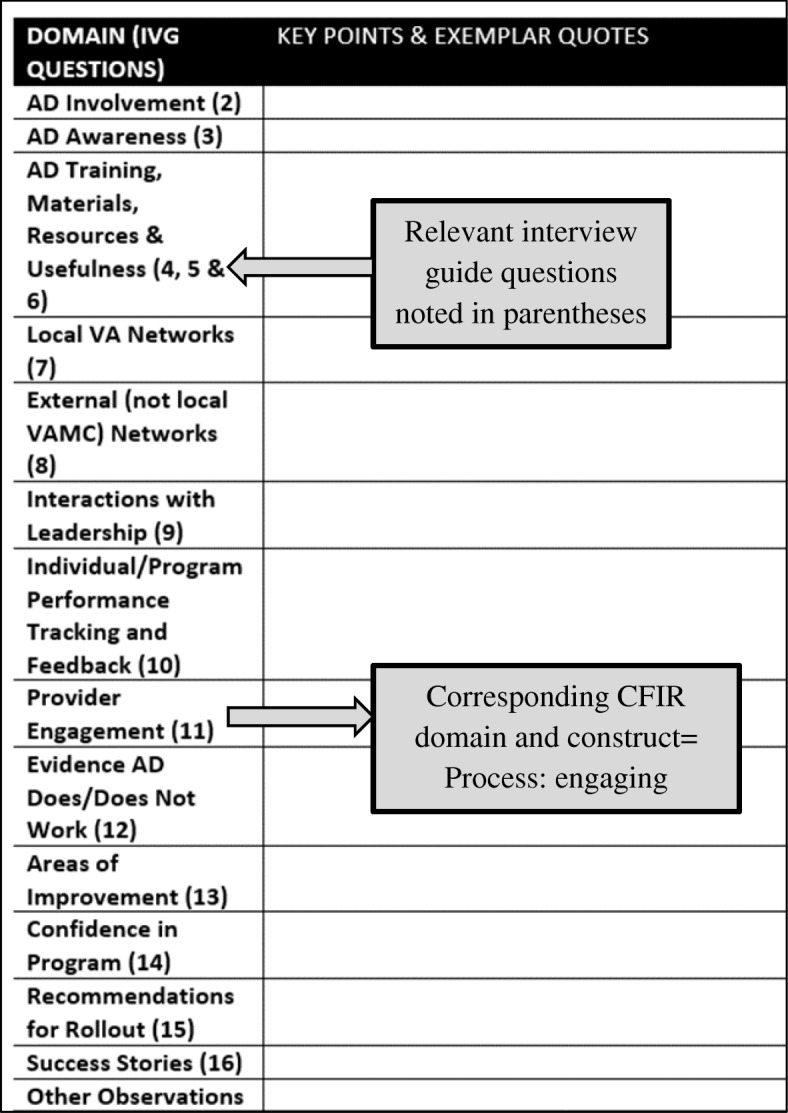
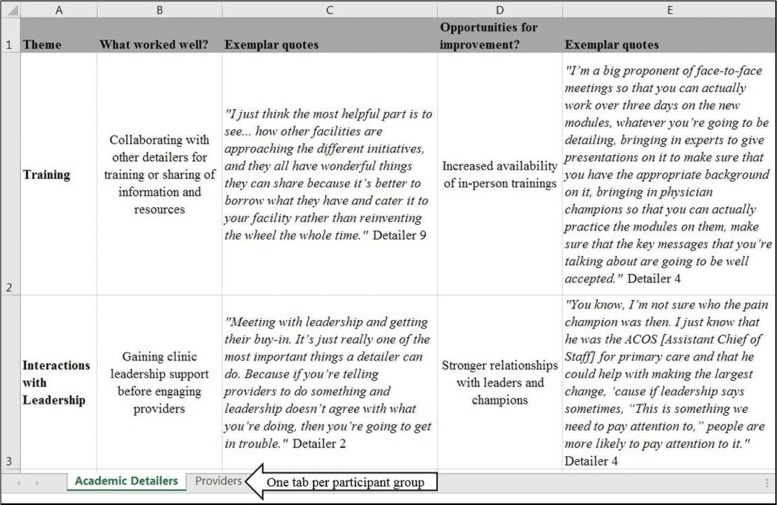
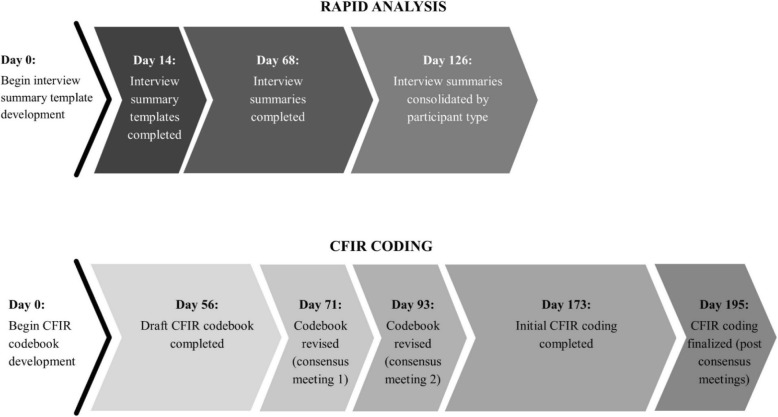
BACKGROUND: It is challenging to conduct and quickly disseminate findings from in-depth qualitative analyses, which can impede timely implementation of interventions because of its time-consuming methods. To better understand tradeoffs between the need for actionable results and scientific rigor, we present our method for conducting a framework-guided rapid analysis (RA) and a comparison of these findings to an in-depth analysis of interview transcripts. METHODS: Set within the context of an evaluation of a successful academic detailing (AD) program for opioid prescribing in the Veterans Health Administration, we developed interview guides informed by the Consolidated Framework for Implementation Research (CFIR) and interviewed 10 academic detailers (clinical pharmacists) and 20 primary care providers to elicit detail about successful features of the program. For the RA, verbatim transcripts were summarized using a structured template (based on CFIR); summaries were subsequently consolidated into matrices by participant type to identify aspects of the program that worked well and ways to facilitate implementation elsewhere. For comparison purposes, we later conducted an in-depth analysis of the transcripts. We described our RA approach and qualitatively compared the RA and deductive in-depth analysis with respect to consistency of themes and resource intensity. RESULTS: Integrating the CFIR throughout the RA and in-depth analysis was helpful for providing structure and consistency across both analyses. Findings from the two analyses were consistent. The most frequently coded constructs from the in-depth analysis aligned well with themes from the RA, and the latter methods were sufficient and appropriate for addressing the primary evaluation goals. Our approach to RA was less resource-intensive than the in-depth analysis, allowing for timely dissemination of findings to our operations partner that could be integrated into ongoing implementation. CONCLUSIONS: In-depth analyses can be resource-intensive. If consistent with project needs (e.g., to quickly produce information to inform ongoing implementation or to comply with a policy mandate), it is reasonable to consider using RA, especially when faced with resource constraints. Our RA provided valid findings in a short timeframe, enabling identification of actionable suggestions for our operations partner.
Overview
The claims and statistics of this paper haven’t been checked yet.
Free: it reads the open-access text and checks the first 5 claims that cite a source we can check. Create a free account to check every claim.
Integrity signals
Registry
Cites
Statistics
Figures
Verification
Claims the paper makes
The claims and statistics of this paper haven’t been checked yet.
Free: it reads the open-access text and checks the first 5 claims that cite a source we can check. Create a free account to check every claim.
Claims other papers make about this one
Each is checked against this paper’s own text: does it say what the citing paper says it does?
The source backs part of the claim, not all of it — or backs it for a different population, condition or comparison.
In the citing paper
“Rapid qualitative analyses has been compared directly with more traditional thematic analysis and found to produce closely aligned results, and is thus considered to have comparable rigor [40].”
From Addressing chronic pain with Focused Acceptance and Commitment Therapy in integrated primary care: findings from a mixed methods pilot randomized controlled trial (2022) · cites this paper as [40]
Experimental — accuracy not yet measuredIn the citing paper
“We analyzed qualitative interview data using rapid qualitative analysis [39, 40].”
Self-check
Percentages, sums and reported differences re-computed from the paper’s own numbers.
The self-check needs the paper’s full text.
Citations
Cites
Three Approaches to Qualitative Content Analysis
Hsieh, H.-F., & Shannon, S. E. (2005) · Qualitative Health Research · doi:10.1177/1049732305276687 · Cited by 44,601 · cited 1×
“The in-depth analysis is line with content analysis using a directed approach [17].”
MethodGraneheim, U. H., & Lundman, B. (2004) · Nurse Education Today · doi:10.1016/j.nedt.2003.10.001 · Cited by 20,772 · cited 1×
“To increase the likelihood of credibility, dependability, and trustworthiness of data, there are several decisions that should be considered when conducting qualitative evaluations, from design through execution [24].”
BackgroundQualitative Data Analysis: A Methods Sourcebook
Miles, M. B., Huberman, A. M., & Saldaña, J. (1988) · Cited by 20,701
Damschroder, L. J., Aron, D. C., Keith, R. E., Kirsh, S. R., Alexander, J. A., & Lowery, J. C. (2009) · Implementation Science · doi:10.1186/1748-5908-4-50 · Cited by 14,496 · cited 1×
“After completion of the RA, we conducted an in-depth, deductive analysis of the data using the CFIR to code transcripts [16].”
MethodSelf-citationCode Saturation Versus Meaning Saturation: How Many Interviews Are Enough?
Hennink, M. M., Kaiser, B. N., & Marconi, V. C. (2017) · Qualitative Health Research · doi:10.1177/1049732316665344 · Cited by 4,597 · cited 1×
“It is important to keep in mind that the combination of the strength and frequency of qualitative comments is what helps us understand their relative importance and contributions to our research [20], regardless of whether you are using a rapid or in-depth analytic approach.”
BackgroundWelcome to Implementation Science
Eccles, M. P., & Mittman, B. S. (2006) · Implementation Science · doi:10.1186/1748-5908-1-1 · Cited by 2,254 · cited 1×
“to promote the systematic uptake of research findings and other evidence-based practices into routine practice” [2].”
BackgroundA systematic review of the use of the Consolidated Framework for Implementation Research
Kirk, M. A., Kelley, C., Yankey, N., Birken, S. A., Abadie, B., & Damschroder, L. (2015) · Implementation Science · doi:10.1186/s13012-016-0437-z · Cited by 1,496 · cited 4×
“Damschroder LJ, Aron DC, Keith RE, Kirsh SR, Alexander JA, Lowery JC. Fostering implementation of health services research findings into practice: a consolidated framework for advancing implementation science.”
MethodInfluentialSelf-citationValidity, reliability, and generalizability in qualitative research
Leung, L. (2015) · Journal of Family Medicine and Primary Care · doi:10.4103/2249-4863.161306 · Cited by 1,404 · cited 2×
“With respect to consistency of our RA and in-depth analysis findings [14], themes from the RA were well-aligned with the CFIR domains and constructs from the in-depth analysis.”
ResultMatrix Analysis as a Complementary Analytic Strategy in Qualitative Inquiry
Averill, J. B. (2002) · Qualitative Health Research · doi:10.1177/10432302012006011 · Cited by 839
Damschroder, L. J., & Lowery, J. C. (2013) · Implementation Science · doi:10.1186/1748-5908-8-51 · Cited by 734
Self-citation
Research works printed but not linked: 1
- 15. Interim Under Secretary for Health. System-wide Implementation of Academic Detailing and Pain Program Champions. 2015.
Cited by
Items 601–700 of 912
Plummer, K., Kotzur, C., Williams, S., Vongkiatkajorn, K., Lee‐Archer, P. F., Doyle, R., Keyser, J., Wighton, A., & Keogh, S. J. (2025) · Journal of Advanced Nursing · doi:10.1111/jan.70411 · Cited by 1
Ullman, A. J., Day, T. J., Doyle, R., Marsh, N. M., Coyer, F. M., August, D. L., Cole, R., Keogh, S. J., Kleidon, T. M., McBride, C. A., et al. (2025) · Journal of Hospital Medicine · doi:10.1002/jhm.70215 · Cited by 1
Harris, M., Birchett-Street, P., Essex, K., Blue, C. M., Brown, A., Choi, Y., Dictus, C., Majette, N. T., Mcmillian, D., Shepherd‐Banigan, M. E., et al. (2025) · Journal of Applied Gerontology · doi:10.1177/07334648251404131 · Cited by 1
“…rapid approaches produce fi ndings comparable to those derived from traditional, in-depth qualitative methods, and are appropriate for both internal improvement and dissemination to broader scienti fi c audiences (Gale et al., 2019; Hamilton et al., 2020; Kowalski et al., 2024; Nevedal et al., 2021).”
Rogers, A. H., Pester, B., Fligelman, S., Pielech, M., Groenewald, C. B., Ketterl, T. G., Vest, B. M., & Palermo, T. M. (2026) · Pediatric Blood & Cancer · doi:10.1002/1545-5017.70131 · Cited by 1
“Transcripts were summarized utilizing a rapid qualitative analysis approach [ 59 ], which has been successfully used in pediatric cancer settings [ 60 ].”
Gregorich, O. L., Tsui, J. I., Chander, G., Merlin, J. S., & Bhatraju, E. P. (2026) · Journal of Addiction Medicine · doi:10.1097/adm.0000000000001652 · Cited by 1
Weiss‐Laxer, N. S., Dhani, J. S., Fox, K. B., Thavisin, T., Carland, A. L., Oh, P. M., Long, K., Krupa, K. J., Selzer, F., Collins, J. E., et al. (2026) · BMC Musculoskeletal Disorders · doi:10.1186/s12891-026-09521-6 · Cited by 1
“After proofreading the transcripts, at least two research team members coded each transcript in Dedoose Analytic Software [13] using the Framework Analysis approach [14, 15] (Supplementary Fig.”
Addressing Barriers To Forcibly Displaced Migrants’ Participation in Research
Price, K., Lenart, A., Taknint, J. T., Gellatly, R., & Alshabani, N. (2026) · Journal of Immigrant and Minority Health · doi:10.1007/s10903-026-01878-z · Cited by 1
“Individually the first two authors analyzed these notes using rapid coding procedures [15, 16 ].”
Mullis, C. E., McWalters, J., Ávila, K., Finkenberg, C. L., Keller, M. J., & Golub, S. A. (2026) · AIDS Patient Care and STDs · doi:10.1177/10872914261416608 · Cited by 1
Wright, R., Cheves, E., Wiggins, S. T., Moultrie, R., Forsythe, A., Andrews, S. M., Frawley, H. E., Cope, H., & Peay, H. L. (2026) · Journal of Community Genetics · doi:10.1007/s12687-026-00863-1 · Cited by 1
“We analyzed interview data using a rapid qualitative analysis approach, which is an efficient method to use when the analytic domains are known ahead of time from frameworks or existing literature (i.e. perceived risks and perceived benefits) (Gale et al. 2019).”
Rollins, L. S., Cotton, T. C., Youmans, L., Roberts, J. D., Elliott, J., Cunningham, D., Platel, C., White, C., Cunningham, J., & Crook, E. (2026) · BMC Public Health · doi:10.1186/s12889-026-26791-w · Cited by 1
“This approach allowed two members of the research team to efficiently identify salient themes, patterns, and points of convergence and divergence across participants [24, 25].”
Harrison, L. E., Webster, S. N., Choate, E., Mayanja, D., Jehl, N. M., Darnall, B. D., Stinson, J., Bonnert, M., Lalouni, M., Wicksell, R. K., et al. (2026) · JMIR Formative Research · doi:10.2196/89206 · Cited by 1
“Qualitative data were analyzed using rapid qualitative analysis [40,41] and organized into matrices, coded deductively according to the CFIR construct.”
Skiba, M. B., Contreras, J., Nelson, M. A., Recio‐Boiles, A., Garcia, D. O., Chilton, F. H., Segrin, C., Badger, T. A., & Winters‐Stone, K. M. (2026) · Cancer Medicine · doi:10.1002/cam4.71709 · Cited by 1
“(Microsoft Corporation, Redmond, WA) following a rapid analysis approach [54].”
Mace, R. A., Wu, Z., Sieberg, C. B., Karunakaran, K. D., Peng, K., & Borsook, D. (2026) · JMIR Serious Games · doi:10.2196/77713 · Cited by 1
Khurana, A., Anderson, K., Carandang, K. M., Chintagunta, E., Ziegler, J., & Wells, C. K. (2026) · Health Expectations · doi:10.1111/hex.70642 · Cited by 1
“Interview summaries, a step of rapid analysis [45], were created and reviewed by at least two CMs [ARK, KA] and discussed with the Project Team.”
Patil, S. J., Caron, A., Roach, M. J., Einstadter, D., Malone, S., Marbury, Q., Whaley, M. A., Sullivan, C., Kimmel, P. J., Rockamore, M., et al. (2026) · Health Expectations · doi:10.1111/hex.70673 · Cited by 1
“Each transcript was reviewed within these domains, and key quotations, observations, and action points were summarized in tabular matrices to enable comparison across meetings and working groups [38].”
How to improve collaboration across government departments to achieve healthy urban environments
McClatchey, R., Newman, J., Ayres, S., Bates, G., Charlesworth-May, A., & Aldridge, S. (2026) · Contemporary Social Science · doi:10.1080/21582041.2026.2662221 · Cited by 1
Ingram, P. F., Mele, A., Lazar, C. M., Mattocks, K. M., Kelly, M. M., Rosen, M. I., Weede, A., & Martino, S. (2026) · Military Psychology · doi:10.1080/08995605.2026.2664974 · Cited by 1
Possemato, K., Barrie, K. A., Johnson, E. M., Marchbanks, R., Gatewood, M., Kane, M., Shook, C. B., & Stecker, T. A. (2026) · The Journal of Rural Health · doi:10.1111/jrh.70154 · Cited by 1
Weser, V. U., Crocker, A. C., & Hieftje, K. D. (2026) · IEEE Conference on Virtual Reality and 3D User Interfaces Abstracts and Workshops (VRW) · doi:10.1109/vrw70859.2026.00185 · Cited by 1
“We used a rapid analysis technique based on Gale et al.’s adaptation of Hamilton’s rapid qualitative analysis approach [3,4].”
Prescott, M., Chentsova, V. O., Delgado, J., Dung, D., SHOPTAW, S. J., Aarons, G. A., Moore, D. J., Grelotti, D. J., & Montoya, J. (2026) · AIDS and Behavior · doi:10.1007/s10461-026-05115-4 · Cited by 1
“Given the focused research questions of the present study, qualitative data were analyzed following a rapid qualitative approach [55, 56 ], which has been found to enhance effi - ciency while preserving the rigor and validity of traditional qualitative methods [57–59].”
Kersten, S., Hohmann, E. D., Piotrowski, A., Lepper, A.-K., Dehnen, D., Pentzek, M., Weißbach, S., & Schweizer, J. (2026) · BMC Family Practice · doi:10.1186/s12875-026-03391-6 · Cited by 1
“We applied a rapid qualitative analysis using summary templates and a cross-case matrix to synthesise interview data following Mathieson and Gale [18, 19].”
Folorunso, S. A., Yibrehu, B., Mann, E. J., Zivanov, C. N., Gilliland, J. L., Fasakin, F. S., Allsop, M. J., Avwioro, T. O., Iwuju, C., Khalid, D. S., et al. (2026) · BMC Palliative Care · doi:10.1186/s12904-026-02160-7 · Cited by 1
Palliative Care Co-management at a Liver Transplant Center: A Mixed Methods Study
Deng, L. X., Catalli, L., Miller, S., Sherman, C. B., Lai, J. C., & Bischoff, K. E. (2026) · Digestive Diseases and Sciences · doi:10.1007/s10620-026-10034-4 · Cited by 1
“The focus group transcript was analyzed using Rapid Qualitative Analysis to identify themes and immediate action items for improving the co-management model [15–17].”
D’Agostino, E. M., Hornik, C. P. V., Granados, I., Kasper, J., Richmond, A., Damman, A., Abbot‐Grimes, P., Brown‐Lowery, C., Sato, J., Vizcaíno, T., et al. (2026) · Journal of Public Health · doi:10.1093/pubmed/fdag039 · Cited by 1
Mobile intervention for emerging adults with regular cannabis use: a micro-randomized trial
Walton, M., Nahum-Shani, I. B., Campbell, M., Tomlinson, D. C., Florimbio, A. R., Ghosh, S., Guo, Y., Hung, P.-Y., Newman, M. W., Lin, J. J., et al. (2026) · The Lancet Regional Health - Americas · doi:10.1016/j.lana.2026.101524 · Cited by 1
“31 RQA is a pragmatic approach to rapidly gather qualitative information to inform intervention re-finements in substance use research.”
Brousseau, N., Graybill, E. C., Walker, L., & Emeghara, U. (2026) · American Journal of Evaluation · doi:10.1177/10982140261454182 · Cited by 1
Delivery Model Matters for Digital Interventions in Pain Self-Management: Mixed Methods Study
Nes, L. S., Børøsund, E., Nordang, E. F., Asbjørnsen, R. A., Eide, H., Varsi, C., Waxenberg, L. B., Weiss, K. E., Morrison, E. J. P., Støle, H. S., et al. (2026) · Journal of Medical Internet Research · doi:10.2196/89780 · Cited by 1
“Qualitative data derived from the postintervention interviews were analyzed using a rapid analysis inspired by Gale et al [62].”
Luth, E. A., Brennan, C., Hurley, S. L., Sheldon, K. G., & Zhang, Y. (2026) · Journal of the American Geriatrics Society · doi:10.1111/jgs.70621 · Cited by 1
“We analyzed interview data using a four-step rapid analysis approach, which is appropriate for studies like this with a short timeframe and limited resources [26].”
Kostan, H., Dickey, A. S., Gadelmola, K., Goldman, A. M., Krishnan, V., Lin, L., Tantillo, G. B., & Maheshwari, A. (2026) · Neurology Education · doi:10.1212/ne9.0000000000200349 · Cited by 1
“16 For this analysis, 2 members of the research team independently reviewed all free-text responses and identi fi ed recurring themes using a structured summary template.”
Walker, D. M., DePuccio, M. J., Hefner, J. L., Sieck, C. J., Hogan, T. H., McAlearney, A. S., Swoboda, C. M., & Huerta, T. R. (2022) · Ohio Journal of Public Health · doi:10.18061/ojph.v4i2.8469 · Cited by 1
Kim, T., Martinez, K., Cruz, B. L., Huang, J. S., & Stadnick, N. A. (2022) · Journal of Autism and Developmental Disorders · doi:10.1007/s10803-021-05346-5 · Cited by 1
“There is accumulating support that rapid qualitative approaches deliver comparable findings to more traditional, time-intensive approaches (Gale et al., 2019).”
Devlin, S. A., García, M., Fujimoto, K., Hallmark, C. J., McNeese, M., Schneider, J. A., & McNulty, M. (2022) · International Journal of Environmental Research and Public Health · doi:10.3390/ijerph192215247 · Cited by 1
Using Shared Decision-Making Resources in Long-Term Care: a Qualitative Study
Thompson, W., McCarthy, L. M., Galley, E., Homan, L., & Farrell, B. J. (2023) · Canadian Geriatrics Journal · doi:10.5770/cgj.26.657 · Cited by 1
“We used rapid qualitative analysis (Figure 1).(13,14) Data sources included Advisory Group meeting transcripts (audio recorded and transcribed verbatim) and meeting field notes completed by the research team/staff.”
MethodBerry, C. A., Kwok, L., Gofine, M. L., Kaufman, M., Williams, D. A., Terlizzi, K., Alvaro, M., & Neighbors, C. J. (2023) · Telemedicine Reports · doi:10.1089/tmr.2023.0024 · Cited by 1
“Interview data were analyzed using a protocol-driven, rapid qualitative methodology.(33) The research team developed a summary template and assigned each interview question a pre-determined domain name in the template.”
MethodCross, L. M., DeFosset, A. R., Yusuf, B. B., Conserve, D. F., Anderson, R., Carilli, C., Kibbe, W. A., Cohen‐Wolkowiez, M., Richmond, A., Corbie-Smith, G. M., et al. (2023) · PLoS ONE · doi:10.1371/journal.pone.0294458 · Cited by 2
Challenges of Maternal and Child Health after the COVID-19 Pandemic
Kikuchi, K., Yi, S., Nanishi, K., & Yasuoka, J. (2024) · Frontiers research topics · doi:10.3389/978-2-8325-4385-6 · Cited by 1
(2024) · Frontiers research topics · doi:10.3389/978-2-8325-4357-3 · Cited by 2
Johnson, A. L., Doyle, S. J., Gleason, C. E., Cook, J. W., Mahoney, J., & Piper, M. E. (2024) · INQUIRY The Journal of Health Care Organization Provision and Financing · doi:10.1177/00469580241236416 · Cited by 2
“26,27 Summaries of participant responses were pulled from transcripts and organized by domains (aligned with questions from the interview guide) in an MS Excel matrix.”
MethodNorthcraft, H., Bai, J. Q. A., Griffin, A. R., & Dobalian, A. (2024) · BMC Medical Education · doi:10.1186/s12909-024-05628-3 · Cited by 1
“We employed a thematic content analysis to examine the open-ended narrative responses [22, 23].”
MethodParnes, M. F., Mehari, M., Sedlar, G. R., Trevino, C. O., Porter, R., & Walker, S. C. (2024) · Frontiers in Public Health · doi:10.3389/fpubh.2024.1348117 · Cited by 1
Griffin, A. R., Bai, J. Q. A., Northcraft, H., & Dobalian, A. (2024) · SAGE Open Nursing · doi:10.1177/23779608241261617 · Cited by 1
“The research team used a rapid coding process (Gale et al., 2019; Taylor et al., 2018).”
MethodMassar, R. E., Paul, M. M., Kwok, L., Chau, M. M., Larson, R., Islam, N. S., Thorpe, L. E., Bendik, S., Bershteyn, A., & Berry, C. A. (2024) · Journal of Urban Health · doi:10.1007/s11524-024-00900-9 · Cited by 1
“The study team employed rapid qualitative methods to analyze KI interview data [14].”
Hall, C. D. X., Ethier, K. L., Cummings, P., Freeman, A., Bovbjerg, K., Bannon, J., Dakin, A., Abujado, F., Bouacha, N., Derricotte, D., et al. (2024) · Trials · doi:10.1186/s13063-024-08475-1 · Cited by 1
“Rapid qualitative methods are a pragmatic and robust approach to analyzing implementation data that can produce actionable and timeline insights [117, 118].”
MethodStolldorf, D. P., Storrow, A. B., Liu, D., Jenkins, C. A., Hilton, R. A., Miller, K. F., Kim, J., Boopathy, D., Gunaga, S., Kea, B., et al. (2025) · BMC Health Services Research · doi:10.1186/s12913-024-12102-9 · Cited by 1
Patient Perspectives on Clinician Support When Pursuing Permanent Contraception in the United States
Bullington, B. W., Lyleroehr, M., Berg, K. A., White, K., Boozer, M., Serna, T. B., Miller, E. S., Bailit, J. L., & Arora, K. S. (2025) · Perspectives on Sexual and Reproductive Health · doi:10.1111/psrh.70000 · Cited by 1
Postpartum Patient Perspectives on the US Medicaid Waiting Period for Permanent Contraception
Hartheimer, J., Bullington, B. W., Berg, K. A., White, K., Boozer, M., Serna, T. B., Miller, E. S., Bailit, J. L., & Arora, K. S. (2025) · Open Access Journal of Contraception · doi:10.2147/oajc.s506703 · Cited by 1
“31 We have previously reported on how patients and physicians conceptualized and dealt with uncertainty during the counseling and decision-making process surrounding permanent contraception.”
Protecting, Promoting and Supporting Breastfeeding
(2025) · Frontiers research topics · doi:10.3389/978-2-8325-6116-4 · Cited by 1
Patel, B., Raygoza, J. P., Kosiorek, H., Soto, C. C., Grijalva, D. Y., Pisano, E. D., Northfelt, D., Karuppana, S., & Austin, J. D. (2025) · Journal of the American College of Radiology · doi:10.1016/j.jacr.2025.04.026 · Cited by 1
Calhoun, K. H., Field, M., Connot, N., Locke, S., Wilson, J. H., & Brisson, D. (2025) · Journal of Community Practice · doi:10.1080/10705422.2025.2505413 · Cited by 1
“This systematic approach allows for findings to be shared quickly with community partners, particularly in rapidly changing, real-world situations, such as raising rates of homelessness and increasing demand for guaranteed income research findings (Gale et al., 2019; Moreau, 2020).”
InfluentialRivelli, J. S., Schneider, J. L., Vaughn, K. A., Locher, B. W., Shaw, M. C., Martinez, L. S., Ruiz, E., Thompson, J. H., Escaron, A. L., & Coronado, G. D. (2025) · Translational Behavioral Medicine · doi:10.1093/tbm/ibaf020 · Cited by 1
Tyson, D. M., Sanabria, G., Chavez, M., Trejos, R. F., Ruiz, E. L., Barden, S. M., & Doss, B. D. (2025) · Translational Behavioral Medicine · doi:10.1093/tbm/ibaf040 · Cited by 1
Turbow, S. D., Kim, P., Vaughan, C. P., Ali, M. K., Clevenger, C. K., & Perkins, M. M. (2025) · JAMIA Open · doi:10.1093/jamiaopen/ooaf131 · Cited by 1
IoT adoption in SME manufacturers in Thailand
Wungcharoen, Y. (2022) · Cronfa (Swansea University) · doi:10.23889/suthesis.60536 · Cited by 5
Community-Engaged Development of a Parent-Child Book Reading Wise Intervention
Chou, P.-H. (2020) · FIU - Digital Commons (Florida International University) · doi:10.25148/etd.fidc010192 · Cited by 1
O’Leary, T. K. (2023) · Digital Repository Service (Northeastern University) · doi:10.17760/d20620618 · Cited by 1
Abtew, E. D., Haile, S., & Adem, T. (2025) · Research Square · doi:10.21203/rs.3.rs-7531601/v1 · Cited by 1
Digital Technologies for Managing Innovation of Knowledge Work: The Case of a Chinese SME
Song, Z., & Chatzipanagiotou, N. (2021) · doi:10.15626/lscit2020.06
“Therefore, it was decided to summarize each transcribed interview into English using a structured template based on Randall et al. (2019) recommendations.”
MethodA Qualitative Study of Home-Based and Hybrid Cardiac Rehabilitation During COVID-19Preprint
Ganeshan, S., Tse, C., & Beatty, A. L. (2021) · Research Square · doi:10.21203/rs.3.rs-151295/v1
Marriott, B. R. (2021) · MOspace Institutional Repository (University of Missouri) · doi:10.32469/10355/88131 · Cited by 1
Home-Based and Hybrid Cardiac Rehabilitation During COVID-19: A Qualitative Study (Preprint)Preprint
Ganeshan, S., Tse, C., & Beatty, A. L. (2021) · doi:10.2196/preprints.28665
Ohio Journal of Public Health Vol. 4, Issue 2 (January 2022): Full Issue
Ohio Public Health Association OPHA (2022) · Ohio Journal of Public Health · doi:10.18061/ojph.v4i2.8823
Field Test, Plan Evaluation, and Prepare to Launch
BN, M. M. B. H., & Graham, F. I. D. (2021) · Wiley eBooks · doi:10.1002/9781119123316.ch12
Wang, S. (2022) · Mathematical Problems in Engineering · doi:10.1155/2022/1827125
“It is an important link in education and teaching to obtain the information about students’ current education through appropriate measurement tools and to use this as the basis to make value judgments on students’ knowledge mastery and learning ability level [1].”
BackgroundBalán, I. C., Marone, R. O., Barreda, V., Naar, S., & Wang, Y. (2024) · JMIR Research Protocols · doi:10.2196/56683
Patient and caregiver perspectives of fluid discharge protocols following pituitary surgery
Chang, J., Amano, A., Brown‐Johnson, C. G., Chu, O. S., Gates-Bazarbay, V., Erin, W., Kling, S. M. R., Alhadha, M., Fernandez-Miranda, J. C., & Vilendrer, S. M. (2024) · Journal of Clinical & Translational Endocrinology · doi:10.1016/j.jcte.2024.100336 · Cited by 1
“…using a multiphase analysis approach leveraging rapid analytic procedures (e.g., template summaries) to extract early themes, coding of transcript summaries to produce interim results, and a matrix analysis of interview excerpts for final comparison of themes across all participants [15,16].”
MethodVaccines and Immunization Services During the Pandemic Era and Beyond
Amponsah‐Dacosta, E., Wariri, O., Awuah, A. A.-A., & Fulurija, A. (2024) · Frontiers research topics · doi:10.3389/978-2-8325-4675-8
Sivalogan, K., Salinger, A. P., Kalam, M. A., Bisoyi, A., Chapnick, M., Clasen, T., & Sinharoy, S. S. (2024) · Research Square · doi:10.21203/rs.3.rs-4075235/v1
Mason, J. B., Johnson, C., Ogbuefi, N., Wang, S., Armstrong, A. W., Barbieri, J. S., Cohen, J. B., Craig, E. T., Fitzsimmons, R. C., Garshick, M. S., et al. (2024) · Journal of Psoriasis and Psoriatic Arthritis · doi:10.1177/24755303241257906
Cultural adaptation of an internet-based self-help app for grieving Syrian refugees in SwitzerlandPreprint
Aeschlimann, A., Heim, E., Hoxha, A., Triantafyllidou, V., Killikelly, C., Haji, F., Stoeckli, R. T., Aebersold, M., & Maercker, A. (2024) · Research Square · doi:10.21203/rs.3.rs-4804166/v1
Paul, M. M., Kwok, L., Massar, R. E., Chau, M. M., Larson, R., Bendik, S., Thorpe, L. E., Bershteyn, A., Islam, N. S., & Berry, C. A. (2024) · Journal of Urban Health · doi:10.1007/s11524-024-00898-0
“The study team employed rapid qualitative methods to analyze key informant interview data [8].”
Barriers and Facilitators to Trust in the COVID-19 New York City Test and Trace Program
Chau, M. M., Larson, R., Paul, M. M., Massar, R. E., Kwok, L., Berry, C. A., Thorpe, L. E., Bendik, S., Bershteyn, A., & Islam, N. S. (2024) · Journal of Urban Health · doi:10.1007/s11524-024-00911-6
“Interviews were audio-recorded, transcribed, and analyzed using qualitative rapid analysis to identify themes associated with trust in the T2 program [20].”
Heuer, J. N., Bradley, S., Hahm, B., Pettey, K. M., & Besterman‐Dahan, K. (2024) · Community Health Equity Research & Policy · doi:10.1177/2752535x241292108 · Cited by 1
Barry, M. P., Peters, R. P. H., Portle, S., Bongo, C., Nel, D., Struthers, H. E., & Daniels, J. (2024) · HIV Research & Clinical Practice · doi:10.1080/25787489.2024.2424040
“It is well-documented that rapid analysis for implementation science is appropriate and generally produces similar results to more sophisticated qualitative analysis processes [39,40].”
Browne, J., Battaglini, C. L., İmamoğlu, A., Stiles, B. J., Jarskog, L. F., Sheeran, P., Abrantes, A. M., Elliott, T., González, O., & Penn, D. L. (2024) · BMC Psychiatry · doi:10.1186/s12888-024-06250-9
“This approach includes summarizing responses to the interview questions (i.e., data reduction) using a structured form (i.e., templated summary) and then visualizing the responses in a grid (i.e., matrix display) [29–31].”
MethodMichigan tobacco cessation champions: A rapid qualitative analysis
Tomlinson, D. C., Wilkins, C., Bayrakdarian, N. D., Dolecki, F., Bonar, E. E., Fernandez, A. C., Wernette, G. T., & Coughlin, L. N. (2024) · Preventive Medicine Reports · doi:10.1016/j.pmedr.2024.102945
O’Grady, M. A., Harrison, L., Suleiman, A. O., Hutchison, M., Kwon, N. S., Muench, F. J., & Kapoor, S. (2025) · JMIR Formative Research · doi:10.2196/65187
“We used rapid qualitative analysis [37] to analyze interview data following procedures previously outlined [37,38].”
Felton, J. W., Cinader, M. K., Spencer, J., Hampton, T., Mulheron, M., Key, K., Johnson, J. E., & Yi, R. (2025) · Applied Neuropsychology Child · doi:10.1080/21622965.2025.2490096
Northcraft, H., Bai, J. Q. A., Griffin, A. R., & Dobalian, A. (2025) · Federal Practitioner · doi:10.12788/fp.0590
“15,16 Additional general information regarding the qualitative data analyses is described elsewhere.”
Mace, R. A., Stewart-McLellan, M. J., Law, M. E., Harley, D., Ritchie, C. S., Bartels, S. J., Okereke, O. I., Hoeppner, B. B., Brewer, J. A., Amariglio, R. E., et al. (2025) · The Gerontologist · doi:10.1093/geront/gnaf159
Xue, T., Wei, A. A., Wu, B., Sanders, C., McConnell, E. S., & Xu, H. (2025) · JMIR Research Protocols · doi:10.2196/69303
“We carried out a rapid analysis [20] of the focus groups and identified potential design issues with the intervention.”
Shiozawa, Y., Morton, S., Shirai, N., Oelschlager, H., Kiernat, L., Chary, A. N., Revette, A. C., Haimovich, A. D., Desai, S., Chang, K.-W., et al. (2025) · Academic Emergency Medicine · doi:10.1111/acem.70109
Cieri‐Hutcherson, N. E., & Clark, C. M. (2025) · Pharmacy · doi:10.3390/pharmacy13040111
“Qualitative analysis was employed using a rapid analytic approach to identify themes in self-reflection question responses [15].”
Dai, Y., Daveson, B. A., Ding, J., Chen, Y., Guo, J., Cheng, Y., & Johnson, C. E. (2025) · Palliative & Supportive Care · doi:10.1017/s1478951525100369
“A rapid CFIR-based deductive analysis approach (directed content analysis) was selected for its time and resource efficiency (Johnson and Vindrola-Padros 2017; Taylor et al. 2018), providing timely yet effective and rigorous findings (Gale et al. 2019; Keith et al. 2017).”
Dawson, C. M. P., Kelley, L. R., Dryden, E. M., Hung, W. W., Moo, L. R., Ding, M., & Franzosa, E. C. (2025) · Journal of the American Geriatrics Society · doi:10.1111/jgs.70068 · Cited by 1
Gu, M., Martinez, R. G., Parent, H., Marshall, B. D. L., Berk, J., Elwy, A. R., Chan, P. A., & Tao, J. (2025) · Implementation Science Communications · doi:10.1186/s43058-025-00782-1 · Cited by 1
“The sessions will be audio recorded, transcribed using NVivo, and analyzed using rapid qualitative analysis [54].”
Bacci, J. L., Zhang, B., Brackeen, S., Arnold, J., English, C., & Hansen, R. N. (2025) · Journal of Addiction Medicine · doi:10.1097/adm.0000000000001582 · Cited by 1
Gin, J. L., Balut, M. D., & Dobalian, A. (2025) · International Journal of Mass Emergencies & Disasters · doi:10.1177/02807270251384568 · Cited by 1
“A templated summary document (Gale et al. 2019) was then created in Microsoft Word and organized by the six codes.”
Daly, C. J., Iqbal, D. N., Finke, J. B., Coley, K. C., Doucette, W. R., Ferreri, S. P., Herbert, S. M. C., Jacobs, D. M., McDonough, R. P., McGivney, M. S., et al. (2025) · Journal of the American Pharmacists Association · doi:10.1016/j.japh.2025.102951 · Cited by 3
Sisk, B. A., Kepper, M. M., Bereitschaft, C., Milam, S. N., Chen, S., Nakano, T. A., Wu, M. D., Borst, A. J., & Kerr, A. M. (2025) · Pediatric Blood & Cancer · doi:10.1002/pbc.32149
Nguyen, T. Q., Smith, B. D., Foo, I., Chaves, M., & Carroll, J. C. (2025) · Journal of the American Pharmacists Association · doi:10.1016/j.japh.2025.102981
Fuentes‐Olavarría, D. (2025) · Nursing Reports · doi:10.3390/nursrep15110391
Assessment of Standards of Care for Oral Chemotherapy by Pharmacists in Clinical Settings
Nezirevic, S., Muluneh, B., Lafata, J. E., Eisinger, C., Asfaw, S., Butts, A., Farris, K. B., & Patel, M. P. (2025) · Journal of the Advanced Practitioner in Oncology · doi:10.6004/jadpro.2025.16.6.2
“Overarching themes and subthemes were identified pertaining to roles and barriers to patient care (Gale et al., 2019).”
Gallion, A. H., Schlotterbeck, I., Bartoo, C. K. H., Weems, J., Horr, T. B., Niehoff, K. M., Simmons, S. F., & Kripalani, S. B. (2025) · Journal of Nursing Care Quality · doi:10.1097/ncq.0000000000000930
Tezanos, K. M., Reynolds, E. K., Highlander, A., Espinoza, C. S., Goldstein, S. E., McCann, M., Maron, M. M., Bagheri, R., Frank, H. E., Campo, J. V., et al. (2025) · Evidence-Based Practice in Child and Adolescent Mental Health · doi:10.1080/23794925.2025.2585833
“This method was selected as it has been shown to yield similar themes as traditional coding methods (Gale et al., 2019; Nevedal et al., 2021).”
Balán, I. C., Brewer, O., Kutner, B. A., & Giguere, R. (2026) · JMIR Research Protocols · doi:10.2196/82241
“Within 48 hours of completing each FG and QI, we will initiate a rapid data analysis [91,92] using a qualitative matrix [93,94] onto which participant responses will be entered to quickly organize and summarize FG findings.”
Grimes, K. E. L., Schmied, E. A., Altarejos, I. V., Batra, P., Perez, V. G., Korenman, L. M., Simon-Arndt, C. M., Frerichs, L., Stover, A. M., Scaglione, N. M., et al. (2025) · Military Psychology · doi:10.1080/08995605.2025.2582247
“Studies comparing rapid approaches (e.g., RADaR) to traditional, in-depth qualitative analytic methods (i.e., manual coding using qualitative software) have found both approaches yield consistent findings, establish rigor, and accomplish study objectives (Gale et al., 2019; Nevedal et al., 2021).”
Goff, S. L., Gilson, C. F., Chilakapati, S. S., Mogaka, J., Williams, B. L., DeCou, E., & Geissler, K. H. (2025) · Frontiers in Allergy · doi:10.3389/falgy.2025.1695447
Choksi, D., Mallick, A., McVeigh, T., Craven, M., Kourkoulis, C. E., Mora, S. A., Rosenfeld, L. E., Trezona, A., Kimberly, W. T., Rosand, J. M., et al. (2025) · BMC Health Services Research · doi:10.1186/s12913-025-13695-5 · Cited by 1
“In line with the methodological approach employed by previous studies [27–29], summary templates were created for each focus group transcript, organized according to the sub-dimen-sions of the Org-HLR domains (Supplementary material).”
Canadian Adaptation of REVEAL(OT) for Chronic Pain Management: Rapid Qualitative Analysis Results
Massé, J., Nielsen, S. S., Christensen, J. R., Skou, S. T., Côté, J., Saunders, S., Lagueux, É., Boulanger, A., Martel, M.-A., Ware, M. A., et al. (2025) · Canadian Journal of Occupational Therapy · doi:10.1177/00084174251394959
“A rapid qualitative analysis approach (Gale et al., 2019; Kowalski et al., 2024) was used to produce rigorous and rapid results that will inform the ongoing codevelopment of the adapted version of the intervention.”
Leung, L. B., Brayton, C. E., Shepardson, R. L., Gray, C. P., Lee, M. L., Funderburk, J. S., & Fortney, J. C. (2025) · BMJ Open · doi:10.1136/bmjopen-2024-094624
“57 We will expedite analyses by creating structured summaries for each inter-view using the transcript (or interview notes) according to core topics and constructs from Fortney et al ’s access framework covered in the interview guides.”
Metadata
- Authors
- Gale, R. C., Wu, J., Erhardt, T., Bounthavong, M., Reardon, C. M., Damschroder, L. J., & Midboe, A. M.
- Affiliations
- VA Palo Alto Health Care System (US)
- Veterans Health Administration (US)
- VA Center for Clinical Management Research (US)
- Corresponding author
- Midboe, Amanda M.
- Venue
- Implementation Science
- Published
- 2019-02-01
- Volume
- 14
- Issue
- 1
- Pages
- 11-11
- ISSN
- 1748-5908 (ISSN-L)
- PMC
- PMC6359833
- OpenAlex
- W2938766056
- Semantic Scholar
- a626f0fe88503d634d82db688e6c0efe34af9c01
- Cited by
- 846
- References
- 22
- Citations by year
- 2026: 136 · 2025: 146 · 2024: 177 · 2023: 122 · 2022: 154 · 2021: 74 · 2020: 32 · 2019: 5
- FWCI
- 90.32
- Type
- journal article
- Language
- en
- Open access
- gold
- doi.org
- Licence
- cc-by
- creativecommons.org/licenses/by/4.0/ (tdm)
- Locations
- Implementation Science (publishedVersion, cc-by)
- Europe PMC (PubMed Central) (publishedVersion, other-oa)
- PubMed Central (publishedVersion, cc-by)
- PubMed (publishedVersion)
- DOAJ (DOAJ: Directory of Open Access Journals) (submittedVersion, cc-by-sa)
- eScholarship (California Digital Library) (submittedVersion, cc-by)
- Funders
- U.S. Department of Veterans Affairs
- Quality Enhancement Research Initiative
- Veterans Affairs San Diego Healthcare System
- Topics
- Health Sciences › Health Professions › General Health Professions › Health Policy Implementation Science
- Social Sciences › Education › Qualitative Research Methods and Applications
- Social Sciences › Public Administration › Evaluation and Performance Assessment
- Keywords
- rapid qualitative analysis, academic detailing, opioid prescribing, Consolidated Framework for Implementation Research, clinical pharmacists, primary care providers, implementation research, process evaluation, resource intensity, Veterans Health Administration
- MeSH terms
- Implementation Science, Analgesics, Opioid, Data Collection, Humans, Interviews as Topic, Practice Patterns, Physicians', Drug Prescriptions, United States, United States Department of Veterans Affairs, Program Evaluation, Process Assessment, Health Care, Information Dissemination, Qualitative Research, Veterans Health
About these checks
Registry, retraction, Cites and statistics results are computed, not judged, with one exception: a printed reference that no index lists is read once by a model before it counts as a citation error. Claims are extracted by a model and kept only when their quote appears verbatim in the text; each cited source is then checked, with a model’s help, for whether it says what the claim relies on. Those verdicts can be wrong — read the claim’s quote and the cited source before relying on one.
Statistics and arithmetic are recomputed, not judged.
Confidence bands are shown only for fields calibrated on our annotated test set. None is calibrated yet, so no band is shown.
What counts as a claim ›How we measure confidence ›How we check this ›
Are you an author, or do you see a problem with this page? Request a review
Data sources
Bibliographic data: Semantic Scholar, OpenAlex, Crossref.
Contains information from the Semantic Scholar Academic Graph Datasets, made available under the ODC Attribution License (ODC-BY 1.0).
Semantic Scholar’s data is described in: Kinney, R., et al. (2023). The Semantic Scholar Open Data Platform. arXiv:2301.10140.
