

Comparison of rapid vs in-depth qualitative analytic methods from a process evaluation of academic detailing in the Veterans Health Administration
Open accessThe DOI matches its Crossref record; 21 of the 22 references it cites were found in a registry or an index.
Abstract
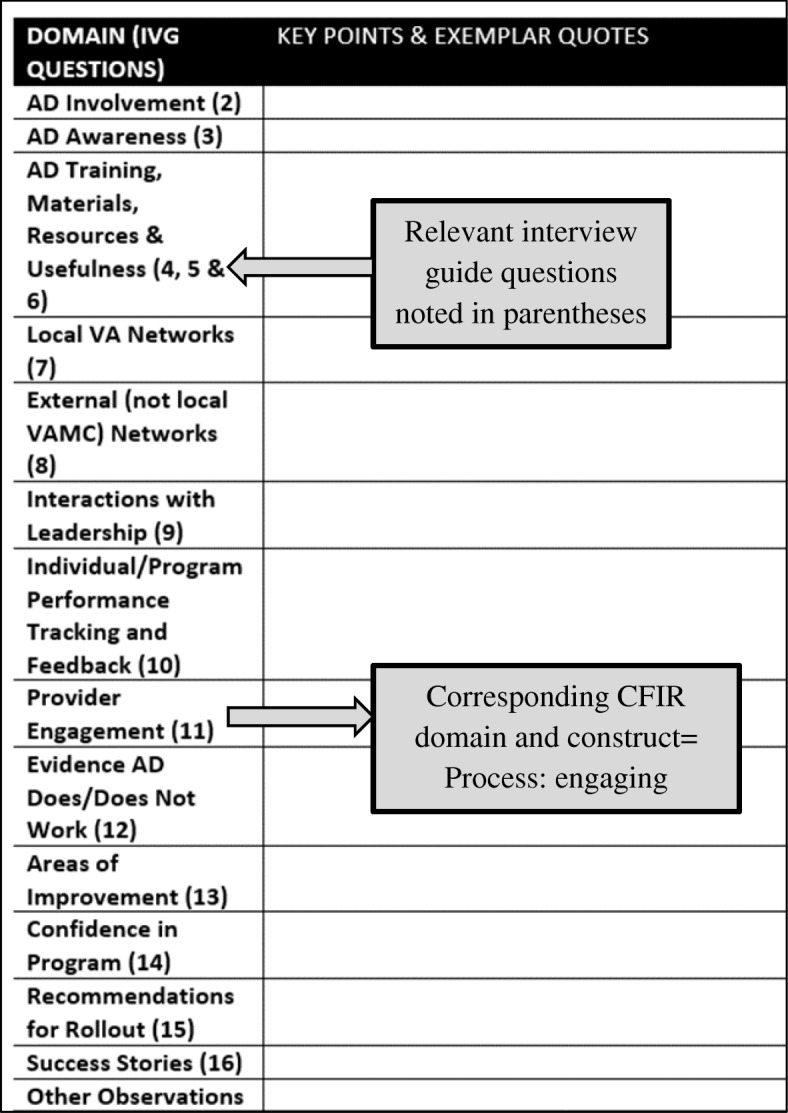
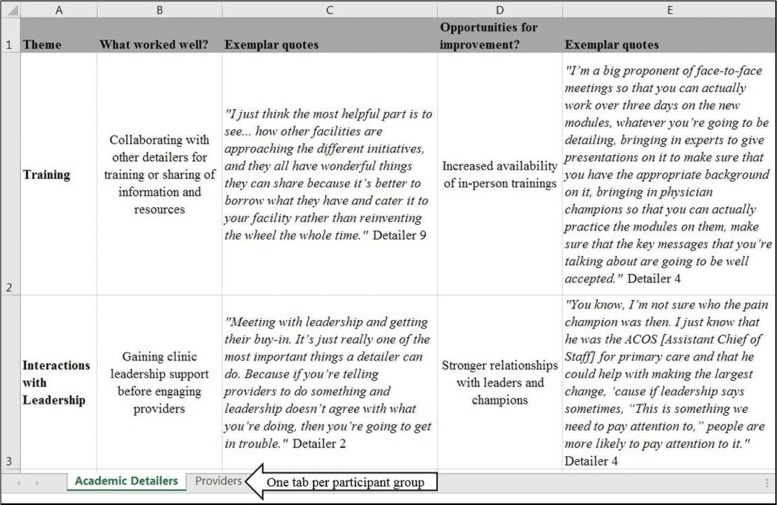
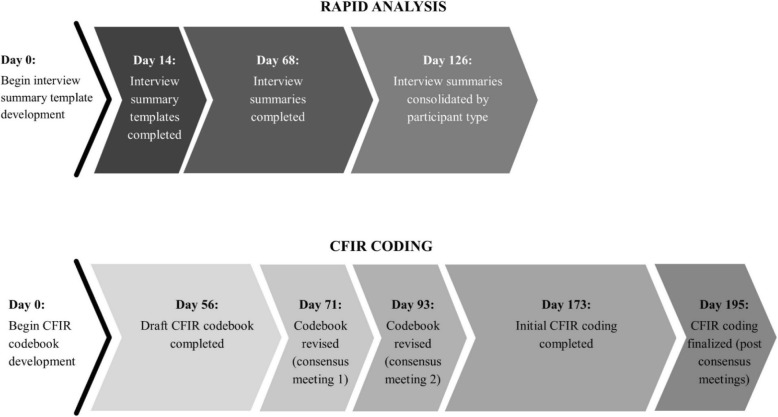
BACKGROUND: It is challenging to conduct and quickly disseminate findings from in-depth qualitative analyses, which can impede timely implementation of interventions because of its time-consuming methods. To better understand tradeoffs between the need for actionable results and scientific rigor, we present our method for conducting a framework-guided rapid analysis (RA) and a comparison of these findings to an in-depth analysis of interview transcripts. METHODS: Set within the context of an evaluation of a successful academic detailing (AD) program for opioid prescribing in the Veterans Health Administration, we developed interview guides informed by the Consolidated Framework for Implementation Research (CFIR) and interviewed 10 academic detailers (clinical pharmacists) and 20 primary care providers to elicit detail about successful features of the program. For the RA, verbatim transcripts were summarized using a structured template (based on CFIR); summaries were subsequently consolidated into matrices by participant type to identify aspects of the program that worked well and ways to facilitate implementation elsewhere. For comparison purposes, we later conducted an in-depth analysis of the transcripts. We described our RA approach and qualitatively compared the RA and deductive in-depth analysis with respect to consistency of themes and resource intensity. RESULTS: Integrating the CFIR throughout the RA and in-depth analysis was helpful for providing structure and consistency across both analyses. Findings from the two analyses were consistent. The most frequently coded constructs from the in-depth analysis aligned well with themes from the RA, and the latter methods were sufficient and appropriate for addressing the primary evaluation goals. Our approach to RA was less resource-intensive than the in-depth analysis, allowing for timely dissemination of findings to our operations partner that could be integrated into ongoing implementation. CONCLUSIONS: In-depth analyses can be resource-intensive. If consistent with project needs (e.g., to quickly produce information to inform ongoing implementation or to comply with a policy mandate), it is reasonable to consider using RA, especially when faced with resource constraints. Our RA provided valid findings in a short timeframe, enabling identification of actionable suggestions for our operations partner.
Overview
The claims and statistics of this paper haven’t been checked yet.
Free: it reads the open-access text and checks the first 5 claims that cite a source we can check. Create a free account to check every claim.
Integrity signals
Registry
Cites
Statistics
Figures
Verification
Claims the paper makes
The claims and statistics of this paper haven’t been checked yet.
Free: it reads the open-access text and checks the first 5 claims that cite a source we can check. Create a free account to check every claim.
Claims other papers make about this one
Each is checked against this paper’s own text: does it say what the citing paper says it does?
The source backs part of the claim, not all of it — or backs it for a different population, condition or comparison.
In the citing paper
“Rapid qualitative analyses has been compared directly with more traditional thematic analysis and found to produce closely aligned results, and is thus considered to have comparable rigor [40].”
From Addressing chronic pain with Focused Acceptance and Commitment Therapy in integrated primary care: findings from a mixed methods pilot randomized controlled trial (2022) · cites this paper as [40]
Experimental — accuracy not yet measuredIn the citing paper
“We analyzed qualitative interview data using rapid qualitative analysis [39, 40].”
Self-check
Percentages, sums and reported differences re-computed from the paper’s own numbers.
The self-check needs the paper’s full text.
Citations
Cites
Three Approaches to Qualitative Content Analysis
Hsieh, H.-F., & Shannon, S. E. (2005) · Qualitative Health Research · doi:10.1177/1049732305276687 · Cited by 44,601 · cited 1×
“The in-depth analysis is line with content analysis using a directed approach [17].”
MethodGraneheim, U. H., & Lundman, B. (2004) · Nurse Education Today · doi:10.1016/j.nedt.2003.10.001 · Cited by 20,772 · cited 1×
“To increase the likelihood of credibility, dependability, and trustworthiness of data, there are several decisions that should be considered when conducting qualitative evaluations, from design through execution [24].”
BackgroundQualitative Data Analysis: A Methods Sourcebook
Miles, M. B., Huberman, A. M., & Saldaña, J. (1988) · Cited by 20,701
Damschroder, L. J., Aron, D. C., Keith, R. E., Kirsh, S. R., Alexander, J. A., & Lowery, J. C. (2009) · Implementation Science · doi:10.1186/1748-5908-4-50 · Cited by 14,496 · cited 1×
“After completion of the RA, we conducted an in-depth, deductive analysis of the data using the CFIR to code transcripts [16].”
MethodSelf-citationCode Saturation Versus Meaning Saturation: How Many Interviews Are Enough?
Hennink, M. M., Kaiser, B. N., & Marconi, V. C. (2017) · Qualitative Health Research · doi:10.1177/1049732316665344 · Cited by 4,597 · cited 1×
“It is important to keep in mind that the combination of the strength and frequency of qualitative comments is what helps us understand their relative importance and contributions to our research [20], regardless of whether you are using a rapid or in-depth analytic approach.”
BackgroundWelcome to Implementation Science
Eccles, M. P., & Mittman, B. S. (2006) · Implementation Science · doi:10.1186/1748-5908-1-1 · Cited by 2,254 · cited 1×
“to promote the systematic uptake of research findings and other evidence-based practices into routine practice” [2].”
BackgroundA systematic review of the use of the Consolidated Framework for Implementation Research
Kirk, M. A., Kelley, C., Yankey, N., Birken, S. A., Abadie, B., & Damschroder, L. (2015) · Implementation Science · doi:10.1186/s13012-016-0437-z · Cited by 1,496 · cited 4×
“Damschroder LJ, Aron DC, Keith RE, Kirsh SR, Alexander JA, Lowery JC. Fostering implementation of health services research findings into practice: a consolidated framework for advancing implementation science.”
MethodInfluentialSelf-citationValidity, reliability, and generalizability in qualitative research
Leung, L. (2015) · Journal of Family Medicine and Primary Care · doi:10.4103/2249-4863.161306 · Cited by 1,404 · cited 2×
“With respect to consistency of our RA and in-depth analysis findings [14], themes from the RA were well-aligned with the CFIR domains and constructs from the in-depth analysis.”
ResultMatrix Analysis as a Complementary Analytic Strategy in Qualitative Inquiry
Averill, J. B. (2002) · Qualitative Health Research · doi:10.1177/10432302012006011 · Cited by 839
Damschroder, L. J., & Lowery, J. C. (2013) · Implementation Science · doi:10.1186/1748-5908-8-51 · Cited by 734
Self-citation
Research works printed but not linked: 1
- 15. Interim Under Secretary for Health. System-wide Implementation of Academic Detailing and Pain Program Champions. 2015.
Cited by
Items 701–800 of 912
Community Women's Health Hub models in England: a mixed methods evaluation
Daniel, K., Bousfield, J., Hocking, L., Jackson, L., & Taylor, B. (2025) · BMC Family Practice · doi:10.1186/s12875-025-03037-z · Cited by 1
“While the early hub models identified in this study included many services stipulated in the 2024 national Women’s Health Hubs Core Specification [17], none offered the full range of services which Integrated Care Boards in England have been asked to implement by December 2024, and some were not…”
Using end user feedback to specify an adaptive implementation strategy
Swindle, T., Rutledge, J. M., Johnson, S. L., & Curran, G. M. (2025) · Frontiers in Health Services · doi:10.3389/frhs.2025.1702190
Baldridge, A. S., Omitiran, K., Orji, I. A., Shedul, G. L., Ojo, T. M.-F., Eze, H., Shedul, G., Ugwuneji, E. N., Egenti, N. B., Okoli, R., et al. (2022) · Figshare · doi:10.6084/m9.figshare.20423669
Schults, J. A., Marsh, N. M., Ullman, A. J., Kleidon, T. M., Ware, R. S., Byrnes, J., Young, E., Hall, L., Keijzers, G., Cullen, L., et al. (2023) · Figshare · doi:10.6084/m9.figshare.23354455
Additional file 1 of Can academic detailing reduce opioid prescriptions in chronic non-cancer pain?
Espnes, K. A., Nøst, T. H., Handal, M., Skurtveit, S. O., & Langaas, H. C. (2024) · Figshare · doi:10.6084/m9.figshare.26578076
Hanbury, A., Mafirakureva, N., Chicken, N., & Bailey, L. (2024) · Figshare · doi:10.6084/m9.figshare.26610702
Shelley, D., Alvarez, G. G., Nguyen, T. T., Nguyen, N., Goldsamt, L. A., Cleland, C., Tozan, Y., Shuter, J., & Armstrong-Hough, M. (2022) · Figshare · doi:10.6084/m9.figshare.21351275
Schults, J. A., Marsh, N. M., Ullman, A. J., Kleidon, T. M., Ware, R. S., Byrnes, J., Young, E., Hall, L., Keijzers, G., Cullen, L., et al. (2023) · Figshare · doi:10.6084/m9.figshare.23354464
Bonett, S., Mahajan, A., Silva, D. T., Williams, J., Brady, K., Bauermeister, J., & Wood, S. M. (2024) · Figshare · doi:10.6084/m9.figshare.24953256
ter Bogt, M. J. J., Te Riele, Y. Z., Kooijman, P. G. C., Heszler, A. N., van der Meer, S., van Roon, R., Molleman, G. R. M., van den Muijsenbergh, M. E. T. C., Fransen, G. A. J., & Bevelander, K. E. (2024) · Figshare · doi:10.6084/m9.figshare.26758429
French, C. M., Dowrick, A., Fudge, N., Pinnock, H., & Taylor, S. J. (2022) · Figshare · doi:10.6084/m9.figshare.21628620
Goetz, T. G., & Wolk, C. B. (2024) · Figshare · doi:10.6084/m9.figshare.26743298
Thayil, J. (2024) · Carolina Digital Repository (University of North Carolina at Chapel Hill) · doi:10.17615/hgea-7316
Willis, T. A., Wood, S., Brehaut, J., Colquhoun, H., Brown, B. C., Lorencatto, F., & Foy, R. (2022) · Figshare · doi:10.6084/m9.figshare.19395625
Taylor, S. P., Short, R. T., Asher, A. M., Taylor, B., & Beidas, R. S. (2020) · Figshare · doi:10.6084/m9.figshare.13357497
Passero, L. E., Srinivasan, S., Grewe, M., Leeman, J., Berg, J. S., Reuland, D., & Roberts, M. C. (2022) · Figshare · doi:10.6084/m9.figshare.21628866
Passero, L. E., Srinivasan, S., Grewe, M., Leeman, J., Berg, J. S., Reuland, D., & Roberts, M. C. (2022) · Figshare · doi:10.6084/m9.figshare.21628863
Wong, C., Munthali, T., Mangunje, F. G., Katoka, M. L., Burke, H. M., Musonda, B., Musonda, M., & Todd, C. S. (2024) · Figshare · doi:10.6084/m9.figshare.26673018
Mielke, J., Leppla, L., Valenta, S., Zullig, L. L., Zúñiga, F., Staudacher, S., Teynor, A., & De Geest, S. (2022) · Figshare · doi:10.6084/m9.figshare.21258810
Baldridge, A. S., Omitiran, K., Orji, I. A., Shedul, G. L., Ojo, T. M.-F., Eze, H., Shedul, G., Ugwuneji, E. N., Egenti, N. B., Okoli, R. C. B., et al. (2022) · Figshare · doi:10.6084/m9.figshare.20423663
Garcia, C. C., Bounthavong, M., Gordon, A. J., Gustavson, A. M., Kenny, M. E., Miller, W., Esmaeili, A., Ackland, P. E., Clothier, B. A., Bangerter, A. K., et al. (2024) · Figshare · doi:10.6084/m9.figshare.26609538
Self-citationBarrett, M., Spires, M., & Vogel, C. (2024) · Figshare · doi:10.6084/m9.figshare.25770395
Verweij, L., Oesch, S., & Naef, R. (2023) · Figshare · doi:10.6084/m9.figshare.24715390
Schults, J. A., Marsh, N. M., Ullman, A. J., Kleidon, T. M., Ware, R. S., Byrnes, J., Young, E., Hall, L., Keijzers, G., Cullen, L., et al. (2023) · Figshare · doi:10.6084/m9.figshare.23354449
Finley, E. P., Chrystal, J. G., Gable, A. R., Fletcher, E. H., Palma, A., Canelo, I. A., Oberman, R. S., Jackson, L. S. S., Lesser, R., Moin, T., et al. (2024) · Figshare · doi:10.6084/m9.figshare.26082592
Postpartum Patient Perspectives on the U.S. Medicaid Sterilization Policy Waiting Period
Hartheimer, J. (2023) · Carolina Digital Repository (University of North Carolina at Chapel Hill) · doi:10.17615/f67g-en48
Muir, S., Dhuria, P., Roe, E., Lawrence, W. T., Baird, J., & Vogel, C. (2023) · Figshare · doi:10.6084/m9.figshare.22600603
Willis, T. A., Wood, S., Brehaut, J., Colquhoun, H., Brown, B. C., Lorencatto, F., & Foy, R. (2022) · Figshare · doi:10.6084/m9.figshare.19395631
Rabin, B. A., Cain, K. L., Ayers, L. O., Lomeli, A., Escoto, A. A., Burola, M. L., Aguilar, M. D., Calvillo, S. T., Reyes, B. J., Salgin, L., et al. (2024) · Figshare · doi:10.6084/m9.figshare.26660566
Vesel, L., Benotti, E., Somji, S., Bellad, R., Charantimath, U., Dhaded, S. M., Goudar, S. S., Karadiguddi, C., Mungarwadi, G., Vernekar, S., et al. (2023) · Figshare · doi:10.6084/m9.figshare.24531953
Schults, J. A., Marsh, N. M., Ullman, A. J., Kleidon, T. M., Ware, R. S., Byrnes, J., Young, E., Hall, L., Keijzers, G., Cullen, L., et al. (2023) · Figshare · doi:10.6084/m9.figshare.23354461
Mielke, J., Leppla, L., Valenta, S., Zullig, L. L., Zúñiga, F., Staudacher, S., Teynor, A., & De Geest, S. (2022) · Figshare · doi:10.6084/m9.figshare.21258816
Baldridge, A. S., Omitiran, K., Orji, I. A., Shedul, G. L., Ojo, T. M.-F., Eze, H., Shedul, G., Ugwuneji, E. N., Egenti, N. B., Okoli, R., et al. (2022) · Figshare · doi:10.6084/m9.figshare.20423672
Baldridge, A. S., Omitiran, K., Orji, I. A., Shedul, G. L., Ojo, T. M.-F., Eze, H., Shedul, G., Ugwuneji, E. N., Egenti, N. B., Okoli, R., et al. (2022) · Figshare · doi:10.6084/m9.figshare.20423678
Mielke, J., Leppla, L., Valenta, S., Zullig, L. L., Zúñiga, F., Staudacher, S., Teynor, A., & De Geest, S. (2022) · Figshare · doi:10.6084/m9.figshare.21258813
Schults, J. A., Marsh, N. M., Ullman, A. J., Kleidon, T. M., Ware, R. S., Byrnes, J., Young, E., Hall, L., Keijzers, G., Cullen, L., et al. (2023) · Figshare · doi:10.6084/m9.figshare.23354446
Mielke, J., Leppla, L., Valenta, S., Zullig, L. L., Zúñiga, F., Staudacher, S., Teynor, A., & De Geest, S. (2022) · Figshare · doi:10.6084/m9.figshare.21258807
Chang, A. G., Boyd, A., Leung, I. C., Trejo, E., Dixit, N., Mallidi, J. R., Win, S., & Beatty, A. L. (2024) · Figshare · doi:10.6084/m9.figshare.25853039
Willis, T. A., Wood, S., Brehaut, J., Colquhoun, H., Brown, B. C., Lorencatto, F., & Foy, R. (2022) · Figshare · doi:10.6084/m9.figshare.19395640
Chu, C. D., Dohan, D., Estrella, M. M., Shlipak, M. G., & Tuot, D. S. (2024) · Figshare · doi:10.6084/m9.figshare.26729572
Passero, L. E., Srinivasan, S., Grewe, M., Leeman, J., Berg, J. S., Reuland, D. S., & Roberts, M. C. (2022) · Figshare · doi:10.6084/m9.figshare.21628860
Baldridge, A. S., Omitiran, K., Orji, I. A., Shedul, G. L., Ojo, T. M.-F., Eze, H., Shedul, G., Ugwuneji, E. N., Egenti, N. B., Okoli, R. C. B., et al. (2022) · Figshare · doi:10.6084/m9.figshare.20423666
Goetz, T. G., & Wolk, C. B. (2024) · Figshare · doi:10.6084/m9.figshare.26743301
Bonett, S., Mahajan, A., Silva, D. T., Williams, J., Brady, K., Bauermeister, J., & Wood, S. M. (2024) · Figshare · doi:10.6084/m9.figshare.26663185
Hanbury, A., Mafirakureva, N., Chicken, N., & Bailey, L. (2024) · Figshare · doi:10.6084/m9.figshare.26610708
Baldridge, A. S., Omitiran, K., Orji, I. A., Shedul, G. L., Ojo, T. M.-F., Eze, H., Shedul, G., Ugwuneji, E. N., Egenti, N. B., Okoli, R., et al. (2022) · Figshare · doi:10.6084/m9.figshare.20423681
Baldridge, A. S., Omitiran, K., Orji, I. A., Shedul, G. L., Ojo, T. M.-F., Eze, H., Shedul, G., Ugwuneji, E. N., Egenti, N. B., Okoli, R., et al. (2022) · Figshare · doi:10.6084/m9.figshare.20423675
Bonett, S., Mahajan, A., Silva, D. T., Williams, J., Brady, K., Bauermeister, J., & Wood, S. M. (2024) · Figshare · doi:10.6084/m9.figshare.24953214
Brown, I. (2024) · University Libraries (University of Maryland) · doi:10.13016/vxjy-lmga
Gustavson, A. M., Wisdom, J. P., Kenny, M. E., Salameh, H. A., Ackland, P. E., Clothier, B. A., Noorbaloochi, S., Gordon, A. J., & Hagedorn, H. (2021) · Figshare · doi:10.6084/m9.figshare.14037295
Taylor, S. P., Short, R. T., Asher, A. M., Taylor, B., & Beidas, R. S. (2020) · Figshare · doi:10.6084/m9.figshare.13357500
Passero, L. E., Srinivasan, S., Grewe, M., Leeman, J., Berg, J. S., Reuland, D., & Roberts, M. C. (2022) · Figshare · doi:10.6084/m9.figshare.21628851
Garcia, C. C., Bounthavong, M., Gordon, A. J., Gustavson, A. M., Kenny, M. E., Miller, W., Esmaeili, A., Ackland, P. E., Clothier, B. A., Bangerter, A. K., et al. (2024) · Figshare · doi:10.6084/m9.figshare.26609535
Self-citationter Bogt, M. J. J., Te Riele, Y. Z., Kooijman, P. G. C., Heszler, A. N., van der Meer, S., van Roon, R., Molleman, G. R. M., van den Muijsenbergh, M. E. T. C., Fransen, G. A. J., & Bevelander, K. E. (2024) · Figshare · doi:10.6084/m9.figshare.26758426
Willis, T. A., Wood, S., Brehaut, J., Colquhoun, H., Brown, B. C., Lorencatto, F., & Foy, R. (2022) · Figshare · doi:10.6084/m9.figshare.19395628
Schults, J. A., Marsh, N. M., Ullman, A. J., Kleidon, T. M., Ware, R. S., Byrnes, J., Young, E., Hall, L., Keijzers, G., Cullen, L., et al. (2023) · Figshare · doi:10.6084/m9.figshare.23354452
Schults, J. A., Marsh, N. M., Ullman, A. J., Kleidon, T. M., Ware, R. S., Byrnes, J., Young, E., Hall, L., Keijzers, G., Cullen, L., et al. (2023) · Figshare · doi:10.6084/m9.figshare.23354458
Verweij, L., Oesch, S., & Naef, R. (2024) · Figshare · doi:10.6084/m9.figshare.24715570
Muir, S., Dhuria, P., Roe, E., Lawrence, W. T., Baird, J., & Vogel, C. (2023) · Figshare · doi:10.6084/m9.figshare.22600606
Hanbury, A., Mafirakureva, N., Chicken, N., & Bailey, L. (2024) · Figshare · doi:10.6084/m9.figshare.26610705
Portnoy, G. A., Colon, R., Gross, G. M., Adams, L. J., Bastian, L. A., & Iverson, K. M. (2020) · Figshare · doi:10.6084/m9.figshare.12806086
Verweij, L., Oesch, S., & Naef, R. (2024) · Figshare · doi:10.6084/m9.figshare.26648547
The Feasibility of Virtual Tai Chi Easy for Registered Nurses
Felion, C. M., & Felion, C. M. (2024) · UA Campus Repository (The University of Arizona)
Caregiver Perspectives on Service Needs for Individuals with Profound Autism
Ferguson, E. F. (2023) · eScholarship (California Digital Library)
Ekwo, S. A. (2021) · ScholarWorks (Walden University) · Cited by 2
Health Provider Academic Detailing to increase knowledge of PrEP for HIV Prevention
Corzo-Sanchez, E. (2021) · Florida International University Digital Commons (Florida International University)
Wicks, V. (2023) · eScholarship@McGill (McGill) · doi:10.82308/37051 · Cited by 2
Herold, B. (2025) · Carolina Digital Repository (University of North Carolina at Chapel Hill) · doi:10.17615/838f-0a04
Factors affecting the wellbeing of textile employees: challenges and solutions
Farooq, H. (2025) · DSpace repository (University of Tartu)
Ellis, S., Witzig, J., Basaldu, D., Rudd, B. N., Gastala, N., Tabachnick, A. R., Kang, S., Henry, T., Stackhouse, N., & Wardle, M. C. (2025) · Addiction Science & Clinical Practice · doi:10.1186/s13722-025-00621-7
Adult Survivors of Childhood Cancer Unmet Needs: A Quality Improvement Brief Report
Beeler, D., Yaguda, S. I., & Pope, J. (2025) · Journal of Adolescent and Young Adult Oncology · doi:10.1177/21565333251407898
“I Am Not the One That Caused Your Illness”: Lung Cancer Stigma in Nigeria
Banerjee, S. C., Gilliland, J. L., Asuzu, C. C., Mapayi, B. M., Terwase, J. M., Govindarajan, A., Olunloyo, B. O., Odiaka, E., Daramola, O. B., Owoade, I. A., et al. (2025) · Psycho-Oncology · doi:10.1002/pon.70362
“Qualitative data were analyzed using a rapid matrix analysis approach [24].”
Lakind, D., Coleman, C. A., Kolberg, B. B., Raiford, J. R., & Eddy, J. M. (2026) · Springer eBooks · doi:10.1007/978-3-032-05580-4_24
Dharmawan, A., Lolita, Y., Nurhayati, F., Ningsih, Y. F., & Bahtiar, M. D. (2026) · International Journal of Multicultural and Multireligious Understanding · doi:10.18415/ijmmu.v13i1.7251
Clinician Recommendations for the Assessment of Preteen Suicide Risk: A Qualitative Study
Wolff, J. C., Reynolds, E. K., Tezanos, K. M., Maron, M. M., Frank, H. E., McCann, M., Highlander, A., Campo, J. V., & Spirito, A. (2026) · Evidence-Based Practice in Child and Adolescent Mental Health · doi:10.1080/23794925.2025.2609997
“Using established methods (Gale et al., 2019; Hamilton & Finley, 2019) a summary template listing each interview question (described above) and exemplar quotes was created.”
Felton, J. W., Mulheron, M., Truong, T., & Poland, C. A. (2026) · Journal of Substance Use · doi:10.1080/14659891.2026.2613259
“Similar rapid coding approaches have been found to yield similar results to those obtained from in-depth analyses (Gale et al., 2019).”
Keithly, S. C., Perry, P., Ho, E. J., Sterling, R. A., Subramaniam, S., Coogan, S., Shirley, S. E., Sayre, G. G., Helfrich, C. D., Maynard, C. C., et al. (2026) · BMC Medical Education · doi:10.1186/s12909-025-08549-x
“Given that RIFDI is an ongoing program, we chose a rapid qualitive approach to data collection and analysis as it enabled sharing of timely feedback to inform real-time decision-making without compromising scientific rigor [9, 10].”
Developing an mHealth Intervention to Increase HPV Vaccine Confidence Among Black Families
Kohler, R. E., Wagner, R. B., Greene, K. L., Btoush, R. M., Kantor, L. M., & Jiménez, M. E. (2026) · Behavioral Medicine · doi:10.1080/08964289.2025.2513322
“Throughout data collection, we rapidly analyzed individual transcripts and summaries 40,41 using a matrix, 42 which allowed findings to be acted upon iteratively.”
Ramos-Pibernus, A. G., Bermonti-Pérez, M., Mejías-Serrano, D., Moreta-Ávila, F., Carminelli-Corretjer, P., Tollinchi-Natali, N., Blanco, M., Justiz, L., Febo, M., Schabath, M. B., et al. (2026) · Cancer Medicine · doi:10.1002/cam4.71494
Dionicio, P., Maluf, K. S., Eikey, E. V., Campbell, C. K., Behar, A. I., Godino, J., & Gombatto, S. P. (2026) · Journal of Physical Activity and Health · doi:10.1123/jpah.2025-0546
Gold, B. O., Arzola, A., Schrank, B. R., Morris, V. K., Marques, C., Gilliland, J. L., Atkinson, T. M., & Holliday, E. B. (2026) · Advances in Radiation Oncology · doi:10.1016/j.adro.2025.101983
Gross, C., Berry, C. A., Passmore, H., Craft, S., Blaufarb, S., Ahmed, N., & Doran, K. M. (2026) · Harm Reduction Journal · doi:10.1186/s12954-025-01392-9
Yoo, M. G., Marcucci, O., & Harris, K. M. (2026) · Education and Urban Society · doi:10.1177/00131245261416496
“In the first stage of analysis, preliminary Rapid Qualitative Analysis (Gale et al., 2019; Lewinski et al., 2021; McNall & Foster-Fishman, 2007) was conducted immediately following each interview.”
Hayes, J. F., Frank, H. E., Littlewood, A., Guzman, L. E., Terry, K. M., Schorr, C., Portelli, D. C., Phillips, G. A., Harmon, L. A., Goldstein, J., et al. (2026) · Frontiers in Medicine · doi:10.3389/fmed.2026.1748494
Skiba, M. B., Nelson, M. A., Badger, T. A., Chriswell, A., Recio‐Boiles, A., Segrin, C., & Fox, R. S. (2026) · Cancer Control · doi:10.1177/10732748261424956
Higashi, R. T., Hogan, T. P., Repasky, E. C., Lee, J., Torres, M. B., Marcus, J. L., Harris, B.-L., Nijhawan, A. E., & Krakower, D. (2026) · International Journal of Qualitative Methods · doi:10.1177/16094069261426142
“Prior studies have directly compared different qualitative analytic approaches to gauge their relative performance and contributions to broader implementation initiatives (Brown et al., 2025; Gale et al., 2019; Nevedal et al., 2021).”
Kahn, A., Paul, M. M., Kolb, J. M., Brown, B., Eluri, S., Leggett, C. L., Codipilly, D. C., Ramirez, F. C., & Iyer, P. G. (2026) · Clinical and Translational Gastroenterology · doi:10.14309/ctg.0000000000001001
The burden of bias: Patient experiences and providers’ perspectives on weight bias
Albert, S. L., Kwok, L., Massar, R. E., McMacken, M. M., Alcalá, H. E., & Ortiz, R. (2026) · Obesity Pillars · doi:10.1016/j.obpill.2026.100251
“Two study team members used a rapid coding process [22] to analyze interview responses.”
Qualitative Study to Inform Social Context-Informed Treatment of Children With Obesity
Egan, K. A., Kelly, S., Fiore, J. G., Granadeño, J., Adams, W. G., Taveras, E. M., Kistin, C. J., & Simione, M. (2026) · Academic Pediatrics · doi:10.1016/j.acap.2026.103265
Balderson, B. H. K., Firemark, A. J., Schneider, J. A., McMullen, C. K., Mayhew, M., Fj, K., Murphy, J. L., & DeBar, L. (2026) · Pain Medicine · doi:10.1093/pm/pnag029
Mullins, M. A., Ladhani, S., Carrillo, A., Repasky, E. C., Wu, M. Y., Etingen, B., Tarhan, Y. E., Sadeghi, N., Fleming, J. B., Conzen, S. D., et al. (2026) · Cancer Medicine · doi:10.1002/cam4.71679
“Both researchers listened to interview recordings; ER populated the analysis matrix, MM reviewed, and the two met to compare interpretations, identify discrepancies or missing information, and resolve differences through discussion until consensus was reached [23, 24].”
Evaluation of an audit and feedback intervention to improve uptake of cervical screening
di Martino, E., Khan, T., Bradley, S. H., Daniels, T. D., Foy, R., Alderson, S., Neal, R. D., & Willis, T. A. (2026) · BJGP Open · doi:10.3399/bjgpo.2025.0218
Magel, J. S., Siantz, E., Incze, M. A., Beneciuk, J. M., Fritz, J. M., Kelley, A. T., Cochran, G., Blosser, P., Hartman, P. A., Tyszko, M., et al. (2026) · Physical Therapy · doi:10.1093/ptj/pzag021
“44 RCA is a streamlined approach that is often used in implementation research, 44–46 when a deductive analytic approach is needed to inform intervention development, modification, and implementation of new practices.”
Yang, M.-J., Sutton, S. K., Cottrell‐Daniels, C., Ritterband, L. M., Blackwell, R., Maconi, M. L., Poudel, R., Pabbathi, S. R., Simmons, V. N., & Vinci, C. (2026) · Mindfulness · doi:10.1007/s12671-026-02775-0
“The resulting transcripts were then analyzed using rapid analysis methods, which involve summarizing key content directly into structured templates or matrices rather than line-by-line coding to expedite interpretation while maintaining rigor (Gale et al., 2019).”
Savelli, L. B., Koonce, D., Viera, K. E., Thapa, S., & Woods, C. G. (2026) · Environmental Research Health · doi:10.1088/2752-5309/ae4f17
“…is a rigorous analysis method that can be used to identify opportunities for action on a short timeframe (Watkins 2017, Vindrola-Padros and Johnson 2020, Finley et al 2022, Hamilton 2023) and with similar results to traditional qualitative analysis approaches (Gale et al 2019, Nevedal et al 2021).”
Majid, T., Sayeed, A., Hossain, L., Hasan, M. K., Saha, N., Hassan, A. K. M. M., Faruk, M. O., Any, N. F., Ameen, S., Mallick, T., et al. (2026) · doi:10.12688/verixiv.3011.1
Dorfman, C. S., Somers, T. J., Arrato, N. A., Winger, J. G., Herold, B., Vilardaga, J. P., Chou, N. A., Diachina, A. K., Corbett, C. M., Wagner, L. M., et al. (2026) · Journal of Adolescent and Young Adult Oncology · doi:10.1177/21565333261425871
“60,61 RQA has been recommended for use in intervention development as it provides a quick, systematic approach for analyzing qualitative data 62,63 while allowing for the identi fi cation of intervention elements and barriers/facilitators of a program 64 without sac-ri fi cing validity.”
Reedy, J., Wagner, N. M., Huebschmann, A. G., Schaefer, A., Begum, A., Armstrong, R., Brtnikova, M., Gleason, M. C., Szefler, S. J., Cicutto, L. C., et al. (2026) · Journal of Clinical and Translational Science · doi:10.1017/cts.2026.10730
“While traditional qualitative approaches often prioritize a theoretically rich and broad exploration of data, rapid analysis offers a rigorous approach to in-depth understanding of specific concepts when the scope of data is narrow and data collection and analysis are highly structured [24,25].”
Sisk, B. A., Milam, S. E., Bereitschaft, C., Baker, L. L., Oh, I. Y., Cohen‐Cutler, S., & Kerr, A. M. (2026) · Blood Vessels Thrombosis & Hemostasis · doi:10.1016/j.bvth.2026.100162
Surgeon Knowledge and Perspectives on Hospital at Home for the Surgical Patient
Murillo, A., Zhou, W. N., Schroter, S. M., Sawhney, V. S., Ng, S. C., Kenzik, K. M., Davids, J. S., Shepherd, F. M., Rivard, S. J., & Sachs, T. E. (2026) · Journal of Surgical Research · doi:10.1016/j.jss.2026.03.022
Metadata
- Authors
- Gale, R. C., Wu, J., Erhardt, T., Bounthavong, M., Reardon, C. M., Damschroder, L. J., & Midboe, A. M.
- Affiliations
- VA Palo Alto Health Care System (US)
- Veterans Health Administration (US)
- VA Center for Clinical Management Research (US)
- Corresponding author
- Midboe, Amanda M.
- Venue
- Implementation Science
- Published
- 2019-02-01
- Volume
- 14
- Issue
- 1
- Pages
- 11-11
- ISSN
- 1748-5908 (ISSN-L)
- PMC
- PMC6359833
- OpenAlex
- W2938766056
- Semantic Scholar
- a626f0fe88503d634d82db688e6c0efe34af9c01
- Cited by
- 846
- References
- 22
- Citations by year
- 2026: 136 · 2025: 146 · 2024: 177 · 2023: 122 · 2022: 154 · 2021: 74 · 2020: 32 · 2019: 5
- FWCI
- 90.32
- Type
- journal article
- Language
- en
- Open access
- gold
- doi.org
- Licence
- cc-by
- creativecommons.org/licenses/by/4.0/ (tdm)
- Locations
- Implementation Science (publishedVersion, cc-by)
- Europe PMC (PubMed Central) (publishedVersion, other-oa)
- PubMed Central (publishedVersion, cc-by)
- PubMed (publishedVersion)
- DOAJ (DOAJ: Directory of Open Access Journals) (submittedVersion, cc-by-sa)
- eScholarship (California Digital Library) (submittedVersion, cc-by)
- Funders
- U.S. Department of Veterans Affairs
- Quality Enhancement Research Initiative
- Veterans Affairs San Diego Healthcare System
- Topics
- Health Sciences › Health Professions › General Health Professions › Health Policy Implementation Science
- Social Sciences › Education › Qualitative Research Methods and Applications
- Social Sciences › Public Administration › Evaluation and Performance Assessment
- Keywords
- rapid qualitative analysis, academic detailing, opioid prescribing, Consolidated Framework for Implementation Research, clinical pharmacists, primary care providers, implementation research, process evaluation, resource intensity, Veterans Health Administration
- MeSH terms
- Implementation Science, Analgesics, Opioid, Data Collection, Humans, Interviews as Topic, Practice Patterns, Physicians', Drug Prescriptions, United States, United States Department of Veterans Affairs, Program Evaluation, Process Assessment, Health Care, Information Dissemination, Qualitative Research, Veterans Health
About these checks
Registry, retraction, Cites and statistics results are computed, not judged, with one exception: a printed reference that no index lists is read once by a model before it counts as a citation error. Claims are extracted by a model and kept only when their quote appears verbatim in the text; each cited source is then checked, with a model’s help, for whether it says what the claim relies on. Those verdicts can be wrong — read the claim’s quote and the cited source before relying on one.
Statistics and arithmetic are recomputed, not judged.
Confidence bands are shown only for fields calibrated on our annotated test set. None is calibrated yet, so no band is shown.
What counts as a claim ›How we measure confidence ›How we check this ›
Are you an author, or do you see a problem with this page? Request a review
Data sources
Bibliographic data: Semantic Scholar, OpenAlex, Crossref.
Contains information from the Semantic Scholar Academic Graph Datasets, made available under the ODC Attribution License (ODC-BY 1.0).
Semantic Scholar’s data is described in: Kinney, R., et al. (2023). The Semantic Scholar Open Data Platform. arXiv:2301.10140.
