

Comparison of rapid vs in-depth qualitative analytic methods from a process evaluation of academic detailing in the Veterans Health Administration
Open accessThe DOI matches its Crossref record; 21 of the 22 references it cites were found in a registry or an index.
Abstract
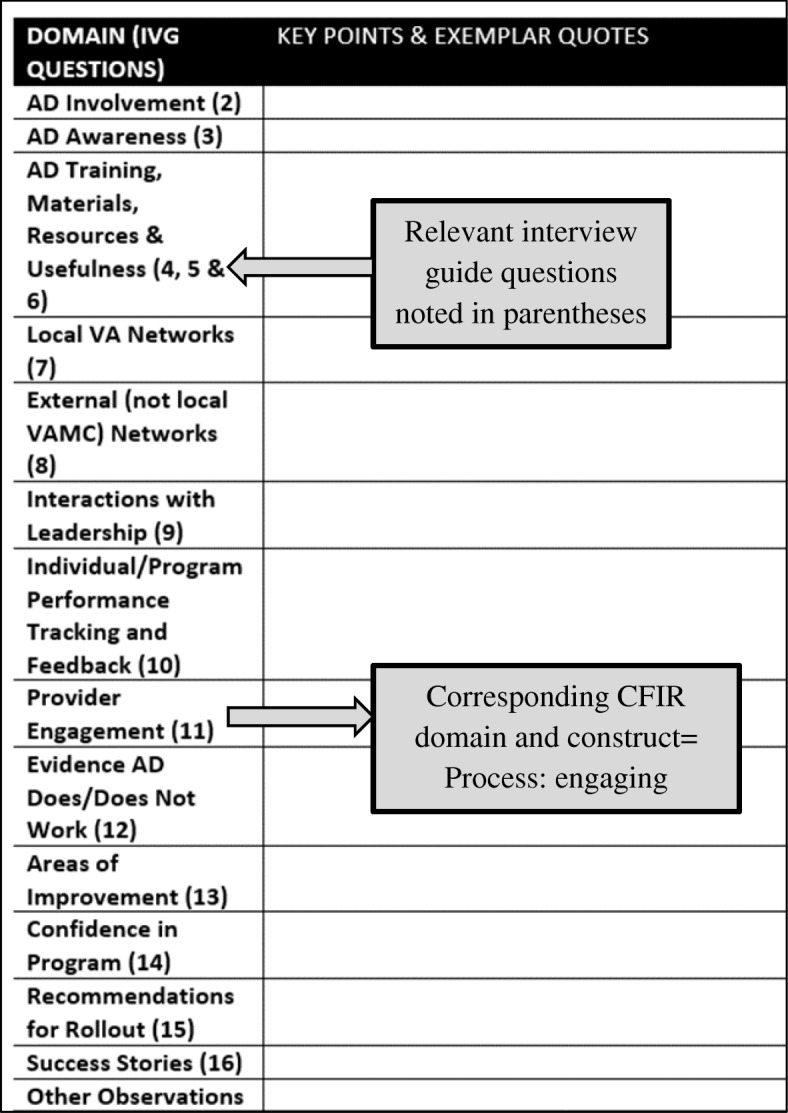
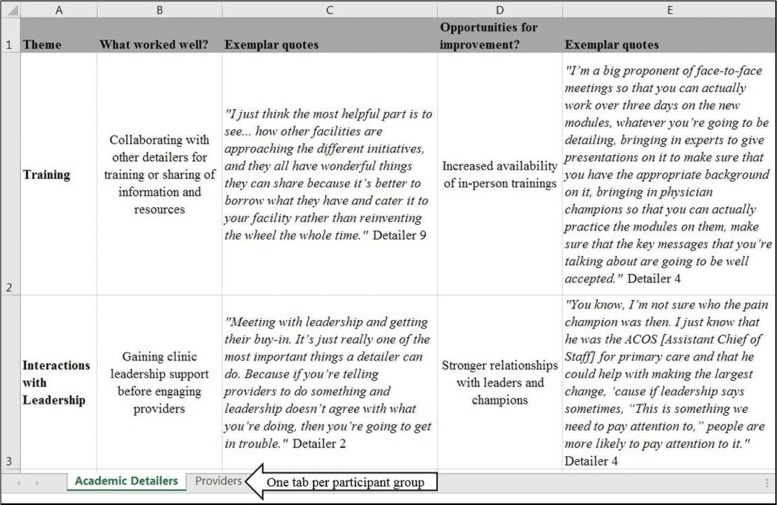
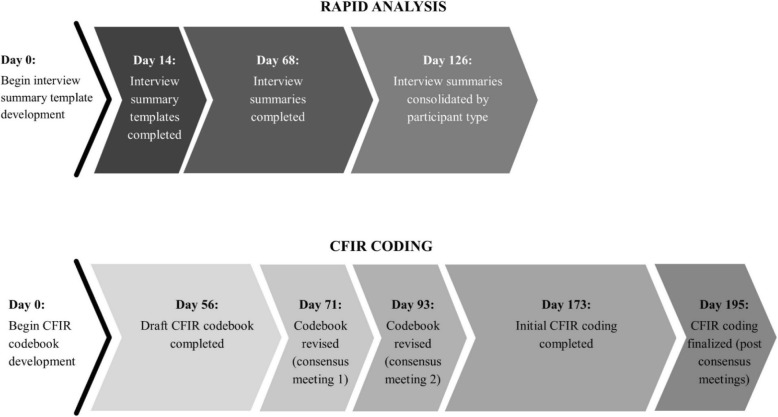
BACKGROUND: It is challenging to conduct and quickly disseminate findings from in-depth qualitative analyses, which can impede timely implementation of interventions because of its time-consuming methods. To better understand tradeoffs between the need for actionable results and scientific rigor, we present our method for conducting a framework-guided rapid analysis (RA) and a comparison of these findings to an in-depth analysis of interview transcripts. METHODS: Set within the context of an evaluation of a successful academic detailing (AD) program for opioid prescribing in the Veterans Health Administration, we developed interview guides informed by the Consolidated Framework for Implementation Research (CFIR) and interviewed 10 academic detailers (clinical pharmacists) and 20 primary care providers to elicit detail about successful features of the program. For the RA, verbatim transcripts were summarized using a structured template (based on CFIR); summaries were subsequently consolidated into matrices by participant type to identify aspects of the program that worked well and ways to facilitate implementation elsewhere. For comparison purposes, we later conducted an in-depth analysis of the transcripts. We described our RA approach and qualitatively compared the RA and deductive in-depth analysis with respect to consistency of themes and resource intensity. RESULTS: Integrating the CFIR throughout the RA and in-depth analysis was helpful for providing structure and consistency across both analyses. Findings from the two analyses were consistent. The most frequently coded constructs from the in-depth analysis aligned well with themes from the RA, and the latter methods were sufficient and appropriate for addressing the primary evaluation goals. Our approach to RA was less resource-intensive than the in-depth analysis, allowing for timely dissemination of findings to our operations partner that could be integrated into ongoing implementation. CONCLUSIONS: In-depth analyses can be resource-intensive. If consistent with project needs (e.g., to quickly produce information to inform ongoing implementation or to comply with a policy mandate), it is reasonable to consider using RA, especially when faced with resource constraints. Our RA provided valid findings in a short timeframe, enabling identification of actionable suggestions for our operations partner.
Overview
The claims and statistics of this paper haven’t been checked yet.
Free: it reads the open-access text and checks the first 5 claims that cite a source we can check. Create a free account to check every claim.
Integrity signals
Registry
Cites
Statistics
Figures
Verification
Claims the paper makes
The claims and statistics of this paper haven’t been checked yet.
Free: it reads the open-access text and checks the first 5 claims that cite a source we can check. Create a free account to check every claim.
Claims other papers make about this one
Each is checked against this paper’s own text: does it say what the citing paper says it does?
The source backs part of the claim, not all of it — or backs it for a different population, condition or comparison.
In the citing paper
“Rapid qualitative analyses has been compared directly with more traditional thematic analysis and found to produce closely aligned results, and is thus considered to have comparable rigor [40].”
From Addressing chronic pain with Focused Acceptance and Commitment Therapy in integrated primary care: findings from a mixed methods pilot randomized controlled trial (2022) · cites this paper as [40]
Experimental — accuracy not yet measuredIn the citing paper
“We analyzed qualitative interview data using rapid qualitative analysis [39, 40].”
Self-check
Percentages, sums and reported differences re-computed from the paper’s own numbers.
The self-check needs the paper’s full text.
Citations
Cites
Three Approaches to Qualitative Content Analysis
Hsieh, H.-F., & Shannon, S. E. (2005) · Qualitative Health Research · doi:10.1177/1049732305276687 · Cited by 44,601 · cited 1×
“The in-depth analysis is line with content analysis using a directed approach [17].”
MethodGraneheim, U. H., & Lundman, B. (2004) · Nurse Education Today · doi:10.1016/j.nedt.2003.10.001 · Cited by 20,772 · cited 1×
“To increase the likelihood of credibility, dependability, and trustworthiness of data, there are several decisions that should be considered when conducting qualitative evaluations, from design through execution [24].”
BackgroundQualitative Data Analysis: A Methods Sourcebook
Miles, M. B., Huberman, A. M., & Saldaña, J. (1988) · Cited by 20,701
Damschroder, L. J., Aron, D. C., Keith, R. E., Kirsh, S. R., Alexander, J. A., & Lowery, J. C. (2009) · Implementation Science · doi:10.1186/1748-5908-4-50 · Cited by 14,496 · cited 1×
“After completion of the RA, we conducted an in-depth, deductive analysis of the data using the CFIR to code transcripts [16].”
MethodSelf-citationCode Saturation Versus Meaning Saturation: How Many Interviews Are Enough?
Hennink, M. M., Kaiser, B. N., & Marconi, V. C. (2017) · Qualitative Health Research · doi:10.1177/1049732316665344 · Cited by 4,597 · cited 1×
“It is important to keep in mind that the combination of the strength and frequency of qualitative comments is what helps us understand their relative importance and contributions to our research [20], regardless of whether you are using a rapid or in-depth analytic approach.”
BackgroundWelcome to Implementation Science
Eccles, M. P., & Mittman, B. S. (2006) · Implementation Science · doi:10.1186/1748-5908-1-1 · Cited by 2,254 · cited 1×
“to promote the systematic uptake of research findings and other evidence-based practices into routine practice” [2].”
BackgroundA systematic review of the use of the Consolidated Framework for Implementation Research
Kirk, M. A., Kelley, C., Yankey, N., Birken, S. A., Abadie, B., & Damschroder, L. (2015) · Implementation Science · doi:10.1186/s13012-016-0437-z · Cited by 1,496 · cited 4×
“Damschroder LJ, Aron DC, Keith RE, Kirsh SR, Alexander JA, Lowery JC. Fostering implementation of health services research findings into practice: a consolidated framework for advancing implementation science.”
MethodInfluentialSelf-citationValidity, reliability, and generalizability in qualitative research
Leung, L. (2015) · Journal of Family Medicine and Primary Care · doi:10.4103/2249-4863.161306 · Cited by 1,404 · cited 2×
“With respect to consistency of our RA and in-depth analysis findings [14], themes from the RA were well-aligned with the CFIR domains and constructs from the in-depth analysis.”
ResultMatrix Analysis as a Complementary Analytic Strategy in Qualitative Inquiry
Averill, J. B. (2002) · Qualitative Health Research · doi:10.1177/10432302012006011 · Cited by 839
Damschroder, L. J., & Lowery, J. C. (2013) · Implementation Science · doi:10.1186/1748-5908-8-51 · Cited by 734
Self-citation
Research works printed but not linked: 1
- 15. Interim Under Secretary for Health. System-wide Implementation of Academic Detailing and Pain Program Champions. 2015.
Cited by
Items 201–300 of 912
The place of rural hospitals in New Zealand’s health system: an exploratory qualitative study
Blattner, K., Clay, Nixon, Richard, Miller, Crengle, Antón, M. D., & Stokes (2023) · Rural and Remote Health · doi:10.22605/rrh7583 · Cited by 14
A Transgender Health Information Resource: Participatory Design Study
Morse, B., Soares, A., Kwan, B. M., Allen, M., Lee, R. S., DeSanto, K., Holliman, B. D., Ytell, K., & Schilling, L. M. (2023) · JMIR Human Factors · doi:10.2196/42382 · Cited by 13
“We performed rapid analysis [62] of the transcripts to allow us to quickly use the information in the next resource information app development phase.”
González-Montalvo, M. D. M., Dickson, P. F., Saber, L. B., Boehm, R. A., Phillips, V., Akiyama, M. J., & Spaulding, A. C. (2023) · PLoS ONE · doi:10.1371/journal.pone.0285364 · Cited by 12
“91 92 Methods 93 We employed rapid qualitative analysis, which provides timely results to tailor interventions to the needs 94 of a target population, support iterative program improvements and provide information to health care 95 stakeholders on a short timeline.(15-18) Authors (MDG, PFD, LBR, VLP, MJA, ACS) contrib…”
MethodGarcia, C. C., Bounthavong, M., Gordon, A. J., Gustavson, A. M., Kenny, M. E., Miller, W., Esmaeili, A., Ackland, P. E., Clothier, B. A., Bangerter, A. K., et al. (2023) · Implementation Science Communications · doi:10.1186/s43058-023-00482-8 · Cited by 12
“Rapid qualitative analysis was performed to identify facilitators and barriers to prescribing MOUD, and a facility summary report was prepared which was discussed with the local facilitation team during the on-site visit [34, 43, 44].”
MethodSelf-citationBarriers and Facilitators to Ophthalmology Visit Adherence in an Urban Hospital Setting
Scanzera, A. C., Sherrod, R. M., Potharazu, A. V., Nguyen, D., Beversluis, C., Karnik, N. S., Chan, R. V. P., Kim, S. J., Krishnan, J. A., & Musick, H. (2023) · Translational Vision Science & Technology · doi:10.1167/tvst.12.10.11 · Cited by 14
Rosa, W. E., Gilliland, J. L., McDarby, M., Nelson, J. E., Desai, A. V., & Epstein, A. S. (2023) · Palliative Medicine Reports · doi:10.1089/pmr.2023.0057 · Cited by 12
“26 RA was conducted in two phases: a ‘‘vertical’’ phase and a ‘‘horizon-tal’’ phase.”
BackgroundMcDermott, K. A., Presciutti, A., Levey, N., Brewer, J. R., Rush, C. L., Giraldo‐Santiago, N., Pham, T. V., Pasinski, R., Yousif, N., Gholston, M., et al. (2024) · Journal of Pain Research · doi:10.2147/jpr.s471477 · Cited by 12
“40 We used RDA to evaluate thematic saturation (ie, was consistent information obtained throughout assessments) in a timely manner to inform the additional qualitative assessments.”
Dir, A. L., Watson, D. P., Zhiss, M., Taylor, L., Bray, B. C., & McGuire, A. B. (2021) · Trials · doi:10.1186/s13063-021-05065-3 · Cited by 12
Parkin, S., Neale, J., Roberts, E., Brobbin, E., Bowen, A. M., Hermann, L. L., Dwyer, G.-J., Turner, R., Henderson, J., Kuester, L. B., et al. (2021) · Research Methods in Medicine & Health Sciences · doi:10.1177/26320843211061301 · Cited by 14
“In order to expedite data analysis, all interviewers were trained in data charting(27) and data reduction.(28,29) The data reduction technique involves transferring summaries of respondent answers into a matrix (data charting) that corresponds to the semistructured interview schedule.”
MethodBeyond Information Design: Designing Health Care Dashboards for Evidence-Driven Decision-Making
Hysong, S. J., Yang, C. P., Wong, J. J., Knox, M. K., O’Mahen, P. N., & Petersen, L. A. (2023) · Applied Clinical Informatics · doi:10.1055/a-2068-6699 · Cited by 15
Sanabria, G., Chavez, M., Velez, M., Muńoz, L. P., Bastardo, J., Belén, A. M., Solis, I., Barden, S. M., Doss, B. D., & Martinez‐Tyson, D. (2023) · Ethnicity and Health · doi:10.1080/13557858.2023.2279482 · Cited by 11
“As studies have shown that fi ndings are comparable between traditional thematic analysis to rapid analysis the study team opted to use a rapid analysis technique to allow for more real-time analysis in our community-engaged approach (Gale et al. 2019; Taylor et al. 2018).”
BackgroundSmiley, S. L., & Felner, J. K. (2024) · Nicotine & Tobacco Research · doi:10.1093/ntr/ntad141 · Cited by 11
Fletcher, T. L., Johnson, A. L., Kim, B., Yusuf, Z. I., Benzer, J. K., & Smith, T. L. (2019) · Translational Behavioral Medicine · doi:10.1093/tbm/ibz172 · Cited by 12
An Innovation to Expand the Reach of Peer Support: A Feasibility and Acceptability Study
Goldstein, K. M., Voils, C. I., Bastian, L. A., Heisler, M., Olsen, M. K., Woolson, S., White‐Clark, C., Zervakis, J., & Oddone, E. Ž. (2022) · Military Medicine · doi:10.1093/milmed/usac295 · Cited by 11
Portz, J. D., Schmid, A. A., Fruhauf, C. A., Fox, A., Puymbroeck, M. V., Sharp, J. L., & Leach, H. J. (2023) · JMIR Formative Research · doi:10.2196/39158 · Cited by 12
“Analysis We used rapid, qualitative, analytic methods to identify themes related to the acceptability of online delivery [25].”
MethodLuetsch, K., Wong, G., & Rowett, D. S. (2023) · BMJ Quality & Safety · doi:10.1136/bmjqs-2022-015498 · Cited by 11
Mwamba, C., Beres, L. K., Mukamba, N., Jere, L., Foloko, M., Lumbo, K., Sikombe, K., Simbeza, S., Mody, A., Pry, J. M., et al. (2023) · Journal of the International AIDS Society · doi:10.1002/jia2.26114 · Cited by 12
Impact of the COVID-19 Pandemic on the Community Pharmacy Workforce
Bacci, J. L., Pollack, S. W., Skillman, S. M., Odegard, P. S., Danielson, J. H., & Frogner, B. K. (2023) · Medical Care Research and Review · doi:10.1177/10775587231204101 · Cited by 11
“Interview notes were analyzed using a rapid content analysis approach adapted from Gale and colleagues (Gale et al., 2019).”
MethodOrtiz, R., Massar, R. E., McMacken, M. M., & Albert, S. L. (2024) · Appetite · doi:10.1016/j.appet.2024.107341 · Cited by 13
Results of a pre-implementation analysis of Ethiopia’s National Pediatric Cancer Registry
Buhlinger, K. M., Borlagdan, J., Agegnehu, B., Fentie, A. M., Bernstein, A. T., Urick, B. Y., Roberts, M. C., Weitzman, S. S., Bekele, W., Korones, D. N., et al. (2020) · Journal of Oncology Pharmacy Practice · doi:10.1177/1078155220980051 · Cited by 11
“These responses were themed and then coded by KB and BM using rapid analysis.(7) Field notes were used in a way that the study team could not identify the participants.”
MethodPaust, A., Christensen, L. D., Larsen, L. L., Christensen, N. P., Kofod, F. G., Guassora, A. D., Merrild, C. H., & Hvidt, E. A. (2021) · JMIR Formative Research · doi:10.2196/27323 · Cited by 12
“Our approach was similar to other rapid methods, such as using a priori structured codebook [44], coding audio only [45], and allocating researchers to code for specific themes [46].”
MethodGoff, S. L., Wallace, K. F., Putnam, N. I., Fernandes, M., Chow, E., DaCosta, M. C., & Clary, K. M. (2022) · Frontiers in Public Health · doi:10.3389/fpubh.2022.780711 · Cited by 14
“Analysis Interview transcripts were analyzed using thematic analysis, applying a validated rapid analytic technique (33).”
MethodAbidogun, T. M., Cole, T. O., Massey, E. C., Kleinman, M. B., Greenblatt, A. D., Seitz‐Brown, C. J., Magidson, J. F., & Belcher, A. M. (2022) · SSRN Electronic Journal · doi:10.2139/ssrn.4144150 · Cited by 11
Vesel, L., Spigel, L., Behera, J. N., Bellad, R. M., Das, L., Dhaded, S., Goudar, S. S., Guruprasad, G., Misra, S., Panda, S., et al. (2021) · BMJ Open · doi:10.1136/bmjopen-2020-048216 · Cited by 10
Dorfman, C. S., Shelby, R. A., Stalls, J. M., Somers, T. J., Keefe, F. J., Vilardaga, J. P., Winger, J. G., Mitchell, K., Ehren, C., & Oeffinger, K. C. (2023) · Journal of Adolescent and Young Adult Oncology · doi:10.1089/jayao.2022.0100 · Cited by 10
“64,65 It allows for the identification of intervention elements as well as barriers and facilitators of a program.”
Boudreau, J., Moo, L. R., Kennedy, M. A., Conti, J., Anwar, C., Pimentel, C. B., Nearing, K. A. J., Hung, W. W., & Dryden, E. M. (2024) · JMIR Formative Research · doi:10.2196/50507 · Cited by 11
“The study team (CA, JHB, JC, EMD, and MAK) analyzed interviews using rapid qualitative analysis [27,28].”
MethodMace, R. A., Cohen, J. E., Lyons, C., Ritchie, C., Bartels, S. J., Okereke, O. I., Hoeppner, B. B., Brewer, J. A., Joo, J. H., & Vranceanu, A. (2024) · Aging & Mental Health · doi:10.1080/13607863.2024.2430525 · Cited by 10
“We immediately organized feedback into a domain-specific matrix for rapid analysis (Gale et al., 2019).”
Ryan, M., Griffith, T. H., Okoro, G., Osborne, T., Bateman, L. B., Turan, J. M., Durant, R. W., Webb, L. V., Fouad, M. N., & Oates, G. R. (2024) · Health Equity · doi:10.1089/heq.2024.0050 · Cited by 10
“27,28 A structured tem-plated summary table was developed before the inter-views.”
Oesterle, T., Bormann, N. L., Paul, M. M., Breitinger, S. A., Lai, B., Smith, J. L., Stoppel, C. J., Arndt, S. V., & Williams, M. D. (2025) · JMIR Research Protocols · doi:10.2196/65693 · Cited by 10
“Qualitative interviews will be recorded, transcribed, and coded on a rolling basis using a rapid, template-based approach derived from the interview protocols [46].”
Engaging primary care patients with existing online tools for weight loss: A pilot trial
McVay, M. A., Cooper, K. B., Donahue, M. L., Seoane, M. C., Shah, N. R., Webb, F. J., Perri, M. G., & Jake‐Schoffman, D. E. (2022) · Obesity Science & Practice · doi:10.1002/osp4.592 · Cited by 10
“Qualitative data from the semi‐structured interviews were content analyzed using rapid analysis.(62,63) A structured interview coding template was drafted by the study Co‐Principal Investigators (MAM and DJS) to capture a priori key themes; MAM and DJS independently coded two interviews, then added emergent themes to…”
MethodResultRapid turn-around qualitative analysis applications in pharmacy and health services research
Renfro, C. P., & Hohmeier, K. C. (2022) · Elsevier eBooks · doi:10.1016/b978-0-323-91888-6.00022-3 · Cited by 11
Gurung, G., Jaye, C., Gauld, R. D. C., & Stokes, T. (2022) · BMJ Open · doi:10.1136/bmjopen-2022-065635 · Cited by 10
Stecher, C. D., Palimaru, A. I., Odiit, M., Lunkuse, L., Walukaga, S., & Linnemayr, S. (2022) · Social Science & Medicine · doi:10.1016/j.socscimed.2022.115567 · Cited by 10
Blonigen, D. M., Smelson, D. A., Smith, J. S., Baldwin, N., McInnes, D. K., Raikov, I., Weber, J. J., & Hyde, J. K. (2022) · BMC Family Practice · doi:10.1186/s12875-022-01927-0 · Cited by 12
“Qualitative data were analyzed with rapid analysis [35].”
MethodZoellner, J., Reid, A., Porter, K., Frederick, C., Hilgart, M. M., & Ritterband, L. M. (2023) · JMIR Human Factors · doi:10.2196/41262 · Cited by 11
“The analysis and data interpretation process involved several steps [61,62].”
MethodNagawa, C. S., Lane, I. A., Davis, M., Wang, B., Pbert, L. A., Lemon, S. C., & Sadasivam, R. S. (2022) · Journal of Dual Diagnosis · doi:10.1080/15504263.2022.2159732 · Cited by 10
“We consolidated summaries of the transcript data into a matrix and developed themes and sub-themes from the data (Gale et al., 2019).”
MethodVest, B. M., Wray, L. O., Thase, M. E., Brady, L., Chapman, S. R., & Oslin, D. W. (2023) · Psychiatric Services · doi:10.1176/appi.ps.20220537 · Cited by 10
Rosenberg, J., Ryan, P. M., Brown, C., Schaffer, R., O’Brien, C., Ganjavi, F., & Sharifi, M. (2023) · Health Education Research · doi:10.1093/her/cyad034 · Cited by 10
Exploring the Impact of COVID-19 on Women Hospitalists: A Mixed-Gender Qualitative Analysis
Busch, J. I., Keniston, A., Astik, G. J., Auerbach, A. D., Kangelaris, K. N., Kulkarni, S. A., Leykum, L. K., Linker, A. S., Nieto, K., Pierce, R. G., et al. (2023) · Journal of General Internal Medicine · doi:10.1007/s11606-023-08371-5 · Cited by 10
“39 Additionally, this work highlights the experiences and perspectives of members of the hospitalist community from 12 academic institutions across the USA, spanning roles from junior faculty to division chiefs.”
BackgroundMora, N., Arvanitakis, Z., Thomas, M., Kramer, H., Morrato, E. H., & Markossian, T. W. (2023) · JMIR Formative Research · doi:10.2196/50334 · Cited by 11
Frank, H. E., Guzman, L. E., Ayalasomayajula, S., Albanese, A. M., Dunklee, B., Harvey, M., Bouchard, K. L., Vadiveloo, M. K., Yaroch, A. L., Scott, K., et al. (2024) · Pilot and Feasibility Studies · doi:10.1186/s40814-024-01467-7 · Cited by 10
“Interviews were coded using a rapid analytic approach [41], in which a templated sum-mary table was developed to summarize transcripts.”
MethodKordon, A., Carroll, A. J., Fu, E. S., Rosenthal, L. J., Rado, J. T., Jordan, N., Brown, C. H., & Smith, J. D. (2024) · BMC Psychiatry · doi:10.1186/s12888-024-05930-w · Cited by 11
“Transcripts of recordings were analyzed by EF and AJC who have training in framework-guided rapid analysis and have employed these methods in previous studies [32, 33].”
MethodTransitions of care for adolescents with disorders of gut–brain interaction
Atkins, M., Huynh, D. J., Madva, E. N., Kuo, B., Zar‐Kessler, C., Murray, H. B., & Vélez, C. D. (2024) · Journal of Pediatric Gastroenterology and Nutrition · doi:10.1002/jpn3.12352 · Cited by 10
Digre, P., Avoundjian, T., Johnson, K. L., Peyton, D., Lewis, C., Barnabas, R. V., Golden, M. R., & Khosropour, C. M. (2020) · Sexually Transmitted Diseases · doi:10.1097/olq.0000000000001296 · Cited by 10
Brown‐Johnson, C. G., McCaa, M., Giannitrapani, S., Singer, S. J., Lorenz, K., Yano, E. M., Thanassi, W. T., DeShields, C., & Giannitrapani, K. F. (2021) · BMJ Open · doi:10.1136/bmjopen-2021-049134 · Cited by 11
Anvari, M. S., Seitz‐Brown, C. J., Spencer, J., Mulheron, M., Abdelwahab, S., Borba, C. P. C., Magidson, J. F., & Felton, J. W. (2021) · Journal of Substance Abuse Treatment · doi:10.1016/j.jsat.2021.108649 · Cited by 10
“Analysis The current rapid qualitative analysis approach followed the work of Gale et al. (2019), who found that qualitative results from a rapid analysis, specifically themes identified, were consistent with those obtained from an in-depth analysis.”
Breland, J. Y., Agha, K., & Mohankumar, R. (2021) · JMIR Formative Research · doi:10.2196/29916 · Cited by 10
“We used rapid qualitative analysis methods informed by Neal and colleagues [23] and Nevedal and colleagues [24] to answer the research questions: (1) what are barriers and facilitators to mHealth adoption (initial use) and engagement (continued use, ie, 2 or more uses)? and (2) what are patient beliefs about the appro…”
MethodUtilizing Multilingual Methods and Rapid Analysis for Global Qualitative Research During a Pandemic
Graetz, D. E., Sniderman, E., Villegas, C., Ragab, I. A. M., Laptsevich, A., Maliti, B., Naidu, G., Zhang, H., Gassant, P. Y., Nunes, L., et al. (2022) · Global Qualitative Nursing Research · doi:10.1177/23333936221080969 · Cited by 13
“Findings from rapid analysis have been demonstrated to be consistent with in-depth analysis (Gale et al., 2019) and can expedite data analysis time (Taylor et al.”
MethodGin, J. L., Balut, M. D., Alenkin, N. R., & Dobalian, A. (2022) · Journal of Primary Care & Community Health · doi:10.1177/21501319221112585 · Cited by 11
Built environment approaches: Extension personnel's preferences, barriers, and facilitators
Balis, L. E., & Grocke-Dewey, M. (2022) · Frontiers in Public Health · doi:10.3389/fpubh.2022.960949 · Cited by 10
“For qualitative analysis, the open-ended barriers and facilitators questions were analyzed through a rapid deductive approach selected to quickly produce actionable results (48).”
MethodTeam dynamics in a COVID-19 intensive care unit: A qualitative study
Costa, D. K., Wright, N., Hashem, O., Posa, A. M., Juno, J., Brown, S., Blank, R., & McSparron, J. I. (2022) · Australian Critical Care · doi:10.1016/j.aucc.2022.11.001 · Cited by 11
“This rapid analytic approach, of first deductive and then inductive coding, has been shown to generate rigorous findings compared to traditional qualitative methods.(13, 17).”
ResultHigham, R., Pini, S. A., Quyn, A. J., Kowal, M. R., Helliwell, J. A., Saman, R., Lewthwaite, P., Young, N. R., & Rousseau, N. S. (2022) · Frontiers in Sociology · doi:10.3389/fsoc.2022.958250 · Cited by 10
Stabile, A. J., Iribarren, S., Sonney, J., Demiris, G., & Schnall, R. (2024) · Informatics for Health and Social Care · doi:10.1080/17538157.2024.2333379 · Cited by 9
Expert recommendations for the conduct and appraisal of qualitative research in oncology
Kaye, E. C., Bogetz, J. F., Barton, K. S., Bell, C. J., Johnston, E. E., Pozzar, R. A., Superdock, A., Thorne, S., Weaver, M. S., Wiener, L., et al. (2026) · The Lancet Oncology · doi:10.1016/s1470-2045(25)00670-9 · Cited by 10
Jogerst, K. M., Cassidy, D. J., Coe, T. M., Monette, D. L., Sell, N. M., Eurboonyanum, C., Hamdi, I., PETRUSA, E. R., Stearns, D. A., Gee, D. W., et al. (2022) · Journal of surgical education · doi:10.1016/j.jsurg.2022.09.010 · Cited by 9
Balbale, S. N., Schäfer, W. L. A., Davis, T. L., Blake, S., Close, S., Sullivan, G. A., Reiter, A. J., Hu, A., Smith, C. J., Wilberding, M., et al. (2023) · Implementation Science Communications · doi:10.1186/s43058-023-00463-x · Cited by 10
A formative evaluation to inform integration of psychiatric care with other gender-affirming care
Goetz, T. G., & Wolk, C. B. (2024) · BMC Family Practice · doi:10.1186/s12875-024-02472-8 · Cited by 9
“We used the Consolidated Framework for Implementation Research (CFIR) [27–30] to develop group-specific semi-structured interview guides to facilitate uniform inclusion and sequencing of topics and to allow for valid comparison across interviews.”
MethodAyyaswami, V., Subramanian, J., Nickerson, J., Erban, S. B., Rosano, N., McManus, D. D., Gerber, B. S., & Faro, J. M. (2024) · JMIR Formative Research · doi:10.2196/56962 · Cited by 9
“We used rapid qualitative analysis during and after the interviews [21,22].”
MethodBoomstra, E., Walraven, I., van der Ploeg, I. M. C., Wouters, M. W. J. M., van de Kamp, M. W., Dirven, R. J., Albers, E. A. C., Fraterman, I., Poulissen, M., van de Poll-Franse, L. V., et al. (2024) · Quality of Life Research · doi:10.1007/s11136-024-03787-w · Cited by 12
“Strategies 7–9, 15, 31, 34, 35, 37–”
Bowden, C. F., Worsley, D., Esposito, J. M., Cutler, G. J., & Doupnik, S. K. (2022) · Journal of the American College of Emergency Physicians Open · doi:10.1002/emp2.12839 · Cited by 12
Kwan, B. M., Sobczak, C., Gorman, C., Roberts, S. C., Owen, V., Wynia, M. K., Ginde, A. A., Peña-Jackson, G., Ziegler, O., & DeCamp, L. R. (2022) · PLoS ONE · doi:10.1371/journal.pone.0274043 · Cited by 9
“Focus group transcripts were analyzed using rapid qualitative methods [26] based on predefined areas of interest to inform the dissemination of mAbs by one investigator who moderated the .”
Murray, H. B., Weeks, I., Thurler, A. H., Calabrese, S., Lapinel, M. K., Madva, E. N., Staller, K. D., Keefer, L., & Kuo, B. (2023) · Neurogastroenterology & Motility · doi:10.1111/nmo.14526 · Cited by 10
O’Connor, C. M. C., Poulos, R. G., Preti, C., Heldon, M., Barclay, L., Beattie, E., & Poulos, C. J. (2023) · Health Promotion Journal of Australia · doi:10.1002/hpja.720 · Cited by 9
Ming, D. Y., Wong, W., Jones, K. A., Antonelli, R. C., Gujral, N., Gonzales, S. E., Rogers, U. A., Ratliff, W., Shah, N., & King, H. A. (2023) · JMIR Research Protocols · doi:10.2196/46847 · Cited by 9
Liem, W. W., Casline, E., Lorenzo, J., Gordon, J. D., Avila, A. A., Taylor, A., Levitz, N., O'Keefe, M. C., Shum, K., & Macapagal, K. (2026) · Journal of Medical Internet Research · doi:10.2196/78621 · Cited by 8
“RQA is an increasingly adopted approach in applied health research contexts, emphasizing structured data summarization over line-by-line coding to generate timely, actionable findings [42].”
Iyer, A. S., Wells, R. D., Bechthold, A. C., Armstrong, M., O'Beirne, R., Byun, J. Y., Coffee‐Dunning, J., Dionne-Odom, J. N., Buhr, R. G., Suen, A. O., et al. (2024) · Journal of the American Geriatrics Society · doi:10.1111/jgs.19158 · Cited by 8
Herrera, M. C., Mahajan, A., Bonett, S., Aronowitz, S. V., Bauermeister, J. A., & da Silva, D. T. (2024) · Substance Use & Addiction Journal · doi:10.1177/29767342241274077 · Cited by 8
“31 This ensured that all participants worked at programs that provided MOUD.”
Smith, J. D., Carroll, A. J., Tedla, Y. G., Sanuade, O. A., Merle, J. L., Heinrich, J., Bannon, J., Abramsohn, E., Ahmad, F. S., Lazar, D., et al. (2025) · Implementation Science · doi:10.1186/s13012-025-01431-w · Cited by 8
“A trained team of investigators and RMAs will use Rapid Qualitative Analysis [69] to (a) conduct content analysis and identify themes then (b) develop ‘summary templates [70] from the focus group transcripts.”
Austad, K., Cordova-Ramos, E. G., Fernández, A., & Drainoni, M. (2025) · Implementation Science Communications · doi:10.1186/s43058-025-00753-6 · Cited by 8
“We can build on recent advances in “rapid” methods—including rapid qualitative analysis and rapid ethnographic assessment—which have been shown to produce equally rigorous conclusions with less time and resources [20, 21].”
Balis, L. E., Swindle, T., Palmer, S., Shaw, E., Jones-Dozier, S., & Grocke-Dewey, M. (2025) · Implementation Science · doi:10.1186/s13012-025-01456-1 · Cited by 8
“The ideas generated by the brainwriting premortem were analyzed through a rapid deductive qualitative approach [23, 26, 68].”
DeCamp, L. R., Acosta, J., Vázquez, M. G., & Polk, S. (2021) · Health Promotion Practice · doi:10.1177/1524839921993054 · Cited by 8
“Rapid qualitative analytic techniques may reduce these barriers, but not enough to make them universally feasible (Burgess-Allen & Owen-Smith, 2010; Gale et al., 2019).”
BackgroundMace, R. A., Hopkins, S. W., Reynolds, G., & Vranceanu, A. (2022) · Journal of Clinical Psychology in Medical Settings · doi:10.1007/s10880-022-09843-2 · Cited by 8
“We used rapid assessment procedures to analyze the focus group data consistent with established qualitative frameworks (Eaton et al., 2019; Gale et al., 2019; Renfro et al., 2021).”
MethodHealth Care Home implementation in Otago and Southland: a qualitative evaluation
Gurung, G., Barson, S., Haughey, M., & Stokes, T. (2022) · Journal of Primary Health Care · doi:10.1071/hc22032 · Cited by 8
Midboe, A. M., Javier, S. J., Salsbury, S. A., Katsovich, L., Burgess, D. J., King, H. A., Taylor, S. L., Martino, S., Mayer, J. M., Wallace, R. B., et al. (2023) · Translational Behavioral Medicine · doi:10.1093/tbm/ibad015 · Cited by 8
Self-citationMcDermott, K. A., Levey, N., Brewer, J. R., Ehmann, M., Hooker, J. E., Pasinski, R., Yousif, N., Raju, V., Gholston, M., Greenberg, J., et al. (2023) · JMIR Research Protocols · doi:10.2196/52117 · Cited by 8
“On the basis of the RDA literature, the completed template was reviewed by another member of the study team and entered into a matrix of responses [55,58], which informed the manual and procedure adaptations before the open pilot.”
MethodMinian, N., Gayapersad, A., Coroiu, A., Dragonetti, R., Zawertailo, L. A., Zaheer, J., O’Neill, B. G., Lange, S., Thomson, N., Crawford, A. S., et al. (2024) · Frontiers in Psychiatry · doi:10.3389/fpsyt.2024.1286078 · Cited by 10
Hassan, R., Meehan, A. A., Hughes, S., Beeson, A. M., Spencer, H., Howard, J., Tietje, L., Richardson, M., Schultz, A., Zawitz, C. J., et al. (2024) · Emerging infectious diseases · doi:10.3201/eid3013.230643 · Cited by 9
“First, we developed an a priori matrix to organize and analyze findings ( 18 – 20 ) to make evidence-based recommendations to improve immediate mpox response activities ( 12 ).”
MethodHaddad, N. R., Bhardwaj, T., Zide, B. S., Kher, H., Lipschitz, J. M., Hernandez, M. A., Hanser, S. B., & Donovan, N. J. (2024) · The American Journal of Geriatric Psychiatry Open Science Education and Practice · doi:10.1016/j.osep.2024.03.001 · Cited by 14
Long, C., Beres, L. K., Wu, A. W., Fong, A., & Giladi, A. M. (2024) · PLoS ONE · doi:10.1371/journal.pone.0304351 · Cited by 8
Usability Testing of a Web Tool for Dissemination and Implementation Science Models
Gomes, R., Ford, B. S., Tabak, R. G., Brownson, R. C., Malone, S. M., Padek, M. M., Glasgow, R. E., & Rabin, B. A. (2024) · Global Implementation Research and Applications · doi:10.1007/s43477-024-00125-7 · Cited by 10
“Data from the usability testing sessions were analyzed and organized using a hybrid approach of deductive and adapted, rapid matrix qualitative analysis (Gale et al., 2019; Hamilton, 2020; Nevedal et al., 2021).”
MethodAdapting the serious illness conversation guide for unhoused older adults: a rapid qualitative study
Latimer, A., Pope, N. D., Lin, C., Kang, J., Sasdi, O., Wu, J. R., Moser, D. K., & Lennie, T. A. (2024) · BMC Palliative Care · doi:10.1186/s12904-024-01485-5 · Cited by 8
Self-citationMace, R. A., Lyons, C., Cohen, J. E., Ritchie, C., Bartels, S. J., Okereke, O. I., Hoeppner, B. B., Brewer, J. A., & Vranceanu, A. (2024) · Journal of Alzheimer s Disease · doi:10.3233/jad-240365 · Cited by 8
“85 This “rapid analysis” approach enabled us to learn about barriers and facilitators in real-time prior to in-depth manual transcription and coding.”
Santos, A. C., Brito, M. A. M., Oliveira, A., Dávila, R. N., da Gama, H. S. S., da Silva, E. A. R. T., Júnior, H. A. A., Balieiro, P. C. D. S., Ruffato, R., Daumerie, P. G., et al. (2024) · Malaria Journal · doi:10.1186/s12936-024-05209-1 · Cited by 9
“Furthermore, this approach allowed for a larger number of interviews and enabled the identification of patterns and trends simultaneously with data collection, supporting robust data analysis [25].”
Barber, L. E., Smith-Ireland, D., Enun, B., & Johnson, D. A. (2025) · Sleep Health · doi:10.1016/j.sleh.2025.02.007 · Cited by 8
Mumba, M. N., Kaylor, S. K., Townsend, H., Barron, K. A., & Andrabi, M. S. (2022) · Journal of Nursing Education · doi:10.3928/01484834-20220303-02 · Cited by 8
Patient Preferences for Discussing and Acting on Health-Related Needs in Primary Care
O'Loughlin, K. M., Shadowen, H. M., Haley, A. D., Gilbert, J., Kashiri, P. L., Webel, B., Huebschmann, A. G., & Krist, A. H. (2022) · Journal of Primary Care & Community Health · doi:10.1177/21501319221115946 · Cited by 10
Sripada, R. K., & Walters, H. (2023) · Psychological Services · doi:10.1037/ser0000713 · Cited by 8
Rhodes, E., LaPlant, H. W., Zahid, M., Abuwala, N., Damio, G., Crummett, C., Surprenant, R., & Pérez‐Escamilla, R. (2022) · Frontiers in Health Services · doi:10.3389/frhs.2022.1020326 · Cited by 8
“To generate timely results for program implementers, we used a rapid analysis approach (23).”
MethodPassero, L. E., Srinivasan, S., Grewe, M. E., Leeman, J., Berg, J. S., Reuland, D. S., & Roberts, M. C. (2022) · BMC Health Services Research · doi:10.1186/s12913-022-08732-6 · Cited by 8
“We conducted a rapid qualitative analysis [31, 32] of the detailed summaries to identify main themes from the usability interviews for future refinement of the tool (MCR, LP, MEG).”
MethodHumphries, D. L., Rhodes, E., Simon, C. L., Wang, V. C., Spiegelman, D. L., Ott, C., Hicks, D., Marcus, J. L., Krakower, D., & Rana, A. (2022) · Journal of the International Association of Providers of AIDS Care (JIAPAC) · doi:10.1177/23259582221144451 · Cited by 8
“We found that this approach facilitated generation of timely and relevant findings for successfully moving forward with the next steps of our implementation science project, namely implementation and testing of the refined implementation strategies.(26) Additionally, this study was conducted through a partnership betw…”
MethodCalo, W. A., Shah, P. D., Fogel, B. N., Ruffin, M. T., Moss, J. L., Hausman, B. L., Segel, J. E., Francis, E. B., Schaefer, É., Bufalini, C. M., et al. (2023) · Contemporary Clinical Trials · doi:10.1016/j.cct.2023.107266 · Cited by 8
Wong, C., Munthali, T., Mangunje, F. G., Katoka, M. L., Burke, H. M., Musonda, B., Musonda, M., & Todd, C. S. (2024) · BMC Women s Health · doi:10.1186/s12905-024-02913-7 · Cited by 10
“A two-step, rapid qualitative analysis method was used to analyze the data from the FGDs and IDIs [32].”
MethodHooker, J. E., Brewer, J. R., McDermott, K. A., Kanaya, M. R., Somers, T. J., Keefe, F. J., Kelleher, S. A., Fisher, H. M., Burns, J. W., Jeddi, R. W., et al. (2024) · Contemporary Clinical Trials · doi:10.1016/j.cct.2024.107462 · Cited by 9
Carl, A., Good, M., Haag, E., Hutaff-Lee, C. F., Swain, D. M., Tartaglia, N. R., Sakamoto, C., Davis, S., & Thompson, T. (2024) · American Journal of Medical Genetics Part A · doi:10.1002/ajmg.a.63564 · Cited by 9
“Research team members part-nered with three CAB members, including a clinical expert in TS and two caregivers, to conduct a team-based qualitative rapid analysis of interview data (Gale et al., 2019).”
BackgroundStiles‐Shields, C., Gustafson, E. L., Lim, P. S., Bobadilla, G., Thorpe, D., Williams, F. S., Donenberg, G. R., Julion, W. A., & Karnik, N. S. (2024) · Journal of Pediatric Psychology · doi:10.1093/jpepsy/jsae058 · Cited by 8
“RQA is time-efficient and has demonstrated similar outcomes as thematic and in-depth qualitative analyses (Gale et al., 2019; Taylor et al., 2018).”
Himstreet, J. E., Shayegani, R., Spoutz, P. M., Hoffman, J. D., Midboe, A. M., Hillman, A. D., Marin, J., Chen, A., Smith, J. P., Manning, J. M., et al. (2022) · American Journal of Health-System Pharmacy · doi:10.1093/ajhp/zxac024 · Cited by 8
Self-citationMental Health and COVID-19 in Pediatric Emergency Departments: Perspectives From Directors
Bowden, C. F., Worsley, D., & Doupnik, S. K. (2022) · Journal of Adolescent Health · doi:10.1016/j.jadohealth.2022.03.019 · Cited by 8
“…analysis approach [3,4], to analyze domains related to COVID-19 and MH. Rapid qualitative analysis is considered a particularly advantageous approach for studying time-sensitive phenomena and when actionable results are needed [5], both of which apply to the COVID-19 and accompanying MH pandemic.”
Pagano, N., Glasofer, D. R., Attia, E., Ruggiero, J., Eziri, K., Goldstein, C. M., & STEINGLASS, J. E. (2023) · International Journal of Eating Disorders · doi:10.1002/eat.23952 · Cited by 8
Christianson, C. A., Mehler, S., Reeves, C., Farner, H., Brinkman, T. M., Baker, J. N., Hinds, P. S., Mack, J. W., & Kaye, E. C. (2025) · Journal of Psychosocial Oncology · doi:10.1080/07347332.2025.2528830 · Cited by 7
Kentor, R. A., Mehler, S., Christianson, C., Farner, H., Brinkman, T. M., Baker, J. N., Hinds, P. S., Mack, J. W., & Kaye, E. C. (2025) · Pediatric Blood & Cancer · doi:10.1002/pbc.31964 · Cited by 9
Metadata
- Authors
- Gale, R. C., Wu, J., Erhardt, T., Bounthavong, M., Reardon, C. M., Damschroder, L. J., & Midboe, A. M.
- Affiliations
- VA Palo Alto Health Care System (US)
- Veterans Health Administration (US)
- VA Center for Clinical Management Research (US)
- Corresponding author
- Midboe, Amanda M.
- Venue
- Implementation Science
- Published
- 2019-02-01
- Volume
- 14
- Issue
- 1
- Pages
- 11-11
- ISSN
- 1748-5908 (ISSN-L)
- PMC
- PMC6359833
- OpenAlex
- W2938766056
- Semantic Scholar
- a626f0fe88503d634d82db688e6c0efe34af9c01
- Cited by
- 846
- References
- 22
- Citations by year
- 2026: 136 · 2025: 146 · 2024: 177 · 2023: 122 · 2022: 154 · 2021: 74 · 2020: 32 · 2019: 5
- FWCI
- 90.32
- Type
- journal article
- Language
- en
- Open access
- gold
- doi.org
- Licence
- cc-by
- creativecommons.org/licenses/by/4.0/ (tdm)
- Locations
- Implementation Science (publishedVersion, cc-by)
- Europe PMC (PubMed Central) (publishedVersion, other-oa)
- PubMed Central (publishedVersion, cc-by)
- PubMed (publishedVersion)
- DOAJ (DOAJ: Directory of Open Access Journals) (submittedVersion, cc-by-sa)
- eScholarship (California Digital Library) (submittedVersion, cc-by)
- Funders
- U.S. Department of Veterans Affairs
- Quality Enhancement Research Initiative
- Veterans Affairs San Diego Healthcare System
- Topics
- Health Sciences › Health Professions › General Health Professions › Health Policy Implementation Science
- Social Sciences › Education › Qualitative Research Methods and Applications
- Social Sciences › Public Administration › Evaluation and Performance Assessment
- Keywords
- rapid qualitative analysis, academic detailing, opioid prescribing, Consolidated Framework for Implementation Research, clinical pharmacists, primary care providers, implementation research, process evaluation, resource intensity, Veterans Health Administration
- MeSH terms
- Implementation Science, Analgesics, Opioid, Data Collection, Humans, Interviews as Topic, Practice Patterns, Physicians', Drug Prescriptions, United States, United States Department of Veterans Affairs, Program Evaluation, Process Assessment, Health Care, Information Dissemination, Qualitative Research, Veterans Health
About these checks
Registry, retraction, Cites and statistics results are computed, not judged, with one exception: a printed reference that no index lists is read once by a model before it counts as a citation error. Claims are extracted by a model and kept only when their quote appears verbatim in the text; each cited source is then checked, with a model’s help, for whether it says what the claim relies on. Those verdicts can be wrong — read the claim’s quote and the cited source before relying on one.
Statistics and arithmetic are recomputed, not judged.
Confidence bands are shown only for fields calibrated on our annotated test set. None is calibrated yet, so no band is shown.
What counts as a claim ›How we measure confidence ›How we check this ›
Are you an author, or do you see a problem with this page? Request a review
Data sources
Bibliographic data: Semantic Scholar, OpenAlex, Crossref.
Contains information from the Semantic Scholar Academic Graph Datasets, made available under the ODC Attribution License (ODC-BY 1.0).
Semantic Scholar’s data is described in: Kinney, R., et al. (2023). The Semantic Scholar Open Data Platform. arXiv:2301.10140.
