

Action, actor, context, target, time (AACTT): a framework for specifying behaviour
Open accessThe DOI matches its Crossref record; 56 of the 56 references it cites were found in a registry or an index.
Abstract
Background: Designing implementation interventions to change the behaviour of healthcare providers and other professionals in the health system requires detailed specification of the behaviour(s) targeted for change to ensure alignment between intervention components and measured outcomes. Detailed behaviour specification can help to clarify evidence-practice gaps, clarify who needs to do what differently, identify modifiable barriers and enablers, design interventions to address these and ultimately provides an indicator of what to measure to evaluate an intervention’s effect on behaviour change. An existing behaviour specification framework proposes four domains (Target, Action, Context, Time; TACT), but insufficiently clarifies who is performing the behaviour (i.e. the Actor). Specifying the Actor is especially important in healthcare settings characterised by multiple behaviours performed by multiple different people. We propose and describe an extension and re-ordering of TACT to enhance its utility to implementation intervention designers, practitioners and trialists: the Action, Actor, Context, Target, Time (AACTT) framework. We aim to demonstrate its application across key steps of implementation research and to provide tools for its use in practice to clarify the behaviours of stakeholders across multiple levels of the healthcare system. Methods and results: We used French et al.’s four-step implementation process model to describe the potential applications of the AACTT framework for (a) clarifying who needs to do what differently, (b) identifying barriers and enablers, (c) selecting fit-for-purpose intervention strategies and components and (d) evaluating implementation interventions. Conclusions: Describing and detailing behaviour using the AACTT framework may help to enhance measurement of theoretical constructs, inform development of topic guides and questionnaires, enhance the design of implementation interventions and clarify outcome measurement for evaluating implementation interventions.
Overview
The claims and statistics of this paper haven’t been checked yet.
Free: it reads the open-access text and checks the first 5 claims that cite a source we can check. Create a free account to check every claim.
Integrity signals
Registry
Cites
Statistics
Figures
Verification
Claims the paper makes
The claims and statistics of this paper haven’t been checked yet.
Free: it reads the open-access text and checks the first 5 claims that cite a source we can check. Create a free account to check every claim.
Claims other papers make about this one
Each is checked against this paper’s own text: does it say what the citing paper says it does?
The source backs part of the claim, not all of it — or backs it for a different population, condition or comparison.
In the citing paper
“This call for hypothesis testing in implementation outcomes research has been echoed by a number of recent papers [21–24].”
From Ten years of implementation outcomes research: a scoping review (2023) · cites this paper as [21]
Experimental — accuracy not yet measured
Self-check
Percentages, sums and reported differences re-computed from the paper’s own numbers.
The self-check needs the paper’s full text.
Citations
Cites
The theory of planned behavior
Ajzen, I. (1991) · Organizational Behavior and Human Decision Processes · doi:10.1016/0749-5978(91)90020-t · Cited by 134,657 · cited 6×
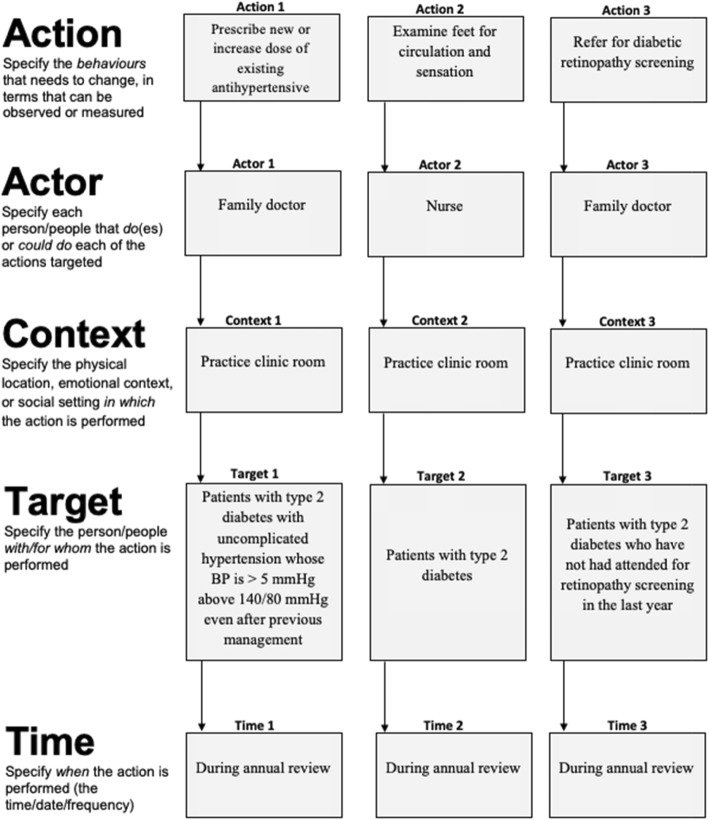
“Drawing upon Fishbein and Ajzen’s [9] early advice, a clearer, more actionable specification could be: ‘For people with diabetes (Target), record a blood pressure reading in the patient’s medical records (Action) in the primary care clinic (Context) when they attend for their annual diabetes review (Time)’ (Example 2).”
InfluentialDamschroder, L. J., Aron, D. C., Keith, R. E., Kirsh, S. R., Alexander, J. A., & Lowery, J. C. (2009) · Implementation Science · doi:10.1186/1748-5908-4-50 · Cited by 14,496 · cited 5×
“Birken SA, Powell BJ, Presseau J, Kirk MA, Lorencatto F, Gould NJ, et al. Combined use of the Consolidated Framework for Implementation Research (CFIR) and the Theoretical Domains Framework (TDF): a systematic review.”
BackgroundMethodInfluentialMichie, S., van Stralen, M. M., & West, R. (2011) · Implementation Science · doi:10.1186/1748-5908-6-42 · Cited by 13,697 · cited 3×
“Implementation intervention developers have a range of tools at their disposal for selecting and specifying interventions: high-level descriptors of implementation strategies such as those described in Cochrane’s Effective Practice and Organisation of Care (EPOC) [41] and Expert Recommendation for Implementing Change…”
MethodDeveloping and evaluating complex interventions: the new Medical Research Council guidance
Craig, P., Dieppe, P., Macintyre, S., Michie, S., Nazareth, I., & Petticrew, M. (2008) · BMJ · doi:10.1136/bmj.a1655 · Cited by 10,995 · cited 1×
“Knowledge-to-Action Framework [21], the UK MRC framework for developing and evaluating complex interventions [22] and process evaluations [23]).”
MethodCrossing the Quality Chasm: A New Health System for the 21st Century
Baker, A. (2001) · BMJ · doi:10.1136/bmj.323.7322.1192 · Cited by 10,736
Hoffmann, T. C., Glasziou, P. P., Boutron, I., Milne, R., Perera, R., Moher, D., Altman, D. G., Barbour, V., Macdonald, H., Johnston, M., et al. (2014) · BMJ · doi:10.1136/bmj.g1687 · Cited by 10,548 · cited 1×
“Best practice in implementation intervention development involves selecting evidence-based techniques and strategies that address the barriers and enablers identified [39], and clarifying who delivers and receives the intervention, how, when, where and how much [40].”
BackgroundCrossing the Quality Chasm: A New Health System for the 21st Century
Committee on Quality of Health Care in America (2002) · Journal For Healthcare Quality · doi:10.1111/j.1945-1474.2002.tb00463.x · Cited by 8,483
Michie, S., Richardson, M., Johnston, M., Abraham, C., Francis, J., Hardeman, W., Eccles, M. P., Cane, J., & Wood, C. E. (2013) · Annals of Behavioral Medicine · doi:10.1007/s12160-013-9486-6 · Cited by 7,629 · cited 3×
“Existing calls for better specification and reporting have focused on the description and labelling of implementation intervention strategies (e.g. with taxonomies of change strategies such as the ERIC [42] and BCT [43] taxonomies) and on the wider components of interventions (e.g. with checklists such as TIDIER [40]).”
MethodSelf-citationAttitude-behavior relations: A theoretical analysis and review of empirical research
Ajzen, I., & Fishbein, M. (1977) · Psychological Bulletin · doi:10.1037/0033-2909.84.5.888 · Cited by 7,611
Process evaluation of complex interventions: Medical Research Council guidance
Moore, G. F., Audrey, S., Barker, M., Bond, L., Bonell, C., Hardeman, W., Moore, L., O'Cathain, A., Tinati, T., Wight, D., et al. (2015) · BMJ · doi:10.1136/bmj.h1258 · Cited by 6,204
Powell, B. J., Waltz, T. J., Chinman, M. J., Damschroder, L. J., Smith, J. L., Matthieu, M. M., Proctor, E. K., & Kirchner, J. E. (2015) · Implementation Science · doi:10.1186/s13012-015-0209-1 · Cited by 4,963 · cited 5×
“Implementation intervention developers have a range of tools at their disposal for selecting and specifying interventions: high-level descriptors of implementation strategies such as those described in Cochrane’s Effective Practice and Organisation of Care (EPOC) [41] and Expert Recommendation for Implementing Change…”
MethodInfluentialLost in knowledge translation: Time for a map?
Graham, I. D., Logan, J., Harrison, M. B., Straus, S. E., Tetroe, J., Caswell, W., & Robinson, N. (2006) · Journal of Continuing Education in the Health Professions · doi:10.1002/chp.47 · Cited by 4,705 · cited 12×
“Birken SA, Powell BJ, Presseau J, Kirk MA, Lorencatto F, Gould NJ, et al. Combined use of the Consolidated Framework for Implementation Research (CFIR) and the Theoretical Domains Framework (TDF): a systematic review.”
MethodInfluentialReflective and Impulsive Determinants of Social Behavior
Strack, F., & Deutsch, R. (2004) · Personality and Social Psychology Review · doi:10.1207/s15327957pspr0803_1 · Cited by 3,984 · cited 1×
“Recent theoretical advances emphasise the role of associative processes in behaviour [15], including automatic processes [16–19].”
BackgroundAtkins, L., Francis, J., Islam, R., O’Connor, D., Patey, A., Ivers, N., Foy, R., Duncan, E. M., Colquhoun, H., Grimshaw, J. M., et al. (2017) · Implementation Science · doi:10.1186/s13012-017-0605-9 · Cited by 3,819 · cited 7×
“Birken SA, Powell BJ, Presseau J, Kirk MA, Lorencatto F, Gould NJ, et al. Combined use of the Consolidated Framework for Implementation Research (CFIR) and the Theoretical Domains Framework (TDF): a systematic review.”
BackgroundMethodInfluentialSelf-citationMaking psychological theory useful for implementing evidence based practice: a consensus approach
Michie, S. (2005) · Quality and Safety in Health Care · doi:10.1136/qshc.2004.011155 · Cited by 3,440 · cited 7×
“Birken SA, Powell BJ, Presseau J, Kirk MA, Lorencatto F, Gould NJ, et al. Combined use of the Consolidated Framework for Implementation Research (CFIR) and the Theoretical Domains Framework (TDF): a systematic review.”
BackgroundMethodInfluentialPredicting and Changing Behavior
Fishbein, M., & Ajzen, I. (2011) · doi:10.4324/9780203838020 · Cited by 2,807
Implementation strategies: recommendations for specifying and reporting
Proctor, E. K., Powell, B. J., & McMillen, J. C. (2013) · Implementation Science · doi:10.1186/1748-5908-8-139 · Cited by 2,585 · cited 2×
“Within implementation science, Proctor, Powell and McMillen [53] proposed seven domains for specifying implementation strategies per se, including who delivers the strategy (actors), how they deliver the strategy (actions), what and to whom the strategy is directed (action target), the sequence of strategy delivery (t…”
BackgroundA theory of organizational readiness for change
Weiner, B. J. (2009) · Implementation Science · doi:10.1186/1748-5908-4-67 · Cited by 2,268
Michie, S., Johnston, M., Francis, J., Hardeman, W., & Eccles, M. (2008) · Applied Psychology · doi:10.1111/j.1464-0597.2008.00341.x · Cited by 1,789 · cited 1×
“Best practice in implementation intervention development involves selecting evidence-based techniques and strategies that address the barriers and enablers identified [39], and clarifying who delivers and receives the intervention, how, when, where and how much [40].”
BackgroundSelf-citationLaPiere, R. T. (1934) · Social Forces · doi:10.2307/2570339 · Cited by 1,720
A systematic review of the use of the Consolidated Framework for Implementation Research
Kirk, M. A., Kelley, C., Yankey, N., Birken, S. A., Abadie, B., & Damschroder, L. (2015) · Implementation Science · doi:10.1186/s13012-016-0437-z · Cited by 1,496 · cited 4×
“A systematic review of the use of the Consolidated Framework for Implementation Research.”
MethodInfluential(2004) · City Research Online (City University London) · Cited by 1,385
Self-citationFrench, S. D., Green, S. E., O’Connor, D. A., McKenzie, J. E., Francis, J. J., Michie, S., Buchbinder, R., Schattner, P., Spike, N., & Grimshaw, J. M. (2012) · Implementation Science · doi:10.1186/1748-5908-7-38 · Cited by 1,338 · cited 1×
“We used French’s four-step implementation process model [20] to exemplify how AACTT can be applied to each of the key steps of the implementation process: Step 1 (clarifying who needs to do what differently), Step 2 (using a theoretical framework, which barriers and enablers need to be addressed), Step 3 (which interv…”
Self-citationA taxonomy of behaviour change methods: an Intervention Mapping approach
Kok, G., Gottlieb, N. H., Peters, G.-J. Y., Mullen, P. D., Parcel, G. S., Ruiter, R. A. C., Fernández, M. E., Markham, C., & Bartholomew, L. K. (2016) · Health Psychology Review · doi:10.1080/17437199.2015.1077155 · Cited by 1,137 · cited 2×
“Implementation intervention developers have a range of tools at their disposal for selecting and specifying interventions: high-level descriptors of implementation strategies such as those described in Cochrane’s Effective Practice and Organisation of Care (EPOC) [41] and Expert Recommendation for Implementing Change…”
MethodSystematic Review of Studies on Compliance with Hand Hygiene Guidelines in Hospital Care
Erasmus, V., Daha, T. J., Brug, H., Richardus, J. H., Behrendt, M. D., Vos, M. C., & van Beeck, E. F. (2010) · Infection Control & Hospital Epidemiology · doi:10.1086/650451 · Cited by 1,114 · cited 1×
“Unfortunately, evidence-practice gaps continue to be documented: medicines are inappropriately prescribed [1], patient safety practices are not enacted [2] and harmful practices persist [3].”
BackgroundGodin, G., Bélanger-Gravel, A., Eccles, M., & Grimshaw, J. (2008) · Implementation Science · doi:10.1186/1748-5908-3-36 · Cited by 1,096 · cited 2×
“This highly cited and influential guidance provided a description of how the TACT framework could be applied in this setting and influenced subsequent rigorous development of Theory of Planned Behaviour questionnaires to understand how its constructs explain variability in the behaviour of health care professionals (s…”
Self-citationMaking health habitual: the psychology of ‘habit-formation’ and general practice
Gardner, B., Lally, P., & Wardle, J. (2012) · British Journal of General Practice · doi:10.3399/bjgp12x659466 · Cited by 591
Helfrich, C. D., Li, Y.-F., Sharp, N. D., & Sales, A. E. (2009) · Implementation Science · doi:10.1186/1748-5908-4-38 · Cited by 564
An Overview of Research and Evaluation Designs for Dissemination and Implementation
Brown, C. H., Curran, G., Palinkas, L. A., Aarons, G. A., Wells, K. B., Jones, L., Collins, L. M., Duan, N., Mittman, B. S., Wallace, A., et al. (2017) · Annual Review of Public Health · doi:10.1146/annurev-publhealth-031816-044215 · Cited by 509 · cited 1×
“At each step, we identified how the AACTT framework could be applied and provide published examples across a range of methodological approaches which align with those commonly used in implementation research [24].”
MethodHuijg, J. M., Gebhardt, W. A., Crone, M. R., Dusseldorp, E., & Presseau, J. (2014) · Implementation Science · doi:10.1186/1748-5908-9-11 · Cited by 385 · cited 1×
“Huijg and colleagues ([38], see their Table 5) developed and established the discriminant content validity of questionnaire items designed to assess domains from the Theoretical Domains Framework in such a way to allow any Action, Actor, Context, Target, Time to be integrated into the measure, and Eccles and colleague…”
BackgroundSelf-citationBirken, S. A., Powell, B. J., Presseau, J., Kirk, M. A., Lorencatto, F., Gould, N. J., Shea, C. M., Weiner, B. J., Francis, J. J., Yu, Y., et al. (2017) · Implementation Science · doi:10.1186/s13012-016-0534-z · Cited by 385 · cited 4×
“A systematic review of the use of the Consolidated Framework for Implementation Research.”
MethodInfluentialSelf-citationFinch, T. L., Girling, M., May, C. R., Mair, F. S., Murray, E., Treweek, S., McColl, E., Steen, I. N., Cook, C., Vernazza, C. R., et al. (2018) · BMC Medical Research Methodology · doi:10.1186/s12874-018-0591-x · Cited by 337
Changing clinical behaviour by making guidelines specific
Michie, S., & Johnston, M. (2004) · BMJ · doi:10.1136/bmj.328.7435.343 · Cited by 309 · cited 13×
“Michie and Johnston made a call for making clinical practice guidelines more specific by specifying ‘what’, ‘who’, ‘when’, ‘where’ and ‘how’ [10].”
BackgroundMethodInfluentialT-CaST: an implementation theory comparison and selection tool
Birken, S. A., Rohweder, C. L., Powell, B. J., Shea, C. M., Scott, J., Leeman, J., Grewe, M. E., Alexis Kirk, M., Damschroder, L., Aldridge, W. A., et al. (2018) · Implementation Science · doi:10.1186/s13012-018-0836-4 · Cited by 194 · cited 1×
“Using the Theory Comparison and Selection Tool (TCaST) and checklist [51], the AACTT framework is designed to be usable (includes relevant domains, has been developed so that key stakeholders can use it, we provide steps for its application and methods for promoting its application across a range of possible studies a…”
MethodSelf-citationRapley, T., Girling, M., Mair, F. S., Murray, E., Treweek, S., McColl, E., Steen, I. N., May, C. R., & Finch, T. L. (2018) · BMC Medical Research Methodology · doi:10.1186/s12874-018-0590-y · Cited by 193 · cited 1×
“Such methods were also then adopted to operationalise other theories, while to date this has largely been confined to theories of behaviour [34], there is an opportunity to consider how AACTTspecification can be integrated into the operationalisation of questionnaire items for other theories, models and frameworks use…”
MethodAntibiotic Prescribing for Adults With Acute Bronchitis in the United States, 1996-2010
Barnett, M. L., & Linder, J. A. (2014) · JAMA · doi:10.1001/jama.2013.286141 · Cited by 158
Presseau, J., Johnston, M., Heponiemi, T., Elovainio, M., Francis, J. J., Eccles, M. P., Steen, N., Hrisos, S., Stamp, E., Grimshaw, J. M., et al. (2014) · Annals of Behavioral Medicine · doi:10.1007/s12160-014-9609-8 · Cited by 157
Self-citationthe Canada PRIme Plus Team, Bussières, A. E., Patey, A. M., Francis, J. J., Sales, A. E., & Grimshaw, J. M. (2012) · Implementation Science · doi:10.1186/1748-5908-7-82 · Cited by 143
Self-citationSiegel, J. T., Navarro, M. A., Tan, C. N., & Hyde, M. K. (2014) · Health Psychology · doi:10.1037/hea0000062 · Cited by 141
Hull, L., Goulding, L., Khadjesari, Z., Davis, R. E., Healey, A., Bakolis, I., & Sevdalis, N. (2019) · Implementation Science · doi:10.1186/s13012-019-0897-z · Cited by 139 · cited 1×
“Thus, in principle it fulfils all the criteria for use of a framework by implementation science researchers and practitioners, though its actual usability, testability, applicability and acceptability will ultimately be determined through application of the tool across a range of types of implementation research [52].”
BackgroundWolfenden, L., Yoong, S. L., Williams, C. M., Grimshaw, J., Durrheim, D. N., Gillham, K., & Wiggers, J. (2017) · Journal of Clinical Epidemiology · doi:10.1016/j.jclinepi.2017.03.007 · Cited by 122 · cited 1×
“school- and family-focused interventions) [46, 50].”
Self-citationAn updated protocol for a systematic review of implementation-related measures
Lewis, C. C., Mettert, K. D., Dorsey, C. N., Martinez, R. G., Weiner, B. J., Nolen, E., Stanick, C., Halko, H., & Powell, B. J. (2018) · Systematic Reviews · doi:10.1186/s13643-018-0728-3 · Cited by 118 · cited 1×
“Given on-going efforts to systematise the measurement of theoretical constructs [54], and description of intervention components [41–43], there is a need for ensuring that the object of change, i.”
BackgroundRoutine primary care management of acute low back pain: adherence to clinical guidelines
Gonz�lez-Urzelai, V., Palacio-Elua, L., & L�pez-de-Munain, J. (2003) · European Spine Journal · doi:10.1007/s00586-003-0567-2 · Cited by 117 · cited 1×
“Unfortunately, evidence-practice gaps continue to be documented: medicines are inappropriately prescribed [1], patient safety practices are not enacted [2] and harmful practices persist [3].”
BackgroundAssessing fidelity of delivery of smoking cessation behavioural support in practice
Lorencatto, F., West, R., Christopherson, C., & Michie, S. (2013) · Implementation Science · doi:10.1186/1748-5908-8-40 · Cited by 107
Self-citationPotthoff, S., Rasul, O., Sniehotta, F. F., Marques, M. M., Beyer, F. R., Thomson, R., Avery, L., & Presseau, J. (2019) · Health Psychology Review · doi:10.1080/17437199.2018.1547119 · Cited by 106
Self-citationGrimshaw, J. M., Zwarenstein, M., Tetroe, J. M., Godin, G., Graham, I. D., Lemyre, L., Eccles, M. P., Johnston, M., Francis, J. J., Hux, J., et al. (2007) · Implementation Science · doi:10.1186/1748-5908-2-38 · Cited by 86
Self-citationSeward, K., Wolfenden, L., Wiggers, J., Finch, M., Wyse, R., Oldmeadow, C. J., Presseau, J., Clinton‐McHarg, T., & Yoong, S. L. (2017) · International Journal of Behavioral Nutrition and Physical Activity · doi:10.1186/s12966-017-0499-6 · Cited by 71 · cited 2×
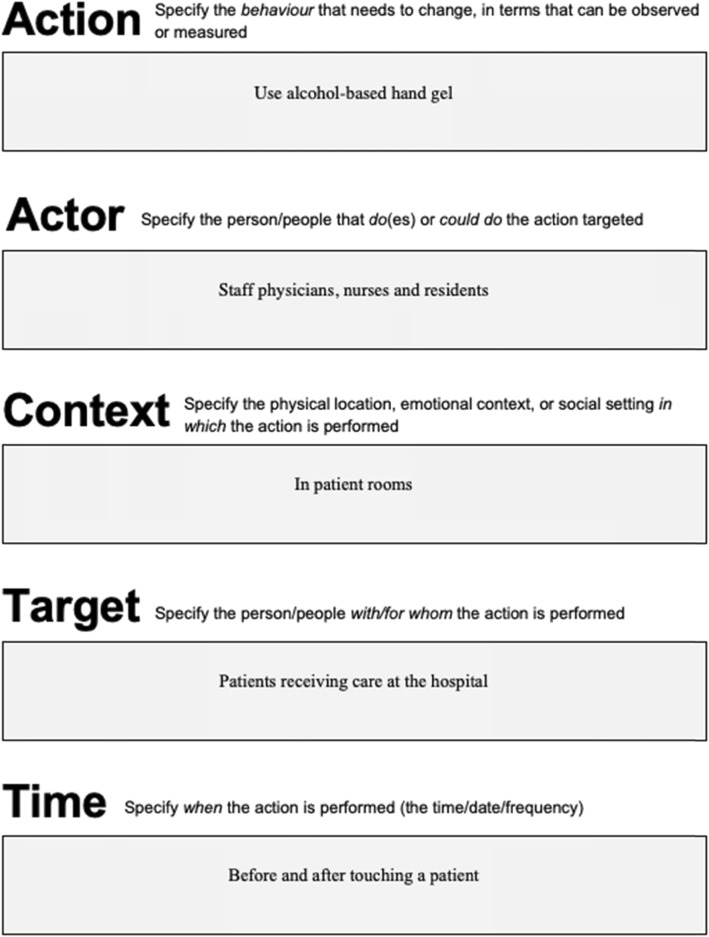
“care (nursery) services [46], the action could be ‘preparing food consistent with childhood dietary guidelines’, the actor could be ‘cooks’, the context ‘in the day care centre kitchen’, the target ‘children attending day care’ and the time ‘at lunch every week day’.”
BackgroundSelf-citationMcIntyre, S. A., Francis, J., Gould, N. J., & Lorencatto, F. (2018) · Translational Behavioral Medicine · doi:10.1093/tbm/iby110 · Cited by 63
Self-citationMc Sharry, J., Murphy, P. J., & Byrne, M. (2016) · Implementation Science · doi:10.1186/s13012-016-0493-4 · Cited by 62
Kegler, M. C., Liang, S., Weiner, B. J., Tu, S. P., Friedman, D. B., Glenn, B. A., Herrmann, A. K., Risendal, B., & Fernández, M. E. (2018) · Health Services Research · doi:10.1111/1475-6773.13035 · Cited by 59 · cited 4×
“A systematic review of the use of the Consolidated Framework for Implementation Research.”
MethodInfluentialGrimshaw, J., Presseau, J., Tetroe, J., Eccles, M., Francis, J., Godin, G., Graham, I. D., Hux, J. E., Johnston, M., Légaré, F., et al. (2014) · Implementation Science · doi:10.1186/1748-5908-9-86 · Cited by 50
Self-citationPresseau, J., Grimshaw, J., Tetroe, J., Eccles, M., Francis, J., Godin, G., Graham, I. D., Hux, J. E., Johnston, M., Légaré, F., et al. (2015) · Implementation Science · doi:10.1186/s13012-016-0485-4 · Cited by 45
Self-citationEccles, M. P., Hrisos, S., Francis, J. J., Stamp, E., Johnston, M., Hawthorne, G., Steen, N., Grimshaw, J. M., Elovainio, M., Presseau, J., et al. (2011) · Implementation Science · doi:10.1186/1748-5908-6-61 · Cited by 41 · cited 2×
“Such methods were also then adopted to operationalise other theories, while to date this has largely been confined to theories of behaviour [34], there is an opportunity to consider how AACTTspecification can be integrated into the operationalisation of questionnaire items for other theories, models and frameworks use…”
BackgroundMethodSelf-citationPresseau, J., Mackintosh, J. E., Hawthorne, G., Francis, J., Johnston, M., Grimshaw, J., Steen, N., Coulthard, T., Brown, H., Kaner, E., et al. (2018) · Implementation Science · doi:10.1186/s13012-018-0754-5 · Cited by 39
Self-citationEccles, M., Hrisos, S., Francis, J., Steen, N., Bosch, M., & Johnston, M. (2009) · Implementation Science · doi:10.1186/1748-5908-4-24 · Cited by 26
Self-citationPotthoff, S., Presseau, J., Sniehotta, F. F., Breckons, M., Rylance, A., & Avery, L. (2019) · BMC Medical Informatics and Decision Making · doi:10.1186/s12911-019-0744-9 · Cited by 18
Self-citation
Research works printed but not linked: 2
- 7. Fishbein M, editor. Attitude and the prediction of behaviour (Chapter 51). In: Readings in attitude theory and measurement. New York: Wiley; 1967. p. 477-492.
- 11. Miller M. How well is the target behaviour specified in reports of behaviour change interventions for health care professionals? A systematic review of reporting practice [Master's thesis]: City University of London; 2015.
Cited by
Ten years of implementation outcomes research: a scoping review
Proctor, E. K., Bunger, A. C., Lengnick-Hall, R., Gerke, D. R., Martin, J. K., Phillips, R. J., & Swanson, J. C. (2023) · Implementation Science · doi:10.1186/s13012-023-01286-z · Cited by 424
“This call for hypothesis testing in implementation outcomes research has been echoed by a number of recent papers [21–24].”
MethodKlaic, M., Kapp, S., Hudson, P., Chapman, W., Denehy, L., Story, D., & Francis, J. J. (2022) · Implementation Science · doi:10.1186/s13012-021-01171-7 · Cited by 394
Self-citationStover, A. M., Haverman, L., van Oers, H. A., Greenhalgh, J., Potter, C. M., On behalf of the ISOQOL PROMs/PREMs in Clinical Practice Implementation Science Work Group, Ahmed, S., Greenhalgh, J., Gibbons, E., Haverman, L., et al. (2021) · Quality of Life Research · doi:10.1007/s11136-020-02564-9 · Cited by 308
Kouijzer, M. M. T. E., Kip, H., Bouman, Y. H. A., & Kelders, S. M. (2023) · Implementation Science Communications · doi:10.1186/s43058-023-00442-2 · Cited by 307
Designing and undertaking randomised implementation trials: guide for researchers
Wolfenden, L., Foy, R., Presseau, J., Grimshaw, J. M., Ivers, N. M., Powell, B. J., Taljaard, M., Wiggers, J., Sutherland, R., Nathan, N., et al. (2021) · BMJ · doi:10.1136/bmj.m3721 · Cited by 270
Self-citation
Metadata
- Authors
- Presseau, J., McCleary, N., Lorencatto, F., Patey, A. M., Grimshaw, J. M., & Francis, J. J.
- Affiliations
- University of Ottawa (CA)
- University College London (GB)
- Ottawa Hospital Research Institute (CA)
- City, University of London (GB)
- Corresponding author
- Presseau, Justin
- ORCID
- Venue
- Implementation Science
- Published
- 2019-12
- Volume
- 14
- Issue
- 1
- Pages
- 102-102
- ISSN
- 1748-5908 (ISSN-L)
- PMC
- PMC6896730
- OpenAlex
- W2992424904
- Semantic Scholar
- eb078a483997a0adf8600d44d0a9ed59fa27d2ef
- Cited by
- 411
- References
- 56
- Citations by year
- 2026: 54 · 2025: 75 · 2024: 73 · 2023: 67 · 2022: 88 · 2021: 35 · 2020: 16 · 2019: 1
- FWCI
- 47.69
- Type
- journal article
- Language
- en
- Open access
- gold
- doi.org
- Licence
- cc-by
- creativecommons.org/licenses/by/4.0/ (tdm)
- creativecommons.org/licenses/by/4.0/ (vor, 4 d)
- Locations
- Implementation Science (publishedVersion, cc-by)
- PubMed Central (publishedVersion, cc-by)
- PubMed (publishedVersion)
- City Research Online (City University London) (acceptedVersion)
- Minerva Access (University of Melbourne) (submittedVersion, other-oa)
- uO Research (University of Ottawa) (submittedVersion, public-domain)
- DOAJ (DOAJ: Directory of Open Access Journals) (submittedVersion, cc-by-sa)
- UCL Discovery (University College London) (submittedVersion)
- Funders
- Canadian Institutes of Health Research
- Topics
- Health Sciences › Health Professions › General Health Professions › Health Policy Implementation Science
- Social Sciences › Psychology › Applied Psychology › Behavioral Health and Interventions
- Health Sciences › Health Professions › General Health Professions › Health Sciences Research and Education
- Keywords
- implementation strategies, barriers and facilitators, implementation process model, outcome measurement, intervention design, topic guide, questionnaire
- MeSH terms
- Clinical Competence, Health Personnel, Health Plan Implementation, Health Services Research, Humans, Models, Theoretical, Time, Guideline Adherence, Quality Improvement
About these checks
Registry, retraction, Cites and statistics results are computed, not judged, with one exception: a printed reference that no index lists is read once by a model before it counts as a citation error. Claims are extracted by a model and kept only when their quote appears verbatim in the text; each cited source is then checked, with a model’s help, for whether it says what the claim relies on. Those verdicts can be wrong — read the claim’s quote and the cited source before relying on one.
Statistics and arithmetic are recomputed, not judged.
Confidence bands are shown only for fields calibrated on our annotated test set. None is calibrated yet, so no band is shown.
What counts as a claim ›How we measure confidence ›How we check this ›
Are you an author, or do you see a problem with this page? Request a review
Data sources
Bibliographic data: Semantic Scholar, OpenAlex, Crossref.
Contains information from the Semantic Scholar Academic Graph Datasets, made available under the ODC Attribution License (ODC-BY 1.0).
Semantic Scholar’s data is described in: Kinney, R., et al. (2023). The Semantic Scholar Open Data Platform. arXiv:2301.10140.
