

Action, actor, context, target, time (AACTT): a framework for specifying behaviour
Open accessThe DOI matches its Crossref record; 56 of the 56 references it cites were found in a registry or an index.
Abstract
Background: Designing implementation interventions to change the behaviour of healthcare providers and other professionals in the health system requires detailed specification of the behaviour(s) targeted for change to ensure alignment between intervention components and measured outcomes. Detailed behaviour specification can help to clarify evidence-practice gaps, clarify who needs to do what differently, identify modifiable barriers and enablers, design interventions to address these and ultimately provides an indicator of what to measure to evaluate an intervention’s effect on behaviour change. An existing behaviour specification framework proposes four domains (Target, Action, Context, Time; TACT), but insufficiently clarifies who is performing the behaviour (i.e. the Actor). Specifying the Actor is especially important in healthcare settings characterised by multiple behaviours performed by multiple different people. We propose and describe an extension and re-ordering of TACT to enhance its utility to implementation intervention designers, practitioners and trialists: the Action, Actor, Context, Target, Time (AACTT) framework. We aim to demonstrate its application across key steps of implementation research and to provide tools for its use in practice to clarify the behaviours of stakeholders across multiple levels of the healthcare system. Methods and results: We used French et al.’s four-step implementation process model to describe the potential applications of the AACTT framework for (a) clarifying who needs to do what differently, (b) identifying barriers and enablers, (c) selecting fit-for-purpose intervention strategies and components and (d) evaluating implementation interventions. Conclusions: Describing and detailing behaviour using the AACTT framework may help to enhance measurement of theoretical constructs, inform development of topic guides and questionnaires, enhance the design of implementation interventions and clarify outcome measurement for evaluating implementation interventions.
Overview
The claims and statistics of this paper haven’t been checked yet.
Free: it reads the open-access text and checks the first 5 claims that cite a source we can check. Create a free account to check every claim.
Integrity signals
Registry
Cites
Statistics
Figures
Verification
Claims the paper makes
The claims and statistics of this paper haven’t been checked yet.
Free: it reads the open-access text and checks the first 5 claims that cite a source we can check. Create a free account to check every claim.
Claims other papers make about this one
Each is checked against this paper’s own text: does it say what the citing paper says it does?
The source backs part of the claim, not all of it — or backs it for a different population, condition or comparison.
In the citing paper
“This call for hypothesis testing in implementation outcomes research has been echoed by a number of recent papers [21–24].”
From Ten years of implementation outcomes research: a scoping review (2023) · cites this paper as [21]
Experimental — accuracy not yet measured
Self-check
Percentages, sums and reported differences re-computed from the paper’s own numbers.
The self-check needs the paper’s full text.
Citations
Cites
The theory of planned behavior
Ajzen, I. (1991) · Organizational Behavior and Human Decision Processes · doi:10.1016/0749-5978(91)90020-t · Cited by 134,657 · cited 6×
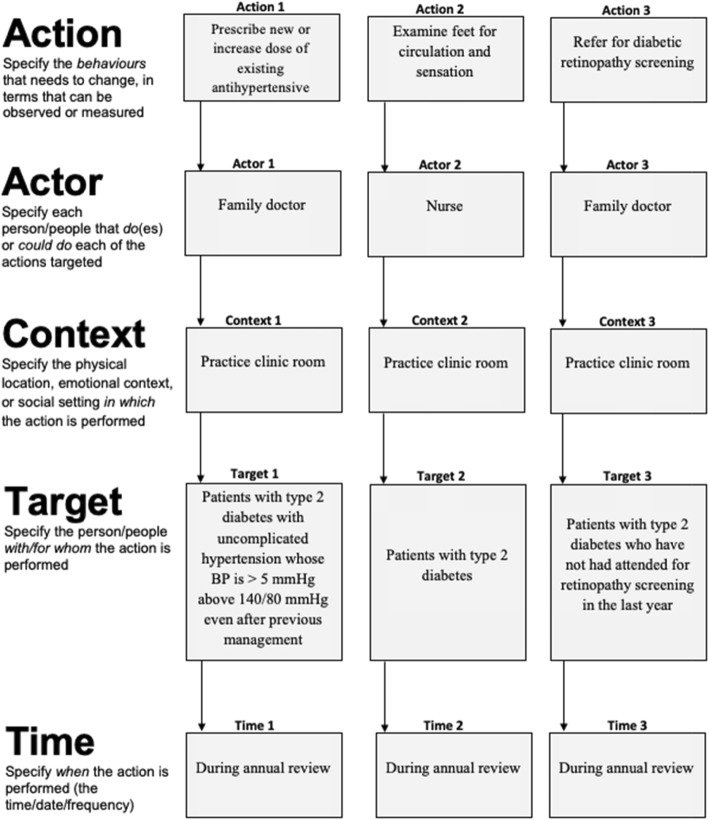
“Drawing upon Fishbein and Ajzen’s [9] early advice, a clearer, more actionable specification could be: ‘For people with diabetes (Target), record a blood pressure reading in the patient’s medical records (Action) in the primary care clinic (Context) when they attend for their annual diabetes review (Time)’ (Example 2).”
InfluentialDamschroder, L. J., Aron, D. C., Keith, R. E., Kirsh, S. R., Alexander, J. A., & Lowery, J. C. (2009) · Implementation Science · doi:10.1186/1748-5908-4-50 · Cited by 14,496 · cited 5×
“Birken SA, Powell BJ, Presseau J, Kirk MA, Lorencatto F, Gould NJ, et al. Combined use of the Consolidated Framework for Implementation Research (CFIR) and the Theoretical Domains Framework (TDF): a systematic review.”
BackgroundMethodInfluentialMichie, S., van Stralen, M. M., & West, R. (2011) · Implementation Science · doi:10.1186/1748-5908-6-42 · Cited by 13,697 · cited 3×
“Implementation intervention developers have a range of tools at their disposal for selecting and specifying interventions: high-level descriptors of implementation strategies such as those described in Cochrane’s Effective Practice and Organisation of Care (EPOC) [41] and Expert Recommendation for Implementing Change…”
MethodDeveloping and evaluating complex interventions: the new Medical Research Council guidance
Craig, P., Dieppe, P., Macintyre, S., Michie, S., Nazareth, I., & Petticrew, M. (2008) · BMJ · doi:10.1136/bmj.a1655 · Cited by 10,995 · cited 1×
“Knowledge-to-Action Framework [21], the UK MRC framework for developing and evaluating complex interventions [22] and process evaluations [23]).”
MethodCrossing the Quality Chasm: A New Health System for the 21st Century
Baker, A. (2001) · BMJ · doi:10.1136/bmj.323.7322.1192 · Cited by 10,736
Hoffmann, T. C., Glasziou, P. P., Boutron, I., Milne, R., Perera, R., Moher, D., Altman, D. G., Barbour, V., Macdonald, H., Johnston, M., et al. (2014) · BMJ · doi:10.1136/bmj.g1687 · Cited by 10,548 · cited 1×
“Best practice in implementation intervention development involves selecting evidence-based techniques and strategies that address the barriers and enablers identified [39], and clarifying who delivers and receives the intervention, how, when, where and how much [40].”
BackgroundCrossing the Quality Chasm: A New Health System for the 21st Century
Committee on Quality of Health Care in America (2002) · Journal For Healthcare Quality · doi:10.1111/j.1945-1474.2002.tb00463.x · Cited by 8,483
Michie, S., Richardson, M., Johnston, M., Abraham, C., Francis, J., Hardeman, W., Eccles, M. P., Cane, J., & Wood, C. E. (2013) · Annals of Behavioral Medicine · doi:10.1007/s12160-013-9486-6 · Cited by 7,629 · cited 3×
“Existing calls for better specification and reporting have focused on the description and labelling of implementation intervention strategies (e.g. with taxonomies of change strategies such as the ERIC [42] and BCT [43] taxonomies) and on the wider components of interventions (e.g. with checklists such as TIDIER [40]).”
MethodSelf-citationAttitude-behavior relations: A theoretical analysis and review of empirical research
Ajzen, I., & Fishbein, M. (1977) · Psychological Bulletin · doi:10.1037/0033-2909.84.5.888 · Cited by 7,611
Process evaluation of complex interventions: Medical Research Council guidance
Moore, G. F., Audrey, S., Barker, M., Bond, L., Bonell, C., Hardeman, W., Moore, L., O'Cathain, A., Tinati, T., Wight, D., et al. (2015) · BMJ · doi:10.1136/bmj.h1258 · Cited by 6,204
Research works printed but not linked: 2
- 7. Fishbein M, editor. Attitude and the prediction of behaviour (Chapter 51). In: Readings in attitude theory and measurement. New York: Wiley; 1967. p. 477-492.
- 11. Miller M. How well is the target behaviour specified in reports of behaviour change interventions for health care professionals? A systematic review of reporting practice [Master's thesis]: City University of London; 2015.
Cited by
Ten years of implementation outcomes research: a scoping review
Proctor, E. K., Bunger, A. C., Lengnick-Hall, R., Gerke, D. R., Martin, J. K., Phillips, R. J., & Swanson, J. C. (2023) · Implementation Science · doi:10.1186/s13012-023-01286-z · Cited by 424
“This call for hypothesis testing in implementation outcomes research has been echoed by a number of recent papers [21–24].”
MethodKlaic, M., Kapp, S., Hudson, P., Chapman, W., Denehy, L., Story, D., & Francis, J. J. (2022) · Implementation Science · doi:10.1186/s13012-021-01171-7 · Cited by 394
Self-citationStover, A. M., Haverman, L., van Oers, H. A., Greenhalgh, J., Potter, C. M., On behalf of the ISOQOL PROMs/PREMs in Clinical Practice Implementation Science Work Group, Ahmed, S., Greenhalgh, J., Gibbons, E., Haverman, L., et al. (2021) · Quality of Life Research · doi:10.1007/s11136-020-02564-9 · Cited by 308
Kouijzer, M. M. T. E., Kip, H., Bouman, Y. H. A., & Kelders, S. M. (2023) · Implementation Science Communications · doi:10.1186/s43058-023-00442-2 · Cited by 307
Designing and undertaking randomised implementation trials: guide for researchers
Wolfenden, L., Foy, R., Presseau, J., Grimshaw, J. M., Ivers, N. M., Powell, B. J., Taljaard, M., Wiggers, J., Sutherland, R., Nathan, N., et al. (2021) · BMJ · doi:10.1136/bmj.m3721 · Cited by 270
Self-citationHayes, S. C., Ciarrochi, J., Hofmann, S. G., Chin, F., & Sahdra, B. (2022) · Behaviour Research and Therapy · doi:10.1016/j.brat.2022.104155 · Cited by 234
“It aligns with the suggestion to have a detailed specification of behaviors targeted for change and a close alignment between intervention components and outcomes (Presseau et al., 2019).”
BackgroundFishman, J., Yang, C. F., & Mandell, D. S. (2021) · Implementation Science · doi:10.1186/s13012-021-01153-9 · Cited by 181
ChatGPT in thematic analysis: Can AI become a research assistant in qualitative research?
Nguyen‐Trung, K. (2025) · Quality & Quantity · doi:10.1007/s11135-025-02165-z · Cited by 197
“Based on current prompting guidelines (Lin 2024; Eager 2023) and inspired by Presseau et al.’s (2019) Action, actor, context, target, and time (AACTT) framework, I developed a framework for writing prompts in QDA called “ACTOR” (Table 2).”
Rudd, B. N., Davis, M., & Beidas, R. S. (2020) · Implementation Science · doi:10.1186/s13012-020-01060-5 · Cited by 157
Ciarrochi, J., Hayes, S. C., Oades, L. G., & Hofmann, S. G. (2022) · Frontiers in Psychology · doi:10.3389/fpsyg.2021.809362 · Cited by 84
Soziale Netzwerke in der Demokratie des Grundgesetzes
Schemmel, J. (2018) · Der Staat · doi:10.3790/staa.57.4.501 · Cited by 119
Nathan, N., Powell, B. J., Shelton, R. C., Laur, C. V., Wolfenden, L., Hailemariam, M., Yoong, S. L., Sutherland, R., Kingsland, M., Waltz, T. J., et al. (2022) · Frontiers in Health Services · doi:10.3389/frhs.2022.905909 · Cited by 105
“(54) provide useful guidance for specifying this behavior (in the context of implementation and sustainment interventions) (1).”
BackgroundReducing plastic waste: A meta-analysis of influences on behaviour and interventions
Allison, A. L., Baird, H., Lorencatto, F., Webb, T., & Michie, S. (2022) · Journal of Cleaner Production · doi:10.1016/j.jclepro.2022.134860 · Cited by 76
“Table 1 summarises the behaviours investigated by the primary studies, according to the AACTT framework (Presseau et al., 2019).”
Self-citationA Survey of Ambient Intelligence
Dunne, R., Morris, T., & Harper, S. (2021) · ACM Computing Surveys · doi:10.1145/3447242 · Cited by 102
“…latest research is addressing is multi-occupant behaviour prediction in smart homes [13, 82], accounting for stochastic processes in prediction algorithms [30], improving prediction accuracy through contextual understanding [28, 74], and assistive living applications in healthcare [20, 25, 38, 57].”
BackgroundWeller, C. D., Richards, C., Turnour, L., & Victoria Team (2021) · Frontiers in Pharmacology · doi:10.3389/fphar.2021.663570 · Cited by 95
“Clinicians reported patient adherence to VLU management plans was a key area of concern (Weller et al., 2020), specifically the application and long term use of compression therapy (Probst et al., 2019; Probst et al., 2020).”
BackgroundAdisa, A., Bahrami‐Hessari, M., Bhangu, A. A., George, C., Ghosh, D., Glasbey, J. C., Haque, P. D., Ingabire, J. A., Kamarajah, S. K., Kudrna, L., et al. (2023) · British journal of surgery · doi:10.1093/bjs/znad092 · Cited by 82
“Differences between specific components of the intervention (for example action, actor, context, target, and time) were recorded 14 .”
Gleadhill, C., Alderman, K. B., Davidson, S. R. E., Kamper, S. J., Tutty, A., Robson, E. K., da Silva, P. V., Donald, B., Dooley, K., Manvell, J., et al. (2022) · BMC Health Services Research · doi:10.1186/s12913-022-08741-5 · Cited by 77
“Improving the uptake of evidence into practice involves studying health professional behaviour and then targeting specific factors influencing these behaviours with strategies (called implementation strategies) [19, 20, 24].”
BackgroundPatey, A. M., Fontaine, G., Francis, J., McCleary, N., Presseau, J., & Grimshaw, J. (2022) · Psychology and Health · doi:10.1080/08870446.2022.2100887 · Cited by 77
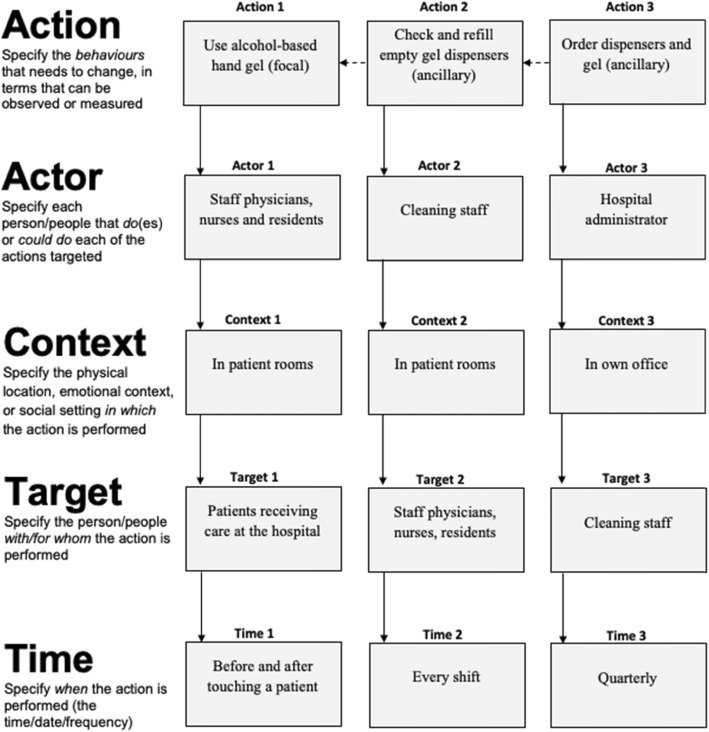
“The AACTT framework can also be used to describe the sequence of multiple interdependent behaviours of multiple Actors engaging in their own Action at different levels of the organisation required to enact change (Presseau et al., 2019).”
MethodSelf-citationMcHugh, S., Presseau, J., Luecking, C. T., & Powell, B. J. (2022) · Implementation Science · doi:10.1186/s13012-022-01227-2 · Cited by 75
“Other dimensions that also need to be clarified to fully operationalise an implementation strategy include the actors delivering the strategy, targets of the action, temporality, and dose (frequency and intensity) [1, 47].”
BackgroundSelf-citationWilson, P. M., & Kislov, R. (2022) · Cambridge University Press eBooks · doi:10.1017/9781009237055 · Cited by 60
Lee, J., Bullen, C., Amor, Y. B., Bush, S. R., Colombo, F., Gaviría, A., Karim, S. S. A., Kim, B., Lavis, J. N., Lazarus, J. V., et al. (2021) · International Health · doi:10.1093/inthealth/ihab022 · Cited by 71
Owoeye, O. B. A., Rauvola, R. S., & Brownson, R. C. (2020) · BMJ Open Sport & Exercise Medicine · doi:10.1136/bmjsem-2020-000974 · Cited by 71
“…process of using strategies across multiple levels of change to translate EBIs into practice and prompt corresponding behaviour change in a target population 33 35 36 Implementation research The scientific study of methods to promote the systematic translation of EBIs into routine practice 33”
Francetic, I. N. ;., Meacock, R., Elliott, J., Kristensen, S. R., Britteon, P., Lugo-Palacios, D. G., Wilson, P. M., & Sutton, M. (2022) · Implementation Science Communications · doi:10.1186/s43058-022-00280-8 · Cited by 65
“the AACTT framework [50]), the questions to ask at this stage are as follows:”
BackgroundPresseau, J., Byrne-Davis, L. M. T., Hotham, S., Lorencatto, F., Potthoff, S., Atkinson, L., Bull, E. R., Dima, A. L., van Dongen, A., French, D., et al. (2021) · Health Psychology Review · doi:10.1080/17437199.2020.1866638 · Cited by 65
“However, the target of the action may be someone other than the self and as a result, adding the actor has been a recent extension driven by applications of the TACT principle in implementation science (Francis & Presseau, 2019; Presseau et al., 2019).”
BackgroundMethodSelf-citationSarkies, M., Francis‐Auton, E., Long, J. C., Roberts, N., Westbrook, J. I., Lévesque, J., Watson, D. E., Hardwick, R., Sutherland, K., Disher, G. J., et al. (2023) · Implementation Science · doi:10.1186/s13012-023-01324-w · Cited by 63
Prospective cohort study of genomic newborn screening: BabyScreen+ pilot study protocol
Lunke, S., Bouffler, S. E., Downie, L., Caruana, J., Amor, D. J., Archibald, A. D., Bombard, Y., Christodoulou, J., Clausen, M., Fazio, P. D., et al. (2024) · BMJ Open · doi:10.1136/bmjopen-2023-081426 · Cited by 55
“Data collection and analysis will be guided by the Action, Actor, Context, Target, Time (AACTT) framework 25 to capture views on who should do what and when.”
MethodSmith, D., Cartwright, M., Dyson, J., Hartin, J., & Aitken, L. M. (2021) · Journal of Advanced Nursing · doi:10.1111/jan.14830 · Cited by 54
“Beliefs about behaviours are important precursors of attitudes, intentions and behaviour (Ajzen, 1991; Francis et al., 2014; Michie et al., 2005; Presseau et al., 2019).”
BackgroundSERIES: eHealth in primary care. Part 4: Addressing the challenges of implementation
Versluis, A., van Luenen, S., Meijer, E., Honkoop, P., Pinnock, H., Mohr, D. C., Neves, A. L., Chavannes, N. H., & van der Kleij, R. (2020) · European Journal of General Practice · doi:10.1080/13814788.2020.1826431 · Cited by 49
Engel, J. S., Tran, J., Khalil, N., Hladkowicz, E., Lalu, M. M., Huang, A. R., Wong, C. L., Hutton, B., Dhesi, J. K., & McIsaac, D. I. (2023) · British Journal of Anaesthesia · doi:10.1016/j.bja.2022.12.010 · Cited by 46
Clinical features and diagnosis of multiple myeloma: a population-based cohort study in primary care
Seesaghur, A., Petruski‐Ivleva, N., Banks, V. L., Wang, J. R., Abbasi, A., Neasham, D., & Ramasamy, K. (2021) · BMJ Open · doi:10.1136/bmjopen-2021-052759 · Cited by 46
Graham‐Wisener, L., Nelson, A., Byrne, A., Islam, I., Harrison, C. L., Geddis, J., & Berry, E. (2022) · BMC Public Health · doi:10.1186/s12889-022-13319-1 · Cited by 49
“It also must be recognised that in developing behaviour change interventions, it is the recommended to specify the behaviour according to the AACTT framework; Action, Actor, Context, Target, and Time [72].”
MethodCzosnek, L., Zopf, E. M., Cormie, P., Rosenbaum, S., Richards, J. A., & Rankin, N. M. (2022) · Implementation Science Communications · doi:10.1186/s43058-022-00337-8 · Cited by 44
Klasnja, P., Meza, R. D., Pullmann, M. D., Mettert, K. D., Hawkes, R. J., Palazzo, L. G., Weiner, B. J., & Lewis, C. C. (2024) · Implementation Research and Practice · doi:10.1177/26334895241248851 · Cited by 42
“Existing frameworks describe what characteristics of strategies should be operationalized (Presseau et al., 2019; Proctor et al., 2013).”
Behavioural approaches to recruitment and retention in clinical trials: a systematic mapping review
Coffey, T., Duncan, E., Morgan, H. M., Lawrie, L., & Gillies, K. (2022) · BMJ Open · doi:10.1136/bmjopen-2021-054854 · Cited by 41
Implementation Science in Suicide Prevention
Reifels, L., Krishnamoorthy, S., Kõlves, K., & Francis, J. (2022) · Crisis · doi:10.1027/0227-5910/a000846 · Cited by 40
Self-citationQUANTITATIVE ASSESSMENT OF DATA PROTECTION PRACTICES IN U.S. REVENUE CYCLE MANAGEMENT
Rahaman, M. M., & Dhanekula, A. (2024) · American Journal of Advanced Technology and Engineering Solutions · doi:10.63125/fc9hfy54 · Cited by 39
Palm oil social conflict resolution and mediation in Jambi
Rokhim, R., Januari, A. D., Atik, U., Shara, S., & Rusdayanti, N. (2020) · Cogent Social Sciences · doi:10.1080/23311886.2020.1812831 · Cited by 38
“Every actor has a choice and motivation (Kosamu et al., 2017; Overmars et al., 2007; Presseau et al., 2019).”
BackgroundEngell, T., Stadnick, N. A., Aarons, G. A., & Barnett, M. L. (2023) · Global Implementation Research and Applications · doi:10.1007/s43477-023-00077-4 · Cited by 37
Leveraging Implementation Science in Human-Centred Design for Digital Health
Waddell, A., Seguin, J. P., Wu, L., Stragalinos, P., Wherton, J. P., Watterson, J., Prawira, C. O., Olivier, P. L., Manning, V., Lubman, D. I., et al. (2024) · CHI Conference on Human Factors in Computing Systems · doi:10.1145/3613904.3642161 · Cited by 37
“There are a number of useful frameworks to facilitate reporting such as the Action, Actor, Context, Target, Time (AACTT) framework [77] and Proctor and colleagues’ guidelines for reporting implementation strategies [78].”
Duncan, E., Charani, E., Clarkson, J., Francis, J., Gillies, K., Grimshaw, J., Kern, W. V., Lorencatto, F., Marwick, C., McEwen, J., et al. (2020) · Journal of Antimicrobial Chemotherapy · doi:10.1093/jac/dkaa001 · Cited by 36
Self-citationElevated Sound Levels in the Neonatal Intensive Care Unit: What Is Causing the Problem?
Mayhew, K. J., Lawrence, S. L., Squires, J. E., & Harrison, D. (2022) · Advances in Neonatal Care · doi:10.1097/anc.0000000000000996 · Cited by 36
Deinse, T. B. V., Zielinski, M. J., Holliday, S. B., Rudd, B. N., & Crable, E. L. (2023) · Implementation Science Communications · doi:10.1186/s43058-023-00521-4 · Cited by 37
“The Pragmatic Implementation Reporting Tool integrates implementation strategy reporting guidelines from Proctor et al.’s “Specify It” criteria and Presseau et al.’s [25] Action, Actor, Context, Target, Time framework.”
MethodMcGinn, R. N., Talarico, R., Hamilton, G. M., Ramlogan, R. R., Wijeysundra, D. N., McCartney, C. J. L., & McIsaac, D. I. (2021) · British Journal of Anaesthesia · doi:10.1016/j.bja.2021.10.011 · Cited by 35
Guyatt, S., Ferguson, M., Beckmann, M. M., & Wilkinson, S. A. (2021) · BMC Health Services Research · doi:10.1186/s12913-021-07024-9 · Cited by 34
Turner, R. R., Hart, J., Ashiru-Oredope, D. A. I., Atkins, L., Eades, C. P., Felton, T., Howlett, E., Rice, S. J. C., Shallcross, L. J., Lorencatto, F., et al. (2023) · BMC Health Services Research · doi:10.1186/s12913-023-09559-5 · Cited by 35
“We suggest that formalised competency frameworks such as the WHO health worker AMR competency framework [57] need to be discussed and refined with the MDT to delineate AMS roles clearly drawing upon behavioural specification frameworks to understand what needs to be done, by who, when and where [58].”
BackgroundSelf-citationReese, T. J., Schlechter, C. R., Kramer, H., Kukhareva, P., Weir, C. R., Fiol, G. D., Caverly, T. J., Hess, R., Flynn, M. C., Taft, T., et al. (2021) · Translational Behavioral Medicine · doi:10.1093/tbm/ibab115 · Cited by 33
Ending the Pandemic: How Behavioural Science Can Help Optimize Global COVID-19 Vaccine Uptake
Vallis, M., Bacon, S., Corace, K., Joyal‐Desmarais, K., Gorin, S. S., Paduano, S., Presseau, J., Rash, J. A., Yohannes, A. M., & Lavoie, K. (2021) · Vaccines · doi:10.3390/vaccines10010007 · Cited by 34
Self-citationHow can a behavioral economics lens contribute to implementation science?
Hodson, N., Powell, B. J., Nilsén, P., & Beidas, R. S. (2024) · Implementation Science · doi:10.1186/s13012-024-01362-y · Cited by 31
“…scientists report intended behavior change mechanisms with greater clarity we suggest that explicit description of the changes to choice architecture and their anticipated effect on behavior would help other implementation scientists to evaluate and replicate implementation approaches [58].”
BackgroundSmith, D., Cartwright, M., Dyson, J., Hartin, J., & Aitken, L. M. (2020) · Journal of Advanced Nursing · doi:10.1111/jan.14551 · Cited by 33
Lalu, M. M., Foster, M., Presseau, J., Dowlatshahi, D. D., Castillo, G., Cardenas, A., Tam, W., Zlepnig, J., Timpson, D., Dong, Y., et al. (2020) · BMJ Open · doi:10.1136/bmjopen-2019-034354 · Cited by 29
Self-citationBoulet, M., Stott, A., & Kneebone, S. (2023) · Journal of Environmental Management · doi:10.1016/j.jenvman.2023.118668 · Cited by 29
Muriithi, F. G., Banke-Thomas, A. O., Forbes, G., Gakuo, R. W., Thomas, E., Gallos, I. D., Devall, A., Coomarasamy, A., & Lorencatto, F. (2024) · PLOS Global Public Health · doi:10.1371/journal.pgph.0002950 · Cited by 28
“The Action, Actor, Context, Target, and Time (AACTT) framework is a valuable tool for clarifying the behaviours of stakeholders across multiple levels of the healthcare system [21].”
MethodInfluentialSelf-citationBrehaut, J., Venegas, C. L., Hudek, N., Presseau, J., Carroll, K. A., & Rodger, M. A. (2021) · Trials · doi:10.1186/s13063-021-05257-x · Cited by 26
Self-citationThrombosis, Translational Medicine, and Biomarker Research: Moving the Needle
Shaw, J. R., Nopp, S., Stavik, B., Youkhana, K., Michels, A., Kennes, S., Rak, J. W., & Cate, H. T. (2024) · Journal of the American Heart Association · doi:10.1161/jaha.124.038782 · Cited by 26
“109,110 Hybrid effectiveness–implementation study designs and improved reporting of biomarker implementation methods in clinical studies (eg, sample collection and processing, integration with existing clinical workflow processes) can accelerate fruitful discovery, enhance applicability, mitigate…”
Delaforce, A., Duff, J. S., Munday, J., & Hardy, J. (2020) · Journal of Multidisciplinary Healthcare · doi:10.2147/jmdh.s282308 · Cited by 26
Optimizing Teamwork in the Operating Room: A Scoping Review of Actionable Teamwork Strategies
Ghanmi, N., Bondok, M., Etherington, C., Saddiki, Y., Lefebvre, I., Berthelot, P., Dion, P., Raymond, B., Seguin, J., Sekhavati, P., et al. (2024) · Cureus · doi:10.7759/cureus.60522 · Cited by 25
How can behavioural science help us design better trials?
Gillies, K., Brehaut, J., Coffey, T., Duncan, E., Francis, J., Hey, S. P., Presseau, J., Weijer, C., & Campbell, M. (2021) · Trials · doi:10.1186/s13063-021-05853-x · Cited by 24
“A good starting point exists amongst key papers for health behaviour change, in particular, some worked examples of how to apply the AACTT framework [4], a step-by-step guide to using the TDF [9], a guide for constructing questionnaire informed by the TPB [44], and a core textbook on the behaviour change wheel which c…”
MethodSelf-citationHanrahan, V., Biesty, L., Lawrie, L., Duncan, E., & Gillies, K. (2022) · Journal of Clinical Epidemiology · doi:10.1016/j.jclinepi.2022.01.015 · Cited by 24
Tutty, E., Archibald, A. D., Downie, L., Gaff, C., Lunke, S., Vears, D. F., Stark, Z., & Best, S. (2024) · European Journal of Human Genetics · doi:10.1038/s41431-024-01650-7 · Cited by 24
Wensing, M., Sales, A., Wilson, P., Armstrong, R., Kislov, R., Rankin, N. M., Ramaswamy, R., & Xu, D. (2021) · Implementation Science · doi:10.1186/s13012-021-01175-3 · Cited by 23
“Other frameworks which call for more detailed specification of both strategies and the behaviors to be targeted should be considered [10].”
BackgroundMacklin, J., & Kaufman, S. (2023) · Circular Economy and Sustainability · doi:10.1007/s43615-023-00289-8 · Cited by 23
“The step of clearly defining behaviour is often overlooked in social and behaviour change research [39], including, as noted above, in the circular consumption literature.”
Castillo, G., Lalu, M. M., Asad, S. S., Foster, M., Kekre, N. K., Fergusson, D. A., Hawrysh, T., Atkins, H. L., Thavorn, K., Montroy, J. R., et al. (2021) · BMJ Open · doi:10.1136/bmjopen-2020-043929 · Cited by 23
Self-citationVasiliou, V. S., Dockray, S., Dick, S., Davoren, M. P., Heavin, C., Linehan, C., & Byrne, M. (2021) · Harm Reduction Journal · doi:10.1186/s12954-021-00491-7 · Cited by 24
“Any activity that focuses on cultivating one of the eight clusters of behaviours relevant to drug use should be implemented, using a combination of the 29 identified theory-driven BCTs which fulfil the criteria for interventions being implementable in an affordable, practical, and acceptable way [63].”
MethodSystematic review of factors promoting behaviour change toward antibiotic use in hospitals
Pouly, E., Coppry, M., Rogues, A.-M., & Dumartin, C. (2022) · Clinical Microbiology and Infection · doi:10.1016/j.cmi.2022.01.005 · Cited by 23
MacDonald, J., Estcourt, C. S., Flowers, P., Nandwani, R., Frankis, J. S., Young, I., Clutterbuck, D., Dalrymple, J., McDaid, L. M., Steedman, N., et al. (2023) · PLoS ONE · doi:10.1371/journal.pone.0292289 · Cited by 22
“Firstly, JM and PF used the Action, Actor, Context, Target, Time behaviour specification framework [44] to conceptualise the sequential actors, actions, settings, and processes (collectively termed ‘steps’) that constituted PrEP adherence and retention in care (see Table 1).”
BackgroundMethodBasinska, K., Zúñiga, F., Simon, M., Geest, S. D., Guerbaaï, R.-A., Wellens, N. I. H., Nicca, D., & Brunkert, T. (2022) · BMC Geriatrics · doi:10.1186/s12877-022-02878-y · Cited by 22
“A detailed description of the intervention elements is presented according to the Action, Actor, Context, Target, Time (AACTT) framework in Table 1 [21].”
MethodChua, W. L., Smith, D., Wee, L. C., Ting, K. C., Yeo, M. L. K., Mordiffi, S. Z., & Liaw, S. Y. (2022) · Journal of Clinical Nursing · doi:10.1111/jocn.16350 · Cited by 21
Ruiz, A. S., Fontaine, G., Patey, A. M., Grimshaw, J., Presseau, J., Cox, J., Dussault, C., & Kronfli, N. (2022) · International Journal of Drug Policy · doi:10.1016/j.drugpo.2022.103837 · Cited by 22
Self-citationNichol, B., Kemp, E., Wilson, R., Rodrigues, A., Hesselgreaves, H., Robson, C. N., & Haighton, C. (2024) · Public Health · doi:10.1016/j.puhe.2024.01.023 · Cited by 21
Taylor, N. J., Mazariego, C. G., Baffsky, R., Liang, S., Wolfenden, L., Presseau, J., Fontaine, G., Carland, J. E., Shiner, C. T., Wise, S., et al. (2025) · International Journal of Qualitative Methods · doi:10.1177/16094069251340908 · Cited by 20
“Drawing upon the Action-Actor-Context-Target-Time (AACTT) framework (Presseau et al., 2019) provides an approach for identifying and specifying each interlinked behaviour in the process map.”
Self-citationTropea, J., Peters, S., Francis, J., Bennett, N. J., Fetherstonhaugh, D., Buising, K. L., Lim, L., Marshall, C. L., Flynn, M., Murray, M. D., et al. (2023) · BMC Geriatrics · doi:10.1186/s12877-023-03766-9 · Cited by 19
Self-citationShallcross, L. J., Lorencatto, F., Fuller, C., Tarrant, C., West, J., Traina, R., Smith, C. M., Forbes, G., Crayton, E., Rockenschaub, P., et al. (2020) · Wellcome Open Research · doi:10.12688/wellcomeopenres.15554.1 · Cited by 19
Self-citationDunsmore, J., Duncan, E., Mariappan, P., de Bruin, M., MacLennan, S. J., Dimitropoulos, K., Kasivisvanathan, V., Mostafid, H. A., Briganti, A., N’Dow, J., et al. (2021) · British Journal of Urology · doi:10.1111/bju.15336 · Cited by 19
Stanworth, S. J., Walwyn, R. E. A., Grant‐Casey, J., Hartley, S., Moreau, L. A., Lorencatto, F., Francis, J., Gould, N. J., Swart, N., Rowley, M., et al. (2022) · JAMA Network Open · doi:10.1001/jamanetworkopen.2022.0364 · Cited by 18
Self-citationSneddon, J., Thompson, W., Kpobi, L. N. A., Ade, D. A., Sefah, I. A., Afriyie, D. K., Goldthorpe, J., Turner, R. R., Nawaz, S., Wilson, S., et al. (2022) · Antibiotics · doi:10.3390/antibiotics11081081 · Cited by 18
Estcourt, C. S., MacDonald, J., Saunders, J., Nandwani, R., Young, I., Frankis, J. S., Clutterbuck, D., Steedman, N., McDaid, L. M., Dalrymple, J., et al. (2023) · Sexual Health · doi:10.1071/sh22170 · Cited by 18
Uptake of Innovations in Nursing: The Necessity for Implementation Science
Younas, A. (2023) · Creative Nursing · doi:10.1177/10784535231195426 · Cited by 18
Klappe, E. S., Joukes, E., Cornet, R., & de Keizer, N. F. (2023) · International Journal of Medical Informatics · doi:10.1016/j.ijmedinf.2023.105023 · Cited by 17
McLeod, J., Estcourt, C. S., MacDonald, J., Gibbs, J., Owusu, M. W., Mapp, F., Márquez, N. G., McInnes-Dean, A., Saunders, J., BLANDFORD, A. E., et al. (2025) · PLoS ONE · doi:10.1371/journal.pone.0315049 · Cited by 17
“High quality applied behavioural science requires a considered understanding of the specific behaviour(s) that are intended to be changed by an intervention (60).”
Efficiency in health care: connecting economic evaluations with implementation objectives
Wagner, T. H., Hoomans, T., Salloum, R. G., & Levy, D. E. (2025) · Implementation Science Communications · doi:10.1186/s43058-025-00763-4 · Cited by 17
“They mapped the actors, actions and time involved in the process, mirroring the Action, Actor, Context, Target, Time (AACTT) model described by Presseau and colleagues [53].”
Graham, N. D., Graham, I. D., Vanderspank‐Wright, B., Varin, M. D., Penno, L. N., Fergusson, D. A., & Squires, J. E. (2022) · Australian Critical Care · doi:10.1016/j.aucc.2022.10.011 · Cited by 17
Castillo, G., Presseau, J., Wilson, M. K., Cook, C. L., Field, B., Garg, A. X., McIntyre, C. W., Molnar, A. O., Hogeterp, B., Thornley, M., et al. (2021) · Nephrology Dialysis Transplantation · doi:10.1093/ndt/gfab228 · Cited by 17
Self-citationHealthcare provider interventions to support medication adherence: state-of-the-science overview
Crawshaw, J., & McCleary, N. (2025) · Frontiers in Pharmacology · doi:10.3389/fphar.2025.1567967 · Cited by 16
“…using the Action, Actor, Context, Target, Time (AACTT) Framework, developed to support behavioural speci fi cation in implementation studies (Presseau et al., 2019), but which could be applied to help improve how clinical practice guideline recommendations are written (Michie and Johnston,…”
Self-citationon behalf of the GO CART team, Castillo, G., Lalu, M. M., Asad, S. S., Foster, M., Kekre, N. K., Fergusson, D. A., Hawrysh, T., Atkins, H. L., Thavorn, K., et al. (2021) · Trials · doi:10.1186/s13063-021-05121-y · Cited by 16
“at what point in time to screen for this trial [50].”
BackgroundSelf-citationPrang, K.-H., Mamani-Mategula, E., Verbunt, E., Chipeta, E. K., Ataíde, R., Mwangi, M. N., Phiri, K. S., Pasricha, S., Kelaher, M., & Manda‐Taylor, L. (2022) · Implementation Science Communications · doi:10.1186/s43058-022-00299-x · Cited by 16
Behaviours that contribute to pharmacist professionalism: a scoping review
Mill, D. N., Page, A. T., Johnson, J. L., Lloyd, R. A., Salter, S. M., Lee, K., Seubert, L., Clifford, R. M., & D’Lima, D. (2023) · BMJ Open · doi:10.1136/bmjopen-2022-070265 · Cited by 16
“Twitter Amy Theresa Page @amytpage and Sandra Salter @SandraMSalter”
BackgroundMethodLawrence, J. G., Truong, D., Dao, A. T. P., & Bryant, P. A. (2023) · Frontiers in Digital Health · doi:10.3389/fdgth.2023.1068444 · Cited by 15
The power and potential of Behavioural Design: practice, methodology, and ethics
Nielsen, C. K. E. B. B., Cash, P. J., & Daalhuizen, J. (2024) · Journal of Engineering Design · doi:10.1080/09544828.2024.2322897 · Cited by 15
Ayivi‐Vinz, G., Tremblay, M., Gadio, S., Dofara, S. G., Daniel, S. J., Talbot, D. C., & Légaré, F. (2024) · Journal of CME · doi:10.1080/28338073.2024.2363550 · Cited by 15
“According to the principle of “target-action-context-time” [25], the FMSQ defines a specific target behaviour for each course.”
BackgroundKrishnamoorthy, S., Mathieu, S. L., Armstrong, G. T., Ross, V. L., Francis, J., Reifels, L., & Kõlves, K. (2024) · Archives of Suicide Research · doi:10.1080/13811118.2024.2368127 · Cited by 16
“Therefore, a gap between evidence-practice exists, which can take many forms such as slow uptake of effective interventions, continued uptake of interventions that are ineffective and/or failure to stay updated with changes in the ethos of care (Presseau et al., 2019).”
Self-citationEnabling Healthy Aging to AVOID Frailty in Community Dwelling Older Canadians
Rasiah, J., Prorok, J. C., Adekpedjou, R., Barrie, C., Basualdo‐Hammond, C., Burns, R., Paul, V. D., Donnelly, C., Doyle, A., Frank, C., et al. (2022) · Canadian Geriatrics Journal · doi:10.5770/cgj.25.536 · Cited by 15
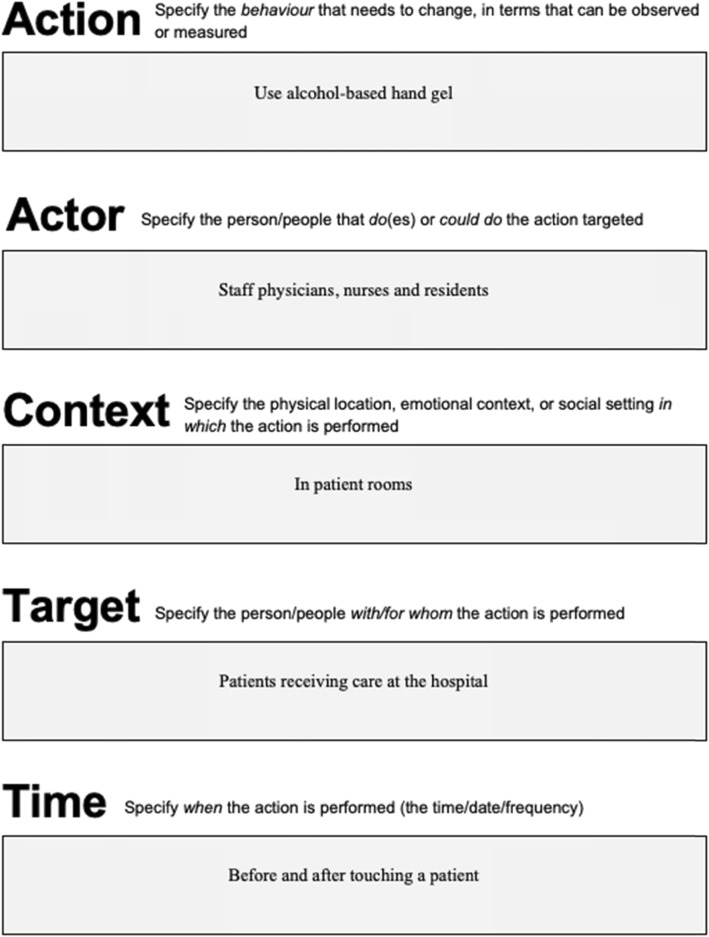
“(21) For example, the targeted behaviour change could be that health-care providers use hand sanitizer in patient rooms and hallways before and after touching patients.(21) To facilitate this behaviour change, hospital administrators have to plan for initial setup which includes identifying the individuals targeted by…”
BackgroundMethodInfluentialSelf-citationCruden, G., Crable, E. L., Lengnick‐Hall, R., & Purtle, J. (2023) · Implementation Science Communications · doi:10.1186/s43058-023-00492-6 · Cited by 17
“Despite multiple calls for better specification of policy actors and their evolving roles in implementation efforts [6, 12, 34, 44, 45], there is a lack of methodological guidance about how to actually use these types of conceptual taxonomies in research design decisions.”
BackgroundMethodInfluentialResearch Engagement with Policy Makers: a practical guide to writing policy briefsPreprint
Antonopoulou, V., Chadwick, P., McGee, O., Sniehotta, F. F., Lorencatto, F., Meyer, C., O'Donnell, A. J., Lecouturier, J., Kelly, M. P., & Michie, S. (2021) · OSF Preprints (OSF Preprints) · doi:10.31219/osf.io/m25qp · Cited by 15
“There are several frameworks that researchers and policy makers can use to draft actionable and effective recommendations [ 23, 22, 30 ].”
Self-citationReducing low value care: opportunities and challenges for Choosing Wisely campaigns
Grimshaw, J., & Levinson, W. S. (2023) · BMJ Evidence-Based Medicine · doi:10.1136/bmjebm-2023-112271 · Cited by 14
Self-citationCook, N., Collins, J., Porter, J. A., & Goodwin, D. M. (2023) · Frontiers in Nutrition · doi:10.3389/fnut.2023.1204980 · Cited by 14
“As hospital foodservice responsibilities are divided across a diverse group of staff members, to achieve the desired behavior of food and food-related waste audit completion there are potentially many behaviors that could be defined and addressed (using an outline such as Actor Action Context Target Time) (21).”
BackgroundAldridge, G., Reupert, A., Wu, L., Seguin, J. P., Olivier, P. L., Pringle, G., & Yap, M. B. H. (2024) · International Journal of Environmental Research and Public Health · doi:10.3390/ijerph21121599 · Cited by 14
What is robot abuse? A sociotechnical definition
Rezzani, A., Menéndez-Blanco, M., Bushman, B. J., & Angeli, A. D. (2025) · Behaviour and Information Technology · doi:10.1080/0144929x.2025.2462268 · Cited by 14
Comparison of Qualitative Analyses Conducted by Artificial Intelligence Versus Traditional Methods
Salazar, M., Chaw, M. K., Hellier, Y., Hsia, S. L., & Gruenberg, K. (2025) · American Journal of Pharmaceutical Education · doi:10.1016/j.ajpe.2025.101882 · Cited by 14
Vax, S., Farkas, M. D., Mueser, K. T., Drainoni, M., & Russinova, Z. L. (2022) · Implementation Science Communications · doi:10.1186/s43058-022-00257-7 · Cited by 14
“[28] clarifying stakeholders’ behaviors is crucial for designing and measuring the outcomes of implementation interventions.”
BackgroundCoffey, T., Duncan, E., Morgan, H. M., & Gillies, K. (2022) · BMC Medical Research Methodology · doi:10.1186/s12874-022-01708-4 · Cited by 14
“Methods Specification of the target behaviours Sufficient specification of the behaviour under investigation is paramount to a successful application of behavioural theory [25, 26].”
BackgroundMethod
Metadata
- Authors
- Presseau, J., McCleary, N., Lorencatto, F., Patey, A. M., Grimshaw, J. M., & Francis, J. J.
- Affiliations
- University of Ottawa (CA)
- University College London (GB)
- Ottawa Hospital Research Institute (CA)
- City, University of London (GB)
- Corresponding author
- Presseau, Justin
- ORCID
- Venue
- Implementation Science
- Published
- 2019-12
- Volume
- 14
- Issue
- 1
- Pages
- 102-102
- ISSN
- 1748-5908 (ISSN-L)
- PMC
- PMC6896730
- OpenAlex
- W2992424904
- Semantic Scholar
- eb078a483997a0adf8600d44d0a9ed59fa27d2ef
- Cited by
- 411
- References
- 56
- Citations by year
- 2026: 54 · 2025: 75 · 2024: 73 · 2023: 67 · 2022: 88 · 2021: 35 · 2020: 16 · 2019: 1
- FWCI
- 47.69
- Type
- journal article
- Language
- en
- Open access
- gold
- doi.org
- Licence
- cc-by
- creativecommons.org/licenses/by/4.0/ (tdm)
- creativecommons.org/licenses/by/4.0/ (vor, 4 d)
- Locations
- Implementation Science (publishedVersion, cc-by)
- PubMed Central (publishedVersion, cc-by)
- PubMed (publishedVersion)
- City Research Online (City University London) (acceptedVersion)
- Minerva Access (University of Melbourne) (submittedVersion, other-oa)
- uO Research (University of Ottawa) (submittedVersion, public-domain)
- DOAJ (DOAJ: Directory of Open Access Journals) (submittedVersion, cc-by-sa)
- UCL Discovery (University College London) (submittedVersion)
- Funders
- Canadian Institutes of Health Research
- Topics
- Health Sciences › Health Professions › General Health Professions › Health Policy Implementation Science
- Social Sciences › Psychology › Applied Psychology › Behavioral Health and Interventions
- Health Sciences › Health Professions › General Health Professions › Health Sciences Research and Education
- Keywords
- implementation strategies, barriers and facilitators, implementation process model, outcome measurement, intervention design, topic guide, questionnaire
- MeSH terms
- Clinical Competence, Health Personnel, Health Plan Implementation, Health Services Research, Humans, Models, Theoretical, Time, Guideline Adherence, Quality Improvement
About these checks
Registry, retraction, Cites and statistics results are computed, not judged, with one exception: a printed reference that no index lists is read once by a model before it counts as a citation error. Claims are extracted by a model and kept only when their quote appears verbatim in the text; each cited source is then checked, with a model’s help, for whether it says what the claim relies on. Those verdicts can be wrong — read the claim’s quote and the cited source before relying on one.
Statistics and arithmetic are recomputed, not judged.
Confidence bands are shown only for fields calibrated on our annotated test set. None is calibrated yet, so no band is shown.
What counts as a claim ›How we measure confidence ›How we check this ›
Are you an author, or do you see a problem with this page? Request a review
Data sources
Bibliographic data: Semantic Scholar, OpenAlex, Crossref.
Contains information from the Semantic Scholar Academic Graph Datasets, made available under the ODC Attribution License (ODC-BY 1.0).
Semantic Scholar’s data is described in: Kinney, R., et al. (2023). The Semantic Scholar Open Data Platform. arXiv:2301.10140.
