

Factors influencing the implementation of screening and brief interventions for alcohol use in primary care practices: a systematic review using the COM-B system and Theoretical Domains Framework
Open accessThe DOI matches its Crossref record; 120 of the 124 references it cites were found in a registry or an index; 105 of the 336 sources its claims cite were checked for support.
Abstract
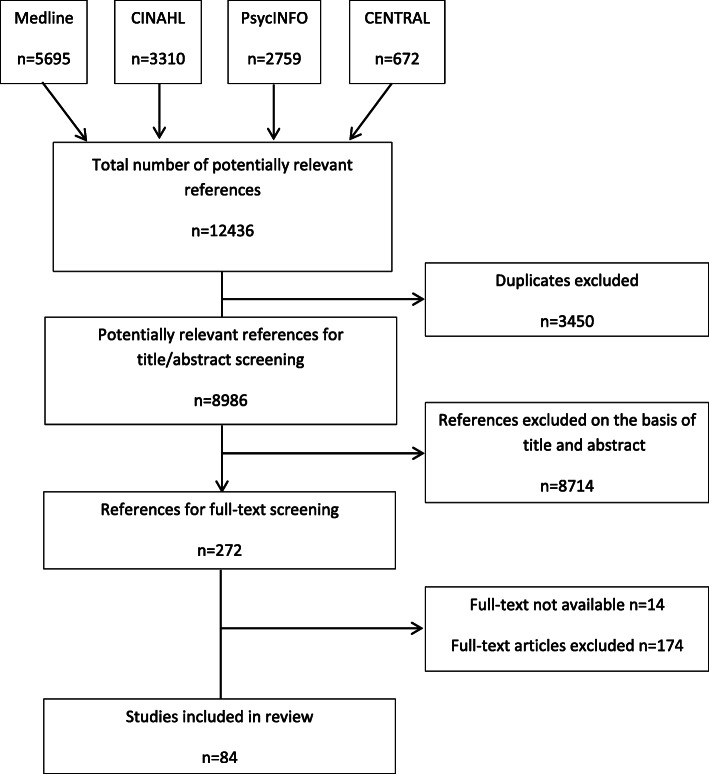
BACKGROUND: Alcohol is a leading risk factor contributing to the global burden of disease. Several national and international agencies recommend that screening and brief interventions (SBI) should be routinely delivered in primary care settings to reducing patients' alcohol consumption. However, evidence shows that such activities are seldom implemented in practice. A review of the barriers and facilitators mediating implementation, and how they fit with theoretical understandings of behaviour change, to inform the design of implementation interventions is lacking. This study aimed to conduct a theory-informed review of the factors influencing general practitioners' and primary care nurses' routine delivery of alcohol SBI in adults. METHODS: A systematic literature search was carried out in four electronic databases (Medline, CINAHL, CENTRAL, PsycINFO) using comprehensive search strategies. Both qualitative and quantitative studies were included. Two authors independently abstracted and thematically grouped the data extracted. The barriers and facilitators identified were mapped to the domains of the Capability-Opportunity-Motivation-Behaviour system/Theoretical Domains Framework (TDF). RESULTS: Eighty-four out of the 258 studies identified met the selection criteria. The majority of the studies reported data on the views of general practitioners (n = 60) and used a quantitative design (n = 49). A total of 660 data items pertaining to barriers and 253 data items pertaining to facilitators were extracted and thematically grouped into 46 themes. The themes mapped to at least one of the 14 domains of the TDF. The three TDF domains with the highest number of data units coded were 'Environmental Context and Resources' (n = 158, e.g. lack of time), 'Beliefs about Capabilities' (n = 134, e.g. beliefs about the ability to deliver screening and brief advice and in helping patients to cut down) and 'Skills' (n = 99, e.g. lack of training). CONCLUSIONS: This study identified a range of potential barriers and facilitators to the implementation of alcohol SBI delivery in primary care and adds to the scarce body of literature that identifies the barriers and facilitators from a theoretical perspective. Given that alcohol SBI is seldom implemented, this review provides researchers with a tool for designing novel theory-oriented interventions to support the implementation of such activity. SYSTEMATIC REVIEW REGISTRATION: PROSPERO CRD42016052681.
Overview
CoChat Summary
TL;DR
This systematic review mapped barriers and facilitators to routine alcohol screening and brief interventions (SBI) in primary care onto the COM-B system and Theoretical Domains Framework (TDF). It found 84 eligible studies and concluded that implementation likely requires multicomponent strategies across capability, opportunity, and motivation.
Key findings
- Eighty-four studies met the selection criteria; 660 barrier data items and 253 facilitator data items were grouped into 46 themes, all mapped to at least one of the 14 TDF domains.
- The TDF domains with the highest number of coded data units were ‘Environmental Context and Resources’ (n = 158, e.g. lack of time), ‘Beliefs about Capabilities’ (n = 134, e.g. beliefs about ability to deliver SBI and help patients cut down), and ‘Skills’ (n = 99, e.g. lack of training).
- The most commonly reported barrier themes were beliefs about ability to deliver SBI/help patients cut down (n = 62), alcohol-related knowledge (n = 58), and time (n = 50); the most commonly reported facilitator themes were support (n = 57), training (n = 25), and difficult task (n = 24).
- Most studies reported data on general practitioners (n = 60) and used a quantitative design (n = 49); 30 were qualitative and 5 used mixed methods.
Methods
- Systematic literature search in Medline, CINAHL, CENTRAL, and PsycINFO from database inception until May 2016; included primary-data qualitative and quantitative studies addressing barriers and facilitators to alcohol SBI reported by GPs or nurses in primary care general practices.
- Two reviewers independently screened, extracted, and thematically grouped data; themes were mapped to the COM-B components and 14 TDF domains, with quality appraised using NIH tools and CASP but inclusion not influenced by methodological quality.
- Narrative synthesis was structured around barriers and facilitators, professional group, and COM-B/TDF components and domains.
Limitations
- Paper-stated: the review identified barriers and facilitators only from GPs’ and nurses’ perspectives, excluding other primary care staff, management, and patients; it was limited to studies published in English, French, Portuguese, or Spanish; quality was not taken into account during synthesis; and the search was limited to four databases without grey literature.
- Paper-stated: most included studies were from high-income countries, so results may not represent lower-income countries; most studies were survey-based, which may inflate the salience of listed barriers and neglect others.
- Evident from the text: the search ended in May 2016, so later evidence is not included; the abstract reports 49 quantitative studies while the quality-appraisal section reports 51 quantitative studies, indicating a reporting inconsistency.
Model-written summary. Check it against the paper before relying on it.
Integrity signals
Registry
Cites
Statistics
Figures
Verification
Claims the paper makes
51 Valid · 6 Not valid · 36 Not checked · 84 Own results and interpretations
At least one cited source doesn’t support this claim or points to a different paper, and none confirmed it — see the verdicts below.
In the paper
“On the one hand, the majority of the GPs in 1 multicountry and 1 South African studies reported that these problems were not their responsibility [47, 67];”
§ Factors influencing the implementation of screening and brief interventions for alcohol use in primary care practices: a systematic review using the COM-B system and Theoretical Domains Framework > Results > Motivation (COM-B component 2)
What the sources say
- Disputedcites [47] Anderson P Wojnar M Jakubczyk A Managing alcohol problems in general practice in Europe: results from the European ODHIN survey of general practitioners Alcohol Alcohol 2014 49 531 539 10.1093/alcalc/agu043 25031247 sourceExperimental — accuracy not yet measured
In “Sample characteristics and views” (page unavailable), the eight-country European survey says there was no clear indication that GPs regarded prevention as outside medical responsibility; responses were around a neutral score. The Discussion (page unavailable) also says these GPs generally felt secure in their role managing alcohol problems. This contradicts the claim about the multicountry study; the separate South African study is not assessed here. (LLM, conf=0.84)
Checked by a reasoning model — may be wrong.
- Disputedcites [67] Gurugama NP Seneviratne SL Peiris DT de Silva HJ Detection and management of alcohol misuse by general practitioners Ceylon Med J 2003 48 122 124 10.4038/cmj.v48i4.3328 15125403 sourceExperimental — accuracy not yet measured
The Discussion (page unavailable) says most GPs in this Sri Lankan survey recognised their own role in dealing with alcohol misuse—the opposite of saying it was not their responsibility. It reports minimal participation in prevention programmes, but does not equate that with rejecting responsibility. The paper is also neither a multicountry nor a South African study. (LLM, conf=0.88)
Checked by a reasoning model — may be wrong.
plain- Asserted: passes — The authors put it forward as true.
- Checkable: passes — It can be checked against evidence.
- Load-bearing: unclear — It is unclear whether the paper’s conclusions depend on it.
- Based: passes — The paper gives a reason why it holds.
- Disputed
The sources with a verdict support this claim; the rest weren’t checked yet, have no full text we could read, or their verdicts aren’t rated yet.
In the paper
“However, few at-risk drinkers are identified as such and counselled to cut down [17–23].”
§ Factors influencing the implementation of screening and brief interventions for alcohol use in primary care practices: a systematic review using the COM-B system and Theoretical Domains Framework > Introduction
What the sources say
- Not matchedcites [17] Wolstenholme A Drummond C Deluca P Anderson P Braddick F Reynolds J Gual A Alcohol interventions and treatment in Europe Alcohol Policy in Europe: Evidence from AMPHORA. The AMPHORA Project 2012
We searched by its title and found no matching paper.
- Supportedcites [18] Brown J West R Angus C Comparison of brief interventions in primary care on smoking and excessive alcohol consumption: a population survey in England Br J Gen Pract 2016 66 e1 e9 10.3399/bjgp16X683149 26719481 PMC4684029 source
The Introduction reports that GPs identified an estimated 2% of patients drinking excessively in an earlier database analysis and says clinicians rarely screen and provide brief interventions. The Results report that only 6.5% of excessive drinkers who visited a GP recalled receiving an alcohol brief intervention, supporting the claim that few were counselled. (LLM, conf=0.92)
- Not checked — no full text of the sourcecites [19] Cheeta S Drummond C Oyefeso A Low identification of alcohol use disorders in general practice in England Addiction 2008 103 766 773 10.1111/j.1360-0443.2008.02198.x 18412755 source
- Not checked — no full text of the sourcecites [20] Geirsson M Bendtsen P Spak F Attitudes of Swedish general practitioners and nurses to working with lifestyle change, with special reference to alcohol consumption Alcohol Alcohol 2005 40 388 393 10.1093/alcalc/agh185 16043435 source
- Supportedcites [21] Hilbink M Voerman G van Beurden I Penninx B Laurant M A randomized controlled trial of a tailored primary care program to reverse excessive alcohol consumption J Am Board Fam Med 2012 25 712 722 10.3122/jabfm.2012.05.120070 22956707 source
The paper’s opening background (indexed under Abstract; page not supplied) says screening and brief interventions have not become routine GP practice and that primary care workers often find it difficult to identify and advise patients about alcohol use. This supports the citing sentence’s broad claim that few at-risk drinkers are identified and counselled. (LLM, conf=0.86)
- Not checked — no full text of the sourcecites [22] Roche AM Richard GP Doctors’ willingness to intervene in patients’ drug and alcohol problems Soc Sci Med 1991 33 1053 1061 10.1016/0277-9536(91)90010-A 1771432 source
- Supportedcites [23] Wilson GB Lock CA Heather N Cassidy P Christie MM Kaner EF Intervention against excessive alcohol consumption in primary health care: a survey of GPs’ attitudes and practices in England 10 years on Alcohol Alcohol 2011 46 570 577 10.1093/alcalc/agr067 21690169 PMC3156887 source
The Introduction reports low levels of formal identification and intervention with patients with alcohol-use disorders in primary care. The Discussion says identification rates remain low and preventive practice is limited, supporting the claim that few at-risk drinkers are identified and counselled to reduce drinking. Page numbers are not available in our copy. (LLM, conf=0.90)
plain- Asserted: passes — The authors put it forward as true.
- Checkable: passes — It can be checked against evidence.
- Load-bearing: passes — The paper’s conclusions depend on it.
- Based: passes — The paper gives a reason why it holds.
- Not matched
The cited sources support only part of this claim — read each source’s verdict below.
In the paper
“One Spanish study found that 60% of the GPs had not received alcohol-specific education during medical school [94].”
§ Factors influencing the implementation of screening and brief interventions for alcohol use in primary care practices: a systematic review using the COM-B system and Theoretical Domains Framework > Results > Capability (COM-B component 1)
What the sources say
- Partly supportedcites [94] Miner M Giner J Lacalle J Franco D Velasco A The Detection of Alcohol-related Problems in Primary Health Care Gac Sanit 1990 4 135 139 10.1016/S0213-9111(90)71016-3 2272759 sourceExperimental — accuracy not yet measured
The Results report that nearly 60% of surveyed primary-care physicians said they had received no specific, structured education about alcohol problems during their training. The paper does not establish that this was specifically during medical school; its Discussion refers to both medical schools and residency training. (LLM, conf=0.88)
plain- Asserted: passes — The authors put it forward as true.
- Checkable: passes — It can be checked against evidence.
- Load-bearing: unclear — It is unclear whether the paper’s conclusions depend on it.
- Based: passes — The paper gives a reason why it holds.
- Partly supported
The sources with a verdict support this claim; the rest weren’t checked yet, have no full text we could read, or their verdicts aren’t rated yet.
In the paper
“Asking patients about alcohol was found easy to forget in 2 qualitative studies on GPs from the Nordic countries [41, 74].”
§ Factors influencing the implementation of screening and brief interventions for alcohol use in primary care practices: a systematic review using the COM-B system and Theoretical Domains Framework > Results > Capability (COM-B component 1)
What the sources say
- Supportedcites [41] Aira M Kauhanen J Larivaara P Rautio P Factors influencing inquiry about patients’ alcohol consumption by primary health care physicians: qualitative semi-structured interview study Fam Pract 2003 20 270 275 10.1093/fampra/cmg307 12738695 source
In the ‘Sensitive nature of alcohol drinking’ section (p. 2), an interviewed physician says they often ask about exercise, diet and smoking but ‘might forget the alcohol.’ The Methods summary (p. 1) identifies this as a qualitative interview study of primary care physicians in Finland. This verdict addresses this cited study, not the other study cited in the sentence. (LLM, conf=0.91)
- Not checked — no full text of the sourcecites [74] Johansson K Bendtsen P Akerlind I Factors influencing GPs’ decisions regarding screening for high alcohol consumption: a focus group study in Swedish primary care Public Health 2005 119 781 788 10.1016/j.puhe.2004.12.006 16039937 source
plain- Asserted: passes — The authors put it forward as true.
- Checkable: passes — It can be checked against evidence.
- Load-bearing: unclear — It is unclear whether the paper’s conclusions depend on it.
- Based: passes — The paper gives a reason why it holds.
- Supported
The cited sources support only part of this claim — read each source’s verdict below.
In the paper
“In 9 survey studies, the majority of the GPs and nurses who received training reported that those programmes lasted less than four hours [20, 23, 44, 46, 47, 70, 76, 78, 79].”
§ Factors influencing the implementation of screening and brief interventions for alcohol use in primary care practices: a systematic review using the COM-B system and Theoretical Domains Framework > Results > Capability (COM-B component 1)
What the sources say
- Not checked — no full text of the sourcecites [20] Geirsson M Bendtsen P Spak F Attitudes of Swedish general practitioners and nurses to working with lifestyle change, with special reference to alcohol consumption Alcohol Alcohol 2005 40 388 393 10.1093/alcalc/agh185 16043435 source
- Partly supportedcites [23] Wilson GB Lock CA Heather N Cassidy P Christie MM Kaner EF Intervention against excessive alcohol consumption in primary health care: a survey of GPs’ attitudes and practices in England 10 years on Alcohol Alcohol 2011 46 570 577 10.1093/alcalc/agr067 21690169 PMC3156887 sourceExperimental — accuracy not yet measured
In Results, under “Medical education and training on alcohol,” 52% of surveyed GPs reported less than four hours of training, but that group included 34 who reported no training at all. Excluding those 34 leaves 112 of 248 GPs who received training—less than a majority. This paper surveyed GPs, not nurses; the nine-study count belongs to the citing sentence as a whole. (LLM, conf=0.90)
- Supportedcites [44] Anderson P Managing alcohol problems in general practice Br Med J 1985 290 1873 1875 10.1136/bmj.290.6485.1873 PMC1416789 3924294 source
The results (p. 1874) state that 66% of the surveyed general practitioners had received fewer than four hours of postgraduate education about alcohol-related matters. This supports the GP finding for which this paper is cited among the nine survey studies. (LLM, conf=0.90)
- Partly supportedcites [46] Anderson P Kaner E Wutzke S Attitudes and management of alcohol problems in general practice: descriptive analysis based on findings of a World Health Organization international collaborative survey Alcohol Alcohol 2003 38 597 601 10.1093/alcalc/agg119 14633648 sourceExperimental — accuracy not yet measured
The Results (p. 3) report that 43.1% of surveyed GPs had at least four hours of alcohol-related education or training. But the Education and training section (p. 2) says the under-four-hour group also included GPs with no training, non-respondents, and those who answered “don’t know”; it therefore does not establish that most GPs who received training had less than four hours. The paper reports one survey across nine countries, not nine studies, and does not survey nurses. (LLM, conf=0.88)
- Partly supportedcites [47] Anderson P Wojnar M Jakubczyk A Managing alcohol problems in general practice in Europe: results from the European ODHIN survey of general practitioners Alcohol Alcohol 2014 49 531 539 10.1093/alcalc/agu043 25031247 sourceExperimental — accuracy not yet measured
The Discussion reports that surveyed European GPs received an average of 10 hours of postgraduate education on alcohol. It does not report that most training programmes lasted less than four hours, and the survey concerns GPs rather than nurses. The cited paper is one of the studies listed, not the source of the nine-study count. (LLM, conf=0.86)
- Not checked — no full text of the sourcecites [70] Holmqvist M Bendtsen P Spak F Rommelsjo A Geirsson M Nilsen P Asking patients about their drinking. A national survey among primary health care physicians and nurses in Sweden Addict Behav 2008 33 301 314 10.1016/j.addbeh.2007.09.021 18029104 source
- Not checked — no full text of the sourcecites [76] Kaner E Lock C Heather N McNamee P Bond S Promoting brief alcohol intervention by nurses in primary care: a cluster randomised controlled trial Patient Educ Couns 2003 51 277 284 10.1016/S0738-3991(02)00242-2 14630384 source
- Not checked — no full text of the sourcecites [78] Kaner EF Heather N McAvoy BR Lock CA Gilvarry E Intervention for excessive alcohol consumption in primary health care: attitudes and practices of English general practitioners Alcohol Alcohol 1999 34 559 566 10.1093/alcalc/34.4.559 10456584 source
- Not checked — no full text of the sourcecites [79] Kaner EF Wutzke S Saunders JB Impact of alcohol education and training on general practitioners’ diagnostic and management skills: findings from a World Health Organization collaborative study J Stud Alcohol 2001 62 621 627 10.15288/jsa.2001.62.621 11702801 source
plain- Asserted: passes — The authors put it forward as true.
- Checkable: passes — It can be checked against evidence.
- Load-bearing: unclear — It is unclear whether the paper’s conclusions depend on it.
- Based: passes — The paper gives a reason why it holds.
88 more claims · 31 with their cited sources checked
Create a free account to see all 177 claims and to verify the 24 references still open.
- It may state two separate claims as one. 52
- Probably not a substantial claim. 49
- The quote only partly states this claim. 1
Self-check
Percentages, sums and reported differences re-computed from the paper’s own numbers.
Each contradiction between two passages listed here was confirmed by an independent check.
Rated minor: it would not touch a result — a value no result rests on, a p-value that stays on the same side of the significance level, or a conflict that is clerical, resolved elsewhere in the paper, or outside its own findings.
In the paper
§ Factors influencing the implementation of screening and brief interventions for alcohol use in primary care practices: a systematic review using the COM-B system and Theoretical Domains Framework > Results > Opportunity (COM-B component 3)
“The 17 themes in the opportunity component of the COM-B system, which includes two TDF domains (Environmental context and resources; Social influences)”
§ Factors influencing the implementation of screening and brief interventions for alcohol use in primary care practices: a systematic review using the COM-B system and Theoretical Domains Framework > Results > Opportunity (COM-B component 3)
“| Social support | Patients’ feelings when asked about their drinking | UK(4); Multicountry(2); USA(2); Australia(1); Brazil(1); France(1); New Zealand(1); Norway(1); Slovenia(1); Sweden(1) | [20, 23, 47, 56, 71, 78, 88, 92, 93, 97, 99, 103, 113, 115] | [58, 93] |”
Rated minor: it would not touch a result — a value no result rests on, a p-value that stays on the same side of the significance level, or a conflict that is clerical, resolved elsewhere in the paper, or outside its own findings.
In the paper
§ Factors influencing the implementation of screening and brief interventions for alcohol use in primary care practices: a systematic review using the COM-B system and Theoretical Domains Framework > Results > Capability (COM-B component 1)
“A total of 53 data units from 35 studies reporting on barriers were extracted.”
§ Factors influencing the implementation of screening and brief interventions for alcohol use in primary care practices: a systematic review using the COM-B system and Theoretical Domains Framework > Results > Summary of findings
“| Capability—knowledge | Alcohol-related knowledge | Doctors’ and nurses’ knowledge about specific concepts related to alcohol screening and brief interventions (e.g. drinking limits, definition of heavy drinking, guidelines, screening questionnaires, content of brief interventions) | 26/6/5/2/2 | 58/19 |”
Citations
Cites
Preferred Reporting Items for Systematic Reviews and Meta-Analyses: the PRISMA statement
Moher, D., Liberati, A., Tetzlaff, J., Altman, D. G., & for the PRISMA Group (2009) · BMJ · doi:10.1136/bmj.b2535 · Cited by 83,823
Preferred reporting items for systematic reviews and meta-analyses: the PRISMA Statement.
(2009) · PubMed Central · Cited by 44,859
Michie, S., van Stralen, M. M., & West, R. (2011) · Implementation Science · doi:10.1186/1748-5908-6-42 · Cited by 13,697 · cited 1×
“Our review is informed by the Capability-Opportunity-Motivation-Behaviour (COM-B) system [29] and Theoretical Domains Framework (TDF) [30] system in that the barriers and facilitators were mapped to the TDF domains which, in turn, fit with the COM-B system.”
MethodLim, S. S., Vos, T., Flaxman, A. D., Danaei, G., Shibuya, K., Adair-Rohani, H., AlMazroa, M. A., Amann, M., Anderson, H. R., Andrews, K. G., et al. (2012) · The Lancet · doi:10.1016/s0140-6736(12)61766-8 · Cited by 11,805
Cane, J., O’Connor, D., & Michie, S. (2012) · Implementation Science · doi:10.1186/1748-5908-7-37 · Cited by 4,888 · cited 3×
“TDF domains were mapped to COM-B components as defined by Cane and colleagues [30].”
BackgroundMethodEffectiveness of brief alcohol interventions in primary care populations
Kaner, E. F., Beyer, F. R., Muirhead, C., Campbell, F., Pienaar, E. D., Bertholet, N., Daeppen, J. B., Saunders, J. B., & Burnand, B. (2018) · Cochrane Database of Systematic Reviews · doi:10.1002/14651858.cd004148.pub4 · Cited by 1,665
Patel, V., Chisholm, D., Parikh, R., Charlson, F. J., Degenhardt, L., Dua, T., Ferrari, A. J., Hyman, S., Laxminarayan, R., Levin, C., et al. (2016) · The Lancet · doi:10.1016/s0140-6736(15)00390-6 · Cited by 889
Are interventions theory-based? Development of a theory coding scheme.
Michie, S., & Prestwich, A. (2010) · Health Psychology · doi:10.1037/a0016939 · Cited by 855 · cited 1×
“Another gap in the evidence base is the lack of theoretical insights in this area [28].”
BackgroundBertholet, N. (2005) · Archives of Internal Medicine · doi:10.1001/archinte.165.9.986 · Cited by 710
Davies, P., Walker, A. E., & Grimshaw, J. M. (2010) · Implementation Science · doi:10.1186/1748-5908-5-14 · Cited by 619
Research works printed but not linked: 4
- WHO Global status report on alcohol and health 2018 2018 Geneva World Health Organization
- Wolstenholme A Drummond C Deluca P Anderson P Braddick F Reynolds J Gual A Alcohol interventions and treatment in Europe Alcohol Policy in Europe: Evidence from AMPHORA. The AMPHORA Project 2012
- CASP Checklists Critical Appraisal Skills Programme (CASP) 2017
- Hannes K Noyes J Booth A Hannes K Harden A Harris J Lewin S Lockwood C Chapter 4: Critical appraisal of qualitative research Supplementary Guidance for Inclusion of Qualitative Research in Cochrane Systematic Reviews of Interventions. Version 1 (updated August 2011). Cochrane Collaboration Qualitative Methods Group 2011
Cited by
Zhou, P., Chen, L., Wu, Z., Wang, E., Yan, Y., Guan, X., Zhai, S., & Yang, K. (2023) · Journal of Clinical Epidemiology · doi:10.1016/j.jclinepi.2023.08.017 · Cited by 98
Practical and validated tool to assess falls risk in the primary care setting: a systematic review
Meekes, W. M. A., Korevaar, J. C., Leemrijse, C. J., & van de Goor, I. A. (2021) · BMJ Open · doi:10.1136/bmjopen-2020-045431 · Cited by 92
“No patients were directly involved in this systematic review.”
Alcohol Screening During US Primary Care Visits, 2014–2016
Chatterton, B., Agnoli, A. L., Schwarz, E. B., & Fenton, J. J. (2022) · Journal of General Internal Medicine · doi:10.1007/s11606-021-07369-1 · Cited by 55
Behavior Change Techniques in Digital Health Interventions for Midlife Women: Systematic Review
Sediva, H., Cartwright, T., Robertson, C. E., & Deb, S. K. (2022) · JMIR mhealth and uhealth · doi:10.2196/37234 · Cited by 41
“…to develop and evaluate the implementation of interventions in health care settings [34-36] and lifestyle (eg, smoking cessation [37], alcohol use prevention [38], sedentary behavior [39], PA [40], and dietary patterns [41]) but also in other areas such as personal transportation habits [42].”
Bondaronek, P., Dicken, S. J., Jennings, S. S., Mallion, V., & Stefanidou, C. (2022) · JMIR Human Factors · doi:10.2196/35070 · Cited by 37
“COM-B and TDF have been widely used in previous studies to synthesize findings on barriers and facilitators for a range of behaviors, including a review of physician-reported barriers to using evidence-based recommendations for low back pain [31], a review of the factors influencing the implementation of screening and…”
MethodFactors influencing nurse spiritual care practices at the end of life: A systematic review
Mascio, R., Best, M. C., Lynch, S., Phillips, J. L., & Jones, K. F. (2021) · Palliative & Supportive Care · doi:10.1017/s1478951521001851 · Cited by 43
Parthasarathy, S., Chi, F. W., Metz, V. E., Kline‐Simon, A. H., Asyyed, A. H., Campbell, C. I., & Sterling, S. (2023) · Addiction · doi:10.1111/add.16195 · Cited by 31
Xu, H. G., Keogh, S. J., Ullman, A. J., Marsh, N. M., Tobiano, G., Rickard, C. M., Clark, J. M., & Griffin, B. R. (2023) · Journal of Clinical Nursing · doi:10.1111/jocn.16671 · Cited by 26
Baker, S., Gallegos, D., Rebuli, M. A., Taylor, A. J., & Mahoney, R. (2024) · Nutrients · doi:10.3390/nu16111684 · Cited by 22
Wu, L., Liu, M., Huang, C., Yin, J., Zhou, H. R., & Hu, H. (2023) · BMC Geriatrics · doi:10.1186/s12877-023-03879-1 · Cited by 20
Gaume, J., Bertholet, N., McCambridge, J., Magill, M., Adam, A., Hügli, O., & Daeppen, J. (2022) · JAMA Network Open · doi:10.1001/jamanetworkopen.2022.37563 · Cited by 21
Demir, B., Demir, S., Wickens, C. M., Nooshabadi, M. H., Rodak, T., & Donmez, B. (2023) · Accident Analysis & Prevention · doi:10.1016/j.aap.2023.107369 · Cited by 16
Missed and Delayed Diagnoses of Chronic Liver Disease in Primary Care Patients with Cirrhosis
Patel, K. M., Zhang, J., Marsden, J. E., Bays, C., Mauldin, P. D., & Schreiner, A. D. (2024) · Digestive Diseases and Sciences · doi:10.1007/s10620-024-08601-8 · Cited by 21
Rosário, F., Vasiljevic, M., Pas, L., Angus, C., Ribeiro, C., & Fitzgerald, N. (2022) · Addiction · doi:10.1111/add.15782 · Cited by 17
Self-citationMoffat, A., Cook, E., & Chater, A. (2022) · Frontiers in Public Health · doi:10.3389/fpubh.2022.1016076 · Cited by 16
MacPherson, M., & Kapadia, S. (2023) · BMC Digital Health · doi:10.1186/s44247-023-00033-0 · Cited by 14
Rasool, S., Dobbie, F., Ahmad, F., Khan, Z., Holliday, R., & Bauld, L. (2023) · Nicotine & Tobacco Research · doi:10.1093/ntr/ntad125 · Cited by 15
“23 comes from high-income countries (HMICs) 24 which limits its generalizability to low-middle-income countries, who share the greatest burden of the problem.”
BackgroundCaruso, B. A., Snyder, J. S., O’Brien, L. A., LaFon, E., Files, K., Shoaib, D. M., Prasad, S. K., Rogers, H., Cumming, O., Mills, J. E., et al. (2025) · BMJ Global Health · doi:10.1136/bmjgh-2025-018927 · Cited by 25
Dorey, T., Haddad, M., McBain, H. B., Mulligan, K., & Zarska, A. (2023) · Diabetic Medicine · doi:10.1111/dme.15098 · Cited by 18
Welfordsson, P., Danielsson, A., Björck, C., Grzymala-Lubanski, B., Hambræus, K., Lidin, M., Löfman, I. H., Birath, C. S., Nilsson, O., Braunschweig, F., et al. (2024) · European Journal of Cardiovascular Nursing · doi:10.1093/eurjcn/zvae033 · Cited by 15
Petersen, H. V., Sivertsen, D. M., Jørgensen, L. M., Petersen, J., & Kirk, J. W. (2022) · Journal of Clinical Nursing · doi:10.1111/jocn.16410 · Cited by 13
Park, J. J., King, D. L., Wilkinson‐Meyers, L., & Rodda, S. N. (2023) · International Journal of Mental Health and Addiction · doi:10.1007/s11469-023-01010-4 · Cited by 12
“Barriers include lack of time and/or resources, competing priorities, patient responsiveness, and lack of training or perceived competency to deliver screening and brief interventions (Johnson et al., 2011; Rodda et al., 2018a; Rosário et al., 2021).”
Znyk, M., Kostrzewski, S., & Kaleta, D. (2024) · Frontiers in Public Health · doi:10.3389/fpubh.2024.1301982 · Cited by 14
Johnston, B. J. (2021) · Journal of the American Psychiatric Nurses Association · doi:10.1177/10783903211036494 · Cited by 12
“Johnston 85 theoretical domains framework (TDF) (Rosário et al., 2021).”
BackgroundMethodInfluentialParmet, T., Yusufov, M., Braun, I. M., Pirl, W. F., Matlock, D. D., & Sannes, T. S. (2023) · Translational Behavioral Medicine · doi:10.1093/tbm/ibac121 · Cited by 13
Nadkarni, A., Fernandes, D., Bhatia, U., Velleman, R. D. B., D’souza, E., D’souza, J., Pacheco, G. M., & Sambari, S. (2022) · Public Health Nutrition · doi:10.1017/s1368980022000313 · Cited by 11
Screening and brief intervention for alcohol use disorder risk in three middle-income countries
Paschall, M. J., Ringwalt, C. L., Fisher, D. A., Grube, J. W., Achoki, T., & Miller, T. R. (2022) · BMC Public Health · doi:10.1186/s12889-022-14358-4 · Cited by 9
“Similar to other studies in high-income countries [16], our findings indicate very low prevalence rates of SBI among drinkers at risk for AUD, regardless of whether they reported talking to a health care professional in the previous year.”
BackgroundResultInfluentialCunningham, J. C., Briggs, A. M., Cottrell, E., Doyle, F., Dziedzic, K., Finney, A. G., Murphy, P., Paskins, Z., Sheridan, E., Swaithes, L., et al. (2021) · HRB Open Research · doi:10.12688/hrbopenres.13377.1 · Cited by 9
Kamath, C. C., Kelpin, S. S., Patten, C. A., Rummans, T. A., Kremers, H. M., Oesterle, T., Williams, M. D., & Breitinger, S. A. (2022) · Mayo Clinic Proceedings · doi:10.1016/j.mayocp.2022.07.006 · Cited by 9
“Primary care providers are often reluctant to deliver treatment because of time constraints within the clinical workflow, belief that the intervention will be ineffective, and lack of experience in delivering brief interventions.(15) Furthermore, insurance barriers, relative value unit incentivized pay structures, and…”
Potthoff, S., O'Donnell, A. J., Karlsen, A. T., Brendryen, H., & Lid, T. G. (2022) · Frontiers in Health Services · doi:10.3389/frhs.2022.940383 · Cited by 10
Kokole, D., Jané‐Llopis, E., Mercken, L. A. G., Piazza, M., Bustamante, I. V., Rey, G. N., Medina, P., Pérez‐Gómez, A., Mejía‐Trujillo, J., O'Donnell, A. J., et al. (2021) · Substance Abuse · doi:10.1080/08897077.2021.1903658 · Cited by 11
“Despite this evidence, screening and brief intervention are often not optimally implemented in routine practice,(15) and providers often cite lack of time, resources and training as barriers to implementation.(16) Previous studies have sought to identify implementation strategies that could help to address those barri…”
BackgroundCaruso, B. A., Snyder, J. S., O’Brien, L. A., LaFon, E., Files, K., Shoaib, D. M., Prasad, S. K., Rogers, H., Cumming, O., Mills, J. E., et al. (2025) · medRxiv · doi:10.1101/2025.03.11.25323561 · Cited by 9
Schøler, P. N., Søndergaard, J., Rasmussen, S., & Nielsen, A. S. (2024) · BMC Family Practice · doi:10.1186/s12875-024-02508-z · Cited by 7
“This does not solve known SBI implementation issues such as time constraints and staff resources [51], but the method does offer differentiated treatment within the same setting as the screening, thus possibly addressing other known SBI barriers such as the uncertainty of HCPs in managing…”
MethodOldham, M., Okpako, T., Leppin, C., Garnett, C. V., Dinu, L. M., Stevely, A. K., Jones, A., & Holmes, J. (2024) · PLOS Digital Health · doi:10.1371/journal.pdig.0000523 · Cited by 8
Kale, D., Buss, V. H., Oldham, M., Brown, J., Shahab, L., & Jackson, S. E. (2025) · Drug and Alcohol Dependence Reports · doi:10.1016/j.dadr.2025.100340 · Cited by 8
“The main barriers identified by healthcare practitioners to delivering brief alcohol interventions include lack of time, insufficient training and beliefs about the inability to effectively deliver screening and advice (Johnson et al., 2010; Ros ´ ario et al., 2021).”
Cardoso, D. P., Oliveira, D. S., Antunes, B., Saraiva, R., Angus, K., Gallardo, E., & Rosário, F. (2022) · Acta Médica Portuguesa · doi:10.20344/amp.15765 · Cited by 12
Self-citationCook, W. K., Ye, Y., Zhu, Y., Karriker‐Jaffe, K. J., & Mulia, N. (2025) · Drug and Alcohol Dependence · doi:10.1016/j.drugalcdep.2025.112558 · Cited by 7
Oldham, M., Dinu, L. M., Loebenberg, G., Perski, O., Brown, J., Angus, C., Beard, E., Burton, R., Field, M., Greaves, F., et al. (2024) · Journal of Medical Internet Research · doi:10.2196/42319 · Cited by 8
“Key barriers to the delivery of these interventions by practitioners are lack of time, low confidence about discussing alcohol with patients, and lack of training [3-5].”
Welfordsson, P., Danielsson, A., Björck, C., Grzymala-Lubanski, B., Hambræus, K., Löfman, I. H., Nilsson, O., Braunschweig, F., Lidin, M., & Finn, S. W. (2025) · European Journal of Cardiovascular Nursing · doi:10.1093/eurjcn/zvaf109 · Cited by 7
“19”
InfluentialMontgomery, C., Saini, P., Schoetensack, C., McCarthy, M., Hanlon, C. A., Owens, L., Kullu, C., van Ginneken, N., Rice, M., & Young, R. (2023) · PLoS ONE · doi:10.1371/journal.pone.0292220 · Cited by 8
Russian-Language Mobile Apps for Reducing Alcohol Use: Systematic Search and Evaluation
Bunova, A., Wiemker, V., Gornyi, B., Ferreira-Borges, C., & Neufeld, M. (2022) · JMIR mHealth and uHealth · doi:10.2196/31058 · Cited by 6
“Despite the effectiveness of SBI, there are several barriers to their widespread implementation in PHC settings in Russia beyond the dispanserization framework [20-22].”
BackgroundRussian-Language Mobile Apps for Reducing Alcohol Use: Systematic Search and Evaluation (Preprint)
Bunova, A., Wiemker, V., Gornyi, B., Ferreira-Borges, C., & Neufeld, M. (2021) · doi:10.2196/preprints.31058 · Cited by 6
Palmer, B., Irwin, C. G., & Desbrow, B. (2023) · Drug and Alcohol Review · doi:10.1111/dar.13760 · Cited by 7
Schwarz, A. F., Verkooijen, K. T., de Vet, E., & Simons, M. (2024) · JMIR Serious Games · doi:10.2196/52991 · Cited by 7
Kools, N., Rozema, A. D., van den Bulck, F. A. E., Bovens, R. H. L. M., Mathijssen, J. J. P., & van de Mheen, D. (2024) · Addiction Science & Clinical Practice · doi:10.1186/s13722-024-00497-z · Cited by 7
“Most qualitative studies on hazardous alcohol use and AUD, however, focused on barriers and facilitators of SBIRT implementation in primary care and hospital settings [33–37].”
BackgroundSteensland, Å., Segernäs, A., Larsson, M., Capusan, A. J., & Kastbom, L. (2025) · Scandinavian Journal of Primary Health Care · doi:10.1080/02813432.2025.2456949 · Cited by 10
“…hazardous alcohol use and aUD, which is the first step in sBi. however, several barriers need to be handled in order to implement the interventions [43]. similar to findings regarding the clinical implementation of aUDit [12–14, 5 ], the GPs identified the participants viewed protecting the…”
Peng, M., Lu, Y., & Mo, W. (2025) · BMJ Open · doi:10.1136/bmjopen-2024-094206 · Cited by 9
“65 This may also raise the likelihood that the intervention will be put into practice successfully.”
Welfordsson, P., Danielsson, A., Björck, C., Grzymala-Lubanski, B., Hambræus, K., Löfman, I. H., Braunschweig, F., Lidin, M., & Finn, S. W. (2025) · PLoS ONE · doi:10.1371/journal.pone.0328990 · Cited by 6
Phillips, A. Z., Karriker‐Jaffe, K. J., Bensley, K. M., Subbaraman, M. S., Delk, J., & Mulia, N. (2023) · Alcoholism Clinical and Experimental Research · doi:10.1111/acer.15102 · Cited by 5
Yong, C. W., Choe, R. W., Chua, S. K. X., Lum, J. L., & Wang, W. C.-W. (2025) · Annals of the Academy of Medicine Singapore · doi:10.47102/annals-acadmedsg.202523 · Cited by 7
Welfordsson, P., Danielsson, A., Björck, C., Grzymala-Lubanski, B., Hambræus, K., Löfman, I. H., Braunschweig, F., Lidin, M., & Finn, S. W. (2025) · Scandinavian Cardiovascular Journal · doi:10.1080/14017431.2025.2533825 · Cited by 6
“Our results are further consistent with work conducted in primary care, where incomplete SBI implementation has been reported [28].”
Verthein, U., Lahusen, H., Martens, M., Prilutskaya, M., Yussopov, O., Kaliyeva, Z., & Schulte, B. (2022) · International Journal of Public Health · doi:10.3389/ijph.2022.1604803 · Cited by 6
Screening for Unhealthy Alcohol Use Among Patients With Multiple Chronic Conditions in Primary Care
Rockwell, M. S., Funk, A. J., Huffstetler, A. N., Villalobos, G. C., Britz, J. B., Webel, B., Richards, A., Epling, J. W., Sabo, R., & Krist, A. H. (2024) · AJPM Focus · doi:10.1016/j.focus.2024.100233 · Cited by 5
Zoorob, R., Kim-Vences, S. I. H., Hirth, J. M., Schaper, K., Grigoryan, L., González, S., & Kowalchuk, A. A. (2024) · Preventive Medicine · doi:10.1016/j.ypmed.2024.108038 · Cited by 7
King, D. K., Ondersma, S. J., McRee, B. G., German, J. S., Loree, A. M., Harlowe, A., Alford, D. P., Sedotto, R. N. M., & Weber, M. K. (2024) · Substance Use & Addiction Journal · doi:10.1177/29767342241271404 · Cited by 5
Pérula-Jiménez, C., Rodríguez, E. M. R., Fernández-García, J. Á., Rejano, J. M. P., Carmona-Casado, A. B., Rich‐Ruiz, M., la Rubia, A. G.-D., Baleato-Gomez, J., & on behalf of the Collaborative Group ALCO-AP20 Study (2024) · Healthcare · doi:10.3390/healthcare12191970 · Cited by 6
“However, in the case of management of risky alcohol use, a lack of training and a low level of preventive practice have been found among PCPs [16–18].”
BackgroundSterling, S., Lu, Y., Grijalva, C., Ross, T. B., Weisner, C. M., Elson, J., & Chi, F. W. (2024) · Journal of Substance Use and Addiction Treatment · doi:10.1016/j.josat.2024.209532 · Cited by 7
AlShamlan, N. A. (2022) · Family Practice · doi:10.1093/fampra/cmac048 · Cited by 5
Kokole, D., Jané‐Llopis, E., Rey, G. N., Aguilar, N. B., Aguilar, P. S. M., Mejía‐Trujillo, J., Mora, K., Restrepo, N., Bustamante, I. V., Piazza, M., et al. (2022) · Implementation Research and Practice · doi:10.1177/26334895221112693 · Cited by 7
“However, the majority of the existing alcohol screening research (both in general and training-specific) comes from high-income countries (Rosário et al., 2021).”
BackgroundCharacterization and prediction of gambling behavior in adolescents using the COM-B model
Guijarro, Á. B., Irles, D. L., Segura, J., & Moriano, J. A. (2022) · PLoS ONE · doi:10.1371/journal.pone.0277520 · Cited by 13
“In the field of addictive behaviors, the COM-B model has been shown to be useful for understanding the changes needed to prevent the consumption of alcohol [30, 31] or tobacco [32, 33].”
MethodWiemker, V., Bunova, A., Neufeld, M., Gornyi, B., Yurasova, E., Konigorski, S., Калинина, А. М., Васильевна, К. А., Ferreira‐Borges, C., & Probst, C. (2022) · Digital Health · doi:10.1177/20552076211074491 · Cited by 5
“31 With its novel assessment approach, the AAA-Tool could contribute to the sustained efforts and innovative approaches required to bridge the gap between PHC and specialized care and overcome some of the known barriers to the more wide-spread implementation of SBI in the Russian PHC. 32,33 Volume and patterns of drin…”
BackgroundMethodRockwell, M. S., Villalobos, G. C., Bannon, J. E., Bishop, D., Kirchner, S., Jonas, D. E., Krist, A. H., Davis, M. M., & Brooks, E. M. (2025) · Journal of Primary Care & Community Health · doi:10.1177/21501319251351144 · Cited by 3
“7,12,14,26,52,53 Continued research is needed to explore variation in the prescriptivity, standardization, and intensity of successful PF approaches.”
Huang, N., Yang, S., Wang, Z., Zhang, H., Li, T., Jiang, Y., You, J., & Liao, J. (2025) · Nursing Open · doi:10.1002/nop2.70307 · Cited by 3
Screening and Counseling for Unhealthy Alcohol Use in Primary Care Practices
Jonas, D. E., Riley, S. R., Brouwer, L., Boynton, M. H., Barclay, C., Grammer, D., Weathington, C., McCaskill, M., Birken, S. A., Shoenbill, K. A., et al. (2026) · JAMA Network Open · doi:10.1001/jamanetworkopen.2025.53518 · Cited by 3
Agile implementation of alcohol screening in primary care
Summanwar, D., Ropert, C., Barton, J. C., Hiday, R. A., Bishop, D., Boustani, M. A., & Willis, D. R. (2024) · BMC Family Practice · doi:10.1186/s12875-024-02500-7 · Cited by 6
“…professionals may not feel that EBPs apply to their more complex, real-world patients or that implementing Evidence-based healthcare solutions is not feasible or too time-consuming due to real-world constraints and lack of demand for implementing EBP in their local health-care system [11, 12].”
BackgroundKiselev, N., Schaffner, R. M., Csepregi, Z., Wenger, A., Castro, R. P., & Haug, S. (2025) · JMIR mhealth and uhealth · doi:10.2196/64861 · Cited by 5
“Rosário et al [30] used the COM-B and TDF framework to identify factors influencing the implementation of screening and brief interventions for alcohol consumption in primary care.”
Wiemker, V., Neufeld, M., Bunova, A., Danquah, I., Ferreira‐Borges, C., Konigorski, S., Rastogi, A., & Probst, C. (2022) · Journal of Medical Internet Research · doi:10.2196/28927 · Cited by 7
“Relevant implementation barriers include a perceived lack of knowledge or skills among health care professionals and environmental context factors such as time restrictions and limited resources [9].”
Metz, V. E., Leibowitz, A., Satre, D. D., Parthasarathy, S., Jackson-Morris, M., Cocohoba, J. M., & Sterling, S. (2022) · Contemporary Clinical Trials · doi:10.1016/j.cct.2022.107004 · Cited by 3
Madden, M., Stewart, D., & McCambridge, J. (2023) · Addiction Research & Theory · doi:10.1080/16066359.2023.2207017 · Cited by 3
Screening for alcohol use in primary care: assessing French general practitioner practices
Barré, T., Beo, V. D., Roux, P., Mourad, A., Verger, P., Fressard, L., Hérault, T., Buyck, J.-F., Beck, F., & Carrieri, P. (2023) · Alcohol and Alcoholism · doi:10.1093/alcalc/agad067 · Cited by 7
Pérula-Jiménez, C., Rodríguez, E. M. R., Rejano, J. M. P., la Rubia, A. G.-D., Gómez, J. B., & de Torres, L. Á. P. (2023) · Atención Primaria · doi:10.1016/j.aprim.2023.102835 · Cited by 4
Angus, C., Oldham, M., Burton, R., Dinu, L. M., Field, M., Hickman, M., Eileen, K., Loebenberg, G., Munafo, M. R., Pizzo, E., et al. (2024) · Value in Health · doi:10.1016/j.jval.2024.11.007 · Cited by 5
Loughran, T., Scharer, J. L., Rodriguez, L., Víta, M., Maisto, S. A., & Funderburk, J. S. (2021) · Journal of Substance Abuse Treatment · doi:10.1016/j.jsat.2021.108456 · Cited by 3
Bramness, J. G., Hjellvik, V., Nystad, W., Høye, A., & Lid, T. G. (2025) · European Journal of Public Health · doi:10.1093/eurpub/ckaf131 · Cited by 2
“However, AUDIT has not been successfully implemented [14].”
Yue, Y., Rothberg, M. B., Back, S. E., Adekunle, O. A., Tran, H. T., & Le, P. N. B. (2026) · Journal of General Internal Medicine · doi:10.1007/s11606-025-10089-5 · Cited by 2
Kock, L. S., Shahab, L., Garnett, C. V., Oldham, M., Tattan‐Birch, H., Angus, C., Brose, L. S., & Brown, J. (2024) · BMC Public Health · doi:10.1186/s12889-023-17559-7 · Cited by 4
“Moreover, where GPs were confident in their ability to screen and advise people who used alcohol, they were less confident in the impact it will have on their patients [36].”
BackgroundInequities in Alcohol Screening of Primary Care Patients with Chronic Conditions
Mulia, N., Zhu, Y., Phillips, A. Z., Ye, Y., Bensley, K. M., & Karriker‐Jaffe, K. J. (2024) · American Journal of Preventive Medicine · doi:10.1016/j.amepre.2024.07.017 · Cited by 3
Vendetti, J. A., Bangham, C., Riba, M. L., Whitmore, C. B., Gallucci, K. S., Hanson, B. L., & Greece, J. A. (2024) · Substance Use & Addiction Journal · doi:10.1177/29767342241267074 · Cited by 3
“29 Efforts to systematically address these barriers are relatively new and untested and may be met with skepticism or apprehension if they are perceived as disruptive to existing clinical operations.”
Schøler, P. N., Søndergaard, J., Rasmussen, S., Volke, K. H., Nilsén, P., & Nielsen, A. S. (2025) · Addiction Science & Clinical Practice · doi:10.1186/s13722-025-00571-0 · Cited by 3
“Whether the identified determinants align with and to what degree they influence actual implementation outcomes and intervention effectiveness in the iTAPP study is the subject for planned studies, ultimately helping to inform future tailored and theory-based implementation strategies [67, 72].”
O'Donnell, A. J., Kaner, E., Hanratty, B., Gilvarry, E. A., Wigham, S., & Jackson, K. (2025) · PLoS ONE · doi:10.1371/journal.pone.0334524 · Cited by 3
“…Practitioners (GPs) working in primary health care frequently cite lack of knowledge and appropriate training as a barrier to alcohol-related care [21], with evidence of limited delivery of brief interventions [22] and/or prescribing of pharmacotherapy for alcohol dependence in primary care [23].”
Percepción de los médicos frente al consumo de vino tinto y la salud cardiovascular
Espíldora-Hernández, J., Martín-Cortés, S., Benítez-Toledo, M. J., et al. (2023) · Clínica e Investigación en Arteriosclerosis · doi:10.1016/j.arteri.2023.05.002 · Cited by 2
Kokole, D., Mercken, L. A. G., Anderson, P., Mejía‐Trujillo, J., Pérez‐Gómez, A., Bustamante, I. V., Piazza, M., Rey, G. N., Arroyo, M., de León, A. P., et al. (2023) · Global Public Health · doi:10.1080/17441692.2023.2207410 · Cited by 4
“Studies evaluating implementation of alcohol screening and brief interventions have scarcely been focusing on wider environment beyond citing factors such as time constraints, patients ’ beliefs about alcohol, or lack of fi nancial incentives (Rosário et al., 2021).”
BackgroundRomero, V. F., Tovar, Á. E., Montoya, A. L., Flores-Coronado, M. A., Ferrer-Reyes, S. I., Chainé, S. M., & Serrano, M. M. (2023) · Acta de Investigación Psicológica · doi:10.22201/fpsi.20074719e.2023.2.486 · Cited by 2
Smith, A., Buchanan, R. M., Parkes, J., Stone, H., Tan, Q. Y., & Ibrahim, K. (2023) · International Journal of Pharmacy Practice · doi:10.1093/ijpp/riad071 · Cited by 6
Screening and brief interventions for harmful alcohol use: where to now?
Holmwood, C. B. (2021) · The Medical Journal of Australia · doi:10.5694/mja2.50927 · Cited by 2
Editorial: The evidence and practice-gap of screening and brief interventions for substance misuse
Ghosh, A., Mattoo, S. K., & Newbury‐Birch, D. (2022) · Frontiers in Psychiatry · doi:10.3389/fpsyt.2022.1056814 · Cited by 2
Wagi, C. R., McDowell, R., Wright, A., Egan, K. L., Meade, C. S., Young, A. M., Enderle, M. N., Estadt, A. T., & Lancaster, K. E. (2025) · PLoS ONE · doi:10.1371/journal.pone.0331849 · Cited by 1
“The Theoretical Domains Framework has been used to identify facilitators and barriers and identify implementation strategies for addressing infectious diseases and substance use [34,35].”
Welfordsson, P., Danielsson, A., Nielsen, A. S., Björck, C., Grzymala-Lubanski, B., Hambræus, K., Nilsson, O., Löfman, I. H., Lidin, M., & Finn, S. W. (2025) · Addiction Science & Clinical Practice · doi:10.1186/s13722-025-00628-0 · Cited by 2
“Lack of training has been reported to be a key barrier to SBI in primary care [27] and inpatient hospital settings [28].”
InfluentialPotthoff, S., Brendryen, H., Bosnic, H., Bhardwaj-Gosling, R., Iden, K. R., Njå, A. L. M., O'Donnell, A. J., & Lid, T. G. (2025) · Scandinavian Journal of Primary Health Care · doi:10.1080/02813432.2025.2598835 · Cited by 2
“…limited knowledge and skills, time constraints, uncertainty about professional role, and perceived patient discomfort in discussing alcohol [24]. the capability-Opportunit y-Motivation-Behaviour (cOM-B) model, which is at the core of the BcW, provides a structure for understanding these…”
Vinette, B., Côté, J., & Bilodeau, K. (2025) · Journal of Continuing Education in the Health Professions · doi:10.1097/ceh.0000000000000631 · Cited by 1
Al-Omary, H., Soltani, A., Stewart, D., & Nazar, Z. J. (2026) · International Journal of Clinical Pharmacy · doi:10.1007/s11096-025-02079-8 · Cited by 3
Dionisi, T., Vita, V. D., Sario, G. D., Gasbarrini, A., & Addolorato, G. (2026) · European Journal of Internal Medicine · doi:10.1016/j.ejim.2026.106837 · Cited by 2
Expanded Alcohol Screening and Brief Intervention to Address Premature Mortality
Lemp, J. M., Kilian, C., Kou, X., Buckley, C., Llamosas‐Falcón, L., Zhu, Y., Rehm, J. T., Mulia, N., Purshouse, R. C., & Probst, C. (2026) · JAMA Health Forum · doi:10.1001/jamahealthforum.2026.2348 · Cited by 1
CME: Riskanter Alkoholkonsum im Alter
Schnoz, D., & Suter, P. M. (2021) · Praxis · doi:10.1024/1661-8157/a003650 · Cited by 1
Carbonell, M. M., Colorado, Y. S., Rodríguez, D. E. C., Expósito-Concepción, M. Y., Meza, S. R. T., Daza, D. S., & Julio, L. K. G. (2023) · Medical Education Online · doi:10.1080/10872981.2023.2172755 · Cited by 1
Odokonyero, R. F., Nakasujja, N., Turiho, A. K., Sanyu, N., Muyindike, W. R., Nansera, D., Semitala, F. C., Kamya, M. R., Katahoire, A., Hahn, J. A., et al. (2024) · Addiction Science & Clinical Practice · doi:10.1186/s13722-024-00495-1 · Cited by 1
“However, HCPs are unaware of the burden of drinking by YPLH, and where they are aware of the burden, they lack the knowledge of what to do about it [20].”
BackgroundFisher, D. A., Grube, J. W., Lilliott-González, L., Elias, M., Sturm, R., Ringwalt, C. L., Miller, T. R., Vargas, E. C., Achoki, T., & Rizzo, A. (2024) · Frontiers in Public Health · doi:10.3389/fpubh.2024.1416190 · Cited by 1
Bramness, J. G., Lid, T. G., Bolstad, I., Lien, L., & Abebe, D. (2025) · BMC Public Health · doi:10.1186/s12889-025-23579-2 · Cited by 2
Alcohol screening and brief intervention in clinical practice
Phillips, T., & Drummond, C. (2025) · BMJ · doi:10.1136/bmj.r1689 · Cited by 1
“14 Encouraging uptake of training by staff who do not specialise in alcohol disorders, as would pertain in widespread roll-out, is challenging.”
Welfordsson, P., Danielsson, A., Björck, C., Grzymala-Lubanski, B., Hambræus, K., Löfman, I. H., Braunschweig, F., Lidin, M., & Finn, S. W. (2025) · BMC Research Notes · doi:10.1186/s13104-025-07452-4
“…that many clinicians lacked knowledge of alternative screening methods such as PEth, and several participants reported limited access to and knowledge of printed questionnaires and digital screening tools – a finding that is consistent with wider reports of a lack of training with SBI [17, 26].”
Metadata
- Authors
- Rosário, F., Santos, M. I., Angus, K., Pas, L., Ribeiro, C., & Fitzgerald, N.
- Affiliations
- University of Lisbon (PT)
- University of Stirling (GB)
- KU Leuven (BE)
- Corresponding author
- Rosário, Frederico
- Venue
- Implementation Science
- Published
- 2021-01-07
- Volume
- 16
- Issue
- 1
- Pages
- 6-6
- ISSN
- 1748-5908 (ISSN-L)
- PMC
- PMC7791720
- OpenAlex
- W3119807855
- Cited by
- 141
- References
- 124
- Citations by year
- 2026: 21 · 2025: 30 · 2024: 30 · 2023: 24 · 2022: 19 · 2021: 17
- FWCI
- 4.69
- Type
- journal article
- Language
- en
- Open access
- gold
- doi.org
- Licence
- cc-by
- creativecommons.org/licenses/by/4.0 (tdm)
- creativecommons.org/licenses/by/4.0 (vor)
- Locations
- Implementation Science (publishedVersion, cc-by)
- Europe PMC (PubMed Central) (publishedVersion, other-oa)
- PubMed Central (publishedVersion, cc-by)
- PubMed (publishedVersion)
- Portuguese National Funding Agency for Science, Research and Technology (RCAAP Project by FCT) (submittedVersion, cc-by)
- Lirias (submittedVersion, cc-by-nc-sa)
- DOAJ (DOAJ: Directory of Open Access Journals) (submittedVersion, cc-by-sa)
- Stirling Online Research Repository (University of Stirling) (submittedVersion, cc-by)
- HRB National Drugs Library (Health Research Board) (submittedVersion, cc-by-nc-sa)
- Portuguese National Funding Agency for Science, Research and Technology (RCAAP Project by FCT) (submittedVersion, other-oa)
- Funders
- Medical Research Council (MR/S037519/1)
- Topics
- Health Sciences › Health Professions › General Health Professions › Health Policy Implementation Science
- Health Sciences › Medicine › Epidemiology › Substance Abuse Treatment and Outcomes
- Social Sciences › Psychology › Applied Psychology › Behavioral Health and Interventions
- Keywords
- screening and brief intervention, alcohol consumption, primary care, implementation barriers and facilitators, general practitioners, primary care nurses, COM-B model, Theoretical Domains Framework, behavior change, environmental context and resources, beliefs about capabilities, skills, alcohol consumption reduction
- MeSH terms
- Adult, Alcohol Drinking, Crisis Intervention, Humans, Mass Screening, Motivation, Primary Health Care
About these checks
Registry, retraction, Cites and statistics results are computed, not judged, with one exception: a printed reference that no index lists is read once by a model before it counts as a citation error. Claims are extracted by a model and kept only when their quote appears verbatim in the text; each cited source is then checked, with a model’s help, for whether it says what the claim relies on. Those verdicts can be wrong — read the claim’s quote and the cited source before relying on one.
The claim verdicts this report counts are experimental: their accuracy is not yet measured.
A language model drew the claims from the paper on 2026-10-10, under version 3 of the claim definition (model deepseek-v4.1-flash, prompt extract-v3).
A second model labelled each claim on 2026-10-10 (model jev-1.13-20260917, definition revision gold-guideline-v0.2).
Cited sources are checked with a language model’s help (gpt-6-sol).
Statistics and arithmetic are recomputed, not judged.
Confidence bands are shown only for fields calibrated on our annotated test set. None is calibrated yet, so no band is shown.
What counts as a claim ›How we measure confidence ›How we check this ›
Are you an author, or do you see a problem with this page? Request a review
Data sources
Bibliographic data: Semantic Scholar, OpenAlex, Crossref.
Contains information from the Semantic Scholar Academic Graph Datasets, made available under the ODC Attribution License (ODC-BY 1.0).
Semantic Scholar’s data is described in: Kinney, R., et al. (2023). The Semantic Scholar Open Data Platform. arXiv:2301.10140.
