

Factors influencing the implementation of screening and brief interventions for alcohol use in primary care practices: a systematic review using the COM-B system and Theoretical Domains Framework
Open accessThe DOI matches its Crossref record; 119 of the 124 references it cites were found in a registry or an index; 105 of the 336 sources its claims cite were checked for support.
Abstract
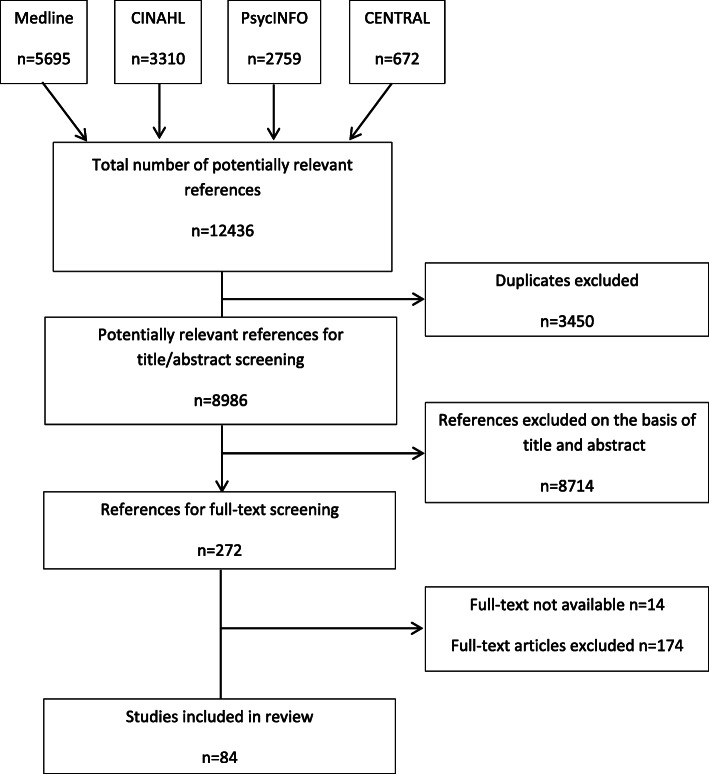
BACKGROUND: Alcohol is a leading risk factor contributing to the global burden of disease. Several national and international agencies recommend that screening and brief interventions (SBI) should be routinely delivered in primary care settings to reducing patients' alcohol consumption. However, evidence shows that such activities are seldom implemented in practice. A review of the barriers and facilitators mediating implementation, and how they fit with theoretical understandings of behaviour change, to inform the design of implementation interventions is lacking. This study aimed to conduct a theory-informed review of the factors influencing general practitioners' and primary care nurses' routine delivery of alcohol SBI in adults. METHODS: A systematic literature search was carried out in four electronic databases (Medline, CINAHL, CENTRAL, PsycINFO) using comprehensive search strategies. Both qualitative and quantitative studies were included. Two authors independently abstracted and thematically grouped the data extracted. The barriers and facilitators identified were mapped to the domains of the Capability-Opportunity-Motivation-Behaviour system/Theoretical Domains Framework (TDF). RESULTS: Eighty-four out of the 258 studies identified met the selection criteria. The majority of the studies reported data on the views of general practitioners (n = 60) and used a quantitative design (n = 49). A total of 660 data items pertaining to barriers and 253 data items pertaining to facilitators were extracted and thematically grouped into 46 themes. The themes mapped to at least one of the 14 domains of the TDF. The three TDF domains with the highest number of data units coded were 'Environmental Context and Resources' (n = 158, e.g. lack of time), 'Beliefs about Capabilities' (n = 134, e.g. beliefs about the ability to deliver screening and brief advice and in helping patients to cut down) and 'Skills' (n = 99, e.g. lack of training). CONCLUSIONS: This study identified a range of potential barriers and facilitators to the implementation of alcohol SBI delivery in primary care and adds to the scarce body of literature that identifies the barriers and facilitators from a theoretical perspective. Given that alcohol SBI is seldom implemented, this review provides researchers with a tool for designing novel theory-oriented interventions to support the implementation of such activity. SYSTEMATIC REVIEW REGISTRATION: PROSPERO CRD42016052681.
Overview
CoChat Summary
TL;DR
This systematic review mapped barriers and facilitators to routine alcohol screening and brief interventions (SBI) in primary care onto the COM-B system and Theoretical Domains Framework (TDF). It found 84 eligible studies and concluded that implementation likely requires multicomponent strategies across capability, opportunity, and motivation.
Key findings
- Eighty-four studies met the selection criteria; 660 barrier data items and 253 facilitator data items were grouped into 46 themes, all mapped to at least one of the 14 TDF domains.
- The TDF domains with the highest number of coded data units were ‘Environmental Context and Resources’ (n = 158, e.g. lack of time), ‘Beliefs about Capabilities’ (n = 134, e.g. beliefs about ability to deliver SBI and help patients cut down), and ‘Skills’ (n = 99, e.g. lack of training).
- The most commonly reported barrier themes were beliefs about ability to deliver SBI/help patients cut down (n = 62), alcohol-related knowledge (n = 58), and time (n = 50); the most commonly reported facilitator themes were support (n = 57), training (n = 25), and difficult task (n = 24).
- Most studies reported data on general practitioners (n = 60) and used a quantitative design (n = 49); 30 were qualitative and 5 used mixed methods.
Methods
- Systematic literature search in Medline, CINAHL, CENTRAL, and PsycINFO from database inception until May 2016; included primary-data qualitative and quantitative studies addressing barriers and facilitators to alcohol SBI reported by GPs or nurses in primary care general practices.
- Two reviewers independently screened, extracted, and thematically grouped data; themes were mapped to the COM-B components and 14 TDF domains, with quality appraised using NIH tools and CASP but inclusion not influenced by methodological quality.
- Narrative synthesis was structured around barriers and facilitators, professional group, and COM-B/TDF components and domains.
Limitations
- Paper-stated: the review identified barriers and facilitators only from GPs’ and nurses’ perspectives, excluding other primary care staff, management, and patients; it was limited to studies published in English, French, Portuguese, or Spanish; quality was not taken into account during synthesis; and the search was limited to four databases without grey literature.
- Paper-stated: most included studies were from high-income countries, so results may not represent lower-income countries; most studies were survey-based, which may inflate the salience of listed barriers and neglect others.
- Evident from the text: the search ended in May 2016, so later evidence is not included; the abstract reports 49 quantitative studies while the quality-appraisal section reports 51 quantitative studies, indicating a reporting inconsistency.
Model-written summary. Check it against the paper before relying on it.
Integrity signals
Registry
Cites
Statistics
Figures
Verification
Claims the paper makes
51 Valid · 6 Not valid · 36 Not checked · 84 Own results and interpretations
At least one cited source doesn’t support this claim or points to a different paper, and none confirmed it — see the verdicts below.
In the paper
“On the one hand, the majority of the GPs in 1 multicountry and 1 South African studies reported that these problems were not their responsibility [47, 67];”
§ Factors influencing the implementation of screening and brief interventions for alcohol use in primary care practices: a systematic review using the COM-B system and Theoretical Domains Framework > Results > Motivation (COM-B component 2)
What the sources say
- Disputedcites [47] Anderson P Wojnar M Jakubczyk A Managing alcohol problems in general practice in Europe: results from the European ODHIN survey of general practitioners Alcohol Alcohol 2014 49 531 539 10.1093/alcalc/agu043 25031247 sourceExperimental — accuracy not yet measured
In “Sample characteristics and views” (page unavailable), the eight-country European survey says there was no clear indication that GPs regarded prevention as outside medical responsibility; responses were around a neutral score. The Discussion (page unavailable) also says these GPs generally felt secure in their role managing alcohol problems. This contradicts the claim about the multicountry study; the separate South African study is not assessed here. (LLM, conf=0.84)
Checked by a reasoning model — may be wrong.
- Disputedcites [67] Gurugama NP Seneviratne SL Peiris DT de Silva HJ Detection and management of alcohol misuse by general practitioners Ceylon Med J 2003 48 122 124 10.4038/cmj.v48i4.3328 15125403 sourceExperimental — accuracy not yet measured
The Discussion (page unavailable) says most GPs in this Sri Lankan survey recognised their own role in dealing with alcohol misuse—the opposite of saying it was not their responsibility. It reports minimal participation in prevention programmes, but does not equate that with rejecting responsibility. The paper is also neither a multicountry nor a South African study. (LLM, conf=0.88)
Checked by a reasoning model — may be wrong.
plain- Asserted: passes — The authors put it forward as true.
- Checkable: passes — It can be checked against evidence.
- Load-bearing: unclear — It is unclear whether the paper’s conclusions depend on it.
- Based: passes — The paper gives a reason why it holds.
- Disputed
The sources with a verdict support this claim; the rest weren’t checked yet, have no full text we could read, or their verdicts aren’t rated yet.
In the paper
“However, few at-risk drinkers are identified as such and counselled to cut down [17–23].”
§ Factors influencing the implementation of screening and brief interventions for alcohol use in primary care practices: a systematic review using the COM-B system and Theoretical Domains Framework > Introduction
What the sources say
- Not matchedcites [17] Wolstenholme A Drummond C Deluca P Anderson P Braddick F Reynolds J Gual A Alcohol interventions and treatment in Europe Alcohol Policy in Europe: Evidence from AMPHORA. The AMPHORA Project 2012
We searched by its title and found no matching paper.
- Supportedcites [18] Brown J West R Angus C Comparison of brief interventions in primary care on smoking and excessive alcohol consumption: a population survey in England Br J Gen Pract 2016 66 e1 e9 10.3399/bjgp16X683149 26719481 PMC4684029 source
The Introduction reports that GPs identified an estimated 2% of patients drinking excessively in an earlier database analysis and says clinicians rarely screen and provide brief interventions. The Results report that only 6.5% of excessive drinkers who visited a GP recalled receiving an alcohol brief intervention, supporting the claim that few were counselled. (LLM, conf=0.92)
- Not checked — no full text of the sourcecites [19] Cheeta S Drummond C Oyefeso A Low identification of alcohol use disorders in general practice in England Addiction 2008 103 766 773 10.1111/j.1360-0443.2008.02198.x 18412755 source
- Not checked — no full text of the sourcecites [20] Geirsson M Bendtsen P Spak F Attitudes of Swedish general practitioners and nurses to working with lifestyle change, with special reference to alcohol consumption Alcohol Alcohol 2005 40 388 393 10.1093/alcalc/agh185 16043435 source
- Supportedcites [21] Hilbink M Voerman G van Beurden I Penninx B Laurant M A randomized controlled trial of a tailored primary care program to reverse excessive alcohol consumption J Am Board Fam Med 2012 25 712 722 10.3122/jabfm.2012.05.120070 22956707 source
The paper’s opening background (indexed under Abstract; page not supplied) says screening and brief interventions have not become routine GP practice and that primary care workers often find it difficult to identify and advise patients about alcohol use. This supports the citing sentence’s broad claim that few at-risk drinkers are identified and counselled. (LLM, conf=0.86)
- Not checked — no full text of the sourcecites [22] Roche AM Richard GP Doctors’ willingness to intervene in patients’ drug and alcohol problems Soc Sci Med 1991 33 1053 1061 10.1016/0277-9536(91)90010-A 1771432 source
- Supportedcites [23] Wilson GB Lock CA Heather N Cassidy P Christie MM Kaner EF Intervention against excessive alcohol consumption in primary health care: a survey of GPs’ attitudes and practices in England 10 years on Alcohol Alcohol 2011 46 570 577 10.1093/alcalc/agr067 21690169 PMC3156887 source
The Introduction reports low levels of formal identification and intervention with patients with alcohol-use disorders in primary care. The Discussion says identification rates remain low and preventive practice is limited, supporting the claim that few at-risk drinkers are identified and counselled to reduce drinking. Page numbers are not available in our copy. (LLM, conf=0.90)
plain- Asserted: passes — The authors put it forward as true.
- Checkable: passes — It can be checked against evidence.
- Load-bearing: passes — The paper’s conclusions depend on it.
- Based: passes — The paper gives a reason why it holds.
- Not matched
The cited sources support only part of this claim — read each source’s verdict below.
In the paper
“One Spanish study found that 60% of the GPs had not received alcohol-specific education during medical school [94].”
§ Factors influencing the implementation of screening and brief interventions for alcohol use in primary care practices: a systematic review using the COM-B system and Theoretical Domains Framework > Results > Capability (COM-B component 1)
What the sources say
- Partly supportedcites [94] Miner M Giner J Lacalle J Franco D Velasco A The Detection of Alcohol-related Problems in Primary Health Care Gac Sanit 1990 4 135 139 10.1016/S0213-9111(90)71016-3 2272759 sourceExperimental — accuracy not yet measured
The Results report that nearly 60% of surveyed primary-care physicians said they had received no specific, structured education about alcohol problems during their training. The paper does not establish that this was specifically during medical school; its Discussion refers to both medical schools and residency training. (LLM, conf=0.88)
plain- Asserted: passes — The authors put it forward as true.
- Checkable: passes — It can be checked against evidence.
- Load-bearing: unclear — It is unclear whether the paper’s conclusions depend on it.
- Based: passes — The paper gives a reason why it holds.
- Partly supported
The sources with a verdict support this claim; the rest weren’t checked yet, have no full text we could read, or their verdicts aren’t rated yet.
In the paper
“Asking patients about alcohol was found easy to forget in 2 qualitative studies on GPs from the Nordic countries [41, 74].”
§ Factors influencing the implementation of screening and brief interventions for alcohol use in primary care practices: a systematic review using the COM-B system and Theoretical Domains Framework > Results > Capability (COM-B component 1)
What the sources say
- Supportedcites [41] Aira M Kauhanen J Larivaara P Rautio P Factors influencing inquiry about patients’ alcohol consumption by primary health care physicians: qualitative semi-structured interview study Fam Pract 2003 20 270 275 10.1093/fampra/cmg307 12738695 source
In the ‘Sensitive nature of alcohol drinking’ section (p. 2), an interviewed physician says they often ask about exercise, diet and smoking but ‘might forget the alcohol.’ The Methods summary (p. 1) identifies this as a qualitative interview study of primary care physicians in Finland. This verdict addresses this cited study, not the other study cited in the sentence. (LLM, conf=0.91)
- Not checked — no full text of the sourcecites [74] Johansson K Bendtsen P Akerlind I Factors influencing GPs’ decisions regarding screening for high alcohol consumption: a focus group study in Swedish primary care Public Health 2005 119 781 788 10.1016/j.puhe.2004.12.006 16039937 source
plain- Asserted: passes — The authors put it forward as true.
- Checkable: passes — It can be checked against evidence.
- Load-bearing: unclear — It is unclear whether the paper’s conclusions depend on it.
- Based: passes — The paper gives a reason why it holds.
- Supported
The cited sources support only part of this claim — read each source’s verdict below.
In the paper
“In 9 survey studies, the majority of the GPs and nurses who received training reported that those programmes lasted less than four hours [20, 23, 44, 46, 47, 70, 76, 78, 79].”
§ Factors influencing the implementation of screening and brief interventions for alcohol use in primary care practices: a systematic review using the COM-B system and Theoretical Domains Framework > Results > Capability (COM-B component 1)
What the sources say
- Not checked — no full text of the sourcecites [20] Geirsson M Bendtsen P Spak F Attitudes of Swedish general practitioners and nurses to working with lifestyle change, with special reference to alcohol consumption Alcohol Alcohol 2005 40 388 393 10.1093/alcalc/agh185 16043435 source
- Partly supportedcites [23] Wilson GB Lock CA Heather N Cassidy P Christie MM Kaner EF Intervention against excessive alcohol consumption in primary health care: a survey of GPs’ attitudes and practices in England 10 years on Alcohol Alcohol 2011 46 570 577 10.1093/alcalc/agr067 21690169 PMC3156887 sourceExperimental — accuracy not yet measured
In Results, under “Medical education and training on alcohol,” 52% of surveyed GPs reported less than four hours of training, but that group included 34 who reported no training at all. Excluding those 34 leaves 112 of 248 GPs who received training—less than a majority. This paper surveyed GPs, not nurses; the nine-study count belongs to the citing sentence as a whole. (LLM, conf=0.90)
- Supportedcites [44] Anderson P Managing alcohol problems in general practice Br Med J 1985 290 1873 1875 10.1136/bmj.290.6485.1873 PMC1416789 3924294 source
The results (p. 1874) state that 66% of the surveyed general practitioners had received fewer than four hours of postgraduate education about alcohol-related matters. This supports the GP finding for which this paper is cited among the nine survey studies. (LLM, conf=0.90)
- Partly supportedcites [46] Anderson P Kaner E Wutzke S Attitudes and management of alcohol problems in general practice: descriptive analysis based on findings of a World Health Organization international collaborative survey Alcohol Alcohol 2003 38 597 601 10.1093/alcalc/agg119 14633648 sourceExperimental — accuracy not yet measured
The Results (p. 3) report that 43.1% of surveyed GPs had at least four hours of alcohol-related education or training. But the Education and training section (p. 2) says the under-four-hour group also included GPs with no training, non-respondents, and those who answered “don’t know”; it therefore does not establish that most GPs who received training had less than four hours. The paper reports one survey across nine countries, not nine studies, and does not survey nurses. (LLM, conf=0.88)
- Partly supportedcites [47] Anderson P Wojnar M Jakubczyk A Managing alcohol problems in general practice in Europe: results from the European ODHIN survey of general practitioners Alcohol Alcohol 2014 49 531 539 10.1093/alcalc/agu043 25031247 sourceExperimental — accuracy not yet measured
The Discussion reports that surveyed European GPs received an average of 10 hours of postgraduate education on alcohol. It does not report that most training programmes lasted less than four hours, and the survey concerns GPs rather than nurses. The cited paper is one of the studies listed, not the source of the nine-study count. (LLM, conf=0.86)
- Not checked — no full text of the sourcecites [70] Holmqvist M Bendtsen P Spak F Rommelsjo A Geirsson M Nilsen P Asking patients about their drinking. A national survey among primary health care physicians and nurses in Sweden Addict Behav 2008 33 301 314 10.1016/j.addbeh.2007.09.021 18029104 source
- Not checked — no full text of the sourcecites [76] Kaner E Lock C Heather N McNamee P Bond S Promoting brief alcohol intervention by nurses in primary care: a cluster randomised controlled trial Patient Educ Couns 2003 51 277 284 10.1016/S0738-3991(02)00242-2 14630384 source
- Not checked — no full text of the sourcecites [78] Kaner EF Heather N McAvoy BR Lock CA Gilvarry E Intervention for excessive alcohol consumption in primary health care: attitudes and practices of English general practitioners Alcohol Alcohol 1999 34 559 566 10.1093/alcalc/34.4.559 10456584 source
- Not checked — no full text of the sourcecites [79] Kaner EF Wutzke S Saunders JB Impact of alcohol education and training on general practitioners’ diagnostic and management skills: findings from a World Health Organization collaborative study J Stud Alcohol 2001 62 621 627 10.15288/jsa.2001.62.621 11702801 source
plain- Asserted: passes — The authors put it forward as true.
- Checkable: passes — It can be checked against evidence.
- Load-bearing: unclear — It is unclear whether the paper’s conclusions depend on it.
- Based: passes — The paper gives a reason why it holds.
88 more claims · 31 with their cited sources checked
Create a free account to see all 177 claims and to verify the 24 references still open.
- It may state two separate claims as one. 52
- Probably not a substantial claim. 49
- The quote only partly states this claim. 1
Self-check
Percentages, sums and reported differences re-computed from the paper’s own numbers.
Each contradiction between two passages listed here was confirmed by an independent check.
Rated minor: it would not touch a result — a value no result rests on, a p-value that stays on the same side of the significance level, or a conflict that is clerical, resolved elsewhere in the paper, or outside its own findings.
In the paper
§ Factors influencing the implementation of screening and brief interventions for alcohol use in primary care practices: a systematic review using the COM-B system and Theoretical Domains Framework > Results > Opportunity (COM-B component 3)
“The 17 themes in the opportunity component of the COM-B system, which includes two TDF domains (Environmental context and resources; Social influences)”
§ Factors influencing the implementation of screening and brief interventions for alcohol use in primary care practices: a systematic review using the COM-B system and Theoretical Domains Framework > Results > Opportunity (COM-B component 3)
“| Social support | Patients’ feelings when asked about their drinking | UK(4); Multicountry(2); USA(2); Australia(1); Brazil(1); France(1); New Zealand(1); Norway(1); Slovenia(1); Sweden(1) | [20, 23, 47, 56, 71, 78, 88, 92, 93, 97, 99, 103, 113, 115] | [58, 93] |”
Rated minor: it would not touch a result — a value no result rests on, a p-value that stays on the same side of the significance level, or a conflict that is clerical, resolved elsewhere in the paper, or outside its own findings.
In the paper
§ Factors influencing the implementation of screening and brief interventions for alcohol use in primary care practices: a systematic review using the COM-B system and Theoretical Domains Framework > Results > Capability (COM-B component 1)
“A total of 53 data units from 35 studies reporting on barriers were extracted.”
§ Factors influencing the implementation of screening and brief interventions for alcohol use in primary care practices: a systematic review using the COM-B system and Theoretical Domains Framework > Results > Summary of findings
“| Capability—knowledge | Alcohol-related knowledge | Doctors’ and nurses’ knowledge about specific concepts related to alcohol screening and brief interventions (e.g. drinking limits, definition of heavy drinking, guidelines, screening questionnaires, content of brief interventions) | 26/6/5/2/2 | 58/19 |”
Citations
Cites
Preferred Reporting Items for Systematic Reviews and Meta-Analyses: the PRISMA statement
Moher, D., Liberati, A., Tetzlaff, J., Altman, D. G., & for the PRISMA Group (2009) · BMJ · doi:10.1136/bmj.b2535 · Cited by 83,823
Preferred reporting items for systematic reviews and meta-analyses: the PRISMA Statement.
(2009) · PubMed Central · Cited by 44,859
Michie, S., van Stralen, M. M., & West, R. (2011) · Implementation Science · doi:10.1186/1748-5908-6-42 · Cited by 13,697 · cited 1×
“Our review is informed by the Capability-Opportunity-Motivation-Behaviour (COM-B) system [29] and Theoretical Domains Framework (TDF) [30] system in that the barriers and facilitators were mapped to the TDF domains which, in turn, fit with the COM-B system.”
MethodLim, S. S., Vos, T., Flaxman, A. D., Danaei, G., Shibuya, K., Adair-Rohani, H., AlMazroa, M. A., Amann, M., Anderson, H. R., Andrews, K. G., et al. (2012) · The Lancet · doi:10.1016/s0140-6736(12)61766-8 · Cited by 11,805
Cane, J., O’Connor, D., & Michie, S. (2012) · Implementation Science · doi:10.1186/1748-5908-7-37 · Cited by 4,888 · cited 3×
“TDF domains were mapped to COM-B components as defined by Cane and colleagues [30].”
BackgroundMethodEffectiveness of brief alcohol interventions in primary care populations
Kaner, E. F., Beyer, F. R., Muirhead, C., Campbell, F., Pienaar, E. D., Bertholet, N., Daeppen, J. B., Saunders, J. B., & Burnand, B. (2018) · Cochrane Database of Systematic Reviews · doi:10.1002/14651858.cd004148.pub4 · Cited by 1,665
Patel, V., Chisholm, D., Parikh, R., Charlson, F. J., Degenhardt, L., Dua, T., Ferrari, A. J., Hyman, S., Laxminarayan, R., Levin, C., et al. (2016) · The Lancet · doi:10.1016/s0140-6736(15)00390-6 · Cited by 889
Are interventions theory-based? Development of a theory coding scheme.
Michie, S., & Prestwich, A. (2010) · Health Psychology · doi:10.1037/a0016939 · Cited by 855 · cited 1×
“Another gap in the evidence base is the lack of theoretical insights in this area [28].”
BackgroundBertholet, N. (2005) · Archives of Internal Medicine · doi:10.1001/archinte.165.9.986 · Cited by 710
Davies, P., Walker, A. E., & Grimshaw, J. M. (2010) · Implementation Science · doi:10.1186/1748-5908-5-14 · Cited by 619
Huijg, J. M., Gebhardt, W. A., Crone, M. R., Dusseldorp, E., & Presseau, J. (2014) · Implementation Science · doi:10.1186/1748-5908-9-11 · Cited by 385
Johnson, M., Jackson, R., Guillaume, L., Meier, P., & Goyder, E. (2011) · Journal of Public Health · doi:10.1093/pubmed/fdq095 · Cited by 374 · cited 1×
“identified the barriers to and facilitators of the delivery of screening and brief intervention for alcohol misuse [27] but prioritized studies judged to best inform UK practice and focused on several different healthcare settings.”
BackgroundPrevention and health promotion in clinical practice: the views of general practitioners in Europe
Brotons, C., Björkelund, C., Bulc, M., Ciurana, R., Godycki-Cwirko, M., Jurgova, E., Kloppe, P., Lionis, C., Mierzecki, A., Piñeiro, R., et al. (2005) · Preventive Medicine · doi:10.1016/j.ypmed.2004.07.020 · Cited by 324 · cited 1×
“Brotons [53] 2005 Croatia, Estonia, Georgia, Greece, Ireland, Malta, Poland, Slovakia, Slovenia, Spain, Sweden English Cross-sectional 2082 Poor”
Beich, A. (2002) · BMJ · doi:10.1136/bmj.325.7369.870 · Cited by 285 · cited 2×
“Beich [49] 2002 Denmark English Focus groups Individual interviews 24 Fair”
BackgroundPrimary Care Intervention to Reduce Alcohol Misuse
Solberg, L. I., Maciosek, M. V., & Edwards, N. M. (2008) · American Journal of Preventive Medicine · doi:10.1016/j.amepre.2007.09.035 · Cited by 284
Ballesteros, J., Duffy, J. C., Querejeta, I., Ariño, J., & González‐Pinto, A. (2004) · Alcoholism: Clinical and Experimental Research · doi:10.1097/01.alc.0000122106.84718.67 · Cited by 251
Friedmann, P. D., McCullough, D., Chin, M. H., & Saitz, R. (2000) · Journal of General Internal Medicine · doi:10.1046/j.1525-1497.2000.03379.x · Cited by 232
Kaner, E. F. S. (1999) · Alcohol and Alcoholism · doi:10.1093/alcalc/34.4.559 · Cited by 204 · cited 6×
“Theme: Organization for preventive counselling Three survey studies showed that 40 to 86% of the GPs believed general practices are not organized to do preventive counselling [47, 78, 83].”
BackgroundInfluentialAttitudes, norms and controls influencing lifestyle risk factor management in general practice
Ampt, A. J., Amoroso, C., Harris, M. F., McKenzie, S. H., Rose, V. K., & Taggart, J. R. (2009) · BMC Family Practice · doi:10.1186/1471-2296-10-59 · Cited by 197 · cited 2×
“short and simple screening tools, giving patients self-report questionnaires) are examples of reported facilitators [39, 43, 93, 97].”
Aira, M., Kauhanen, J., Larivaara, P., & Rautio, P. (2003) · Family Practice · doi:10.1093/fampra/cmg307 · Cited by 164 · cited 9×
“Theme: Remembering Asking patients about alcohol was found easy to forget in 2 qualitative studies on GPs from the Nordic countries [41, 74].”
BackgroundInfluentialLock, C. A., Kaner, E., Lamont, S., & Bond, S. (2002) · Journal of Advanced Nursing · doi:10.1046/j.1365-2648.2002.02294.x · Cited by 162 · cited 3×
“Doctors and nurses own drinking habits UK(2); Norway(1) [77, 87, 89]”
BackgroundMethodThe effects on mortality of brief interventions for problem drinking: a meta‐analysis
Cuijpers, P., Riper, H., & Lemmers, L. (2004) · Addiction · doi:10.1111/j.1360-0443.2004.00778.x · Cited by 158
Payne, J., Elliott, E., D'Antoine, H., O'Leary, C., Mahony, A., Haan, E., & Bower, C. (2005) · Australian and New Zealand Journal of Public Health · doi:10.1111/j.1467-842x.2005.tb00251.x · Cited by 154 · cited 1×
“Nevin [98] 2002 Canada English Cross-sectional 75 Fair Nygaard [100] 2010 Norway English Cross-sectional 901 Good Nygaard [99] 2011 Norway English Focus groups 40 Good Owens [101] 2000 UK English Cross-sectional 101 Fair Payne [102] 2005 Australia English Cross-sectional 170 Fair Poplas Susic [103] 2010 Slovenia Engli…”
BackgroundANDERSON, P. (2004) · Alcohol and Alcoholism · doi:10.1093/alcalc/agh072 · Cited by 147 · cited 1×
“Anderson [45] 2004 Australia, Belgium, Spain, UK English RCT 277 Good”
BackgroundRethinking brief interventions for alcohol in general practice
McCambridge, J., & Saitz, R. (2017) · BMJ · doi:10.1136/bmj.j116 · Cited by 146 · cited 1×
“Notwithstanding recent debates questioning SBI effectiveness [25, 26], these represent missed opportunities to increase patients’ awareness of alcohol-related risks, a first step towards enabling them to make a more informed choice on whether or not to cut down [4].”
BackgroundManaging alcohol problems in general practice.
Anderson, P. (1985) · BMJ · doi:10.1136/bmj.290.6485.1873 · Cited by 122
Building theories of knowledge translation interventions: Use the entire menu of constructs
Brehaut, J. C., & Eva, K. W. (2012) · Implementation Science · doi:10.1186/1748-5908-7-114 · Cited by 120
AALTO, M., PEKURI, P., & SEPPÄ, K. (2003) · Drug and Alcohol Review · doi:10.1080/09595230100100606 · Cited by 119 · cited 1×
“Table 1 Characteristics of included studies First author Year Country Language Study design Study sample (n) Methodological quality GP Nurse Aalto [36] 2001 Finland English Cross-sectional 84 167 Good Aalto [38] 2003 Finland English Cross-sectional 64 Good Aalto [37] 2003a Finland English Focus group 18 19 Good Abidi…”
MethodAalto, M., Pekuri, P., & Seppä, K. (2001) · Addiction · doi:10.1046/j.1360-0443.2001.96230514.x · Cited by 117 · cited 4×
“Several studies on both GPs and nurses reported availability of educational and training programmes as an important facilitator [23, 36, 55, 73, 78, 84].”
BackgroundMethodResultInfluentialWilson, G. B., Lock, C. A., Heather, N., Cassidy, P., Christie, M. M., & Kaner, E. F. S. (2011) · Alcohol and Alcoholism · doi:10.1093/alcalc/agr067 · Cited by 112 · cited 4×
“Richmond [106] 1998 Australia English Post-intervention questionnaire with no control group 272 Poor Roche [107] 1991 Australia English Focus groups 44 Fair Rush [108] 1994 Canada English Cross-sectional 1235 Good Rush [109] 1995 Canada English Focus groups Semi-structured interviews 12 Good Segnan [110] 1992 Italy En…”
BackgroundInfluentialThe Identification of Alcohol‐related Problems by General Practitioners
CLEMENT, S. (1986) · British Journal of Addiction · doi:10.1111/j.1360-0443.1986.tb00325.x · Cited by 103 · cited 3×
“1 Flow diagram of screening process Abouyanni [40] 2000 Australia English Cross-sectional 416 Poor Aira [41] 2003 Finland English Semi-structured interviews 35 Good Aira [42] 2004 Finland English Semi-structured interviews 35 Good Ampt [43] 2009 Australia English Semi-structured interviews 15 1 Good Anderson [44] 1985…”
BackgroundGeneral practitioners' experiences of patients with drug and alcohol problems
ROCHE, A. M., GURAY, C., & SAUNDERS, J. B. (1991) · British Journal of Addiction · doi:10.1111/j.1360-0443.1991.tb01779.x · Cited by 100 · cited 1×
“Roche [107] 1991 Australia English Focus groups 44 Fair Rush [108] 1994 Canada English Cross-sectional 1235 Good Rush [109] 1995 Canada English Focus groups Semi-structured interviews 12 Good”
MethodAnderson, P., Bendtsen, P., Spak, F., Reynolds, J., Drummond, C., Segura, L., Keurhorst, M. N., Palacio-Vieira, J., Wojnar, M., Parkinson, K., et al. (2016) · Addiction · doi:10.1111/add.13476 · Cited by 98
Anderson, P. (2003) · Alcohol and Alcoholism · doi:10.1093/alcalc/agg119 · Cited by 97 · cited 3×
“1 Flow diagram of screening process Abouyanni [40] 2000 Australia English Cross-sectional 416 Poor Aira [41] 2003 Finland English Semi-structured interviews 35 Good Aira [42] 2004 Finland English Semi-structured interviews 35 Good Ampt [43] 2009 Australia English Semi-structured interviews 15 1 Good Anderson [44] 1985…”
BackgroundBrown, J., West, R., Angus, C., Beard, E., Brennan, A., Drummond, C., Hickman, M., Holmes, J., Kaner, E., & Michie, S. (2016) · British Journal of General Practice · doi:10.3399/bjgp16x683149 · Cited by 96
Still a difficult business? Negotiating alcohol-related problems in general practice consultations
Rapley, T., May, C., & Frances Kaner, E. (2006) · Social Science & Medicine · doi:10.1016/j.socscimed.2006.05.025 · Cited by 95 · cited 4×
“Rapley [105] 2006 UK English Semi-structured interviews 43 Good”
BackgroundMethodInfluentialMaheux, B., Haley, N., Rivard, M., & Gervais, A. (1999) · Europe PMC (PubMed Central) · Cited by 94
GEIRSSON, M., BENDTSEN, P., & SPAK, F. (2005) · Alcohol and Alcoholism · doi:10.1093/alcalc/agh185 · Cited by 93 · cited 7×
“Geirsson [20] 2005 Sweden English Cross-sectional 68 193 Good Gurugama [67] 2003 Sri Lanka English Cross-sectional 105 Good Rosário et al.”
BackgroundResultInfluential(1997) · Europe PMC (PubMed Central) · Cited by 89
Johansson, K. (2002) · Alcohol and Alcoholism · doi:10.1093/alcalc/37.1.38 · Cited by 84 · cited 6×
“A varying degree of both GPs and nurses in 2 survey studies indicated alcohol-specific education as a facilitator [70, 73].”
BackgroundInfluentialAnderson, P., Wojnar, M., Jakubczyk, A., Gual, A., Reynolds, J., Segura, L., Sovinova, H., Csemy, L., Kaner, E., Newbury-Birch, D., et al. (2014) · Alcohol and Alcoholism · doi:10.1093/alcalc/agu043 · Cited by 83 · cited 5×
“Theme: Organization for preventive counselling Three survey studies showed that 40 to 86% of the GPs believed general practices are not organized to do preventive counselling [47, 78, 83].”
BackgroundInfluentialSelf-citationPurshouse, R. C., Brennan, A., Rafia, R., Latimer, N. R., Archer, R. J., Angus, C. R., Preston, L. R., & Meier, P. S. (2013) · Alcohol and Alcoholism · doi:10.1093/alcalc/ags103 · Cited by 83
Potthoff, S., Presseau, J., Sniehotta, F. F., Johnston, M., Elovainio, M., & Avery, L. (2017) · Implementation Science · doi:10.1186/s13012-017-0551-6 · Cited by 82
Lam, A. C. N., Parshuram, C. S., Nulman, I., Koren, G., & Einarson, A. (2002) · BMC Family Practice · doi:10.1186/1471-2296-3-2 · Cited by 81 · cited 1×
“Nevin [98] 2002 Canada English Cross-sectional 75 Fair Nygaard [100] 2010 Norway English Cross-sectional 901 Good Nygaard [99] 2011 Norway English Focus groups 40 Good Owens [101] 2000 UK English Cross-sectional 101 Fair Payne [102] 2005 Australia English Cross-sectional 170 Fair Poplas Susic [103] 2010 Slovenia Engli…”
BackgroundGordon, L., Graves, N., Hawkes, A., & Eakin, E. (2007) · Chronic Illness · doi:10.1177/1742395307081732 · Cited by 77
Nygaard, P., & Aasland, O. G. (2011) · Alcohol and Alcoholism · doi:10.1093/alcalc/agq073 · Cited by 77 · cited 2×
“Nevin [98] 2002 Canada English Cross-sectional 75 Fair Nygaard [100] 2010 Norway English Cross-sectional 901 Good Nygaard [99] 2011 Norway English Focus groups 40 Good Owens [101] 2000 UK English Cross-sectional 101 Fair Payne [102] 2005 Australia English Cross-sectional 170 Fair Poplas Susic [103] 2010 Slovenia Engli…”
BackgroundKaner, E., Lock, C., Heather, N., McNamee, P., & Bond, S. (2003) · Patient Education and Counseling · doi:10.1016/s0738-3991(02)00242-2 · Cited by 71 · cited 4×
“In 9 survey studies, the majority of the GPs and nurses who received training reported that those programmes lasted less than four hours [20, 23, 44, 46, 47, 70, 76, 78, 79].”
BackgroundInfluentialShield, K. D., Gmel, G., Gmel, G., Mäkelä, P., Probst, C., Room, R., & Rehm, J. (2017) · Addiction · doi:10.1111/add.13827 · Cited by 71
Doctors' willingness to intervene in patients' drug and alcohol problems
Roche, A. M., & Richard, G. P. (1991) · Social Science & Medicine · doi:10.1016/0277-9536(91)90010-a · Cited by 68
DEEHAN, A., TEMPLETON, L., TAYLOR, C., DRUMMOND, C., & STRANG, J. (1998) · Drug and Alcohol Review · doi:10.1080/09595239800187081 · Cited by 67 · cited 4×
“Notwithstanding, a quantitative study from the UK reported that only 4% of the GPs agreed that their role was to treat alcohol-related medical complications only [61].”
BackgroundInfluentialKaariainen, J. (2001) · Alcohol and Alcoholism · doi:10.1093/alcalc/36.2.141 · Cited by 66 · cited 1×
“Kaariainen [75] 2001 Finland English Cross-sectional GP + nurse = 69 Fair”
BackgroundGlass, J. E., Andréasson, S., Bradley, K. A., Finn, S. W., Williams, E. C., Bakshi, A.-S., Gual, A., Heather, N., Sainz, M. T., Benegal, V., et al. (2017) · Addiction Science & Clinical Practice · doi:10.1186/s13722-017-0079-8 · Cited by 65 · cited 1×
“Notwithstanding recent debates questioning SBI effectiveness [25, 26], these represent missed opportunities to increase patients’ awareness of alcohol-related risks, a first step towards enabling them to make a more informed choice on whether or not to cut down [4].”
BackgroundWhy is it so difficult for general practitioners to discuss alcohol with patients?
Arborelius, E., & Thakker, K. D. (1995) · Family Practice · doi:10.1093/fampra/12.4.419 · Cited by 64 · cited 1×
“Arborelius [48] 1995 Sweden English Structured interviews 13 Fair”
BackgroundHutchings, D., Cassidy, P., Dallolio, E., Pearson, P., Heather, N., & Kaner, E. (2006) · Primary Health Care Research & Development · doi:10.1191/1463423606pc292oa · Cited by 64 · cited 5×
“GPs and nurses reported more training for improving counselling skills [20, 49, 78, 83] and feedback on successful cases [71] as facilitators.”
BackgroundInfluentialEarly intervention for alcohol use: family physicians' motivations and perceived barriers.
(1995) · Europe PMC (PubMed Central) · Cited by 63
Kaner, E. F., Wutzke, S., Saunders, J. B., Powell, A., Morawski, J., Bouix, J. C., & WHO Brief Intervention Study Group (2001) · Journal of Studies on Alcohol · doi:10.15288/jsa.2001.62.621 · Cited by 62 · cited 4×
“1 Flow diagram of screening process Abouyanni [40] 2000 Australia English Cross-sectional 416 Poor Aira [41] 2003 Finland English Semi-structured interviews 35 Good Aira [42] 2004 Finland English Semi-structured interviews 35 Good Ampt [43] 2009 Australia English Semi-structured interviews 15 1 Good Anderson [44] 1985…”
BackgroundInfluentialLow identification of alcohol use disorders in general practice in England
Cheeta, S., Drummond, C., Oyefeso, A., Phillips, T., Deluca, P., Perryman, K., & Coulton, S. (2008) · Addiction · doi:10.1111/j.1360-0443.2008.02198.x · Cited by 62
GP attitudes to managing drug‐ and alcohol‐dependent patients: a reluctant role
ABOUYANNI, G., STEVENS, L. J., HARRIS, M. F., WICKES, W. A., RAMAKRISHNA, S. S., TA, E., & KNOWLDEN, S. M. (2000) · Drug and Alcohol Review · doi:10.1080/713659318 · Cited by 59 · cited 1×
“Table 1 Characteristics of included studies First author Year Country Language Study design Study sample (n) Methodological quality GP Nurse Aalto [36] 2001 Finland English Cross-sectional 84 167 Good Aalto [38] 2003 Finland English Cross-sectional 64 Good Aalto [37] 2003a Finland English Focus group 18 19 Good Abidi…”
MethodKaner, E. (2006) · Family Practice · doi:10.1093/fampra/cml015 · Cited by 58
Angus, C., Thomas, C., Anderson, P., Meier, P. S., & Brennan, A. (2016) · The European Journal of Public Health · doi:10.1093/eurpub/ckw122 · Cited by 57
GENERAL PRACTICE NURSES' KNOWLEDGE OF ALCOHOL USE AND MISUSE: A QUESTIONNAIRE SURVEY
OWENS, L. (2000) · Alcohol and Alcoholism · doi:10.1093/alcalc/35.3.259 · Cited by 54 · cited 2×
“Nevin [98] 2002 Canada English Cross-sectional 75 Fair Nygaard [100] 2010 Norway English Cross-sectional 901 Good Nygaard [99] 2011 Norway English Focus groups 40 Good Owens [101] 2000 UK English Cross-sectional 101 Fair Payne [102] 2005 Australia English Cross-sectional 170 Fair Poplas Susic [103] 2010 Slovenia Engli…”
BackgroundImplementation of a SNAP intervention in two divisions of general practice: a feasibility study
Harris, M., Hobbs, C., Davies, G. P., et al. (2005) · The Medical Journal of Australia · doi:10.5694/j.1326-5377.2005.tb07180.x · Cited by 52 · cited 1×
“Table 1 Characteristics of included studies (Continued) First author Year Country Language Study design Study sample (n) Methodological quality GP Nurse Haley [68] 2000 Canada English Cross-sectional 805 Fair Harris [69] 2005 Australia English Pre-post questionnaire with no control group 21 Poor”
Addressing patient alcohol use: a view from general practice
Mules, T., Taylor, J., Price, R., Walker, L., Singh, B., Newsam, P., Palaniyappan, T., Snook, T., Ruselan, M., Ryan, J., et al. (2012) · The Journal of Primary Health Care · doi:10.1071/hc12217 · Cited by 51 · cited 5×
“Patients’ receptiveness to alcohol interventions Australia(1); Finland(1); New Zealand(1); Norway(1); UK(1); USA(1) [42, 65, 105] [58, 87, 97]”
BackgroundInfluentialNygaard, P., Paschall, M. J., Aasland, O. G., & Lund, K. E. (2010) · Alcohol and Alcoholism · doi:10.1093/alcalc/agq002 · Cited by 50 · cited 4×
“Nevin [98] 2002 Canada English Cross-sectional 75 Fair Nygaard [100] 2010 Norway English Cross-sectional 901 Good Nygaard [99] 2011 Norway English Focus groups 40 Good Owens [101] 2000 UK English Cross-sectional 101 Fair Payne [102] 2005 Australia English Cross-sectional 170 Fair Poplas Susic [103] 2010 Slovenia Engli…”
BackgroundInfluentialBendtsen, P., Anderson, P., Wojnar, M., Newbury-Birch, D., Müssener, U., Colom, J., Karlsson, N., Brzózka, K., Spak, F., Deluca, P., et al. (2015) · Alcohol and Alcoholism · doi:10.1093/alcalc/agv020 · Cited by 47 · cited 1×
“Bendtsen [50] 2015 Netherlands, Poland, Spain, Sweden, UK English Cohort 409 282 Fair Berner [51] 2007 Germany English Cross-sectional 58 Fair Brennan [52] 2013 Australia English Cross-sectional 15 Poor”
BackgroundAbidi, L., Oenema, A., Nilsen, P., Anderson, P., & van de Mheen, D. (2016) · Prevention Science · doi:10.1007/s11121-016-0653-4 · Cited by 47 · cited 5×
“On the one hand, the majority of the GPs in 9 [20, 44, 47, 57, 59, 62, 67, 83, 104], and of the nurses in 3 quantitative studies [20, 59, 84] felt they were not skilled enough to deliver alcohol SBI; on the other hand, the majority of the GPs in 14 [16, 20, 23, 36, 52, 62, 64, 70, 78, 83, 95, 106, 108, Table 3 Themes…”
BackgroundMethodInfluentialUnder what circumstances are nurses willing to engage in brief alcohol interventions?
Johansson, K., Åkerlind, I., & Bendtsen, P. (2005) · Addictive Behaviors · doi:10.1016/j.addbeh.2004.09.008 · Cited by 45 · cited 1×
“Johansson [72] 2005 Sweden English Focus groups 26 Poor”
MethodAira, M., Kauhanen, J., Larivaara, P., & Rautio, P. (2004) · Preventive Medicine · doi:10.1016/j.ypmed.2003.11.023 · Cited by 45 · cited 7×
“Patients’ receptiveness to alcohol interventions Australia(1); Finland(1); New Zealand(1); Norway(1); UK(1); USA(1) [42, 65, 105] [58, 87, 97]”
BackgroundInfluentialFUCITO, U. M., GOMES, B. S., MURNION, B., & HABER, P. S. (2003) · Drug and Alcohol Review · doi:10.1080/09595230310001613930 · Cited by 45 · cited 1×
“Fucito [66] 2003 Australia English Cross-sectional 110 Good”
BackgroundGeneral practitioners’ strategies to identify alcohol problems: A focus group study
Lid, T. G., & Malterud, K. (2012) · Scandinavian Journal of Primary Health Care · doi:10.3109/02813432.2012.679229 · Cited by 44 · cited 1×
“Lid [86] 2012 Norway English Focus groups 13 Fair Lid [87] 2015 Norway English Focus groups 19 Good”
BackgroundAsking patients about their drinking
Holmqvist, M., Bendtsen, P., Spak, F., Rommelsjö, A., Geirsson, M., & Nilsen, P. (2008) · Addictive Behaviors · doi:10.1016/j.addbeh.2007.09.021 · Cited by 42 · cited 8×
“A varying degree of both GPs and nurses in 2 survey studies indicated alcohol-specific education as a facilitator [70, 73].”
BackgroundInfluentialR. McAvoy, R. J. D. (2001) · Drugs: Education, Prevention and Policy · doi:10.1080/096876301300101825 · Cited by 42 · cited 1×
“McAvoy [92] 2001 Australia, Canada, Denmark, France, Hungary, Italy, New Zealand, Norway, Poland, Russia English Semi-structured interviews 126 Fair”
Detecting, preventing, and managing patients' alcohol problems.
(1994) · PubMed Central · Cited by 41
Comfortably Engaging: Which Approach to Alcohol Screening Should We Use?
Vinson, D. C. (2004) · The Annals of Family Medicine · doi:10.1370/afm.83 · Cited by 40 · cited 1×
“Vinson [116] 2004 USA English Cluster RCT 44 Fair Wilson [23] 2011 UK English Cross-sectional 282 Good”
BackgroundHilbink, M., Voerman, G., van Beurden, I., Penninx, B., & Laurant, M. (2012) · The Journal of the American Board of Family Medicine · doi:10.3122/jabfm.2012.05.120070 · Cited by 39
McCormick, R., Docherty, B., Segura, L., Colom, J., Gual, A., Cassidy, P., Kaner, E., & Heather, N. (2010) · Drugs: Education, Prevention and Policy · doi:10.3109/09687630903286800 · Cited by 38
Berner, M. M., Harter, M., Kriston, L., Lohmann, M., Ruf, D., Lorenz, G., & Mundle, G. (2007) · Alcohol and Alcoholism · doi:10.1093/alcalc/agm013 · Cited by 35 · cited 5×
“Demographical characteristics of the PHC professionals Germany(1); Norway(1) [51, 100]”
BackgroundInfluentialHanschmidt, F., Manthey, J., Kraus, L., Scafato, E., Gual, A., Grimm, C., & Rehm, J. (2017) · Alcohol and Alcoholism · doi:10.1093/alcalc/agx032 · Cited by 34
CLIFFORD, A., & SHAKESHAFT, A. (2011) · Drug and Alcohol Review · doi:10.1111/j.1465-3362.2010.00192.x · Cited by 33 · cited 2×
“Clifford [58] 2011 Australia English Pre-post training surveys Focus groups 3 3 Good”
Johansson, K., Bendtsen, P., & Åkerlind, I. (2005) · Public Health · doi:10.1016/j.puhe.2004.12.006 · Cited by 33 · cited 9×
“Theme: Remembering Asking patients about alcohol was found easy to forget in 2 qualitative studies on GPs from the Nordic countries [41, 74].”
BackgroundInfluentialCarlfjord, S., Lindberg, M., & Andersson, A. (2012) · BMC Family Practice · doi:10.1186/1471-2296-13-99 · Cited by 32
lid, T. G., Nesvåg, S., & Meland, E. (2015) · Scandinavian Journal of Public Health · doi:10.1177/1403494814565129 · Cited by 29 · cited 4×
“Doctors and nurses own drinking habits UK(2); Norway(1) [77, 87, 89]”
BackgroundInfluentialRehm, J. T., Gmel, G. E., & Shield, K. D. (2015) · STM:n Hallinnonalan avoin julkaisuarkisto (Julkari) · Cited by 28
Ferguson, L., Ries, R. K., & Russo, J. E. (2003) · Journal of Addictive Diseases · doi:10.1300/j069v22n02_07 · Cited by 26 · cited 1×
“Ferguson [63] 2003 USA English Cross-sectional 40 Poor”
BackgroundProude, E. M., Conigrave, K. M., & Haber, P. S. (2006) · BMC Medical Education · doi:10.1186/1472-6920-6-8 · Cited by 25 · cited 2×
“On the one hand, the majority of the GPs in 9 [20, 44, 47, 57, 59, 62, 67, 83, 104], and of the nurses in 3 quantitative studies [20, 59, 84] felt they were not skilled enough to deliver alcohol SBI; on the other hand, the majority of the GPs in 14 [16, 20, 23, 36, 52, 62, 64, 70, 78, 83, 95, 106, 108, Table 3 Themes…”
BackgroundMethodPoplas Susič, T., Kersnik, J., & Kolšek, M. (2010) · Wiener klinische Wochenschrift · doi:10.1007/s00508-010-1335-z · Cited by 25 · cited 3×
“Nevin [98] 2002 Canada English Cross-sectional 75 Fair Nygaard [100] 2010 Norway English Cross-sectional 901 Good Nygaard [99] 2011 Norway English Focus groups 40 Good Owens [101] 2000 UK English Cross-sectional 101 Fair Payne [102] 2005 Australia English Cross-sectional 170 Fair Poplas Susic [103] 2010 Slovenia Engli…”
BackgroundLifestyle health risk assessment. Do recently trained family physicians do it better?
Haley, N., Maheux, B., Rivard, M., & Gervais, A. (2000) · PubMed · Cited by 24
Kersnik, J., Susič, T. P., Kolšek, M., & Švab, I. (2009) · Journal of International Medical Research · doi:10.1177/147323000903700534 · Cited by 24 · cited 4×
“1 Flow diagram of screening process Abouyanni [40] 2000 Australia English Cross-sectional 416 Poor Aira [41] 2003 Finland English Semi-structured interviews 35 Good Aira [42] 2004 Finland English Semi-structured interviews 35 Good Ampt [43] 2009 Australia English Semi-structured interviews 15 1 Good Anderson [44] 1985…”
BackgroundInfluentialHoertel, N., Crochard, A., Rouillon, F., & Limosin, F. (2014) · L'Encéphale · doi:10.1016/j.encep.2014.02.008 · Cited by 24
General Practitioners' Management of Problem Drinkers - attitudes, knowledge and practice
Greenwood, N. (2001) · Drugs Education Prevention and Policy · doi:10.1080/096876301300101843 · Cited by 23 · cited 2×
“On the one hand, the majority of the GPs in 9 [20, 44, 47, 57, 59, 62, 67, 83, 104], and of the nurses in 3 quantitative studies [20, 59, 84] felt they were not skilled enough to deliver alcohol SBI; on the other hand, the majority of the GPs in 14 [16, 20, 23, 36, 52, 62, 64, 70, 78, 83, 95, 106, 108, Table 3 Themes…”
BackgroundMethodMay, C., Rapley, T., & Kaner, E. (2006) · Addiction Research & Theory · doi:10.1080/16066350600609883 · Cited by 22 · cited 4×
“1 Flow diagram of screening process Abouyanni [40] 2000 Australia English Cross-sectional 416 Poor Aira [41] 2003 Finland English Semi-structured interviews 35 Good Aira [42] 2004 Finland English Semi-structured interviews 35 Good Ampt [43] 2009 Australia English Semi-structured interviews 15 1 Good Anderson [44] 1985…”
BackgroundInfluentialKoopman, F. A., Parry, C. D. H., Myers, B., & Reagon, G. (2008) · Scandinavian Journal of Public Health · doi:10.1177/1403494808086914 · Cited by 21 · cited 5×
“Theme: Organization for preventive counselling Three survey studies showed that 40 to 86% of the GPs believed general practices are not organized to do preventive counselling [47, 78, 83].”
BackgroundInfluentialPhysician Attitudes Regarding Alcohol Use Screening in Older Adult Patients
Sharp, L. C., & Vacha‐Haase, T. (2010) · Journal of Applied Gerontology · doi:10.1177/0733464810361345 · Cited by 20 · cited 2×
“Richmond [106] 1998 Australia English Post-intervention questionnaire with no control group 272 Poor Roche [107] 1991 Australia English Focus groups 44 Fair Rush [108] 1994 Canada English Cross-sectional 1235 Good Rush [109] 1995 Canada English Focus groups Semi-structured interviews 12 Good Segnan [110] 1992 Italy En…”
BackgroundThe determinants of lifestyle counselling among practice nurses in Ireland
Lambe, B., Connolly, C., & McEvoy, R. (2008) · International Journal of Health Promotion and Education · doi:10.1080/14635240.2008.10708135 · Cited by 19 · cited 2×
“Notwithstanding, the majority of the GPs in 7 from a total of 11 studies [20, 53, 55, 59– 62, 65, 78, 83, 108], and of the nurses in 2 studies [20, 85], did not feel their advice would have much impact.”
BackgroundVandermause, R. K. (2007) · Journal of Addictions Nursing · doi:10.1080/10884600701699347 · Cited by 18 · cited 4×
“Richmond [106] 1998 Australia English Post-intervention questionnaire with no control group 272 Poor Roche [107] 1991 Australia English Focus groups 44 Fair Rush [108] 1994 Canada English Cross-sectional 1235 Good Rush [109] 1995 Canada English Focus groups Semi-structured interviews 12 Good Segnan [110] 1992 Italy En…”
BackgroundInfluentialAtuação do enfermeiro a usuários de álcool e de outras drogas na Saúde da Família
de Souza, L. M., & Pinto, M. G. (2012) · Revista Eletrônica de Enfermagem · doi:10.5216/ree.v14i2.11245 · Cited by 18
Richmond, R. L., & Mendelsohn, C. P. (1998) · American Journal of Health Promotion · doi:10.4278/0890-1171-12.4.254 · Cited by 18 · cited 1×
“Richmond [106] 1998 Australia English Post-intervention questionnaire with no control group 272 Poor”
MethodNational Heart, Lung, and Blood Institute
National Cancer Institute (2020) · Definitions · doi:10.32388/afgal0 · Cited by 18
A Web-based intervention used in general practice for people with excessive alcohol consumption
Linke, S., Harrison, R., & Wallace, P. (2005) · Journal of Telemedicine and Telecare · doi:10.1258/1357633054461895 · Cited by 17 · cited 1×
“Linke [88] 2005 UK English Focus groups 10 Fair Lock [89] 2002 UK English Semi-structured interviews 24 Good”
MethodFactors that affect readiness to change lifestyle: A 22-country survey from primary care
Bulc, M., Švab, I., & Godycki-Cwirko, M. (2015) · European Journal of General Practice · doi:10.3109/13814788.2014.912269 · Cited by 16
Rosário, F., Santos, M. I., Angus, K., Pas, L., & Fitzgerald, N. (2018) · Acta Médica Portuguesa · doi:10.20344/amp.9753 · Cited by 16 · cited 2×
“report primary data and be published in a peerreviewed scientific journal; use a Delphi methodology, focus group, in-depth interview or semi-structured interview design for qualitative studies, or a randomized controlled trial, before-after with no control group, cohort, casecontrol or cross-sectional design for quant…”
MethodSelf-citationSlaunwhite, A. K., & Macdonald, S. (2015) · The Journal of Rural Health · doi:10.1111/jrh.12117 · Cited by 15 · cited 2×
“Richmond [106] 1998 Australia English Post-intervention questionnaire with no control group 272 Poor Roche [107] 1991 Australia English Focus groups 44 Fair Rush [108] 1994 Canada English Cross-sectional 1235 Good Rush [109] 1995 Canada English Focus groups Semi-structured interviews 12 Good Segnan [110] 1992 Italy En…”
BackgroundKolšek, M., Struzzo, P., & Švab, I. (2008) · Substance Use & Misuse · doi:10.1080/10826080701202759 · Cited by 15 · cited 1×
“Kolsek [82] 2008 Belgium, Bulgaria, Hungary, Italy, Latvia, Russia, Slovenia English Delphi Focus groups nr nr Fair”
BackgroundKeurhorst, M., van Beurden, I., Anderson, P., Heinen, M., Akkermans, R., Wensing, M., & Laurant, M. (2014) · BMC Family Practice · doi:10.1186/1471-2296-15-70 · Cited by 15 · cited 2×
“1 Flow diagram of screening process Abouyanni [40] 2000 Australia English Cross-sectional 416 Poor Aira [41] 2003 Finland English Semi-structured interviews 35 Good Aira [42] 2004 Finland English Semi-structured interviews 35 Good Ampt [43] 2009 Australia English Semi-structured interviews 15 1 Good Anderson [44] 1985…”
BackgroundBrennan, C., Newton, M., Wood, F., Schug, S. A., Allsop, S., & Browne, A. L. (2013) · Australian Journal of Rural Health · doi:10.1111/ajr.12019 · Cited by 14 · cited 2×
“1 Flow diagram of screening process Abouyanni [40] 2000 Australia English Cross-sectional 416 Poor Aira [41] 2003 Finland English Semi-structured interviews 35 Good Aira [42] 2004 Finland English Semi-structured interviews 35 Good Ampt [43] 2009 Australia English Semi-structured interviews 15 1 Good Anderson [44] 1985…”
BackgroundVelleman, W. M. (2001) · Drugs: Education, Prevention and Policy · doi:10.1080/09687630123912 · Cited by 13 · cited 1×
“Mistral [95] 2001 UK English Cross-sectional Semi-structured interviews 103 Poor”
BackgroundThe role of general practitioners’ working style and brief alcohol intervention activity
Aalto, M., Värre, T., Pekuri, P., & Seppä, K. (2003) · Addiction · doi:10.1046/j.1360-0443.2003.00487.x · Cited by 12 · cited 4×
“Theme: Disease model training Four studies (3 qualitative and 1 quantitative) from the Nordic countries mentioned that GPs asked their patients about alcohol only if there was something that made them suspect the patient was a heavy drinker [38, 41, 42, 74].”
BackgroundMethodInfluentialPreventive Practices of General Practitioners in Torino, Italy
Segnan, N., Battista, R. N., Rosso, S., Ponti, A., Senore, C., & Aimar, D. (1992) · American Journal of Preventive Medicine · doi:10.1016/s0749-3797(18)30776-1 · Cited by 12 · cited 1×
“Segnan [110] 1992 Italy English Cross-sectional 209 Fair Sharp [111] 2011 USA English Cross-sectional 101 Good Slaunwhite [112] 2015 Canada English Cross-sectional 67 Poor”
BackgroundDetection and management of alcohol misuse by general practitioners
Gurugama, N., Seneviratne, S., Peiris, D., & De Silva, H. (2011) · Ceylon Medical Journal · doi:10.4038/cmj.v48i4.3328 · Cited by 11 · cited 3×
“1 Flow diagram of screening process Abouyanni [40] 2000 Australia English Cross-sectional 416 Poor Aira [41] 2003 Finland English Semi-structured interviews 35 Good Aira [42] 2004 Finland English Semi-structured interviews 35 Good Ampt [43] 2009 Australia English Semi-structured interviews 15 1 Good Anderson [44] 1985…”
BackgroundRosário, F., Vasiljevic, M., Pas, L., Fitzgerald, N., & Ribeiro, C. (2019) · Family Practice · doi:10.1093/fampra/cmy062 · Cited by 11
Self-citationDetección de Problemas Relacionados, Con el Alcohol en Atencion Primaria
Gili Miner, M., Giner, J., Lacalle, J. R., Franco, D., & Velasco, A. (1990) · Gaceta Sanitaria · doi:10.1016/s0213-9111(90)71016-3 · Cited by 10
Alcohol Dependence in Women: Difficulty of Its Assessment in General Practice
Charrel, C.-L., Cuervo-Lombard, C.-V., Miron, M., Fruntes, V., Béra-Potelle, C., & Limosin, F. (2010) · Journal of Women's Health · doi:10.1089/jwh.2009.1505 · Cited by 10 · cited 2×
“1 Flow diagram of screening process Abouyanni [40] 2000 Australia English Cross-sectional 416 Poor Aira [41] 2003 Finland English Semi-structured interviews 35 Good Aira [42] 2004 Finland English Semi-structured interviews 35 Good Ampt [43] 2009 Australia English Semi-structured interviews 15 1 Good Anderson [44] 1985…”
BackgroundEnfermeiro de Saúde da Família na Amazônia: conceitos e manejo na temática do uso de álcool
Moretti-Pires, R. O., Ferro, S. B. G., Büchele, F., et al. (2011) · Revista da Escola de Enfermagem da USP · doi:10.1590/s0080-62342011000400019 · Cited by 10
Who in the primary health care team can tackle alcohol misuse?
Deehan, A., Marshall, E. J., Taylor, C., & Strang, J. (1999) · Journal of Substance Use · doi:10.3109/14659899909052896 · Cited by 8 · cited 4×
“1 Flow diagram of screening process Abouyanni [40] 2000 Australia English Cross-sectional 416 Poor Aira [41] 2003 Finland English Semi-structured interviews 35 Good Aira [42] 2004 Finland English Semi-structured interviews 35 Good Ampt [43] 2009 Australia English Semi-structured interviews 15 1 Good Anderson [44] 1985…”
BackgroundResultInfluentialVan Zyl, P., Gagiano, C., Mollentze, W., Snyman, J., & Joubert, G. (2013) · South African Family Practice · doi:10.1080/20786204.2013.10874417 · Cited by 6
(1982) · PubMed · Cited by 5
Miller, P. M., Stockdell, R., Nemeth, L., Feifer, C., Jenkins, R. G., Liszka, H., Ornstein, S., Nietert, P. J., & Wessell, A. (2006) · Substance Abuse · doi:10.1300/j465v27n01_08 · Cited by 1 · cited 4×
“short and simple screening tools, giving patients self-report questionnaires) are examples of reported facilitators [39, 43, 93, 97].”
BackgroundInfluential(1999) · PubMed
(2011) · doi:10.20344/amp.1480
Self-citation(2009) · PubMed
Research works printed but not linked: 4
- WHO Global status report on alcohol and health 2018 2018 Geneva World Health Organization
- Wolstenholme A Drummond C Deluca P Anderson P Braddick F Reynolds J Gual A Alcohol interventions and treatment in Europe Alcohol Policy in Europe: Evidence from AMPHORA. The AMPHORA Project 2012
- CASP Checklists Critical Appraisal Skills Programme (CASP) 2017
- Hannes K Noyes J Booth A Hannes K Harden A Harris J Lewin S Lockwood C Chapter 4: Critical appraisal of qualitative research Supplementary Guidance for Inclusion of Qualitative Research in Cochrane Systematic Reviews of Interventions. Version 1 (updated August 2011). Cochrane Collaboration Qualitative Methods Group 2011
Cited by
Zhou, P., Chen, L., Wu, Z., Wang, E., Yan, Y., Guan, X., Zhai, S., & Yang, K. (2023) · Journal of Clinical Epidemiology · doi:10.1016/j.jclinepi.2023.08.017 · Cited by 98
Practical and validated tool to assess falls risk in the primary care setting: a systematic review
Meekes, W. M. A., Korevaar, J. C., Leemrijse, C. J., & van de Goor, I. A. (2021) · BMJ Open · doi:10.1136/bmjopen-2020-045431 · Cited by 92
“No patients were directly involved in this systematic review.”
Alcohol Screening During US Primary Care Visits, 2014–2016
Chatterton, B., Agnoli, A. L., Schwarz, E. B., & Fenton, J. J. (2022) · Journal of General Internal Medicine · doi:10.1007/s11606-021-07369-1 · Cited by 55
Behavior Change Techniques in Digital Health Interventions for Midlife Women: Systematic Review
Sediva, H., Cartwright, T., Robertson, C. E., & Deb, S. K. (2022) · JMIR mhealth and uhealth · doi:10.2196/37234 · Cited by 41
“…to develop and evaluate the implementation of interventions in health care settings [34-36] and lifestyle (eg, smoking cessation [37], alcohol use prevention [38], sedentary behavior [39], PA [40], and dietary patterns [41]) but also in other areas such as personal transportation habits [42].”
Bondaronek, P., Dicken, S. J., Jennings, S. S., Mallion, V., & Stefanidou, C. (2022) · JMIR Human Factors · doi:10.2196/35070 · Cited by 37
“COM-B and TDF have been widely used in previous studies to synthesize findings on barriers and facilitators for a range of behaviors, including a review of physician-reported barriers to using evidence-based recommendations for low back pain [31], a review of the factors influencing the implementation of screening and…”
Method
Metadata
- Authors
- Rosário, F., Santos, M. I., Angus, K., Pas, L., Ribeiro, C., & Fitzgerald, N.
- Affiliations
- University of Lisbon (PT)
- University of Stirling (GB)
- KU Leuven (BE)
- Corresponding author
- Rosário, Frederico
- Venue
- Implementation Science
- Published
- 2021-01-07
- Volume
- 16
- Issue
- 1
- Pages
- 6-6
- ISSN
- 1748-5908 (ISSN-L)
- PMC
- PMC7791720
- OpenAlex
- W3119807855
- Cited by
- 141
- References
- 124
- Citations by year
- 2026: 21 · 2025: 30 · 2024: 30 · 2023: 24 · 2022: 19 · 2021: 17
- FWCI
- 4.69
- Type
- journal article
- Language
- en
- Open access
- gold
- doi.org
- Licence
- cc-by
- creativecommons.org/licenses/by/4.0 (tdm)
- creativecommons.org/licenses/by/4.0 (vor)
- Locations
- Implementation Science (publishedVersion, cc-by)
- Europe PMC (PubMed Central) (publishedVersion, other-oa)
- PubMed Central (publishedVersion, cc-by)
- PubMed (publishedVersion)
- Portuguese National Funding Agency for Science, Research and Technology (RCAAP Project by FCT) (submittedVersion, cc-by)
- Lirias (submittedVersion, cc-by-nc-sa)
- DOAJ (DOAJ: Directory of Open Access Journals) (submittedVersion, cc-by-sa)
- Stirling Online Research Repository (University of Stirling) (submittedVersion, cc-by)
- HRB National Drugs Library (Health Research Board) (submittedVersion, cc-by-nc-sa)
- Portuguese National Funding Agency for Science, Research and Technology (RCAAP Project by FCT) (submittedVersion, other-oa)
- Funders
- Medical Research Council (MR/S037519/1)
- Topics
- Health Sciences › Health Professions › General Health Professions › Health Policy Implementation Science
- Health Sciences › Medicine › Epidemiology › Substance Abuse Treatment and Outcomes
- Social Sciences › Psychology › Applied Psychology › Behavioral Health and Interventions
- Keywords
- screening and brief intervention, alcohol consumption, primary care, implementation barriers and facilitators, general practitioners, primary care nurses, COM-B model, Theoretical Domains Framework, behavior change, environmental context and resources, beliefs about capabilities, skills, alcohol consumption reduction
- MeSH terms
- Adult, Alcohol Drinking, Crisis Intervention, Humans, Mass Screening, Motivation, Primary Health Care
About these checks
Registry, retraction, Cites and statistics results are computed, not judged, with one exception: a printed reference that no index lists is read once by a model before it counts as a citation error. Claims are extracted by a model and kept only when their quote appears verbatim in the text; each cited source is then checked, with a model’s help, for whether it says what the claim relies on. Those verdicts can be wrong — read the claim’s quote and the cited source before relying on one.
The claim verdicts this report counts are experimental: their accuracy is not yet measured.
A language model drew the claims from the paper on 2026-10-10, under version 3 of the claim definition (model deepseek-v4.1-flash, prompt extract-v3).
A second model labelled each claim on 2026-10-10 (model jev-1.13-20260917, definition revision gold-guideline-v0.2).
Cited sources are checked with a language model’s help (gpt-6-sol).
Statistics and arithmetic are recomputed, not judged.
Confidence bands are shown only for fields calibrated on our annotated test set. None is calibrated yet, so no band is shown.
What counts as a claim ›How we measure confidence ›How we check this ›
Are you an author, or do you see a problem with this page? Request a review
Data sources
Bibliographic data: Semantic Scholar, OpenAlex, Crossref.
Contains information from the Semantic Scholar Academic Graph Datasets, made available under the ODC Attribution License (ODC-BY 1.0).
Semantic Scholar’s data is described in: Kinney, R., et al. (2023). The Semantic Scholar Open Data Platform. arXiv:2301.10140.
