

Evaluating and optimizing the consolidated framework for implementation research (CFIR) for use in low- and middle-income countries: a systematic review
Open accessThe DOI matches its Crossref record; 61 of the 61 references it cites were found in a registry or an index.
Abstract
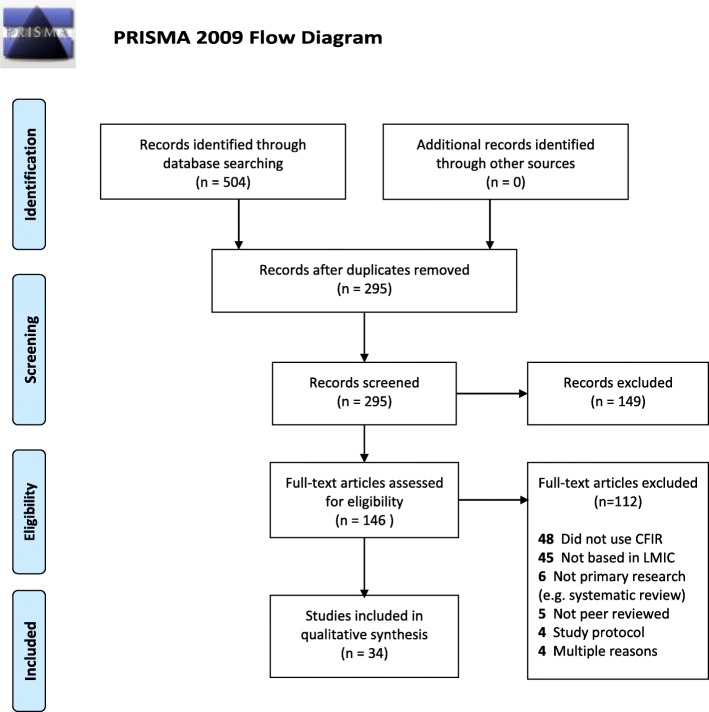
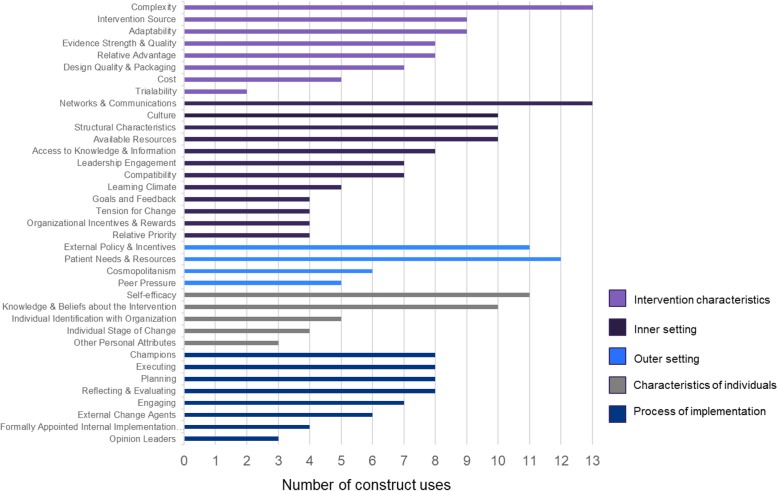
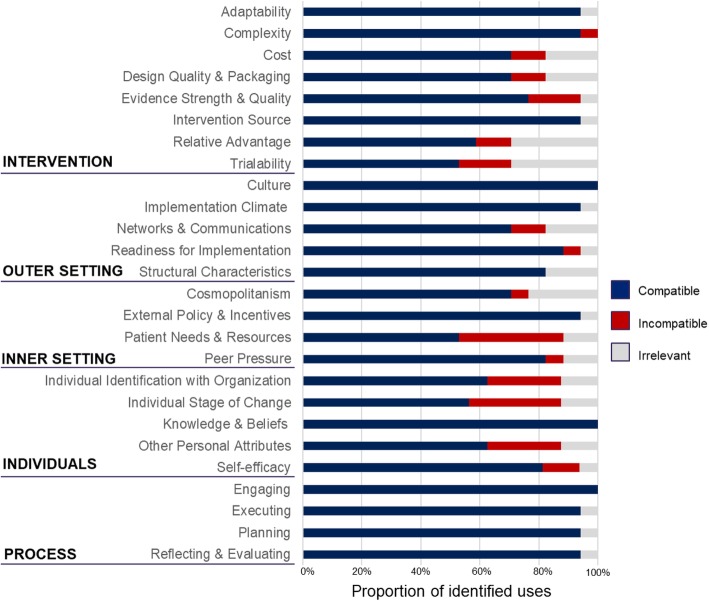
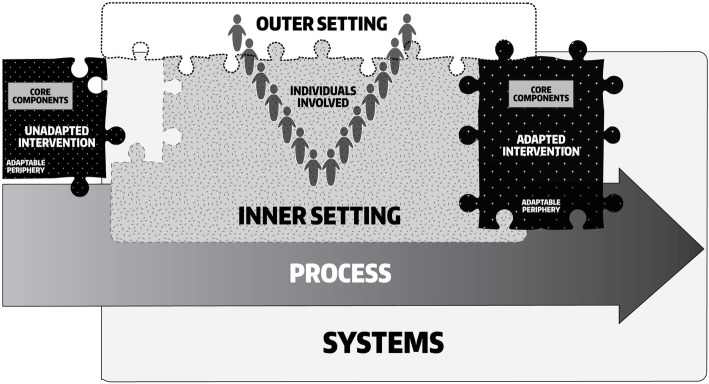
Background: The Consolidated Framework for Implementation Research (CFIR) is a determinants framework that may require adaptation or contextualization to fit the needs of implementation scientists in low- and middle-income countries (LMICs). The purpose of this review is to characterize how the CFIR has been applied in LMIC contexts, to evaluate the utility of specific constructs to global implementation science research, and to identify opportunities to refine the CFIR to optimize utility in LMIC settings. Methods: A systematic literature review was performed to evaluate the use of the CFIR in LMICs. Citation searches were conducted in Medline, CINAHL, PsycINFO, CINAHL, SCOPUS, and Web of Science. Data abstraction included study location, study design, phase of implementation, manner of implementation (ex., data analysis), domains and constructs used, and justifications for use, among other variables. A standardized questionnaire was sent to the corresponding authors of included studies to determine which CFIR domains and constructs authors found to be compatible with use in LMICs and to solicit feedback regarding ways in which CFIR performance could be improved for use in LMICs. Results: Our database search yielded 504 articles, of which 34 met final inclusion criteria. The studies took place across 21 countries and focused on 18 different health topics. The studies primarily used qualitative study designs (68%). Over half (59%) of the studies applied the CFIR at study endline, primarily to guide data analysis or to contextualize study findings. Nineteen (59%) of the contacted authors participated in the survey. Authors unanimously identified culture and engaging as compatible with use in global implementation research. Only two constructs, patient needs and resources and individual stages of change were commonly identified as incompatible with use. Author feedback centered on team level influences on implementation, as well as systems characteristics, such as health system architecture. We propose a “Characteristics of Systems” domain and eleven novel constructs be added to the CFIR to increase its compatibility for use in LMICs. Conclusions: These additions provide global implementation science practitioners opportunities to account for systems-level determinants operating independently of the implementing organization. Newly proposed constructs require further reliability and validity assessments. Trial registration: PROSPERO, CRD42018095762
Overview
The claims and statistics of this paper haven’t been checked yet.
Free: it reads the open-access text and checks the first 5 claims that cite a source we can check. Create a free account to check every claim.
Integrity signals
Registry
Cites
Statistics
Figures
Verification
Claims the paper makes
The claims and statistics of this paper haven’t been checked yet.
Free: it reads the open-access text and checks the first 5 claims that cite a source we can check. Create a free account to check every claim.
Claims other papers make about this one
Each is checked against this paper’s own text: does it say what the citing paper says it does?
The source backs part of the claim, not all of it — or backs it for a different population, condition or comparison.
In the citing paper
“The updated CFIR adds constructs to capture the potential influence of Local Attitudes, i.e., sociocultural values and beliefs, and Local Conditions, i.e., economic, environmental, political, and/or technological conditions, on the willingness and ability of entities within the Outer Setting to support implementation and delivery of the innovation [42–47]”
From The updated consolidated framework for implementation research based on user feedback (2022) · cites this paper as [42]
Experimental — accuracy not yet measuredThe source backs part of the claim, not all of it — or backs it for a different population, condition or comparison.
In the citing paper
“a few best practices have been added: Teaming [42, 46, 73], Assessing Needs [46, 47], Assessing Context, Tailoring Strategies [14], and Adapting [45, 74, 75].”
From The updated consolidated framework for implementation research based on user feedback (2022) · cites this paper as [42]
Experimental — accuracy not yet measuredThe source backs part of the claim, not all of it — or backs it for a different population, condition or comparison.
In the citing paper
“Means et al. further recommended that studies encompassing dual resource-limited subgroups must conduct systematic cross-group comparisons to disentangle divergent barriers and enablers: LMICs suffer nationwide systemic underinvestment, whereas health inequities in high-income nations stem from localized uneven resource distribution.”
From Implementation and translation of evidence-based dietary strategies for type 2 diabetes in resource-limited settings: a scoping review based on the CFIR framework (2026) · cites this paper as [8]
Experimental — accuracy not yet measuredThe source backs part of the claim, not all of it — or backs it for a different population, condition or comparison.
In the citing paper
“This broad two-tier classification is methodologically justified by prior implementation science research reported by Means et al. (8), who conducted a systematic review of CFIR applications across LMIC contexts.”
From Implementation and translation of evidence-based dietary strategies for type 2 diabetes in resource-limited settings: a scoping review based on the CFIR framework (2026) · cites this paper as [8]
Experimental — accuracy not yet measuredThe cited source says what the claim attributes to it.
In the citing paper
“These constructs are especially important for innovations that require support from community entities, such as Housing First models of care [48], and for capturing common resource constraints in LMICs [42].”
From The updated consolidated framework for implementation research based on user feedback (2022) · cites this paper as [42]
8 more claims about this paper
Create a free account to see every claim other papers make about this one.
Self-check
Percentages, sums and reported differences re-computed from the paper’s own numbers.
The self-check needs the paper’s full text.
Citations
Cites
Preferred Reporting Items for Systematic Reviews and Meta-Analyses: the PRISMA statement
Moher, D., Liberati, A., Tetzlaff, J., Altman, D. G., & for the PRISMA Group (2009) · BMJ · doi:10.1136/bmj.b2535 · Cited by 83,823
Preferred Reporting Items for Systematic Reviews and Meta-Analyses: The PRISMA Statement
Moher, D., Liberati, A., Tetzlaff, J., Altman, D. G., & The PRISMA Group (2009) · PLoS Medicine · doi:10.1371/journal.pmed.1000097 · Cited by 64,042 · cited 1×
“The systematic review protocol is registered in the International Prospective Register of Systematic Reviews (PROSPERO #CRD42018095762) and followed the Preferred Reporting Items for Systematic Reviews and MetaAnalyses (PRISMA) guidelines (Additional file 1) [6].”
Harris, P. A., Taylor, R., Thielke, R., Payne, J., Gonzalez, N., & Conde, J. G. (2009) · Journal of Biomedical Informatics · doi:10.1016/j.jbi.2008.08.010 · Cited by 51,384 · cited 1×
“We designed a standardized questionnaire in REDCap, and sent the questionnaire to the corresponding author of most included studies (surveys were not sent to authors of studies published immediately prior to paper submission) [9].”
MethodPreferred reporting items for systematic reviews and meta-analyses: the PRISMA Statement.
(2009) · PubMed Central · Cited by 44,859
Damschroder, L. J., Aron, D. C., Keith, R. E., Kirsh, S. R., Alexander, J. A., & Lowery, J. C. (2009) · Implementation Science · doi:10.1186/1748-5908-4-50 · Cited by 14,496 · cited 5×
“Damschroder and colleagues introduced the CFIR in 2009 as a meta-theoretical framework compiling nineteen preceding implementation theories [2].”
BackgroundInfluentialProctor, E., Silmere, H., Raghavan, R., Hovmand, P., Aarons, G., Bunger, A., Griffey, R., & Hensley, M. (2011) · Administration and Policy in Mental Health and Mental Health Services Research · doi:10.1007/s10488-010-0319-7 · Cited by 8,721 · cited 1×
“Sustainability is a key implementation outcome, and definitions of sustainability vary in the implementation literature [51, 52].”
BackgroundMaking sense of implementation theories, models and frameworks
Nilsen, P. (2015) · Implementation Science · doi:10.1186/s13012-015-0242-0 · Cited by 4,447 · cited 13×
“Author questionnaire respondents, in addition to CFIR utilizers from HICs, identified spread and scale as key missing constructs [50].”
BackgroundInfluentialUse of NeuroEyeCoach™ to Improve Eye Movement Efficacy in Patients with Homonymous Visual Field Loss
Sahraie, A., Smania, N., & Zihl, J. (2016) · BioMed Research International · doi:10.1155/2016/5186461 · Cited by 1,772
A systematic review of the use of the Consolidated Framework for Implementation Research
Kirk, M. A., Kelley, C., Yankey, N., Birken, S. A., Abadie, B., & Damschroder, L. (2015) · Implementation Science · doi:10.1186/s13012-016-0437-z · Cited by 1,496 · cited 5×
“study design, monitoring implementation processes, data analysis, and outcome interpretation [3].”
BackgroundResultInfluentialWhat Do We Know about Health Care Team Effectiveness? A Review of the Literature
Lemieux-Charles, L., & McGuire, W. L. (2006) · Medical Care Research and Review · doi:10.1177/1077558706287003 · Cited by 844 · cited 2×
“Examples of these features might include team diversity, interdependence/collaboration, and practice norms [46].”
BackgroundMethod
Research works printed but not linked: 1
- Rojas Smith L, Ashok M, Morss Dy S, Wines R, Teixeira-Poit S. Contextual frameworks for research on the implementation of complex system interventions. Methods research report. (Prepared by the RTI International–University of North Carolina at Chapel Hill Evidence-Based Practice Center under contract No. 290-2007-10056-I.). Rockville: Agency for Healthcare Research and Quality; 2014. 24783308
Cited by
Items 101–200 of 459
Raut, A. V., Mustafayev, R., Srinivasan, R., Chary, A. N., Ertem, İ., Grazioso, M. D. P., Gupta, S. S., Krishnamurthy, V., Lu, C., Maliye, C. H., et al. (2021) · BMJ Paediatrics Open · doi:10.1136/bmjpo-2021-001254 · Cited by 11
“22 23 To conduct these analyses, 6–8 clusters in each site will be identified based on differences on RE-AIM measures.”
Self-citationDawson-Squibb, J.-J., Davids, E. L., Chase, R. M., Puffer, E. S., Rasmussen, J. D., Franz, L., & de Vries, P. J. (2022) · International Journal of Environmental Research and Public Health · doi:10.3390/ijerph19084450 · Cited by 11
“[56] proposed an optimized version of the model for use in LMIC.”
BackgroundMethodInfluentialKonrad, L. M., Ribeiro, C. G., Maciel, E. C., Tomicki, C., Brito, F. A., Almeida, F. A., & Benedetti, T. R. B. (2022) · Frontiers in Public Health · doi:10.3389/fpubh.2022.726021 · Cited by 13
Ramani-Chander, A., Thrift, A. G., van Olmen, J., Wouters, E., Delobelle, P., Vedanthan, R., Miranda, J. J., Sherwood, S., Teede, H., & Joshi, R. (2024) · BMJ Public Health · doi:10.1136/bmjph-2023-000710 · Cited by 9
“33 The framework provided us with a comprehensive structure to systematically map the inductively identified challenges and facilitators faced during the early implementation phase of scaling up.”
Grootjans, S. J. M., Stijnen, M., Jong, I. H.-D., Kroese, M., Ruwaard, D., & Jansen, M. W. J. (2023) · Scandinavian Journal of Public Health · doi:10.1177/14034948231199804 · Cited by 9
“To stimulate comparison across cases and studies, CFIR constructs can be scored quantitatively according to strength and valence [21].”
BackgroundMaas, M., Yang, A., Muir, M., Collins, J. B., Canter, C., Tamamyan, G., Chitsike, I., Kouya, F., Hoa, N. T. K., Ahmad, A., et al. (2024) · Cancer Medicine · doi:10.1002/cam4.70125 · Cited by 9
Leung, C. L., Goka, P. K., Atangongo, B., Bingle, M. M. M., Adu, I., Atchulo, A. R., Boateng, L., Huang, K., Laiteerapong, N., Limann, G., et al. (2025) · BMC Public Health · doi:10.1186/s12889-025-25012-0 · Cited by 9
Gupte, H., D’Costa, M., Ramanadhan, S., & Viswanath, K. (2020) · Workplace Health & Safety · doi:10.1177/2165079920952761 · Cited by 10
“And that the CFIR is a highly useful framework for global implementation science practitioners as it allows identification of implementation facilitators and barriers across settings (Means et al., 2020).”
BackgroundFavas, C., Ansbro, É., Eweka, E., Agarwal, G., Porras, M. L., Tsiligianni, I., Vedanthan, R., Webster, R. J., Perel, P., & Murphy, A. (2022) · Public health reviews · doi:10.3389/phrs.2022.1604583 · Cited by 11
“To mitigate the potential for implementation science frameworks to exclude relevant data that do not fi t their constructs, we included themes generated inductively, for example scalability and long-term sustainability of interventions [32, 76].”
Kegler, M. C., Rana, S., Vandenberg, A. E., Hastings, S. N., Hwang, U., Eucker, S. A., & Vaughan, C. P. (2022) · Frontiers in Health Services · doi:10.3389/frhs.2022.1053489 · Cited by 9
Zakumumpa, H., Kwiringira, J. N., Katureebe, C., & Spicer, N. (2023) · BMC Health Services Research · doi:10.1186/s12913-023-09313-x · Cited by 9
Baynes, C. D., Kanté, A. M., Exavery, A., Tani, K., Sikustahili, G., Mushi, H., Baraka, J., Ramsey, K., Sherr, K., Weiner, B. J., et al. (2023) · PLOS Global Public Health · doi:10.1371/journal.pgph.0002050 · Cited by 11
“The qualitative findings bring into focus how weaknesses of the health system stymied creation of such an ‘intervention-values-systems’ fit [70, 77].”
BackgroundSelf-citationFrancis, N., Batagol, B., Salinger, A. P., Meo‐Sewabu, L., Bass, A. C., Nasir, S., Moschonas, D., Taruc, R. R., Syamsul, S., Habsji, H., et al. (2023) · PLOS Water · doi:10.1371/journal.pwat.0000186 · Cited by 9
Xiao, J., Huang, S., Wáng, Q., Tan, S., Chen, L., Yuan, H., Xiang, D., Zhang, B., Li, X., Guo, Y. J., et al. (2024) · Journal of Epidemiology and Global Health · doi:10.1007/s44197-024-00244-2 · Cited by 9
Bogart, L. M., Musoke, W., Mukama, S. C., Allupo, S., Klein, D. J., Sejjemba, A., Mwima, S., Kadama, H., Mulebeke, R., Pandey, R., et al. (2024) · AIDS and Behavior · doi:10.1007/s10461-024-04432-w · Cited by 9
“However, consistent with updated conceptualizations of the Consolidated Framework for Implementation Research (CFIR) [8, 9], and similar to determinants of PrEP use for other populations in sub-Saharan Africa [10–12], many Ugan-dan fisherfolk lack access to PrEP because of contextual barriers at…”
BackgroundMethodInfluentialMoss, J. L., Stoltzfus, K. C., Popalis, M. L., Calo, W. A., & Kraschnewski, J. L. (2023) · BMC Health Services Research · doi:10.1186/s12913-022-08976-2 · Cited by 9
Kreniske, P., Namuyaba, O. I., Kasumba, R., Namatovu, P., Ssewamala, F. M., Wingood, G. M., Wei, Y., Ybarra, M. L., Oloya, C., Tindyebwa, C. M., et al. (2023) · JMIR Research Protocols · doi:10.2196/49352 · Cited by 11
“We will use mixed methods, including systematic coding informed by CFIR [95,96], surveys, and paradata, to identify the specific elements of Kirabo that we hypothesize will be predictive of successful implementation [98].”
Building an implementation strategy for community-based rehabilitation for mental health in Colombia
Agudelo‐Hernández, F., Andrade, R. M. R., & Giraldo-Álvarez, A. B. (2024) · International Journal of Evidence-Based Healthcare · doi:10.1097/xeb.0000000000000431 · Cited by 13
“13 Colombia is divided into 32 departments.”
Adapting a skills-based stroke prevention intervention for communities in Ghana: a qualitative study
Ojo, T., Ryan, N., Birkemeier, J., Appleton, N., Ampomah, I. K. E., Glozah, F. N., Adongo, P. B., Adanu, R., & Boden-Albala, B. M. (2020) · Implementation Science Communications · doi:10.1186/s43058-020-00084-8 · Cited by 12
Implementation challenges to patient safety in Guatemala: a mixed methods evaluation
Hall, B. J., Puente, M., Aguilar, A., Sico, I. P., Barrios, M. O., Méndez, S., Baumgartner, J. N., Boyd, D. L., Calgua, E., Lou‐Meda, R., et al. (2021) · BMJ Quality & Safety · doi:10.1136/bmjqs-2020-012552 · Cited by 10
Using Implementation Teams to Inform a More Effective Response to Future Pandemics
Aijaz, M., Fixsen, D. L., Schultes, M.-T., & Dyke, M. K. V. (2021) · Public Health Reports · doi:10.1177/0033354920988613 · Cited by 11
Integrating implementation science and intervention optimization
Guastaferro, K., Moucheraud, C., Purtle, J., Collins, L. M., & Shelley, D. (2025) · Implementation Science · doi:10.1186/s13012-025-01457-0 · Cited by 9
“In our hypothetical example, the team decides to use Consolidated Framework for Implementation Research [CFIR]; [16, 34]) to identify barriers to and facilitators of implementation of the smoking cessation EBI, and potential mediators of the implementation outcomes,and uses the CFIR – Expert…”
Woodward, E. N., Singh, R. S., Ndebele‐Ngwenya, P., Castillo, A. M., Dickson, K. S., & Kirchner, J. E. (2020) · Research Square · doi:10.21203/rs.3.rs-32704/v2 · Cited by 11
Sivakumar, B., Mak, J., Bafagih, S., & Arcand, J. (2025) · Nutrition in Clinical Practice · doi:10.1002/ncp.70020 · Cited by 7
Lost in translation: key lessons from conducting dissemination and implementation science in Zambia
Maritim, P., Munakampe, M. N., Nglazi, M. D., Mweemba, C., Sikombe, K., Mbewe, W., Silumbwe, A., Jacobs, C. N., Zulu, J. M., Herce, M. E., et al. (2024) · Implementation Science Communications · doi:10.1186/s43058-024-00663-z · Cited by 7
“Though there have been some efforts to adapt key implementation science concepts to low-resource settings [13], the foundations of the field continue to be based predominantly on work that is conducted in high-income settings [14].”
Implementation science and power: equity-oriented implementation science needs a power lens
Fischer, H.-T., Hanefeld, J., & Koduah, A. (2025) · The Lancet Global Health · doi:10.1016/s2214-109x(25)00395-x · Cited by 10
Shin, M., Oluoch, L. M., Barnabas, R. V., Baynes, C. D., Adhiambo, H. F., Heitner, J., Kerubo, M. B., Ngure, K., Pinder, L. F., Thomas, K. K., et al. (2023) · Implementation Science · doi:10.1186/s13012-023-01282-3 · Cited by 8
Self-citationHealth Care Professional Adherence to Breast Cancer Management Guidelines in Nigeria
Romanoff, A. M., Olasehinde, O. O., Lynch, K. A., Folorunso, S. A., Omoyiola, O., Betiku, O. A., Omisore, A. D., Okereke, C. E., Agodirin, O. S., Muhammad, A. B., et al. (2025) · JAMA Network Open · doi:10.1001/jamanetworkopen.2024.59614 · Cited by 8
Ezezika, O. C., Varatharajan, C., Racine, S., & Ameyaw, E. K. (2021) · African Journal of Science Technology Innovation and Development · doi:10.1080/20421338.2021.1985946 · Cited by 9
“However, the use of the CFIR allowed the findings to be placed in the context of the wider implementation research literature (Kirk et al. 2015; Means et al. 2020).”
MethodAvokpaho, E., Lawrence, S. O., Roll, A., Titus, A., Jacob, Y., Kaliappan, S. P., Gwayi-Chore, M.-C., Chabi, F., Togbevi, C. I., Elijan, A. B., et al. (2022) · BMJ Open · doi:10.1136/bmjopen-2022-061682 · Cited by 9
Self-citationSalloum, R. G., LeLaurin, J. H., Nakkash, R. T., Akl, E. A., Parascandola, M. J., Ricciardone, M. D., Elbejjani, M., Kabakian‐Khasholian, T., Lee, J., El‐Jardali, F., et al. (2022) · Global Implementation Research and Applications · doi:10.1007/s43477-022-00067-y · Cited by 7
Giusto, A. M., Jaguga, F., Pereira-Sánchez, V., Rono, W., Triplett, N. S., Rukh-E-Qamar, H., Parker, M., & Wainberg, M. L. (2023) · International Journal of Environmental Research and Public Health · doi:10.3390/ijerph20064830 · Cited by 8
Sexual and reproductive health implementation research in humanitarian contexts: a scoping review
Norton, A., & Tappis, H. (2024) · Reproductive Health · doi:10.1186/s12978-024-01793-2 · Cited by 11
“As previously mentioned, Means et al. put forth an adaptation of the CFIR to increase its relevance in LMIC settings, proposing a sixth domain (Characteristics of Systems) and 11 additional constructs [2].”
BackgroundInfluentialGala, P., Ponatshego, P., Bogart, L. M., Youssouf, N. F., Ramotsababa, M., Pelt, A. E. V., Moshomo, T., Dintwa, E., Seipone, K., Ilias, M. R., et al. (2024) · Implementation Science Communications · doi:10.1186/s43058-024-00603-x · Cited by 8
“Means AR, et al. adds CFIR domains and constructs that address scalability and sustainability of an intervention and acknowledge relationships between CFIR domains and constructs [45].”
BackgroundAbouchadi, S., Godin, I., Zhang, W., & Brouwere, V. D. (2022) · BMC Public Health · doi:10.1186/s12889-022-14556-0 · Cited by 8
Abutineh, F., Graetz, D. E., Muñiz‐Talavera, H., Ferrara, G., Puerto‐Torres, M., Chen, Y., Gillipelli, S. R., Elish, P. N., Gonzalez‐Ruiz, A., Carreras, Y. A., et al. (2023) · Frontiers in Oncology · doi:10.3389/fonc.2023.1122355 · Cited by 5
Ronen, K., Pothan, L. C., Apondi, V., Otieno, F. A., Mwakanema, D., Otieno, F. O., Osborn, L., Dettinger, J. C., Shrestha, P., Manguerra, H., et al. (2024) · Trials · doi:10.1186/s13063-024-08501-2 · Cited by 6
Self-citationDelaforce, A., Maddock, E., Wheeler, P., Jayasena, R., & Parkinson, J. E. (2024) · International Journal of Evidence-Based Healthcare · doi:10.1097/xeb.0000000000000475 · Cited by 5
“11 In their latest paper, the authors of CFIR encourage users to develop and use additional constructs as needed.”
Adhiambo, H. F., Owidi, E., Okello, P., Coe, M., Shin, M., Oluoch, L. M., Thuo, N. B., Ihaji, V., Kerubo, M. B., Kinyua, A., et al. (2025) · PLOS Global Public Health · doi:10.1371/journal.pgph.0005166 · Cited by 6
Self-citationJesus, T. S., Kamalakannan, S., Bhattacharjya, S., Bettger, J. P., Jacobs, K., & Hoenig, H. (2023) · Work · doi:10.3233/wor-210745 · Cited by 7
“Among several implementation models available [46, 47, 58], many of which with limited use [47], we selected the Consolidated Framework for Implementation Research (CFIR) [48, 49, 59].”
Collective Health in Brazil and Implementation Science: Challenges and Potentialities
Silva, A. A., Lopes, G. P. D., Claro, H. G., Menezes, P. R., Tanaka, O. Y., & Campos, R. T. O. (2023) · Global Implementation Research and Applications · doi:10.1007/s43477-023-00095-2 · Cited by 8
“The experimentation construct was less used in LMICs as opposed to HICs.”
InfluentialMadrigal, L., Haardörfer, R., Kegler, M. C., Piper, S., Blais, L. M., Weber, M. B., & Escoffery, C. (2023) · Implementation Science Communications · doi:10.1186/s43058-023-00522-3 · Cited by 6
Reimagining policy implementation science in a global context: a theoretical discussion
List, K., Agamile, P., Alia, D. Y., Cherutich, P., Danforth, K., Kinuthia, J., Means, A. R., Mukui, I., Ngumbau, N. M., Su, Y., et al. (2024) · Frontiers in Health Services · doi:10.3389/frhs.2024.1292688 · Cited by 6
Self-citationHartmann, M., Mutangabende, S., Nash, S., Browne, E. N., Hatcher, A. M., Kågesten, A., & Roberts, S. T. (2025) · BMC Women s Health · doi:10.1186/s12905-025-03647-w · Cited by 7
“…on barriers and facilitators to implementation of the NMN intervention in the school setting with questions structured around the consolidated framework for implementation research (CFIR) [23], a globally recognized framework for understanding implementation issues within a research context.”
Ssegujja, E., & Andipatin, M. (2022) · Health Research Policy and Systems · doi:10.1186/s12961-022-00928-w · Cited by 7
Pelt, A. E. V., Beidas, R. S., Baumann, A. A., & Castillo-Neyra, R. (2023) · Global Implementation Research and Applications · doi:10.1007/s43477-023-00097-0 · Cited by 6
“…two countries in Latin America) highlighted the lack of compatibility of constructs (e.g., “patient needs and resources” and “indi-vidual stages of change”) or relevance of constructs (e.g., “relative advantage” and “trialability”) in their respective resource-limited settings (Means et al., 2020).”
Escoffery, C., Ogutu, E. A., Sakas, Z., Hester, K. A., Ellis, A. S., Rodriguez, K., Jaishwal, C., Yang, C., Dixit, S. M., Bose, A. S., et al. (2023) · Implementation Science Communications · doi:10.1186/s43058-023-00489-1 · Cited by 7
“It has been widely used since its creation and subsequent publication in 2009 [10], and can explain important factors related to the results of program delivery (e.g., implementation outcomes) [11].”
BackgroundMootz, J. J., dos Santos, P. F., dos Santos, K., Stith, S. M., Wainberg, M. L., & Oliffe, J. L. (2024) · SSM - Mental Health · doi:10.1016/j.ssmmh.2024.100297 · Cited by 7
“Means et al. (2020) conducted a systematic review of 34 studies across 21 LMICs that used the CFIR to understand the framework’s utility for low-resource settings.”
BackgroundKimball, M., & Wagenaar, B. H. (2021) · BMJ Quality & Safety · doi:10.1136/bmjqs-2021-013668 · Cited by 6
Self-citationIbragimova, I., & Phagava, H. (2021) · International Journal of Health Governance · doi:10.1108/ijhg-09-2021-138 · Cited by 6
van Olmen, J., Absetz, P., Mayega, R. W., Timm, L., Delobelle, P., Alvesson, H. M., Naggayi, G., Kasujja, F., Hassen, M., de Man, J., et al. (2022) · BMJ Open Diabetes Research & Care · doi:10.1136/bmjdrc-2022-002902 · Cited by 5
“When designing an intervention, it is crucial to consider aspects of the implementing organization or structure, absorptive capacity, and to thoroughly assess and discuss implementation feasibility, capacity and organizational context with the implementation team and recipients.”
Davis, S., Bayes, S. J., & Geraghty, S. (2023) · European Journal of Midwifery · doi:10.18332/ejm/157459 · Cited by 7
Agarwal, D., Bailie, C. R., Rana, S., Balan, L., Grills, N., & Mathias, K. R. (2023) · Cambridge Prisms Global Mental Health · doi:10.1017/gmh.2023.79 · Cited by 7
Ngaruiya, C., Muhammad, M. I., & Sam-Agudu, N. A. (2024) · Frontiers in Education · doi:10.3389/feduc.2024.1233343 · Cited by 6
Myers, H., Chongo, B., Zifodya, J. S., Zacaría, I., Machava, E., Simango, A., Amorim, G., Mavume-Mangunyane, E., Chiaú, R., Kampa, K. T., et al. (2024) · BMC Pulmonary Medicine · doi:10.1186/s12890-024-03329-7 · Cited by 5
“CFIR’s 39 constructs are organized into five domains: Intervention Characteristics; Outer Setting; Inner Setting; Characteristics of Individuals; and Implementation measures (Process) [33].”
BackgroundKatomski, A.-S., Pachicano, A. M., Zamantakis, A., Benbow, N., Willging, C. E., Rosen, J. G., Rosenberg-Carlson, E. P., Gomez, W., Hamilton, A. B., Kassanits, J. E., et al. (2025) · JAIDS Journal of Acquired Immune Deficiency Syndromes · doi:10.1097/qai.0000000000003619 · Cited by 7
Galactionova, K., Sahu, M., Gideon, S. P., Kaliappan, S. P., Morozoff, C., Ajjampur, S. S. R., Walson, J. L., Means, A. R., & Tediosi, F. (2021) · BMJ Open · doi:10.1136/bmjopen-2021-049734 · Cited by 5
Self-citationImplementation Science for Managers and Healthcare Organizations Responding to Emergencies
Øvretveit, J., & Ohrling, M. (2021) · Global Implementation Research and Applications · doi:10.1007/s43477-021-00025-0 · Cited by 6
Nyandat, J., Murthy, S., & Muttalib, F. (2022) · JAMA Network Open · doi:10.1001/jamanetworkopen.2022.1553 · Cited by 5
Eastment, M. C., Long, J. E., Wanje, G., Richardson, B. A., Mwaringa, E., Sherr, K., Barnabas, R. V., Mandaliya, K. N., Jaoko, W. G., & McClelland, R. S. (2022) · Implementation Science Communications · doi:10.1186/s43058-022-00342-x · Cited by 6
“While CFIR is increasingly being used as an evaluative framework in low- and middle-income countries (LMICs) [25], few studies have used it to assess outcomes of a SAIA intervention [9].”
Self-citationBeima‐Sofie, K., Njuguna, I. N., Concepcion, T. L., DeLong, S. M., Donenberg, G. R., Zanoni, B. C., Dow, D. E., Braitstein, P. K. A., & Wagner, A. D. (2023) · AIDS and Behavior · doi:10.1007/s10461-023-04021-3 · Cited by 5
“For example, one study that formally adapted and assessed validity of an implementation determinant measure of organizational readiness found that several new domains were required to reflect structural context [33], while a review and application of the CFIR to LMICs revealed the need to add a new domain and new cons…”
BackgroundChallenges and strategies for implementers and evaluators working in conflict settings
Bond, L., Klein, E. K., & Gates, E. (2023) · Evaluation · doi:10.1177/13563890231171608 · Cited by 6
“RE-AIM and CFIR have been used to assess the implementation of complex interventions, and are two of the most commonly used frameworks in low- and middle-income settings, including conflict zones (Glasgow et al., 2019; Means et al., 2020).”
MethodClark, J., Salins, N. S., Daniel, S. M., Currow, D. C., Jones, L., Pearson, M., Bunton, R., Mankel, J., Braithwaite, C., Gilchrist, M. M., et al. (2023) · PLOS Global Public Health · doi:10.1371/journal.pgph.0002401 · Cited by 6
“Our interview guide was developed drawing upon the published literature, the research team’s expertise, and was informed by the Consoli-dated Framework for Implementation Research, adapted for use in Low and Middle-Income Countries [22].”
MethodInfluentialSaxena, M., Roll, A., Walson, J. L., Pearman, E., Legge, H., Nindi, P., Chirambo, C. M., Titus, A., Johnson, J., Elijan, A. B., et al. (2024) · PLoS neglected tropical diseases · doi:10.1371/journal.pntd.0011819 · Cited by 5
Self-citationvan de Water, B. J., Brooks, M. B., Matji, R., Ncanywa, B., Dikgale, F., Abuelezam, N. N., Mzileni, B., Nokwe, M., Moko, S., Mvusi, L., et al. (2024) · Implementation Science Communications · doi:10.1186/s43058-024-00582-z · Cited by 7
Self-citationSkar, A. S., Engebretsen, I. M. S., Braathu, N., Aber, H., Bækkelund, H., Kühl, M.-J., Kabatooro, M. M., Nalugya, J., Skokauskas, N., Skylstad, V., et al. (2024) · Trials · doi:10.1186/s13063-024-08312-5 · Cited by 5
Pelt, A. E. V., & Beidas, R. S. (2021) · International Journal of Health Policy and Management · doi:10.34172/ijhpm.2021.173 · Cited by 5
A Practical Guide to Incorporating Health Equity Domains in Implementation FrameworksPreprint
Woodward, E. N., Singh, R. S., Ndebele‐Ngwenya, P., Castillo, A. M., Dickson, K. S., & Kirchner, J. E. (2020) · Research Square · doi:10.21203/rs.3.rs-32704/v1 · Cited by 5
Embleton, L., Murphy, K., Kirwa, S., Okal, E. O., Makori, D., Logie, C. H., Ruggiero, E. D., Lachman, J. M., Ayuku, D., & Braitstein, P. K. A. (2023) · Global Implementation Research and Applications · doi:10.1007/s43477-023-00083-6 · Cited by 4
“It is increasingly used in LMICs to guide and contextualize study findings (Means et al., 2020).”
BackgroundMurphy-Okpala, N. N., Eze, C. C., Ossai, E. N., Agu, C. I., Ezenwosu, I. L., Nwafor, C. C., Ekeke, N., Meka, A., Matiku, S., Kirubi, B., et al. (2025) · PLoS ONE · doi:10.1371/journal.pone.0318274 · Cited by 4
An innovative multimorbidity patient-centered care model in Chile: implementation evaluation results
Sapag, J. C., Pérez, M. A. M., Zamorano, P., Varela, T., Muñoz, P., Seguel, R., Irazoqui, E., & Téllez, Á. (2025) · Archives of Public Health · doi:10.1186/s13690-025-01516-4 · Cited by 4
“2): the Consolidated Framework for Implementation Research (CFIR) [31, 32] and the so-called Outcomes for Implementation Research [33].”
Schuler, C., Ntow, G. E., Berner, R., Oo, S. T. N., & Pfister, R. E. (2025) · Global Health Action · doi:10.1080/16549716.2025.2567714 · Cited by 5
“Means, Kemp [74] evaluated the CFIR and recommended additional domains and constructs to increase its compatibility for LMICs that contrast with high-income countries by differing facilitators and hurdles.”
Arazi, M., Puri, L. R., Kiaraho, M., Buchan, J., Spicer, N., & Foster, A. (2026) · BMJ Global Health · doi:10.1136/bmjgh-2025-023025 · Cited by 4
“Integrating such measures within national systems, supported by routine outcome tracking and responsive feedback loops, is essential for sustained improvement.”
Sundararajan, R. L., Hooda, M., Lai, Y., Nansera, D., Audet, C. M., Downs, J. A., Lee, M. H., McNairy, M. L., Muyindike, W. R., & Mwanga‐Amumpaire, J. (2024) · Trials · doi:10.1186/s13063-024-08286-4 · Cited by 4
“The implementation outcomes assessed are guided by the Consolidated Framework for Implementation Research (CFIR) and include intervention adoption, acceptability, appropriateness, feasibility, fidelity, and sustainment evaluations [28, 50].”
MethodVolpi, C. R., Chama, J., Mansfield, M. E., Adebiyi, R., Mitchell, A. B., Aigoro, J. A., Bawa, Y. J., Kolawole, K. E., Ononaku, U., Jibrin, P., et al. (2025) · PLOS Global Public Health · doi:10.1371/journal.pgph.0004616 · Cited by 4
“The intersection of novel implementation and cultural involvement in training guidelines is in alignment with the literature where cultural adaptation has obtained a high level of ecological validity and external validity for an intervention in implementation science [34,35].”
Inguane, C., Gimbel, S., Soi, C., Tavede, E., Murgorgo, F., Isidoro, X., Sidat, Y., Nassiaca, R., Coutinho, J., Cruz, M., et al. (2023) · Implementation Science Communications · doi:10.1186/s43058-023-00422-6 · Cited by 4
“Similar to other studies conducted in LMICs [22], we used the CFIR for multiple purposes, including to guide data collection, analysis, and interpretation of the findings.”
BackgroundMethodResultInfluentialSelf-citationGraves, E., Brooks, H. L., Schacht, C. D., Emílio, A. M., Matino, A., Aboobacar, A., & Audet, C. M. (2023) · AIDS and Behavior · doi:10.1007/s10461-023-04224-8 · Cited by 4
Moucheraud, C., Wollum, A., Awan, M. A., Dow, W. H., Friedman, W., Koulidiati, J., Sabasaba, A. N., Shah, M., & Wagner, Z. (2024) · Contraception and Reproductive Medicine · doi:10.1186/s40834-024-00296-6 · Cited by 4
“…constructs from theoretical frameworks – the Consolidated Framework for Implementation Research (CFIR) for use in low-and middle-income countries [26]) for the health worker and manager interviews, and the ExpandNet framework [27] for policy/program stakeholder inter-views – to identify themes…”
BackgroundDubbeldeman, E. M., van der Kleij, R., Sprenger, M., Aslam, A. S., Jong, J. C. K., & Crone, M. R. (2024) · Children and Youth Services Review · doi:10.1016/j.childyouth.2024.108110 · Cited by 5
Raposo, N. M., Yang, O., Konyani, A., Owoko, C., Debrah, A., Viera, J. R., Sonnie, M., Mann, J., & van de Water, B. J. (2025) · BMC Global and Public Health · doi:10.1186/s44263-025-00202-5 · Cited by 4
“It has been widely applied in healthcare settings, including those in low-income contexts [14].”
The implementation of a national paediatric oncology protocol for neuroblastoma in South Africa
van Heerden, J., Hendricks, M. G., Poole, J., Büchner, A., Naidu, G., du Plessis, J., van Emmenes, B., van Zyl, A., Uys, R., Johani, J., et al. (2021) · Cancer Causes & Control · doi:10.1007/s10552-021-01424-2 · Cited by 4
“It allowed for the evaluation of the national governance structures, paediatric oncology units (POUs) and individuals involved [14, 15].”
BackgroundMethodOkamoto, R., Kageyama, M., Koide, K., Tanaka, M., Yamamoto, Y., Fujioka, M., Osuna, A., Saeki, K., Hirokane, K., Nagano, F., et al. (2022) · Implementation Science Communications · doi:10.1186/s43058-022-00270-w · Cited by 6
“Finally, each domain or construct of the IDAS customized for health programs in Japan might serve as a framework for formative evaluation of program implementation in Japan, on the grounds that the original CFIR contains cumulative evidence [10, 15, 23] that can be used for formative evaluation of programs and activit…”
Malone, S. M., Rivera, J., Puerto‐Torres, M., Prewitt, K., Sakaan, F. M., Counts, L. E., Zebin, Z. A., Arias, A. V., Bhattacharyya, P., Gunasekera, S., et al. (2023) · Frontiers in Pediatrics · doi:10.3389/fped.2023.1127633 · Cited by 5
Brown, C., & McDermott, L. (2023) · BMJ Innovations · doi:10.1136/bmjinnov-2022-001066 · Cited by 5
NIH-supported implementation science and nutrition research: a portfolio review of the past decade
Vorkoper, S., Korn, A. R., Maruvada, P., Nicastro, H. L., & Shi, S. (2023) · Frontiers in Public Health · doi:10.3389/fpubh.2023.1235164 · Cited by 4
Clark, J., Salins, N. S., Pearson, M., Spathis, A., Currow, D. C., Williams, S., & Johnson, M. J. (2023) · PLoS ONE · doi:10.1371/journal.pone.0293918 · Cited by 4
Ahmed, C. V., Pelt, A. E. V., Buttenheim, A. M., Poku, O. B., Brawner, B. M., Lowenthal, E. D., & Brooks, M. J. (2024) · Global Implementation Research and Applications · doi:10.1007/s43477-024-00126-6 · Cited by 5
Najjuma, J. N., Bajunirwe, F., Mbalinda, S. N., Ssedyabane, F., Mwebembezi, G., Moore, S. M., Kaddumukasa, M., & Atukunda, E. C. (2025) · Advances in Medical Education and Practice · doi:10.2147/amep.s535086 · Cited by 4
Ogunsola, O. O., Gaydos, L. M., Ajayi, O. A., Dieci, M., Kaonga, N., Awolude, O. A., Ezemelue, P. N., Staple, T., Salami, K. K., Idigbe, I. E., et al. (2025) · International Journal of Public Health · doi:10.3389/ijph.2025.1608716 · Cited by 4
“Means et al. proposed adding “ characteristics of systems ” (e.g., external agent funding priorities, policy alignment, perceived sustainability) and additional “ intervention characteristics ” (e.g., team collective ef fi cacy) to CFIR for LMICs [18].”
Reñosa, M. D. C., Kulkarni, P., Steiner, L., Lamigo, C. E., Sornillo, B. J., Hechanova-Cruz, R. A., Dungca-Lorilla, A. M., Hapsari, A. F., Yunihastuti, E., Hasibuan, A. S., et al. (2025) · Implementation Science Communications · doi:10.1186/s43058-025-00776-z · Cited by 3
Mangale, D. I., Chhun, N., Majaha, M., Martin, C., Onyango, A., Mugo, C., Mburu, C. W., Wamalwa, D. C., Njuguna, I. N., Means, A. R., et al. (2025) · BMC Health Services Research · doi:10.1186/s12913-025-13305-4 · Cited by 3
“Our study also applied novel constructs recommended in a recent systematic review of CFIR in LMIC [23].”
InfluentialSelf-citationAbdulqader, A. K. A., Ali, S. I., Alamoudi, F. A., & Shaban, M. (2025) · BMC Nursing · doi:10.1186/s12912-025-03974-1 · Cited by 5
“…with the Consolidated Framework for Implementation Research (CFIR), particularly the importance of compatibility (workflow fit), available resources, leadership engagement, and the process domain (planning, executing, reflecting and evaluating) as determinants of implementation success [15].”
Implementation science in Africa—whose epistemology counts?
Eboreime, E., Ibisomi, L., Itanyi, I. U., Kanya, L., Wamuti, B., Ohanyido, F., Ncayiyana, J. R., Habonimana, D., Kagura, J., Anjorin, O., et al. (2025) · The Lancet Global Health · doi:10.1016/s2214-109x(25)00414-0 · Cited by 3
Kelly, C. M., Said, J. A., Bodo, C. O., Matilda, A., Wanyama, L. A., & Hoffmann-Longtin, K. J. (2025) · BMC Health Services Research · doi:10.1186/s12913-025-13699-1 · Cited by 3
“…domain resource continuity , defined as the presence of sufficient resources (financial, human or material) over durations of time necessary for ongoing implementation at scale without interruption [27] was a major implementation challenge and barrier to QI identified by a majority of participants.”
Al-Omary, H., Soltani, A., Stewart, D., & Nazar, Z. J. (2026) · International Journal of Clinical Pharmacy · doi:10.1007/s11096-025-02079-8 · Cited by 3
“…the implementation of skills and knowledge from CPD activities, much of this research has been largely descriptive and not grounded in theory [16, 17] The COM-B model is particularly useful in this context, as it conceptualizes behavior as the interaction of Capability (knowledge and skills),…”
da Silva, A. T. C., Uchimura, L. Y. T., Yokota, K. H. A., Nonato, A. C., Azuma, L. L. B., Matias, A. B., Klautau, G. B., Lowenthal, R., Germani, A. C. C. G., & de Soárez, P. C. (2026) · Implementation Science Communications · doi:10.1186/s43058-026-00866-6 · Cited by 3
Five Common Myths Limiting Engagement in HIV-Related Implementation Research
Beres, L. K., Schwartz, S., Mody, A., Geng, E., & Baral, S. (2022) · JAIDS Journal of Acquired Immune Deficiency Syndromes · doi:10.1097/qai.0000000000002964 · Cited by 3
Condições intervenientes à implantação do modelo de Acesso Avançado: uma pesquisa de implementação
Fracolli, L., Oliveira, L. G. F., dos Anjos, T. S., Timmons, S., Nichiata, L., Gryschek, A. L. D. F. P. L., & Pinto, A. R. (2024) · Revista Gaúcha de Enfermagem · doi:10.1590/1983-1447.2024.20240066.pt · Cited by 2
Kemp, C. G. (2025) · Current Opinion in HIV and AIDS · doi:10.1097/coh.0000000000000978 · Cited by 3
Self-citationEzezika, O. C., Mengistu, M., & Lear, T. (2021) · Journal of Global Health Reports · doi:10.29392/001c.29042 · Cited by 3
Metadata
- Authors
- Means, A. R., Kemp, C. G., Gwayi-Chore, M.-C., Gimbel, S., Soi, C., Sherr, K., Wagenaar, B. H., Wasserheit, J. N., & Weiner, B. J.
- Affiliations
- University of Washington (US)
- Corresponding author
- Means, Arianna Rubin
- ORCID
- Venue
- Implementation Science
- Published
- 2020-03-12
- Volume
- 15
- Issue
- 1
- Pages
- 17-17
- ISSN
- 1748-5908 (ISSN-L)
- PMC
- PMC7069199
- OpenAlex
- W3011338064
- Semantic Scholar
- 62e24d7f5bd4bfed5761e7fc4758895d8d8f1ad2
- Cited by
- 418
- References
- 61
- Citations by year
- 2026: 69 · 2025: 54 · 2024: 82 · 2023: 82 · 2022: 70 · 2021: 48 · 2020: 13
- FWCI
- 10.15
- Type
- journal article
- Language
- en
- Open access
- gold
- doi.org
- Licence
- cc-by
- creativecommons.org/licenses/by/4.0/ (tdm)
- creativecommons.org/licenses/by/4.0/ (vor)
- Locations
- Implementation Science (publishedVersion, cc-by)
- PubMed Central (publishedVersion, cc-by)
- PubMed (publishedVersion)
- DOAJ (DOAJ: Directory of Open Access Journals) (submittedVersion, cc-by-sa)
- Funders
- National Institute of Mental Health (K01MH110599)
- Topics
- Health Sciences › Health Professions › General Health Professions › Health Policy Implementation Science
- Health Sciences › Health Professions › General Health Professions › Health Sciences Research and Education
- Health Sciences › Medicine › Public Health, Environmental and Occupational Health › Clinical practice guidelines implementation
- Keywords
- Consolidated Framework for Implementation Research, implementation research, low- and middle-income countries, framework adaptation, contextualization, implementation factors, health system architecture, stages of change
- MeSH terms
- Implementation Science, Developing Countries, Health Services Needs and Demand, Humans, Reproducibility of Results, Health Care Rationing, Organizational Culture
About these checks
Registry, retraction, Cites and statistics results are computed, not judged, with one exception: a printed reference that no index lists is read once by a model before it counts as a citation error. Claims are extracted by a model and kept only when their quote appears verbatim in the text; each cited source is then checked, with a model’s help, for whether it says what the claim relies on. Those verdicts can be wrong — read the claim’s quote and the cited source before relying on one.
Statistics and arithmetic are recomputed, not judged.
Confidence bands are shown only for fields calibrated on our annotated test set. None is calibrated yet, so no band is shown.
What counts as a claim ›How we measure confidence ›How we check this ›
Are you an author, or do you see a problem with this page? Request a review
Data sources
Bibliographic data: Semantic Scholar, OpenAlex, Crossref.
Contains information from the Semantic Scholar Academic Graph Datasets, made available under the ODC Attribution License (ODC-BY 1.0).
Semantic Scholar’s data is described in: Kinney, R., et al. (2023). The Semantic Scholar Open Data Platform. arXiv:2301.10140.
