

Evaluating and optimizing the consolidated framework for implementation research (CFIR) for use in low- and middle-income countries: a systematic review
Open accessThe DOI matches its Crossref record; 61 of the 61 references it cites were found in a registry or an index.
Abstract
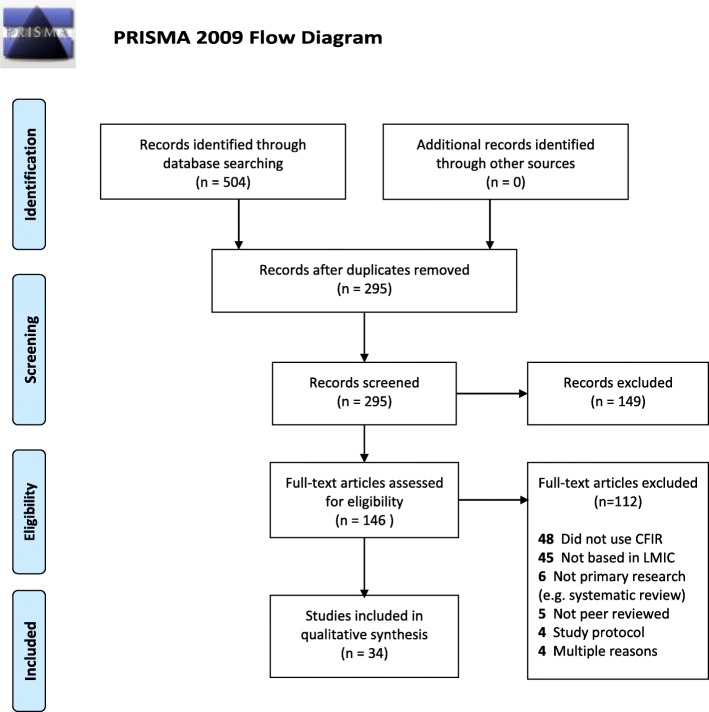
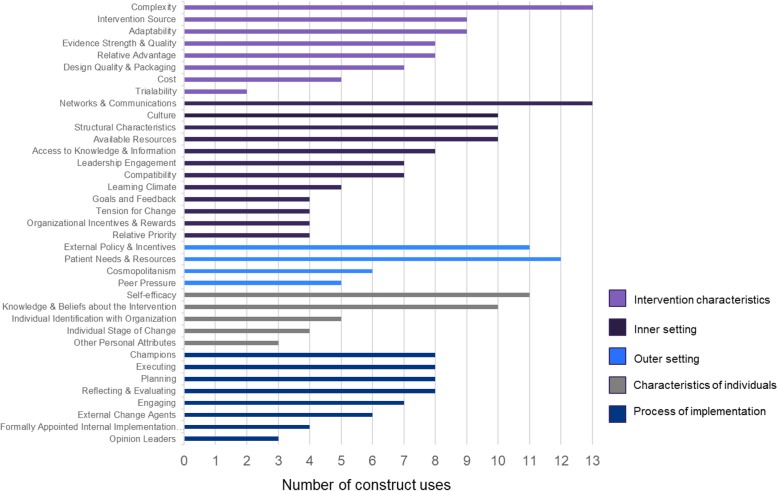
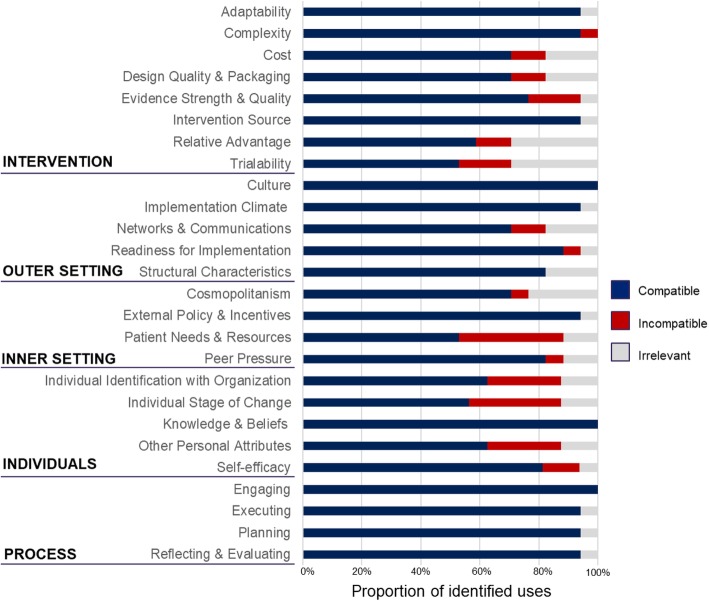
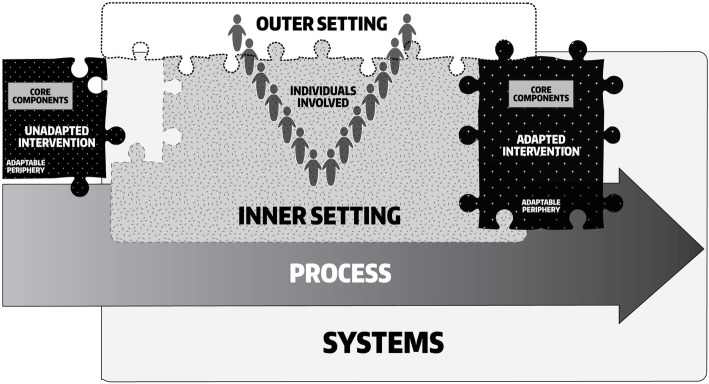
Background: The Consolidated Framework for Implementation Research (CFIR) is a determinants framework that may require adaptation or contextualization to fit the needs of implementation scientists in low- and middle-income countries (LMICs). The purpose of this review is to characterize how the CFIR has been applied in LMIC contexts, to evaluate the utility of specific constructs to global implementation science research, and to identify opportunities to refine the CFIR to optimize utility in LMIC settings. Methods: A systematic literature review was performed to evaluate the use of the CFIR in LMICs. Citation searches were conducted in Medline, CINAHL, PsycINFO, CINAHL, SCOPUS, and Web of Science. Data abstraction included study location, study design, phase of implementation, manner of implementation (ex., data analysis), domains and constructs used, and justifications for use, among other variables. A standardized questionnaire was sent to the corresponding authors of included studies to determine which CFIR domains and constructs authors found to be compatible with use in LMICs and to solicit feedback regarding ways in which CFIR performance could be improved for use in LMICs. Results: Our database search yielded 504 articles, of which 34 met final inclusion criteria. The studies took place across 21 countries and focused on 18 different health topics. The studies primarily used qualitative study designs (68%). Over half (59%) of the studies applied the CFIR at study endline, primarily to guide data analysis or to contextualize study findings. Nineteen (59%) of the contacted authors participated in the survey. Authors unanimously identified culture and engaging as compatible with use in global implementation research. Only two constructs, patient needs and resources and individual stages of change were commonly identified as incompatible with use. Author feedback centered on team level influences on implementation, as well as systems characteristics, such as health system architecture. We propose a “Characteristics of Systems” domain and eleven novel constructs be added to the CFIR to increase its compatibility for use in LMICs. Conclusions: These additions provide global implementation science practitioners opportunities to account for systems-level determinants operating independently of the implementing organization. Newly proposed constructs require further reliability and validity assessments. Trial registration: PROSPERO, CRD42018095762
Overview
The claims and statistics of this paper haven’t been checked yet.
Free: it reads the open-access text and checks the first 5 claims that cite a source we can check. Create a free account to check every claim.
Integrity signals
Registry
Cites
Statistics
Figures
Verification
Claims the paper makes
The claims and statistics of this paper haven’t been checked yet.
Free: it reads the open-access text and checks the first 5 claims that cite a source we can check. Create a free account to check every claim.
Claims other papers make about this one
Each is checked against this paper’s own text: does it say what the citing paper says it does?
The source backs part of the claim, not all of it — or backs it for a different population, condition or comparison.
In the citing paper
“The updated CFIR adds constructs to capture the potential influence of Local Attitudes, i.e., sociocultural values and beliefs, and Local Conditions, i.e., economic, environmental, political, and/or technological conditions, on the willingness and ability of entities within the Outer Setting to support implementation and delivery of the innovation [42–47]”
From The updated consolidated framework for implementation research based on user feedback (2022) · cites this paper as [42]
Experimental — accuracy not yet measuredThe source backs part of the claim, not all of it — or backs it for a different population, condition or comparison.
In the citing paper
“a few best practices have been added: Teaming [42, 46, 73], Assessing Needs [46, 47], Assessing Context, Tailoring Strategies [14], and Adapting [45, 74, 75].”
From The updated consolidated framework for implementation research based on user feedback (2022) · cites this paper as [42]
Experimental — accuracy not yet measuredThe source backs part of the claim, not all of it — or backs it for a different population, condition or comparison.
In the citing paper
“Means et al. further recommended that studies encompassing dual resource-limited subgroups must conduct systematic cross-group comparisons to disentangle divergent barriers and enablers: LMICs suffer nationwide systemic underinvestment, whereas health inequities in high-income nations stem from localized uneven resource distribution.”
From Implementation and translation of evidence-based dietary strategies for type 2 diabetes in resource-limited settings: a scoping review based on the CFIR framework (2026) · cites this paper as [8]
Experimental — accuracy not yet measuredThe source backs part of the claim, not all of it — or backs it for a different population, condition or comparison.
In the citing paper
“This broad two-tier classification is methodologically justified by prior implementation science research reported by Means et al. (8), who conducted a systematic review of CFIR applications across LMIC contexts.”
From Implementation and translation of evidence-based dietary strategies for type 2 diabetes in resource-limited settings: a scoping review based on the CFIR framework (2026) · cites this paper as [8]
Experimental — accuracy not yet measuredThe cited source says what the claim attributes to it.
In the citing paper
“These constructs are especially important for innovations that require support from community entities, such as Housing First models of care [48], and for capturing common resource constraints in LMICs [42].”
From The updated consolidated framework for implementation research based on user feedback (2022) · cites this paper as [42]
8 more claims about this paper
Create a free account to see every claim other papers make about this one.
Self-check
Percentages, sums and reported differences re-computed from the paper’s own numbers.
The self-check needs the paper’s full text.
Citations
Cites
Preferred Reporting Items for Systematic Reviews and Meta-Analyses: the PRISMA statement
Moher, D., Liberati, A., Tetzlaff, J., Altman, D. G., & for the PRISMA Group (2009) · BMJ · doi:10.1136/bmj.b2535 · Cited by 83,823
Preferred Reporting Items for Systematic Reviews and Meta-Analyses: The PRISMA Statement
Moher, D., Liberati, A., Tetzlaff, J., Altman, D. G., & The PRISMA Group (2009) · PLoS Medicine · doi:10.1371/journal.pmed.1000097 · Cited by 64,042 · cited 1×
“The systematic review protocol is registered in the International Prospective Register of Systematic Reviews (PROSPERO #CRD42018095762) and followed the Preferred Reporting Items for Systematic Reviews and MetaAnalyses (PRISMA) guidelines (Additional file 1) [6].”
Harris, P. A., Taylor, R., Thielke, R., Payne, J., Gonzalez, N., & Conde, J. G. (2009) · Journal of Biomedical Informatics · doi:10.1016/j.jbi.2008.08.010 · Cited by 51,384 · cited 1×
“We designed a standardized questionnaire in REDCap, and sent the questionnaire to the corresponding author of most included studies (surveys were not sent to authors of studies published immediately prior to paper submission) [9].”
MethodPreferred reporting items for systematic reviews and meta-analyses: the PRISMA Statement.
(2009) · PubMed Central · Cited by 44,859
Damschroder, L. J., Aron, D. C., Keith, R. E., Kirsh, S. R., Alexander, J. A., & Lowery, J. C. (2009) · Implementation Science · doi:10.1186/1748-5908-4-50 · Cited by 14,496 · cited 5×
“Damschroder and colleagues introduced the CFIR in 2009 as a meta-theoretical framework compiling nineteen preceding implementation theories [2].”
BackgroundInfluentialProctor, E., Silmere, H., Raghavan, R., Hovmand, P., Aarons, G., Bunger, A., Griffey, R., & Hensley, M. (2011) · Administration and Policy in Mental Health and Mental Health Services Research · doi:10.1007/s10488-010-0319-7 · Cited by 8,721 · cited 1×
“Sustainability is a key implementation outcome, and definitions of sustainability vary in the implementation literature [51, 52].”
BackgroundMaking sense of implementation theories, models and frameworks
Nilsen, P. (2015) · Implementation Science · doi:10.1186/s13012-015-0242-0 · Cited by 4,447 · cited 13×
“Author questionnaire respondents, in addition to CFIR utilizers from HICs, identified spread and scale as key missing constructs [50].”
BackgroundInfluentialUse of NeuroEyeCoach™ to Improve Eye Movement Efficacy in Patients with Homonymous Visual Field Loss
Sahraie, A., Smania, N., & Zihl, J. (2016) · BioMed Research International · doi:10.1155/2016/5186461 · Cited by 1,772
A systematic review of the use of the Consolidated Framework for Implementation Research
Kirk, M. A., Kelley, C., Yankey, N., Birken, S. A., Abadie, B., & Damschroder, L. (2015) · Implementation Science · doi:10.1186/s13012-016-0437-z · Cited by 1,496 · cited 5×
“study design, monitoring implementation processes, data analysis, and outcome interpretation [3].”
BackgroundResultInfluentialWhat Do We Know about Health Care Team Effectiveness? A Review of the Literature
Lemieux-Charles, L., & McGuire, W. L. (2006) · Medical Care Research and Review · doi:10.1177/1077558706287003 · Cited by 844 · cited 2×
“Examples of these features might include team diversity, interdependence/collaboration, and practice norms [46].”
BackgroundMethod
Research works printed but not linked: 1
- Rojas Smith L, Ashok M, Morss Dy S, Wines R, Teixeira-Poit S. Contextual frameworks for research on the implementation of complex system interventions. Methods research report. (Prepared by the RTI International–University of North Carolina at Chapel Hill Evidence-Based Practice Center under contract No. 290-2007-10056-I.). Rockville: Agency for Healthcare Research and Quality; 2014. 24783308
Cited by
Items 201–300 of 459
Michaud‐Létourneau, I., Gayard, M., Njoroge, B., Agabiirwe, C. N., Luwangula, A. K., McGough, L. J., Mwangi, A. M., Pelto, G. H., Tumilowicz, A., & Pelletier, D. L. (2021) · Current Developments in Nutrition · doi:10.1093/cdn/nzab146 · Cited by 3
The People-Centred Approach to Policymaking: Re-Imagining Evidence-Based Policy in Nigeria
Ndu, M. N., Ariba, O., & Ohuruogu, A. (2022) · Global Implementation Research and Applications · doi:10.1007/s43477-022-00040-9 · Cited by 3
“Although other existing frameworks might adequately reveal and explain contextual issues, the CFIR appears to be the most common among LMICs (Means et al., 2020; Ojo et al., 2021).”
BackgroundInfluentialLegenza, L. M., Coetzee, R., Rose, W. E., Esack, T., Crombie, K., Mina, M., Safdar, N., & Barnett, S. G. (2022) · Research in Social and Administrative Pharmacy · doi:10.1016/j.sapharm.2022.07.046 · Cited by 4
VanDevanter, N., Naegle, M. A., Nazia, N., Bamodu, A., & Sullivan‐Marx, E. M. (2023) · Revista Panamericana de Salud Pública · doi:10.26633/rpsp.2023.40 · Cited by 3
“For more than a decade CFIR has been used in multiple health care and social service settings to guide implementation of new practices (7-15).”
BackgroundBisri, M. H., & Bakar, N. A. (2023) · International Journal of Academic Research in Business and Social Sciences · doi:10.6007/ijarbss/v13-i12/20075 · Cited by 3
“The incorporation of mental health professionals' knowledge and interaction with patients is crucial in facilitating the implementation process (Bikker et al., 2021; Means et al., 2020; Zhou et al., 2018)”
Nava-Ruelas, R., Todowede, O. O., Siddiqi, N., & Elsey, H. (2024) · Global Health Research · doi:10.3310/grwh1425 · Cited by 4
Kiguba, R., Ndagije, H. B., Nambasa, V. P., Katureebe, C., Zakumumpa, H., Nanyonga, S. M., Ssanyu, J. N., Tregunno, P., Harrison, K., Merle, C. S., et al. (2022) · BMJ Open · doi:10.1136/bmjopen-2021-056039 · Cited by 3
Baumann, A. A. (2020) · Frontiers in Public Health · doi:10.3389/fpubh.2020.00218 · Cited by 3
Fracolli, L., Oliveira, L. G. F., dos Anjos, T. S., Timmons, S., Nichiata, L., Gryschek, A. L. D. F. P. L., & Pinto, A. R. (2024) · Revista Gaúcha de Enfermagem · doi:10.1590/1983-1447.2024.20240066.en
Chhun, N., Mangale, D. I., Agot, K. E., Owade, W. A., Kadima, J., Badia, J., Kibugi, J., Kohler, P. K., John-Stewart, G. C., & Beima‐Sofie, K. (2025) · BMC Health Services Research · doi:10.1186/s12913-025-12875-7 · Cited by 2
“We used the Consolidated Framework for Implementation Research (CFIR) [18, 19] to examine barriers and facilitators experienced during early phase implementation of DiSC.”
Dong, X., Guan, H., Liu, W., Zhao, J., Wang, H., Shi, Y., & Ma, X. (2025) · BMJ Open · doi:10.1136/bmjopen-2024-097809 · Cited by 2
Hagström, C., Kalande, P., Aryal, A., Phiri, K., van Oosterhout, J. J., Talama, G. C., Lungu, E., Phiri, S., Moucheraud, C., & Hoffman, R. M. (2025) · Global Health Action · doi:10.1080/16549716.2025.2575569 · Cited by 2
“We focused on the domains relevant for low-income contexts, specifically on characteristics of systems (resource source and continuity; external funding priorities; and systems architecture) [23].”
Decolonizing mental health: Rethinking implementation science from the ground up
Agudelo‐Hernández, F., Cuadrado, L. V., & Reyes, A. C. D. (2025) · Cambridge Prisms Global Mental Health · doi:10.1017/gmh.2025.10095 · Cited by 4
Bjerk, M., Førland, O., Bergersen, L., Langøien, L. J., & Larun, L. (2025) · Frontiers in Health Services · doi:10.3389/frhs.2025.1686425 · Cited by 2
Paniagua-Ávila, A., Sapalú, D. A. R., Pieters, M., Petzey, A., Paniagua, K., Tellez, A., Fort, M. P., Branas, C. C., Susser, E., & Kane, J. (2026) · The Lancet Global Health · doi:10.1016/s2214-109x(25)00495-4 · Cited by 2
Luo, L., Kapur, R., Armstrong-Hough, M. J., Alvarez, G. G., Moucheraud, C., Purtle, J. P., Namusisi, K. N., Yang, L., Raghavan, R., Lappen, H., et al. (2026) · BMJ Global Health · doi:10.1136/bmjgh-2025-019577 · Cited by 3
Domlyn, A. M., Dodge, J., Pfeiffer, P. N., Robinson, C., Evans, L., Damschroder, L. J., Stewart, M. A., Garlick, B., Sussman, J. B., & Nevedal, A. (2026) · Implementation Science Communications · doi:10.1186/s43058-026-00956-5 · Cited by 3
“The Consolidated Framework for Implementation Research (CFIR) is one of the most used implementation frameworks for assessing implementation context, with over 12,000 citations within 15 years of its publication [1, 2].”
Romanoff, A. M., Lynch, K., Martin, L., Agodirin, O. S., Murthy, S. S., Olasehinde, O. O., Okereke, C. O., Jackman, J. M., Yibrehu, B., Rosa, W. E., et al. (2026) · BMC Global and Public Health · doi:10.1186/s44263-026-00297-4 · Cited by 3
“CFIR includes contextual domains that are particularly important in resource-limited settings (e.g., outer setting) and has been adapted for use in LMICs [63].”
Applying an Implementation Science Framework to Surgical Research and Practice in Tanzania
Sam-Agudu, N. A. (2021) · Journal of the American College of Surgeons · doi:10.1016/j.jamcollsurg.2021.04.024 · Cited by 2
Quality Improvement Models and Methods for Maternal Health in Lower-Resource Settings
Ndicunguye, V. M., & Ayadi, A. M. E. (2022) · Obstetrics and Gynecology Clinics of North America · doi:10.1016/j.ogc.2022.08.009 · Cited by 2
Kemp, C. G., Danforth, K., Aldridge, L. R., Murray, L. K., & Haroz, E. E. (2023) · Cambridge Prisms Global Mental Health · doi:10.1017/gmh.2023.63 · Cited by 2
Self-citationDrivers of success: improving implementation research tools for better health outcomes
Fernandes, Q., Augusto, O. J., & Sherr, K. (2024) · BMC Pediatrics · doi:10.1186/s12887-023-04471-7 · Cited by 2
“Moreover, there’s a lack of application of the Consolidated Framework for Implementation Research (CFIR) – another commonly used implementation science framework – within LMICs [10].”
MethodSelf-citationSorensen, J., Kadowaki, L., Kervin, L. M., Hamilton, C. B., Berndt, A., Dhadda, S., Irfan, A., Leong, E., & Mithani, A. (2024) · BMJ Open Quality · doi:10.1136/bmjoq-2023-002589 · Cited by 2
Werz, M. J., van Duinen, A. J., Hampaye, T. C., van den Broek, A., & Bolkan, H. A. (2024) · BMJ Open · doi:10.1136/bmjopen-2023-081363 · Cited by 2
“It was also suggested that the programme should start as a pilot programme and the outcomes of the surgeries should be assessed in order to decide whether or not to continue with the programme.”
BackgroundAgudelo‐Hernández, F., Giraldo-Álvarez, A. B., & López, J. E. M. (2024) · Community Development Journal · doi:10.1093/cdj/bsae041 · Cited by 4
Mootz, J. J., de Vos, L., Stockton, M. A., Sweetland, A. C., Kann, B., Seijo, C., Bezuidenhout, C., Suleman, A., Feliciano, P., Santos, P., et al. (2024) · BMC Health Services Research · doi:10.1186/s12913-024-11594-9 · Cited by 4
“Another systematic review that focused on application of CFIR in 34 studies conducted across 21 LMICs similarly found that most studies used the framework in the post-implementation phase and identified this as a significant gap in the field [15].”
Backgroundvan Eeghen, C., Soucie, J., Clifton, J., Hitt, J. R., Mollis, B. L., Rose, G. L., Scholle, S. H., Stephens, K. A., Zhou, X., & Baldwin, L. (2024) · BMC Health Services Research · doi:10.1186/s12913-024-11801-7 · Cited by 3
Mugo, C., Njuguna, I. N., Maganga, V., Flaherty, B. P., Wagner, A. D., Mukumbang, F. C., Dorsey, S., Mwai, D., Mburu, C. W., Kumar, M., et al. (2025) · PLoS ONE · doi:10.1371/journal.pone.0325374 · Cited by 2
“We will use constructs from available versions of the Consolidated Framework for Implementation Research (CFIR 1.0 and 2.0 and the LMIC adapted version of 1.0) [62,63] as a determinants framework to structure the interview guides to understand implementation determinants and contextual factors.”
InfluentialBarriers to conducting implementation science research in Asia: An online survey
Tong, W. T., Ooi, C. Y., & Lim, Y. E. (2025) · PLoS ONE · doi:10.1371/journal.pone.0325372 · Cited by 2
“Nevertheless, some IS work has been observed in low-and middle-income countries particularly from the Africa region including the adaption of IS frameworks, and the selection and application of implementation strategies [11,12].”
Obiezu‐Umeh, C., Subramaniam, D. S., Nwaozuru, U., Gbaja-Biamila, T. A., Blessing, L. A., Shato, T., Oladele, D. A., Hirschhorn, L. R., Shacham, E., Xian, H., et al. (2025) · Frontiers in Health Services · doi:10.3389/frhs.2025.1618400 · Cited by 2
Sturgiss, E. A., Advocat, J. R., Ball, L., Chai, T. L., Gunatillaka, N., Bowden, M., Williams, C., & Haines, T. P. (2023) · Australian Journal of General Practice · doi:10.31128/ajgp-02-22-6342 · Cited by 2
Adewuya, A. O., Ola, B. A., Coker, O., Oladipo, O. E., Olibamoyo, O., & Atilola, O. (2025) · Implementation Science Communications · doi:10.1186/s43058-025-00798-7 · Cited by 1
Johnson, L. C. M., Nikhare, K., Jaganathan, S., Ali, M. K., Narayan, K. M. V., Prabhakaran, D., Tandon, N., & Singh, K. (2022) · Global Implementation Research and Applications · doi:10.1007/s43477-022-00060-5 · Cited by 3
Wilson, S. N., Noble, H. E., Ordoñez, W. J. N., Wong, G. Z., Rodríguez, M. J., Checa, D. O., Warne, M., Senturia, K., & LaGrone, L. N. (2023) · Implementation Science Communications · doi:10.1186/s43058-023-00397-4 · Cited by 1
“Because CFIR was developed in a high-income context, applying it to LMICs often requires adaptation [28].”
BackgroundLeiva, L., Barría, D., & Zavala‐Villalón, G. (2024) · Psykhe (Santiago) · doi:10.7764/psykhe.2021.36777 · Cited by 2
Navigating grey areas in HIV and mental health implementation science
Harkness, A., Giusto, A. M., Hamilton, A. B., Hernández-Ramírez, R. U., Spiegelman, D. L., Weiner, B. J., Beidas, R. S., Larson, M. E., Lippman, S. A., Wainberg, M. L., et al. (2024) · Journal of the International AIDS Society · doi:10.1002/jia2.26271 · Cited by 1
Self-citationResearch and Discussions in Critical Discourses and Remedies in Global Health Education
(2024) · Frontiers research topics · doi:10.3389/978-2-8325-5215-5 · Cited by 1
Exploring implementation of interventions to facilitate integration in fragmented healthcare systems
Bragdon, C. L., Siden, R., Winget, M., Harris, S. R., Carey, R., Ko, J., Vyas, A., & Brown‐Johnson, C. G. (2025) · Learning Health Systems · doi:10.1002/lrh2.10483 · Cited by 1
Brasileiro, J., Widman, L. M., Norwalk, K. E., Desmarais, S. L., Wechsberg, W. M., Seebaluck, K. D., & Go, V. F.-L. (2025) · The Journal of Sex Research · doi:10.1080/00224499.2025.2457445 · Cited by 1
“For example, the CFIR is among the most highly cited papers in implementation science and has been used worldwide in a variety of community settings on projects with diverse health foci (Kirk et al., 2016; Means et al., 2020).”
Kirabira, J., Nakigudde, J., Huang, K., Ashaba, S., Nambuya, H., Tozan, Y., & Yang, L. H. (2025) · AIDS Research and Therapy · doi:10.1186/s12981-025-00743-7 · Cited by 1
Prang, K.-H., Rahman, A. M., Verbunt, E., Sabanovic, H., Ahmed, S., Hasan, M. I., Davidson, E. M., McLean, A. R. D., Braat, S., Glover‐Wright, C., et al. (2025) · Global Implementation Research and Applications · doi:10.1007/s43477-025-00176-4 · Cited by 1
“An exception to this is CFIR, with the updated version to be used in Phase 1: Formative research and Phase 3: Process evaluation (Means et al., 2020; Damschroder et al., 2022).”
Fedor, N., Abrahamson, E., & Weygand, J. (2025) · Frontiers in Medicine · doi:10.3389/fmed.2025.1625455 · Cited by 1
Duangchan, C., Abboud, S., Jeremiah, R. D., Gorman, G., Lramaneerat, C., & Matthews, A. K. (2025) · European Journal of Oncology Nursing · doi:10.1016/j.ejon.2025.102961 · Cited by 1
Brown, L., Ziemann, A., Strydom, M., & Templeton, L. (2025) · Human Services Organizations Management Leadership & Governance · doi:10.1080/23303131.2025.2553900 · Cited by 1
“…organizational, and broader external factors, yet conceptual models rarely capture this complexity comprehensively (Bulthuis et al., 2020; Fendt-Newlin et al., 2020; Hess & Davis, 2023; Leeman et al., 2022; Means et al., 2020; Niang et al., 2023; Valenta et al., 2023; Ziemann et al., 2019).”
Knox, J., Portier, K., Magana, C., Denning, M., Ferraris, C. M., Dove‐Medows, E., Shrader, C., Poku, O. B., Kreniske, P., Remien, R. H., et al. (2025) · Annals of Epidemiology · doi:10.1016/j.annepidem.2025.10.018 · Cited by 1
“In low-resource settings, structural factors like internet, data, smartphone, and electricity access become more relevant [103].”
Oduenyi, C., Obafemi, S., Betron, M. L., Bryce, E., Dikeocha, N., Ifemenam, E. V., Maiakwai, A., Yusuf, S., Kabir, B., Sampson, E., et al. (2025) · BMC Health Services Research · doi:10.1186/s12913-025-13739-w · Cited by 1
“We uploaded the provider reflection workshop notes to Dedoose software and thematically coded them with a code book developed a priori and based on the CFIR domains and constructs, with codes for facilitators, barriers and recommendations [31].”
Haldane, V. E., Zhang, Z., Yin, T., Zhang, B., Li, Y., Pan, Q., Dainty, K. N., Rea, E., Pasang, P., Hu, J., et al. (2025) · PLOS Global Public Health · doi:10.1371/journal.pgph.0005717 · Cited by 1
“There is growing evidence of its use to guide study design and analysis of e-Health interventions in LMIC settings and increasing adoption of its constructs to guide process evaluations of TB interventions [28–31].”
Poddar, M., Nalavade, M. T., Suryavanshi, N., Golub, J., Bass, J., Kemp, C. G., & TB Aftermath Study Team (2026) · Cambridge Prisms Global Mental Health · doi:10.1017/gmh.2025.10123 · Cited by 2
Self-citationMohamedsharif, A., Abu-Agla, A., & Mielke, J. (2026) · BMC Global and Public Health · doi:10.1186/s44263-026-00245-2 · Cited by 3
“Examples include adaptations of the Consolidated Framework for Implementation Research (CFIR) [36] or the Reach, Effectiveness, Adoption, Implementation, Maintenance (RE-AIM) [37].”
Mkumbuzi, N. S., Jiya, E., Chisati, E. M., Kemp, J. L., Barton, C., & Ezzat, A. M. (2026) · Journal of Orthopaedic and Sports Physical Therapy · doi:10.2519/jospt.2026.13317 · Cited by 1
Lacey, C., Clark, K. D., Debacker, J. R., Stuehm, H. R., Hungerford, M. E., Milnes, T., Johansson, K., Mannino, R., Graff, J. N., & Konrad‐Martin, D. (2026) · Cancer Medicine · doi:10.1002/cam4.71566 · Cited by 1
“The Consolidated Framework for Implementation Research (CFIR) is a conceptual framework designed to guide the intervention design and implementation [41, 42].”
Busby, K. M., Webb, N., Aijaz, J., Antillon‐Klussmann, F. G., Saha, V., Reis, R. M., Tamamyan, G., Alcasabas, P., la Paz, E. M. C. C., Zeal, J., et al. (2026) · Pediatric Blood & Cancer · doi:10.1002/1545-5017.70207 · Cited by 2
“At the time of analysis, there were not yet corresponding implementation strategies for LMIC-specific barriers, though LMIC-specific barriers listed have been proposed by Means et al. [ 17 ]. a refined list of 73 distinct implementation strategies compiled by expert consensus [ 28 ].”
Isack, M. N., Mkoka, D. A., & Zheng, X. (2026) · BMJ Open · doi:10.1136/bmjopen-2025-115670 · Cited by 1
“24 It will enable a systematic, multilevel analysis of why guidelines succeed or fail, highlighting contextual factors.”
Fehlberg, Z., Croy, S., Graham, M. E., Klaic, M., & Best, S. (2026) · Translational Behavioral Medicine · doi:10.1093/tbm/ibag021 · Cited by 1
“That is, as demonstrated with the CFIR, they can be applied and yield valuable findings in disparate contexts and settings [50].”
Oviedo, D. R., Wilches-Mogollon, M. A., Arbelaez, M. J., Duarte, N. V., Sarmiento, O. L., Marquez, S., Dávila, J. D., de Tejada, J. R., Durán, D., Flórez, J., et al. (2026) · African Transport Studies · doi:10.1016/j.aftran.2026.100095 · Cited by 1
Thomson, D., Newton, A. S., Hartling, L., Caine, K. J., Hand, L., Oetomo, A., & Ebi, K. L. (2026) · SSM - Health Systems · doi:10.1016/j.ssmhs.2026.100229 · Cited by 2
Villarino, R. T., & Zheng, L. (2026) · International Journal of Medical Informatics · doi:10.1016/j.ijmedinf.2026.106546 · Cited by 1
Ikoona, E. N., Namulemo, L., Kaluya, R., Ikoona, R., Vandi, M. A., & Sahr, F. (2026) · International Journal of Drug Policy · doi:10.1016/j.drugpo.2026.105402 · Cited by 2
Kigongo, E., Heaney, C., McBride, L., Gliga, G., & Burns, R. (2026) · BMC Public Health · doi:10.1186/s12889-026-27893-1 · Cited by 1
“CFIR provides a structured lens for understanding how intervention characteristics, health system contexts, organisational readiness, and participant needs influence delivery [32, 33].”
Pelt, A. E. V., Lowenthal, E. D., Phoi, O., Tshume, O., Matshaba, M., & Beidas, R. S. (2021) · AIDS Care · doi:10.1080/09540121.2021.1990202 · Cited by 2
“…have applied CFIR in the pre-implementation phase of research in low- and middle-income countries (LMICs) (i.e., preparation for implementation of a tool) (Means et al., 2020), thus this novel application offers a generalizable process for other tools to be implemented in medical settings in LMICs.”
MethodBaumbour, J., Nyirigira, G., Wilson, R., Nsabiyumva, W., Parlow, J., Johnson, A. P., & Egan, R. (2022) · Rwanda medical journal · doi:10.4314/rmj.v79i3.6 · Cited by 1
Implementing Mindfulness-Based Programs for Children
Lo, H. H. M. (2024) · Mindfulness in behavioral health · doi:10.1007/978-3-031-51943-7_9 · Cited by 1
Bartels, S. M., Hoang, V. T. H., Giang, L. M., Trang, N. T., Dyk, Q. F. V., Sripaipan, T., Klyn, L. L., Hoffman, I., Maman, S., Miller, W. C., et al. (2024) · Global Implementation Research and Applications · doi:10.1007/s43477-024-00121-x · Cited by 1
Rehabilitación basada en comunidad para la salud mental: rutas para la implementación en Colombia
López, J. E. M., Agudelo‐Hernández, F., & Giraldo-Álvarez, A. B. (2024) · Revista Salud Bosque · doi:10.18270/rsb.v13i2.4461 · Cited by 2
Rendle, K. A. S., Ramogola‐Masire, D., Grover, S., Collective, T. D., Mathoma, A., Montgomery, A., Foster, A. H., Monare, B., Saia, C., Ritzwoller, D. P., et al. (2024) · Implementation Science Communications · doi:10.1186/s43058-024-00659-9 · Cited by 1
Stifter, M., Goklish, N. A., Watchman, C., Mitchell, K., Duncan, J., Miller, M., HorseChief, M., Kemp, C. G., Cwik, M. F., & Haroz, E. E. (2024) · International Journal of Environmental Research and Public Health · doi:10.3390/ijerph21121616 · Cited by 1
Self-citationJung, A.-S., Yaqub, N. O., Lattof, S. R., Strong, J., & Maliqi, B. (2025) · Frontiers in Public Health · doi:10.3389/fpubh.2025.1332612 · Cited by 1
Agudelo‐Hernández, F., Vieira, L. M. S., & Plata‐Casas, L. I. (2025) · Revista Panamericana de Salud Pública · doi:10.26633/rpsp.2025.46 · Cited by 1
“This methodological proposal contributes to the resolution of problems in the implementation of mental health strategies, which include, among others, access limitations associated with intersectoral action, system capacity, willingness of actors, adaptation and cultural integration of mental health strategies (17, 34…”
InfluentialUsing implementation research to understand lessons in reducing child mortality
Binagwaho, A., & Hirschhorn, L. R. (2024) · BMC Pediatrics · doi:10.1186/s12887-023-04472-6 · Cited by 1
“Ntawukuriryayo and colleagues [15], using facility-based delivery, focus on the important equity lens of implementation research [16, 17] to better understand the success and challenges in reducing inequity by wealth and by geographic region in each of the countries.”
BackgroundKatoba, J. (2024) · medRxiv · doi:10.1101/2024.07.11.24310263 · Cited by 1
Shao, K., Lei, H., Zhu, J., Chen, X., Sina, Y., & Yao, R. (2026) · Frontiers in Public Health · doi:10.3389/fpubh.2026.1870603
Morgan, C. (2020) · Minerva Access (University of Melbourne)
Zakumumpa, H., Rujumba, J., Amde, W. K., Damian, R. S., & Ssengooba, F. (2021) · Research Square · doi:10.21203/rs.3.rs-301407/v1
“The role of ‘external change agents’ is recognized in implementation research (Means et al. 2020).”
BackgroundMethodInfluentialTesta, V. (2021) · uO Research (University of Ottawa) · doi:10.20381/ruor-26140 · Cited by 2
Baker, K. M. (2020) · ResearchWorks at the University of Washington (University of Washington) · Cited by 1
Ryan, N., Ganyaglo, G., Boden-Albala, B. M., Yang, L. H., Park, J.-H., Devanter, N. L. V., Peprah, E. K., & Ayadi, A. M. E. (2022) · Research Square · doi:10.21203/rs.3.rs-2051782/v1
Target Policy Profile (TPoP)Preprint
Dolley, S., Hartman, D., & Norman, T. (2023) · OSF Preprints (OSF Preprints) · doi:10.31219/osf.io/2whm6
Kemp, C. G. (2023) · Cambridge Prisms Global Mental Health · doi:10.1017/gmh.2023.63.pr7
Self-citation(2023) · Cambridge Prisms Global Mental Health · doi:10.1017/gmh.2023.63.pr11
(2023) · Cambridge Prisms Global Mental Health · doi:10.1017/gmh.2023.63.pr4
(2023) · Cambridge Prisms Global Mental Health · doi:10.1017/gmh.2023.63.pr5
(2023) · Cambridge Prisms Global Mental Health · doi:10.1017/gmh.2023.63.pr10
(2023) · Cambridge Prisms Global Mental Health · doi:10.1017/gmh.2023.63.pr6
(2023) · Cambridge Prisms Global Mental Health · doi:10.1017/gmh.2023.63.pr9
(2023) · Cambridge Prisms Global Mental Health · doi:10.1017/gmh.2023.63.pr8
(2023) · Cambridge Prisms Global Mental Health · doi:10.1017/gmh.2023.63.pr3
(2023) · Cambridge Prisms Global Mental Health · doi:10.1017/gmh.2023.63.pr2
Kemp, C. G. (2023) · Cambridge Prisms Global Mental Health · doi:10.1017/gmh.2023.63.pr1
Self-citationMathias, K. R. (2023) · Cambridge Prisms Global Mental Health · doi:10.1017/gmh.2023.79.pr6
(2023) · Cambridge Prisms Global Mental Health · doi:10.1017/gmh.2023.79.pr8
(2023) · Cambridge Prisms Global Mental Health · doi:10.1017/gmh.2023.79.pr9
(2023) · Cambridge Prisms Global Mental Health · doi:10.1017/gmh.2023.79.pr7
(2023) · Cambridge Prisms Global Mental Health · doi:10.1017/gmh.2023.79.pr5
(2023) · Cambridge Prisms Global Mental Health · doi:10.1017/gmh.2023.79.pr4
(2023) · Cambridge Prisms Global Mental Health · doi:10.1017/gmh.2023.79.pr3
Mathias, K. R. (2023) · Cambridge Prisms Global Mental Health · doi:10.1017/gmh.2023.79.pr1
(2023) · Cambridge Prisms Global Mental Health · doi:10.1017/gmh.2023.79.pr2
(2023) · Cambridge Prisms Global Mental Health · doi:10.1017/gmh.2023.79.pr10
A Framework for Implementing National Respiratory Guidelines in Wales
Jefferies, R. (2023) · Cronfa (Swansea University) · doi:10.23889/suthesis.65359
Zitti, T. (2021) · theses.fr (ABES) · doi:10.70675/9f8f1293zfb1az481az86aez0132eead49ea · Cited by 2
Metadata
- Authors
- Means, A. R., Kemp, C. G., Gwayi-Chore, M.-C., Gimbel, S., Soi, C., Sherr, K., Wagenaar, B. H., Wasserheit, J. N., & Weiner, B. J.
- Affiliations
- University of Washington (US)
- Corresponding author
- Means, Arianna Rubin
- ORCID
- Venue
- Implementation Science
- Published
- 2020-03-12
- Volume
- 15
- Issue
- 1
- Pages
- 17-17
- ISSN
- 1748-5908 (ISSN-L)
- PMC
- PMC7069199
- OpenAlex
- W3011338064
- Semantic Scholar
- 62e24d7f5bd4bfed5761e7fc4758895d8d8f1ad2
- Cited by
- 418
- References
- 61
- Citations by year
- 2026: 69 · 2025: 54 · 2024: 82 · 2023: 82 · 2022: 70 · 2021: 48 · 2020: 13
- FWCI
- 10.15
- Type
- journal article
- Language
- en
- Open access
- gold
- doi.org
- Licence
- cc-by
- creativecommons.org/licenses/by/4.0/ (tdm)
- creativecommons.org/licenses/by/4.0/ (vor)
- Locations
- Implementation Science (publishedVersion, cc-by)
- PubMed Central (publishedVersion, cc-by)
- PubMed (publishedVersion)
- DOAJ (DOAJ: Directory of Open Access Journals) (submittedVersion, cc-by-sa)
- Funders
- National Institute of Mental Health (K01MH110599)
- Topics
- Health Sciences › Health Professions › General Health Professions › Health Policy Implementation Science
- Health Sciences › Health Professions › General Health Professions › Health Sciences Research and Education
- Health Sciences › Medicine › Public Health, Environmental and Occupational Health › Clinical practice guidelines implementation
- Keywords
- Consolidated Framework for Implementation Research, implementation research, low- and middle-income countries, framework adaptation, contextualization, implementation factors, health system architecture, stages of change
- MeSH terms
- Implementation Science, Developing Countries, Health Services Needs and Demand, Humans, Reproducibility of Results, Health Care Rationing, Organizational Culture
About these checks
Registry, retraction, Cites and statistics results are computed, not judged, with one exception: a printed reference that no index lists is read once by a model before it counts as a citation error. Claims are extracted by a model and kept only when their quote appears verbatim in the text; each cited source is then checked, with a model’s help, for whether it says what the claim relies on. Those verdicts can be wrong — read the claim’s quote and the cited source before relying on one.
Statistics and arithmetic are recomputed, not judged.
Confidence bands are shown only for fields calibrated on our annotated test set. None is calibrated yet, so no band is shown.
What counts as a claim ›How we measure confidence ›How we check this ›
Are you an author, or do you see a problem with this page? Request a review
Data sources
Bibliographic data: Semantic Scholar, OpenAlex, Crossref.
Contains information from the Semantic Scholar Academic Graph Datasets, made available under the ODC Attribution License (ODC-BY 1.0).
Semantic Scholar’s data is described in: Kinney, R., et al. (2023). The Semantic Scholar Open Data Platform. arXiv:2301.10140.
