

Evaluating and optimizing the consolidated framework for implementation research (CFIR) for use in low- and middle-income countries: a systematic review
Open accessThe DOI matches its Crossref record; 61 of the 61 references it cites were found in a registry or an index.
Abstract
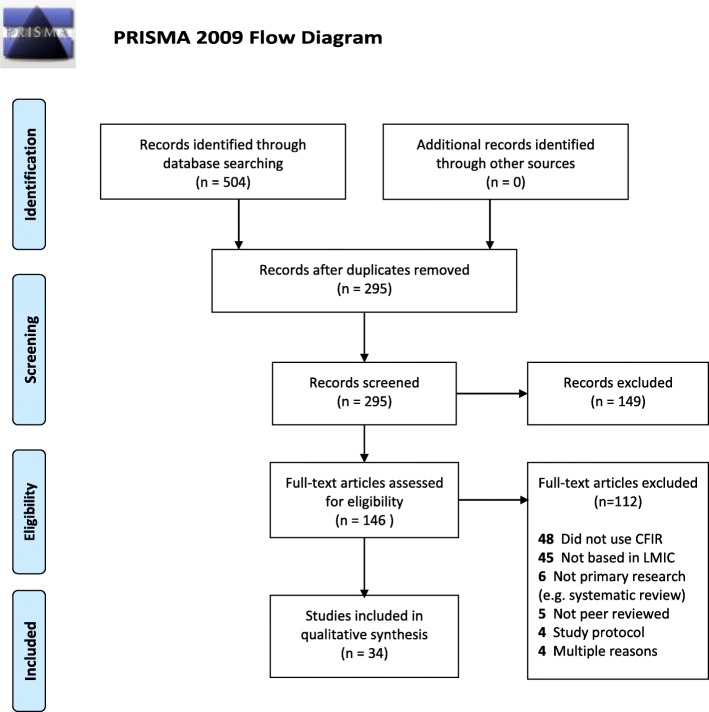
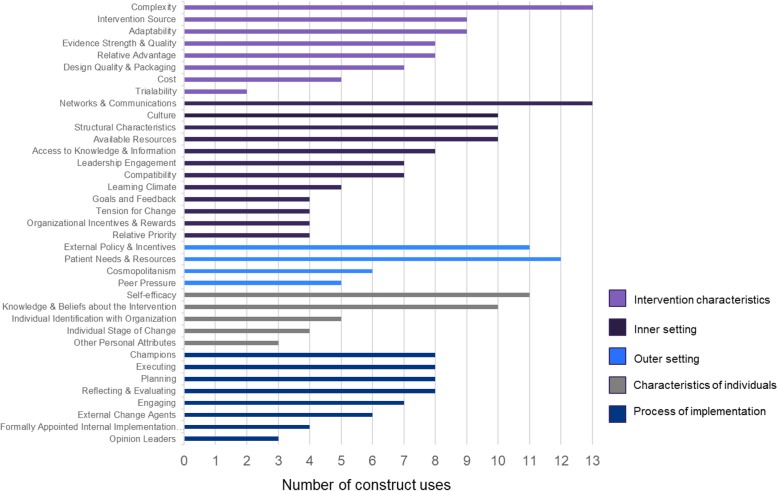
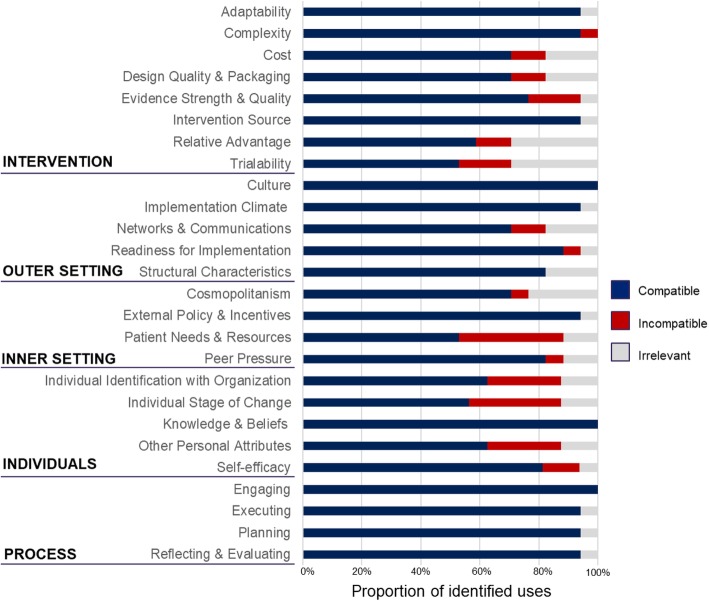
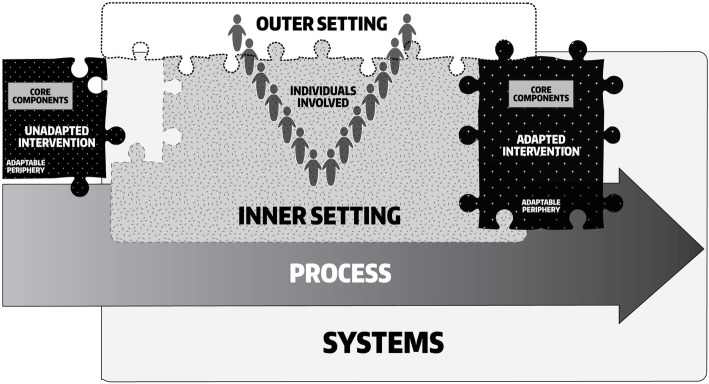
Background: The Consolidated Framework for Implementation Research (CFIR) is a determinants framework that may require adaptation or contextualization to fit the needs of implementation scientists in low- and middle-income countries (LMICs). The purpose of this review is to characterize how the CFIR has been applied in LMIC contexts, to evaluate the utility of specific constructs to global implementation science research, and to identify opportunities to refine the CFIR to optimize utility in LMIC settings. Methods: A systematic literature review was performed to evaluate the use of the CFIR in LMICs. Citation searches were conducted in Medline, CINAHL, PsycINFO, CINAHL, SCOPUS, and Web of Science. Data abstraction included study location, study design, phase of implementation, manner of implementation (ex., data analysis), domains and constructs used, and justifications for use, among other variables. A standardized questionnaire was sent to the corresponding authors of included studies to determine which CFIR domains and constructs authors found to be compatible with use in LMICs and to solicit feedback regarding ways in which CFIR performance could be improved for use in LMICs. Results: Our database search yielded 504 articles, of which 34 met final inclusion criteria. The studies took place across 21 countries and focused on 18 different health topics. The studies primarily used qualitative study designs (68%). Over half (59%) of the studies applied the CFIR at study endline, primarily to guide data analysis or to contextualize study findings. Nineteen (59%) of the contacted authors participated in the survey. Authors unanimously identified culture and engaging as compatible with use in global implementation research. Only two constructs, patient needs and resources and individual stages of change were commonly identified as incompatible with use. Author feedback centered on team level influences on implementation, as well as systems characteristics, such as health system architecture. We propose a “Characteristics of Systems” domain and eleven novel constructs be added to the CFIR to increase its compatibility for use in LMICs. Conclusions: These additions provide global implementation science practitioners opportunities to account for systems-level determinants operating independently of the implementing organization. Newly proposed constructs require further reliability and validity assessments. Trial registration: PROSPERO, CRD42018095762
Overview
The claims and statistics of this paper haven’t been checked yet.
Free: it reads the open-access text and checks the first 5 claims that cite a source we can check. Create a free account to check every claim.
Integrity signals
Registry
Cites
Statistics
Figures
Verification
Claims the paper makes
The claims and statistics of this paper haven’t been checked yet.
Free: it reads the open-access text and checks the first 5 claims that cite a source we can check. Create a free account to check every claim.
Claims other papers make about this one
Each is checked against this paper’s own text: does it say what the citing paper says it does?
The source backs part of the claim, not all of it — or backs it for a different population, condition or comparison.
In the citing paper
“The updated CFIR adds constructs to capture the potential influence of Local Attitudes, i.e., sociocultural values and beliefs, and Local Conditions, i.e., economic, environmental, political, and/or technological conditions, on the willingness and ability of entities within the Outer Setting to support implementation and delivery of the innovation [42–47]”
From The updated consolidated framework for implementation research based on user feedback (2022) · cites this paper as [42]
Experimental — accuracy not yet measuredThe source backs part of the claim, not all of it — or backs it for a different population, condition or comparison.
In the citing paper
“a few best practices have been added: Teaming [42, 46, 73], Assessing Needs [46, 47], Assessing Context, Tailoring Strategies [14], and Adapting [45, 74, 75].”
From The updated consolidated framework for implementation research based on user feedback (2022) · cites this paper as [42]
Experimental — accuracy not yet measuredThe source backs part of the claim, not all of it — or backs it for a different population, condition or comparison.
In the citing paper
“Means et al. further recommended that studies encompassing dual resource-limited subgroups must conduct systematic cross-group comparisons to disentangle divergent barriers and enablers: LMICs suffer nationwide systemic underinvestment, whereas health inequities in high-income nations stem from localized uneven resource distribution.”
From Implementation and translation of evidence-based dietary strategies for type 2 diabetes in resource-limited settings: a scoping review based on the CFIR framework (2026) · cites this paper as [8]
Experimental — accuracy not yet measuredThe source backs part of the claim, not all of it — or backs it for a different population, condition or comparison.
In the citing paper
“This broad two-tier classification is methodologically justified by prior implementation science research reported by Means et al. (8), who conducted a systematic review of CFIR applications across LMIC contexts.”
From Implementation and translation of evidence-based dietary strategies for type 2 diabetes in resource-limited settings: a scoping review based on the CFIR framework (2026) · cites this paper as [8]
Experimental — accuracy not yet measuredThe cited source says what the claim attributes to it.
In the citing paper
“These constructs are especially important for innovations that require support from community entities, such as Housing First models of care [48], and for capturing common resource constraints in LMICs [42].”
From The updated consolidated framework for implementation research based on user feedback (2022) · cites this paper as [42]
8 more claims about this paper
Create a free account to see every claim other papers make about this one.
Self-check
Percentages, sums and reported differences re-computed from the paper’s own numbers.
The self-check needs the paper’s full text.
Citations
Cites
Preferred Reporting Items for Systematic Reviews and Meta-Analyses: the PRISMA statement
Moher, D., Liberati, A., Tetzlaff, J., Altman, D. G., & for the PRISMA Group (2009) · BMJ · doi:10.1136/bmj.b2535 · Cited by 83,823
Preferred Reporting Items for Systematic Reviews and Meta-Analyses: The PRISMA Statement
Moher, D., Liberati, A., Tetzlaff, J., Altman, D. G., & The PRISMA Group (2009) · PLoS Medicine · doi:10.1371/journal.pmed.1000097 · Cited by 64,042 · cited 1×
“The systematic review protocol is registered in the International Prospective Register of Systematic Reviews (PROSPERO #CRD42018095762) and followed the Preferred Reporting Items for Systematic Reviews and MetaAnalyses (PRISMA) guidelines (Additional file 1) [6].”
Harris, P. A., Taylor, R., Thielke, R., Payne, J., Gonzalez, N., & Conde, J. G. (2009) · Journal of Biomedical Informatics · doi:10.1016/j.jbi.2008.08.010 · Cited by 51,384 · cited 1×
“We designed a standardized questionnaire in REDCap, and sent the questionnaire to the corresponding author of most included studies (surveys were not sent to authors of studies published immediately prior to paper submission) [9].”
MethodPreferred reporting items for systematic reviews and meta-analyses: the PRISMA Statement.
(2009) · PubMed Central · Cited by 44,859
Damschroder, L. J., Aron, D. C., Keith, R. E., Kirsh, S. R., Alexander, J. A., & Lowery, J. C. (2009) · Implementation Science · doi:10.1186/1748-5908-4-50 · Cited by 14,496 · cited 5×
“Damschroder and colleagues introduced the CFIR in 2009 as a meta-theoretical framework compiling nineteen preceding implementation theories [2].”
BackgroundInfluentialProctor, E., Silmere, H., Raghavan, R., Hovmand, P., Aarons, G., Bunger, A., Griffey, R., & Hensley, M. (2011) · Administration and Policy in Mental Health and Mental Health Services Research · doi:10.1007/s10488-010-0319-7 · Cited by 8,721 · cited 1×
“Sustainability is a key implementation outcome, and definitions of sustainability vary in the implementation literature [51, 52].”
BackgroundMaking sense of implementation theories, models and frameworks
Nilsen, P. (2015) · Implementation Science · doi:10.1186/s13012-015-0242-0 · Cited by 4,447 · cited 13×
“Author questionnaire respondents, in addition to CFIR utilizers from HICs, identified spread and scale as key missing constructs [50].”
BackgroundInfluentialUse of NeuroEyeCoach™ to Improve Eye Movement Efficacy in Patients with Homonymous Visual Field Loss
Sahraie, A., Smania, N., & Zihl, J. (2016) · BioMed Research International · doi:10.1155/2016/5186461 · Cited by 1,772
A systematic review of the use of the Consolidated Framework for Implementation Research
Kirk, M. A., Kelley, C., Yankey, N., Birken, S. A., Abadie, B., & Damschroder, L. (2015) · Implementation Science · doi:10.1186/s13012-016-0437-z · Cited by 1,496 · cited 5×
“study design, monitoring implementation processes, data analysis, and outcome interpretation [3].”
BackgroundResultInfluentialWhat Do We Know about Health Care Team Effectiveness? A Review of the Literature
Lemieux-Charles, L., & McGuire, W. L. (2006) · Medical Care Research and Review · doi:10.1177/1077558706287003 · Cited by 844 · cited 2×
“Examples of these features might include team diversity, interdependence/collaboration, and practice norms [46].”
BackgroundMethod
Research works printed but not linked: 1
- Rojas Smith L, Ashok M, Morss Dy S, Wines R, Teixeira-Poit S. Contextual frameworks for research on the implementation of complex system interventions. Methods research report. (Prepared by the RTI International–University of North Carolina at Chapel Hill Evidence-Based Practice Center under contract No. 290-2007-10056-I.). Rockville: Agency for Healthcare Research and Quality; 2014. 24783308
Cited by
Items 301–400 of 459
Implementation of interventions to enhance quality use of medicines
van Dijk, L., & Vervloet, M. (2024) · Wiley eBooks · doi:10.1002/9781119911685.ch51
Schäfer, S. K., Streit, S., Schanz, C. G., Roembell, L. B., Corneli, M., Schaubruch, L. M., Wessa, M., Lieb, K., Equit, M., & Fuhr, D. (2024) · OSF Preprints (OSF Preprints) · doi:10.31219/osf.io/g879f
Learning for Action in Policy Implementation
(2024) · Frontiers research topics · doi:10.3389/978-2-8325-5746-4
White, L. A. (2024) · Deep Blue (University of Michigan) · doi:10.7302/25069 · Cited by 2
Mkumbuzi, N. S., Jiya, E., Chisati, E. M., Kemp, J. L., Barton, C. J., & Ezzat, A. M. (2025) · medRxiv · doi:10.1101/2025.02.07.25321791
Implementierung von achtsamkeitsbasierten Programmen für Kinder
Lo, H. H. M. (2025) · Springer eBooks · doi:10.1007/978-3-031-83285-7_9
Ditta, J., Longley, V., Woodward‐Nutt, K., Chouliara, N., Thomas, S., Cotterill, S., Bamford, A., Conroy, P., Bowen, A., & Patchwood, E. (2026) · BMC Health Services Research · doi:10.1186/s12913-026-14816-4 · Cited by 1
“While CFIR has been recommended for examining equity and implementation [83], studies have noted limitations in addressing equity-related complexities [84, 85].”
Ryan, N., Ganyaglo, G., Park, J.-H., Lin, T. K., Pozen, J., Mittal, A., & Ayadi, A. M. E. (2025) · BMC Women s Health · doi:10.1186/s12905-025-03823-y
“First, deductive codes that represent expected influences will be applied, taken from existing literature and interview guide oriented by the CFIR [75, 76, 89].”
Maritim, P., Munakampe, M. N., & Zulu, J. M. (2025) · medRxiv · doi:10.1101/2025.08.01.25332586
Katwesigye, R., Mbuliro, M., Lalitha, R., Katuramu, R., Andama, A. O., Turyahabwe, S., Sekadde, M. P., & Semitala, F. C. (2026) · BMC Health Services Research · doi:10.1186/s12913-026-14494-2
“CFIR is particularly useful in diverse settings, enabling researchers to assess what works, for whom, and under what conditions-especially in complex health systems such as those in low-and middle-income countries [8].”
Hasan, M. Z., Deol, T. K., Khurana, D., Miller, E. S., & Closser, S. (2026) · Global Implementation Research and Applications · doi:10.21203/rs.3.rs-7632123/v1
Ahmed, C. V., Thornicroft, M., Chileshe, K., Ntebeka, B. M., Dovel, K. L., Bogart, L. M., Chávez, N. R., Bwalya, F. T., Brooks, M. J., & Swendeman, D. T. (2026) · Trials · doi:10.1186/s13063-026-09625-3
Allotey, D., Flax, V. L., Ipadeola, A., Kwasu, S., Worku, B., Kalluru, K., Imam, R., Stover, A. M., Bose, S., & Martin, S. (2025) · PLOS Global Public Health · doi:10.1371/journal.pgph.0005214
Elechi, O., Onabanjo, S., Olatoye, E. O., Saidu, A., Doubra, E., & Ngaruiya, C. (2026) · Discover Health Systems · doi:10.1007/s44250-026-00389-w
Fielding-Miller, R. K., Vo, A. T., Omaleki, V., Mahlangu, P., Sikweyiya, Y. M., Shabalala, F. S., Masuku, S., Dlamini, M. M., & Machisa, M. (2025) · BMC Global and Public Health · doi:10.1186/s44263-025-00215-0
Homsi, M. R., Underwood, C. R., Alonge, O., Caniza, M. A., & Davey-Rothwell, M. A. (2025) · Journal of Health Population and Nutrition · doi:10.1186/s41043-025-01205-6
“The final survey was an 82-item questionnaire with measures across all five CFIR domains and the additional characteristics of systems domain proposed by Means et al. [19].”
Arun, R. M. (2024) · Open Research Online (The Open University) · doi:10.21954/ou.ro.00098579
Piat, M., Wainwright, M., Cherkas, D., LeBlanc, S., Sofouli, E., Rivest, M.-P., Albert, H., Casey, R., O’Rourke, J. J., & Labonté, L. (2021) · Figshare · doi:10.6084/m9.figshare.16625620
Norton, A., & Tappis, H. (2024) · Figshare · doi:10.6084/m9.figshare.25815092
Lovero, K. L., Kemp, C. G., Wagenaar, B. H., Giusto, A. M., Greene, M. C., Powell, B. J., & Proctor, E. K. (2023) · Figshare · doi:10.6084/m9.figshare.24465181
Self-citationAbouchadi, S., Godin, I., Zhang, W.-H., & Brouwere, V. D. (2022) · Figshare · doi:10.6084/m9.figshare.21582058
Madrigal, L., Haardörfer, R., Kegler, M. C., Piper, S., Blais, L. M., Weber, M. B., & Escoffery, C. (2024) · Figshare · doi:10.6084/m9.figshare.24586310
Melder, A., Robinson, T., McLoughlin, I. P., Iedema, R. A. M., & Teede, H. (2022) · Figshare · doi:10.6084/m9.figshare.19204500
Meshkovska, B., Gebremariam, M. K., Atukunda, P., Iversen, P. O., Wandel, M., & Lien, N. (2024) · Figshare · doi:10.6084/m9.figshare.26600191
Gala, P., Ponatshego, P., Bogart, L. M., Youssouf, N. F., Ramotsababa, M., Pelt, A. E. V., Moshomo, T., Dintwa, E., Seipone, K., Ilias, M. R., et al. (2024) · Figshare · doi:10.6084/m9.figshare.26736699
van de Water, B. J., Brooks, M. B., Matji, R., Ncanywa, B., Dikgale, F., Abuelezam, N. N., Mzileni, B., Nokwe, M., Moko, S., Mvusi, L., et al. (2024) · Figshare · doi:10.6084/m9.figshare.26707670
Self-citationLongworth, G. R., Erikowa-Orighoye, O., Anieto, E. M., Agnello, D. M., Zapata-Restrepo, J. R., Masquillier, C., & Giné‐Garriga, M. (2024) · Figshare · doi:10.6084/m9.figshare.25017967
Wilson, S. N., Noble, H. E., Ordoñez, W. J. N., Wong, G. Z., Rodríguez, M. J., Checa, D. O., Warne, M., Senturia, K., & LaGrone, L. N. (2024) · Figshare · doi:10.6084/m9.figshare.26580857
Moss, J. L., Stoltzfus, K. C., Popalis, M. L., Calo, W. A., & Kraschnewski, J. L. (2024) · Figshare · doi:10.6084/m9.figshare.26562379
Longworth, G. R., Erikowa-Orighoye, O., Anieto, E. M., Agnello, D. M., Zapata-Restrepo, J. R., Masquillier, C., & Giné‐Garriga, M. (2024) · Figshare · doi:10.6084/m9.figshare.26668920
Martínez-Cajas, J., Torres, J. A., Mueses, H. F., Plazas, P. C., Arrivillaga, M., Gomez, S. A., Galindo, X., Buitrago, E. M., & Alvarado, B. (2022) · Figshare · doi:10.6084/m9.figshare.19373302
Piat, M., Wainwright, M., Cherkas, D., LeBlanc, S., Sofouli, E., Rivest, M.-P., Albert, H., Casey, R., O’Rourke, J. J., & Labonté, L. (2021) · Figshare · doi:10.6084/m9.figshare.16625623
Łobczowska, K., Banik, A., Brukało, K., Forberger, S., Kubiak, T., Romaniuk, P., Scheidmeir, M., Scheller, D. A., Steinacker, J. M., Wendt, J., et al. (2022) · Figshare · doi:10.6084/m9.figshare.17982215
Huo, Y., Couzner, L., Windsor, T., Laver, K., Dissanayaka, N. N., & Cations, M. (2023) · Figshare · doi:10.6084/m9.figshare.22774192
Skar, A.-M. S., Engebretsen, I. M. S., Braathu, N., Aber, H., Bækkelund, H., Kühl, M.-J., Kabatooro, M. M., Nalugya, J. S., Skokauskas, N., Skylstad, V., et al. (2024) · Figshare · doi:10.6084/m9.figshare.26231310
Martínez-Cajas, J., Torres, J. A., Mueses, H. F., Plazas, P. C., Arrivillaga, M., Gomez, S. A., Galindo, X., Buitrago, E. M., & Alvarado, B. (2022) · Figshare · doi:10.6084/m9.figshare.19373305
Gala, P., Ponatshego, P., Bogart, L. M., Youssouf, N. F., Ramotsababa, M., Pelt, A. E. V., Moshomo, T., Dintwa, E., Seipone, K., Ilias, M. R., et al. (2024) · Figshare · doi:10.6084/m9.figshare.26736696
Meshkovska, B., Gebremariam, M. K., Atukunda, P., Iversen, P. O., Wandel, M., & Lien, N. (2024) · Figshare · doi:10.6084/m9.figshare.26600197
Meshkovska, B., Gebremariam, M. K., Atukunda, P., Iversen, P. O., Wandel, M., & Lien, N. (2024) · Figshare · doi:10.6084/m9.figshare.26600200
Piat, M., Wainwright, M., Cherkas, D., LeBlanc, S., Sofouli, E., Rivest, M.-P., Albert, H., Casey, R., O’Rourke, J. J., & Labonté, L. (2021) · Figshare · doi:10.6084/m9.figshare.16625617
Martínez-Cajas, J., Torres, J. A., Mueses, H. F., Plazas, P. C., Arrivillaga, M., Gomez, S. A., Galindo, X., Buitrago, E. M., & Alvarado, B. (2022) · Figshare · doi:10.6084/m9.figshare.19373308
Baumann, A. A., Hooley, C., Kryzer, E., Morshed, A. B., Gutner, C. A., Malone, S., Walsh‐Bailey, C., Pilar, M. R., Sandler, B., Tabak, R. G., et al. (2022) · Figshare · doi:10.6084/m9.figshare.20462376
Skar, A.-M. S., Engebretsen, I. M. S., Braathu, N., Aber, H., Bækkelund, H., Kühl, M.-J., Kabatooro, M. M., Nalugya, J. S., Skokauskas, N., Skylstad, V., et al. (2024) · Figshare · doi:10.6084/m9.figshare.26747231
Abouchadi, S., Godin, I., Zhang, W.-H., & Brouwere, V. D. (2022) · Figshare · doi:10.6084/m9.figshare.21582055
Wilson, S. N., Noble, H. E., Ordoñez, W. J. N., Wong, G. Z., Rodríguez, M. J., Checa, D. O., Warne, M., Senturia, K., & LaGrone, L. N. (2024) · Figshare · doi:10.6084/m9.figshare.26580860
Schmidt, S. (2025) · Oxford University Research Archive (ORA) (University of Oxford) · doi:10.5287/ora-yemyp09pm
Lovero, K. L., Kemp, C. G., Wagenaar, B. H., Giusto, A. M., Greene, M. C., Powell, B. J., & Proctor, E. K. (2024) · Figshare · doi:10.6084/m9.figshare.26634057
Self-citationRobinson, C., & Damschroder, L. J. (2023) · Figshare · doi:10.6084/m9.figshare.22613759
Abouchadi, S., Godin, I., Zhang, W.-H., & Brouwere, V. D. (2022) · Figshare · doi:10.6084/m9.figshare.21582046
Łobczowska, K., Banik, A., Romaniuk, P., Forberger, S., Kubiak, T., Meshkovska, B., Neumann‐Podczaska, A., Kaczmarek, K., Scheidmeir, M., Wendt, J., et al. (2022) · Figshare · doi:10.6084/m9.figshare.19166876
Lovero, K. L., Kemp, C. G., Wagenaar, B. H., Giusto, A. M., Greene, M. C., Powell, B. J., & Proctor, E. K. (2024) · Figshare · doi:10.6084/m9.figshare.24465327
Self-citationMeshkovska, B., Gebremariam, M. K., Atukunda, P., Iversen, P. O., Wandel, M., & Lien, N. (2024) · Figshare · doi:10.6084/m9.figshare.26600188
Piat, M., Wainwright, M., Cherkas, D., LeBlanc, S., Sofouli, E., Rivest, M.-P., Albert, H., Casey, R., O’Rourke, J. J., & Labonté, L. (2021) · Figshare · doi:10.6084/m9.figshare.16625626
Skar, A.-M. S., Engebretsen, I. M. S., Braathu, N., Aber, H., Bækkelund, H., Kühl, M.-J., Kabatooro, M. M., Nalugya, J. S., Skokauskas, N., Skylstad, V., et al. (2024) · Figshare · doi:10.6084/m9.figshare.26231139
Martínez-Cajas, J., Torres, J. A., Mueses, H. F., Plazas, P. C., Arrivillaga, M., Gomez, S. A., Galindo, X., Buitrago, E. M., & Alvarado, B. (2022) · Figshare · doi:10.6084/m9.figshare.19373290
Meshkovska, B., Gebremariam, M. K., Atukunda, P., Iversen, P. O., Wandel, M., & Lien, N. (2024) · Figshare · doi:10.6084/m9.figshare.26600185
Martínez-Cajas, J., Torres, J. A., Mueses, H. F., Plazas, P. C., Arrivillaga, M., Gomez, S. A., Galindo, X., Buitrago, E. M., & Alvarado, B. (2022) · Figshare · doi:10.6084/m9.figshare.19373293
Wilson, S. N., Noble, H., Ordoñez, W. J. N., Wong, G. Z., Rodríguez, M. J., Checa, D. O., Warne, M., Senturia, K., & LaGrone, L. N. (2024) · Figshare · doi:10.6084/m9.figshare.26580851
Abouchadi, S., Godin, I., Zhang, W.-H., & Brouwere, V. D. (2022) · Figshare · doi:10.6084/m9.figshare.21582052
Martínez-Cajas, J., Torres, J. A., Mueses, H. F., Plazas, P. C., Arrivillaga, M., Gomez, S. A., Galindo, X., Buitrago, E. M., & Alvarado, B. (2022) · Figshare · doi:10.6084/m9.figshare.19373296
Longworth, G. R., Erikowa-Orighoye, O., Anieto, E. M., Agnello, D. M., Zapata-Restrepo, J. R., Masquillier, C., & Giné‐Garriga, M. (2024) · Figshare · doi:10.6084/m9.figshare.25017900
Piat, M., Wainwright, M., Cherkas, D., LeBlanc, S., Sofouli, E., Rivest, M.-P., Albert, H., Casey, R., O’Rourke, J. J., & Labonté, L. (2021) · Figshare · doi:10.6084/m9.figshare.16625629
Robinson, C., & Damschroder, L. J. (2023) · Figshare · doi:10.6084/m9.figshare.22613762
Woodward, E. N., Singh, R. S., Ndebele‐Ngwenya, P., Melgar Castillo, A., Dickson, K. S., & Kirchner, J. E. (2021) · Figshare · doi:10.6084/m9.figshare.14738859
Abouchadi, S., Godin, I., Zhang, W.-H., & Brouwere, V. D. (2022) · Figshare · doi:10.6084/m9.figshare.21582040
Martínez-Cajas, J., Torres, J. A., Mueses, H. F., Plazas, P. C., Arrivillaga, M., Gomez, S. A., Galindo, X., Buitrago, E. M., & Alvarado, B. (2022) · Figshare · doi:10.6084/m9.figshare.19373299
Patel, S. A., Vashist, K., Jarhyan, P., Sharma, H., Gupta, P., Jindal, D., Venkateshmurthy, N. S., Pfadenhauer, L. M., Mohan, S., & Tandon, N. (2021) · Figshare · doi:10.6084/m9.figshare.16821584
Meshkovska, B., Gebremariam, M. K., Atukunda, P., Iversen, P. O., Wandel, M., & Lien, N. (2024) · Figshare · doi:10.6084/m9.figshare.26600194
Wilson, S. N., Noble, H. E., Ordoñez, W. J. N., Wong, G. Z., Rodríguez, M. J., Checa, D. O., Warne, M., Senturia, K., & LaGrone, L. N. (2024) · Figshare · doi:10.6084/m9.figshare.26580854
Abouchadi, S., Godin, I., Zhang, W.-H., & Brouwere, V. D. (2022) · Figshare · doi:10.6084/m9.figshare.21582049
Meshkovska, B., Gebremariam, M. K., Atukunda, P., Iversen, P. O., Wandel, M., & Lien, N. (2024) · Figshare · doi:10.6084/m9.figshare.26600203
Roche, S. D., Barnabee, G., Omollo, V. O., Mogaka, F. O., Odoyo, J. B., Bukusi, E. A., Morton, J. F., Johnson, R., Celum, C., Baeten, J. M., et al. (2022) · Figshare · doi:10.6084/m9.figshare.19470584
Longworth, G. R., Erikowa-Orighoye, O., Anieto, E. M., Agnello, D. M., Zapata-Restrepo, J. R., Masquillier, C., & Giné‐Garriga, M. (2024) · Figshare · doi:10.6084/m9.figshare.26668917
Moucheraud, C., Kawale, P., Kafwafwa, S., Bastani, R., & Hoffman, R. M. (2020) · Figshare · doi:10.6084/m9.figshare.13467477
Madrigal, L., Haardörfer, R., Kegler, M. C., Piper, S., Blais, L. M., Weber, M. B., & Escoffery, C. (2024) · Figshare · doi:10.6084/m9.figshare.26641915
Melder, A., Robinson, T., McLoughlin, I. P., Iedema, R. A. M., & Teede, H. (2022) · Figshare · doi:10.6084/m9.figshare.19204503
Madrigal, L., Haardörfer, R., Kegler, M. C., Piper, S., Blais, L. M., Weber, M. B., & Escoffery, C. (2024) · Figshare · doi:10.6084/m9.figshare.26641918
Yount, K. M., Anderson, K. M., Trang, Q. T., & Bergenfeld, I. (2024) · Figshare · doi:10.6084/m9.figshare.26596271
Sundararajan, R. L., Hooda, M., Lai, Y., Nansera, D., Audet, C., Downs, J., Lee, M. H., McNairy, M. L., Muyindike, W. R., & Mwanga‐Amumpaire, J. (2024) · Figshare · doi:10.6084/m9.figshare.26741540
Madrigal, L., Haardörfer, R., Kegler, M. C., Piper, S., Blais, L. M., Weber, M. B., & Escoffery, C. (2023) · Figshare · doi:10.6084/m9.figshare.24586213
Baynes, C. D. (2023) · ResearchWorks at the University of Washington (University of Washington)
Structure and Content of the Educational Program
Smolander, N., Huuskonen, A., Jahan Ummon, I., Ylistalo, E., & Kunnas, K. (2023) · Theseus (Ammattikorkeakoulujen)
The global, health care, and social value of community-based late-life depression care
Steinman, L. E. (2023) · ResearchWorks at the University of Washington (University of Washington) · Cited by 1
Mangale, D. I. (2023) · ResearchWorks at the University of Washington (University of Washington)
Allie, S. (2025) · Open University of Cape Town (University of Cape Town)
DigiCare Model : Digitalized Healthcare and Coaching of Patients in an Asian Context
(2023) · Theseus (Ammattikorkeakoulujen) · Cited by 3
Roche, S. (2021) · ResearchWorks at the University of Washington (University of Washington) · Cited by 3
Hernández-Orobio, O. M. (2024) · RUC (Universidade Da Coruña)
Mutumba-Nakalembe, M. J. (2023) · UWSpace (University of Waterloo) · Cited by 6
(2024) · Theseus (Ammattikorkeakoulujen)
Ahmed, C. V., Thornicroft, M., Ntebeka, B. M., Chileshe, K., Dovel, K. L., Bogart, L. M., Chávez, N. R., Bwalya, F. T., Brooks, M. J., & Swendeman, D. T. (2025) · Research Square · doi:10.21203/rs.3.rs-7039714/v1
Culture, barriers, and enablers of primary health care quality improvement in Kenya
Odhus, C. O. (2025) · Lancaster EPrints (Lancaster University) · doi:10.17635/lancaster/thesis/3031
Tiwari, R., & Tiwari, A. (2025) · International Journal of Diabetes in Developing Countries · doi:10.1007/s13410-025-01603-w
Barth, J., Davila, H. W., O’Malley, K. A., Shin, M. H., Montano, A.-R. L., Howe, R. J., Levine, A. A., Evans, E., Pimentel, C. B., & Sullivan, J. L. (2026) · Global Implementation Research and Applications · doi:10.1007/s43477-025-00204-3
“( Aronson, 2020; Teasell et al., 2025; World Health Organization, 2022 ) Efforts have begun to understand how TMFs are used or specific models adapted (e.g., CFIR and RE-AIM) for use in low-and middle-income countries, (Evans et al., 2022; Lee et al., 2017; Means et al., 2020; Quinn et al., 2019).”
Updated Consolidated Framework for Implementation Research
島津太一, 齋藤, 順., 小田原, 幸., 奥山, 絢., & 安福, 祐. (2025) · Institutional Repositories DataBase (IRDB)
Manual para a consulta do enfermeiro às pessoas que convivem com diabetes mellitus
Orth, S. (2024) · LA Referencia (Red Federada de Repositorios Institucionales de Publicaciones Científicas)
Chand, N. N., Devi, A., Kumar, S., Kumar, R., Krishna, S. S., Kumar, S., Ansar, M. M., Ali, A., & Reddy, R. K. (2026) · medtigo Journal of Medicine · doi:10.63096/medtigo3062412
Altemani, A. H. O., Alanazi, A. I. S., Alanazi, M. A., Alzahrani, Y. A. A., AlMalki, H. M. A., Bdiwi, A. M. A., Alenezi, M. Z., Alanazi, S. M., Salami, F. H. Y., Alanazi, K. S. H., et al. (2024) · International Journal of Computational and Experimental Science and Engineering · doi:10.22399/ijcesen.4764
“Patients report higher levels of satisfaction with care when they receive attention from a pharmacist who can spend time addressing their medication concerns in detail [16].”
Faisal, M. R., Bhatti, M. M., Walker, S., Khan, S. A., Hewitt, C. E., Salam, F. T., Faiza, A., Coales, K., Jawaid, M. B., Gilbody, S. M., et al. (2026) · Trials · doi:10.1186/s13063-026-09453-5
“CFIR is a comprehensive, structured, and widely used implementation framework that helps identify factors influencing the implementation of interventions in healthcare settings [53].”
Metadata
- Authors
- Means, A. R., Kemp, C. G., Gwayi-Chore, M.-C., Gimbel, S., Soi, C., Sherr, K., Wagenaar, B. H., Wasserheit, J. N., & Weiner, B. J.
- Affiliations
- University of Washington (US)
- Corresponding author
- Means, Arianna Rubin
- ORCID
- Venue
- Implementation Science
- Published
- 2020-03-12
- Volume
- 15
- Issue
- 1
- Pages
- 17-17
- ISSN
- 1748-5908 (ISSN-L)
- PMC
- PMC7069199
- OpenAlex
- W3011338064
- Semantic Scholar
- 62e24d7f5bd4bfed5761e7fc4758895d8d8f1ad2
- Cited by
- 418
- References
- 61
- Citations by year
- 2026: 69 · 2025: 54 · 2024: 82 · 2023: 82 · 2022: 70 · 2021: 48 · 2020: 13
- FWCI
- 10.15
- Type
- journal article
- Language
- en
- Open access
- gold
- doi.org
- Licence
- cc-by
- creativecommons.org/licenses/by/4.0/ (tdm)
- creativecommons.org/licenses/by/4.0/ (vor)
- Locations
- Implementation Science (publishedVersion, cc-by)
- PubMed Central (publishedVersion, cc-by)
- PubMed (publishedVersion)
- DOAJ (DOAJ: Directory of Open Access Journals) (submittedVersion, cc-by-sa)
- Funders
- National Institute of Mental Health (K01MH110599)
- Topics
- Health Sciences › Health Professions › General Health Professions › Health Policy Implementation Science
- Health Sciences › Health Professions › General Health Professions › Health Sciences Research and Education
- Health Sciences › Medicine › Public Health, Environmental and Occupational Health › Clinical practice guidelines implementation
- Keywords
- Consolidated Framework for Implementation Research, implementation research, low- and middle-income countries, framework adaptation, contextualization, implementation factors, health system architecture, stages of change
- MeSH terms
- Implementation Science, Developing Countries, Health Services Needs and Demand, Humans, Reproducibility of Results, Health Care Rationing, Organizational Culture
About these checks
Registry, retraction, Cites and statistics results are computed, not judged, with one exception: a printed reference that no index lists is read once by a model before it counts as a citation error. Claims are extracted by a model and kept only when their quote appears verbatim in the text; each cited source is then checked, with a model’s help, for whether it says what the claim relies on. Those verdicts can be wrong — read the claim’s quote and the cited source before relying on one.
Statistics and arithmetic are recomputed, not judged.
Confidence bands are shown only for fields calibrated on our annotated test set. None is calibrated yet, so no band is shown.
What counts as a claim ›How we measure confidence ›How we check this ›
Are you an author, or do you see a problem with this page? Request a review
Data sources
Bibliographic data: Semantic Scholar, OpenAlex, Crossref.
Contains information from the Semantic Scholar Academic Graph Datasets, made available under the ODC Attribution License (ODC-BY 1.0).
Semantic Scholar’s data is described in: Kinney, R., et al. (2023). The Semantic Scholar Open Data Platform. arXiv:2301.10140.
