

Evaluating and optimizing the consolidated framework for implementation research (CFIR) for use in low- and middle-income countries: a systematic review
Open accessThe DOI matches its Crossref record; 61 of the 61 references it cites were found in a registry or an index.
Abstract
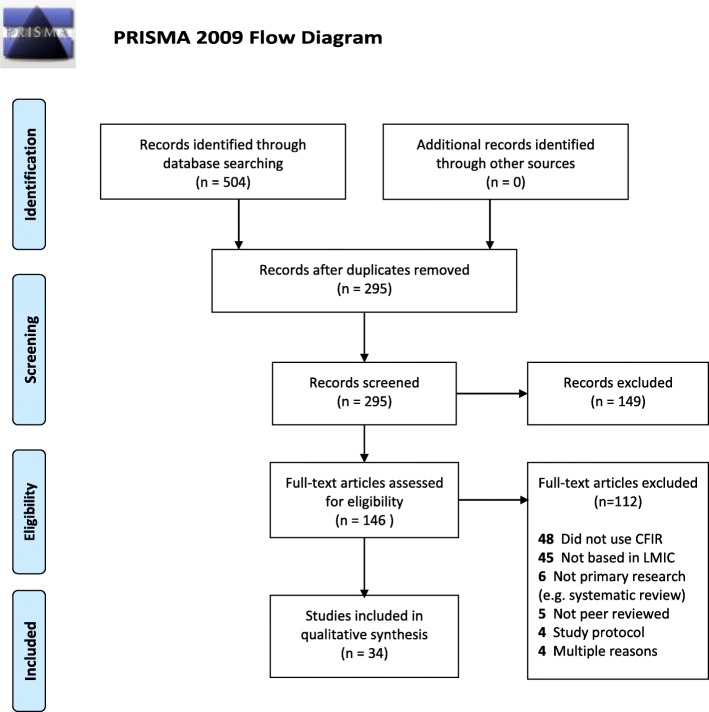
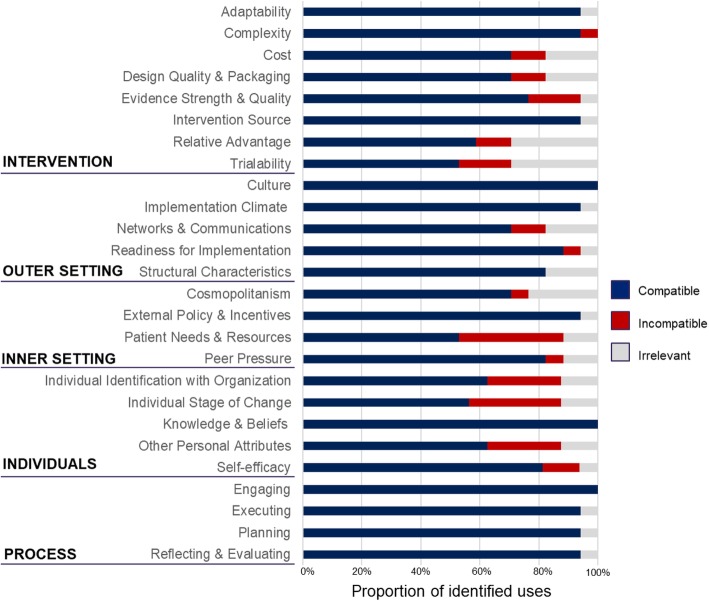
Background: The Consolidated Framework for Implementation Research (CFIR) is a determinants framework that may require adaptation or contextualization to fit the needs of implementation scientists in low- and middle-income countries (LMICs). The purpose of this review is to characterize how the CFIR has been applied in LMIC contexts, to evaluate the utility of specific constructs to global implementation science research, and to identify opportunities to refine the CFIR to optimize utility in LMIC settings. Methods: A systematic literature review was performed to evaluate the use of the CFIR in LMICs. Citation searches were conducted in Medline, CINAHL, PsycINFO, CINAHL, SCOPUS, and Web of Science. Data abstraction included study location, study design, phase of implementation, manner of implementation (ex., data analysis), domains and constructs used, and justifications for use, among other variables. A standardized questionnaire was sent to the corresponding authors of included studies to determine which CFIR domains and constructs authors found to be compatible with use in LMICs and to solicit feedback regarding ways in which CFIR performance could be improved for use in LMICs. Results: Our database search yielded 504 articles, of which 34 met final inclusion criteria. The studies took place across 21 countries and focused on 18 different health topics. The studies primarily used qualitative study designs (68%). Over half (59%) of the studies applied the CFIR at study endline, primarily to guide data analysis or to contextualize study findings. Nineteen (59%) of the contacted authors participated in the survey. Authors unanimously identified culture and engaging as compatible with use in global implementation research. Only two constructs, patient needs and resources and individual stages of change were commonly identified as incompatible with use. Author feedback centered on team level influences on implementation, as well as systems characteristics, such as health system architecture. We propose a “Characteristics of Systems” domain and eleven novel constructs be added to the CFIR to increase its compatibility for use in LMICs. Conclusions: These additions provide global implementation science practitioners opportunities to account for systems-level determinants operating independently of the implementing organization. Newly proposed constructs require further reliability and validity assessments. Trial registration: PROSPERO, CRD42018095762
Overview
The claims and statistics of this paper haven’t been checked yet.
Free: it reads the open-access text and checks the first 5 claims that cite a source we can check. Create a free account to check every claim.
Integrity signals
Registry
Cites
Statistics
Figures
Verification
Claims the paper makes
The claims and statistics of this paper haven’t been checked yet.
Free: it reads the open-access text and checks the first 5 claims that cite a source we can check. Create a free account to check every claim.
Claims other papers make about this one
Each is checked against this paper’s own text: does it say what the citing paper says it does?
The source backs part of the claim, not all of it — or backs it for a different population, condition or comparison.
In the citing paper
“The updated CFIR adds constructs to capture the potential influence of Local Attitudes, i.e., sociocultural values and beliefs, and Local Conditions, i.e., economic, environmental, political, and/or technological conditions, on the willingness and ability of entities within the Outer Setting to support implementation and delivery of the innovation [42–47]”
From The updated consolidated framework for implementation research based on user feedback (2022) · cites this paper as [42]
Experimental — accuracy not yet measuredThe source backs part of the claim, not all of it — or backs it for a different population, condition or comparison.
In the citing paper
“a few best practices have been added: Teaming [42, 46, 73], Assessing Needs [46, 47], Assessing Context, Tailoring Strategies [14], and Adapting [45, 74, 75].”
From The updated consolidated framework for implementation research based on user feedback (2022) · cites this paper as [42]
Experimental — accuracy not yet measuredThe source backs part of the claim, not all of it — or backs it for a different population, condition or comparison.
In the citing paper
“Means et al. further recommended that studies encompassing dual resource-limited subgroups must conduct systematic cross-group comparisons to disentangle divergent barriers and enablers: LMICs suffer nationwide systemic underinvestment, whereas health inequities in high-income nations stem from localized uneven resource distribution.”
From Implementation and translation of evidence-based dietary strategies for type 2 diabetes in resource-limited settings: a scoping review based on the CFIR framework (2026) · cites this paper as [8]
Experimental — accuracy not yet measuredThe source backs part of the claim, not all of it — or backs it for a different population, condition or comparison.
In the citing paper
“This broad two-tier classification is methodologically justified by prior implementation science research reported by Means et al. (8), who conducted a systematic review of CFIR applications across LMIC contexts.”
From Implementation and translation of evidence-based dietary strategies for type 2 diabetes in resource-limited settings: a scoping review based on the CFIR framework (2026) · cites this paper as [8]
Experimental — accuracy not yet measuredThe cited source says what the claim attributes to it.
In the citing paper
“These constructs are especially important for innovations that require support from community entities, such as Housing First models of care [48], and for capturing common resource constraints in LMICs [42].”
From The updated consolidated framework for implementation research based on user feedback (2022) · cites this paper as [42]
8 more claims about this paper
Create a free account to see every claim other papers make about this one.
Self-check
Percentages, sums and reported differences re-computed from the paper’s own numbers.
The self-check needs the paper’s full text.
Citations
Cites
Preferred Reporting Items for Systematic Reviews and Meta-Analyses: the PRISMA statement
Moher, D., Liberati, A., Tetzlaff, J., Altman, D. G., & for the PRISMA Group (2009) · BMJ · doi:10.1136/bmj.b2535 · Cited by 83,823
Preferred Reporting Items for Systematic Reviews and Meta-Analyses: The PRISMA Statement
Moher, D., Liberati, A., Tetzlaff, J., Altman, D. G., & The PRISMA Group (2009) · PLoS Medicine · doi:10.1371/journal.pmed.1000097 · Cited by 64,042 · cited 1×
“The systematic review protocol is registered in the International Prospective Register of Systematic Reviews (PROSPERO #CRD42018095762) and followed the Preferred Reporting Items for Systematic Reviews and MetaAnalyses (PRISMA) guidelines (Additional file 1) [6].”
Harris, P. A., Taylor, R., Thielke, R., Payne, J., Gonzalez, N., & Conde, J. G. (2009) · Journal of Biomedical Informatics · doi:10.1016/j.jbi.2008.08.010 · Cited by 51,384 · cited 1×
“We designed a standardized questionnaire in REDCap, and sent the questionnaire to the corresponding author of most included studies (surveys were not sent to authors of studies published immediately prior to paper submission) [9].”
MethodPreferred reporting items for systematic reviews and meta-analyses: the PRISMA Statement.
(2009) · PubMed Central · Cited by 44,859
Damschroder, L. J., Aron, D. C., Keith, R. E., Kirsh, S. R., Alexander, J. A., & Lowery, J. C. (2009) · Implementation Science · doi:10.1186/1748-5908-4-50 · Cited by 14,496 · cited 5×
“Damschroder and colleagues introduced the CFIR in 2009 as a meta-theoretical framework compiling nineteen preceding implementation theories [2].”
BackgroundInfluentialProctor, E., Silmere, H., Raghavan, R., Hovmand, P., Aarons, G., Bunger, A., Griffey, R., & Hensley, M. (2011) · Administration and Policy in Mental Health and Mental Health Services Research · doi:10.1007/s10488-010-0319-7 · Cited by 8,721 · cited 1×
“Sustainability is a key implementation outcome, and definitions of sustainability vary in the implementation literature [51, 52].”
BackgroundMaking sense of implementation theories, models and frameworks
Nilsen, P. (2015) · Implementation Science · doi:10.1186/s13012-015-0242-0 · Cited by 4,447 · cited 13×
“Author questionnaire respondents, in addition to CFIR utilizers from HICs, identified spread and scale as key missing constructs [50].”
BackgroundInfluentialUse of NeuroEyeCoach™ to Improve Eye Movement Efficacy in Patients with Homonymous Visual Field Loss
Sahraie, A., Smania, N., & Zihl, J. (2016) · BioMed Research International · doi:10.1155/2016/5186461 · Cited by 1,772
A systematic review of the use of the Consolidated Framework for Implementation Research
Kirk, M. A., Kelley, C., Yankey, N., Birken, S. A., Abadie, B., & Damschroder, L. (2015) · Implementation Science · doi:10.1186/s13012-016-0437-z · Cited by 1,496 · cited 5×
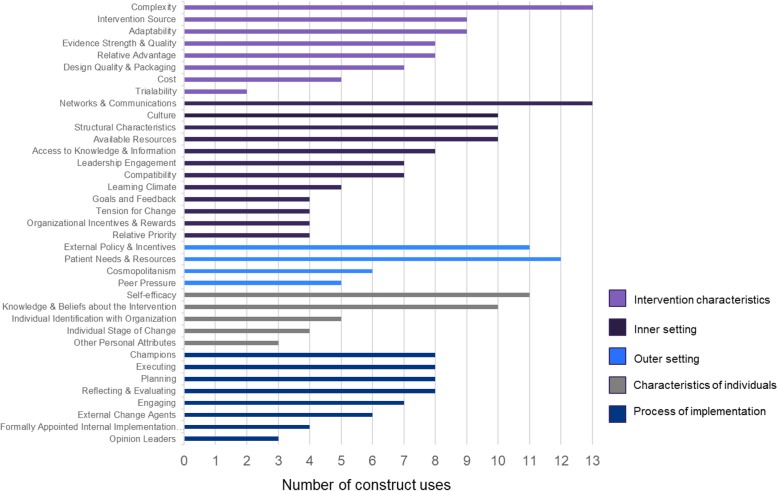
“study design, monitoring implementation processes, data analysis, and outcome interpretation [3].”
BackgroundResultInfluentialWhat Do We Know about Health Care Team Effectiveness? A Review of the Literature
Lemieux-Charles, L., & McGuire, W. L. (2006) · Medical Care Research and Review · doi:10.1177/1077558706287003 · Cited by 844 · cited 2×
“Examples of these features might include team diversity, interdependence/collaboration, and practice norms [46].”
BackgroundMethod
Research works printed but not linked: 1
- Rojas Smith L, Ashok M, Morss Dy S, Wines R, Teixeira-Poit S. Contextual frameworks for research on the implementation of complex system interventions. Methods research report. (Prepared by the RTI International–University of North Carolina at Chapel Hill Evidence-Based Practice Center under contract No. 290-2007-10056-I.). Rockville: Agency for Healthcare Research and Quality; 2014. 24783308
Cited by
Items 401–459 of 459
Khasanah, N., Liliana, A., Wahyuningsih, M., & Riska, H. (2026) · KESANS International Journal of Health and Science · doi:10.54543/kesans.v5i4.527
“Implementation science frameworks remain virtually absent even are essential for translating efficacy evidence into population health impact (Means et al., 2020).”
He, Y. (2023) · ResearchWorks at the University of Washington (University of Washington)
da Silva, B. B., Saidel, M. G. B., Figueiredo, A. P., dos Reis, M. F. L., Lourencetti, A. L. S., Leite, R. C., Stefanini, J. R., Cruvinel, M. V., Reis, G. D. C., Costa, M. C., et al. (2026) · BMC Public Health · doi:10.1186/s12889-026-26529-8
“However, the analysis revealed emergent dimensions not fully captured by the CFIR constructs, highlighting the need for additional analytical categories to understand the complexity and local dynamics, marked by structural inequalities and disparities in mental health [26, 27].”
Will XR Become the Next Frontier in Healing Substance Use Disorders?
Angelone, L. M., & Koustova, E. (2026) · Frontiers in Virtual Reality · doi:10.3389/frvir.2026.1770918
Draper, B. L., Flynn, M., Schroeder, S., Wisse, E., Aikaeli, F., Han, Z. M., Ayako, M., Bajis, S., Butsashvili, M., Davtyan, K., et al. (2026) · BMJ Open · doi:10.1136/bmjopen-2025-114119
“The updated Consolidated Framework for Implementation Research (CFIR) by Damschroder et al 46 and the recommended adaptations for LMICs by Means et al 47 will be used to develop the data collection tools and analysis framework to guide the feasibility assessment.”
Hull, L., Sweetnam, C., Davis, R. E., Khadjesari, Z., Healey, A., Boaz, A., Bakolis, I., Sevdalis, N., Goulding, L., Panel, I. E. A., et al. (2026) · Implementation Science Communications · doi:10.1186/s43058-025-00847-1
“…frameworks and taxonomies that have been developed for application in healthcare and subsequently adapted and modified for use in other contexts and fields [24, 25], we anticipate that ImpResPAC is likely to require adaptation to ensure it is appropriate for application outside of healthcare.”
Westgard, C. M., Onofre, A. C., Peres, N. V., Bessa, L., Colagrossi, A. L. R., Santos, J. L., Cunha, D. F. S., & Brentani, A. (2026) · PLOS Global Public Health · doi:10.1371/journal.pgph.0005203 · Cited by 1
“…a useful structure for organizing multilevel determinants; however, systematic reviews have noted limitations, including overlapping constructs, limited attention to workforce-specific determinants, and challenges applying CFIR in large and complex delivery systems (Means, et al., 2020 [54].”
Agroia, H. K., & Prabhakaran, M. (2026) · Health Promotion Practice · doi:10.1177/15248399261435603
He, Y., AbuShweimeh, R., Kouabenan, Y.-R., Assoa, P. H., Puttkammer, N. H., Gloyd, S. S., Wagenaar, B. H., Hoffman, N. G., Komena, P., Kamelan, N. P. F., et al. (2026) · Implementation Science Communications · doi:10.1186/s43058-026-01064-0
Self-citationFakhfakh, M., Murenzi, G., Niyonsenga, S. P., Hagenimana, J. D., Felix, K., Condo, J., Absolomon, G., Ruzindana, K. B., Hagenimana, M., Kabukye, J. K., et al. (2026) · Research Square · doi:10.21203/rs.3.rs-9418957/v1
McCrimmon, T., Lunchenkov, N., Metsch, L. R., Jonbekov, J., Sangova, F., Sirojiddinova, M., Weine, S. M., & Philbin, M. M. (2026) · BMC Public Health · doi:10.1186/s12889-026-27450-w
“This is particularly true for research conducted in low and middle income country (LMIC) settings, where healthcare systems and norms are very different than those in high-income countries [24], and where international organizations provide a large portion of programming for HIV.”
Andrade, R. M. R., Zurita, S. A., Morales, F. J., Bravo, G. P., & Meléndez, E. N. (2024) · Límite · Cited by 1
Agbaje, A. H. (2026) · International Journal of Innovative Science and Research Technology (IJISRT) · doi:10.38124/ijisrt/26apr2523
Iqbal, A., Knaggs, R., ANDERSON, C., & Toh, L. S. (2026) · Research in Social and Administrative Pharmacy · doi:10.1016/j.sapharm.2026.05.002
Akeboi, O., Bassey, D., Oni, M., Sule-Odu, A., Oladoye, O., Idim, G. A., Onwusaka, O., Oguntoye, M., Oluyemi, O., Olatunji, M., et al. (2026) · Discover Public Health · doi:10.1186/s12982-026-02031-9
“The CFIR is a well-established determinants framework for implementation science that categorises factors influencing implementation into five major domains [13, 14].”
InfluentialExploring the Implementation of a New Nursing Role Using the CFIR–ERIC Approach: A Qualitative Study
Saragosa, M., Shing, P., Hirji, Z. A., Ronald, K., & Jeffs, L. P. (2026) · Journal of Nursing Management · doi:10.1155/jonm/8513187
“CFIR is a widely used framework from the implementation science literature consisting of fve domains and 48 related constructs representing the entirety of the implementation process [29].”
Wafeu, G. S., Makoge, V., Simo, M. L. S., Nana-Djeunga, H. C., & Kamgno, J. (2026) · BMC Health Services Research · doi:10.1186/s12913-026-14863-x
“The determinants of successful implementation of an intervention or strategy, such as integrating a campaign into the PHC system, were conceptualized using the Consolidated Framework for Implementation Research (CFIR) modified by Means et al. for low-and middle-income countries [13].”
Kimambo, A., Vuhahula, E. A. M., Mmbaga, E. J., Musa, B., Malango, A. E., Illonga, Z., Mushi, B. P., Kitosho, B., Loon, K. V., & Ng, D. (2026) · JCO Global Oncology · doi:10.1200/go-25-00718
Miller, A. P., Saldana, C. D. R., Kiene, S. M., Menya, E., Figge, C. J., Sentongo, H. L., Byansi, W., Mugamba, S., Kalani, K., Tuhebwe, D., et al. (2026) · PLOS Global Public Health · doi:10.1371/journal.pgph.0006566
“CFIR can be applied before, during, and after implementation, and has been successfully used in a wide range of settings, including low-resource environments [35–37].”
Martins, V., de Pinho, L. G., da Silva, R. C. G., Giménez‐Díez, D., Tomás, M. A. R., Vidal, A. C., Soares, M., & Lopes, M. J. (2026) · JBI Evidence Synthesis · doi:10.11124/jbies-25-00391
Chhun, N., Kamusiime, B., Nalumansi, A., Twesige, C. C., Nalukwago, G. K., Kasiita, V., Mudiope, P., Kansiime, R., Muwonge, T. R., Kyambadde, P., et al. (2026) · Addiction Science & Clinical Practice · doi:10.1186/s13722-026-00693-z
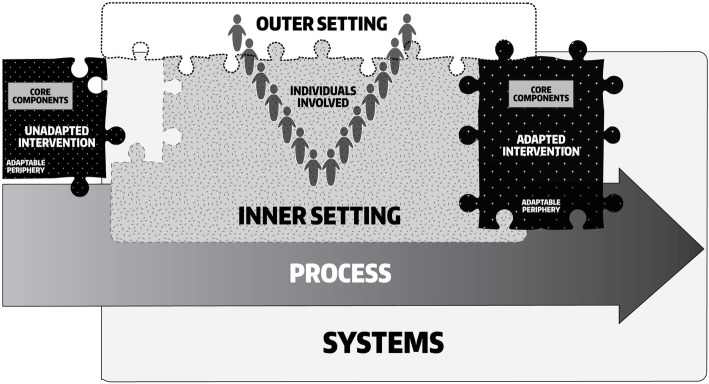
“An additional domain, characteristics of systems, along with constructs relevant in low-and middle-income settings, such as resource continuity and community characteristics, were also included [40].”
Kandulu, C. C., Fleming, A., O'Mahony, A., McHugh, S., Shorter, G. W., Berry, E., Shields, C., Sahar, N. U., Moore, A., & Sahm, L. J. (2026) · Vaccine · doi:10.1016/j.vaccine.2026.128909
Guy, K., Tsui, J., Musasizi, E., Kusolo, R., Mukupa, M., Arinaitwe, J., Goma, F. M., Atuyambe, L. M., Guwatudde, D., Phiri, M. M., et al. (2026) · Tobacco Prevention & Cessation · doi:10.18332/tpc/221806
“In this context, sustained progress will require Ministries of Health and other stakeholders throughout the region to take deliberate, coordinated action: expanding prescription NRT availability, embedding stigma reduction and capacity building directly into cessation service workflows, and…”
Masereka, E. M., Lafaut, D., Coene, G., Nambozi, G., Kabakyenga, J. K., & Embo, M. (2026) · Research Square · doi:10.21203/rs.3.rs-10211714/v1
German, C. J., Kigombola, A., Mwashemele³, S., Matiko³, J., Komba², P., Marandu, L. E., Hokororo, J., Kinyenje, E. S., Nassoro, O. A., Ngowi, R. R., et al. (2026) · Research Square · doi:10.21203/rs.3.rs-10145556/v1
Adapa, K., Mosaly, P. R., Yu, F., Moore, C., McGurk, R., Das, S., & Mazur, L. M. (2026) · medRxiv · doi:10.64898/2026.08.05.26359837
Conceptualizing Implementation Failure: A Scoping ReviewPreprint
Thomson, D., Zimmermann, G. L., Alba, C., van der Graaf, P., Moore, J. E., Sjoblom, E., & Montesanti, S. R. (2026) · Research Square · doi:10.21203/rs.3.rs-10554420/v1
Berrocoso, J. V., Hidalgo, M., & Rodríguez, A. M. (2026) · Contemporary Educational Technology · doi:10.30935/cedtech/19137
Salek, M., Busby, K. M., Webb, N., Graetz, D. E., Mullighan, C. G., Alexander, T., Bhakta, N. H., Roberts, M. C., & Wang, L. (2026) · Frontiers in Oncology · doi:10.3389/fonc.2026.1885970
Ryan, M. I., & Snoswell, C. L. (2026) · Elsevier eBooks · doi:10.1016/b978-0-443-44607-8.00021-2
Rapid Deductive Qualitative Analysis in Implementation Science: A Practical Training Protocol
Palmer, S., & Balis, L. E. (2026) · American Journal of Qualitative Research · doi:10.66815/ajqr/19192
Pujic, B. P., Velickovic, I. A., Baysinger, C. L., Palmer, C. M., Vejnovic, A., Braveman, F. R., Pejcic, N. Z., Krusic, S. B., Kendrišić, M., Ucer, S., et al. (2026) · International Journal of Obstetric Anesthesia · doi:10.1016/j.ijoa.2026.105270
Mpanumpanu, R., Francis, M., Garcia, K. N., & Duthely, L. M. (2026) · Frontiers in Reproductive Health · doi:10.3389/frph.2026.1896729
“First, the Consolidated Framework for Implementation Research (CFIR) guides evaluation of implementation determinants across five domains: intervention characteristics, outer setting, inner setting, characteristics of individuals, and process (23, 24).”
Leung, C. L., Goka, P. K., Adu, I., Atangongo, B., Atchulo, R., Bingle, M. M. M., Boateng, L., Huang, K., Laiteerapong, N., Volerman, A., et al. (2026) · International Journal of Environmental Research and Public Health · doi:10.3390/ijerph23091204
Gazetta, E., Matenga, T. F. L., Martin, S., Mandona, N. M., Barada, R., Chileshe, M., Stringer, E., Chinyama, M., Chembo, B., Chi, H., et al. (2026) · PLoS ONE · doi:10.1371/journal.pone.0357962
“The evaluation design is informed by the Consolidated Framework for Implementation Research (CFIR) 2.0 [17].”
InfluentialMureed, S., Hamid, S., Mangrio, S., Hameed, S., & Javed, M. (2026) · Global Health Action · doi:10.1080/16549716.2026.2732675
“…that framework constructs are frequently adapted, partially applied, or invoked post hoc to interpret findings rather than prospectively used to guide study design, indicating that uneven or informal framework uptake is a broader feature of implementation science practice in LMIC settings [40].”
Dumet, L. M., Vilchez, P., Spencer, A., Atto, R., Cruz, V., Garcia, H., Bustos, J. A., Cruden, G., & O'Neal, S. (2026) · Research Square · doi:10.21203/rs.3.rs-10132093/v1
“…to describe the barriers and facilitators of RT implementation 38 informed by a version of the CFIR with added constructs relevant in LMIC contexts; 35 2) social network analysis to identify key players for RT adoption; and 3) process mapping to develop RT delivery protocols in alignment with…”
Berg, F., Erlandsson, K., Pappu, N. I., Wigert, H., Kemp, J., Raha, P. R., Basri, R., Jha, P., & Bogren, M. U. (2026) · Women and Birth · doi:10.1016/j.wombi.2026.102405
Hassan, A., McLorg, A., Kamire, V., Baker, V., Osindo, J., Kemigisha, E., Ferguson, J., Mchenga, M., Floyd, S., Kwaro, D., et al. (2026) · PLOS Global Public Health · doi:10.1371/journal.pgph.0006701
“CFIR provides a detailed outline for identifying factors that facilitate, or act as barriers, to the implementation of interventions across settings [18–20].”
Sridawruang, C., Sriyasak, A., Sriring, P., Tienthavorn, V., Thanakanjanaphakdee, W., Klungklang, R., Sarakshetrin, A., Worawong, C., Pitaksongkram, P., Sripromsa, W., et al. (2026) · Discover Public Health · doi:10.1186/s12982-026-02993-w
“Most CFIR applications derive from single-site or small-cluster studies in high-income countries, leaving substantial gaps regarding transferability to diverse educational contexts such as those in Southeast Asia [14].”
Mubarokah, M. A., Gilbert, H. N., Probandari, A. N., Anggraeni, H. D., Oktavia, R. S., & Yuen, C. M. (2026) · Journal of Health Services Research & Policy · doi:10.1177/13558196261489144 · Cited by 1
Mu, J., Li, C., Kang, T., Dong, C., Chen, C., Ou, B., Liang, H., & Zhang, N. (2026) · Frontiers in Digital Health · doi:10.3389/fdgth.2026.1967645
“At the process level, multiple studies have identified problems including inadequate teamwork, lack of leadership, and weak supervision and feedback mechanisms (5 – 9).”
InfluentialShallal, T. M. A., & D’Souza, R. F. (2026) · PLoS ONE · doi:10.1371/journal.pone.0356377
“Medical educationists have applied the CFIR to analyze the barriers and facilitators of curriculum adoption [15,16].”
Olawuyi, A. O., Adebayo, T. O., Ademosun, A. A., Adesina, T. B., Umeche, I. E., & Ogunwale, T. K. (2026) · FUDMA Journal of Sciences · doi:10.33003/fjs-2026-1017-5992
Sutejo, L. W., & Amsirun (2026) · Proceeding ICAMEKA: International Conference Accounting, Management & Economics Uniska
Barimah, A. J., Addo, H. O., Adjei, M. N. A., Baasongti, C. B., Dzamesi, J. Y. W., Agongo, U. A., & Aduafo, J. A. (2026) · Discover Public Health · doi:10.1186/s12982-026-03024-4
“…(CFIR) has been adapted to screening uptake research, and the framework shows how characteristics of the intervention, the outer setting (community and policy), the inner setting (health system), and individual characteristics of providers and patients interact in screening uptake [28, 29].”
Brown, L., Ziemann, A., Strydom, M., & Templeton, L. (2026) · Routledge eBooks · doi:10.4324/9781003591276-6
Owidi, E., Oluoch, L. M., Weiner, B. J., Cheptoo, C., Miano, C. W., Mecca, L., Kiarie, L., Nyangena, E., Nzuki, B., Mwangi, P. M., et al. (2026) · BMJ Public Health · doi:10.1136/bmjph-2026-005069
“29 CFIR has five broad domains: intervention/innovation, outer setting, inner setting, individuals and implementation process.”
Self-citationMohamedahmed, A. Y., Adam, M. A., Saleh, S. A. J., Dafallah, M. A. E., Salim, O. E., Bagg, K., Louw, J., Chao, T. E., & Chu, K. (2026) · Surgical Endoscopy · doi:10.1007/s00464-026-13414-z
Haj-Sheykholeslami, A., Khalili, N., Tehrani‐Banihashemi, A., Hajebi, A., & Nojomi, M. (2026) · Journal of Family Violence · doi:10.1007/s10896-026-01198-8
Keating, E. M., Njau, R., Magoma, J., Moshi, B., Marandu, D., Minja, E., Msuya, I., Anthony, A., Sakita, F., Koenig, M., et al. (2026) · Health Policy and Planning · doi:10.1093/heapol/czag121
Aldosari, M. S. (2026) · International Journal of Developmental Disabilities · doi:10.1080/20473869.2026.2748273
Jacobs, C. N., Sethy, G., Asfaw, A. G., Namukanga, N. E., Halwiindi, H., Munakampe, M. N., Kaonga, P., Musukuma, M., Mwansa, F. D., Sakala, J., et al. (2026) · Vaccines · doi:10.3390/vaccines14110933
Gilgal, C., & Kim, H.-Y. (2026) · Asia-pacific Journal of Convergent Research Interchange · doi:10.47116/apjcri.2026.10.80
Bussières, A., Corso, M., Louw, Q. A., Beira, B., Oosthuizen, A., Vlok, A. (., Roberts, L. C., Campello, M. A., Lubbe, D., Chihambakwe, M., et al. (2026) · Global Health Research and Policy · doi:10.1016/j.ghrp.2026.10.008
Febilola, A. S., Alimi, M. A., Onah, I. T., Emeonye, C. J., Abdulgafar, A. O., Nyee, N. N., & Babawale, I. A. (2026) · Epidemiology and Health Data Insights · doi:10.63946/ehdi/19706
Mahmood, H., Shaikh, B. T., Pervaiz, F., Naseem, A., Idrees, M., Ahmad, A. M. R., Waheed, Y., & Alsanie, S. A. (2026) · Nutrients · doi:10.3390/nu18213652
Nyakuni, P., Mubuuke, A. G., Izudi, J., Ngabirano, T. D., Mpirirwe, R., & Patience, M. (2026) · BMJ Open · doi:10.1136/bmjopen-2026-127150
Metadata
- Authors
- Means, A. R., Kemp, C. G., Gwayi-Chore, M.-C., Gimbel, S., Soi, C., Sherr, K., Wagenaar, B. H., Wasserheit, J. N., & Weiner, B. J.
- Affiliations
- University of Washington (US)
- Corresponding author
- Means, Arianna Rubin
- ORCID
- Venue
- Implementation Science
- Published
- 2020-03-12
- Volume
- 15
- Issue
- 1
- Pages
- 17-17
- ISSN
- 1748-5908 (ISSN-L)
- PMC
- PMC7069199
- OpenAlex
- W3011338064
- Semantic Scholar
- 62e24d7f5bd4bfed5761e7fc4758895d8d8f1ad2
- Cited by
- 418
- References
- 61
- Citations by year
- 2026: 69 · 2025: 54 · 2024: 82 · 2023: 82 · 2022: 70 · 2021: 48 · 2020: 13
- FWCI
- 10.15
- Type
- journal article
- Language
- en
- Open access
- gold
- doi.org
- Licence
- cc-by
- creativecommons.org/licenses/by/4.0/ (tdm)
- creativecommons.org/licenses/by/4.0/ (vor)
- Locations
- Implementation Science (publishedVersion, cc-by)
- PubMed Central (publishedVersion, cc-by)
- PubMed (publishedVersion)
- DOAJ (DOAJ: Directory of Open Access Journals) (submittedVersion, cc-by-sa)
- Funders
- National Institute of Mental Health (K01MH110599)
- Topics
- Health Sciences › Health Professions › General Health Professions › Health Policy Implementation Science
- Health Sciences › Health Professions › General Health Professions › Health Sciences Research and Education
- Health Sciences › Medicine › Public Health, Environmental and Occupational Health › Clinical practice guidelines implementation
- Keywords
- Consolidated Framework for Implementation Research, implementation research, low- and middle-income countries, framework adaptation, contextualization, implementation factors, health system architecture, stages of change
- MeSH terms
- Implementation Science, Developing Countries, Health Services Needs and Demand, Humans, Reproducibility of Results, Health Care Rationing, Organizational Culture
About these checks
Registry, retraction, Cites and statistics results are computed, not judged, with one exception: a printed reference that no index lists is read once by a model before it counts as a citation error. Claims are extracted by a model and kept only when their quote appears verbatim in the text; each cited source is then checked, with a model’s help, for whether it says what the claim relies on. Those verdicts can be wrong — read the claim’s quote and the cited source before relying on one.
Statistics and arithmetic are recomputed, not judged.
Confidence bands are shown only for fields calibrated on our annotated test set. None is calibrated yet, so no band is shown.
What counts as a claim ›How we measure confidence ›How we check this ›
Are you an author, or do you see a problem with this page? Request a review
Data sources
Bibliographic data: Semantic Scholar, OpenAlex, Crossref.
Contains information from the Semantic Scholar Academic Graph Datasets, made available under the ODC Attribution License (ODC-BY 1.0).
Semantic Scholar’s data is described in: Kinney, R., et al. (2023). The Semantic Scholar Open Data Platform. arXiv:2301.10140.
