

The DOI matches its Crossref record; 45 of the 45 references it cites were found in a registry or an index.
The Trem2 R47H Alzheimer's risk variant impairs splicing and reduces Trem2 mRNA and protein in mice but not in humans
Open accessAbstract
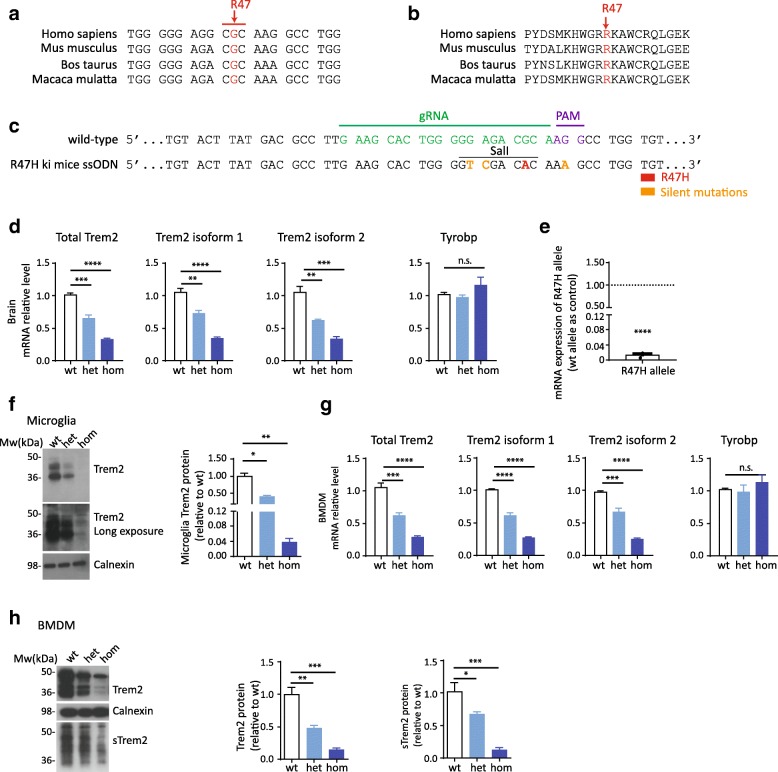
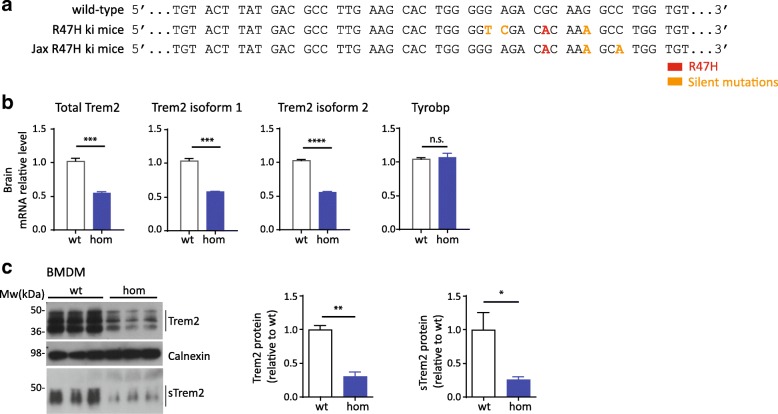
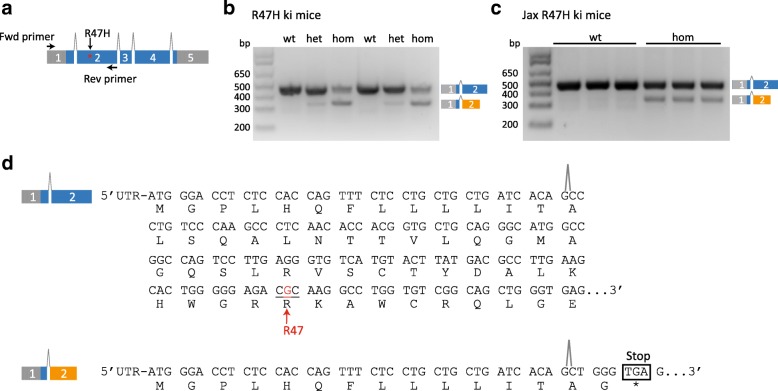
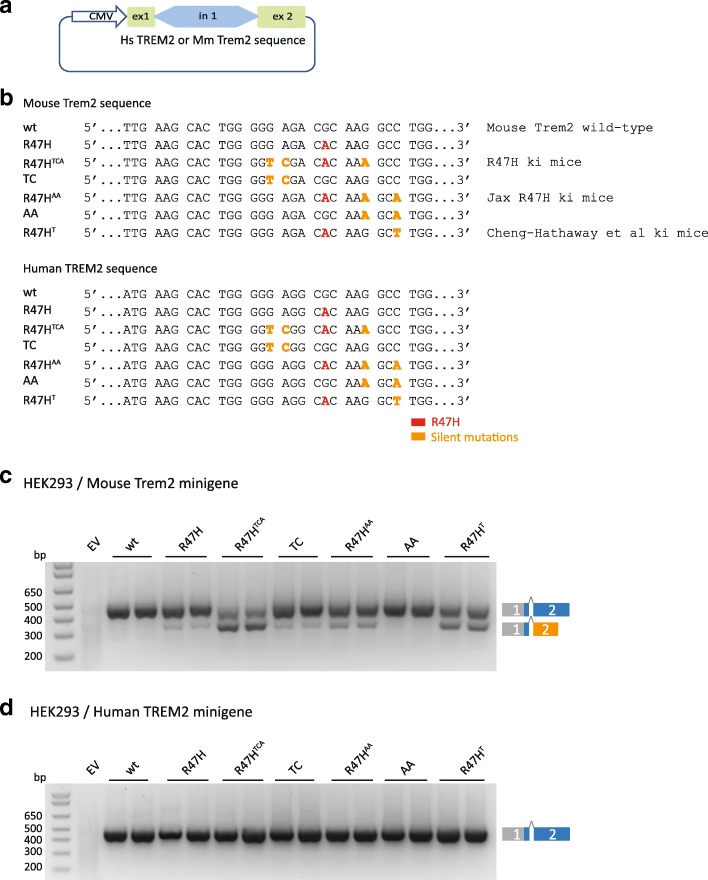
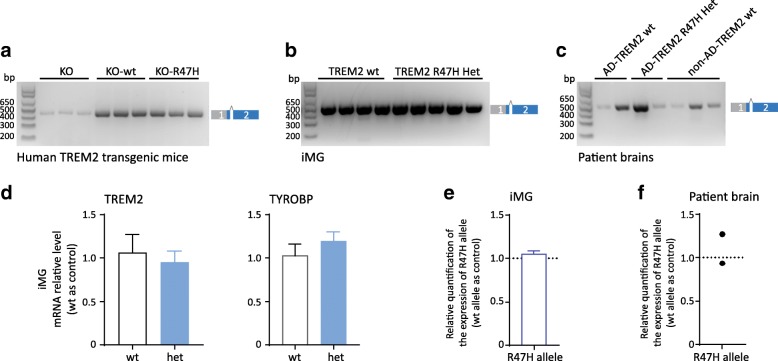
BACKGROUND: The R47H variant of the Triggering Receptor Expressed on Myeloid cells 2 (TREM2) significantly increases the risk for late onset Alzheimer's disease. Mouse models accurately reproducing phenotypes observed in Alzheimer' disease patients carrying the R47H coding variant are required to understand the TREM2 related dysfunctions responsible for the enhanced risk for late onset Alzheimer's disease. METHODS: A CRISPR/Cas9-assisted gene targeting strategy was used to generate Trem2 R47H knock-in mice. Trem2 mRNA and protein levels as well as Trem2 splicing patterns were assessed in these mice, in iPSC-derived human microglia-like cells, and in human brains from Alzheimer's patients carrying the TREM2 R47H risk factor. RESULTS: Two independent Trem2 R47H knock-in mouse models show reduced Trem2 mRNA and protein production. In both mouse models Trem2 haploinsufficiency was due to atypical splicing of mouse Trem2 R47H, which introduced a premature stop codon. Cellular splicing assays using minigene constructs demonstrate that the R47H variant induced abnormal splicing only occurs in mice but not in humans. TREM2 mRNA levels and splicing patterns were both normal in iPSC-derived human microglia-like cells and patient brains with the TREM2 R47H variant. CONCLUSIONS: The Trem2 R47H variant activates a cryptic splice site that generates miss-spliced transcripts leading to Trem2 haploinsufficiency only in mice but not in humans. Since Trem2 R47H related phenotypes are mouse specific and do not occur in humans, humanized TREM2 R47H knock-in mice should be generated to study the cellular consequences caused by the human TREM2 R47H coding variant. Currently described phenotypes of Trem2 R47H knock-in mice can therefore not be translated to humans.
Overview
The claims and statistics of this paper haven’t been checked yet.
Run the check — free, no account needed. It reads the open-access text and checks the sources it cites.
Integrity signals
Registry
Cites
Statistics
Figures
Verification
Claims the paper makes
The claims and statistics of this paper haven’t been checked yet.
Run the check — free, no account needed. It reads the open-access text and checks the sources it cites.
Claims other papers make about this one
Each is checked against this paper’s own text: does it say what the citing paper says it does?
The cited source says what the claim attributes to it.
In the citing paper
“iPSC-derived microglial-like cells were generated using established protocols [64,65].”
From Selective suppression of oligodendrocyte-derived amyloid beta rescues neuronal dysfunction in Alzheimer’s disease (2024) · cites this paper as [65]
The cited source says what the claim attributes to it.
In the citing paper
“such as reduced ligand binding (p.R47H [96], p.R62H [97])”
From TREM2/PLCγ2 signalling in immune cells: function, structural insight, and potential therapeutic modulation (2021) · cites this paper as [96]
The check wasn’t confident either way, so it gives no verdict — never disputed.
In the citing paper
“A number of mutations in PLCG2 (about 75%), that have been previously implicated in various inflammatory diseases [92–102], actually map to the autoinhibitory interface on the PLCγ2 model structure and can be considered as pathogenic (Fig. 2c)”
From TREM2/PLCγ2 signalling in immune cells: function, structural insight, and potential therapeutic modulation (2021) · cites this paper as [96]
Experimental — accuracy not yet measuredIn the citing paper
“This has been shown to be due to a splice effect that seems to occur in mice but not in humans (36).”
From Trem2 promotes anti-inflammatory responses in microglia and is suppressed under pro-inflammatory conditions (2020) · cites this paper as [36]
In the citing paper
“This effect has been described by Cheng-Hathaway et al. (37) and Xiang et al. (36) studying the same mouse line used here from the Jackson Laboratory, and an independent Trem2 R47H KI mouse line.”
From Trem2 promotes anti-inflammatory responses in microglia and is suppressed under pro-inflammatory conditions (2020) · cites this paper as [36]
Self-check
Percentages, sums and reported differences re-computed from the paper’s own numbers.
The self-check needs the paper’s full text.
Citations
Cites
A Unique Microglia Type Associated with Restricting Development of Alzheimer’s Disease
Keren-Shaul, H., Spinrad, A., Weiner, A., Matcovitch-Natan, O., Dvir-Szternfeld, R., Ulland, T. K., David, E., Baruch, K., Lara-Astaiso, D., Toth, B., et al. (2017) · Cell · doi:10.1016/j.cell.2017.05.018 · Cited by 5,493
Self-citationTREM2 Variants in Alzheimer's Disease
Guerreiro, R., Wojtas, A., Bras, J., Carrasquillo, M., Rogaeva, E., Majounie, E., Cruchaga, C., Sassi, C., Kauwe, J. S. K., Younkin, S., et al. (2013) · New England Journal of Medicine · doi:10.1056/nejmoa1211851 · Cited by 3,020
Self-citationKrasemann, S., Madore, C., Cialic, R., Baufeld, C., Calcagno, N., El Fatimy, R., Beckers, L., O’Loughlin, E., Xu, Y., Fanek, Z., et al. (2017) · Immunity · doi:10.1016/j.immuni.2017.08.008 · Cited by 2,979
Self-citationVariant of TREM2 Associated with the Risk of Alzheimer's Disease
Jonsson, T., Stefansson, H., Steinberg, S., Jonsdottir, I., Jonsson, P. V., Snaedal, J., Bjornsson, S., Huttenlocher, J., Levey, A. I., Lah, J. J., et al. (2013) · New England Journal of Medicine · doi:10.1056/nejmoa1211103 · Cited by 2,558
Identification of a unique TGF-β–dependent molecular and functional signature in microglia
Butovsky, O., Jedrychowski, M. P., Moore, C. S., Cialic, R., Lanser, A. J., Gabriely, G., Koeglsperger, T., Dake, B., Wu, P. M., Doykan, C. E., et al. (2014) · Nature Neuroscience · doi:10.1038/nn.3599 · Cited by 2,543
A more efficient method to generate integration-free human iPS cells
Okita, K., Matsumura, Y., Sato, Y., Okada, A., Morizane, A., Okamoto, S., Hong, H., Nakagawa, M., Tanabe, K., Tezuka, K.-I., et al. (2011) · Nature Methods · doi:10.1038/nmeth.1591 · Cited by 2,061
Haeussler, M., Schönig, K., Eckert, H., Eschstruth, A., Mianné, J., Renaud, J.-B., Schneider-Maunoury, S., Shkumatava, A., Teboul, L., Kent, J., et al. (2016) · Genome biology · doi:10.1186/s13059-016-1012-2 · Cited by 1,756
TREM2 Lipid Sensing Sustains the Microglial Response in an Alzheimer’s Disease Model
Wang, Y., Cella, M., Mallinson, K., Ulrich, J. D., Young, K. L., Robinette, M. L., Gilfillan, S., Krishnan, G. M., Sudhakar, S., Zinselmeyer, B. H., et al. (2015) · Cell · doi:10.1016/j.cell.2015.01.049 · Cited by 1,736
Self-citationTREM2 Maintains Microglial Metabolic Fitness in Alzheimer’s Disease
Ulland, T. K., Song, W. M., Huang, S. C.-C., Ulrich, J. D., Sergushichev, A., Beatty, W. L., Loboda, A. A., Zhou, Y., Cairns, N. J., Kambal, A., et al. (2017) · Cell · doi:10.1016/j.cell.2017.07.023 · Cited by 1,263
Self-citationiPSC-derived human microglia-like cells to study neurological diseases
Abud, E. M., Ramirez, R. N., Martinez, E. S., Healy, L. M., Nguyen, C. H. H., Newman, S. A., Yeromin, A. V., Scarfone, V. M., Marsh, S. E., Fimbres, C., et al. (2017) · Neuron · doi:10.1016/j.neuron.2017.03.042 · Cited by 1,154
Research works printed but not linked: 1
- Wang Y, Ulland TK, Ulrich JD, Song W, Tzaferis JA, Hole JT, et al. TREM2-mediated early microglial response limits diffusion and toxicity of amyloid plaques. J Exp Med. [Internet]. 2016;213:667–75. Available from: http://www.jem.org/lookup/doi/10.1084/jem.20151948 . · DOI · Paper page
Cited by
Sorted by citations
Molecular and cellular mechanisms underlying the pathogenesis of Alzheimer’s disease
Guo, T., Zhang, D., Zeng, Y., Huang, T. Y., Xu, H., & Zhao, Y. (2020) · Molecular Neurodegeneration · doi:10.1186/s13024-020-00391-7 · Cited by 994
Amyloid-β-independent regulators of tau pathology in Alzheimer disease
van der Kant, R., Goldstein, L. S. B., & Ossenkoppele, R. (2020) · Nature reviews. Neuroscience · doi:10.1038/s41583-019-0240-3 · Cited by 580
New insights into the role of TREM2 in Alzheimer’s disease
Gratuze, M., Leyns, C. E. G., & Holtzman, D. M. (2018) · Molecular Neurodegeneration · doi:10.1186/s13024-018-0298-9 · Cited by 489
McQuade, A., Kang, Y. J., Hasselmann, J., Jairaman, A., Sotelo, A., Coburn, M., Shabestari, S. K., Chadarevian, J. P., Fote, G., Tu, C. H., et al. (2020) · Nature Communications · doi:10.1038/s41467-020-19227-5 · Cited by 361
Xiang, X., Wind, K., Wiedemann, T., Blume, T., Shi, Y., Briel, N., Beyer, L., Biechele, G., Eckenweber, F., Zatcepin, A., et al. (2021) · Science Translational Medicine · doi:10.1126/scitranslmed.abe5640 · Cited by 268
Self-citationLiu, W., Taso, O., Wang, R., Bayram, S., Graham, A. C., Garcia-Reitboeck, P., Mallach, A., Andrews, W. D., Piers, T. M., Botia, J. A., et al. (2020) · Human Molecular Genetics · doi:10.1093/hmg/ddaa209 · Cited by 214
“This has been shown to be due to a splice effect that seems to occur in mice but not in humans (36).”
BackgroundMethodResultInfluentialSelf-citationScheiblich, H., Eikens, F., Wischhof, L., Opitz, S., Jüngling, K., Cserép, C., Schmidt, S. V., Lambertz, J., Bellande, T., Pósfai, B., et al. (2024) · Neuron · doi:10.1016/j.neuron.2024.06.029 · Cited by 207
Claes, C., Danhash, E. P., Hasselmann, J., Chadarevian, J. P., Shabestari, S. K., England, W. E., Lim, T. E., Hidalgo, J. L. S., Spitale, R. C., Davtyan, H., et al. (2021) · Molecular Neurodegeneration · doi:10.1186/s13024-021-00473-0 · Cited by 197
Updates on mouse models of Alzheimer’s disease
Zhong, M. Z., Peng, T., Duarte, M. L., Wang, M., & Cai, D. (2024) · Molecular Neurodegeneration · doi:10.1186/s13024-024-00712-0 · Cited by 189
Apolipoprotein E induces pathogenic senescent-like myeloid cells in prostate cancer
Bancaro, N., Calì, B., Troiani, M., Elia, A. R., Arzola, R. A., Attanasio, G., Lai, P., Crespo, M., Gürel, B., Pereira, R., et al. (2023) · Cancer Cell · doi:10.1016/j.ccell.2023.02.004 · Cited by 189
Cerebrospinal Fluid Biomarkers of Alzheimer’s Disease: Current Evidence and Future Perspectives
McGrowder, D. A., Miller, F. G., Vaz, K., Nwokocha, C. R., Wilson-Clarke, C. F., Anderson, M., Brown, J., Anderson-Jackson, L., Williams, L., Latore, L., et al. (2021) · Brain Sciences · doi:10.3390/brainsci11020215 · Cited by 169
Human iPSC‐derived microglia: A growing toolset to study the brain's innate immune cells
Hasselmann, J., & Blurton‐Jones, M. (2020) · Glia · doi:10.1002/glia.23781 · Cited by 145
Piers, T. M., Cosker, K., Mallach, A., Johnson, G. T., Guerreiro, R., Hardy, J., & Pocock, J. M. (2020) · The FASEB Journal · doi:10.1096/fj.201902447r · Cited by 135
Self-citationRueda‐Carrasco, J., Sokolova, D., Lee, S., Childs, T., Jurčáková, N., Crowley, G., Schepper, S. D., Ge, J. Z., Lachica, J., Toomey, C. E., et al. (2023) · The EMBO Journal · doi:10.15252/embj.2022113246 · Cited by 125
Leveraging preclinical models for the development of Alzheimer disease therapeutics
Scearce-Levie, K. A., Sanchez, P. E., & Lewcock, J. W. (2020) · Nature Reviews Drug Discovery · doi:10.1038/s41573-020-0065-9 · Cited by 121
A genetic link between risk for Alzheimer's disease and severe COVID-19 outcomes via the OAS1 gene
Magusali, N., Graham, A. C., Piers, T. M., Panichnantakul, P., Yaman, U., Shoai, M., Reynolds, R. H., Botia, J. A., Brookes, K. J., Guetta-Baranes, T., et al. (2021) · Brain · doi:10.1093/brain/awab337 · Cited by 111
Self-citationMicroglia in Alzheimer’s disease: A target for immunotherapy
Wang, S., & Colonna, M. (2019) · Journal of Leukocyte Biology · doi:10.1002/jlb.mr0818-319r · Cited by 106
Self-citationTREM2 brain transcript-specific studies in AD and TREM2 mutation carriers
Del‐Aguila, J. L., Benítez, B. A., Li, Z., Dube, U., Mihindukulasuriya, K. A., Budde, J., Farias, F., Fernández, M. V., Ibáñez, L., Jiang, S., et al. (2019) · Molecular Neurodegeneration · doi:10.1186/s13024-019-0319-3 · Cited by 106
TREM2 is required for microglial instruction of astrocytic synaptic engulfment in neurodevelopment
Jay, T. R., von Saucken, V. E., Muñoz, B., Codocedo, J. F., Atwood, B. K., Lamb, B. T., & Landreth, G. E. (2019) · Glia · doi:10.1002/glia.23664 · Cited by 97
TREM2 in Alzheimer’s Disease: Microglial Survival and Energy Metabolism
Zheng, H., Cheng, B., Li, Y., Li, X., Chen, X., & Zhang, Y.-W. (2018) · Frontiers in Aging Neuroscience · doi:10.3389/fnagi.2018.00395 · Cited by 94
Speicher, A. M., Wiendl, H., Meuth, S. G., & Pawlowski, M. (2019) · Molecular Neurodegeneration · doi:10.1186/s13024-019-0347-z · Cited by 100
Sziraki, A., Lu, Z., Lee, J., Banyai, G., Anderson, S., Abdulraouf, A., Metzner, E., Liao, A., Banfelder, J., Epstein, A., et al. (2023) · Nature Genetics · doi:10.1038/s41588-023-01572-y · Cited by 92
Vilalta, A., Zhou, Y., Sevalle, J., Griffin, J. K., Satoh, K., Allendorf, D. H., De, S., Puigdellívol, M., Bruzas, A., Burguillos, M. A., et al. (2021) · Journal of Biological Chemistry · doi:10.1016/j.jbc.2021.100631 · Cited by 77
The Alzheimer’s disease-associated protective Plcγ2-P522R variant promotes immune functions
Takalo, M., Wittrahm, R., Wefers, B., Parhizkar, S., Jokivarsi, K., Kuulasmaa, T., Mäkinen, P., Martiskainen, H., Wurst, W., Xiang, X., et al. (2020) · Molecular Neurodegeneration · doi:10.1186/s13024-020-00402-7 · Cited by 83
Self-citationMicroglia transcriptional states and their functional significance: Context drives diversity
Depp, C., Doman, J. L., Hingerl, M., Xia, J., & Stevens, B. (2025) · Immunity · doi:10.1016/j.immuni.2025.04.009 · Cited by 84
TREM2 and sTREM2 in Alzheimer’s disease: from mechanisms to therapies
Zhang, L., Xiang, X., Li, Y., Bu, G., & Chen, X. (2025) · Molecular Neurodegeneration · doi:10.1186/s13024-025-00834-z · Cited by 87
Self-citationTrem2 Y38C mutation and loss of Trem2 impairs neuronal synapses in adult mice
Jadhav, V., Lin, P. B., Pennington, T., Prisco, G. V. D., Jannu, A. J., Xu, G., Moutinho, M., Zhang, J., Atwood, B. K., Puntambekar, S. S., et al. (2020) · Molecular Neurodegeneration · doi:10.1186/s13024-020-00409-0 · Cited by 69
Liu, T., Zhu, B., Liu, Y., Zhang, X., Yin, J., Li, X., Jiang, L., Hodges, A. P., Rosenthal, S. B., Zhou, L., et al. (2020) · Journal of Experimental Medicine · doi:10.1084/jem.20200474 · Cited by 64
Delizannis, A. T., Nonneman, A., Tsering, W., Bondt, A. D., den Wyngaert, I. V., Zhang, B., Meymand, E. S., Olufemi, M. F., Koivula, P. P., Maimaiti, S., et al. (2021) · Acta Neuropathologica Communications · doi:10.1186/s40478-021-01251-1 · Cited by 71
Uncovering Disease Mechanisms in a Novel Mouse Model Expressing Humanized APOEε4 and Trem2*R47H
Kotredes, K. P., Oblak, A., Pandey, R. S., Lin, P. B.-C., Garceau, D., Williams, H., Uyar, A., O’Rourke, R., O’Rourke, S., Ingraham, C., et al. (2021) · Frontiers in Aging Neuroscience · doi:10.3389/fnagi.2021.735524 · Cited by 66
Magno, L., Bunney, T. D., Mead, E., Svensson, F., & Bictash, M. N. (2021) · Molecular Neurodegeneration · doi:10.1186/s13024-021-00436-5 · Cited by 64
Hall-Roberts, H., Agarwal, D., Obst, J., Smith, T. B., Monzón-Sandoval, J., Di Daniel, E., Webber, C., James, W. S., Mead, E., Davis, J. B., et al. (2020) · Alzheimer's Research & Therapy · doi:10.1186/s13195-020-00709-z · Cited by 62
Plaque contact and unimpaired Trem2 is required for the microglial response to amyloid pathology
Wood, J. I., Wong, E., Joghee, R., Balbaa, A., Vitanova, K. S., Stringer, K. M., VanSchoiack, A., Phelan, S.-L. J., Launchbury, F., Desai, S., et al. (2022) · Cell Reports · doi:10.1016/j.celrep.2022.111686 · Cited by 65
Rajani, R. M., Ellingford, R., Hellmuth, M., Harris, S. S., Taso, O. S., Graykowski, D., Lam, F. K. W., Arber, C., Fertan, E., Danial, J. S. H., et al. (2024) · PLOS Biology · doi:10.1371/journal.pbio.3002727 · Cited by 62
“iPSC-derived microglial-like cells were generated using established protocols [64,65].”
MethodPocock, J., Vasilopoulou, F., Svensson, E., & Cosker, K. (2024) · Neuropharmacology · doi:10.1016/j.neuropharm.2024.110020 · Cited by 54
Self-citationHaenseler, W., & Rajendran, L. (2019) · Stem Cells · doi:10.1002/stem.2995 · Cited by 58
Reich, M., Paris, I., Ebeling, M., Dahm, N., Schweitzer, C., Reinhardt, D., Schmucki, R., Prasad, M., Köchl, F., Leist, M., et al. (2021) · Frontiers in Immunology · doi:10.3389/fimmu.2020.617860 · Cited by 49
Popescu, A. S., Butler, C. A., Allendorf, D. H., Piers, T. M., Mallach, A., Roewe, J., Reinhardt, P., Cinti, A., Redaelli, L., Boudesco, C., et al. (2022) · Glia · doi:10.1002/glia.24318 · Cited by 57
Self-citationCosker, K., Mallach, A., Limaye, J., Piers, T. M., Staddon, J. M., Neame, S. J., Hardy, J., & Pocock, J. M. (2021) · Scientific Reports · doi:10.1038/s41598-021-91207-1 · Cited by 53
Self-citationTran, K. M., Kawauchi, S., Kramár, E. A., Rezaie, N., Liang, H. Y., Sakr, J., Gómez-Arboledas, Á., Arreola, M. A., da Cunha, C., Phan, J., et al. (2023) · Molecular Neurodegeneration · doi:10.1186/s13024-023-00598-4 · Cited by 55
Rong, Z., Cheng, B., Zhong, L., Ye, X., Li, X., Jia, L., Li, Y., Shue, F., Wang, N., Cheng, Y., et al. (2020) · The FASEB Journal · doi:10.1096/fj.202000550rr · Cited by 49
Raikwar, S. P., Kikkeri, N. S., Sakuru, R. C., Saeed, D., Zahoor, H., Premkumar, K., Mentor, S., Thangavel, R., Dubova, I., Ahmed, M. E., et al. (2019) · Journal of Neuroimmune Pharmacology · doi:10.1007/s11481-019-09849-y · Cited by 48
Abbas, K., Mustafa, M., Alam, M., Habib, S., Ahmad, W., Adnan, M., Hassan, M. I., & Usmani, N. (2025) · Neurogenetics · doi:10.1007/s10048-025-00821-y · Cited by 48
The role of TREM2 in Alzheimer's disease; evidence from transgenic mouse models
Karanfilian, L., Tosto, M. G., & Malki, K. (2019) · Neurobiology of Aging · doi:10.1016/j.neurobiolaging.2019.09.004 · Cited by 40
Li, R., Wang, X., & He, P. (2021) · Experimental and Therapeutic Medicine · doi:10.3892/etm.2021.9778 · Cited by 39
Ghereghlou, M., Esmaeili, A. A., & Darroudi, M. (2020) · Journal of Fluorescence · doi:10.1007/s10895-020-02645-5 · Cited by 39
TREM2 promotes glioma progression and angiogenesis mediated by microglia/brain macrophages
Chen, X., Zhao, Y., Huang, Y., Zhu, K., Zeng, F., Zhao, J., Zhang, H., Zhu, X., Kettenmann, H., & Xiang, X. (2023) · Glia · doi:10.1002/glia.24456 · Cited by 36
Self-citationGarcía‐León, J. A., Cáceres-Palomo, L., Sánchez‐Mejías, E., Mejias‐Ortega, M., Nuñez‐Diaz, C., Fernandez-Valenzuela, J. J., Sanchez-Varo, R. M., Dávila, J. C., Vitórica, J., & Gutiérrez, A. (2020) · International Journal of Molecular Sciences · doi:10.3390/ijms21186867 · Cited by 35
Harnessing Immunoproteostasis to Treat Neurodegenerative Disorders
Golde, T. E. (2019) · Neuron · doi:10.1016/j.neuron.2019.02.027 · Cited by 45
Roles of TREM2 in Alzheimer’s disease
Qi, X., Zhu, K., Ke, W., Wang, J., Mao, S., & Chen, G. (2025) · Translational Neurodegeneration · doi:10.1186/s40035-025-00515-3 · Cited by 38
Self-citationCELF2 regulates the species-specific alternative splicing of TREM2
Yanaizu, M., Washizu, C., Nukina, N., Satoh, J., & Kino, Y. (2020) · Scientific Reports · doi:10.1038/s41598-020-75057-x · Cited by 32
Korvatska, O., Kiianitsa, K., Ratushny, A. V., Matsushita, M. M., Beeman, N. E., Chien, W., Satoh, J., Dorschner, M. O., Keene, C. D., Bammler, T. K., et al. (2020) · Frontiers in Immunology · doi:10.3389/fimmu.2020.559342 · Cited by 31
The annotation of GBA1 has been concealed by its protein-coding pseudogene GBAP1
Gustavsson, E. K., Sethi, S., Gao, Y., Brenton, J. W., García-Ruiz, S., Zhang, D., Garza, R., Reynolds, R. H., Evans, J. R., Chen, Z., et al. (2024) · Science Advances · doi:10.1126/sciadv.adk1296 · Cited by 30
TREM2 in Alzheimer's disease: Structure, function, therapeutic prospects, and activation challenges
Zgórzyńska, E. (2024) · Molecular and Cellular Neuroscience · doi:10.1016/j.mcn.2024.103917 · Cited by 29
Advancements and challenges in mouse models of Alzheimer’s disease
Qian, Z., Li, Y., & Ye, K. (2024) · Trends in Molecular Medicine · doi:10.1016/j.molmed.2024.10.010 · Cited by 30
Speicher, A. M., Korn, L., Csatári, J., Gonzalez-Cano, L., Heming, M., Thomas, C., Schroeter, C. B., Schafflick, D., Li, X., Gola, L., et al. (2022) · Proceedings of the National Academy of Sciences · doi:10.1073/pnas.2123476119 · Cited by 28
Trem2 H157Y increases soluble TREM2 production and reduces amyloid pathology
Qiao, W., Chen, Y., Zhong, J., Madden, B. J., Charlesworth, C. M., Martens, Y. A., Liu, C., Knight, J. A., Ikezu, T. C., Kurti, A., et al. (2023) · Molecular Neurodegeneration · doi:10.1186/s13024-023-00599-3 · Cited by 28
PET Imaging in Animal Models of Alzheimer’s Disease
Chen, B., Marquez-Nostra, B. V., Belitzky, E., Toyonaga, T., Tong, J., Huang, Y. H., & Cai, Z. (2022) · Frontiers in Neuroscience · doi:10.3389/fnins.2022.872509 · Cited by 27
Mallach, A., Gobom, J., Zetterberg, H., Hardy, J., Piers, T. M., Wray, S., & Pocock, J. M. (2021) · Brain Communications · doi:10.1093/braincomms/fcab009 · Cited by 26
Self-citationTREM2 in Neurodegenerative Disorders: Mutation Spectrum, Pathophysiology, and Therapeutic Targeting
Yang, H.-W., Kim, D., Yang, Y., Bagyinszky, E., & An, S. S. A. (2025) · International Journal of Molecular Sciences · doi:10.3390/ijms26157057 · Cited by 26
The Use of Patient-Derived Induced Pluripotent Stem Cells for Alzheimer’s Disease Modeling
Lee, C., Willerth, S. M., & Nygaard, H. B. (2020) · Progress in Neurobiology · doi:10.1016/j.pneurobio.2020.101804 · Cited by 24
Bartos, L. M., Kirchleitner, S. V., Kolabas, Z. I., Quach, S., Beck, A., Lorenz, J., Blobner, J., Müller, S. A., Ulukaya, S., Hoeher, L., et al. (2023) · Science Advances · doi:10.1126/sciadv.adi8986 · Cited by 25
Self-citationKey variants via the Alzheimer's Disease Sequencing Project whole genome sequence data
Wang, Y., Sarnowski, C., Lin, H., Pitsillides, A., Heard‐Costa, N. L., Choi, S. H., Wang, D., Bis, J. C., Blue, E., (ADNI), T. A. D. N. I., et al. (2024) · Alzheimer s & Dementia · doi:10.1002/alz.13705 · Cited by 24
Essex, A. L., Huot, J. R., Deosthale, P. J., Wagner, A., Figueras, J. H., Davis, A., Damrath, J. G., Pin, F., Wallace, J. M., Bonetto, A., et al. (2020) · Journal of Bone and Mineral Research · doi:10.1002/jbmr.4572 · Cited by 20
The innate immune response in tauopathies
Johnson, A. M., & Lukens, J. R. (2023) · European Journal of Immunology · doi:10.1002/eji.202250266 · Cited by 22
Joshi, P., Riffel, F., Kumar, S., Villacampa, N., Theil, S., Parhizkar, S., Haass, C., Colonna, M., Heneka, M. T., Arzberger, T., et al. (2021) · Acta Neuropathologica Communications · doi:10.1186/s40478-021-01263-x · Cited by 18
Self-citationAn update on Alzheimer's disease: Immunotherapeutic agents, stem cell therapy and gene editing
Patwardhan, A. G., & Belemkar, S. (2021) · Life Sciences · doi:10.1016/j.lfs.2021.119790 · Cited by 19
Advances in Genetic and Molecular Understanding of Alzheimer’s Disease
Ibáñez, L., Cruchaga, C., & Fernández, M. V. (2021) · Genes · doi:10.3390/genes12081247 · Cited by 20
Mallach, A., Gobom, J., Arber, C., Piers, T. M., Hardy, J., Wray, S., Zetterberg, H., & Pocock, J. M. (2021) · Cells · doi:10.3390/cells10112866 · Cited by 19
Self-citationBocharova, O. V., Fisher, A., Pandit, N. P., Molesworth, K., Mychko, O., Scott, A. J., Makarava, N., Ritzel, R., & Baskakov, I. V. (2023) · Brain Pathology · doi:10.1111/bpa.13116 · Cited by 16
Toomey, C. E., Heywood, W., Benson, B. C., Packham, G., Mills, K. A., & Lashley, T. (2020) · Brain Pathology · doi:10.1111/bpa.12842 · Cited by 17
Wenzel, T. J., Le, J., He, J., Alcorn, J., & Mousseau, D. D. (2022) · Journal of Neurochemistry · doi:10.1111/jnc.15741 · Cited by 17
Ennerfelt, H. E., Holliday, C., Shapiro, D. A., Zengeler, K. E., Bolte, A. C., Ulland, T. K., & Lukens, J. R. (2023) · Proceedings of the National Academy of Sciences · doi:10.1073/pnas.2303760120 · Cited by 16
Han, S., Na, Y., Koh, I., Nho, K. T., & Lee, Y. (2021) · International Journal of Molecular Sciences · doi:10.3390/ijms22189865 · Cited by 16
Therapeutic Targets in Innate Immunity to Tackle Alzheimer’s Disease
Serradas, M. L., Ding, Y., Martorell, P., Kulińska, I., & Castro‐Gomez, S. (2024) · Cells · doi:10.3390/cells13171426 · Cited by 16
Vasilopoulou, F., Piers, T. M., Wei, J., Hardy, J., & Pocock, J. M. (2024) · FEBS Journal · doi:10.1111/febs.17353 · Cited by 17
Self-citationNeurodegeneration in a dish: advancing human stem-cell-based models of Alzheimer’s disease
Klimmt, J., Dannert, A., & Paquet, D. (2020) · Current Opinion in Neurobiology · doi:10.1016/j.conb.2020.01.008 · Cited by 16
Human-induced pluripotent stem cells as a model for studying sporadic Alzheimer’s disease
Riemens, R. J. M., Kenis, G., & van den Beucken, T. (2020) · Neurobiology of Learning and Memory · doi:10.1016/j.nlm.2020.107318 · Cited by 16
Tambini, M. D., & D'adamio, L. (2020) · Scientific Reports · doi:10.1038/s41598-020-60800-1 · Cited by 16
Pilat, D. J., Le, H., Prokopenko, D., Lin, C.-C. J., Eimer, W. A., Quinti, L., Gavrilles, E. P., Garcia, S. N., Heitman, S. N., McGinty, D., et al. (2026) · Neuron · doi:10.1016/j.neuron.2025.09.032 · Cited by 14
Martins, S., Müller‐Schiffmann, A., Erichsen, L., Bohndorf, M., Wruck, W., Sleegers, K., Broeckhoven, C. V., Korth, C., & Adjaye, J. (2020) · International Journal of Molecular Sciences · doi:10.3390/ijms21124516 · Cited by 14
Yang, F.-G., Yang, H., Han, S.-W., Wang, J.-T., Gao, W. B., Ye, Q.-Y., Zhang, M.-M., Yu, Y., & Li, H.-L. (2026) · Ageing Research Reviews · doi:10.1016/j.arr.2026.103050 · Cited by 11
In vivo validation of late‐onset Alzheimer's disease genetic risk factors
Sasner, M., Preuß, C., Pandey, R. S., Uyar, A., Garceau, D. T., Kotredes, K. P., Williams, H. M., Oblak, A. L., Lin, P. B., Perkins, B. M., et al. (2024) · Alzheimer s & Dementia · doi:10.1002/alz.13840 · Cited by 13
Interaction of extraembryonic microglia and neonatal brain development
Sharma, R., Mei, A., Mathew, V., Kashpur, O., & Wallingford, M. C. (2022) · Experimental Neurology · doi:10.1016/j.expneurol.2022.113986 · Cited by 11
Pandey, R. S., Kotredes, K. P., Sasner, M., Howell, G. R., & Carter, G. W. (2023) · BMC Genomics · doi:10.1186/s12864-023-09280-x · Cited by 11
Haploinsufficiency and Alzheimer’s Disease: The Possible Pathogenic and Protective Genetic Factors
Bagyinszky, E., & An, S. S. A. (2024) · International Journal of Molecular Sciences · doi:10.3390/ijms252211959 · Cited by 10
Yu, Z., Liu, J., Liu, Z., Liu, X., Tuo, J., Li, J., Tu, Y., Tan, Q., Ma, Y., Bai, Y., et al. (2024) · Alzheimer s & Dementia · doi:10.1002/alz.14402 · Cited by 10
Forgham, H., Liu, L., Zhu, J., Javed, I., Cai, W., Qiao, R., & Davis, T. P. (2023) · Coordination Chemistry Reviews · doi:10.1016/j.ccr.2023.215172 · Cited by 9
Wang, T., Zhang, X., Liu, W., Ning, F., Hu, X., Qin, L., Cui, M., Yang, J., Lv, S., & Wang, Q. (2024) · Frontiers in Medicine · doi:10.3389/fmed.2023.1335512 · Cited by 9
Arber, C., Casey, J. M., Crawford, S., Rambarack, N., Yaman, Ü., Wiethoff, S., Augustin, E., Piers, T. M., Price, M., Rostagno, A. A., et al. (2024) · Acta Neuropathologica · doi:10.1007/s00401-024-02820-z · Cited by 8
Self-citationRueda‐Carrasco, J., & Hong, S. Y. (2020) · Trends in Neurosciences · doi:10.1016/j.tins.2020.08.002 · Cited by 8
Insights from new in vivo models of TREM2 variants
Jain, N., & Holtzman, D. M. (2023) · Molecular Neurodegeneration · doi:10.1186/s13024-023-00609-4 · Cited by 7
Emerging concepts towards a translational framework in Alzheimer’s disease
Cozachenco, D., Zimmer, E. R., & Lourenco, M. V. (2023) · Neuroscience & Biobehavioral Reviews · doi:10.1016/j.neubiorev.2023.105246 · Cited by 7
Wei, J., Arber, C., Wray, S., Hardy, J., Piers, T. M., & Pocock, J. M. (2022) · Glia · doi:10.1002/glia.24325 · Cited by 6
Self-citationAkinluyi, E. T., Takahashi, K., Connolly, M. G., Poon, W. W., & Macauley, M. S. (2025) · ACS Chemical Neuroscience · doi:10.1021/acschemneuro.5c00805 · Cited by 5
Li, Y., Wang, Y., Li, H., Gao, R., Zhang, W., & Yang, X. (2026) · Cellular Signalling · doi:10.1016/j.cellsig.2026.112509 · Cited by 4
Shome, A., Jha, K. T., Chahat, Chawla, V., & Chawla, P. A. (2024) · CNS & Neurological Disorders - Drug Targets · doi:10.2174/0118715273315191241002115155 · Cited by 4
Plantera, L., Immig, K., Fritsche, A., Reinicke, M., Zemer, A., Monsonego, A., Ceglarek, U., & Bechmann, I. (2025) · Molecular Nutrition & Food Research · doi:10.1002/mnfr.70168 · Cited by 3
Microglial exosomes: taking messaging to new spheres
Kronenberg‐Versteeg, D., & Varga, B. V. (2021) · Brain Communications · doi:10.1093/braincomms/fcab041 · Cited by 2
Wang, X.-A., Wu, Q., Shi, X.-Y., Xiao-peng, W., Gao, Y.-Y., Zhang, W.-W., Lu, Y., Liu, D., Zhu, L., & Zheng, H. (2026) · Neuroscience Bulletin · doi:10.1007/s12264-026-01630-5 · Cited by 1
Metadata
- Authors
- Xiang, X., Piers, T. M., Wefers, B., Zhu, K., Mallach, A., Brunner, B., Kleinberger, G., Song, W., Colonna, M., Herms, J., Wurst, W., Pocock, J. M., & Haass, C.
- Affiliations
- Ludwig-Maximilians-Universität München (DE)
- UCL Queen Square Institute of Neurology (GB)
- German Center for Neurodegenerative Diseases (DE)
- Munich Cluster for Systems Neurology (DE)
- Washington University in St. Louis (US)
- Corresponding author
- Xiang, Xianyuan
- Piers, Thomas M.
- Wefers, Benedikt
- Zhu, Kaichuan
- Mallach, Anna
- Brunner, Bettina
- Kleinberger, Gernot
- Song, Wilbur
- Colonna, Marco
- Herms, Jochen
- Wurst, Wolfgang
- Pocock, Jennifer M.
- Haass, Christian
- ORCID
- Venue
- Molecular Neurodegeneration
- Published
- 2018-09-06
- Volume
- 13
- Issue
- 1
- Pages
- 49-49
- ISSN
- 1750-1326 (ISSN-L)
- PMC
- PMC6126019
- OpenAlex
- W2890074452
- Cited by
- 170
- References
- 45
- Citations by year
- 2026: 10 · 2025: 13 · 2024: 18 · 2023: 43 · 2022: 10 · 2021: 26 · 2020: 35 · 2019: 11 · 2018: 3
- FWCI
- 13.58
- Type
- journal article
- Language
- en
- Open access
- gold
- doi.org
- Locations
- Molecular Neurodegeneration (publishedVersion, cc-by)
- Europe PMC (PubMed Central) (publishedVersion, other-oa)
- PubMed Central (publishedVersion, cc-by)
- PubMed (publishedVersion)
- DOAJ (DOAJ: Directory of Open Access Journals) (submittedVersion, cc-by-sa)
- UCL Discovery (University College London) (submittedVersion)
- Open access LMU (Ludwid Maxmilian's Universitat Munchen) (submittedVersion, cc-by)
- DZNE Pub (submittedVersion, other-oa)
- PuSH - Publication Server of Helmholtz Zentrum München (submittedVersion, cc-by)
- Funders
- Deutsche Forschungsgemeinschaft (EXC 1010 SyNergy)
- Koselleck Project (HA1737/16-1)
- German Federal Ministry of Education and Research (01EK1605C)
- Biotechnology and Biological Sciences Research Council (BB/M009513/1)
- Innovative Medicines Initiative 2 Joint Undertaking (No 115976)
- National Institute on Aging (RF1 AG051485)
- Topics
- Life Sciences › Neuroscience › Cellular and Molecular Neuroscience › Alzheimer's disease research and treatments
- Life Sciences › Neuroscience › Neurology › Neuroinflammation and Neurodegeneration Mechanisms
- Life Sciences › Biochemistry, Genetics and Molecular Biology › Molecular Biology › RNA Research and Splicing
- Keywords
- TREM2, Alzheimer's disease, late-onset Alzheimer's disease, splicing, haploinsufficiency, cryptic splice site, knock-in mice, premature stop codon, microglia, species differences, humanized mice
- MeSH terms
- Alzheimer Disease, Animals, Brain, Disease Models, Animal, Humans, Membrane Glycoproteins, Mice, Transgenic, Receptors, Immunologic, RNA Splicing, RNA, Messenger, Genetic Variation, Microglia, Genetic Predisposition to Disease
About these checks
Registry, retraction, Cites and statistics results are computed, not judged, with one exception: a printed reference that no index lists is read once by a model before it counts as a citation error. Claims are extracted by a model and kept only when their quote appears verbatim in the text; each cited source is then checked, with a model’s help, for whether it says what the claim relies on. Those verdicts can be wrong — read the claim’s quote and the cited source before relying on one.
Statistics and arithmetic are recomputed, not judged.
Confidence bands are shown only for fields calibrated on our annotated test set. None is calibrated yet, so no band is shown.
What counts as a claim ›How we measure confidence ›How we check this ›
Are you an author, or do you see a problem with this page? Request a review
