

The DOI matches its Crossref record; 71 of the 71 references it cites were found in a registry or an index.
Blood-brain barrier-associated pericytes internalize and clear aggregated amyloid-β42 by LRP1-dependent apolipoprotein E isoform-specific mechanism
Open accessAbstract
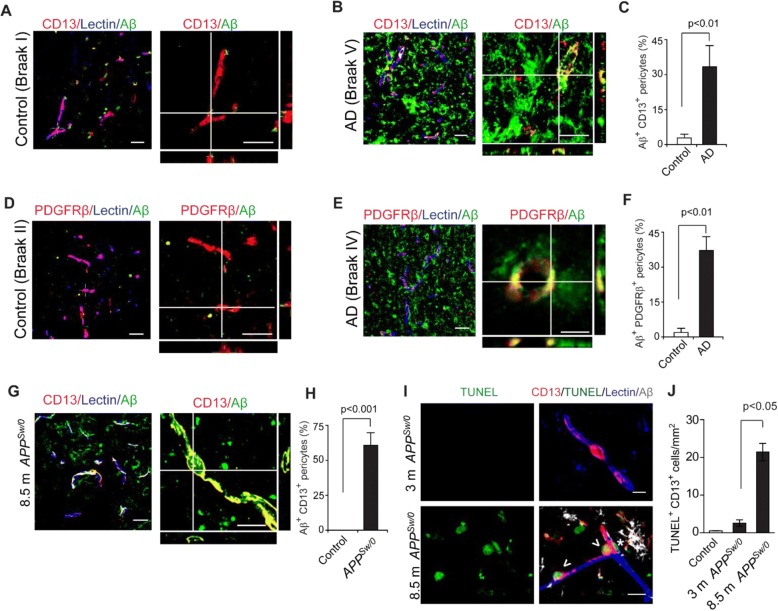
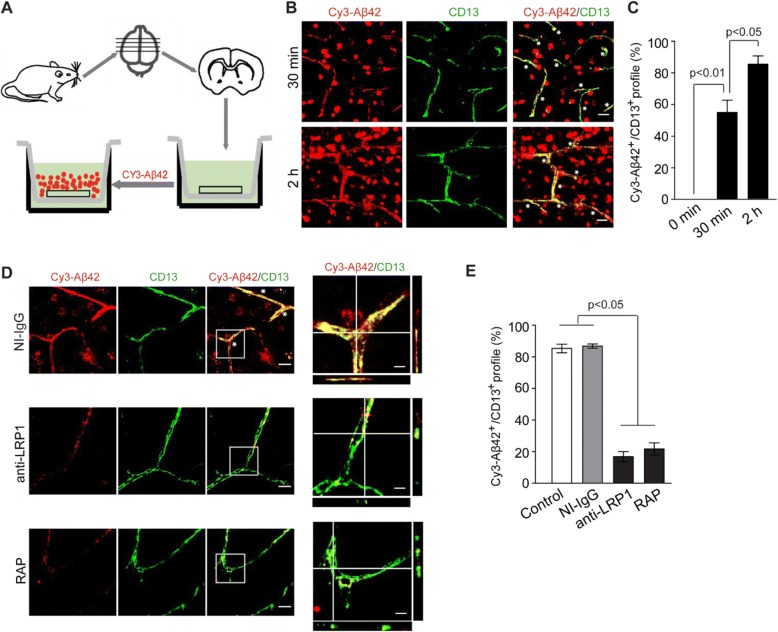
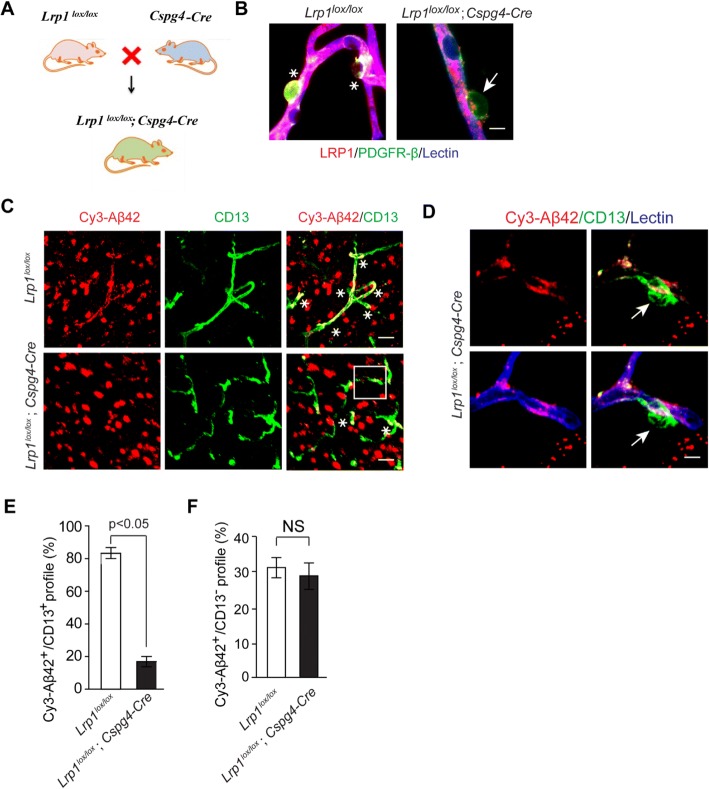
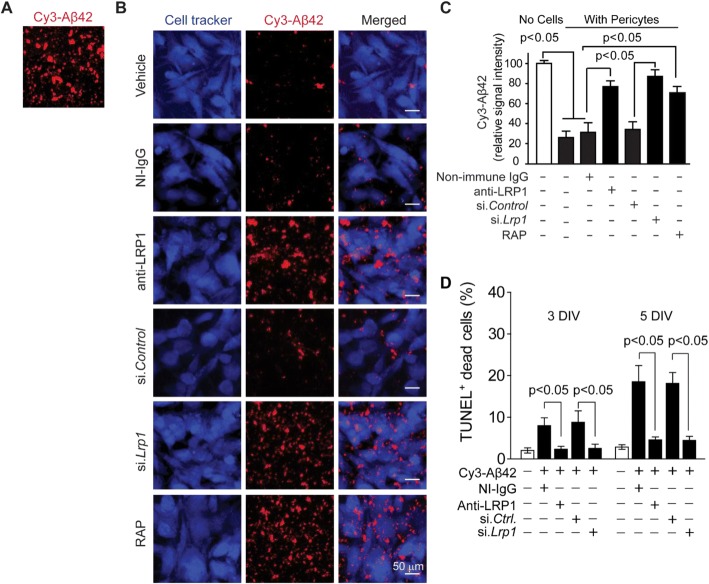
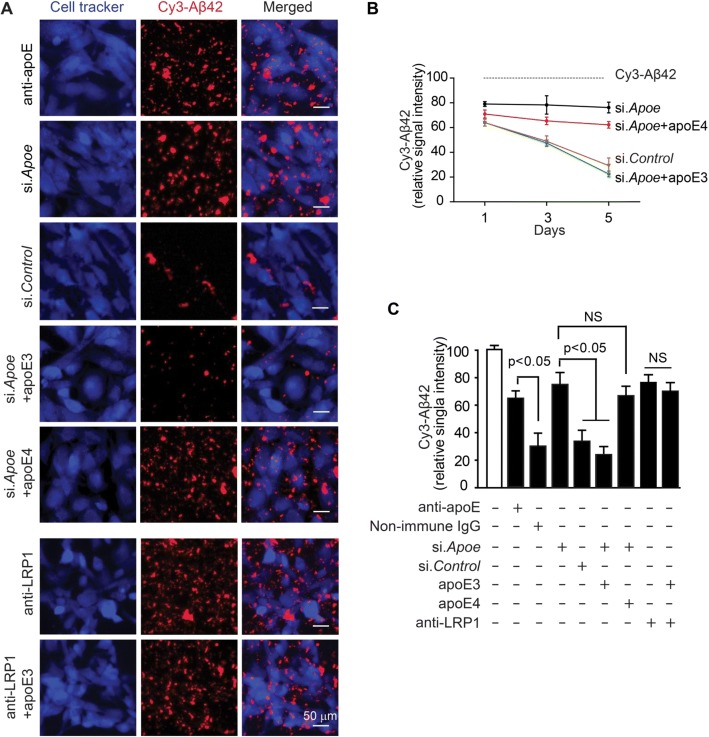
Abstract Background Clearance at the blood-brain barrier (BBB) plays an important role in removal of Alzheimer’s amyloid-β (Aβ) toxin from brain both in humans and animal models. Apolipoprotein E (apoE), the major genetic risk factor for AD, disrupts Aβ clearance at the BBB. The cellular and molecular mechanisms, however, still remain unclear, particularly whether the BBB-associated brain capillary pericytes can contribute to removal of aggregated Aβ from brain capillaries, and whether removal of Aβ aggregates by pericytes requires apoE, and if so, is Aβ clearance on pericytes apoE isoform-specific. Methods We performed immunostaining for Aβ and pericyte biomarkers on brain capillaries (< 6 μm in diameter) on tissue sections derived from AD patients and age-matched controls, and APPSwe/0 mice and littermate controls. Human Cy3-Aβ42 uptake by pericytes was studied on freshly isolated brain slices from control mice, pericyte LRP1-deficient mice (Lrplox/lox;Cspg4-Cre) and littermate controls. Clearance of aggregated Aβ42 by mouse pericytes was studied on multi-spot glass slides under different experimental conditions including pharmacologic and/or genetic inhibition of the low density lipoprotein receptor related protein 1 (LRP1), an apoE receptor, and/or silencing mouse endogenous Apoe in the presence and absence of human astrocyte-derived lipidated apoE3 or apoE4. Student’s t-test and one-way ANOVA followed by Bonferroni's post-hoc test were used for statistical analysis. Results First, we found that 35% and 60% of brain capillary pericytes accumulate Aβ in AD patients and 8.5-month-old APPSw/0 mice, respectively, compared to negligible uptake in controls. Cy3-Aβ42 species were abundantly taken up by pericytes on cultured mouse brain slices via LRP1, as shown by both pharmacologic and genetic inhibition of LRP1 in pericytes. Mouse pericytes vigorously cleared aggregated Cy3-Aβ42 from multi-spot glass slides via LRP1, which was inhibited by pharmacologic and/or genetic knockdown of mouse endogenous apoE. Human astrocyte-derived lipidated apoE3, but not apoE4, normalized Aβ42 clearance by mouse pericytes with silenced mouse apoE. Conclusions Our data suggest that BBB-associated pericytes clear Aβ aggregates via an LRP1/apoE isoform-specific mechanism. These data support the role of LRP1/apoE interactions on pericytes as a potential therapeutic target for controlling Aβ clearance in AD.
Overview
The claims and statistics of this paper haven’t been checked yet.
Run the check — free, no account needed. It reads the open-access text and checks the sources it cites.
Integrity signals
Registry
Cites
Statistics
Figures
Verification
Claims the paper makes
The claims and statistics of this paper haven’t been checked yet.
Run the check — free, no account needed. It reads the open-access text and checks the sources it cites.
Claims other papers make about this one
Each is checked against this paper’s own text: does it say what the citing paper says it does?
The source backs part of the claim, not all of it — or backs it for a different population, condition or comparison.
In the citing paper
“ApoE assists in Aβ clearance in an isoform-dependent manner wherein apoE2 > apoE3 > apoE4 [29, 30, 59].”
From Apolipoprotein E4, inhibitory network dysfunction, and Alzheimer’s disease (2019) · cites this paper as [59]
Experimental — accuracy not yet measuredIn the citing paper
“LRP1, expressed by the blood-brain barrier, is known to mediate transport of Aβ out of the brain (61)”
From LRPAP1 is released from activated microglia and inhibits microglial phagocytosis and amyloid beta aggregation (2023) · cites this paper as [61]
Self-check
Percentages, sums and reported differences re-computed from the paper’s own numbers.
The self-check needs the paper’s full text.
Citations
Cites
2 retracted
RETRACTED ARTICLE: Pericyte loss influences Alzheimer-like neurodegeneration in mice
Sagare, A. P., Bell, R. D., Zhao, Z., Ma, Q., Winkler, E. A., Ramanathan, A., & Zlokovic, B. V. (2013) · Nature Communications · doi:10.1038/ncomms3932 · Cited by 589
Self-citationRetractedMontagne, A., Nikolakopoulou, A. M., Zhao, Z., Sagare, A. P., Si, G., Lazic, D., Barnes, S. R., Daianu, M., Ramanathan, A., Go, A., et al. (2018) · Nature Medicine · doi:10.1038/nm.4482 · Cited by 344
Self-citationRetractedThe Amyloid Hypothesis of Alzheimer’s Disease: Progress and Problems on the Road to Therapeutics
Hardy, J., & Selkoe, D. J. (2002) · Science · doi:10.1126/science.1072994 · Cited by 13,864
NIA‐AA Research Framework: Toward a biological definition of Alzheimer's disease
Jack, C. R., Bennett, D. A., Blennow, K., Carrillo, M. C., Dunn, B., Haeberlein, S. B., Holtzman, D. M., Jagust, W., Jessen, F., Karlawish, J., et al. (2018) · Alzheimer's & Dementia · doi:10.1016/j.jalz.2018.02.018 · Cited by 10,537
Self-citationAmyloid oligomers exacerbate tau pathology in a mouse model of tauopathy
Selenica, M.-L. B., Brownlow, M., Jimenez, J. P., Lee, D. C., Pena, G., Dickey, C. A., Gordon, M. N., & Morgan, D. (2013) · Neurodegenerative Diseases · doi:10.1159/000337230 · Cited by 10,359
The amyloid hypothesis of Alzheimer's disease at 25 years
Selkoe, D. J., & Hardy, J. (2016) · EMBO Molecular Medicine · doi:10.15252/emmm.201606210 · Cited by 6,164
Correlative Memory Deficits, Aβ Elevation, and Amyloid Plaques in Transgenic Mice
Hsiao, K., Chapman, P., Nilsen, S., Eckman, C., Harigaya, Y., Younkin, S., Yang, F., & Cole, G. (1996) · Science · doi:10.1126/science.274.5284.99 · Cited by 4,210
Apolipoprotein E and Alzheimer disease: risk, mechanisms and therapy
Liu, C.-C., Kanekiyo, T., Xu, H., & Bu, G. (2013) · Nature Reviews Neurology · doi:10.1038/nrneurol.2012.263 · Cited by 3,459
Blood–brain barrier breakdown in Alzheimer disease and other neurodegenerative disorders
Sweeney, M. D., Sagare, A. P., & Zlokovic, B. V. (2018) · Nature Reviews Neurology · doi:10.1038/nrneurol.2017.188 · Cited by 3,076
Self-citationNeurovascular pathways to neurodegeneration in Alzheimer’s disease and other disorders
Zlokovic, B. V. (2011) · Nature Reviews Neuroscience · doi:10.1038/nrn3114 · Cited by 2,969
Self-citation
Cited by
Sorted by citations
Items 101–200 of 281
Yue, X., Zhou, Y., Qiao, M., Zhao, X., Huang, X. H., Zhao, T., Cheng, X., Fan, M., Zhao, Y., Chen, R., et al. (2021) · Alzheimer s Research & Therapy · doi:10.1186/s13195-021-00935-z · Cited by 30
Wang, Y., Wang, K., Yan, J., Zhou, Q., & Wang, X. (2022) · International Journal of Molecular Sciences · doi:10.3390/ijms232213886 · Cited by 32
Sharp, F. R., DeCarli, C. S., Jin, L., & Zhan, X. (2023) · Frontiers in Aging Neuroscience · doi:10.3389/fnagi.2023.1096206 · Cited by 33
Mural cell dysfunction leads to altered cerebrovascular tau uptake following repetitive head trauma
Ojo, J. O., Eisenbaum, M., Shackleton, B., Lynch, C., Joshi, U., Saltiel, N. A., Pearson, A., Ringland, C., Paris, D., Mouzon, B., et al. (2020) · Neurobiology of Disease · doi:10.1016/j.nbd.2020.105237 · Cited by 30
Factors Influencing Alzheimer’s Disease Risk: Whether and How They are Related to the APOE Genotype
Zhang, R., Xu, X., Yu, H., Xu, X., Wang, M., & Le, W. (2022) · Neuroscience Bulletin · doi:10.1007/s12264-021-00814-5 · Cited by 31
Self-citationFu, Y., Zhang, J., Qin, R., Ren, Y., Zhou, T., Han, B., & Liu, B. (2025) · Pharmacological Reviews · doi:10.1016/j.pharmr.2025.100053 · Cited by 29
Ma, C., Ye, Y., Shi, X., Li, N., Mu, Z., Tan, T., Yin, H., Dai, J., Liu, Y., & Chen, H. (2025) · Alzheimer s Research & Therapy · doi:10.1186/s13195-025-01787-7 · Cited by 28
Mahaman, Y. A. R., Feng, J., Huang, F., Salissou, M. T. M., Wang, J., Liu, R., Zhang, B., Li, H., Zhu, F., & Wang, X. (2022) · Nutrients · doi:10.3390/nu14204284 · Cited by 31
Beyond the amyloid cascade: An update of Alzheimer's disease pathophysiology
Gouilly, D., Rafiq, M., Nogueira, L., Salabert, A., Payoux, P., Péran, P., & Pariente, J. (2023) · Revue Neurologique · doi:10.1016/j.neurol.2022.12.006 · Cited by 31
Li, W., Chen, C., Xu, B., Chen, J., Yang, M., Gao, L., & Zhou, J. (2024) · Biochemical Pharmacology · doi:10.1016/j.bcp.2024.116643 · Cited by 27
Modified Glutamatergic Postsynapse in Neurodegenerative Disorders
Moraes, B. J., Coelho, P., Fão, L., Ferreira, I. L., & Rego, A. C. (2019) · Neuroscience · doi:10.1016/j.neuroscience.2019.12.002 · Cited by 27
The Blood–Brain Barrier: Much More Than a Selective Access to the Brain
Sánchez-Cano, F., Hernández‐Kelly, L. C., & Ortega, A. (2021) · Neurotoxicity Research · doi:10.1007/s12640-021-00431-0 · Cited by 30
Construction and imaging of a neurovascular unit model
Dong, T., Wang, J., Li, M., Gao, F., & Wei, P. (2021) · Neural Regeneration Research · doi:10.4103/1673-5374.332131 · Cited by 25
Rademacher, T.-D., Meuth, S. G., Wiendl, H., Johnen, A., & Landmeyer, N. C. (2023) · Neuroscience & Biobehavioral Reviews · doi:10.1016/j.neubiorev.2023.105035 · Cited by 27
Pericytes in Alzheimer's disease: Key players and therapeutic targets
Zhang, Y., Mu, B., Zhao, R., Zhu, T., Huang, X., Yang, X., Wang, D., Ma, Q., & Lu, M. (2024) · Experimental Neurology · doi:10.1016/j.expneurol.2024.114825 · Cited by 24
Self-citationUngvari, A., Nyúl‐Tóth, Á., Patai, R., Csík, B., Gulej, R., Nagy, D., Shanmugarama, S., Benyó, Z., Kiss, T., Ungvari, Z. I., et al. (2025) · GeroScience · doi:10.1007/s11357-025-01621-w · Cited by 27
Zhou, M., Chen, H., Zeng, Y., Lv, Z., Hu, X., Tong, Y., Wang, P., Zhao, M., Mu, R., Yu, J., et al. (2023) · Small · doi:10.1002/smll.202300403 · Cited by 24
Pan, X., Zz, L., Gg, J., Lp, W., Cm, B., Yl, W., Chen, M. F., & Li, W. (2022) · Neurochemistry International · doi:10.1016/j.neuint.2022.105417 · Cited by 26
Blood brain barrier inflammation and potential therapeutic role of phytochemicals
Welcome, M. O. (2020) · PharmaNutrition · doi:10.1016/j.phanu.2020.100177 · Cited by 22
Ding, Y., Palecek, S. P., & Shusta, E. V. (2024) · Fluids and Barriers of the CNS · doi:10.1186/s12987-024-00580-2 · Cited by 22
Harnessing the stem cell properties of pericytes to repair the brain
Courtney, J., & Sutherland, B. A. (2019) · Neural Regeneration Research · doi:10.4103/1673-5374.270301 · Cited by 22
Apolipoprotein E Interferes with IAPP Aggregation and Protects Pericytes from IAPP-Induced Toxicity
Gharibyan, A. L., Islam, T., Pettersson, N., Surano, S., Lundgren, J., Johansson, G., Genot, M., Schultz, N., Wennström, M., & Olofsson, A. (2020) · Biomolecules · doi:10.3390/biom10010134 · Cited by 22
Blood brain barrier-on-a-chip to model neurological diseases
Reshma, S. C., Megha, K. B., Amir, S., Rukhiya, S., & Mohanan, P. V. (2023) · Journal of Drug Delivery Science and Technology · doi:10.1016/j.jddst.2023.104174 · Cited by 23
Vitamin D, Calbindin, and calcium signaling: Unraveling the Alzheimer's connection
Acharya, M., Singh, N., Gupta, G., Tambuwala, M. M., Aljabali, A. A. A., Chellappan, D. K., Dua, K., & Goyal, R. (2024) · Cellular Signalling · doi:10.1016/j.cellsig.2024.111043 · Cited by 22
Liu, N., Haziyihan, A., Zhao, W. G., Chen, Y., & Chao, H. (2024) · Translational Neurodegeneration · doi:10.1186/s40035-024-00434-9 · Cited by 21
Quan, W., Luo, Q., Hao, W., Tomic, I., Furihata, T., Schulz‐Schaeffer, W., Menger, M. D., Fassbender, K. C., & Liu, Y. (2021) · Glia · doi:10.1002/glia.24007 · Cited by 20
Peripheral Pathways to Neurovascular Unit Dysfunction, Cognitive Impairment, and Alzheimer’s Disease
Nelson, A. R. (2022) · Frontiers in Aging Neuroscience · doi:10.3389/fnagi.2022.858429 · Cited by 24
Alzheimer’s disease is an inherent, natural part of human brain aging: an integrated perspective
Ferrer, I. (2022) · Free Neuropathology · doi:10.17879/freeneuropathology-2022-3806 · Cited by 25
James, M. L., Komisarow, J. M., Wang, H., & Laskowitz, D. T. (2020) · Neurotherapeutics · doi:10.1007/s13311-020-00858-x · Cited by 24
Kato, T., Sekine, Y., Nozaki, H., Uemura, M., Ando, S., Hirokawa, S., & Onodera, O. (2020) · Frontiers in Aging Neuroscience · doi:10.3389/fnagi.2020.00151 · Cited by 21
Does Alzheimer's disease stem in the gastrointestinal system?
Khodabakhsh, P., Bazrgar, M., Dargahi, L., Mohagheghi, F., Taei, A. A., Parvardeh, S., & Ahmadiani, A. (2021) · Life Sciences · doi:10.1016/j.lfs.2021.120088 · Cited by 21
Pansieri, J., Hadley, G., Lockhart, A., Pisa, M., & DeLuca, G. C. (2023) · Frontiers in Neurology · doi:10.3389/fneur.2023.1199491 · Cited by 21
The blood–brain barrier as a treatment target for neurodegenerative disorders
Rust, R., Sagare, A. P., Zhang, M., Zloković, B. V., & Kisler, K. (2025) · Expert Opinion on Drug Delivery · doi:10.1080/17425247.2025.2480654 · Cited by 21
Self-citationAntenatal Hypoxia Accelerates the Onset of Alzheimer’s Disease Pathology in 5xFAD Mouse Model
Shen, G., Hu, S. X., Zhao, Z., Zhang, L., & Ma, Q. (2020) · Frontiers in Aging Neuroscience · doi:10.3389/fnagi.2020.00251 · Cited by 20
Self-citationGong, M., & Jia, J. (2022) · Frontiers in Neuroscience · doi:10.3389/fnins.2022.949129 · Cited by 20
Ma, Y., Sun, W., Bai, J., Gao, F., Ma, H., Liu, H., Hu, J., Xu, C., Zhang, X., Liu, Z., et al. (2024) · CNS Neuroscience & Therapeutics · doi:10.1111/cns.14613 · Cited by 22
Saiyasit, N., Butlig, E.-A. R., Chaney, S. D., Traylor, M. K., Hawley, N. A., Randall, R. B., Bobinger, H. V., Frizell, C. A., Trimm, F., Crook, E. D., et al. (2022) · Frontiers in Neuroscience · doi:10.3389/fnins.2022.915405 · Cited by 22
Natural polyphenol: Their pathogenesis-targeting therapeutic potential in Alzheimer's disease
Niu, C., Dong, M., & Niu, Y. (2024) · European Journal of Medicinal Chemistry · doi:10.1016/j.ejmech.2024.116359 · Cited by 19
Interactions between Beta-Amyloid and Pericytes in Alzheimer’s Disease
Li, Y.-Y., Guo, D.-D., Duan, R., & Li, Y. (2024) · Frontiers in Bioscience-Landmark · doi:10.31083/j.fbl2904136 · Cited by 19
Ranking the risk factors for Alzheimer’s disease; findings from the UK Biobank study
Allwright, M., Mundell, H. D., McCorkindale, A. N., Lindley, R. I., Austin, P. J., Guennewig, B., & Sutherland, G. T. (2023) · Aging Brain · doi:10.1016/j.nbas.2023.100081 · Cited by 19
Molecular signature and functional properties of human pluripotent stem cell-derived brain pericytesPreprint
Rust, R., Sagare, A. P., Kisler, K., Kim, Y., Zhang, M., Griffin, C., Wang, Y., Clementel, V. A., Shwartz, A., Fraser, S. E., et al. (2023) · bioRxiv (Cold Spring Harbor Laboratory) · doi:10.1101/2023.06.26.546577 · Cited by 18
Self-citationCerasuolo, M., Papa, M., Colangelo, A. M., & Rizzo, M. R. (2023) · Biomedicines · doi:10.3390/biomedicines11030861 · Cited by 18
Wu, B., Liu, Y., Li, H., Zhu, L., Zeng, L., Zhang, Z., & Peng, W. (2023) · Neural Regeneration Research · doi:10.4103/1673-5374.391305 · Cited by 22
Clark, A. T., Abrahamson, E. E., Harper, M. M., & Ikonomović, M. D. (2022) · Fluids and Barriers of the CNS · doi:10.1186/s12987-021-00301-z · Cited by 18
Liao, K., Niu, F., Hu, G., & Buch, S. (2022) · Frontiers in Cell and Developmental Biology · doi:10.3389/fcell.2022.984375 · Cited by 16
Astrocyte Lipid Droplet Dynamics Orchestrate Neurological Disorders and Therapeutic Horizons
Zhong, J., Peng, Y., Zhang, L., Xiao, B., & Zhang, M. (2025) · Small Science · doi:10.1002/smsc.202500152 · Cited by 17
Haro-Martínez, E., Muscolino, E., Moral, N., Durán, J., & Fornaguera, C. (2025) · Drug Delivery and Translational Research · doi:10.1007/s13346-025-01887-9 · Cited by 18
Li, X., Ding, W., Zhang, X., Tang, X., Zheng, Y., Ma, Y., Bao, X., Kang, X., & Zhu, S. (2025) · Neurochemical Research · doi:10.1007/s11064-025-04458-z · Cited by 16
Jokar, S., Khazaei, S., Gameshgoli, X. E., Khafaji, M., Yarani, B., Sharifzadeh, M. S., Beiki, D., & Bavi, O. (2020) · Exon Publications eBooks · doi:10.36255/exonpublications.alzheimersdisease.2020.ch3 · Cited by 18
Lou, T.-W., Tao, B., & Chen, M. (2023) · Neuroscience · doi:10.1016/j.neuroscience.2023.01.032 · Cited by 17
Faissner, A. (2023) · Frontiers in Network Physiology · doi:10.3389/fnetp.2023.1190240 · Cited by 17
Pippo, M. D., Cipollini, V., Giubilei, F., Scuderi, G., & Abdolrahimzadeh, S. (2023) · Journal of Neuro-Ophthalmology · doi:10.1097/wno.0000000000001907 · Cited by 16
Bone Marrow‐Derived GCA+ Immune Cells Drive Alzheimer's Disease Progression
Zhou, R., Wang, L., Chen, L., Xu, F., Zhou, R., Peng, X. F., Wen, J., Huang, Y., & Zhou, H. (2023) · Advanced Science · doi:10.1002/advs.202303402 · Cited by 16
Chen, H. C., Cao, J., Zhang, Y.-S., Ma, Y., Zhang, L., Su, X., Gao, L., & Jing, Y. (2024) · The Journal of Nutritional Biochemistry · doi:10.1016/j.jnutbio.2024.109570 · Cited by 16
Association of APOE genotype with blood-brain barrier permeability in neurodegenerative disorders
Libri, I., Silvestri, C., Caratozzolo, S., Alberici, A., Pilotto, A., Archetti, S., Trainini, L., Borroni, B., Padovani, A., & Benussi, A. (2024) · Neurobiology of Aging · doi:10.1016/j.neurobiolaging.2024.04.003 · Cited by 16
Li, Q., Li, B., Liu, L., Wang, K.-J., Liu, M., Deng, Y., Li, Z., Zhao, W., Wu, L., Chen, Y., et al. (2024) · Journal of Neuroinflammation · doi:10.1186/s12974-024-03119-2 · Cited by 15
Endogenous Human Proteins Interfering with Amyloid Formation
Gharibyan, A. L., Jayaweera, S. W., Lehmann, M., Anan, I., & Olofsson, A. (2022) · Biomolecules · doi:10.3390/biom12030446 · Cited by 17
Zhu, P., Xiao, L., & Wang, Y. (2025) · Fluids and Barriers of the CNS · doi:10.1186/s12987-025-00721-1 · Cited by 19
Li, T., Li, D., Wei, Q., Shi, M., Xiang, J., Gao, R., Chen, C., & Xu, Z. (2023) · Neurobiology of Disease · doi:10.1016/j.nbd.2023.106114 · Cited by 17
Inflammatory Cytokine IL-1β Downregulates Endothelial LRP1 via MicroRNA-mediated Gene Silencing
Hsu, H.-W., Rodríguez‐Ortiz, C. J., Zumkehr, J., & Kitazawa, M. (2020) · Neuroscience · doi:10.1016/j.neuroscience.2020.11.021 · Cited by 16
Apolipoprotein ε in Brain and Retinal Neurodegenerative Diseases
Abyadeh, M., Gupta, V., Paulo, J. A., Sheriff, S., Shadfar, S., Fitzhenry, M. J., Amirkhani, A., Gupta, V. B., Salekdeh, G. H., Haynes, P. A., et al. (2023) · Aging and Disease · doi:10.14336/ad.2023.0312-1 · Cited by 15
Alzheimer’s Disease: Causal Effect between Obesity and APOE Gene Polymorphisms
Zhao, T., Zhong, T., Zhang, M., Xu, Y., Zhang, M., & Chen, L. (2023) · International Journal of Molecular Sciences · doi:10.3390/ijms241713531 · Cited by 14
Serum proteomics reveals early biomarkers of Alzheimer's disease: The dual role of APOE-ε4
Ma, Y., Xia, Y., Karako, K., Song, P., Tang, W., & Hu, X. (2025) · BioScience Trends · doi:10.5582/bst.2024.01365 · Cited by 17
Cerebral malaria – modelling interactions at the blood–brain barrier in vitro
Adams, Y., & Jensen, A. T. R. (2022) · Disease Models & Mechanisms · doi:10.1242/dmm.049410 · Cited by 15
Capillary dysfunction in healthy elderly APOE ε4 carriers with raised brain Aβ deposition
Madsen, L. S., Kjeldsen, P. L., Ismail, R., Parbo, P., Østergaard, L., Brooks, D. J., & Eskildsen, S. F. (2023) · Alzheimer s & Dementia · doi:10.1002/alz.13461 · Cited by 12
Reid, K. M., & Brown, G. C. (2023) · Frontiers in Immunology · doi:10.3389/fimmu.2023.1286474 · Cited by 13
Potential of astrocytes in targeting therapy for Alzheimer’s disease
Bi, W., Lei, T., Cai, S., Zhang, X., Yang, Y., Xiao, Z., Wang, L., & Du, H. (2022) · International Immunopharmacology · doi:10.1016/j.intimp.2022.109368 · Cited by 13
Wang, Y., Wang, Q., Luo, D., Zhao, P., Zhong, S.-S., Dai, B., Wang, J.-J., Wan, Y.-T., Liu, Z., & Yang, H. (2023) · Chinese Journal of Integrative Medicine · doi:10.1007/s11655-023-3592-5 · Cited by 14
The Lipid Invasion Model: Growing Evidence for This New Explanation of Alzheimer’s Disease
Rudge, J. D. (2023) · Journal of Alzheimer s Disease · doi:10.3233/jad-221175 · Cited by 15
Edler, M. K., Johnson, C. T., Ahmed, H. S., & Richardson, J. R. (2020) · The Journal of Comparative Neurology · doi:10.1002/cne.25089 · Cited by 14
Kirit, E., Gokce, C., Altun, B., & Yılmazer, A. (2025) · ACS Omega · doi:10.1021/acsomega.5c02206 · Cited by 13
Modeling the Blood–Brain Barrier to Understand Drug Delivery in Alzheimer’s Disease
Wasielewska, J. M., Chaves, J., White, A. R., & Oikari, L. E. (2020) · Exon Publications eBooks · doi:10.36255/exonpublications.alzheimersdisease.2020.ch7 · Cited by 13
Rare germline variants in individuals diagnosed with schizophrenia within multiplex families
Li, S., DeLisi, L. E., & McDonough, S. I. (2021) · Psychiatry Research · doi:10.1016/j.psychres.2021.114038 · Cited by 12
Stevenson, T. K., Moore, S. J., Murphy, G. G., & Lawrence, D. A. (2021) · Seminars in Thrombosis and Hemostasis · doi:10.1055/s-0041-1740265 · Cited by 12
Approaches for the isolation and long-term expansion of pericytes from human and animal tissues
Alvino, V. V., Mohammed, K. A. K., Gu, Y., & Madeddu, P. R. (2023) · Frontiers in Cardiovascular Medicine · doi:10.3389/fcvm.2022.1095141 · Cited by 13
Shepherd, C. E., Affleck, A. J., Bahar, A. Y., Carew‐Jones, F., Gregory, G., Small, D. H., & Halliday, G. M. (2020) · Brain and Behavior · doi:10.1002/brb3.1672 · Cited by 11
Approaches for Increasing Cerebral Efflux of Amyloid-β in Experimental Systems
Loeffler, D. A. (2024) · Journal of Alzheimer s Disease · doi:10.3233/jad-240212 · Cited by 12
Role of autophagy in angiogenic potential of vascular pericytes
Milani, S. Z., Rezabakhsh, A., Karimipour, M., Salimi, L., Mardi, N., Narmi, M. T., Sadeghsoltani, F., Valioğlu, F., & Rahbarghazi, R. (2024) · Frontiers in Cell and Developmental Biology · doi:10.3389/fcell.2024.1347857 · Cited by 10
Immune cells in Alzheimer’s disease: insights into pathogenesis and potential therapeutic targets
Fu, X., Cai, H., Quan, S., Ren, Z., Xu, Y., & Jia, L. (2024) · Medical Review · doi:10.1515/mr-2024-0064 · Cited by 10
Nuñez‐Diaz, C., Pocevičiūtė, D., Schultz, N., Bank, T. N. B., Welinder, C., Swärd, K., & Wennström, M. (2023) · Molecular Brain · doi:10.1186/s13041-023-01013-1 · Cited by 10
Clinical Utility of the Pathogenesis-Related Proteins in Alzheimer’s Disease
Zhou, B., & Fukushima, M. (2020) · International Journal of Molecular Sciences · doi:10.3390/ijms21228661 · Cited by 10
Wu, Y., Lehtonen, Š., Trontti, K., Kauppinen, R., Kettunen, P., Leinonen, V., Laakso, M., Kuusisto, J., Hiltunen, M., Hovatta, I., et al. (2024) · Fluids and Barriers of the CNS · doi:10.1186/s12987-024-00576-y · Cited by 7
Self-citationRecent advances in Alzheimer’s disease: From molecular mechanisms to therapeutic strategies
Rudman, M. D., Ulrich, J. D., & Holtzman, D. M. (2026) · Cell · doi:10.1016/j.cell.2026.06.006 · Cited by 12
Self-citationDu, S.-S., Sun, X., Cen, J., Shi, J.-X., An, M., & Zhao, W. (2021) · Microvascular Research · doi:10.1016/j.mvr.2021.104219 · Cited by 8
Xie, G., Jiang, G., Huang, L., Sun, S., Wan, Y., Li, F., Wu, B., Zhang, Y., Li, X., Xiong, B., et al. (2025) · Pharmaceuticals · doi:10.3390/ph18060790 · Cited by 10
Progress of research and application of non-pharmacologic intervention in Alzheimer's disease
Tang, M., Guo, J.-J., Guo, R.-X., Xu, S., Lou, Q., Hu, Q., Li, W., Yu, J., Yao, Q., & Wang, Q. (2024) · Journal of Alzheimer s Disease · doi:10.1177/13872877241289396 · Cited by 7
Stress-induced regional characteristics of the blood-brain barrier
Zhou, M.-Y., Xie, F., Zhao, Y. F., Wang, X., Sun, Z., & Qian, L. (2025) · Brain Research Bulletin · doi:10.1016/j.brainresbull.2025.111548 · Cited by 8
Cao, T., Yang, C., Zhang, J., Yan, Y., Chen, Z., Peng, X., Xia, C., Pan, M., Zou, C., & Lü, T. (2025) · Neurobiology of Disease · doi:10.1016/j.nbd.2025.107101 · Cited by 8
Crosstalk between peripheral immunity and central nervous system in Alzheimer’s disease
Yang, H.-C., Qin, Q., Wang, M., Yin, Y., Li, R., & Tang, Y. (2023) · Cellular Immunology · doi:10.1016/j.cellimm.2023.104743 · Cited by 9
Self-citationP2Y1 receptor in Alzheimer’s disease
Luo, S., Wang, Y., & Hisatsune, T. (2024) · Neural Regeneration Research · doi:10.4103/nrr.nrr-d-23-02103 · Cited by 8
Stojanović, F., Taktek, M., Khieu, N. H., Huang, J., Jiang, S. X., Rennie, K., Chakravarthy, B., Costain, W. J., & Čuperlović‐Culf, M. (2021) · PLoS ONE · doi:10.1371/journal.pone.0250568 · Cited by 7
The Role of Pericytes in Hyperemia-Induced Capillary De-Recruitment Following Stenosis
Kaul, S., Methner, C., & Mishra, A. (2020) · Current Tissue Microenvironment Reports · doi:10.1007/s43152-020-00017-6 · Cited by 7
Leung, K. H. C., Chan, V. T. T., Lam, B. Y. K., Mok, V., & Cheung, C. Y.-L. (2024) · Journal of Alzheimer s Disease Reports · doi:10.1177/25424823241300416 · Cited by 6
Pericytes in the optic nerve head
Waxman, S., Villafranca‐Baughman, D., Phillippi, J. A., Jakobs, T., Alarcón-Martínez, L., Polo, A. D., & Sigal, I. A. (2025) · Progress in Retinal and Eye Research · doi:10.1016/j.preteyeres.2025.101375 · Cited by 6
Zhang, M., Kim, Y., Bosworth, A., Julia, T. C. W., Nih, L. R., Kisler, K., Sagare, A. P., & Rust, R. (2025) · Stem Cells · doi:10.1093/stmcls/sxaf055 · Cited by 7
Self-citationOcular changes as potential biomarkers for early diagnosis of Alzheimer's disease
Poudel, P., Frost, S. M., Eslick, S., Sohrabi, H. R., Taddei, K., Hone, E., & Martins, R. N. (2025) · Alzheimer s & Dementia · doi:10.1002/alz.70476 · Cited by 8
Yang, Y., Zhang, W., & Lan, P. (2022) · Cancers · doi:10.3390/cancers14235963 · Cited by 8
Yang, C., Zhao, E., Zhang, H., Duan, L.-Q., Han, X., Ding, H., Cheng, Y., Wang, D., Lei, X., & Diwu, Y. (2025) · Frontiers in Pharmacology · doi:10.3389/fphar.2024.1508726 · Cited by 6
Liu, T., Guo, W., Gong, M., Zhu, L., Cao, T., Huang, Y., Yang, Y., Chen, J., Yang, C., Zhang, S., et al. (2025) · Experimental Brain Research · doi:10.1007/s00221-025-07134-4 · Cited by 6
Roles and mechanisms of phospholipid transfer protein in the development of Alzheimer's disease
Wang, H., Chen, M., Chen, W., Zhang, J., & Qin, S. (2021) · Psychogeriatrics · doi:10.1111/psyg.12685 · Cited by 6
Metadata
- Authors
- Ma, Q., Zhao, Z., Sagare, A. P., Wu, Y., Wang, M., Owens, N. C., Verghese, P. B., Herz, J., Holtzman, D. M., & Zlokovic, B. V.
- Affiliations
- University of Southern California (US)
- C2N Diagnostics (United States) (US)
- The University of Texas Southwestern Medical Center (US)
- Washington University in St. Louis (US)
- Venue
- Molecular Neurodegeneration
- Published
- 2018-10-19
- Volume
- 13
- Issue
- 1
- Pages
- 57-57
- ISSN
- 1750-1326 (ISSN-L)
- PMC
- PMC6194676
- OpenAlex
- W2897433925
- Cited by
- 281
- References
- 71
- Citations by year
- 2026: 24 · 2025: 54 · 2024: 40 · 2023: 41 · 2022: 35 · 2021: 30 · 2020: 36 · 2019: 21
- FWCI
- 14.91
- Type
- journal article
- Language
- en
- Update notices
- Open access
- gold
- doi.org
- Locations
- Molecular Neurodegeneration (publishedVersion, cc-by)
- Europe PMC (PubMed Central) (publishedVersion, other-oa)
- PubMed Central (publishedVersion, cc-by)
- PubMed (publishedVersion)
- Digital Commons@Becker (Washington University School of Medicine) (submittedVersion, cc-by)
- The Scholars Repository - LLU (Loma Linda University) (submittedVersion)
- DOAJ (DOAJ: Directory of Open Access Journals) (submittedVersion, cc-by-sa)
- Funders
- National Institutes of Health (R01NS034467, R01AG023084, R01AG039452)
- Topics
- Life Sciences › Neuroscience › Cellular and Molecular Neuroscience › Alzheimer's disease research and treatments
- Life Sciences › Neuroscience › Neurology › Barrier Structure and Function Studies
- Health Sciences › Medicine › Clinical Neurology › Cerebrospinal fluid and hydrocephalus
- Keywords
- blood-brain barrier, amyloid-beta 42, LRP1, apolipoprotein E isoforms, APOE3, APOE ε4, Alzheimer's disease, amyloid-beta clearance, receptor-mediated uptake, pericyte dysfunction, APP overexpression
- MeSH terms
- Animals, Apolipoproteins E, Biological Transport, Blood-Brain Barrier, Brain, Humans, Mice, Transgenic, Peptide Fragments, Receptors, LDL, Amyloid beta-Peptides, Pericytes, Tumor Suppressor Proteins, Low Density Lipoprotein Receptor-Related Protein-1
About these checks
Registry, retraction, Cites and statistics results are computed, not judged, with one exception: a printed reference that no index lists is read once by a model before it counts as a citation error. Claims are extracted by a model and kept only when their quote appears verbatim in the text; each cited source is then checked, with a model’s help, for whether it says what the claim relies on. Those verdicts can be wrong — read the claim’s quote and the cited source before relying on one.
Statistics and arithmetic are recomputed, not judged.
Confidence bands are shown only for fields calibrated on our annotated test set. None is calibrated yet, so no band is shown.
What counts as a claim ›How we measure confidence ›How we check this ›
Are you an author, or do you see a problem with this page? Request a review
