

The DOI matches its Crossref record; 71 of the 71 references it cites were found in a registry or an index.
Blood-brain barrier-associated pericytes internalize and clear aggregated amyloid-β42 by LRP1-dependent apolipoprotein E isoform-specific mechanism
Open accessAbstract
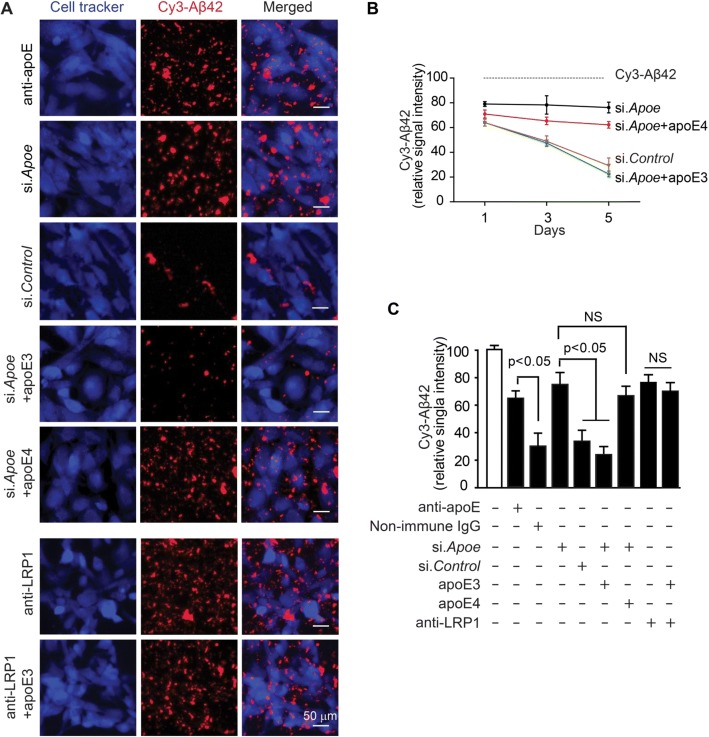
Abstract Background Clearance at the blood-brain barrier (BBB) plays an important role in removal of Alzheimer’s amyloid-β (Aβ) toxin from brain both in humans and animal models. Apolipoprotein E (apoE), the major genetic risk factor for AD, disrupts Aβ clearance at the BBB. The cellular and molecular mechanisms, however, still remain unclear, particularly whether the BBB-associated brain capillary pericytes can contribute to removal of aggregated Aβ from brain capillaries, and whether removal of Aβ aggregates by pericytes requires apoE, and if so, is Aβ clearance on pericytes apoE isoform-specific. Methods We performed immunostaining for Aβ and pericyte biomarkers on brain capillaries (< 6 μm in diameter) on tissue sections derived from AD patients and age-matched controls, and APPSwe/0 mice and littermate controls. Human Cy3-Aβ42 uptake by pericytes was studied on freshly isolated brain slices from control mice, pericyte LRP1-deficient mice (Lrplox/lox;Cspg4-Cre) and littermate controls. Clearance of aggregated Aβ42 by mouse pericytes was studied on multi-spot glass slides under different experimental conditions including pharmacologic and/or genetic inhibition of the low density lipoprotein receptor related protein 1 (LRP1), an apoE receptor, and/or silencing mouse endogenous Apoe in the presence and absence of human astrocyte-derived lipidated apoE3 or apoE4. Student’s t-test and one-way ANOVA followed by Bonferroni's post-hoc test were used for statistical analysis. Results First, we found that 35% and 60% of brain capillary pericytes accumulate Aβ in AD patients and 8.5-month-old APPSw/0 mice, respectively, compared to negligible uptake in controls. Cy3-Aβ42 species were abundantly taken up by pericytes on cultured mouse brain slices via LRP1, as shown by both pharmacologic and genetic inhibition of LRP1 in pericytes. Mouse pericytes vigorously cleared aggregated Cy3-Aβ42 from multi-spot glass slides via LRP1, which was inhibited by pharmacologic and/or genetic knockdown of mouse endogenous apoE. Human astrocyte-derived lipidated apoE3, but not apoE4, normalized Aβ42 clearance by mouse pericytes with silenced mouse apoE. Conclusions Our data suggest that BBB-associated pericytes clear Aβ aggregates via an LRP1/apoE isoform-specific mechanism. These data support the role of LRP1/apoE interactions on pericytes as a potential therapeutic target for controlling Aβ clearance in AD.
Overview
The claims and statistics of this paper haven’t been checked yet.
Run the check — free, no account needed. It reads the open-access text and checks the sources it cites.
Integrity signals
Registry
Cites
Statistics
Figures
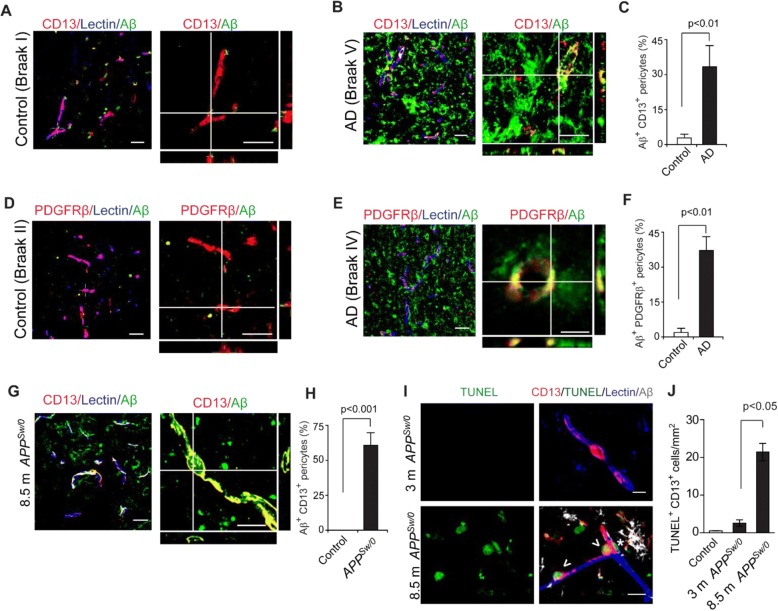
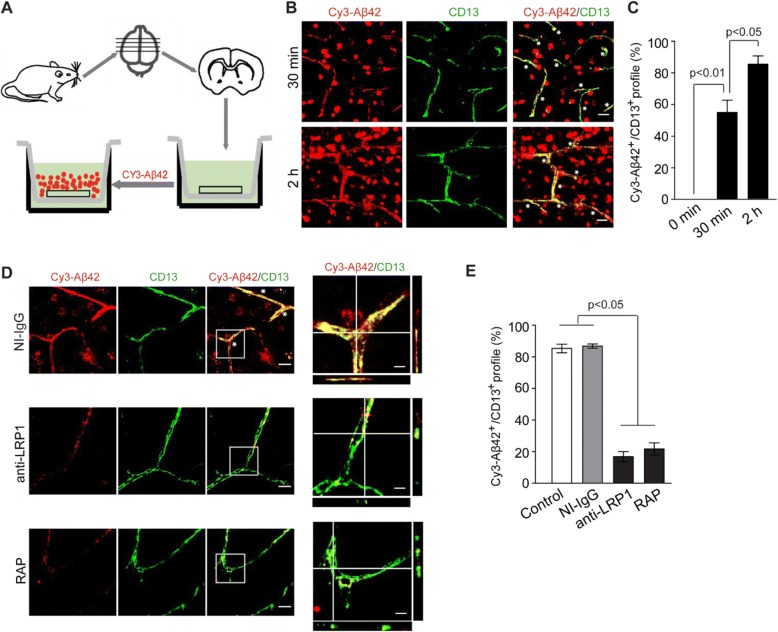
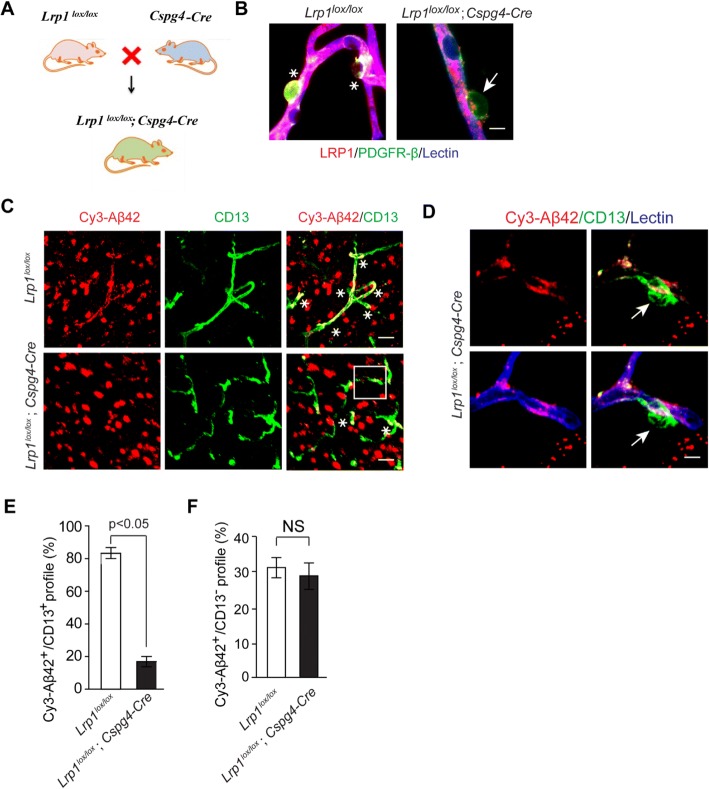
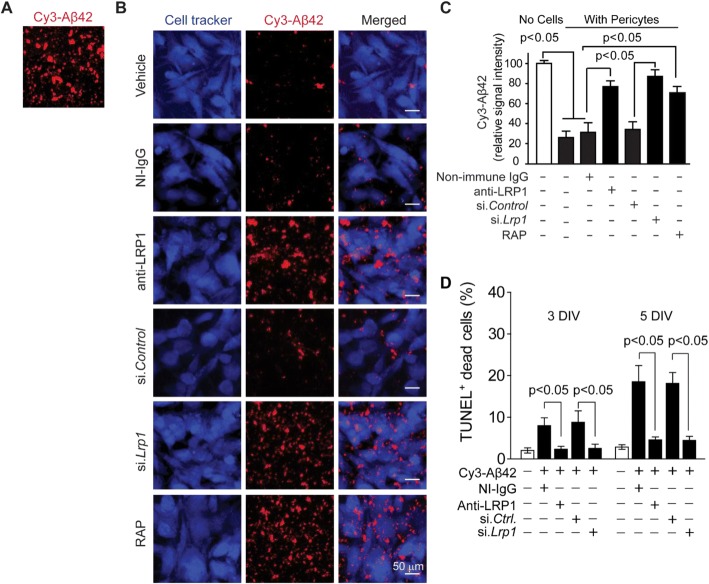
Verification
Claims the paper makes
The claims and statistics of this paper haven’t been checked yet.
Run the check — free, no account needed. It reads the open-access text and checks the sources it cites.
Claims other papers make about this one
Each is checked against this paper’s own text: does it say what the citing paper says it does?
The source backs part of the claim, not all of it — or backs it for a different population, condition or comparison.
In the citing paper
“ApoE assists in Aβ clearance in an isoform-dependent manner wherein apoE2 > apoE3 > apoE4 [29, 30, 59].”
From Apolipoprotein E4, inhibitory network dysfunction, and Alzheimer’s disease (2019) · cites this paper as [59]
Experimental — accuracy not yet measuredIn the citing paper
“LRP1, expressed by the blood-brain barrier, is known to mediate transport of Aβ out of the brain (61)”
From LRPAP1 is released from activated microglia and inhibits microglial phagocytosis and amyloid beta aggregation (2023) · cites this paper as [61]
Self-check
Percentages, sums and reported differences re-computed from the paper’s own numbers.
The self-check needs the paper’s full text.
Citations
Cites
2 retracted
RETRACTED ARTICLE: Pericyte loss influences Alzheimer-like neurodegeneration in mice
Sagare, A. P., Bell, R. D., Zhao, Z., Ma, Q., Winkler, E. A., Ramanathan, A., & Zlokovic, B. V. (2013) · Nature Communications · doi:10.1038/ncomms3932 · Cited by 589
Self-citationRetractedMontagne, A., Nikolakopoulou, A. M., Zhao, Z., Sagare, A. P., Si, G., Lazic, D., Barnes, S. R., Daianu, M., Ramanathan, A., Go, A., et al. (2018) · Nature Medicine · doi:10.1038/nm.4482 · Cited by 344
Self-citationRetractedThe Amyloid Hypothesis of Alzheimer’s Disease: Progress and Problems on the Road to Therapeutics
Hardy, J., & Selkoe, D. J. (2002) · Science · doi:10.1126/science.1072994 · Cited by 13,864
NIA‐AA Research Framework: Toward a biological definition of Alzheimer's disease
Jack, C. R., Bennett, D. A., Blennow, K., Carrillo, M. C., Dunn, B., Haeberlein, S. B., Holtzman, D. M., Jagust, W., Jessen, F., Karlawish, J., et al. (2018) · Alzheimer's & Dementia · doi:10.1016/j.jalz.2018.02.018 · Cited by 10,537
Self-citationAmyloid oligomers exacerbate tau pathology in a mouse model of tauopathy
Selenica, M.-L. B., Brownlow, M., Jimenez, J. P., Lee, D. C., Pena, G., Dickey, C. A., Gordon, M. N., & Morgan, D. (2013) · Neurodegenerative Diseases · doi:10.1159/000337230 · Cited by 10,359
The amyloid hypothesis of Alzheimer's disease at 25 years
Selkoe, D. J., & Hardy, J. (2016) · EMBO Molecular Medicine · doi:10.15252/emmm.201606210 · Cited by 6,164
Correlative Memory Deficits, Aβ Elevation, and Amyloid Plaques in Transgenic Mice
Hsiao, K., Chapman, P., Nilsen, S., Eckman, C., Harigaya, Y., Younkin, S., Yang, F., & Cole, G. (1996) · Science · doi:10.1126/science.274.5284.99 · Cited by 4,210
Apolipoprotein E and Alzheimer disease: risk, mechanisms and therapy
Liu, C.-C., Kanekiyo, T., Xu, H., & Bu, G. (2013) · Nature Reviews Neurology · doi:10.1038/nrneurol.2012.263 · Cited by 3,459
Blood–brain barrier breakdown in Alzheimer disease and other neurodegenerative disorders
Sweeney, M. D., Sagare, A. P., & Zlokovic, B. V. (2018) · Nature Reviews Neurology · doi:10.1038/nrneurol.2017.188 · Cited by 3,076
Self-citationNeurovascular pathways to neurodegeneration in Alzheimer’s disease and other disorders
Zlokovic, B. V. (2011) · Nature Reviews Neuroscience · doi:10.1038/nrn3114 · Cited by 2,969
Self-citation
Cited by
Sorted by citations
Apolipoprotein E and Alzheimer disease: pathobiology and targeting strategies
Yamazaki, Y., Zhao, N., Caulfield, T. R., Liu, C.-C., & Bu, G. (2019) · Nature Reviews Neurology · doi:10.1038/s41582-019-0228-7 · Cited by 1,425
APOE and Alzheimer’s disease: Advances in genetics, pathophysiology, and therapeutic approaches
Serrano-Pozo, A., Das, S., & Hyman, B. T. (2021) · The Lancet Neurology · doi:10.1016/s1474-4422(20)30412-9 · Cited by 1,037
ApoE in Alzheimer’s disease: pathophysiology and therapeutic strategies
Raulin, A.-C., Doss, S. V., Trottier, Z. A., Ikezu, T. C., Bu, G., & Liu, C.-C. (2022) · Molecular Neurodegeneration · doi:10.1186/s13024-022-00574-4 · Cited by 756
Pericytes and Neurovascular Function in the Healthy and Diseased Brain
Brown, L. S., Foster, C. G., Courtney, J.-M., King, N. E., Howells, D. W., & Sutherland, B. A. (2019) · Frontiers in Cellular Neuroscience · doi:10.3389/fncel.2019.00282 · Cited by 406
Pericyte loss leads to circulatory failure and pleiotrophin depletion causing neuron loss
Nikolakopoulou, A. M., Montagne, A., Kisler, K., Dai, Z., Wang, Y., Huuskonen, M. T., Sagare, A. P., Lazić, D., Sweeney, M. D., Kong, P., et al. (2019) · Nature Neuroscience · doi:10.1038/s41593-019-0434-z · Cited by 386
Self-citationAPOE and Alzheimer’s Disease: From Lipid Transport to Physiopathology and Therapeutics
Husain, M. A., Laurent, B., & Plourde, M. (2021) · Frontiers in Neuroscience · doi:10.3389/fnins.2021.630502 · Cited by 353
APOE2: protective mechanism and therapeutic implications for Alzheimer’s disease
Li, Z., Shue, F., Zhao, N., Shinohara, M., & Bu, G. (2020) · Molecular Neurodegeneration · doi:10.1186/s13024-020-00413-4 · Cited by 306
The neuroimmune axis of Alzheimer’s disease
Jorfi, M., Maaser‐Hecker, A., & Tanzi, R. E. (2023) · Genome Medicine · doi:10.1186/s13073-023-01155-w · Cited by 313
Challenges and hopes for Alzheimer’s disease
Tatulian, S. A. (2022) · Drug Discovery Today · doi:10.1016/j.drudis.2022.01.016 · Cited by 291
Factors influencing the blood-brain barrier permeability
Zhao, Y., Gan, L., Ren, L., Lin, Y., Ma, C., & Lin, X. (2022) · Brain Research · doi:10.1016/j.brainres.2022.147937 · Cited by 291
Restoring Wnt/β-catenin signaling is a promising therapeutic strategy for Alzheimer’s disease
Jia, L., Piña-Crespo, J., & Li, Y. (2019) · Molecular Brain · doi:10.1186/s13041-019-0525-5 · Cited by 288
Fernández-Calle, R., Konings, S. C., Frontiñán-Rubio, J., García-Revilla, J., Camprubí-Ferrer, L., Svensson, M., Martinson, I., Boza-Serrano, A., Venero, J. L., Nielsen, H. M., et al. (2022) · Molecular Neurodegeneration · doi:10.1186/s13024-022-00566-4 · Cited by 278
Fernandez, C. G., Hamby, M. E., McReynolds, M. L., & Ray, W. J. (2019) · Frontiers in Aging Neuroscience · doi:10.3389/fnagi.2019.00014 · Cited by 277
Brain Microvascular Pericytes in Vascular Cognitive Impairment and Dementia
Uemura, M. T., Maki, T., Ihara, M., Lee, V. M. ‐., & Trojanowski, J. Q. (2020) · Frontiers in Aging Neuroscience · doi:10.3389/fnagi.2020.00080 · Cited by 246
Identification of early pericyte loss and vascular amyloidosis in Alzheimer’s disease retina
Shi, H., Koronyo, Y., Rentsendorj, A., Regis, G. C., Sheyn, J., Fuchs, D.-T., Kramerov, A. A., Ljubimov, A. V., Dumitrascu, O. M., Rodriguez, A. R., et al. (2020) · Acta Neuropathologica · doi:10.1007/s00401-020-02134-w · Cited by 230
Endo-lysosomal dysregulations and late-onset Alzheimer’s disease: impact of genetic risk factors
Van Acker, Z. P., Bretou, M., & Annaert, W. (2019) · Molecular Neurodegeneration · doi:10.1186/s13024-019-0323-7 · Cited by 222
A Historical Review of Brain Drug Delivery
Pardridge, W. M. (2022) · Pharmaceutics · doi:10.3390/pharmaceutics14061283 · Cited by 219
Blood–Brain Barrier Breakdown in Alzheimer’s Disease: Mechanisms and Targeted Strategies
Alkhalifa, A. E., Al-Ghraiybah, N. F., Odum, J., Shunnarah, J. G., Austin, N., & Kaddoumi, A. (2023) · International Journal of Molecular Sciences · doi:10.3390/ijms242216288 · Cited by 212
Relationship Between Amyloid-β Deposition and Blood–Brain Barrier Dysfunction in Alzheimer’s Disease
Wang, D., Chen, F., Han, Z., Yin, Z., Ge, X., & Lei, P. (2021) · Frontiers in Cellular Neuroscience · doi:10.3389/fncel.2021.695479 · Cited by 208
Apolipoprotein E4, inhibitory network dysfunction, and Alzheimer’s disease
Najm, R., Jones, E. A., & Huang, Y. (2019) · Molecular Neurodegeneration · doi:10.1186/s13024-019-0324-6 · Cited by 183
Dysfunction of the blood–brain barrier in Alzheimer's disease: Evidence from human studies
Kurz, C., Walker, L., Rauchmann, B., & Perneczky, R. (2022) · Neuropathology and Applied Neurobiology · doi:10.1111/nan.12782 · Cited by 183
“permeability and cerebral blood flow but are also involved in the clearance of Aβ.(60) Hallmarks of AD pathology (Aβ load, Braak stages) and the extent of BBB damage were positively associated with expression of the vasoactive mediator (vasoconstrictor) endothelin.”
BackgroundGouveia-Freitas, K., & de Bastos-Leite, A. J. (2021) · Neuroradiology · doi:10.1007/s00234-021-02718-7 · Cited by 166
Emerging links between cerebrovascular and neurodegenerative diseases—a special role for pericytes
Lendahl, U., Nilsson, P., & Betsholtz, C. (2019) · EMBO Reports · doi:10.15252/embr.201948070 · Cited by 148
The Neurovascular Unit Dysfunction in Alzheimer’s Disease
Soto-Rojas, L. O., Pacheco‐Herrero, M., Martínez-Gómez, P. A., Campa-Córdoba, B. B., Apátiga-Pérez, R., Villegas-Rojas, M. M., Harrington, C. R., de la Cruz, F., Garcés‐Ramírez, L., & Luna‐Muñoz, J. (2021) · International Journal of Molecular Sciences · doi:10.3390/ijms22042022 · Cited by 146
Bioengineering methods for vascularizing organoids
Nwokoye, P. N., & Abilez, O. J. (2024) · Cell Reports Methods · doi:10.1016/j.crmeth.2024.100779 · Cited by 156
Pathological changes within the cerebral vasculature in Alzheimer’s disease: New perspectives
Fisher, R. A., Miners, J. S., & Love, S. (2022) · Brain Pathology · doi:10.1111/bpa.13061 · Cited by 133
Blood-brain barrier integrity in the pathogenesis of Alzheimer’s disease
Huang, Z., Wong, L., Su, Y., Huang, X., Wang, N., Chen, H., & Yi, C. (2020) · Frontiers in Neuroendocrinology · doi:10.1016/j.yfrne.2020.100857 · Cited by 135
Smyth, L. C. D., Highet, B., Jansson, D., Wu, J., Rustenhoven, J., Aalderink, M., Tan, A. Y. S., Li, S., Johnson, R. H., Coppieters, N., et al. (2022) · Communications Biology · doi:10.1038/s42003-022-03180-8 · Cited by 123
The role of the blood–brain barrier during neurological disease and infection
Patabendige, A., & Janigro, D. (2023) · Biochemical Society Transactions · doi:10.1042/bst20220830 · Cited by 112
The role of endothelial cell–pericyte interactions in vascularization and diseases
Li, G., Gao, J., Ding, P., & Gao, Y. (2024) · Journal of Advanced Research · doi:10.1016/j.jare.2024.01.016 · Cited by 129
Van Gool, B., Storck, S. E., Reekmans, S. M., Lechat, B., Gordts, P. L. S. M., Pradier, L., Pietrzik, C. U., & Roebroek, A. J. M. (2019) · Molecular Neurobiology · doi:10.1007/s12035-019-1594-2 · Cited by 114
The contribution of glial cells to Huntington's disease pathogenesis
Wilton, D. K., & Stevens, B. (2020) · Neurobiology of Disease · doi:10.1016/j.nbd.2020.104963 · Cited by 112
Xiao, M., Xiao, Z. J., Yang, B., Lan, Z., & Fang, F. (2020) · Frontiers in Neuroscience · doi:10.3389/fnins.2020.00764 · Cited by 119
The Glymphatic System: A Novel Therapeutic Target for Stroke Treatment
Lv, T., Zhao, B., Hu, Q., & Zhang, X. (2021) · Frontiers in Aging Neuroscience · doi:10.3389/fnagi.2021.689098 · Cited by 107
Glia in neurodegeneration: Drivers of disease or along for the ride?
Gleichman, A. J., & Carmichael, S. T. (2020) · Neurobiology of Disease · doi:10.1016/j.nbd.2020.104957 · Cited by 90
The Role of Neurovascular System in Neurodegenerative Diseases
Ahmad, A., Patel, V., Xiao, J., & Khan, M. M. (2020) · Molecular Neurobiology · doi:10.1007/s12035-020-02023-z · Cited by 97
Roles of ApoE4 on the Pathogenesis in Alzheimer’s Disease and the Potential Therapeutic Approaches
Sun, Y.-Y., Wang, Z., & Huang, H. (2023) · Cellular and Molecular Neurobiology · doi:10.1007/s10571-023-01365-1 · Cited by 102
Blood–Brain Barrier and Neurodegenerative Diseases—Modeling with iPSC-Derived Brain Cells
Wu, Y., Sonninen, T.-M., Peltonen, S., Koıstınaho, J., & Lehtonen, Š. (2021) · International Journal of Molecular Sciences · doi:10.3390/ijms22147710 · Cited by 91
Self-citationNeurovascular dysfunction and vascular amyloid accumulation as early events in Alzheimer's disease
Apátiga-Pérez, R., Soto-Rojas, L. O., Campa-Córdoba, B. B., Luna‐Viramontes, N. I., Cuevas, E., Villanueva‐Fierro, I., Ontiveros‐Torres, M. Á., Bravo-Muñoz, M., Flores-Rodríguez, P., Garcés‐Ramírez, L., et al. (2021) · Metabolic Brain Disease · doi:10.1007/s11011-021-00814-4 · Cited by 92
Alzheimer’s disease and its treatment–yesterday, today, and tomorrow
Kim, A. Y., Jerdi, S. A., MacDonald, R., & Triggle, C. R. (2024) · Frontiers in Pharmacology · doi:10.3389/fphar.2024.1399121 · Cited by 99
Friend, Foe or Both? Immune Activity in Alzheimer’s Disease
Frost, G. R., Jonas, L. A., & Li, Y. (2019) · Frontiers in Aging Neuroscience · doi:10.3389/fnagi.2019.00337 · Cited by 88
Brain injury-induced dysfunction of the blood brain barrier as a risk for dementia
Abrahamson, E. E., & Ikonomović, M. D. (2020) · Experimental Neurology · doi:10.1016/j.expneurol.2020.113257 · Cited by 91
Apolipoprotein E4 and meningeal lymphatics in Alzheimer disease: a conceptual framework
Mentis, A. A., Dardiotis, E., & Chrousos, G. P. (2020) · Molecular Psychiatry · doi:10.1038/s41380-020-0731-7 · Cited by 83
Jurcău, M. C., Jurcău, A., Cristian, A., Hogea, V. O., Diaconu, R. G., & Nunkoo, V. S. (2024) · International Journal of Molecular Sciences · doi:10.3390/ijms251910535 · Cited by 100
The roles of microglia and astrocytes in neuroinflammation of Alzheimer’s disease
Han, J., Zhang, Z., Zhang, P., Yu, Q., Cheng, Q., Lu, Z., & Zong, S. (2025) · Frontiers in Neuroscience · doi:10.3389/fnins.2025.1575453 · Cited by 97
Age-Related Functional and Expressional Changes in Efflux Pathways at the Blood-Brain Barrier
Erdő, F., & Krajcsi, P. (2019) · Frontiers in Aging Neuroscience · doi:10.3389/fnagi.2019.00196 · Cited by 80
Divecha, Y. A., Rampes, S., Tromp, S., Boyanova, S., Fleckney, A. L., Fidanboylu, M., & Thomas, S. A. (2025) · Pharmacological Reviews · doi:10.1016/j.pharmr.2025.100052 · Cited by 83
Wang, J., Fan, D., Li, H.-Y., He, C.-Y., Shen, Y., Zeng, G., Chen, D., Yi, X., Ma, Y., Yu, J., et al. (2022) · Molecular Neurodegeneration · doi:10.1186/s13024-021-00512-w · Cited by 78
Lu, M., Ji, W., Chen, H., Sun, Y., Zhao, X., Wang, F., Shi, Y., Hu, Y.-N., Liu, B.-X., Wu, J., et al. (2021) · Frontiers in Aging Neuroscience · doi:10.3389/fnagi.2021.650103 · Cited by 71
Self-citationPonce-Lopez, T. (2025) · International Journal of Molecular Sciences · doi:10.3390/ijms26094209 · Cited by 75
Chernick, D., Ortiz‐Valle, S., Jeong, A., Qu, W., & Li, L. (2019) · Neuroscience Letters · doi:10.1016/j.neulet.2019.134306 · Cited by 64
A Practical Guide to the Automated Analysis of Vascular Growth, Maturation and Injury in the Brain
Rust, R., Kirabali, T., Grönnert, L., Doğançay, B., Limasale, Y. D. P., Meinhardt, A., Werner, C., Laviña, B., Kulic, L., Nitsch, R. M., et al. (2020) · Frontiers in Neuroscience · doi:10.3389/fnins.2020.00244 · Cited by 60
Preis, L., Villringer, K., Brosseron, F., Düzel, E., Jessen, F., Petzold, G. C., Ramírez, A., Spottke, A. E., Fiebach, J. B., & Peters, O. (2024) · Alzheimer s Research & Therapy · doi:10.1186/s13195-024-01529-1 · Cited by 80
Receptor-mediated drug delivery of bispecific therapeutic antibodies through the blood-brain barrier
Pardridge, W. M. (2023) · Frontiers in Drug Delivery · doi:10.3389/fddev.2023.1227816 · Cited by 62
The Expanding Cell Diversity of the Brain Vasculature
Ross, J. M., Kim, C. N., Allen, D. E., Crouch, E. E., Narsinh, K. H., Cooke, D. L., Abla, A. A., Nowakowski, T. J., & Winkler, E. A. (2020) · Frontiers in Physiology · doi:10.3389/fphys.2020.600767 · Cited by 66
Natural Phenolic Compounds with Neuroprotective Effects
Tavan, M., Hanachi, P., Cádiz‐Gurrea, M. D. L. L., Segura‐Carretero, A., & Mirjalili, M. H. (2023) · Neurochemical Research · doi:10.1007/s11064-023-04046-z · Cited by 66
A New Hypothesis for Alzheimer’s Disease: The Lipid Invasion Model
Rudge, J. D. (2022) · Journal of Alzheimer's Disease Reports · doi:10.3233/adr-210299 · Cited by 58
The Emerging Role of Pericyte-Derived Extracellular Vesicles in Vascular and Neurological Health
Sharma, K., Zhang, Y., Paudel, K. R., Kachelmeier, A., Hansbro, P. M., & Shi, X. (2022) · Cells · doi:10.3390/cells11193108 · Cited by 61
Liang, X., Fa, W., Wang, N., Peng, Y., Liu, C., Zhu, M., Tian, N., Wang, Y., Han, X., Qiu, C., et al. (2022) · Aging Cell · doi:10.1111/acel.13748 · Cited by 60
Hubin, E., Verghese, P. B., van Nuland, N., & Broersen, K. (2019) · FEBS Letters · doi:10.1002/1873-3468.13428 · Cited by 73
Self-citationIn Vivo Chimeric Alzheimer’s Disease Modeling of Apolipoprotein E4 Toxicity in Human Neurons
Najm, R., Zalocusky, K. A., Zilberter, M., Yoon, S. Y., Hao, Y., Koutsodendris, N., Nelson, M., Rao, A., Taubes, A., Jones, E. A., et al. (2020) · Cell Reports · doi:10.1016/j.celrep.2020.107962 · Cited by 52
Research developments in the neurovascular unit and the blood‑brain barrier (Review)
Gong, Y., Wu, M., Huang, Y., He, X., Yuan, J., & Dang, B. (2025) · Biomedical Reports · doi:10.3892/br.2025.1966 · Cited by 55
Miners, J. S., Hulle, C. V., Ince, S., Jonaitis, E., Okonkwo, O., Bendlin, B. B., Johnson, S. C., Carlsson, C. M., Asthana, S., Love, S., et al. (2024) · Translational Psychiatry · doi:10.1038/s41398-023-02706-w · Cited by 53
He, Z., Wang, G., Wu, J., Tang, Z., & Luo, M. (2021) · Biomedicine & Pharmacotherapy · doi:10.1016/j.biopha.2021.111667 · Cited by 50
Alzheimer’s disease pathogenesis: standing at the crossroad of lipid metabolism and immune response
Wang, Z., Zhang, L., & Qin, C. (2025) · Molecular Neurodegeneration · doi:10.1186/s13024-025-00857-6 · Cited by 60
Pericytes Across the Lifetime in the Central Nervous System
Bennett, H. C., & Kim, Y. (2021) · Frontiers in Cellular Neuroscience · doi:10.3389/fncel.2021.627291 · Cited by 49
Schreiber, S., Wilisch-Neumann, A., Schreiber, F., Assmann, A., Scheumann, V., Perosa, V., Jandke, S., Mawrin, C., Carare, R. O., & Werring, D. J. (2019) · Neuropathology and Applied Neurobiology · doi:10.1111/nan.12576 · Cited by 50
Neurodevelopmental Clues to Neurodegeneration
Schor, N. F., & Bianchi, D. W. (2021) · Pediatric Neurology · doi:10.1016/j.pediatrneurol.2021.07.012 · Cited by 49
Brain Delivery of Nanomedicines: Trojan Horse Liposomes for Plasmid DNA Gene Therapy of the Brain
Pardridge, W. M. (2020) · Frontiers in Medical Technology · doi:10.3389/fmedt.2020.602236 · Cited by 46
Pericytes in Cerebrovascular Diseases: An Emerging Therapeutic Target
Su, X., Huang, L., Qu, Y., Xiao, D., & Mu, D. (2019) · Frontiers in Cellular Neuroscience · doi:10.3389/fncel.2019.00519 · Cited by 45
Jia, Y., Wang, N., Zhang, Y., Xue, D., Lou, H., & Liu, X. (2020) · Aging and Disease · doi:10.14336/ad.2019.0519 · Cited by 50
Alcendor, D. J. (2020) · Journal of Clinical Medicine · doi:10.3390/jcm9051490 · Cited by 47
Pericytes: Problems and Promises for CNS Repair
Laredo, F., Plebanski, J., & Tedeschi, A. (2019) · Frontiers in Cellular Neuroscience · doi:10.3389/fncel.2019.00546 · Cited by 44
Lv, X., Zhang, M., Cheng, Z., Wang, Q., Wang, P., Xie, Q., Ni, M., Shen, Y., Tang, Q., & Gao, F. (2023) · Alzheimer s Research & Therapy · doi:10.1186/s13195-023-01199-5 · Cited by 44
The retina: A window in which to view the pathogenesis of Alzheimer’s disease
Zhang, J., Shi, L., & Shen, Y. (2022) · Ageing Research Reviews · doi:10.1016/j.arr.2022.101590 · Cited by 48
The blood-brain barrier, a key bridge to treat neurodegenerative diseases
Hang, Z., Zhou, L., Xing, C., Wen, Y., & Du, H. (2023) · Ageing Research Reviews · doi:10.1016/j.arr.2023.102070 · Cited by 46
Emerging role of HDL in brain cholesterol metabolism and neurodegenerative disorders
Turri, M., Marchi, C., Adorni, M. P., Calabresi, L., & Zimetti, F. (2022) · Biochimica et Biophysica Acta (BBA) - Molecular and Cell Biology of Lipids · doi:10.1016/j.bbalip.2022.159123 · Cited by 54
McMillan, I. O., Li, J., & Wang, L. (2023) · American Journal of Physiology-Cell Physiology · doi:10.1152/ajpcell.00247.2022 · Cited by 49
Advanced Human BBB‐on‐a‐Chip: A New Platform for Alzheimer's Disease Studies
Yoon, J., Kim, J., Shah, Z., Awasthi, A., Mahajan, A., & Kim, Y. (2021) · Advanced Healthcare Materials · doi:10.1002/adhm.202002285 · Cited by 45
ApoE4-Mediated Blood Brain Barrier Damage in Alzheimer's Disease: Progress and Prospects
Zhou, X., Shi, Q., Zhang, X., Gu, L., Li, J., Ju, Y., Hu, M., Zhao, X., & Li, Q. (2022) · Brain Research Bulletin · doi:10.1016/j.brainresbull.2023.110670 · Cited by 40
Kirabali, T., Rigotti, S., Siccoli, A., Liebsch, F., Shobo, A., Höck, C., Nitsch, R. M., Multhaup, G., & Kulic, L. (2019) · Acta Neuropathologica Communications · doi:10.1186/s40478-019-0846-8 · Cited by 43
Amyloid β oligomer induces cerebral vasculopathy via pericyte-mediated endothelial dysfunction
Chen, S., Guo, D., Zhu, Y., Xiao, S., Xie, J., Zhang, Z., Hu, Y., Huang, J., Ma, X., Ning, Z., et al. (2024) · Alzheimer s Research & Therapy · doi:10.1186/s13195-024-01423-w · Cited by 43
Dalkara, T. (2019) · Stroke · doi:10.1161/strokeaha.118.023590 · Cited by 40
Denser brain capillary network with preserved pericytes in Alzheimer's disease
Fernández‐Klett, F., Brandt, L., Fernández‐Zapata, C., Abuelnor, B., Middeldorp, J., Sluijs, J. A., Curtis, M. A., Faull, R. L. M., Harris, L. W., Bahn, S., et al. (2020) · Brain Pathology · doi:10.1111/bpa.12897 · Cited by 40
Kirchner, K., Garvert, L., Kühn, A. L., Bonk, S., Grabe, H. J., & der Auwera, S. V. (2023) · Cells · doi:10.3390/cells12212512 · Cited by 40
The vascular contribution of apolipoprotein E to Alzheimer’s disease
Chen, F., Zhao, J., Meng, F., He, F., Ni, J., & Fu, Y. (2024) · Brain · doi:10.1093/brain/awae156 · Cited by 39
Multi-functional role of apolipoprotein E in neurodegenerative diseases
Islam, S., Noorani, A. A., Sun, Y., Michikawa, M., & Zou, K. (2025) · Frontiers in Aging Neuroscience · doi:10.3389/fnagi.2025.1535280 · Cited by 43
The role of ApoE-mediated microglial lipid metabolism in brain aging and disease
Yen, J.-H. J., & Yu, I.-C. I. (2023) · Immunometabolism · doi:10.1097/in9.0000000000000018 · Cited by 38
Padovani, A., Galli, A., Bazzoli, E., Tolassi, C., Caratozzolo, S., Gumina, B., Benussi, A., Libri, I., Outeiro, T. F., & Pilotto, A. (2025) · Alzheimer s & Dementia · doi:10.1002/alz.14556 · Cited by 37
Pardridge, W. M. (2022) · Advanced Drug Delivery Reviews · doi:10.1016/j.addr.2022.114234 · Cited by 40
The Multiple Roles of Pericytes in Vascular Formation and Microglial Functions in the Brain
Hattori, Y. (2022) · Life · doi:10.3390/life12111835 · Cited by 39
Blood–Brain Barrier ( BBB ) Dysfunction in CNS Diseases: Paying Attention to Pericytes
Yu, T., Wang, Z., Chen, Y., Xiang, Y., Wu, M., Zhang, M., Yin, X., & Chen, Z. (2025) · CNS Neuroscience & Therapeutics · doi:10.1111/cns.70422 · Cited by 37
Bohannon, D. G., Long, D., & Kim, W. (2021) · Cells · doi:10.3390/cells10040890 · Cited by 34
Suppression of Fli-1 protects against pericyte loss and cognitive deficits in Alzheimer's disease
Li, P., Wu, Y., Hamlett, E. D., Goodwin, A. J., Halushka, P. V., Carroll, S. L., Liu, M., & Fan, H. (2022) · Molecular Therapy · doi:10.1016/j.ymthe.2022.01.023 · Cited by 33
Self-citationMahaman, Y. A. R., Huang, F., Salissou, M. T. M., Yacouba, M. B. M., Wang, J., Liu, R., Zhang, B., Li, H., Zhu, F., & Wang, X. (2023) · Neurotherapeutics · doi:10.1007/s13311-023-01356-6 · Cited by 34
In vivo self-assembled drug nanocrystals for metastatic breast cancer all-stage targeted therapy
Luo, Z., Lu, L., Xu, W., Meng, N., Wu, S., Zhou, J., Xu, Q., Xie, C., Liu, Y., & Lu, W. (2022) · Journal of Controlled Release · doi:10.1016/j.jconrel.2022.03.058 · Cited by 32
On the Common Journey of Neural Cells through Ischemic Brain Injury and Alzheimer’s Disease
Kriška, J., Heřmanová, Z., Knotek, T., Turečková, J., & Anděrová, M. (2021) · International Journal of Molecular Sciences · doi:10.3390/ijms22189689 · Cited by 33
Engineering Brain-Specific Pericytes from Human Pluripotent Stem Cells
Jeske, R., Albo, J., Marzano, M., Bejoy, J., & Li, Y. (2020) · Tissue Engineering Part B Reviews · doi:10.1089/ten.teb.2020.0091 · Cited by 33
Tarawneh, R. (2023) · Biomolecules · doi:10.3390/biom13050830 · Cited by 29
Elahi, F. M., Ashimatey, B. S., Bennett, D. J., Walters, S. M., Joie, R. L., Jiang, X., Wolf, A. A., Cobigo, Y., Staffaroni, A. M., Rosen, H. J., et al. (2021) · Alzheimer s & Dementia Diagnosis Assessment & Disease Monitoring · doi:10.1002/dad2.12181 · Cited by 29
Metadata
- Authors
- Ma, Q., Zhao, Z., Sagare, A. P., Wu, Y., Wang, M., Owens, N. C., Verghese, P. B., Herz, J., Holtzman, D. M., & Zlokovic, B. V.
- Affiliations
- University of Southern California (US)
- C2N Diagnostics (United States) (US)
- The University of Texas Southwestern Medical Center (US)
- Washington University in St. Louis (US)
- Venue
- Molecular Neurodegeneration
- Published
- 2018-10-19
- Volume
- 13
- Issue
- 1
- Pages
- 57-57
- ISSN
- 1750-1326 (ISSN-L)
- PMC
- PMC6194676
- OpenAlex
- W2897433925
- Cited by
- 281
- References
- 71
- Citations by year
- 2026: 24 · 2025: 54 · 2024: 40 · 2023: 41 · 2022: 35 · 2021: 30 · 2020: 36 · 2019: 21
- FWCI
- 14.91
- Type
- journal article
- Language
- en
- Update notices
- Open access
- gold
- doi.org
- Locations
- Molecular Neurodegeneration (publishedVersion, cc-by)
- Europe PMC (PubMed Central) (publishedVersion, other-oa)
- PubMed Central (publishedVersion, cc-by)
- PubMed (publishedVersion)
- Digital Commons@Becker (Washington University School of Medicine) (submittedVersion, cc-by)
- The Scholars Repository - LLU (Loma Linda University) (submittedVersion)
- DOAJ (DOAJ: Directory of Open Access Journals) (submittedVersion, cc-by-sa)
- Funders
- National Institutes of Health (R01NS034467, R01AG023084, R01AG039452)
- Topics
- Life Sciences › Neuroscience › Cellular and Molecular Neuroscience › Alzheimer's disease research and treatments
- Life Sciences › Neuroscience › Neurology › Barrier Structure and Function Studies
- Health Sciences › Medicine › Clinical Neurology › Cerebrospinal fluid and hydrocephalus
- Keywords
- blood-brain barrier, amyloid-beta 42, LRP1, apolipoprotein E isoforms, APOE3, APOE ε4, Alzheimer's disease, amyloid-beta clearance, receptor-mediated uptake, pericyte dysfunction, APP overexpression
- MeSH terms
- Animals, Apolipoproteins E, Biological Transport, Blood-Brain Barrier, Brain, Humans, Mice, Transgenic, Peptide Fragments, Receptors, LDL, Amyloid beta-Peptides, Pericytes, Tumor Suppressor Proteins, Low Density Lipoprotein Receptor-Related Protein-1
About these checks
Registry, retraction, Cites and statistics results are computed, not judged, with one exception: a printed reference that no index lists is read once by a model before it counts as a citation error. Claims are extracted by a model and kept only when their quote appears verbatim in the text; each cited source is then checked, with a model’s help, for whether it says what the claim relies on. Those verdicts can be wrong — read the claim’s quote and the cited source before relying on one.
Statistics and arithmetic are recomputed, not judged.
Confidence bands are shown only for fields calibrated on our annotated test set. None is calibrated yet, so no band is shown.
What counts as a claim ›How we measure confidence ›How we check this ›
Are you an author, or do you see a problem with this page? Request a review
